
Founder and CEO of Stockspot, Australia’s first and largest digital investment adviser linkedin.com/in/brycki/
Joined May 2013
- Tweets 1,293
- Following 2,153
- Followers 2,937
- Likes 4,392
225 Photos and videos


Pinned Tweet

Jun 4
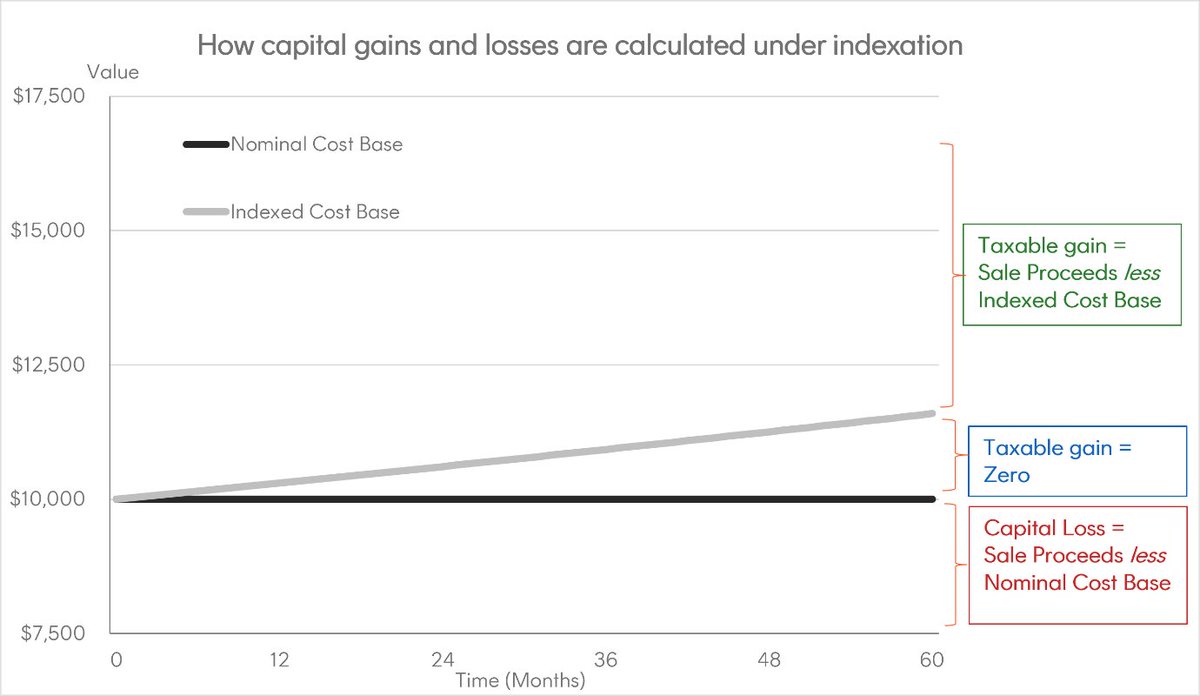
A couple of weeks ago I wrote about a major flaw in the government's proposed capital gains tax reforms.
Using a four share portfolio, I showed how replacing the current 50% CGT discount with inflation indexation could increase the amount of tax paid by investors by ~61%. The example was deliberately simple because it helped illustrate the mechanics of the problem... but some readers reasonably questioned whether a portfolio containing one extreme winner, two mediocre performers and one complete failure was representative of how Australians actually invest in shares.
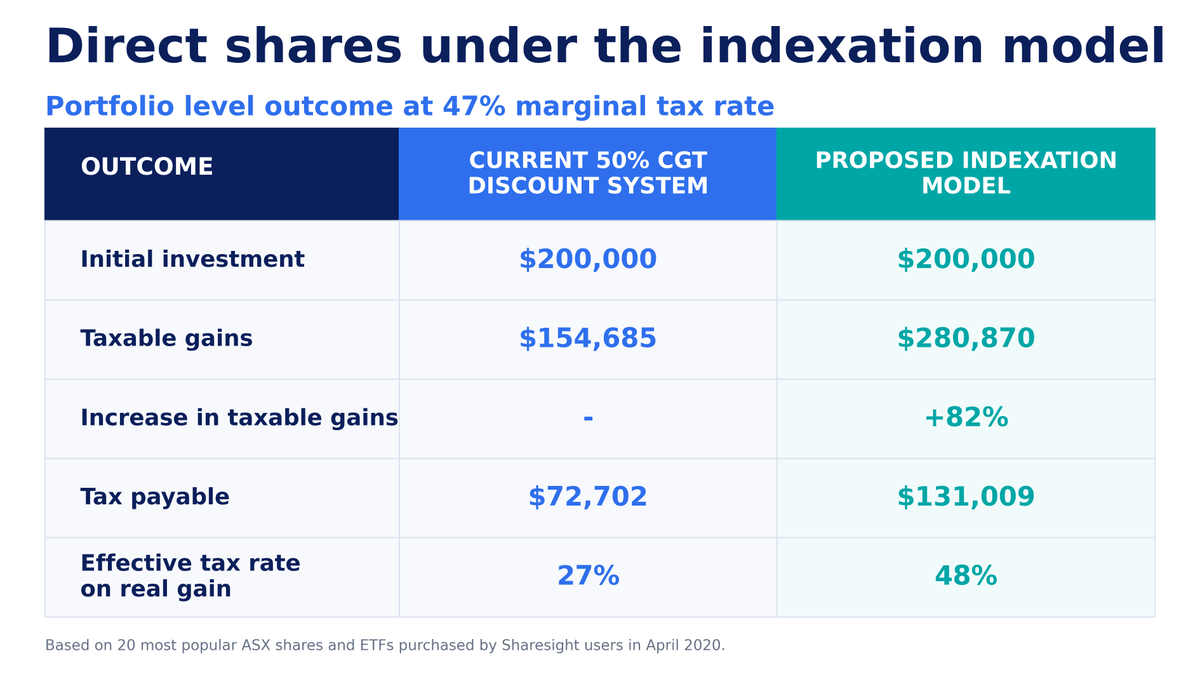
So I decided to test the CGT changes using a portfolio based on actual investor behaviour rather than relying on a hypothetical portfolio. I analysed the 20 most popular ASX shares and ETFs purchased six years ago in April 2020.
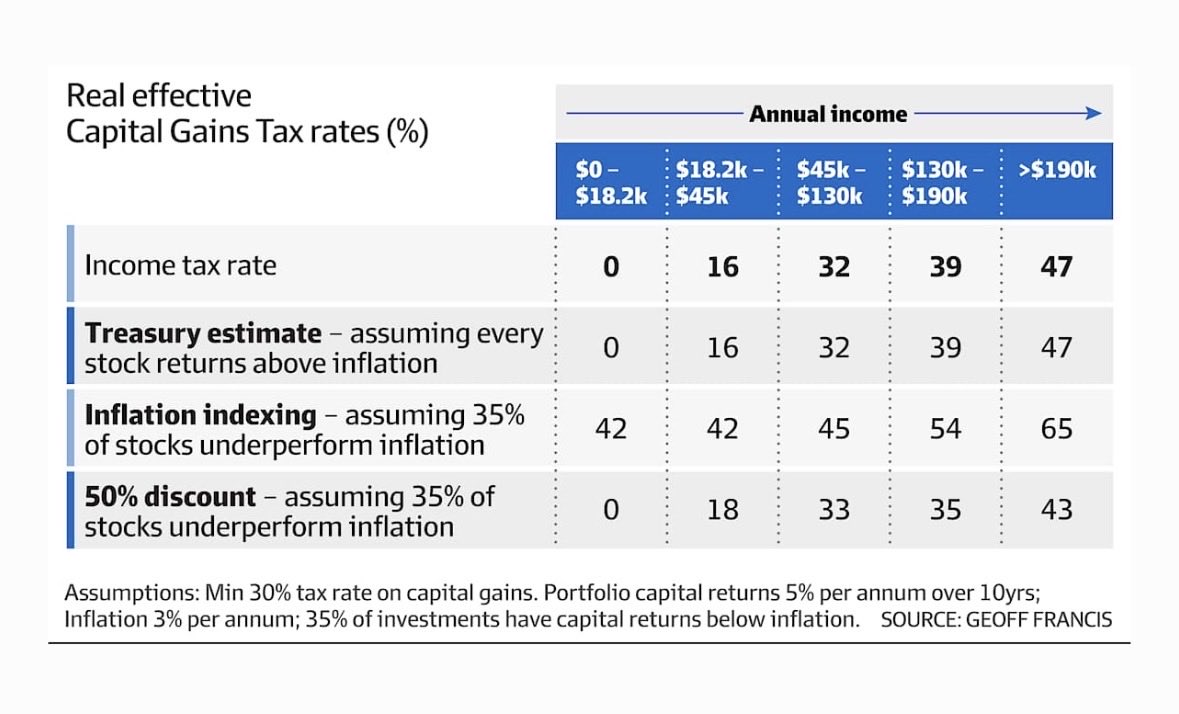
Despite analysing a completely different portfolio based on actual investor behaviour, I arrived at a similar conclusion. The proposed indexation model increased taxable gains by ~82%.
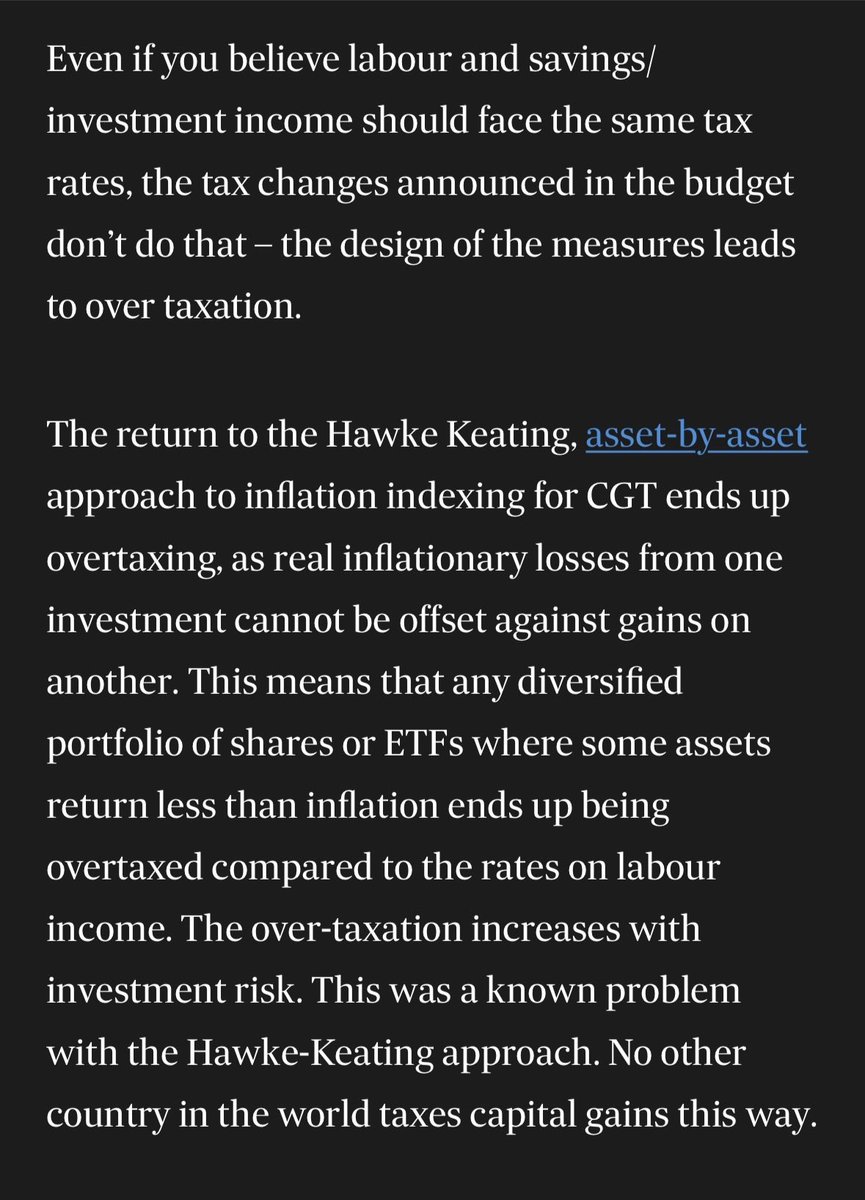
The government's stated aim is to improve fairness and encourage investment into housing. But if the practical effect is to penalise diversified investors and significantly increase tax on ordinary Australians who invest patiently over decades, the reforms risk creating distortions far greater than those they seek to address.
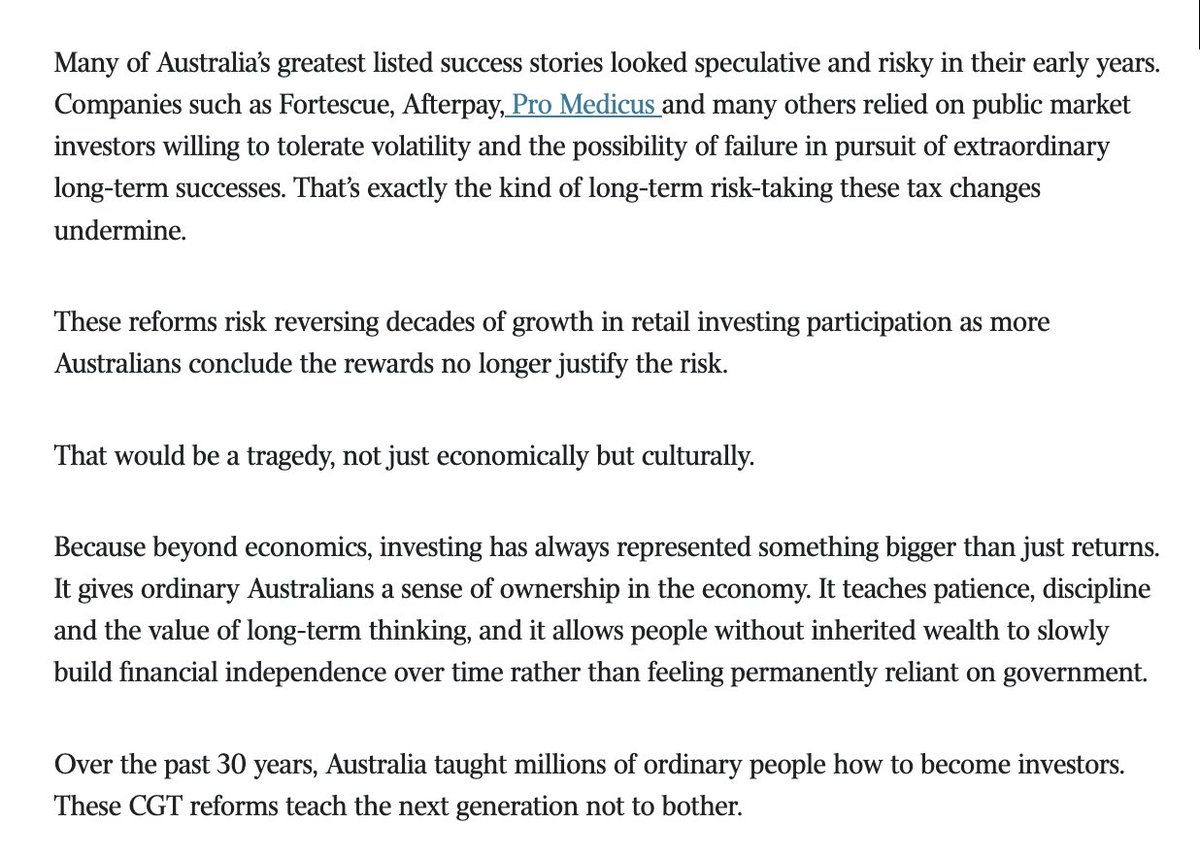
Policymakers should carefully consider whether a tax system that increases tax for a typical long term investor by more than 80% is really achieving its intended objective.
A related question is why any rational investor would choose to invest in direct shares at all under this regime? If successful portfolios are taxed much more heavily and unsuccessful ones receive less recognition for their losses, the after tax risk adjusted return from direct share investing becomes highly unattractive.
Full analysis is here: blog.stockspot.com.au/shares…
32
77
301
14,675
Chris Brycki retweeted
Dear Journalists
Here is a list of 21 individuals who have provided a public submission to the Senate Inquiry on CGT and yet the government have not published those submissions.
To put this in perspective they only published six individuals. SIX.
This is a gross abuse of their fiduciary duty to have an open an accountable democracy.
The true number would be much larger and we have a lower limit of 61 submissions that are missing based on the government's own numbering up to 150 on their website despite only 89 submissions being made public.
Despite this cherry picking, the only people that support a change to the CGT on equity and business are hand-picked economists, and the Australian Council of Social Services.
Current list of those who have submitted and not published:
@DerekFranc90653
@chrisbrycki
@TheRealDavey2
@keithmarlowau
@David_McMahon75
@acxjones
@Hughmaxdavis
@James16878077
@SeanoftheWeb3
@onslowshipping
@MarshBrentnall
@jsmith_dev
@linzcom
@leighjasper
@ProphetHaza
@whmacdonald74
@BankReformNow
@F66Geoff
@_swordfish6975
@xrpfanboi88
And myself
Thank you to all that replied.
@mcranston1 @PhillipCoorey @MarkDiStef @GeoffWilsonWAM @AngusTaylorMP @PaulineHansonOz @ajamesbragg @AlboMP @JEChalmers
x.com/toy59496/status/206576…
x.com/toy59496/status/206561…
Jun 13

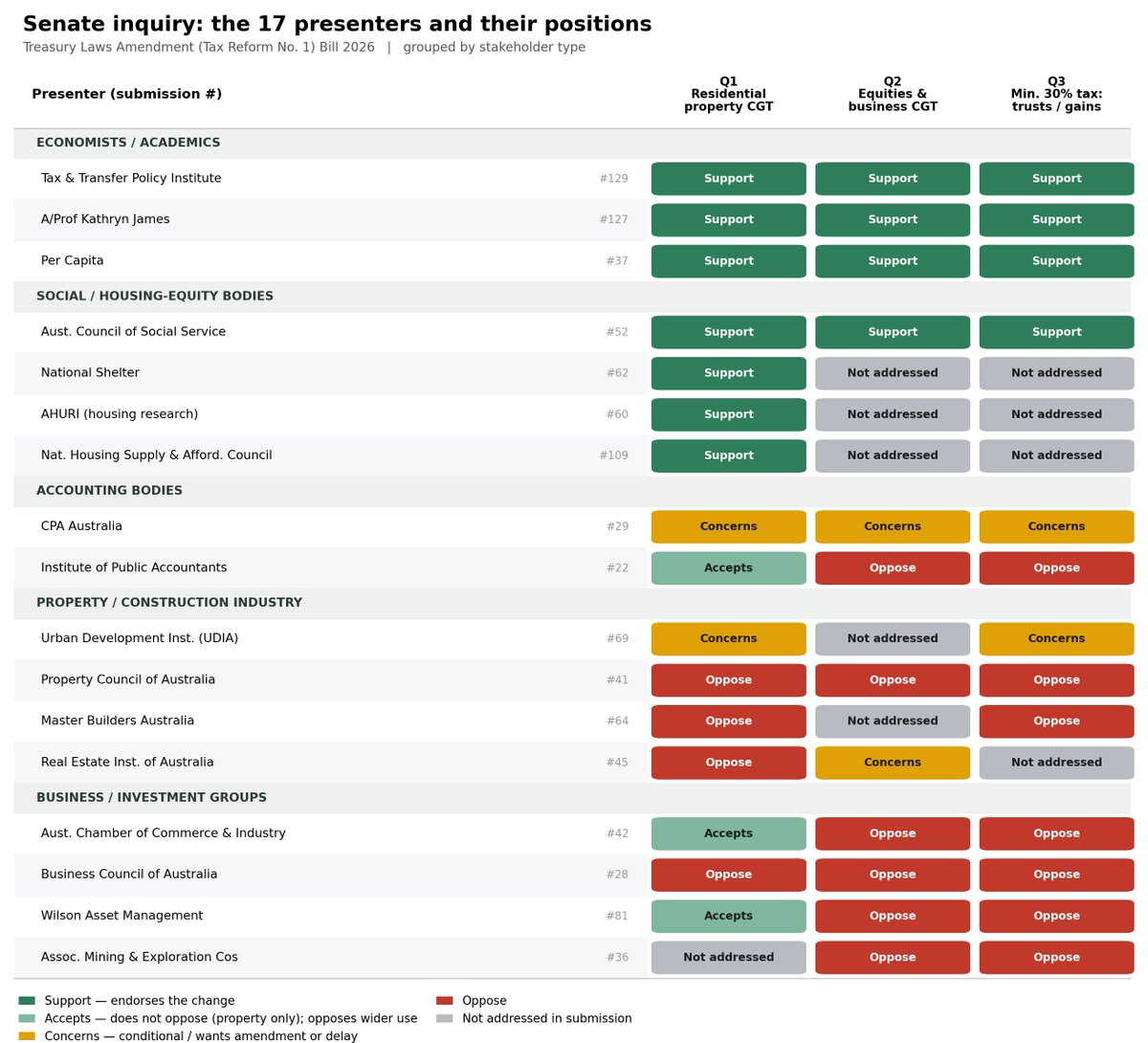
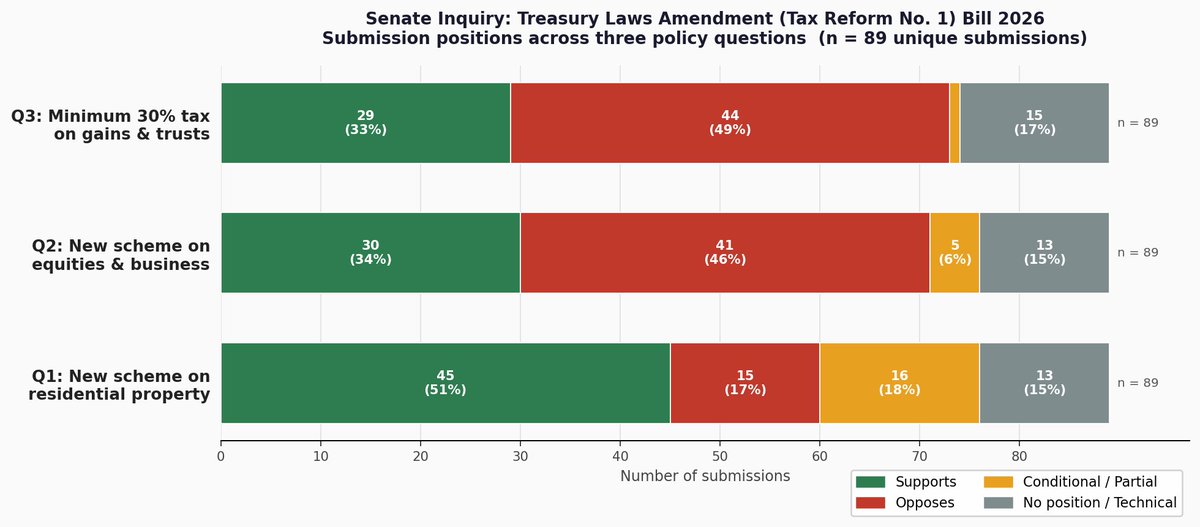
CGT Senate Summary (89 Submissions)
An analysis of each submission and an executive summary at the end including a tally of support or otherwise can be found here:
smallpdf.com/file#s=5ff833ef…
A file of all the original submissions (994 pages) can be found here for the next 7 days only:
fromsmash.com/8v~RDG97IV-gt
I've also included a summary image below.
To summarise the analysis:
The 89 submissions divide into three broad camps. Roughly a third, dominated by housing, homelessness and community sector peak bodies, unions, progressive think tanks and most of the academic tax specialists, support the Bills in full and urge swift passage.
Roughly a fifth, dominated by property industry bodies, business peak bodies, professional accounting and legal bodies and free-market think tanks, recommend the Bills not proceed at all or not in their current form.
The largest single group, around a third, accepts or actively supports the residential property measures but opposes extending the same treatment to equities, operating businesses and venture capital.
The remainder make narrow technical or sectoral points (valuation, philanthropy, salary packaging, gender impact) without taking a position on the package as a whole.
This pattern is the most striking feature of the inquiry: the residential measures are contested mainly by the property industry itself, while the extension to equities and business is contested by submitters across the spectrum, including several who explicitly support the housing reforms.
Technical Notes: This is constructed by Claude Max and cost me two weeks of compute power so I hope it's useful. Claude does not usually hallucinate in these matters unlike other AI. I have done some random manual cross checking and it seems to be fine.
@DerekFranc90653 @GeoffWilsonWAM @chrisbrycki @RyanMaddockCA
4
5
26
1,736
Chris Brycki retweeted

Jun 13
What changes are changes being proposed?
1
1
219
Jun 12
My article in The Weekend Australian.
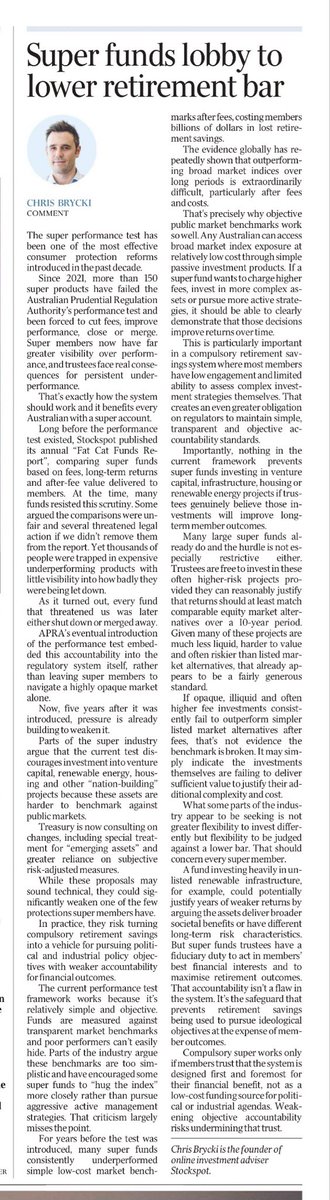
The super performance test has forced more than 150 underperforming super products to cut fees, improve performance, merge or close.
Now parts of the industry are lobbying to weaken it.
If a fund wants to charge higher fees and invest in more complex assets, it should be able to demonstrate that those decisions improve member outcomes.
Lowering the accountability bar risks turning compulsory retirement savings into a vehicle for pursuing political and ideological objectives rather than maximising retirement outcomes.
Compulsory super should exist for one purpose - to maximise retirement outcomes for members… not as an off balance sheet funding source for governments, or a vehicle for advancing the agendas of special interest groups.
8
8
69
2,095
Chris Brycki retweeted

Nice Chris.
Given amount of comments on scenarios showing Labor's CGT hikes impacting younger retail investors as a 'fake' its good to see you add a few facts showing benefits current settings provides to new homeowners.

1
2
110
Chris Brycki retweeted

Jun 11
This table highlights how powerful long-term capital formation can be and why changes to CGT matter so much.
Workers who save, invest and build wealth aren't relying on government programs or wage tribunals. They're creating financial independence through ownership.
That's why good tax policy should encourage investment, risk-taking and capital formation, not punish it.
Every small investor, tradie, employee and business owner should ask a simple question:
🗽 Do we want more Australians dependent on wages alone?
🗽 Or more Australians building assets, wealth and financial freedom?
Prosperous societies are built by people accumulating capital, investing in productive enterprises and creating future wealth.
The more Australians own, the freer Australians become.
Jun 11

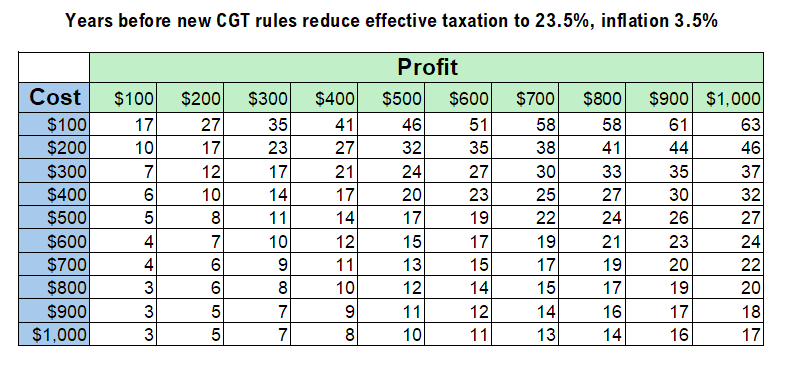
I put this table together that shows how terrible the new CGT system is - a ten banger share under the new system will take 63 years to get to the same amount of tax you would have paid under the old system.. even making 10% takes 3 years.
This is not by accident this is BY DESIGN, Labor do not want you making money off capital, as a capital gives you self control and independence.
5
7
24
921
Jun 12
Here's my submission to the Senate inquiry into the proposed CGT reforms.
Oddly, as of 3pm Friday afternoon, it still hasn't appeared on the inquiry website despite public hearings beginning on Monday.
The submission covers the diversification penalty, impacts on startups and employee share schemes, capital lock-in effects and why the reforms may make it harder for younger Australians to build wealth through investing.
A Senate inquiry works best when submissions are visible, debated and challenged. Hopefully this one is published before the hearings begin... mcusercontent.com/41e390cbcd…
12
22
153
4,159
Chris Brycki retweeted

Jun 11
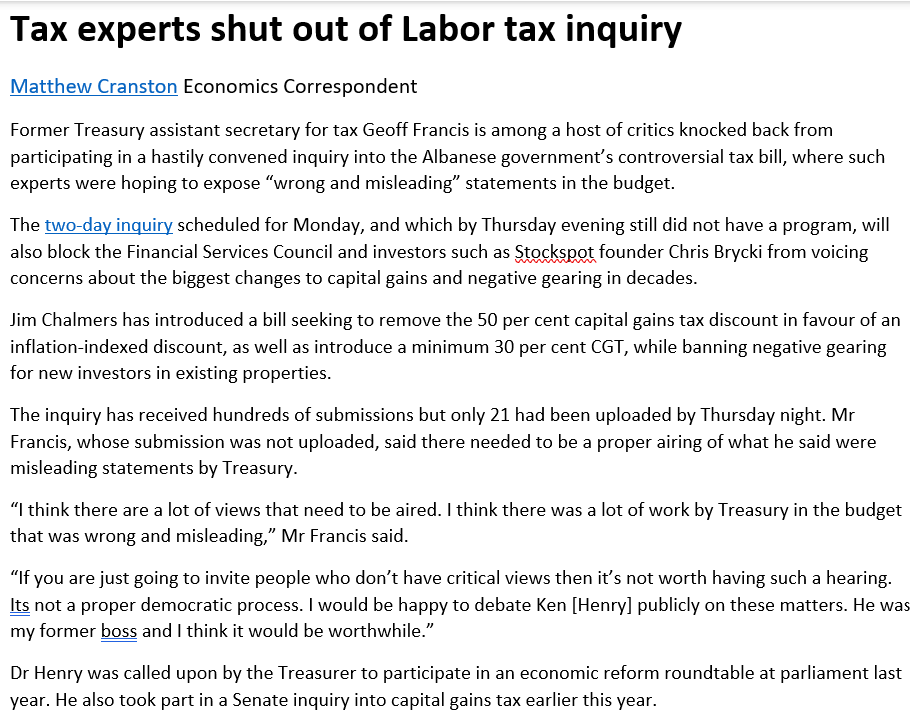
Attached is the Australian article by Matt Cranstone on how the Senate Inquiry into CGT is all a performative farce, and stitch up where they are preventing the actual experts testifying:
6
20
78
5,867
Chris Brycki retweeted

Jun 11
Critics snubbed in Labor budget inquiry ‘whitewash’ afr.com/politics/federal/cri…
7
9
27
2,168
Chris Brycki retweeted

Jun 11
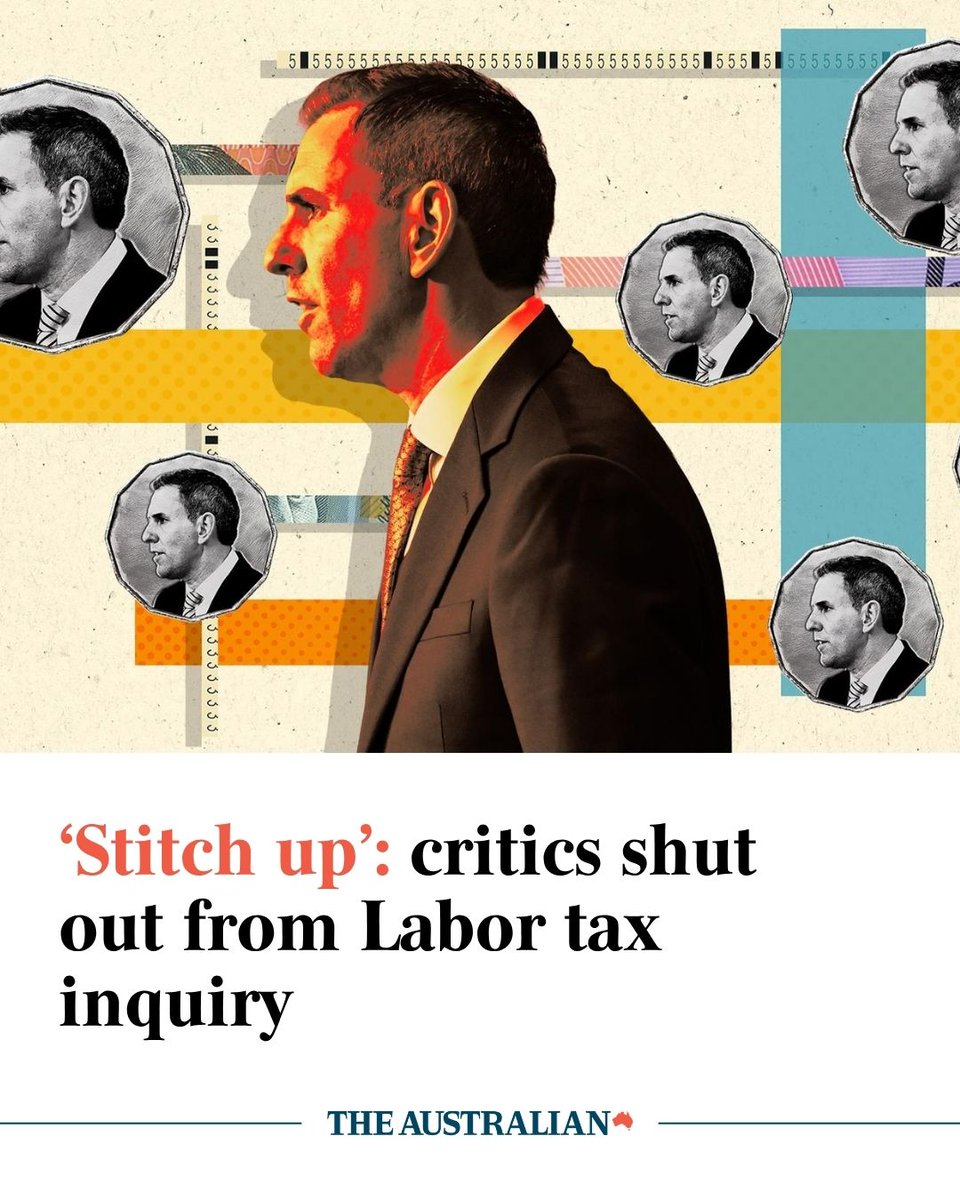
A former Treasury assistant secretary and industry experts have been blocked from a rushed two-day inquiry into Labor’s landmark capital gains tax overhaul. Read more: bit.ly/3Qcz0k6
15
39
92
5,694
Chris Brycki retweeted

Jun 11
✅ Exactly right Chris.
The Senate “inquiry” is a complete farce, stacked with partisan cheerleaders while sidelining real experts like yourself @DerekFranc90653, former Treasury official Geoff Francis, FSC etc. It’s next Monday and there is no agenda, location etc. Am I in our out.They don’t want facts just a rubber stamp for economic vandalism.
This attacks aspiration, startups, productive investment, young savers and retirees.
#AxeTheCGTHike
Jun 11

What's the point of a Senate inquiry if you only invite partisan supporters of the policy and generalists who don't understand the technical issues, while excluding the people who've actually done the analysis?
People like @GeoffWilsonWAM, @DerekFranc90653 and former Treasury official and CGT expert Geoff Francis have spent countless hours analysing these proposals, yet apparently their expertise isn't wanted.
I've had five opinion articles published on these tax changes, covering the impact on startups, innovation, shareholders, investor behaviour, young savers trying to buy a home and the broader economy.
Stockspot works with more than 20,000 investors and we've quantified the diversification penalty these changes create for everyday Australians using real world portfolio examples.
Yet we're excluded from appearing, and our submission hasn't even been published on the inquiry website.
Surely a proper inquiry should hear from people with different perspectives and subject matter expertise?
If you're only inviting people to sing the praises of the policy, it's not really an inquiry... it's the town hall meeting for the Springfield Monorail.
Why bother with hearings at all? Just get the like minded think tanks together to sing "Monorail" and call it a day!
7
25
143
2,860
Chris Brycki retweeted
Jun 11
100 percent agree with Chris; at this stage, he, my brother Geoff and I are banned from giving oral testimony to senate committee, even though we know it much better than their so called ‘experts’ who will talk performative nonsense at the hearings!
x.com/chrisbrycki/status/206…
Jun 11
What's the point of a Senate inquiry if you only invite partisan supporters of the policy and generalists who don't understand the technical issues, while excluding the people who've actually done the analysis?
People like @GeoffWilsonWAM, @DerekFranc90653 and former Treasury official and CGT expert Geoff Francis have spent countless hours analysing these proposals, yet apparently their expertise isn't wanted.
I've had five opinion articles published on these tax changes, covering the impact on startups, innovation, shareholders, investor behaviour, young savers trying to buy a home and the broader economy.
Stockspot works with more than 20,000 investors and we've quantified the diversification penalty these changes create for everyday Australians using real world portfolio examples.
Yet we're excluded from appearing, and our submission hasn't even been published on the inquiry website.
Surely a proper inquiry should hear from people with different perspectives and subject matter expertise?
If you're only inviting people to sing the praises of the policy, it's not really an inquiry... it's the town hall meeting for the Springfield Monorail.
Why bother with hearings at all? Just get the like minded think tanks together to sing "Monorail" and call it a day!
8
16
110
10,580
Jun 11
What's the point of a Senate inquiry if you only invite partisan supporters of the policy and generalists who don't understand the technical issues, while excluding the people who've actually done the analysis?
People like @GeoffWilsonWAM, @DerekFranc90653 and former Treasury official and CGT expert Geoff Francis have spent countless hours analysing these proposals, yet apparently their expertise isn't wanted.
I've had five opinion articles published on these tax changes, covering the impact on startups, innovation, shareholders, investor behaviour, young savers trying to buy a home and the broader economy.
Stockspot works with more than 20,000 investors and we've quantified the diversification penalty these changes create for everyday Australians using real world portfolio examples.
Yet we're excluded from appearing, and our submission hasn't even been published on the inquiry website.
Surely a proper inquiry should hear from people with different perspectives and subject matter expertise?
If you're only inviting people to sing the praises of the policy, it's not really an inquiry... it's the town hall meeting for the Springfield Monorail.
Why bother with hearings at all? Just get the like minded think tanks together to sing "Monorail" and call it a day!
Jun 11

‘Stitch up’: critics shut out from Labor tax inquiry theaustralian.com.au/nation/… via @australian
14
38
192
11,584
Jun 10

Will Labor's tax changes make it even harder for young Australians to buy a home?
Economist Derek Francis thinks so, saying the Treasury has significantly underestimated the impact on investors and future wealth creation.
Karl Weekly live at 5pm tonight.
2
7
32
1,772
Jun 10
Every super member should be concerned about this. Full article here theaustralian.com.au/wealth/…
Jun 9

Is Labor after our super now?
Superfunds are lobbying to lower the bar on APRA’s performance test to allow more investment in venture capital, renewable energy, housing and other "nation-building" projects.
Remember Industry super is stacked with former Labor MPs.
Is this lobbying designed to assist Labor instead of investing funds for the maximum returns to members.
1
1
11
937
Jun 9
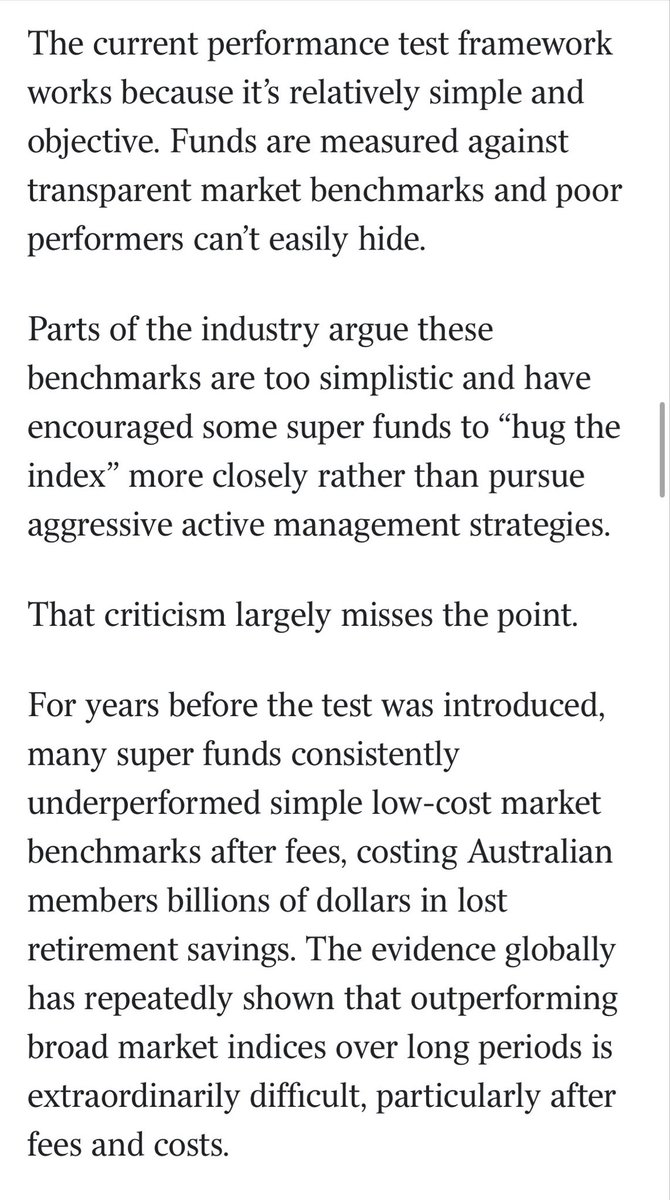
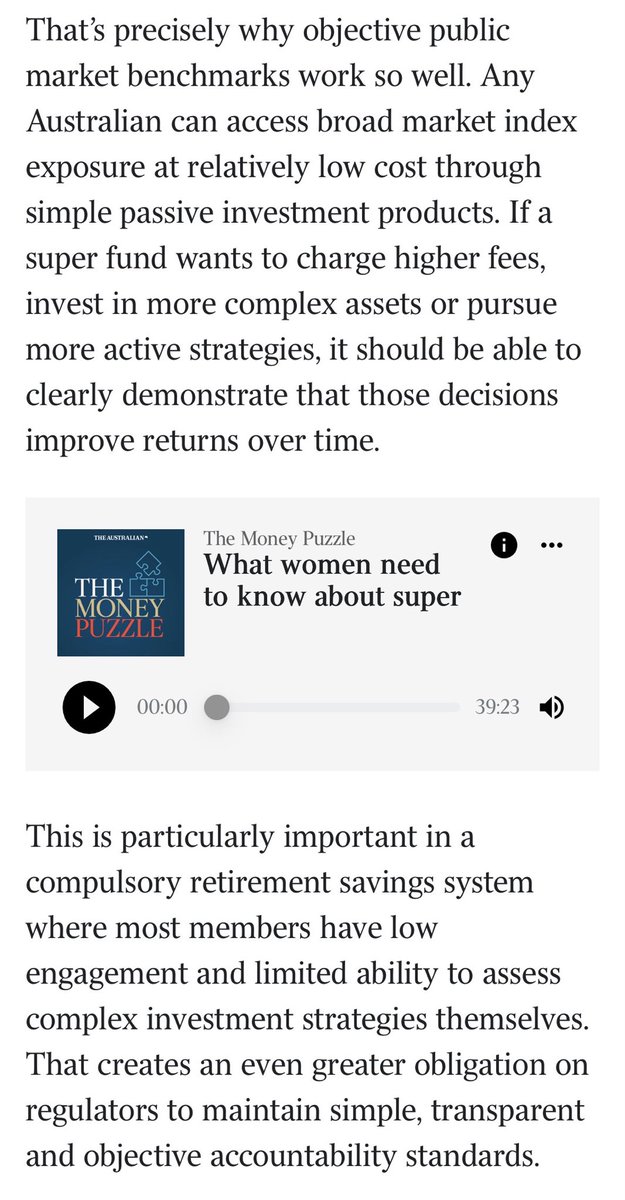
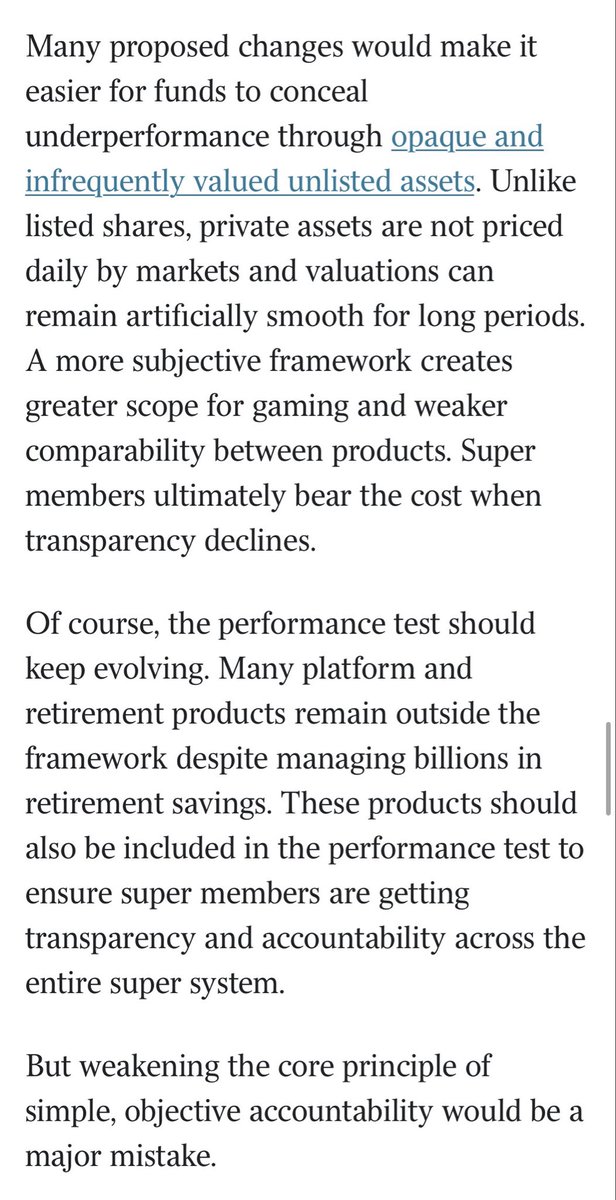
Parts of the super industry are lobbying to lower the bar on the super performance test. That should concern every Australian with super.
The current test asks a simple question: can a fund outperform a low cost market benchmark after fees?
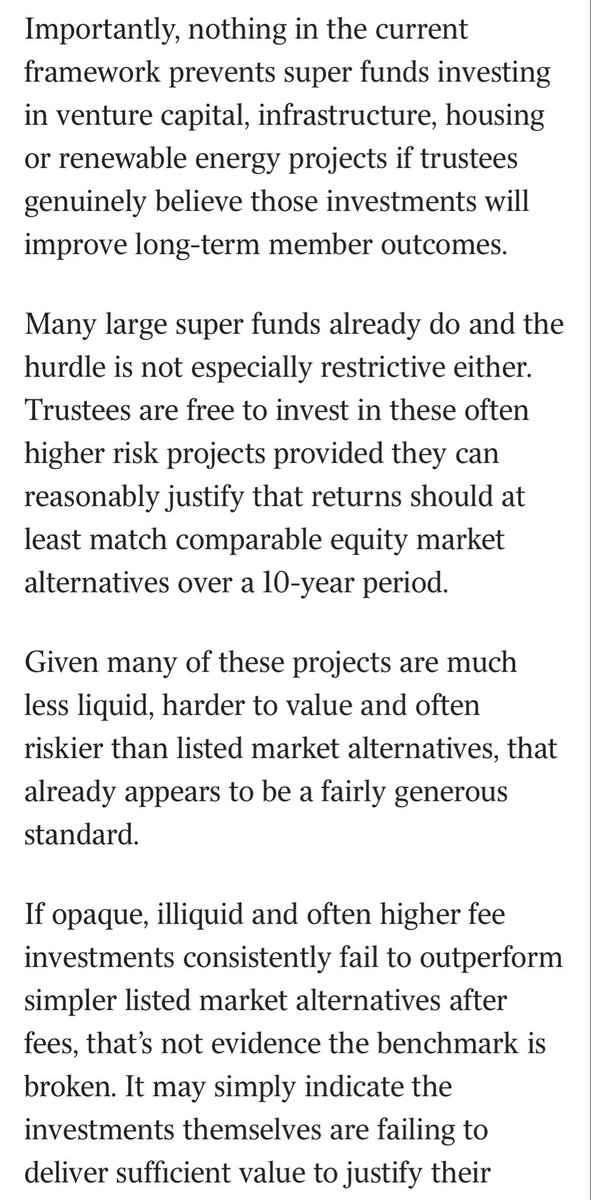
If a strategy can’t beat a passive index over 10 years, despite higher fees, more complexity and less transparency, why should members pay for it?
The goal of super isn’t to protect fund managers, subsidise underperforming investment strategies or provide cover for investments that can’t justify their costs. Nor should compulsory retirement savings become a vehicle for funding political, industry or ideological agendas at the expense of member outcomes.
Super exists for one purpose: to maximise Australians’ retirement savings. Any change that weakens accountability moves us further away from that objective.
My latest opinion piece:
Super funds are lobbying to lower the bar on your retirement theaustralian.com.au/wealth/…
2
2
8
605
Jun 9
Well summarised Robin 👌
Jun 9
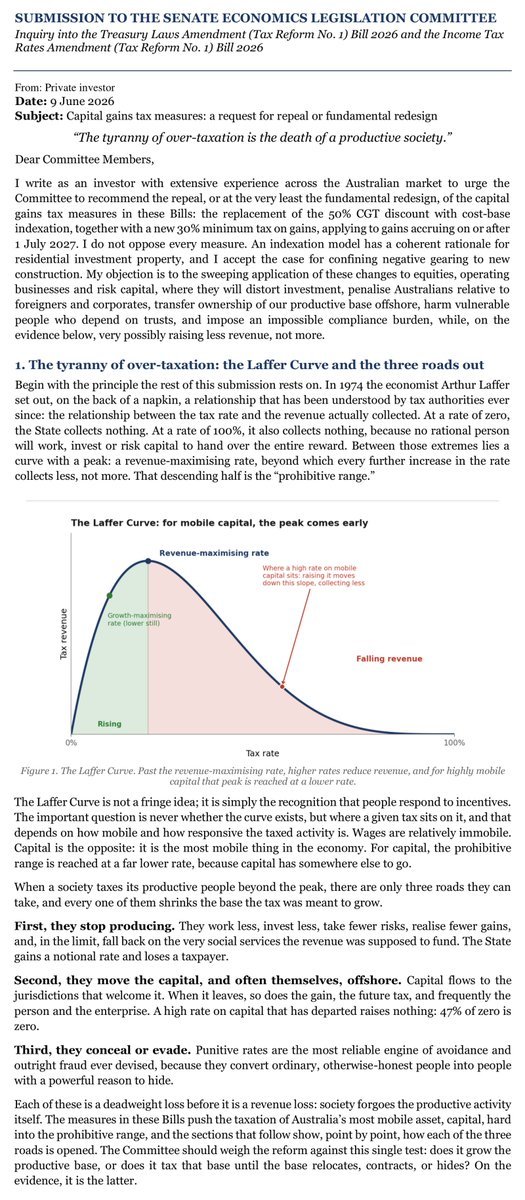
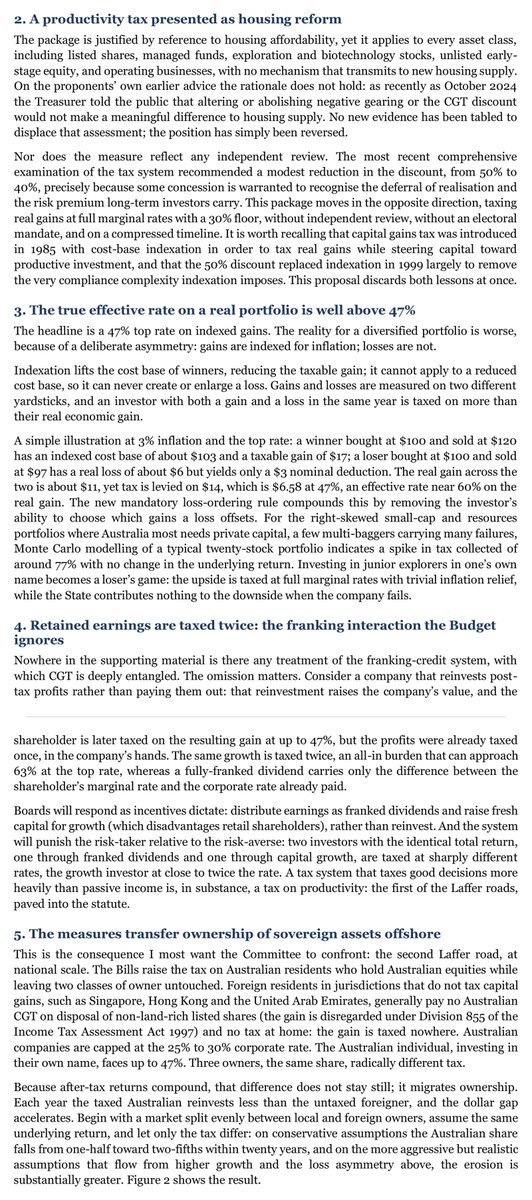
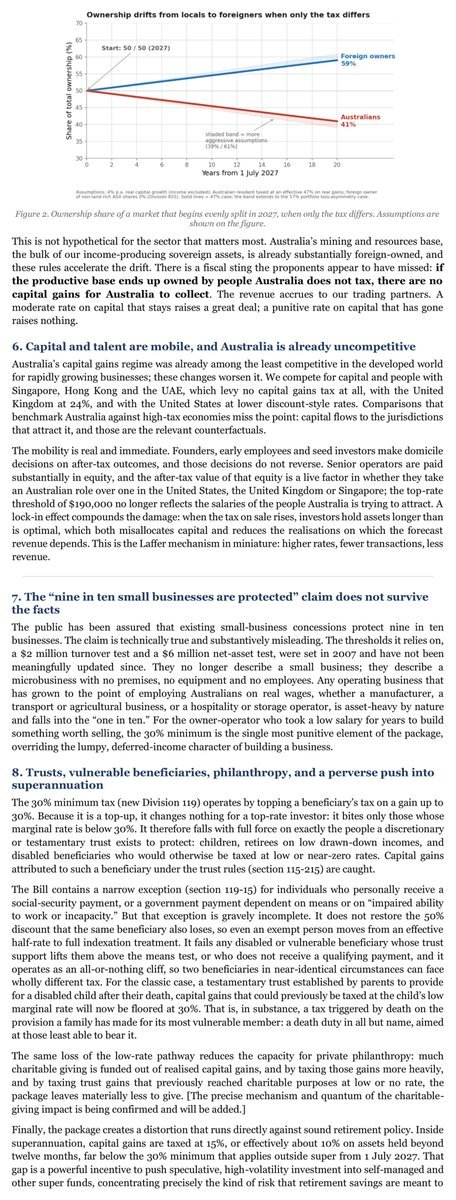
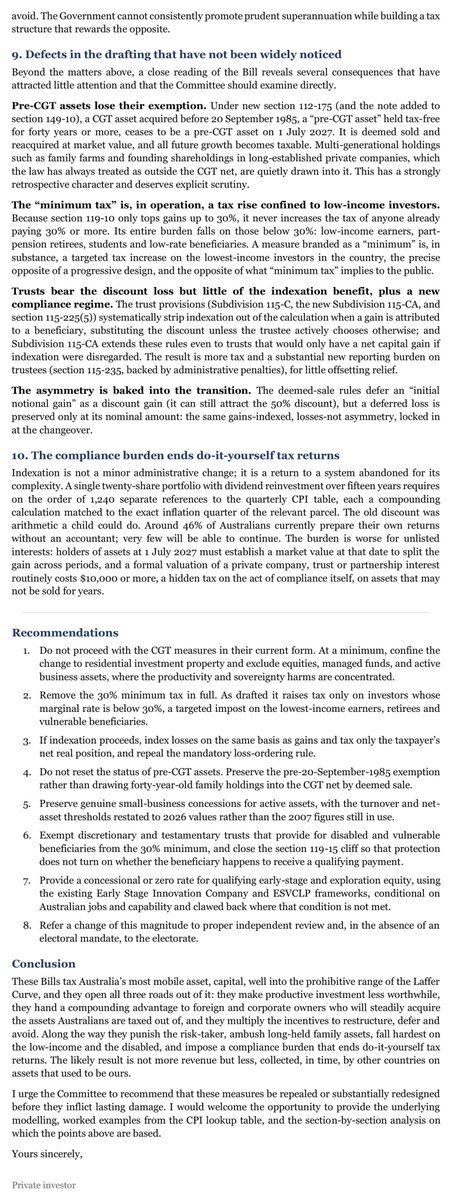
Submission to Senate Panel
I stole all the good ideas from everybody else...
smallpdf.com/file#s=efc98c01…
1
1
7
810
Chris Brycki retweeted

Jun 7
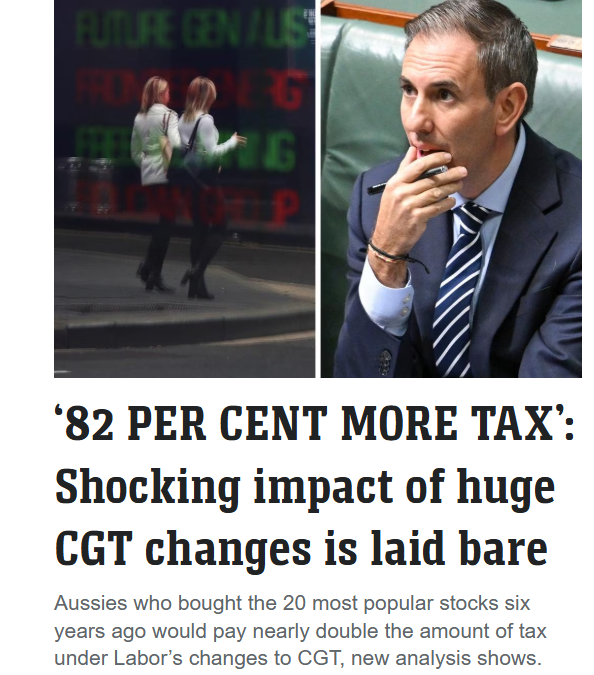
Article: ‘82 per cent more tax’: How CGT changes would hit most popular ASX stocks
news.com.au/finance/money/in…
Another excellent contribution by @chrisbrycki with thanks to @franks_chung and the news.com.au for publishing.
This isn't theoretical modelling this is back testing real data.
1
6
33
1,958
Chris Brycki retweeted

Dont let Albo or Chalmers gaslight you to think the new CGT regime is somehow better.
17
140
449
6,133
Chris Brycki retweeted

Jun 6
Aussies who bought the 20 most popular stocks would pay nearly double the amount of tax under Labor’s changes to CGT. news.com.au/finance/money/in…
18
51
118
5,489
Chris Brycki retweeted

It gets worse
Jun 4
A couple of weeks ago I wrote about a major flaw in the government's proposed capital gains tax reforms.
Using a four share portfolio, I showed how replacing the current 50% CGT discount with inflation indexation could increase the amount of tax paid by investors by ~61%. The example was deliberately simple because it helped illustrate the mechanics of the problem... but some readers reasonably questioned whether a portfolio containing one extreme winner, two mediocre performers and one complete failure was representative of how Australians actually invest in shares.
So I decided to test the CGT changes using a portfolio based on actual investor behaviour rather than relying on a hypothetical portfolio. I analysed the 20 most popular ASX shares and ETFs purchased six years ago in April 2020.
Despite analysing a completely different portfolio based on actual investor behaviour, I arrived at a similar conclusion. The proposed indexation model increased taxable gains by ~82%.
The government's stated aim is to improve fairness and encourage investment into housing. But if the practical effect is to penalise diversified investors and significantly increase tax on ordinary Australians who invest patiently over decades, the reforms risk creating distortions far greater than those they seek to address.
Policymakers should carefully consider whether a tax system that increases tax for a typical long term investor by more than 80% is really achieving its intended objective.
A related question is why any rational investor would choose to invest in direct shares at all under this regime? If successful portfolios are taxed much more heavily and unsuccessful ones receive less recognition for their losses, the after tax risk adjusted return from direct share investing becomes highly unattractive.
Full analysis is here: blog.stockspot.com.au/shares…
1
1
243