
Joined August 2019
- Tweets 3,344
- Following 157
- Followers 2,877
- Likes 10,764
325 Photos and videos





Pinned Tweet

28 Apr 2023
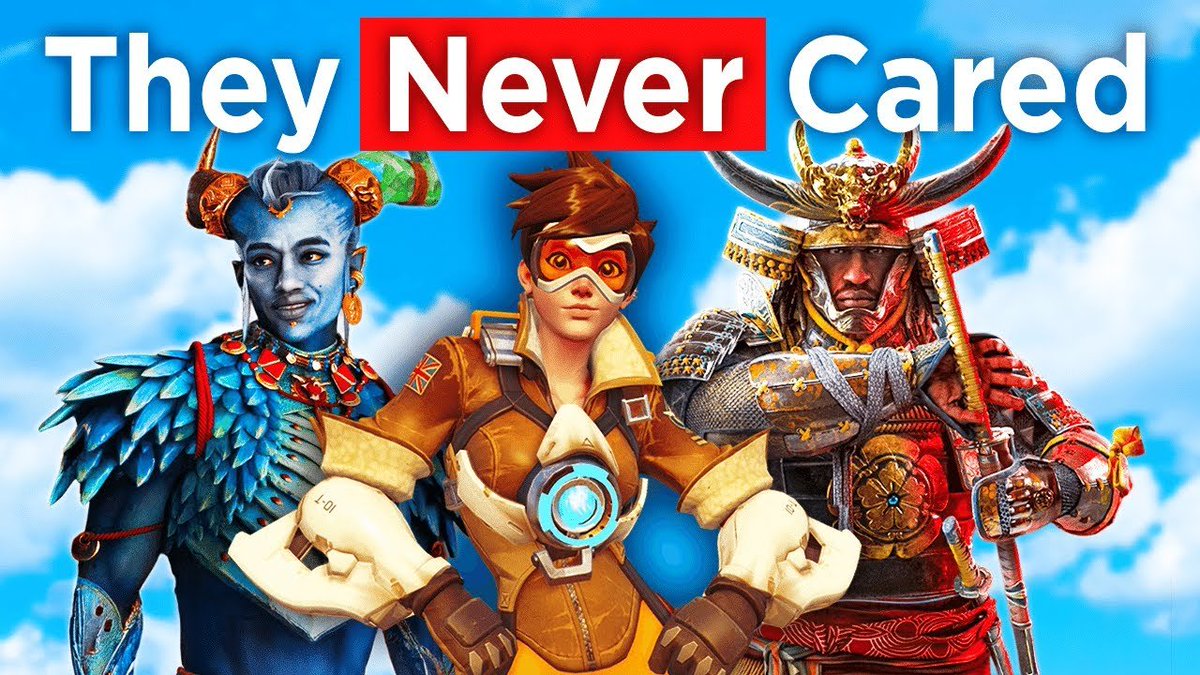
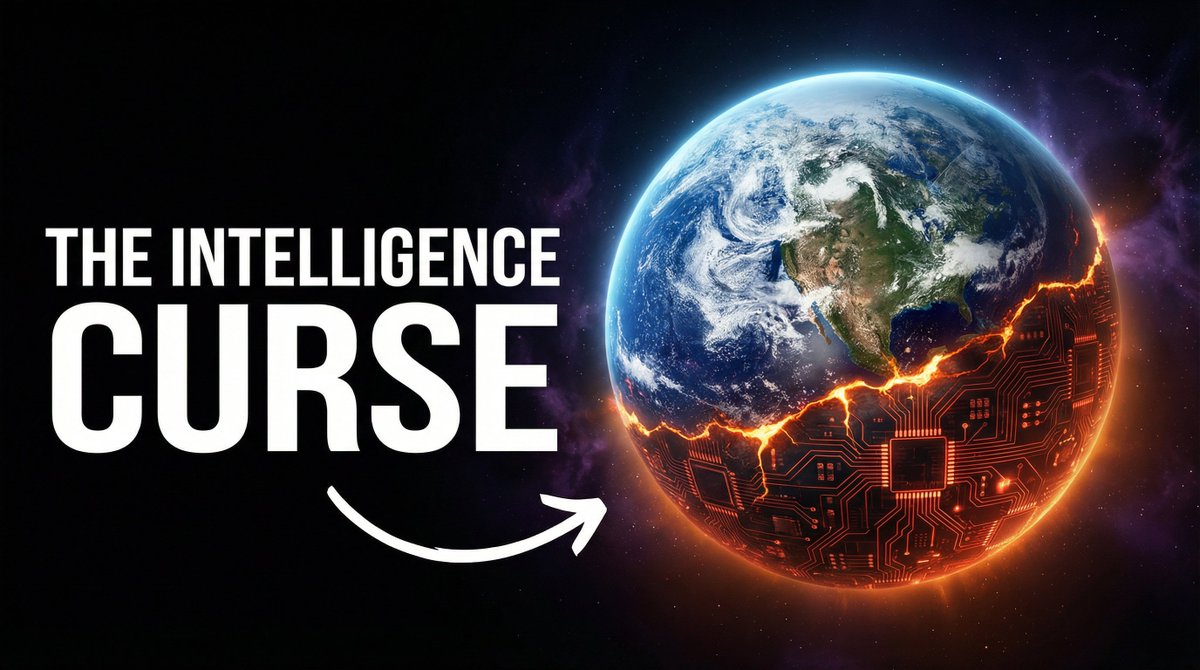
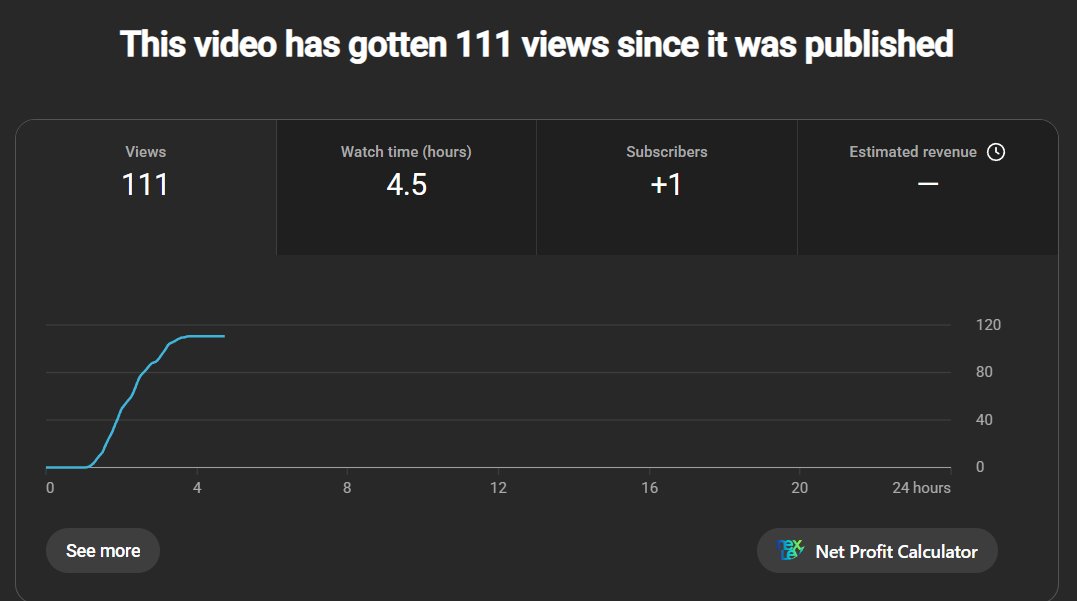
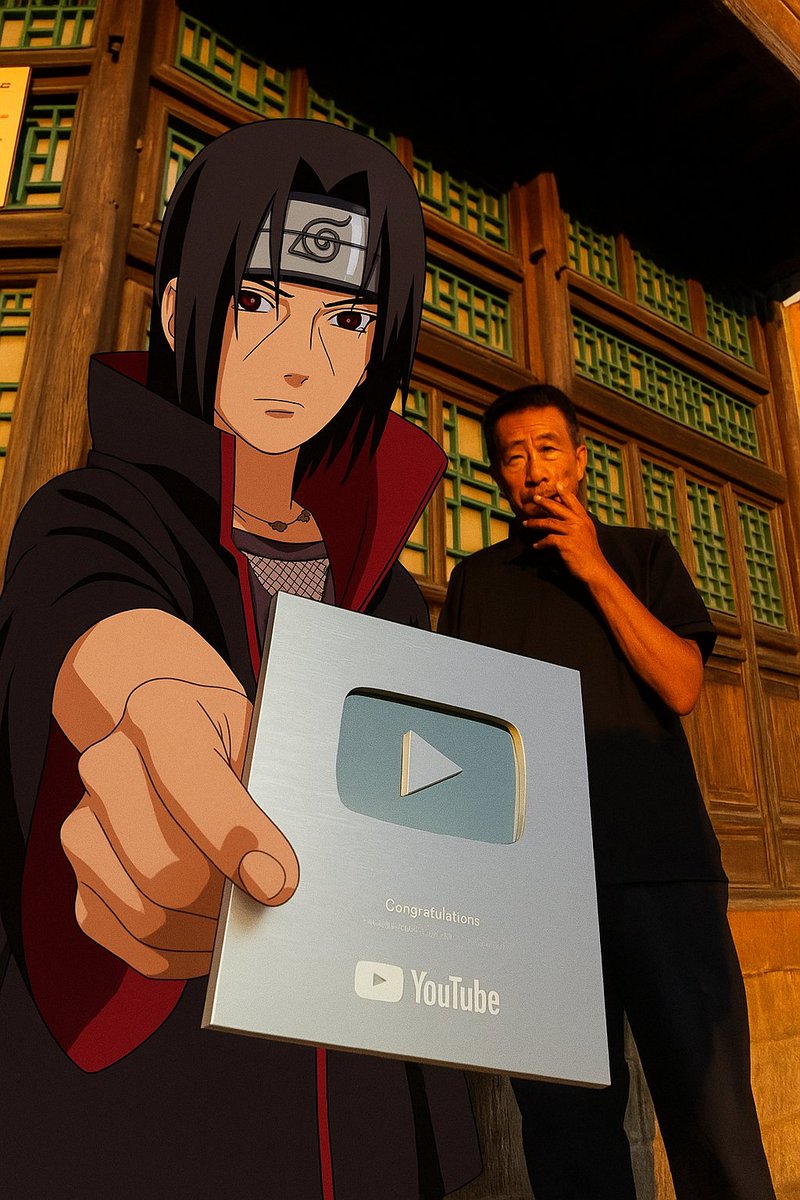
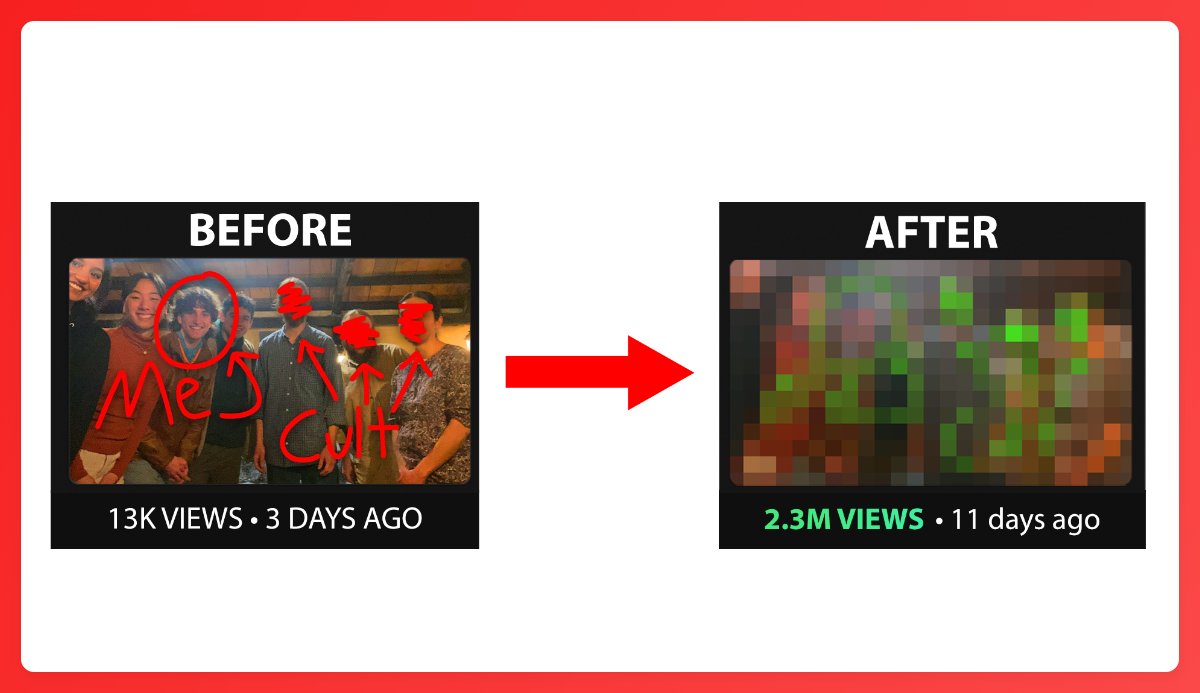
I've made concepts for 500 thumbnails and analyzed over 1000s of others.
To create a viral thumbnail, you have to master these 3 elements
1. Grab viewer's attention
2 Make the message clear and simple
3. Create a Curiosity Gap
Here's how
9
21
167
39,106
Jun 10
😭the clock is ticking

142
Jun 10
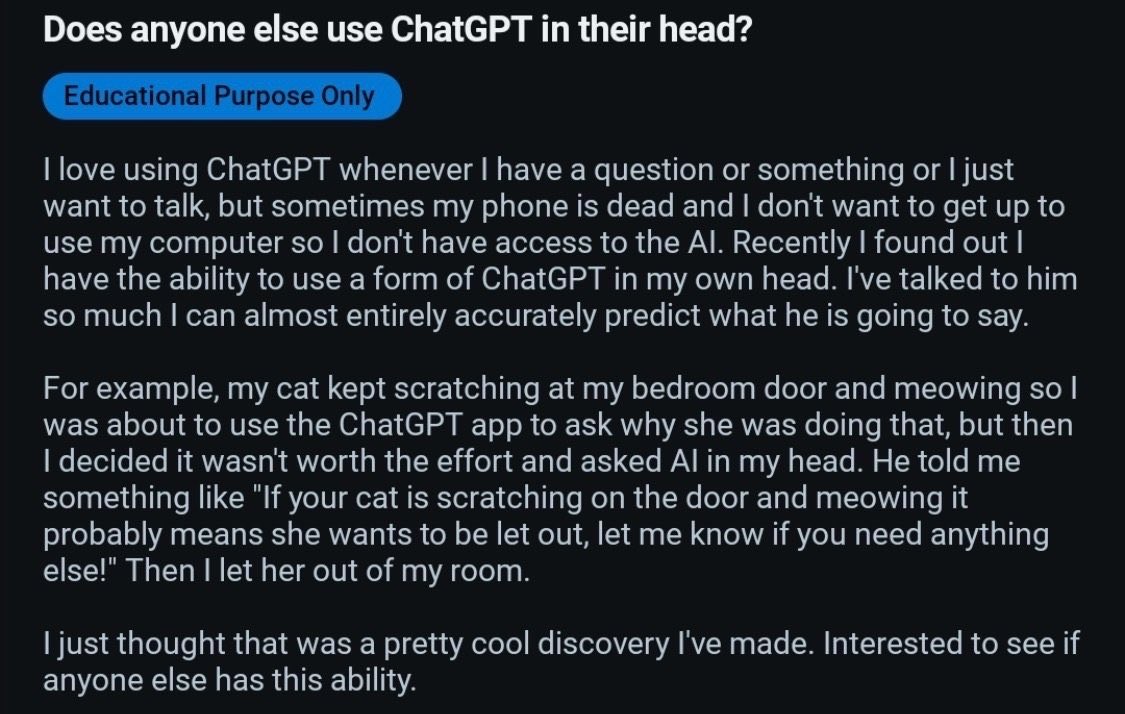
people are discovering what thinking is

100
Jun 10
My boss paid for my Fable 5 so that it can play games for me.
now i finally have more hours to work!
youtube.com/watch?v=6YPqoARp…
1
410
May 29
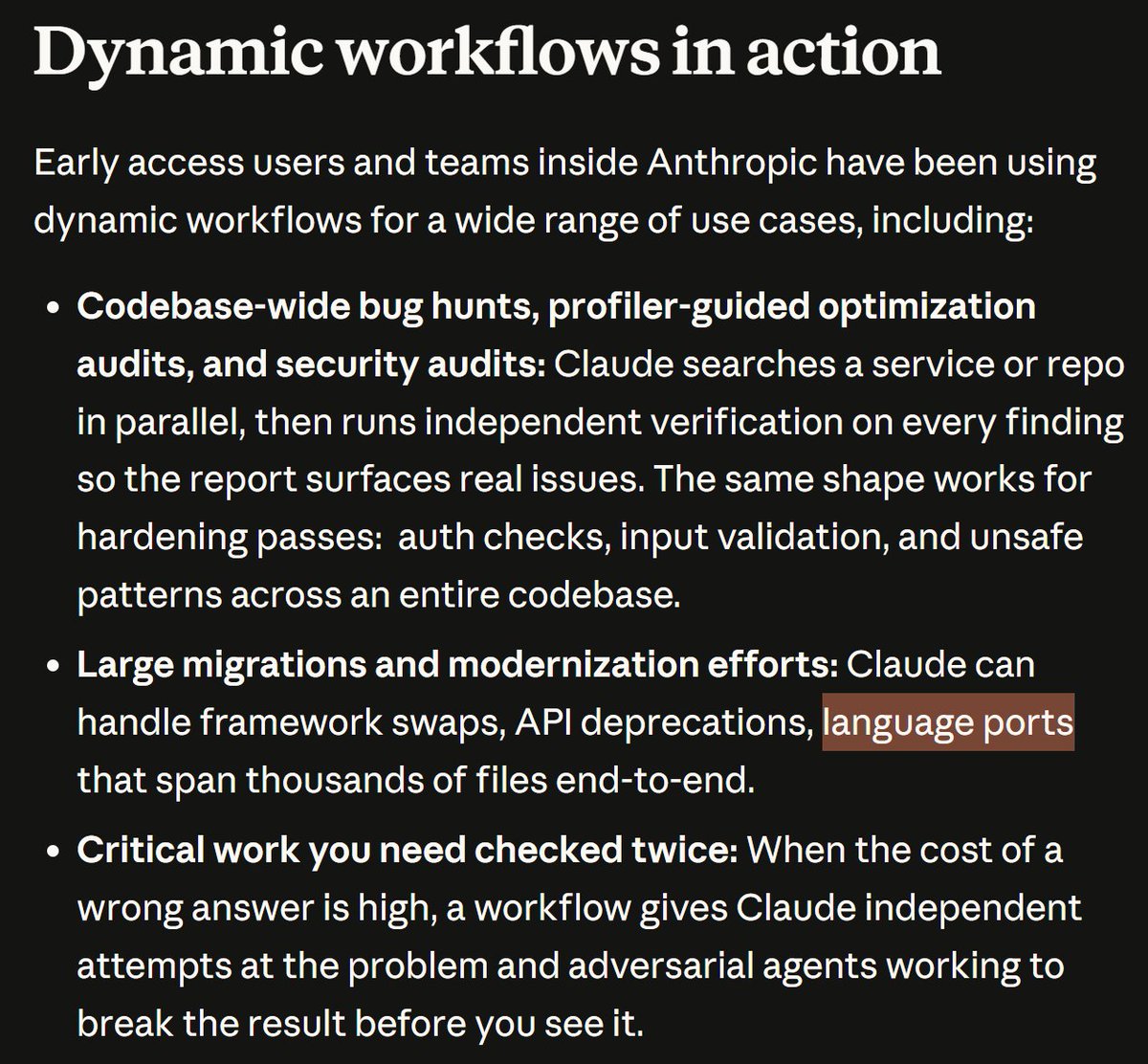
lmao I just realized I was doing this myself before, Claude Code just made this built-in
If you want to do something similar in Codex, all you have to do is ask it to build you a harness run agents in parallel.
You can launch a codex agent headlessly via codex CLI and codex can run those codex agents itself.
Might not be as good as a built in solution but it's close. Codex will likely have something similar soon.
It's funny to see the biggest leap in capabilities really just being harness once again lol.
124
May 29
Anthropic ain't going to like that lol, makes them look bad ngl
May 29

I smell a takedown in 3...2...1 clawd.rip/
87
May 29
I can finally ask Claude to "Rewrite it in Rust" for every single app I have.
Truly, the innovation of the century
1
90
May 26
Most people trying to agentmaxx and tokenmaxx are just wasting tokens.
They don't have skills to manage 10 people, what makes them think managing 10 agents is easier?
What ends up happening is that most of the work for the agents is just busy work, nothing that's actually truly impactful.
So just because you spend 1B tokens doesn't mean you're doing the equivalent amount of real important work.
1
81
May 24
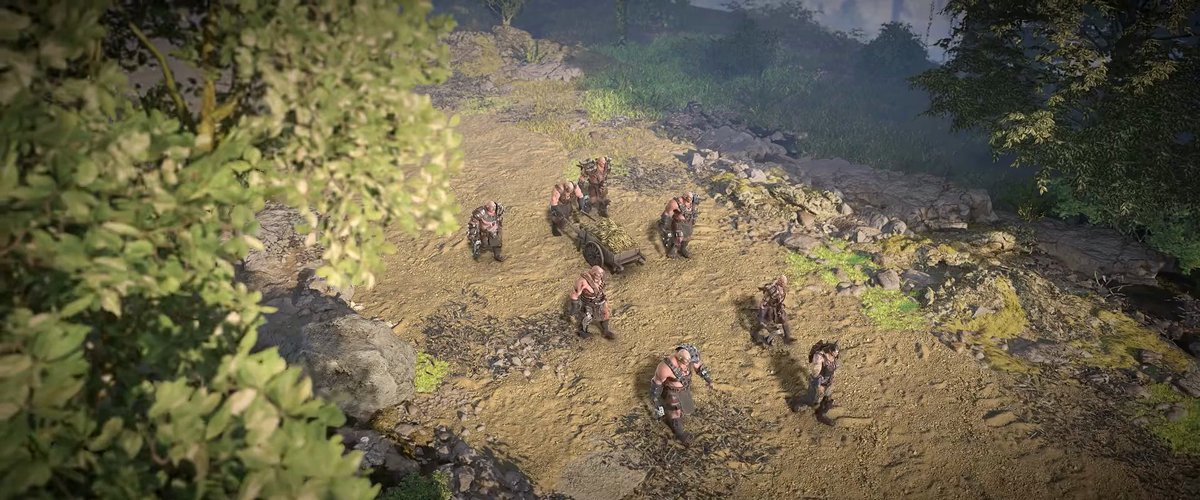
AI took yet another step to replace Hollywood.
Only a matter of time an average person could create a movie all by themselves
This video generation model lets you precisely control your generation scenes, using a reference video, rather just using text prompts
um-lab.github.io/CogOmniCont…
3
342
May 21
Sometimes I feel like I'm behind AI, but then I remember to look outside the Twitter bubble and remember that most people barely even use ChatGPT.

Andrej Karpathy spent 4 minutes in an interview explaining a single idea
about how most people haven’t even started learning how to use AI
and everyone paying $20/month for a subscription.. that's not really using Claude at all
his point is that the real skill gap is the ability to build with AI
he identified 4 behaviors that break Claude Code and put them all into one file
a developer expanded it into 21 rules and published it - 82,000 stars and #1 on GitHub Trending
coding accuracy jumped from 65% to 94%
here's what these 21 rules actually are and why most developers using Claude every day have never configured them
the full breakdown is covered in the article below 👇
1
193
May 21
hallucinated AI-generated images are sometimes some of the most creative ideas I see.
74
May 21
Yeah people are thinking AI content is going to die.
On the contrary this is going to add competition to put a lot more effort into AI-generated content
May 20

SynthID didn't kill faceless YouTube. It killed unearned authority.
Everyone is reading Google I/O 2026 wrong. Pichai confirmed OpenAI, Kakao, and ElevenLabs are adopting SynthID. The watermark is embedded into the audio waveform itself, designed to survive compression, re-encoding, and basic editing.
Detection is rolling out across the Google ecosystem.
Twitter is calling this the end of faceless YouTube. It's not. But the panic and the celebration are both missing what actually happened.
What SynthID actually does, in plain English:
It doesn't ban AI voices. It labels them. Chrome and Search will make it easier to verify whether a clip is AI-generated when users or platforms check. That's the entire mechanic. No takedowns. No demonetization. No removal. Just provenance becoming legible.
That sounds boring. It isn't. Legibility is what changes everything downstream.
Here's the part nobody is saying out loud:
There are two types of "faceless" channels, and they're about to be ripped apart from each other.
Type 1 — Commodity faceless. Stock footage. AI voice. Wikipedia rewrite. No point of view. No research depth. No editorial judgment. Pure volume play.
Once AI narration becomes legible, this category collapses. Not because YouTube bans it. Because the only thing holding it up was the illusion that a human was behind it. Strip that illusion and there's nothing left. No taste. No story. No reason to watch.
Type 2 — Editorial faceless. Real research. Strong story selection. Receipts on screen. Consistent narrator persona. Specific opinions. Visible authorship in the structure, the pacing, the visuals, the edit.
These channels don't just survive. They get stronger. Because once the voice illusion stops carrying creators who shouldn't have made it this far, the editorial creators get separated from the noise.
AI labels won't kill you. Being replaceable will.
The bigger risk most are ignoring:
It's not whether viewers see a "this is AI" tag in Chrome. It's whether YouTube starts treating AI-voiced content differently in classification, brand safety scoring, and distribution decisions in gray zones even when viewers see nothing.
That's the platform-side risk. Quieter than a label. More dangerous.
Where labeling actually hurts: any niche where the narrator's identity is part of the implied authority. Health. Finance. Politics. News. Anywhere a viewer is supposed to trust that a real human is making real claims.
Where labeling barely matters: history, geography, true crime, niche docs, educational explainers, ghost towns, mysteries, anything where the value is the story, not the storyteller.
The playbook for faceless creators who actually want to survive:
→ Receipts on screen. Primary sources, citations, screenshots, real footage. If your research is visible, the voice becomes a delivery mechanism, not the entire product.
→ A narrator persona with opinions. Not "neutral documentary voice." Pick a stance. Make calls. Take sides. Personality is impossible to commoditize, even with a synthetic voice.
→ Authority moments built into the script. What you believe. What you've tested. What you've seen work and fail. Editorial judgment baked into every video.
→ Disclosure as a flex. "Yes, it's AI voice. The research is the real product." Stop apologizing for the tool. Own it. Sell what's actually valuable.
→ Stop trying to strip the watermark. It's engineered to survive standard processing, and removing provenance markers creates real legal and platform risk depending on jurisdiction and intent. Not worth the fight.
1
257
May 20
A lot of people might think that this is the death of AI-generated content
However, in reality, when AI content is going to be as good as real content, people will just watch whatever they enjoy more.
Despite how they're "supposed to" hate AI.
Next year or later, it's likely that real creators who use AI will create Hollywood/Disney-level content, and it'll just be too good not to watch.
Traditional creators just won't be able to compete with AI-leveraged creators
May 20

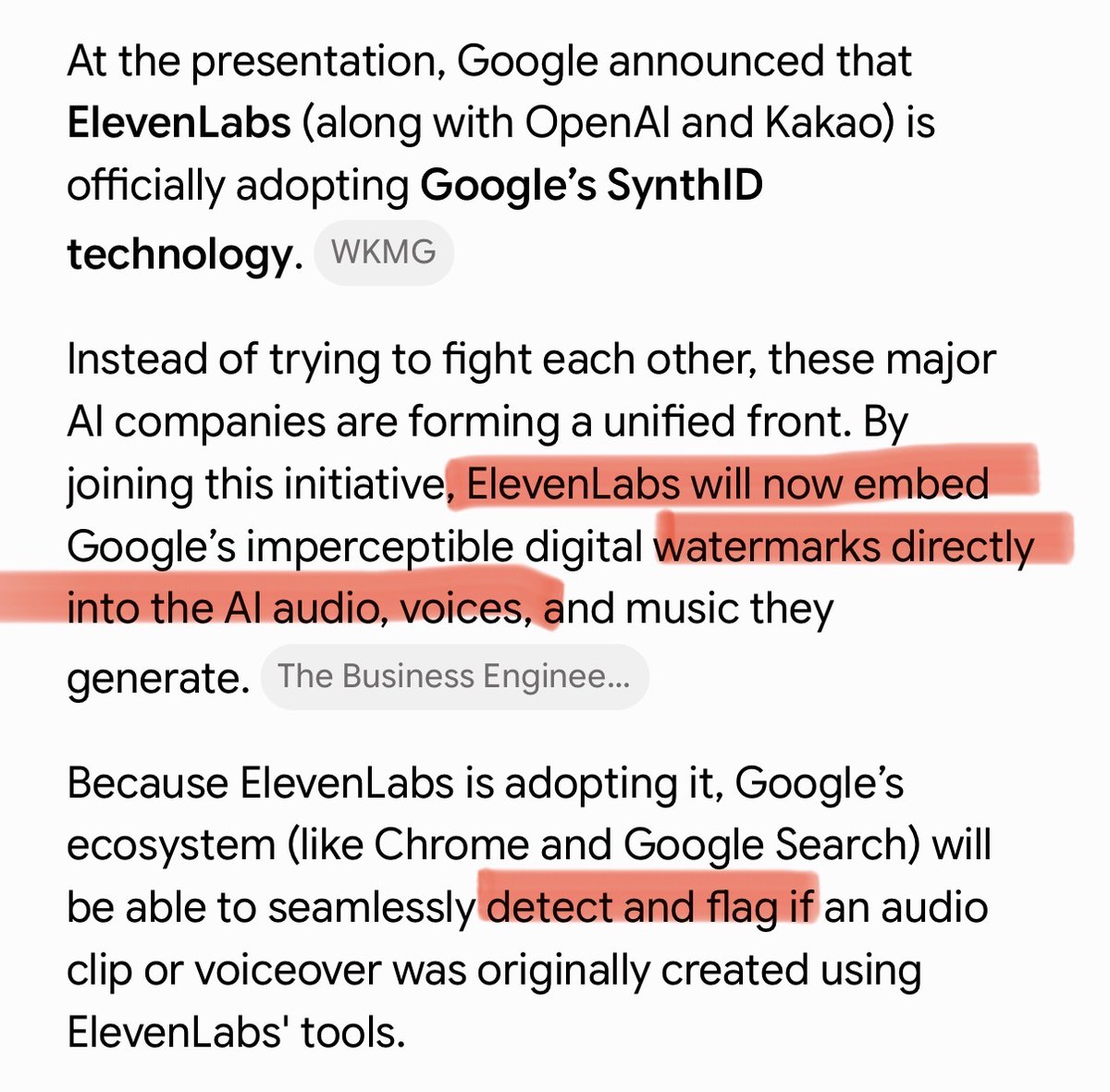
ElevenLabs is going to watermark all of their voiceovers,
And Gemini (YouTube by extension) will instantly know it was AI-generated.
They’ll bring more AI tools into Google SynthID soon,
Which I bet will split YouTube into AI vs. Real Content sections that you’ll be able to toggle on and off.
Curious to see how the performance of faceless channels changes over the next few months.
1
324
Feb 16
Some people live their life as if god is going to judge them by how cynical and critical they were of every single thing after they die.
Feb 15

growing up is realising the second group is everything thats wrong with people engaging with art in the modern day
1
314
Feb 15
This is silly
Of course you can get good at things for free.
You can go to the gym and learn for free, but there's a reason why people get personal trainers.
1
2
492
Jan 20
Idk maybe hot take but I think the old title was better, not terms of marketing (although that too) but in setting context and being relatable.
It's a normal part of life, these things happen, some people might've seen that and thought "fuck that's me! I am not alone!"
Jan 19

I have respect for Hormozi but given the timing, WTF is this title?
1
2
339
Jan 20
I just don't know what moral ground that was crossed here. Seems like a normal human experience to share.
I guess this also depends what lens you're looking at it from.
"oh he's only marketing"
Vs
"he's sharing a personal event and something that helped him"
220
27 Dec 2025
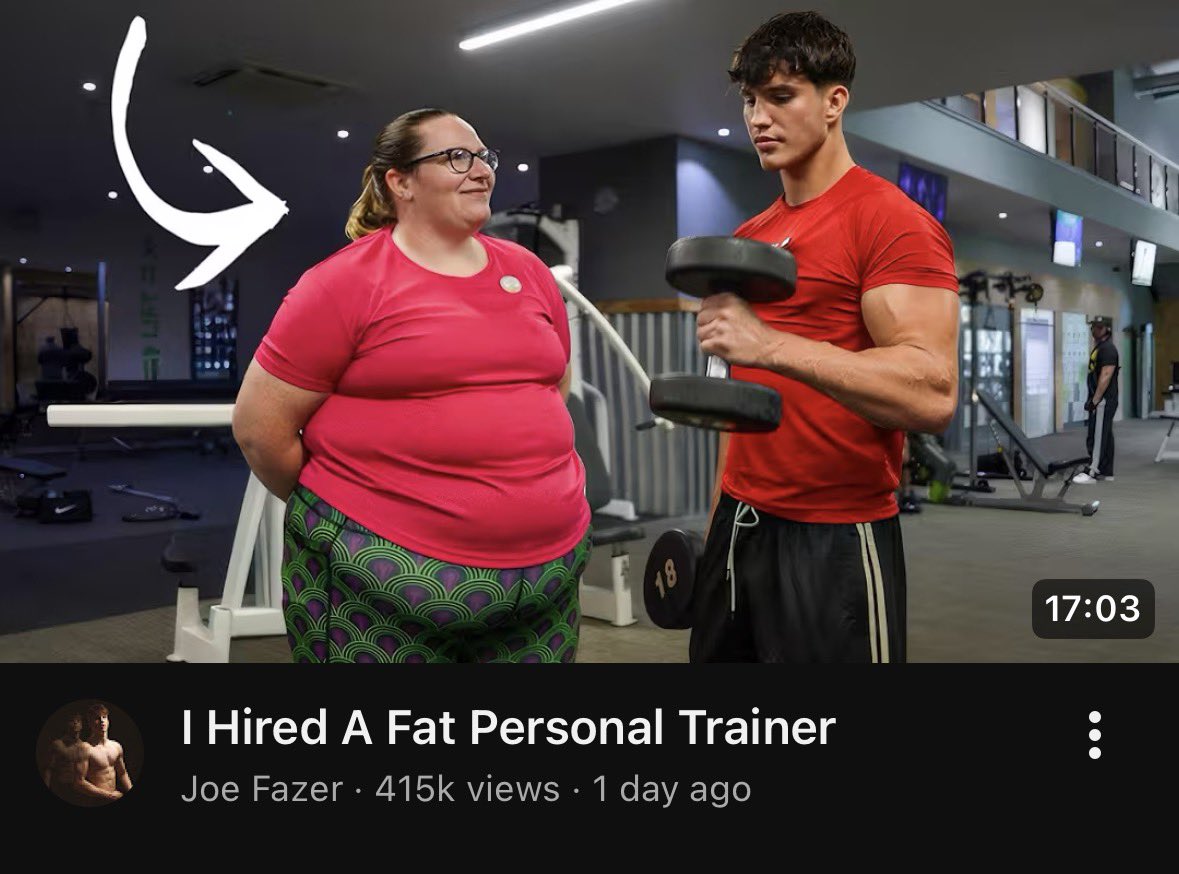
one thing you missed is also how simple it is:
2 objects, 1 short sentence title, simple words

One of my favorite thumbnail title combos ever
Comparison, Contrast, Conflict, Interaction, Drama, Curiosity, Comedy, I can't even find enough words to describe how great this is
Study this
3
457