Professor in CS@IIT Delhi. Interested in Machine learning for graphs. Hobbies: Cricket, fitness, Traveling.
Joined July 2022
- Tweets 220
- Following 119
- Followers 778
- Likes 683
41 Photos and videos


May 11
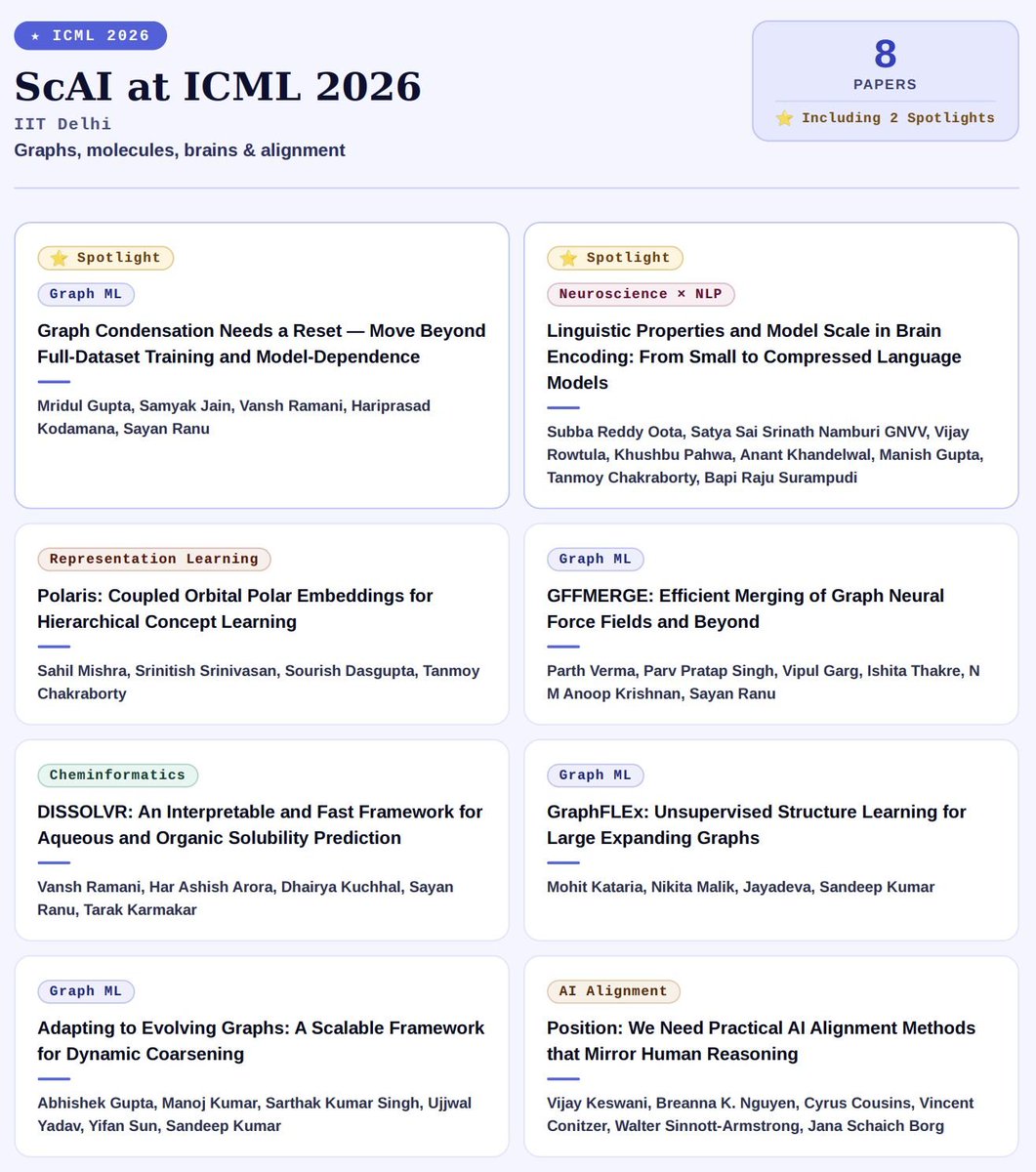
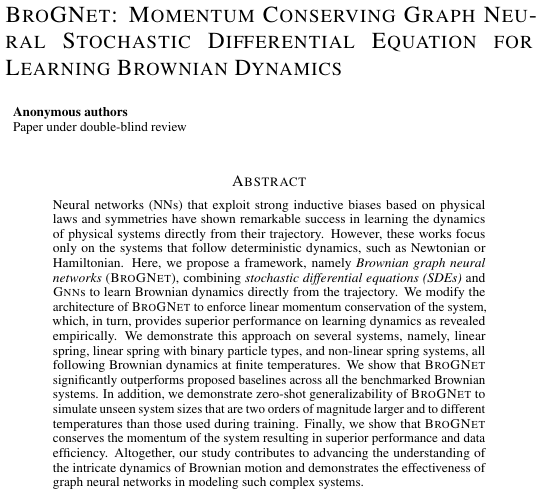
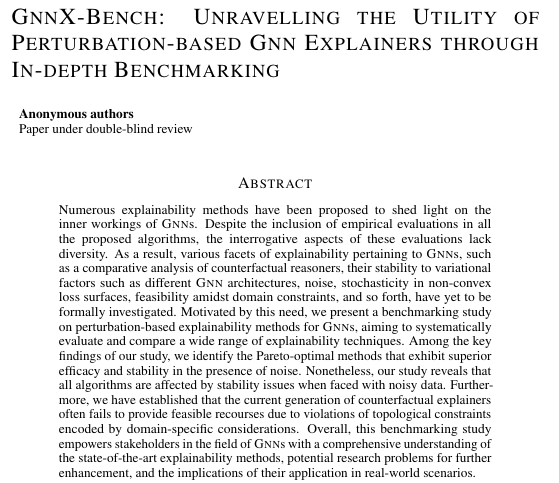
Yardi School of AI (@YardiScAI) @iitdelhi is heading to #ICML26 with 8 papers — including 2 Spotlights.
📌Graph condensation, neural force fields, solubility prediction, dynamic graph coarsening, brain encoding, concept learning, AI alignment — a pretty wide spread this year.
2
25
1,380
Sayan Ranu retweeted

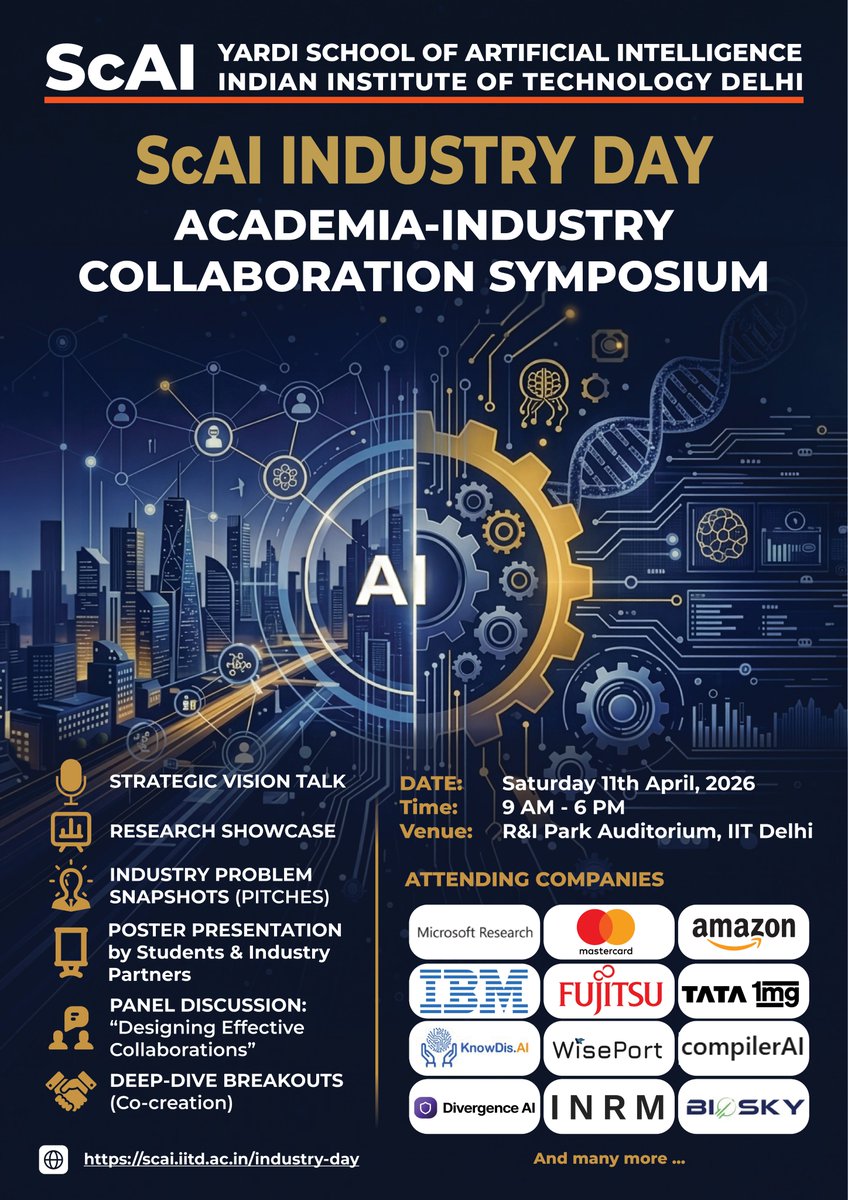
Excited to announce the 𝗦𝗰𝗔𝗜 𝗜𝗻𝗱𝘂𝘀𝘁𝗿𝘆 𝗗𝗮𝘆: 𝗔𝗰𝗮𝗱𝗲𝗺𝗶𝗮-𝗜𝗻𝗱𝘂𝘀𝘁𝗿𝘆 𝗖𝗼𝗹𝗹𝗮𝗯𝗼𝗿𝗮𝘁𝗶𝗼𝗻 𝗦𝘆𝗺𝗽𝗼𝘀𝗶𝘂𝗺, hosted by the 𝚈̲𝚊̲𝚛̲𝚍̲i 𝚂̲𝚌̲𝙰̲𝙸̲̲ at 𝙸̲𝙸̲𝚃̲ ̲𝙳̲𝚎̲𝚕̲𝚑̲𝚒̲! 🚀
🔗 To know schedule: scai.iitd.ac.in/industry-day
2
2
238
Sayan Ranu retweeted

Apr 5
There are two kinds of ICML reviewers. The 'you did not convince me, I'll keep my score' and the 'you convinced my entirely, I am happy to keep my score!'.
3
7
169
12,376
Sayan Ranu retweeted

Apr 3
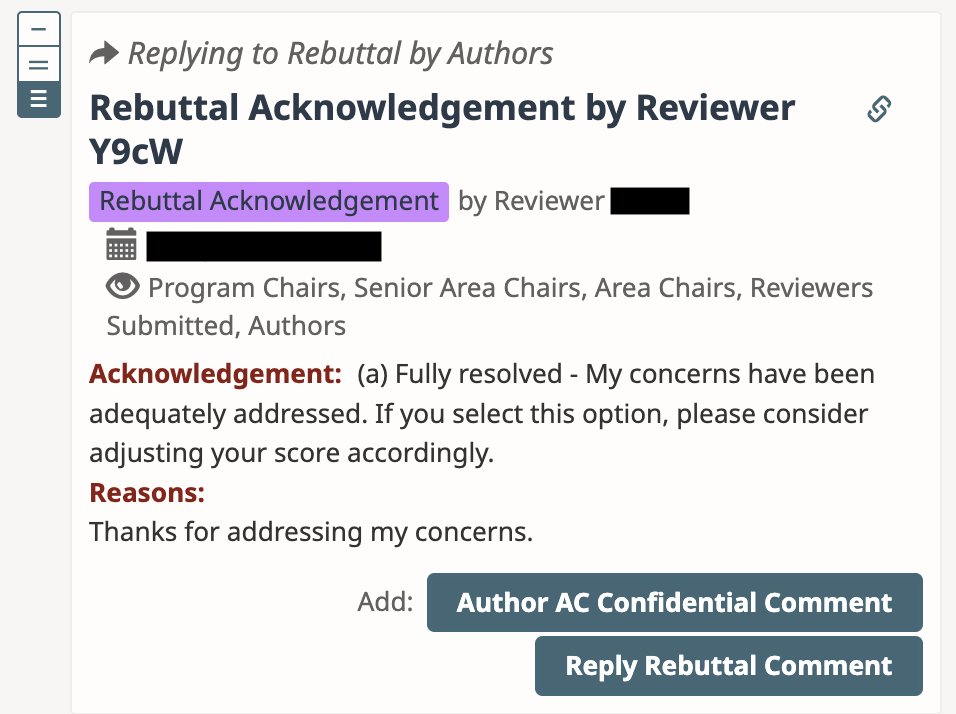
What happens to the ICML rebuttal? So many "Fully resolved - My concerns have been adequately addressed. I will keep my weak reject score" acknowledgment. Seeing this both as an AC and as an author.
My theory: People who are mad at the NeurIPS sanctions are trolling ICML
12
4
98
21,336
Sayan Ranu retweeted

#ICML2026 rebuttal experience: students hustle to generate about 6 new results in a week. Reviewers = "Thanks for the results; answers all my questions. I maintain my score".
7
12
303
26,721
Sayan Ranu retweeted
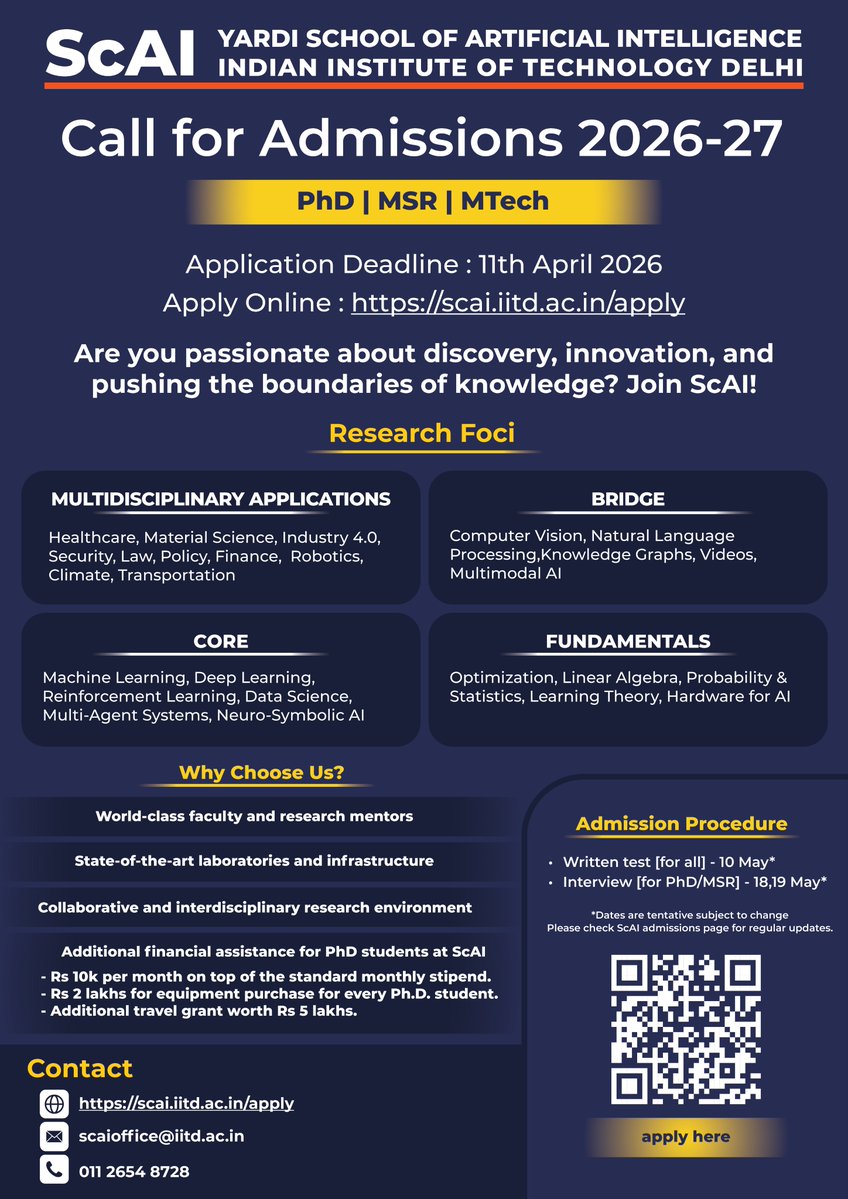
🎓 𝗔𝗱𝗺𝗶𝘀𝘀𝗶𝗼𝗻𝘀 𝗢𝗽𝗲𝗻 𝗳𝗼𝗿 𝗣𝗵𝗗/𝗠𝗦𝗥/𝗠𝗧𝗲𝗰𝗵 𝗣𝗿𝗼𝗴𝗿𝗮𝗺 𝗮𝘁 𝗬𝗮𝗿𝗱𝗶 𝗦𝗰𝗵𝗼𝗼𝗹 𝗼𝗳 𝗔𝗜 (𝗦𝗰𝗔𝗜)
𝗔𝗽𝗽𝗹𝗶𝗰𝗮𝘁𝗶𝗼𝗻 𝗗𝗲𝗮𝗱𝗹𝗶𝗻𝗲: 11th April, 2026
𝗛𝗼𝘄 𝘁𝗼 𝗔𝗽𝗽𝗹𝘆:
Visit our website: scai.iitd.ac.in/apply
#ScAI #AI #IIT
1
2
223
Sayan Ranu retweeted

27 Nov 2025
CSE @ IITD is all set for a big splash at @NeurIPSConf 2025! 🚀🎉
✨ Oral Presentation
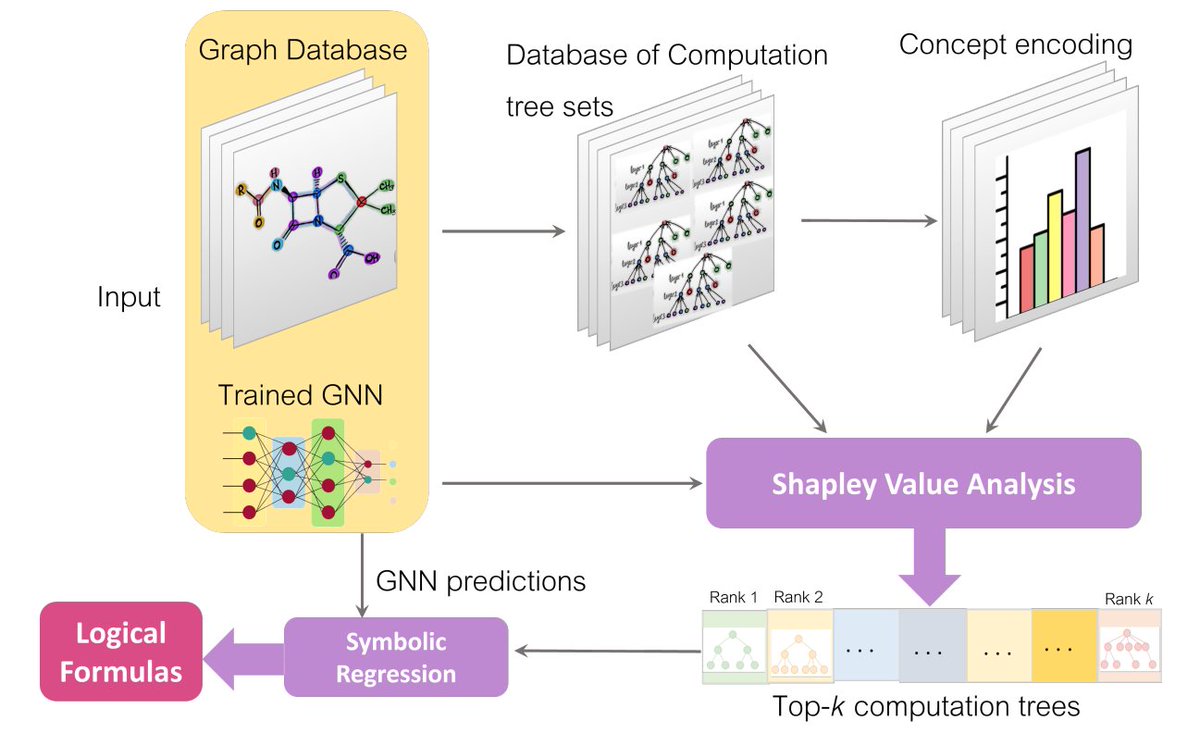
“GnnXemplar: Exemplars to Explanations – Natural Language Rules for Global GNN Interpretability”
by Burouj Armgaan, Eshan Jain, Harsh Pandey, Mahesh Chandran, and @SayanRanu
📄openreview.net/pdf/4c15b12cf…
✨ Paper
“Parameter-free Algorithms for the Stochastically Extended Adversarial Model” by Prof. Adarsh Barik and his collaborators
📄 arxiv.org/abs/2510.04685
2
30
2,616
Sayan Ranu retweeted
27 Nov 2025
Everyone wants constructive reviews for their papers, and only a few stand out for doing them exceptionally well. CSE @ IIT Delhi celebrates this excellence:
🌟 Our start Ph.D. student Burouj Armgaan (armagaan.github.io/) and faculty member Prof. Adarsh Barik (adarsh-barik.github.io/) has been recognized as a Top 10% Reviewer at NeurIPS 2025.
🌟 Our faculty member Prof. Sayan Ranu (@SayanRanu) has been recognized as a Top 10% Area Chair at NeurIPS 2025.
3
31
2,244
Sayan Ranu retweeted
27 Nov 2025
Exploring faculty positions? Thinking about joining Indian academia? Curious about the application process or about @iitdelhi? Meet us at NeurIPS 2025!
Our faculty members — Prof. Mausam (@mishumausam), Prof. Sayan Ranu (@SayanRanu), and our newly joined colleague Prof. Adarsh Barik (adarsh-barik.github.io) — will be there.
Feel free to connect with them during the conference. We are happy to chat and answer questions!
1
2
28
3,003
Sayan Ranu retweeted

16 Oct 2025
Advice for PhD applicants : who you work with matters way more than what you work on.
(For some reason - this aspect doesn't get talked about much).
When choosing a PI - Prestige matters. Field matters. But fit matters even more. And don’t just look at fit with your PI - try to measure fit with current/senior PhD students in that lab, and more importantly - the postdocs. Depending on the size of the lab, they will most likely be mentoring you and you probably would spend most of your time with them.
This takes effort. You will have to reach out and put yourself out there a bit. It may not be a totally smooth experience, but I promise you - it’s worth it. Talking to these people gives you important data points which would inform you how the lab functions, what are the pros and cons, and how they go about their research. Style of research really matters here.
Not long ago, I was fortunate to be in a position where I had to choose between some excellent labs. I chose my current lab based on this advice. Trust me - it works (I’ve only been here for a few months, but I can already see why this advise works. Only time will tell..). Of course, things could always wrong, but this gives you the best chance. Environment matters.
Very few things are better than being able to do impactful science along with super-talented and helpful colleagues. It’s absolutely amazing!
Stick to your guns. Know who you are (motivations, skills, interests..). Be curious. Be open to feedback. It’ll work itself out. All the best! :)
PS: Happy to help current applicants (DM/email)
21
62
896
73,609
26 Sep 2025
Our work “GNNXemplar: Exemplars to Explanations – Natural Language Rules for Global GNN Interpretability” is accepted as an oral at @NeurIPSConf.
Exemplar-based LLM-driven rules → scalable, faithful, human-readable GNN explanations.
📄 arxiv.org/pdf/2509.18376
@cseiitd
2
17
693
Sayan Ranu retweeted

31 Aug 2025
Rejecting papers in #AI Conferences because of "resource constraints" is shooting ourselves in the foot as a community; use Findings.. #SundayHarangue
By now, we have all know that top AI conferences are oversubscribed (in terms of paper submissions), and have heard that that they are forced to lean on the ACs heavily to reduce acceptances--due to "resource constraints."
Let me start by saying that I completely sympathize with the predicament of the organizers of the AI conferences--who have after all being forced to take up increasingly Herculean tasks (x.com/rao2z/status/196218786…). I also believe that top AI conferences have generally been a lot more enlightened than other conferences. Almost all best practices in conference running-- rebuttals, meta reviews, de-stigmatizing poster papers by making all papers posters by default--have come from AI conferences! (cf x.com/rao2z/status/129370372… and ijcai-16-pc.blogspot.com/201…)
The best AI conferences have also long stopped bragging about acceptance rates--a metric that still rules the waves in other fields despite its highly dubious motivation (1% junk is still junk; 50% of gold is still gold).
But lately, there is a new issue that is afflicting the AI conferences--a massive increase in the number of submissions (cf x.com/rao2z/status/196030741…). While it was fun for a while to brag about submission numbers, now almost all big conferences are ruing this trend.
The reasons for this increase are of course complex--and the 24/7 hype around AI--some of which is more than justified by the impressive advances in the field--is certainly not helping. Almost all engineering students and faculty--no matter what their specific major--are doing things related to AI and justifiably want to join the carnival er.. conference circuit.
This phenomenon is not exactly going away anytime soon. Efforts to discourage submissions either by haranguing, or weeding out phases--are neither effective nor good for the field!
The most pressing issue of this increase has of course been the burden on the reviewers. While it is clear that there are simply not enough qualified reviewers for looking at the onslaught of papers, we do seem to have found some ways to handle it--e.g. with multi-tiered PCs--Reviewers, ACs, SACs, PC Chairs, and (perhaps less defensible, albeit understandable) conscription policies requiring authors of submitted papers to agree to be reviewers.
A new, more worrisome trend is that the number of papers with reasonable review scores and accept-worthy AC meta-reviews is so high that the conferences are descending into the unenviable position of not even having enough poster space in the cavernous convention centers they are holding the conferences in.
(As one concrete example, I got an email from a conference I am AC'ing for saying that a paper that I recommended for acceptance and wrote a meta-review and SAC confidential comments-- falls below the average review rating threshold based on their resource constraints, and that if I want the paper to be rescued, I have to do additional work requesting the SAC for exception..)
While understandable, this practice is basically tantamount to the community shooting ourselves in the foot. It is not like the rejected papers disappear from the face of earth!--we all know that an overwhelming number of them just enter the next conference deadline--that the conferences have nicely coordinated to make happen within a week or so of the decisions of the previous conference! But the reviewers for this other conferences are basically us, and so we are just further exacerbating the reviewer cycle paucity problem.
For the good of the field as well as that of reviewers' time, the goal must be to reduce the need to re-review any papers that have received thoughtful reviews that are generally supportive.
Here is one idea:
If physical space for posters has become the crunch point, then perhaps the AI conferences should consider adopting the ACL approach of having main track vs. findings track. After all, if we can have rungs above posters--with spotlight and oral categories, then we can also have a rung below posters for papers that have reviewed well but for the poster space crunch!
After all, we already have all papers appearing on arXiv before submission, and these "Findings track" acceptance can serve as a badge of community acceptance--even if it is not of "oral presentation" level.
I would love to hear other thoughtful ideas..
(I reiterate that I am only talking about acceptance caps because of resource constraints. As I mentioned, conferences that try to keep "acceptance rates" below a certain magic number--to curry favors with the tenure committees in various places that would like to continue with their outdated selection rate metrics to bean count research productivity--are too far gone for me to care..)
26 Aug 2025

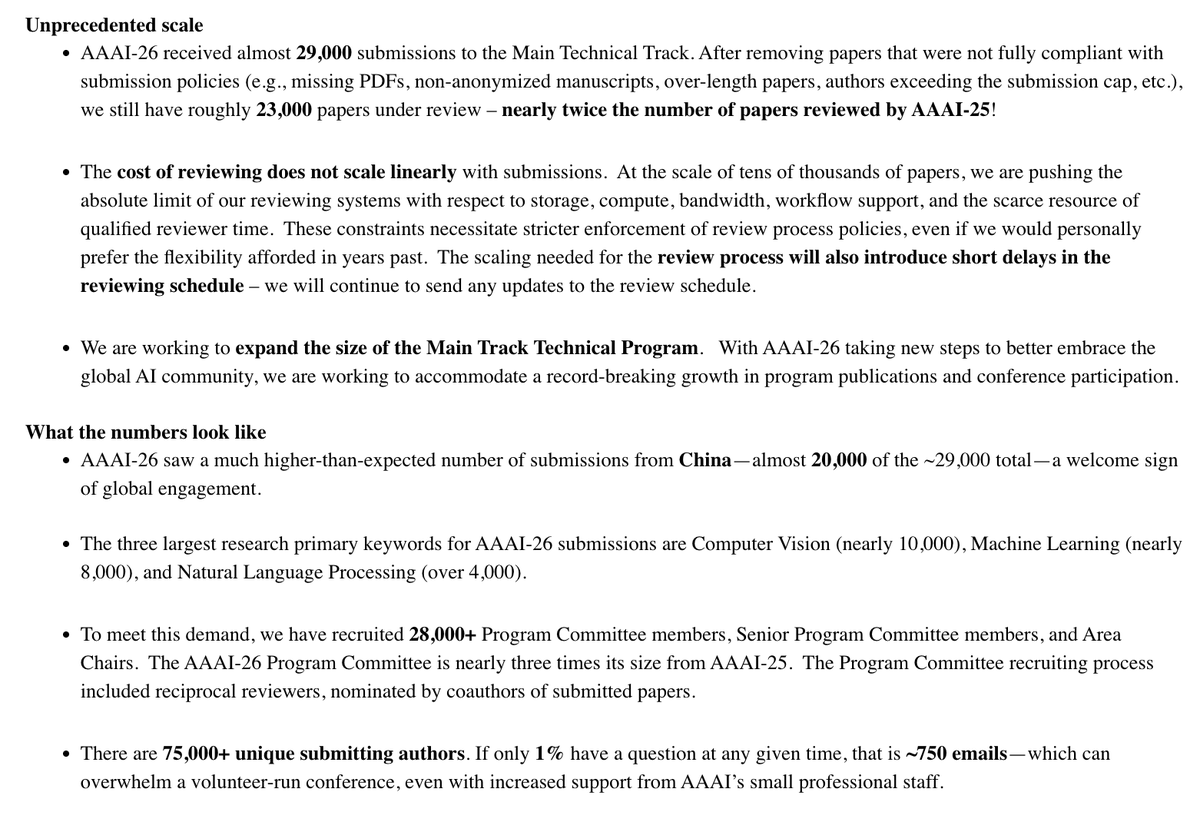
So #AAAI2026 @realaaai (to be held in Singapore) has 29,000 initial submissions, with 20,000 from China alone. They have 23,000 papers in review (double that of 2025!)
Unless we can clone synthetic #AI reviewers pronto, we are cooked.. 😱😱😱
8
8
80
15,521
Sayan Ranu retweeted

29 Aug 2025
The rebuttal process @NeurIPSConf was too collegial and productive, so a bunch of papers whose process ended on a positive note will be rejected.
2
10
127
32,978
Sayan Ranu retweeted

15 Jul 2025
GRAIL: Graph Edit Distance and Node Alignment using LLM-Generated Code . See you at poster East Exhibition Hall A-B #E-1701, Tue 15 Jul 11 a.m. PDT — 1:30 p.m. PDT
icml.cc/virtual/2025/poster/… (4|5)
1
1
4
443
12 May 2025
We are conducting a survey as part of an ongoing project on the explainability of GNNs.
We aim to explore which form of explanation—textual descriptions or visual subgraphs—is more intuitive from the perspective of non-experts.
Please participate!
forms.gle/DwEXnBJQyrDCT4tJ6
1
6
479
25 Apr 2025
2
3
28
959
23 Apr 2025
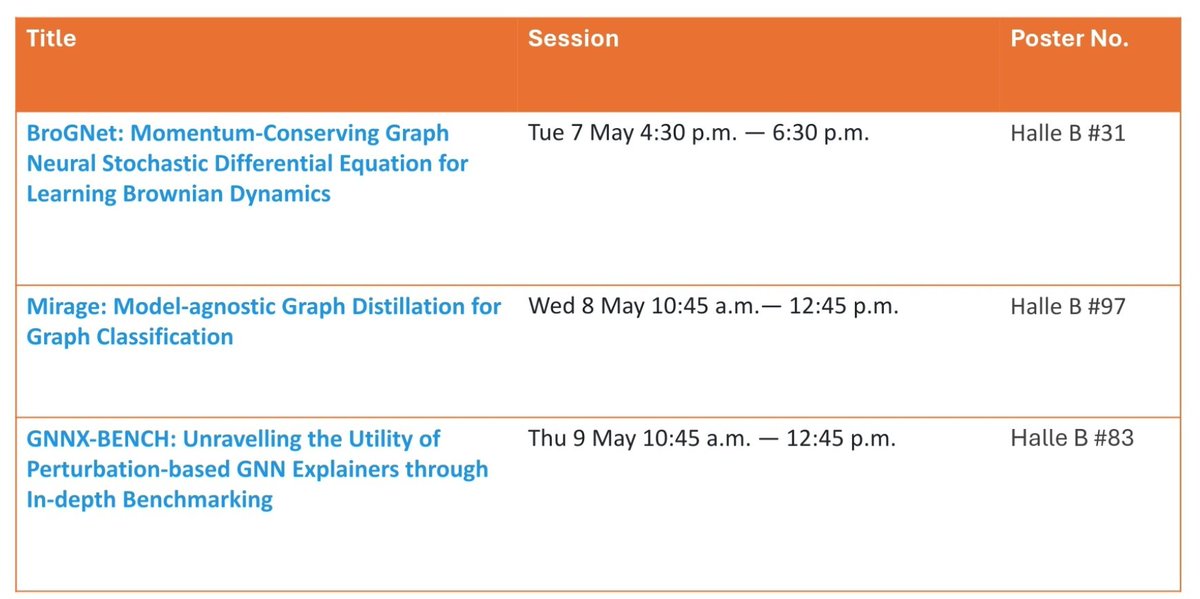
Excited to attend @iclr_conf !
We'll present 3 works.
1. Graph Condensation (openreview.net/pdf?id=5x88lQ…).
2. Algorithm discovery (openreview.net/forum?id=q7LS…) at DL4C workshop
3. Fusing GNN models (arxiv.org/abs/2503.03384) at Neural Network Weights workshop.
#ICLR25
1
31
1,051
Sayan Ranu retweeted

3 Apr 2025
🚀 Excited to host the @Indiaacm Summer School 2025 on AI for Social Good at IIT Gandhinagar @iitgn (June 2–13)!
Website: sustainability-lab.github.io…
🌍 Focus: AI for Healthcare, Sustainability, & Agriculture
🎤 Keynotes: @ManishGuptaMG1 (Google DeepMind India) & @VNPadmanabhan (Microsoft Research India)
Confirmed set of speaker details on the event website.
🛠 Topics: LLMs, GNNs, Bayesian ML, Multimodal AI & more! --> for social good.
📢 Students passionate about AI with real-world impact—register now!
🔗 Details & registration: india.acm.org/education/acm-…
Deadline: 13th April
Can’t wait to see the ideas and collaborations that emerge! 🚀
#AIforSocialGood #MachineLearning #ACMIndia #ArtificialIntelligence #Sustainability #AI4Healthcare
1
5
44
2,679