Founding Thinker @KigoThinkers | ShowHost of The Capital Gang @CapitalFMUganda | Seasoned Educator and Principal
Joined August 2012
- Tweets 31,600
- Following 1,130
- Followers 33,124
- Likes 32,154
1,395 Photos and videos



Oskar Semweya-Musoke retweeted


2
5
746

@CHRISBARYOMUNS1 now you are talking! Medical Interns need to be paid!👏🏾👏🏾👏🏾👏🏾
1
2
288
Oskar Semweya-Musoke retweeted

Thankyou Dr. Chris Baryomunsi I have been wondering if u lost the DNA of being a Doctor.
Medical interns pay cut can not be a solution for Ugandas economy.
1
3
478
Oskar Semweya-Musoke retweeted

There is no 28billion to pay intern doctors in the budget Museveni is presenting today, no 8billion for UNEB to train teachers on how to mark new syllabus, no 3.5billion to complete new syllabus but there is 211billion for welfare and entertainment for big people, 536 billion for special meals and drinks for big people, 196 billion for big people to donate, 17 billion for firewood, gas and charcoal and 2.6 trillion for classified expenditure!
503
1,279
5,095
228,857
Oskar Semweya-Musoke retweeted

Active diplomats are not supposed to acquire dual citizenship in countries where they are accredited. Did my friend Amb @adoniaayebare acquire dual citizenship while in active diplomatic service? How did he represent Uganda’s sovereignty with an inherent conflict of allegiance? How did he maintain the required neutrality for diplomatic work? @USEmbassyUganda ~ Price of coats of many colours: Four to wait longer for ministerial oaths monitor.co.ug/uganda/news/na…
62
89
456
50,593
Oskar Semweya-Musoke retweeted

Jun 8
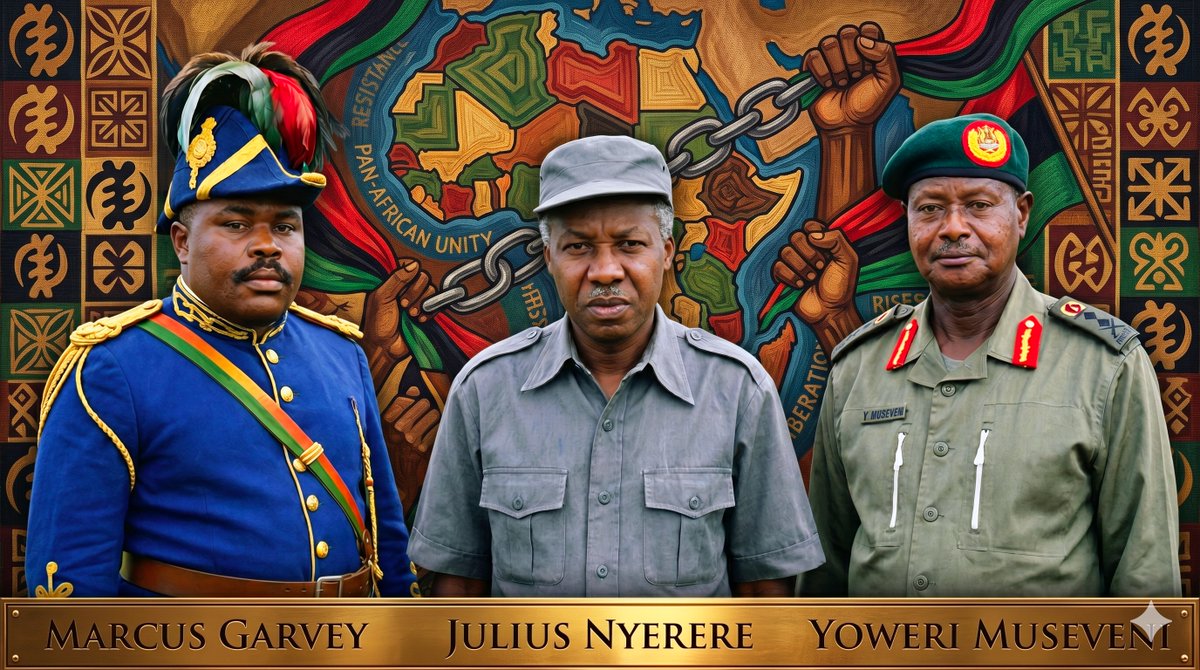
Was just reminded of this post, a comment on Yoweri Museveni’s argument that he wasn’t depriving Ugandans abroad of their citizenship by designating them “foreigners” or trying to hijack money from the Diaspora by categorising it as proceeds of hostile “foreign agents”. Museveni likened himself to the great Pan-African Marcus Garvey and Tanzania’s founder Julius Nyerere.
Was reading about the relationship between Garvey and W.E.B. Du Bois, also a monumental figure of Pan-Africanism. Both ultimately shared the same overarching goal: the liberation and empowerment of Black people globally. Despite that, they were ideological rivals who engaged in a bitter, long-standing public feud.
Du Bois believed in fighting for civil rights and integration within America. Garvey, on the other hand, championed grassroots mobilisation, economic self-reliance, and the "Back-to-Africa" movement, arguing that Black Americans should establish their own independent nation because they would never receive justice in white-dominated societies.
The interesting thing is that in 1951 Du Bois was charged with being an unregistered "foreign agent" by the United States government. If it had been today, with the Sovereignty Act that Museveni signed into law (though with the targets on the Ugandan diaspora deleted), the law would do to Pan-Africanist Du Bois what the US’s Foreign Agents Registration Act (FARA) did to him 75 years ago.
May 2

Garvey and Nyerere's Ghosts: Why the Young Museveni Would Have Been a Criminal Under His Bill Today
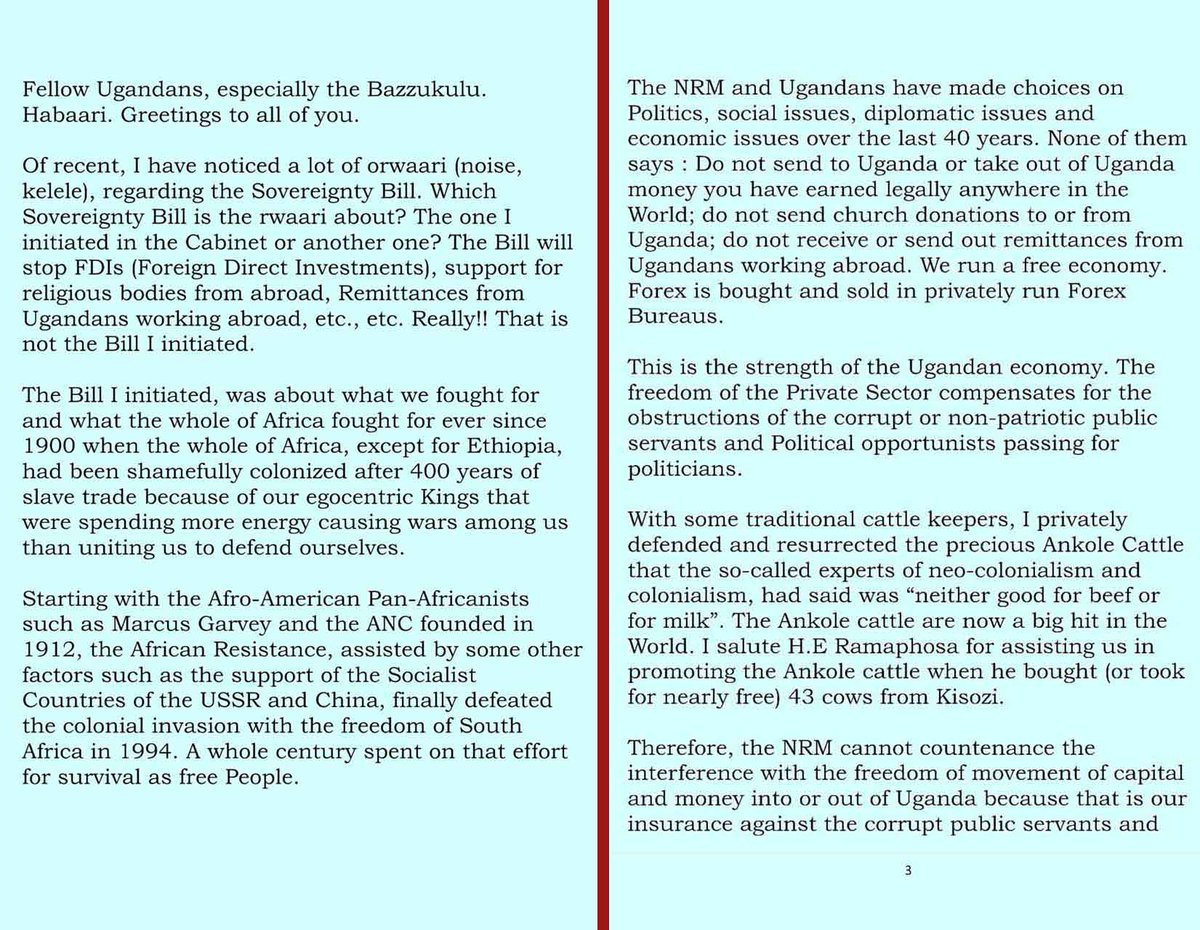
Amidst a storm of national and international backlash, the Ugandan government has deleted or diluted several of the more heinous clauses in its controversial Sovereignty Bill. These retreats were first signalled in a three-page letter from President Yoweri Museveni. Even so, the President defended the remaining text, claiming to channel the spirit of heroes like Marcus Garvey and Julius Nyerere, the struggles of the ANC, and two centuries of African anti-colonial resistance.
One might have let this pass, were it not for the glaring contradictions. Museveni is right to assert that African nations must guard their policy-making against external coercion to ensure the continent's future is determined by its own citizens. His acknowledgement of the long struggle against colonial exploitation rightly identifies the need for African agency. But a closer look at the Bill and the historical movements it invokes reveals deep-seated contradictions.
To begin with, Marcus Garvey's Universal Negro Improvement Association (UNIA) was the ultimate example of foreign political funding, powered by the remittances of the global Black Diaspora. While Museveni's letter claims to protect remittances, the Bill's broad language targets money with political intent. Since Garvey's entire financial model was built on political intent - the liberation of Africa - his work would be an illegal foreign influence under the strictures of this Bill. There is a fundamental disconnect in claiming Garvey as a hero while legislating to block the global African community's support (among others).
Similarly, the ANC's 1994 victory was won precisely because the movement ignored territorial sovereignty. The ANC built a globalised network that funnelled foreign money and political pressure into South Africa. A strict Sovereignty Bill in the 1970s would have been the Apartheid regime's greatest tool to silence the ANC's international allies.
Museveni should know this practically. In the late 1980s, he oversaw the relocation of the ANC and its armed wing, Umkhonto we Sizwe, to central Uganda. When they eventually won power in 1994, their massive parade in Kampala surprised many Ugandans who hadn't realised the sheer scale of the foreign presence on their soil (South Africa has repaid the favour by refusing to grant Ugandans visa-free access, while those Africans who actually even opposed their anti-apartheid struggle get it. Talk of treachery and ingratitude). Anyway, essentially, the Museveni of today is seeking to punish the progressive Museveni of decades past.
Furthermore, Museveni credits the USSR and China (and should have added Cuba) for assisting the African Resistance. This creates a logical trap: if the 20th-century liberation movements, including Museveni's own NRA, had operated under his proposed Sovereignty Bill, their external support would have been criminalised. Foreign weapons and training would have seen these freedom fighters labelled as mercenaries or traitors by the standing regimes.
Finally, Museveni blames egocentric kings for the disunity that invited colonisation. However, this Bill does exactly what those kings did: it concentrates power within a small executive Cabinet rather than the people. By invoking Garvey and Nyerere, Museveni is choosing heroes whose radical, pro-people philosophies offer the strongest arguments against his legislative agenda.
1
15
56
5,496
Oskar Semweya-Musoke retweeted

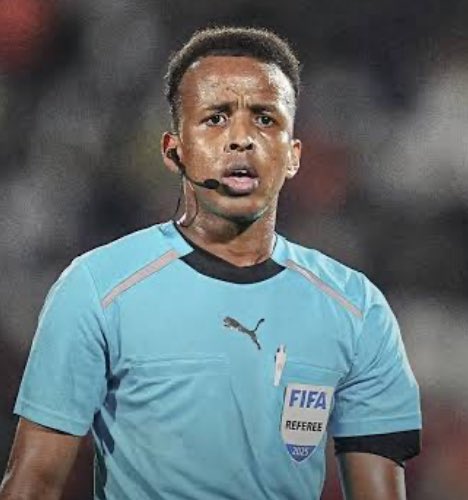
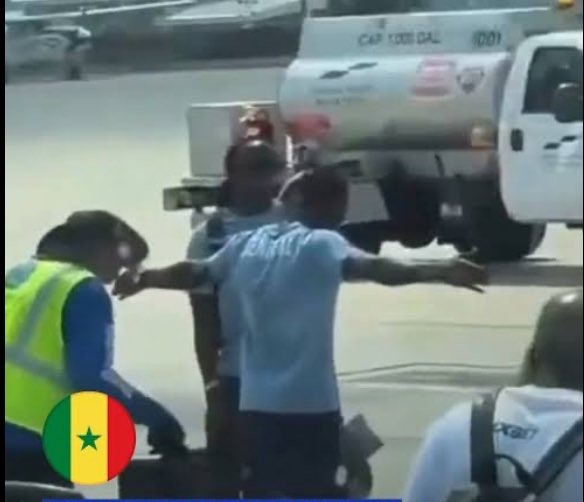
So all referees should boycott officiating @FIFAWorldCup matches in solidarity with Omar Artan, the Somali referee denied entry into the US. African football teams should refuse to play in protest at the humiliation of our champions Senegal. Then we shall see solidarity in action rather than empty bellicosity
112
284
1,284
68,612
Oskar Semweya-Musoke retweeted

Jun 8
Uber Tried to Take Over the World, but Nigerian Drivers Taught Them a Lesson They’ll Never Forget! 😂
1,055
5,759
26,631
2,742,611
RT @kasujja: Big day for the @UgandaMediaCent team!
We joined forces with the Presidential Press Unit at State House to photograph Uganda’…
120
Oskar Semweya-Musoke retweeted

"If students can generate [AI] essays, then the essay can no longer be the primary proof of learning...If every student has access to explanation, translation, and summarization, then education must move beyond the production of answers."
(Maurício Pinheiro, June 7, 2026)
28
163
543
17,555
Oskar Semweya-Musoke retweeted

Jun 7
Lewis Hamilton matches Ayrton Senna's record eight podiums in Monaco 🏆🏆🏆🏆🏆🏆🏆🏆

82
1,400
16,398
158,779
Oskar Semweya-Musoke retweeted

Uganda's law strictly limits dual citizenship to two nationalities and bars multiple citizens from cabinet slots. The Appointments Committee accepting a "promise" to renounce foreign allegiances later is a flat-out violation of statutory vetting procedures. #TheCapitalGang
4
18
96
10,970
Oskar Semweya-Musoke retweeted

#TheCapitalGang Whether government supports with financial assistance or not people must keep having startups, that’s the best way to improve livelihoods
1
1
3
269
Oskar Semweya-Musoke retweeted

Mr. Tabaro is misinformed on elec ss and dd. There is a clear difference btn installed and firm capacity; MW and MWh. Rainfall and cloud cover affect hydro & solar resp..ly. The grid requires reserves (installed, spinning, cold and hot reserves) to balance ss-dd and freq.
1
1
696
Oskar Semweya-Musoke retweeted

@SemweyaMusoke Rgarding the 'excess power' Uganda produces, Dr. Fred Muhumuza once said that Just because your sick child (Uganda) cannot finish the food you have given him/her, that does not mean you are providing too much food.
2
4
431

Oskar Semweya-Musoke retweeted
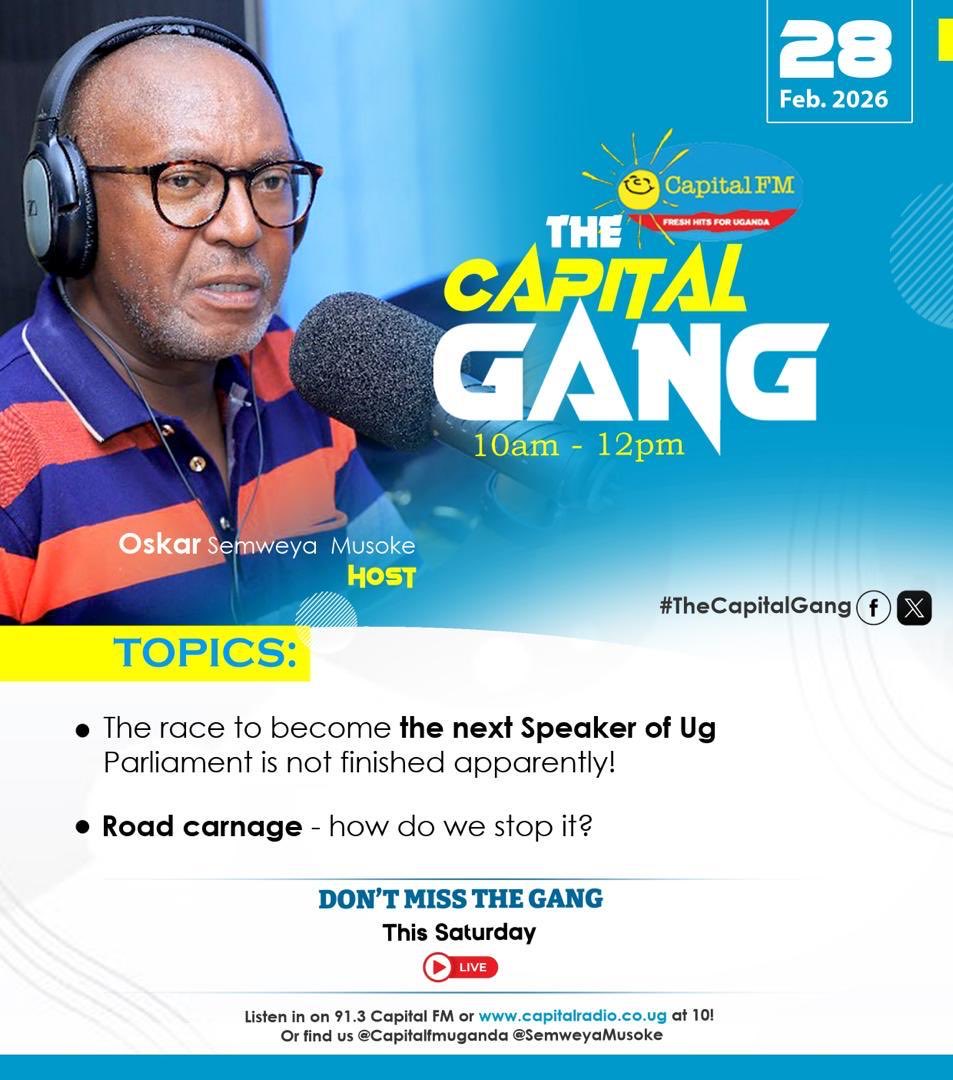
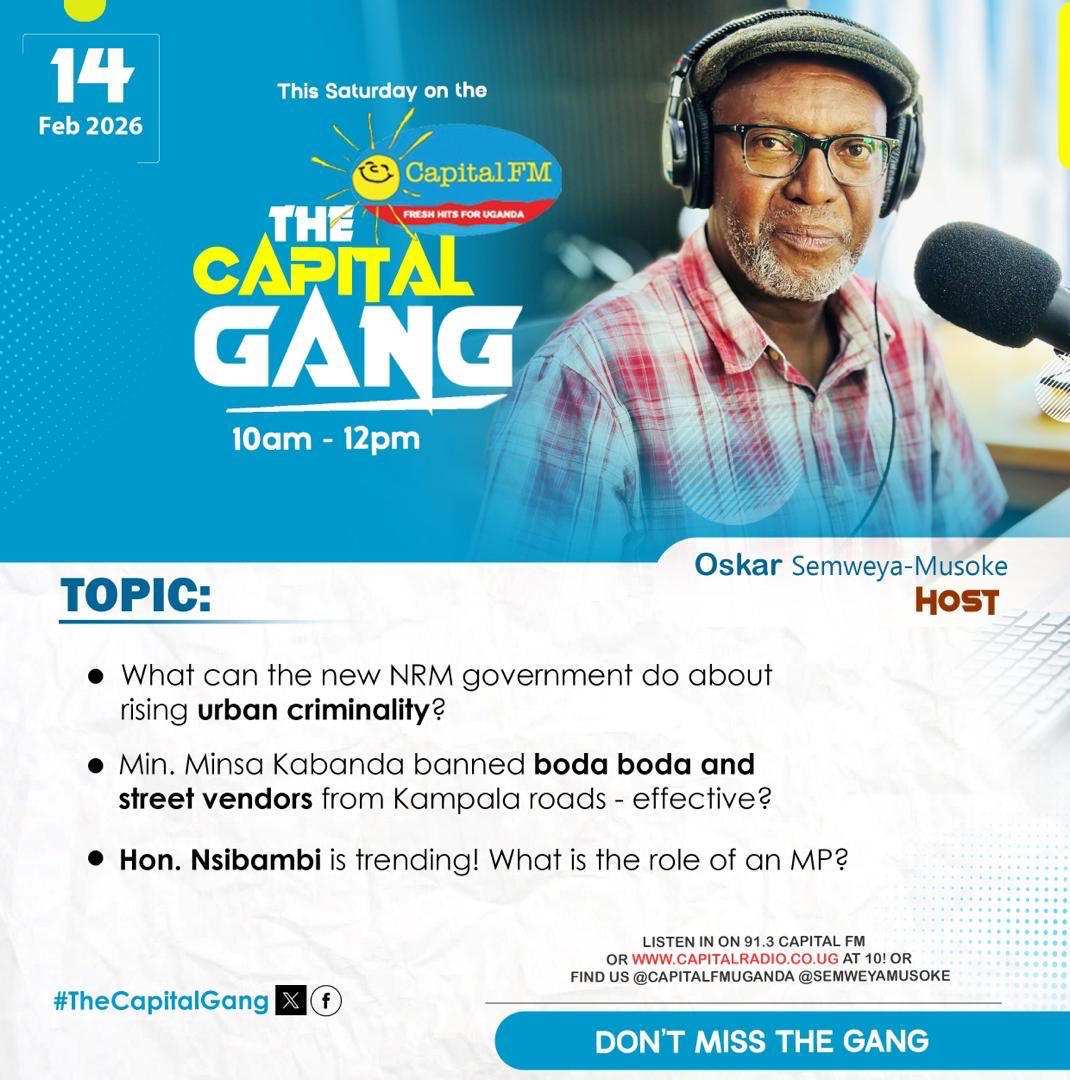
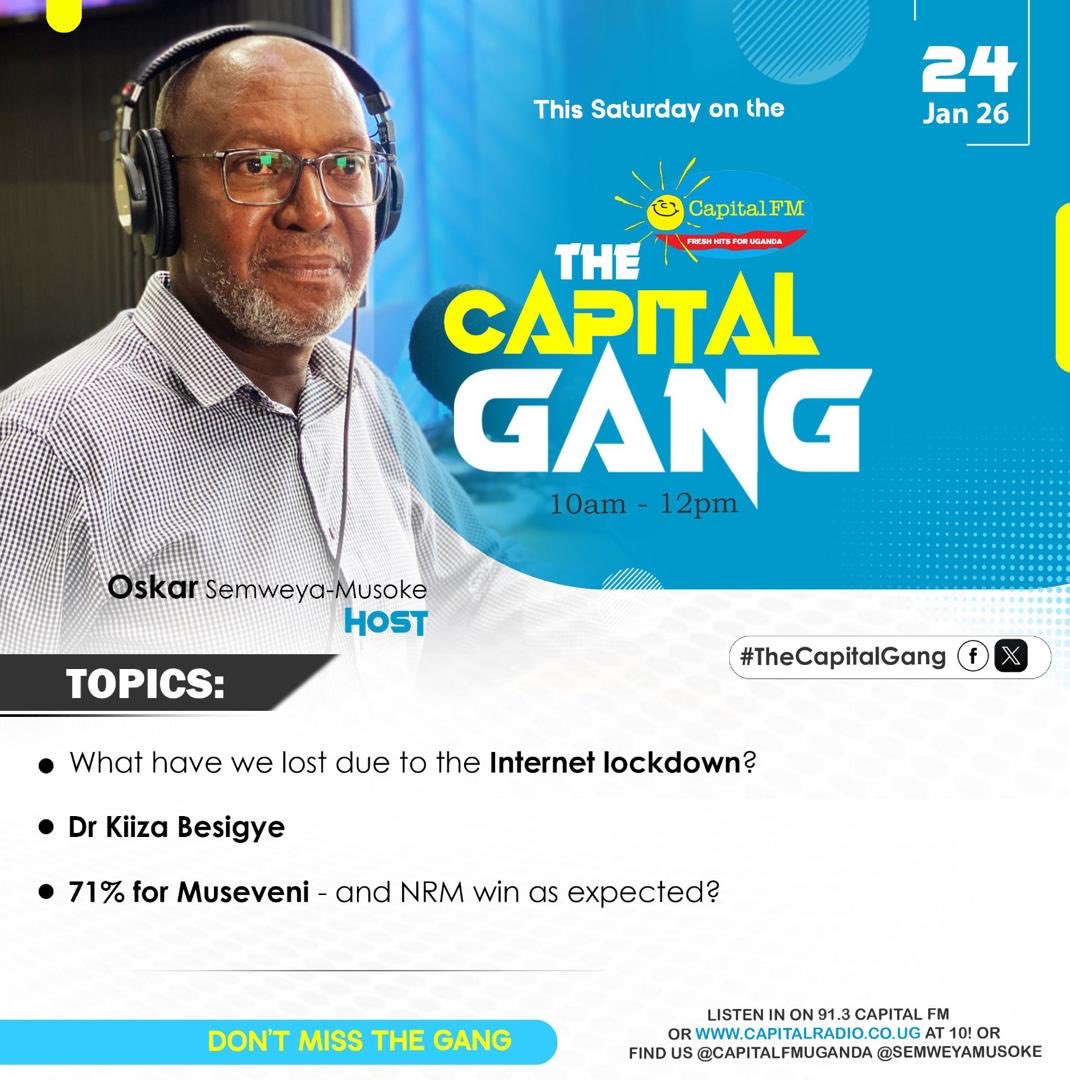
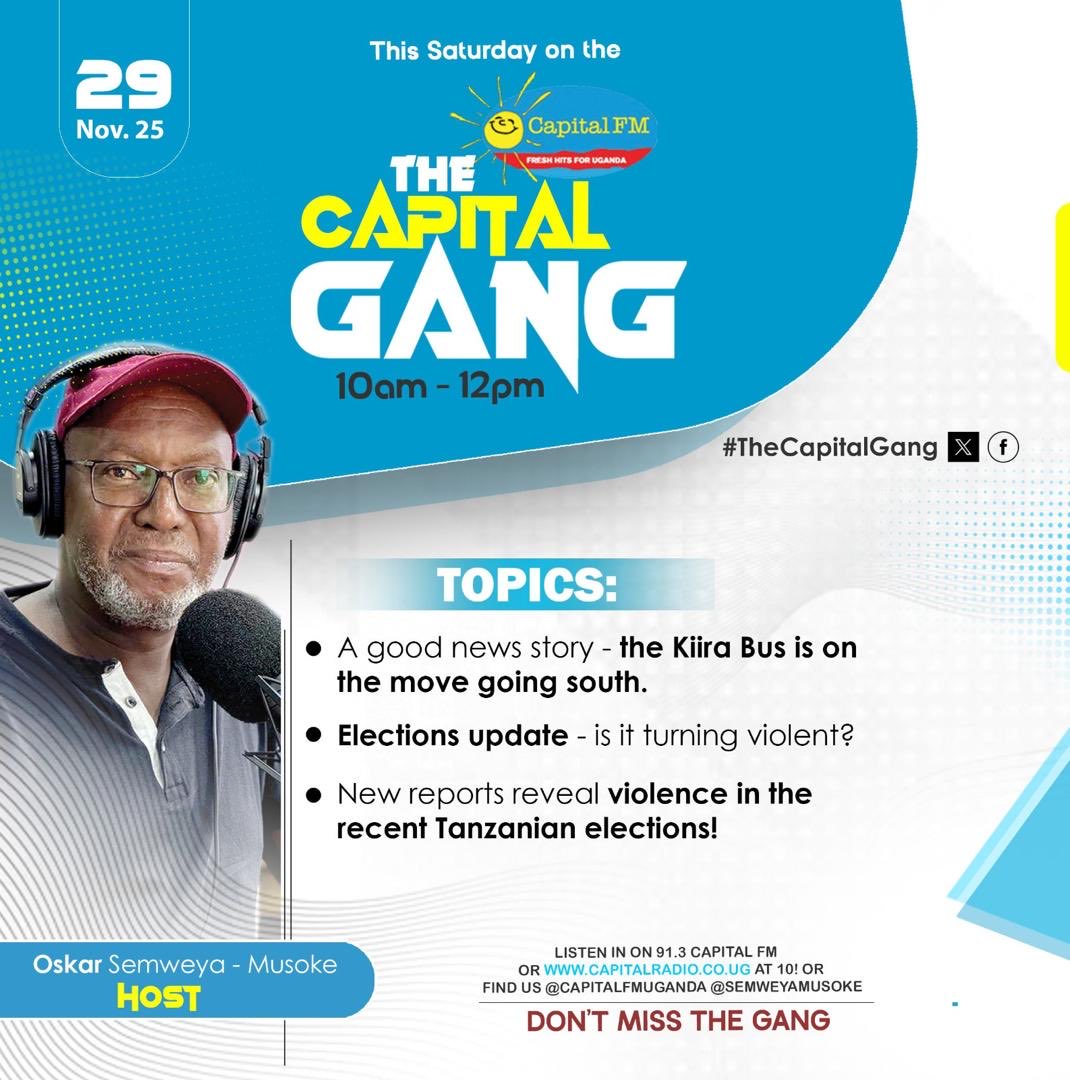
The Capital Gang 6.6.2026. State of the Nation Address - what caught your attention? Vetting of ministers - Prof Muganga in the news. Budget reading next week! Join the conversation with @SemweyaMusoke #TheCapitalGang #CapitalFM x.com/i/spaces/1mxPaaBzeDQKN
69
4
18
2,406
Oskar Semweya-Musoke retweeted

Jun 4
I disagree with you. Our dear MPs need those cars urgently. Imagine meeting an MP on a boda. Who are doctors in this society anyway? We can do away with them. We can ask pastors to be deployed in hospitals instead. After all, they won’t need to be paid, it’ll be the patients paying tithe. Isn’t that better logic, bro?

Let @GovUganda scrap giving MPs cars and instead divert that budget to paying interns. That money that is buying Mps vehicles when already they’re getting an obscene salary shows how Mr. @KagutaMuseveni doesn’t care about Uganda’s health care.
600
352
2,020
188,011
Oskar Semweya-Musoke retweeted

I would like to share a personal reflection on the ongoing conversations around citizenship, identity, and public service in Uganda. I was born and raised in Uganda. It is the country that shaped me, educated me, gave me opportunities, and allowed me to serve to the best of my ability. When my Ugandan passport was revoked years ago, it was one of the most difficult experiences of my life. It felt deeply personal and, at the time, heartbreaking. I was asked to choose between aspects of my identity that, to me, had never been in conflict. After much reflection, I decided that what mattered most was my ability to continue living, working, and contributing to the country I call home. I subsequently obtained a Rwandan passport and a work permit. While the process brought inconvenience and frustration, it never stopped me from continuing to work, build, contribute, and serve alongside fellow Ugandans. Though I am of Rwandan heritage, I have always considered myself Ugandan in every meaningful sense of the word, having lived here my entire life. That experience taught me an important lesson: service to one’s country is not measured solely by the passport one carries, but by the contribution one makes, the values one upholds, and the commitment one demonstrates to the people around them. As we debate recent appointments and questions of citizenship, I believe our focus should remain on competence, integrity, service, and the value individuals can bring to Uganda. Institutions responsible for appointments should be allowed to perform their duties, while the rest of us assess leaders by the impact they make.
Uganda’s story has always been one of diverse communities, cultures, and histories living alongside one another. Our identities are often more interconnected than we sometimes acknowledge. That diversity should be a source of strength rather than division. I also wish to say this respectfully: those who seek to inflame tensions or claim to speak for all Banyarwanda do not speak for me. I have never denied my heritage, nor have I ever stopped loving Uganda. The loss of a passport did not diminish my affection for this country or my desire to contribute to its future. We are a peaceful people. We are neighbours, colleagues, friends, and family members. The conversations we have today will shape the country our children inherit tomorrow. Let us therefore choose wisdom over anger, unity over division, and dialogue over suspicion. I love Uganda, and I remain grateful for all it has given me. I also remember a time when many people of Rwandan heritage living in Uganda felt unable to openly acknowledge that part of who they were. We have made significant progress since then. Let us not move backwards. Let us continue building a society where people are judged by their character, contribution, and commitment to the common good.
Peace, respect, and togetherness must always come first #peace #respect #love #understanding
302
278
1,274
224,665
Oskar Semweya-Musoke retweeted

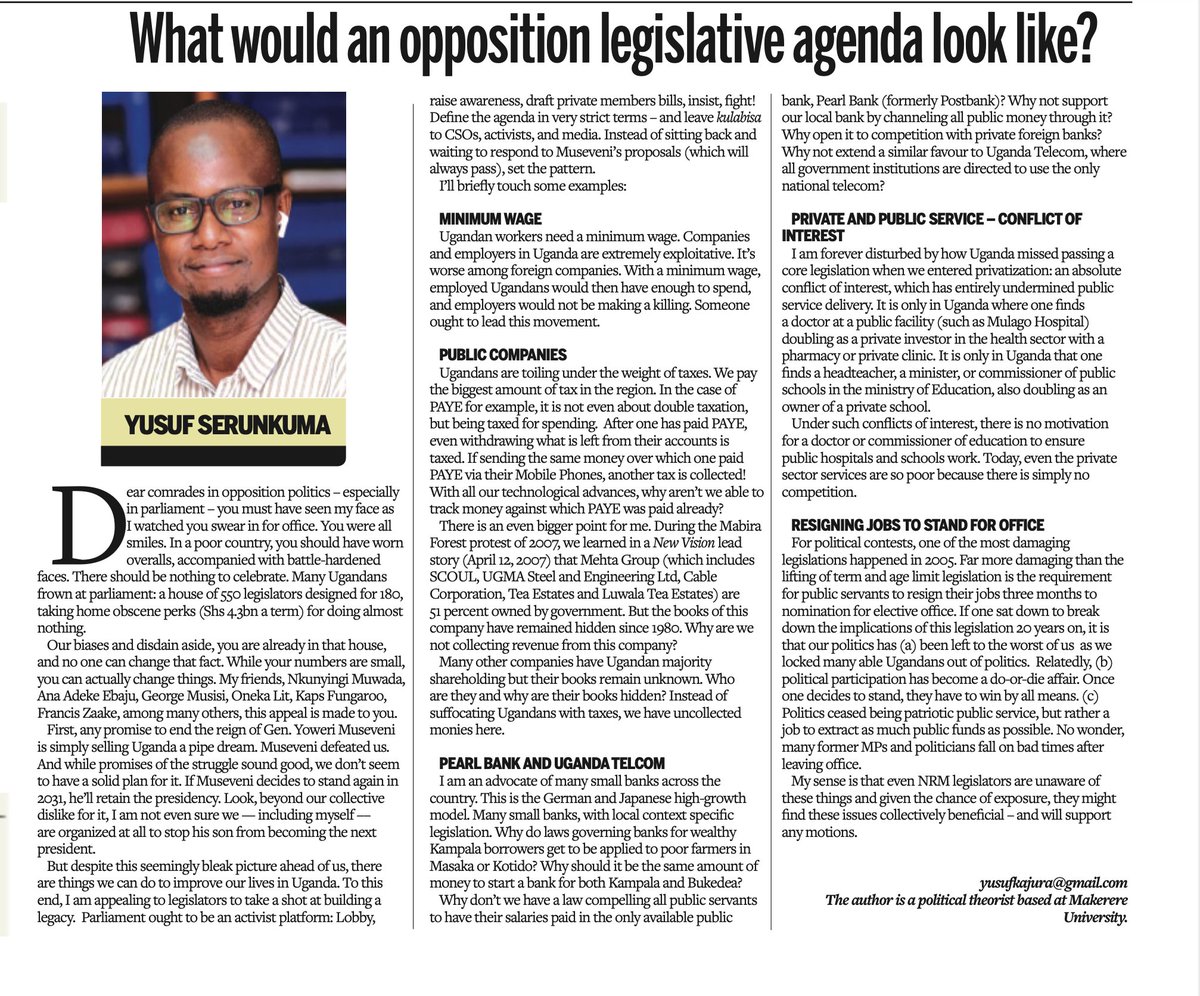
Most Ugandans have little or not faith in our parliament. Kalundi Serumaga (@NativeLandgrab) was right in calling the institution the bribe itself. But we have faith in some individuals – & these can foreground issues of collective concern:
Minimum wage, open banking space, public companies, over taxation, conflict of interest in public-private investment, etc.
In @observerug this week.
observer.ug/viewpoint/what-w…
3
15
30
1,726