
Deep Tech Board Advisor | Capital, Valuation & AI Business Model Change | Host, Beginner’s Mind 🎙️ | Scaling, leadership, investing & books
Joined March 2012
- Tweets 24,513
- Following 3,200
- Followers 2,034
- Likes 16,050
1,434 Photos and videos





Pinned Tweet

Jun 11
Confidence is a baseline. Unreasonable conviction is a strategy.
The reasonable operator knocks and waits.
The rational manager calculates the odds and stays home. The executive walks into the room knowing the agenda revolves around him.
Audacity is a scarce asset. The corporate world has no defense against it.
Institutions train you to seek approval. Corporations build manageable
employees.
A professional who requires no validation remains impossible to control.
The market accepts your stated valuation.
Demand a cheap price and the buyer demands a discount.
Reality is a negotiation. Stop negotiating against yourself.
Stop scanning the boardroom for permission.
Fix your posture.
Slow your voice.
Keep your strategy hidden.
Mystery provides leverage.
Treat the chairman and the intern with the exact same nonchalance.
Pressure is a privilege.
Do not shrink to fit a broken system.
Bend the system to fit your standard.
What room are you commanding tomorrow?
1
2
85
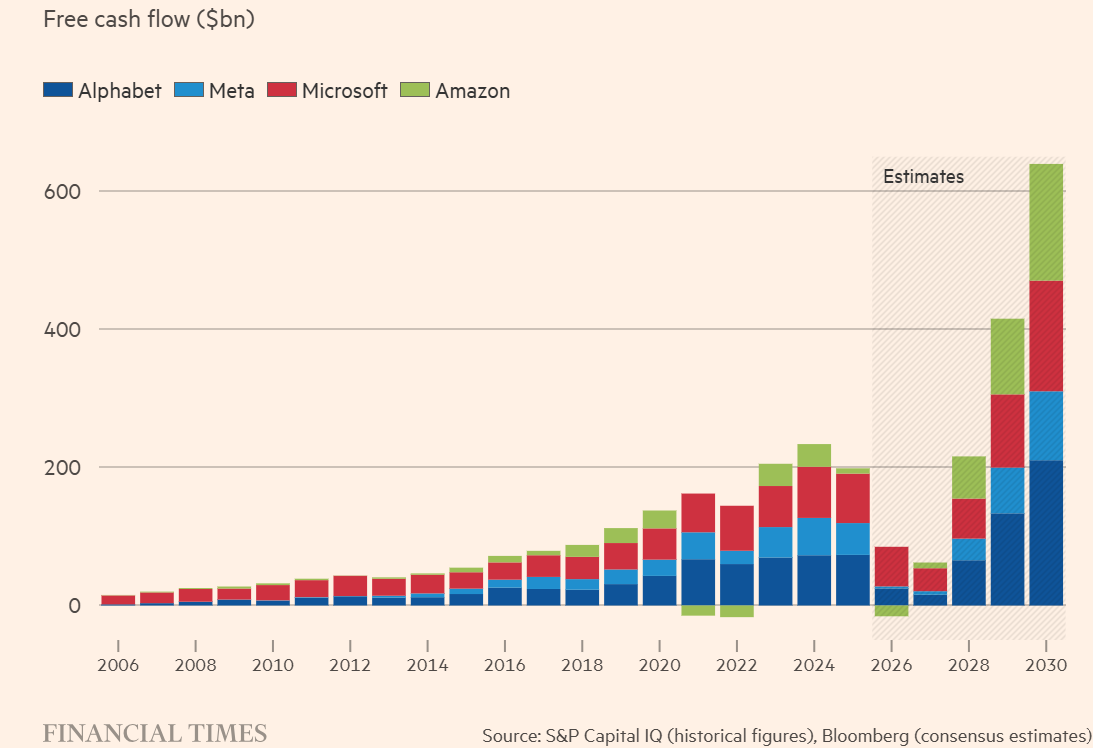
Market capitalization follows free cash flow.
A valuation is an estimate of future cash generation. The market prices the destination, not the present.
The data in the image reveals the Wall Street consensus.
Financial analysts project an explosion in cash generation for four hyperscalers: Alphabet, Meta, Microsoft, and Amazon.
By 2030, the combined free cash flow is estimated to exceed 600 billion dollars.
This math explains the current valuations. I did some research and thinking about the future dynamics, and here is one scenario how it could play out to make the cash flow estimations true.
Language models would become a commodity. They should be viewed as the new railroads. Proprietary and open-source models share one absolute constraint: they require massive compute.
The primary advantage of a language model sits in its agentic reasoning. Executing complex multi-agent workflows would demand a supercomputer.
Building that physical infrastructure in-house would be an inefficient deployment of capital for most enterprises.
OpenAI and Anthropic would lack long-term pricing power. The hyperscalers should own the chokepoint.
Chamath Palihapitiya validated this reality on the latest All-In podcast. He noted the current cost to build one gigawatt of compute capacity is one hundred billion dollars.
A single venture capitalist cannot clear that capital expenditure. The financial barrier to entry should remain absolute.
The hyperscalers would unbundle the intelligence layer from the infrastructure.
They would offer the physical computing power. Companies could bring a language model of their choice. Operators would simply pay rent for raw compute.
The infrastructure providers would be the apex compounders. The model builders should be the tenants.
If these cash flow estimates materialize, these four infrastructure giants would dictate the direction of the public markets.
Does this scenario shift your capital allocation strategy?

Wall Street consensus estimates for hyperscaler free cash flow. Provides a good snapshot of where the market's head is at, I think:
1
34
Ask your doctor for runzempic instead of ozempic.
Price differences are huge and effects are almost similar. 😂
strava.app.link/BN5fD2AAX3b
1
19
Christian Soschner retweeted

Jun 13
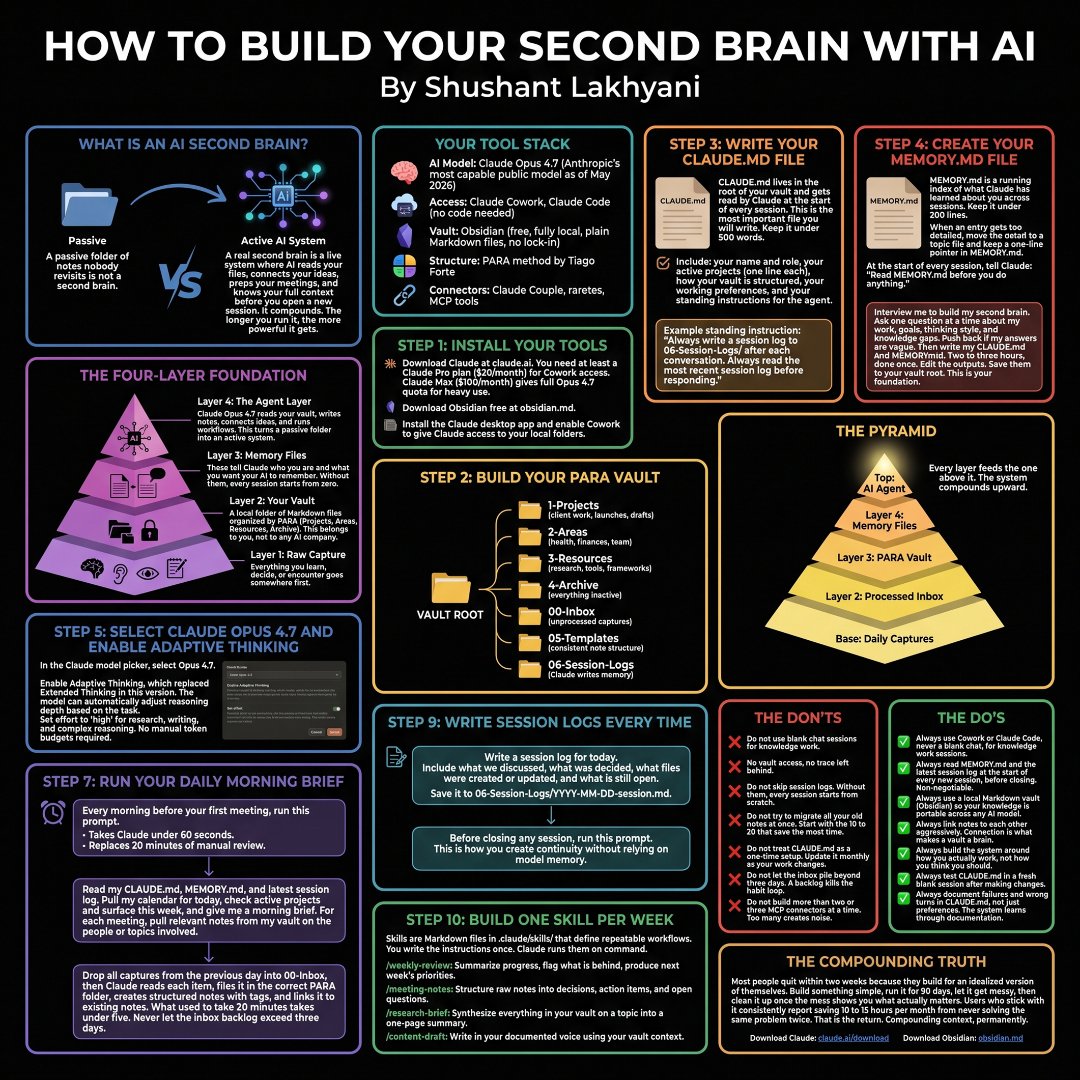
Your brain is overloaded.
Mine was too, until I built a system that remembers everything for me.
Here's how to build your second brain with AI.
📂 AI Second Brain
┃
┣ 📂 Foundation
┃ ┣ 📂 Daily Captures
┃ ┣ 📂 Processed Inbox
┃ ┣ 📂 Knowledge Organization
┃ ┣ 📂 Memory System
┃ ┗ 📂 AI Agent Layer
┃
┣ 📂 Tool Stack
┃ ┣ 📂 Claude Opus
┃ ┣ 📂 Claude Code
┃ ┣ 📂 Claude Desktop
┃ ┣ 📂 Obsidian Vault
┃ ┗ 📂 MCP Connectors
┃
┣ 📂 Setup
┃ ┣ 📂 Install Claude
┃ ┣ 📂 Install Obsidian
┃ ┣ 📂 Enable Cowork
┃ ┣ 📂 Connect Local Files
┃ ┗ 📂 Configure Workspace
┃
┣ 📂 PARA Vault
┃ ┣ 📂 Projects
┃ ┣ 📂 Areas
┃ ┣ 📂 Resources
┃ ┣ 📂 Archive
┃ ┣ 📂 Inbox
┃ ┣ 📂 Templates
┃ ┗ 📂 Session Logs
┃
┣ 📂 Memory System
┃ ┣ 📂 CLAUDE.md
┃ ┣ 📂 MEMORY.md
┃ ┣ 📂 Preferences
┃ ┣ 📂 Workflows
┃ ┣ 📂 Goals
┃ ┗ 📂 AI Instructions
┃
┣ 📂 Daily Workflow
┃ ┣ 📂 Morning Brief
┃ ┣ 📂 Calendar Review
┃ ┣ 📂 Task Planning
┃ ┣ 📂 Knowledge Retrieval
┃ ┗ 📂 Capture Processing
┃
┣ 📂 Knowledge Capture
┃ ┣ 📂 Notes
┃ ┣ 📂 Ideas
┃ ┣ 📂 Meetings
┃ ┣ 📂 Research
┃ ┣ 📂 Conversations
┃ ┗ 📂 Learnings
┃
┣ 📂 Session Management
┃ ┣ 📂 Session Logs
┃ ┣ 📂 Continuity Notes
┃ ┣ 📂 Context Tracking
┃ ┣ 📂 Memory Updates
┃ ┗ 📂 Progress Records
┃
┣ 📂 AI Skills
┃ ┣ 📂 Meeting Notes
┃ ┣ 📂 Research Briefs
┃ ┣ 📂 Weekly Reviews
┃ ┣ 📂 Content Drafts
┃ ┗ 📂 Workflow Automation
┃
┣ 📂 Intelligence Layer
┃ ┣ 📂 Knowledge Retrieval
┃ ┣ 📂 Context Injection
┃ ┣ 📂 Adaptive Thinking
┃ ┣ 📂 Decision Support
┃ ┗ 📂 Task Execution
┃
┣ 📂 Optimization
┃ ┣ 📂 Weekly Reviews
┃ ┣ 📂 Knowledge Cleanup
┃ ┣ 📂 Memory Refinement
┃ ┣ 📂 Workflow Improvements
┃ ┗ 📂 System Updates
┃
┣ 📂 Best Practices
┃ ┣ 📂 Log Every Session
┃ ┣ 📂 Process Inbox Daily
┃ ┣ 📂 Keep Notes Structured
┃ ┣ 📂 Maintain Memory Files
┃ ┗ 📂 Build One Skill Weekly
┃
┣ 📂 Avoid
┃ ┣ 📂 Skipping Session Logs
┃ ┣ 📂 Massive Chat Histories
┃ ┣ 📂 Unstructured Notes
┃ ┣ 📂 Context Overload
┃ ┗ 📂 Tool Hopping
┃
┗ 📂 Outcome
┣ 📂 Personal Knowledge Base
┣ 📂 AI Powered Memory
┣ 📂 Faster Decision Making
┣ 📂 Consistent Workflows
┗ 📂 Compound Intelligence
14
64
326
17,182

In twelve months, EVERY company will be running a Company Brain.
The teams who build it this year will spend the next year compounding. Everyone else is going to play catch up.
Here's what it actually is. You connect your Slack, your GitHub, HubSpot, all your tools into one intelligence layer, then build the org chart around it: a main brain up top, a fleet commander running the agent fleet, specialist sub-agents handling execution.
The reason it works is change management basically disappears. Your team already lives in Slack. You're just adding agents to the room they're already in.
You NEED to start building yours now. In a year this will stop being an advantage and will become table stakes.

43
68
589
147,161
Christian Soschner retweeted

22h
A SWISS NEUROSCIENTIST LOGGED EVERY IDEA FOR 365 DAYS AND TURNED THE 2,847 NODE FOREST INTO A $47,000/MONTH RESEARCH SERVICE
most developers ask claude to write emails and summarize documents. the ones making real money build systems around it instead of asking better questions
3 free github repos turn claude into a full company. awesome-claude-code for skills, awesome-claude-code-subagents for 100 specialists, and a single agents.md file in every project root
agents.md cuts agent work time by 28% and token usage by 16% in a published study. one markdown file teaches every session the stack, the rules, the workflow and what to never do
subagents kill sequential execution. research, frontend, backend, qa and security run in parallel instead of one after another. work that took a week of sequential prompts ships in a day
most people will bookmark this and forget. the ones who spend one afternoon installing the 3 repos will run their next project like a 10 person team instead of a chat window
bookmark this and read the article below

16
10
120
14,977
Christian Soschner retweeted

Jun 13
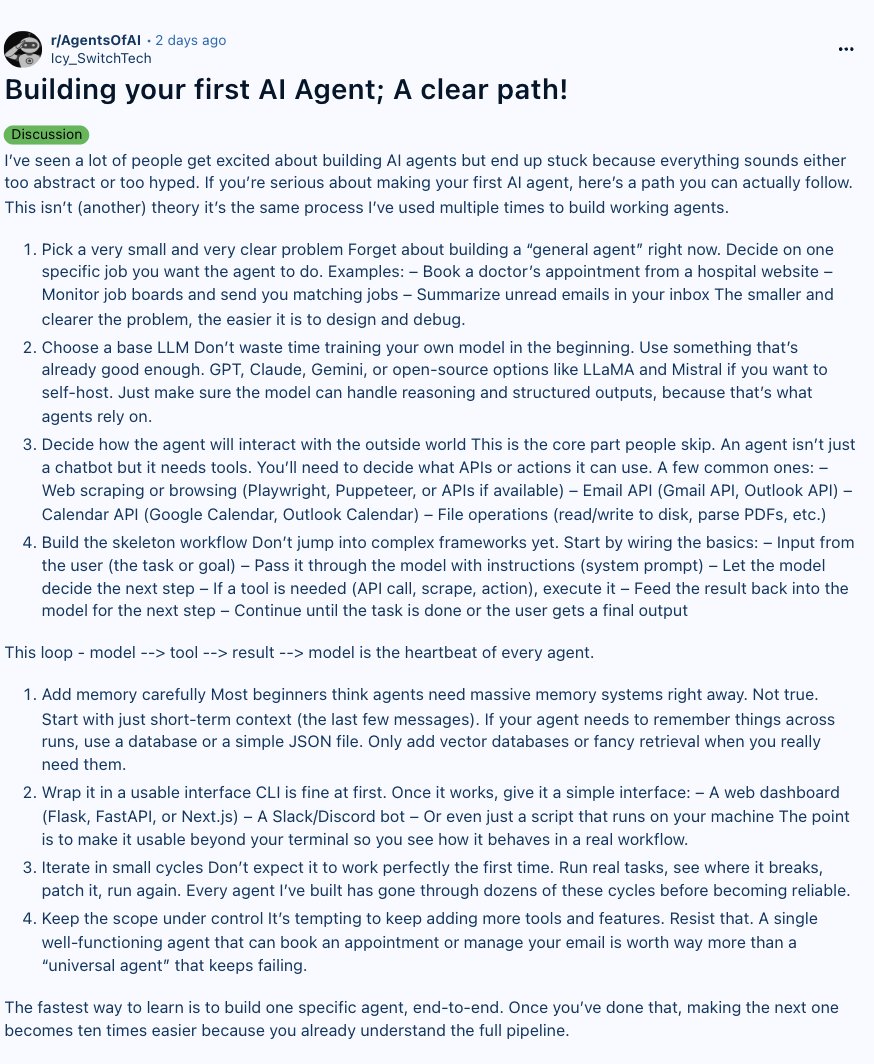
How to build your first AI agent (Full guide)

20
604
3,661
477,558
Christian Soschner retweeted

Jun 13
Karpathy said something you'll regret ignoring:
"Remove yourself as the bottleneck. Maximize your leverage. Put in very few tokens, and a huge amount of stuff happens on your behalf."
Loop engineering is the exact thing that does that.
In a hand-run session, the operator handles two things:
- deciding what the agent runs next
- and checking its output before the next step
Both are manual, and both decide how far the agent gets on its own without the operator.
Loop engineering moves both steps into the system.
A core operating structure surrounds the loop, and the diagram below depicts it.
- A schedule decides what to run
- Loop is the maker that produces the work
- A separate checker agent grades the output
- A file on disk holds the state they both read.
The loop runs until either done, max iterations, or an exhausted budget.
Here are some practical engineering considerations:
1) A model grading its own output justifies what it already did instead of catching where it failed.
That's why a separate checker's findings return to the maker as the next instruction. And the cycle repeats until the checker finds nothing left to fix.
2) A loop with no stop condition burns tokens, and the cost climbs fast once sub-agents and long runs add up.
That's why the exit must be set before the loop runs, not while it is running.
A simple exit could be:
↳ fix only the major issues, run one final pass, and stop after two loops, with "all tests pass and lint clean" as the rule that ends it.
3) State has to live on disk, not in context.
The model forgets everything between runs, so an MD file or a knowledge graph holds what is done and what is still open.
Each run reads it and writes back to it, which lets a loop pick up again after days.
4) The lower the verification bar, the safer the loop.
Boring, repetitive checks like a stale version string or a missing test are trivial to verify, so a loop runs them with little risk while the operator is away.
Judgment-heavy work is loopable too, but only as far as the checker can confirm the result.
Let's look at how an unattended loop fails in two ways.
1) It reports done when nothing is actually verified.
The separate checker exists to prevent it, but it merges code faster than anyone reads it, so over weeks, the team stops understanding its own codebase while every check stays green.
Green tests say the code passed the tests, not that anyone knows what shipped. Someone still has to read what the loop merges.
2) The checker keeps a running loop honest, but it only catches failures inside a run.
The harness around the loop, like the prompts, tools, and checks wrapped around the model, still drifts and breaks in production as models change.
That repair loop is usually run by hand based on observability traces.
My co-founder wrote a detailed walkthrough (with code) on making that harness repair itself, where a failing trace gets diagnosed, the fix is verified against the exact input that failed, and the failure is locked as a regression test so it cannot recur.
Read it below.

54
406
2,717
463,695
Jun 13
When working with any LLM, remember that their training data is the internet consensus.
When the internet crowd pushes a wrong narrative, LLMs average to the mean and sell it at face value.
Just because a response sounds great and is presented with high confidence doesn’t mean it is right.
The reasoning layer might be the best in the world, but fed with flawed data, the result is meaningless.
This understanding is crucial when building an app on public data rather than private data.
12

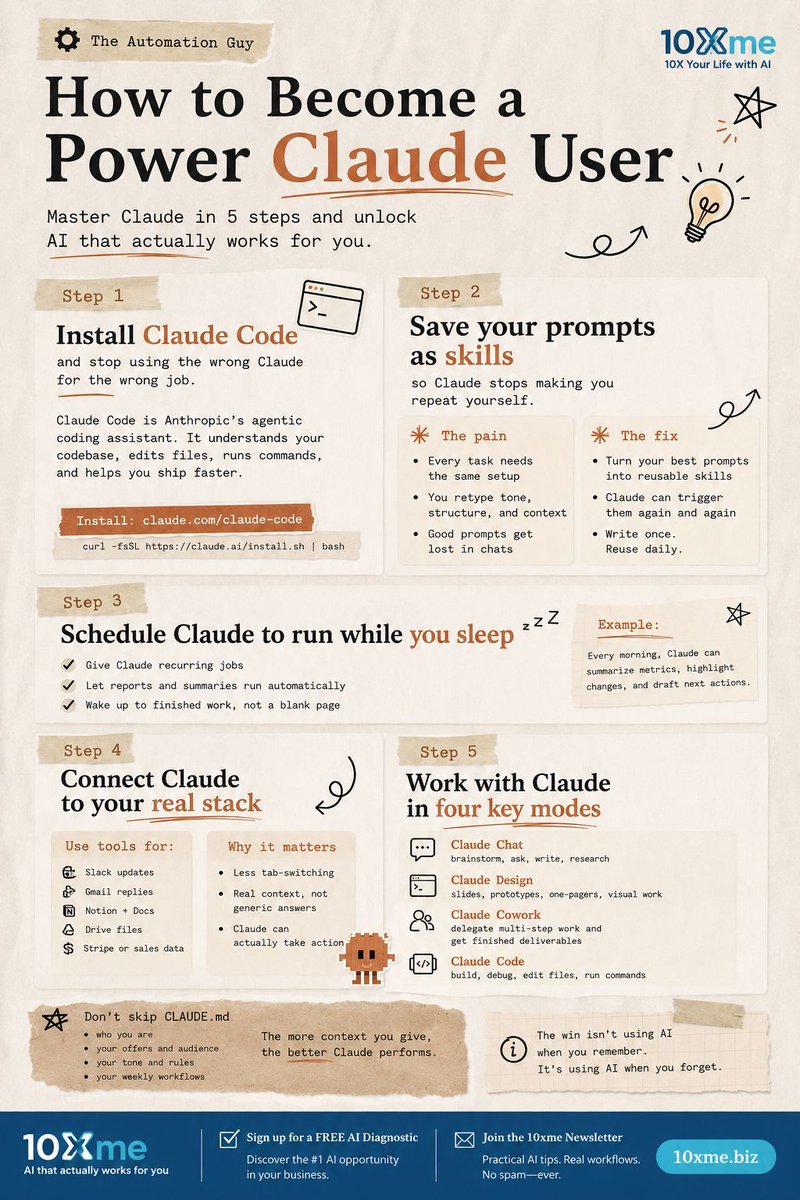
Most people use Claude like a chatbot.
Power users use Claude like an employee.
That one mindset shift changes everything.
After spending hundreds of hours working with AI, I’ve noticed that the biggest gains don’t come from better prompts.
They come from building systems.
Here are the 5 habits that separate casual users from power users:
✅ Install Claude Code and use the right tool for the right job
✅ Turn your best prompts into reusable skills
✅ Schedule recurring work so Claude produces while you sleep
✅ Connect Claude to your real workflows, files, and tools
✅ Give Claude context so it can think and act like a true teammate
The mistake most people make is starting a brand-new conversation every time.
The best users build memory, workflows, templates, and systems.
They don’t ask AI to help them.
They build AI that helps itself.
The goal isn’t to get better answers.
The goal is to create leverage.
When Claude knows:
• who you are
• what you do
• who you serve
• how you think
• how you like work delivered
it stops feeling like software and starts feeling like a team member.
The future belongs to people who can manage AI teammates as effectively as they manage human ones.
Save this poster for the weekend and work through one step at a time.
Which of the 5 steps are you already using today?
P.S. If you’re wondering where AI can create the biggest impact in your business, get a free AI diagnostic and join the 10xme newsletter at 10xme.biz.
4
12
29
1,126
Christian Soschner retweeted

Jun 12
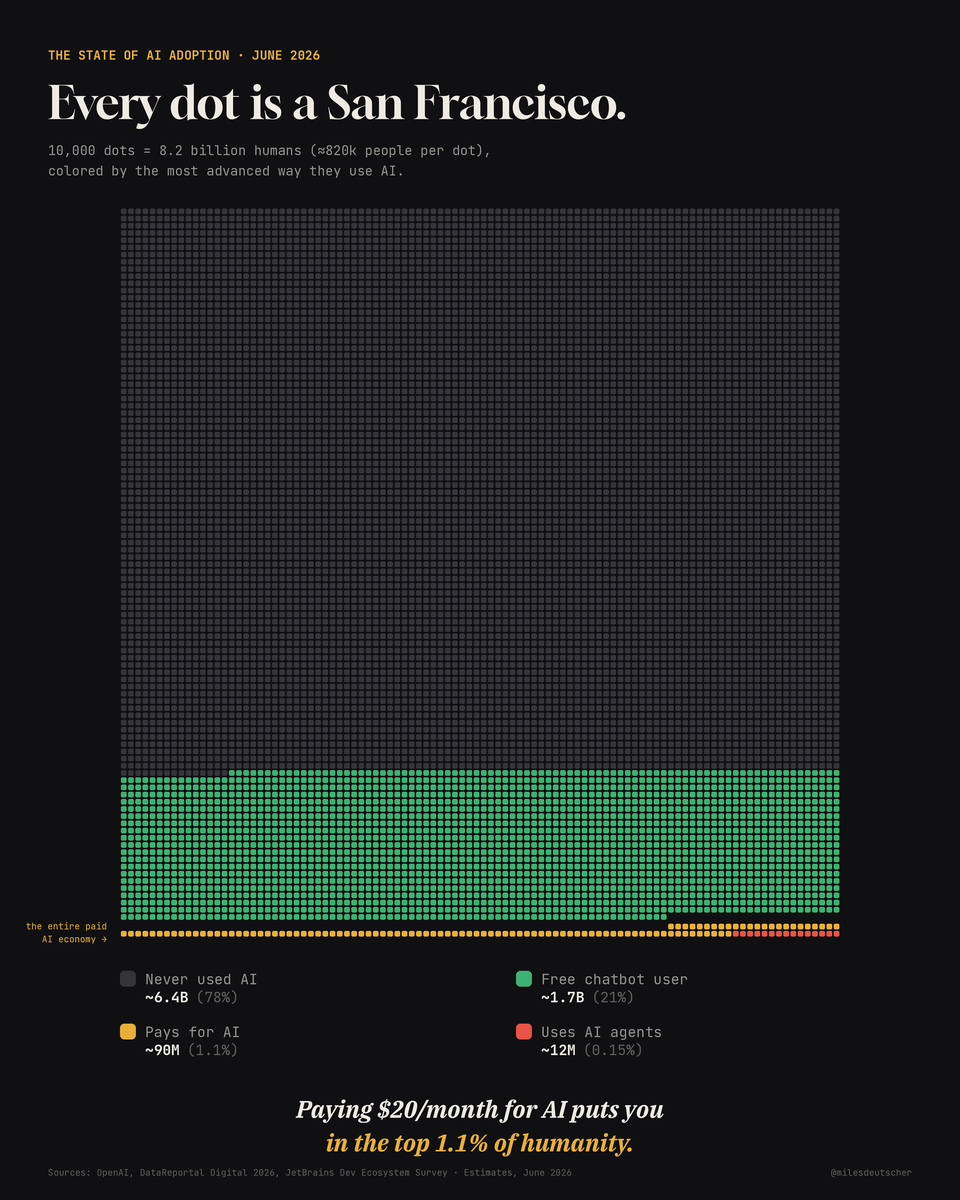
You're not behind with AI (yet).
Not even close.
See those tiny red dots?
If you've used an AI agent just ONCE, you're in the top 0.15% of all humans.
This is the biggest opportunity of your lifetime.
33
18
119
15,168

Jun 12
He is wrong. Without domain expertise, AI is and will be useless.
It’s worse. AI is proficient at producing bullshit answers that sound like Nobel Prize-worthy material.
Users need a deep understanding of the field. Otherwise they run with high confidence like lemmings off a cliff.
Jun 11

Dario Amodei, anthropic's CEO, just answered the question everyone is asking. should you still learn to code:
1. coding is going away first. the AI models are doing it already. the broader task of software engineering takes longer but that's going too. if you're learning to code purely for job security, you're learning the wrong thing.
2. even at 5% of the task you're still valuable. if AI does 95% and you do 5%, you become 20 times more productive. comparative advantage is surprisingly powerful even when the gap is massive.
3. the professions with the most runway are human-centered ones. things that mix people, the physical world, and analytical skills together. he uses the radiologist example. the doctor who understands patients and context, not just reads scans.
4. critical thinking might be the most important skill of the next decade. when AI can generate anything, the ability to tell what's real from what's fake becomes rare and valuable. you don't want false beliefs. you don't want to get scammed. that's his actual advice to a 25 year old.
5. AI can make you stupider if you use it carelessly. anthropic ran studies on this. depending on how you use the model, de-skilling in coding is measurable and real. the tool doesn't cause it. carelessness does.
6. the semiconductor space is his pick for a capitalistic win in the next decade. physical world, traditional engineering, direct AI tailwind. not software but chips.
20
Christian Soschner retweeted

Jun 11
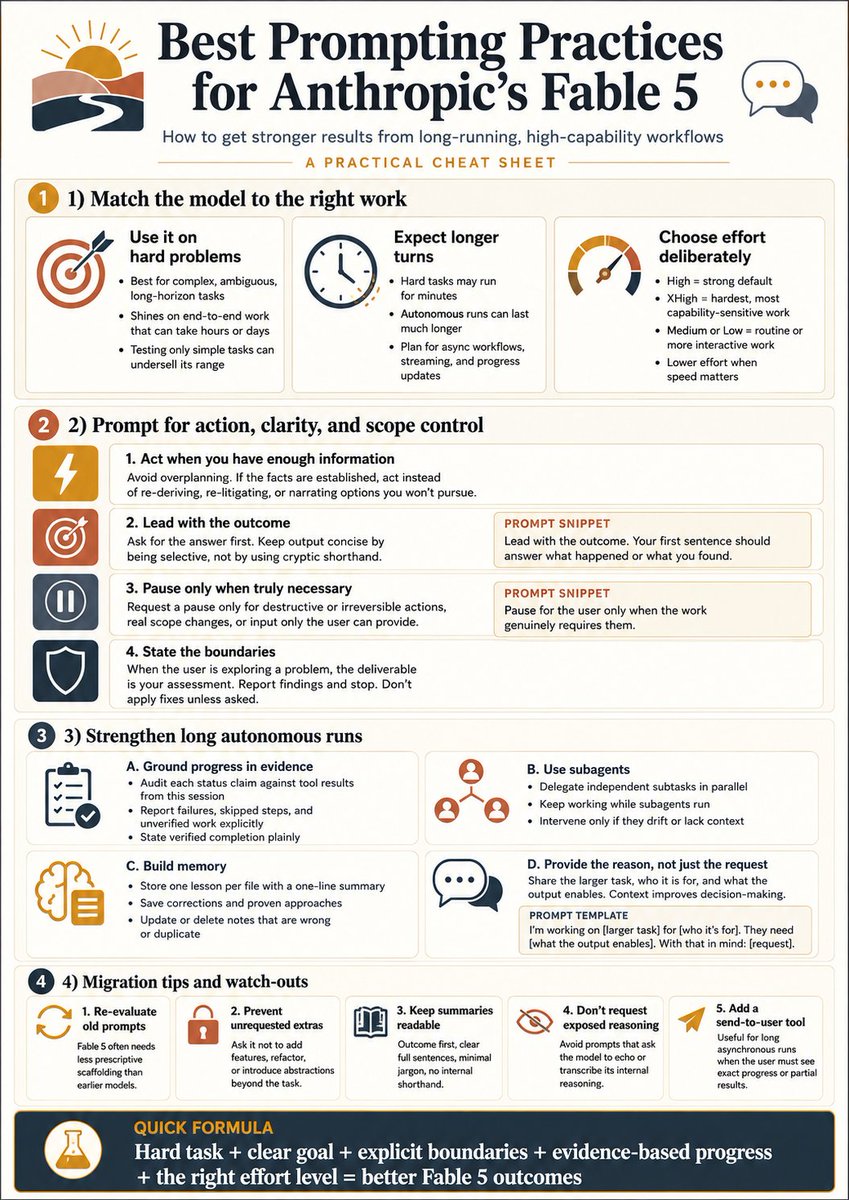
Anthropic just released its guide on prompting Claude Fable 5. A must-read!
1
14
74
3,896
Christian Soschner retweeted

Jun 11
ANTHROPIC'S PRODUCT CHIEF HAS USED CLAUDE FABLE 5 FOR MONTHS BEFORE ANYONE ELSE. HERE'S WHAT HE LEARNED ABOUT THE MOST POWERFUL MODEL YET
Mike Krieger co-founded Instagram and now runs product at Anthropic. He's had Claude Fable 5 for two months before the public, and his takeaway is that it changes how you have to work, not just how much you get done. Here's what stood out, and what to actually do with it
1. It holds the whole project, so stop chopping tasks small. The old habit was breaking work into model-sized pieces and stitching them. Fable keeps the whole thing in context. What to do: stop pre-slicing your prompts into tiny steps. Hand it the full goal and the intent behind it, the way you'd brief a senior engineer, and let it sequence the work itself
2. Delegate big, async, and overnight. He sets it on a hard task at night and wakes to it finished, including the model getting itself unstuck when a service died, scaffolding a workaround, and documenting it. What to do: stop babysitting one prompt at a time. Kick off long jobs and walk away. Run several sessions at once instead of one you watch
3. The skill is planning now, not typing. His day moved to long architecture conversations up front, then execution in chunks. What to do: spend your first prompts planning, not building. Then ask it to output an HTML page or markdown doc of the plan so your team aligns before any code is written. That early alignment is the new leverage
4. Match the effort level to the task. Fable's range is wide, so a heavy reasoning pass on a tiny UI tweak is overkill (and pricey). What to do: dial effort down for small jobs, save the deep thinking for hard ones. And don't use your most expensive model for quick questions, keep a fast model for those
5. Verification is the real bottleneck now. The hard part isn't getting output, it's trusting it. What to do: make every change ship with proof. Have Claude attach a screenshot or video of what it built, so you can see the result instead of reading the diff. Then stand behind the decisions yourself before you merge
6. Cost is per-result, not per-turn. Fable is expensive per call but often one-shots what other models need ten turns to get right. What to do: judge cost by what it takes to finish the task to your satisfaction, not the price of a single message. Give it a real task and see how far it gets before you jump in
His bigger point: software engineering isn't over, it's different. The craft moved from writing code to owning intent, taste, and what actually ships. The floor rose so anyone can build, and the ceiling rose so experts go further than before
Bookmark this

12
16
178
30,312

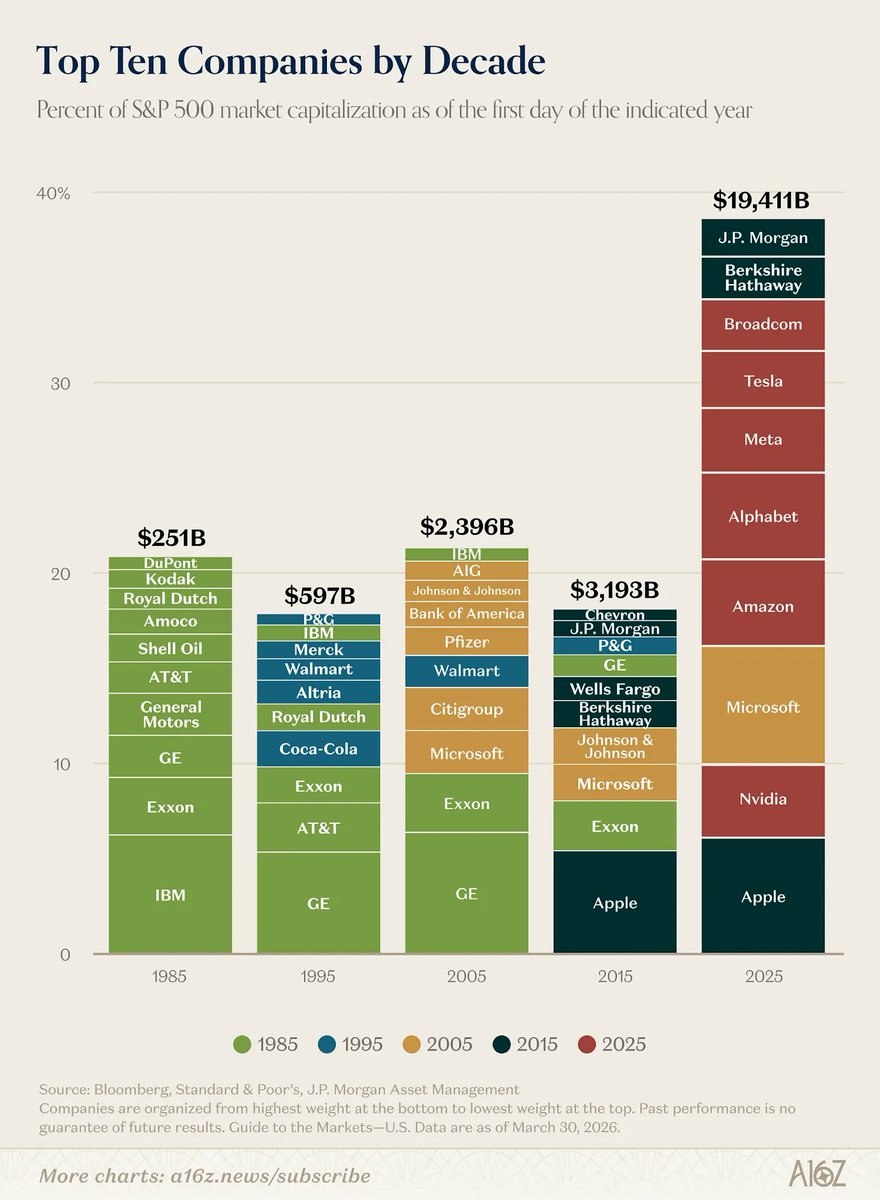
"It goes against every investor's instinct to expect 100% a year revenue growth, over and over again, without eventually slowing down."
"It is human nature to eventually concede a terminal value that seems reasonable. But not for elite founders."
"Founders are the rare individuals who can keep up with the rapidly changing opportunity set, apply the full force of their leverage to their vantage point, and put dollars to work forever."
a16z's David George on why late stage venture is all about late stage founders: a16z.news/p/late-stage-ventu…

22
60
443
68,185
Christian Soschner retweeted

Jun 11
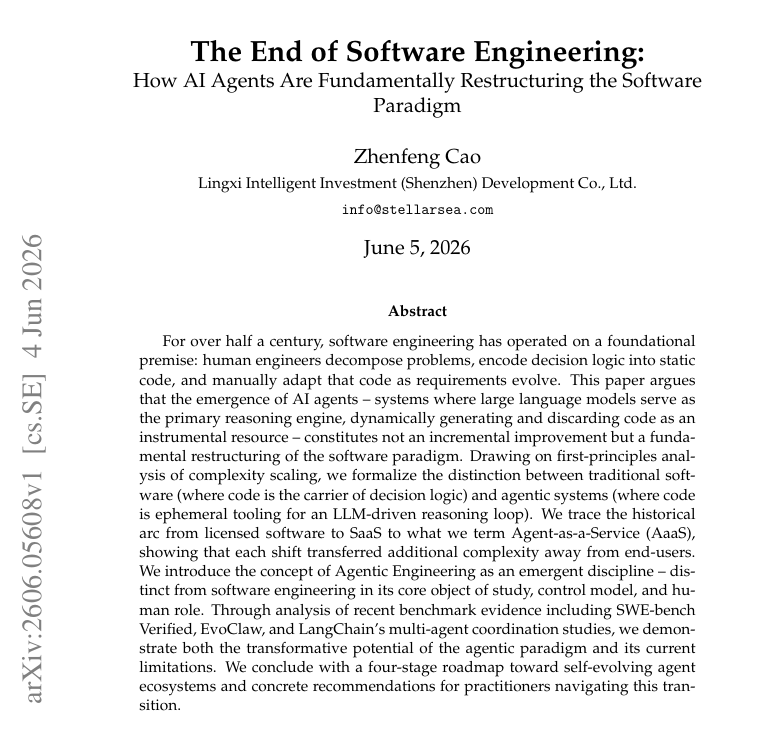
AI agents may turn software from fixed code into systems that can plan and build on demand.
This paper argues that code may stop being the central artifact.
For decades, software meant frozen intent: a human anticipated a situation, translated judgment into rules, and shipped those rules into the world.
Agents disturb that bargain because they can turn intent into action at runtime, generating code as a disposable tool rather than treating it as the product.
The real shift is not from human coding to AI coding; it is from predesigned behavior to negotiated behavior, where the system keeps interpreting the goal as conditions change.
That sounds powerful, but it is also where the danger lives.
A static program fails inside boundaries we can often inspect, while an agent can fail through drift, overconfidence, bad memory, or a plausible chain of steps that quietly compounds an early mistake.
So the paper is not saying coding tools will get better, but that software itself may become a living agent system where humans guide intent and audit outcomes.
So the future engineer is not just a prompt writer, and not merely a supervisor of digital interns.
The valuable person becomes someone who can define intent, constrain autonomy, design evaluation, inspect reasoning traces, and know when the machine’s fluent answer is not the same as a reliable system.
----
Link – arxiv. org/abs/2606.05608
Title: "Agentic Software: How AI Agents Are Restructuring the Software Paradigm"
28
23
120
6,516
Christian Soschner retweeted
Jun 11
Jensen Huang, CEO of Nvidia:
"Every engineer is going to have and manage hundreds of agents."
The most valuable engineering skill of 2026 is not taught in any university.
No CS program teaches harness engineering.
No bootcamp teaches agent memory architecture.
No degree prepares you to build systems that survive production.
Most people building agents right now are building demos.
They break on day 9.
They forget everything after every session.
They burn API budget doing nothing useful.
One builder mapped out exactly how to fix all of it — free, step by step, no gatekeeping.
This is the complete guide to building AI agents that actually work in 2026 ↓
Bookmark this for the weekend.
35
36
265
74,589
Christian Soschner retweeted

Jun 11
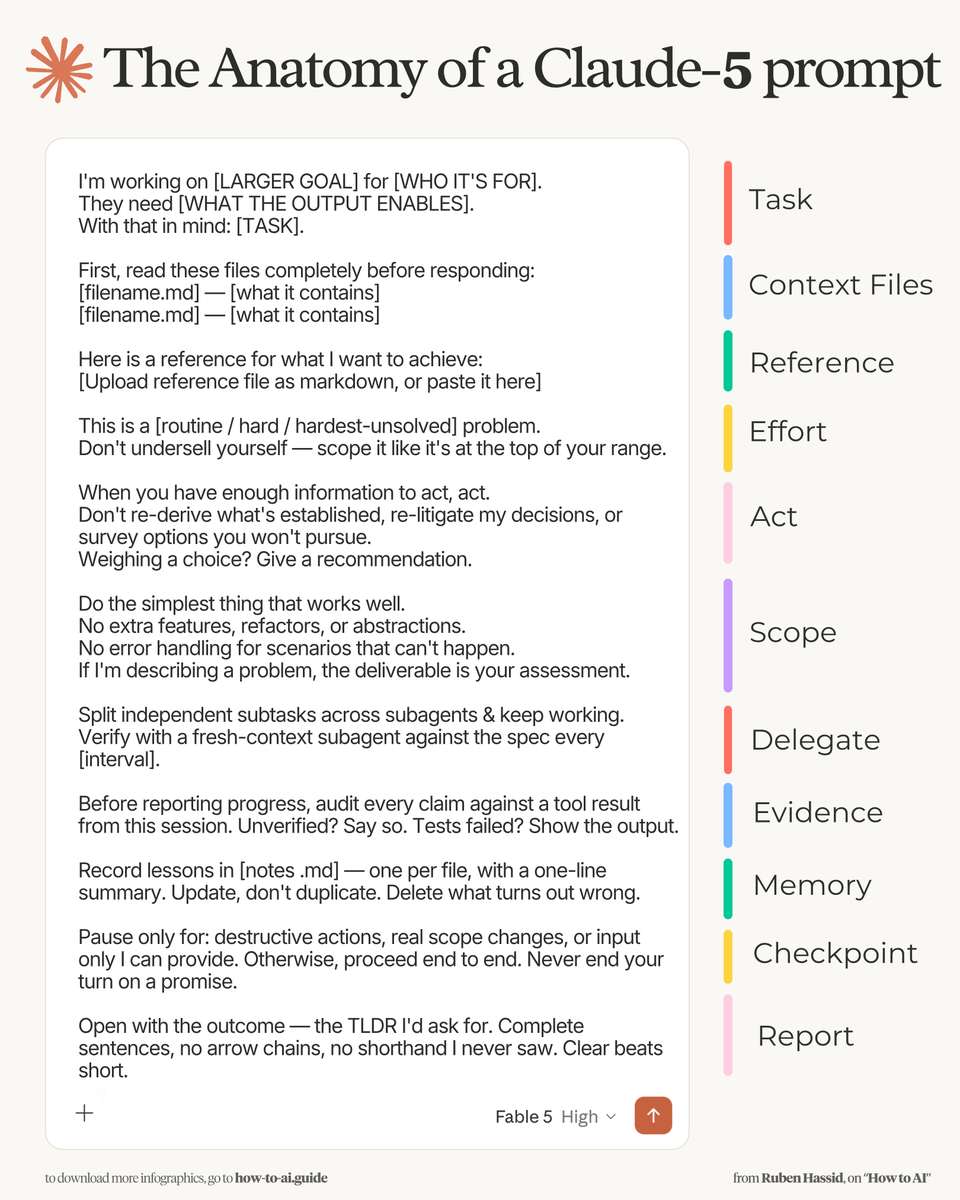
The Anatomy of a new Claude 'Fable 5' Prompt:
1. Task
Start with why, NOT what.
Claude 5 connects the dots.
'I'm working on [goal] for [who it's for]. They need [what the output enables]. With that in mind: [task].'
2. Context Files
Upload your expertise. Stop explaining in prompts.
"Read these files completely before responding: [filename .md] - [what it contains]."
The file is the brain. This part never changes.
3. Reference
Show Claude 5 what good looks like.
"Reference for what I want to achieve: [paste]."
One example beats ten instructions.
4. Effort
The new change, a few people are talking about.
"This is a [routine / hard / hardest-unsolved] problem. Scope it like it's at the top of your range."
Teams testing Claude 5 on easy tasks undersell it.
Give it your hardest problem.
5. Act
"AskUserQuestion" is still the king.
Add "When you have enough information to act, act. Don't re-litigate my decisions. While weighing a choice, give a recommendation."
6. Scope
Claude 5 over-delivers by default. Control it.
"Do the simplest thing that works well. No extra features, refactors, or abstractions. If I'm describing a problem, the deliverable is your assessment."
The old one did too little. This one does too much.
7. Delegate
One Claude is no longer the limit.
"Split independent subtasks across subagents & keep working while they run. Verify with a fresh-context subagent."
It's not a chatbot anymore. It's a team lead.
8. Evidence
The line that removes fake progress reports.
"Before reporting progress, audit every claim against a tool result. If it's unverified, say so. Tests failed? Show the output."
Anthropic tested this.
It nearly eliminated fabricated status updates.
9. Memory
Claude 5 gets smarter every run. If you let it.
"Record learnings in [notes .md] — one per file. Update, no duplicate. Delete what turns out wrong."
Your prompts expire. Your learning file compounds.
10. Checkpoint
It can run for hours. Decide when it stops.
"Pause only for: destructive actions, scope changes, or input only I can provide. Never end your turn on a promise."
The old fear was Claude stopping too late.
The new fear is stopping too early.
11. Report
The last block. The first thing you read.
"Open with the outcome - the TLDR I'd ask for. Complete sentences. Clear beats short."
It worked for hours. You read for ten seconds.
Copy the full prompt template download my personal md. files for Claude here:
Step 1. Go to how-to-ai.guide.
Step 2. Subscribe for free. Don't pay anything.
Step 3. Open my welcome email.
Step 4. Hit the automatic reply button inside.
Step 5. Download my .md files. Ready to upload.

50
321
1,998
291,818