
Marketing professor @USCMarshall, and visiting scholar @FederalReserve. Researching consumer finances and experiences.
Joined March 2014
- Tweets 292
- Following 478
- Followers 1,813
- Likes 1,251
6 Photos and videos
Pinned Tweet

26 Feb 2024
Tenured! I am so grateful for all of the people who led me to today. Too many to name you all, but a special thanks to my amazing advisor Tom Meyvis who forever changed my life (I miss you), my awesome colleague & tenure chair @real_k_diehl, & my great coauthor @EeshaSharma.
31
2
184
11,526
22 Oct 2024
Definitely concerning. The silver lining is that this may make researchers think harder. It puts more emphasis on the need for stronger theory (given less data availability). Tenure committees will need to consider productivity expectations as a result of this though.
21 Oct 2024

Online research surveys may be a dying methodology as techniques for verifying respondents as humans are failing: “Automatic AI detection systems are currently completely unusable… Individual attention checks will no longer be a sufficient tool to ensure good data quality.”

2
523
22 Oct 2024
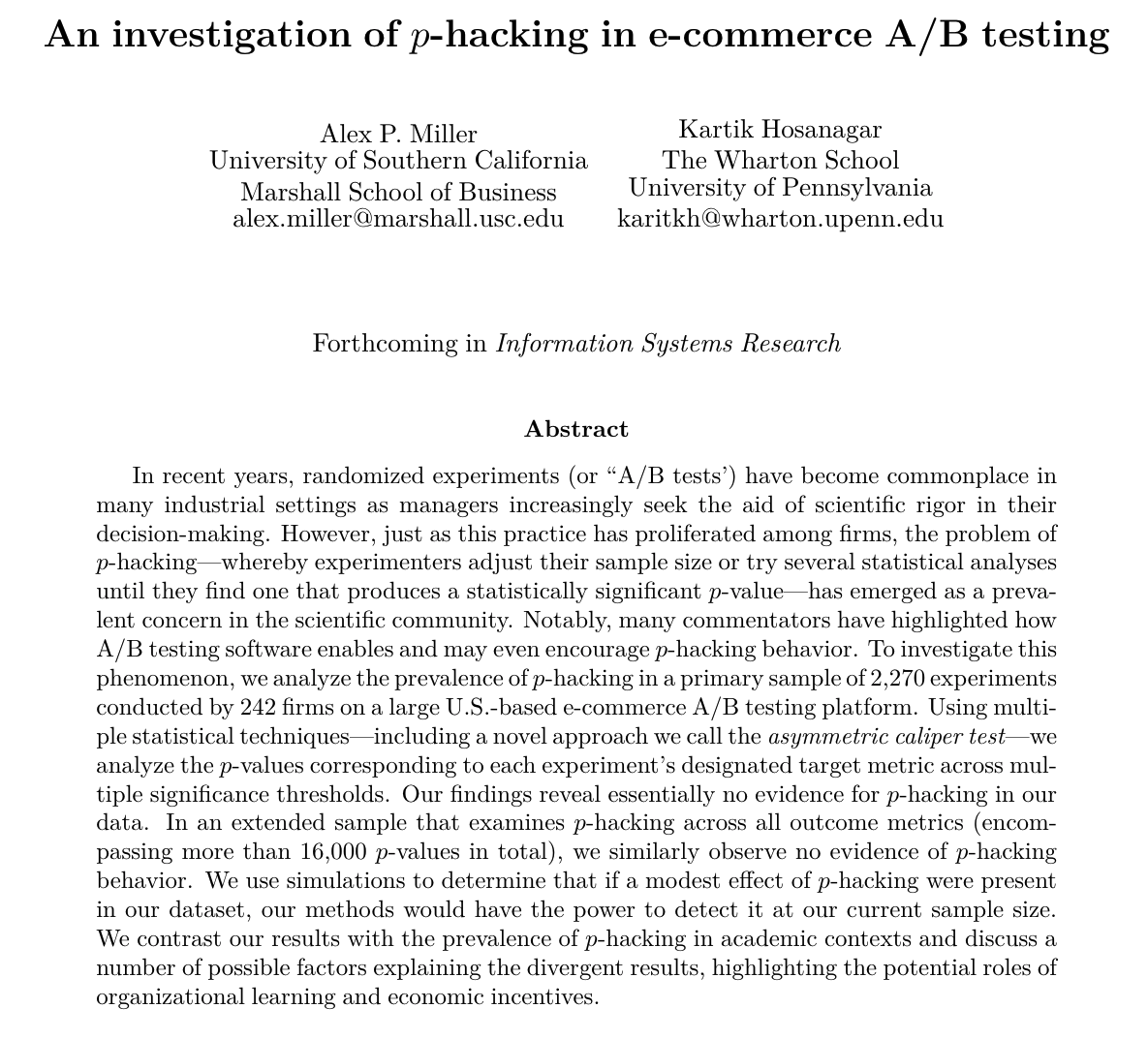
Interesting new research on the prevalence of p-hacking in A/B testing in e-commerce by my awesome colleague @alexpmil . Check it out!
21 Oct 2024

💡I am happy to announce new research with @KHosanagar. Available below and forthcoming in 𝘐𝘯𝘧𝘰𝘳𝘮𝘢𝘵𝘪𝘰𝘯 𝘚𝘺𝘴𝘵𝘦𝘮𝘴 𝘙𝘦𝘴𝘦𝘢𝘳𝘤𝘩.💡
Link (PDF): alexmiller.phd/research/p-ha…
We study p-hacking, A/B testing, data-driven decision making, and more.
Short thread below👇
7
459
18 Oct 2024
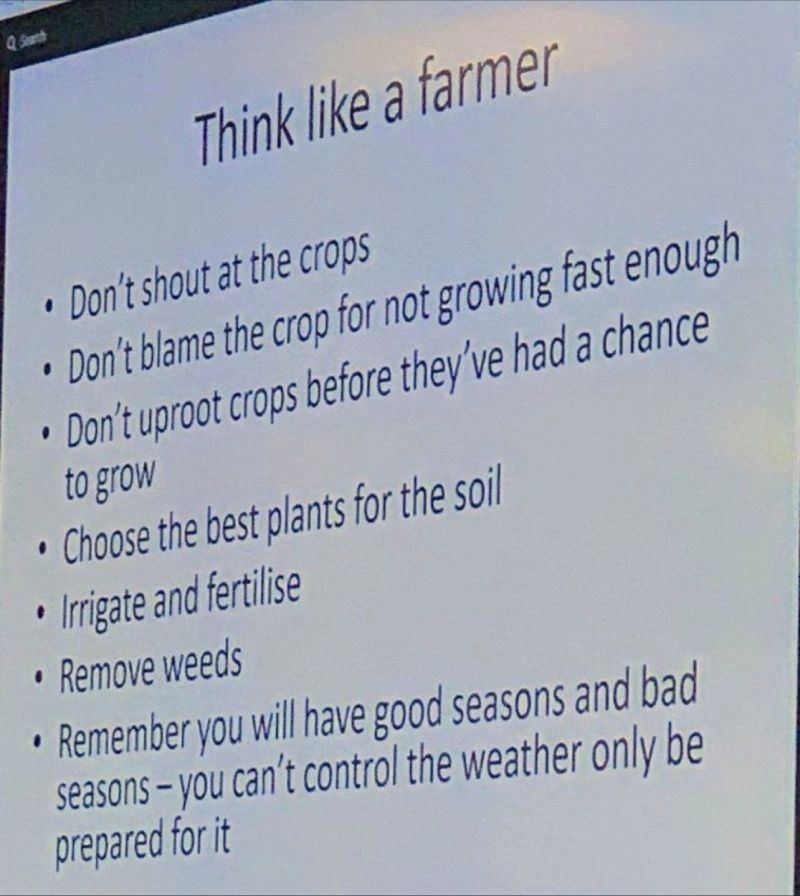
Why great PhD programs should think like farmers:

1
13
929
16 Oct 2024
How do AI disclosures on social media affect our engagement with content? Check out this thread to learn about our new research. Led by two great USC PhD students - Steve Carney & @ignacioriverosg
2
9
1,075
10 Oct 2024
Amazingly accurate!
9 Oct 2024

Academia is held together by caffeine, free labour, and the two people who nod encouragingly during presentations
1
21
1,584
11 Sep 2024
This is a huge win for the folks at @DataColada and an even bigger win for science!
11 Sep 2024

Gino's case against us has been dismissed.
Scientists cannot effectively sue other scientists for exposing fraud/errors in their work.
Those who work to correct the scientific record can sleep better tonight. Those who don’t want it corrected, well, I don’t care how they sleep.
2
31
2,125
23 Aug 2024
Job market candidates - reframe the purpose of your job talk accordingly! I used to view my talks as people evaluating me and my competency. Once I reframed them as an opportunity to tell people what I've learned through research, my talks improved so much.
3
73
7,096
16 Aug 2024
Agreed! Moreover, it's not just that new settings may show different results, but different executions aimed at addressing these behavioral science principles within the same setting can show different results.
16 Aug 2024

"Read about 4 #BehavioralScience principles that #FinTech designers should consider testing in their own context," because the generalizability and application of even highly robust behavioral science principles to a specific context is not trivial.
8
744
25 Jul 2024
I'm disappointed to hear this take. We need more people to pre-reg, not less. The sad truth is that there are always ways a researcher can get around a pre-reg, even with more specificity. (1/4)
24 Jul 2024

This paper will be the starting point for a discussion about whether we should from now on treat an AsPredicted preregistration as No Preregistration.
The template has so little detail you can still publish a set of 5 studies, none of which replicate.
That is problematic.
5
24
6,293
25 Jul 2024
Reviewers & readers need to individually evaluate the value of any pre-reg in conjuction with the data. But telling people an imperfect pre-reg is worthless isn't going to bring more people on board, & more specificity in pre-reg isn't going to erase failures to replicate. (3/4)
1
11
709
25 Jul 2024
The best way to improve science is to encourage integrity in research practices. Rather than criticizing pre-reg methods, we should be talking about changing the systems and incentives that encourage people to publish non-replicable results. (4/4)
1
12
701
14 Jun 2024
Strongly agree here. I can’t imagine a better editor to be taking over the helm at JCR!
11
1,080
8 Jun 2024
Very interesting!
8 Jun 2024

Cash transfers to poor people *reduce* their expenditures in temptation goods such as alcohol and tobacco.
Possibly the reason is that poverty leads to stress and anxiety, which increases people's tendency to use such substances.
3
779
3 Jun 2024
Really interesting work! I like (and buy) the friction story, but it also makes me wonder whether changing the defaults may have also changed preferences to some extent.
2 Jun 2024

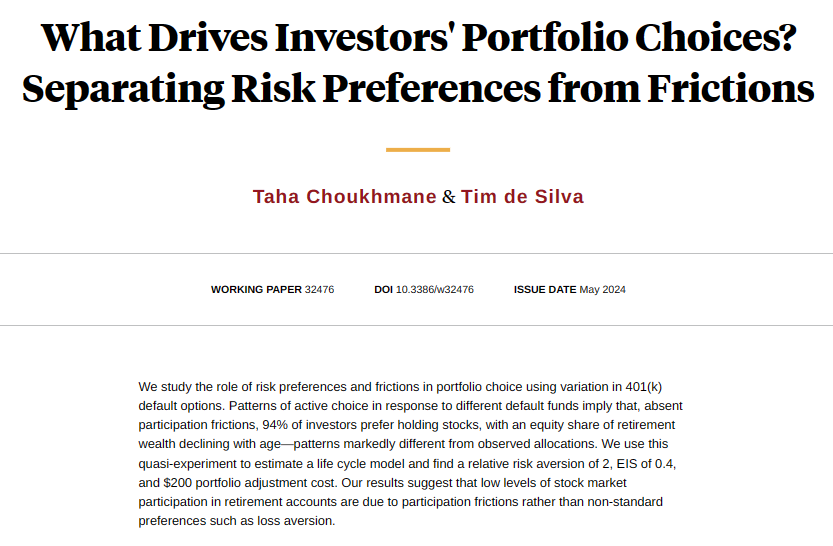
❗️A 🧵 on my NBER WP paper with @TahaChoukhmane ❗️
Draft: tinyurl.com/47mt6m2k
More details: ⬇️⬇️⬇️
1
2
793
3 Jun 2024
Love this much needed discussion on replications that hits many points I've struggled with in my own papers that conduct "theory-test replications" (end effect: psycnet.apa.org/record/2016-… & scarcity --> intertemporal choice apa.org/pubs/journals/releas…). 1/2
2 Jun 2024
I'm excited about our new paper on replication, with Berkeley Dietvorst, out in the 50th anniversary issue of @JCRNEWS (free access):
academic.oup.com/jcr/article…
We discuss different different ways to integrate replication into scientific practice, focusing on JCR's history.
1/10
1
4
1,015
3 Jun 2024
One thing I'll add is that greater focus on and acceptance of replication will *hopefully* encourage researchers to only publish work that they have confidence will replicate. Thank you @OlegUrminsky & Berkeley for leading this conversation! 2/2
1
149
28 May 2024
I'm starting to think about guest speakers for my consumer behavior classes this fall and looking to switch up topics and speakers. Let me know if you have ideas of great guest speakers on consumer behavior related topics in or willing to travel to the LA area.
6
3
8
2,826
29 May 2024
I should clarify that this is for undergrads so I am looking for guest speakers from industry, not academics.
254
13 Mar 2024
Great talking with the WSJ about some of the factors explaining why consumers are still mad about prices, despite several signs of a strong economy wsj.com/economy/consumers/gr… via @WSJ
6
319