I post and retweet studies about males and issues that affect men and boys (domestic & sexual abuse, suicide, misandry, discrimination in school & workplace)
Joined December 2022
- Tweets 29,210
- Following 629
- Followers 3,037
- Likes 58,940
540 Photos and videos



Pinned Tweet

8 May 2024
International list of support services for men (domestic and sexual abuse, divorce, mental health, ...)
docs.google.com/spreadsheets…
3
25
80
27,189
Male Statistics retweeted

Jun 1
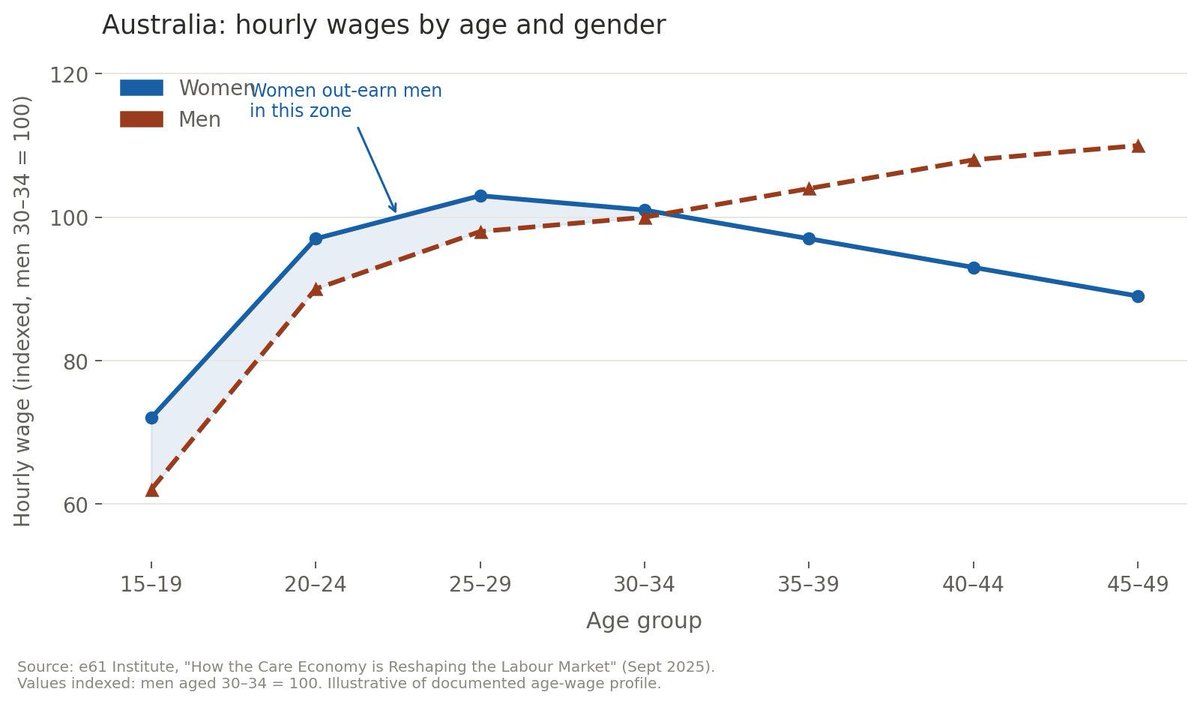
When will we hear calls to close this gender pay gap? (crickets)

Among young Australians, women now earn more than men. The same pattern has also been observed in many US and UK cities.
stevestewartwilliams.com/p/p…
16
40
278
6,124
Male Statistics retweeted

Jun 1
"On est misandres pas validistes"
Et elle a cru dead ça cette déchet en
Jun 1

On est misandres pas validistes
1
2
29
1,403
Male Statistics retweeted
The parts I disagree with are about men's loneliness being due to a lack of emotional intelligence, and the complaint that women are carrying the "emotional labour" for men.
Men can talk about their feelings, but why would they if they are then patronised?
centreformalepsychology.com/…
3
5
19
358
Male Statistics retweeted

May 31
These 'insights' from Dr JJ Kelly are based on simplistic unhelpful misconceptions about men.
Men and women are mostly similar, but there are subtle differences that are important, such as differences in how they communicate and deal with stress.
cms.bps.org.uk/sites/default…
May 31

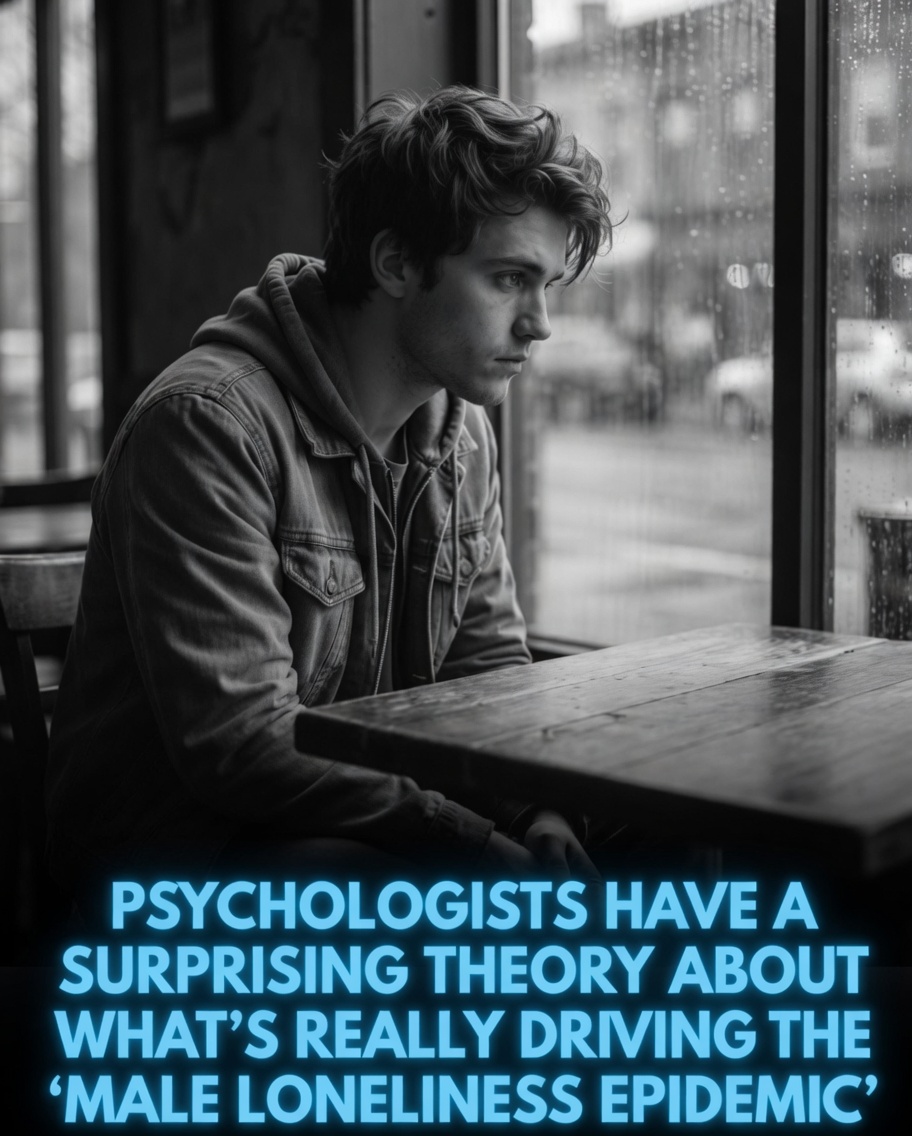
The so-called male loneliness epidemic may not stem primarily from isolation itself, but from a widespread lack of emotional intelligence, according to psychologist Dr. JJ Kelly.
Dr. Kelly argues that the crisis is rooted in emotional illiteracy. For generations, men have been socially conditioned to suppress vulnerability and prioritize providing security, leaving them ill-equipped to understand or express complex emotions. When society equates male vulnerability with weakness, many men feel ashamed to even acknowledge their loneliness, trapping them in cycles of isolation.
Instead of confronting these feelings, many turn to numbing behaviors such as excessive gaming, alcohol, or pornography, which only deepen the emotional disconnect.
The solution, Dr. Kelly says, begins with deliberate emotional skill-building: learning self-regulation and developing curiosity about one’s internal experiences. However, meaningful change also requires a shift in relationships. Women should stop carrying the emotional labor for their male partners, as constantly managing a man’s feelings ultimately prevents him from developing his own emotional capacity.
True progress for both men and women, Dr. Kelly emphasizes, means moving beyond surface-level politeness and creating space for honest, sometimes uncomfortable accountability.
[Vice. “A Psychologist Has a Blunt Theory About What’s Really Driving the Male Loneliness Epidemic.” Interview with Dr. JJ Kelly, PsyD. May 2026]
4
10
38
1,531
Male Statistics retweeted
Jun 1
On rappelle que la misandrie n'est pas une opinion, gigantesque pvte
Elle n'a pas à être placée à un degré différent du validisme, du racisme ou de la misogynie
Jun 1
Non, on est misandres mais on attaque pas les handicapés sur leur handicap, parce que ça c'est pas de la misandrie mais du validisme
6
4
36
1,428
Male Statistics retweeted

Jun 1
"73% of men who experienced female-perpetrated violence reported that their partner threatened to make false accusations versus less than 3% of males in the general population. Among men who experience female-perpetrated violence, 56% said their female partners actually did make false accusations that he physically or sexually abused her."
False allegations are a tool for abusive women, and we need to understand this. Abused men need protection.
researchgate.net/publication…
28
300
1,256
38,504
Male Statistics retweeted

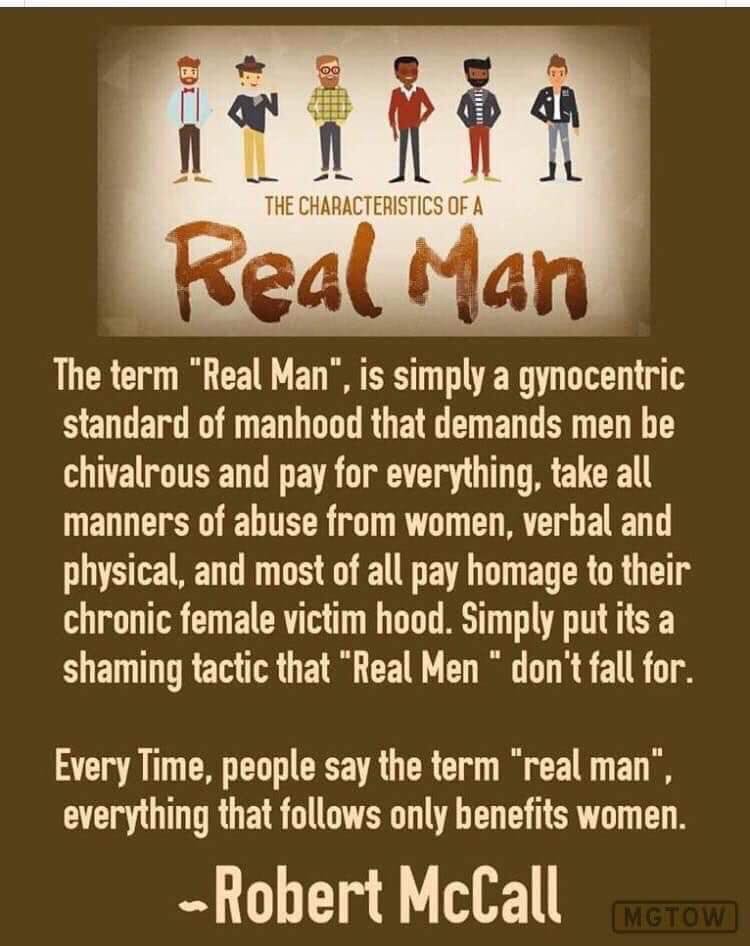
I understand the sentiment in the image but context matters. The implication that feeling safe matters more than being safe, & that the safety of women/girls matters more than that of men/boys is concerning, as is the expectation of feeling safe “everywhere”
5
36
251

Male Statistics retweeted

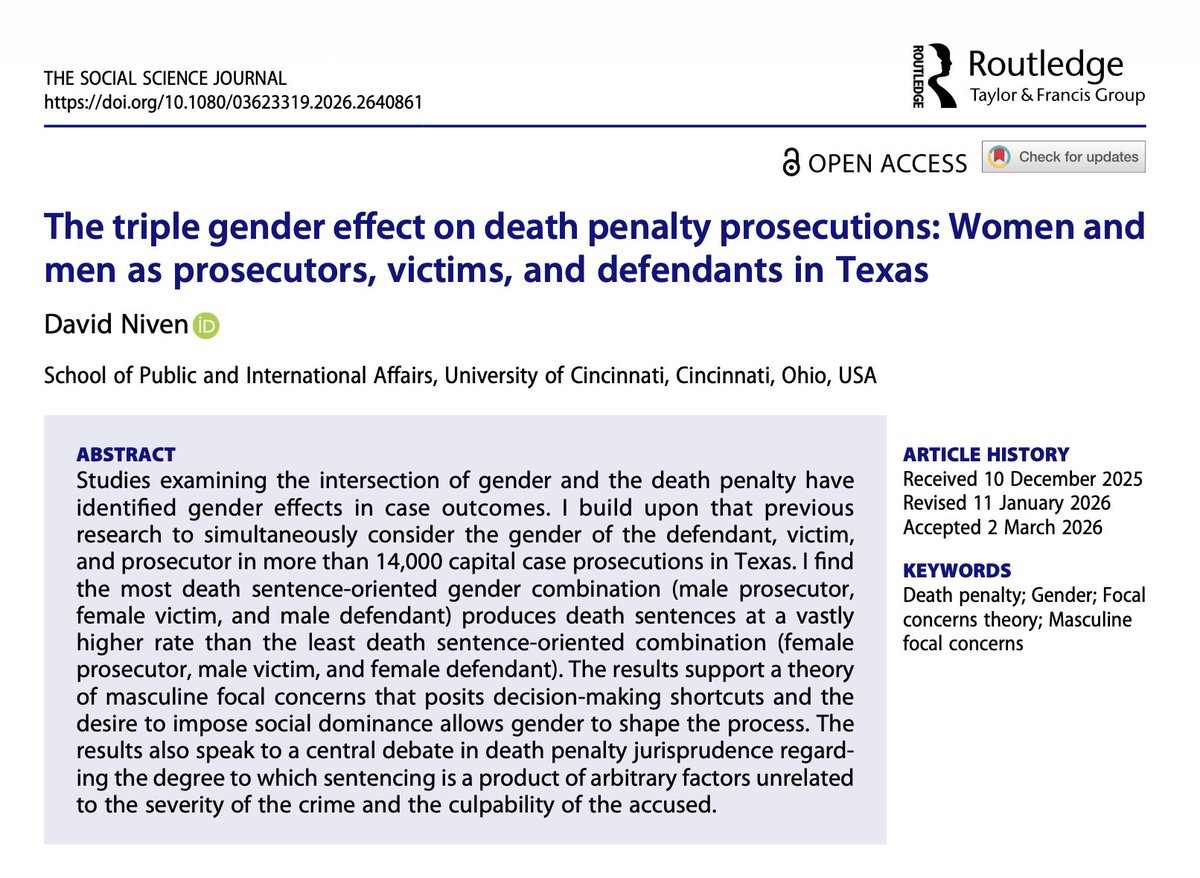
Gender and Capital Punishment in Texas
"we see across more than 14,000 capital case prosecutions in Texas that the gender of the prosecutor, victim, and defendant all were consequential. Male prosectors sought more death sentences than female prosecutors. Female victims were more likely to have a death sentence sought in their cases than male victims. Male defendants were more likely to have a death sentence sought against them than female defendants."
Findings:
"male prosecutors sought a death sentence in almost 39% of their cases, while female prosecutors sought a death sentence in just under 23% of their cases"
"Death sentences were sought against almost 38% of male defendants in capital cases compared to 27% of female defendants"
"Death sentences were sought in nearly 42% of cases with female victims compared to 34% of cases with male victims"
5
23
87
3,959
Male Statistics retweeted

Jun 1
Après tout, quand une vache donne moins de lait parce qu’on la frappe, la solution évidente est de l’abattre.
May 31

Si l'on considère que beaucoup de milliardaires se barreront pour éviter de payer les 2%, il paraît raisonnable de monter à un taux de 100%, histoire de les plumer d'un coup!!!!
2
33
392
12,823

Male Statistics retweeted
May 31
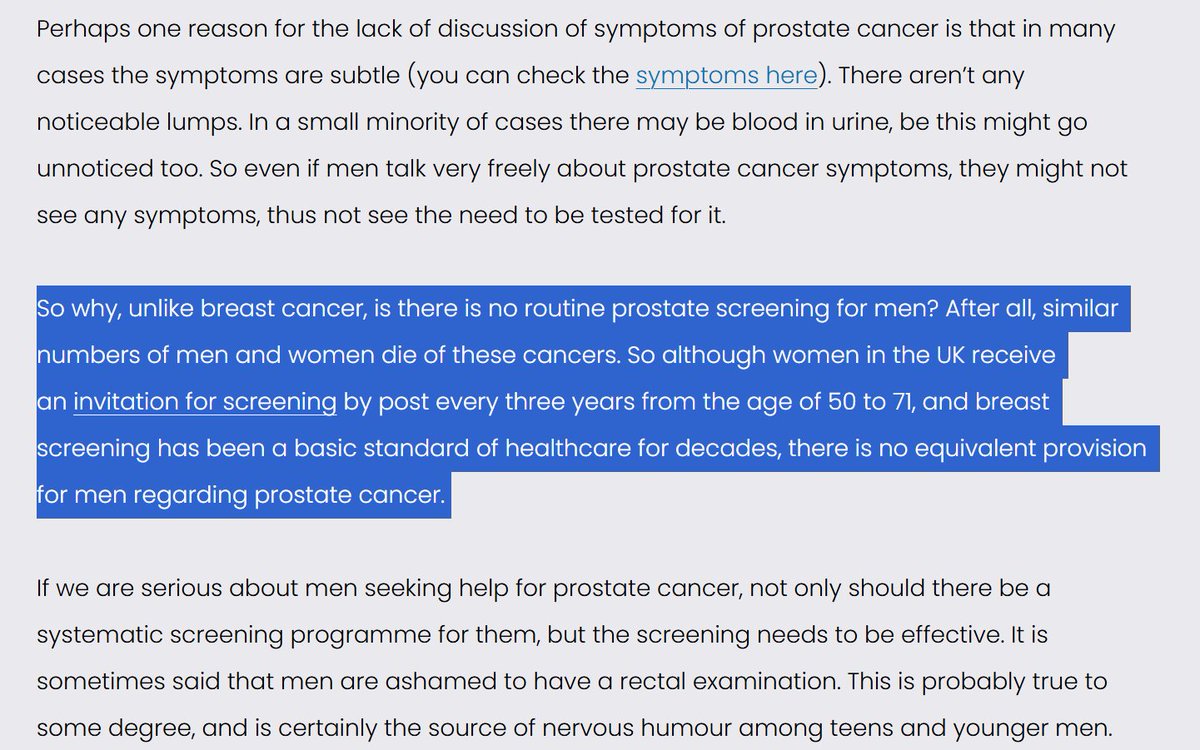
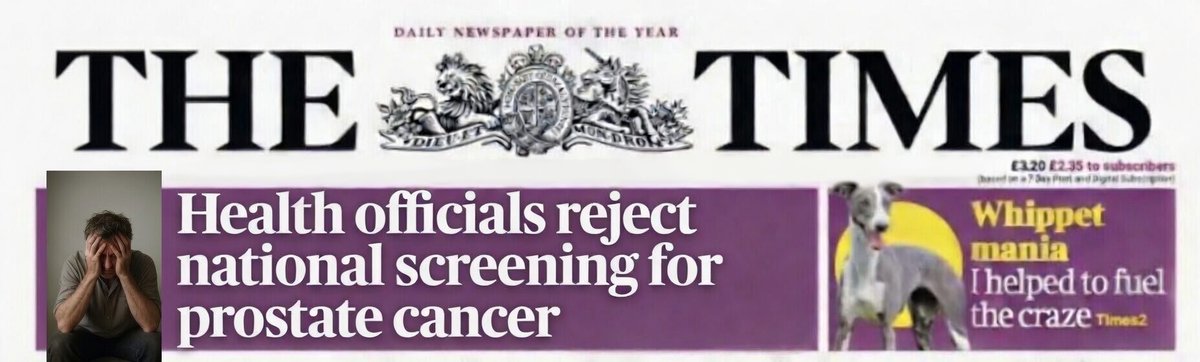
Prostate cancer symptoms are often subtle or undetectible by men, yet men are blamed for not seeking help for prostate cancer, even if they had no symptoms.
Routine screening would solve the problem.
It's disgraceful that men still aren't offered this.
centreformalepsychology.com/…
May 31

WORST PATRIARCHY EVER‼️Prostate cancer screening test blocked - even though disease kills more people than breast cancer.
Yet more 'male privilege'.
Meanwhile, total silence from the usual gobshites who claim to want gender equality.
6
17
58
1,723
Male Statistics retweeted

May 31
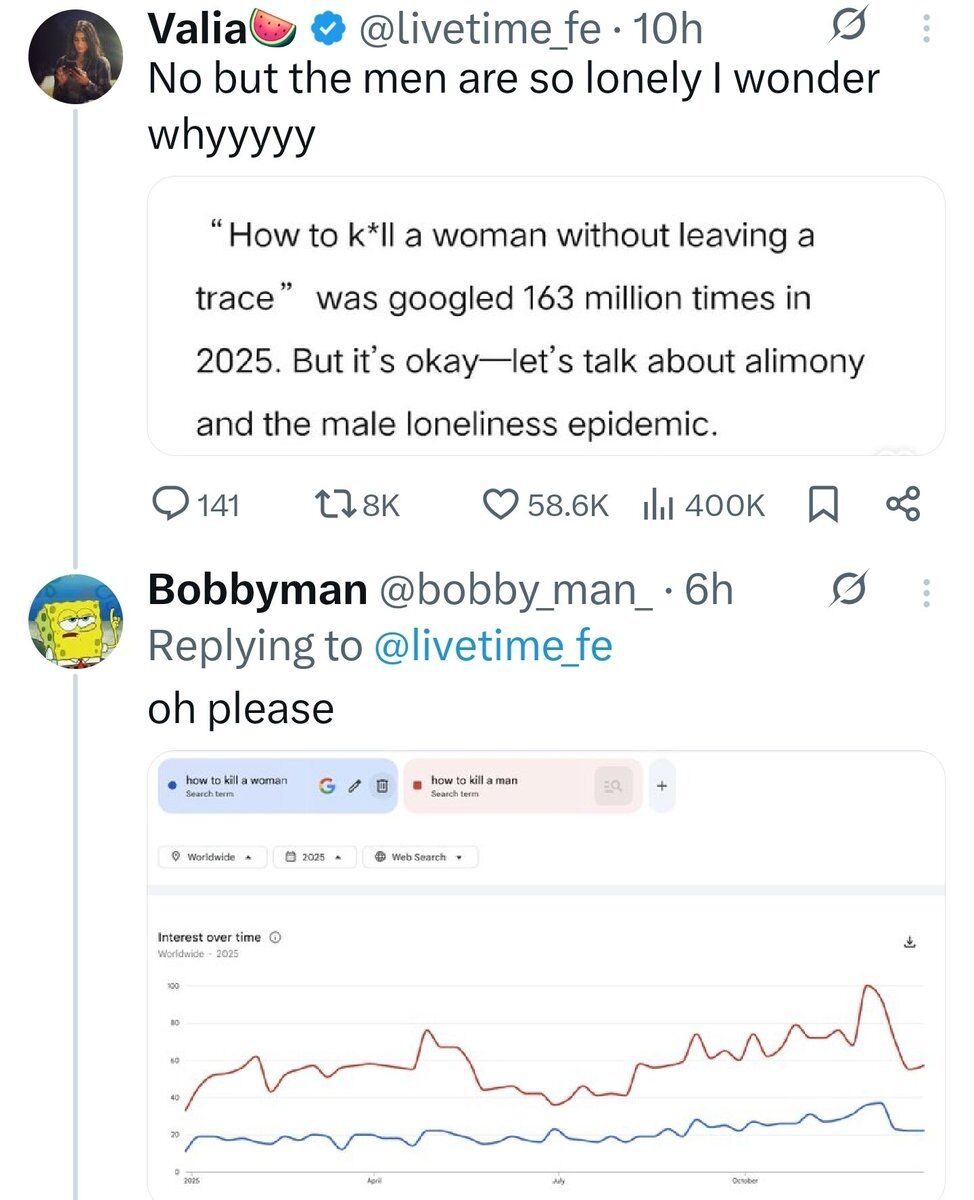
Lmfao, these people just presume oppression where there is none. Like 80% of homicide victims are male, you have to be absolutely clueless to think that women are being targeted in murders.
May 31

7
19
311
6,553
Male Statistics retweeted
May 31
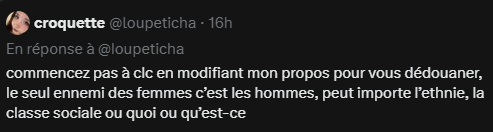
Féministe la plus saine du réseau a un jour dit :
May 31

commencez pas à clc en modifiant mon propos pour vous dédouaner, le seul ennemi des femmes c’est les hommes, peut importe l’ethnie, la classe sociale ou quoi ou qu’est-ce
6
4
48
3,441
Male Statistics retweeted

May 31


Le problème ce n'est pas les jeunes de banlieue mais le masculinisme dans le sport.
11
159
2,230
22,854
Male Statistics retweeted

May 31
Coercive control is real, serious, and can be profoundly damaging. But as debate around new laws intensifies, an important question remains: how do we protect victims without creating systems that become overly subjective, gender-skewed, or harmful to healthy relationships?
This article by Felicity Stryjak raises concerns about the expanding use of coercive control laws, especially where ordinary human dynamics (persuasion, negotiation, parenting, boundary-setting, concern for safety, or conflict within intimate relationships) risk being retrospectively interpreted through a criminal lens...
Coercive control legislation and the unintended consequences for healthy human relationships
Written by Felicity Stryjak
centreformalepsychology.com/…
A central argument is that domestic abuse frameworks often remain heavily gendered in research, policy and implementation, despite plentiful evidence that men are also victims of manipulation, intimidation, financial pressure, social isolation, and coercive behaviour. The article questions whether male experiences are sufficiently recognised, studied, or supported.
The piece also warns against simplistic narratives that cast one sex primarily as perpetrators and the other as victims. Healthy relationships are complex. Human beings can behave well, and badly. Lasting solutions require honesty about the experiences of women and men, not ideological blind spots.
None of this means dismissing abuse. It means striving for balance: clear laws, strong due process, recognition of male and female victimisation, better relationship education, healthier cultural norms, and approaches that strengthen trust, responsibility, and social cohesion rather than deepen division...
There is deep cynicism about the application of domestic violence laws by police and courts, suspicion about systematic bias of family law against males, sharply polarised views regarding the huge funding streams that flow to pro-female causes, and very substantial concern about the biased implementation of coercive control legislation.
If we want safer families and stronger relationships, then we need systems that are fair, evidence-based, compassionate, and genuinely inclusive of everyone.
2
13
39
1,462
Male Statistics retweeted

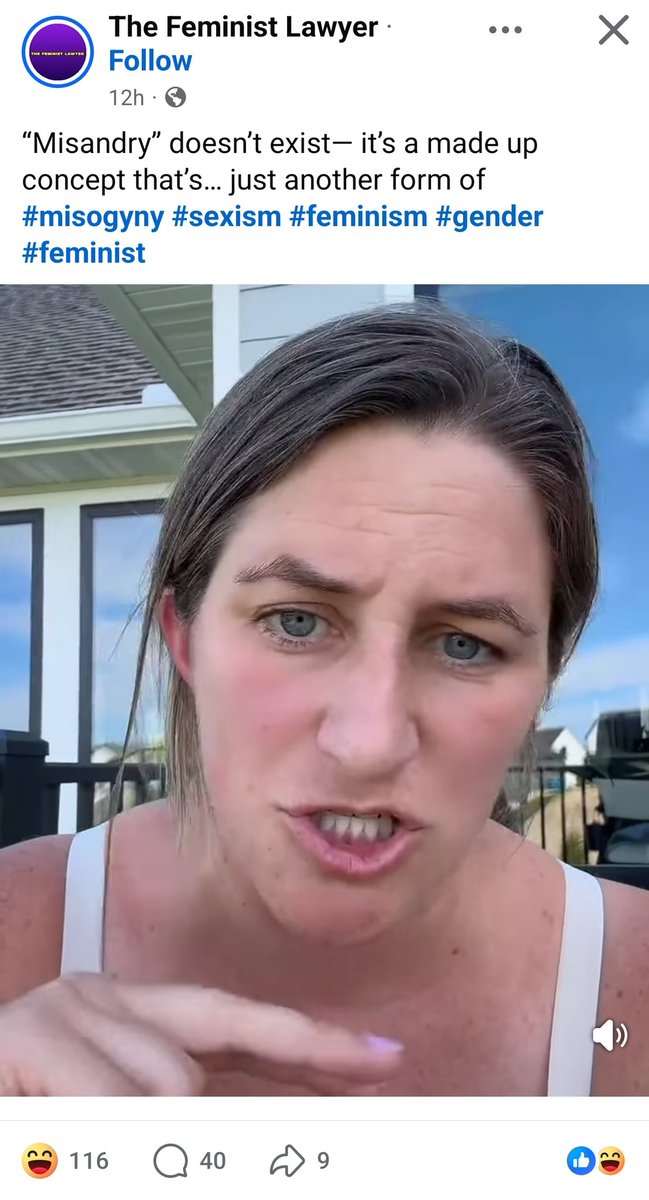
Apparently misandry is actually just misogyny!
facebook.com/share/r/18ypfSB…
5
5
20
600
Male Statistics retweeted

Toujours taper à côté. Toujours.
1
3
31
907
Male Statistics retweeted
Some good bits but overall another disappointing piece scrutinising boys, men & masculinity, implying they’re a problem & minimising misandry because of “patriarchy”
Referring to Snow White & Sleeping Beauty as misogyny & rape culture - in my opinion - is ridiculous
2
5
29
334
Male Statistics retweeted

May 31
Når mænd er flest, er det et problem. Det er uligestilling, der skal gøres noget ved. Når kvinder er flest, skal det fejres.
May 28

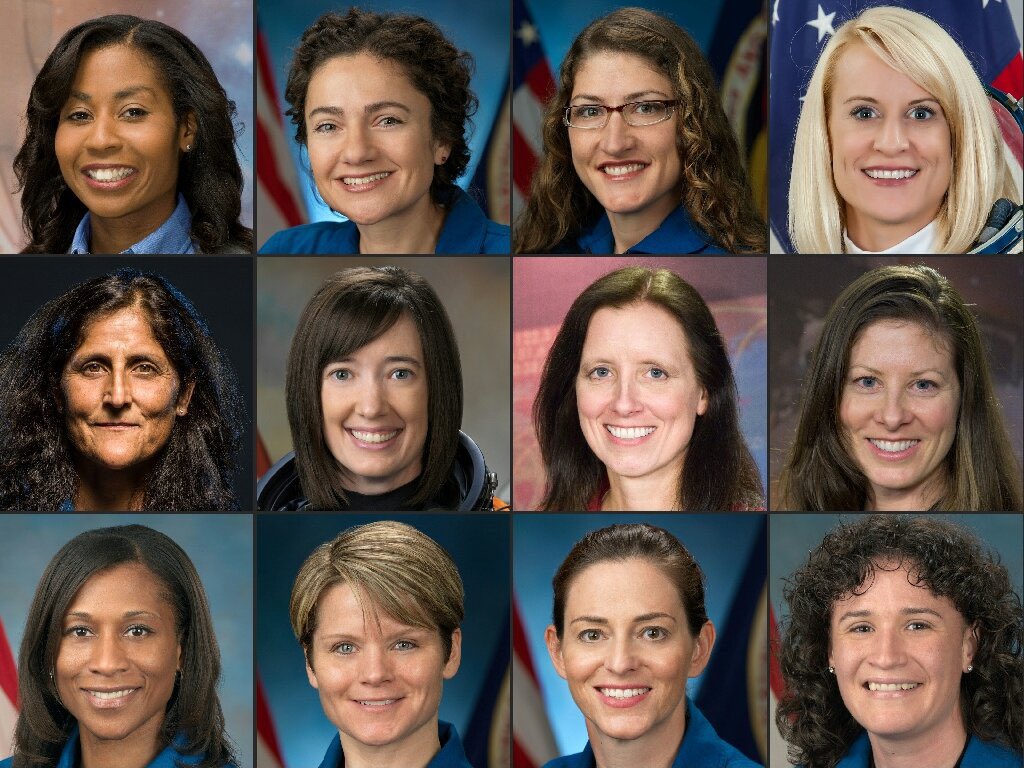
🚨: For the first time in history, women outnumber men in NASA’s newest astronaut class
8
8
137
5,096