Statement : Shutting down Telegram is a band aid solution and is a disproportionate answer to exam fraud
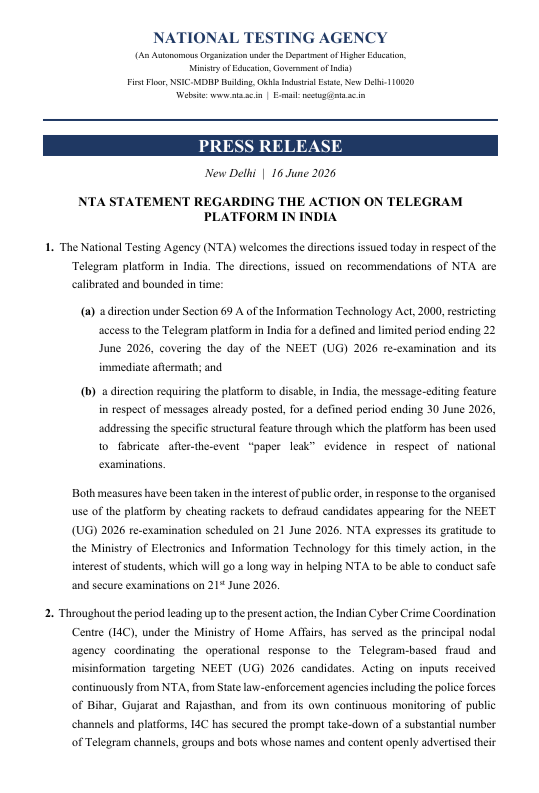
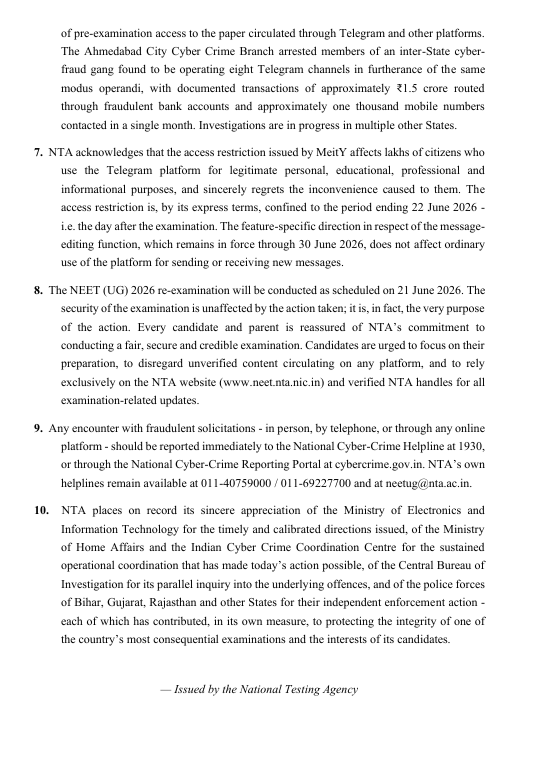
The Internet Freedom Foundation objects to the directions announced today in the National Testing Agency's press release on action against the Telegram platform. On the NTA's recommendation, the Ministry of Electronics and Information Technology has, under Section 69A of the Information Technology Act, 2000, restricted access to the whole of Telegram in India until 22 June 2026, and has separately ordered the platform to switch off message-editing for every Indian user until 30 June 2026. This is a blunt, nationwide measure aimed at the conduct of rampant fraud rackets, and on the Government's own admission is constitutionally incompatible.
At the outset it is important to note that Section 69A and the Blocking Rules of 2009 framed under it allow the Government to block access to specific “information” on a computer resource. They do not extend to switching off an entire intermediary, still less to ordering a company to redesign its product by removing a feature for a whole country. In Shreya Singhal v Union of India, the Supreme Court upheld Section 69A because it is narrow and hedged with procedural safeguards. Reading it to authorise shutting down a platform that lakhs use is an overbroad restriction by the NTAs own admission. For the message-editing direction the release identifies no source of power at all. If one exists, the order must say so.
The release argues against itself
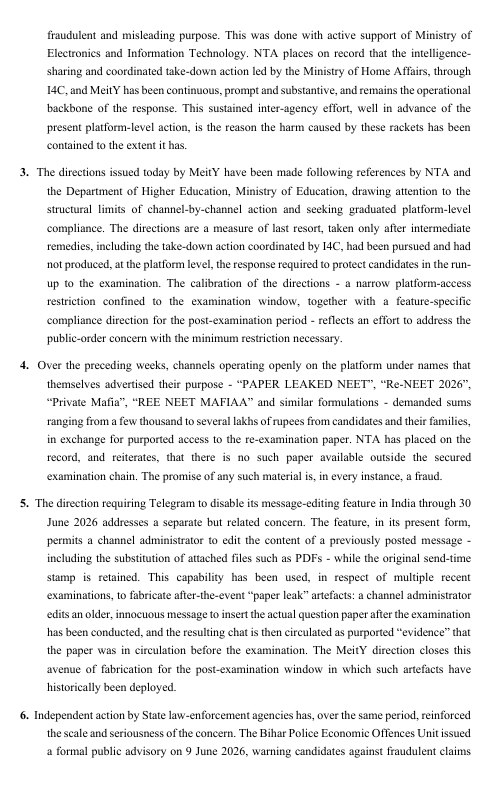
A restriction on access has to be the least intrusive measure that achieves its aim as per the constitutional test of proportionality laid down in Justice K.S. Puttaswamy v. Union of India (2017) and applied in Anuradha Bhasin v. Union of India (2020). The NTA's own narration shows the block fails its nodal agency, the release says, “has secured the prompt take-down of a substantial number of Telegram channels, groups and bots”, and this targeted work “is the reason the harm caused by these rackets has been contained to the extent it has”. If channel level takedown contained the harm, the case for a blanket block collapses and hence the Government has reached for a heavier tool while conceding that a lighter one was working. The collateral cost sits on the record too as noted in the press release. The block, the NTA accepts, “affects lakhs of citizens who use the Telegram platform for legitimate personal, educational, professional and informational purposes”. The release also says there is "no such paper available outside the secured examination chain" and that “the security of the examination is unaffected by the action taken”. If the exam is secure and no leak exists, what is being suppressed is rumour, and rumour cannot justify closing a platform when specific blocking and criminal prosecution remain available.
Students use of Telegram
The block of telegram is reactive and ineffective and will punish ordinary users instead of addressing the systemic source of exam leaks. This blocking comes in the final days of NEET preparation, when thousands of students depend on Telegram for study groups, doubt-clearing, and shared resources. Also, it is important to consider that the source of exam papers leak will occur from inside the system, among insiders and across the printing and logistics chain, with the platform being the most downstream channel for distribution. Hence, switching off Telegram, is merely a deflection from the repeated failures that will continue while media attention is directed towards this Telegram ban.
Lack of transparency
At present only a press release from the NTA has been provided, which recommended the block but the reasoned order of MeitY, the authority that issued it, has not been released. The Anuradha Bhasin decision requires that orders restricting access be published so they can be tested in court. Here the order, and the reasoning of the committee behind it, stay out of view, and we do not know whether Telegram was heard at all. An announcement of a block is no substitute for an order the affected party can challenge.
Blunt to enforce and very easy to evade
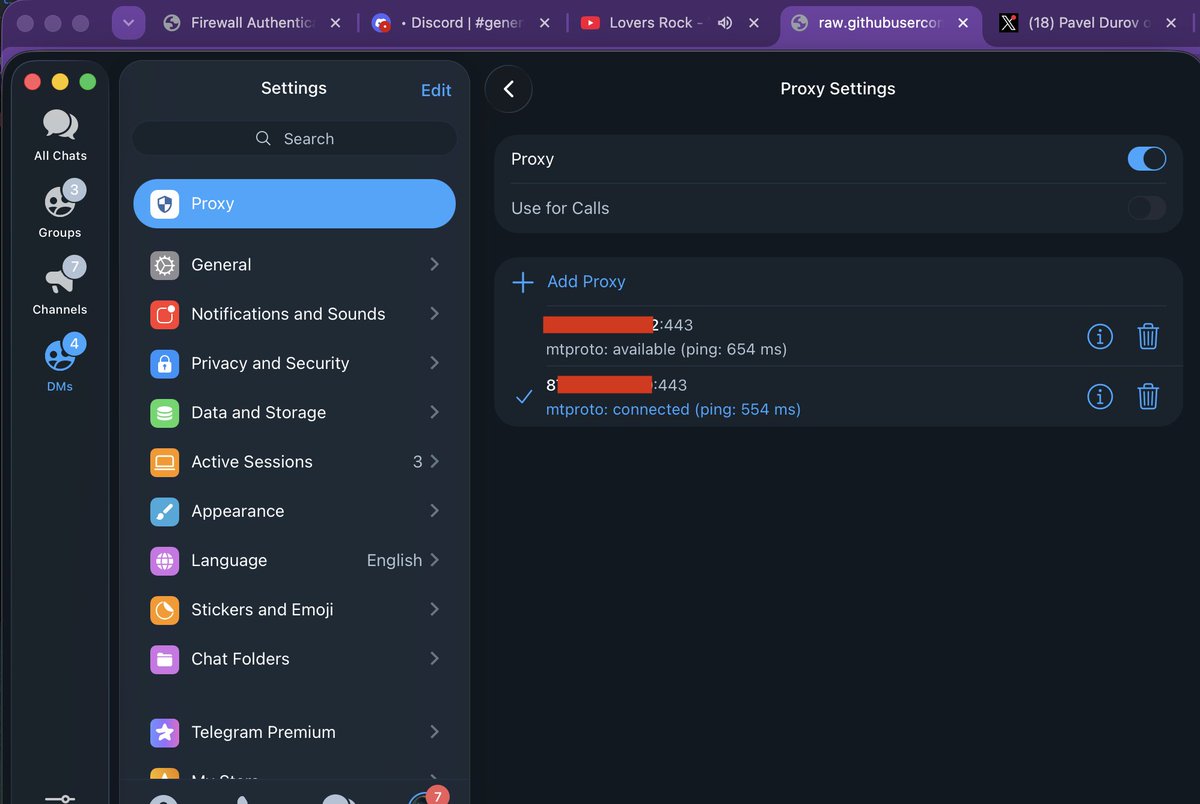
Usually, app-level blocks run through IS-level DNS and IP filtering. They are over inclusive, sweeping in lawful use, yet simple to evade as a determined exam leak racket moves to a VPN or a mirror within minutes while ordinary users lose the service for a week.
We ask the Government to:
1) Publish the MeitY Section 69A order and the NTA recommendation behind it, with reasons;
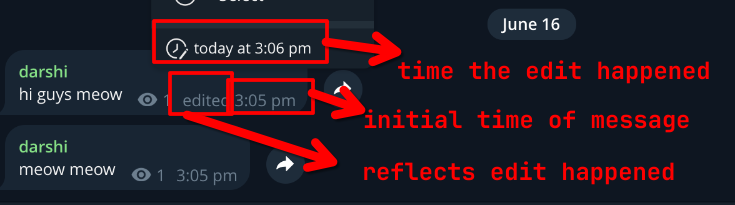
2) State the legal basis for the message editing direction, or withdraw it;
3) Confirm whether Telegram was given a hearing under the Blocking Rules, and place the committee's record before any court that hears a challenge; and
4) Lift the platform-wide restriction and rely on the targeted takedowns the NTA itself credits with containing the harm.
We emphasise that the NEET (UG) 2026 re-examination is worth protecting and it concerns the future of lakhs of aspirants. It requires securing the entire process of examination rather than reaching for purported band aid solutions that instead cause more harm. The State cannot switch off a service used by lakhs to answer the wrongdoing of a few, and cannot do it through an order no one affected is allowed to read. On its own facts, the Government has done both.
New Delhi, 16 June 2026.