
56 Photos and videos










Ted Tauer retweeted

The Seahawks and Knicks both winning titles within a 6-month span is perhaps the most Minnesota sports thing in the history of Minnesota sports
66
111
1,683
54,894



Time to party like it’s 1999 🕺🏻

223
Ted Tauer retweeted

25 Sep 2025
Aaron Judge and Cal Raleigh both doing MVP things on a night Kyle Schwarber hits two home runs and a team fully blows a historically large September division lead while another fighting for a playoff spot aims to win a game in extras is precisely why I freaking love baseball.
296
1,127
17,421
934,093

Ted Tauer retweeted

19 Jul 2025
Hops outlast the @STPMudhens 3-0 as the rain cuts us a bit short. @mulc5mac and @VossRaymond push the runs across while @TedTauer shoves again to seal the win. Back at it next Monday against @tcsaintsbb
#RollHops
4
7
683
Ted Tauer retweeted
11 Jul 2025
Hops walk it off! @VossRaymond comes up clutch in the bottom of the 7th to beat @StPaulCapitals 4-3.
@mulc5mac gets the win in relief
Both @VossRaymond and @bigjohnz3224 lead the way hitting with a pair of hits.
Back at it Sunday vs @LoggersBasebal
#RollHops
1
3
15
976
Ted Tauer retweeted
1 Jul 2025
Hops are rollin! 3 W’s over the last 3.
3-0 vs Highland
4-0 over Capitals
14-1 over North End
Teddy (Shohei) Tauer 12 IP 0 ER while going 4-7 at the plate.
Sam Warren goes big fly for his first time as a Hop.
Back at it after the 4th for a rematch vs North End. #RollHops

2
15
1,043
Ted Tauer retweeted

14 Jun 2025
The basketball in this Pacers-Thunder Finals has been stellar. Maximum effort from everyone on the floor for both teams. Engaged defenses. Balanced offense (especially from Indiana). And Gainbridge Fieldhouse is a great building with an electric crowd.
9
12
93
10,214
Ted Tauer retweeted

5 May 2025
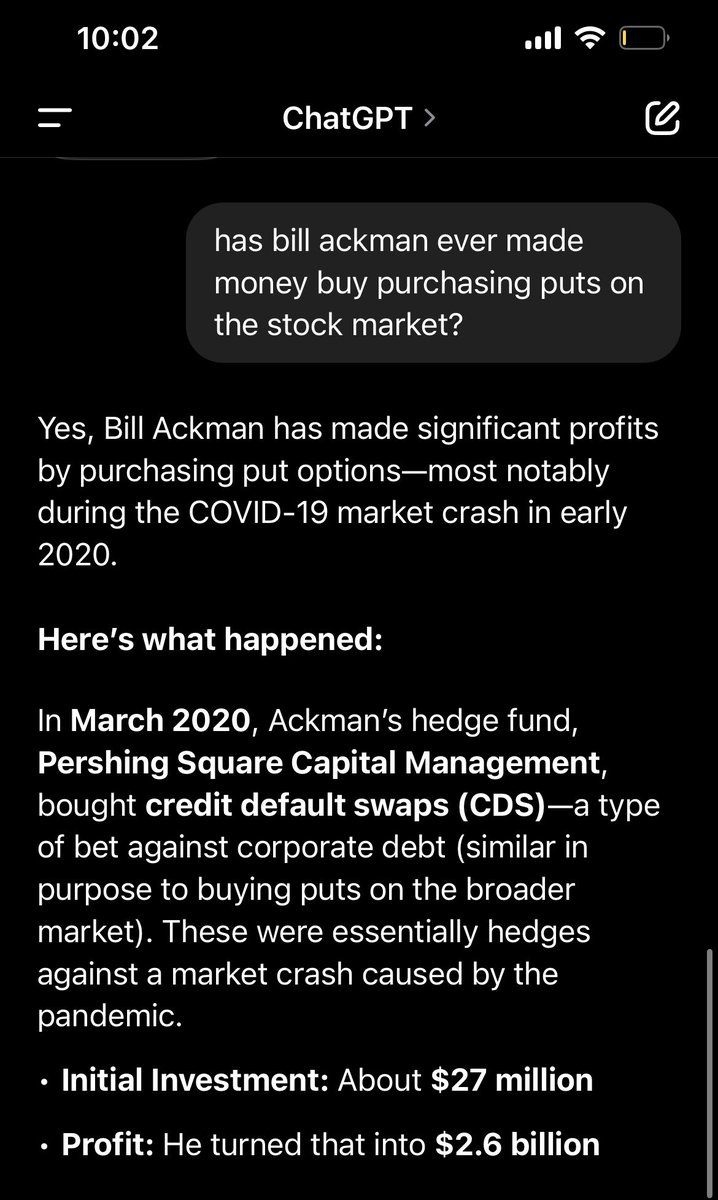
Buffett's record:
~19.8% compound annual return (CAGR) from 1965 to 2023
S&P 500 with dividends included (for comparison):
~9.9% CAGR over the same period
Meanings:
A $1,000 investment in Berkshire Hathaway in 1965 would be worth over $40 million by 2023.
The same $1,000 in the S&P 500 would be worth around $275,000.
Why is Buffett so successful?
- He is incredibly strict on his strategy
- He does not buy fundamentally overvalued positions
- He does not like shorting or using leverage
- Fundamentals matter.
- He does not chase the next hype stock.
- He buys when the masses are scared
- He goes heavy into Cash when the market is overvalued and deploys when it is cheap again.
- He protects his portfolio with Safe Havens, Dividend stocks and T- Bills
- He knows that preparing your portfolio for any unexpected storm will guarantee that you win for the long term.
- He uses time to work for him and not against him.
- He is disciplined.
Be like Buffett.
29
43
590
82,377
Ted Tauer retweeted

awoo 34
45
512
8,868
Ted Tauer retweeted

4 Jan 2025
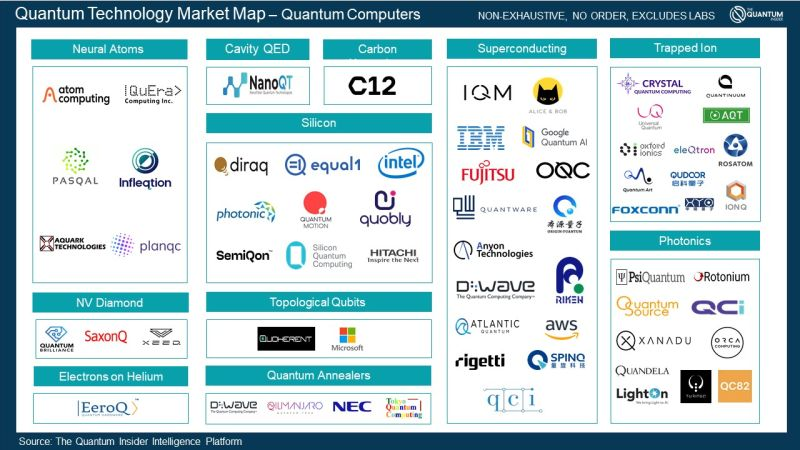
Everything You Need to Know About Quantum Computing in 2025 🧐
The rise of quantum computing signals a massive shift in the technological landscape, similar to the revolutionary ascent of AI. Unlike traditional binary systems, quantum computing harnesses the enigmatic power of qubits -- units capable of existing as 0, 1, or both simultaneously. This quantum parallelism represents not an incremental improvement but an entirely new paradigm of computational capability, enabling solutions to problems that classical systems cannot approach within human timescales. From materials science and cryptography to logistics optimization -- the applications are as vast as they are transformative.
At the forefront of this quantum revolution are companies like $IONQ, $RGTI, $GOOGL & $NVDA, each playing a unique role in bridging the gap between theoretical potential and practical application. IonQ, leveraging partnerships with $AMZN AWS, $MSFT Azure, and $GOOGL Cloud, is embedding quantum solutions into enterprise workflows. Rigetti is pioneering hybrid quantum-classical systems, integrating today’s computational needs with tomorrow’s quantum possibilities. NVIDIA, meanwhile, is quietly but decisively positioning itself as the linchpin of this ecosystem -- providing the infrastructure to scale quantum technologies globally.
The narrative surrounding quantum computing shifted dramatically with Google’s Willow project. Achieving critical progress in error correction -- a fundamental hurdle to scalability -- Google has accelerated expectations for practical quantum adoption. What was once dismissed as speculative is now projected to achieve widespread implementation within 3 to 5 years -- fueling a reevaluation of quantum's potential to reshape industries.
Quantum’s ability to tackle exponentially complex calculations is not just academic -- it’s poised to revolutionize AI. Modern AI systems rely on optimization and rapid data processing, and quantum algorithms could amplify these capabilities exponentially. By addressing multi-variable optimization problems at unprecedented speed, quantum computing is set to redefine the scalability and efficiency of AI applications -- creating a synergy that magnifies the transformative potential of both technologies.
Enter NVIDIA, now positioning itself as the backbone of the quantum computing revolution. At the heart of NVIDIA’s strategy is its CUDA Quantum platform, a seamless integration of quantum tools, simulators, and infrastructure. CUDA Quantum allows developers to simulate quantum algorithms on NVIDIA GPUs before deploying them to physical Quantum Processing Units (QPUs). This simulation layer is crucial, as real quantum hardware remains costly and nascent. By providing a virtual proving ground, NVIDIA transforms quantum development from speculative experimentation into precise, actionable innovation.
But NVIDIA’s influence doesn’t stop at hardware. Developers can access CUDA Quantum’s simulators on-demand while seamlessly integrating physical QPU hardware from industry leaders like IonQ & Rigetti. This democratization of quantum computing removes cost barriers, enabling enterprises to experiment, iterate, and innovate without the need to invest in dedicated quantum hardware. NVIDIA’s strategy mirrors its dominance in AI. Just as its GPUs became the backbone of AI model training and inference, CUDA Quantum is poised to play the same foundational role for quantum computing. NVIDIA’s platform isn’t just a toolkit -- it’s the bridge connecting quantum possibilities with practical applications.
That said, the road ahead for quantum computing is anything but smooth. The recent pull-forward rerating in the sector, sparked by breakthroughs like Google’s Willow project, has drastically accelerated timelines. Once perceived as decades away, quantum computing is now seen as a near-term reality, with adoption expected within 3 to 5 years. This dramatic shift has led to a surge in interest and valuation for quantum names, but it’s also setting the stage for extreme volatility.
2025 will likely bring wild swings for quantum computing stocks. With many of these companies still years away from profitability, their valuations are vulnerable to sentiment shifts. It’s not unreasonable to expect 50% haircuts on no material news as the market recalibrates its expectations. This isn’t a reason to shy away -- it’s a feature of investing in emerging technologies at the frontier of innovation.
Quantum computing is a decade-long thematic play. The near-term volatility for first movers is inevitable, but for investors with patience and conviction, these fluctuations are part of the journey. The potential for quantum computing to redefine industries, drive efficiencies, and unlock unprecedented opportunities makes it one of the most compelling long-term narratives in technology. Embrace the turbulence -- it’s the price of being early in a revolution.
58
358
1,598
310,555

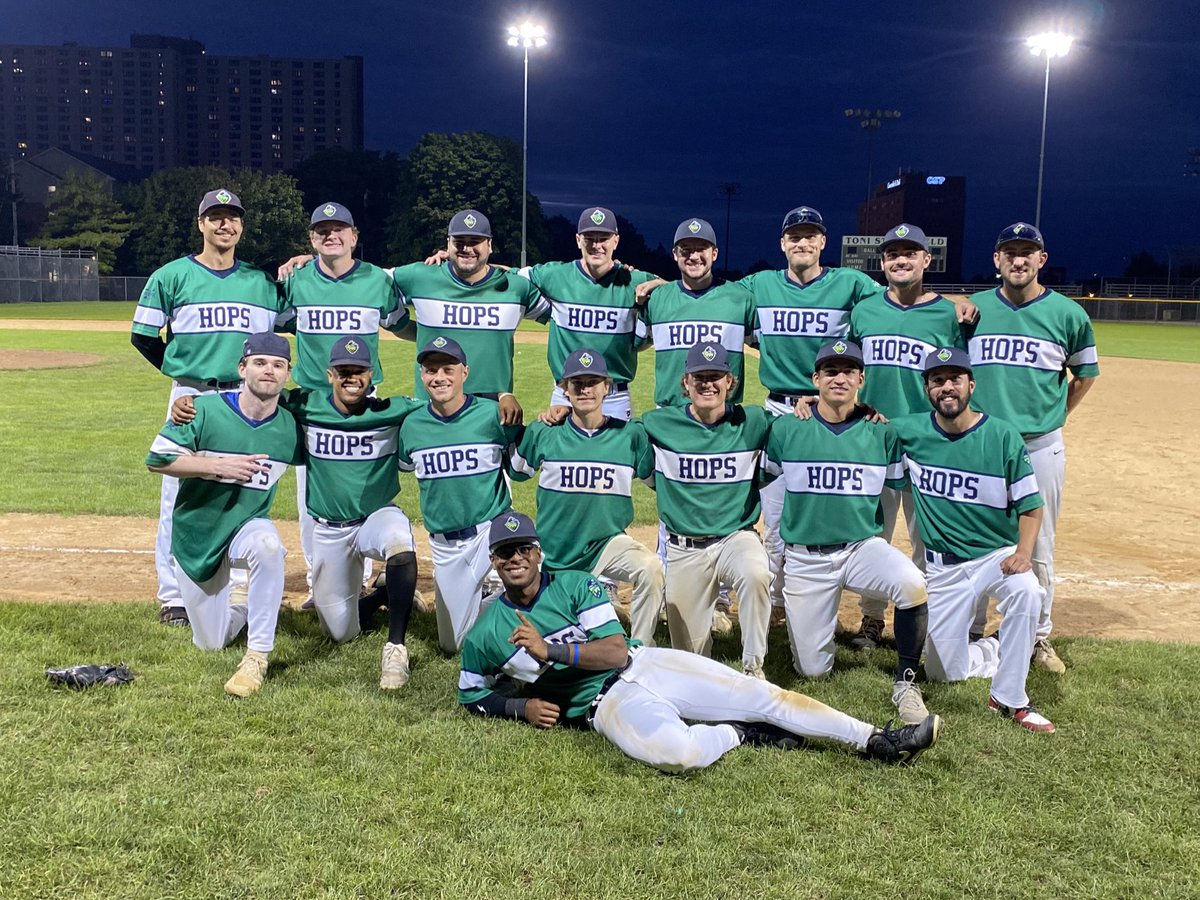
Let’s go Hops! Time to dance 🕺🏻
10 Aug 2024

Hops keep the hot bats going and WIN game 2 of the series 19-9. Under the first year of the new Skip, Hops are headed to @BPJGI2024! #RollHops
3
388
Ted Tauer retweeted
30 Jul 2024
BREAKING: Jack Flaherty to the Dodgers.
1,598
2,519
13,418
5,350,514
Ted Tauer retweeted
20 Jul 2024
@Ben_Gallaher5 gets the solo RBI single, then gets told he can’t play no more. @TedTauer throws a GEM and goes complete game shutout as Hops win 1-0 against @HPtownteam
1
3
5
357
Ted Tauer retweeted
11 Jul 2024
Hops get the W coming off the long break, 5-2 over the @tcsaintsbb. Defense finally helped @TedTauer as he throws another gem going 6 innings only giving up 2, and Matt Hayford comes in to shut the door in the 7th.
#RollHops
1
4
8
1,181