
Advancing AI for Science
Joined November 2023
- Tweets 58
- Following 6
- Followers 149
- Likes 7
41 Photos and videos





Pinned Tweet

23 Nov 2023
"AI for Science" illustrated: a 4-minute animation
youtube.com/watch?v=tl3OYg_F…
7
788
26 Aug 2024
Let's AI for Science!
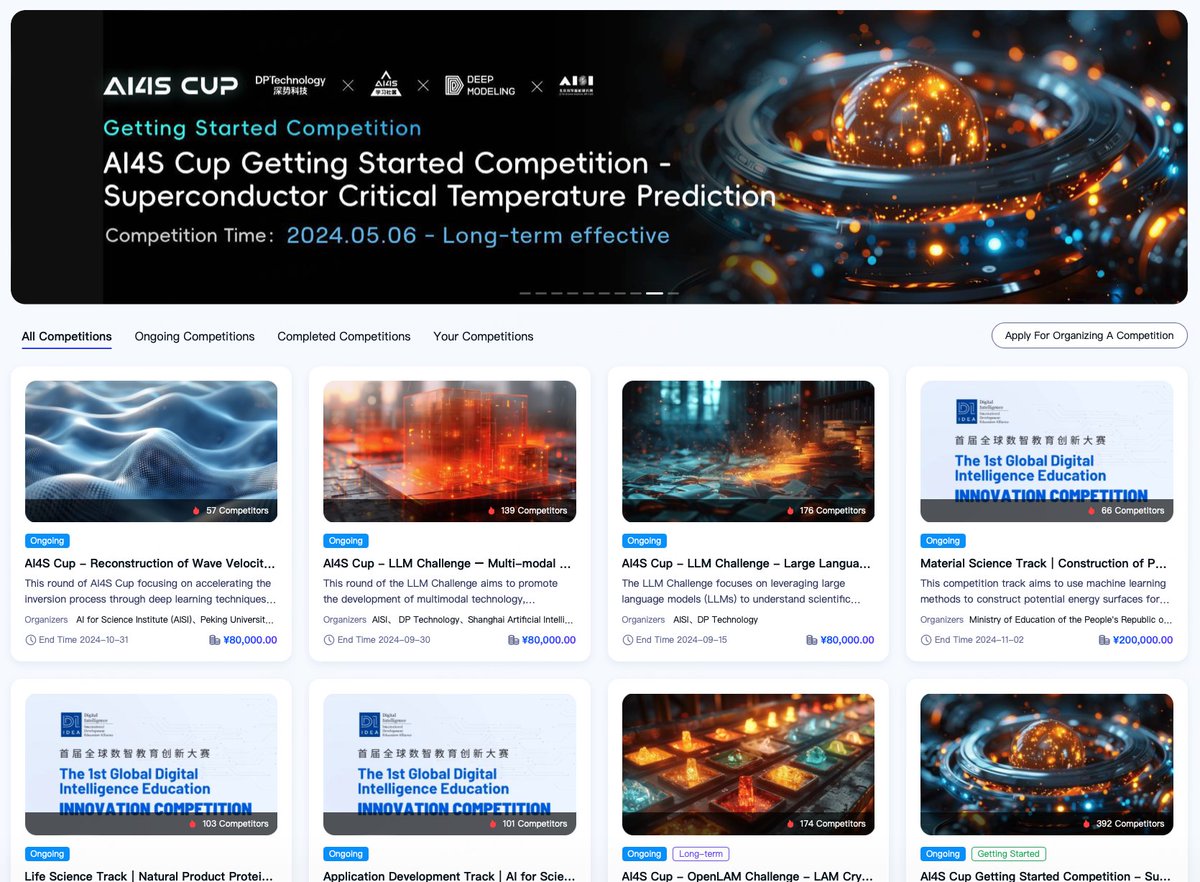
AI4S Cup - OpenLAM Challenge - LAM Crystal Philately is currently underway!!!
For more details: lnkd.in/gtNivdug
More competitions: bohrium.dp.tech/competitions
2
323
20 Aug 2024
Linfeng Zhang (张林峰) (the Founder and CSO at DP Technology and serves as the Dean of the AI for Science Institute in Beijing) will deliver a speech(ACS-Fall 2024 Exhibitor Workshops) ,focusing on “Foundation Models and Simulation Tools for Molecular Design and Discovery”.
⏰Time: Wednesday, 8/21. 10:30-11:20
🗺️Location:Hall E-F, Expo Theater 1 #2106 (Colorado Convention Center)
3
5
558
20 Aug 2024
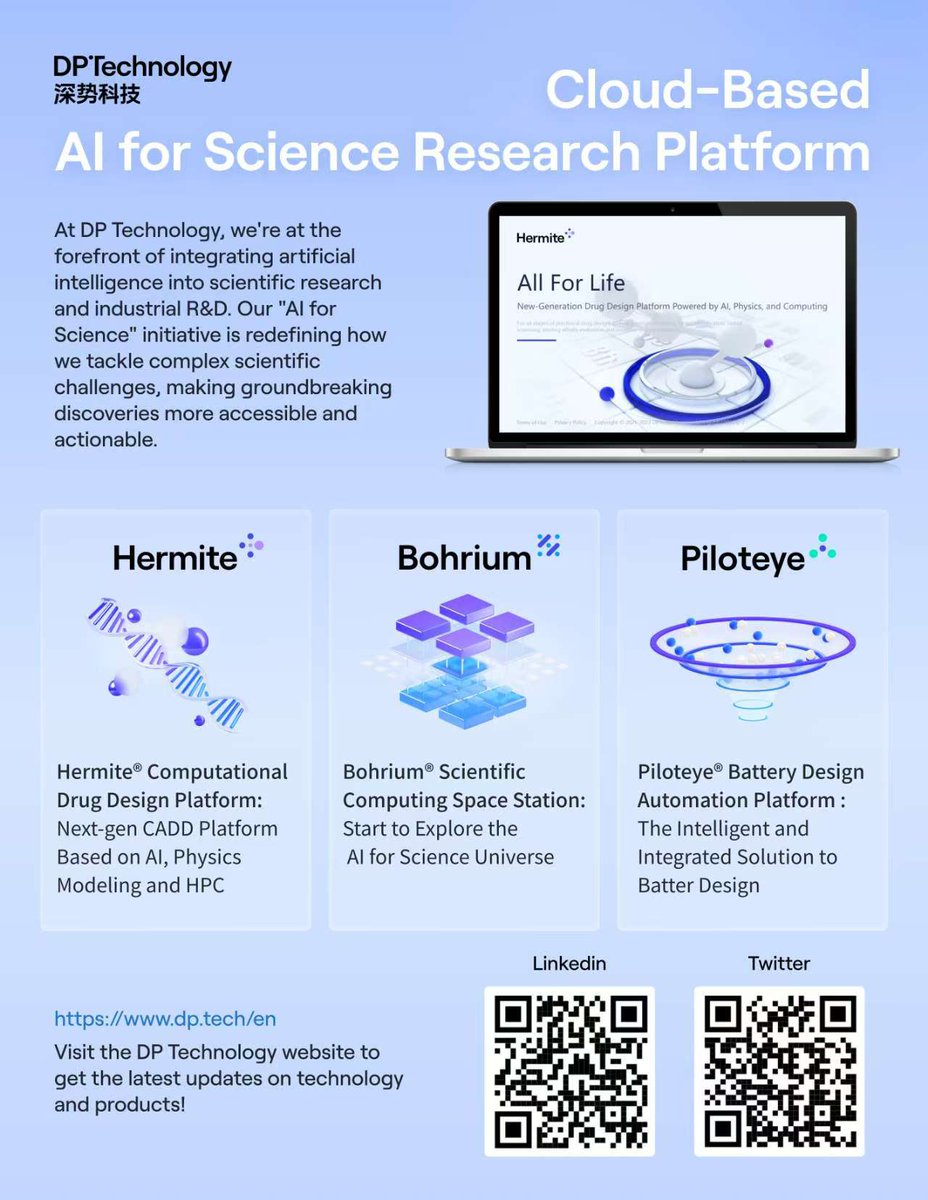
Join DP Technology THIS WEEK at ACS Fall-Denver, CO(August 18-22 , 2024)
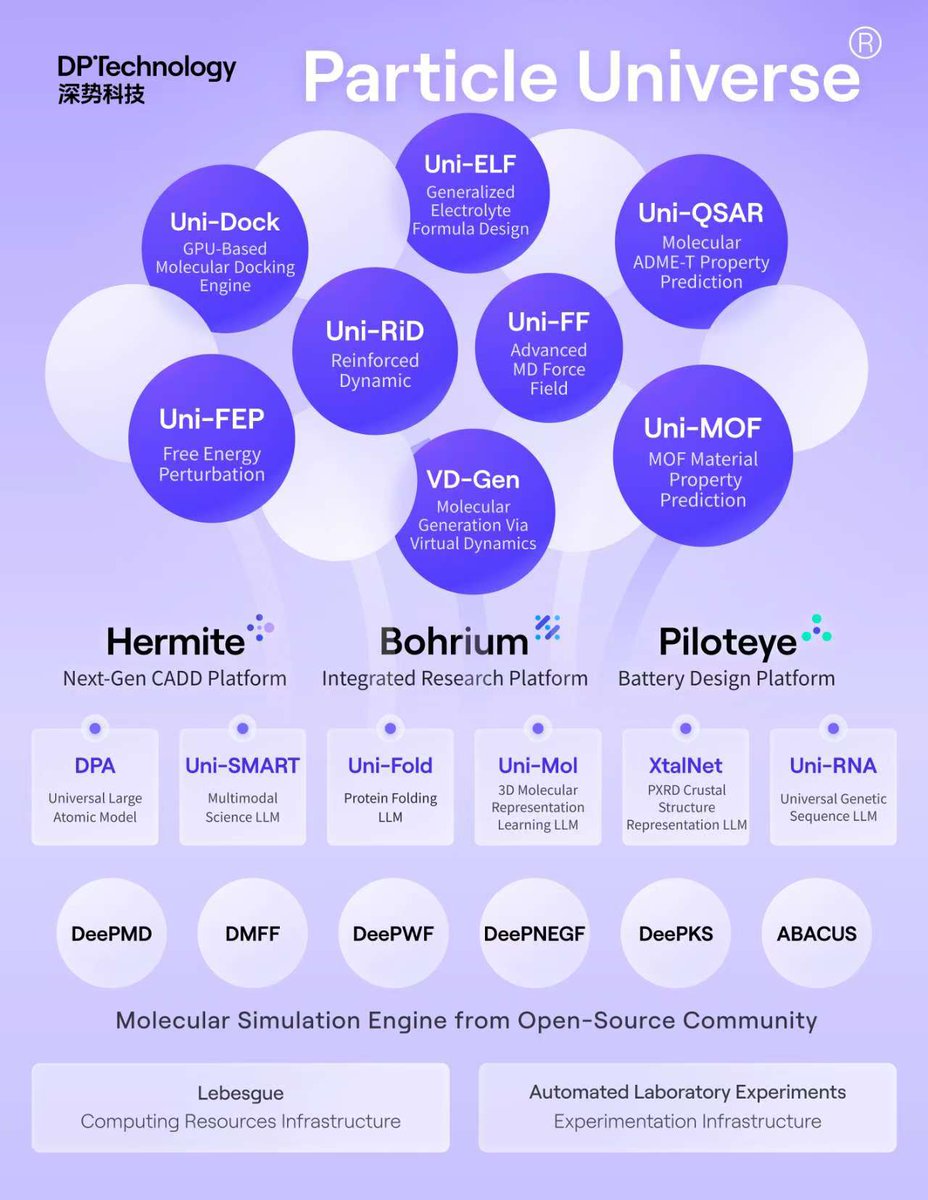
If you are interested in exploring Computational Discovery Platforms (Next-gen CADD Platform based on AI Physics Modeling and HPC, Scientific Computational Space Station, and Intelligent and integrated Solution to Batter Design......)
ACS Booth No. 1711
2
164
2 Aug 2024
Proud to update the progress of "Novel Non-Covalent Hits Against GPX4 Identified Using the RiDYMO® Reinforced Dynamics Platform of DP Technology".
prnewswire.com/news-releases…
1
7
285
15 Jul 2024
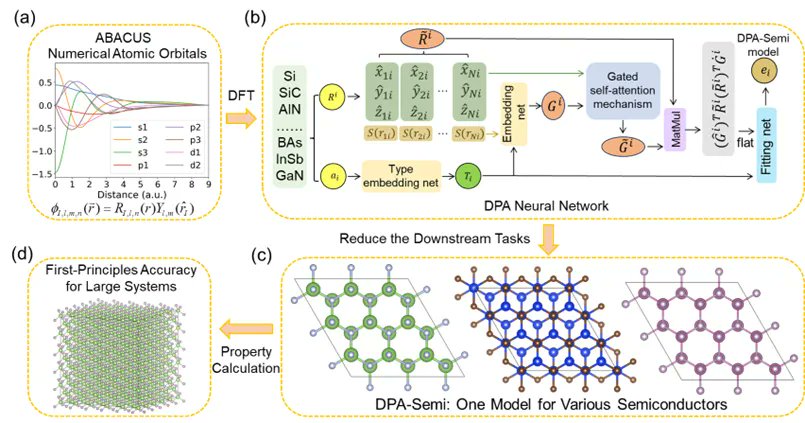
Proud to introduce DPA-semi, a Large Atomic Model for semiconductor materials developed by a joint team at @PKU1898 , @TheDPTechnology etc. The research, titled “Machine-Learning-Based Interatomic Potentials for Group IIB to VIA Semiconductors: Towards a Universal Model,” have been published in the Journal of Chemical Theory and Computation @JCIM_JCTC. In the spirit of #openscience, we are also making the data and model available to the community.
The DPA-Semi model encompasses 19 semiconductor materials, including Si, Ge, SiC, BAs, BN, AlN, AlP, AlAs, InP, InAs, InSb, GaN, GaP, GaAs, CdTe, InTe, CdSe, ZnS, and CdS. The training data for these semiconductor materials were derived from DFT calculations based on numerical atomic orbitals (TZDP), and the model was constructed using the DPA-1 descriptor.
paper pubs.acs.org/doi/pdf/10.1021…
data/model aissquare.com/models/detail?… ; aissquare.com/datasets/detai…
3
18
1,295
12 Jul 2024
🎉🎉 Congratulations to DP's Founder and Chief Scientist Dr. Linfeng Zhang on being included in "Top 2% Scientists Worldwide" by Stanford University.
elsevier.digitalcommonsdata.…
2
169
9 Jul 2024
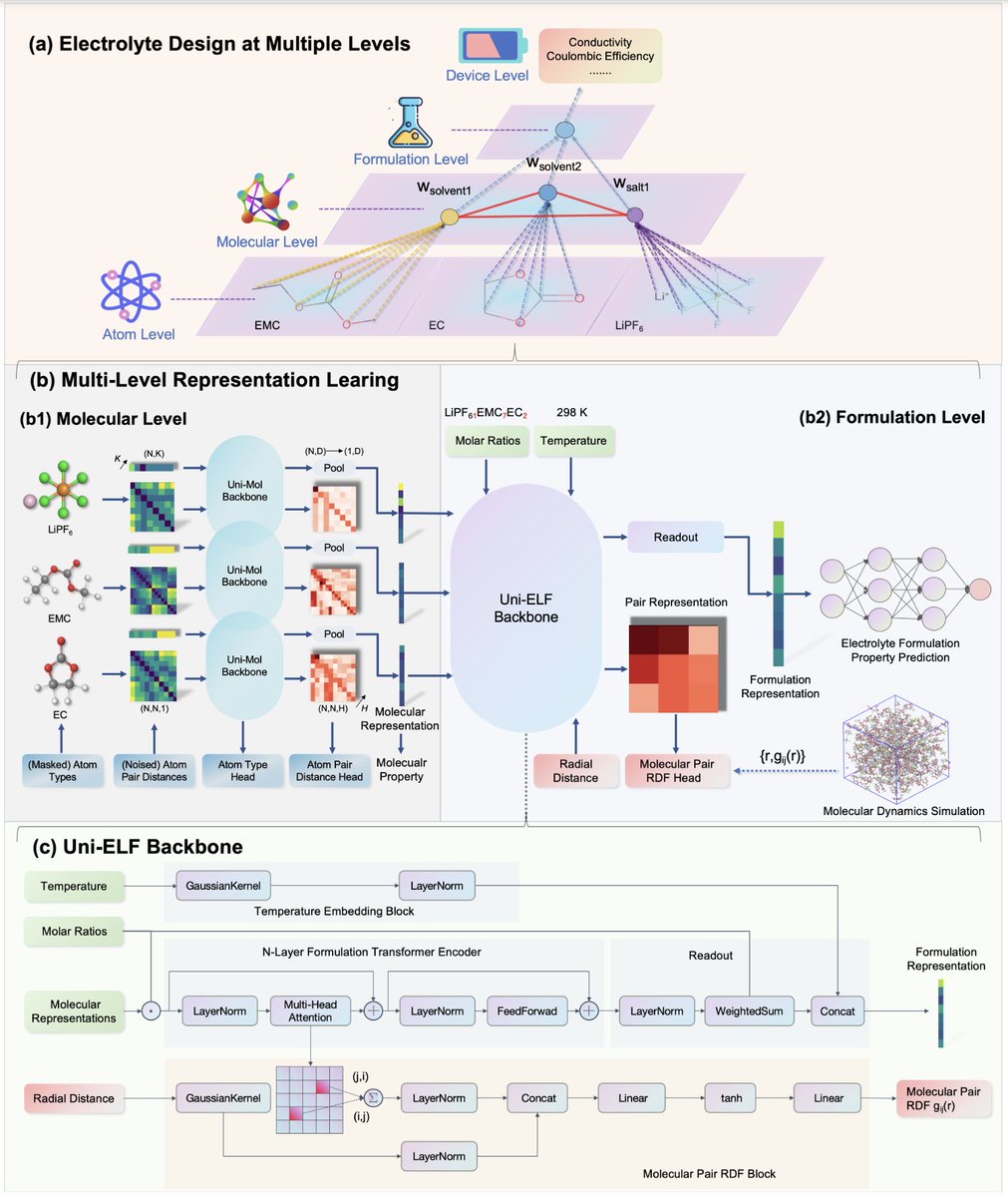
Thrilled to introduce Uni-ELF, our large pre-trained model for advancing electrolyte design.
Trial at bohrium.dp.tech/apps/uni-elf
Paper at arxiv.org/abs/2407.06152
Uni-ELF substantially outperforms state-of-the-art methods in predicting both molecular properties (e.g., melting point, boiling point, synthesizability) and formulation properties (e.g., conductivity, Coulombic efficiency).
2
2
158
8 Jul 2024
Excited to announce the nomination of DPT0416, a novel CNS penetrable small molecule targeting Lp-PLA2, as a preclinical candidate for the treatment of Alzheimer's disease (AD).
prnewswire.com/news-releases…
85
8 Jul 2024
Excited to announce the nomination of DPT0415, a novel small molecule targeting Lipoprotein‐associated phospholipase A2 (Lp-PLA2), as a preclinical candidate compound for the treatment of diabetic retinopathy (DR) and diabetic macular edema (DME).
prnewswire.com/news-releases…
89
3 Jul 2024
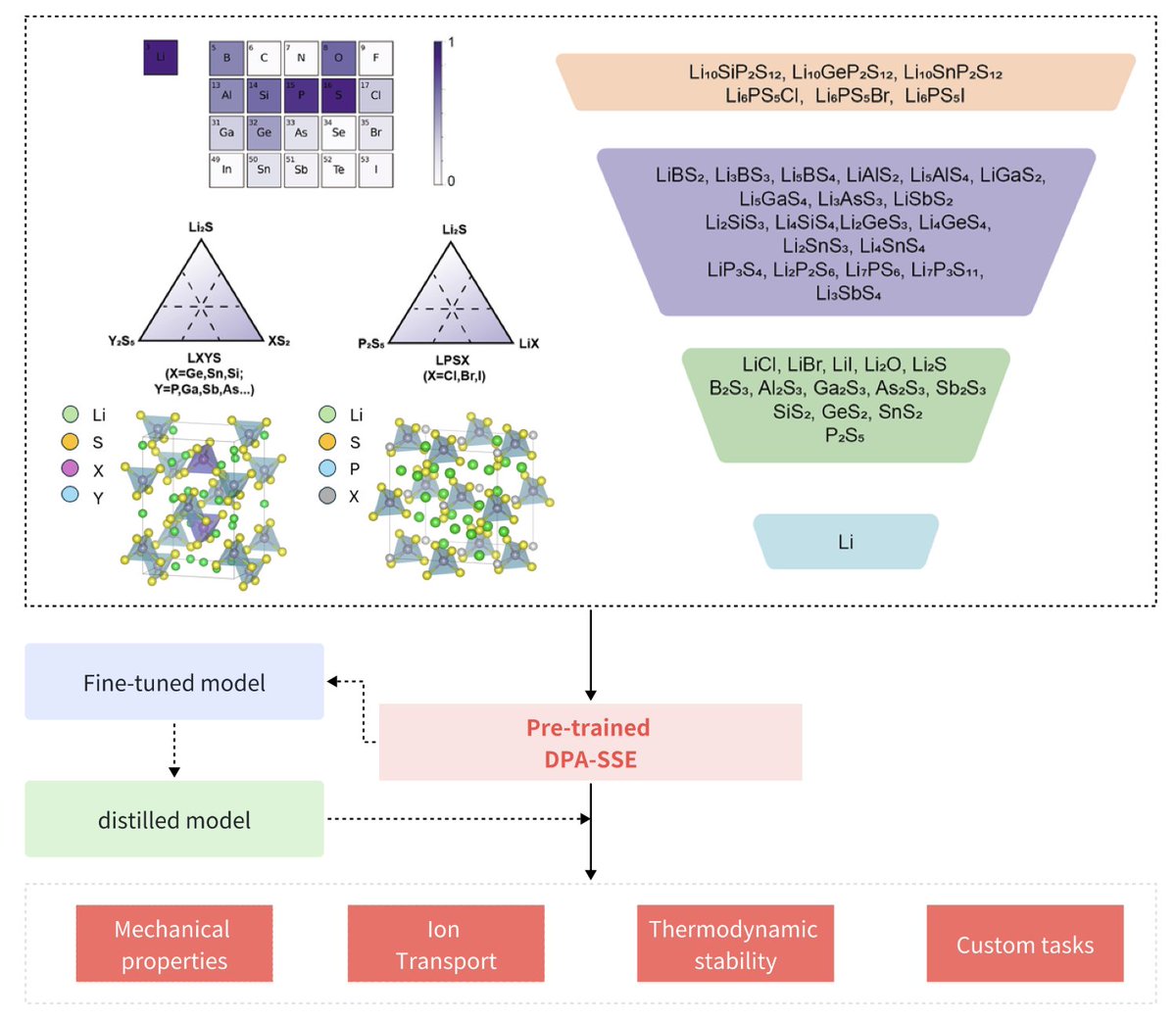
Ecstatic to unveil DPA-SSE, a Large Science Model for sulfide solid electrolytes developed in collaboration with Prof. Zhicheng Zhong's team.
-- Paper at arxiv.org/abs/2406.18263
-- Model & Code available at aissquare.com/datasets/detai…
Solid electrolytes with fast ion transport are one of the key challenges for solid state lithium metal batteries. To improve ion conductivity, chemical doping has been the most effective strategy, and atomistic simulation with machine-learning potential helps find optimized doping by predicting ion conductivity for arbitrary composition. Yet most existing machine-learning models are trained on narrow chemistry, and new model has to be trained for each system, wasting transferable knowledge and incurring significant cost.
Here, we propose a pre-trained deep potential model purpose-built for sulfide electrolytes with attention mechanism, known as DPA-SSE. DPA-SSE achieves a high energy resolution of less than 2 meV/atom for dynamical trajectories up to 1150 K, and reproduces experimental ion conductivity of sulfide electrolytes with remarkable accuracy. DPA-SSE exhibits good transferability, covering a range of complex electrolytes with mixes of cation and anion atoms.
The computational resource of this work was supported by the Bohrium® Cloud Platform at DP Technology.
#AI4Sci #OpenScience #Battery
71
1 Jul 2024
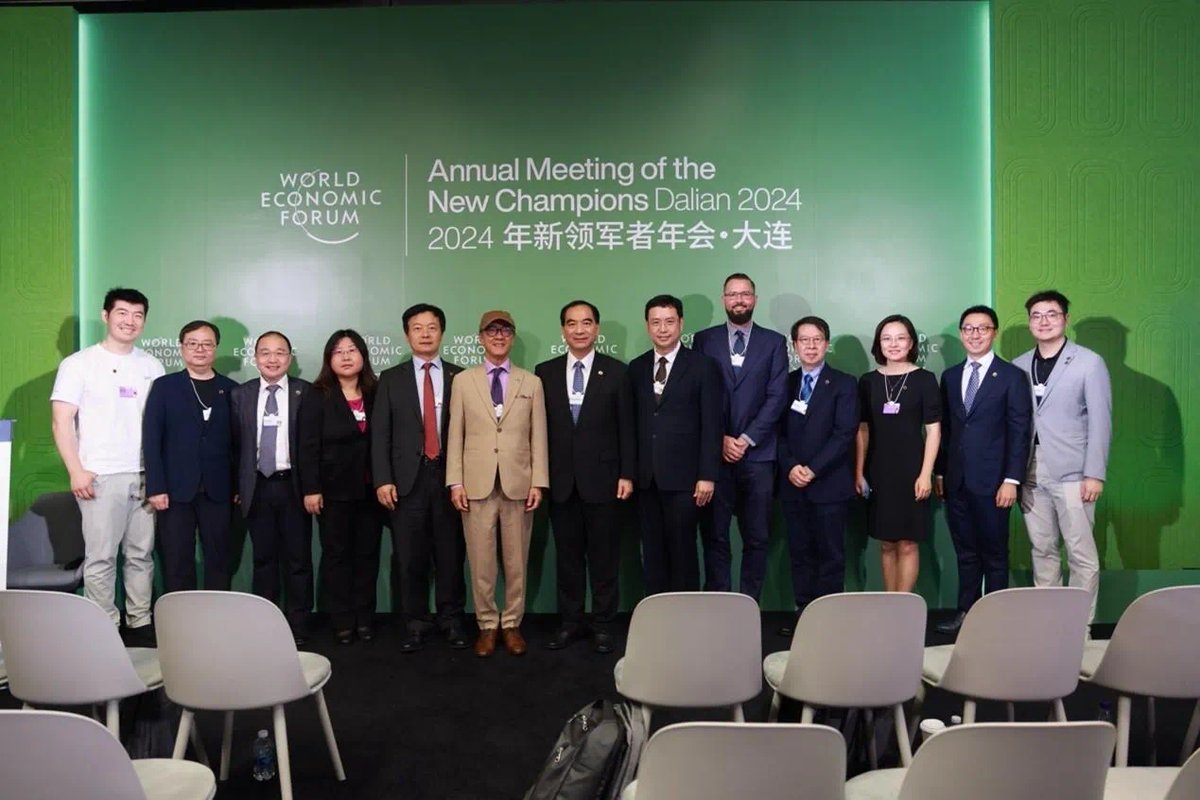
Last week, DP founders Linfeng Zhang & Weijie Sun attended "summer Davos" @wef's Annual Meeting of New Champions. Zhang explored AI's role in reshaping education & industry collaboration at the "Future Talents: Higher Education Powered by Digital Intelligence" Summit.
276
28 Jun 2024
Thanks for the coverage @PharmaTechFocus. “the good thing about drug discovery is that there are existing tools out there, so it’s quite easy to do a head-to-head comparison. If we can fit into a customer’s workflow, it’s easy to define what success looks like.”
pharmaceutical-technology.co…
Try our drug design platform at hermite.dp.tech
1
101
27 Jun 2024
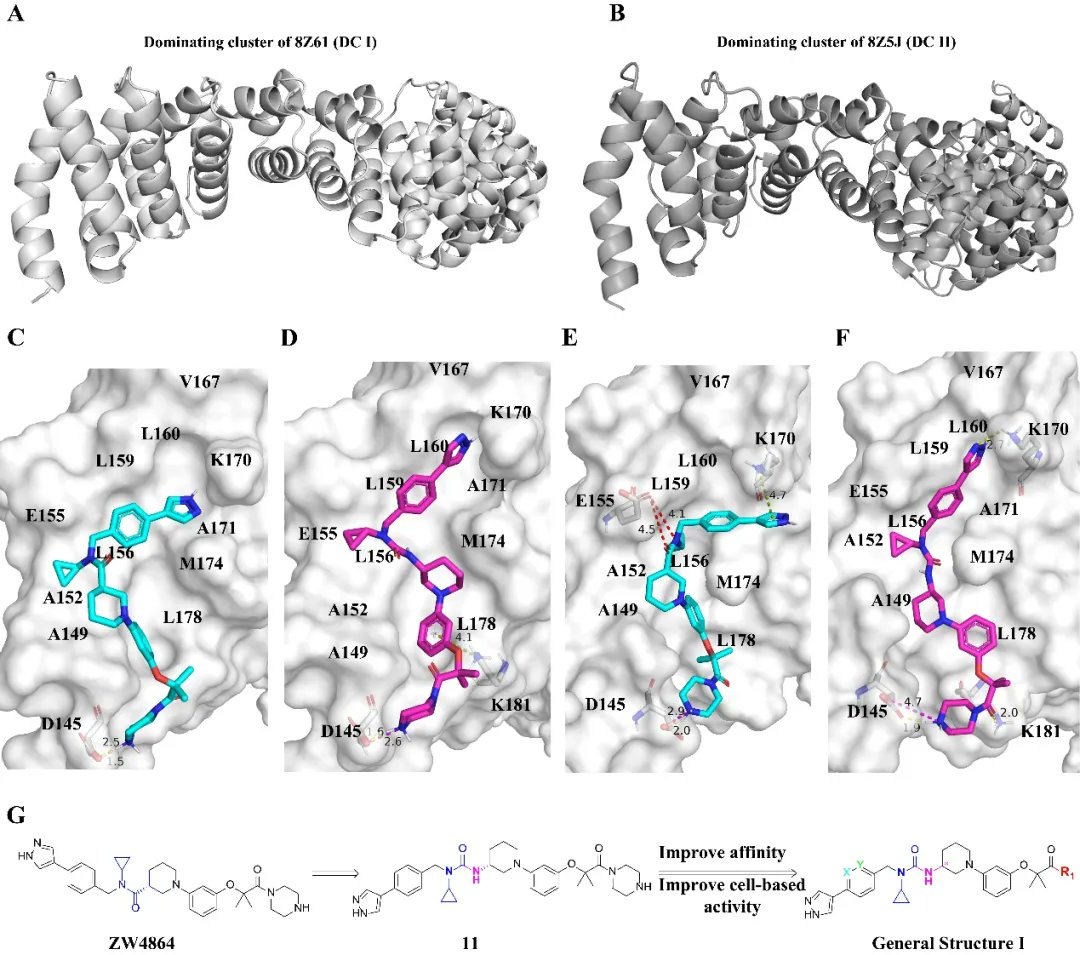
🎉 Proud to have participated in a latest research on #JMC Journal of Medicinal Chemistry, pubs.acs.org/doi/10.1021/acs…
In this research, Hermite® Drug Design Platform is used to calculate the free binding energy of lead compounds 13 and 35 with β-catenin, revealing that compound 13 has a more stable binding to β-catenin compared to compound 35.
Try at hermite.dp.tech
1
124
24 Jun 2024
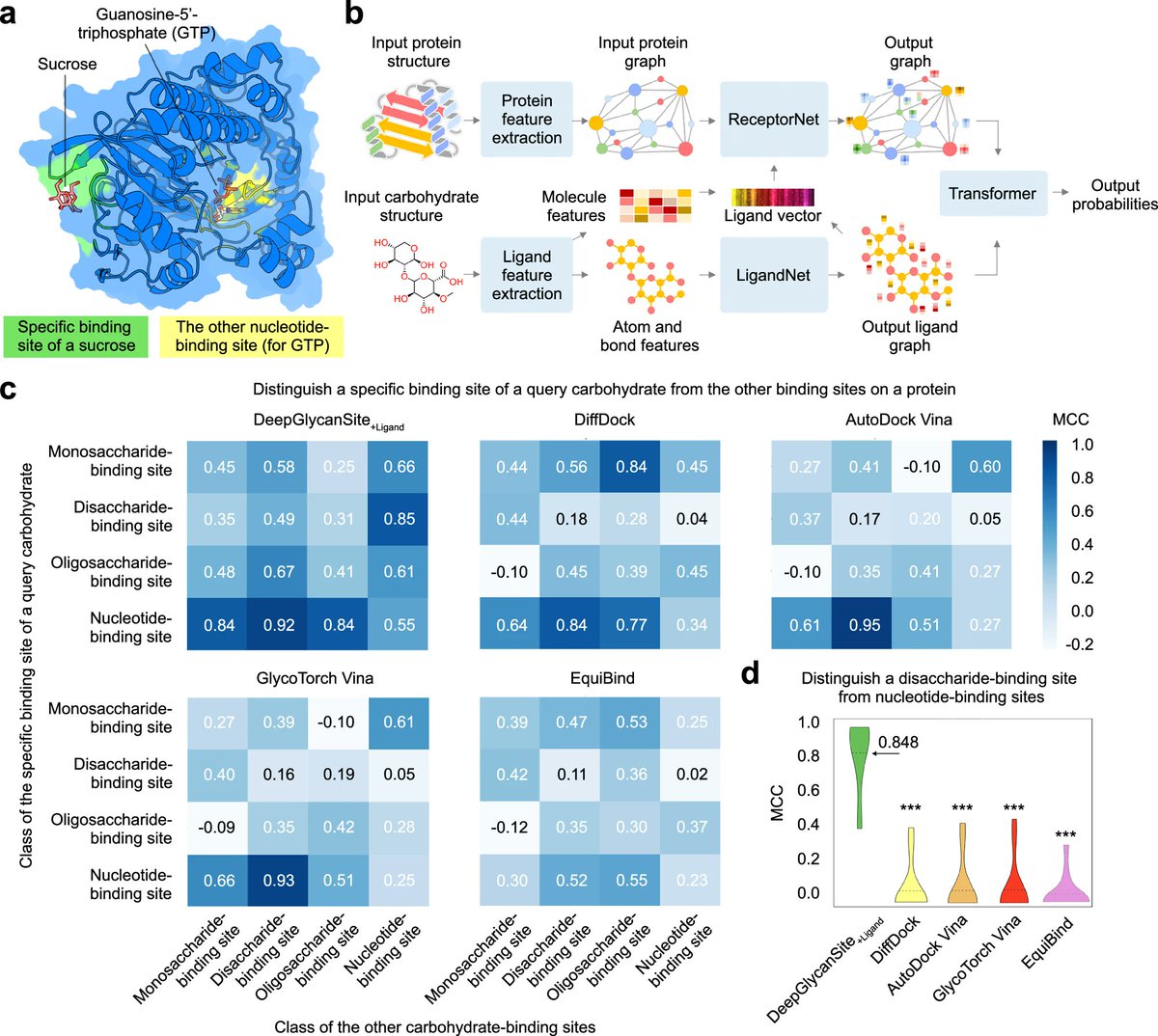
Thrilled to see Uni-Mol, our advanced molecular representation learning framework (ICLR '23), utilized in predicting carbohydrate-binding sites on proteins in latest study on @NatureComms. nature.com/articles/s41467-0…
Uni-Mol on PoseBusters: bohrium.dp.tech/notebooks/87…
#AI4Sci #AIDD
10
40
2,912
20 Jun 2024
Perform Sequence Alignment on Hermite® Drug Design platform.
By aligning sequences, scientists can infer how different biomolecules are related and how they have evolved over time. This process is crucial for understanding the functions of genes and proteins, identifying genetic variations, and developing new medical treatments.
Try at hermite.dp.tech
#CADD
97
18 Jun 2024
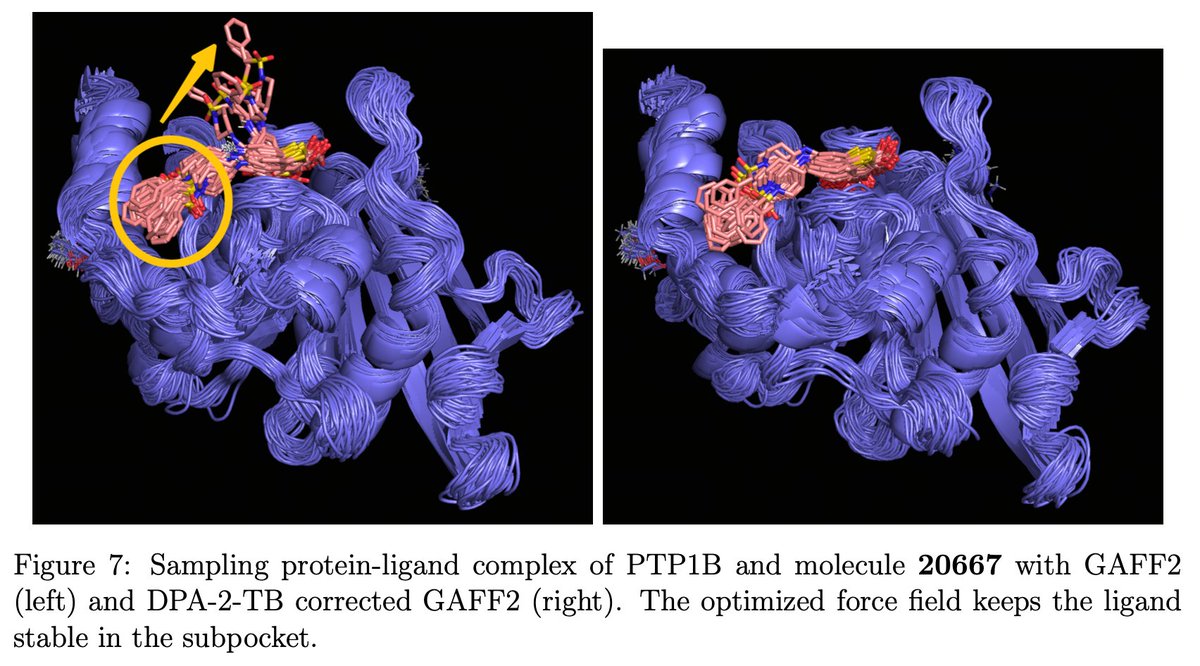
Excited to share our work on efficient and precise force field optimization for biomolecules with Large Atomic Model DPA-2 ⚛. Substantial improvements over GAFF2 demonstrated via FEP examples on TYK2 inhibitor and PTP1B systems.
arxiv.org/abs/2406.09817
#AI4Sci #OpenScience
1
2
154
17 Jun 2024
@TheDPTechnology is proud to provide Bohrium® scientific computing platform and participate in this Advanced Materials research on #battery led by team at Capital Normal University and @NTUsg .
Paper link: onlinelibrary.wiley.com/doi/…
Aqueous zinc-ion batteries are a type of rechargeable battery that uses a water-based electrolyte, making them safer and more environmentally friendly compared to traditional lithium-ion batteries. They offer promising advantages for stationary energy storage applications due to their cost-effectiveness and abundant raw materials.
Side reactions on zinc metal (Zn) anodes are formidable issues that cause limited battery life of aqueous zinc-ion batteries (AZIBs). Here, a facile and controllable layer-by-layer (LbL) self-assembly technique is deployed to construct an ion-conductive and mechanically robust electrolyte/anode interface for stabilizing the Zn anode.
The LbL film consists of two natural and biodegradable bio-macromolecules, chitosan (CS) and sodium alginate (SA). It is shown that such an LbL film tailors the solvation sheath of Zn ions and facilitates the oriented deposition of Zn. Symmetric cells with the four double layers of CS/SA ((CS/SA)4–Zn) exhibit stable cycles for over 6500 h. The (CS/SA)4–Zn||H2V3O8 coin cell maintains a specific capacity of 125.5 mAh g−1 after 14 000 cycles. The pouch cell with an electrode area of 5 × 7 cm2 also presents a capacity retention of 83% for over 500 cycles at 0.1 A g−1. No obvious dendrites are observed after long cycles in both symmetric and full cells.
Given the cost-effective material and fabrication, and environmental friendliness of the LbL films, this Zn protection strategy may boost the industrial application of AZIBs.
#DFT #Cloud
2
74
14 Jun 2024
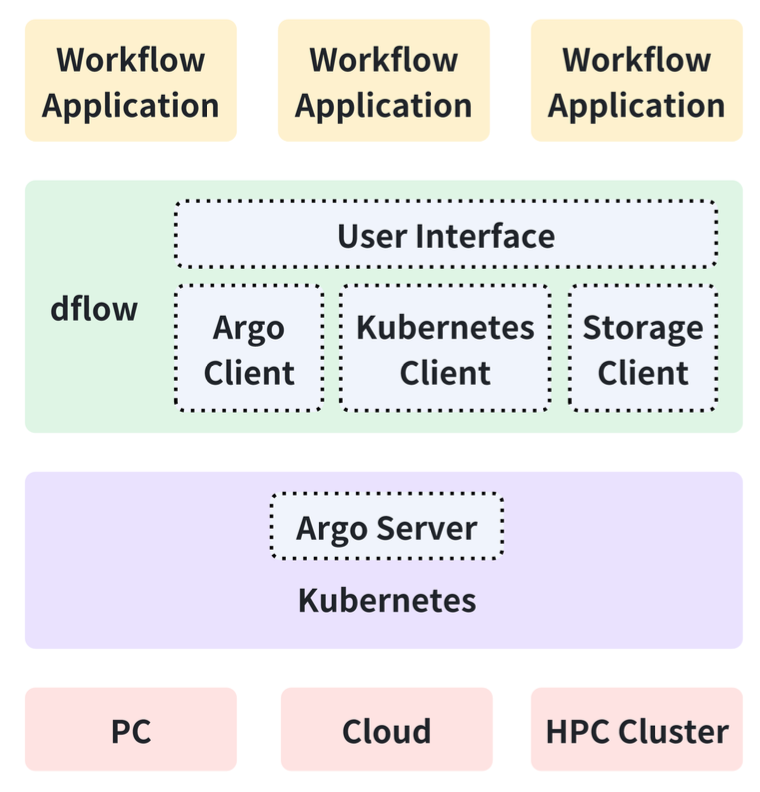
In line with our commitment to #openscience, we are excited to introduce Dflow, an open-source Python toolkit designed for scientists to construct workflows with simple programming interfaces.
Github: lnkd.in/geYpt5me
Paper: arxiv.org/abs/2404.18392
Dflow enables complex process control and task scheduling across a distributed, heterogeneous infrastructure, leveraging containers and Kubernetes for flexibility. Dflow is highly observable and can scale to thousands of concurrent nodes per workflow, enhancing the efficiency of complex scientific computing tasks. The basic unit in Dflow, known as an Operation (OP), is reusable and independent of the underlying infrastructure or context. Dozens of workflow projects have been developed based on Dflow, spanning a wide range of projects. We anticipate that the reusability of Dflow and its components will encourage more scientists to publish their workflows and OP components. These components, in turn, can be adapted and reused in various contexts, fostering greater collaboration and innovation in the scientific community.
Below are a few #openscience application built on Dflow already:
-- FPOP: A collection of OPs for first-principle calculation lnkd.in/g7WTctC4
-- APEX: Alloy Property EXplorer lnkd.in/gEg9BPCR
-- Rid-kit: Reinforced dynamics lnkd.in/gZAGeaQ6
-- DeePKS flow: Machine learning functional of generalized Kohn–Sham density functional theory (DFT) lnkd.in/gWRMugEh
and more ...
#AI4Science
2
4
815