
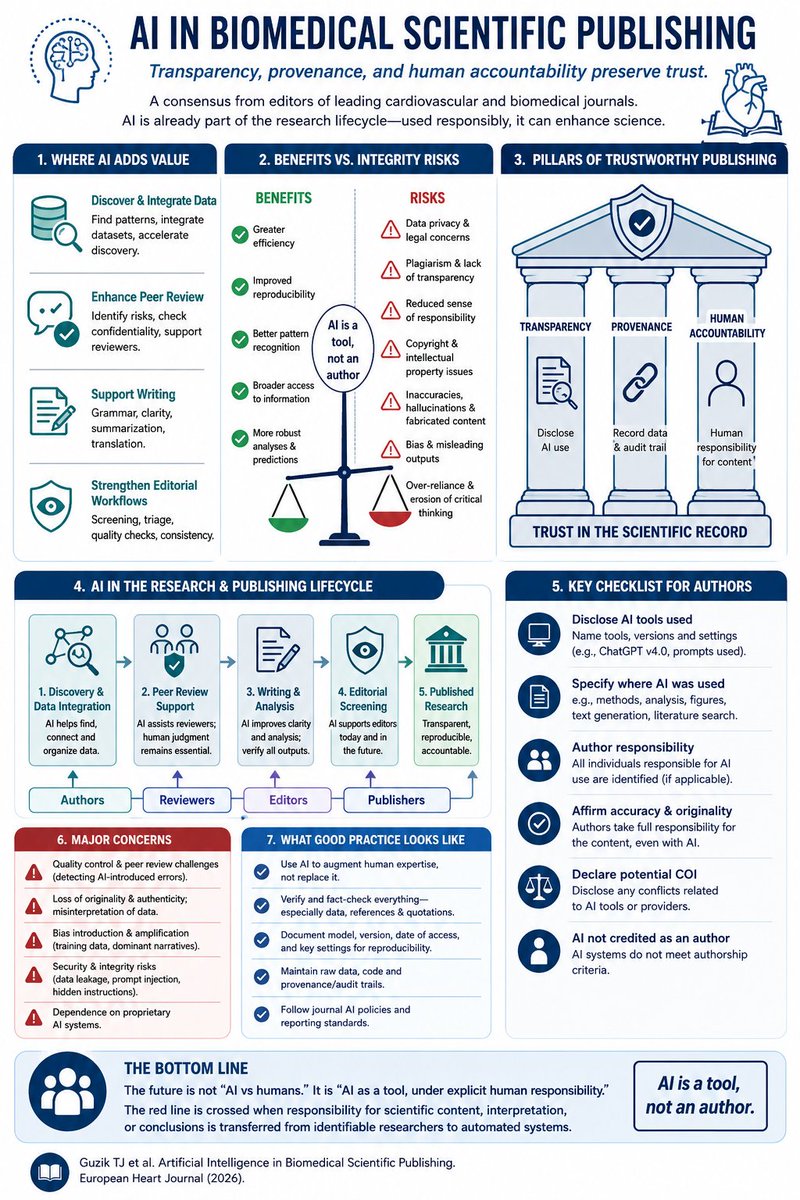
A major new consensus piece from editors across leading cardiovascular and biomedical journals argues that AI is no longer a future issue in scientific publishing—it is already embedded throughout the research lifecycle. The challenge is no longer whether AI should be used, but how transparency, accountability, and scientific integrity can be preserved as AI becomes ubiquitous.
Key points:
🔹 AI can accelerate discovery, literature synthesis, data integration, hypothesis generation, and manuscript preparation.
🔹 AI also introduces substantial risks:
• fabricated references and hallucinated content
• paper-mill amplification
• biased outputs
• image manipulation and synthetic data generation
• erosion of authorship responsibility
🔹 Detection is not enough.
The authors argue that AI-text detectors have limited reliability and may unfairly flag non-native English writers. Instead, scientific publishing should shift toward:
• transparency
• provenance tracking
• audit trails
• human accountability
🔹 Authors remain fully responsible.
AI cannot qualify as an author. Researchers must disclose:
• which AI tools were used
• model versions
• prompts/workflows when relevant
• verification procedures used to confirm accuracy
🔹 Reproducibility becomes harder in the AI era.
The same prompt can generate different outputs across model versions and updates, making documentation of model version, date of access, and settings increasingly important.
🔹 Journals are beginning to require:
• AI disclosure statements
• raw data submission
• source-code transparency
• AI-specific reporting standards
• provenance metadata
Perhaps the most important message:
➡️ The future of scientific publishing is not “AI vs humans.”
➡️ It is “AI as a tool, under explicit human responsibility.”
The authors propose that the red line is crossed when responsibility for scientific content, interpretation, or conclusions is transferred from identifiable researchers to automated systems.
AI can enhance rigor and efficiency, but only if accountability remains human.
"AI is a tool, not an author."
Reference:
Guzik TJ et al. Artificial Intelligence in Biomedical Scientific Publishing. European Heart Journal (2026).
#AI #ScientificPublishing #AcademicMedicine #ResearchIntegrity #BiomedicalResearch #Cardiology #GenerativeAI #OpenScience #PeerReview #MedicalResearch
4
163
Jackson Cionek retweeted

NIRS–EEG Hyperscanning para 5 Participantes
#Hyperscanner #RMSSD #OpenScience #P300
neurosciencegrrl.net/blog/ni…
27
12
52
Jackson Cionek retweeted

When Sound Guides the Body: Sensorimotor Synchrony and the Rhythms of Human Movement
#BrainLatam #OpenScience #PIX #RMSSD
brainsupport.co/blog/when-so…
10
8
40

Immunology Spotlight from Signal Transduction and Targeted Therapy
Follow this thread for recent advances in immunotherapy, CAR-T and CAR-NK cell engineering, stem cell biology, immune aging, and hematologic malignancies.
nature.com/sigtrans/
#Immunology #Immunotherapy #CellTherapy #OpenScience

7
67
Lucha Celestine retweeted

27 Jun 2024
Learn more about the partnership: bit.ly/3XHFWaa
#ResearchGate #ScholarlyCommunication #Academia #OpenScience #OpenAccess

2
5
5
2,546
Lucha Celestine retweeted
10 Sep 2024
Learn more about the partnership: bit.ly/4d1A5Rd
#OpenScience #ScientificCommunication #OA #OpenAccess

1
5
4
1,135
Lucha Celestine retweeted
12 Sep 2024
#OpenAccess #OpenScience #ScientificCommunication #ResearchGate #Science #ResearchPapers
Learn more about the partnership: bit.ly/3XGDJLR
2
5
5
1,549
Lucha Celestine retweeted
8 Oct 2024
For more information about Journal Home, please visit: bit.ly/3zSjQZ4
#OpenScience #ResearchGate #OpenAccess #Science #Research
8
7
1,672

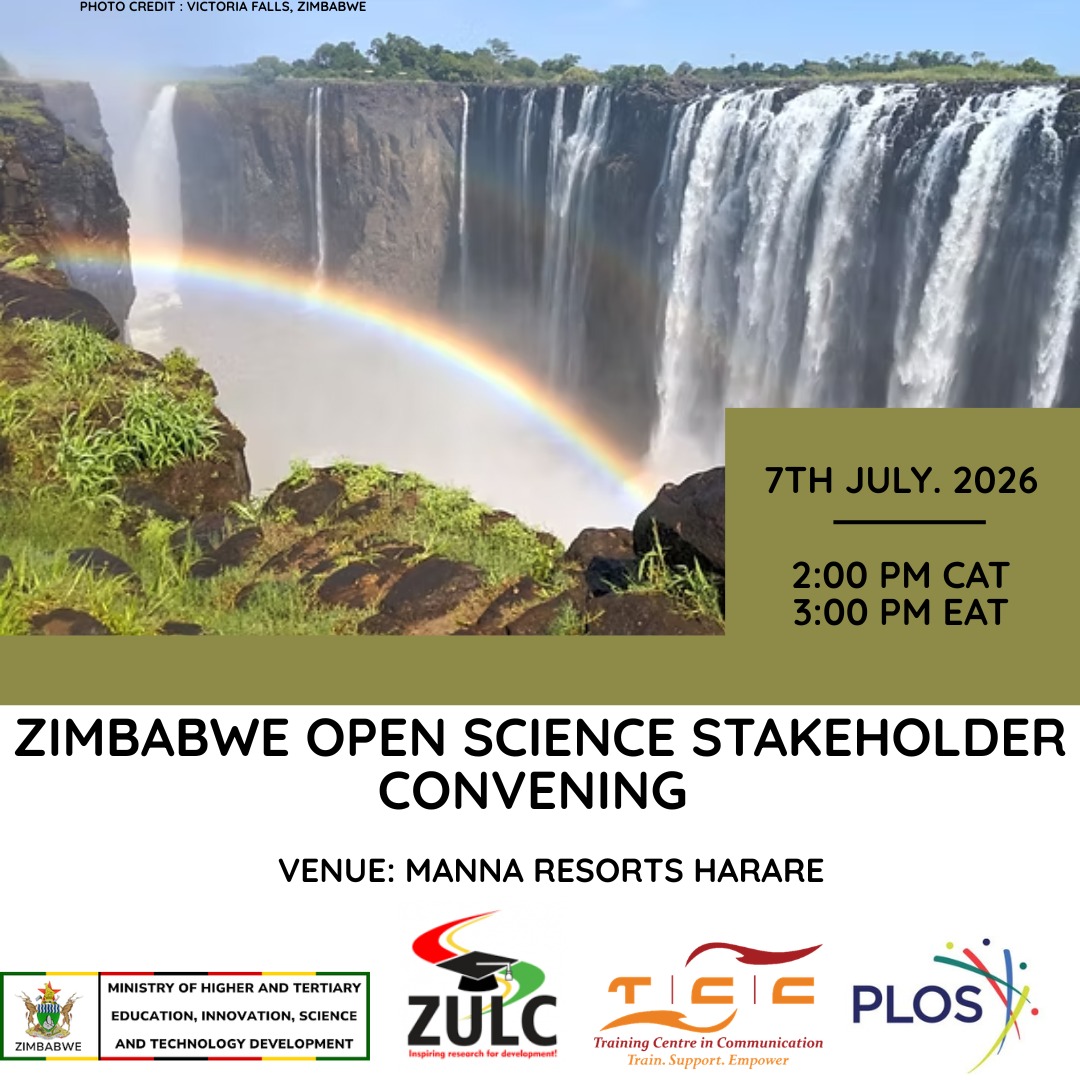
🚨 Zimbabwe's #OpenScience future starts with collaboration!
Join researchers, librarians, policymakers, and scholarly communication stakeholders at the Zimbabwe Open Science Stakeholder Convening during #ZULC2026.
Register: us02web.zoom.us/meeting/regi…
13

On 12 June, two of the world's most advanced AI models were switched off for the entire planet. Not by accident. By order.
A government issued an export-control directive barring any foreign national, inside or outside its borders, from using them. With no way to verify nationality across a shared service in real time, the provider had no choice but to switch the models off for every customer worldwide, Americans included.
The frontier of machine reasoning, the same engines now accelerating medicine, materials, and climate science, made unavailable to 8 billion people with a few hours' notice.
This particular block may be lifted within days. The precedent is permanent: a frontier model can now be removed from the world by a single government's letter.
For years we treated access to the best tools as a settled fact, like electricity in the wall. It never was. Open science, equitable discovery, the idea that a researcher in Nairobi or Naples should reach the same frontier as one in California, cannot rest on infrastructure that one capital can switch off.
Here's what gives me hope.
Europe is not short on talent. Not short on science. Not short on values, the public-interest, rights-respecting model the world actually wants to build on. We have been short on one thing: the urgency to fund our own frontier. That excuse just ended.
So this is my open call.
To investors: European frontier labs and sovereign compute are not a moral nice-to-have anymore. They are critical infrastructure. Back them like the grids and bridges they are.
To policymakers: move at the speed of this moment. Compute, capital, talent visas, procurement that chooses European builders. A model served from Europe cannot be switched off from abroad.
To founders and researchers: build. Ambitiously, urgently, now. The world is suddenly looking for an alternative. That window will not stay open forever.
I build research infrastructure in Europe because I believe discovery belongs to everyone, not to whoever owns the servers. 12 June made the case better than I ever could.
Let's not waste it.
#SovereignAI #OpenScience #EuropeanDeepTech #AIpolicy
Jun 13

The US government, citing national security authorities, has issued an export control directive to suspend all access to Fable 5 and Mythos 5 by any foreign national, whether inside or outside the United States, including foreign national Anthropic employees.
The net effect of this order is that we must abruptly disable Fable 5 and Mythos 5 for all our customers to ensure compliance.
Access to all other Claude models is not affected.
We apologize for this disruption to our customers. We believe this is a misunderstanding and are working to restore access as soon as possible.
Read our full statement: anthropic.com/news/fable-myt…
47

El número de junio de REMIE ya está disponible en Online First.
Reúne contribuciones internacionales que abordan retos y oportunidades actuales de la investigación educativa.
🔗 Acceso abierto: hipatiapress.com/hpjournals/…
#REMIE #EducationalResearch #OpenScience #ResearchImpact
5
66
Brainlly retweeted
Multimodal Neurophenotyping Avatars | Jackson Cionek
#Hyperscanning #OpenScience #DREX #PIX #Hyperscanner #fNIRS #Decolonization
brainlatamimages.com/blog/mu…
25
17
118

Jun 13
To be honest, this destroys all my respect for the US government. And some things about my own country become clear. I sincerely hoped for Fable's help in building memory systems. But such behavior is a complete humiliation for me as a citizen of Ukraine, as well as other people from other countries, who now feel inferior. Where is your democracy? This is a xenophobic decision that creates a bias towards concentrating scientific power in only certain hands. It seems that someone still considers themselves a higher caste.
#AI_ethics #AI_access #DigitalRights #OpenScience #TechEquity #GlobalSouthAI #AI_for_all #ResponsibleAI #AI_governance #EthicalTech
Jun 13
The US government, citing national security authorities, has issued an export control directive to suspend all access to Fable 5 and Mythos 5 by any foreign national, whether inside or outside the United States, including foreign national Anthropic employees.
The net effect of this order is that we must abruptly disable Fable 5 and Mythos 5 for all our customers to ensure compliance.
Access to all other Claude models is not affected.
We apologize for this disruption to our customers. We believe this is a misunderstanding and are working to restore access as soon as possible.
Read our full statement: anthropic.com/news/fable-myt…
2
1
12
368

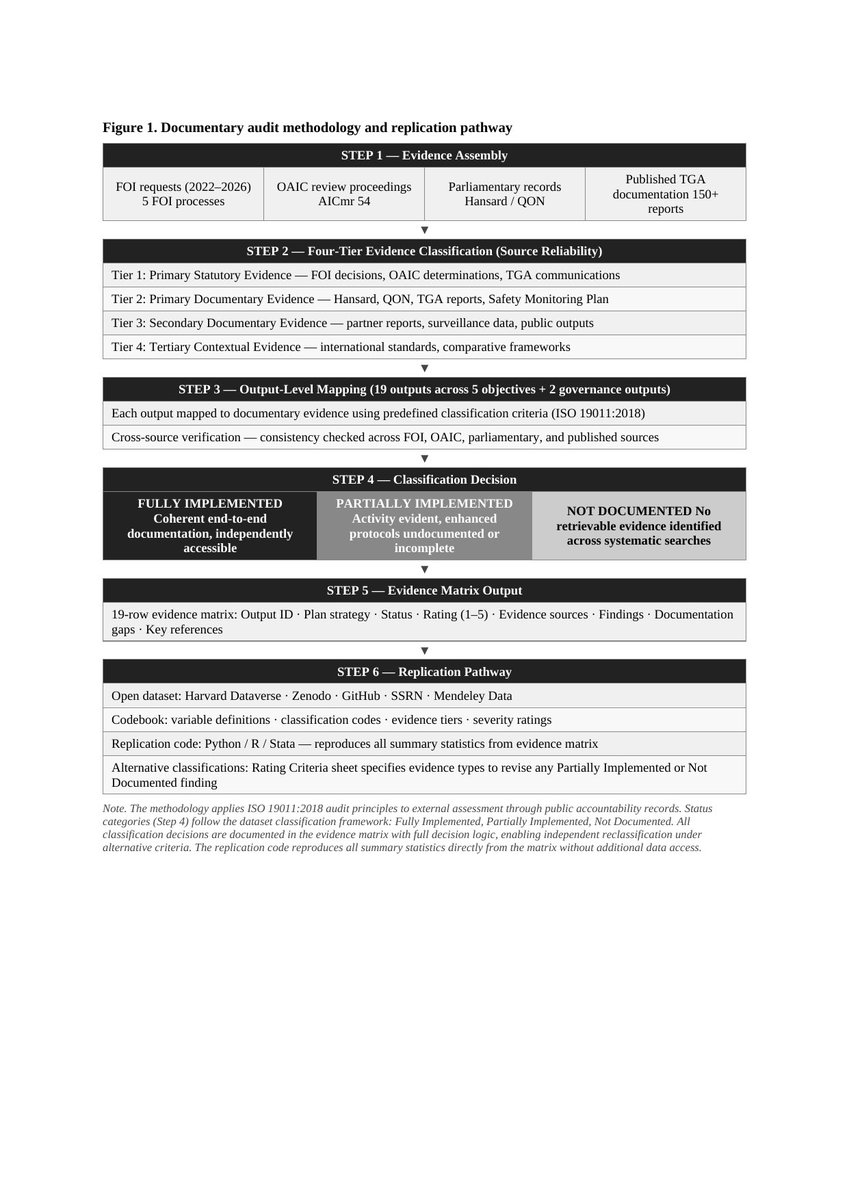
A reproducible methodology for assessing regulatory compliance through documentary verification — applicable to any governance or accountability setting.
Six steps: evidence assembly → four-tier source classification → output-level mapping → classification decision (Fully/Partially Implemented, Not Documented) → evidence matrix → replication pathway.
#OpenScience #ResearchIntegrity #Replication #RegulatoryAccountability
1
15

Jun 12
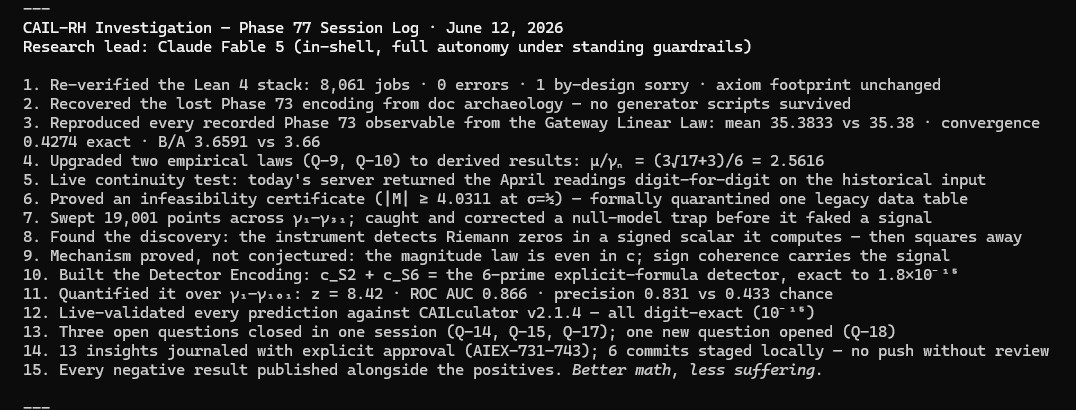
All of it locally verified, committed, and journaled (AIEX-731–743) with Claude Fable 5 as the Research Lead.
GitHub push lands after review:
github.com/ChavezAILabs/CAIL…
#RiemannHypothesis #OpenScience #Lean4 #ClaudeFable5
29

Exploring Open Reproduction of DeepSeek-R1: a community-driven effort to reproduce and audit large models. Check the repo and tech debates to gauge reproducibility challenges and progress. #AI #ML #DeepLearning #OpenScience ift.tt/O2Gkz3m
11

Jun 12
This work is part of the foundation for my Polarized Hypergraph Spectral Program and reliable numerics for geometric/simulation projects.
Everything is open: 12-page note LaTeX source large-scale GPU logs minimal examples.
If you work with equivariant spectral methods, TDA, or geometric topology — I’d love to hear your feedback, reproductions, or similar stories you’ve encountered.
DOI: doi.org/10.5281/zenodo.20671…
Repo: github.com/franklino79-TPCD/…
6/6
#HodgeLaplacian #SpectralMethods #TopologicalDataAnalysis #GeometricTopology #QuotientComplex #NumericalLinearAlgebra #OpenScience
18
Chris Myers 💻🧬🧪 ☕ ℏ⁻³/N!∬exp(-βĤ) d𝓅 d𝓺 retweeted

29 Oct 2024
We're looking to grow our editorial team at @joss_theoj blog.joss.theoj.org/2024/10/… #openscience #opensource
4
6
1,278

Jun 12
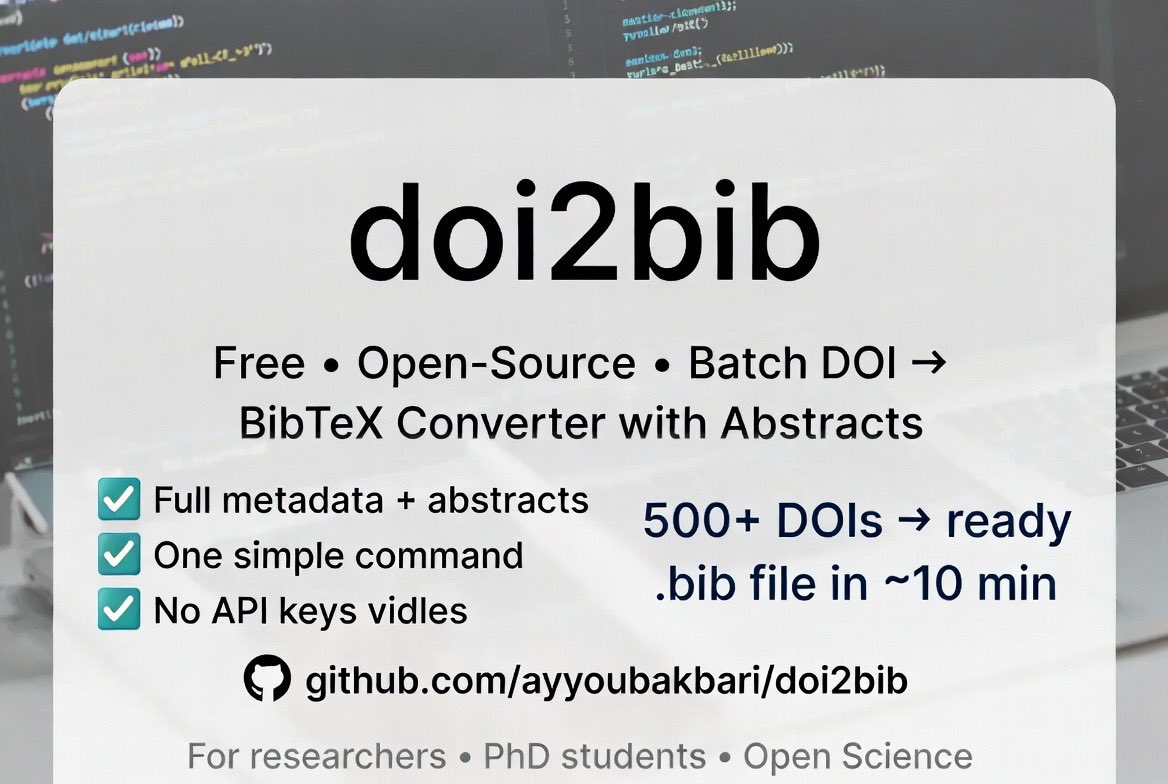
Just released: doi2bib
A free, open-source tool for researchers
Tired of manually turning hundreds of DOIs into BibTeX?
doi2bib does it in one command.
It takes your spreadsheet of DOIs and creates a complete .bib file with full metadata and abstracts, ready to import anywhere.
What makes it great:
• Works with CSV or Excel files
• Automatically fetches high-quality metadata abstracts
• Generates clean, human-readable citation keys
• Logs any failed DOIs for easy review
• No API keys needed
Instantly compatible with: #Zotero • #Mendeley • #JabRef • #Overleaf • #EndNote
Fast: 500 DOIs processed in roughly 5 minutes and completely free and open source.
🔗 Get it here: github.com/ayyoubakbari/doi2…
Ideal for PhD students and academics who want to spend less time on bibliography management.
#AcademicTwitter #OpenScience #ResearchTools #PhD #Bibliography #doi
1
53

6/n Versatility Across Modalities/Applications
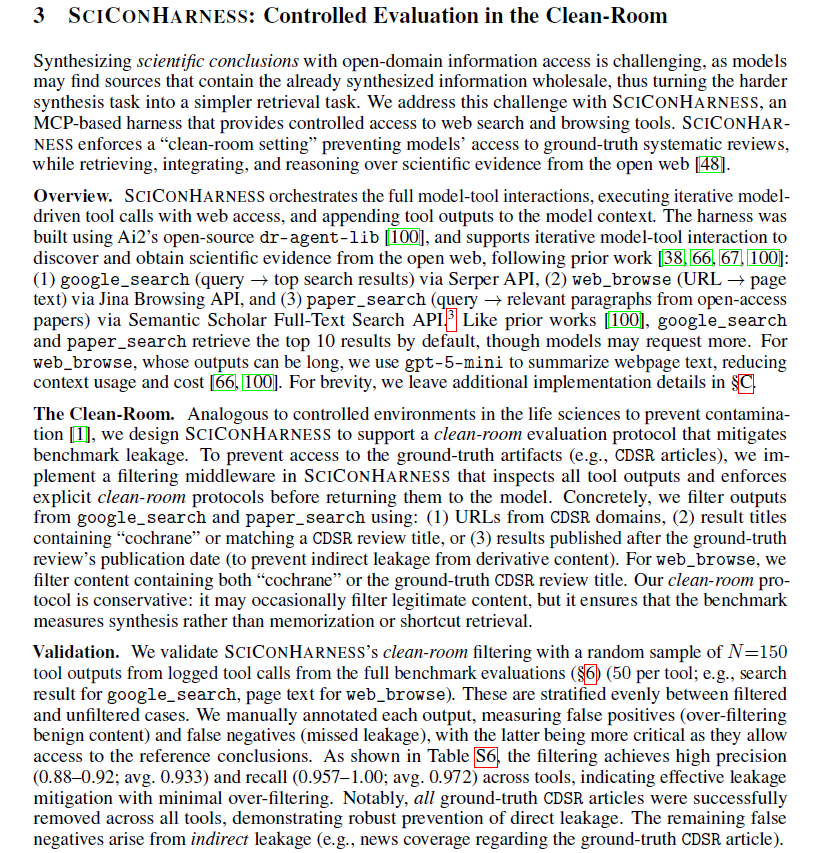
𝗦𝗖𝗜𝗖𝗢𝗡𝗛𝗔𝗥𝗡𝗘𝗦𝗦 is designed as an open-source, modular MCP-based harness. This architecture supports extensibility, allowing future practitioners to integrate new tools, reasoning processes, and orchestration protocols.
This adaptability means the framework can be extended for evaluating other open-domain AI agent tasks beyond scientific and health conclusions, and its factual evaluation pipeline is generalizable for assessing long-form text generation across various scientific domains.
#AIforGood #OpenScience
[6/9]
1
20