
Joined June 2022
- Tweets 182
- Following 265
- Followers 32
- Likes 634
14 Photos and videos



May 20
Starting September 2026, Google will block any Android app whose developer hasn't registered and provided government ID. This affects every Android device worldwide. Learn more: keepandroidopen.org @AlteredDeal #KeepAndroidOpen
17
Smbat Voskanyan retweeted

May 10
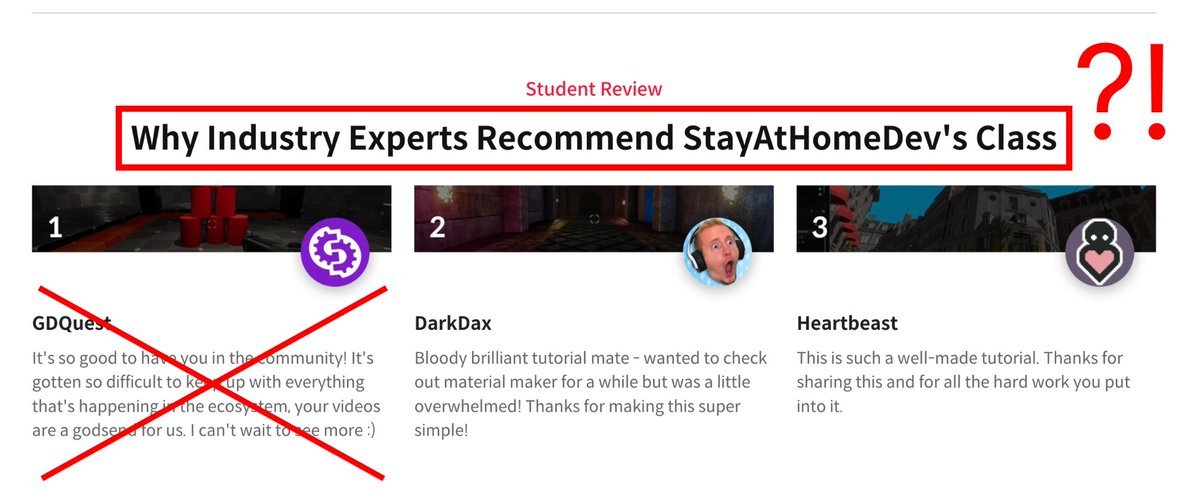
Hey @StayAtHomeDev and @colosoglobal, I messaged you three days ago asking you to remove my name from the student review section of your paid course immediately. You acknowledged it was wrong on Thursday and promised to fix it. It's still there, three days later, during your launch sale.
You used an old comment I left on a public YouTube video and took it out of its context to make it look like I'm personally recommending your "class" before it's even available. I can't speak for @uheartbeast and @ThisIsDarkDax, but regardless, their comments look like they've been taken out of context too. Apart from being misleading to your customers, it's a false attribution.
You understand this should have been considered an urgent website update, right? Because it's making real people appear as though they said things about your product that they didn't. It's not something you let slide over the weekend during a sales campaign before taking it down.
It's your choice to base your $200 video course on a free and publicly available demo, environment, models and characters that we released under CC-By 4.0. But it's pretty sketchy to vaguely list "assets" as a course perk and a "special gift from StayAtHomeDev". Then it's a whole different level altogether to make it sound like we also endorse the product.
Remove the comment and GDQuest's logo immediately.
There's room for everyone in education, Godot, and gamedev to get honest recommendations and keep competition healthy and ethical.
P.S. Thanks for the creative commons attribution in thin grey font at the bottom of a section dedicated to your own portfolio and only after I mentioned the license. Much appreciated.
16
43
487
41,235
Smbat Voskanyan retweeted

Mar 5
Will this be the biggest Godot game release to date?

The Spire has finally reawakened. ⚔️
Slay the Spire 2 is out now in Steam Early Access!!
New characters, enemies, environments, a co-op mode & more await you in this sequel to the iconic roguelike deckbuilder. Join the journey now to be a part of the Spire's next evolution!
29
161
3,719
181,149
Smbat Voskanyan retweeted

28 Nov 2025
Death In Abyss is OUT NOW
31
418
2,109
324,380
20 Nov 2025
I feel that I am personally connected to GOG.feel that I am personally connected to GOG.
Sometimes GOG changes how it treats me for no apparent reason.
1
25
24 Dec 2024
Bruh, there are like 3 consecutive Elon Musk ads in my feed...
1
59
16 Dec 2024
Anyone previously succeeded to figure out the controller vendor through GLFW? I've tried to do fuzzy search in joystick name such as "Sony" or "Xbox" in the string, but it's not reliable...
3
1
83
16 Dec 2024
Found this article silbinarywolf.com/post/18993…, which talks about this issue, but seems like there's no neat solution
44
9 Aug 2024
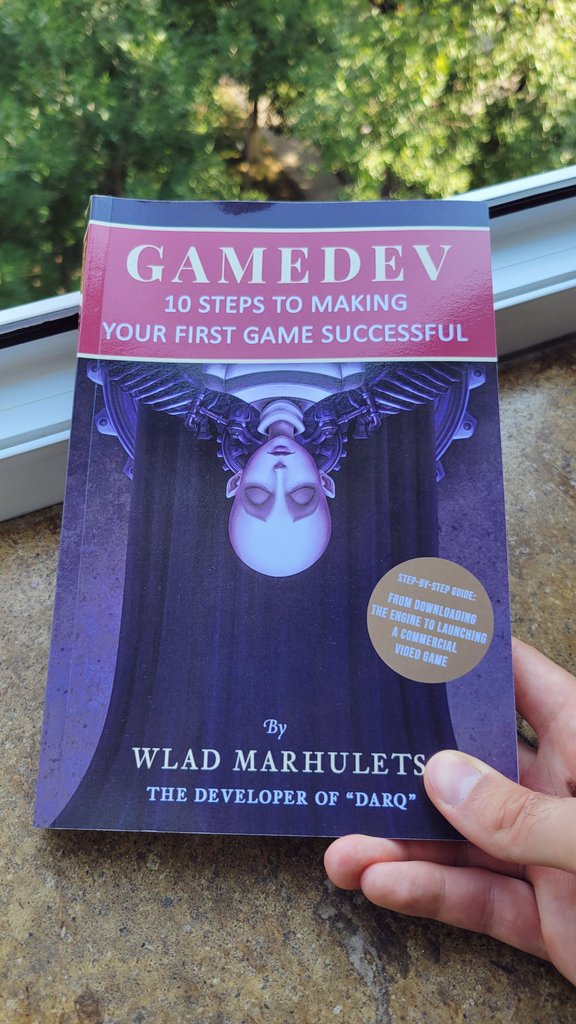
I've had my eye on this book for a long time, and now it's finally mine!
Can't wait to dive in. 📚
Follow along as I share my thoughts in a thread. 🧵
#gamedev #TenStepsToMakingYourGameSuccessful
2
77
Smbat Voskanyan retweeted
26 Jul 2024
Plushie giveaway 🧸
To end our fundraising campaign on a high note, two of you can snatch the little guy for free!
To enter:
1⃣ Follow @Makeship & @godotengine
2⃣ Retweet
This closes on 28/07/24 at 21:00 UTC. Winners will be picked by Makeship on Monday.
Good luck everyone 🍀

ALT giveaway graphic
70
721
695
93,242
25 Apr 2024
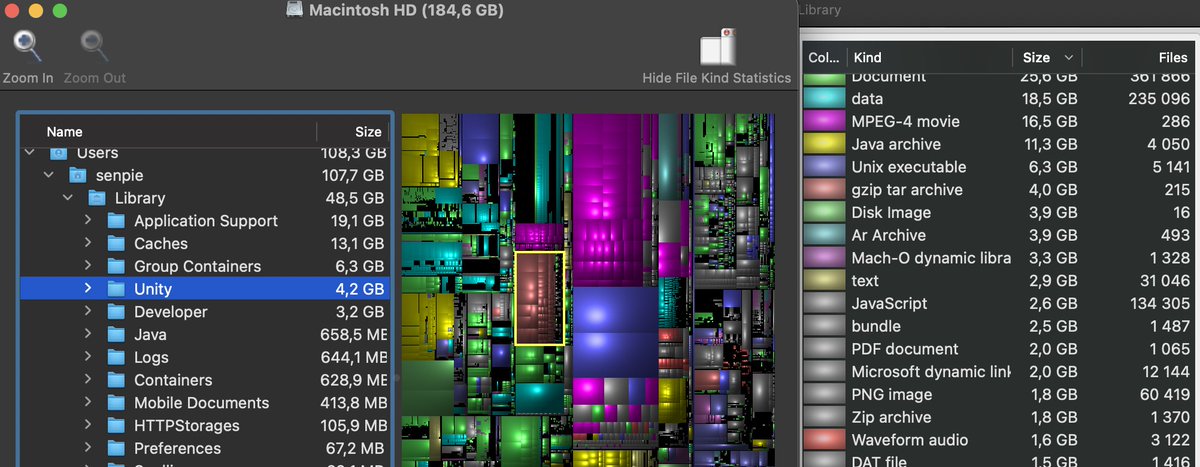
me: uninstalls Unity
Unity: lol don't mind me just gonna leave 4 gigs of cache for no reason
1
69
Smbat Voskanyan retweeted

30 Mar 2024
Here’s a short story about the importance of load times for development productivity and how small optimisations can get magnified in terms of the total human 'waiting time' in a game like No Man's Sky:
Let's rewind time to around 3 years ago, when our Switch version had just come to life with the basic code port done and enough things were working to get into the main game and render some basic elements of a planet. It’s fair to say that at this point, it looked like a buggy mess.. It ran at 5 fps, crashed after 30 seconds, and used 2GB more memory than we could ship with!
All of these problems would need to be fixed for us to be able to ship No Man's Sky on Switch… But we did not address any of these critical things to start with, because the game in this initial state had one other rather large problem: it took more than 5 minutes to load! This was making any iteration on bugs untenably slow and more practically in terms of shipping - no player was ever going to wait 5 minutes for the game to load! At this stage of the project, there were two of us working on the Switch version, and with so many things to fix and such a limited amount of runs you could do each day, we dropped nearly everything else and focused on load-times : For over 2 weeks every single aspect of the game's loading profile was optimised. Some days we might get 10 seconds, sometimes 5 seconds—some days, painfully getting no speed-ups, especially as time went on when low hang fruit had been picked off .. and often becoming despondent that this was an impossible task. We persevered... and eventually got loading into the main game to under 2 minutes. This milestone was critical, and so at this point we switched (!) strategy to start to work on the other big things, but still spent perhaps a day each week on load times.. eventually reaching the shipping load-time of 60–70 seconds.
From a development perspective, solving the load time issue first allowed a huge amount of other critical bugs to get quickly fixed within the next few months, which then in turn allowed more members of our team to begin work on other game areas. I still regard those two weeks where we did that pass as the most crucial phase of the port - It was a risk to take this approach with so many unproven other things in play, but we could not have saved that 2GB, made the game 6x faster, or completed the engine without this work. It was a real leap of faith to spend this amount of time on optimisation, when so many other unknowns might have subsequently prevented us from shipping on Switch!
Throughout my systems and engine programming career, I've often worked on improving load times, and since way back in the PS2 era, I found that a good motivation for load time optimisation is the amount of human time you are saving, When you calculate how much even a small seconds saving gets magnified when a game is played by a lot of people - the thinking goes like this:
A human life is roughly 80 years, which is around 2.5 billion seconds. Imagine that we shipped our Switch version with 30 second slower load times and each player loads or warps hundreds of times. For a given game, you can take the sales numbers, and play time and then estimate the total seconds saved - the numbers you get are surprising - into the dozens of human years of time saved or even several human life times, depending on how accurate your metrics are! For a bigger game (for example, Fortnite) if you do that same calculation, you get dozens of “lives saved” in terms of total waiting seconds, for something as simple as a programmer saving 10 seconds in the time taken to load a level.
A final note: NMS is a fair more challenging game to work on, than a traditional game in terms of load-time optimisation; the procedural generation aspect means there's not an ideal term to describe the loading process, since more than half the time 'loading' is really a calculation time - I'll try to write some detail on this in a future post!
13
26
185
18,403