
A daily Pittsburgh Pirates column authored by @GMBCSuperfan. Prospects, player development, analytics, and the occasional bad idea. Every morning at 7am-ish.
Joined May 2026
- Tweets 44
- Following 448
- Followers 468
- Likes 456
26 Photos and videos
The Early Shift retweeted

13h
The Pirates are 6-9 in Paul Skenes starts this season.
Last year, Pittsburgh was wasting Skenes because the roster wasn’t good enough. This year, the roster is better, but the results still aren’t there.
@AlexJStumpf breaks it down on today’s OffBeat.
northshorenine.com/are-the-p…
1
3
4
6,839
Did Khristian Curtis Just Break Out?
This is my first profile for Khristian Curtis. After spending a couple solid months doing nothing but covering the system, I neglected to do a deep dive into Curtis.
At first blush, I saw a pitcher whose outcomes didn’t match the evaluators’ assessments. So I skipped him, adding him to a list of potential filler for travel days.
Well, suffice it to say, I might have gotten him wrong. Because he debuted in AAA on Friday and lit the place up. He threw 5.2 innings, allowed one hit, walked two, struck out 10, and generated 19 whiffs on 90 pitches. His fastball reached 98.5 mph and all four primary pitches missed bats.
Not too shabby. Welcome to the conversation, Mr. Curtis.
Not Losing Control
Curtis has spent most of his professional career trying to prove that his command can catch up to his raw stuff. At 6’5 and 215 pounds, the Pirates’ #15 prospect according to BA has long featured one of the deepest arsenals in the system. The challenge has been turning those tools into consistency.
The Pirates selected Curtis as a college pick in the 12th round of the 2023 draft. He had lost the 2021 season following ulnar nerve transposition surgery that included complications. At one point, doctors questioned whether he would pitch again. He eventually returned, stayed healthy, and showed enough arm talent for the Pirates to take a chance.
That gamble appears to be paying off. Curtis posted a 3.98 ERA with 116 K in 108.2 innings during 2025, rebounding from an ugly April and finishing the year in AA. Starting there again to begin 2026, he carried a 29.1% strikeout rate through 53.1 IP before his promotion.
But the central question remains: can he consistently throw strikes?
Four Weapons, Four Different Looks
Curtis is defined by his repertoire. He throws a four-seam fastball, cutter, changeup, slider, and will occasionally mix a curveball. Most pitching prospects have one or two pitches that drive their profile. Curtis legitimately has four offerings capable of missing bats.
That was evident in his AAA debut. His changeup produced seven whiffs, his fastball generated six, the cutter added five, and even the slider contributed another. Hitters were forced to account for velocity in the upper 90s with off-speed movement pulling them in multiple directions.
Future Starter or Reliever?
The biggest development in Curtis’ profile may actually be his newest pitch. MLB Pipeline noted that he has been working on a cut-ride fastball with roughly 18 inches of induced vertical break. That pitch showed up in his AAA debut, where it averaged 91.8 mph and topped out at 94 mph.
If it sounds like Curtis would make a boss reliever, I agree. In fact, that’s the direction I thought he was going given his command issues. But this start in Indy changes things. I may have been a teensy weensy too quick to dismiss his underlying improvements given the 4.73 ERA at Altoona this year.
Strike Throwing Determines Ceiling
For all the excitement surrounding the arsenal, BA only graded his control at 40 entering the season. MLB Pipeline was slightly more optimistic at 45. Neither publication questioned the stuff.
There are encouraging signs. His AAA debut included only two walks while throwing strikes on 64.4% of his pitches. Attacking the zone is key to his success, and so far so good on that front. He doesn’t need pinpoint command to start, but walks will be the key stat to follow.
📌 Bottom Line
Curtis enters the second half of 2026 looking more like a starting pitching prospect than a future reliever.
His climb reminds me a bit of Jared Jones, another pitcher whose stuff was outstanding but there were questions of his ability to harness it. Jones’ break out went quick -- so fast he went north after spring training in 2024.
Could Curtis make his first major league appearance this season? With the Pirates’ bullpen and rotation questions, anything is possible. #letsgobucs
=-=-=-=-=-=-=-=-=-=-=-=-=-=-=-=-=
Hey regular readers/commenters -- you may have missed that I separated out @The_EarlyShift from my @GMBCSuperfan account. If so, would you please consider taking a minute to follow this account now? Thanks! I appreciate it.
@HenryDavisMVP, @CellarOfKeller, @JoeSki_21, @aaronDmanDonald, @HootersHank, @BucsBounty, @MartyOnFifthAve, @CaliBuccosFan, @BuccosOfTheWest, @JamesLarson47, @BucsfanNY, @JaredLankes, @LoweMuse, @KonnorsCorner, @PreacherBoyRoy, @BarryL201, @davin_brown, @Nemtudad, @BlueChewAddict, @DolinskyDan, @Nanook456, @TingedRook, @pelino79, @sch_1989, @MonCitySmitty, @sharpsburgJr
ALT Sourced from MiLB video
4
4
31
2,194

Jun 14
It’s All Smooth Sailing From Here on Out
Did yesterday’s game feel like life or death? It sure did for me. With the team at 35-35 and threatening to go under .500 for the first time since March 31, I declared that “the soul of Pittsburgh was on the line.”
A loss would have meant a large section of the fanbase would have checked out, potentially never to tune back in again.
Instead, here we are, clinging to a winning record with one more game against the Marlins before a road trip against a beatable Athletics team and the miserable Rockies. If we’re to get back in this thing, the next seven games will be critical.
Call me an optimist, or maybe it’s just the delicious latte I’m enjoying this fine Sunday morning, but I think they can do it. In fact, I’m using the column today to share a plan for the postseason that starts today.
The Bridge to Getting Healthy
The Pirates are down two important run producers in Konnor Griffin and Oneil Cruz. The team just got passed by the Braves to be 5th in runs scored in all of baseball, and one can imagine a continued slowdown without KG and Cruz.
Except… to the rescue, we have two bench players who are stepping into the void. I wrote yesterday about why I think Tyler Callihan is for real and a potential long-term piece for the team, making Jared Triolo expendable.
We also brought Esmerlyn Valdez back -- I know he’s been slow to start up, but if we’re looking for a bat to replace Cruz’s HR capability, it is surely Valdez of the available options.
It may take until early July to see KG back in this lineup, and likely the ASB until Cruz returns. It would be ideal for the offense to continue averaging 5 runs per game by creatively integrating role players alongside the core four at the top of the lineup. Oh, and maybe add a 3B?
Tightening Up the Rotation
The Pirates’ rotation remains a strength, with the 9th best ERA and 8th best WHIP in MLB. This is where we’ve been all season. We’ve slipped a bit, but so has everyone else. That’s what happens as the season drags on.
Over the last month, Paul Skenes (4.50 ERA), Braxton Ashcraft (4.00 ERA), Bubba Chandler (4.97 ERA) and Jared Jones (4.73) have all sported ERAs in the 4’s. That can’t continue if they want to stay relevant, and there are signs that the May-June swoon is passing.
Chandler has been outstanding his last two starts, and appears ready to carry this team on his back. Ashcraft has been less crisp than at the start of the year, but may be settling in to more of a 3.50-ish ERA starter, which is still extremely valuable.
Skenes I’m less worried about, but not completely unworried, which is a weird place to be with him. And Jones is still coming back from injury and will be a bit up-and-down. Those four I’m confident can keep us in games.
As I know @SteelCityBucs30 agrees, Mitch Keller (8.51 ERA) is completely FUBAR and will be selling Dippin’ Dots by the end of this season. I’d like to see the Pirates breadcrumb him into a room deep under PNC Park and lose the key. In his place, we need to acquire a RHP via trade to serve as a less volatile option every fifth day.
Addressing the Bullpen
We’re basically solid here. No changes.
The Bottom Line 📌
Sorry, what? Oh, you think the bullpen needs help? Okay, I can see that. Where would you like to start? Uh, the entire bullpen? That’s interesting.
I don’t think it’s realistic to expect a complete overhaul of the bullpen, but I do think two additional arms should be targeted -- a closer like Aroldis Chapman to offer leadership and a solid RHP for middle relief. We can put together a bullpen with what’s left.
It starts with winning today and going 4-2 on the upcoming road trip. We’d be four games over .500 heading into series against the Mariners, Reds, Phillies, Nationals, Braves and Brewers heading into the ASB.
If we can go 9-10 in that stretch. I see a way we can still be in this thing. But the fuel for that is your unwavering belief. Do you believe, Pirate nation?
4
3
18
1,485
The Early Shift retweeted

Jun 13
A Mea Culpa to the OGs
This post is a long-time coming. And I understand that it may not redeem me in the eyes of some, but it needs to get done.
I owe an apology to some people.
Those of you have read my stuff know that I am both data-driven but also capable of passionate rhetoric. Extrapolating a few data points, building a working theory, and then grinding that narrative into dust is a part of who I am… and a character flaw.
That confidence and propensity to speak truth to power serves me well in my professional life, but can also make me come across as an insufferable asshole at times in a purely written medium.
I’m actually a nice guy who cares deeply for my fellow humans. But I own that I can come on strong (okay, way too f-ing strong) and treat others poorly who are undeserving of it.
Case in point, I wrote a big exposé in April about ‘team-controlled media’ and why I think it’s bad for sports and fans. Though I stand behind it conceptually and the conclusions it draws, I was writing at times with a paint roller when a fine-point pen was needed.
Even as I was writing it and feeling my oats, I also had the dawning recognition that none of the conclusions pointed at content creators themselves but instead at an industry that has corrupted a bit of the information exchange between the team and fans.
I recognize that the point I was making must have felt like an attack -- which also included other posts from my account leading up to it and since.
For that I unequivocally apologize. You didn’t and don’t deserve that, not when you put such energy and effort into creating what you create. You deserve better.
I am continually impressed by the number of people creating content about the Pirates. And so many of them are early career folks who are hustling to make that model work. It is overwhelmingly high-quality work that many people enjoy and are rightfully rewarding with eyeballs, clicks, likes and follows.
I only decided to start my own offering inspired by all the people doing such great work.
In recent weeks, I’ve been trying to show deference to the accounts I know I owe this apology to. But that isn’t how to go about it. There’s no moving forward without acknowledging my error, owning it, and asking for forgiveness.
It was a dick move to show up to the party like that, offending all of the people who have been hosting the soirée for years, and then expecting anyone to want to stand near me as I kept spiking the punch bowl.
I will do better and be better moving forward. I will credit the accounts whose work informs my own. I will pause before putting anyone on blast for having a baseball opinion. I will not let my own opinions drift into conspiracy and collusion.
And above all, I will show all of the content creators the respect they’ve earned. If you’re tagged on this post, you are one of the people or accounts whose work inspires me daily.
Thank you for what each of you do.
@BuccoBantr
@NorthShoreNine
@pghbaseballnow
@BuccoBallBlog
@LockedOnPirates
@AlexJStumpf
@garymo2007
@Scotty_M0
@AdamShorr1
@JimStamm22
@northsiden0tch
@NoahW_25
@rounder829
@Demilio22
@__Murphy88
@JohnDreker
@Jason_Shetler
@BehindTheBucs
@burghbulletin
@BucsBounty
@Steelscores
@BucsParrotTimes
@SCityNATION412
@Yinzers_Yard
@KodyDuncanPGH
@PlatinumKey13
@Nathan_Hursh
@BuccoHotTakes
@pghrenegades
@NotHankDave
@PiratesFaithful
Cc:
@pirates
@JMackey_PGH
@YoungBucsPIT
@AdamRubinMedia
6
2
34
4,017
Jun 13
I’m a Callihan Truther: Here’s Why
Sometimes injuries can lead to silver linings of players being given an opportunity they wouldn’t have ordinarily received.
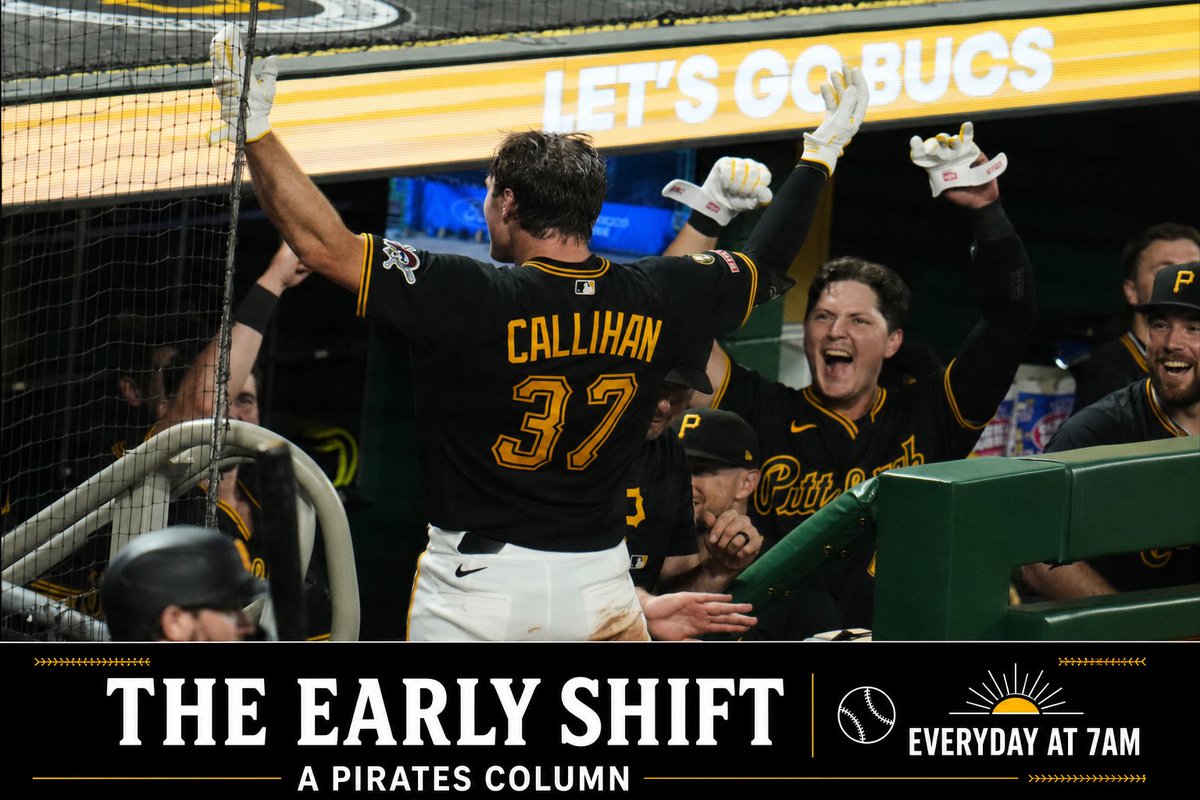
That is certainly the story of Tyler Callihan. In his first 22 PA since being brought up from AAA following the Konnor Griffin injury, Callihan has 5 hits -- all for extra bases with two doubles, one triple and two HRs. He also six walks for a .313/.500/.938 stat line.
I know what you’re thinking: that .938 slugging percentage is probably a touch unsustainable.
Sure, it’s too early to be anointing anybody, and he did go 0-for-3 with three Ks last night. But I think there is reason to believe this breakout is not just smoke and mirrors.
How We Got Here
Callihan arrived this winter in a trade that caught me a bit off guard. I was a bit of a Kyle Nicolas believer, so when he was sent to Cincinnati in exchange for the former third-round pick, it felt a little light on return given Nicolas’ arm talent.
The Reds drafted Callihan out of high school in the 3rd round of the 2019 draft and signed him away from South Carolina with a $1.5 million bonus. Scouts liked the bat from the beginning: quick hands, a compact swing, and a reputation for squaring up baseballs.
Like many from that draft class, Callihan’s development got sidetracked by COVID. Then he suffered a torn UCL in his throwing arm and underwent Tommy John surgery the following year. A string of small injuries followed, turning him into a bit of an afterthought.
In 2025, everything clicked. He opened the season at AAA Louisville hitting .303/.410/.528 in 106 PA. We’ll come back to this, because it’s this blossoming that I’d argue we’re seeing in his play of late. But first, he earned a call-up and everything nearly ended for him.
A Gruesome Collision
Just a few games into his major league career, while chasing a fly ball down the LF line, Callihan crashed hard into the outfield wall. The impact fractured both bones in his forearm. If you’ve seen the video, you probably only watched it once.
The injury ended his season and required multiple surgeries, with plates and screws inserted into his arm. For a player who had already lost time to injuries, it must have signaled to the Reds a degree of forgone conclusion. While they still placed him on their 40-man this past offseason, they soon sent him our way for flawed reliever Nicolas.
Why This Might Be Real
Let’s go back to that breakout in Louisville. While the sample was only ~100 PA, the underlying pieces of a quality hitter were starting to come together:
▫️The hit tool has always been there. Even when the overall numbers were modest, Callihan consistently hit for average throughout the minors. He’s a career .280 hitter with a compact left-handed swing and a long track record of putting the barrel on the ball.
▫️The plate discipline took a step forward. Callihan has always run solid strikeout rates, but in 2025 he started pairing that contact ability with patience. His walk rate jumped into double digits at Louisville, pushing his OBP north of .400 and forcing pitchers to come into the zone.
▫️The power finally showed up. This was the missing ingredient. For years, Callihan looked like a hitter who could spray line drives around the field without going yard. Then came that .528 SLG in AAA. I see what he’s doing in Pittsburgh reflected in that maturation of power.
The Bottom Line 📌
Interestingly, none of this carried over immediately after the trade. Callihan struggled at Indy. Some of that was likely the lingering effects of recovering from a devastating injury. But some may have been mental as well. In interviews, Callihan has talked about viewing a return to AAA as a demoralizing setback.
Now that he’s back in the majors, there’s a sense of urgency to his game. He’s not playing like a guy hoping to get another opportunity. He’s playing like someone determined not to give this one back.
For now, I’m buying what he’s selling. #letsgobucs
ALT Associated Press
7
4
53
3,354
Jun 12
“I’m tired, boss. This isn’t much fun anymore…”
I spent most of the game last night trying to convince @SteelCityBucs30 that Mitch Keller is irredeemable.
That’s not fun. I don’t enjoy having the data-supported opinion that one of our core rotation arms is FUBAR. That doesn’t bring me joy, even as I may go on a tweet storm to make the case that what I believe is happening is actually happening.
So please know that it breaks my heart to be the bearer of such bad news. I get little joy from having an opinion that a man’s career is likely over. And I don’t put it forward as an opinion to farm engagement. I don’t 'go negative' for clicks.
If anything, I feel like I have a pretty clear methodology to how I’ve decided to tackle my coverage of the Pirates. And it’s rooted in how I show up in other sectors professionally.
Outputs, Outcomes and Outliers
One of the things I do professionally is try to help institutions create replicable models. It does no good to try and base your business on individual performers who buck norms by out-performing trend lines.
You should definitely give that person a raise, but don’t build your business around scaling an outlier.
That’s why I tend to manage to outputs rather than outcomes. I want to understand what actions most regularly lead to success and build models that turn my clients into factories of those building blocks.
Don’t fixate on results, but rather the tactical actions that lead to success or failure. But it also requires an understanding of what outputs lead to which outcomes, and that's where a basis in data is a necessity. Otherwise it's just opinions.
Three Examples of Bad Construction
I’ve covered in this column a myriad of ways this focus on outputs can serve as a ‘canary in the coal mine’ for either future success or failure. While Statcast and Fangraphs can help tell both kinds of stories, we tend to debate more often predictions of ruin.
Here are a couple:
▫️Mitch Keller’s Fastball is 'the' Problem -- I have been consistent since before the start of this column that Mitch Keller’s declining fastball would lead to his ouster from the sport, and it is now happening. The multi-year trend line of his four-seam offering is like a car crash happening in slow motion. This really shouldn’t be a surprise.
That some can’t see the connection between how a 93 mph fastball leads to failing off-speed offerings is an opportunity for learning. It’s why many starting pitchers get bounced from the sport -- not the fastball itself, but it's lack of separation from everything else. Expecting him to become Greg Maddux to justify his exorbitant salary is a 101 mistake.
Learning: Individual performers don’t typically evolve to overcome shortcomings. Cut and move on.
▫️Carmen Mlodzinski’s Statcast Profile is a Horrorshow -- Unfortunately, Keller’s likely replacement is himself a flawed pitcher who shouldn’t be expected to replicate his early season success. Carmen Mlodzinski is this year’s Bailey Falter, and he is due for a massive correction. And that already started on Wednesday (repeating his early May troubles).
Mlodzinski’s 2nd percentile Hard Hit %, 4th percentile Average Exit Velo, and 6th percentile xBA is a recipe for one of the worst pitchers in baseball. I see concern online for what his proposed replacing of Keller might do to the bullpen, when in truth he’s not fit for any role. His dissatisfaction with moving to the bullpen should have led to an immediate trade. He's going to experience a fall from grace that will ruin his value over the next month.
Learning: When presented with a convenient off-ramp, take it.
▫️Henry Davis’ Launch Angle is Predictive -- As I covered in depth in Henry Davis’ Weird on Paper feature last month, his flawed launch angle will never result in success. He has adopted an Isaac Paredes pull-hitter approach that could be successful, but his swing path is built to fail.
People look at his BABIP and assume regression to the mean can be possible, but not when you are fundamentally so flawed in production. When we trace the process back and find an error this sizable, hoping it will work itself out is unlikely. He runs into one on occasion, but he is a .575 OPS hitter now with this approach.
Learning: Things poorly built will usually topple.
See, Not Much Fun
I get no joy out of the certitude I have about the analysis on these three players. But I would stake my reputation on being right about all three. And if I’m wrong, I would readily admit it and own the mistake in logic that led to it.
The sport and its players are fluid. They can overcome flaws and adjust. But being 'the exception that proves the rule' doesn't mean the underlying analysis was wrong. And it's a horrible way to run a sports team.
If that is engagement farming, then so be it. I see it more as building credibility by ‘showing the math’ and standing by my assertions even when it’s hard truths that aren’t fun.
It would be a lot easier to be a rah-rah fan always looking for silver linings and ‘backing our boys.’ But I have too much integrity to do that.
Sorry, not sorry.
ALT Photo credit the Post-Gazette
12
3
17
2,332
Jun 11
"When We Score First, We Win. When We Don’t, We Don’t."
I’ve taken to posting the title of today’s column immediately following the first score of recent games. I do it as a reminder of an intriguing trendline to watch play out.
Scoring first has been one of the strongest predictors of a Pirates victory this season. Including last night, Pittsburgh is 29-13 when scoring first, a .690 winning percentage that would translate to 112 wins over a full season. Conversely, the Pirates are just 6-20 when their opponent scores first.
It doesn't always hold true, like with last night’s come-from-behind victory that featured a number of memorable moments.
In fact, the last three games have bucked this trend:
▫️The Pirates scored first on a Spencer Horwitz first inning HR in the final game of the series against the Braves, with a three-run 7th that ruined Bubba Chandler’s gem of a game.
▫️A two-run first inning that included solo shots from Bryan Reynolds and Ryan O’Hearn felt like a positive omen before a 10-run 7th by the Dodgers led to Tyler Callihan pitching the 9th on Tuesday night in a blow-out loss.
▫️Speaking of Callihan, his going 2-for-2 last night with two home runs and two walks was the offensive performance of the night, while Reynolds’ leaping catch at the wall to rob Shohei Ohtani of a two-run HR was the defensive highlight. They didn't score first, but were victorious at the end of the night.
It’s been an emotional rollercoaster during these two series against the best teams in baseball.
But despite these proverbial curveballs, the trend line is still pretty clear -- scoring first has been a key to winning for the Pirates. When it doesn’t hold, it has typically either been the result of some sort of meltdown or a Herculean come-back performance.
So, what is contributing to this trend?
Emphatic Wins the New Norm
Of the 42 games where the Pirates have scored first, they rang up 5 runs in 24 of those contests (57%). Not surprisingly, they are 21-3 in those games.
Overall, the Pirates have scored 5 runs or more in 29 of their first 68 games (43%). Compare that to 2025 when the Pirates scored at least 5 runs in just 17 games (25%) at the same point in the season.
When we talk about the Pirates being top-5 in baseball in hits, runs, RBIs and OPS, it can be hard to tie that out with this team that is barely over .500 and dealing with so many heartbreaking losses.
But that’s because when we score first, we are often pouring it on. Our 225-150 runs scored vs. runs allowed creates a 75 run differential in the 42 games where we score first.
Bullpen Issues
I don’t need to tell you that the Pirates bullpen has been pretty poor. Even in last night’s come-from-behind win, it was only the result of Carmen Mlodzinski’s 4 ER that we were in such a hole in the 7th and 8th innings, and Gregory Soto dang near let them tie it up in the 9th.
One reason scoring first and often has been such an indicator is that the bullpen can’t be counted on to keep us in close games. The Pirates have the 11th worst reliever ERA in MLB and are 8th worst in walks per 9 IP given up by relievers.
The lineup has to score a lot of runs to create enough of a cushion for an untrustworthy bullpen that has 14 blown saves on the year.
Moxie, Heart & Perseverance
Less statistical is what the eyeballs tell us about this team. While there have been moments of bravery, like Reynolds’ walk-off at the end of May, the overall vibe has been one of momentum, positive or negative -- good stuff tends to lead to more success, while the team tends to sink further when in a hole.
Last night was certainly different, and credit is due to Callihan. I may not love the idea of his defense at 3B (or, umm, the OF?), but there is no denying we owe last night’s victory to him. It was a gutsy performance at a critical juncture in the season.
The Bottom Line 📌
Man, we really needed that, eh? This morning feels a lot different if we are talking about being just .500 and dealing with a five-game losing streak.
And it was a good night for late-inning heroics, with the Knicks doing their own version in the 4th quarter of game 4 of the NBA Finals.
With Konnor Griffin and Oneil Cruz likely out for the rest of June, perhaps Callihan can be the spark we need, whether by scoring first or bucking trends in comeback wins.
Lord knows we could use the boost.
#letsgobucs
ALT Photo via MLB.com
3
1
15
753
Jun 10
The Plight of Rooting for the Underdog
One downside to a daily column on a single team is that there is no escaping them. After a game like last night, it would be nice to check out for the rest of the week, casually eyeball a box score, and just take a break. It’s a big world and there’s other stuff going on.
But no. I made a commitment to doing this. And for some reason, here you are as well, doing the daily thing we do where we either celebrate or bemoan the team we feel called to follow.
Today feels like a good one to revisit a theme I’ve presented in a different context, and reveal a bit more about myself.
A Beleaguered, Eternal Optimist
As I’ve shared before, I am a consultant who owns a boutique firm -- something I’ve done for 15 years. I work with a narrow focus on helping institutions navigate collaboration across difference, typically corporations, government and nonprofits working toward a shared goal.
For example, the affordable housing crisis is not something any one institution can tackle alone, and the free market is insufficient to address it without some help. Workforce is another area like this, where employers need talent and underemployed people need skills to fill those roles.
It requires finding the win-win in things, where the benefits outweigh the downsides for all involved. To accomplish that, I have to get past the surface level and dig into self interest -- “it has to work for everybody or it isn’t going to work for anybody.”
As such, I’m usually up against it. The stuff we do is difficult and requires embracing challenge. It’s also why I’m so focused on values, because I am continually tapping into the humanity of those we work with. The ‘why’ usually plumbs one’s faith, moral compass and sense of fairness.
Lest you think I’m too soft, the stuff I design also has to make sense fiscally, needs to advance industry and economic development goals, and ultimately be embraced by folks of all political persuasions. In bridging difference, I live at the intersection of all of that.
Doing the Less Easy Thing
I work in spaces alongside others who have chosen a far more direct (and lucrative) path. So I sometimes question why I would choose to take my knowledge and apply it to this difficult-to-do space, to put this proverbial donut on my own bat.
And believe it or not, I have a signature talk I give to groups on my love of the Pirates and how it prepared me for a career of doing what I do. Threading this needle is forged in the odyssey of fandom from 1993-2013, those 20 years of my teen years into early adulthood that shaped who I am and what I stand for.
That the system of baseball is biased toward big market teams is what the current MLBPA negotiations are all about. But to be a diehard fan is to grudgingly accept those conditions and work within them. It’s fine for the casual fan to reject the whole system as rigged, but not those of us who wake up everyday with renewed optimism for how our team can compete, even within a seemingly unfair model.
We need a GM who makes good decisions. We need players who give a damn, who do the extra things it requires to be successful. We need coaches who can develop the best out of prospects who are not complete players yet, but where one can see what they could be with more development.
The Criticalness of Accountability
For what I do, it’s all a direct parallel for economic mobility. It takes people working damn hard, striving against their own lack of education and poor social capital. People have to want it, and those who cheerlead from the sidelines can only do so much, and can feel demoralized with how hard it is.
Like today, after a 12-2 loss to the Dodgers. I’m feeling pretty damn demoralized. And I do hold the team and its coaches accountable. Would it be great to have $400 million to spend on payroll? Hell yes it would, but I’m not waking up this morning pointing fingers at the league.
The bottom half of our lineup is abysmal offensively. The bullpen is insufficient. If we’re going to play this game, then bastards, play the damn game! Don’t tell me why it’s hard, show me that you have a plan and execute.
I don’t have time for “we tried.” We have to be even better than our competition because of the lopsidedness. That isn’t an excuse. Either do what it takes to compete or get out of the way and let someone else have a shot.
I hate the term “lovable losers.” There’s nothing I love about losing. I back winners, which is what I tell my clients. So if we’re going to do this thing, let’s do it with an eye toward winning.
Hey Pirates’ front office, feel free to reach out for my rates.
ALT Photo from the Pittsburgh Post-Gazette
5
3
20
823
Burying the lede a little bit here. Yes, he’ll start lightly tossing tomorrow, but he’s also been advised to slow his roll on recovery, stretching it out to several weeks.
Probably won’t be back until July.
Jun 9

Konnor Griffin tells us he will start throwing a baseball tomorrow.
2
286
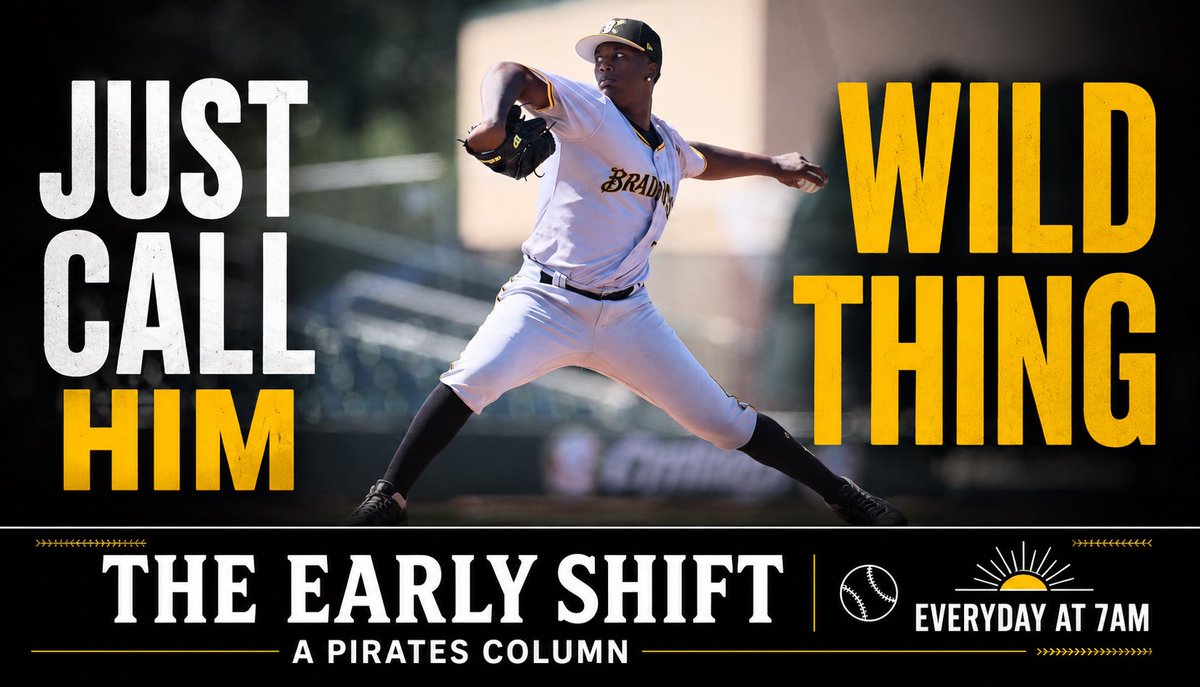
Reinold Navarro Has to Be Seen to Be Believed
It’s been a while since I did a prospect report. In truth, the narratives at the ML level have become far more interesting to me and where I like to spend my time. But since I spent so much of February and March digging into the system, I still feel called back to the farm.
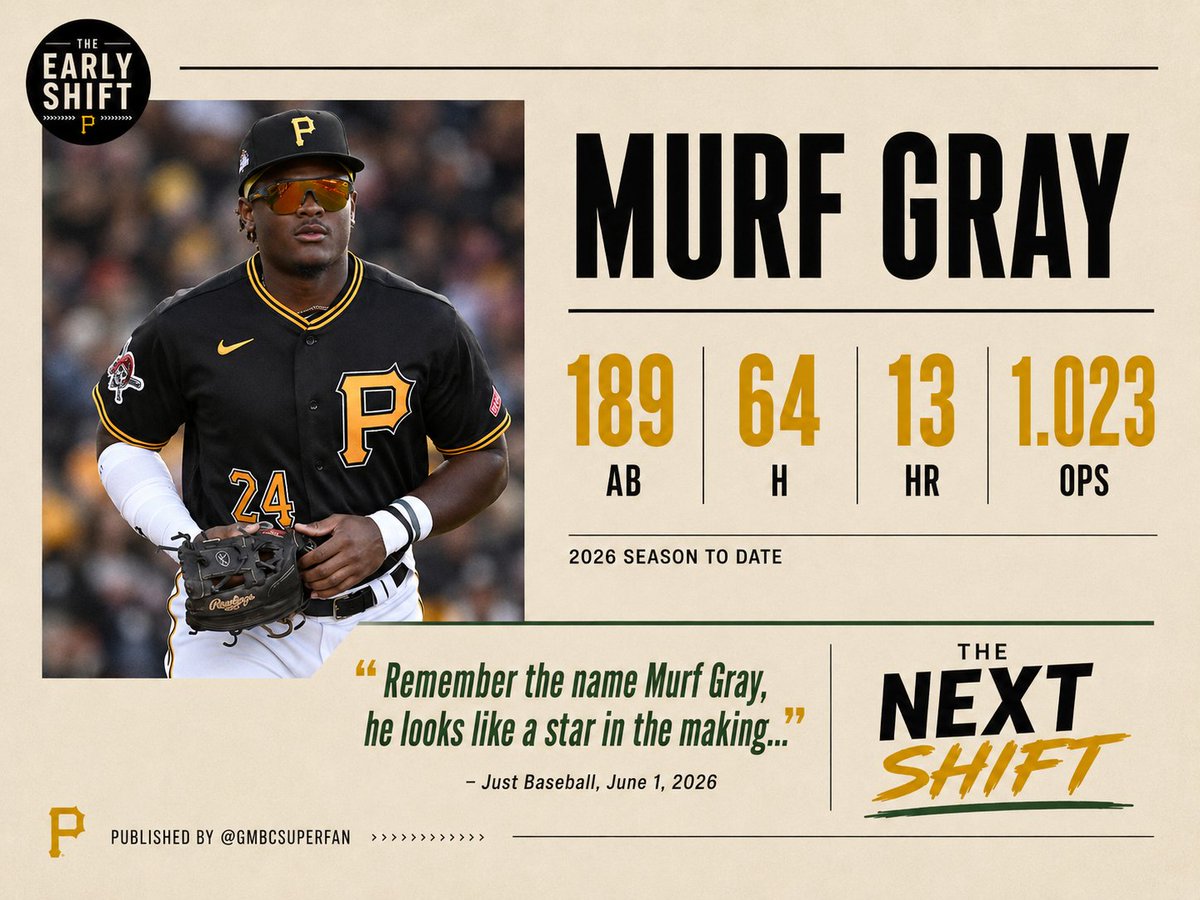
Today we’re revisiting Bradenton, which has been pretty quiet since Murf Gray, Seth Hernandez and Edward Florentino moved up to Greensboro.
But there is one pitcher there that frankly defies a traditional profile.
Before I go further, I want to lift up the excellent work done by Anthony Murphy (@__Murphy88) with Bucs on Deck, (bucsondeck.substack.com), which should really be your go-to for coverage of the Pirates’ minor league system. Just a ton of great resources and well worth the premium subscription.
While I only occasionally highlight our minor league system, the team at Bucs on Deck finds all the best angles on our affiliates.
It was while checking out Anthony’s YouTube page that I caught some video of Reinold Navarro, and it is truly bizarre.
What the Hell Am I Watching?
Study some film of Navarro and the first thing that jumps out isn’t the velocity, or the violent way he whips the ball toward the plate. It isn’t even the copious strikeouts. It’s the complete lack of certainty regarding where the baseball is going.
One pitch will start at a hitter’s hip before screaming back across the plate at 98 mph. The next will miss by three feet. Then he’ll snap off a slider that looks unhittable. Then he’ll throw another pitch that leaves everyone briefly concerned for the backstop’s well-being.
If Ricky ‘Wild Thing’ Vaughn at the beginning of the movie Major League was a 19-year old kid from the Dominican Republic, you’d get the idea of what we’re dealing with.
It’s pretty remarkable and definitely worth your time to check out:
youtu.be/xqAC5USxp8Q?si=qt_h…
Calling Him a Live Arm Undersells It
The Pirates signed Navarro out of the Dominican Republic for $270,000 during the 2024 international signing period. At the time, he was an interesting arm touching the mid-90s. Once he entered the organization, the velocity took off. By 2025 he was sitting in the upper-90s and touching 99 mph while generating absurd swing-and-miss numbers.
Baseball America ranked him among the Pirates’ top prospects and described his fastball as “one of the best pure offerings in the minor leagues.” The pitch features more than 20 inches of induced vertical break, and generates whiffs nearly half the time hitters swung at it.
He also has a filthy slider thrown in the mid-80s that misses a lot of bats. Coupled with the fastball, Navarro already owns two pitches that would play in a major league bullpen tomorrow.
Just Call Him ‘Wild Thing’
Last season between the Florida Complex League and Bradenton, Navarro struck out 61 batters in just 32 innings.
But he also walked 40. And no, that isn’t a typo.
Think about that for a moment. He averaged nearly two strikeouts per inning while simultaneously issuing more than a walk per inning. Normally those kinds of numbers don’t coexist.
Through his first 86.1 professional innings, Navarro has walked 93 batters. Baseball America slapped a 30 grade on the command. MLB Pipeline isn’t much more optimistic.
If only this were solved by giving him a pair of glasses, like it did for Charlie Sheen’s character in the film.
Wait, has anyone tried that? It worked for Tommy Pham
2026 Outlook and Beyond
Noah Wright (@NoahW_25) wrote a great piece on Navarro for Bucco Bantr earlier this year where he mentioned some tinkering they were doing in Bradenton to help him harness his stuff:
buccobantr.com/blogs/article…
It seems to be moving in the right direction. In May he put up a 1.65 ERA in 16.1 IP with ‘only’ 12 BB and 32 K.
If he can minimize walks even further, he could be next to Seth Hernandez as an elite arm in our system. But that’s a big if.
For now, it’s fun just to watch.
1
5
23
1,628
The Early Shift retweeted
Jun 9
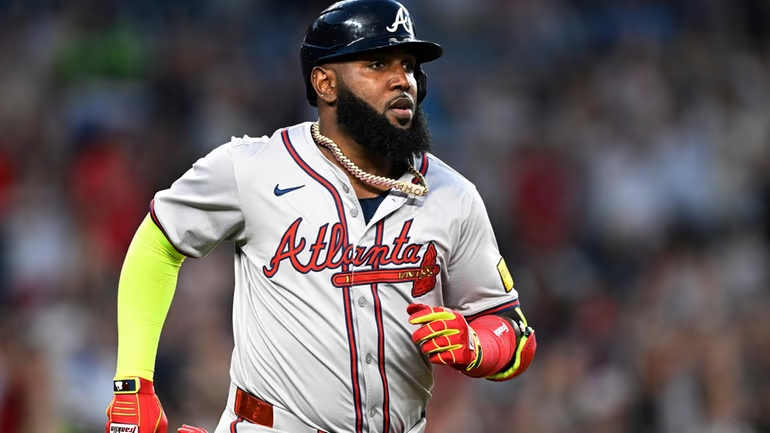
There could be an element of Han Solo in A New Hope to Marcell Ozuna’s disappearing act.
At the end of the first Star Wars movie, you almost forget about Han’s character as you invest emotionally in Luke Skywalker and his squadron going up against the Death Star.
But then, when the chips are down, in comes the Millennium Falcon at just the last minute to save the day and give Luke the runway he needed to land a once-in-a-lifetime shot.
Ozuna is the forgotten man. As injuries set in, the DH spot becomes more available as bench guys occupy positional roles. If he can catch lightning in a bottle, no doubt we could ride that into the ASB.
It would be dramatic and storybook, and a redemption arc for him that he could leverage for another big payday with the Marlins or Rockies next year.
But we’re now 200 plate appearances into his season. There comes a point where it moves from being a slump into ‘adjusted expectation’ territory. He fell off last year, and has fallen further this year.
If you were looking at this on the back of a baseball card, it would make sense that this was his final season in the major leagues.
Cherington is saying all the right stuff. What is he supposed to say? They invested more than $10 million in this guy who has not done the one thing he was hired to do -- hit the baseball.
I can appreciate intangibles and team culture-building, and I’m sure Ozuna is a great clubhouse guy. But he better be studying film and busting his ass to get off the schneid.
It sounds like he won’t be released even if he continues down this path. They’ll just give him a mop and call it servant leadership.

Marcell Ozuna has the full and undying support of Pirates GM Ben Cherington. Here's a sampling of what he said about the slumping slugger:
"He has plenty of runway on the roster"
"He's a big part of the team"
"He's done so much for us off the field"
"We're gonna give him time"
"We see that big hot streak in there."
Ozuna has a -.8 WAR. With .193 average. And 5 HRs.
8
4
40
10,648
The Early Shift retweeted

In most years of Pirates baseball, when you lose 3 players the caliber of Lowe, Griffin, and Cruz, you're cooked.
But this year, "you have a lineup that can hold down the fort until these guys are ready." -@_NoahHiles
2
1
10
1,437
The Early Shift retweeted
Jun 8
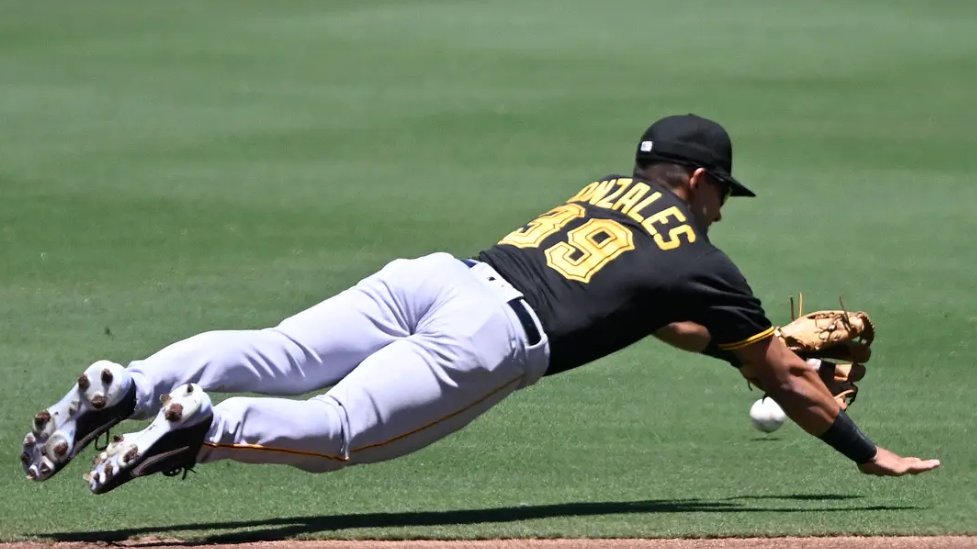
How Bad is Nick Gonzalez at 3B really?
My column this morning is all about upgrading 3B to get a quality bat there that can also improve on the defense we're seeing from Gonzalez and Callihan.
Gonzalez has a -4 DRS in 46 games at third base this season. That extrapolates roughly to -12 DRS across the whole season.
FanGraphs defines DRS as "runs saved or cost compared to the average player at that position," so a -12 DRS third baseman is costing roughly 12 runs versus an average defensive 3B.
Using the rough baseball conversion of 10 runs = 1 win, Gonzalez would cost the team 1.2 wins at the position.
For the poor defense to balance out, Gonzo would need roughly a 115 wRC to offset the drag defensively. He's at around 112 wRC today, so about even. He's defensible as a roughly average 3B.
To get to above average, Gonzalez would need to be in the 120-130 wRC range, which is above an .800 OPS.
He hits incredibly with runners on, which might boost him up a bit. But he's been on an eight game bender to get to that 112 wRC . He was hanging around 100 wRC for most of May.
Just wanted to put this all in perspective.
A -12 annualized DRS is really bad and only works if Gonzalez hits consistently.
ALT Denis Poroy/GettyImages
27
1
53
8,809
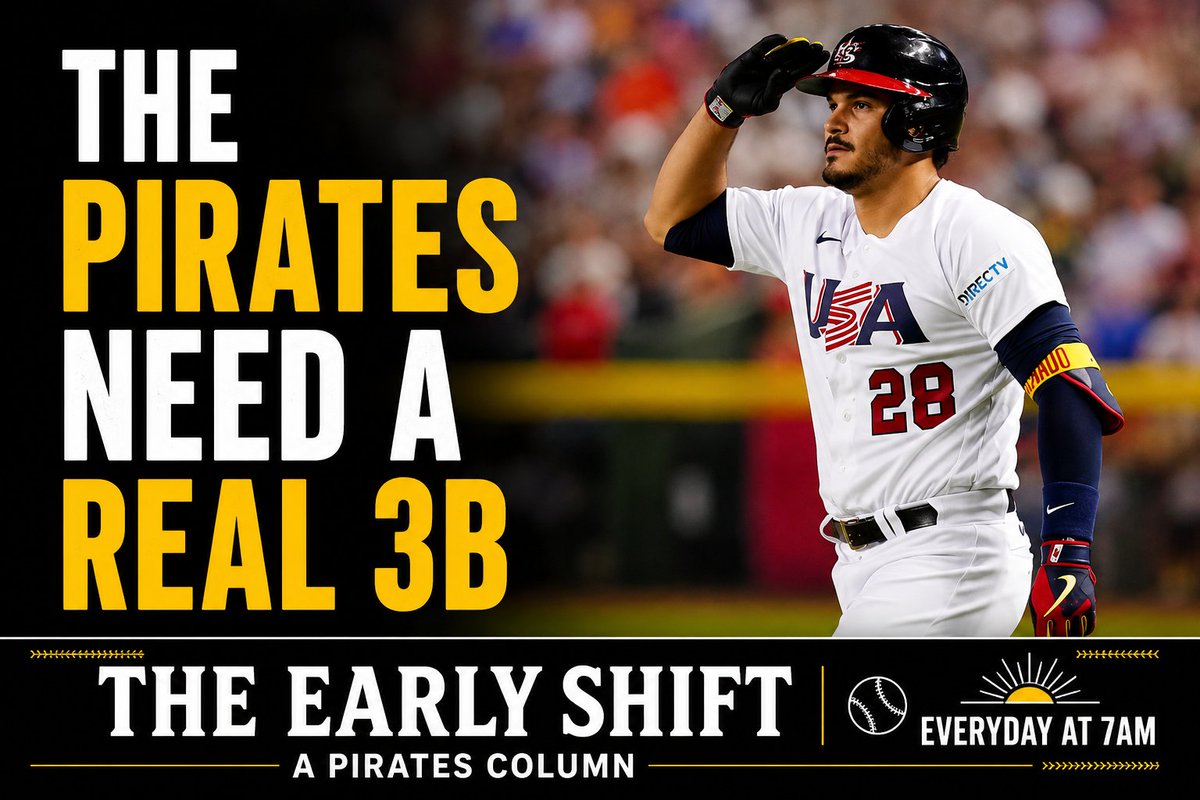
The Pirates Need a Real 3B
Ah, the feeling of elation at knowing that Brandon Lowe is alright. I was convinced Saturday night that our season was well on the ropes, and instead Lowe gets a pinch hit double on Sunday and Bubba Chandler largely shuts down the Braves over 5 innings.
Baseball is inherently an up-and-down sport, but the last 24 hours have been a real doozy. Add in another blown save to boot.
It got me thinking -- if Lowe were to go out, what would the left side of the infield look like going forward?
Continued Delay on KG
Part of the answer to that question rests on the recovery of our talented rookie still on the IL.
On the Sunday edition of The Pirates Insider Show on 93.7 The Fan, GM Ben Cherington revealed to Jason Mackey that Konnor Griffin has been diagnosed with a low-grade flexor mass muscle strain in his right forearm. The Pirates are projecting a pretty conservative plan for recovery, deciding to wait a few more days before starting him on a throwing program.
Barring a recurrence of symptoms, a return sometime over the next 10-15 days appears most likely, though he could theoretically be in the lineup a week from now.
As we’ve experienced to-date, injuries are going to be a big challenge for the Pirates to overcome, with the absence of Ryan O’Hearn, Griffin and Lowe of late exposing the team’s depth issues. We don’t have ready-made solutions when starters need significant time off.
The Infield Mess
One could argue that the left side of the infield has been a mess since the start of the season. With a desire to get Nick Gonzalez’s bat in the lineup, he was made starting 3B after Jared Triolo went on the IL early in the season. That either player was considered a legitimate option followed an offseason where the team failed in its attempts to secure an upgrade.
Between Gonzalez, Tyler Callihan, Nick Yorke and recent call-up Davis Wendzel, we have guys who either don’t naturally play 3B but can hit a little, or who are just unproven at the ML level. The one true 3B on the team, Triolo, is totally ineffective as a hitter and should only be a defensive replacement.
When either Griffin or Lowe are out (or God forbid both), the unpreparedness to cover in their absence shines through. This hodgepodge of players aren’t options to run out there either defensively, offensively, or both. Not when we're competing for the playoffs.
A Theoretical Trade
The loss of a major run producer (or two!) would be devastating to a Pirates team that is already wrestling with rotation and bullpen issues. The team has thrived because it has scored a little over 5 runs per game. They need to be stoking those fires, not watching the embers burn out.
With a dearth of solid options at the hot corner league-wide, the opportunity to acquire an expensive player at the end of a contract holds some appeal. I offer the following more as a thought exercise, to show how it could get done despite the challenge of so many teams in the wild card race.
Nolan Arenado was acquired by the D-backs before the 2026 season, receiving $31 million from the Cardinals to cover part of the $42 million he was owed for 2026 and 2027. He has a .772 OPS with a 4 DRS in 56 starts at 3B, where he remains above average defensively. He also has a tight no-trade clause, which is part of what makes this trade theoretical.
The Diamondbacks recently called up 3B LuJames Groover from AAA where he had an .873 OPS. A 2nd round draft pick in 2023 out of NC State, he appears ready for his shot but is blocked by the 35-year old Arenado. Teammate Jose Fernandez is also in that mix.
Something’s got to give, even as the 34-31 Diamondbacks are in the thick of the wild card hunt. While I’d much prefer to try and get Groover, the prospect capital required would likely be too steep, and we already have a slightly younger version in Murf Gray coming up strong. A 1.5 year vet rental would be ideal.
The Diamondbacks need rotation help with Corbin Burnes out until September. I could envision a scenario where Carmen Mlodzinski and newly-promoted AAA starter Khristian Curtis gets it done. It’s expensive, but it plugs a critical hole.
So what about Nicky G? For now, he replaces Triolo at SS, getting him away from 3B where his -4 DRS has hurt of late. When Griffin is back, Gonzalez can spell Lowe who is hitting .197 in 73 PA against lefties. Injuries and the DH spot create additional ways to make sure Gonzo gets plate appearances.
The Bottom Line 📌
The failure to acquire a 3B is among the biggest misses of Cherington’s offseason (along with the bullpen). The list of needs was too great, but the acquisition of Marcell Ozuna appears to have been wasted capital.
It isn’t too late for the Pirates to acquire a talented 3B to steady the ship. The Diamondbacks offer an example of an aging vet vs. up-and-comers position battle that is all-too-common during this part of the season. We have the prospects to swing a trade like this, even with a contending team.
The bigger question is: does Cherington even think 3B is an Issue? There seems to be more confidence in the current roster than seems sensical from the outside looking in. And as evidenced by Lowe’s close call, anything can happen.
We need bold, decisive action to keep us in the hunt for the playoffs. 3B and RP are holes that need filled. I hope something gets done.
19
3
39
8,191
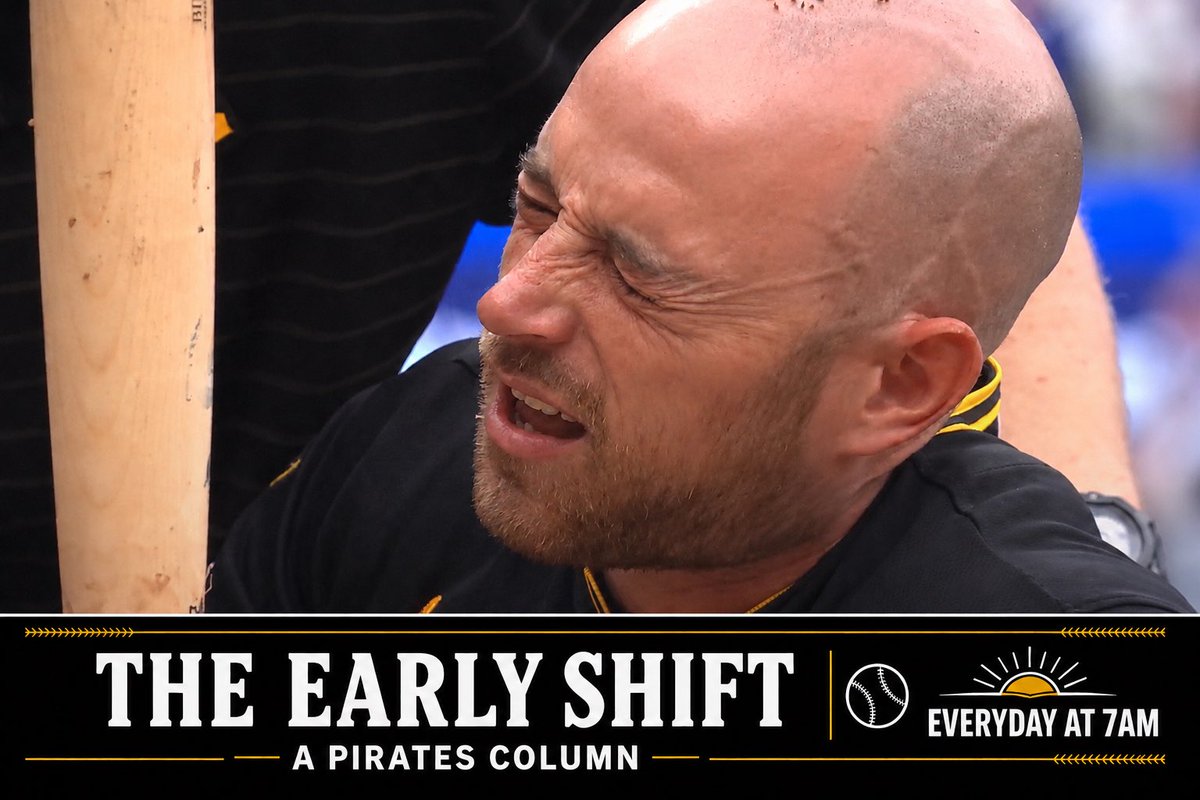
Brandon Lowe: How Long Will He Be Out?
Well, that sucked.
I’m waking up this morning on the 7th floor of the Omni at the Battery, overlooking Truist Park where the Pirates lost (again) yesterday 6-3. It was the sort of game you knew was heading to a loss almost immediately after it started.
As people who like to avoid masses of people, my wife and I normally would have left after we stranded runners in the 7th inning, but instead stuck around to the bitter end full of chanting and tomahawk chops.
With two strikes on him, Brandon Lowe was about to be the third out in the 9th when he fouled a ball directly off his right knee and collapsed in pain.
I stood up and shouted expletives. I took the Lord’s name in vain. This can’t be happening,
Kneecap Injuries Are No Joke
From where I was sitting, the injury looked pretty bad. There was a bit of a popping sound as it bounced off his knee, and his reaction looked an awful lot like when Christian Yelich fractured his right kneecap in September 2019:
youtube.com/watch?v=IbNywW8Q…
In fact, Lowe had fouled a pitch off his kneecap just like this in 2023 and it resulted in a right patella fracture with a week left in the season:
mlb-cuts-diamond.mlb.com/FOR…
If Lowe’s injury was a kneecap fracture, his season is likely done. They take 4-6 weeks of recovery time with an immobilized leg, and then at least another 4-6 of physical therapy. The total recovery time is typically 3-6 months.
Of course, we’re all hoping for just a bruise and a two week recovery, but I’m preparing for the worst.
The Infield Shuffle
Lowe has been among the best hitting second basemen in baseball, with the most home runs (15) and RBI (41) in the MLB and third in OPS (.848). Ask most Pirates fans, and they would point to him as the leading reason the team sits at 34-31.
With this presumed injury, the Pirates’ infield is starting to look a bit worse for the wear. Konnor Griffin had already gone out on the 10-day IL on May 31 with a right forearm and elbow strain. We haven’t heard much about his recovery in the last few days, which makes me a touch nervous.
Tyler Callihan was called up from AAA to serve as backup to Nick Gonzalez at 3B and Jared Triolo at SS. In the near term, Gonzo would move back to 2B and Callihan would take over 3B, with Enmanuel Valdez likely called up from Indy to serve as backup.
An alternative alignment offered yesterday on X by several people suggested Spencer Horwitz shift to 2B (a position where he’s played 39 games in MLB), Ryan O’Hearn take over 1B, and Esmerlyn Valdez be recalled to serve as DH.
Both would be a bridge until Griffin returns, and none of them would fully make up for Lowe’s significant offense out of the #2 spot in the lineup.
Why Us? Why Can’t We Have Nice Things?
Being in Atlanta for these first two games of the start to this six-game run that has the Dodgers coming to PNC on Tuesday, I am struck by how incomplete the Pirates feel.
The narrative coming in to June was about how awful the bullpen had been. Now we’re contending with a rotation of underperformers and a lineup that might have just lost our best hitter for a significant amount of time.
It begs the oft-asked question: why does God hate Pirates’ fans? Want did we do, or who did we offend, to deserve such a crappy run of luck? Who can we shake our fist at?
The Bottom Line📌
I assume we’ll hear today about the results of Lowe’s X-rays/MRI, and I am certainly hoping for the best. A two-week recovery would not be fun in the near term, but at least we’d get back to full strength before the ASB.
But if he is out for a longer period of time, this team is going to need to tighten up to stay competitive. We still have a strong core of the lineup, and with Jared Jones back, the rotation has potential to be a strength.
One hopes GM Ben Cherington is working the phones. There is still a long way to go on the season, and it remains the best team we’ve seen in a long time. Let’s not squander the opportunity.
ALT Sourced from video from MLB.com
7
6
33
7,775
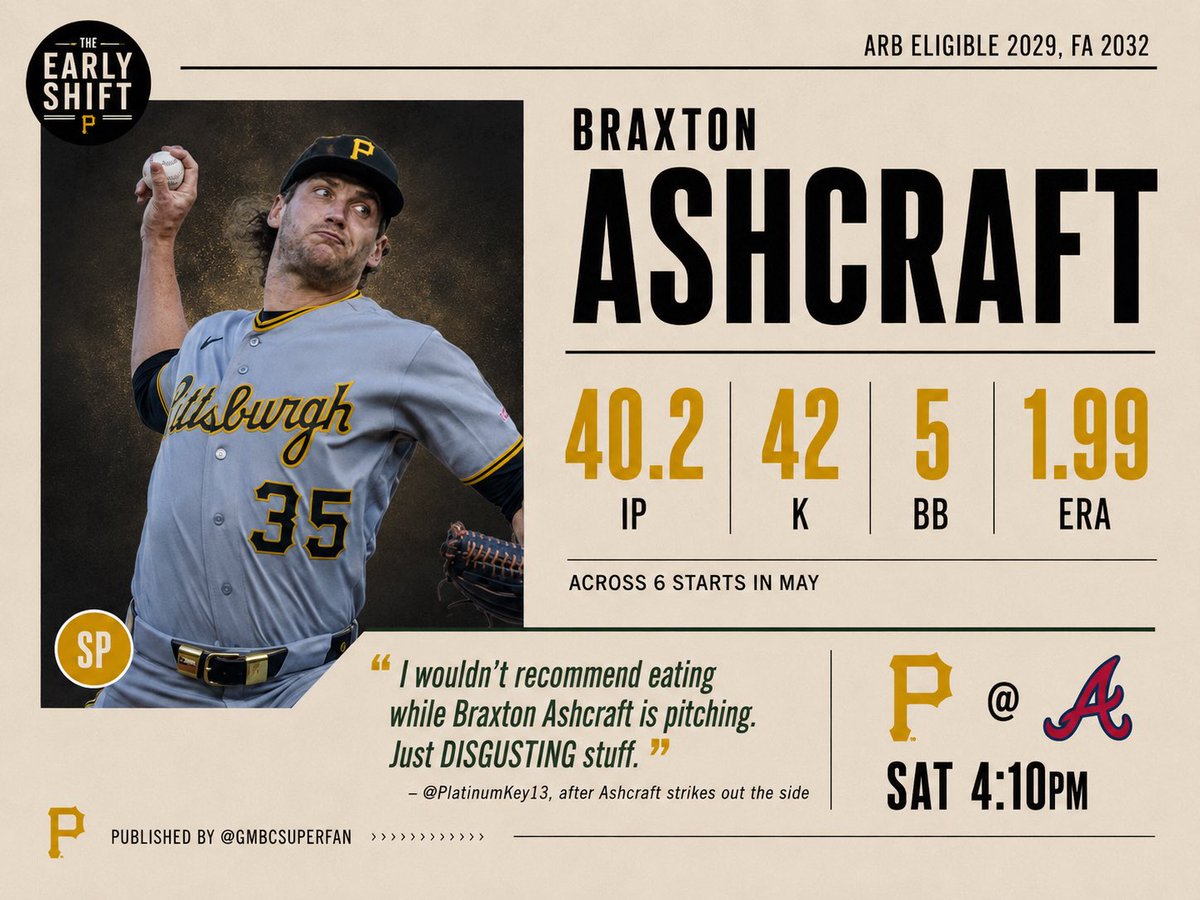
Today is Braxton Ashcraft’s first start in June. In May, he was… alright I guess…
#letsgobucs
3
2
55
2,413
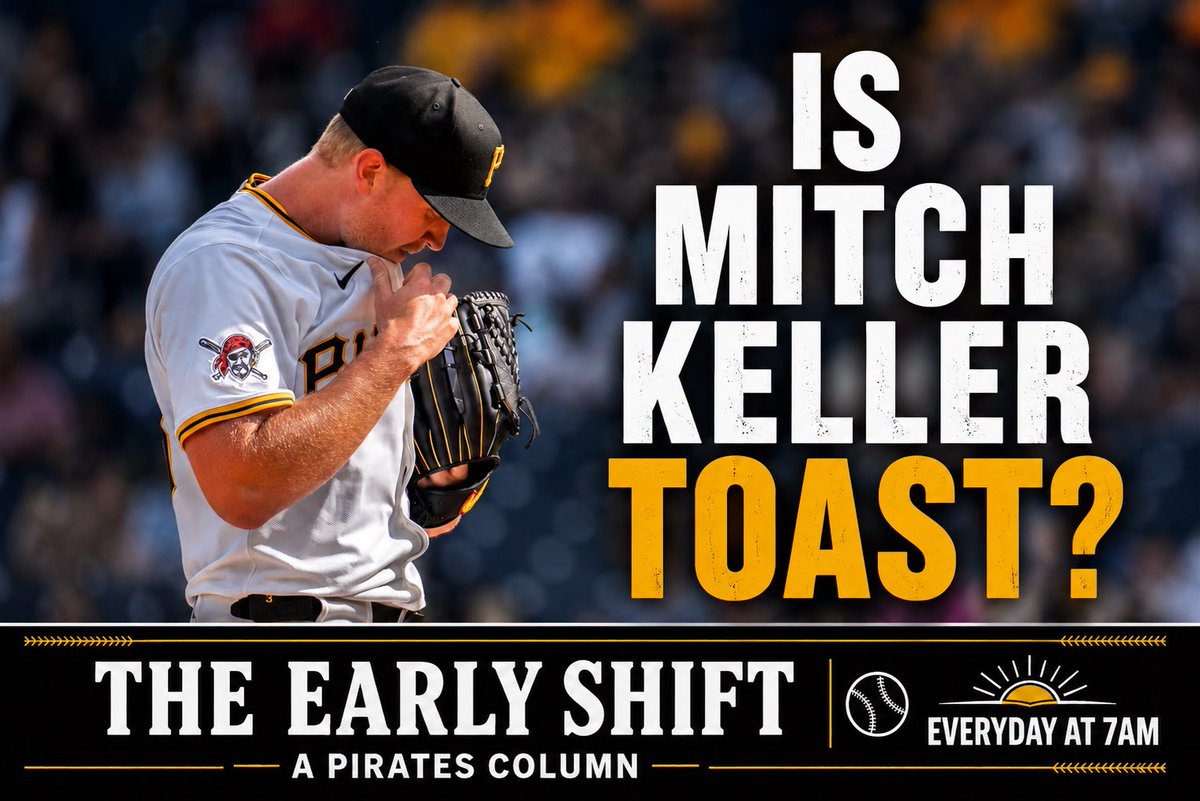
Is Mitch Keller Toast?
Back in February, I posted a take on Mitch Keller that elicited a strong reaction. I’ve been among his biggest critics for several seasons, with an underlying loss of velocity the reason for my concern.
I was convinced earlier this season that he had successfully tinkered with his delivery to save his arm, but I don’t think it worked. He was giving up hard contact last night, and has been getting knocked around over the last several starts.
Looking at the Statcast data, there’s no smoking gun. I compared last night to his starts on March 28 and April 8 when he gave up just 3 hits over 6 IP in both starts, and couldn’t find anything specific. Back then, he was living in the 93-94 mph range with his fastball and the rotation on his slider, curve and sweeper were the same.
So what gives? When your stuff is this hittable, you have to be “crafty” -- using deception, command, sequencing and movement rather than overwhelming velocity.
If Keller uses a similar set of pitches in multiple games, the analysis is going to bear that out. And opposing teams will pounce.
I noticed hitters jumping on Keller’s first pitch a couple times. Acuna Jr. swung at the very first pitch of the game and popped up, and seemed really angry with himself. Did he get the pitch he thought he was going to get, and just failed to square it up? According to Statcast, it was a 94.9 mph fastball right down the pipe -- his highest velocity pitch of the entire game.
If Keller is repeating sequences, getting more predictable, his stuff won’t save him. I suspect that is what is happening, leading to his 8.31 ERA over his last five starts.
The underlying loss of velocity is the main culprit. Here’s what I wrote back in February…
———————-
Mitch Keller is a ticking time bomb. Everyone puts forward his workhorse status as a 180 inning eater, but that is only true if he keeps hovering around 100 ERA . I'm here to tell you, the data suggests that the wheels could come off at any moment.
Here's why: remember with Mitch Keller was horrible? I do. You know what was wrong with him? His fastball. In 2020-2021, his fastball velocity was around 93.8 MPH and hitters were teeing off of him. When your fastball sucks, the rest of the offerings perform poorly too. His turnaround in 2022 was due in large part to his fastball gaining a 1.3 MPH on average. That may seem like a lot, but it most decidedly was significant.
Over the last three years, we've watched that fastball slowly erode, from 95.1 MPH in 2022, to 94.6 MPH in 2023, to 94.0 in 2024, and then just 93.7 MPH in 2025. He's compensated with better control and fewer meatballs, but profile-wise, his underlying stuff looks remarkably similar to the earlier days when he was getting roasted every time out.
I know you know what that looks like, because Keller has done the Dr. Jekyll/Mr. Hyde thing every year: a 3.48 ERA in the first half last year and then a 5.65 ERA in the second half. The same exact thing happened in 2024: 3.46 ERA in the first half, and a 5.65 ERA in the second half.
What happens when there is no mid-3.00 ERA to start the year, and it is all 5.00 ERA? Will many of you still be championing his workhorse status?
Mitch Keller is also owed a lot of money by Pirates standards: $16.9M in 2026, $18.4M in 2027, and $20.4M in 2028. That is $55M tied up in a pitcher whose underlying metrics suggest is reverting to the dark days.
Whether we trade him now or at the trade deadline, I am pretty certain Mitch Keller is not going to end the year a Pirate. Folks need to get comfortable with that.
———————-
The Bottom Line 📌
Keller isn’t the pitcher he once was. His success early this season was a function of an improved sweeper, a change to his sequencing, and inducing weak contact.
That isn’t working anymore. He’s been pretty miserable in four of his last five starts, and needs to figure out how to resurrect his craftiness.
If he can’t, Keller may not be a viable start much longer.
14
3
27
9,484
The Early Shift retweeted

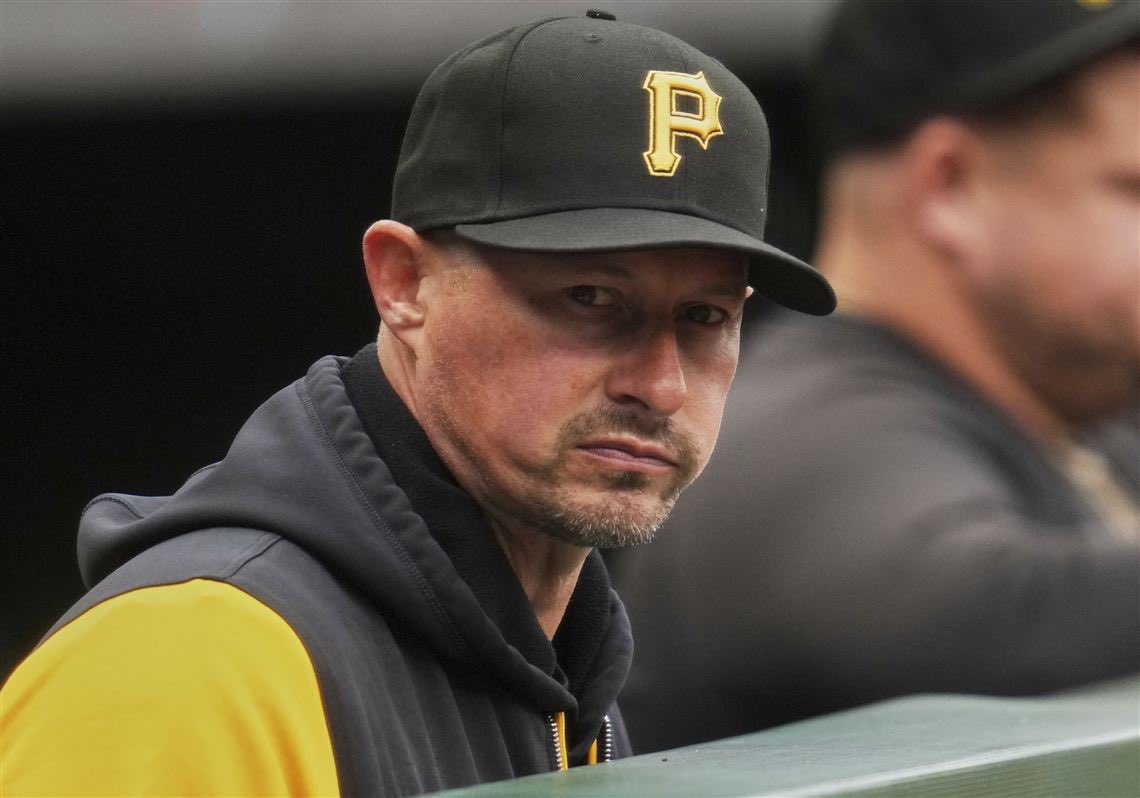
A lot of people are saying they’d be thrilled with 3-3, and even okay with 2-4 in these next 6 games against the Braves and Dodgers.
I disagree. Go make a statement. From what I’ve seen, this is one of the most talented squads in the league. Prove it by winning at least 4 of 6.
26
7
173
7,105
Atlanta Bound: Critical Three-Game Set
Do you feel it? Something is markedly different with your 2026 Pittsburgh Pirates, and I really like it.
Last night was a serious demarcation point. After an 8th inning meltdown the night before, the old Pirates would have come unglued, gone hitless against Teng, and spiraled to defeat. Instead, we scored first (critical!), pounced in the 6th, and sailed to victory and a series win. Recently-disgruntled Carmen Mlodzinski nailed down a four-inning save in relief of a resurgent Jared Jones. Pretty storybook.
It's just the sort of thing to build upon as we get set to take on the team with the best record in baseball, the Atlanta Braves, on the road. And I'll be there to document it.
Atlanta Bound
Every year, my wife and I make our annual pilgrimage to Hot-lanta when the Pirates come to town. And every year, I’m struck by what the Braves have built.
The old ballpark, Turner Field, was the classic, outdated model: a standalone stadium surrounded by parking lots. It had zero vibe. Less than 20 years after the Braves moved into it following the 1996 Olympics, the team abandoned it in 2016 and moved to Cobb County, northwest of town.
Truist Park, now celebrating its tenth anniversary, is attached to The Battery, a year-round baseball village of bars, restaurants, hotels, and entertainment. What it lacks in authenticity it more than makes up for in experience. We stay at the Omni Hotel that overlooks the outfield, park the car and never move it, and spend three days soaking it all up.
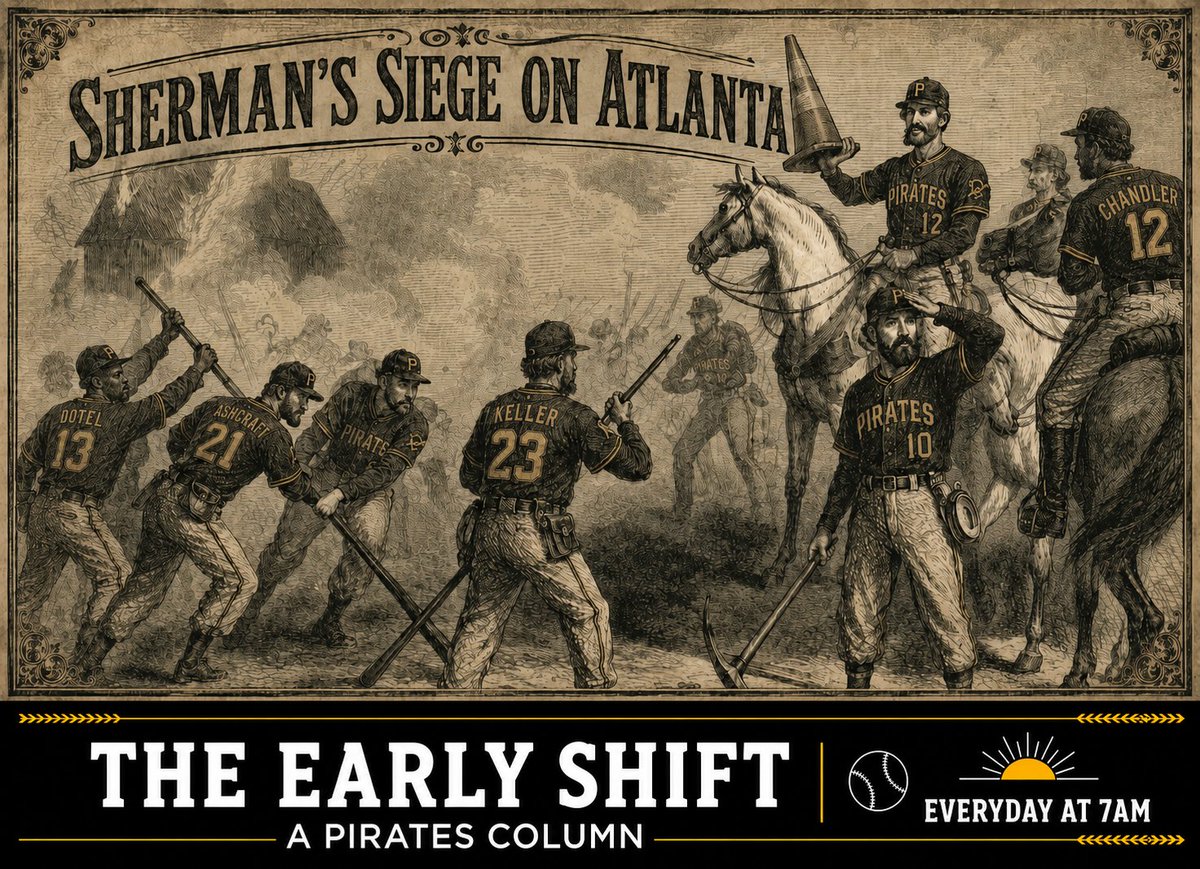
It in no way rivals PNC Park, but for those of us not local to Pittsburgh, we have to get our fix any way we can. The Braves have created a self-contained, money-printing destination, and God bless it. I'm rolling up head-to-toe in Pirates gear, ready to reenact Sherman's march, laying siege to these Confederate-loving ne'er-do-wells.
The Braves: A True Test of Strength
The Braves are a flat-out excellent baseball team. At 42-21, they have the combination of offense and pitching that wins championships. Like the Pirates, they have multiple regulars with .800 OPS and a number of solid starters. And unlike the Pirates, they have a bullpen that is getting it done.
Tonight, Mitch Keller (4.35 ERA) hopes to shake off his last outing as he faces off against former Pirate Martín Pérez (2.79 ERA). Keller went 4.0 innings against the Twins on May 30, giving up 7 ER in an absolute meltdown. I expect him to recover strongly tonight.
On Saturday, I'll be excited to see Braxton Ashcraft (2.77 ERA) for the first time with my own eyes as he goes up against Spencer Strider (3.77 ERA). This is going to be a helluva game. I expect a low-scoring affair, at least for these two starters, and will be rocking my Ashcraft jersey to root him on.
On Sunday, I'm a little worried. We have Bubba Chandler (4.89 ERA) going up against Bryce Elder (2.63 ERA). If there is a game where the Pirates prove to themselves and the fans that 2026 is going to be a different year, this would be it. I expect Chandler and Dotel to tandem, and that could be a success. Fingers crossed.
The Bottom Line 📌
We need to get on the road, so I'll keep this brief.
I am so impressed by this team. Maybe it's because we've all suffered through such abysmal Pirates squads in the past, but to come back from Wednesday night's game and shut the Astros down last night was proof of what I've been feeling for awhile -- this is a special team and a special year.
Soak it in, fellow fans. For all the consternation and anger a game like Wednesday conjures up, we're also witnessing an all-time Pirates team. It's the Billy Crystal season of SNL. I hope we can continue it in the years to come, but assuming this is a one-time thing, let's not let the losses sour the overall victory of having a team capable of doing what it is doing.
It's special. You'll tell your kids one day. Take it all in and make it memorable -- meaning, make sure your own memories of this season include the highs as well as the lows. Henry Davis' grand slam. Bryan Reynolds' walk-off.
And this weekend, the utter domination of the best team in baseball by your Pittsburgh Pirates.
Manifest that shit!
#letsgobucs
4
3
14
970