Co-Founder & Programme Designer @ThinkReadHQ | Intervention is only successful if students catch up completely | @IFERIorg AdGp | Instructivist | DI fan | Alfie
Joined March 2013
- Tweets 28,316
- Following 1,352
- Followers 4,455
- Likes 16,833
2,382 Photos and videos








Pinned Tweet

20 May 2020
Following on from our @researchEDHome presentation (youtu.be/FpDc9Nevs6Y) The Bridge Over the Reading Gap, we have written a series of blog posts to answer the questions we didn’t have time to answer #researchED #ThinkingReading 👇🏻

3
44
93
Dianne Murphy 📚🇳🇿🇮🇪 retweeted

Jun 13
Leonardo da Vinci invented the self supporting bridge in the 1400s. Here’s how it works:
392
3,870
62,596
5,884,407
Dianne Murphy 📚🇳🇿🇮🇪 retweeted

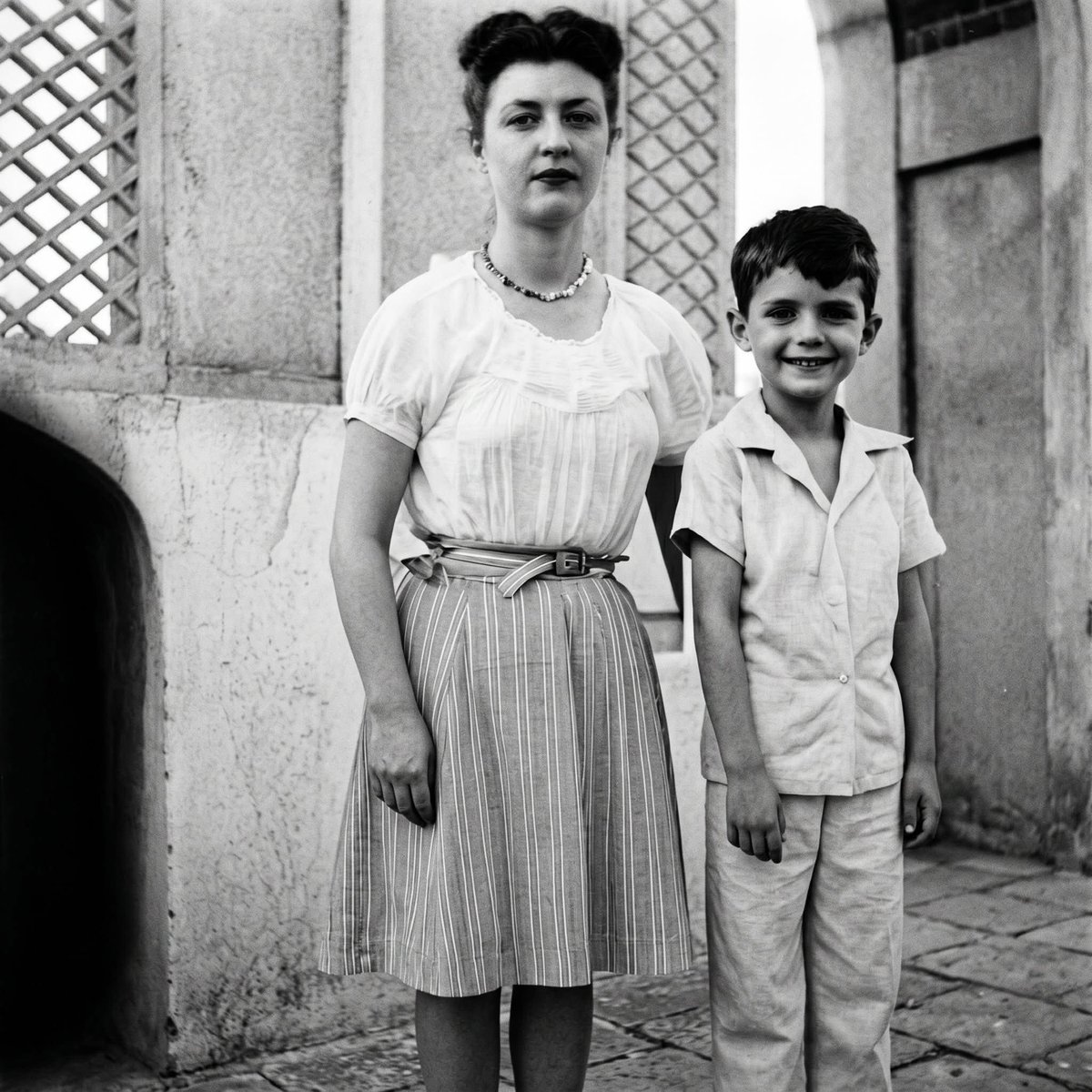
In 1958, a divorced single mom got fired from her secretary job for being a bad typist.
21 years later, she sold her side hustle for $47.5 million.
And her teenage helper would go on to help invent MTV.
Her name was Bette Nesmith Graham.
Before she became a millionaire inventor, she was a struggling single mother in Dallas with no college degree and very few options.
She married young during WWII.
By 22, she was divorced, raising a son alone, and trying to survive on secretary jobs.
She eventually became an executive secretary at Texas Bank & Trust.
There was just one problem:
She was a terrible typist.
The bank had recently installed new IBM electric typewriters that made correcting mistakes almost impossible.
One typo could mean retyping an entire page.
Her son later remembered watching her sit at the kitchen table in “tears of panic,” terrified she’d lose her job.
But Bette had another skill.
She painted holiday window displays at the bank for extra money.
One day, while painting over a mistake on a window, she had a realization:
“An artist never erases mistakes. They paint over them.”
That night, she went home and mixed a white liquid in her kitchen blender using tempera paint.
She poured it into a nail polish bottle.
The next morning, she used it to cover typing errors.
It worked.
For five years, her boss never noticed.
Other secretaries did.
Soon, women from offices across the city were asking for bottles.
Bette started making batches at home with help from her teenage son, Michael, and his friends.
She called the product “Mistake Out.”
Then came the twist.
In 1958, she accidentally typed the name of her side business onto a company letter.
Her boss fired her immediately.
It became the best thing that ever happened to her.
She renamed the product Liquid Paper and focused on it full-time.
Orders exploded.
By the late 1960s, she was selling over a million bottles a year.
By the 1970s, 25 million bottles annually.
Then she did something even more unusual:
She built one of the most progressive workplaces in America.
Her company offered:
• child care
• continuing education
• leadership roles for women
• jobs for disabled workers
• integrated staffing
This was decades before most corporations even considered those ideas.
In 1979, with failing health, Bette sold Liquid Paper to Gillette for $47.5 million.
Six months later, she died at age 56.
Half her fortune went to women-focused charities.
The other half went to her son.
That son was Michael Nesmith.
Yes the same Michael Nesmith from The Monkees.
And with the money from Liquid Paper royalties, he funded a small experimental cable TV project called PopClips.
It featured short films set to music.
PopClips became the direct prototype for MTV.
So one woman’s “typing mistake” helped create:
• a multimillion-dollar company
• one of America’s most progressive workplaces
• and the blueprint for the modern music video era
Bette Graham proved something her old boss never understood:
The mistake wasn’t the failure.
It was the opportunity.
133
2,222
9,875
315,199
Dianne Murphy 📚🇳🇿🇮🇪 retweeted

We were absolutely floored by the millions of you that watched us make silly water sillouettes on our driveway last summer. We are starting out the summer the only way we know how, and this time it’s all about movies! What else do you want to see? We have a whole summer ahead, a driveway and a hose. The possibilities are endless!!!
582
7,259
54,808
2,361,769
Dianne Murphy 📚🇳🇿🇮🇪 retweeted

I don’t know what she was watching, but having her beside me made playing cello outside in a field in Mayo feel a little less strange
82
410
3,776
52,460
Dianne Murphy 📚🇳🇿🇮🇪 retweeted
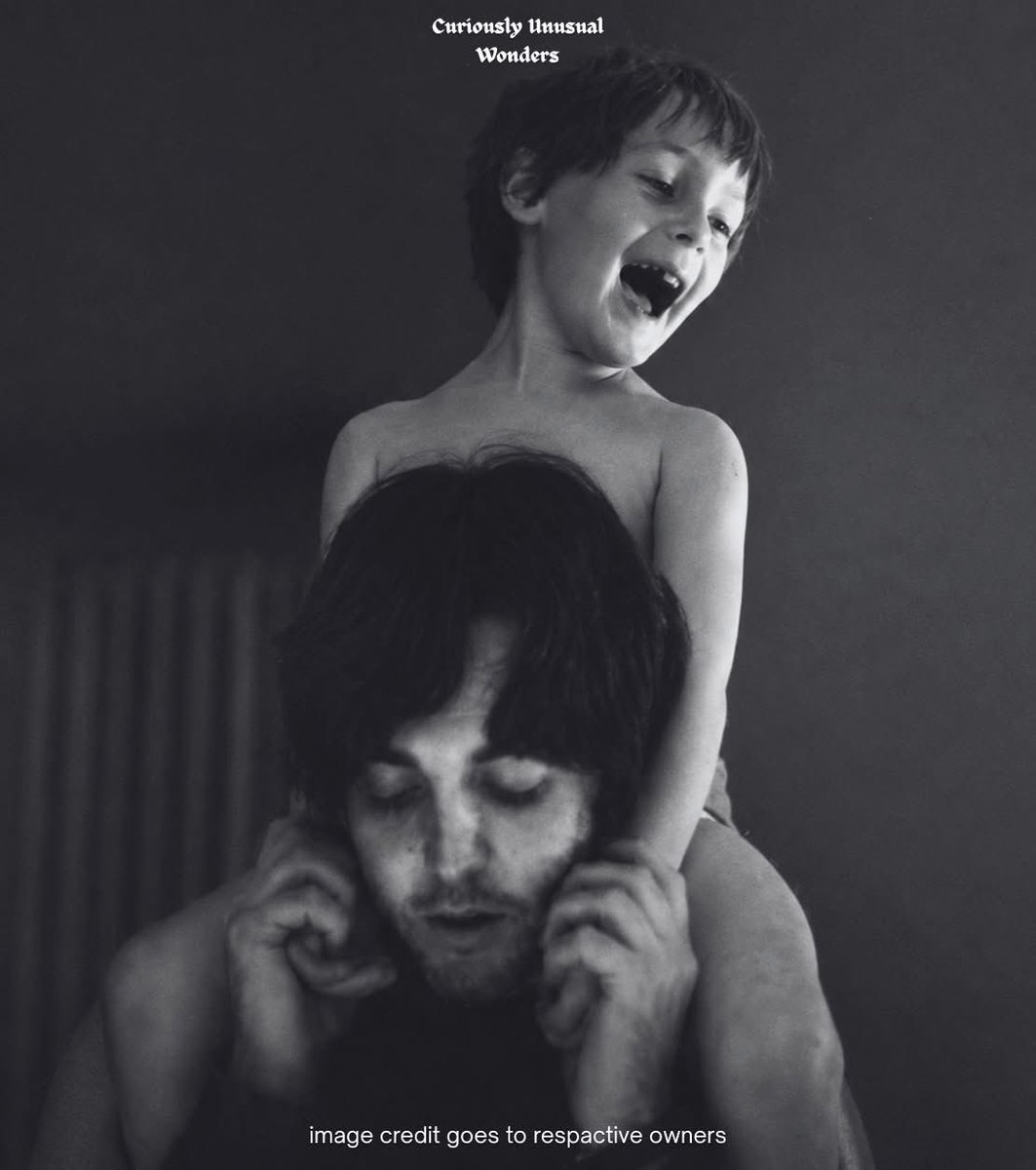
Look at this photograph.
It’s 1968.
The man carrying this little boy on his shoulders is not his father.
His father has just left.
Left his mother.
Left their home.
Left for another life.
And the man who showed up — who drove 45 minutes across London just to check on a 5-year-old boy whose world had suddenly fallen apart — is holding him steady with both hands while the child laughs at the top of his lungs.
That drive would inspire the best-selling Beatles single of all time.
The boy’s name was Julian Lennon.
And he has never quite known how to feel about it.
Julian Charles John Lennon was born on April 8, 1963.
Four days earlier, The Beatles had released their first album.
His father, John Lennon, was becoming one of the most famous people on Earth.
From the beginning, music came first.
The touring.
The recording.
The chaos.
The fame.
Julian came after all of it.
Paul McCartney, however, had known Julian since he was a baby. He watched him grow up while the world around the Beatles became louder and stranger and harder to survive.
Then, in May 1968, John told Cynthia Lennon their marriage was over.
He had fallen in love with Yoko Ono.
Cynthia later said she came home from vacation and found Yoko already there.
Just like that, the family was broken apart.
Julian was five years old.
Paul McCartney decided to drive out to see Cynthia and Julian.
No cameras.
No publicity.
No grand gesture.
Just a friend showing up because a little boy was hurting.
And during that drive, Paul started humming.
“Hey Jules… don’t make it bad…”
Later, he changed “Jules” to “Jude.”
The song became “Hey Jude.”
Released in August 1968, it spent nine weeks at No. 1 in America, sold millions of copies, and became the biggest-selling Beatles single in history.
But for Julian Lennon, the song carried two truths at once.
To the world, it became comfort.
To him, it became memory.
A reminder that his father had walked away.
And that another man had stepped in long enough to help carry the weight.
Years later, Julian admitted he has a “love-hate relationship” with the song.
Because every stadium singalong…
Every radio replay…
Every well-meaning person saying “Your song!”…
Also brings him back to that moment when his childhood changed forever.
Yet even through all the complicated feelings, one thing never changed:
He never forgot that Paul showed up.
Not because he had to.
Not because it benefited him.
But because a child needed kindness.
Look at the photograph one more time.
A little boy laughing with his whole body.
A man holding him securely on his shoulders.
Two hands making sure he doesn’t fall.
Julian doesn’t know yet about the divorce.
About the fame.
About the legal battles.
About inheritance disputes.
About the strange burden of having your pain turned into one of the most famous songs ever written.
Right now, he only knows one thing:
Someone came.
And sometimes, for a child, that is everything.
98
923
6,722
436,416
Dianne Murphy 📚🇳🇿🇮🇪 retweeted

Jun 3
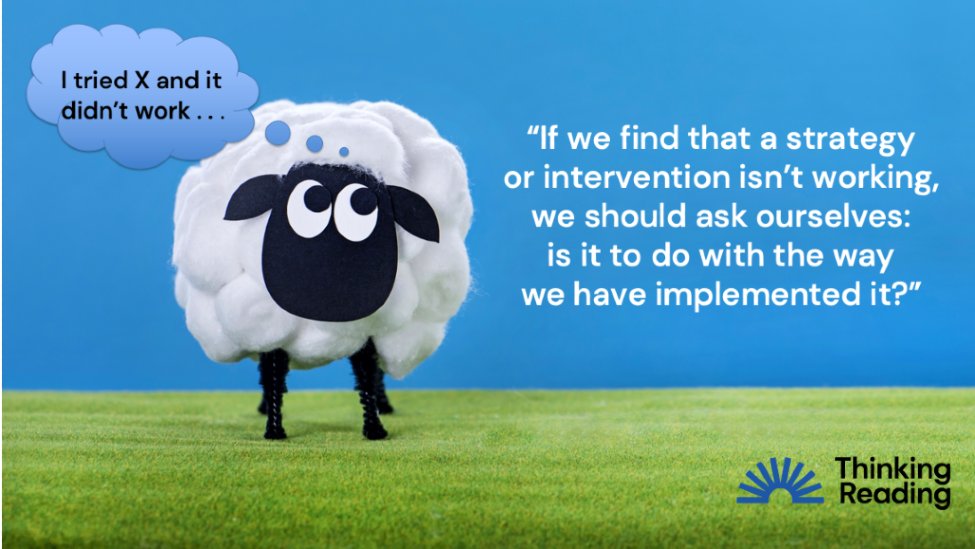
Honest self-reflection is critical to improving how we deliver. Read more in our blog ‘I Tried That and It Didn’t Work . .’ wp.me/p4hKgx-wS (3 min read).
1
142
Dianne Murphy 📚🇳🇿🇮🇪 retweeted
Jun 4
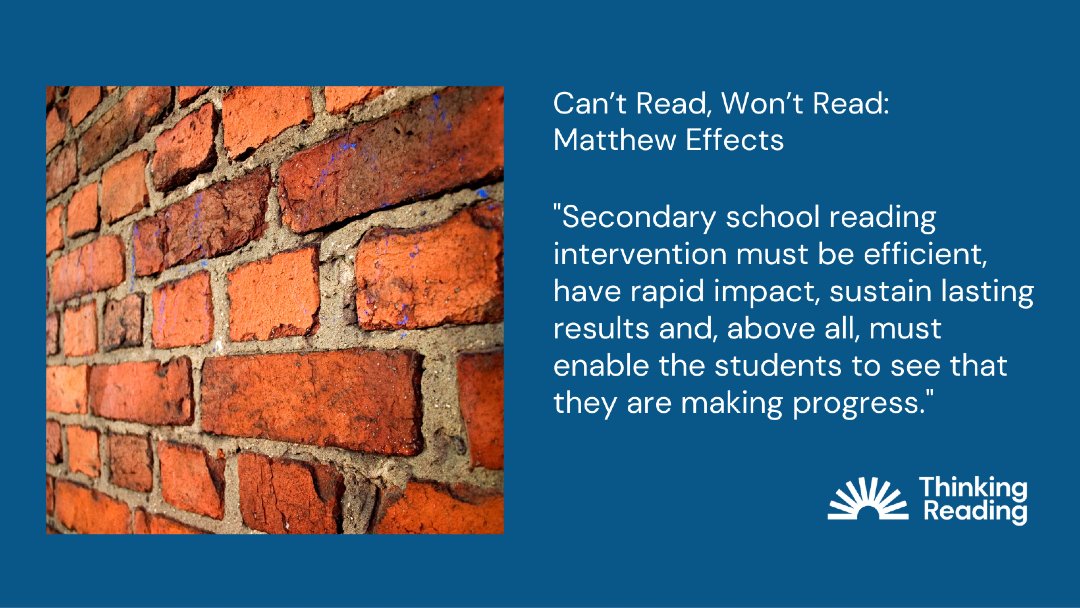
Effective intervention at secondary school requires concentrated firepower that brings both rapid and lasting results. ‘Quick wins’ are the enemy.
Read more in our blog ‘Can’t Read, Won’t Read: Matthew Effects’ wp.me/p4hKgx-1u (4 min read).
1
1
121
Dianne Murphy 📚🇳🇿🇮🇪 retweeted

Mar 25
✨ Delighted to discuss our recent findings in tes ✨
The subtitles myth: why children don’t learn to read from TV tes.com/magazine/teaching-le…
8
16
1,201
Dianne Murphy 📚🇳🇿🇮🇪 retweeted
Jun 4
When children learn to read after years of failure, the people around them often notice major improvements in behaviour, motivation and mood.
2
1
186
Many in the reading & @researchED1 communities will be sad to hear of Geraldine’s passing. She was respected, smart & knowledgeable - readily engaging in conversations about the advancement of the science of reading. I always found her very encouraging and amazingly constant. RIP

Geraldine Carter died on 17 May, aged 87. Many will remember her as kind, generous, wise, funny, and always ready with insight, encouragement or challenge. (1/5)
1
2
2
2,093
Dianne Murphy 📚🇳🇿🇮🇪 retweeted

Jun 2
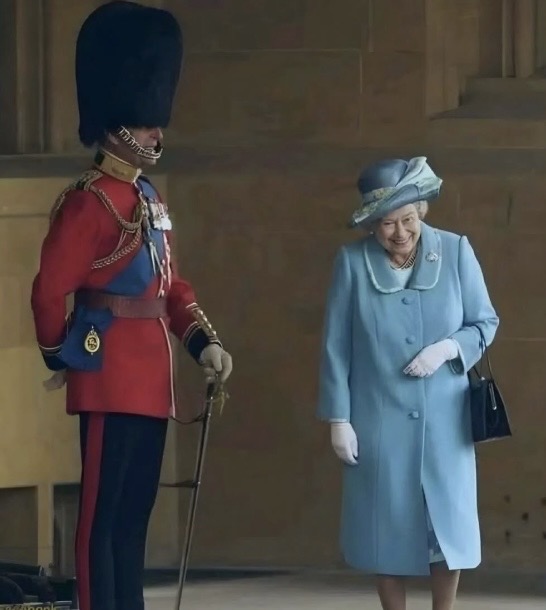
One of the most touching photographs from more than 73 years together shows Prince Philip in 2003 dressed in a Queen’s Guard uniform. As Queen Elizabeth II walked past him, she burst into laughter at the sight.
This photograph was taken during a ceremonial inspection at Windsor Castle in 2003, when Prince Philip surprised Queen Elizabeth II by appearing in the uniform of the Grenadier Guards as part of the regiment’s anniversary celebrations. As the Queen walked past him during the event, she reportedly burst into laughter at the unexpected sight of her husband standing rigidly in full ceremonial dress, complete with the towering bearskin hat. The image quickly became one of the most beloved candid royal photographs because it revealed a rare moment of humor and warmth within a relationship usually seen through the lens of strict public formality.
By the time the photograph was taken, Queen Elizabeth II and Prince Philip had already been married for more than 55 years, eventually reaching a historic 73-year marriage before Philip’s death in 2021. Royal biographers often noted that Philip was one of the few people capable of making the Queen genuinely laugh in public, and the photograph has endured because it captures that side of their relationship so naturally. Beyond the uniforms, ceremonies, and traditions tied to the monarchy, the moment reminds people that their bond was built not only on duty, but also on companionship, teasing, and a lifetime of shared familiarity.
84
653
8,378
398,307
Dianne Murphy 📚🇳🇿🇮🇪 retweeted

The Rolling Stones' legendary guitarist Ronnie Wood is celebrating his 79th birthday today 🎂🎸
156
686
7,441
226,604
Dianne Murphy 📚🇳🇿🇮🇪 retweeted

Nobody who never listened to Joan Baez before is prepared for that voice. Joan's voice is so incredibly clear and soft, yet it hits you like a hammer when you hear it for the first time. It still gives me goosebumps after all these years.
Joan Baez - 500 Miles (1965)
66
596
3,094
131,201
Dianne Murphy 📚🇳🇿🇮🇪 retweeted

May 31
Kids who end up in prison come from a small number of hyper-local areas. It’s a no brainer that more work should be done in these areas to work out what exactly is wrong and how to fix it.
Simultaneously we need to rethink YOIs, starting with how we train and support officers.
May 31

This was so shocking to research.
- A fifth of kids in YOIs went to the same 6 schools.
- 2/3 grew up in care
- 43% feel unsafe in custody
- 2/3 of young offenders go onto reoffend
- a place at a YOI costs double the fees at Eton and a Secure Training Centre as much as the Ritz
7
17
7,429
Dianne Murphy 📚🇳🇿🇮🇪 retweeted

May 31
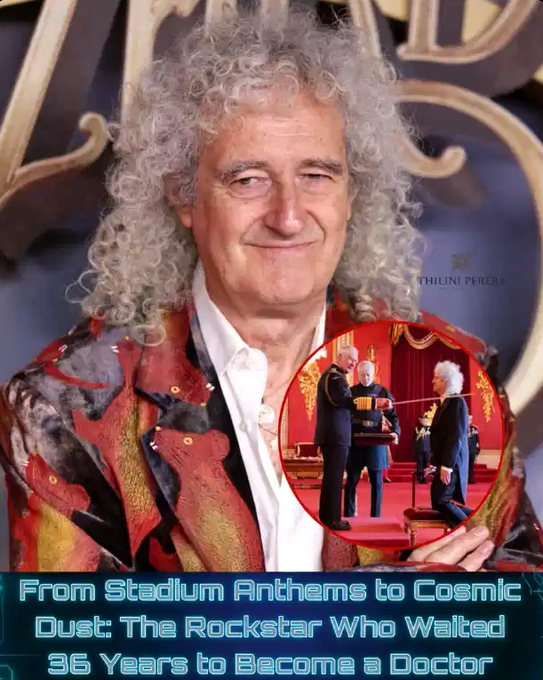
In 1970, a 23-year-old physics student at Imperial College London found himself at a life-altering crossroads.
Brian May was deep into his doctoral research on cosmic dust—specifically the zodiacal dust cloud, the tiny particles that drift through the solar system and scatter sunlight. His PhD was well underway, and a promising academic career in astrophysics lay ahead.
But there was another path calling him.
May was also the lead guitarist of a newly signed rock band named Queen. With a record deal secured and tours on the horizon, the band’s momentum was building fast. Faced with an impossible choice between the guitar and the telescope, May made his decision: he paused his studies and bet everything on music.
Queen’s ascent was meteoric. By the mid-1970s, they had become a global phenomenon. Timeless anthems like “Bohemian Rhapsody” and “We Will Rock You” exploded onto the charts, while May’s iconic homemade guitar, the Red Special, helped define the band’s legendary sound. Stadiums sold out worldwide, and millions of albums flew off the shelves.
Yet throughout his rock stardom, May never fully let go of his scientific passion. Even at the height of Queen’s fame, he stayed connected to astrophysics—reading journals, attending lectures when possible, and maintaining contact with his former supervisor, Professor Michael Rowan-Robinson, who had once told him: “You can always come back and finish.”
Thirty-six years after stepping away, in 2006, May decided the time had finally come. He reached out to Rowan-Robinson, and together they revived the long-dormant project. Though the field had moved forward and his original data needed updating, his early observations still held real scientific value.
Balancing his ongoing music career with late-night research sessions, May updated his work, incorporated new findings, and refined his analysis. In 2007, at the age of 60, Imperial College London officially awarded him a PhD in astrophysics—not an honorary title, but one earned through rigorous research and peer review.
Dr. Brian May had finally completed what he started more than three decades earlier.
His journey is a powerful reminder that passion has no expiration date. Whether on stage under stadium lights or studying the dust between the planets, Brian May proved it’s never too late to finish what you began.
45
540
2,448
75,206
Dianne Murphy 📚🇳🇿🇮🇪 retweeted

Have you ever heard the phrase "Ne'er cast a cloot till May is oot"?
Even if you have, it might not mean what you think.
It's an old Scottish saying that pops up loads this time of year on social media, although last year, a few folk got confused.
33
90
576
45,578
Dianne Murphy 📚🇳🇿🇮🇪 retweeted
May 25
The scale of the problem of students leaving secondary school unable to read is an unnecessary tragedy. We can do something about the students who can’t yet read. They do not have to be outside, looking in, unable to access the curriculum. It's never too late and we can help.
1
81
Dianne Murphy 📚🇳🇿🇮🇪 retweeted
May 25
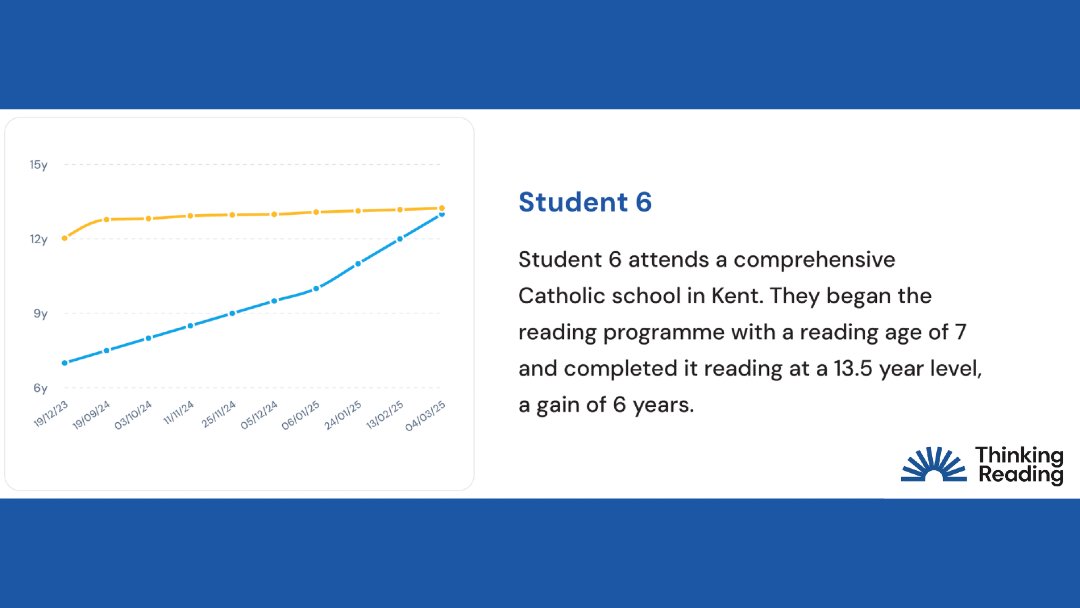
Teaching reading effectively is one of the cheapest, most useful things we can do as a society. It is central to social justice and it is life changing. We can help.
3
3
223
Please sign this petition 👇🏼
Allow small pets to travel in the cabin on flights entering the UK.
Allow airlines to offer an in-cabin travel option for small, fully documented pets entering the UK, in line with international standards for other countries. petition.parliament.uk/petit…
1
71
It’s so frustrating that they can fly on a flight out of the UK but not inbound 🤷🏼♀️
61