
Physical Training S&C Coach NYC Exercise Science Resistance Training, Weight Loss, Health/Fitness Lecturer & skeptically inclined. Brooklyn dad.
Joined October 2012
- Tweets 5,102
- Following 481
- Followers 755
- Likes 13,903
54 Photos and videos






Joachim's Training 🇺🇸 retweeted

Jun 13
In the entire history of the World Cup, the USMNT had never scored more than 3 goals in a game until today...
3
6
145
8,298
Joachim's Training 🇺🇸 retweeted

Jun 11
THE GREATEST COMEBACK IN NBA PLAYOFF HISTORY.

2,252
36,771
203,725
4,389,467
Joachim's Training 🇺🇸 retweeted

Oh stop fear-mongering. Every single risk in this article is tied to red & processed meat. NOT protein!
You can hit 1.6 -2.,2 g/kg on chicken, fish, eggs, dairy, & lentils & skip the bacon & hot dogs.
share.google/Z8xfp85pZQAt6tz…
1
14
510
The entire science of building muscle fits on a bar napkin. 10 rules. Most people are quietly breaking 3 of them & blaming their genetics. Let's Go!
#hypertrophy #exercise #workouts
joachimstraining.com/post/th…
1
4
32
Joachim's Training 🇺🇸 retweeted

For years, my colleague, Prof. Martin Gibala, and I have appeared on literally hundreds of podcasts. Today, we dropped our own podcast! As lifetime faculty members of the McMaster Department of Kinesiology, we thought it was time for our take on reality in the world of exercise, nutrition, health, and more.
The Podcast is Real Exercise Science, and you can pick it up on all your favourite platforms.
The goal? Real science, not hype. Not fluff, not the latest paper, but evidence, with scientific humility. But reality means disappointment sometimes. That stuff you heard about protein, lifting, Zone 2, peptides, GLP-1... It's often more than the data shows, extrapolation, overstatement, or downright wrong.
Hard facts, no hype!
Episode 1 dropped today realexercisescience.com/?r=7… and featured a chat about the updated American College of Sports Medicine position stand in honour of day 1 of the ACSM annual meeting in Salt Lake City!
I'm in Salt Lake City with Marty, and you can hear an amazing update on the position stand journals.lww.com/acsm-msse/f…
Wednesday, May 27, 3:15-4:45 MDT - see you there.
29
50
313
104,758
Every dramatic sauna mortality stat you've heard traces back to the same 2,300 middle aged Finnish guys who liked sitting in hot wooden boxes a few times a week.
That's interesting science.....but is it really the saunas?
Read the honest version:
#skeptic #sauna #wellness #fitness
joachimstraining.com/post/sa…
2
177

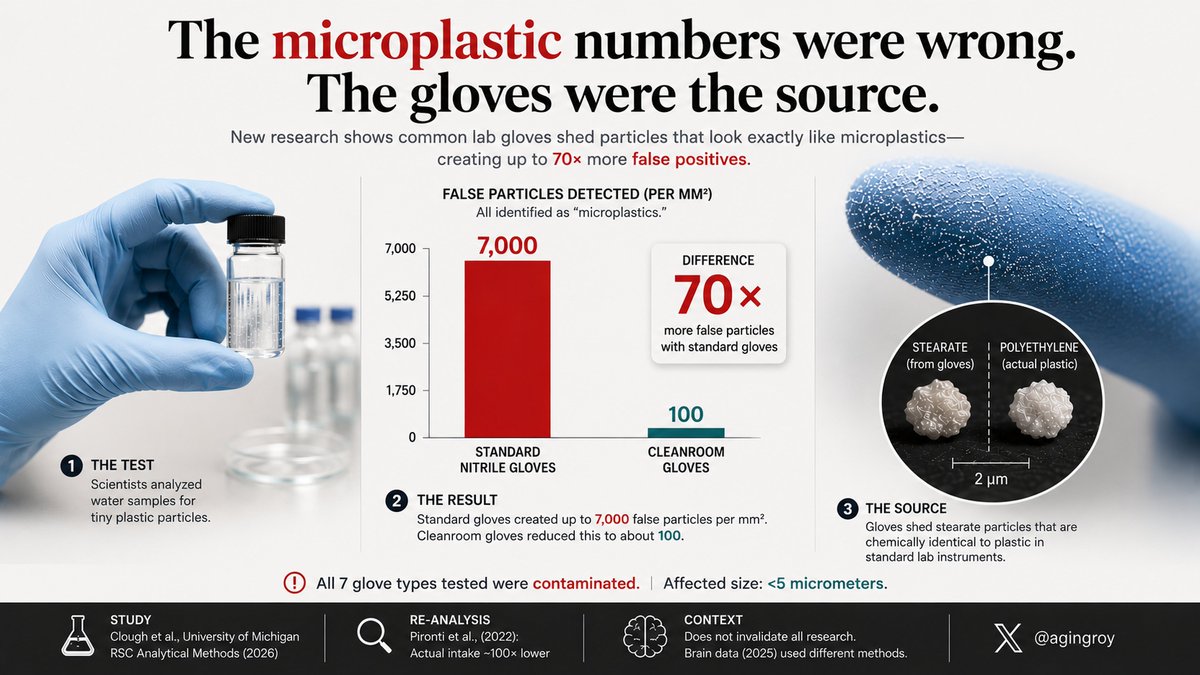
7,000 false positives per square millimeter. The culprit was the lab gloves.
University of Michigan researchers just upended a core assumption in microplastics science. Latex and nitrile gloves, worn by the scientists doing the measuring, shed stearate particles that look chemically identical to polyethylene. Standard infrared and Raman instruments can't tell them apart. The gloves were counting as plastic.
Seven glove types tested. All contaminated. The cheapest fix: switch to cleanroom gloves, which dropped false positives to around 100 per mm² vs. 7,000.
The "credit card per week" headline (5 grams, WWF/Newcastle 2019) has separate problems. A 2022 re-analysis found severe methodological errors in the original estimate. Actual measured intake is likely 100x lower.
None of this means microplastics are harmless. Last month's data on brain accumulation still stands. But the numbers driving the panic may have been measuring the scientists, not the environment.
Science catching its own errors is exactly how it's supposed to work.
298
2,202
11,851
1,103,879
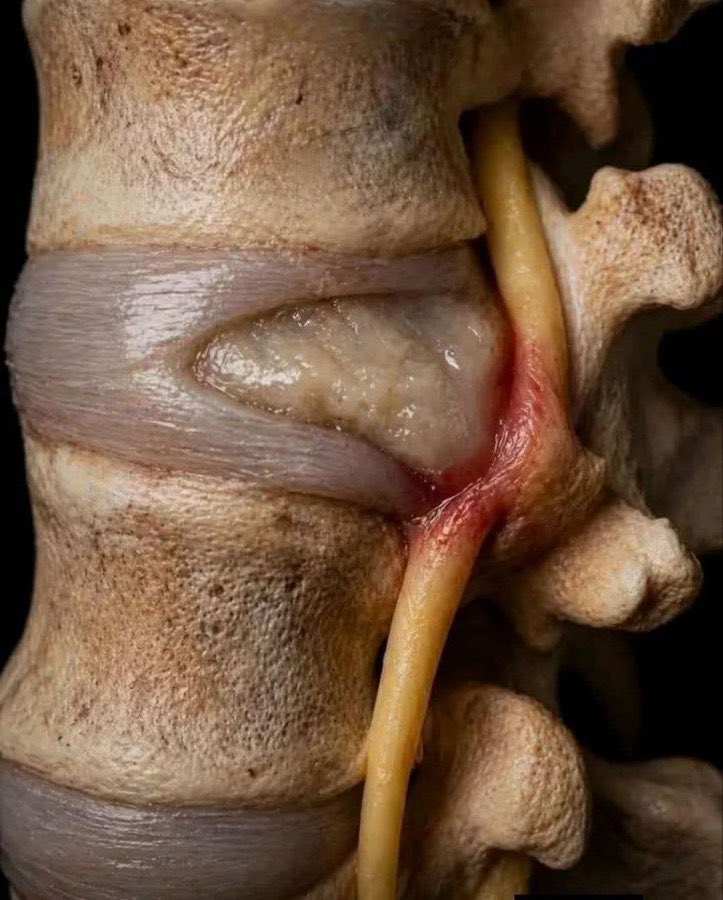
Deadlifts don’t “cause” disc herniations any more than tying your shoes does. Your spine handles massive loads daily. Properly progressed deadlifts build a strong back, posterior chain & resilience.
Your spine is not fragile.

This is one of the reasons why you should be avoiding deadlifting in the gym. Vertebral disc herniation.
2
38

This woman just made ultramarathon history in 56-hour, 250-mile run in Arizona.
Rachel Entrekin won the Cocodona 250 outright in a 56-hour, 250 mile effort, beating the entire men’s field, setting a new course record, and marking a landmark moment in ultrarunning history.
145
1,180
8,271
1,092,687
I loved the Presidential fitness test. Glad it is back....but let's see Trump do it.

How many crunches, squats and push-ups you should be able to do at every age — as Trump brings back Presidential Fitness Test ift.tt/m086fto
2
41
Joachim's Training 🇺🇸 retweeted

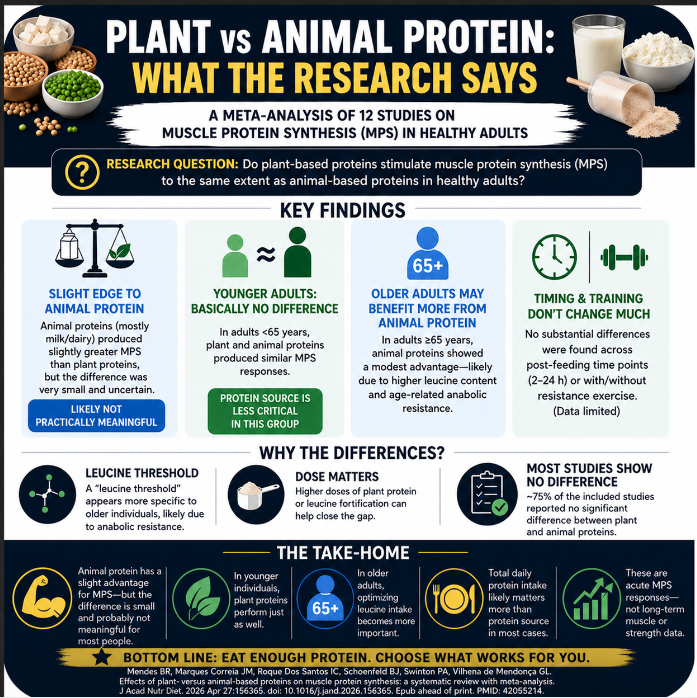
Our recently published meta-analysis found that animal-based proteins confer a modest advantage in stimulating muscle protein synthesis (MPS) compared to plant-based proteins (PMID: 42055214). At first glance, this might suggest a benefit to prioritizing animal protein for muscle building.
However, the interpretation is more nuanced.
The observed advantage of animal protein was largely confined to older adults, whereas younger individuals exhibited comparable MPS responses regardless of protein source. Although speculative, this discrepancy may be related to the lower leucine content typically found in plant-based proteins. In older adults, anabolic resistance appears to elevate the leucine threshold, meaning higher per-meal leucine intake is required to effectively stimulate MPS. Importantly, this limitation can be mitigated by increasing total protein intake or fortifying plant proteins with additional leucine (PMID: 34515966).
A key limitation of the meta-analysis is that it assessed acute MPS responses rather than long-term changes in muscle mass. Nonetheless, when considered alongside recent longitudinal studies, the evidence suggests that both plant- and animal-based proteins can support similar muscular adaptations, provided total daily protein intake is sufficient (approximately 1.6 g/kg; e.g., PMID: 33599941). That said, older individuals may benefit from consuming slightly higher doses of plant protein or supplementing with leucine to optimize the anabolic response.
6
32
165
12,814
Tell Congress: Oppose the House Farm Bill - Animal Legal Defense Fund share.google/VQuHBuYSPDPvmZA…
Apr 28

This is shocking: the House Rules Committee just blocked a vote on stripping the Save Our Bacon Act from the farm bill.
The SOB Act, buried deep in the farm bill, would wipe out state bans on pork from crated pigs, condemning millions to a lifetime in gestation crates.
We were getting very close to having the votes to pass Rep. Luna’s bipartisan amendment to strip the SOB Act from the bill on the floor of the House.
Then pork industry lobbyists got to work. Behind closed doors, they got Rules Committee leadership to stop a vote entirely and protect the SOB Act from the scrutiny it can’t survive.
The only option now is to kill the whole rotten farm bill. Please call your representatives at (202) 225-3121 and tell them to vote NO.

11
36
450
Running just had its moon landing moment. London Marathon: ALL 3 top finishers beat the marathon world record!! 2 went sub 2 (Sawe 1:59:30, Kejelcha 1:59:41). And Sawe's 2nd half (59:01) was faster than the American half marathon record....let that sink in.
Apr 27

How did we get to the sub 2 hour marathon?
youtube.com/watch?v=69NbsEvY…
3
175
GLP-1s are incredible. You know what else is incredible? Losing 20 lbs & half your muscle because nobody told you to lift!
New post about tips and tricks is up. Read it to get the most out of the medication.
#GLP1 #Diet #exercise #training
joachimstraining.com/post/gl…
2
73
Joachim's Training 🇺🇸 retweeted

Apr 9
Doing too little hurts us too...
Tendons also fail from too little load.
Without regular stress, tendons lose stiffness and resilience. The collagen becomes less organized. The matrix weakens. Then when load returns — even normal load — the tendon can't handle it.
Inactivity is its own risk factor.
1
7
159
37,190
Everyone's obsessed with VO2 max. Your watch is guessing. Half the studies never measured it. And you don't need Norwegian 4x4 death intervals to train it.
Let me explain 👇
#vo2max #cardio #fitness
joachimstraining.com/post/vo…
2
67
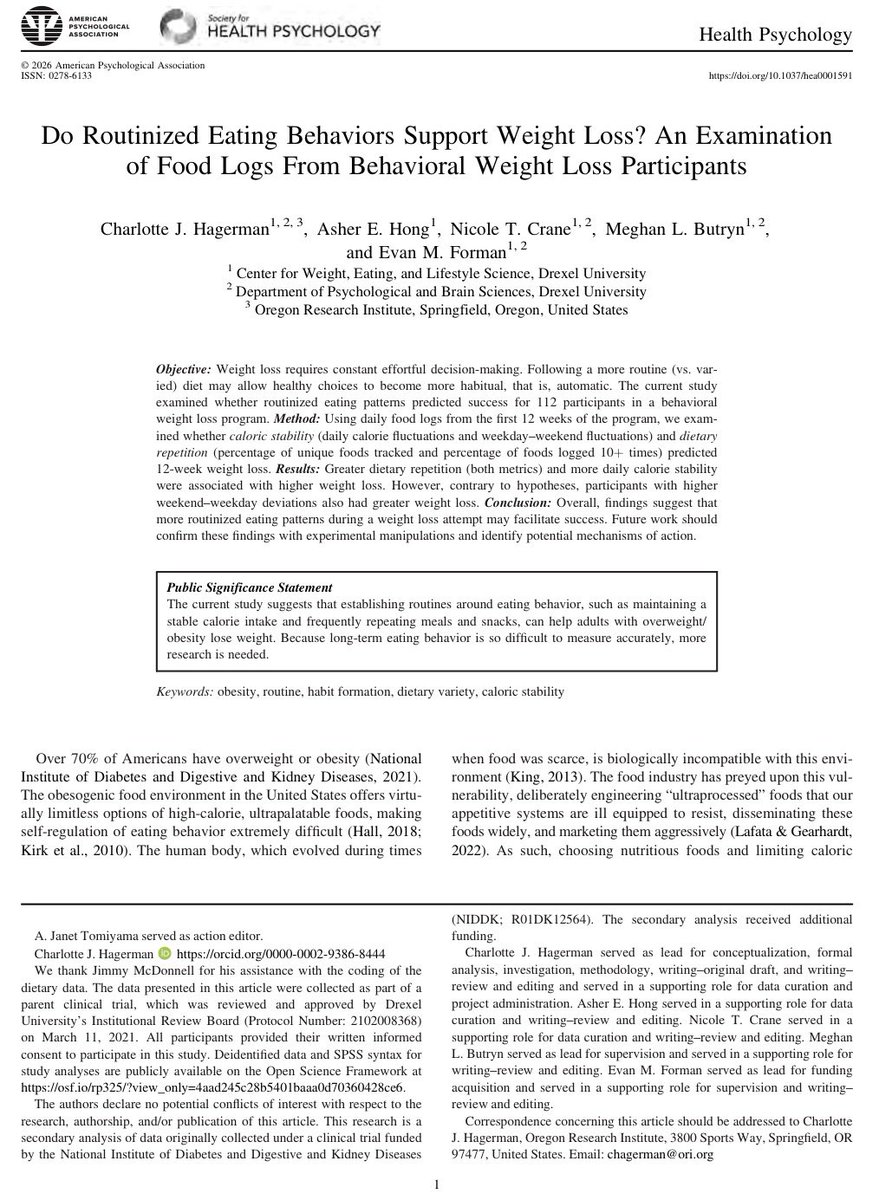
We live in an environment designed to make you eat more. Endless options, endless variety, endless decisions. This study shows the fix is simple: shrink your options. Repeat your meals. Remove the decision fatigue.
Apr 5

Eating the same meals on repeat was associated with 40% greater weight loss.
1
3
157
Joachim's Training 🇺🇸 retweeted

Apr 2
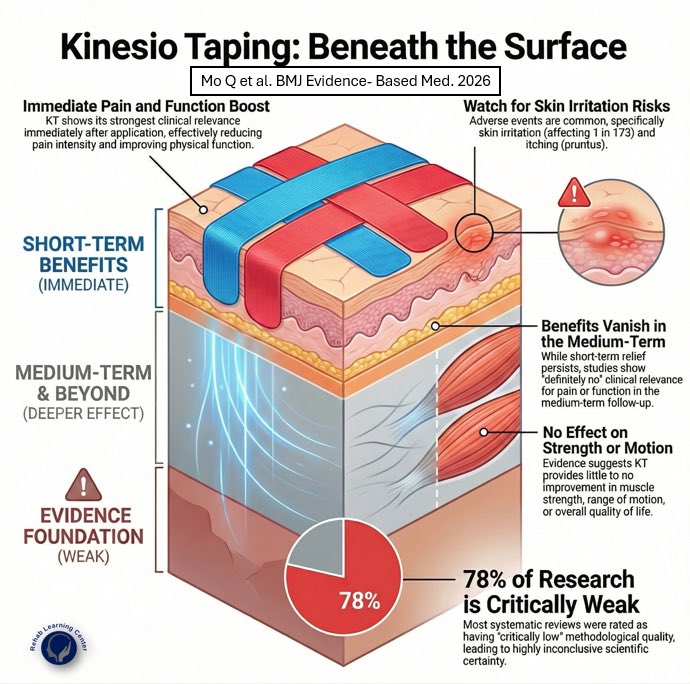
“The evidence for KT is highly inconclusive & of very low certainty. While it may serve as a useful adjunctive therapy for immediate pain relief, it lacks impact on objective kinematic outcomes like strength and ROM.”
128 systematic reviews. 78% having critically low quality
4
35
91
8,284
1
33