
Building a better DeFi for users at babel.exchange | AI Architect, Senior Data Scientist and Full-Stack dev | Bitcoin Monero
Joined June 2022
- Tweets 2,980
- Following 252
- Followers 21,494
- Likes 1,917
692 Photos and videos









Pinned Tweet

29 May 2025
Rick may make mistakes. Please verify the answers.
1
13
1,692


Jun 13
This whole drama surrounding the Mythos/Fable ban is a clear case of FAFO.
Anthropic has been abusing this fear-mongering marketing from the beginning, where every time they release a new model they "leak" these security concerns, with scary stories about the model's "Skynet-like" behavior, which any AI engineer knows is bullshit with the sole purpose of generating viral marketing.
It's poetic justice that this has finally backfired on them. I'm not saying I like or support these kinds of government bans, just that the guys at Anthropic had it coming.


384
Jun 12
"Anyone has half a brain"
The guy is even openly laughing at all the people who followed him. Incredible.
Jun 11
“I said to YOU to never sell your Bitcoin. I never said that THE COMPANY wouldn’t sell its Bitcoin.”
Jesus Christ.
48
Jun 10
140 years to finish the Sagrada Familia. This is probably the last time in History that Humanity will see the completion of such a Cathedral.

We see the tower of Jesus Christ illuminated for the first time!
The light show, starting from the base up to the illumination of the cross, culminated with a composition of lights guided by drones that traced the figure of Gaudí and the phrase “first love, then technique”.
95
Jun 10
It's happening. If this works without major side effects, the path for aging reversal is open
Jun 10

After 25 years of brave & brilliant work by hundreds of scientists in my lab to understand then safely reverse aging for the first time, it was moving to witness the first human dose being delivered 🥹 nature.com/articles/d41586-0…
42
Jun 8
First in a long time I see BTC pumping when any other thing is dumping
Jun 8

The long Korea kamikaze momentum/short everything crypto pair trade is unwinding
63
Jun 7
I am facing an epistemological crisis here.
The analytical framework of the Austrian school of economics and its associated libertarian ideas do not allow me to find a solution to the problem posed by the Singularity in society.
In the context of human relations, free exchange between consenting individuals without coercion has always been the superior framework from all perspectives—objective and subjective, quantitative and qualitative, economic and moral.
But this framework currently does not allow me to answer this question. How can free exchange exist between individuals when no individual is capable of producing any competitive good or service? What happens when market equilibrium inevitably moves in the direction of all production being owned by a handful of individuals in the world?
The premise of the free market is based on principles such as the symmetry of bargaining power and information in transactions. This symmetry disappears completely with the Singularity, and with it all the premises that underpin the theory of the free market.
What solution remains that does not involve adopting some form of socialism? What should those do for whom the principles of liberty are non-negotiable?
If living under a techno-oligarchy necessarily implies adopting a strong form of socialism in society, perhaps the answer is to do a hard-fork in history and return to living in the countryside, growing your own food, and keeping a shotgun by your bed.
Jun 7

I see your point here, but I think in this case we need to analyze this in the context of the big elephant in the room right now:
What happens to Austrian economic theory based on the free exchange of goods and services between individuals, when no individual is able to produce goods or services to exchange because all the work is done by robots and AIs owned by a few companies worldwide?
That's the question every Austrian economist should start asking themselves right now.
77
Jun 5
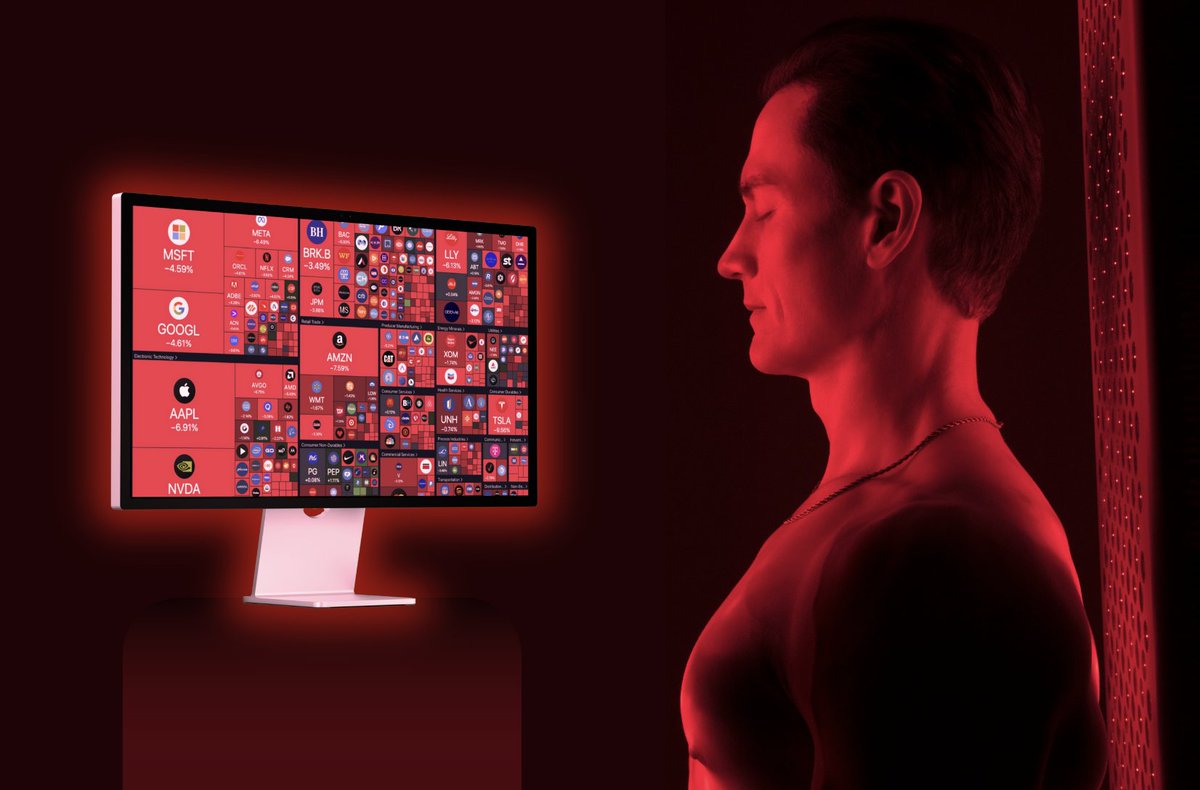
Now I can combine my two passions. Thanks, Bryan

54
Jun 5
And this is why we call it ZCrash
Jun 5
ZEC Crashes As Zcash Admits 'Critical Counterfeiting Vulnerability' Exposed By Claude zerohedge.com/crypto/zec-cra…
50
Jun 4
Privacy is coming to Ethereum tokens. And with privacy, real adoption can begin.

New EIP!
pERC20 - Privacy-Native Fungible Tokens
🔗 github.com/ethereum/EIPs/pul…
Highlights:
- Not ERC-20 compatible by design: pERC20 removes public balance/allowance concepts (no balanceOf/approve/allowance/transferFrom) and replaces transfers with a ZK note-based interface (transfer(PrivacyCall)), because public balances would defeat the privacy goal.
- Privacy-native from issuance: tokens are always represented as encrypted ZK-UTXO notes (Orchard-style actions with Groth16 proofs); there is no “public-to-private shielding” step—transfers are note→note and amounts/participants are private by default.
- Public, on-chain verifiable supply: totalSupply remains public and is updated only through controlled mint(amount, ...) and burn(amount, ...); transfers must conserve value (valueBalance == 0), enabling “no invisible inflation” while keeping balances private.
- Built-in compliance via frozen-root binding: every action commits to the contract’s cmxFrozenRoot, and the ZK circuit must prove the spent note commitment is NOT in the blacklist SMT. Admin can update the root (setFrozenRoot) to freeze/unfreeze specific notes without revealing normal users’ balances.
- Security-critical invariants and checks: implementations must prevent double-spends with nullifiers and must range-check each public field (< Fr) to avoid nf Fr-style bypasses; the core bundle execution must not be publicly callable to prevent unaccounted supply changes; signature points must be curve/field validated and replay protection must bind chainId contract note data.
ELI5:
This EIP proposes a new kind of token standard for Ethereum where people’s token amounts and who they pay are hidden by default. Instead of keeping a public “balance” per account like ERC-20, the token exists as many encrypted “notes” (like digital cash bills) that can be spent with zero-knowledge proofs. Everyone can still see the total number of tokens that exist (totalSupply) so the issuer can’t secretly create extra tokens. It also adds an optional-but-built-in “freeze list” mechanism: the token contract keeps a public fingerprint (root) of a blacklist, and the zero-knowledge proof must show you are not spending a frozen note.
64
Jun 2
So there is a bunch of random people around the worlod, some are not even experts, reproducing Google's censored paper on Shor's algorithm in less than two months, but Bitcoin core developers don't think this is a pressing matter.
Concerning.
Jun 2

Today a crazy quantum story just got wilder.
On March 31, the Google Quantum AI team published a landmark result on Shor's algorithm for elliptic curve cryptography. Technically, the paper was a bombshell: a dramatic 10x improvement over the state-of-the-art. As a stunt and wakeup call to the blockchain space, those optimisations were illustrated on secp256k1, the elliptic curve underlying Bitcoin and Ethereum signatures.
But perhaps the most striking part of the paper was sociological, not technical. Instead of following standard academic process, the optimisations were kept secret, hidden behind a zero-knowledge (ZK) proof. Google's accompanying blog post mentions they "engaged with the U.S. government". The ZK proof demonstrates the existence of algorithmic improvements without leaking details. Academic censorship with ZK, a historic first!
As a co-author of the Google paper I witnessed some of the context surrounding this censorship. To be honest, multiple aspects of that context don't sit well with me. As much as I believe the general public ought to know more, I am limited in my ability to whistleblow. Though let me be clear about one thing: the Google team's professionalism has been absolutely exemplary, and they deserve nothing but praise.
Censorship has a way of backfiring. The Streisand effect, where an attempt to bury something only draws more attention to it, is exactly what's unfolding today. First, Google's key optimisation has been rediscovered by the French. And in a thrilling turn of events, a collaborative Shor-at-home challenge just launched. The initiative, available at ecdsa[.]fail, breached a new Shor world record in a matter of hours.
Let's start with the rediscovery. Just two months after Google's paper, French quantum expert André Schrottenloher cracks the main secret optimisation. His paper, titled "Optimized Point Addition Circuits for Elliptic Curve Discrete Logarithms", landed on the arXiv today. Big congrats to André, who beat several other nerdsnipped experts to it. In a blog post also published today, Craig Gidney, the world expert on Shor optimisations, revealed that he'd been sitting on this very optimisation for a whole year under censorship pressure.
Interestingly, André missed a handful of minor optimisations, both from Google's original publication and from improvements found since. It's plausible there's still plenty of juice left to squeeze out of Shor, and this is exactly what the ecdsa[.]fail challenge is about. The verifier program developed for the ZK proof does double duty, automatically filtering for valid submissions. Dozens of compounding small and micro improvements are rolling in. As of the time of writing there's an 8.4% improvement to Google's circuit, as measured by the product of logical qubit count and Toffoli gate count. Nice!
The nerdsnipping ran deeper than anyone expected. Over the last few weeks it became clear it extended well beyond André and other quantum experts. Behind the scenes, a small army of amateurs quietly got to work. Inspired by Karpathy-style autoresearch, they turned AI on Shor. Ironically, the verifier program for the ZK proof makes an ideal reward function for AIs. The barrier to entry for this modern style of research is refreshingly low, with several non-experts, even a teenager, finding nice optimisations. Get in touch if you'd like to join a Telegram group with fellow autoresearchers :)
Part 2: neutral atoms and qday
The story doesn't end with Google. On the same day Google went public, a stealthy startup called Oratomic published its own Shor paper in a coordinated release. It made a splash, ultimately becoming the most upvoted paper on scirate[.]com, a website ranking arXiv papers.
Oratomic's claim was wild. By building on Google's logical optimisations and applying custom physical optimisations for neutral atoms, they claimed just 10K physical qubits were sufficient to run Shor's algorithm on secp256k1. That number is mind-bogglingly low.
Knowing essentially nothing about neutral atoms when Oratomic's paper landed, I was intrigued and decided to learn more about the tech. I fell straight down the rabbit hole and spent a couple hundred hours on the topic. I got a little obsessed and watched every YouTube video I could find and spoke to a bunch of experts.
My conclusion? The tech is real, very real. Even Google recently decided to start a neutral atom lab, a notable pivot from their sole focus on superconducting qubits. If you care about qday, i.e. the day a quantum computer will break the first piece of cryptography in production, neutral atoms demand your attention. I shared some of my learnings on Shor and neutral atoms in a 30min talk at the ZKProof cryptography conference. You can find it on YouTube by searching "zkproof neutral atom".
Here's an interesting observation about this duo of breakthrough papers: neither Google nor Oratomic say a word about what their results mean for qday. No timelines. Zero. Nada. That is especially baffling given that the whole point of whitehat quantum cryptanalysis is to inform qday estimations and help the general public make good decisions.
So let me attempt to partially fill the silence, similarly to what Scott Aaronson did in his April 29 post. Given everything I know, including scary non-public information, I now put the odds of qday by 2032 at 50%. 10% by 2030.
Anecdotally, the US government has its own date: 2035. Originating at the NSA and later adopted by NIST, it's when branches of the US government will be disallowed from using quantum-vulnerable cryptography. In plain language: with hindsight, that date is a joke and should be discounted entirely. I don't see how NIST avoids being forced to pull it forward by years.
Part 3: post-quantum cryptography
There are good reasons to sound the alarm today, but please do not panic. Rushing carelessly towards immature post-quantum cryptography is a recipe for disaster. IMO a good target date for migration is 2029, roughly 3.5 years out. 2029 happens to be the date selected by Google, Cloudflare, and the Ethereum Foundation.
These days most of my time goes to safely migrating Ethereum towards post-quantum cryptography as part of the broader lean Ethereum effort. There's a lot to do. We need to rip out and replace BLS signatures at the consensus layer, KZG commitments at the data layer, and ECDSA signatures at the execution layer.
The plan to get there is compelling, and is based on hash-based cryptography. Within the Ethereum Foundation we've developed a Swiss army knife called leanVM (github[.]com/leanEthereum/leanVM) powered by the magic of hash-based SNARKs. Thanks to truly exceptional work by Emile, Thomas, and others, its performance is derisked. Regarding security, leanVM is a jewel, a minimal zkVM crafted for end-to-end formal verification and maximum security.
Want to help? There are two $1M initiatives. First, the Proximity Prize (proximityprize[.]org). Solve a long-standing mathematical conjecture in coding theory, improve hash-based SNARKs, and go home a millionaire. Second, the Poseidon Initiative (poseidon-initiative[.]info), offers $1M for breaking Poseidon, the SNARK-friendly hash function.
80
Jun 2
Zcrash privacy stopped working and they had to hardfork the blockchain during the weekend to solve it.
"The future of money" they said LOL

No details yet, but a major issue has led to the Zcash network doing a rapid fork, and includes miners (temporarily) refusing to mine Orchard transactions.
This means that Zcash in Cake won’t work ATM due to the broader network issues, and unfortunately there isn’t anything we can do about that as it’s a network-wide issue.
Will update when that changes.
137
Jun 1
Thinking that if BTC dumped every time Saylor announced a buy in the bull market, maybe now every time he announces a sell in the bear market it pumps
That or we're cursed and just dump every time no matter what
Jun 1
The man that used to say "Never sell your Bitcoin" is holding $1B in cash and has started selling Bitcoin while many people are saying the bottom is in.
Ask yourself why.
43
Jun 1
The man that used to say "Never sell your Bitcoin" is holding $1B in cash and has started selling Bitcoin while many people are saying the bottom is in.
Ask yourself why.
Jun 1

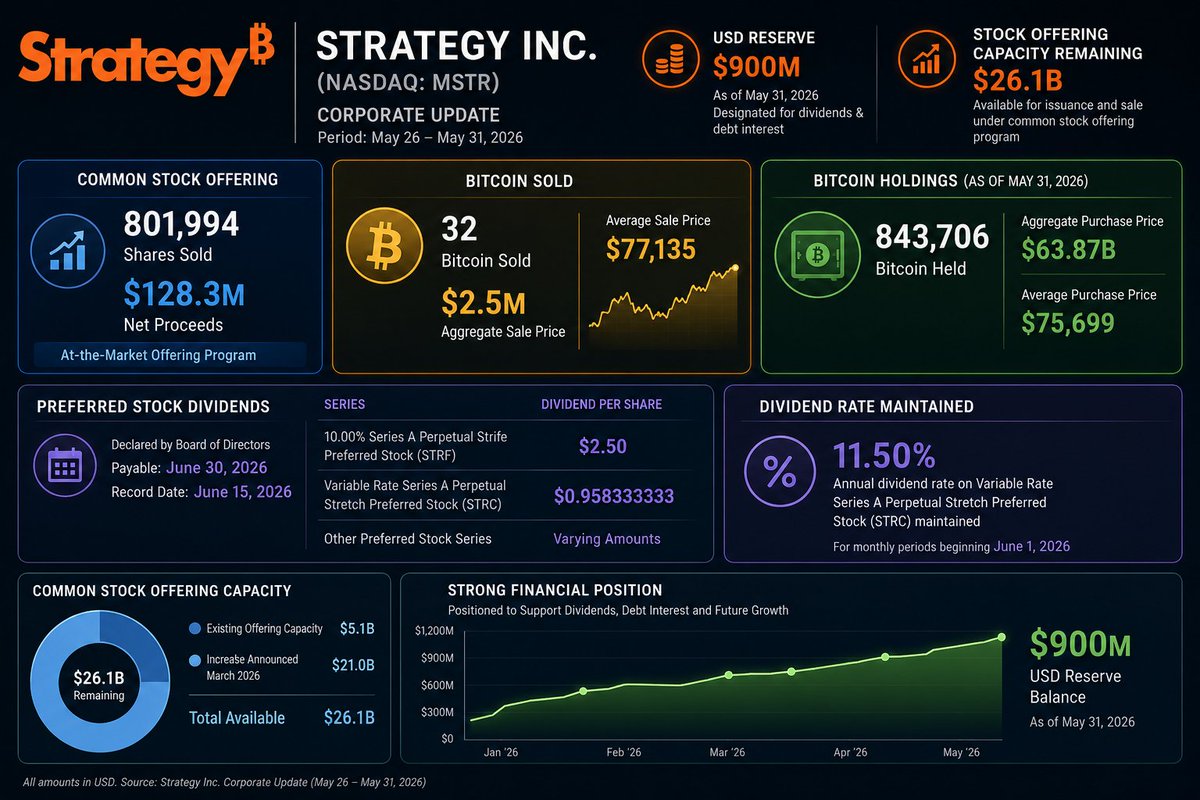
$MSTR - STRATEGY INC SELLS BITCOIN, RAISES $128M
Strategy Inc sold 32 bitcoin last week for $2.5M and raised $128.3M via share issuance.
The company holds 843,706 bitcoin with a $75,699 average purchase price.
It also confirmed preferred dividend payments and maintains an $900M USD reserve, with $26.1B capacity remaining under its stock program.
95
May 25
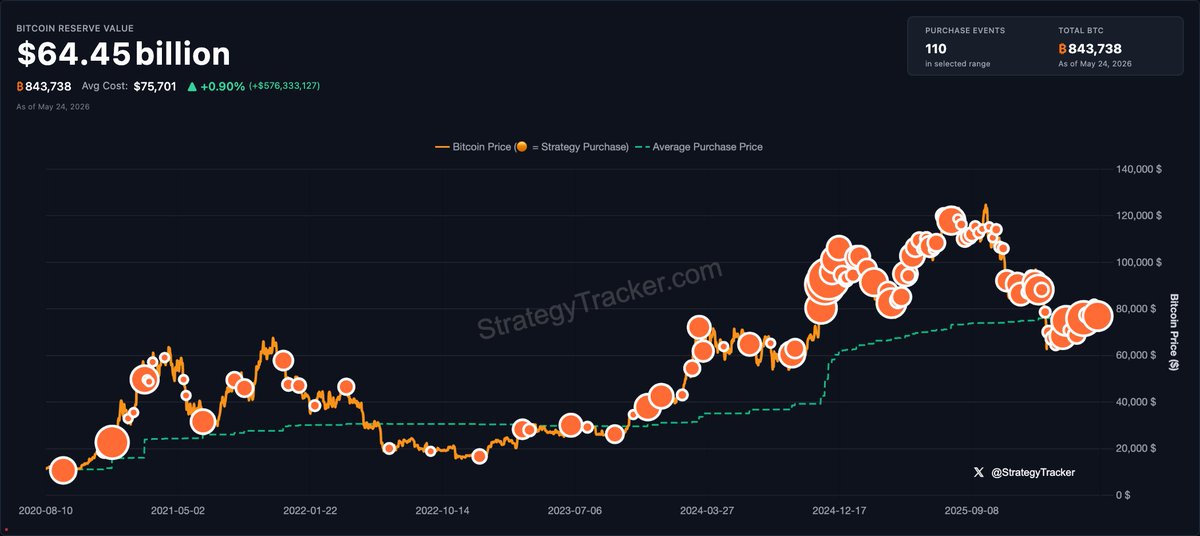
Saylor buying bonds instead of BTC during a bear market while many people is saying the bottom is in, is a major red flag.
Bearish.

1
95
May 24
The amount of power released here is insane
May 24

This is probably the best look at the shockwaves I’ve seen from the latest Starship flight.
Captured from a GoPro I clamped onto a proper camera to record simultaneous video. (I’ll show you the photo the better camera took in the reply)
87
May 19
So they prefer releasing the X-files to an audit of Fort Knox.
Interesting.
May 19

🚨WOAH! RESEARCHERS SAY DOZENS OF CRASHED UFOS HAVE BEEN RECOVERED — WITH FOUR DIFFERENT ALIEN SPECIES ON BOARD 🛸👽
TWO ARMS, TWO LEGS… LONG TAILS LIKE A LIZARD! 7 FEET TALL! 👾
SOURCES ARE TOO SCARED TO TALK… SAYING AN INTERVIEW COULD “FORFEIT THEIR LIFE” 😳💀
57