
President @PolicyAdvantage | Insurance and ACA expert. Brand Dev & 4IR Tech. 3x @TheAmerCol alum— Liverpool.ac.uk MBA w/ Distinction. Montana grown.
Joined December 2008
- Tweets 17,683
- Following 87,939
- Followers 89,402
- Likes 323,271
308 Photos and videos




Pinned Tweet

9
113
621
🇺🇸🇺🇸 Here we go — celebrating the #USMNT's opening match from here in Los Angeles tonight.
📌 @SoFiStadium - Los Angeles
⏰ 6:00 pm PST
📺 @FOXSports - @Tubi - @YouTubeTV
#FIFAWorldCup #WeAre26

It's World Cup week here in California.
A once in a generation event. 48 nations. One champion. A city ready to welcome the world. PolicyAdvantage.com is proud to welcome the World Cup with Los Angeles in 2026.
#WeAre26 #FIFAWorldCup #LosAngeles

7
81
740
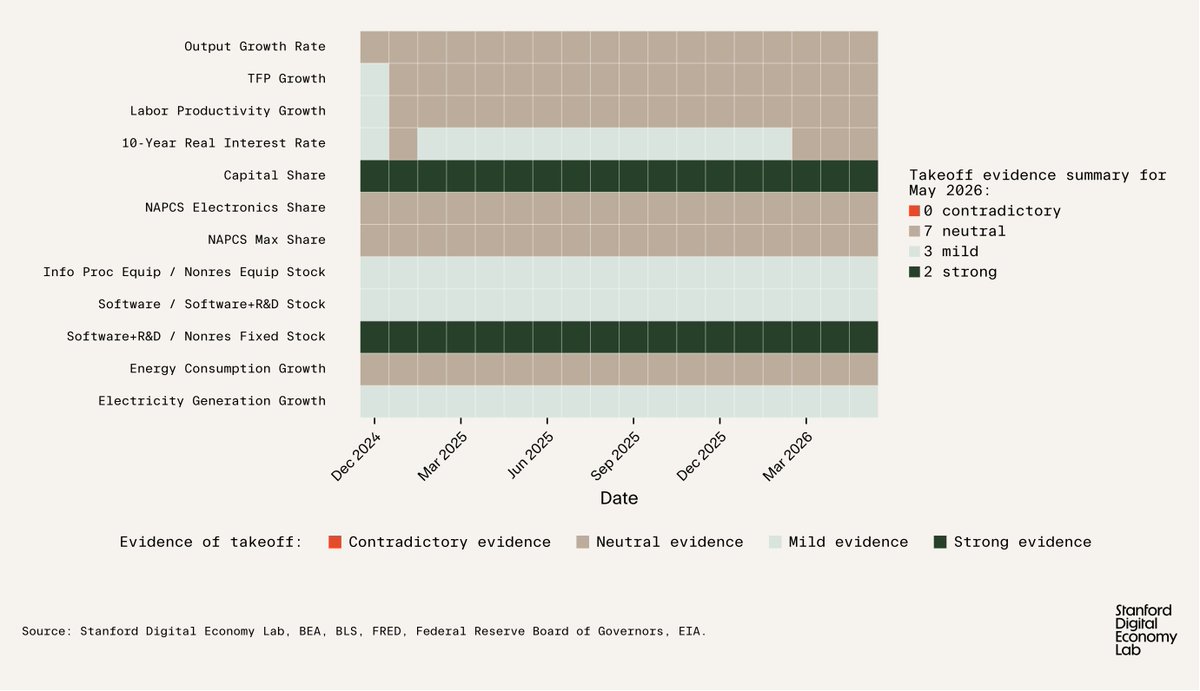
👀👏 Stanford Digital Economy Lab's "AI-Economy Takeoff Tracker." My 4 key insights from it below, and full @DigEconLab tracker here: takeofftracker.stanford.edu.
1⃣🚨 No Economic Takeoff Yet Despite the AI Hype: Stanford researchers track 12 hard economic indicators (productivity, capital share, energy use) for signs of AI-driven explosive growth. Their verdict as of June 2026: no decisive evidence of takeoff. The macro data hasn't caught up to the narrative.
2⃣📈 Capital Is Low-Key Winning: The capital share of income (how much of economic output goes to machines/owners vs. workers) is showing strong evidence of an upward break from historical trends. This is one of the clearest early signals that AI may be shifting the labor-vs-capital balance in a big way.
3⃣💻 Software and R&D Are Eating the Economy: Software and R&D as a share of private nonresidential fixed assets is also rated strong evidence, continuing its historical upward trend with no signs of slowing. Information capital is compounding faster than the broader economy.
4⃣⚡ Energy Is Starting to Tick Up But Not Dramatically: Electricity generation growth is showing mild evidence of a break from historical averages, consistent with AI infrastructure expansion. If a true economic singularity is coming, energy consumption will be one of the earliest and most undeniable signals to watch.
#AIEconomics #EconomicSingularity

The Takeoff Tracker looks for signs of explosive growth and AI-based economic takeoff, evaluating indicators by strength of evidence.
takeofftracker.stanford.edu
1
12
140
884
Tyson Lester, MBA, ChHC®, REBC®, RHU® retweeted

It's World Cup week here in California.
A once in a generation event. 48 nations. One champion. A city ready to welcome the world. PolicyAdvantage.com is proud to welcome the World Cup with Los Angeles in 2026.
#WeAre26 #FIFAWorldCup #LosAngeles
9
113
1,490
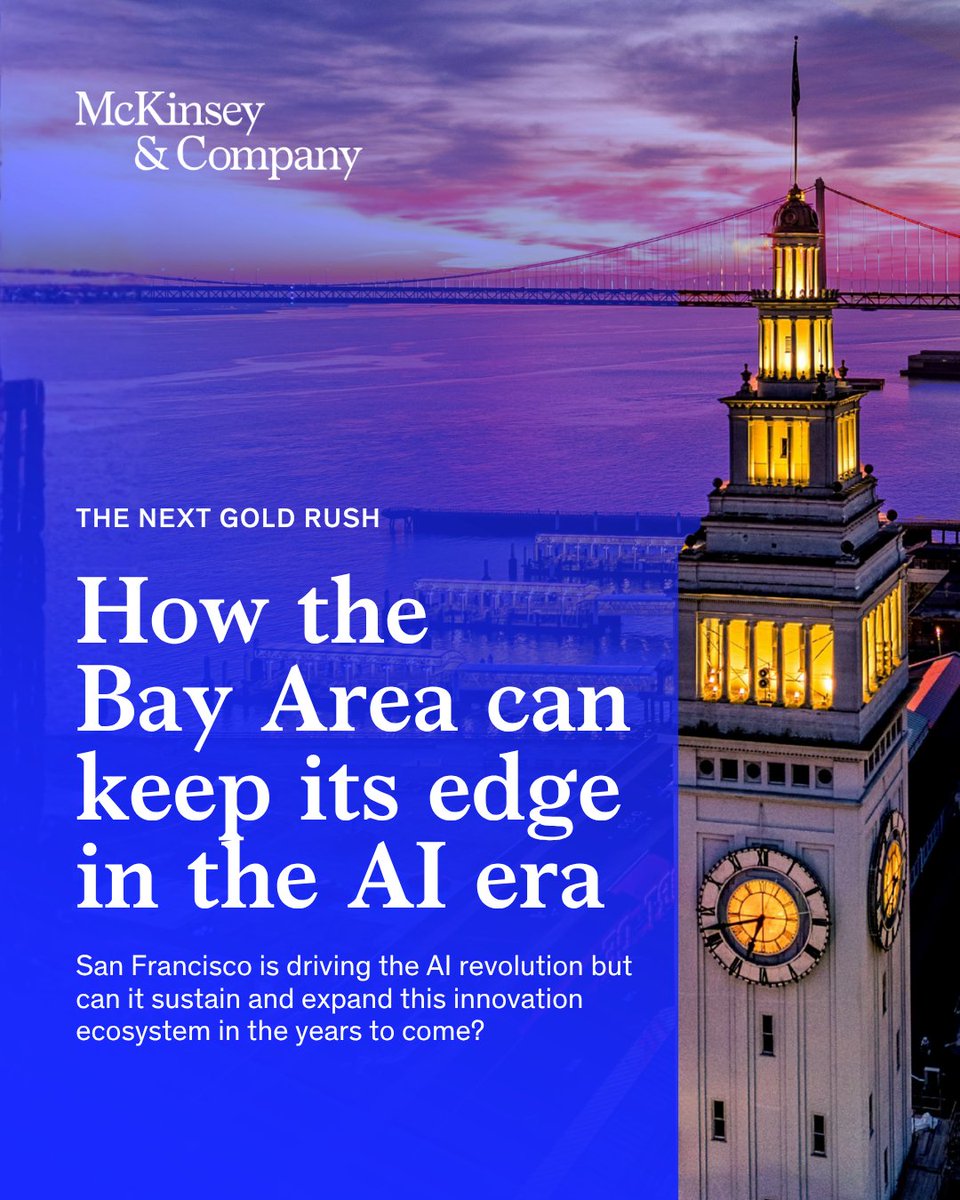
San Francisco is the undisputed capital of the AI revolution— what will it actually take to keep the Bay Area on top? 4 key insights below; full @McKinsey article: mck.co/4a4iitO.
1⃣🦄 The Bay Area Has More Unicorns Than Anywhere on Earth: The region is home to 321 unicorn companies, more than any other startup ecosystem in the world, and has continuously reinvented itself across successive waves of tech change including semiconductors, software, the internet, and now AI.
2⃣💼 SF Captured 30% of All Global VC Funding in 2025: San Francisco based companies received 30% of global venture capital funding in 2025, and 85% of the entire Bay Area's total VC haul. One city. 30% of the world's startup money.
3⃣🌍 The Bay Area Is Basically Its Own Country: With ~$1.2 trillion in annual GDP output, if the Bay Area were a nation it would rank as the 18th largest economy in the world, ahead of most G20 members.
4⃣🧲 Staying on Top Means Staying a Global Magnet for Talent: McKinsey warns that sustaining the Bay Area's edge will require continued investment in talent pipelines, research partnerships, and workforce development, alongside deliberate efforts to reinforce San Francisco's position as a global magnet for top talent.
#ArtificialIntelligence #VentureCapital
Jun 3

The Bay Area is home to 300 unicorns and generates roughly $1.2T in annual GDP.
With San Francisco home to 25 of the world’s top 50 AI companies, the region’s challenge now is turning this moment of AI leadership into lasting advantage. mck.co/4a4iitO
2
20
191
1,199
Pretty-much anyone with an AI prompt can now generate a convincing accident— where does that leave honest policyholders? 4 key insights below, full @SASsoftwareNews article: scene2.sas.com/6017B8YpR5.
1⃣🚨 Insurance Fraud Is A $308 Billion Problem: Insurance fraud costs US consumers an estimated $308.6 billion a year, and about 1 in 10 property-casualty insurance losses includes fraud, and AI is making it dramatically worse.
2⃣😰 Almost No One Is Prepared For AI Fraud: Only 7% of anti-fraud professionals say their organization is more than moderately prepared to detect or prevent AI-powered fraud. Among insurance industry respondents, none expressed more than moderate confidence.
3⃣🤖 Anyone Can Fake A Crash Scene In Seconds: With just a few prompts, anyone can use generative AI to fabricate convincing crash scenes in seconds. Small manipulations often go completely unnoticed by the human eye and can be extremely difficult for investigators to uncover once embedded in a claim.
4⃣⚔️ AI Is Both The Threat And The Solution: SAS built a fraud-screening pipeline combining computer vision, OCR, and LLM reasoning that can detect synthetically generated or manipulated images before they influence claims decisions, and it can extend beyond insurance to banking and government too.
#GenerativeAI #Deepfakes
Jun 2

Submitting photos digitally can speed up the claims process.
But what if those photos are AI? Could you tell?
AI tools have made creating #syntheticmages easy for almost anyone. But AI also offers the potential to spot fakes most humans would miss.
2.sas.com/6017B8YpR5
14
156
1,432
Tyson Lester, MBA, ChHC®, REBC®, RHU® retweeted
Join us at our new LinkedIn page for latest updates around insurance, consulting, and risk management.
#Brand #SocialMedia linkedin.com/company/policya…
5
72
695
Infographic via @Eli_Krumova highlights growing gaps between casual AI users and "power users." Which of these concepts changes how you think about this distinction? 4 key takeaways:
1⃣🧠 Modern AI Is Built Around Memory and Context: Features like Memory, Conversation History, and Context Window work together to make AI feel continuous and personalized rather than stateless and forgetful.
2⃣🛠️ ChatGPT Has Evolved Into a Full Platform, Not Just a Chatbot: Tools like Custom GPTs, Connectors/Apps, the GPT Store, and Agents show that ChatGPT now functions as an extensible ecosystem where users can build, deploy, and integrate AI into broader workflows.
3⃣⚠️ Understanding AI Limitations Is Just as Important as the Features: Hallucination gets its own dedicated tile, signaling that critical thinking and fact-checking are essential skills for any serious AI user, not optional afterthoughts.
4⃣🔬 The Backend Architecture Terms Are Where the Real Power Lives: Concepts like RAG, Fine Tuning, System Prompts, and Inference reveal how outputs are shaped long before a user ever types a message, giving those who understand them a significant advantage over casual users.
#AILiteracy #PromptEngineering
May 28

📌 25 ChatGPT Terms [Infographic] 🤖
CC @Khulood_Almani @enilev @Mack1510019 @JBarbosaPR3 @Ronald_vanLoon @KirkDBorne @EvanKirstel @HaroldSinnott @mvollmer1 @CurieuxExplorer @Nicochan33 @Fabriziobustama @bimedotcom @ipfconline1 @AndrewinContact @RagusoSergio @FrRonconi @sonu_monika @CyrilCoste @SpirosMargaris @RLDI_Lamy @baski_LA @TamaraMcCleary @Sharleneisenia @EstelaMandela @c4trends @Shi4Tech @JimHarris @GlenGilmore @sallyeaves @sulefati7 @kashthefuturist @MargaretSiegien @enricomolinari @pierrepinna @pascal_bornet @globaliqx @devbhatt72 @anand_narang @TanyaSinha_ @XavierAncelin @AstridLavalette @PawlowskiMario @jeancayeux @AlbertoEMachado @AnthonyRochand @andresvilarino @pchamard
Via @shushant_l
#Infographic #Education #STEM #Science #digital #AI #ArtificialIntelligence #GenerativeAI #GenAI #ChatGPT #OpenAI #MachineLearning #LLMs #AgenticAI #AIAgents #IoT #IIoT #DataScience #Analytics #BigData #Python #Coding #Web3 #Cloud #Cybersecurity #5G #AR #VR #Robotics #Robots #FutureOfWork #DigitalTransformation #Industry40 #RPA #Automation #Engineering #Innovation #Tech #Technology #TechTrends #EmergingTech #FutureTech #CX #WomenWhoCode #WomenInTech #TechInfluencer #TechCommunity
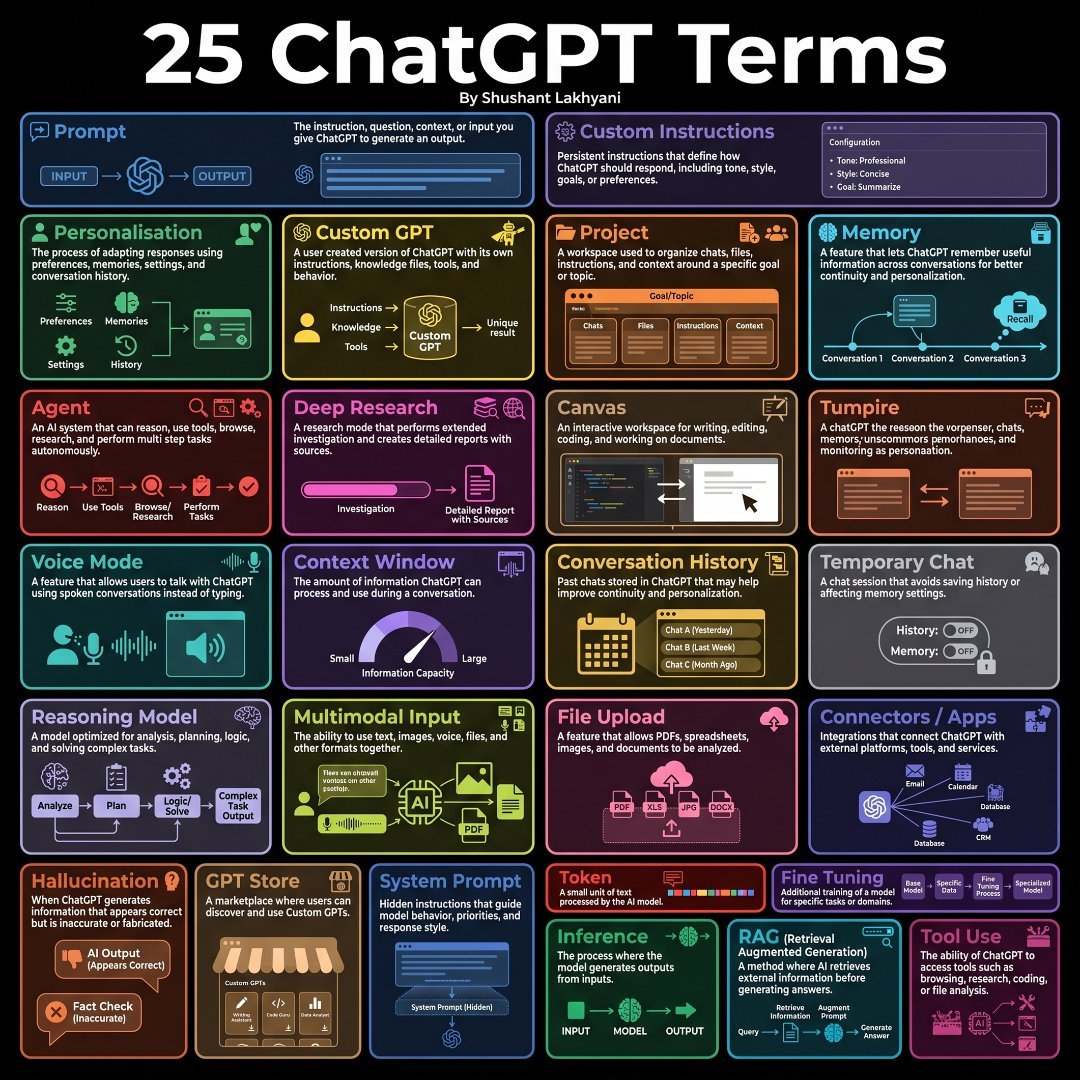
ALT 20 ChatGPT Terms
16
173
1,097
Tyson Lester, MBA, ChHC®, REBC®, RHU® retweeted

May 28
Insightful points, @TysonLester! @McKinsey's analysis powerfully highlights AI’s rapid rise as consumers’ primary discovery engine and compels B2B leaders to integrate ethical AI with hyper-personalized strategies that navigate shifting behaviors and build lasting trust.
#AI #EmergingTech #FutureOfBusiness #ConsumerTrends

AI's impact on consumer behavior and segmentation— how have you seen these trends affect your business or organization? 4 key insights below, full @McKinsey article: mck.co/4nPt90n.
1⃣🕸️ Online and Alone Is the New Normal: Consumers gained 3 extra hours of free time weekly and spend nearly all of it online and solo. 80% shopped online last month. Food delivery is up 20% annually since the pandemic. Meet consumers where they are or get left behind.
2⃣😤 Social Media Is Trusted Least, Marketers Spend on It Most: Consumers globally rank influencers dead last on credibility. They know most are paid and suspect many aren't even real. Traditional media and in-store experience now win on trust. Marketers haven't caught up yet.
3⃣⚡ Brands Are Sleeping on Gen Z: Average age 22, fast-growing spending power, and unlike any prior generation. Wellness means protein, not "organic." They splurge on apparel and beauty but crave financial security too. Miss the nuance, miss the sale.
4⃣😬 Consumers Feel Good but Spend Scared: Traditional confidence metrics no longer predict spending. People say they feel fine, then pull back on discretionary purchases. Tariff fears now rank second only to inflation in consumer worries. Brands using sentiment as a demand signal are flying blind.
#ConsumerTrends #MarketingStrategy
1
11
112
1,064
NomadCoverage.com ⭕️🌍 | Six key high-value insights about the growing globally distributed workforce, and how current conditions continue to proliferate:
1⃣🌍 The Nomad Economy Is Now a Macroeconomic Force at 40 Million Strong:: Over 40 million people now identify as digital nomads, up nearly 60% since 2020. Nomads spend $1,950–$3,500/month locally, making them significant economic contributors wherever they land. This is no longer a lifestyle niche. It's a parallel labor market with its own infrastructure and geopolitical weight.
2⃣⚖️ Independents Are Outpacing Employee-Nomads: U.S. employee-nomads dropped 5% in 2024 due to RTO mandates, while independent contractors and freelancers grew 20%. Globally, contractor hires are up 50% YoY. The nomad workforce is increasingly self-directed and outside the reach of corporate policy. The freelance layer is winning.
3⃣🛂 Nations Are Now Competing for Mobile Talent: Over 70 countries now offer specialized digital nomad visas, up from a handful just years ago. Governments have shifted their view, and remote workers are economic assets, not tax complications. Fortune 500s are following with formal "mobility packages." Global talent competition has gone sovereign.
4⃣🏠 "Slowmading" Is Replacing Constant Movement: Nomads are staying longer in fewer places to avoid immigration and tax complexity. 72% prioritize cost of living when choosing destinations, fueling the rise of Eastern Europe, Southeast Asia, and Latin America as long-stay hubs. The nomad is becoming a semi-permanent economic actor, not a passing tourist.
5⃣🏛️ Enterprises Are Building the Infrastructure for a Borderless Workforce: Over 75% of mid-to-large enterprises now use cloud-based payroll systems to manage globally distributed teams. AI has moved from emerging feature to compliance baseline, with 73% of payroll professionals expecting it to significantly reshape their operations within the year. The enterprise stack for managing global talent is maturing fast, and companies investing in it now are turning mobility into a competitive advantage.
6⃣🌐 The Global South Is the Next Nomad Frontier: As Europe gets expensive and regulated, Africa and Latin America are rising fast. Kenya and South Africa are launching nomad visa programs. Brazil and Colombia are already proven hubs. Lower costs, younger talent pools, and governments actively courting mobile workers. The early-mover window is open now.
#FutureOfWork #HRCommunity

The globally mobile workforce is no longer just a trend. It is a strategic asset:
• Turning flexibility into resilience.
• Uncertainty into antifragility.
• Global reach into lasting competitive advantage.
Join us at NomadCoverage.com. | ⭕️🌍#FutureOfWork #HR




19
204
1,179
NEW. "The Garden Grove Tank Failure and the Hidden Architecture of Risk." policyadvantage.com/the-gard…
Uncovering the massively interconnected insurance architecture of a "super-risk" event:
🏭 The Incident That Turned Into a Regional Risk Event
⚠️ The Real Risk Was Bigger Than Just One Tank
🛡️ The Insurance Concepts Hidden Inside the Crisis
🚒 What This Means for First Responders and Municipal Systems
🌎 The Bigger Strategic Conversation: Industrial Risk in Dense Urban Areas
📊 The C-Suite Insurance Lesson
#RiskManagement #WesternIncident
1
19
219
1,209
AI's impact on consumer behavior and segmentation— how have you seen these trends affect your business or organization? 4 key insights below, full @McKinsey article: mck.co/4nPt90n.
1⃣🕸️ Online and Alone Is the New Normal: Consumers gained 3 extra hours of free time weekly and spend nearly all of it online and solo. 80% shopped online last month. Food delivery is up 20% annually since the pandemic. Meet consumers where they are or get left behind.
2⃣😤 Social Media Is Trusted Least, Marketers Spend on It Most: Consumers globally rank influencers dead last on credibility. They know most are paid and suspect many aren't even real. Traditional media and in-store experience now win on trust. Marketers haven't caught up yet.
3⃣⚡ Brands Are Sleeping on Gen Z: Average age 22, fast-growing spending power, and unlike any prior generation. Wellness means protein, not "organic." They splurge on apparel and beauty but crave financial security too. Miss the nuance, miss the sale.
4⃣😬 Consumers Feel Good but Spend Scared: Traditional confidence metrics no longer predict spending. People say they feel fine, then pull back on discretionary purchases. Tariff fears now rank second only to inflation in consumer worries. Brands using sentiment as a demand signal are flying blind.
#ConsumerTrends #MarketingStrategy
May 24
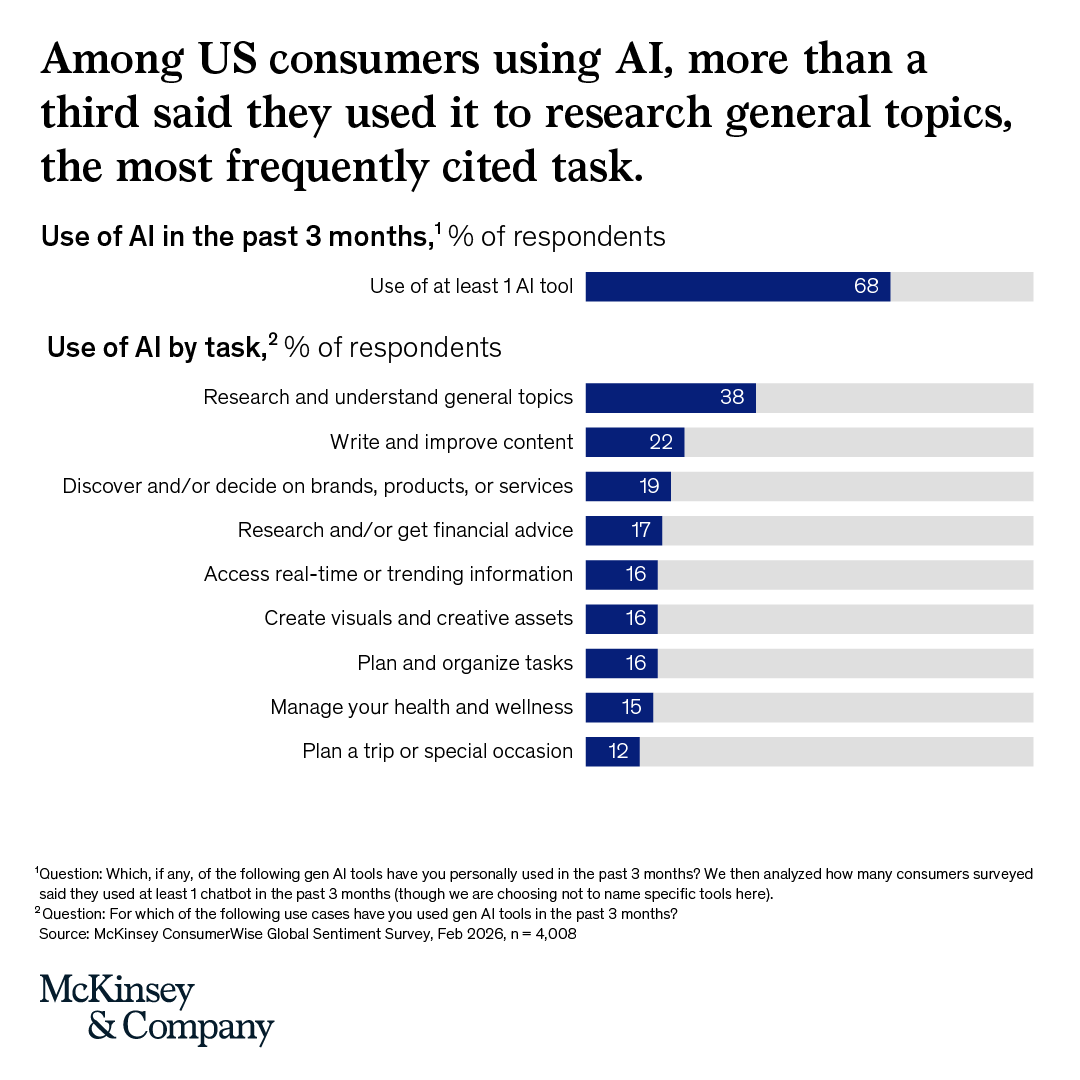
Our research shows that 68% of US consumers say they use AI tools, most often to research topics, write content, or explore brands and products.
As AI becomes a new discovery channel, it could also reshape how people shop. mck.co/4nPt90n
1
19
225
2,529
Here's the map of the #GardenGrove evacuation area in case you have friends, family, or colleagues affected by the chemical tank failure.
#LosAngeles #OrangeCounty #GKNAerospace
Garden Grove vapor release evacuation - google.com/maps/d/viewer?mid…
4
13
166
3,697