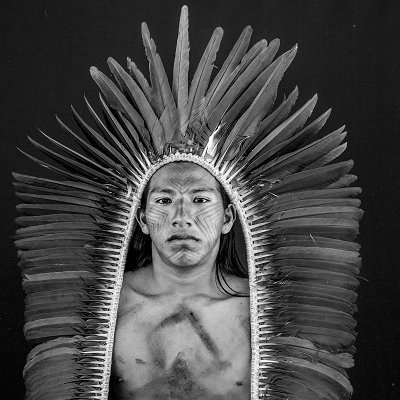
129 Photos and videos
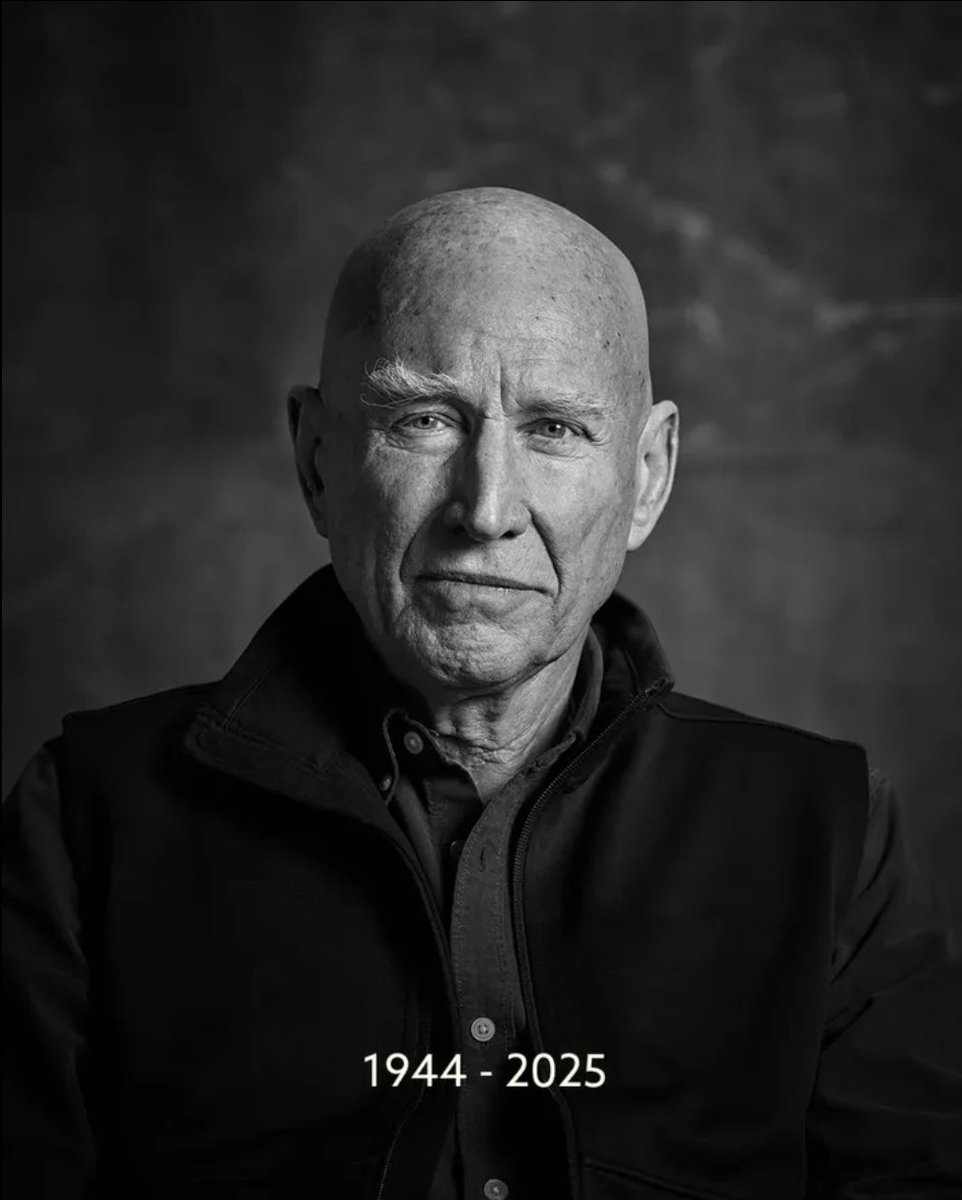
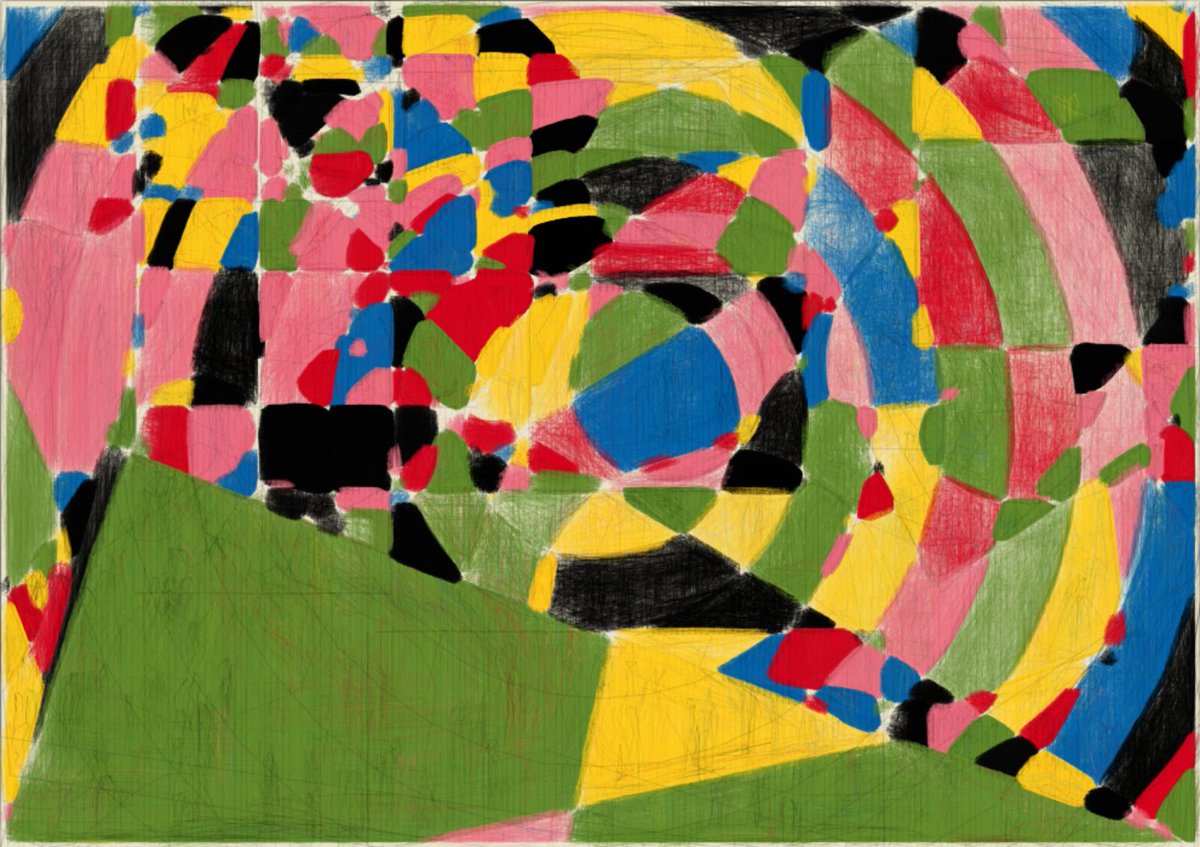
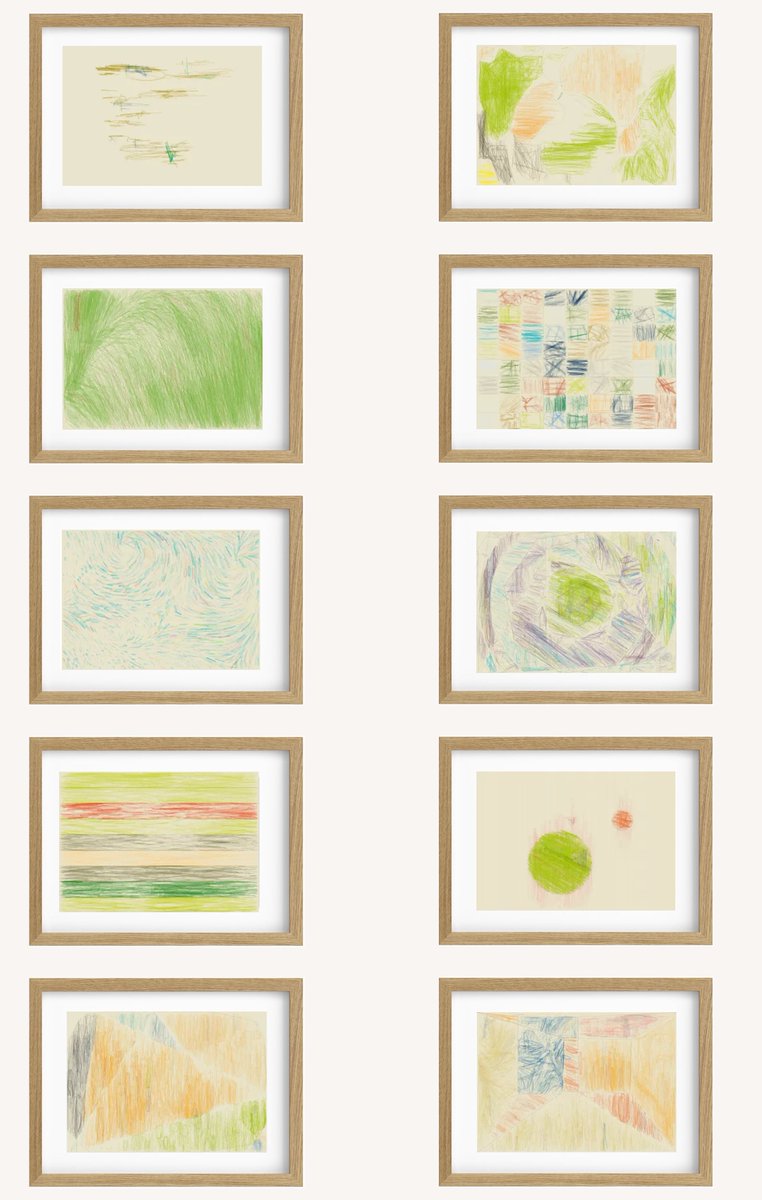
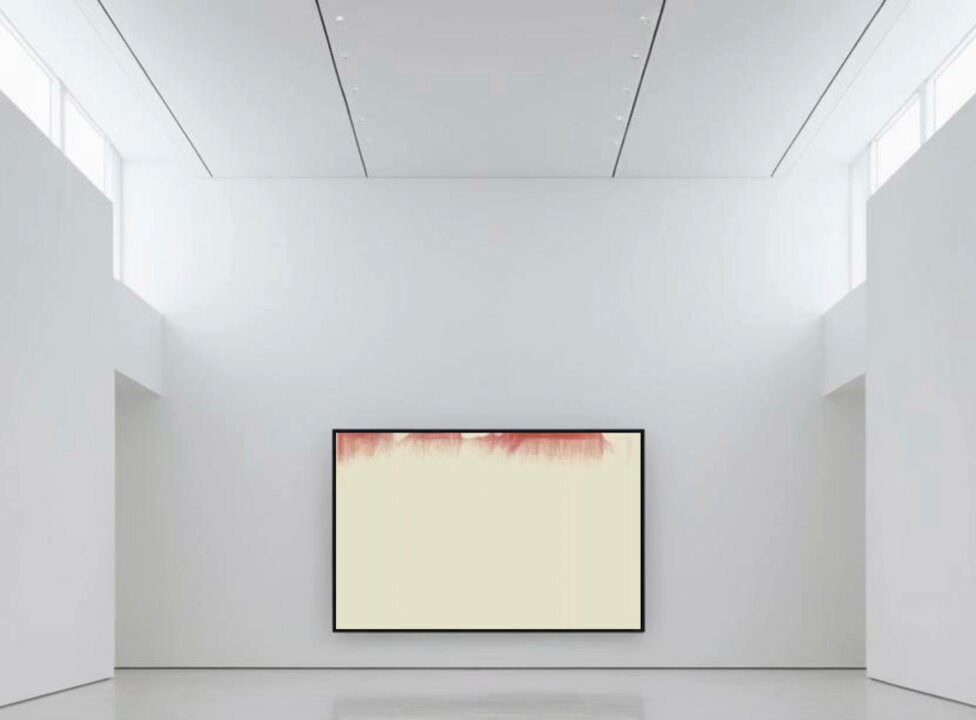
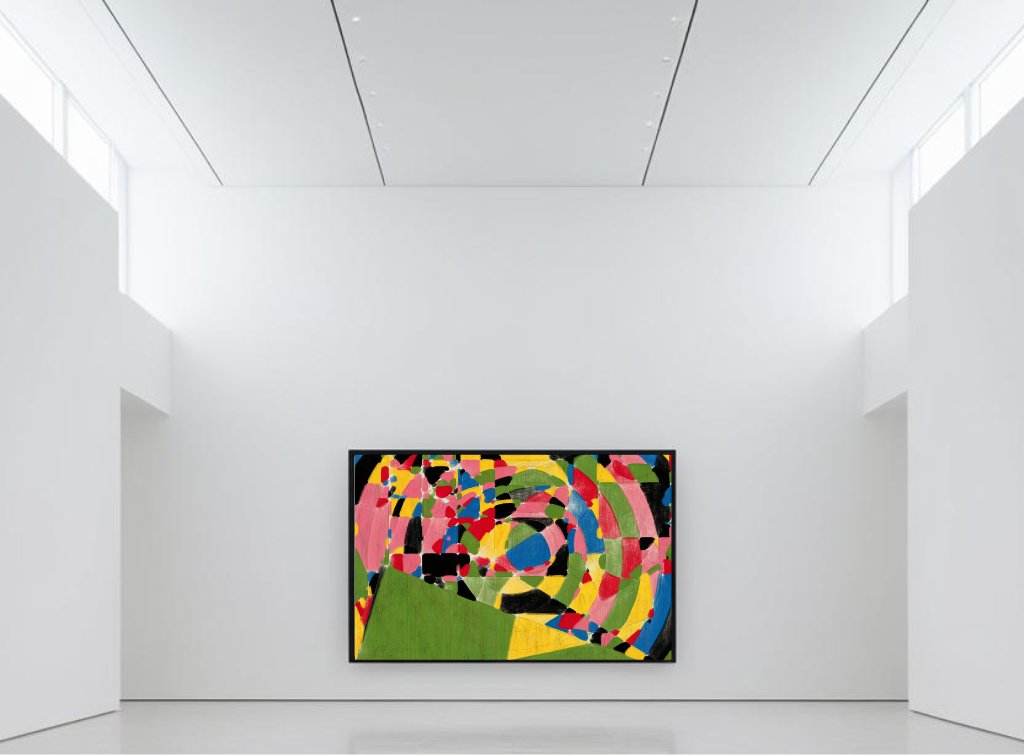
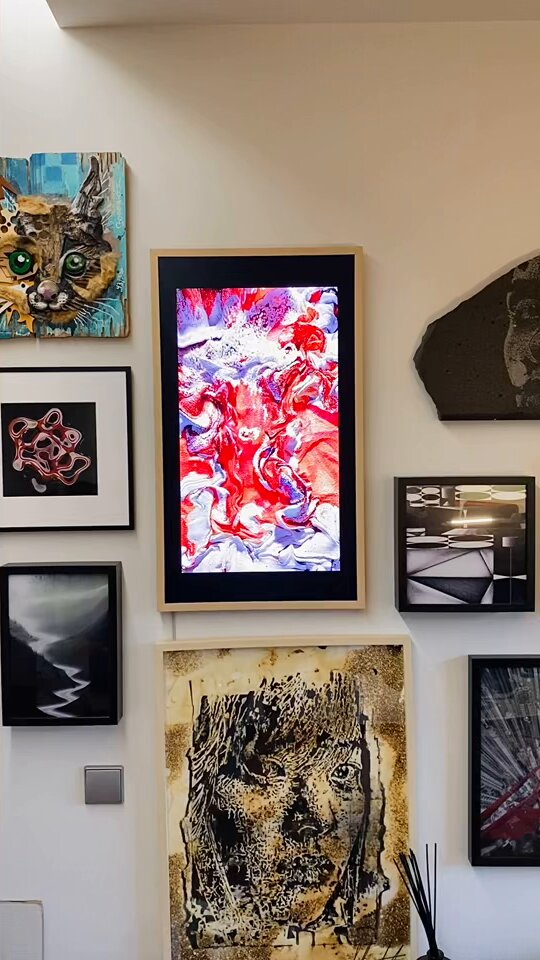
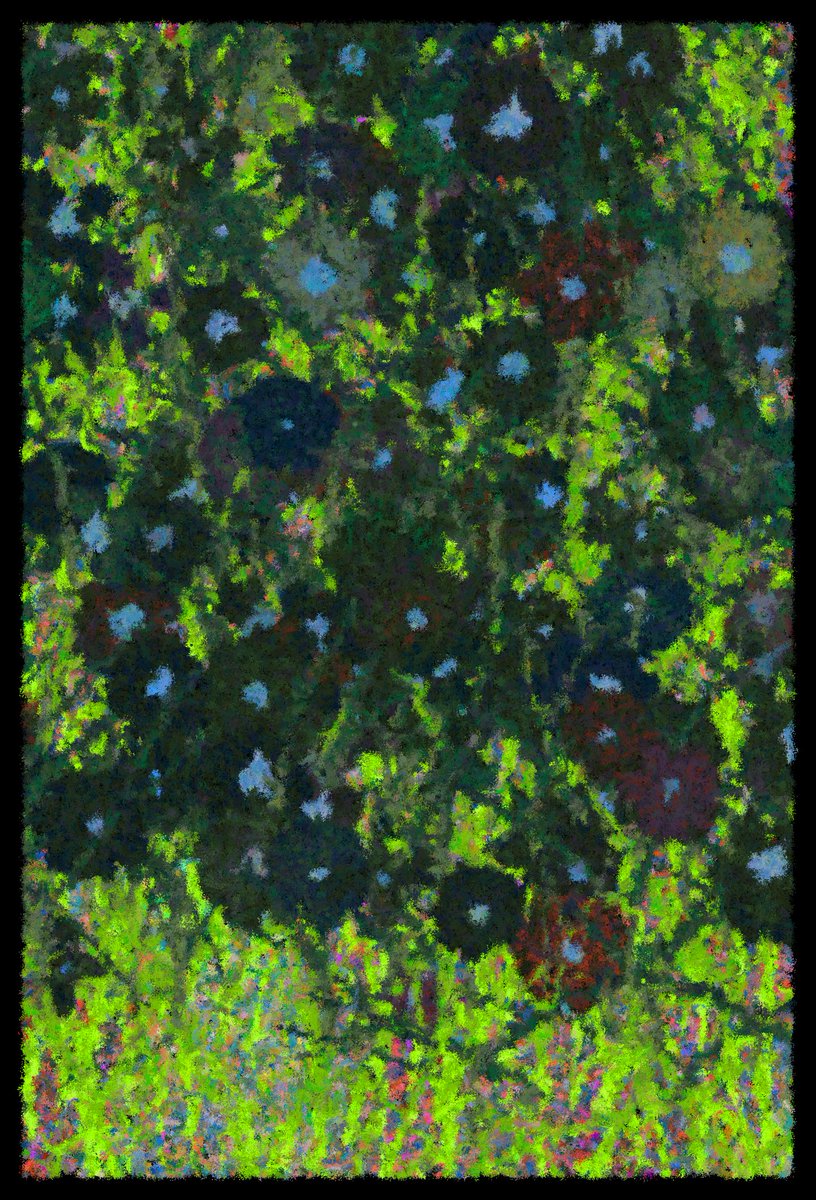

Proud to have commissioned this beautiful work together with other 7 friends & collectors 🌊

🌊 A tribute to the legendary Portuguese poet Sophia de Mello Breyner Andresen now stands on the cliffs of Madeira, where the sea and the rocks carry her voice. Having grown up reading her works, I am a great admirer of the work of this incredible author, who has inspired me and
1
5
1,663
VFunk retweeted

Apr 8
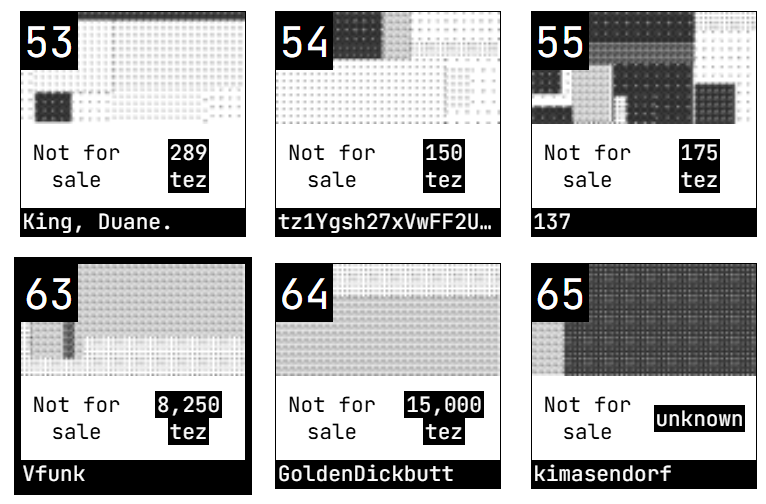
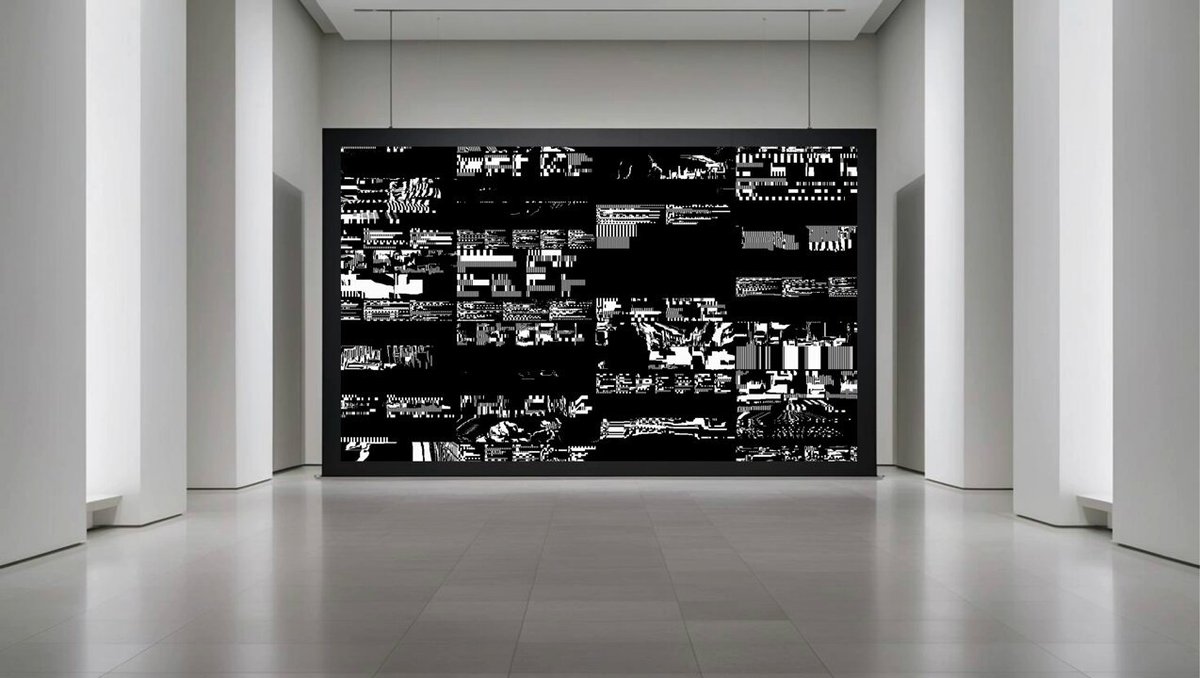
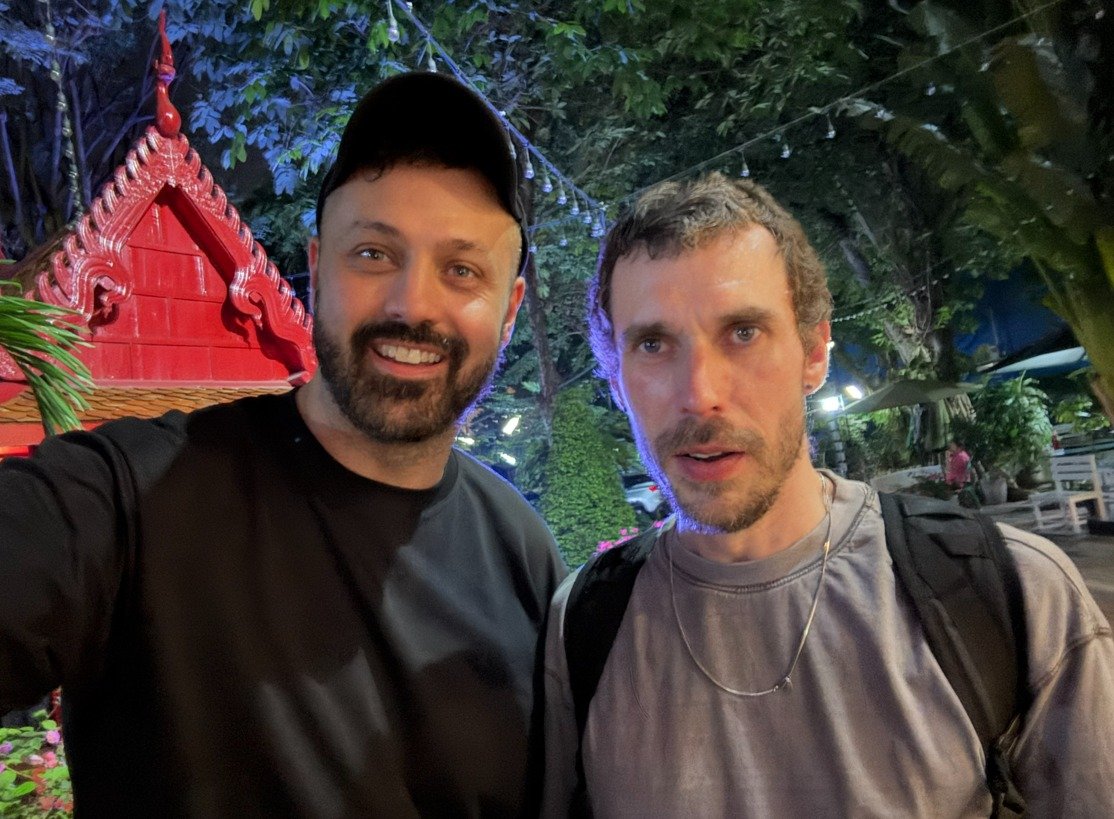
In 2010, @KimAsendorf dropped a pixel-sorting algorithm on GitHub. Free. Artists ran with it. A visual language emerged.
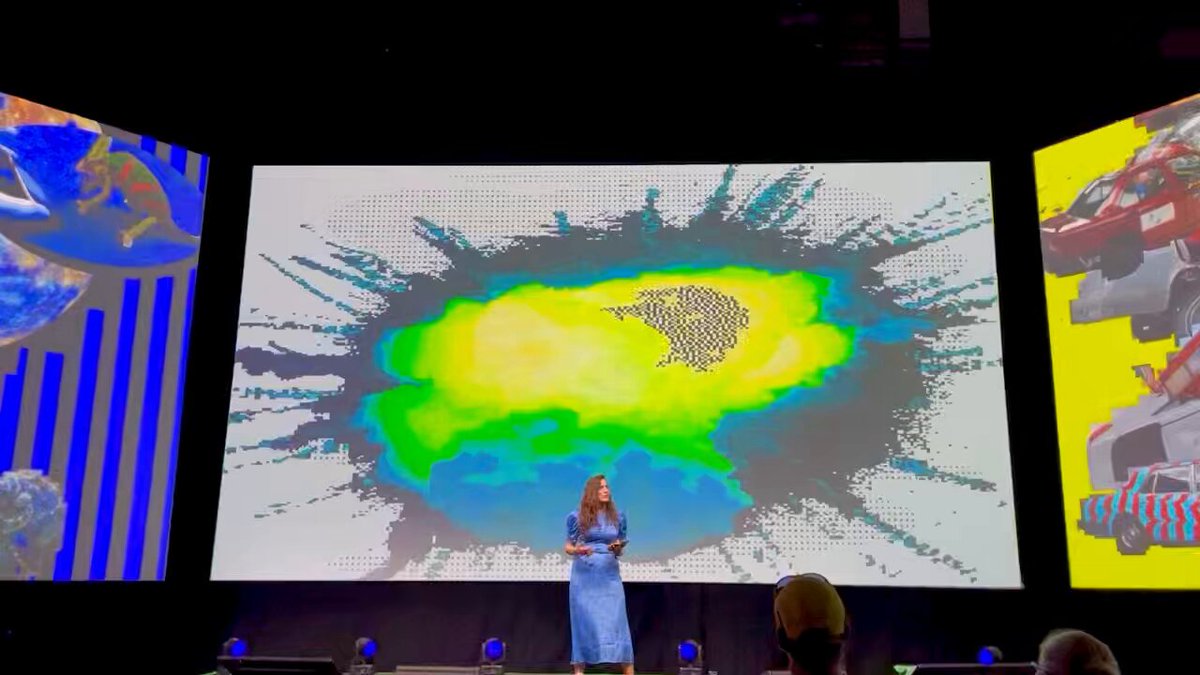
15 years later, Complex at Goethe Institut Bangkok reframes it: a pixel isn’t just an image, it’s a person, a city, billions of lives slipping out of control
9
24
227
12,668

VFunk retweeted

Jan 26
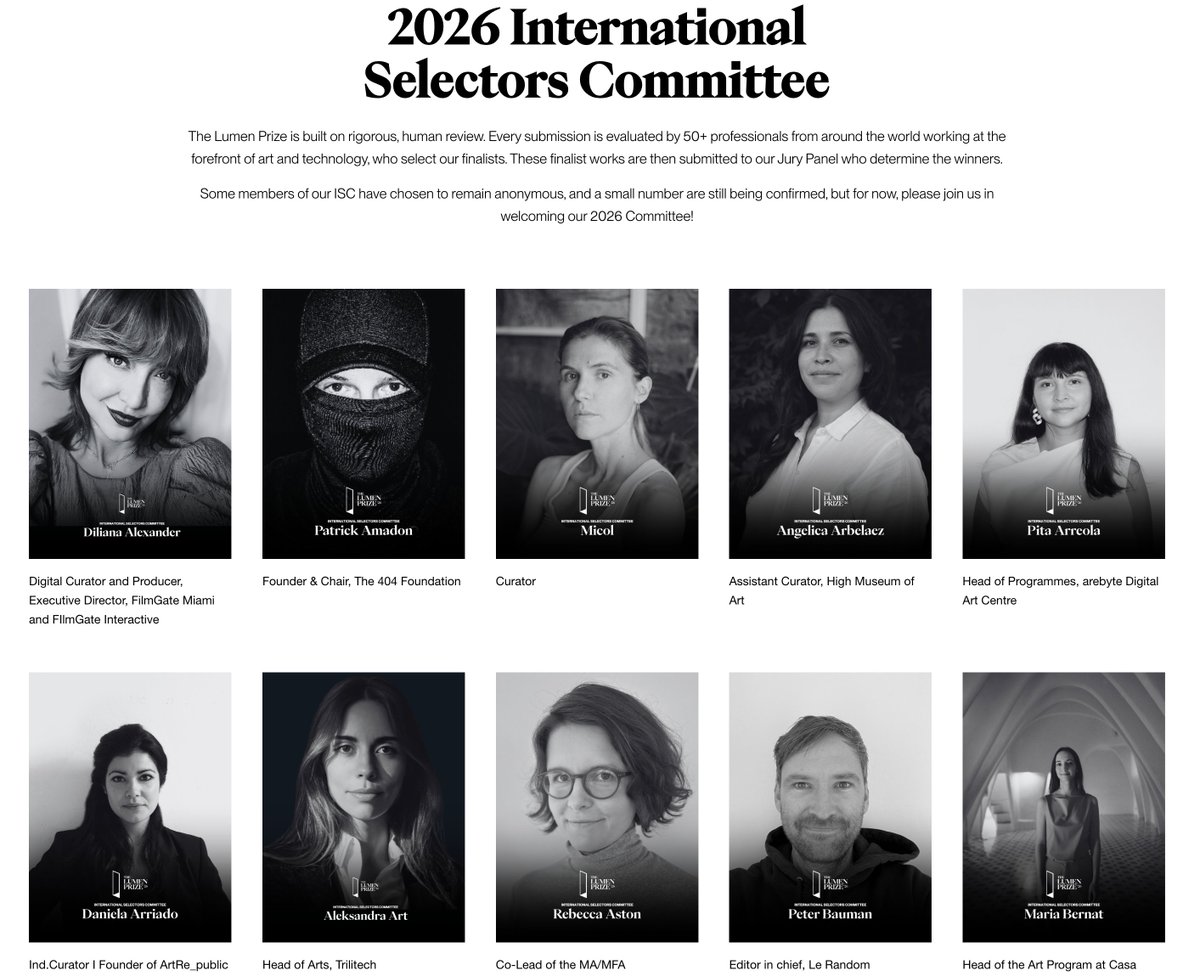
The 2026 Lumen Prize is now officially open for submissions.
After a record-breaking year with 2,200 entries from 71 countries in 2025, we're looking forward to discovering the artists who will shape this year's cohort of finalists and winners.
Key Dates:
📅 Open Call: Jan 27 - May 23, 2026
🔗 lumenprize.org/about-the-pri…
15
39
237
18,367

VFunk retweeted

Jan 23
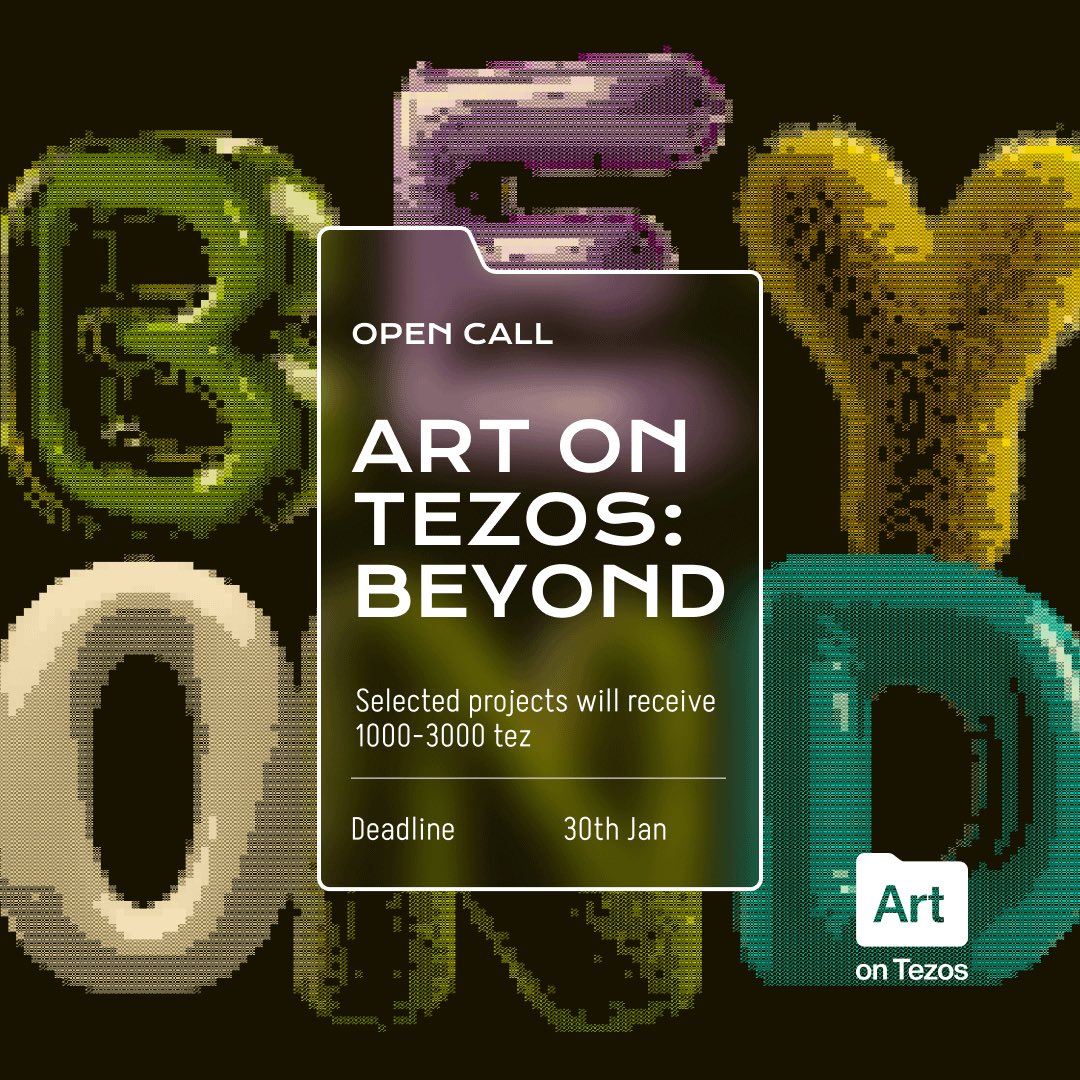
✦ Open-Call ✦
For new ideas and projects across the art on Tezos ecosystem.
If you’re working on or ideating something special - this could be your chance...
Read the article ↓

16
64
239
15,862
VFunk retweeted

9 Dec 2025
Raster und Spektrum
Owned by @HivemindCap
🫠 txtx
Presented by @nguyenwahed
😘 txtx
Shown at @ArtBasel
🤪 txtx
10
24
236
11,557

Watching the endless variations of @kimasendorf’s ‘Raster und Spektrum’, presented by @nguyenwahed.
17
51
220
13,249
VFunk retweeted

18 Nov 2025
The Monocle Daily: @DavidBrennan100 and @FrostReporter explore Trump’s plan for Gaza, students are saying no to America and Zelensky’s diplomatic offensive. Plus @vhils1 on his ‘Forever is Now’ exhibition in Cairo monocle.com/radio/shows/the-…
1
3
8
1,172
VFunk retweeted

6 Nov 2025
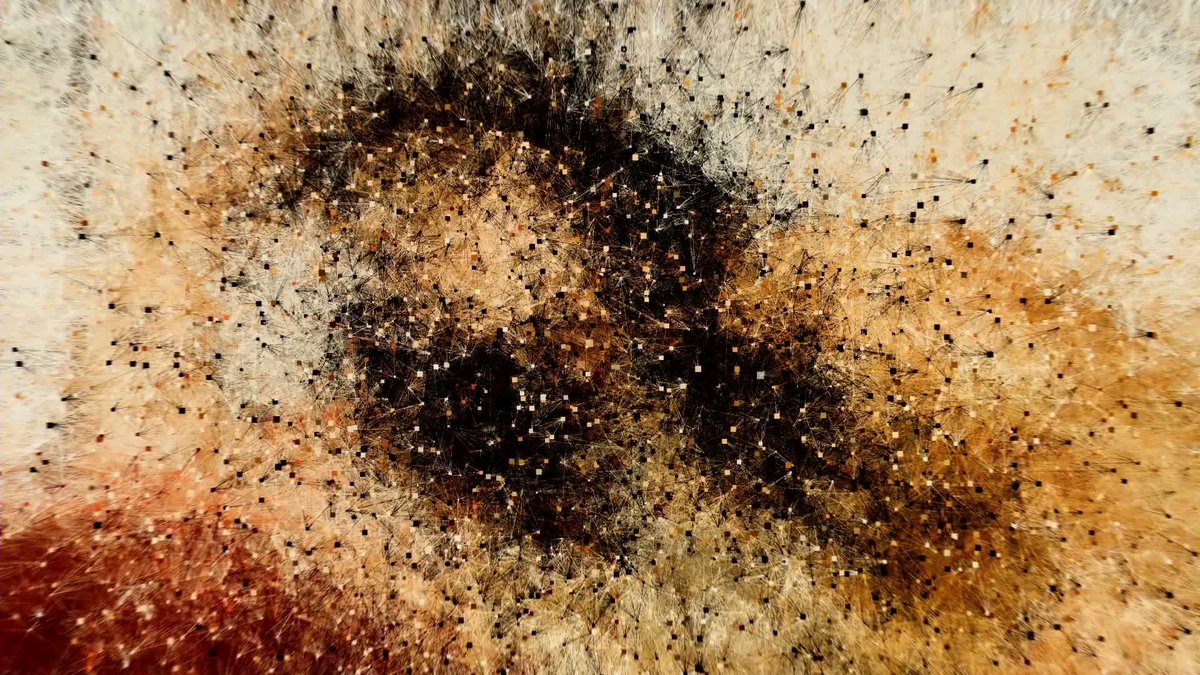
Excited to announce the launch of 'Zero 10' a new global, multi-year initiative for art of the digital era at Art Basel.
We're kicking this off at Art Basel Miami Beach Dec 3-7. 10,000 sq ft of exhibition space on the main show floor.
Not upstairs, not offsite. This will be central to the Miami Beach fair experience and its 100,000 attendees and 10,000 onsite collectors.
New work from:
@AOTMgallery: Dmitri Cherniak
@artblocks_io: Larva Labs
@AspreyStudio: Yatreda, Andrea Chiampo
@beeple: Beeple
@bitforms: Maya Man, Casey Reas, Manfred Mohr
@fellowshiptrust: Ix Shells
@heft_gallery: Mpkoz
@nguyenwahed: Joe Pease, Kim Asendorf, XCOPY
@onkaos__: Mario Klingemann
@PaceGallery: James Turrell
@solos_gallery: Tyler Hobbs
@visualizevalue: Jack Butcher
400
217
1,303
282,398
VFunk retweeted

24 Oct 2025
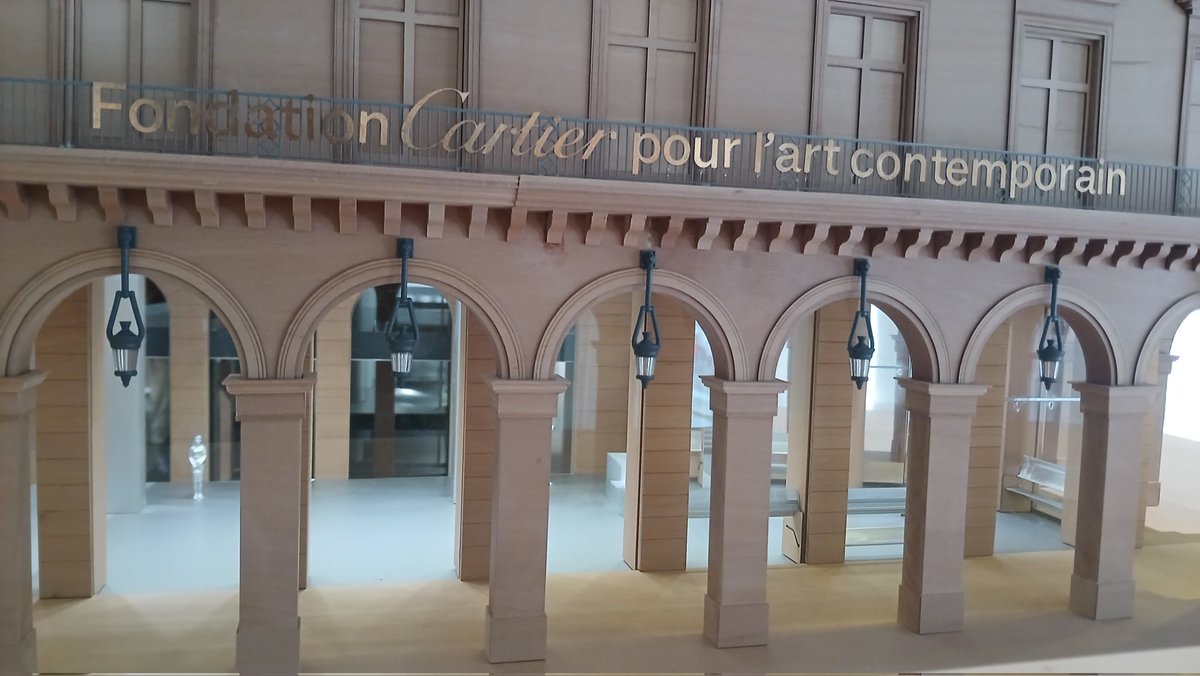
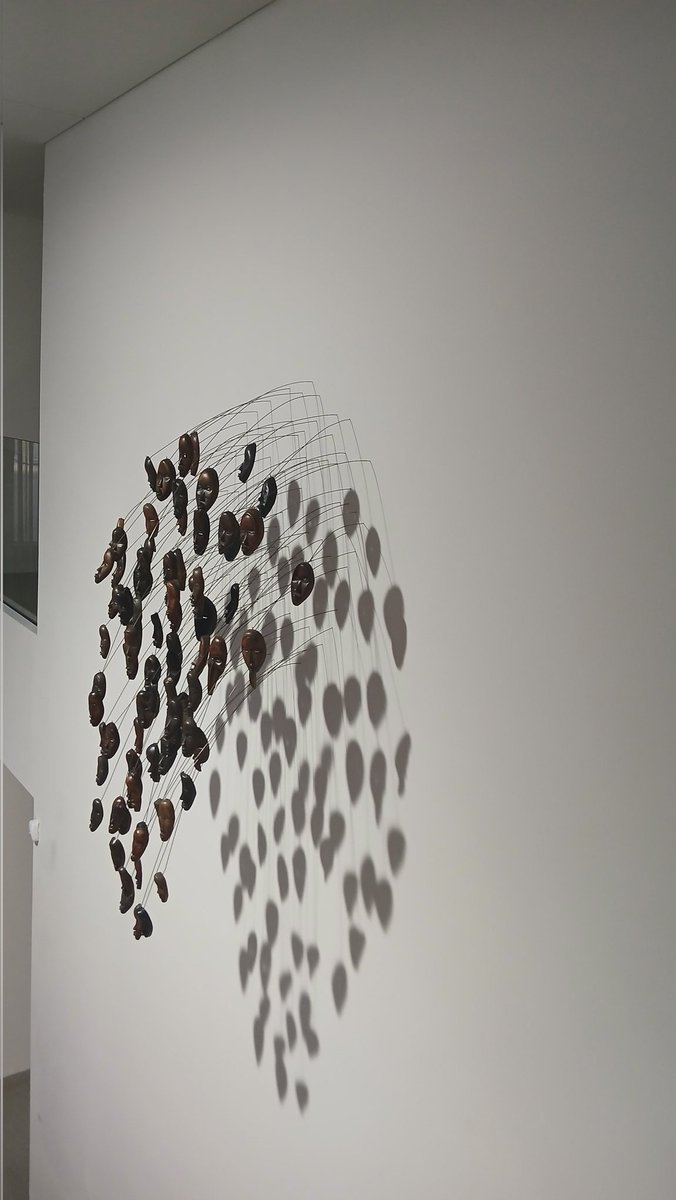
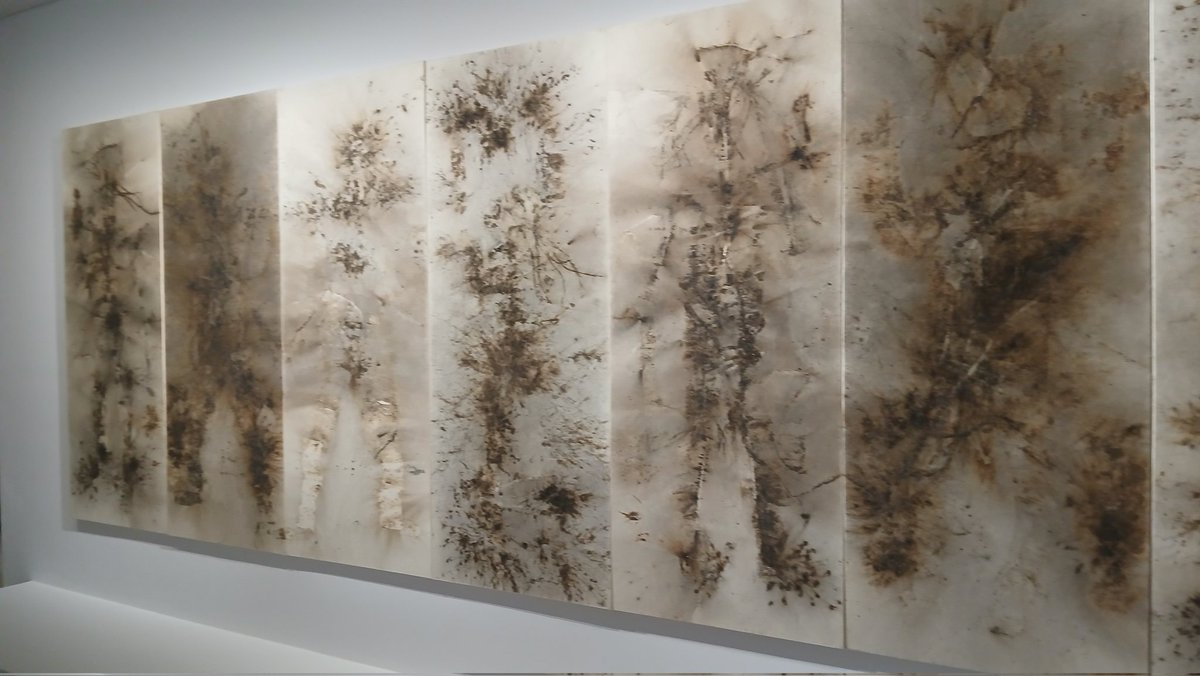
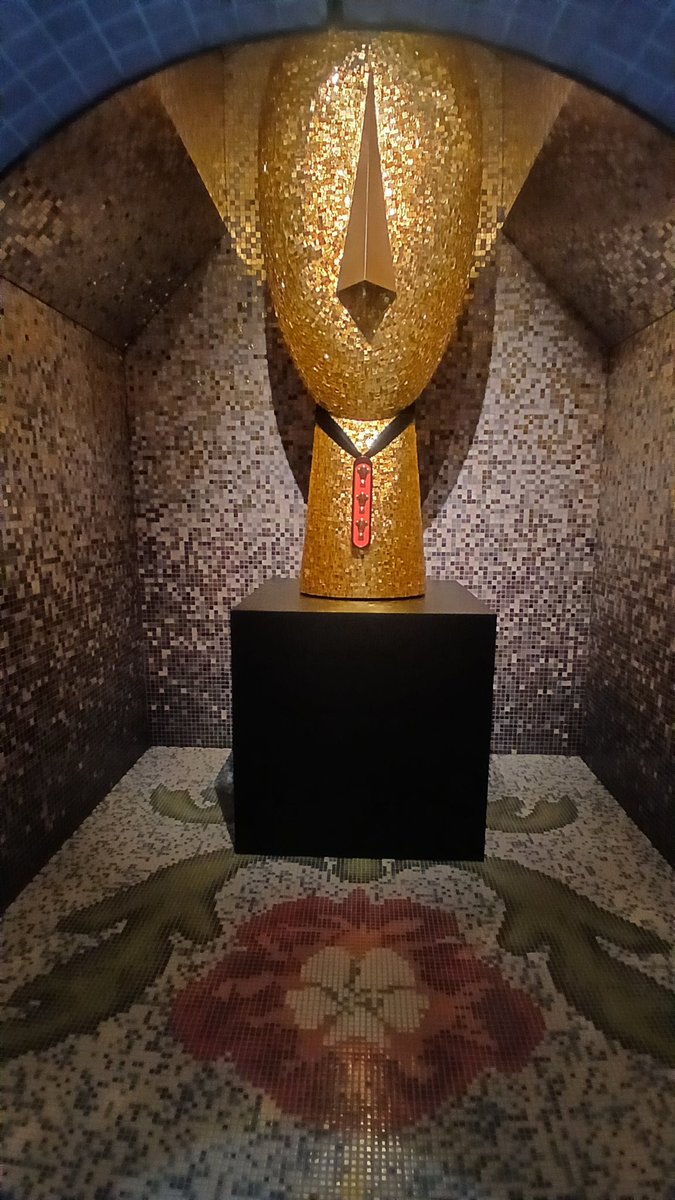
Impressive collection at Fondation Cartier in Paris.
'Exposition Générale'
From October 25, 2025 to August 2026.
Not to miss when you are in Paris!
@ArtBasel @100collectors
#contemporaryart
2
4
486
VFunk retweeted

13 Oct 2025
Kim Asendorf @kimasendorf is a German digital artist best known for his generative series. What you may not know is that his early practice included experiments with digital infrastructures, such as APIs of Tumblr and Google Maps, as well as RSS feeds. His first on-chain works were minted on Hic et Nunc and, interestingly, among them was a mini PFP collection, FRATZE.
Let's talk about it. A thread 🧵👇
17
22
162
13,349

NEW SOLO SHOW IN PARIS 🇫🇷 → On view until 25 November Check out “SPECTRA”, my new solo show at in Paris. Continuing my exploration of tiles, in this exhibition I present artworks that result from a convergence of age-old techniques and new technologies, creating a
5
23
840
VFunk retweeted

7 Oct 2025
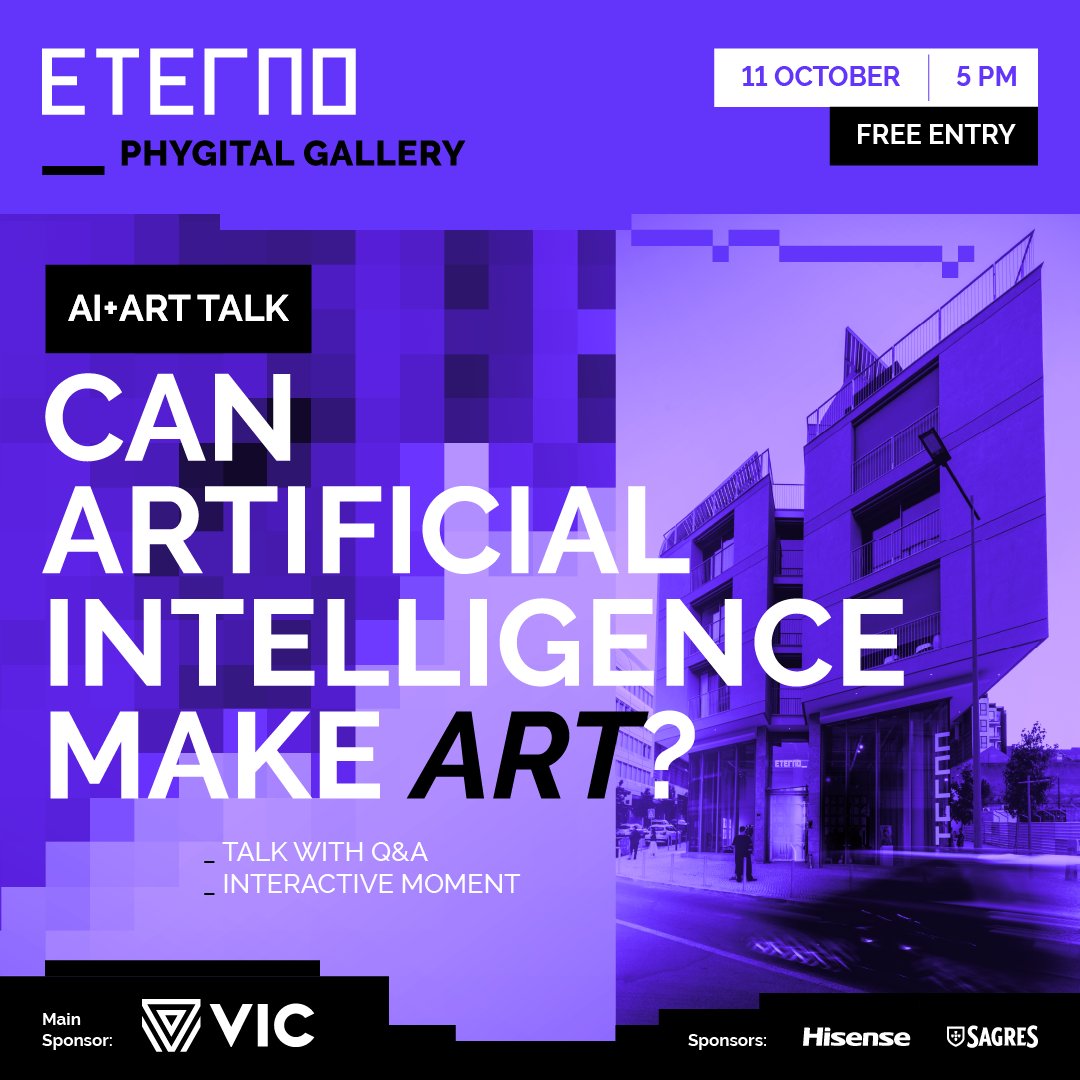
Can AI make art?
Join us Oct 11, 5 PM at @EternoGallery for a talk interactive session exploring how AI and tech are reshaping creativity and authorship.
With:
✨ Júlia Flamingo — curator & researcher
✨ Joh Karp @johnkarp — co-founder of @nonfungibleconf
✨ Mario Klingemann @quasimondo — artist & co-creator of @bottoproject
💬 Discussion Q&A interactive moment
📍 Rua Maria José Nogueira Pinto, Lisbon
🎟️ Free entry — RSVP here: luma.com/cp2hjzo2
🔗 Part of The Art of Collective Minds exhibition by Botto
1
6
22
3,588
VFunk retweeted

8 Oct 2025
What a major honor, still floored really. But not surprised - these artists and their work are incredible. Been a privilege to work so closely with them over this past year.
I hope and believe this sets the tone for the caliber of work this young gallery will continue to show 🙏
7 Oct 2025

The Whitney acquires artworks from two series presented by Heft:
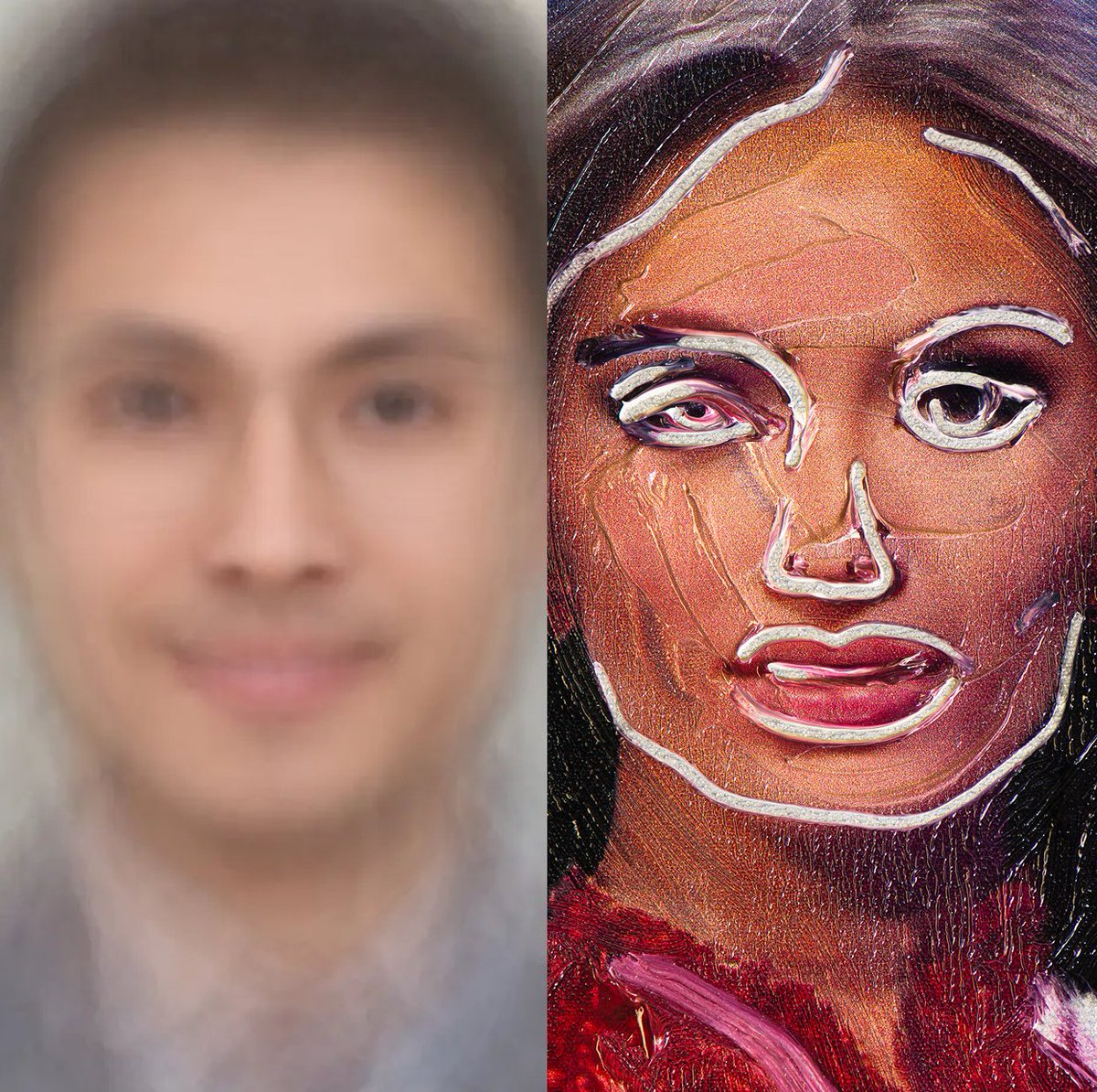
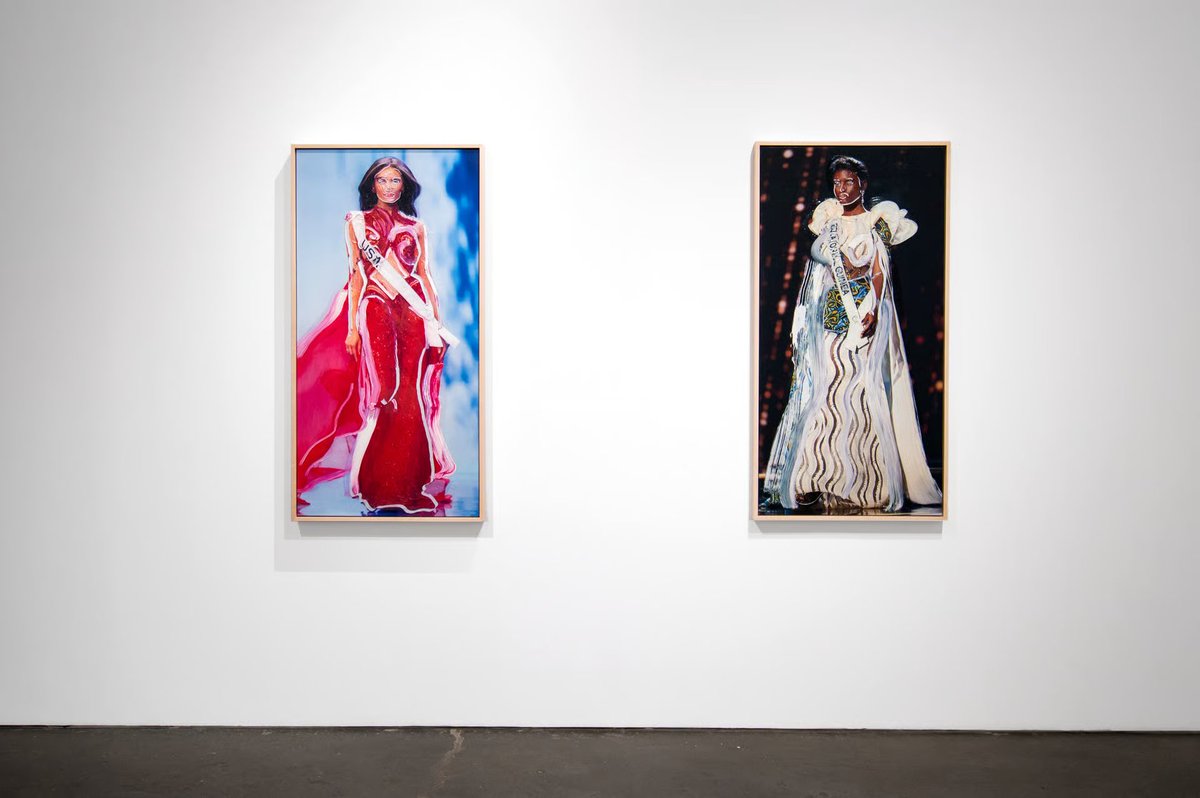
Facetune Portraits, by Gretchen Andrew
@gretchenandrew
Taking Stock, by Michael Mandiberg
@mandiberg
These acquisitions are the sole works to enter the permanent collection of the Whitney’s Digital Art department in this half of the year. A deep thanks to the Whitney Digital Art team, Acquisition Committee, and the Curator of Digital Art at the Whitney, Christiane Paul @ChristianePaul2
It's been an honor to show these special bodies of work over the past year in major fair presentations at @untitledfairs and @ParisPhotoFair as well as at our NYC gallery.
The two series interrogate the trend towards homogenizing the way people are portrayed in an era of global digital media consumption, each engaging issues around artificial intelligence.
—
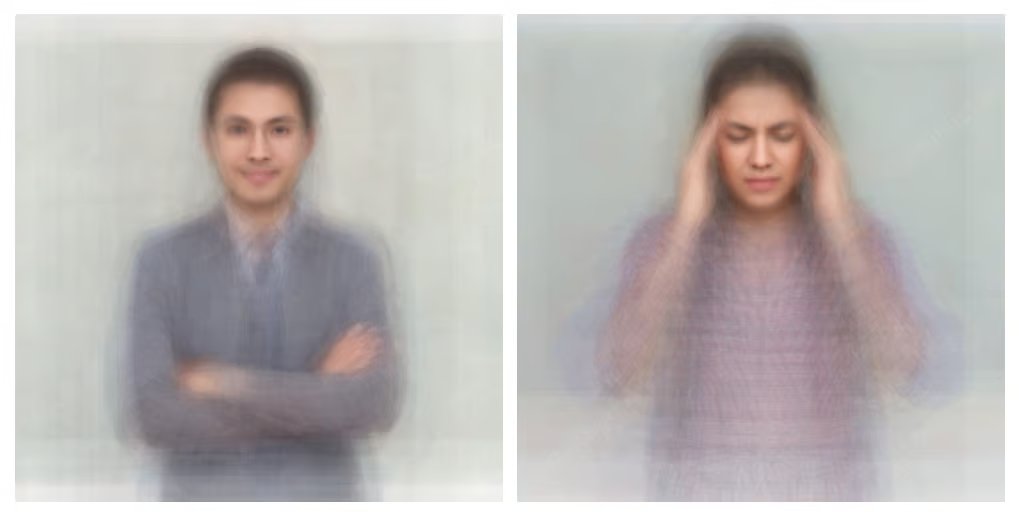
For Taking Stock, Michael Mandiberg collected and analyzed 130 million stock photographs to produce a series of photographs and videos that surface the ideologies haunting these ubiquitous images.
image: Topic 23, Pose 21, Gesture 68 (depressed, stressed, problem, etc.) Topic 11, Pose 7, Gesture 57 (business, corporate, executive, etc.)
—
In Gretchen Andrew’s Facetune Portraits, custom robotics scribe the popular AI-driven beauty filters of social media into oil paintings derived from images of quintessential beauty.. Normally, on TikTok and via Zoom’s “touch up” feature, these visual modifications occur seamlessly and invisibly. By making this process visible, Facetune Portraits reveals the messy co-existence we have with our digital selves.
image: Facetune Portraits: Universal Beauty, Puerto Rico USA
1
2
7
354
VFunk retweeted

8 Oct 2025
Whatever strategy you have, mine is working with artists who were there 20 years ago and who will still be there for the next 20 years pushing digital media
Like:
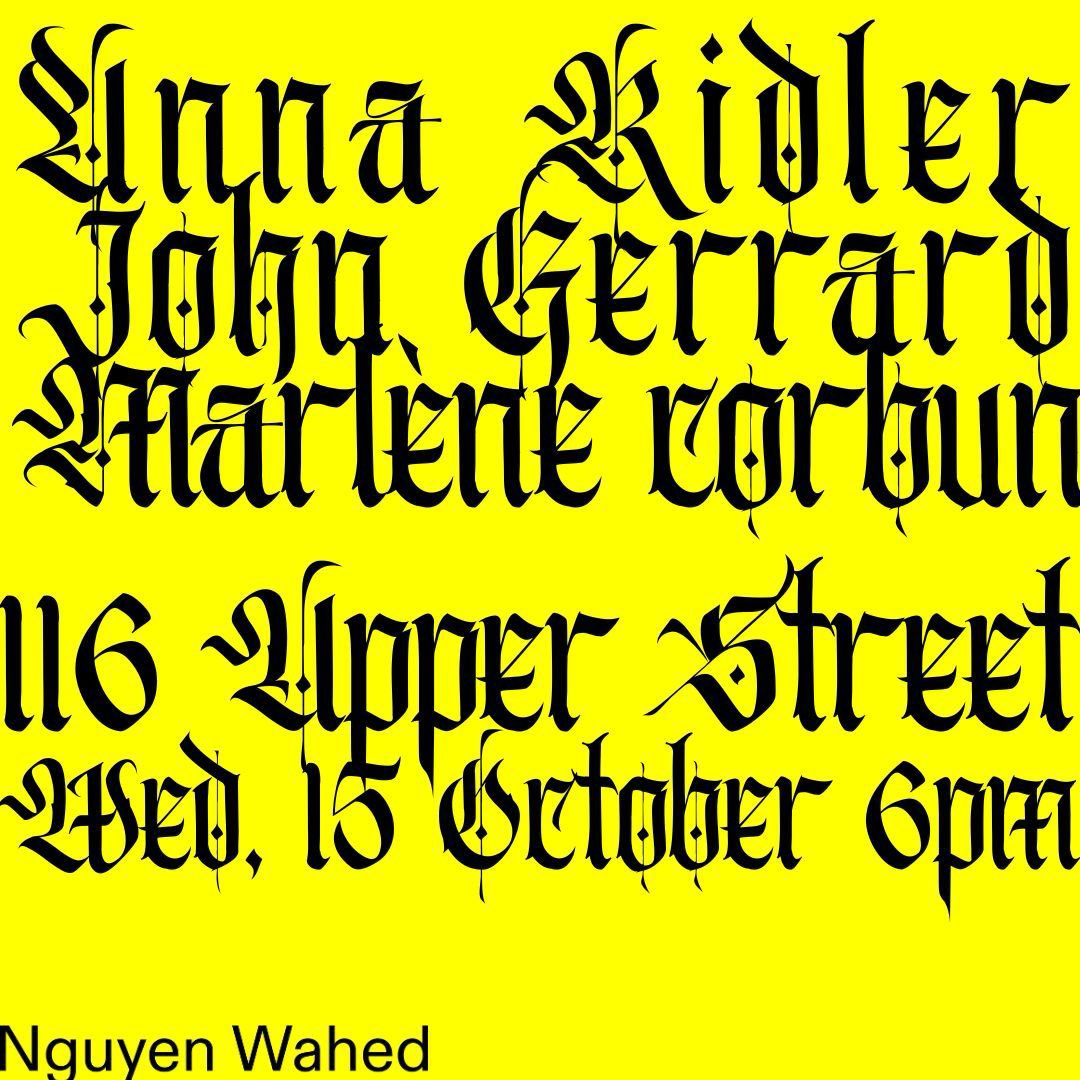
john gerrard (b. 1974, Dublin) works at the intersection of digital simulation, landscape, time-based media, and environmental systems. His practice is distinguished by the use of real-time 3D simulations that generate looping or continuously evolving imagery, often unfolding in synchrony with natural cycles. These works probe questions of energy, infrastructure, and the entanglement of virtual and physical worlds. He studied at the Ruskin School of Drawing and Fine Art (Oxford), the School of the Art Institute of Chicago, and Trinity College, Dublin, and has undertaken residencies and affiliations with Ars Electronica (Linz), the Rijksakademie (Amsterdam), among others. His work is in public collections including Tate, MoMA, SFMOMA, LACMA, Hirshhorn, IMMA, Borusan, Kistefos, and M .
Anna Ridler (b. 1985, London) works with systems of knowledge, measurement, and classification, often creating hand-generated datasets to feed into computational processes. Her works interrogate how technologies quantify, narrate, or distort the natural world. She earned an MA in Information Experience Design at the Royal College of Art, and a BA in English Literature & Language at Oxford. She has held fellowships (e.g. UAL Creative Computing Institute) and exhibited broadly (V&A, Barbican, Centre Pompidou, Ars Electronica).
Rachel Maclean (b. 1987, Edinburgh / Scotland) is a multimedia artist and filmmaker whose work combines lush visuals, saturated palettes, and fantastical characters to probe identity, narrative, and digital culture. She holds a BA in Drawing & Painting from Edinburgh College of Art and has exhibited internationally, including solo shows at Tate Britain, the National Gallery in London, and representation of Scotland at Venice Biennale 2017. via @fellowshiptrust
Addie Wagenknecht (b. 1981, Portland / US-Austrian) works at the intersection of open source systems, feminist inquiry, and media art. Her practice often engages hardware, robotic systems, and networked culture to critique visibility, autonomy, and technological infrastructure. She earned a BS in Multimedia & Computer Science from University of Oregon and an MPS from NYU’s Interactive Telecommunications Program. She co-founded NORTD labs and has held residencies at Eyebeam, Mozilla, and CERN, among others.
FAR is an artist-architect whose generative and virtual works examine the material boundaries of code and spatial logic. His projects explore how computational space “breathes” and how nature-inspired algorithms can be remixed to reshape virtual topologies. He holds an MDes in Art, Design and the Public Domain from the Harvard Graduate School of Design, and an MArch from SCI-Arc (Southern California Institute of Architecture), and was previously pursuing a PhD in Film and Visual Studies / Critical Media Practice under the supervision of Krzysztof Wodiczko at Harvard. He also holds an MEng in Civil Engineering.
Harm Van den Dorpel (b. 1981, Netherlands) works across software, sculpture, print, and generative systems. His practice emphasizes algorithmic feedback loops, emergent systems, and the liminality between machine logic and subjective gesture. He co-founded Left Gallery, works deeply in net art lineages, and his works are held in collections such as the V&A and Stedelijk.
&
Jonas Lund (b. 1984, Sweden) works across painting, sculpture, web art, and performance, designing systems in which participants, algorithms, and institutional logics intersect to question agency, value, and authorship in networked culture. He earned a BFA from the Gerrit Rietveld Academy (Amsterdam) and an MA from the Piet Zwart Institute (Rotterdam). via @Interface_art
4
9
82
4,138
VFunk retweeted
28 Sep 2025
🚨Coming 1 October🚨
DOM3 - a new, final blockchain-based work by Leander Herzog and Milian Mori on l1
Interact with the smart contract to turn the record over
2
16
86
2,781
VFunk retweeted

26 Sep 2025
Vhils doesn’t just carve portraits—he unearths forgotten silences. Each wall bears witness, every face a fragment of our collective past. His art isn’t just seen; it’s experienced. City by city, layer by layer, he reminds us that nothing we create is ever truly complete, not
2
5
480

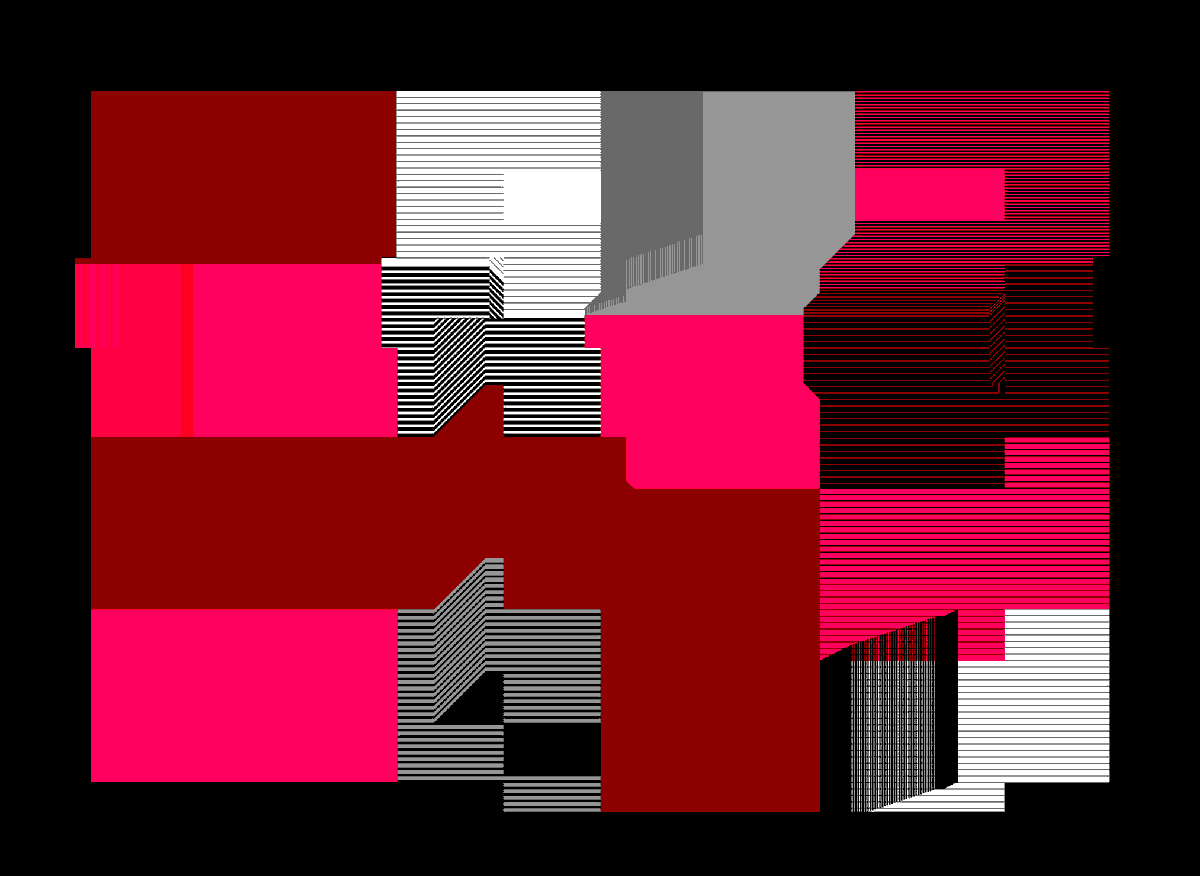
4/7 TYPE OF ANIMATION
Similar to the works from @kimasendorf's collections “Reading a book,” “tr4ns4ctions,” and “monogrid 1.1 CE” the pixels in the works of the Alternate collection always start from the same position and then always follow the same paths.
However, the deterministic animations never repeat themselves. So you are essentially always watching the same (blockbuster) movie, but it never ends.
This is different in the animations of the “monogrid” and “PXL DEX” collections. Here, a different infinite “story” is played each time the animations restart.
1
1
4
207
VFunk retweeted

2 Sep 2025
You wanted decentralization? You got decentralization, right? That means marketplaces where you can release your work without gatekeepers interfering. No invitations required. No one telling you what to do or what not to do. You can publish as much as you want, set your own prices, and decide how much or how little effort to put into each release. It’s like eBay or Etsy: you pay a small fee, use the platform, and sell your products. Sometimes it’s art, sometimes PFPs.
Would you complain about eBay not featuring your shelf on their front page or promoting it alongside their top sellers?
That’s what Web3 also meant at the start: selling art directly, from artist to collector. No curators, no galleries, none of the so-called gatekeepers.
And yet now, some expect NFT marketplaces to act like galleries: to feature work, curate exhibitions, and offer constant guidance to everyone using the platform, all for a small fee. Take objkt, for example, who got under fire today. Again. Their marketplace fee is 5%.
NFT marketplaces are companies like any other: just like eBay. Do you expect them to make sure you can pay your rent because you’re selling your furniture there?
I assume the answer is no. So why expect that from a Web3 company? And why assume you should have a say in their business strategy?
And here’s a fun fact: at big bookstores, guess who makes sure certain books get visibility? The publishing houses. They pay for the top spots.
So ask yourself: do you really want decentralization or do you actually want a centralized gallery working for you, while only paying a marketplace fee?
2 Sep 2025

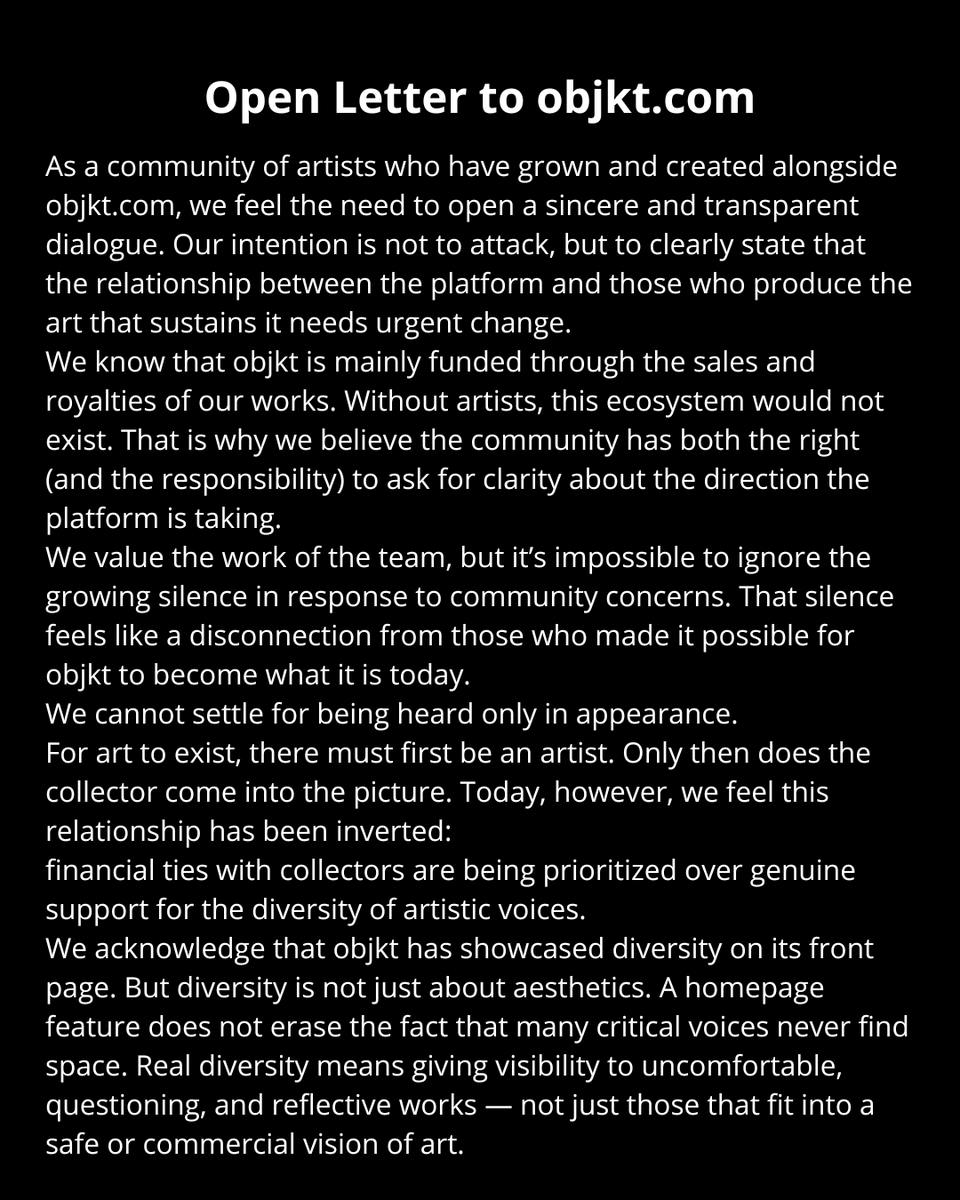
Let’s raise our voices for art, for the community, and for mutual respect 💜 for everything we’ve built together. Let’s start the conversation!
Open Letter to @objktcom (Part 1)
30
16
218
18,700
VFunk retweeted

2 Sep 2025
SACRED CODE
with Vikki Bardot, Dist.cs, Goldcat, Horomox, Kerim Safa & loackme, Rob Scalera, Spøgelsesmaskinen, Elhem Younes
Presented at the Noise Art Fair, Istanbul, from September 17 to 21, SACRED CODE exhibition explores the resonance of sacred geometry ancestral principles and the exploration of mathematical systems through digital practices.
Realized in collaboration with @objktcom , the exhibition is shown at the fair alongside an online version.
Artists specifically questioned on this theme, explore different facets; extending it through algorithmic studies, revealing spiritual dimensions or intimate perceptions.
from 17 to 21 September 2025
Noise Art Fair 2025, Istanbul
yapı Kredi bomontiada -– Booth G3
@VikkiBardot @dist_cs @OriginalGoldCat @horomox @kerimsafa @loackme_ @robscalera @spogelsemaskine @kikanicolela
6
21
73
4,960