Narrative Architects for AI & Crypto founders. We engineer trust. Building capital-ready narratives & AI-proof design systems. NYC / Global🗽Product|Branding
Joined March 2025
- Tweets 103
- Following 29
- Followers 54
- Likes 28
31 Photos and videos





Pinned Tweet
Paste your Figma link → generate your DESIGN.md SKILL.md today!! → designskills.xyz 🔮
Colors, typography, and spacing—extracted, classified, and ready for every AI agent in seconds. One Figma file. Every AI tool executes your exact brand.
1
3
7
179
Your Figma is now a portable AI skill 👾
Paste a Figma link → full skill bundle → GitHub repo you own. Every AI tool reads the same brand. Claude, Cursor, v0, Stitch, whatever's next.
→ designskills.xyz
#DesignSystems #Figma #AITools
2
43
New: Publish your design skill directly from Figma to GitHub. One click.
1. Paste Figma URL → generate design skill
2. Hit Publish → GitHub repo auto-created with all files
3. Instantly listed on the designskills.xyz leaderboard
4. Anyone can install it: npx skills add your-name/your-skill
From Figma to globally installable — in seconds
→ designskills.xyz
1
1
34
We just launched on Product Hunt 🚀
AI agents write functional code — but they're blind to taste. Wrong colors, random spacing, generic everything.
We built a design harness: connect your Figma → extract your design DNA → generate a SKILL.md any coding agent can read.
Your design system, as an installable dependency. Join the launch and explore the ecosystem: producthunt.com/products/des…
1
1
1
41
We have been closely watching the ecosystem converge this week. If you are building with Claude or Google Stitch, I would love to hear how you are managing design logic right now.
#DesignEngineering #AI #ProductHunt
23
Paste your Figma link → generate your DESIGN.md SKILL.md today!! → designskills.xyz 🔮
Colors, typography, and spacing—extracted, classified, and ready for every AI agent in seconds. One Figma file. Every AI tool executes your exact brand.
1
3
7
179
Google Stitch @stitchbygoogle just validated exactly what we have been building: AI agents need structured design system rules, not static pixels.
With the introduction of DESIGN.md, the industry is converging on our thesis. We shipped the automated pipeline for it on the exact same day.
1
37
How it works:
1. Paste your Figma URL (Read-only OAuth).
2. We automatically extract your visual DNA (chroma, type scales, spatial logic, anti-patterns).
4. Download for Claude Code, Google Stitch, Cursor, Codex, Gemini CLI, Copilot, Lovable, Replit, v0...
Your aesthetic is now installable.
1
129
Introducing Design Skills Hub
An open place where designers package their aesthetic DNA — and AI agents install it.
Two skill types. One ecosystem.
· Aesthetic skills: colors, type, spacing, motion
· Engineering skills: frameworks, a11y, architecture
Browse, install, or submit your own. → designskills.xyz
1
3
181
Here's why we built this.
AI agents can now generate UIs, write components, and build entire products. But if you've used any of them, you know the problem:
Everything looks like it was made by AI.
Not because AI can't execute — it can. The problem is it has no taste. Every time you start a new project, you're prompting from zero. The output is competent, but generic. It doesn't look like you.
Engineering standards already have a solution
for this. Cursor rules, coding conventions, linting configs — developers have been packaging code standards for agents for a while.
Design never got that equivalent. Until now.
Aesthetic skills are a new category. They encode what makes a design feel like something — your color decisions, your type choices, your spacing logic, the geometry of your components. Not as a Figma file. As executable instructions an agent can actually use.
The distinction matters because these are fundamentally different problems:
Engineering skills answer: "Is the code correct?"
Aesthetic skills answer: "Does it look right?"
One is about standards. The other is about identity.
We think the designers who define this layer — who package their visual DNA and put it into the world — are the ones who stay relevant as AI builds everything else.
Your aesthetic is your IP. It should be installable.
1
14

25 Dec 2025
Taking a brief pause from the pixels and code to enjoy the holiday magic here in NYC. 🍎✨
Wishing all the builders and creators a restful holiday. See you in the new year!
#NYC #DesignStudio #HappyHolidays #MerryChristmas
2
77
24 Dec 2025
In 2025, branding is no longer a static identity—it’s a living system. With Google’s Willow chip and advancing AI, the speed of computation allows for real-time, generative brand environments. We’re moving from 'logos' to 'behaviors.' Is your brand ready to react at the speed of light?
3
72
19 Dec 2025
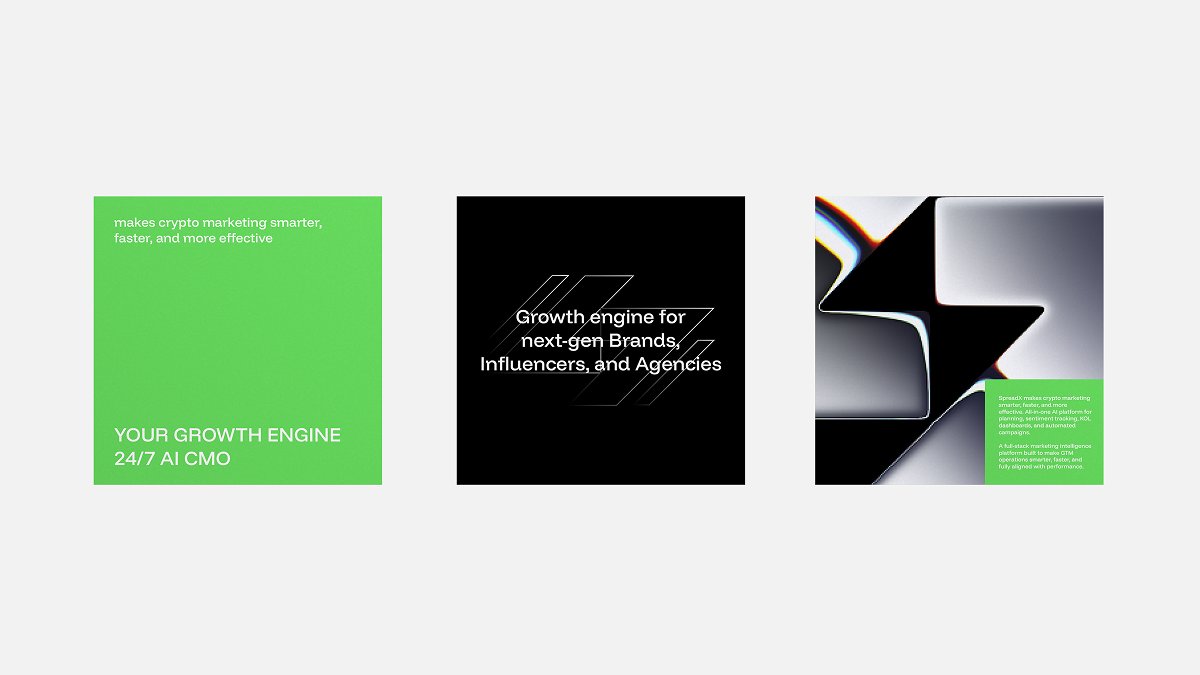
We are proud to share that our work on @SpreadXAI has received an Honorable Mention at the 19th International Design Awards (IDA @iDesignAwards). 🎊
Selected from entries spanning 70 countries, this project represents our core philosophy: translating complex AI utility into a high-velocity visual system.
🎉 Shout out to our team: @zf_Ding & @VaporAviator
Design is the infrastructure of trust. 🔮
🔗 See the award-winning work: vaporaviator.com/works/sprea…
#VaporAviator #IDA2025 #DesignAwards #NYC #ProductDesign #SpreadX
1
2
21
10 Dec 2025
Agentic AI is the narrative of Q4 2025.
The shift from "Chat" to "Act" changes the interface layer entirely. We are moving away from text boxes and toward "Command Centers" where users supervise autonomous loops.
Are you building a chatbot or a dashboard? The difference is your valuation.
15
8 Dec 2025
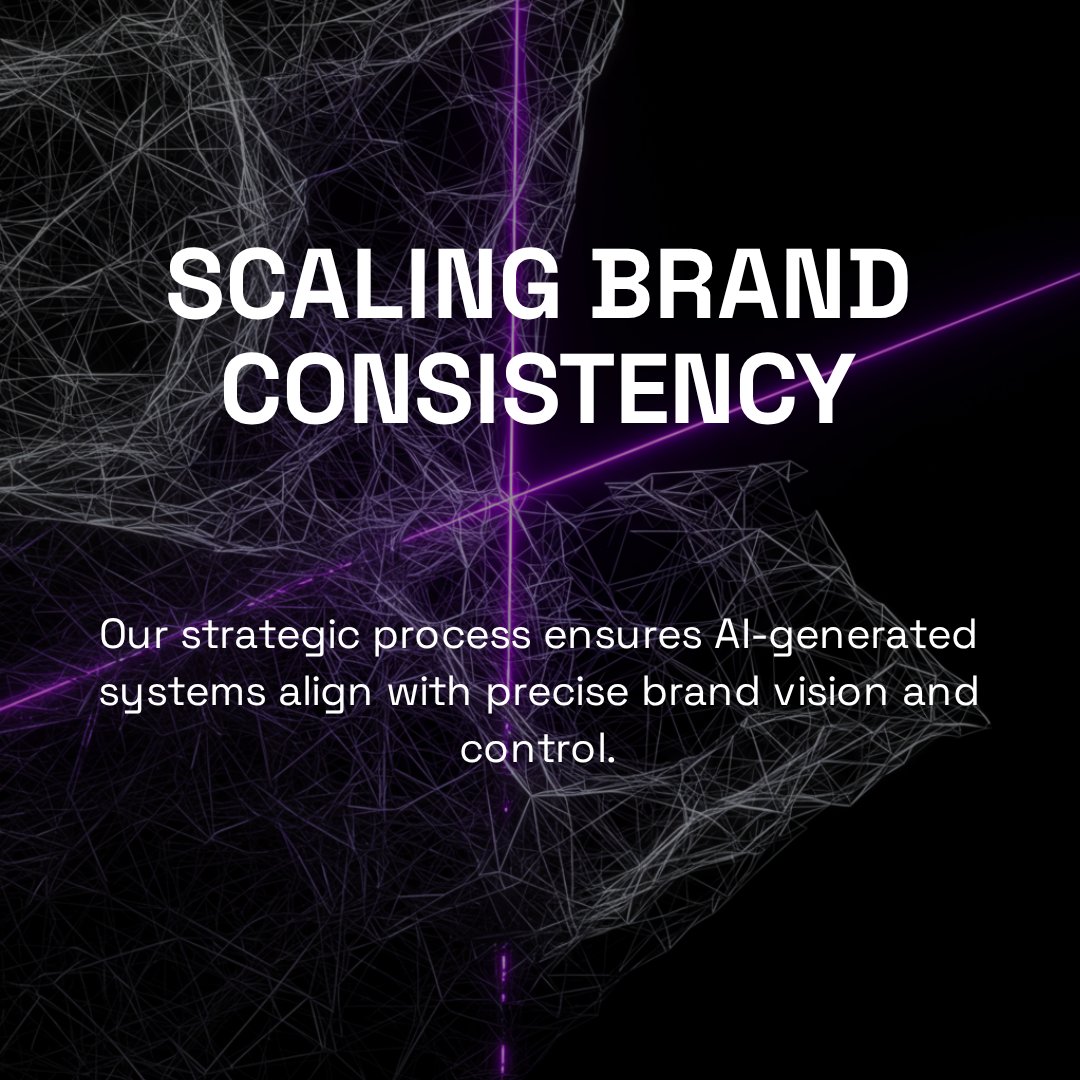
Scaling Brand Consistency with Generative AI. As AI automates layout and asset creation, the risk of brand dilution is critical. Our work focuses on developing AI-Native Style Guides—a system of constraints and templates that forces the AI to adhere to a premium, non-generic aesthetic. We deploy AI for execution, but retain human mastery over the brand's Impact.
1
15
5 Dec 2025
Visuals are solved. Audio is next.
Tools like @suno_ai_ are shifting Product Design from "Graphic" to "Multimodal".
🔹 Adaptive background ambience for SaaS. 🔹 Generated soundscapes for demo reels. 🔹 Instant sonic branding for MVPs.
The barrier between "Concept" and "Full Experience" has never been lower.
Sound Design is no longer an afterthought. It's the new UI.
Try the new single created by our member👉suno.com/s/1uazGbHETmgc5LJ4
#Suno #DesignTrends #Multimodal #AI #UX
47
5 Dec 2025
The industry shift from transactional Chatbots to autonomous AI Agents fundamentally changes UI/UX design. We must move beyond designing conversational interfaces and focus on Oversight Interfaces.
Design challenge: How do you build trust, governance, and auditability into a dashboard for an AI that takes actions on its own? It’s a transition from task completion to trust calibration. #DesignForAI #UIUX #AgenticDesign
22
4 Dec 2025
The shift to highly specialized, Agentic AI (like Nvidia’s VLA and DeepSeek’s self-verification) is a massive challenge for UI/UX design. The interface must evolve from a static prompt box to a dynamic Agent Orchestration canvas. How do users visualize parallel reasoning, verify agent actions, and intervene gracefully when things go wrong? This is where strategic design delivers long-term, systemic value.
#UIUX #AgentDesign #FutureofWork
1
50
27 Nov 2025
Happy Thanksgiving! 🦃
Grateful for the trust our partners have placed in us this year. It's been a wild year for AI & Web3, and we're honored to help shape the interface of the future.
Eat well, rest up, and enjoy the time with family. 🧡
#Thanksgiving #Gratitude
1
2
59
26 Nov 2025
Nano Banana Pro's free unlock on Higgsfield is unlocking wild creativity—comics, game art, even fingerprint maps in minutes. We're experimenting with it for client visuals alongside Gemini 3 for smarter designs. Innovation at our fingertips! 🚀
1
45
21 Nov 2025
Our team took some time to scan through the McKinsey’s “State of AI in 2025” report: AI is everywhere—but few have unlocked enterprise-level impact. Agentic AI is rising.
1> Scaling gap: 88% use AI somewhere, yet nearly two‑thirds remain in pilots.
2> Agents rising: 62% are experimenting; impact strongest in IT and knowledge research.
3> High performers’ playbook: Set growth and innovation goals, redesign workflows, and invest with clear human‑in‑the‑loop validation.
AI is common but shallow. Material impact comes when leaders treat AI as a transformation engine—redesign workflows, set growth objectives, and fund platform‑level scaling with strong governance.
As a studio obsessed with turning complexity into clarity, we’ve seen the inflection point firsthand: impact happens when teams stop “tool testing” and start re‑architecting how work flows—end‑to‑end—around AI. The shift from efficiency tweaks to product‑grade, agent‑enabled systems is where real EBIT moves.
Question for you: What’s the one workflow you’d redesign tomorrow if an AI agent could own it? #AI #GenAI #AIAgents #ProductDesign #WorkflowDesign #Innovation #Growth #CX
Original Report > mckinsey.com/capabilities/qu…
1
2
53