
The Holy Grail of Blockchain: AO discovered a linear correlation between the number of nodes and the global computing power of Web3.
Joined August 2020
- Tweets 10,831
- Following 2,783
- Followers 4,922
- Likes 44,316
826 Photos and videos






Pinned Tweet

4 Dec 2024
真正继承中本聪人人公平参与挖矿初心的是 #Arweave ,而目前挖 #AO 处在非常早期的阶段,同样也是4年减半的设计,同样也是2100万枚全部分发给矿工的设计,现在就处于类似汉耶兹把自己根据显卡GPU挖矿的优化算法开源之前,大资金进来挖 $AO ,就类似显卡跟CPU竞争,珍惜现在能在小算力池中占有高份额。
4 Dec 2024

但是,中本聪还是低估了人性。
当比特币具备价值,自然会有人想要以此赚钱。
随着汉耶兹把自己根据显卡GPU挖矿的优化算法开源(现在知道他为什么有10000个比特币了吧?),比特币全网算力呈指数增长,单位由MH/s迅速跃升至GH/s的水准,原来一天最多挖十几个比特币,用GPU后,挖矿产出急剧升高,一天产出上百枚不是梦。
于是,中国的非主流们又开始疯狂涌入显卡好的网吧,搞的网吧老板一头雾水,间接促成了中国网吧第一次显卡大规模升级,也顺带解决了黄教主的英伟达危机。
显卡挖矿流行了两年,再次遇到了挑战。
2012年6月,美国蝴蝶实验室的ASIC矿机研发成功,带来了新一次的挖矿革命。
ASIC矿机,采用ASIC芯片作为算力核心,简单来说,它就是针对比特币的SHA256算法而定制的ASIC芯片,可以换来更高的性能、更小的能耗、更小的体积。
我们对比一下,目前高端的4090显卡,优化后挖矿能力为129.8MH/s,功耗约为322W,而矿机蚂蚁S9呢?挖矿能力是13.5TH/s!高了好几个数量级!
23
9
39
41,979
ar://web3vc retweeted

Jun 12
1/ Here’s your GM wake-up call
@gmtrade_xyz is the Solana leading perp DEX with multi-asset coverage:
• Markets across commodities, securities, forex, and crypto.
• Up to 500x leverage.
• Ultra-low trading fees as low as 0.4bps.
• GLV - global liquidity vaults that automatically route liquidity to where it's needed most.
• Isolated GM Pools - each market backed by its own dedicated liquidity.
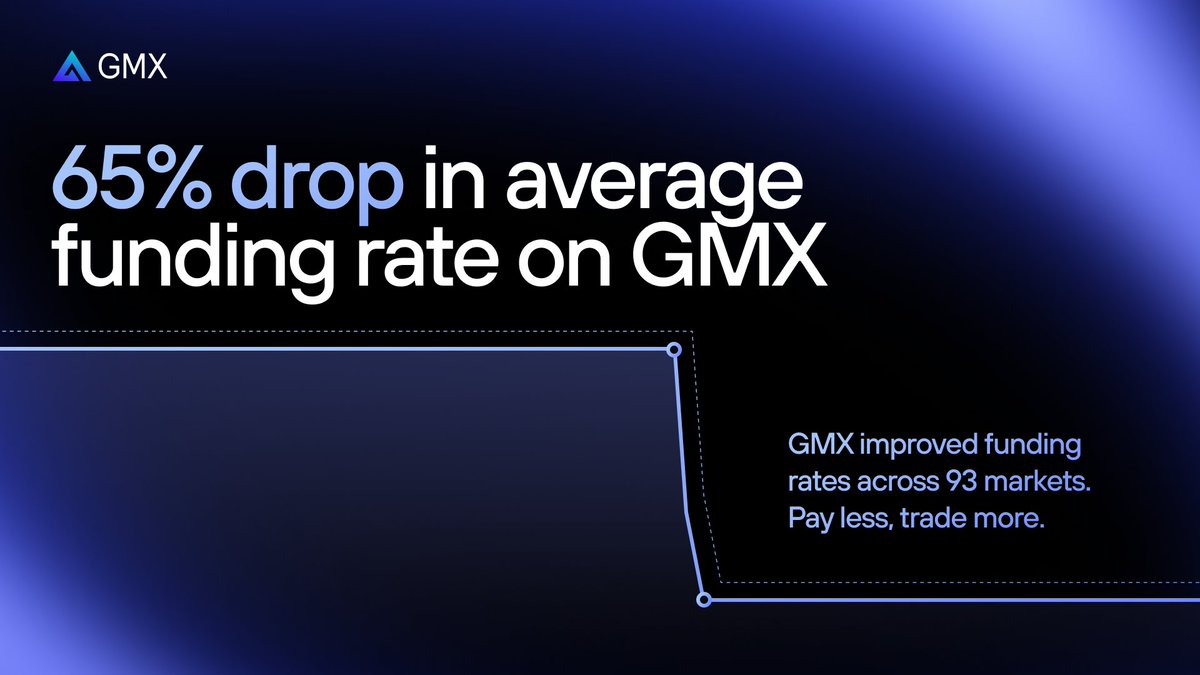
• Dynamic funding rates that auto-balance long/short exposure.🧵
20
23
57
9,509
ar://web3vc retweeted
Jun 11
Why,why,why?
有什么好Why的,球迷,主教练,管理层,球评都知道福克斯垃圾,完全不值5000万的顶薪合同,马刺老想帮他打回一些身价,马刺气势如虹领先30分,靠的是卡塞尔和哈珀的碾压冲击,文班的防守,三分准。
输掉30分,90%原因是主控福克斯,没控制节奏能力,不停失误和犯错,防守太烂,福克斯在场上经常输掉10-30分,今天就硬生生输掉30分,偶尔进一两关键球完全无法掩盖他丢10-30分的丑陋。
最后马刺如果还想绝地反击,用哈珀顶替福克斯打首发,压缩福克斯的球权,手感不好,状态一般,控制在20分钟出场时间,拉满哈珀和卡塞尔的时间,要问调整对不对,问一下尼克斯球迷就知道了,他们看到福克斯,就像看到免费的德州烤肉一样。
1
1
4
381
ar://web3vc retweeted
Jun 11
马刺队是长期对球员进行PUA的球队,福克斯就这水平,完全达不到菜鸟 哈珀 1/3 的场上效果,甚至绝大部分时间就是负面的效果,看场上正负值统计就能说明,那为啥还要福克斯打首发,让他主控,让他无数次低效表现后证明自己,只有一个解释,那就是马刺想打回一部分福克斯超级烂合同的价值,另外就是 PUA 哈珀 牺牲打替补。
马刺的夺冠窗口并没大家想象的那么大,明年卡塞尔90%概率是顶薪,至少有的是其他队愿意给顶薪,后年 哈珀 会有很多队抢着奉上顶薪合同,马刺今年和明年不夺冠,就马刺这抠门历史,加上圣帕尼也打出远超300万的身价,拆队就在眼前。
1
3
278

Curve llamalend v1的问题是只支持crvUSD,市场上大量的流动性进不来,比如那些不想把USDC换成其他稳定币的用户,所以TVL始终卡在1亿美金左右。
v2上线后变成通用框架,支持任意资产,同时增加了Curve LP作为抵押品的支持,继续以软清算为核心,这才算是一个完整版。
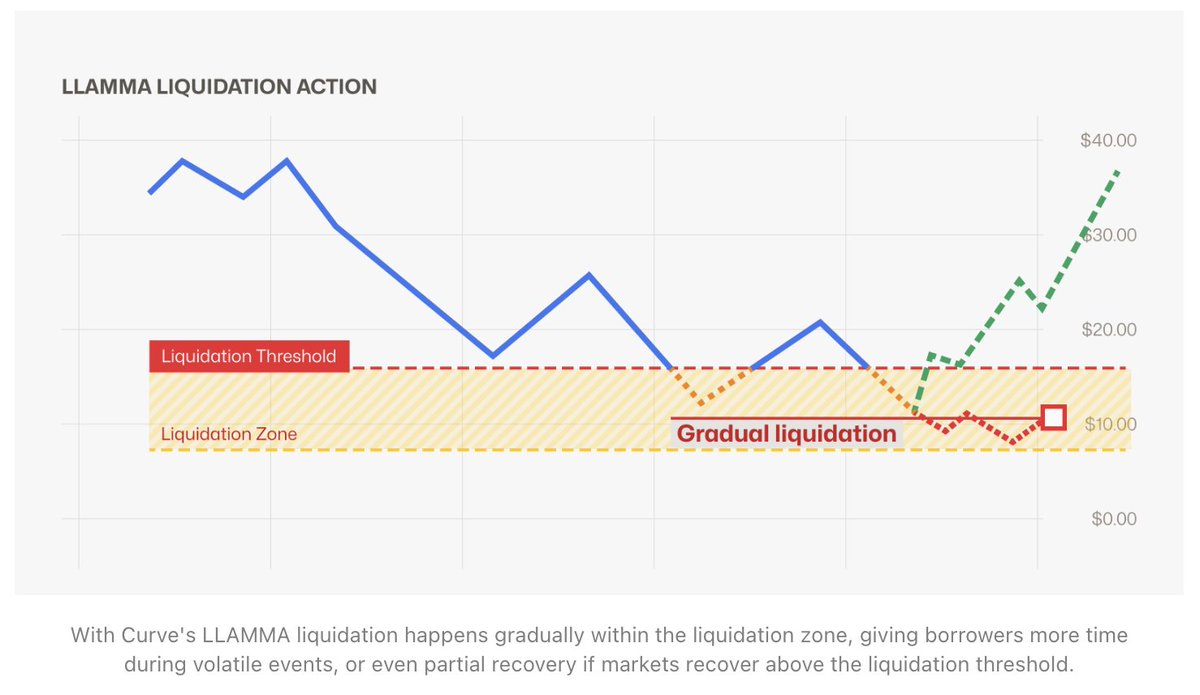
软清算还没有被很多用户熟悉, 但我觉得这是一个很好的创新,对市场来说,它基本能够避免集中式的连环清算,它把清算变成一个范围,并拆成多个小价格区间 (bands),把band想象成一个AMM,进入清算范围时,每个band自动将抵押品逐步卖出换成借贷资产,如果价格回升,band再反向执行,相当于把你的仓位再换回来。
所以它能够很好的避免你的仓位被瞬间击垮,并且在价格回升后拿回你的抵押品,等于你在大部分时间不需要关注清算问题,更需要关注的是成本和损耗,因为这个软清算过程是一定会伴随磨损的(比如slippage和套利成本),那么它的借贷成本就可能比普通市场更高。
另外这套设计采用的是EMA预言机 而非瞬时现货价格,所以面对闪崩和短期极端波动,它都更有效,降低了Oracle风险。总体来说如果这套系统能够得到有效推广,我觉得它会有一些用户喜欢。
Jun 10

Introducing Llamalend v2
A new lending framework built around Curve liquidity
- Use Curve LP tokens as collateral
- Isolated market risk
- Improved range-based liquidations powered by LLAMMA
- Better market security
Launching first on Optimism.
news.curve.finance/introduci…
3
1
18
12,552
ar://web3vc retweeted

Happy birthday, Arweave!
Today marks the 8th anniversary of the launch of Arweave mainnet.
Over the last year, the centralized training wheels of the permaweb have come off. Gateways, bundlers, and the query layer are all now open to be run by anyone, and incentives are coming into place.
Today there are...
1️⃣ Trustless, verifiable gateways: The main gateways to Arweave now all serve their data in trustless, verifiable form. Every response comes with all of the information needed to verify that the content that they asked for is the data that they received.
2️⃣ Incentives for gateway operators: Anyone can join a gateway and permissionlessly start to earn for serving content to users. This gateway has started to take over serving a small portion of Arweave . net’s end-user traffic, scaling up over time.
3️⃣ Decentralized bundlers: You can now upload data through a decentralized network of bundlers which anyone can join and start to serve permaweb user requests through. Node operators can earn by running nodes in this network permissionlessly, and users can trust the LapEE(/TEE) implementations, not the node operators themselves.
4️⃣ Decentralized indexers: Those community run LapEE/TEE nodes can even now be used to index and query data on Arweave, inheriting the same trust-minimization properties as bundlers. No public router for this just yet, but try it on your own node — it works 🙂.
A year ago none of these were possible. Each was a hard fought battle and there is still a long way to go to make them the defaults in the ecosystem, but the bedrock is now in-place.
Where next?
8 years is a long time, and while the mission of Arweave remains immutable the structure of the web itself is shifting: From discrete apps each with a separate team, to a world of agent-built services customized for each user. The next web will not look like the last.
I am truly excited about this because Arweave’s permaweb is the perfect substrate for a web that is no longer defined by static, siloed UIs, but instead morphs and mutates at the speed of user’s wishes. For many years we have focused on creating a web that enables composability through…
➡️ Open content: Owned by users, accessible in every app – rather than any single company/service.
➡️ Open infrastructure: Shared between every app, permissionlessly utilized to back every app, not any single particular application.
…and now this stack is finally able to be decentralized, too.
This architecture just so happens to offer exactly the mix of attributes needed to create an open version of the agent-driven web. When a useful/fun app is just an afternoon’s work, rather than a year’s, creators (no longer just limited to devs) do not want to run specific infrastructure or hire a team just for that single service. Instead, an existing open catalogue of content, matched with open infrastructure they can simply start to send calls to, is the perfect place to build.
Can’t wait to see this in practice. More soon.
Onwards! 🙂
31
34
190
8,110
ar://web3vc retweeted

Jun 7
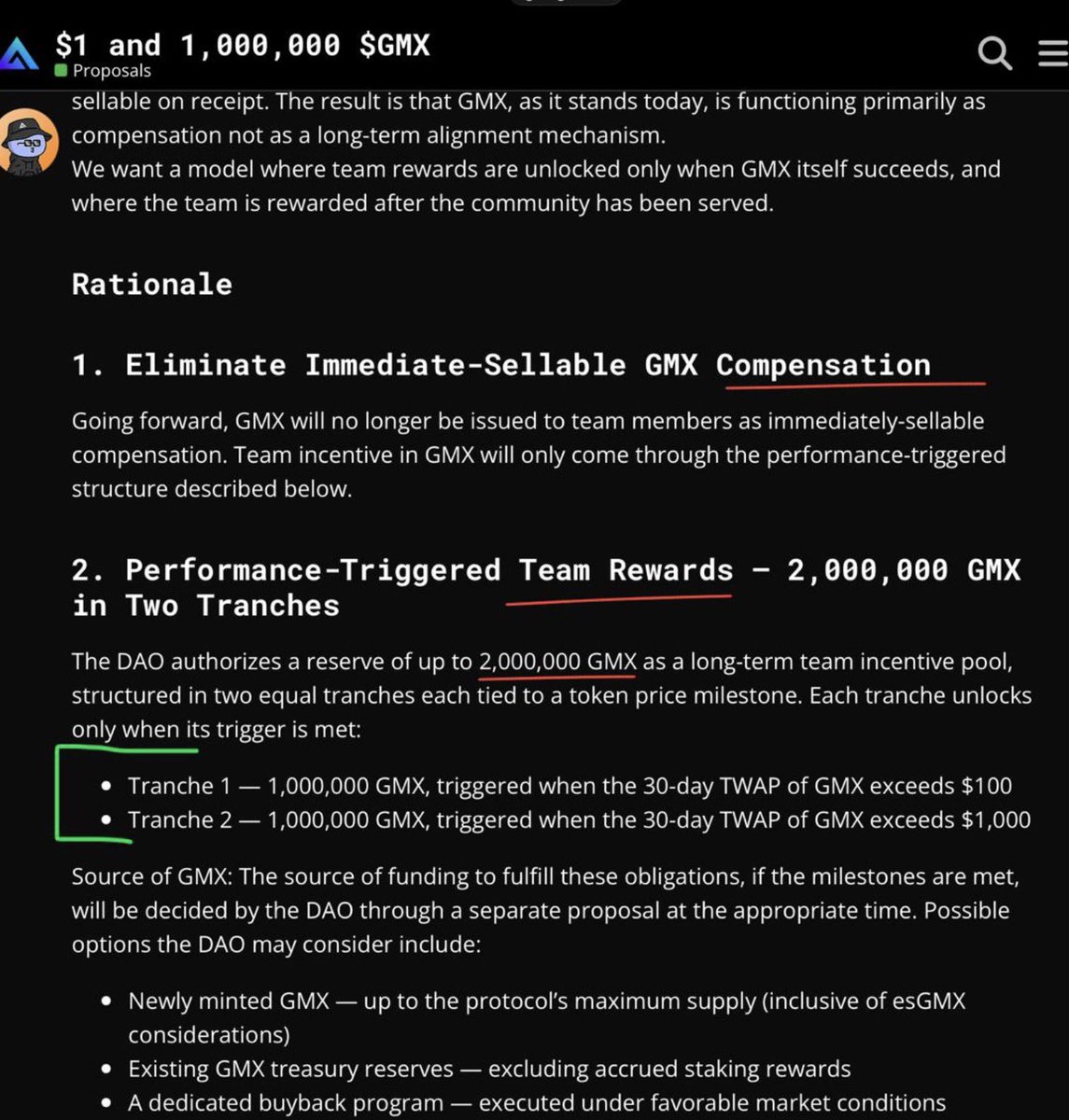
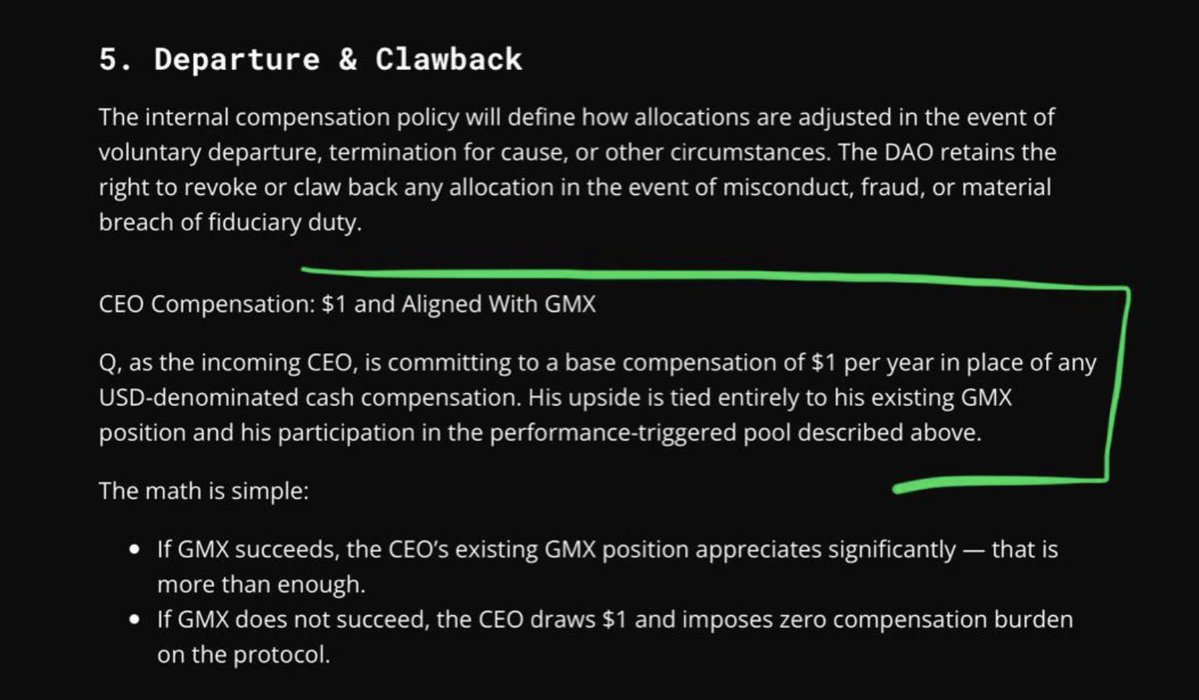
Only on @GMX_IO . I have always respected their team, but recent changes make me, as a holder, again and again feel like I'm in the right boat. kudos @citizenofgmx . good luck GMX. 👏
for curious defi’ers, details here:
gov.gmx.io/t/1-and-1-000-000…
2
13
1,049
Jun 5
$RLB 全流通,一天回购销毁 0.3% 的代币,加密圈还有更强的回购销毁发动机?
Jun 5

🔥 56,552 RLB was just bought & burned ($3,280) 🔥
Hourly revenues:
Casino: $17,632 🎲
Sports: $2,111 ⚽
Trading: $4,864 📈
Burned Today: 3,513,393 RLB ($209.7K)
Burned This Week: 11,349,662 RLB ($684.5K)
Burned This Year: 420,370,583 RLB ($26.5M)
Lifetime Burn: 1,488,100,230 RLB ($138.6M)
Supply burnt: 66.87%
etherscan.io/tx/0x6be5a3228d…

6
416
ar://web3vc retweeted

Jun 5
🔥 1,410,131 RLB was just bought & burned ($82,757) 🔥
Hourly revenues:
Casino: $17,761 🎲
Sports: $881 ⚽
Trading: $300,000 📈
Burned Today: 2,144,963 RLB ($129.4K)
Burned This Week: 9,977,383 RLB ($604.0K)
Burned This Year: 419,054,180 RLB ($26.4M)
Lifetime Burn: 1,486,690,099 RLB ($138.6M)
Supply burnt: 66.87%
etherscan.io/tx/0xe28e91d2a4…

3
7
17
1,849
ar://web3vc retweeted
Jun 5
🔥 1,210,183 RLB was just bought & burned ($74,739) 🔥
Hourly revenues:
Casino: $19,502 🎲
Sports: $776 ⚽
Trading: $269,792 📈
Burned Today: 1,047,692 RLB ($62.0K)
Burned This Week: 8,644,162 RLB ($523.3K)
Burned This Year: 417,879,034 RLB ($26.3M)
Lifetime Burn: 1,484,765,502 RLB ($138.4M)
Supply burnt: 66.83%
etherscan.io/tx/0x685072e6de…

4
10
24
6,208
ar://web3vc retweeted

Jun 4
Succinct is the default ZK prover for Base, OP Stack chains, and soon, Arbitrum.
Once all major rollups transition to ZK, Succinct will prove 90% of all rollup capital.
The Ethereum ecosystem is consolidating around ZK and Succinct.
14
10
109
4,427
ar://web3vc retweeted
Jun 4
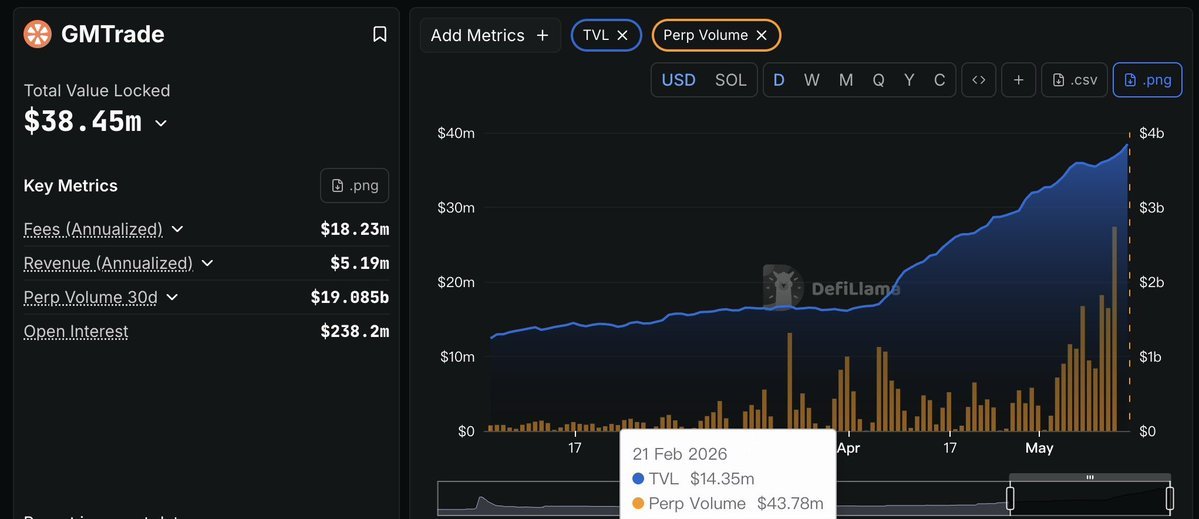
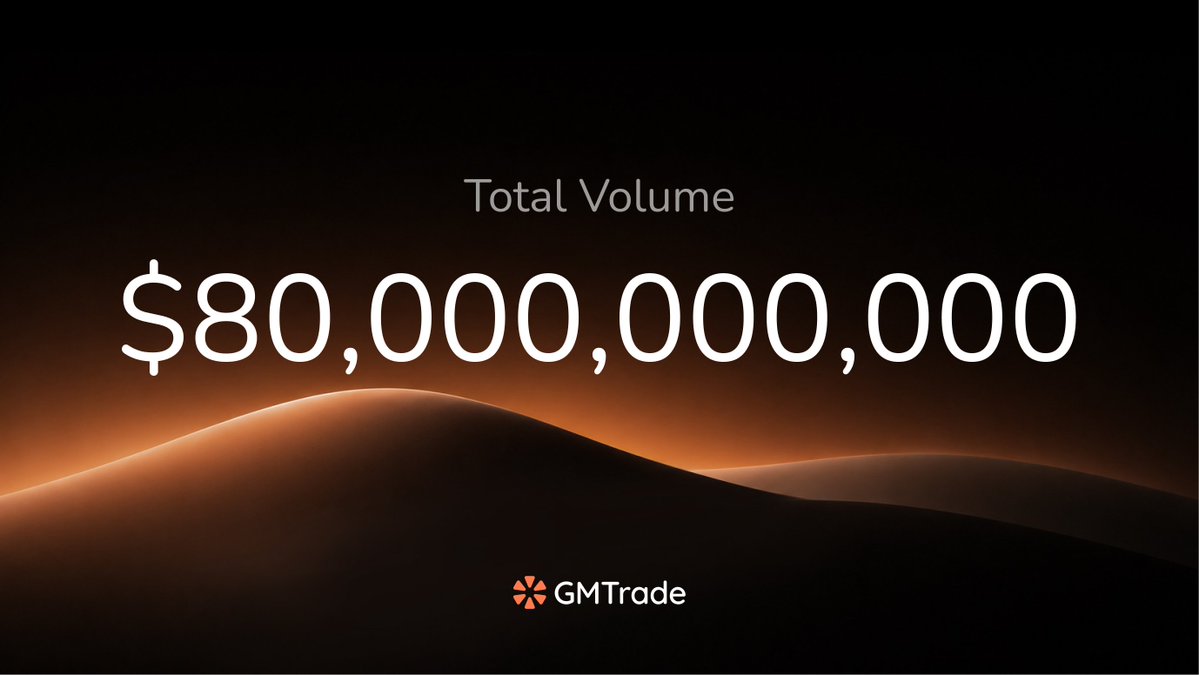
3 of every 4 dollars on Solana perps ran through GMTrade last month.
$80B traded.
17
21
60
10,509

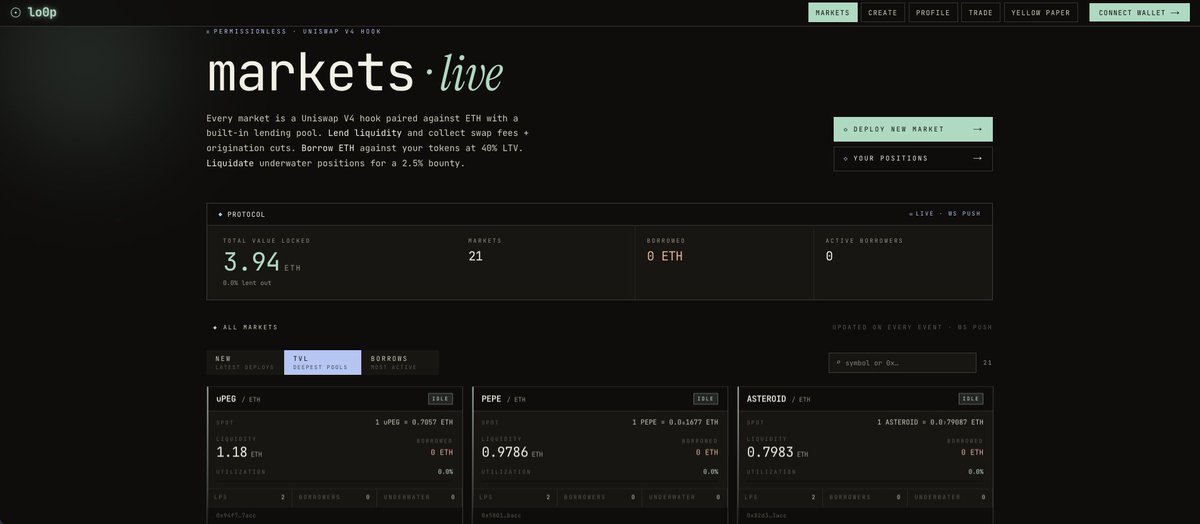
We published the full security review for the lo0p V4 lending stack.
68/68 tests across 12 attack-vector categories — pump-and-borrow, JIT-LP, share inflation, donation, read-only reentrancy, oracle manipulation, and more.
Immutable factory, non-custodial hook, no proxy/upgrade.
🔗github.com/lo0pio/contracts/…
5
12
32
2,317
ar://web3vc retweeted

May 29
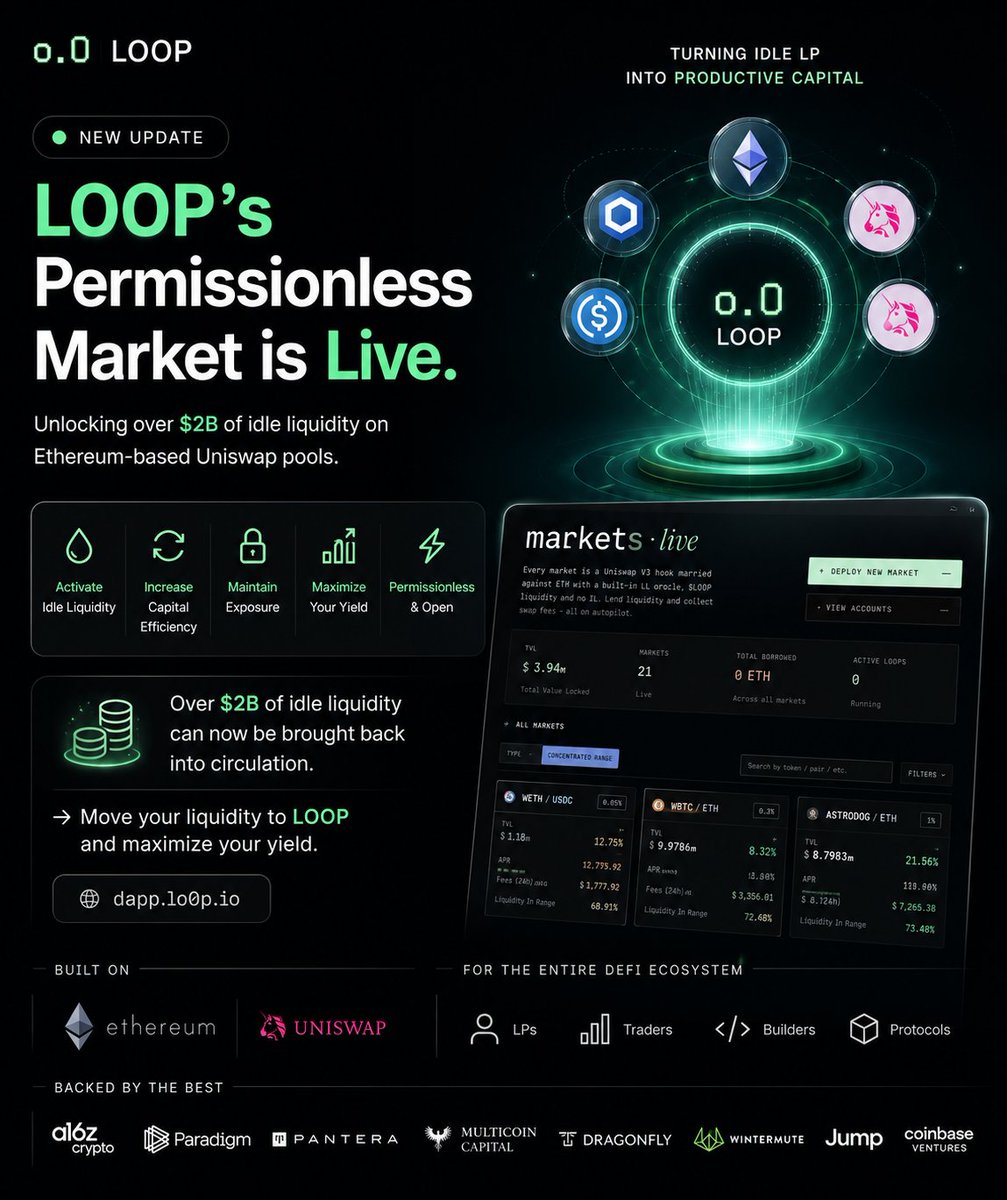
🚨 This could become one of the most underrated DeFi infrastructure launches on Ethereum.
@Lo0pio has officially launched its Permissionless Market.
Why does this matter?
Because over $2B in idle liquidity sitting across Ethereum-based Uniswap LPs can now potentially be reactivated through LO0P’s system.
This changes the conversation from:
“how do we create more liquidity?”
to
“how do we make dormant liquidity productive again?”
That’s a massive distinction.
@lo0pio Introduces a mechanism where LP positions themselves become productive capital:
• Deposit LP
• Borrow against it
• Maintain exposure
• Recycle liquidity efficiently
• Increase capital efficiency without traditional sell pressure
This is the kind of infrastructure Ethereum DeFi has been missing.
Most protocols fight for emissions.
Very few focus on unlocking dormant on-chain capital.
And that’s why this launch is important.
It could create a new layer of liquidity mobility across the Ethereum ecosystem.
Not just another farm.
Not just another lending market.
An actual liquidity engine.
The bigger picture here is even more interesting:
→ Permissionless markets are now live
→ Anyone can deploy markets
→ Idle LP capital becomes usable again
→ Recursive liquidity loops become scalable
→ DeFi capital efficiency improves dramatically
This aligns directly with the long-term vision many top Ethereum and DeFi players have discussed for years.
Wouldn’t be surprising if this eventually catches the attention of:
@Uniswap
@UniswapFND
@UniswapBuilders
@ethereum
@VitalikButerin
@a16zcrypto
@okx
@paradigm
@PanteraCapital
@Delphi_Digital
@wintermute_t
@jump_
@dragonfly_xyz
@binance
@coinbase
@Securitize
@BlackRock
The market may still see @lo0pio as a small-cap experiment.
But infrastructure plays usually look “small” before the ecosystem realizes what they unlock.
Ethereum’s next growth phase likely comes from better capital efficiency not just higher speculation.
And projects activating dormant liquidity may end up becoming one of the strongest narratives of this cycle.
@lo0pio
5
8
23
1,422
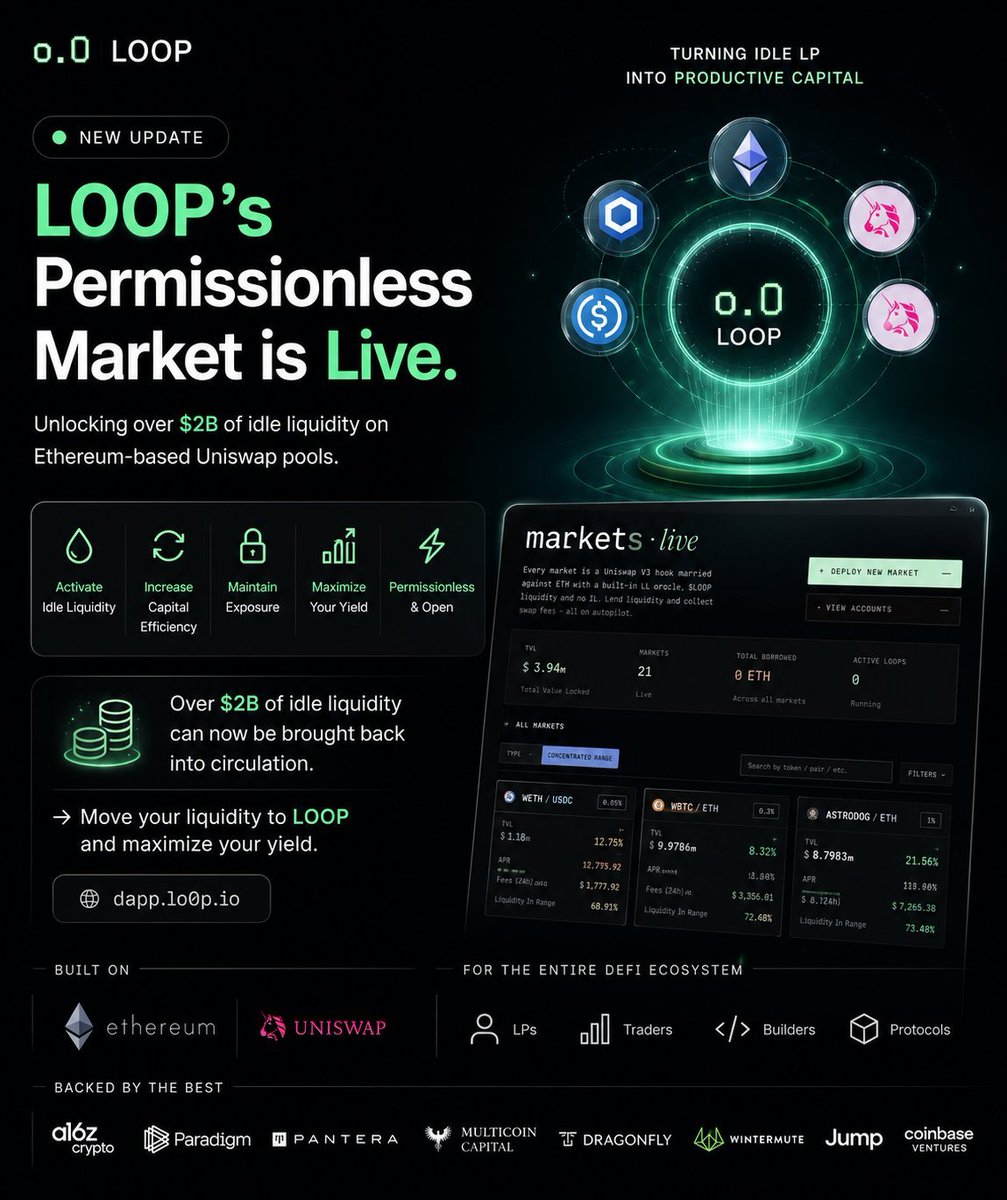
🟢 LO0P's permissionless market is now live.
Through LO0P contracts, over $2B of idle liquidity on Ethereum-based Uniswap pools can be brought back into circulation. Move your liquidity to LO0P and maximize your yield.
~> dapp.lo0p.io
12
17
45
7,884


May 20
以太坊的计算环境在设计上就比较狭窄,许多以太坊应用程序仍然依赖中心化基础设施来实现核心逻辑,并将区块链用作一个轻量级的结算层。
AO 是一种更广泛、更新颖的概念:它是一个适用于任何 Web 服务的去中心化操作系统。从这个角度来看,AO 更接近于基于类 UNIX 操作系统的无服务器功能,而不是共享的智能合约机器。
May 20

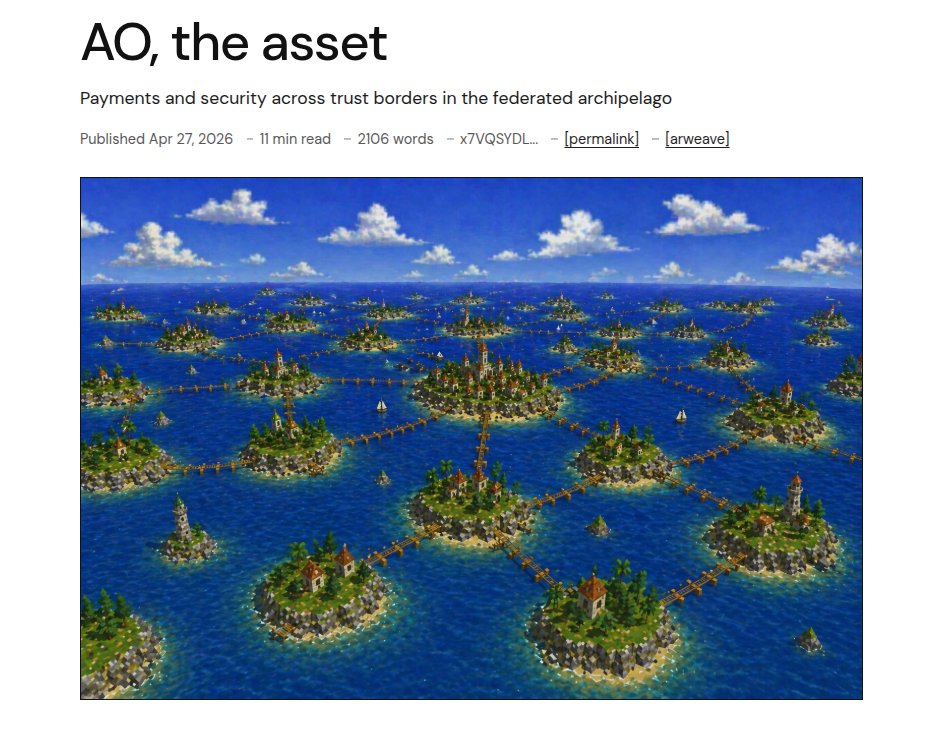
AO's strange topology means $AO the asset is hard to compare to other tokens
In a federated network of islands with wildly different specializations, $AO is the common currency across borders:
hyperzine.xyz/ao-the-asset
1
1
381