
Building @ Insider Loops | Helping PMs land roles at Meta, Google, OpenAI, Anthropic, Stripe | Ex-Meta
Joined August 2011
- Tweets 7,398
- Following 825
- Followers 2,594
- Likes 10,978
399 Photos and videos


Pinned Tweet

28 Jul 2021
In >1 year as a PM @ Facebook I've created zero tickets/tasks. We don't do sprints either.
PMs here focus on vision, strategy & partnerships. Less on project management & tasks.
Engineers carry most of the project management responsibility & create their own tasks.
It's great.
91
258
2,320
Jun 12
As a full-time employee, I probably delivered ~20% of what I was capable of.
When I compare a decade of salaried work to the last 2.5 years as a solopreneur, the productivity isn't even close.
Same Ben, more hours, roughly 5x the output. So... why?
Sometimes I find myself hiding behind excuses like "other people got in the way" but I think it's mostly from being able to call my own shots bc it enables me to act with crazy speed.
Here's how I operate now:
→ I see an opportunity
→ I move fast on it
→ I try it my way
→ If it doesn't work, I kill it
→ If it works, I double down
No alignment meetings, no BS constraints from risk mitigators I didn't choose, etc. Just playing a series of infinite games I've opted into.
What I'm most proud of is that over the past year I've been able to scale this way of operating by building Insider Loops with my cofounder @MarcBaselga .
The amount of work we've shipped in 8 months would have taken a full team multiple years in the past. I couldn't have done it alone, even with all the AI agents in the world.
And the best part is that we've found a way to move fast without trading off quality, standards, values, or ethics.
The extra 80% was always there. I just needed more room to cook.
2
4
175
Jun 12
If candidates can cheat on your interviews, your interviews are probably just poorly designed.
1
50
Jun 9
when founders have to do things they don't want to do bc of VC
youtube.com/shorts/JkApxdZsE…
109
Jun 9
Way too many companies waste their time interviewing unprepared candidates and it's entirely their own fault.
I coach PMs through interviews every week and one of the most common reasons strong candidates fail interviews is that nobody told them the rules of the game: what to expect with the interview format, which dimensions the interviewer will be evaluating, how much the candidate should be talking, how many questions to expect, etc.
That lack of prep is expensive to companies: a typical onsite loop involves 5-6 interviewers. When you factor in context switching costs and 30 minutes of notes and debrief afterward, and you're looking at full loop costs of ~$9k per candidate at $1k/hour fully loaded.
If you need to interview twenty candidates to fill one role, that's $180,000 in interviewer time. Before recruiter hours, open headcount costs, or the opportunity cost of your best people spending their afternoons in interviews instead of building product.
This is entirely self-inflicted waste and inefficiency for companies.
I learned a lot about designing clear interviews at Facebook, where the product sense interview had a specific rubric with defined dimensions (these dimensions were mutually exclusive from the analytical thinking interview dimensions).
Candidates who understood those dimensions and gave clear signal on each one passed. Candidates who didn't, even smart and experienced ones, often failed. The rubric was the map. Without it, candidates were navigating blind.
Stripe and DoorDash are two companies I see getting this right today. Their recruiters set clear expectations before every loop, and candidates are better prepared. It signals that the company has its act together, which itself attracts stronger talent.
Compare that with companies where candidates get one sentence of prep, a rubric with 10-12 dimensions nobody explained, and radio silence when they ask for more context. You're not running a rigorous process. You're running a guessing game.
The pushback I hear most: "If we over-prep candidates, we lose signal."
But if a candidate walks in with no context, what are the chances they magically land on the right structure, altitude, and conversational flow to give you everything you need? Vanishingly low.
So you're not filtering for the best person for the job. You're filtering for the best guesser.
If you're a hiring manager, here's the fix:
✅ Get clear on the 3-5 dimensions you're actually evaluating in each interview
✅ Share that rubric with your recruiters
✅ Have recruiters brief candidates on format, structure, and expectations before the loop
✅ Treat candidate prep as part of the process, not a courtesy
Better-prepared candidates generate stronger signal and the best talent will see your clear interview process as a selling point to join you because you treated them like an adult.
131
Jun 8
I turned down a $10 mm annual TC offer from Alex for this position at Hello Patient to keep building Insider Loops but boosting this for others who might be interested in a dream job 😜
Jokes aside, so excited for you guys to find the right person for this role (and pumped for whoever gets the job). LFG!
Jun 8

We're hiring a Head of Product at Hello Patient!
We've waited more than two years to hire a formal product role and now that we are almost a team of 50, it's time.
This is a rare senior IC product role where you'll report up to me and oversee product strategy and ship product. You'll own the roadmap across multiple eng pods, live in customer workflows, work with our agent PMs, write PRDs, and use AI to build alongside the team.
Looking for:
* 5 years of experience with a deep technical background
* Based in Austin or NYC (we'll pay for relocation)
* Healthcare experience
IMO the best product job in healthcare AI right now. My DMs are open.
Full JD and application here: jobs.ashbyhq.com/hellopatien…
2
208
Jun 8
On a recent episode of @lennysan's podcast, @danshipper (founder of @every), said "every agent needs a human to love them".
@MarcBaselga and I explored this idea in this week's episode of our podcast with our friend Noah Levin.
Noah was formerly VP Product at Honor, spent a decade at Amazon (he was an intern on Amazon Fresh back in 2011) and today calls himself a "free-range AI consultant," working with small and mid-sized companies on AI strategy.
I really enjoyed this convo with Noah bc it helped solidify that even in a world where intelligence is productized, value can't be delivered without a person giving some TLC to the agents.
What I mean is that you can put an agent in place but that's not a guarantee that the agent will deliver the value you expect/want.
A few things Noah has been seeing over and over:
1: The agent is the easy part
Wiring up the model to a workflow takes an afternoon. Getting the workflow to actually move a business metric takes months — and a human who understands the business, not just the model.
2: The model is becoming a commodity
The smartest people in the world are building toward roughly interchangeable intelligence. Which means the durable advantage moves up the stack — to whoever knows the business well enough to stitch the right agents into it.
3: "Free-range" beats "factory-farmed."
Noah's term for the alternative. The big consultancies (and the deployment arms of OpenAI, Anthropic, etc.) are good at a specific shape of problem. The shape they don't serve — a 40-person CPG company, a private equity turnaround, a solo lawyer building her own stack — is where the interesting work is.
Noah also brings a rule from Honor to his consulting work: "don't automate a process until you know it's the right process". Most AI work today skips that step and the biggest opportunity is in the boring work right before it.
AI consulting is one of the most interesting "PM-shaped" jobs in tech right now (the main proof point is just how happy Noah looks doing what he's doing right now) and I'm glad we could unpack it together in this convo. Enjoy!
Spotify: open.spotify.com/episode/4qb…
Apple: podcasts.apple.com/us/podcas…
YouTube: youtu.be/mwAWmD0IyGc
Substack: suprainsider.substack.com/p/…
P.S. If you haven't heard Dan and Lenny talk about agents, that episode is the setup for basically everything in this post. I highly recommend it.
1
1
7
388

Jun 4
I talk to a lot of product leaders who feel stuck in their job search.
They're getting offers. Good ones. And then decide to keep looking.
When I ask why they're passing on these offers, the person usually says something like "I just haven't found the right role yet."
So I dig a bit more, which almost always leads to the realization that they haven't decided what they're actually optimizing for.
And when you're optimizing for everything, you're optimizing for nothing.
Here are the four things I hear most often from senior PMs in the market:
1) Comp → I want to maximize cash and total comp, full stop
2) Flexibility → I need autonomy over my time, even if it costs me money
3) Learning → I want to be in an environment that makes me sharper and more relevant
4) AI-nativeness → I need to be building with and on AI, not watching from the sidelines
All four are legitimate and none are wrong.
But here's the thing: you can realistically optimize for one, MAYBE two of these before the tradeoffs start limiting your options in a major way.
When you're subconsciously trying to have your cake and eat it too, every offer has a gap and nothing feels like a full body yes.
That's not a market problem. That's a "you don't know what you want" problem.
My advice for these people is to get comfortable closing some doors so that they can focus on the opportunities that offer what they're optimizing for.
73
Jun 3
RT @levelsio: This is how you do a great startup video
Humble and chill and a real cool backstory
100
Jun 3
Stripe's technical interview for PM candidates is 60 minutes with an engineer (not a PM).
Part 1 of the interview is about a past system you worked on. Part 2 is about designing a system for a product they choose (e.g. Docusign). This post is about Part 1.
They'll ask you to whiteboard the architecture of a system you've personally worked on, then probe every component. Why this database? Why this API structure? What were the scaling challenges? etc...
Most PM candidates prep by studying system design courses and memorizing architecture patterns. More useful for Part 2, but not where Part 1 focuses.
The candidates we spoke to who did well in Part 1 all did something simpler. They called their old engineering or tech lead. The person they worked with on the system they planned to discuss.
They had them walk through the entire architecture from scratch. Not a high-level chat. A real walkthrough where the engineer explained the rationale behind every decision.
Then they asked three things.
↳ "Why did we make this choice?" for each major component
↳ "What's missing from my diagram?" for completeness
↳ "What was the hardest trade-off?" for anticipating curveballs
These are exactly the types of follow-up questions the Stripe eng interviewer will ask the PMs.
When you get to the actual interview, my advice is to start with a blank canvas (although you should definitely have the filled out diagram printed on your desk for reference).
During the interview itself, build the diagram one component at a time, walking the interviewer through the rationale in every step. Client layer, APIs, backend services, data stores. Explain each connection and trade-off as you draw.
Don't share your screen with a pre-built 10-box diagram pulled up (people actually do that and it's a bad idea trust me). The interviewer wants to follow your thinking as you build the system, not orient themselves to a finished artifact.
P.S. This is just one slice from the Insider Loops Stripe guide. We captured the complete Stripe PM interview playbook at insiderloops.com
1
93
Ben Erez retweeted

Jun 2
PSA: This week only, get 25% off all the @MavenHQ Lenny's List courses (and hundreds of other courses)
A few in particular to check out right now:
How to Become a Supermanager with AI w/ @yourgirlhils maven.com/hilary-gridley/ai-…
AI Evals For Engineers & PMs w/ @HamelHusain @sh_reya maven.com/parlance-labs/eval…
PM Interview Bootcamp w/ @ViableBen maven.com/ben-erez/pm-interv…
Building Agentic AI Applications w/ Aishwarya & Kiriti maven.com/aishwarya-kiriti/g…
Executive Playbook for AI in Engineering, Product, and Design w/ @clairevo @zackdavis maven.com/clairevo/ai-native…
World-class Product Sense in Practice w/ @shreyas maven.com/shreyas-doshi/prod…
Here's the full list: maven.com/lenny
Top 100 Maven courses: maven.com/
There’s no better time to invest in yourself.
3
10
33
9,726

You can work 5 days a week and succeed as a startup.
Mercury has done that from day 0 and we are valued @ $5.2bn 7 years after launch.
I have been an entrepreneur for 20 years and raised 3 kids while doing it.
The point of success is to have a great life not just a startup 😊
May 30

"If you are not working 7 days per week, you are going to lose".
Corgi Insurance is the most intense workplace culture in startups.
- The company works 7 days per week.
- Founder (@nico_laqua) lives and sleeps in the office.
- He built a cafe in the office because there was no local cafe that was open 24/7.
- 2/3 of the first 30 team members have the Corgi logo as a tattoo.
Today I went behind the scenes with Nico, who has used this culture to scale the company to a $2.6BN valuation in just two years.
My condensed notes below:
1. If You Are Not Working 7 Days Per Week, You Are Going to Lose:
Whatever you can get done in 5 days, you'll get more done in 6 and 7. If you are trying to solve the world’s hardest problems, a standard 5-day workweek will not cut it.
2. Work Trials Repel the Mediocre:
Corgi forces candidates into mock work trials over the weekend. If seeing a full office on a Saturday scares them, they don't belong. True intensity acts as a natural filter to attract killers and repel clock-watchers.
3. Lead from the Front Lines
You can’t demand 7-day weeks while sitting on a yacht. Nico sleeps 3–4 hours a night on a mattress inside the office. If you want your troops to bleed, you have to be in the trenches with them.
4. Culture Only Means One Thing: Winning
Forget superficial jargon like "hackers" or "ex-founders." Strip away the corporate fluff. A great startup culture is aggressively optimized around one single word: Winning.
5. Lifespan vs. Victories
Building something world-historic requires radical sacrifice. When asked if he'd rather build a trillion-dollar company and die at 50, or fail and live to 80, the answer was easy. "I would rather measure my lifespan in victories."
6. Reject the Comfort of "Quiet Quitting."
If you are operating in a hyper-growth environment and your days off happen to be Saturday and Sunday every single week, you are quiet quitting. To win, you must deliberately bypass the off-ramps of personal comfort and low volatility.
Corgi isn't for everyone—and that’s exactly the point.
199
253
5,640
487,753
Jun 1
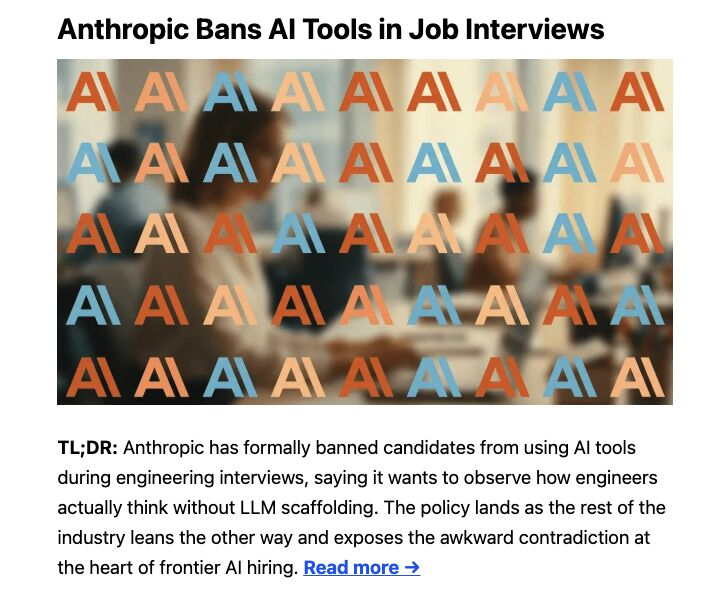
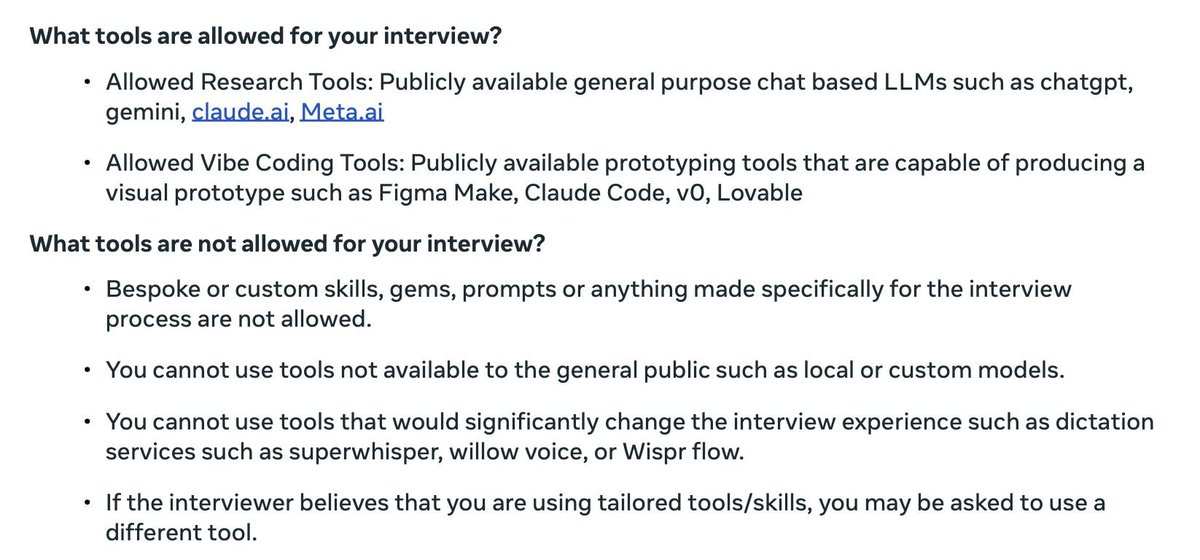
I'm sure Anthropic has reasons for disallowing AI tool usage during engineering interviews but it's a bit odd to me.
I learn so much about someone by watching them use AI to get something done: which tool they reach for, how they set up the context, how they frame the prompt, how they steer the AI by iterating in a session by inserting judgement/taste, etc.
I can see why you'd want to disallow AI usage in *some* interviews - there are plenty of other dimensions to evaluate in addition to AI fluency.
But banning AI usage in *all?* interviews means the company now has to evaluate this competency in different ways like take-homes (which most companies are very bad at extracting signal from in the AI era IMO).
Will be interesting to see how this plays out but when the dust settles, I have a feeling many interview loops will include at least one live AI session by default.
2
129
Ben Erez retweeted

May 27
"We think that with AI we can replace all of our Jr developers in our company"
AWS CEO Matt Garman: "That's the dumbest thing I've ever heard"
157
687
8,632
696,843
May 26
Thanks for the shout out Eric! You and @lennysan gave us real inspiration 🫶

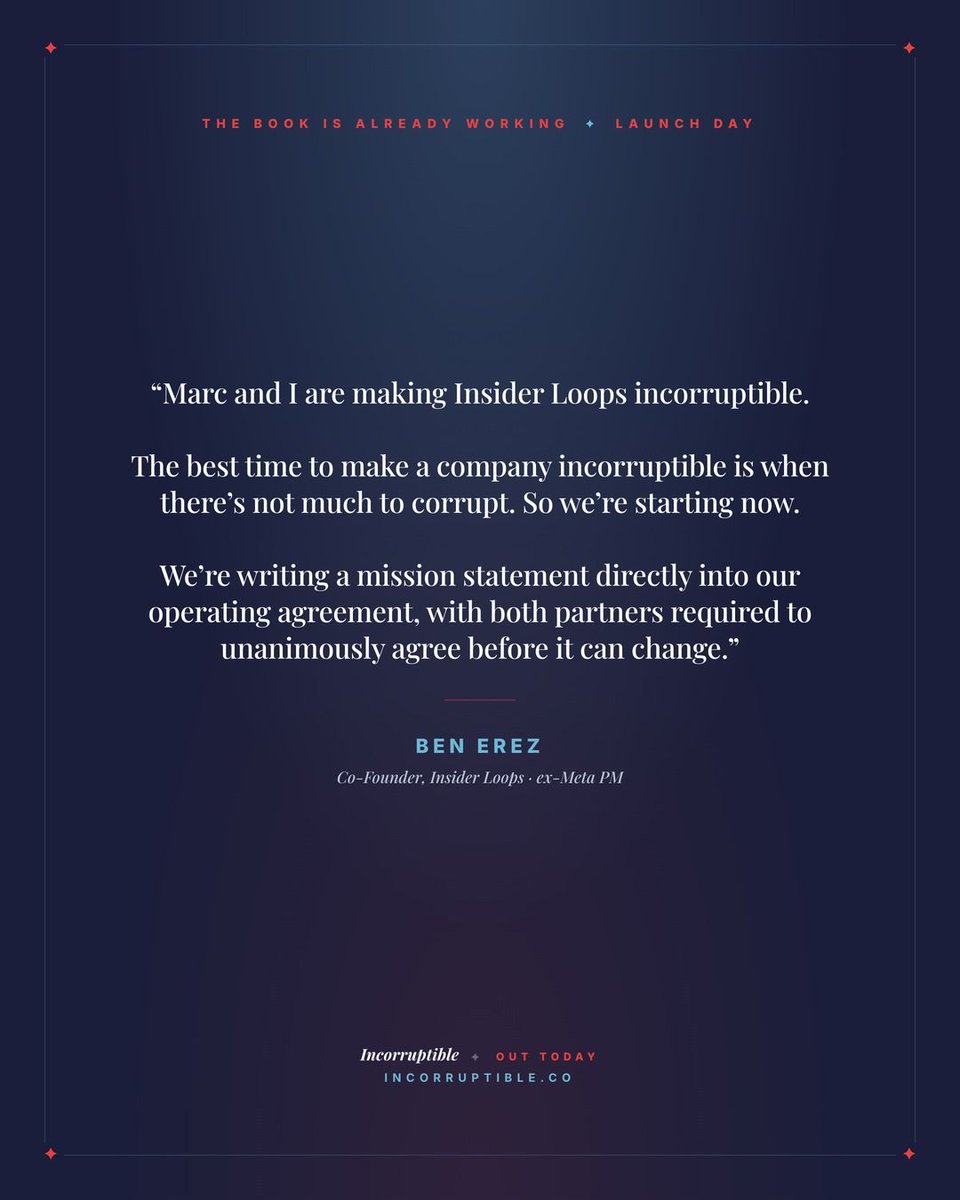
Ben Erez and his co-founder Marc are building Insider Loops. They haven't even read Incorruptible yet. Just hearing about the argument on Lenny's podcast was enough.
Now they're writing the mission directly into their operating agreement, with both partners required to unanimously agree before it can change. They also launched a scholarship for laid-off PMs as their first proof of life.
From Ben's post: "The best time to make a company incorruptible is when there's not much to corrupt. So we're starting now."
The book is officially out today. The blueprint is already in use.
ALT Quote from Ben Erez, Co-Founder of Insider Loops: Marc and I are making Insider Loops incorruptible. The best time to make a company incorruptible is when there's not much to corrupt. So we're starting now.
2
182

Ben Erez and his co-founder Marc are building Insider Loops. They haven't even read Incorruptible yet. Just hearing about the argument on Lenny's podcast was enough.
Now they're writing the mission directly into their operating agreement, with both partners required to unanimously agree before it can change. They also launched a scholarship for laid-off PMs as their first proof of life.
From Ben's post: "The best time to make a company incorruptible is when there's not much to corrupt. So we're starting now."
The book is officially out today. The blueprint is already in use.
ALT Quote from Ben Erez, Co-Founder of Insider Loops: Marc and I are making Insider Loops incorruptible. The best time to make a company incorruptible is when there's not much to corrupt. So we're starting now.
2
4
17
1,541
May 26
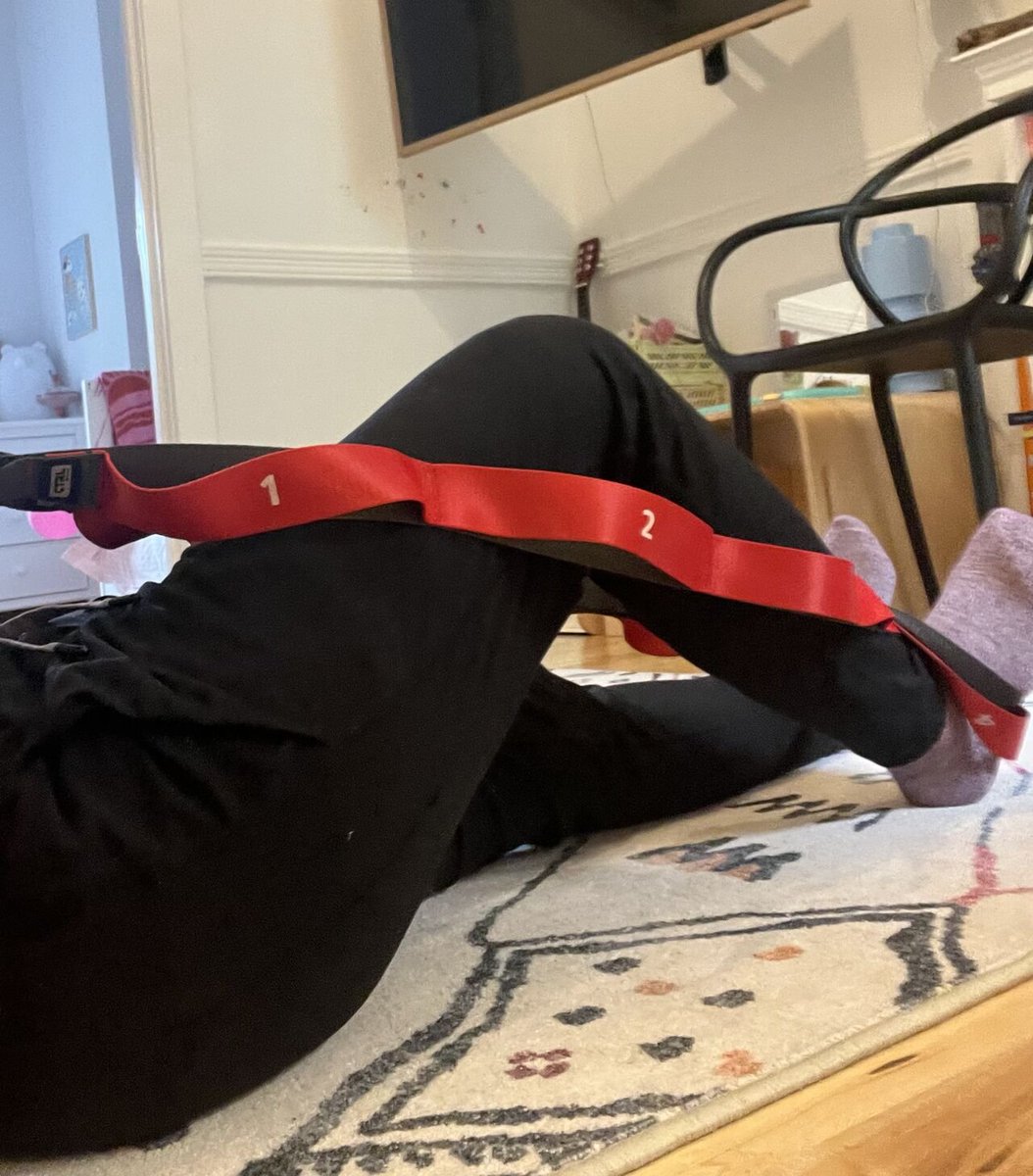
One of my 3 goals for post-ACL rehab is to restore range of motion (i.e. bending).
This means I’m laying down on the floor multiple times every day, trying to get my heel to come closer to my butt by squeezing a stretching band.
This picture is as far as I can go right now. But it’s 2x as far as I went just a few days ago.
Gotta celebrate the little wins. 1% better every day for the next 6-9 months and I’ll be good as new.
And in case you’re curious about the other two physical therapy goals for rehab: reduce swelling and strengthen quads.
Once all three are in good shape, I’ll be able to walk again with a normal gait.
Hoping to get there in the next 2-3 weeks. Trusting the process and putting in the work 💪
1
82
Ben Erez retweeted

May 24
This is what antisemitism has always looked like. Take successful companies, list them out, add “Jewish,” pretend you discovered something.
May 23

Who controls the media?
Meta owns:
Facebook
Instagram
WhatsApp
Messenger
Threads
Oculus / Meta Quest VR
Meta AI
Meta is controlled by Mark Zuckerberg who is jewish
Alphabet owns:
Google
YouTube
Android
Gmail
Chrome
Pixel phones
Nest smart home devices
Fitbit (acquired in 2021)
DeepMind
Gemini AI assistant/model family
Waymo — self-driving cars
Verily — health technology
Calico — longevity research
Wing — drone delivery
Alphabet is controlled by Larry Page and Sergey Brin who are both jewish
Tic Tok
U.S. algorithm, cybersecurity and infrastructure is controlled by Oracle
Oracle is controlled by Larry Ellison and he’s jewish
Hookup Apps
Match Group owns:
Tinder
Hinge
OkCupid
Match.com
Plenty of Fish
Meetic
The League
BLK
Archer
OurTime
Was founded by Barry Diller who is jewish
Grindr
Was founded by Joel Simkhai who is jewish
Bumble
Was founded by Whitney Wolfe Herd who is jewish
Porn
Onlyfans
Owned by Leonid Radvinsky who is jewish
Vixen Media Group owns:
Blacked
Blacked Raw
Vixen
Tushy
Deeper
Founded by Greg Lansky who is jewish
Aylo/MindGeek Owns/owned:
Pornhub
YouPorn
RedTube
Brazzers
Reality Kings
Digital Playground
Men.com
Sean Cody
Tube8
Solomon Friedman is the owner of Aylo and he’s jewish
Gamma Entertainment owns/operates:
Adult Time
Pure Taboo
Wicked
Girlsway
many affiliate studios/platforms
Founded by Karl Bernard who is jewish
Movies/TV/News
Warner Brothers Discovery owns:
Warner Bros. Pictures
HBO
CNN
DC Studios
Cartoon Network
Discovery Channel
TNT
TBS
Max (formerly HBO Max)
Adult Swim
HGTV
Food Network
Animal Planet
Warner Brothers is run by David Zaslav who is jewish
Disney owns:
ESPN
ABC
Marvel Studios
Lucasfilm
Pixar
20th Century Studios
Disney
Hulu (major controlling stake)
National Geographic
Disney is run by Bob Iger who is jewish
Paramount Global owns:
Broadcast & News
CBS
CBS News
CBS Sports
Local CBS stations
Film Studios
Paramount Pictures
Paramount Animation
Paramount Players
Cable Networks
MTV
Nickelodeon
Comedy Central
BET
VH1
CMT
TV Land
Smithsonian Channel
Logo TV
Pop TV
Streaming & Premium
Paramount
Showtime
Pluto TV
Major franchises/IP
Top Gun
Mission: Impossible
Star Trek
South Park (licensing/streaming arrangements)
SpongeBob SquarePants
Transformers
Teenage Mutant Ninja Turtles
Paramount Global is controlled by Sheri Redstone, who is jewish
Comcast owns:
* NBCUniversal
* NBC
* Universal Pictures
* Peacock
* MSNBC
* CNBC
* Telemundo
* Sky (Europe)
* DreamWorks Animation
* Xfinity
Comcast is controlled by Roberts family who is Jewish
AI/Data Centers
OpenAI/ChatGPT
Run by Sam Altman who is jewish
Palentir provides advanced data integration, surveillance, AI, and analytics infrastructure used by military, intelligence, law enforcement, and major corporations. Its platforms help organizations combine massive amounts of fragmented data into real-time operational intelligence for warfare, policing, logistics, cybersecurity, manufacturing, and decision-making, making it one of the most strategically influential data and defense technology companies in the world.
Owned and operated by Peter Thiel and Alex Karp both jewish
Oracle owns:
Oracle Database
Java
MySQL
NetSuite
Cerner
Sun Microsystems technologies
It’s important because it owns core infrastructure software that powers governments, banks, hospitals, corporations, and large parts of the internet. Its control of technologies like Oracle Database, Java, MySQL, and Cerner gives it enormous influence over the backend systems modern society depends on.
Owned by Larry Ellison who is jewish
211
122
2,966
533,622