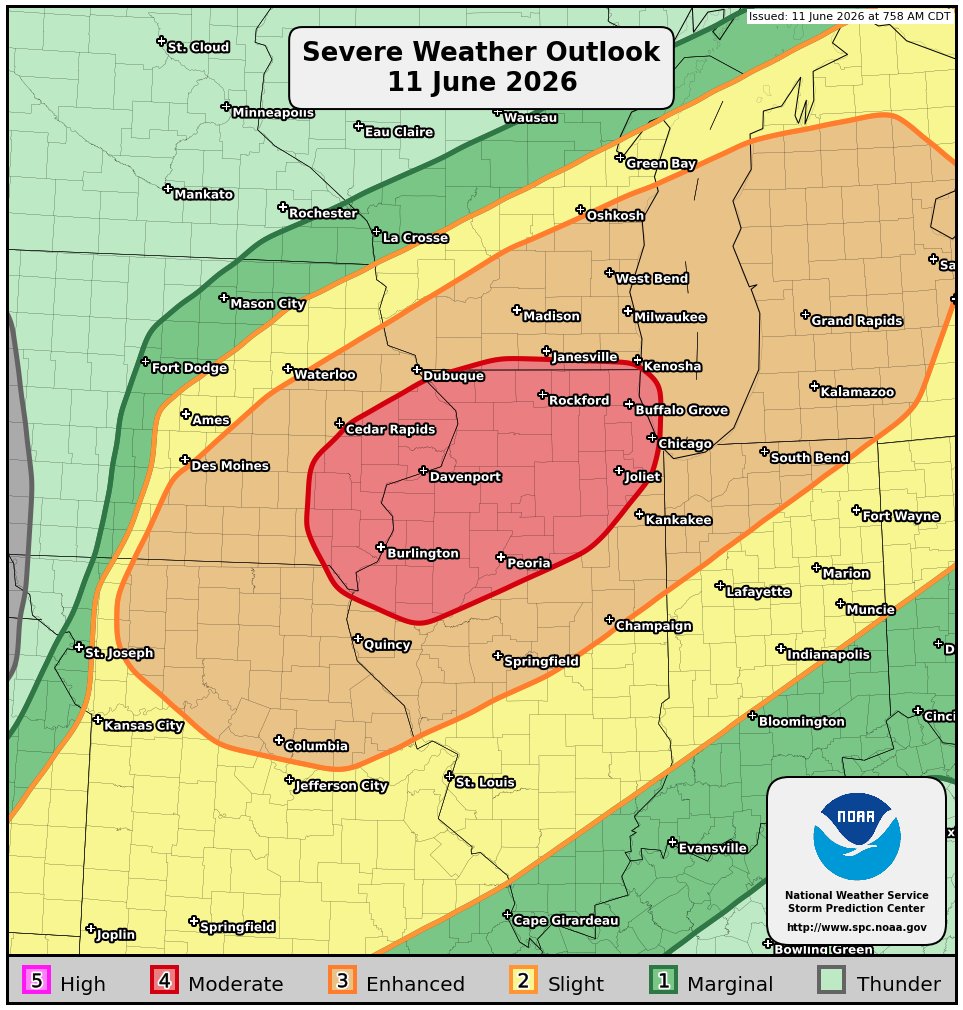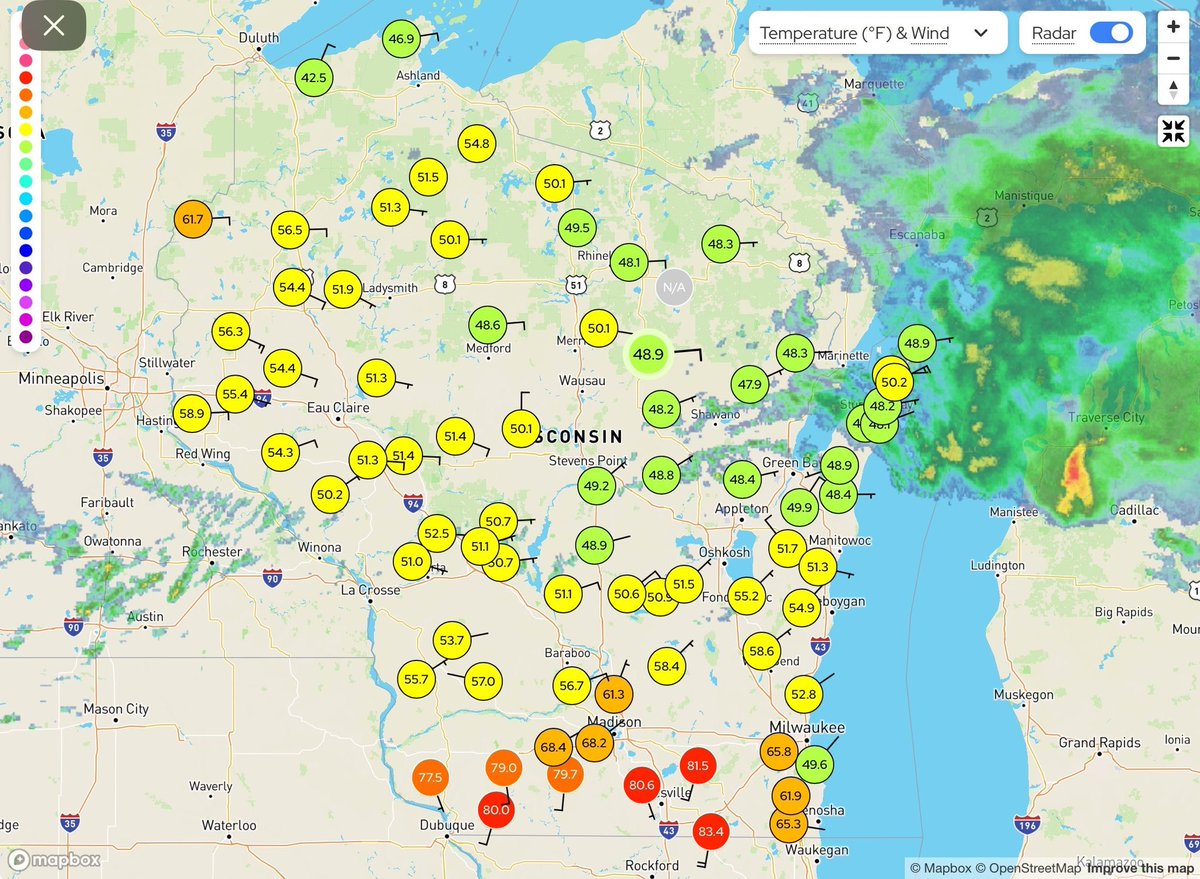
The far southern stateline of Wisconsin has been upgraded to a level 4 out of 5 threat for severe weather today.
Please keep an eye on the weather and take all warnings seriously.
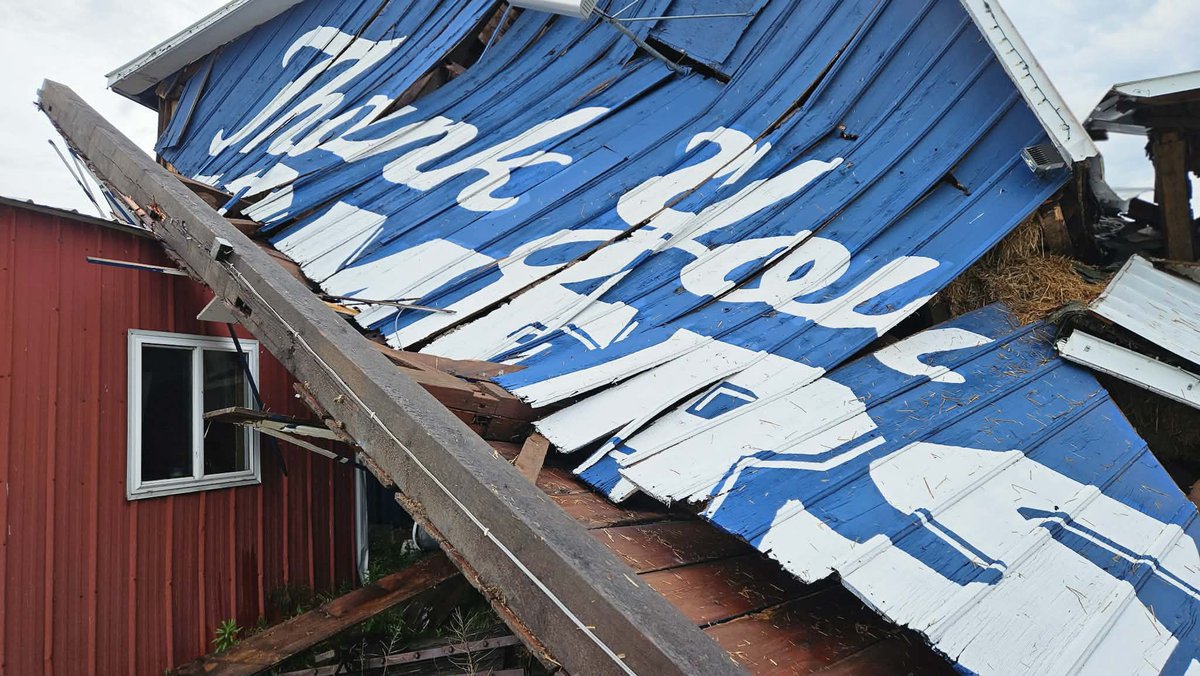
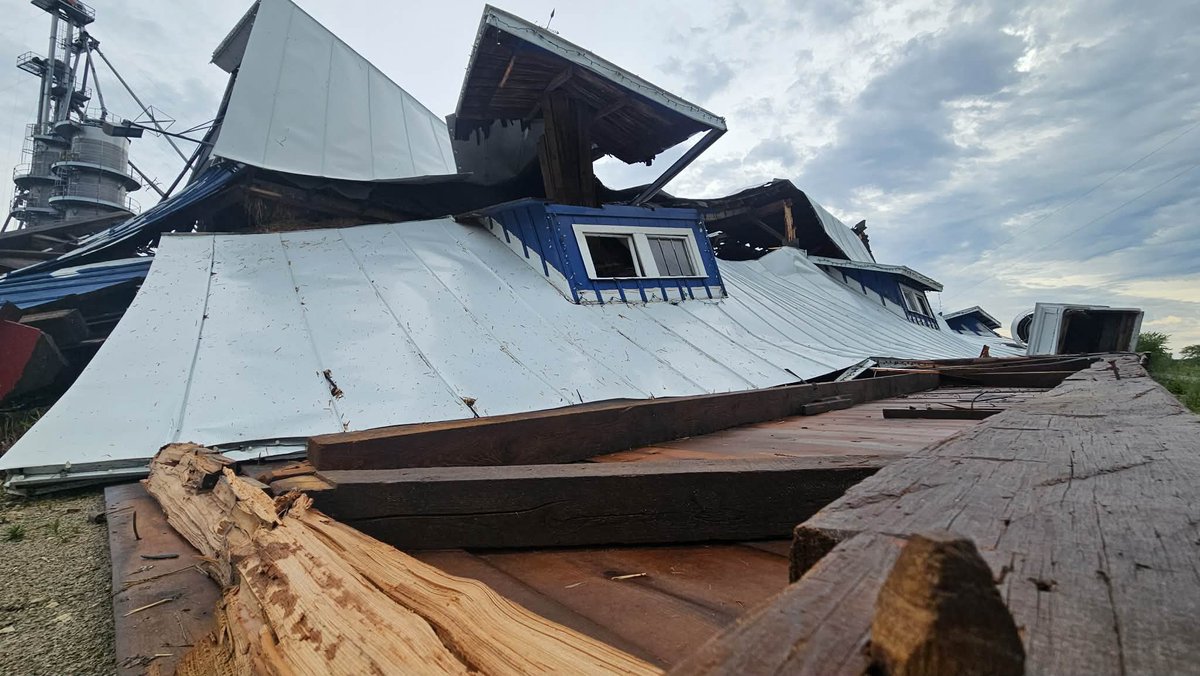
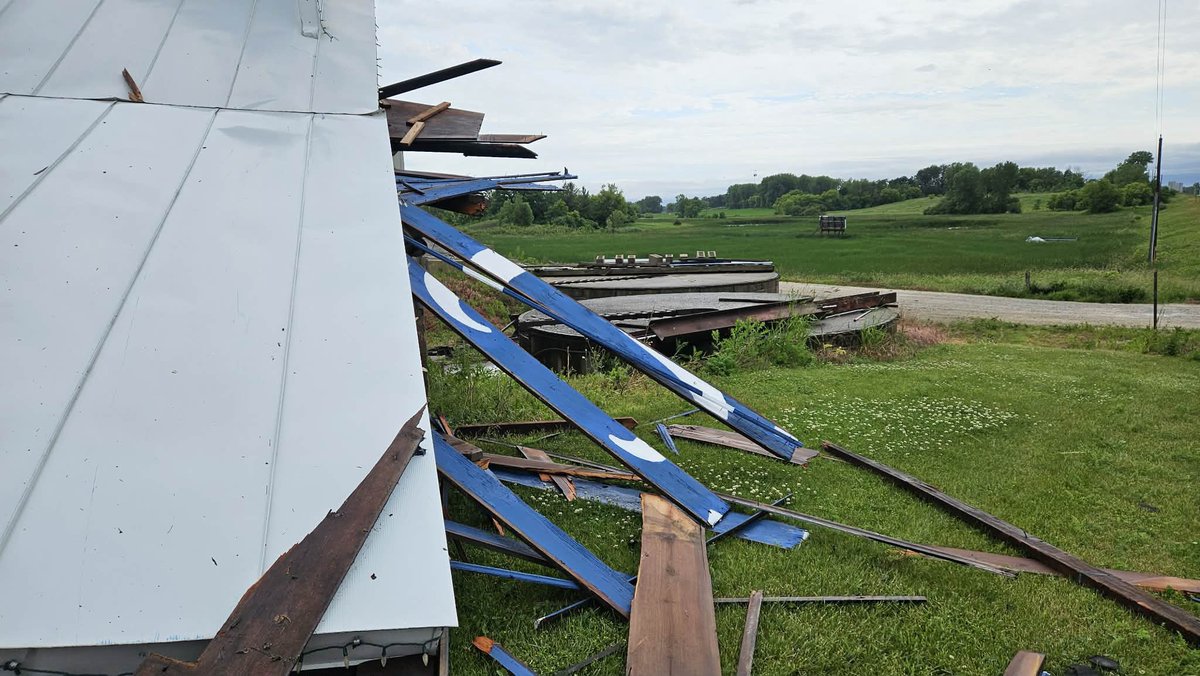
CULVER'S BLUE BARN DAMAGED: With severe weather across Wisconsin, @culvers Blue Barn on the east side of Highway 151 near Beaver Dam has severe damage.
@CBS58 Photographer Corey Ferris took these shots.
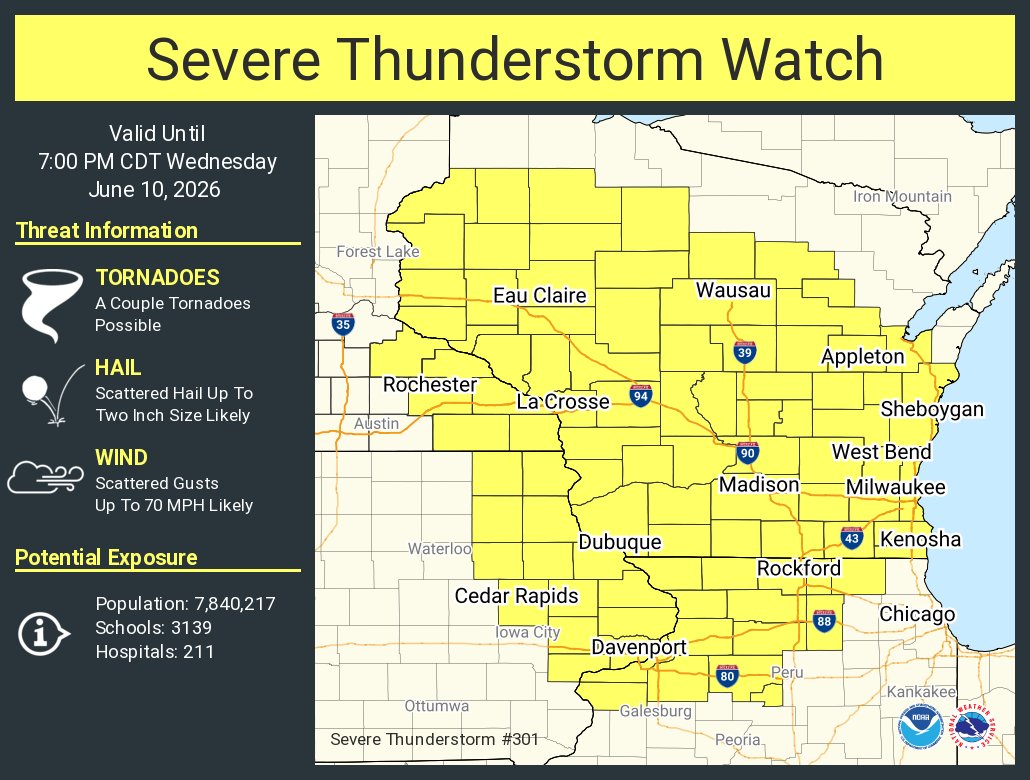
A severe thunderstorm watch has been issued for parts of Illinois, Iowa, Minnesota and Wisconsin until 7 PM CDT
ALT This graphic displays Severe Thunderstorm watch number 301 plotted on a map. The watch is in effect until 7:00 PM CDT. The watch includes parts of Illinois, Iowa, Minnesota and Wisconsin. The threats associated with this watch are a couple tornadoes possible, scattered hail up to two inch size likely and scattered gusts up to 70 mph likely. There are 7,840,217 people in the watch along with 3139 schools and 211 hospitals.
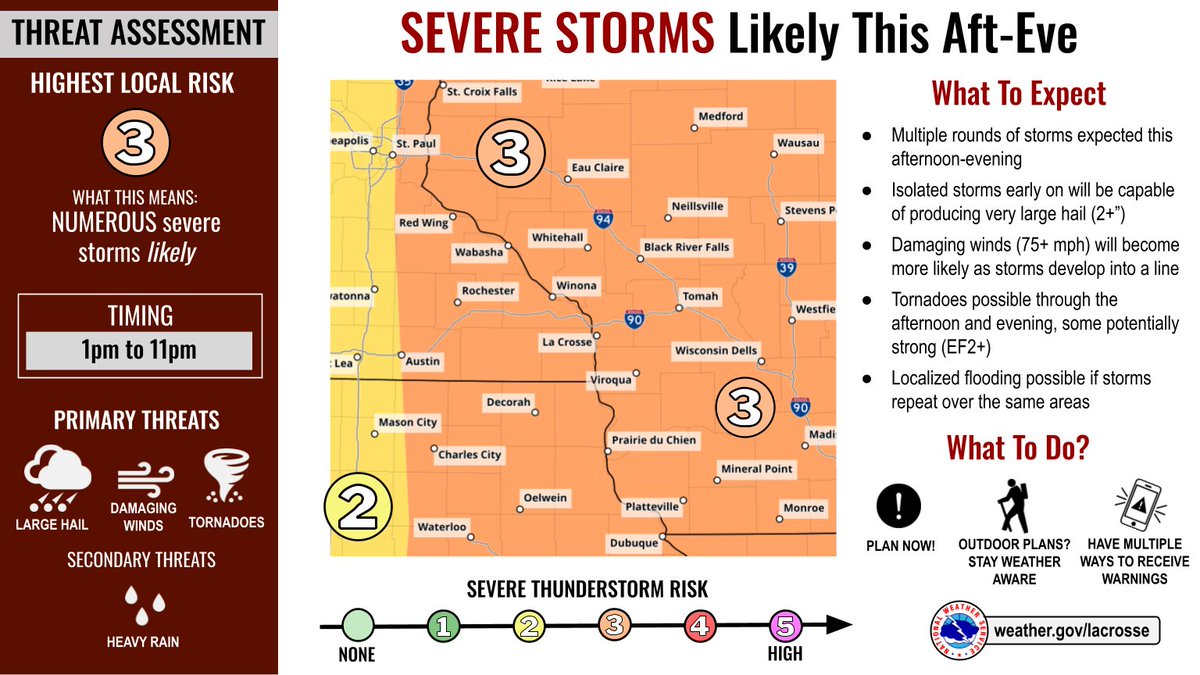
While we have some storms ongoing early this morning, these have been largely sub-severe in our area. The real chance for severe weather ramps up this afternoon and evening with an all hazards event possible as multiple rounds of storms impact the region ⛈️
ALT A map of the severe weather outlook for this afternoon, June 10, showing a level 3 out of 5 risk across the Upper Mississippi River Valley.
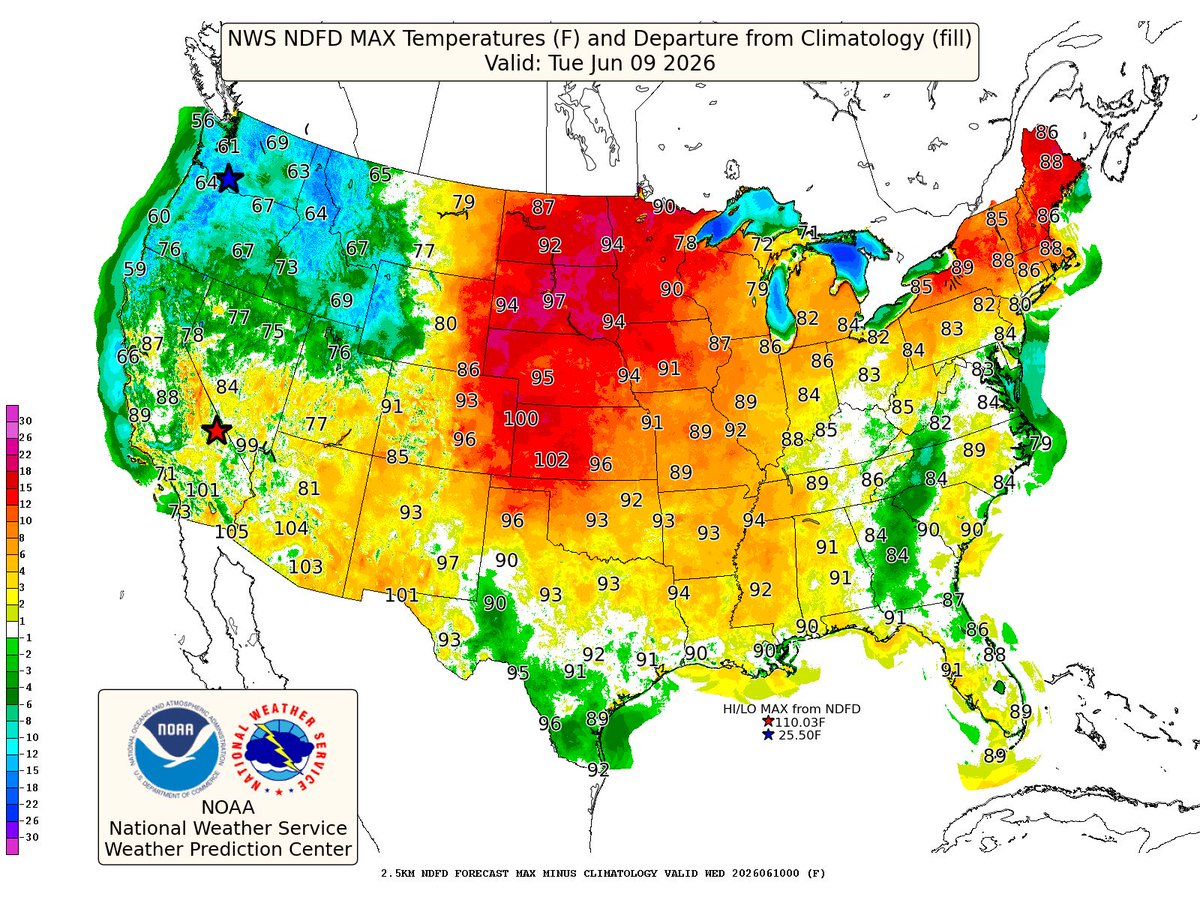
A widespread heat wave will build across the central U.S. through midweek before shifting to the East Coast, where it peaks on Friday, then slowly ease over the weekend.
An early season heatwave can often be more dangerous and pose a greater risk for heat-related illness. This will be the most significant heat so far this summer for many locations.
The most important things you can do in significant heat are to stay hydrated and interrupt your exposure to the heat by taking breaks out of the sun and/or being in cooled locations.
Visit weather.gov for the latest forecast.
ALT Map showing forecast high temperature departures from normal for the contiguous U.S. The highest departures above normal lie in the central and northern Plains.
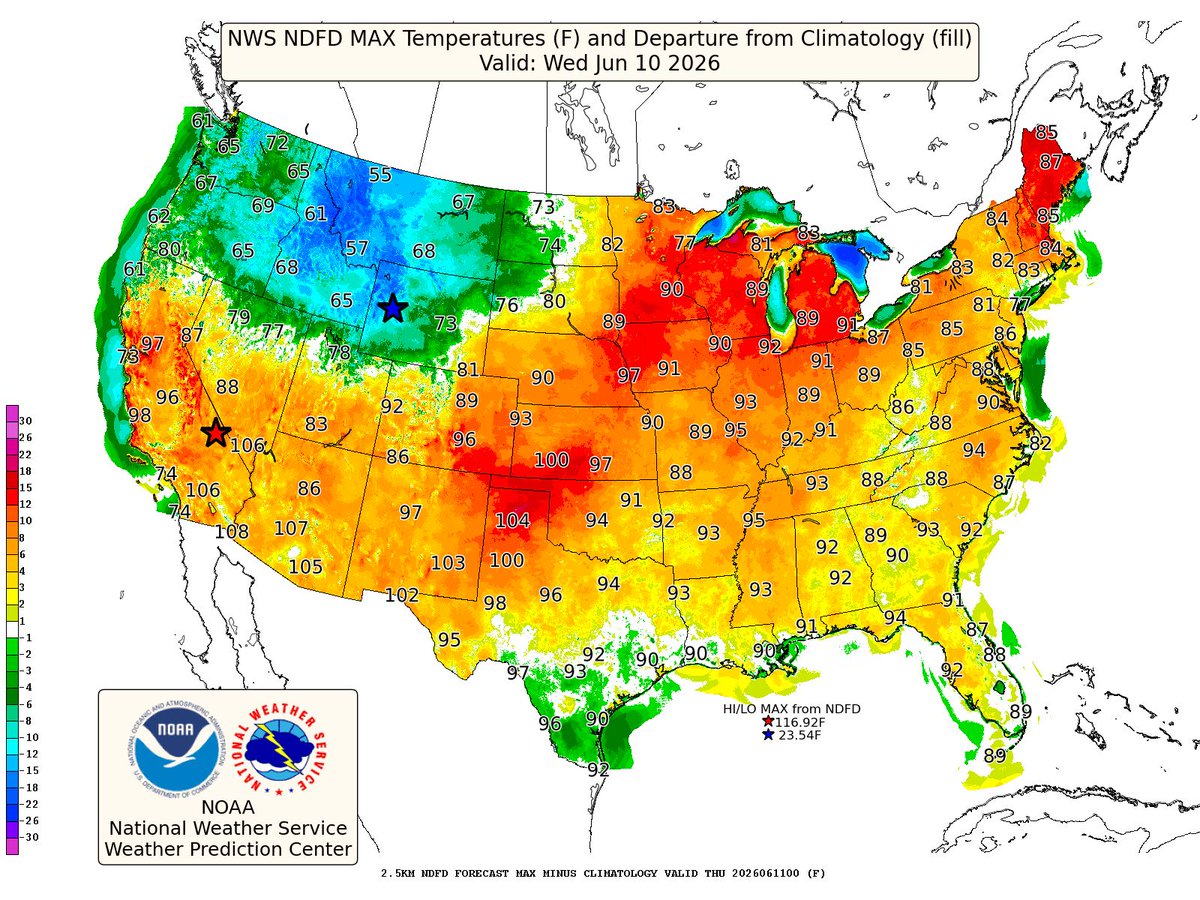
ALT Map showing forecast high temperature departures from normal for the contiguous U.S. The highest departures above normal lie from the Plains, to the Midwest to the NE.
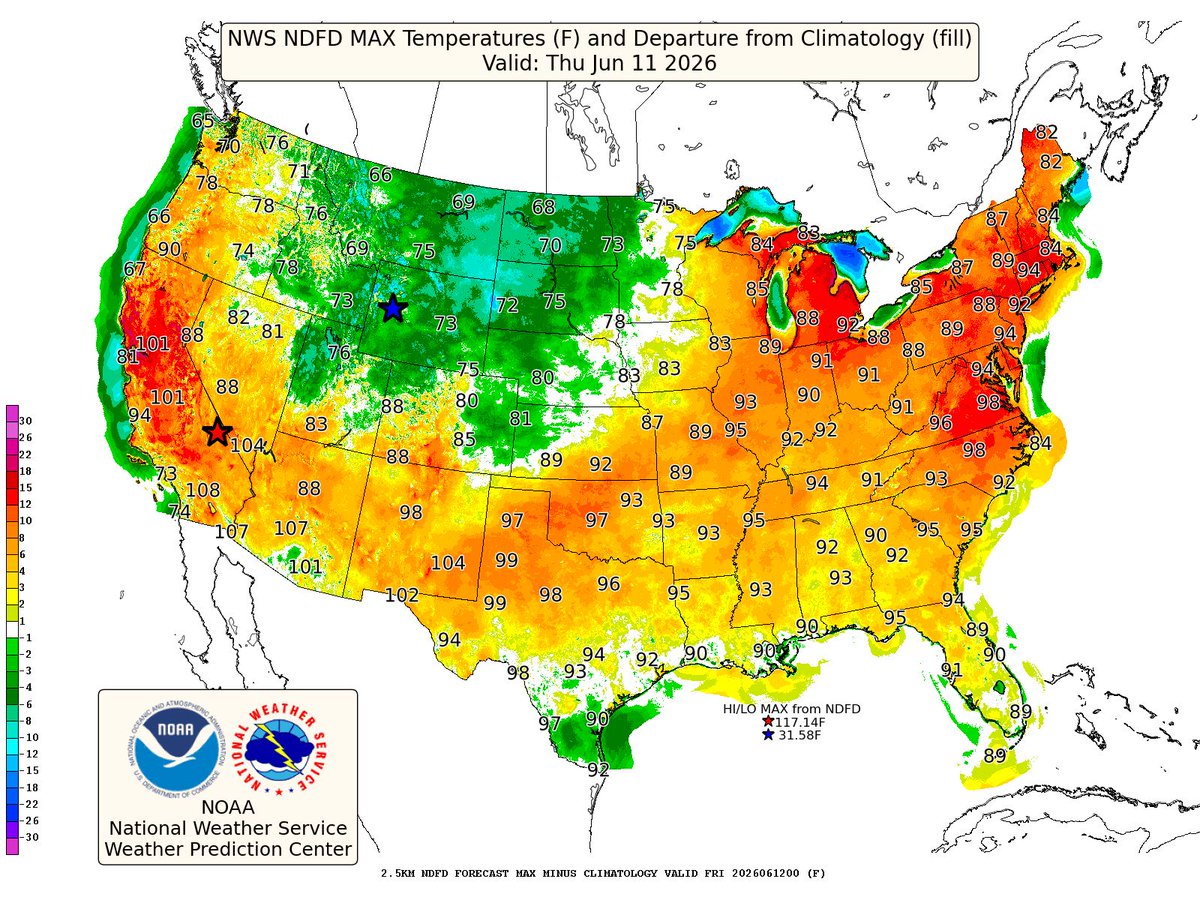
ALT Map showing forecast high temperature departures from normal for the contiguous U.S. The highest departures above normal lie from the Midwest to the NE and Mid-Atlantic.
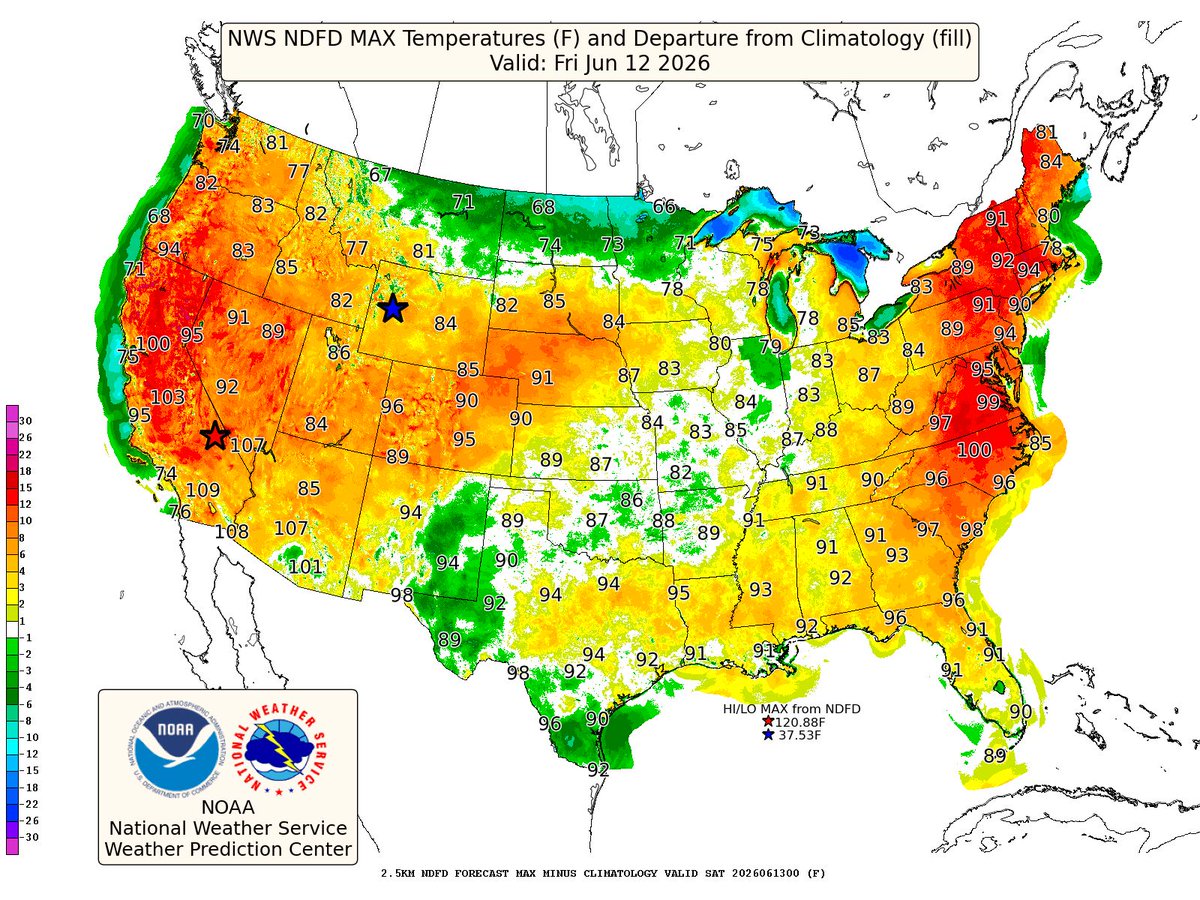
ALT Map showing forecast high temperature departures from normal for the contiguous U.S. The highest departures above normal lie in the NE and Mid-Atlantic.
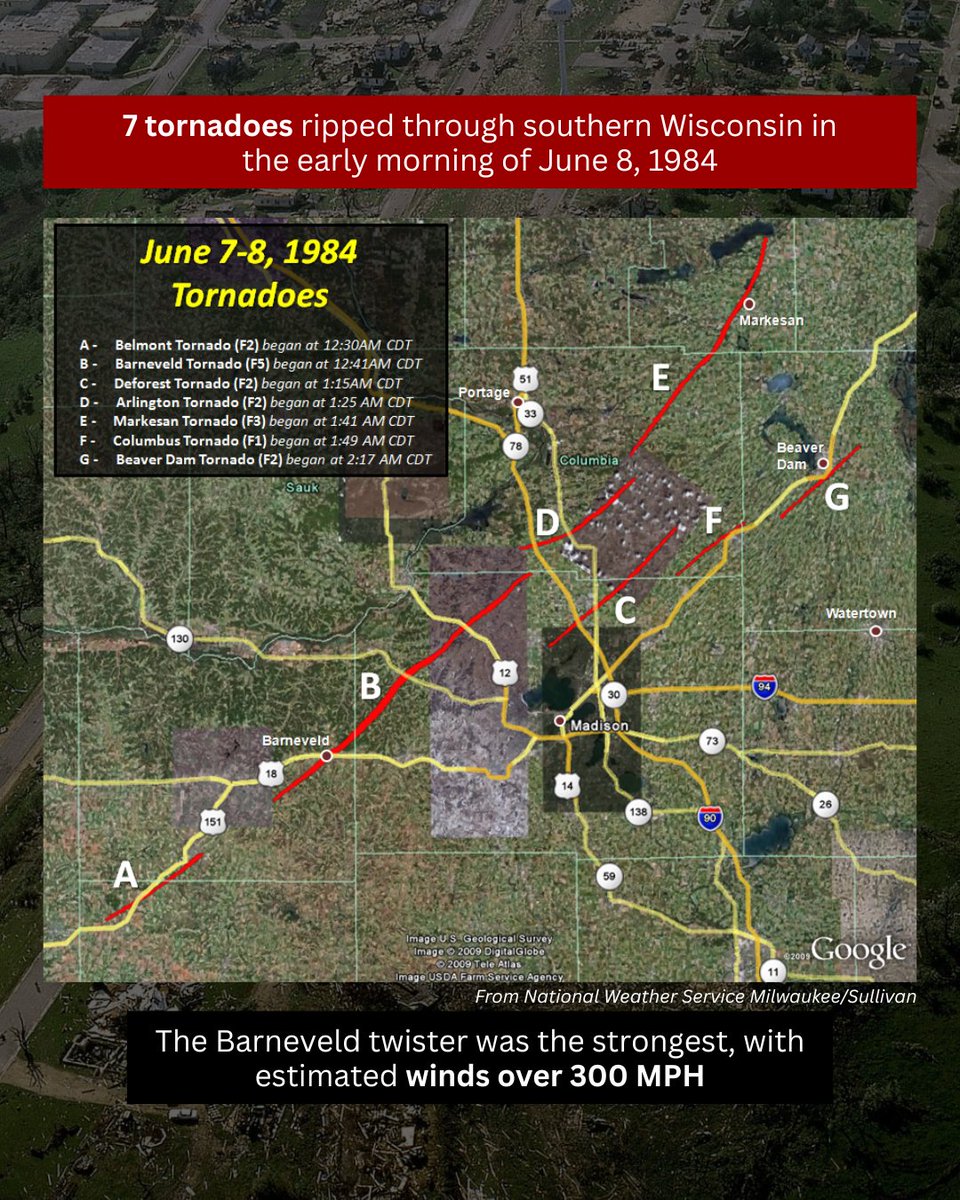
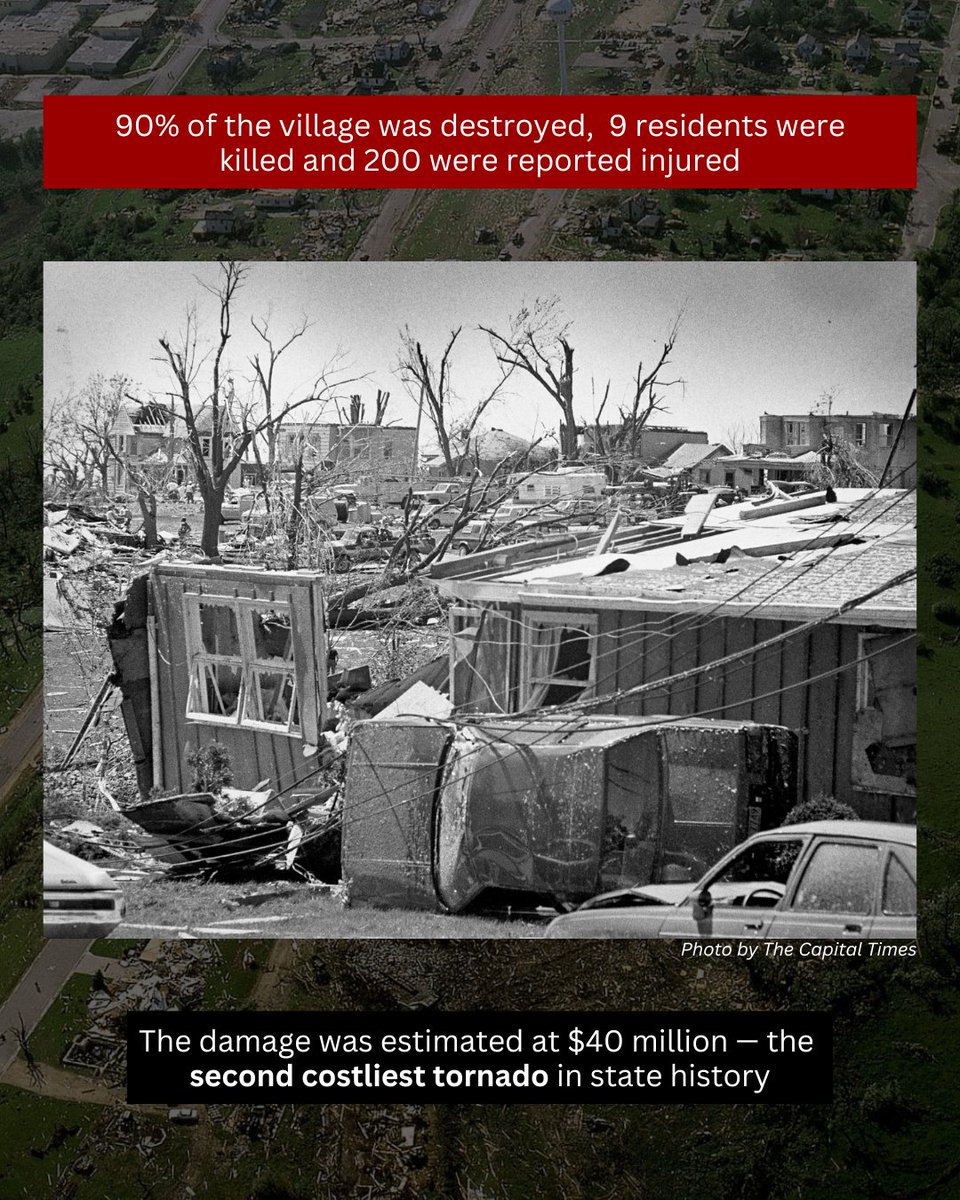
On this day in 1984, a deadly F5 tornado struck the Iowa County village of Barneveld.
Twisters of this strength are rare in Wisconsin, making up only 0.2% of the state's tornadoes since 1955. #wiwx
[6/8/26] 5 AM
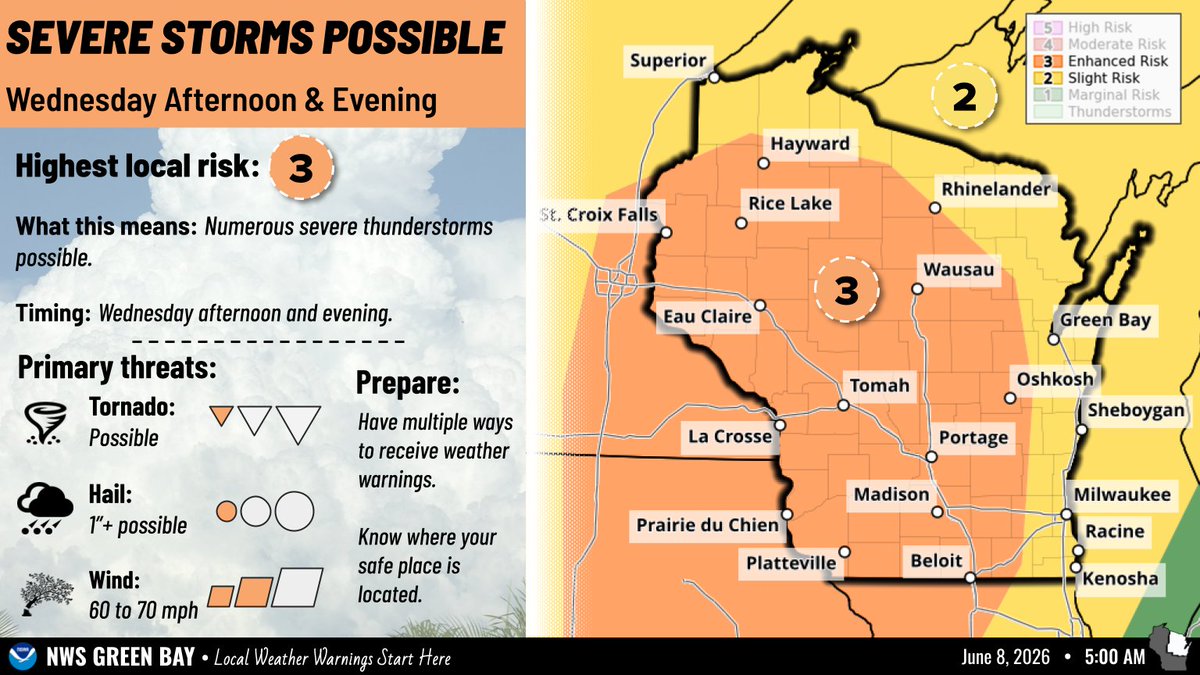
🟠Accompanying the heat and humidity on Wednesday will be a Slight (level 2/5) to Enhanced (level 3/5) risk for severe weather. Although the exact timing and coverage of storms remains uncertain, all severe hazards will be possible. Stay tuned to the forecast!
#wiwx
ALT Right image shows a map of Wisconsin with the Storm Prediction Center's Day 3 Severe Weather Outlook valid for June 10th. To the left against a cumulonimbus background are text descriptions of the severe thunderstorm risk on Wednesday, including timing, location, and potential hazards of severe storms.
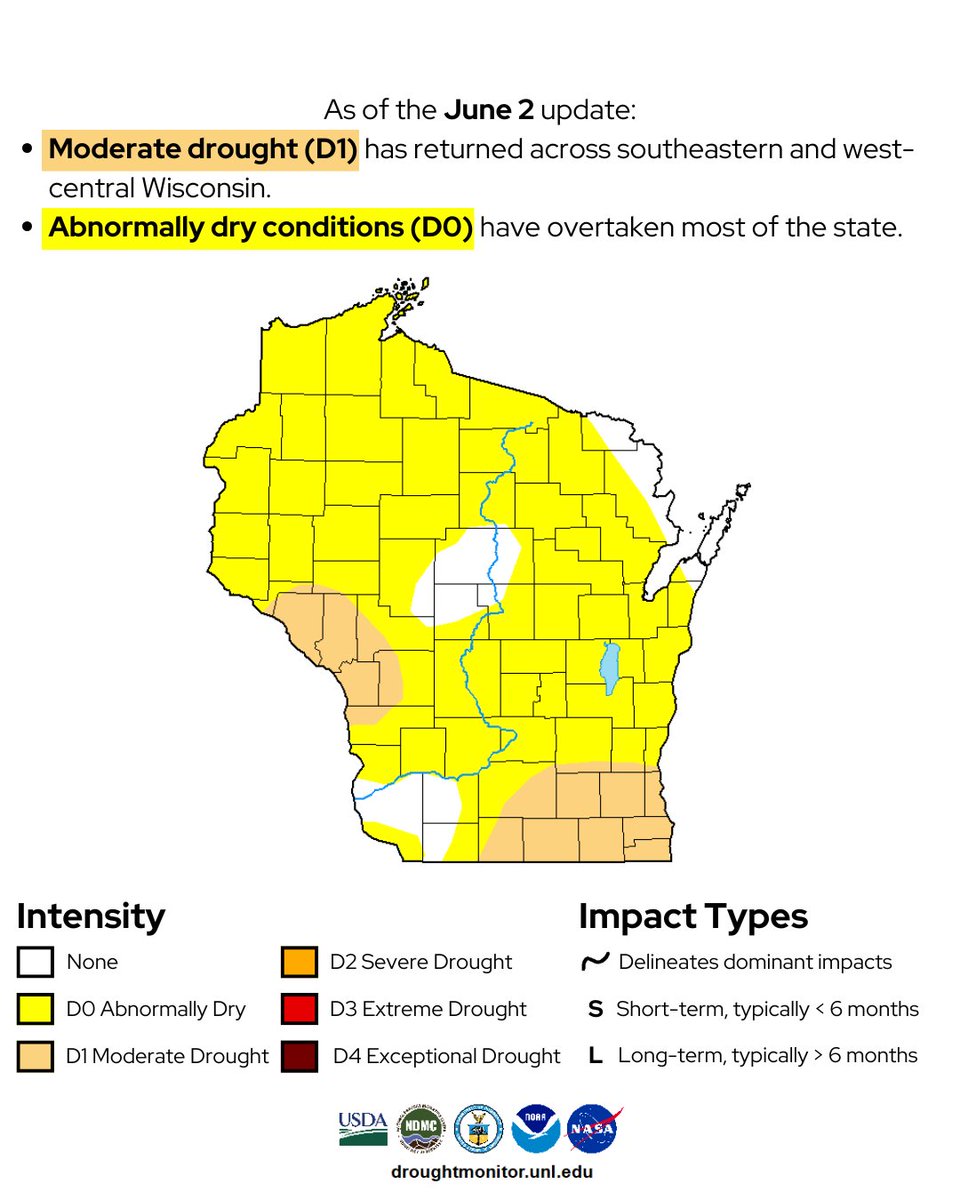
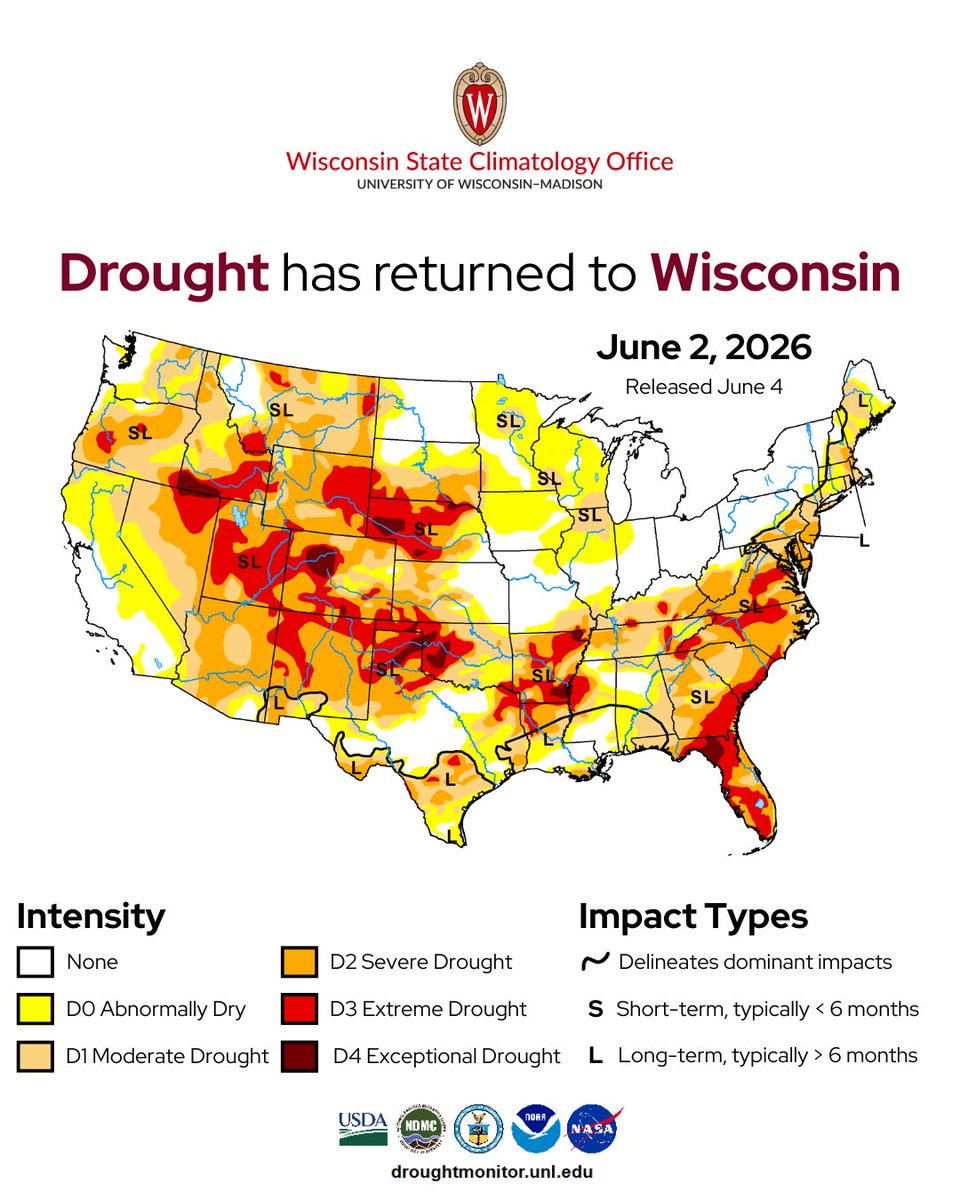
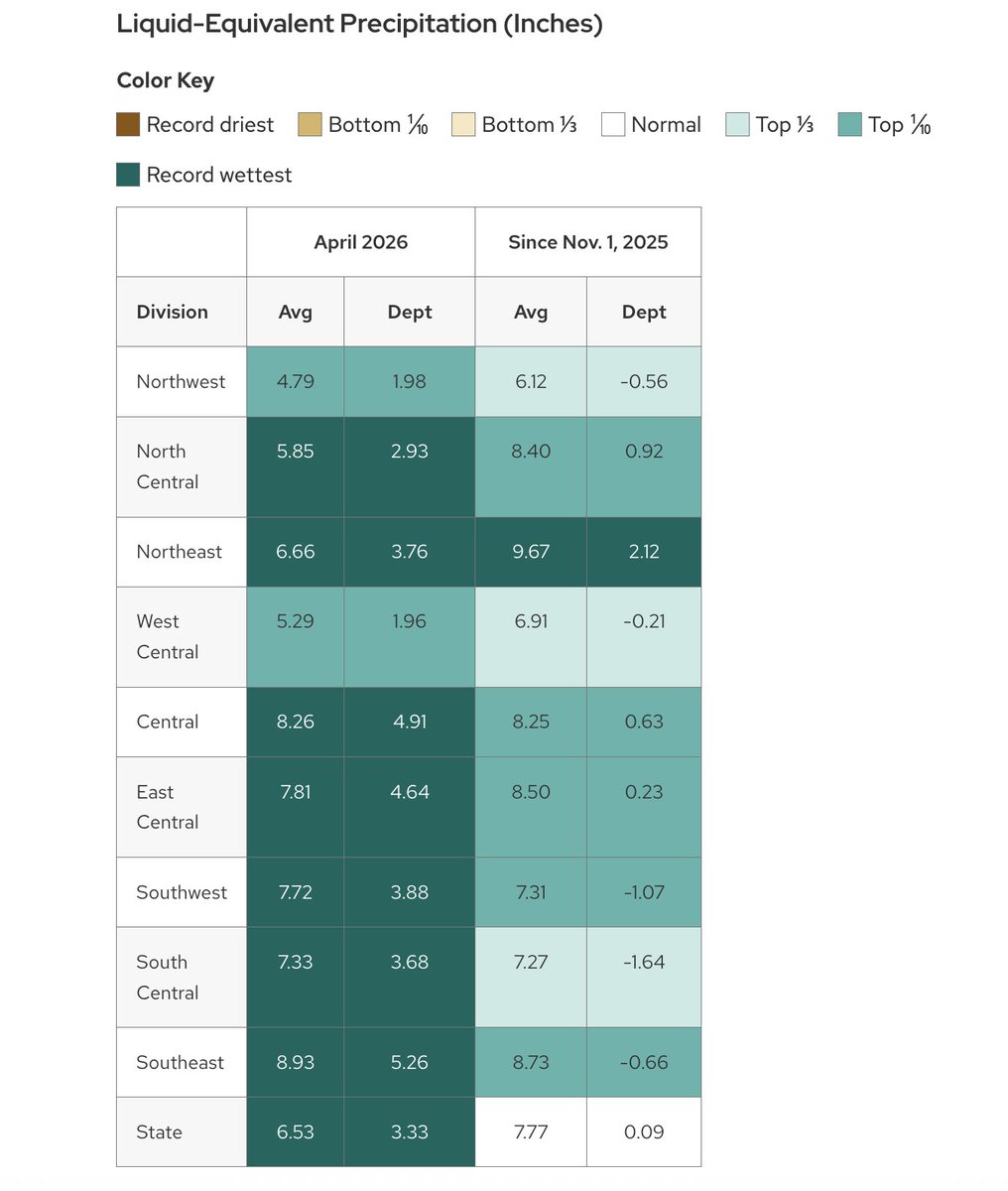
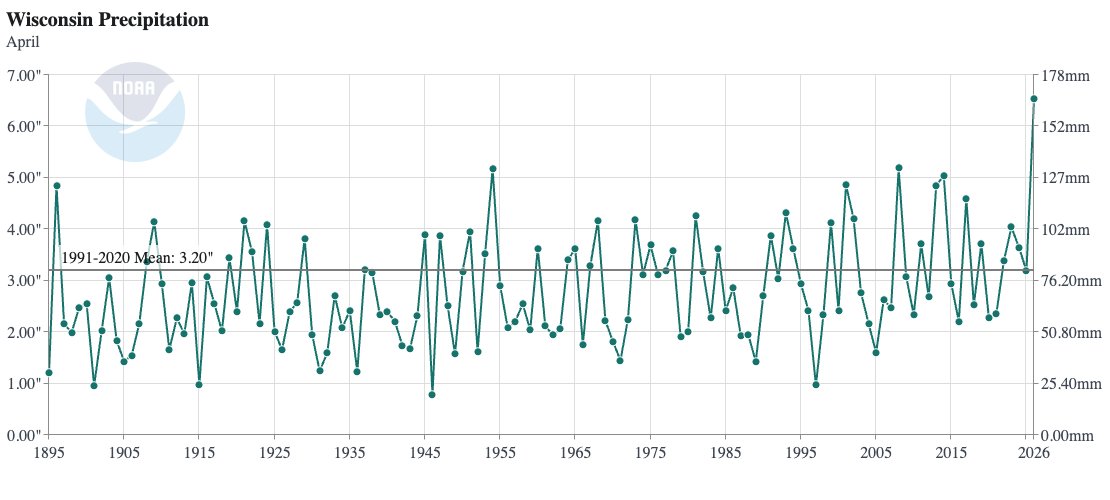
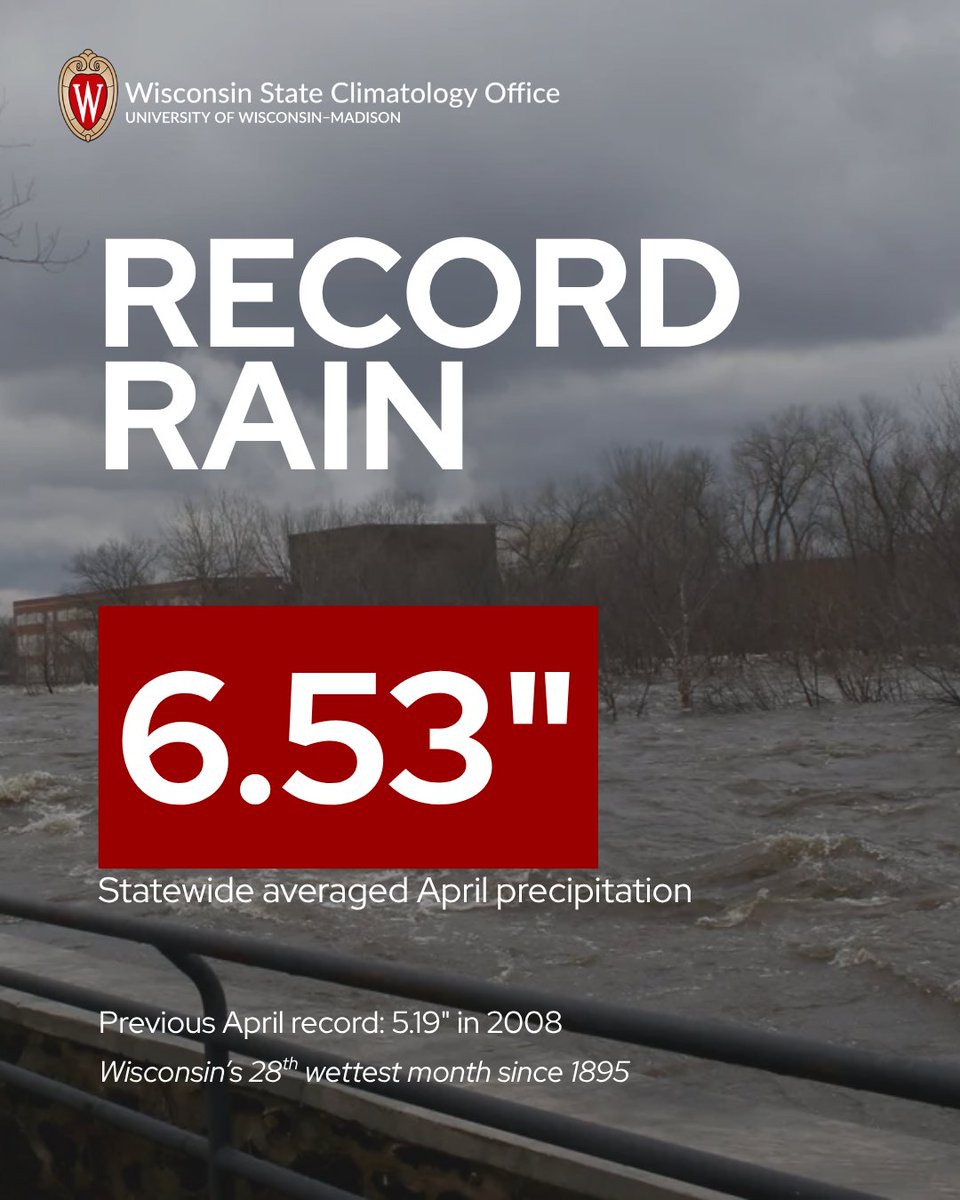
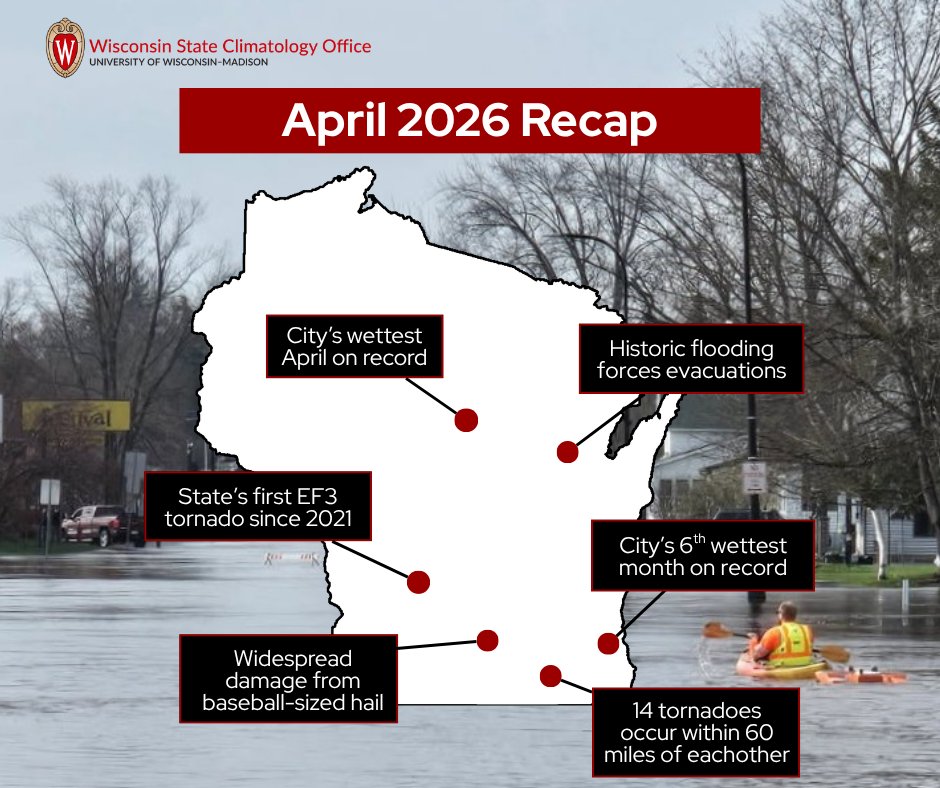
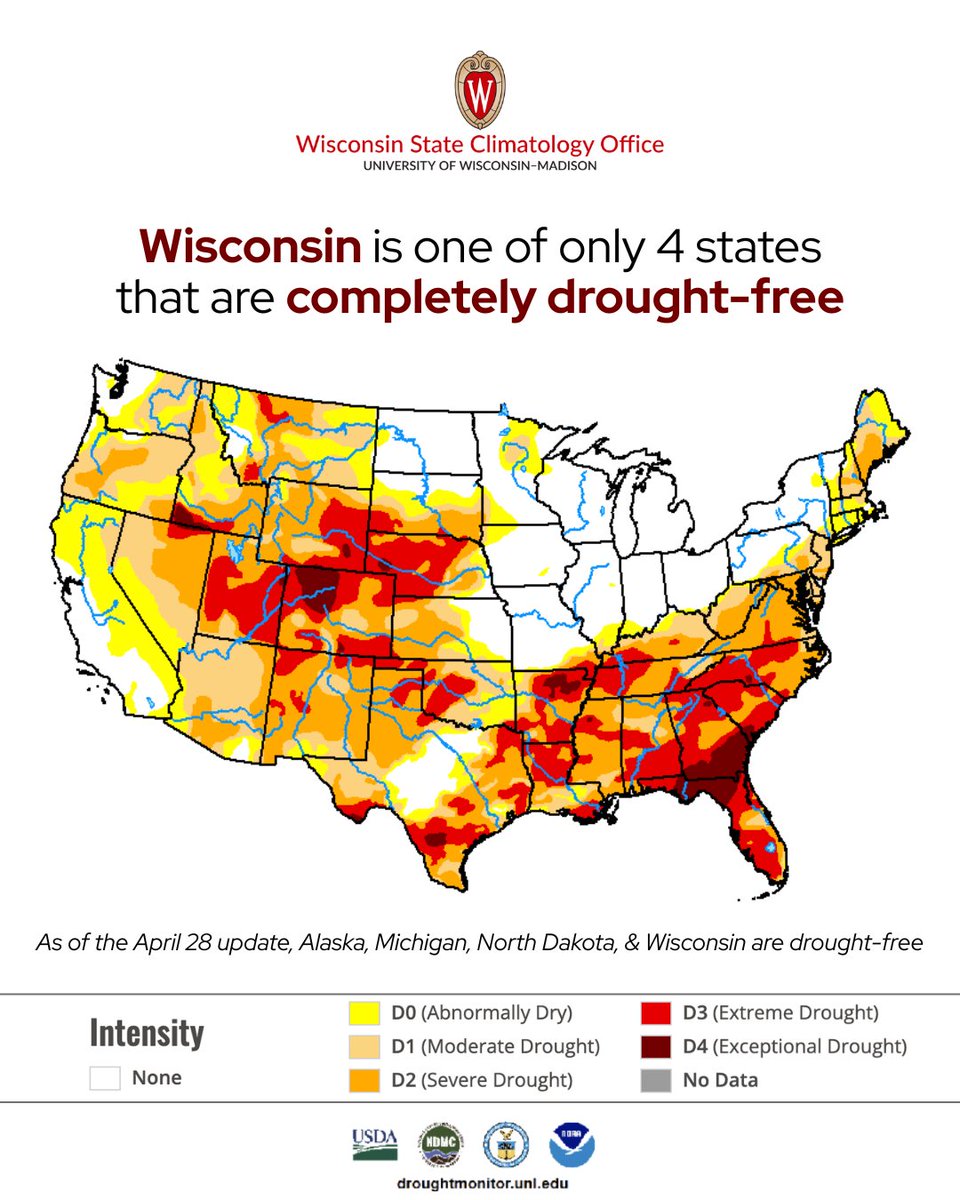
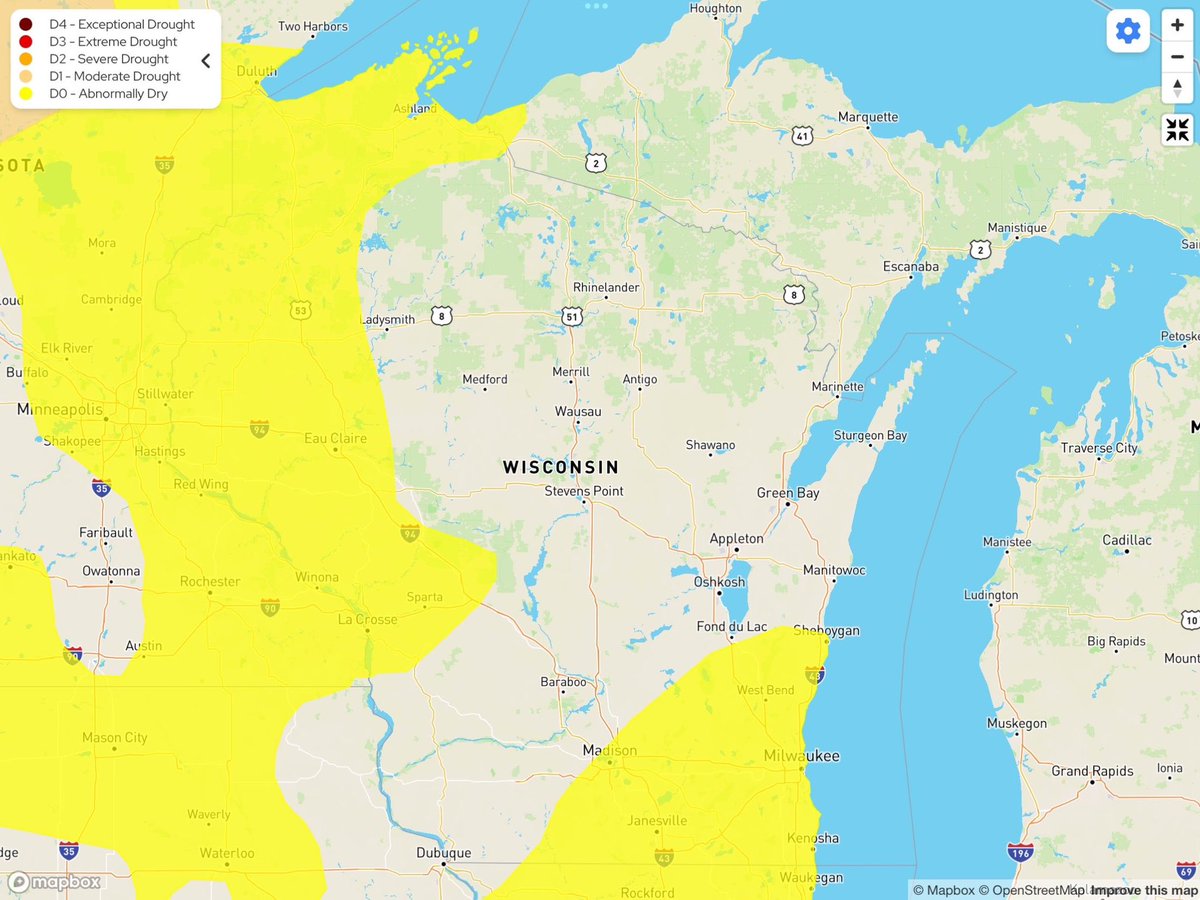
Following record-breaking rainfall in April, Wisconsin entered May largely free of drought concerns.
Now, moderate drought (D1) has returned to 13.5% of the state, with abnormal dryness (D0) covering a vast majority of Wisconsin.
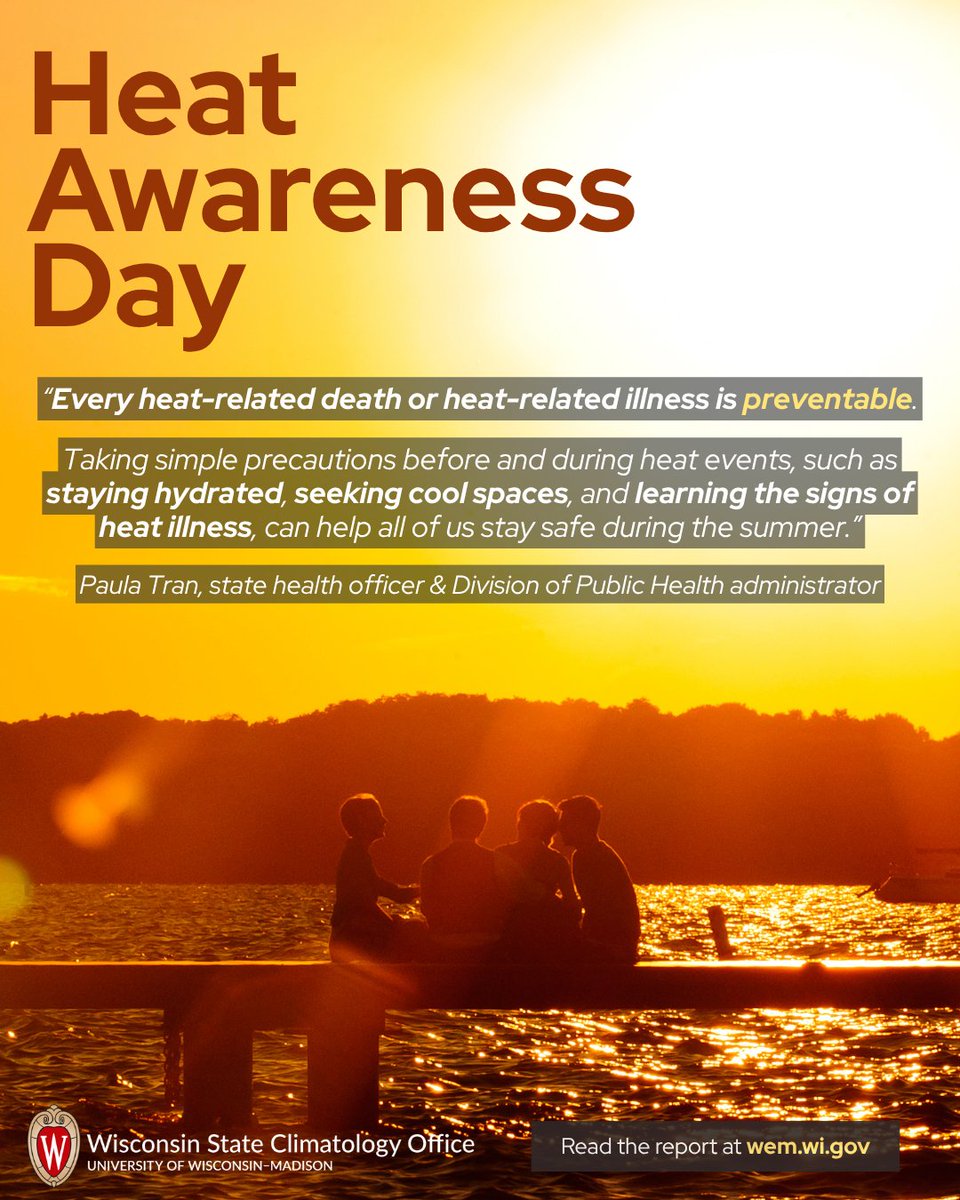
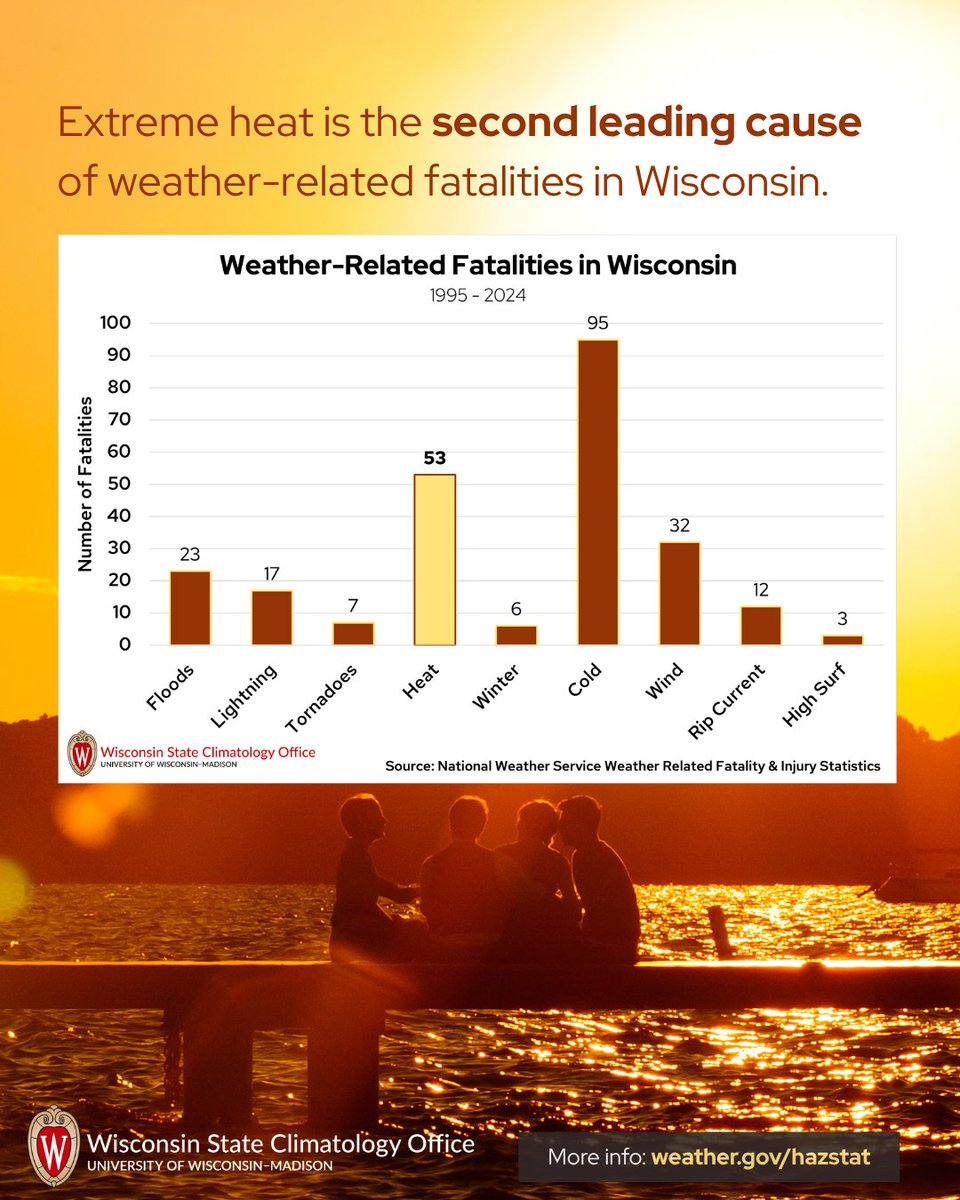
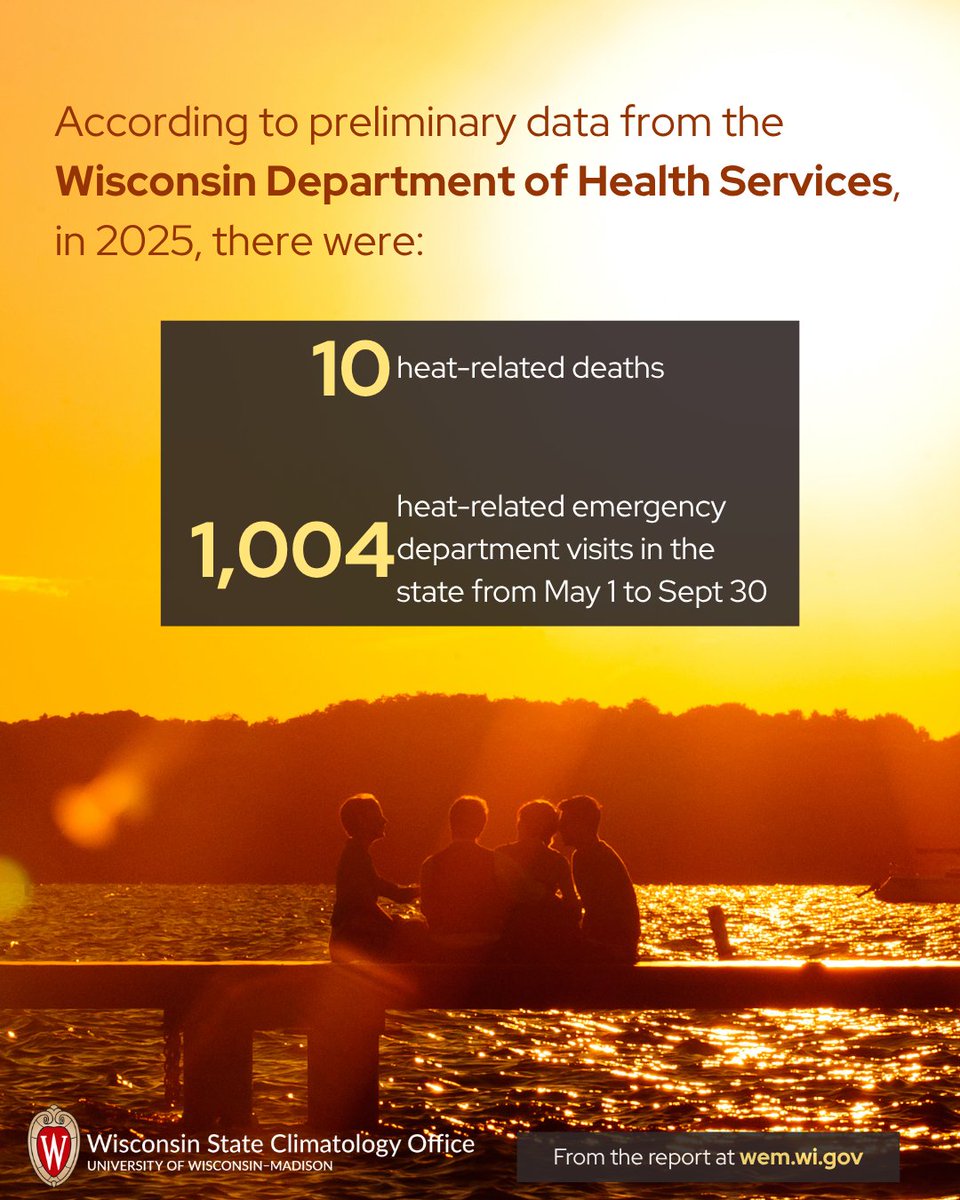
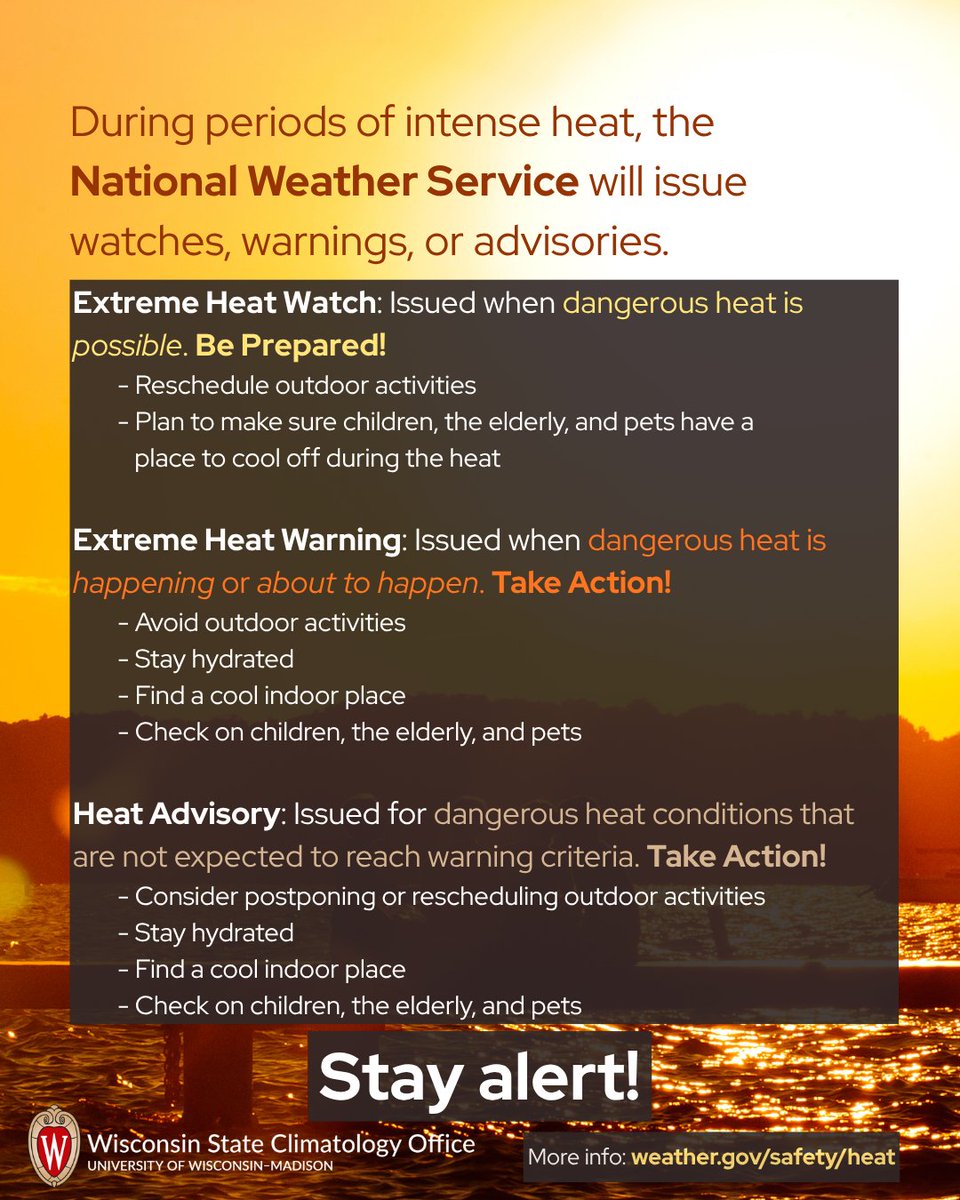
Heat can be more dangerous than many realize, but every heat-related illness and death is preventable.
Learn more about Heat Awareness Day in Wisconsin: wem.wi.gov/readywisconsin-re…
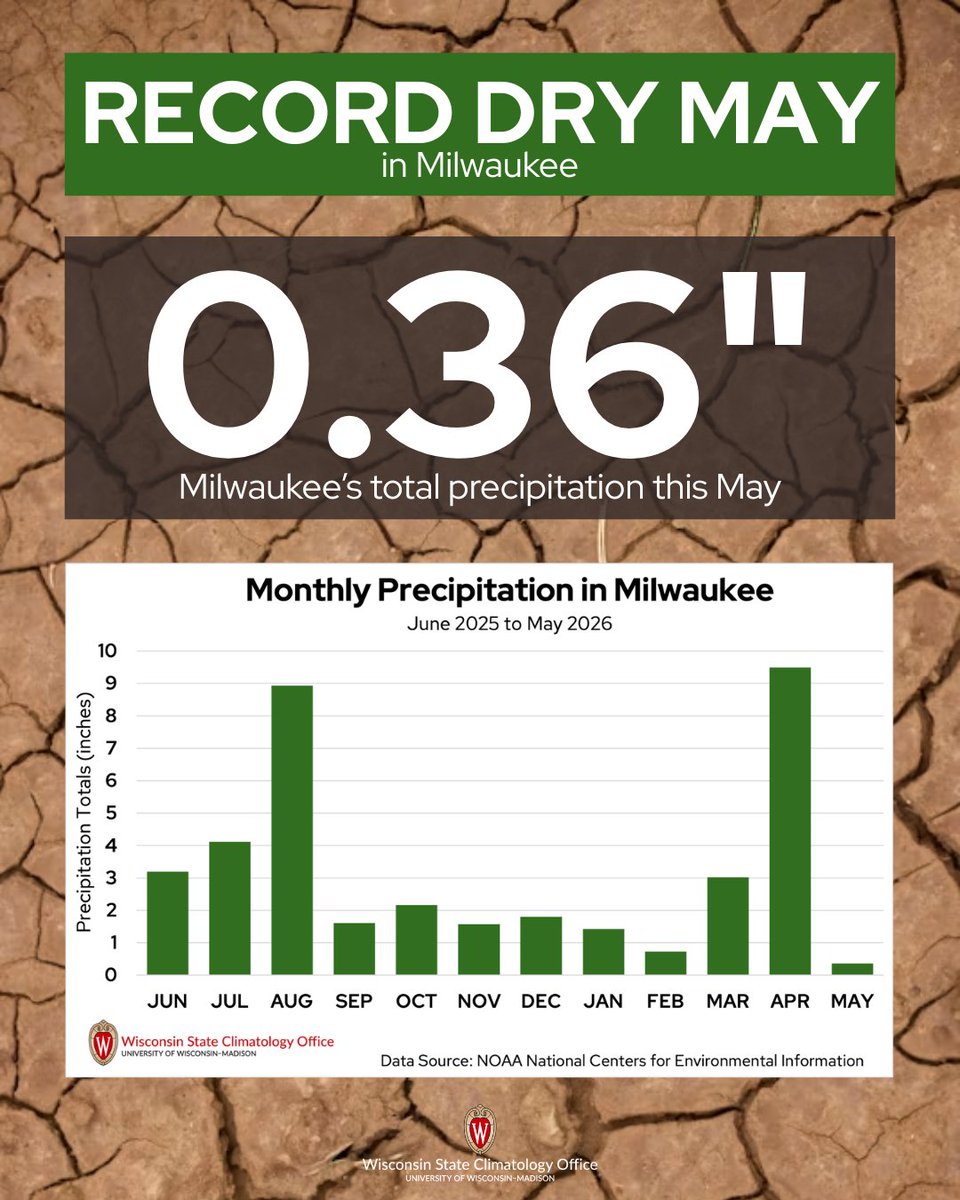
Milwaukee is a prime example of Wisconsin's precipitation ping-pong pattern.
After recording its wettest April on record (9.49"), Brew City swung to its driest May, receiving just 0.36" of precip all month. That's 3.18" below the amount Milwaukee typically receives in May.
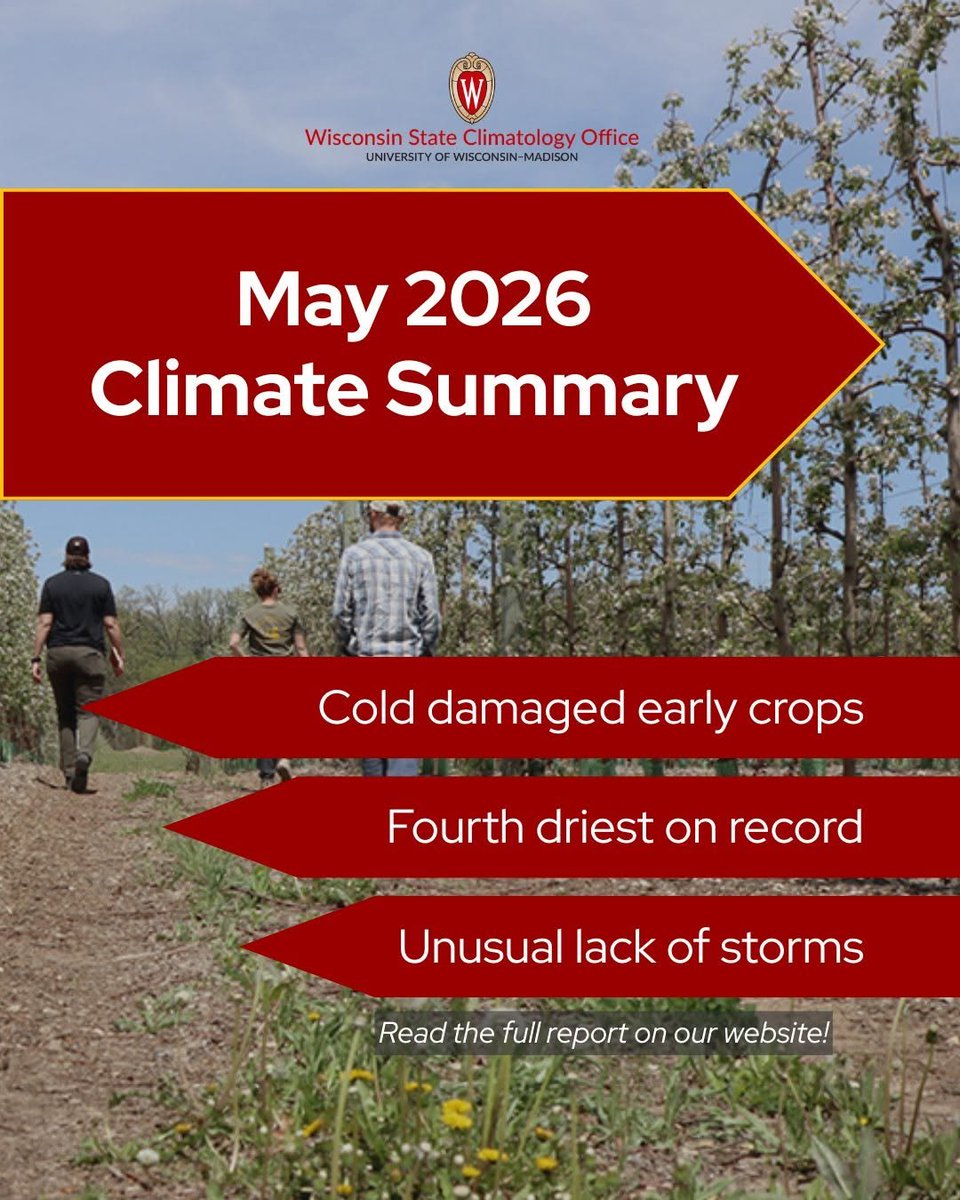
May was a stark change from April. Severe weather was less frequent, and dry conditions quietly returned.
We'll have a full May Climate Summary available in the coming weeks. In the meantime, check out our latest blog to see what summer might have in store.
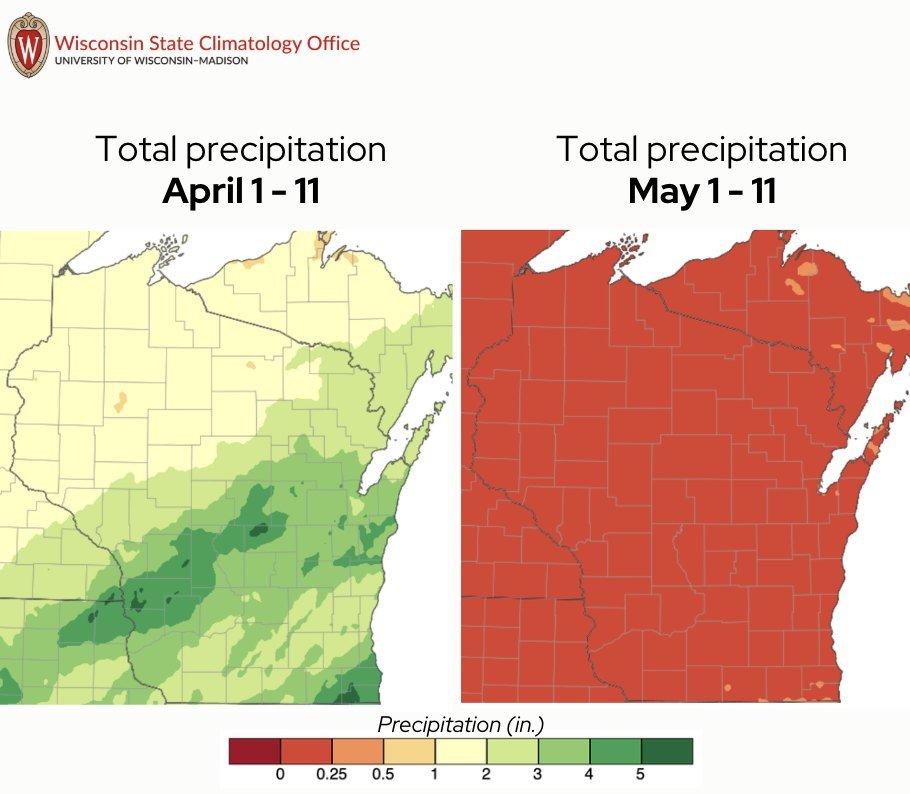
After a record wet April, things have been dry this month.
Abnormally dry conditions are expanding across western and southeastern Wisconsin in the latest Drought Monitor.
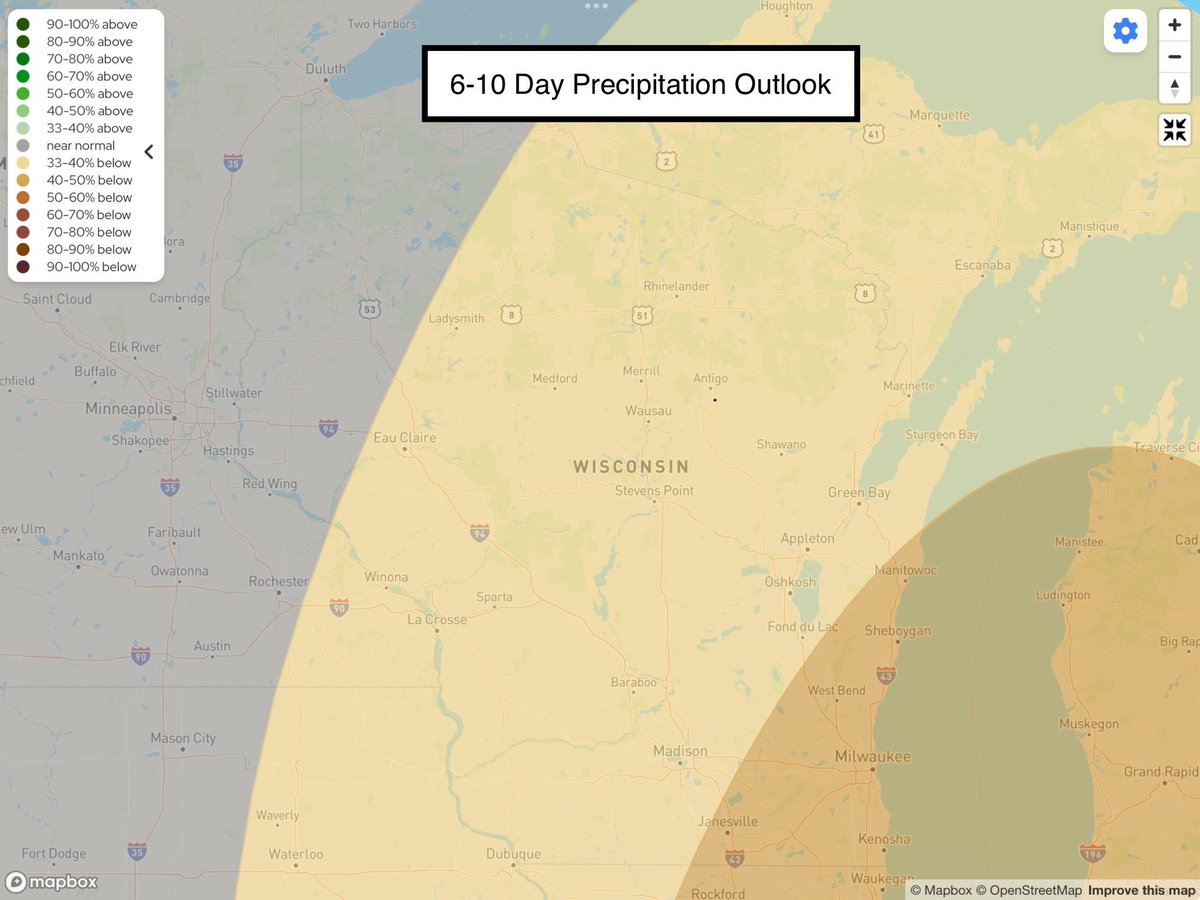
With below normal precipitation more likely than not over the next 10 days, expect this to continue.
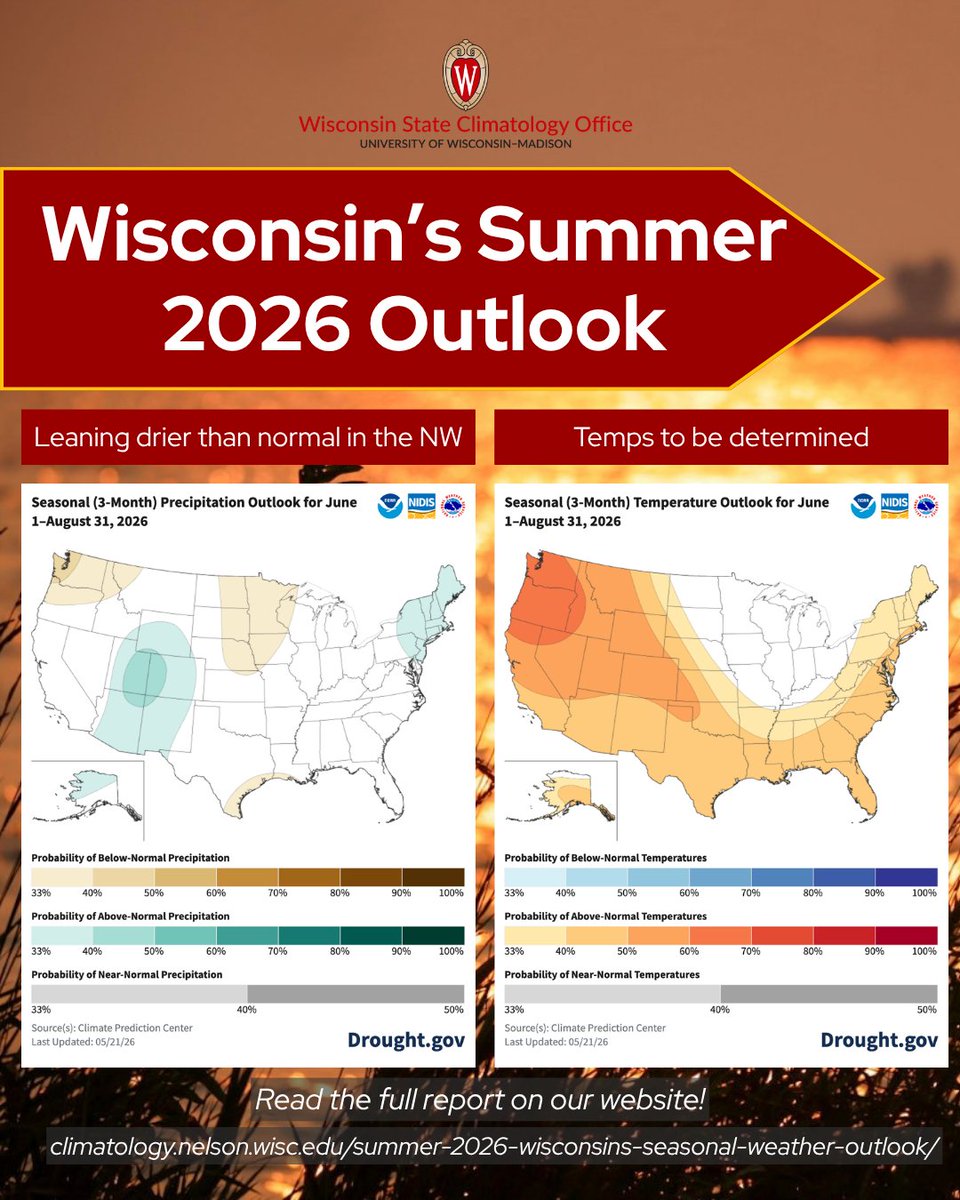
With summerlike heat in the forecast, take a look at Wisconsin's summer 2026 outlook.
Current guidance suggests a slight lean toward drier-than-normal conditions in northwest Wisconsin, while temperature signals remain uncertain.
More details here: climatology.nelson.wisc.edu/…
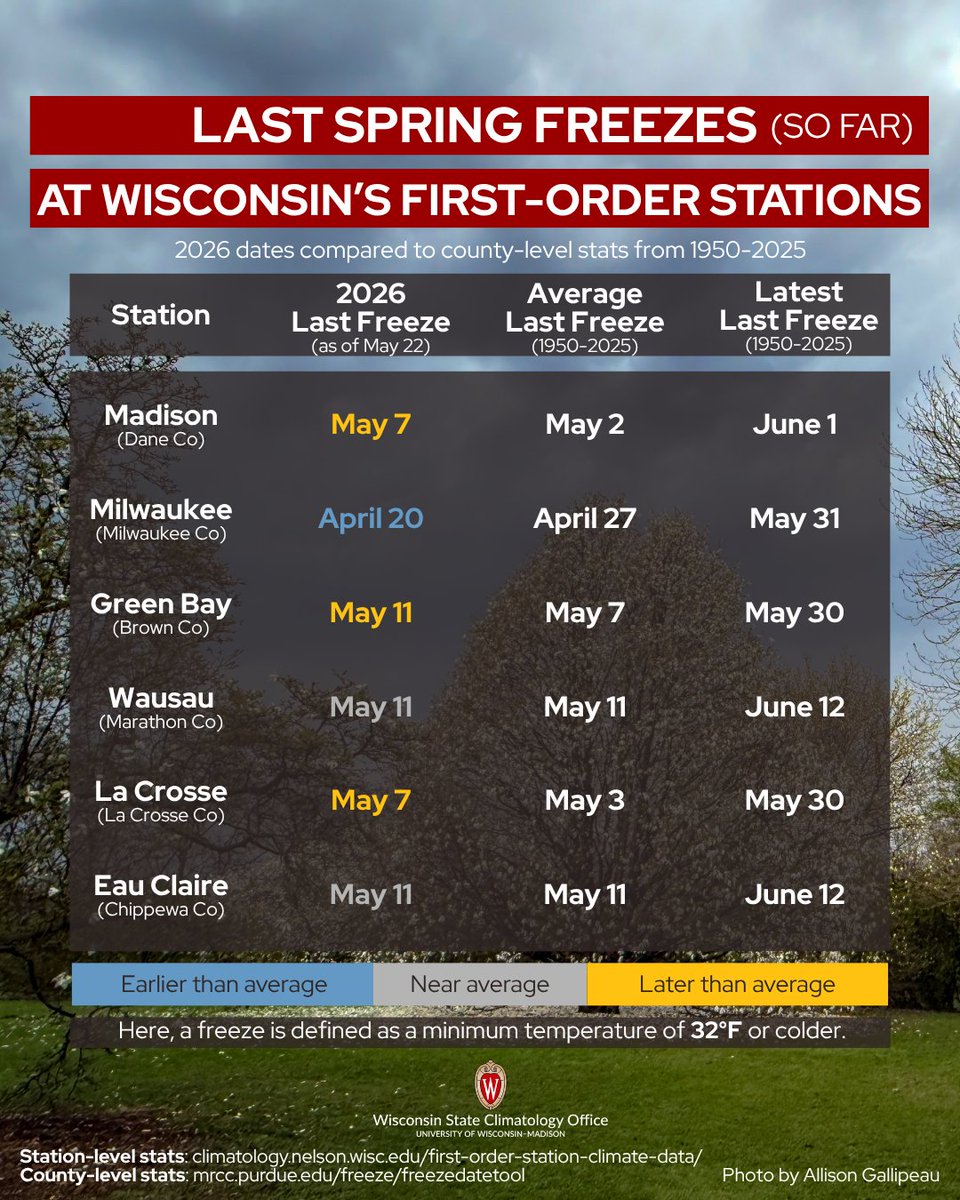
Thinking about Wisconsin's last spring freeze?
As of May 22, our first-order stations may have recorded their final freeze of the season.
The next two weeks are likely to be warmer than normal, but Wisconsin has surprised us before! June freezes aren't impossible.
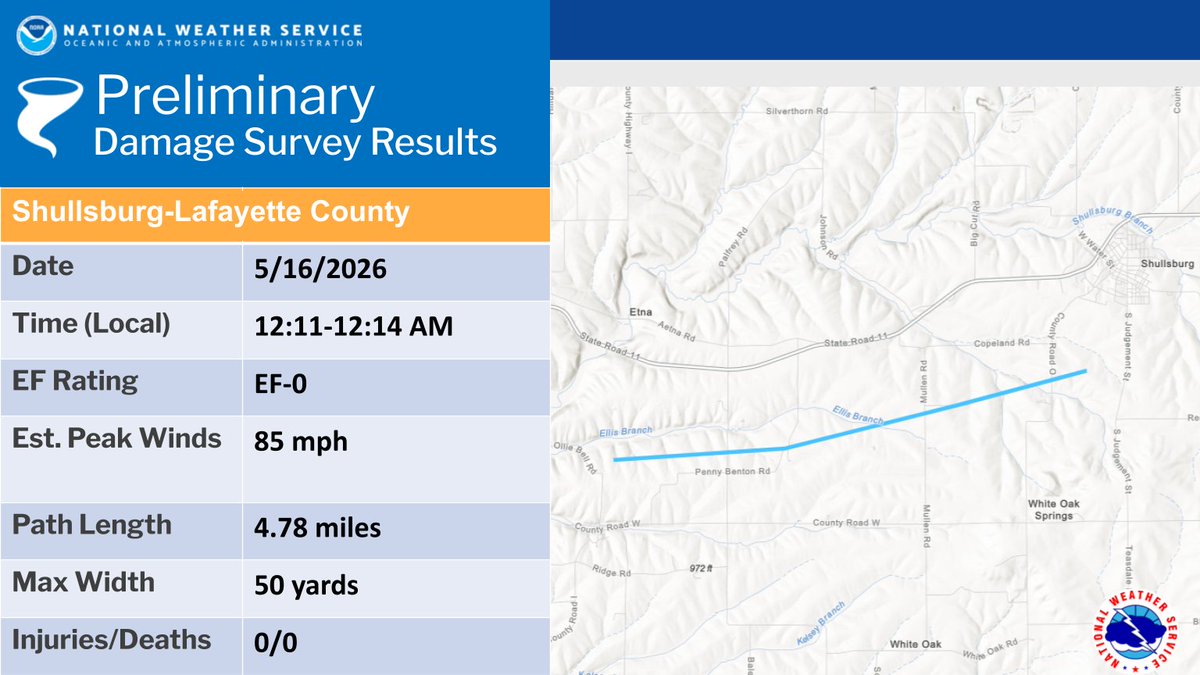
We've documented a brief, EF-0 tornado southwest of Shullsburg (Lafayette County) from the late Friday night/very early Saturday morning storms. Peak winds were estimated around 85mph w/damage to a couple metal barns and a number of trees. #wiwx
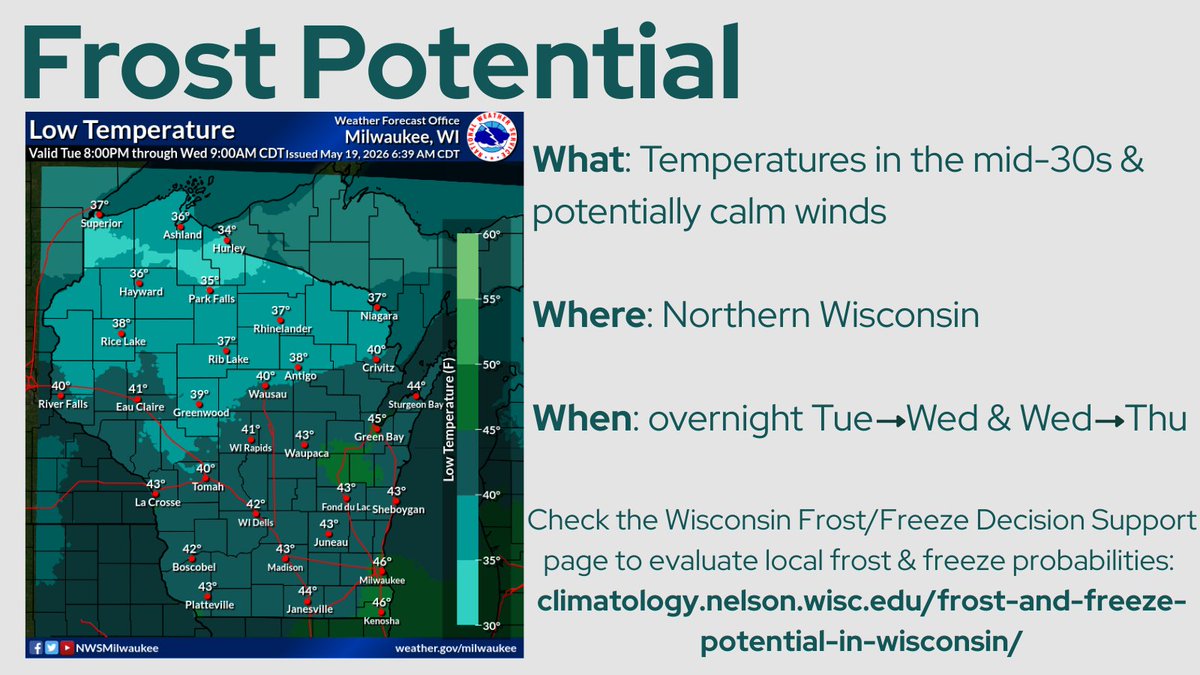
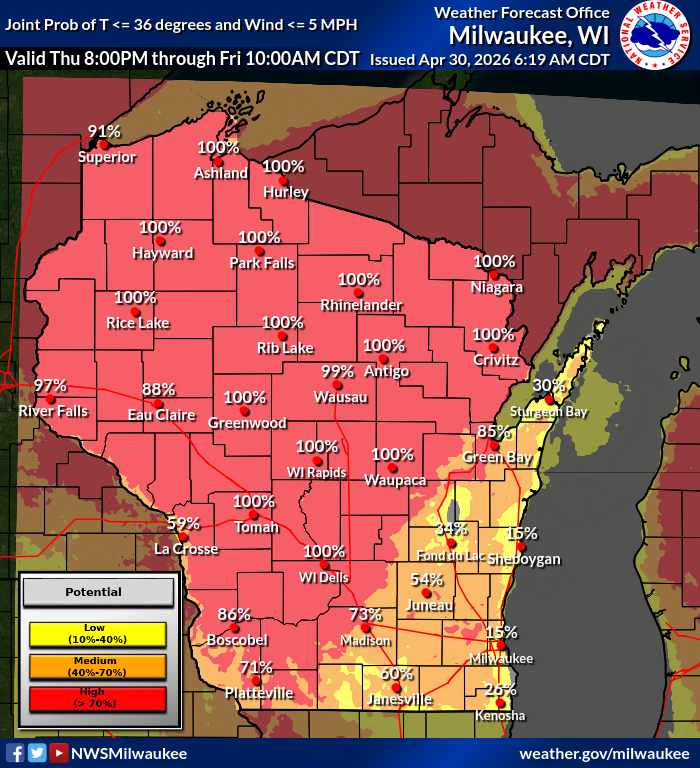
Attention northern Wisconsinites: Chance of frost tonight & tomorrow night as you could see temperatures in the mid-30s with the potential for light winds 🥶
Learn more here: climatology.nelson.wisc.edu/…