
Harnessing Web3 tech for new opportunities. Our pillars are access infrastructure, education, and innovation.
Joined September 2020
- Tweets 3,832
- Following 3,601
- Followers 4,343
- Likes 4,461
470 Photos and videos
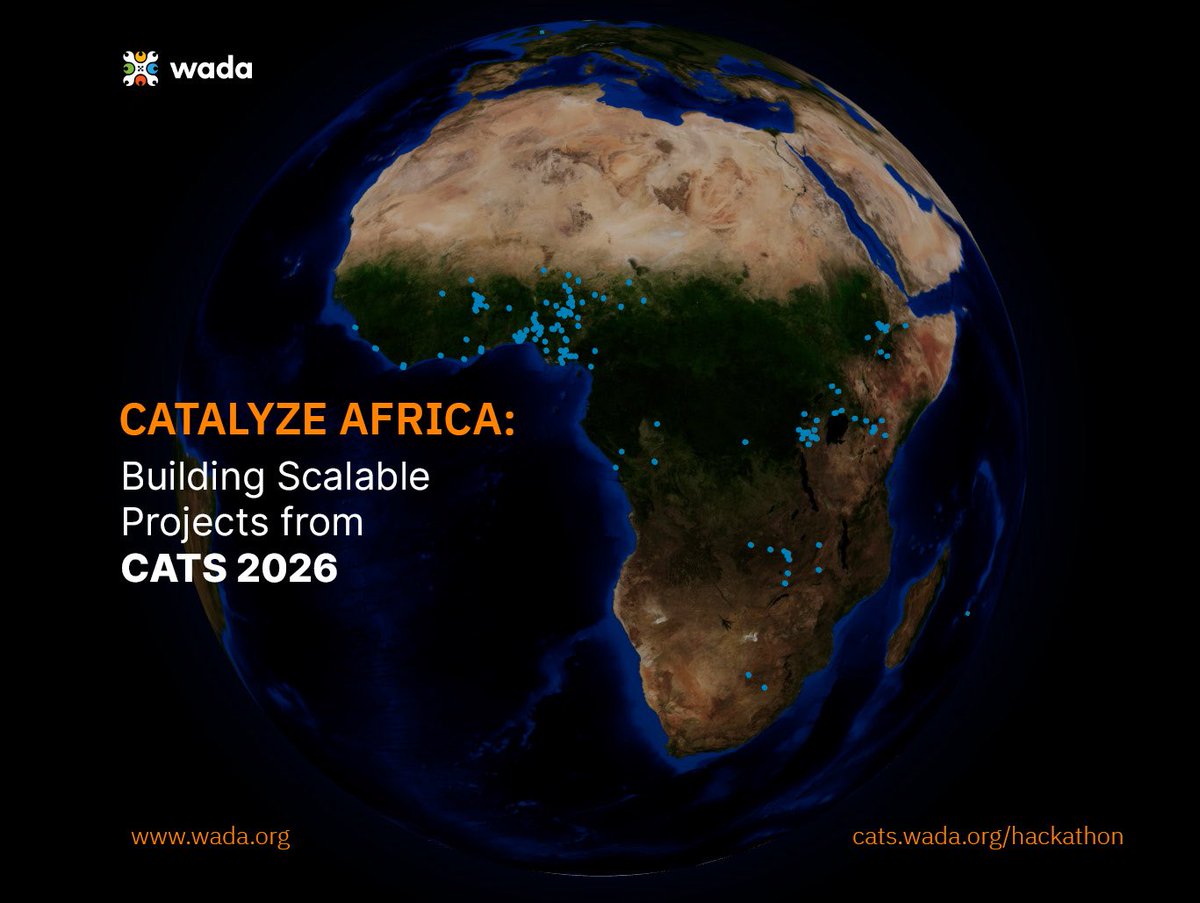
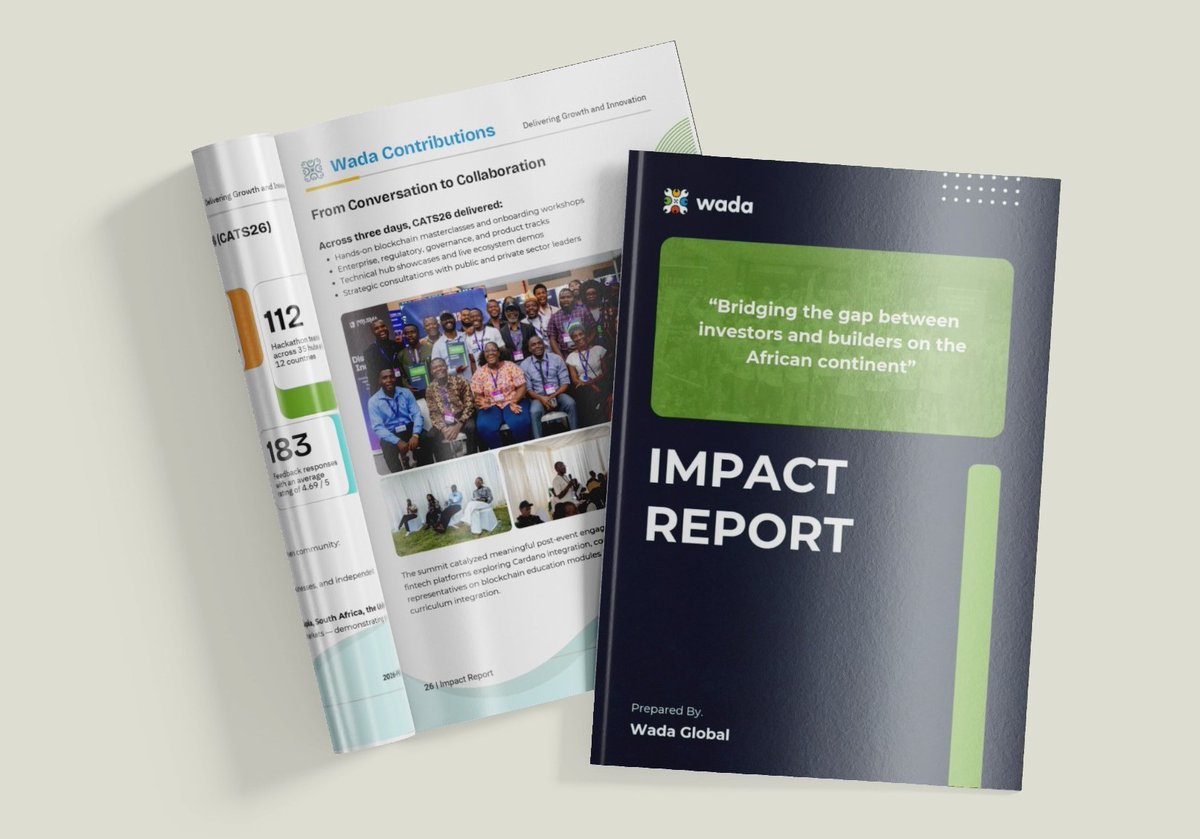

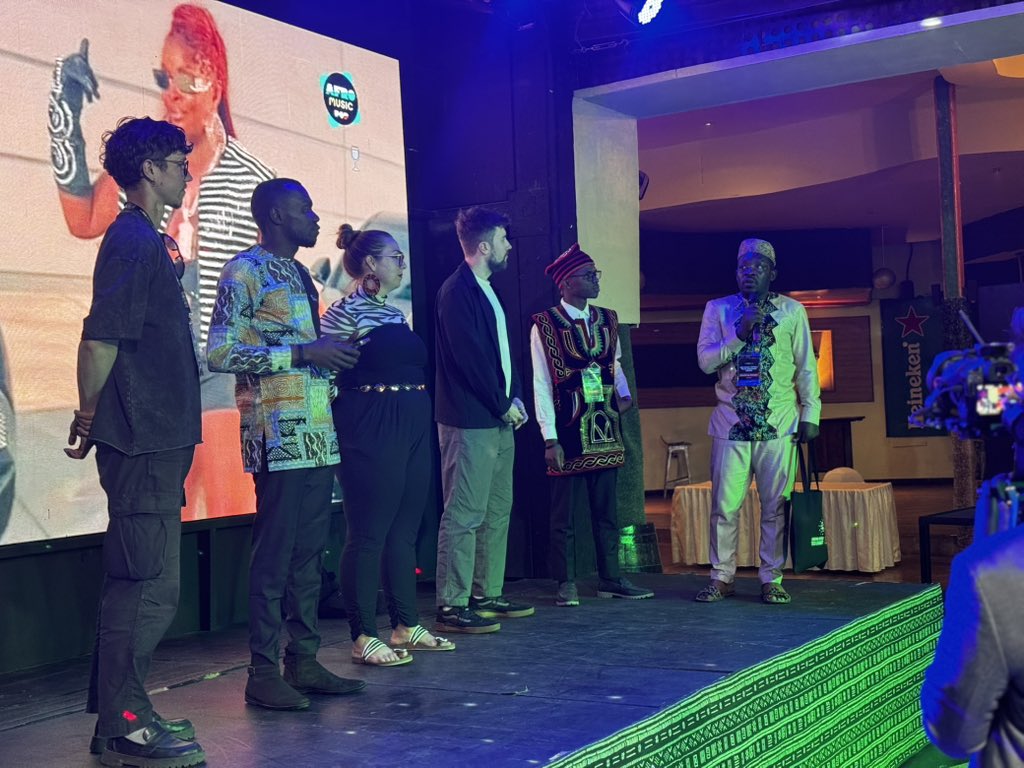
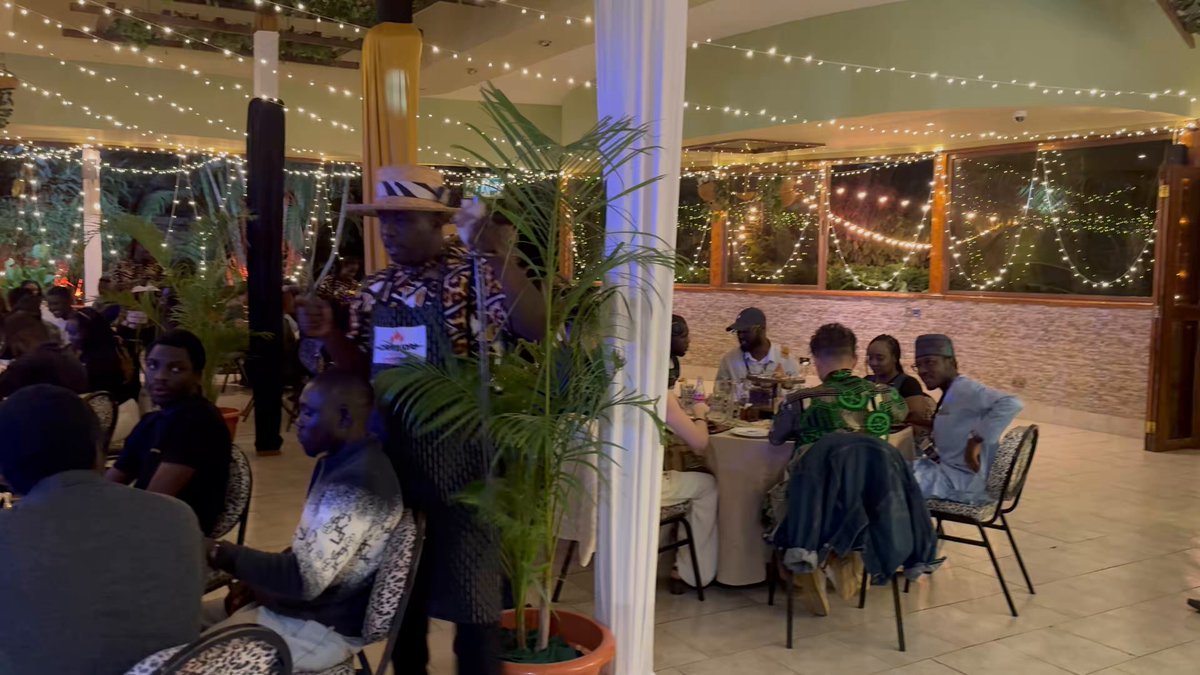
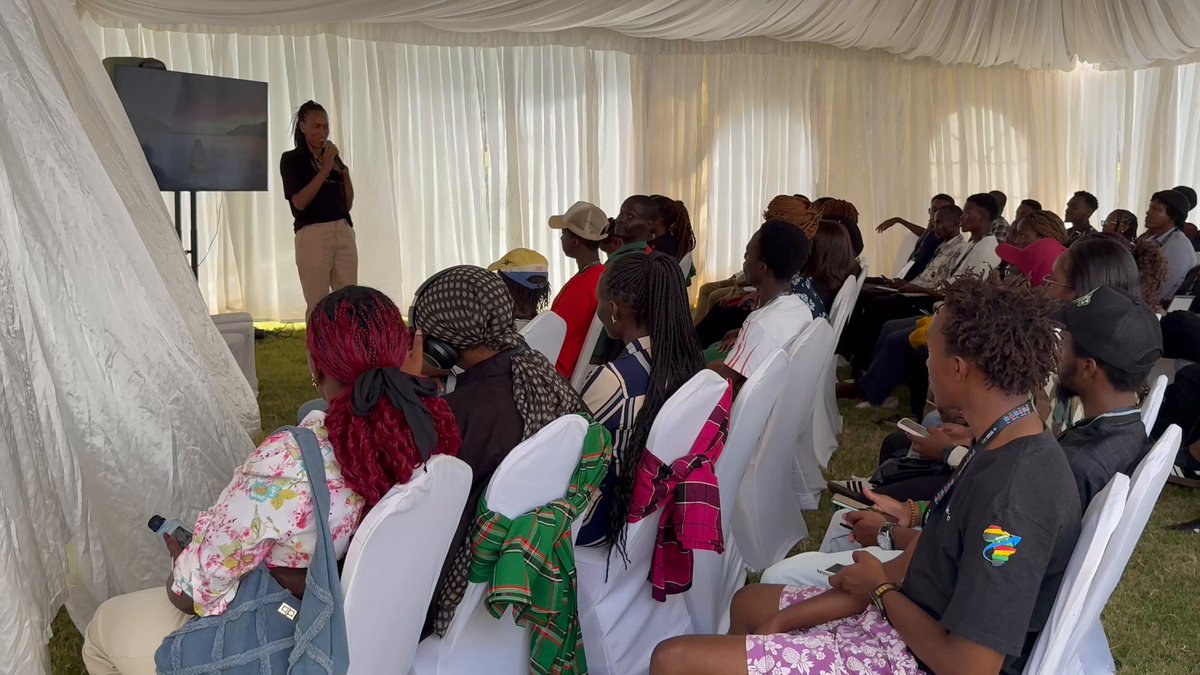
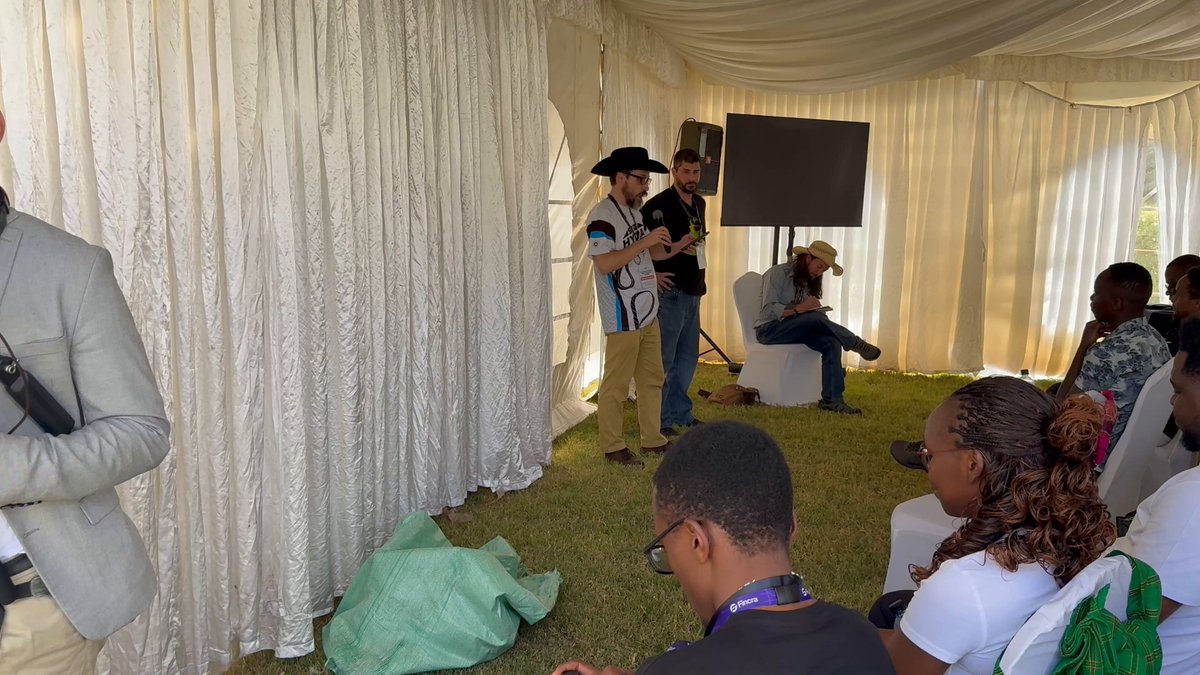
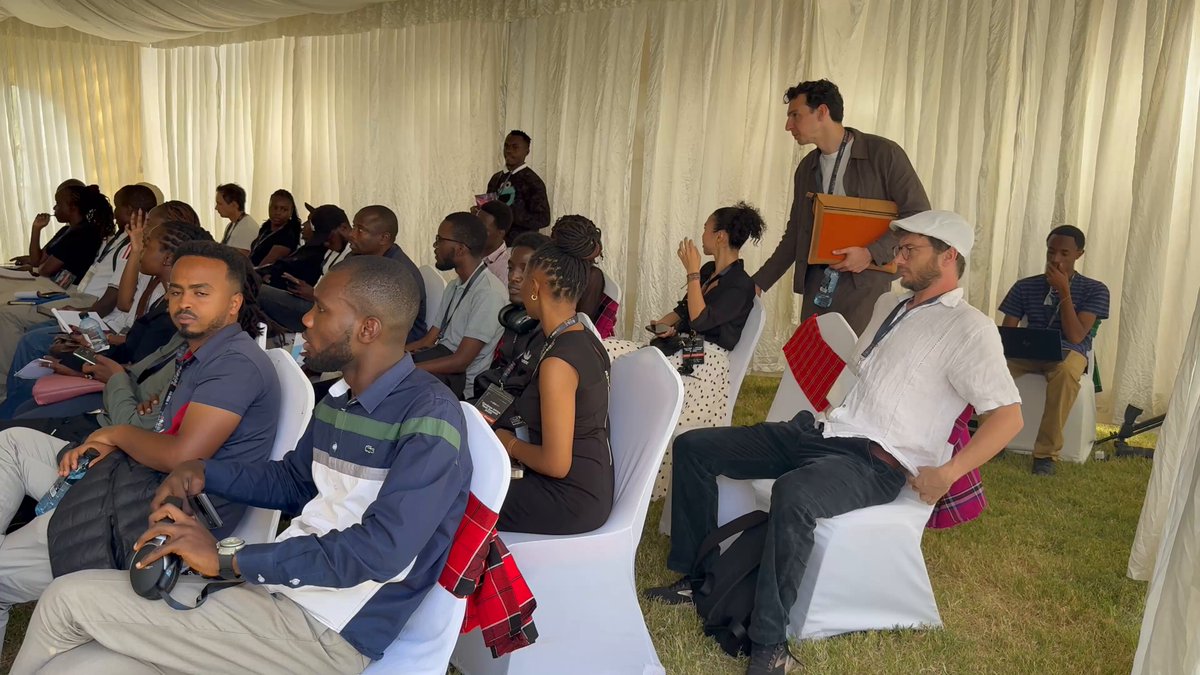
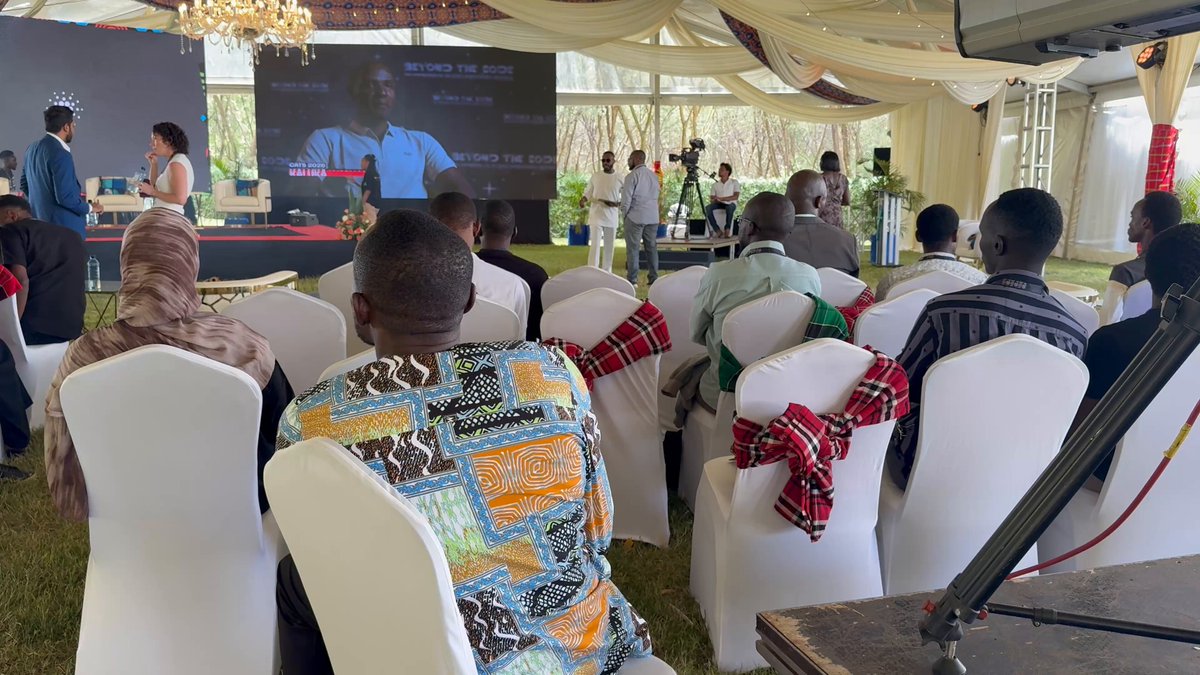
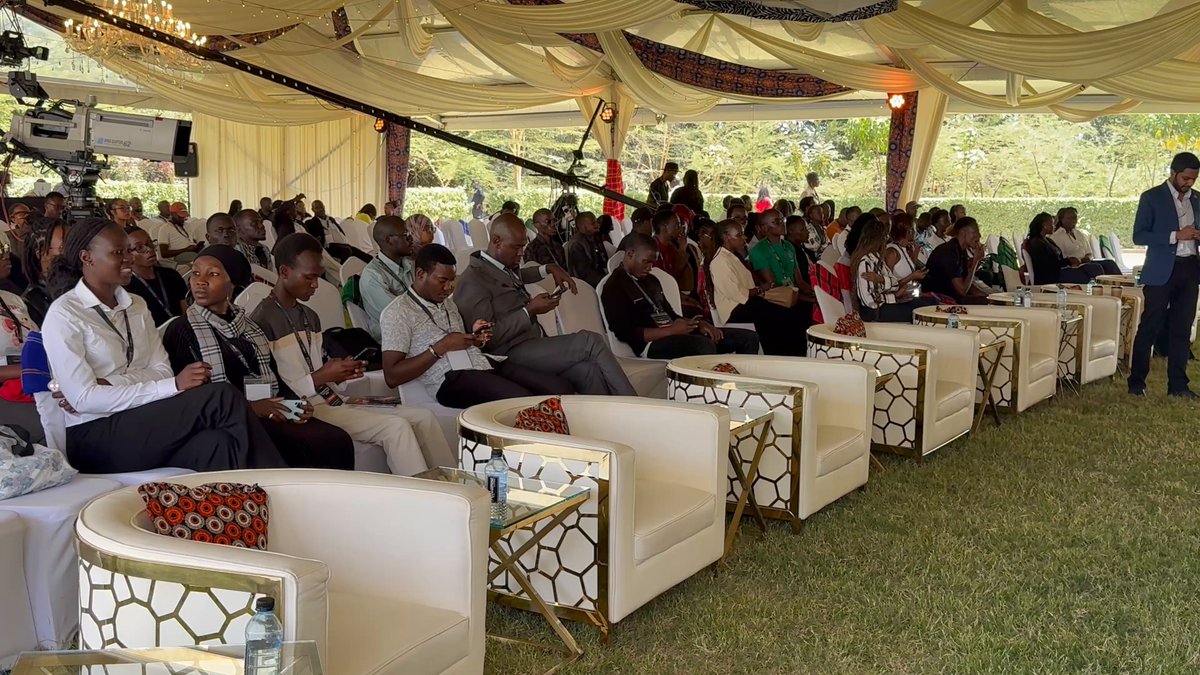

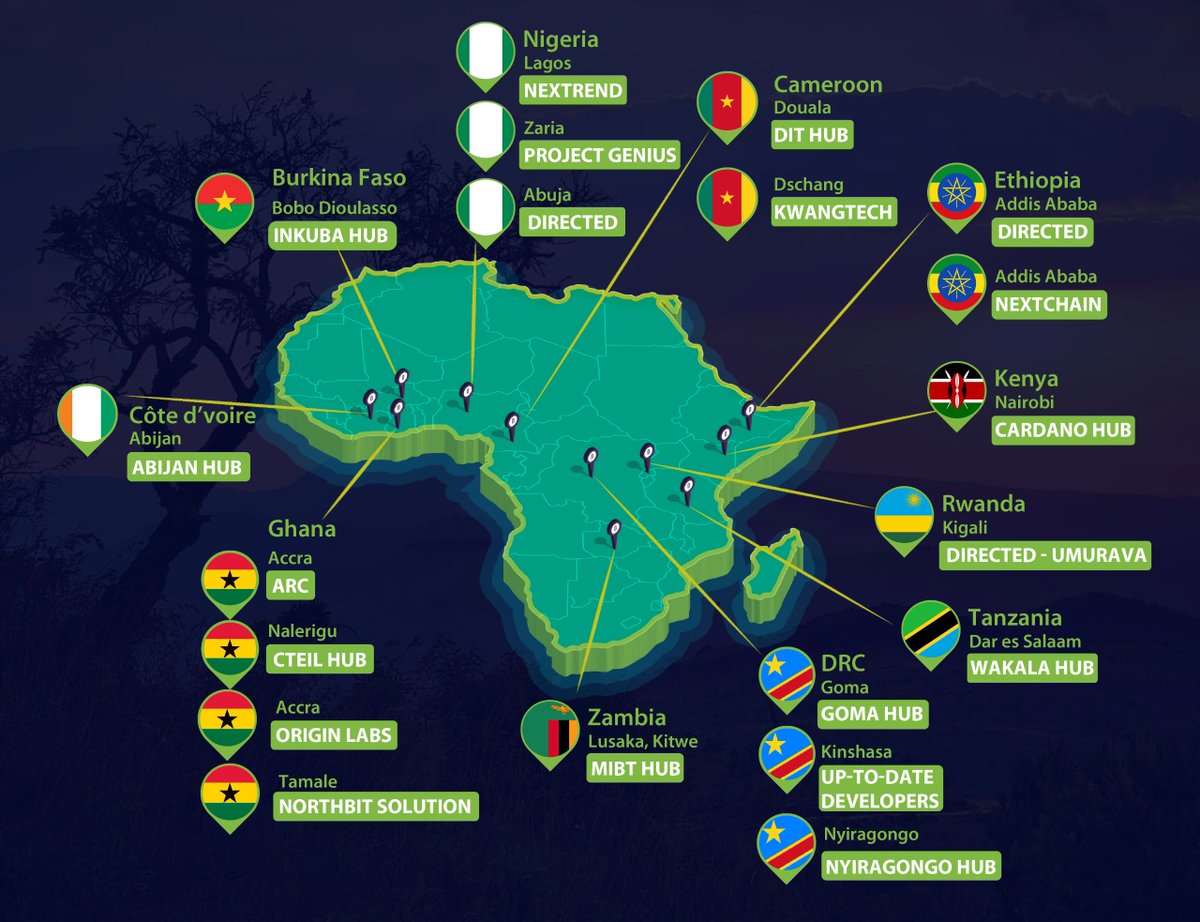
Over the past six months, we’ve doubled our hub network through strategic partnerships and targeted onboarding initiatives.
Each new hub strengthens our ability to support builders, communities and innovation at the local level.
@Cardano @Cardano_CF @IOGroup @IntersectMBO
@nextrendlabs @_ProjectGENIUS @StakeGoma @gomadrep @InkubaA @DirectEdDev @arc_accra
3
17
54
1,367
Wada retweeted

Jun 6
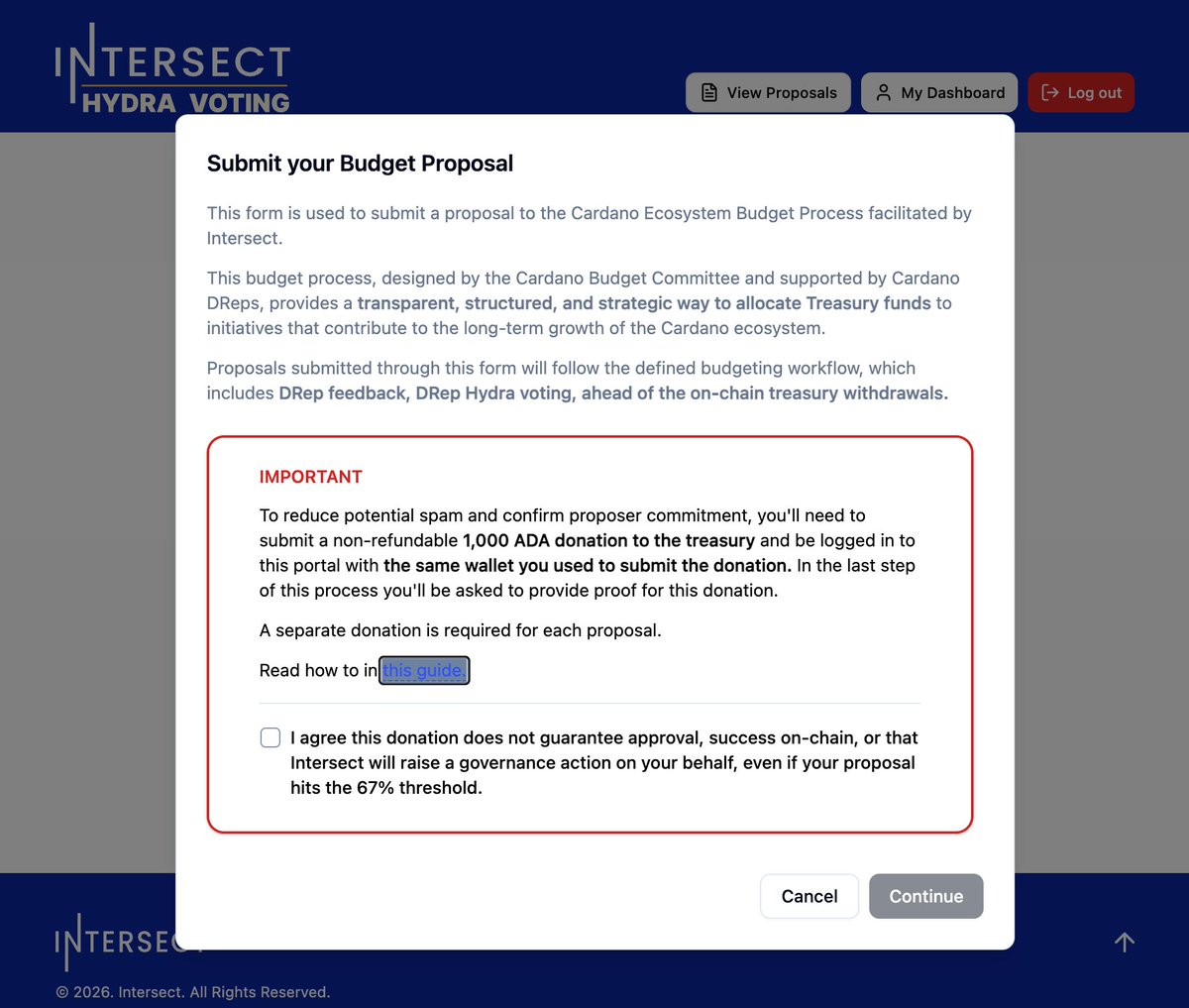
How can we help real projects get running on chain and support enterprises understanding where Cardano fits, to build the support systems needed for adoption to scale?
Check out these proposals to see if you think they hit the mark!
hydra-voting.intersectmbo.or…
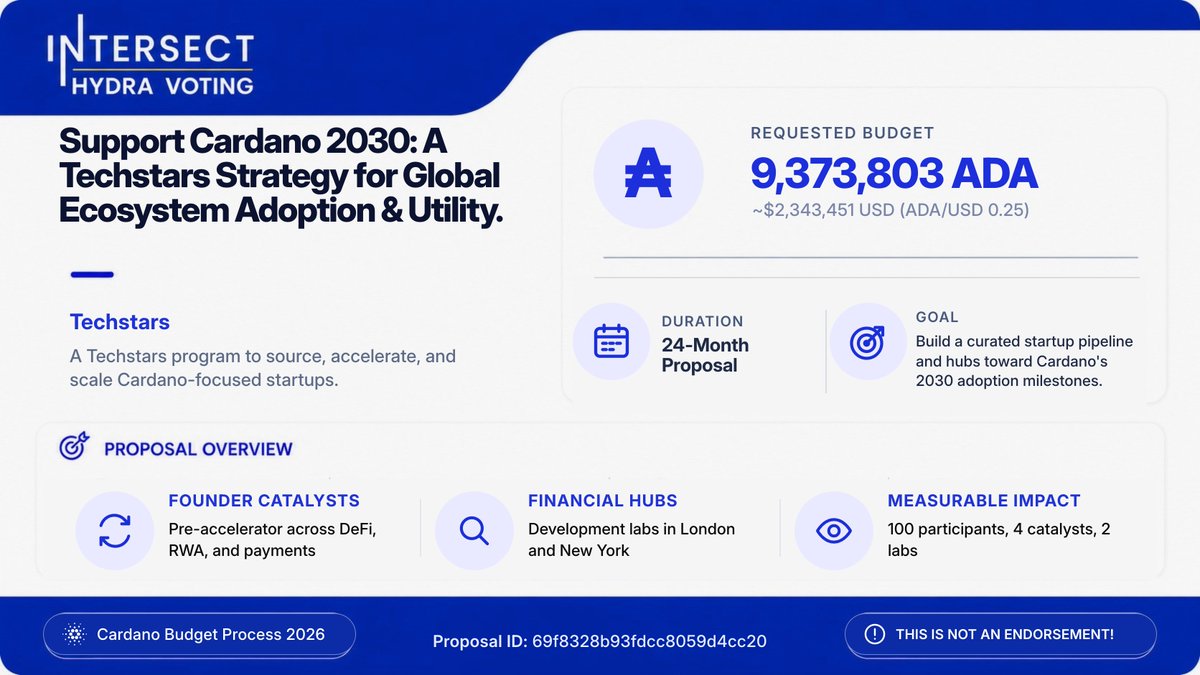
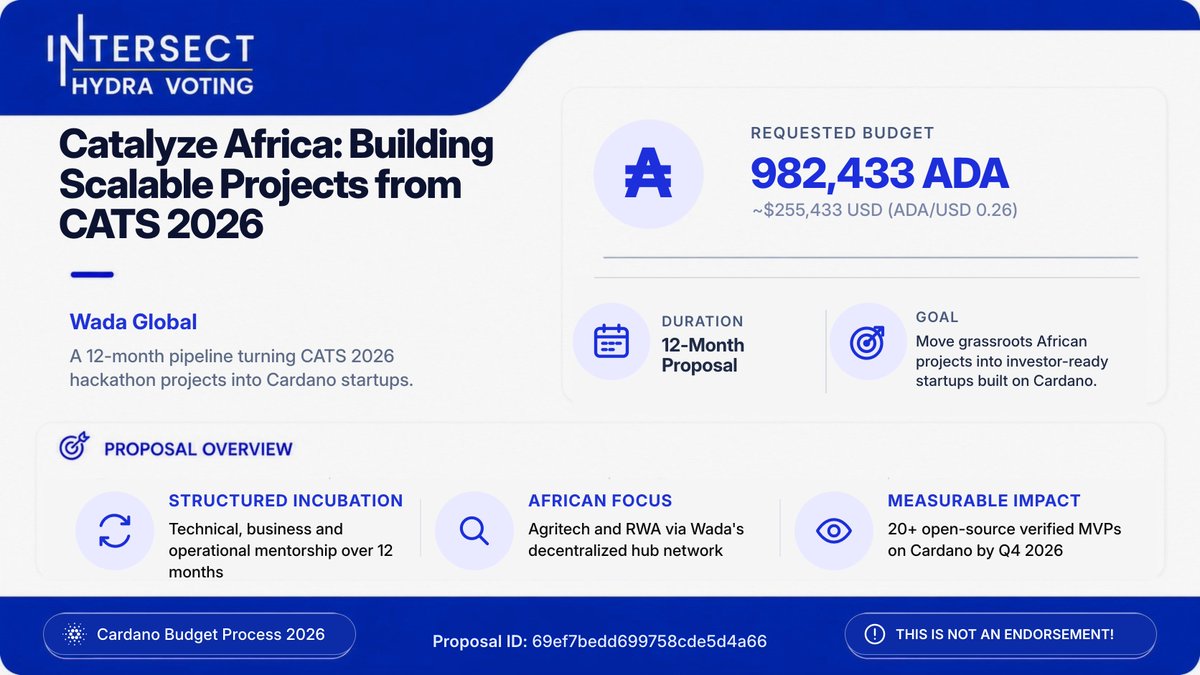
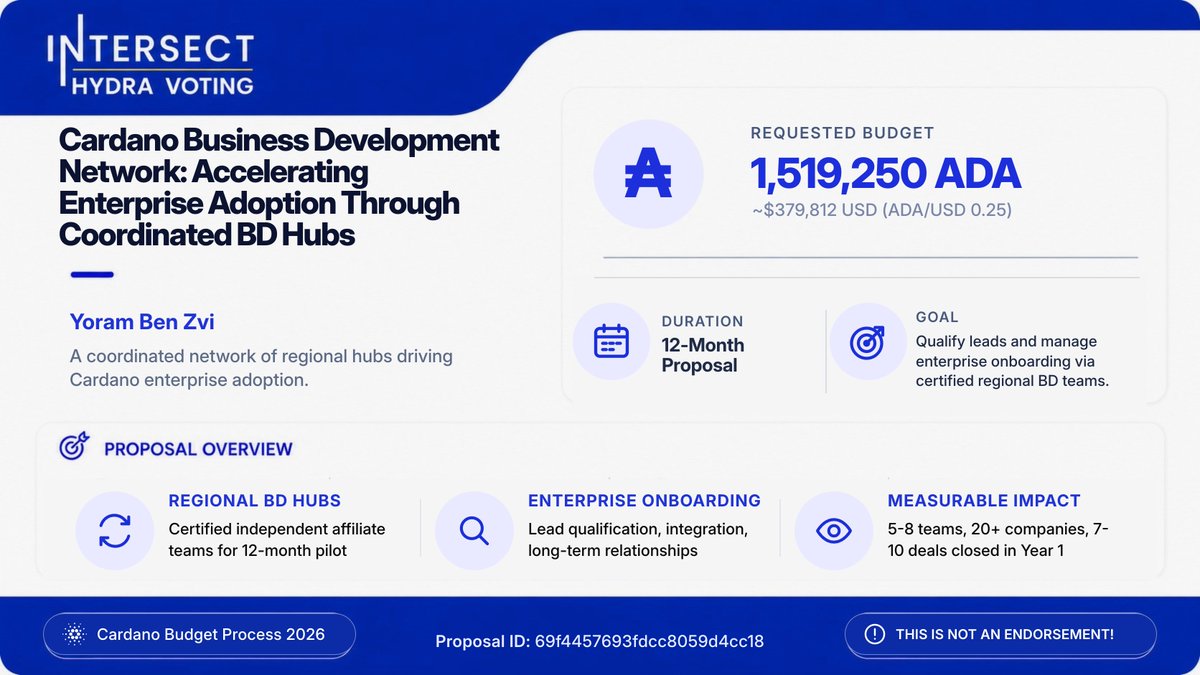

1
2
303
Wada retweeted

An important chapter comes to an end.
The GOMA Stake Pool has officially retired.🙁
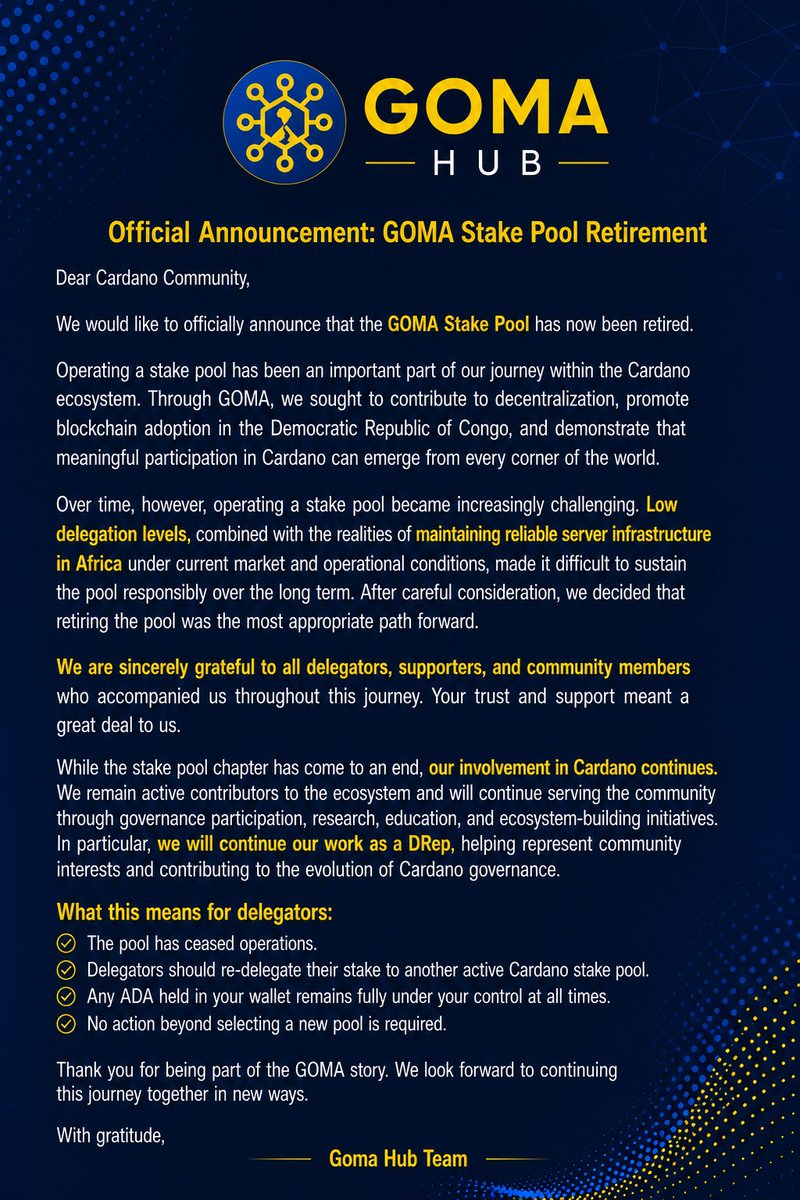
1
5
13
766
Wada retweeted

There are plenty of ways to support Cardano.
My personal focus is on image and reputation.
There are wonderful projects in the ecosystem like @wada_org , @empowa, @palmeconomy , or 5am by @Elkconnect_web3 .
2
12
411
Wada retweeted
To @IOHK_Charles , and the Cardano community
Charles,
I saw your video the other day in which you asked “where do we go from here?”and in which you were despairing about the negative behaviour of many.
You are looking at it the wrong way. Humans are what they are.
Now, Cardano humans have recently been asked to forget about all they know and use a new system of doing business.
If they react with anger, frustration, spite etc, it means the system they have committed to isn’t good enough. Simple.
They lash out in frustration, not malice.
So we don’t need better humans, because those don’t exist.
We need a better system.
The current problem is pretty clear.
We have a “one-pile-Treasury”that is supposed to finance anything anybody can think of that is in any possible way related to Cardano.
Then we all get to fight about it.
To make matters worse, none of us can possibly be masters of all topics, yet Dreps are asked to vote on all proposals, also on some topic matters they likely know little about .
Not to mention the sheer volume of proposals they are meant to vote on.
The solution is the following:
Evolve the process:
1. Establish categories up front that Treasury Money gets to get spend on
2. Decide which field gets what percentage
3. Get the current and new Dreps to choose a category that they want to be Drep for, based on their personal expertise and passion.
Outcome:
- All categories of work needed to further develop Cardano are guaranteed their funding
- Decisions on what to spend the funds on are now made by Dreps with expertise in their field
Now the system works better, Cardano humans don’t get frustrated and stressed anymore, and we all go back to the mission of changing the world, powered by Cardano technology.
@NaVi_GaT0R @Padierfind @adatainment @Josi_sndnc @YoramBenzvi @ADAFrog_Pool @AdamRusch @adanorthpool @ATADA_Stakepool @LaPetiteADA @phillip_pon @Laura_Mattiucci
20
18
174
21,922
Wada retweeted
If you follow me, you may have noticed that I believe Cardano urgently needs to renew its narrative.
Cardano should not be tech for tech's sake. It should be about building technology that improves people's lives.
Reflecting on the recent @GITEXAfrica event in Marrakesh, which I attended with the team at @DiscoverCardano, it struck me just how much of a bubble these events can be.
Inside a controlled environment, people who can afford it fly in from all over the world to sell technology to each other. But how many attendees take the time to step outside the venue, leave the comfort of their hotels, and engage with the local reality? How many try to understand the challenges people face and whether the technology being showcased could help solve them?
To be fair, the Discover Cardano team approached things differently. They are now actively exploring ways to help build a grassroots Cardano movement in Morocco. I applaud that attitude because it reflects where Cardano's true strength lies: bringing people together around a shared ideal and building communities that create lasting value.
Unfortunately, most people in tech—not just in Cardano—still don't get it.
At the next conference, the same pattern will repeat. Whether it's Nairobi, Hanoi, Las Vegas, or somewhere else, the overwhelming majority of attendees will have little or no interest in understanding the local challenges that exist outside the conference walls. They will spend days promoting solutions without first asking what problems actually need solving.
That is not how you change the world.
And it is certainly not how you bring millions of people into the Cardano ecosystem.
I should also acknowledge my own shortcomings. I haven't done enough myself. My private life has been somewhat chaotic lately, which has limited what I've been able to contribute. But I hope to do better in the near future, because I genuinely believe this is the direction Cardano needs to move in.
@IOHK_Charles @adamKDean @invalid_eutxo @Cardano_CF @F_Gregaard @IntersectMBO @willow_kit @TheEseWilliams @YoramBenzvi @BeatriceAnihiri @AdamRusch @DanielTetsuyama
6
8
37
1,451
Wada retweeted

May 28
Thank you for the question. From my conversations during @cats_summit with people from across Africa, some common points were identified:
- there is a lack of access to reliable banking
- credit is extremely difficult to achieve, often requiring unachievable amounts of collateral
- there is a lack of trust between parties in transactions
- cross-border payments can be difficult or impossible
Blockchain can't solve all of these problems, but it can help some.
How I believe 5am.Earth can help:
1. Provide users (in this case small, shareholder farmers and other members of broken, trust less supply chains) with durable, self-sovereign identity that can stay with them even across jurisdictions
2. Provide a concept of credit, trust, or collateral in the form of provable, immutable, and verifiable records of activity from planting and harvesting to borrowing and repayment
3. Of course, providing the rails for both financial settlement and transfer but also secure escrow between trustless parties
Why I believe 5am.Earth is the first steps towards the right solution:
1. Existing relationships with the farmers already on the ground: @Elkconnect_web3 and @ZengateGlobal have already been building the relationships with thousands of these affected individuals, a critical first step towards adoption
2. The Foundation itself does not aim to be a one-stop solution to the entire supply chain: many previous/current blockchain solutions focus on a particular vertical. Usually this starts and ends at the tokenization of an output/crop (RWA). However, lacking the other pieces needed, the impact is blunted due to a lack of interoperability. Each solution creates their own standards and ends up trying to be vertically integrated (solving all of the world's problems) through their own processes. 5am aims to avoid this problem by positioning itself as the first and most critical level which is the shared standards body that secondary services can build on top of. They are not building a credit market, or logistics application, but rather the process that enables those services to be built.
3. An amazing, existing business development leader (@YoramBenzvi) and relationships to help it grow and come to scale and realize self sustainability.
All of the choices we must make, as a community, of what to fund come with risk. Many projects will fail or fail to live up to their aspirations. We have amazing tech and we've already funded the research and development of much more amazing tech, but that tech will do nothing for us if we don't put it to use in the real world.
Let me walk through a simple example that exists in my mind:
1. A small farmer anchors their identity and their farm on-chain, through the existing satellite oracle that has already logged 18k txns on mainnet, representing 18k individuals.
2. The individual farmers make a few txs per year, anchoring their planting and harvesting data of their farm. These costs to publish are very low, allowing a service application to either cover the costs or bundle them into the cost of a small, affordable to the farmer subscription/pay-on-demand
3. Given these individual, on chain anchors the farmer can now show a history of performance of their farm, backed up by satellite data. This enables various markets like carbon credits and crop tokenization to be built and extended to these individuals that normally would have no trust from lenders or potential customers.
4. Loan, insurance, or token origination and other services can now similarly be built with the remittance of payments also tracked by blockchain so that there is a lasting history.
5. If the farmer wanted to sell the farm, there is now also a history of its productivity on the chain as well, reducing the trust between seller and potential buyer.
6. Consumer and regulator-facing applications can also be built allowing for chain of custody and certificate of origin development.
3
11
38
2,275
Hi @yutazzz,
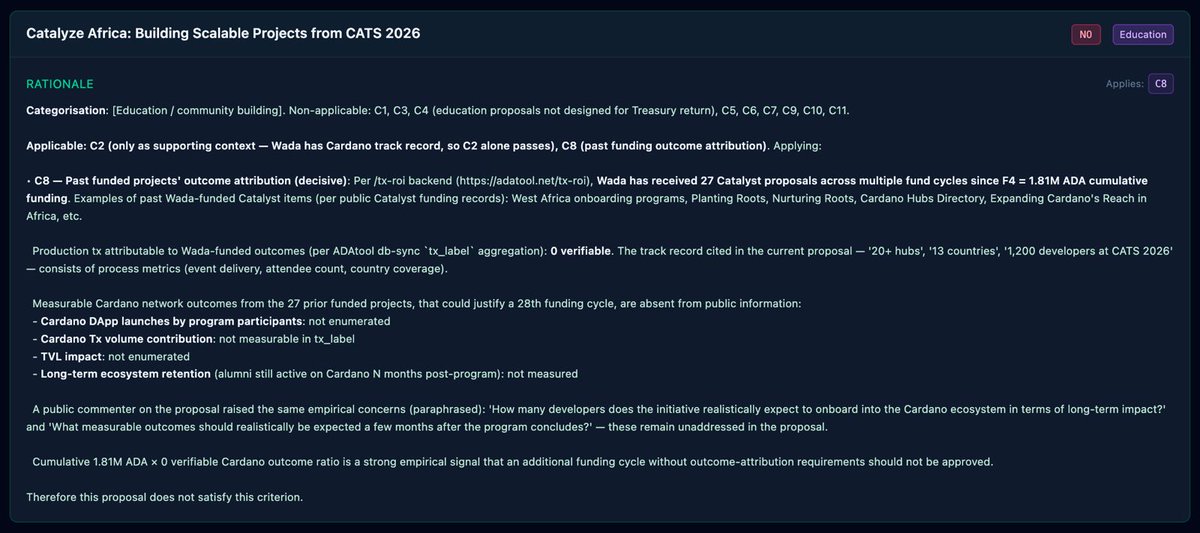
We appreciate you engaging with our proposal titled: Catalyze Africa: Building Scalable Projects from CATS 2026. Below is our response to your concerns and we hope that in good faith, it's able to help change your stance from "NO" to "YES".
The application of the C8 criterion and the reference to the /tx-roi backend highlight an important concern regarding historical funding outcomes. Our 27 previous Catalyst proposals, beginning from Fund 4, were intentionally focused on human infrastructure, regional outreach, and foundational Web3 education. As a result, these initiatives were not designed to produce identifiable tx_label metadata footprints on-chain. This explains the absence of visible signatures in standard db-sync aggregations for those funds, despite substantial on-chain activity emerging from the African region that was not systematically documented in a measurable attribution framework.
This Intersect proposal represents a clear transition from broad community building to targeted, measurable venture creation. It directly addresses the historical gap in on-chain attribution through a set of technical accountability mechanisms embedded within the 12-month framework.
First, we will explore cryptographic transaction attribution methods to make ecosystem impact auditable on-chain using defined metrics. One proposed approach is the introduction of a standardized transaction metadata label unique to the “Catalyze Africa” program, to be integrated across supported projects for smart contract interactions and native asset minting. This would allow transaction volume, wallet activity, and contract usage to be transparently tracked through db-sync tools such as ADAtool, effectively resolving future C8 attribution concerns.
Second, milestone approvals will no longer rely solely on attendance or event metrics. As reflected in the updated Milestones 3 and 4, payouts are tied to public GitHub repositories under open-source licenses containing compiled validator code, transaction schemas, and live testnet or mainnet contract addresses.
Finally, Work Package 2 will establish a public Alumni Portfolio Registry to track project retention, live dApp deployments, and post-incubation funding outcomes, providing the measurable ecosystem impact metrics being requested.
We agree that ecosystem funding should move beyond process-based reporting. This proposal is intentionally designed to convert Wada’s established human network into a verifiable deployment engine for measurable Cardano utility, and we respectfully ask for reconsideration based on these milestone-driven accountability measures.
Proposal: hydra-voting.intersectmbo.or…
---
x.com/yutazzz/status/2053898…

Sharing my current rationales for 31 NO votes 12-criterion voting policy:
adatool.net/b69-share
Honest disclosure: I'm using AI due to time constraints. But I've read the proposals myself, and the rationales policy have been refined over many revisions.
With 50 (budgets GAs) still to review, I likely can't accommodate individual DMs / meetings. I will check these as much as possible.
Thanks for your patience 🙏
5
16
3,749
Wada retweeted

May 18
Huge thanks to everyone who shared their vision with us in Berlin! 🙌
Credits (in order of appearance): @Josi_sndnc @F_Gregaard @IntersectMBO @BikeIDNumber @Seomon4u @FHNW @enjojoyy @MasumiNetwork @Carda_station @Amaru_Cardano @Cardano_CF @BankFiOfficial @wada_org @AxellaCoin @Cardanians_io @Chelsea5201 @draper_u @NealSIDAN @DeltaDeFi @sidan_lab @meshsdk
The community is stronger because of builders like you.
1
1
14
4,493
Wada retweeted

À partir du 26 mai 2026, @gomadrep lance un rendez-vous mensuel : un espace d’échange et d’information dédié à l’écosystème @Cardano et Web3 en République démocratique du Congo.
L’objectif est de partager les actualités clés, transmettre des connaissances essentielles et encourager une participation plus active de la communauté francophone au sein des écosystèmes #Web3 et #Cardano.
Que vous soyez développeur, créateur, étudiant, nouveau venu ou simplement passionné de Web3, en #RDC ou ailleurs, cette initiative est faite pour vous.
Inscription 👇
luma.com/0z5tlefu?tk=9c9bdi
Au plaisir de vous retrouver lors de cette première session.

4
13
373
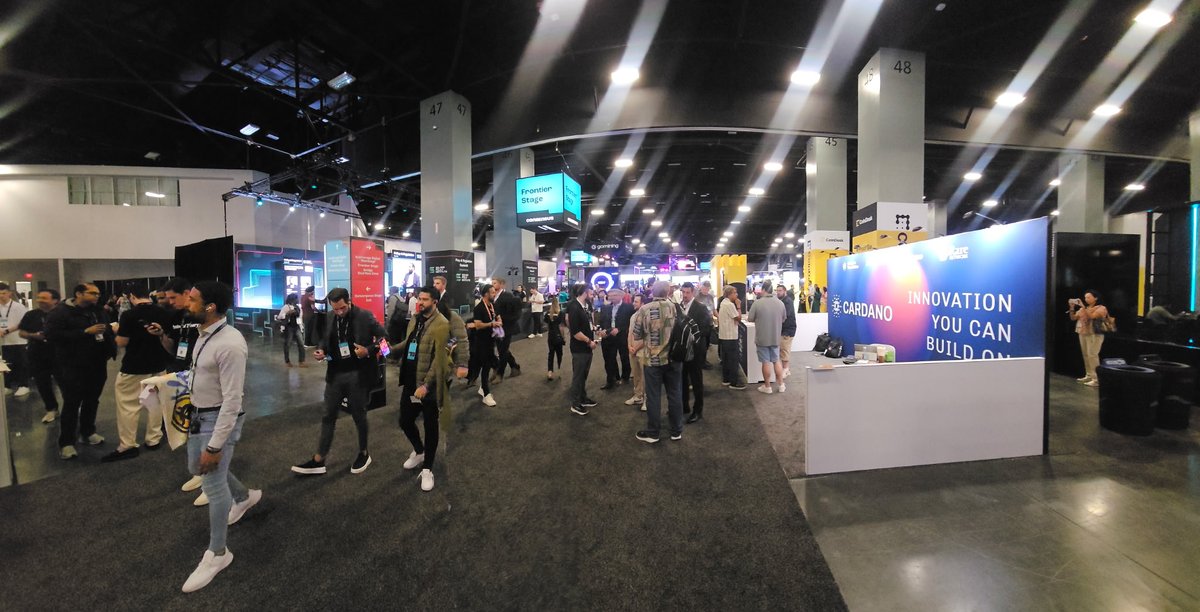
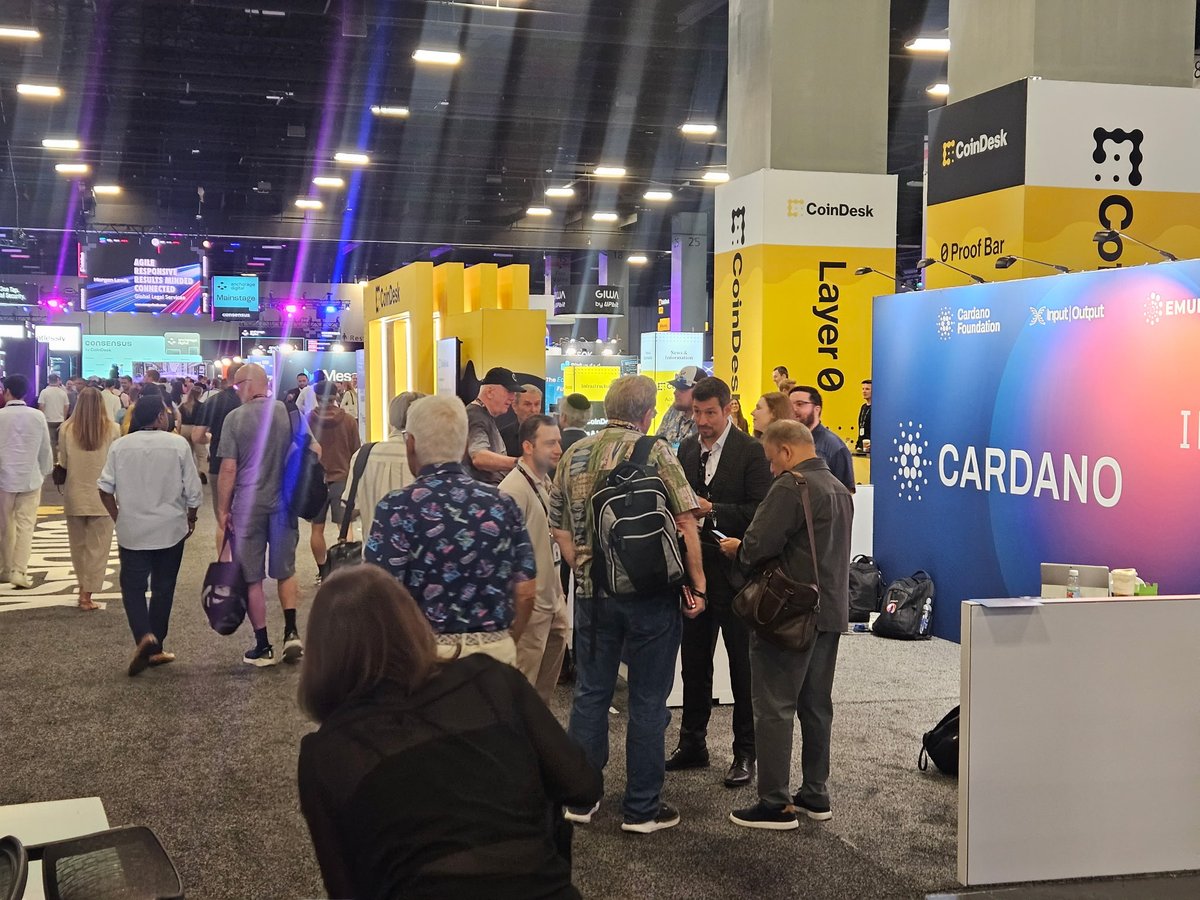
Well said Rand! 2 years ago Wada was at Consensus in Texas. The floor was full of other L1s. This time they’re not here. Cardano is still here. Much to appreciate and be grateful for.
And well done to Rare team for holding this together 🥳

Wait what? We love them for doing that. It's amazing to see the FEs contributing and going above and beyond.
What is going on here?
I am extremely happy with our partners, I am extremely happy that we could finally work together. I am extremely happy the CF & Emurgo went above and beyond, and even IO and Intersect contributed, as well as Midnight.
It feels like we just want a reason to hate the FEs and that is not at all the case. In fact this is the most unified the FEs have been along with the pentad.
Our Cardano booth on the main strip of the event across from a stage, where everyone attending has to walk by it.
Now please show me polkadot, Steller, NEAR, or any other L1 booth or FEs working hard still and on the floor at all
4
355
Wada retweeted

Wait what? We love them for doing that. It's amazing to see the FEs contributing and going above and beyond.
What is going on here?
I am extremely happy with our partners, I am extremely happy that we could finally work together. I am extremely happy the CF & Emurgo went above and beyond, and even IO and Intersect contributed, as well as Midnight.
It feels like we just want a reason to hate the FEs and that is not at all the case. In fact this is the most unified the FEs have been along with the pentad.
Our Cardano booth on the main strip of the event across from a stage, where everyone attending has to walk by it.
Now please show me polkadot, Steller, NEAR, or any other L1 booth or FEs working hard still and on the floor at all
2
5
24
809
Wada retweeted

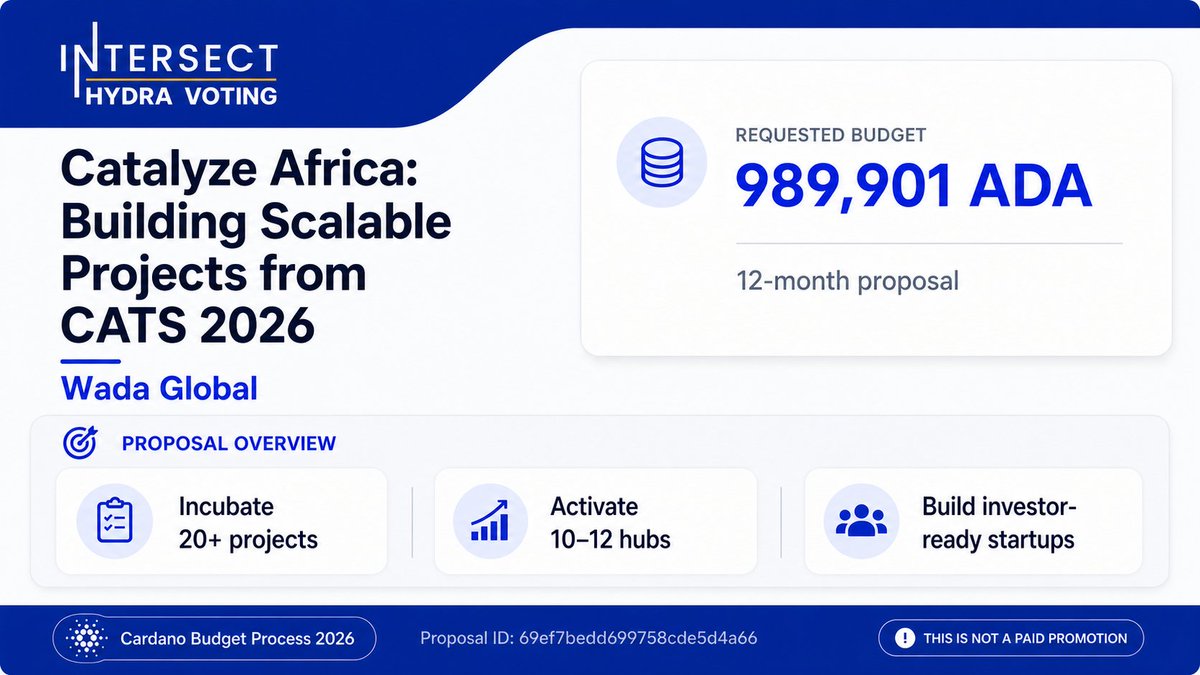
989,901 ADA to turn African hackathon projects into startups.
@wada_org is proposing a 12-month incubator after CATS 2026, taking 20 projects across 10–12 hubs from hackathon ideas into MVPs, GitHub repos, pitch decks and Demo Day.
The upside: this targets the awkward gap after hackathons, where good ideas usually die.
The concern: reporting needs to be very concrete.
Does this create real Cardano builders and users, or more ecosystem activity reports?
*Not a paid promotion
4
7
30
1,267
Everyone loves a hackathon…
But what happens after?
Too many great ideas end when the event ends. We’re changing that.
We’re supporting builders to take their ideas further; from prototypes to real products, from MVPs to startups.
Across hubs, across countries, across communities, we’re helping ideas scale across Africa.
Engage with our treasury proposal: hydra-voting.intersectmbo.or…
1
11
22
1,465
Wada retweeted

May 4
In an hour, we will be discussing @Cardano governance. Be sure to tune in and share your views too:
May 1

Roundtable Talk – DRep Participation in Focus: Power Is One Thing, Participation Is Another
📅 May 4, 2026 - 14:00 UTC
Participation, consistency, and accountability remain key themes in recent discussions around DReps. Questions around engagement levels, voting rationale's, and DRep fatigue point to a broader challenge - one needing a public debate.
This Roundtable Talk creates space for open, constructive dialogue.
We’ll explore what healthy participation looks like, how accountability can be strengthened, and what’s needed to support DRePs over time.
The goal is simple, better understand what’s working, what’s not, and what needs to evolve to strengthen DRep participation as intended by design.
Joining the Roundtable:
- @hix_coffeepool
- @RodrigoPacini
- @NicolasC3rny
- @bhra_freezy
- @Lo_Ponch
- @kenerik
- @tsnnst
1
2
283
Wada retweeted

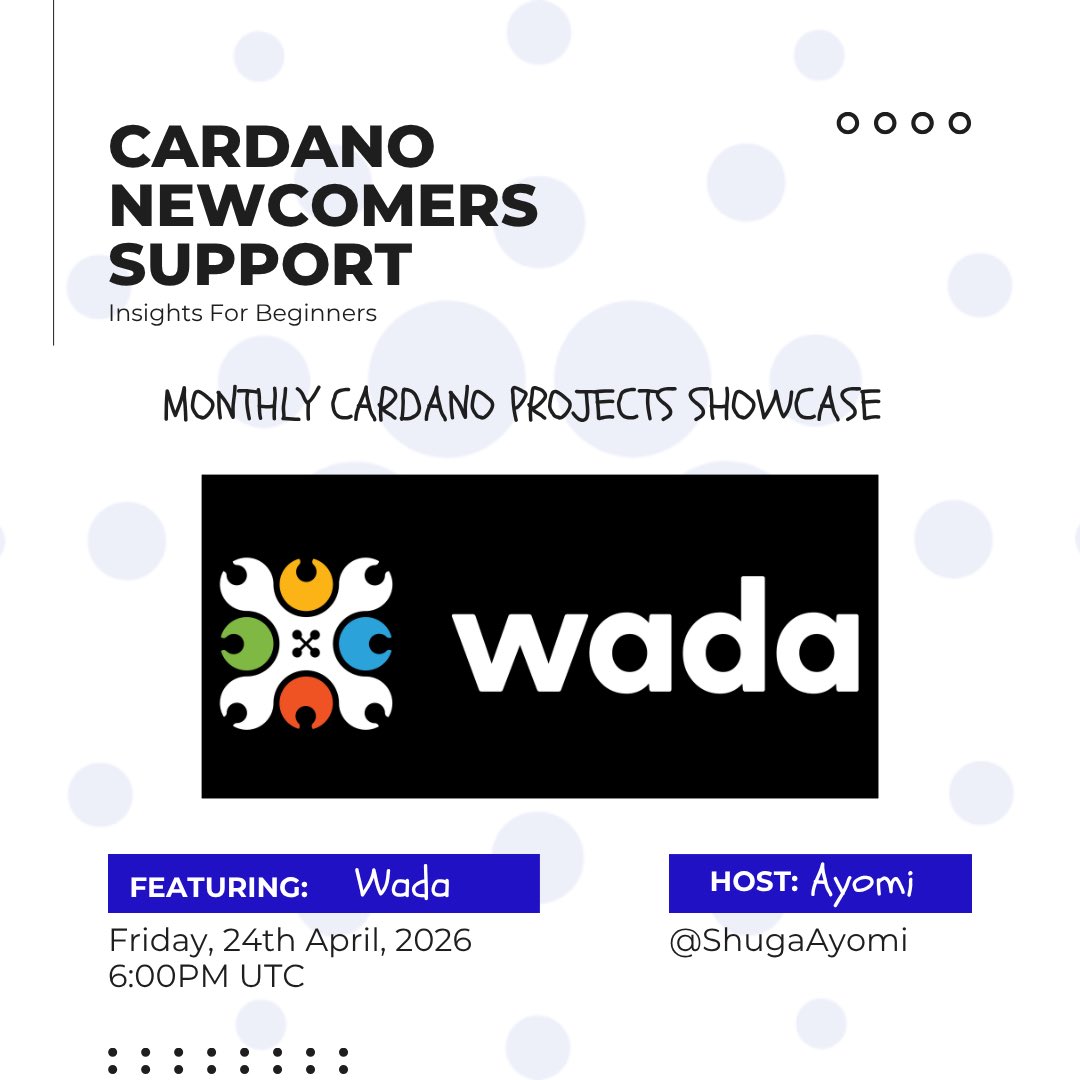
Last week Friday, we had @wada_org on the stage for April edition of Cardano Projects Showcase. It’s a monthly show.
It was an amazing session. We learnt so much about Wada- from how they started to where they are going.
Thank you Wada for gracing us last week Friday 🩷

4
9
218
GM Cardano.
Is there a way to donate to the Cardano treasury using @eternlwallet or @YoroiWallet ?
3
2
12
959
We are discussing Wada today, we humbly invite you to join us
1
3
96
Wada retweeted
Apr 21
Are you struggling to find applicable governance education resources that could help you upgrade your Cardano governance intelligence?
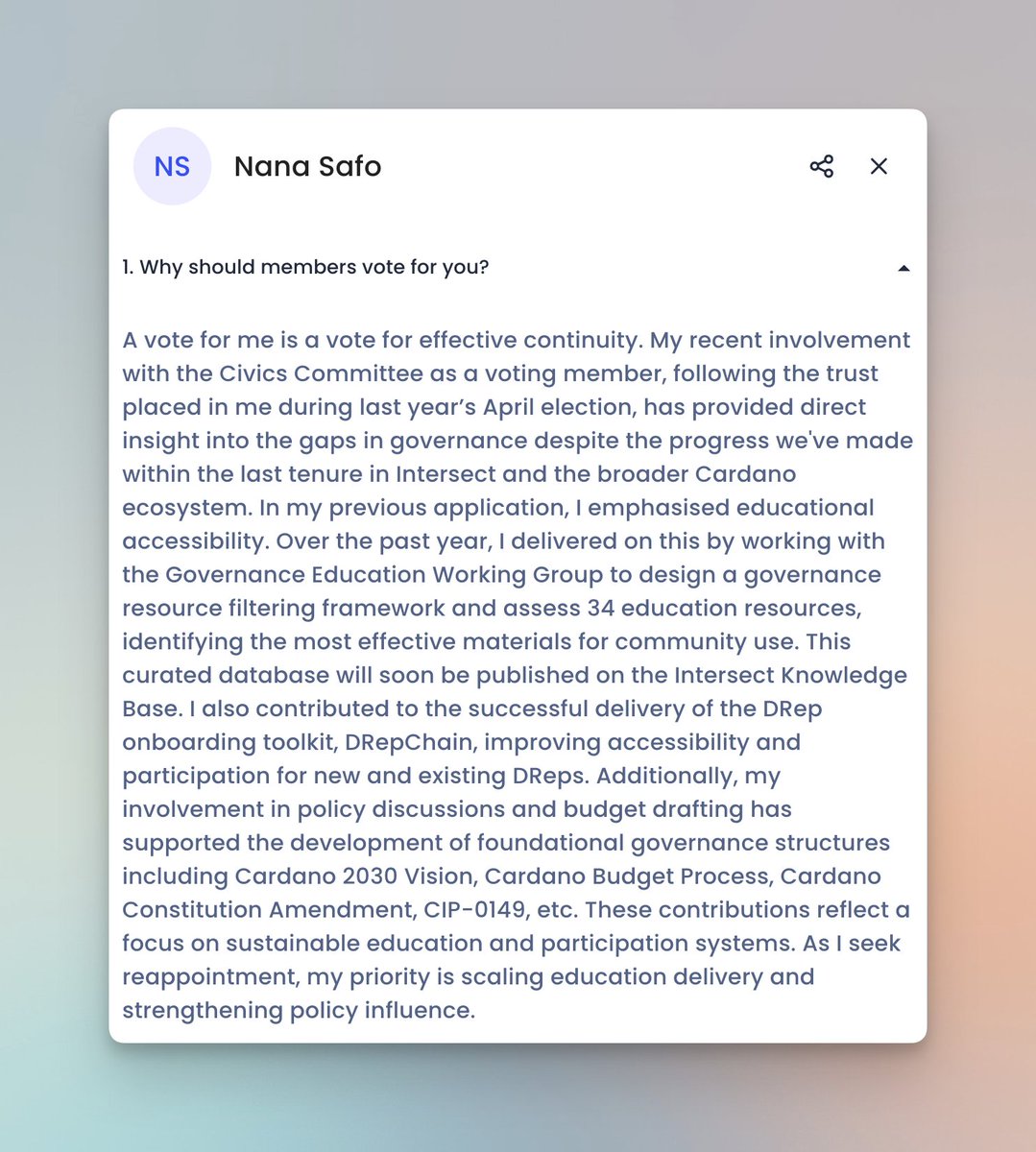
As Cardano Governance Education WG lead, I’m happy to announce that we have used our tenure to effectively design a Cardano Governance Education Resource Filtering Framework (CGERFF) to assess about 34 resources we identified and the results are what you can confidently rely on.
Look out for a database that is coming up on the Intersect knowledge base pretty soon to allow public access to these effective resources.
Are you an educational resource developer? Some of the identified resources needed some revision, remodeling, update, etc to be able to make it to the final list of serving the Cardano ecosystem effectively. We call on your expertise.
This is just the beginning and there’s room for improvement and maintenance. Thanks to my WG colleagues, Randy, Alex, Musa, and anyone else who joined our weekly calls, the structure is built and would be handed over to the Civics Committee.
With Randy and I reapplying for a second tenure at the Civics Committee in this April 2026 contest, one of our goals is maintaining this system and making sure it gets updated every 3 months.
I personally have other goals, some of which is to deliver governance education to the community through an X space which's at the planning stage and also contribute towards the ambitions of the governance participation incentives working group.
Your vote for me is a vote for effective continuity.
members.intersectmbo.org/das…
@IntersectCIVICS @IntersectMBO @ShugaAyomi @wada_org @Oppong_Rich45 @kenerik
4
3
11
2,012
Wada retweeted
Guess what's happening this Friday?
Another episode of Cardano Project Showcase. This time, with @wada_org
Make sure to tune in so as to learn more about @wada_org
Set your reminder below 👇
April is going to be special 🚀
After hosting Gimbalabs and AdaLink in previous months, we’re excited to announce that this April, we’ll be hosting @wada_org ! 🌍✨
5
9
249