
Architects|planners|interior Designers|3D Visualization|Animators|Project Management|Construction
Joined July 2015
- Tweets 4,972
- Following 852
- Followers 255
- Likes 5,947
94 Photos and videos





S. Giwa retweeted

Jun 12
I have met a lot of people that voted Peter Obi the last time and will be voting PBAT next year.
I have also met a lot of people that voted Peter Obi last time but will sit out this election because Peter Obi hasn’t been as inspiring as he was in 2023 and they do not consider the alternatives as better.
I haven’t met a single PBAT supporter that is now supporting Peter Obi or any other candidate( this is my reality)
I believe this administration hasn’t lived up to certain hype but I cannot deny that it’s been reform minded. Helping correct structural issues that have plagued this country far too long.
For example, the recent passage of the state policing bill is by no means a mean feat. That this administration makes it look easy or don’t blow their trumpet so loudly does not diminish the huge significance of the bill and the tireless work that they put into it.
The implementation of the Nigeria Payments System Vision 2028 ( championed by CBN) is another policy that has gone under the radar(I believe we should all read about the policy) . This is one policy that will revolutionize our financial system for good. One that will birth several financial innovation and products. There is no eradication of poverty without financial inclusion and it appears CBN is on an articulated agenda towards a sustainable path.
For some of us, there are enough reasons to stick around this current administration. The alternatives aren’t as inspiring and simply do not have what it takes to out perform this current administration.
771
654
1,723
459,323
S. Giwa retweeted

Jun 10
Let me make it clear that as a citizen and a Lawyer, I have a duty to disclose every crime against the state that comes within my knowledge. The South-East people have suffered enough. No human being can again take them or any citizen of Nigeria for granted or perpetrate any fraud against them without challenge. Obunike is just one out of many others who have been scammed by NDC and its leaders.
The appropriate security agencies and anti-corruption agencies should immediately commence the investigation of this fraud by NDC and its leaders with a view to refunding the aspirants who were defrauded. According to Obunike Ohaegbu, Peter Obi is at the head of this fraud, according to NDC, and he must be investigated.
Senator Seriake Dickson made it clear that the decision of NDC is that aspirants should pay for only expression of interest form and no more. He said that the only person who is allowed to pay for the nomination form is the winner of the primary election. Any other payment to the party is a product of corruption. May I ask, Is Obunike Ohaegbu and the other aspirants for the Nnewi House of Representatives primary election winners of the primary election? If not, then Peter Obi and the NDC must refund him and all other NDC aspirants their stolen money.
This is the main reason I went public with this information. The NDC aspirants must be refunded back their money.
1,077
242
437
73,874

RT @thamieverywhere: bro to bro: if you like skinnier girls, get yourself a skinny girl. if you like thicker girls, get yourself a thick gi…
29,262
S. Giwa retweeted

May 25
It's 8:30 PM on a Wednesday. Tunde just walked into the house after spending two freaking hours in traffic on Third Mainland Bridge. He is exhausted, his shirt is soaked in sweat, and he just wants to drop his bag and drink some cold water.
Kemi is in the living room, fanning herself because there is no light. She looks at Tunde, then looks at his empty hands. He forgot to buy the petrol for the generator, which he promised he would pick up on his way home.
If Kemi was just angry or frustrated, she would complain. She might say, "Tunde, ah-ah! I reminded you about this fuel this morning. Now we have to sleep in this heat, and the food in the freezer will spoil. I am really upset." That is a normal complaint. It focuses on the mistake and how it affects her.
But contempt is different. Contempt doesn't attack the mistake... it attacks the person.
Instead of complaining, Kemi hisses loudly, rolls her eyes, and looks at him with pure disgust.
"You cannot even remember to buy ordinary fuel. Is it until I write it on your forehead? I don't even know why I expect anything from you. It's like living with another child. You are completely useless when it comes to taking simple responsibility."
Tunde freezes. He knows he messed up. He doesn't feel like a partner who made a mistake... he feels like a foolish schoolboy being scolded by his headmistress. His pride is crushed. Instead of going out to find fuel, he gets defensive, hisses back, and walks into the bedroom, slamming the door.
Contempt doesn't ruin a marriage in one day.
It is a slow leak. Day by day, insult by insult, it drains away all the love, respect, and friendship until there is nothing left.
May 24

What KILLS LOVE in Marriage.?
124
1,408
4,328
198,030
S. Giwa retweeted

May 16
There’s a silent disaster happening in Nigeria that nobody wants to confront honestly.
We keep shouting about unemployment, bad leadership, low productivity, corruption, poor healthcare, failed institutions and why our country is not working. But many people are avoiding the root cause.
Our education system has been deeply compromised.
A student enters secondary school or university full of dreams, intelligence and potential. Then the system teaches them something dangerous:
“You do not need competence to succeed.”
WAEC malpractice. NECO malpractice. GCE runs. Sorting. Sex for grades. Extortion. Intimidation. Victimization. Handout rackets. “See me after class.” “Talk to your lecturer.” “Settle this course.”
And after 4 or 5 years of surviving that environment, we expect excellence to magically appear.
It won’t.
A country cannot repeatedly reward dishonesty in classrooms and expect integrity in government offices, hospitals, engineering sites, courtrooms and businesses.
This is where many of our unemployable graduates are coming from.
Not because Nigerians are not intelligent.
Not because our youths are lazy.
But because too many people were trained inside a system where merit was murdered.
The painful part is this:
UNN, UNILAG, FUTO, ABU, UI, IMSU, ABSU and many others are using largely the same NUC-regulated curriculum.
The difference is standards.
The universities that still command respect are usually the ones with stronger resistance against sorting, extortion and academic fraud.
The ones collapsing in reputation are often the ones where corruption became normalized.
Once a student realizes they can buy an “A” with ₦20,000, or sleep their way through a course, or manipulate results through connections, the motivation to truly learn starts dying slowly.
And when millions of such graduates enter the labor market, the entire country pays the price.
That weak engineer may eventually supervise a bridge.
That poorly trained nurse may handle a patient.
That compromised accountant may manage public funds.
That fake first-class graduate may become a lecturer and reproduce the same cycle again.
This is no longer just an education problem.
It is a national security problem.
Countries become great because they protect competence fiercely.
Singapore did it.
China did it.
Germany did it.
South Korea did it.
You cannot build a first-world country with a third-world attitude towards education integrity.
Nigeria does not have a shortage of talent.
Nigeria has a shortage of systems that protect excellence.
And until we become ruthless about fighting academic corruption, exam malpractice, sorting, sex-for-grades and institutional intimidation, we will continue producing certificates instead of competence.
This fight is bigger than schools.
It is about the future survival of Nigeria itself.
426
4,935
9,233
204,511
S. Giwa retweeted

May 13
Another perfect day to clear up some common misconceptions.
Listen:
1. You don't NEED antibiotics when you have a cold.
2. You CANNOT shift anybody's womb. You cannot even reach it. Don't be stupid.
3. Diabetes is NOT caused by adding too much sugar to your garri.
4. For the last time, Typhoid is NOT malaria and malaria is not Tyforce. Stop diagnosing yourself of typhoid everytime you are ill or have a fever or stomach upset.
5. Hypertension ISN'T caused just by too much thinking.
6. You CANNOT "flush" ur system of illness by "pissing all the sickness away". They LIED to you..6. Your body doesn't need daily supplements. Just eat normally and healthy.
7. You do not need a special kind of tea to flush your system. You are not a public toilet.
8. Putting spoon in a person's mouth during a convulsion will NOT stop ANY convulsion.
9. Taking "Hampicloss" after sexual intercourse will NOT protect you from sexually transmitted infections or pregnancy.
10. Stop the daily douching and stop washing your vaginas with antiseptics. You are only exposing yourself to infections.
Oh... and this one is very important:
Slimming tea CANNOT remove all that fat. It will only make you purge till you are dehydrated (if you are very religious with it) and land you in the accident and emergency of the nearest teaching hospital to you. Go to a Gym, work out and DIET!
Pass it on if you care.
338
4,830
9,905
253,135
S. Giwa retweeted

May 11
When it goes up. We shout.
When it goes down. You shout.
It is your turn to shout- Oya shout!
May 11

Government apologists are not talking now that foreign reserves have dropped to 48 billion from over 50 billion
If it was going up they will be shouting
43
303
1,094
48,316
S. Giwa retweeted

May 8
Lagos is positioning itself as West Africa’s digital hub, with more than 20 operational data facilities and a market valued at $374m this year, drawing global firms including Google.
133
1,632
3,801
551,884
S. Giwa retweeted

May 3
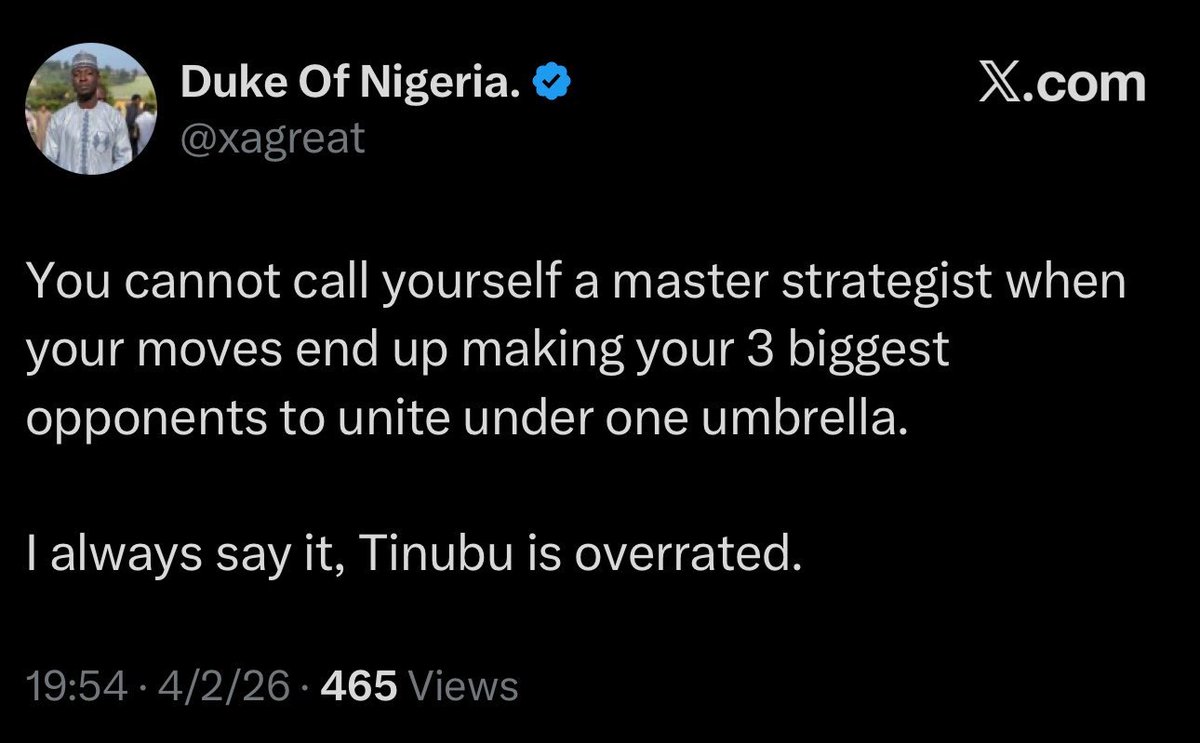
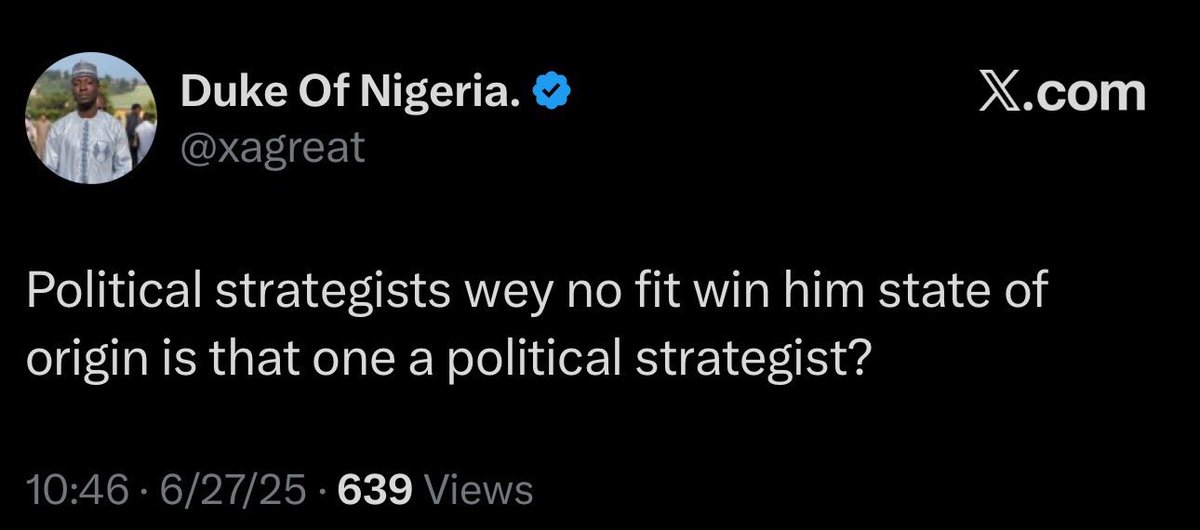
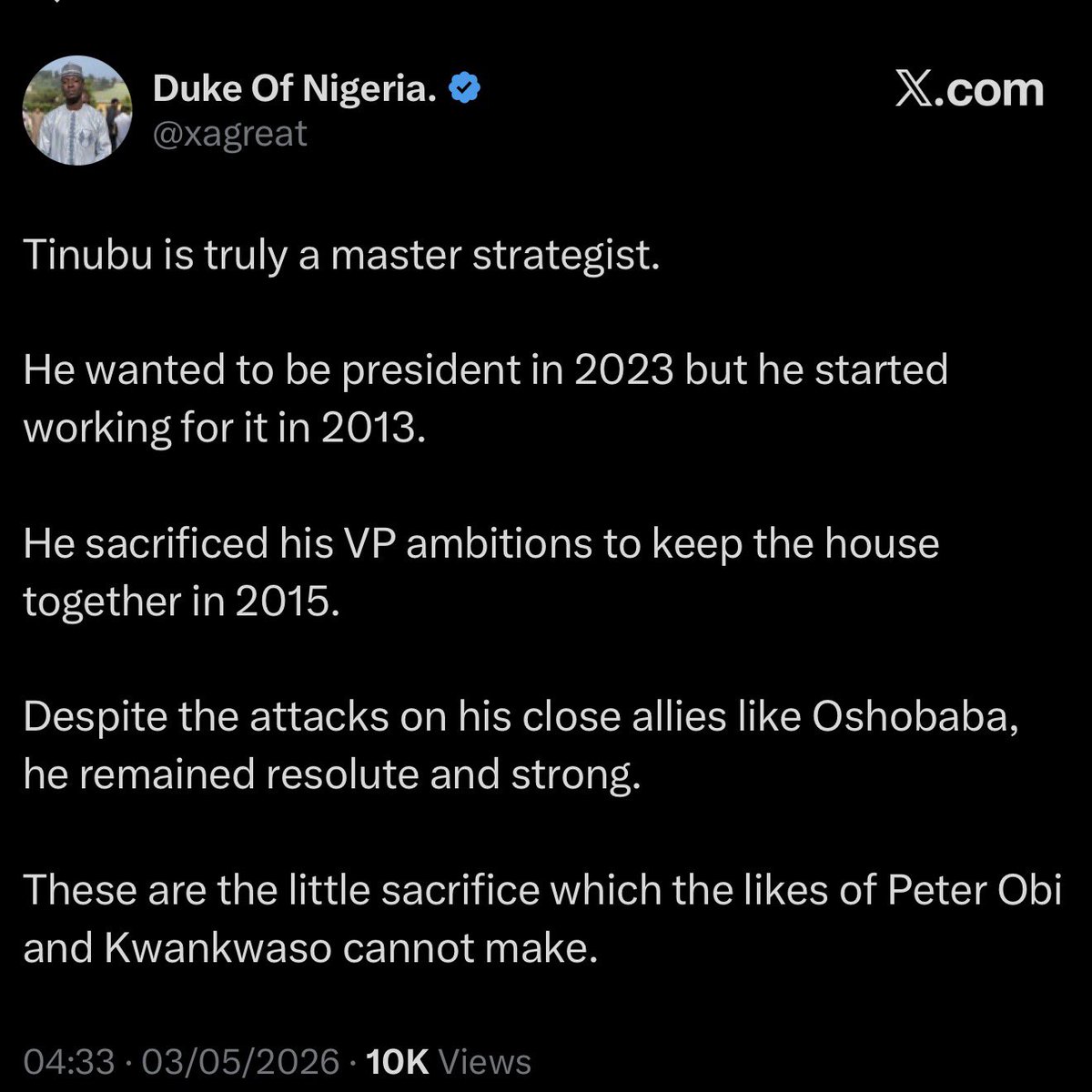
The drum has switched, the music has changed.
170
497
1,205
55,923
S. Giwa retweeted

Yoruba people gather here:
Look at a whole continent, thousands of kilometers away, locked in absolute awe of our culture. The generational dedication to the continuous understanding of the wisdom of our ancestors. They’ve been at it for centuries, yet they remain awestruck till this day.
The culture that we, the Yoruba people, shaped ourselves. Rich with history, pantheons, deities, and enduring stories. Created by the wisdom of our ancestors and preserved over centuries without dilution.
Yet, here at home, we the Yoruba people of Nigeria often struggle to fully appreciate the depth and beautiful mystery of what we have.
Top 5 ethnic nations of all time, and we are certainly not number 5.
Apr 28

Quem são esses três pássaros e três mulheres que aparecem no clipe de MANDINGA da Anitta?
As divindades mais temidas do panteão Yoruba, desconhecidas por muitos até na macumba, as Iyami Oxoronga, nossas mães ancestrais!


21
262
975
35,877
S. Giwa retweeted

14 Jul 2024
with bias, you will always find the narrative you’re looking for
250
13,886
35,199
2,258,198
S. Giwa retweeted

Apr 22
I usually shy away from what may appear as shielding political leaders whose records should speak for them from scrutiny, but this particular argument is both contradictory and hollow on many levels, and here’s why.
It begins by praising public sector performance under Adamu Ciroma, a History graduate who rose to govern the Central Bank before becoming Minister of Finance, only to turn around and sneer at people whose credentials were built in fiercely competitive, merit-driven institutions before they entered public service. That logic is hard to follow.
Wale Edun is not some accidental occupant of public office. He worked on economic packages across Latin America, the Caribbean, Indonesia and India through the World Bank’s highly selective Young Professionals Programme. He later returned to Nigeria to co-found what became Stanbic IBTC, founded West Africa Ratings, served two terms as Lagos State Commissioner for Finance, and co-founded and chaired Chapel Hill Denham, one of the leading investment banking firms on the continent, which, even in 2026, was ranked the Best ECM Bank in Africa by Global Finance. He was also the first Nigerian in six decades to chair the African Governors Forum of the World Bank. One may disagree with his policies, but one cannot honestly dismiss his professional record.
Taiwo Oyedele, on the other hand, rose through the ranks of PwC, one of the four most distinguished accounting firms in the world. In more than two decades of organic growth, he emerged as Fiscal Policy Partner and Africa Tax Leader, with over ten years in top leadership positions. He has chaired major fiscal and tax bodies, contributed to national tax policy design, taught at respected institutions, and built a reputation as one of the country’s most serious voices on fiscal reform. Nobody gets this far by being a fluke. To minimise that kind of professional growth for partisan convenience is sheer partisan mischief.
So you are wrong twice: wrong to diminish Wale Edun’s professional record, and wrong again to do the same to Taiwo Oyedele. The former may stem from sincere ignorance of the subject’s career, but the latter seems to reflect the familiar Nigerian disdain for people who did not begin with a fancy degree: an HND holder. You cannot follow Taiwo’s career, or even listen to him speak for a few minutes, and come away thinking he is intellectually hollow. At this point, the only further test critics could demand would be to hand him an exam script on the spot. Because you do not get into a Big Four firm fresh out of a polytechnic if you are not exceptional.
As a nation, yes, we must hold public servants to account. But cherry-picking somebody’s academic starting point while ignoring decades of proven excellence in high-performance institutions is not a fair test of merit. Taiwo began as an associate at PwC and rose to become a partner after more than twenty years. Wale Edun built a career across global finance, development institutions, investment, and subnational fiscal administration long before this moment. These institutions are not family shops, but places where you compete with some of the best minds available.
So what exactly is the argument here? That an HND earned two and half decades ago should outweigh two and a half decades of demonstrable excellence? That years of leadership, policy work, and technical accomplishment should be invalidated by an old credential simply because partisan politics requires a convenient insult? That makes little sense. What one learns, earns, and proves at the highest levels of professional life far surpasses the mediocrity of the sneers deployed to belittle it. You also may not be a fan of Wale Edun, but you cannot deny that he has one of the most difficult jobs in the country, and the results can be argued with data. But to say he is professionally unqualified is just a ridiculous thesis.
Apr 22

When Olusegun Obasanjo was looking for a Minister of Finance, he picked Malam Adamu Ciroma. A former CBN Governor and seasoned economic and policy adviser. He later picked Dr Ngozi Iweala, a PhD from MIT and a World Bank senior economic manager. Nenadi Usman was a junior minister and her appointment was strictly political. She didn't qualify for the role.
When Umaru Yar'adua was appointing a Finance Minister, he picked Dr Shamsuddeen Usman, a PhD from London School of Economics and Political Science, former Central Banker, former university academic, and former UBA manager. He later chose Dr Mansur Mukhtar, MSc Cambridge, PhD Sussex (Economics), Senior Economist, and former DG Debt Management Office.
Goodluck Jonathan appointed Olusegun Aganga, Senior Director at Ernst and Young London, MD Goldman Sachs London, World Bank and IMF Board Member. He later reappointed Dr Ngozi Iweala as Coordinating Minister for the Economy.
The rot started with the APC administration. Muhammadu Buhari appointed Kemi Adeosun. She has BSc Economics from the University of East London, a Postgraduate Diploma and certified Chartered Accountant as Finance Minister. She didn't even have NYSC certificate. He later appointed Zainab Shamsuna. She has BSc Accounting from ABU Zaria and MBA from Olabisi Onabanjo University. Was Executive Secretary at NEITI but had no relevant professional work experience in finance.
Bola Tinubu went tribal. He picked Wale Edun, a former Commissioner of Finance in Lagos and merchant banker. He has BSc, and MSc in Economics from the University of London. He later replaced him with Taiwo Oyedele, A HND holder in Accounting, MSc from Oxford Brookes, and former tax consultant at PwC. He has zero work experience in finance.
Dr Doris Nkiruka is a medical doctor. She's a Certified Finance Analyst and MBA holder but have zero work experience in finance administration.
Are you wondering why our economy has deteriorated under the APC administrations? The quality of their strategic appointments has been abysmal. It's either tribalism or nepotism. Merit is a second consideration!
38
265
613
125,927
S. Giwa retweeted
Apr 21
I knew Peter Obi had no chance with the ADC ticket. But I am one to always verify things.
That verification process is now complete. I had some important meetings recently and I can say, this is now a Done Deal.
I have a strong idea of who will fly the ADC ticket but in this game, only a bird in hand is a bird that’s yours. But I am 100% percent certain of who will not smell it.
My next move is to ensure that when the Obidient group leave the ADC, they don’t leave with the prized asset they have been working day and night to drag along. Concluded these meetings too even as I await the outcomes.
I will send you myrmidons into political oblivion. This is for Wole Soyinka, Tunde Onakoya and Jaffi Joffa and all that they represent. And all the unknown names and faces that have been bearing the brunt of your ill-fated group.
836
581
2,280
541,107
S. Giwa retweeted

Apr 20
Promoting chess. ✅
Making it look cool. ✅
Great outfit. ✅
Let the guy make his content, I don’t understand some of the hate and backlash here.
Your daughters are twerking at every other location on earth to promote their onlyfans pages.
But THIS offends you?
Relax.
Apr 19

First Nigerian to play chess at the Louvre 🇫🇷-The world’s most prestigious museum.
879
3,559
17,197
1,470,526

Does this include when he was living in a one bedroom and using his money to adopt and take care of the kids a lot of you scuff your noses at?
Or it's only after he's getting recognition for the work he's done without fanfare for over a decade?
You people need to stop feeling threatened by other people's success especially if you don't have the temerity to do what they did to get it.
Apr 19

Tunde Onakoya’s Chess in the Slum initiative does more for his image than it does for children across the southwest.
29
911
2,838
162,614
S. Giwa retweeted

Apr 19
this campaign of calumny against Tunde O is lazy at best.
not everyone has the luxury of alignment. some people do work that cuts across divides - work that may collapse the moment it’s seen as partisan. in that position, neutrality is not cowardice; it’s a requirement for the work to survive and achieve its objectives.
“but he has taken a side”.
meanwhile, it’s a picture with the president of his country. an honorary ambassadorship from his state. opportunity to speak with young people (his primary target) at an event - organized by the president’s son.
guess who else has a picture with the president. guess who else is a sports ambassador for Ogun state. guess who else was invited to speak at that event (Tunde didn’t even attend) that people are not dragging.
what are we doing?
if you’re doing impactful work, people across political divides will court you. people across the world will court you. you will be in rooms with people you like and those you loathe. and for the sake of the work, you will chest it.
because the work is bigger than your personal politics.
and the idea that he needs Nigeria to stay bad so he can have more slum kids is … laughable. his work isn’t about preserving slums. it’s about developing people - through chess - discipline, how they think, opportunity, etc. that doesn’t disappear if things improve. and no matter who the president is, Nigeria will never run out of underserved communities. infact, the world will never run out of it.
you’re forcing politics on something that isn’t built for it. and judging a constraint you don’t carry.
if you think you’d do it differently, oya do it. build something impactful, take your stance, and sustain it.
until then, it’s just noise. lazy noise. 🙂↔️
76
777
1,565
236,094

Dear Adetokunbo Ogunnoiki,
Thank you for showing interest in Governor Babajide Sanwo-Olu’s moves towards building cleaner Lagos and your support in protecting our environment.
I’m writing you regarding your post quoting the tweet of Honourable Commissioner for the Environment and Water Resources, Mr. @tokunbo_wahab, where he announced installation of modern public toilets across Lagos.
The Commissioner has asked me to reach out to you to discuss potential collaboration between your tech firm and the Lagos State Government. You are kindly invited to a meeting with the Commissioner this coming week.
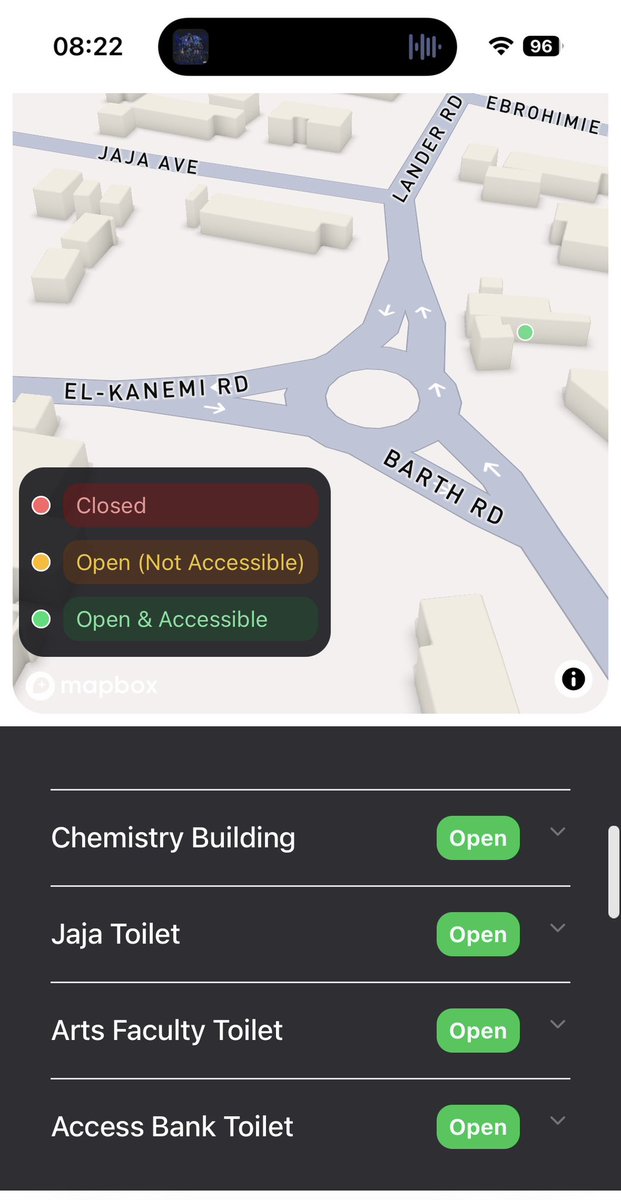
You will have the opportunity to pitch your ideas to the Commissioner and relevant stakeholders in the Ministry, especially how you aim to provide real-time tech solutions that will ensure seamless public access to the installed public toilets.
I will send you further details via DM.
Thank you.
@jidesanwoolu
@Mr_JAGs
@Midatlblog
Apr 18

Dear Honorable Commissioner,
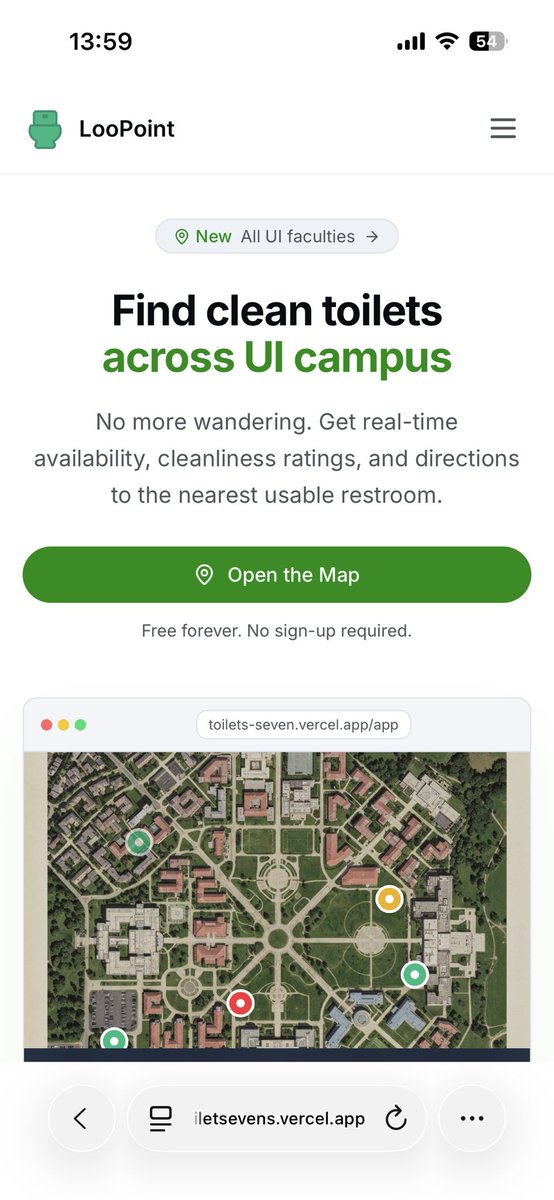
My name is Adetokunbo Ogunnoiki, and I am the founder of LooPoint which is a platform that helps individuals find clean and available public toilets in real-time, including availability, cleanliness ratings and walking directions.
165
775
2,912
335,577
S. Giwa retweeted

Apr 18
Do you know what the main problem is with you folks and shite arguments like this? You are treating these children simply as symbols of governmental failure rather than as human beings with present, immediate needs. It is also evident most of you do not know how NGOs and Civil societies work. For example, you cannot simply walk up to a public school and start handing out incentives to pupils without due permission from the Ministry of Education. If you also try to antagonize the government, your efforts will be utterly frustrated.
You will go on to condemn Tunde for compromising while you remain morally spotless but also entirely useless to the children in question. You want to keep them under the bridge, theoretically, so the bridge can function as an indictment of the state. Do you actually think you are more righteous by performing outrage on social media?
Listen, the children under the bridge are already there. The question is not philosophical anymore. They are hungry, undereducated, exposed to violence, and statistically on their way to lives you hypocrites will later lament. If he leaves these children right now and start supporting your candidate, will this immediately destroy all the slums in Lagos State?
All of you using these children's suffering as rhetorical ammunition against someone trying to address that suffering directly, I want to ask you plainly now: What exactly are you proposing instead, and when does it begin?
Apr 17

"Slum to School". The slum has to exist. Why does it exist? He knows why.
I have no problem with his person. I also have no reason why he should pitch on Obi's or any other candidate's side.
But you can't say you're angry, and then join in dining with the source of your angst.
61
855
1,852
202,456
S. Giwa retweeted

Okay... I really don't understand the TL
So if someone doesn't support your candidate, the person doesn't want Nigeria to progress?
So if someone doesn't support Peter Obi, the person is an enemy of progress and hater of Nigeria?
Is that what it is now?
2,789
1,041
4,215
1,103,124

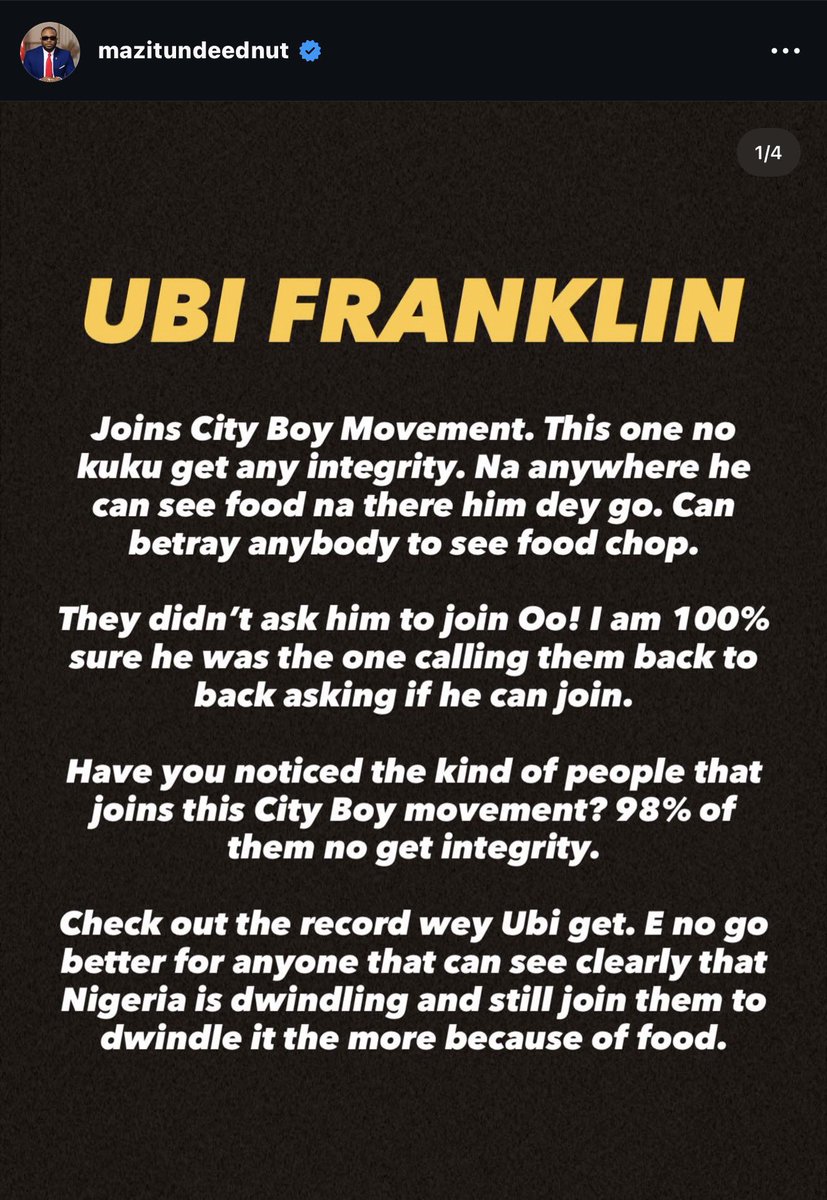
Dear evil Tunde Ednut,
It is @ubifranklin1 constitutional right to support APC, especially as a member. What you’re doing comes across as direct bullying and an attempt to incite people against him. You have other friends that are Apc members that have supported you. Remember you told me to stop talking about politician. You collected 1million to post for tinubu 2020.
You live in America, where freedom of political choice is respected and protected. Yet you are here influencing and stirring emotions among Nigerians—many of whom genuinely trust your voice—while benefiting from the same system you criticize.
Why push narratives that divide and mislead? Why gaslight the masses against individuals simply for exercising their rights?
Can you honestly say you’ve never benefited from any political affiliation or support in the past?
It’s time to stop this pattern. Support Peter Obi in peace, and allow others to support Tinubu in peace. Respect should go both ways.
145
118
471
44,618