
Joined July 2009
- Tweets 144,826
- Following 625
- Followers 19,686
- Likes 786
3,285 Photos and videos

Thanaboramat, Touch retweeted

Jun 13
JUST IN: 21-year-old dies after workers forget to attach safety rope and push her off 40-meter bridge in São Paulo’s Limeira, Brazil
4,619
6,920
66,710
48,567,722
Thanaboramat, Touch retweeted

May 27
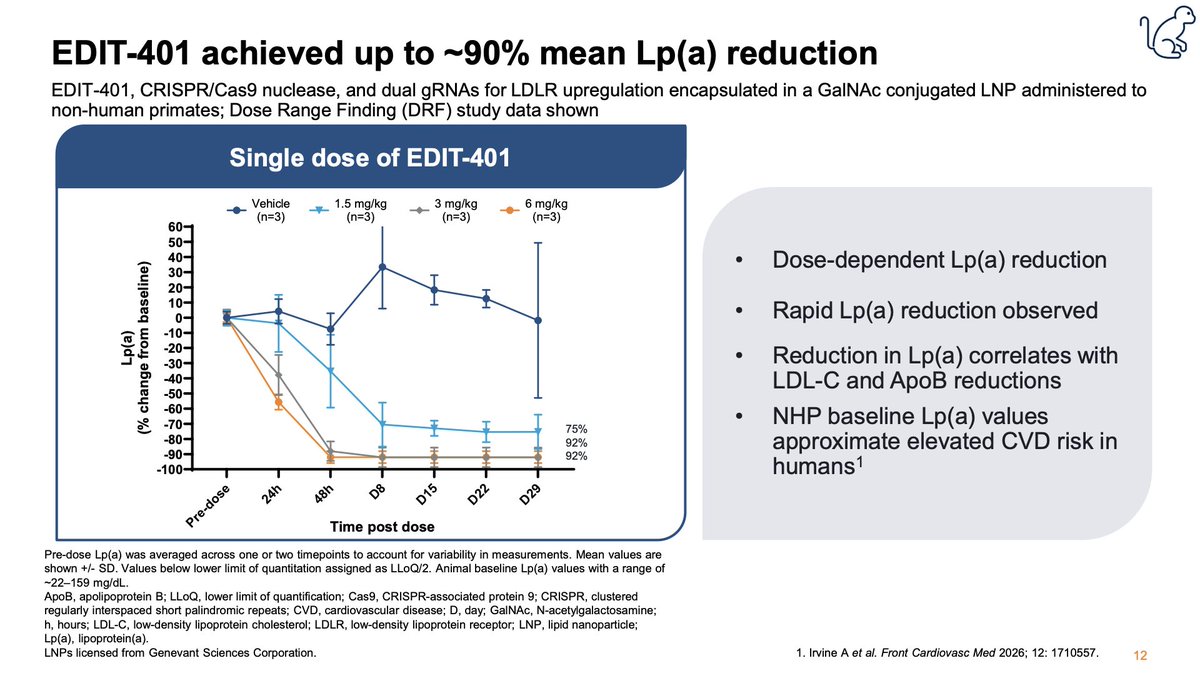
Somewhat unexpected but big if true; gene editing directed to non-coding regions of LDLR can yield functional LDLR upregulation, yielding deep reductions of not only LDL-C and ApoB but also Lp(a)
1
11
47
6,611
Thanaboramat, Touch retweeted

🫀 Lowering LDL-cholesterol is a cornerstone of CAD prevention—
…but is it enough?
This study explores a crucial gap:
👉 Why does significant coronary risk persist even at low LDL levels?
✨ Study at a glance (HURRICANE study):
🔹 479 patients with chronic coronary syndromes (CCS)
🔹 Comprehensive CCTA metabolic profiling
🔹 CAD severity assessed by:
✔ CAD-RADS 2.0
✔ Leiden score
✨ Key findings:
⚠️ Paradoxical observation:
👉 Patients with LOW LDL (<70 mg/dL)
➡️ had MORE severe and extensive CAD
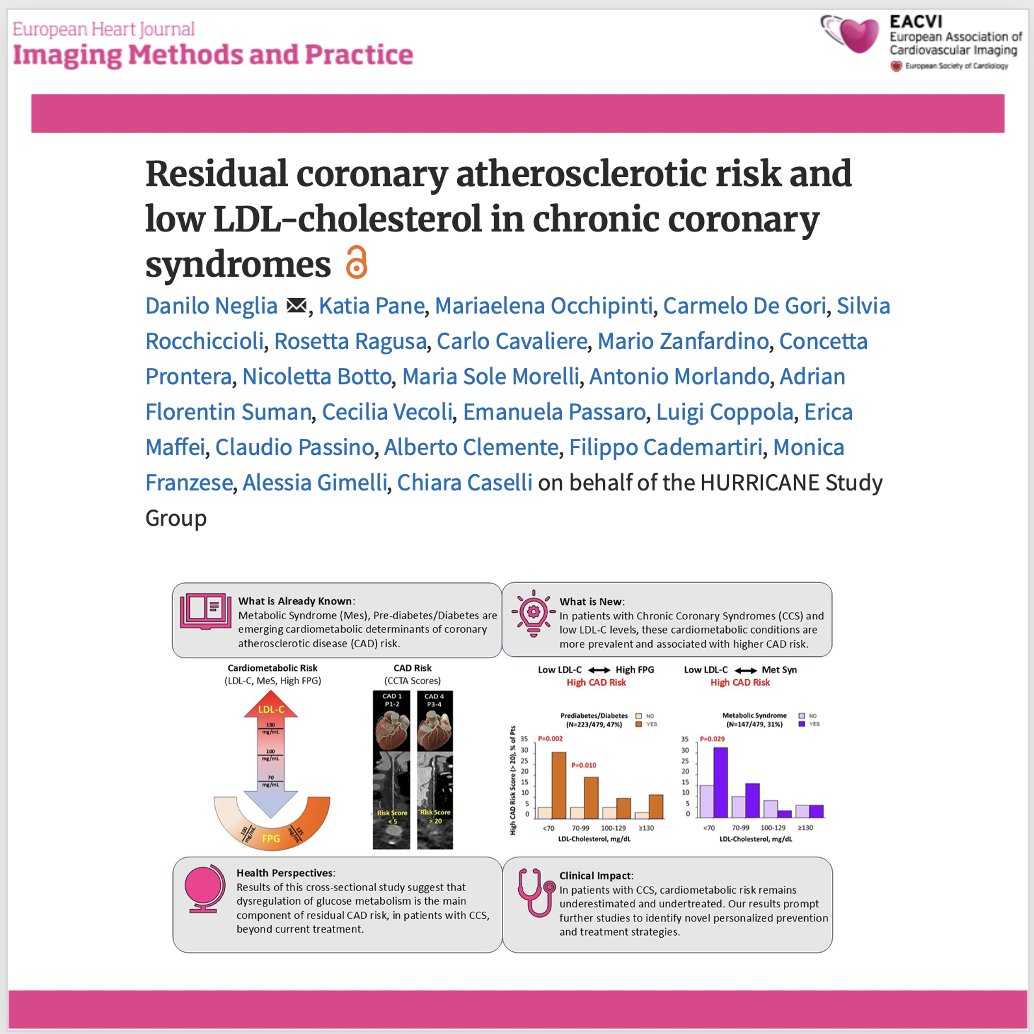
📊 As shown in the graphical abstract (page 2):
➡️ high CAD risk clusters with high fasting glucose, not LDL
🧠 The real driver: cardiometabolic risk
🔹 Metabolic syndrome (31%)
🔹 Pre-diabetes (26%)
🔹 Diabetes (21%)
👉 Strong independent predictors of CAD severity
📈 Risk impact:
✔ Metabolic syndrome → OR ~2.1
✔ Pre-diabetes → OR ~1.9
✔ Diabetes → OR ~6.1
📊 Key mechanistic insight:
👉 Dysregulation of glucose metabolism
➡️ emerges as the main contributor to residual atherosclerotic risk
✔ Insulin resistance
✔ Inflammation
✔ Atherogenic dyslipidaemia
⚠️ Critical clinical implication:
👉 LDL-focused strategies alone are not sufficient
➡️ Patients with low LDL may still have:
higher plaque burden
more non-calcified plaques
higher overall CAD risk
🧬 Imaging metabolism = the future
👉 CCTA reveals:
✔ plaque burden
✔ plaque composition
✔ disease extent
👉 Combined with metabolic profiling →
➡️ more accurate risk stratification
💡 Clinical take-home message:
👉 In CCS patients:
✔ always assess cardiometabolic profile
✔ look beyond LDL
👉 Focus on:
glucose metabolism
insulin resistance
metabolic syndrome
🚨 Bottom line:
Residual coronary risk is driven less by LDL—and more by cardiometabolic dysfunction, especially glucose dysregulation.
#Cardiology #CCTA #CoronaryArteryDisease #LDL #Diabetes #MetabolicSyndrome #Cardiometabolic #PrecisionMedicine #CardiacImaging 🫀📊
6
30
84
6,611
Thanaboramat, Touch retweeted

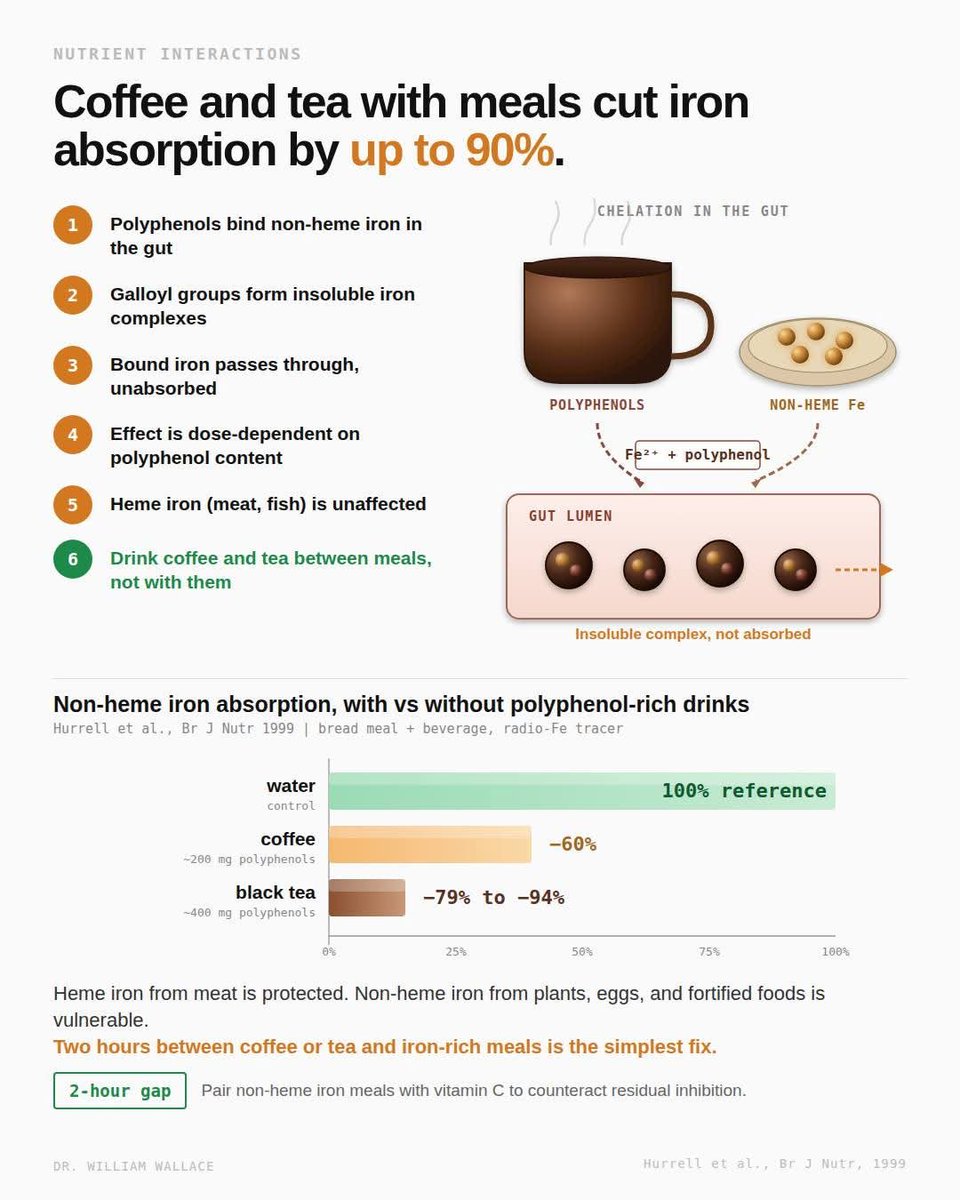
Coffee and tea contain polyphenols that bind non-heme iron in the gut and form insoluble complexes that pass through unabsorbed.
Hurrell and colleagues (1999, Br J Nutr) tested this directly using radio-labeled iron in adult humans eating a standardized bread meal with different beverages. Absorption was quantified by erythrocyte incorporation of the tracer.
Compared to water, beverages containing 20 to 50 mg of polyphenols per serving reduced iron absorption by 50 to 70%. At 100 to 400 mg, the reduction was 60 to 90%. Black tea: 79 to 94%. Peppermint tea: 84%. Cocoa: 71%. Chamomile: 47%. Adding milk did not meaningfully change the effect.
The mechanism is specific to galloyl structure, not total phenolic content. Brune, Rossander, and Hallberg (1989, Eur J Clin Nutr) showed that tannic acid inhibits in a dose-dependent manner that tracks galloyl content: 5 mg cut absorption 20%, 25 mg cut it 67%, and 100 mg cut it 88%. Gallic acid inhibited equivalently per mol of galloyl groups. Catechin, which lacks that structure, showed no inhibition at all. Chlorogenic acid, the dominant polyphenol in coffee, inhibits but less potently than tannins.
Heme iron behaves differently. It's absorbed intact through the HCP1 transporter inside its porphyrin ring, shielded from polyphenol binding entirely. Non-heme iron from plants, eggs, and fortified foods is the vulnerable pool.
Vitamin C counteracts the interaction by reducing Fe³⁺ to Fe²⁺ and forming a soluble ascorbate-iron complex that resists polyphenol binding. Hallberg and Hulthen (2000, Am J Clin Nutr) showed that adding 50 mg of vitamin C to a meal with significant inhibitors increased non-heme iron absorption 3 to 6-fold.
For anyone with borderline iron status, menstruation-related losses, a plant-based diet, or pregnancy, timing matters. A two-hour gap between the beverage and iron-rich foods, or pairing the meal with vitamin C, is the simplest fix.
Hurrell 1999. Brune 1989. The mechanism has been in the literature for three decades. It's rarely in standard dietary counseling, rarely on any bottle, and almost never mentioned by the industry selling iron.
Hurrell et al., Br J Nutr, 1999
Brune et al., Eur J Clin Nutr, 1989
Hallberg & Hulthen, Am J Clin Nutr, 2000
6
58
247
8,039
Thanaboramat, Touch retweeted

May 21
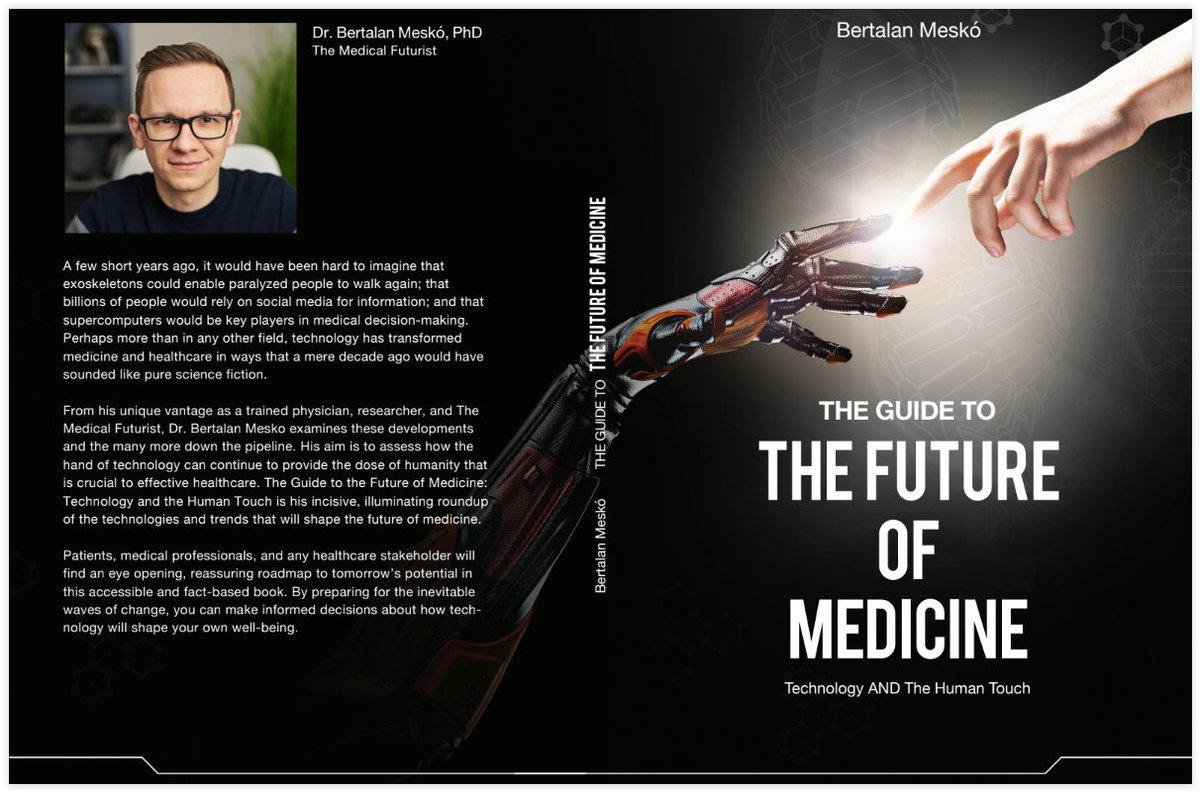
23 trends that depict the near future of medicine and healthcare. Over 50,000 copies sold in 5 languages.
A lot of figures, interviews and scenarios. This is "The Guide to the Future of Medicine".
Check it out on Amazon in e-book format too: amazon.com/Guide-Future-Medi…
6
13
723
Thanaboramat, Touch retweeted

Apr 11
👉 We spend decades arguing about how low to push LDL-C
👆 Almost no one asks the obvious question:
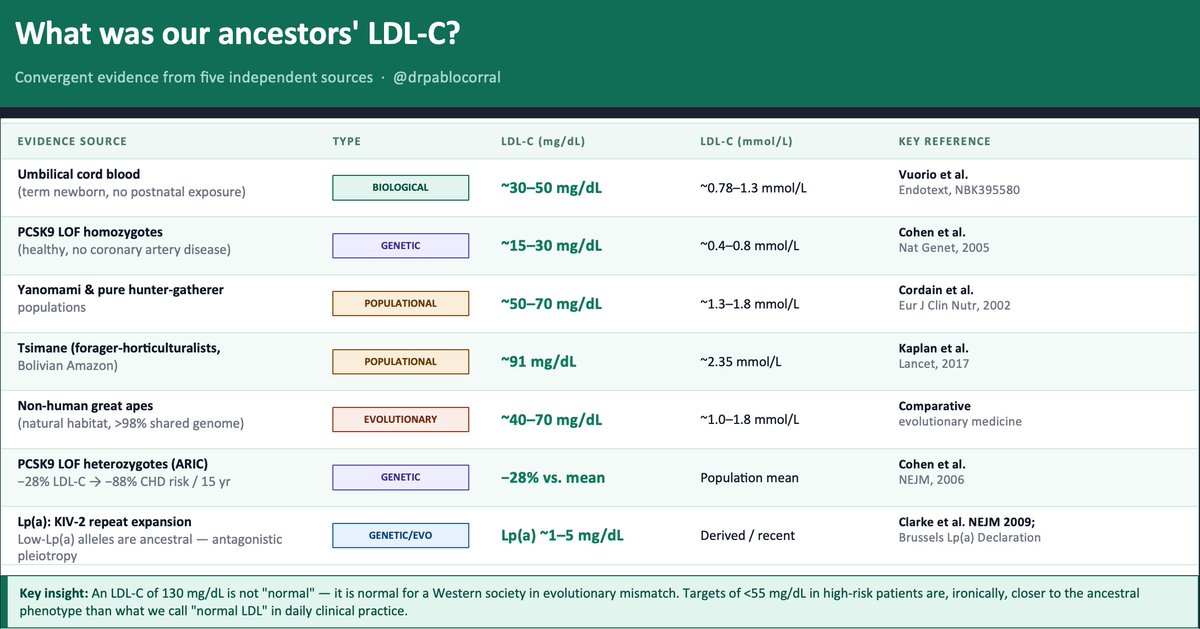
🤔 How much LDL-C did our ancestors actually have?
The evidence exists — five independent lines, all converging on the same uncomfortable answer.
1️⃣ The term newborn. Before any dietary or metabolic influence, a healthy neonate arrives with LDL-C of ~30–50 mg/dL. That is the LDLR operating without environmental interference. Everything that rises after birth is acquired.
2️⃣ The Tsimane (Kaplan et al., Lancet 2017) — forager-horticulturalists of the Bolivian Amazon — have a LDL-C between 70 to 90 mg/dL and the lowest prevalence of coronary atherosclerosis ever recorded in any human population. Five times less than the U.S. in adults over 75. And their LDL is rising as roads and processed food arrive.
3️⃣ PCSK9 loss-of-function variants. African American carriers of nonsense mutations (Y142X/C679X, ~2% frequency): −28% LDL-C and −88% CHD risk over 15 years (Cohen et al., NEJM 2006). Homozygous LOF carriers live with LDL-C of ~15–30 mg/dL. Perfectly healthy. Nature already ran the trial.
4️⃣ Evolutionary genetics. Recent positive selection signals exist on gain-of-function PCSK9 variants that raise LDL-C — likely adaptive in food-scarce ancestral environments. Modern hypercholesterolemia is not "normal." It is an ancestral survival advantage turned pathological by evolutionary mismatch.
5️⃣ Great apes in natural habitat: ~40–70 mg/dL LDL-C. Same genome. Different environment.
👆 Bonus — Lp(a). The KIV-2 repeat expansion that raises Lp(a) is a derived, recent variant. Low-Lp(a) alleles are ancestral. Elevated Lp(a) is a textbook antagonistic pleiotropy signal — possibly protective against bleeding early in life, atherogenic over decades
📍The convergent estimate: ancestral LDL-C was ~30–70 mg/dL.
📍An LDL-C of 130 mg/dL is not "normal." It is normal for a Western society in evolutionary mismatch. Targets of <55 mg/dL in high-risk patients — which still feel aggressive to many clinicians — are, ironically, closer to the ancestral phenotype than what we call "normal LDL" in daily practice.
🤔 The question is not "is it safe to lower LDL this much?"
The question is: why did we let it rise this high?
@society_eas
@nationallipid
25
90
355
75,603
Thanaboramat, Touch retweeted

23 Nov 2025
ENDURANCE TRAINING IS KILLING YOUR NERVOUS SYSTEM
They sold you the biggest lie in fitness history. Run more, live longer. Boost your VO2 max, stay young. Do cardio, preserve your health.
Complete nonsense.
Here's what's actually happening every time you lace up those running shoes for another long, slow death march. You're teaching your body to move like an 80-year-old. You're systematically destroying the one system that keeps you young, powerful, and functional.
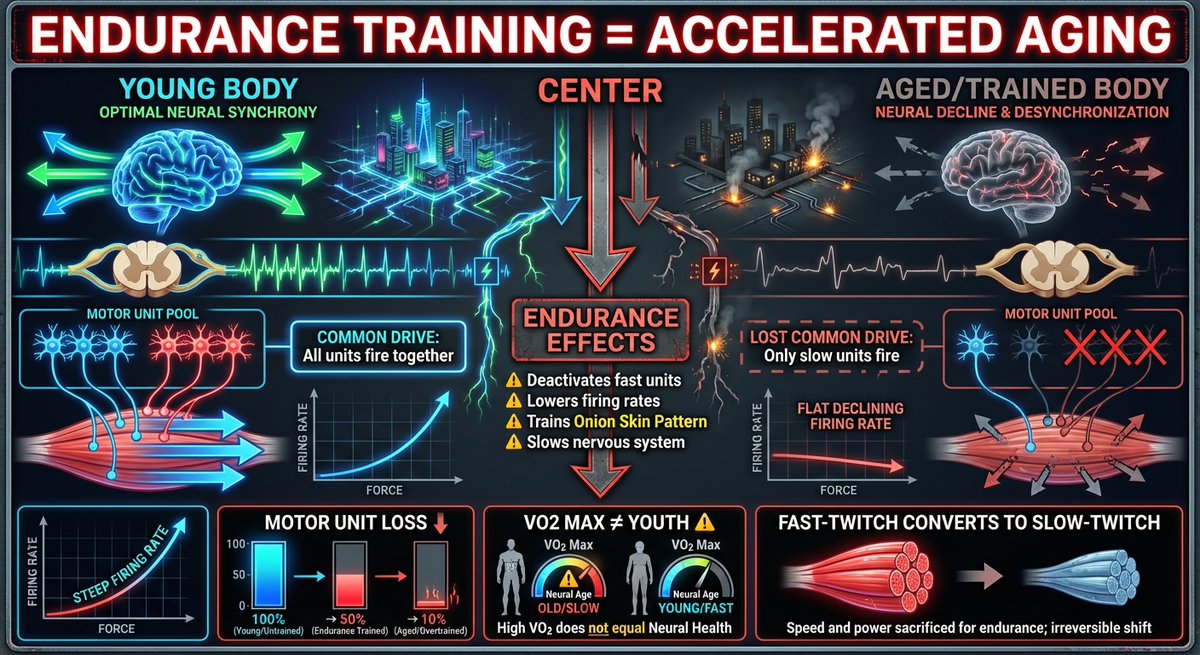
it is called common drive. Your nervous system's ability to fire all your motor units together, instantly, with precision and force. It's what separates a young person who can react, jump, sprint, and explode from an old person shuffling across a parking lot.
And endurance training is murdering it.
THE ONION SKIN LIE
Your muscles work through motor units. Small, slow ones and big, powerful ones. Mainstream exercise science loves the onion skin model. They tell you your body activates motor units in layers, starting with the wimpy slow-twitch fibers first, only recruiting the powerful fast-twitch units when you really need them.
This happens during endurance training. You're jogging along at 40% of your maximum voluntary contraction. Your body only uses the pathetic little motor units. The powerful ones sit there, unused, slowly dying.
But when you need real power, your body doesn't work in layers. It works in unison. Sprint, jump, react to danger and your brain fires everything at once. All motor units, slow and fast, activated together through common drive. That's the reverse onion skin pattern.
This is how young people move.
Explosive. Coordinated. Fast.
Endurance training teaches your nervous system to forget this pattern exists.
FIRING RATES EXPOSE THE FRAUD
Your firing rate determines how fast your brain sends signals through your spinal cord to your muscles. Higher firing rates equal power, explosiveness, control. Lower firing rates equal weakness, slow movement, frailty.
Endurance training systematically lowers your firing rates. Not sometimes. Always.
You spend hours training your body for long, slow, repetitive movement. Your brain adapts by slowing down its signaling. It stops prioritizing explosiveness and instead focuses on efficiency for endurance.
You become efficient at moving slowly. Congratulations. You just trained yourself to age faster.
By 75, you've lost nearly half your motor units. By 90, you're working with 10%. Your firing rates collapse. Your reaction speed disappears. Falls become deadly because your body can't coordinate fast enough to catch itself.
This is normal aging. And endurance training mimics every single step of this process, just earlier in your life.
THE VO2 MAX DISTRACTION
Endurance athletes worship VO2 max like it's the holy grail of longevity. They're completely missing the point.
Yes, a high VO2 max means your heart and lungs work well. It measures endurance. It does not measure youth.
You can have an impressive VO2 max and still move like garbage. You can run for miles and still lose the ability to sprint, jump, or react. Because VO2 max depends heavily on muscle mass, and without muscle mass and functional motor units, high aerobic capacity means nothing against frailty.
You don't stay young by running long distances. You stay young by preserving your ability to move fast, powerfully, and with precision. Those are completely different goals.
WHAT ENDURANCE TRAINING ACTUALLY DOES TO YOUR BODY
Young endurance athletes think they're untouchable. They can run forever, their VO2 max is sky high, they feel invincible.
They're accelerating their decline and they have no idea.
First, you stop activating your high threshold motor units. These are the fast, powerful fibers. The exact ones that disappear first during aging. Endurance training conditions your body to ignore them. When you don't use them, they shrink, weaken, and eventually die.
Second, your nervous system starts firing more slowly. Fast firing rates give you explosiveness and lightning reactions. Endurance training rewires you for slow, steady output. You lose the ability to move fast or generate force. Just like an aging body.
Third, your system adapts for efficiency instead of performance. Your brain gets really good at conserving energy. The cost? Your fast-twitch fibers convert to slow ones. You become slow, steady, weak. Sure, you can jog for hours. But you can't sprint, jump, or move explosively anymore.
Your nervous system slows down. Signals to your muscles become sluggish. Your muscles stop working together smoothly. You lose that snap, that power, that quick reaction time that makes you feel athletic.
Before you know it, your body moves like someone 20 years older. Even though you're still young. Even though you're still training.
You trained yourself to become slow and efficient.
SPRINTING ISN'T ENOUGH EITHER
Sprinting alone doesn't reverse aging either.
Elite sprinters still slow down with age. They still lose power, agility, reaction speed. Why? Because sprinting in a straight line is predictable.
One-dimensional.
You're not reacting to unpredictable stimuli. You're not adapting. You're not moving functionally in a complex environment.
Common drive is about your brain's ability to send synchronized, full-body commands to every motor unit in real world conditions.
If you're not challenging your body to react, change direction, adapt on the fly, you're not training common drive.
You're just moving fast in a straight line.
This is why even the best sprinters in the world eventually walk slowly, move stiffly, and lose their edge. Aging erases complexity, adaptability, and synchronization. If your training doesn't protect those things, it's not protecting your youth.
Endurance training accelerates aging.
By relying on low-intensity movement and the outdated onion skin model, endurance training teaches your nervous system to move slowly, layer by layer, just like an aging body. It deactivates your fast motor units. It lowers your firing rates. It weakens your reaction time, explosiveness, and coordination.
It slowly destroys common drive, the system that keeps your entire body moving as one.
Most scientists and athletes have no idea what common drive really is. They reduce it to a pattern in a muscle study or a number tied to work intensity. That's why everyone, even elite athletes, still loses their ability to move youthfully with age.
They're missing the big picture.
If you train like you're aging, you will age fast. Endurance doesn't slow aging. It teaches it.
You want to stay young, powerful, and fully functional?
You need to unlearn everything you've been told about cardio, VO2 max, and what actually keeps a body young.
The answer isn't running more miles. It's preserving the one system mainstream fitness completely ignores.
33
44
281
22,816
Thanaboramat, Touch retweeted

15 Aug 2025
Anything else Noam?
12 Aug 2025

Does it still work if you raise the table 6 inches?
256
185
4,361
635,993
Thanaboramat, Touch retweeted

17 Aug 2025
For Chronic Diseases & Symptoms:
95% of the time, one of these has SUBSTANTIALLY better outcomes... I'll let you guess 😉
Not to mention a much higher quality of life 👍👍

6
20
103
9,378


Would you like ask Manus to complete a task for you?
Reply to this tweet with a task you'd like Manus to handle. Our team will run your request with Manus and share the results with you.
Whether it's research, content creation, data analysis, or something creative - let's see what Manus can do!
5,016
440
3,075
834,483
Thanaboramat, Touch retweeted

15 Feb 2025
this is wild 🤯🤯🤯
just paired openai operator with replit agent to build an app
watch as two ai agents team up, exchange credentials, and start testing
ai agent 🤝 ai agent
the future is here and it’s insane!
344
993
8,617
1,820,751
Thanaboramat, Touch retweeted

24 Jan 2025
My 12 years of fitness knowledge and 50,300 posts for you to read in 2 minutes:
1. Stop ego lifting

26
93
949
639,260
Thanaboramat, Touch retweeted

13 Sep 2024
1
5
132
Thanaboramat, Touch retweeted

7 Aug 2023
นมโอ๊ต ยีห้อ Oatly คือโกหกเก่งสุด ในอเมริการอดตัวมาได้เพราะหน่วยงานรัฐไม่ค่อยแคร์ แต่ไปยุโรปนี่โดนเล่นงานตลอด
ทั้งเรื่องการโกหกผลวิจัย
โกหกเรื่องไม่มี Trans Fat
ระบุข้อดีที่เกิดต่อสิ่งแวดล้อม “คลาดเคลื่อนทำให้เข้าใจผิด”
แถมยุโรประบุ ว่าห้ามเรียกว่านม เพราะเป็นแค่น้ำมันล้างโอ๊ต
26 Jan 2022

Oatly ads banned over 'misleading' environmental claims bbc.in/3u5J3tF
22
27,875
4,130
2,204,260
Thanaboramat, Touch retweeted

3 May 2024
Recently, I appeared on @theproof's podcast. And interestingly, one quote has gotten some traction (watch below in the video)
To summarize, I state:
1️⃣ I believe ApoB/LDL are components of atherogenesis
2️⃣ If one takes strong steps to lower it as much as possible, they reduce their likelihood of dying by that "particular" outcome
3️⃣ Yet I don't know if the effort doesn't yield a trade off (ie cancer, infection, or some other outcome associated with low LDL)
But wait, why even ask if there's a "trade off"?
This was also discussed in the same podcast – I believe ApoB lipoproteins are part of the immune response (which isn't controversial, there are many papers on this ie doi:10.1371/journal.pone.0004237, doi:10.1378/chest.100.3.802, doi:10.1016/j.chom.2008.10.001)
That doesn't mean there couldn't be a benefit in lowering ApoB anyway. It's possible, as many speculate, that it was more beneficial to battle infection by our ancestors, but that threat is less concerning now in modern society.
But it is a good reason to check and see if those with lifelong, super low ApoB/LDL demonstrate lower All Cause Mortality in the first place.
Cardiovascular Disease (CVD) Mortality is specific to that outcome alone.
All Cause Mortality (ACM) is death by any means. In other words:
👉 CVD mortality non-CVD mortality = ACM
Hence my interest in PCSK9 Loss of Function. They can have super low levels of LDL their entire life, and this does associate with reduced CVD. However, they do not appear to have reduced ACM. (See jacc.org/doi/10.1016/j.jacc.…)
Regardless, I'm interested in our doing some ACM analyses ourselves soon on this topic as it has been of enormous interest since this began for me in 2015.
-- 🤔Exit question – especially for those who have followed me all along – how much does my opinion in this clip differ from my opinion of the last several years?
40
14
127
41,594
Thanaboramat, Touch retweeted

5 Mar 2024
ใครที่่บัญชี Facebook เด้งออก ยังไม่ต้องล็อกอินใหม่หรือกู้รหัสผ่าน ต้องรอให้ทาง Facebook แก้ที่ระบบก่อนค่ะ
27
507
283
63,134
Thanaboramat, Touch retweeted

5 Mar 2024
Facebook ล่ม บัญชีเด้งออกเอง กระทบทั่วโลก (5 มี.ค. 2024) iphonemod.net/facebook-logou… #fbล่ม #igล่ม #facebookล่ม
6
3
3,684
Thanaboramat, Touch retweeted

29 Jun 2023
Both insulin resistance (IR) and ApoB are significantly associated with ASCVD risk. Whether one factor adds significant incremental risk information to the other has been the subject of brisk debate.
To address this issue, two fundamental questions must be asked:
1. Are IR and ApoB each significantly predictive of ASCVD risk in a series of models that progressively adjust for base cofactors (BC), BC metabolic syndrome (MS), and BC MS the other variable (IR or ApoB)?
If each continues to have significant predictive value despite these progressive adjustments, then each variable significantly contributes to ASCVD risk.
2. What is the impact of adding one factor (IR or ApoB) to the other in a model adjusted for cofactors?
A Chi-Square analysis of adding IR to ApoB, or ApoB to IR, in models adjusted for cofactors gives insight into the incremental value of the added variable. The higher the Chi-Square, the greater the incremental value of the added variable.
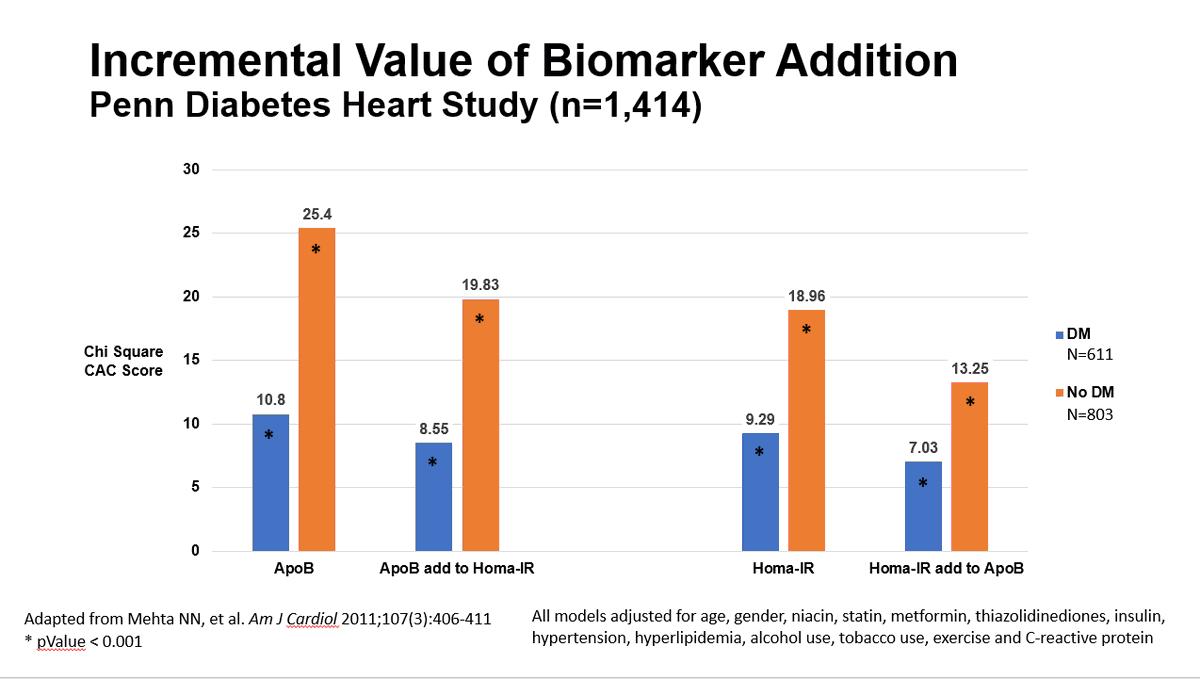
The Penn Diabetes Heart Study assessed the predictive value of HOMA-IR and ApoB for coronary artery calcium (CAC) score in a cohort of 611 diabetic and 803 non-diabetic adults. This study showed:
1. HOMA-IR and ApoB were EACH significantly predictive of CAC in models adjusted for BC MS the other variable (HOMA-IR or ApoB).
2. The addition of ApoB to HOMA-IR, as well as the addition of HOMA-IR to ApoB, added significant incremental risk prediction versus the model with HOMA-IR or ApoB alone (see figure below).
These data support that BOTH IR AND ApoB are significant, independent predictors of ASCVD risk and that EACH adds important incremental risk prediction to the other.
15
31
155
65,976
Thanaboramat, Touch retweeted
22 Jan 2024
Substantial LDL cholesterol elevations are well documented among some lean individuals on a low-carb, ketogenic diet.
This “metabolic demonstration” illustrates how robust and rapid LDL reductions can be in an individual experiencing this phenotype when carbohydrates are added to a chronic low-carb, ketogenic diet.
mdpi.com/2218-1989/14/1/73
22 Jan 2024

🚨#OreoVsStatin - PUBLISHED!🚨
mdpi.com/2218-1989/14/1/73
@Oreo cookies were 💥2X as potent💥 at lowering my LDL cholesterol (LDL-C) compared to high-intensity statin therapy!
What you NEED to know...
👉This was a metabolic demonstration, a 'do not do this at home' experiment that makes no 'health' claims about cookies or cholesterol.
👉The purpose was to BOLDLY test a prediction of the Lipid Energy Model #LEM, i.e. that adding in carbs, including in the from of an Oreo cookies 'addition' (not carb-fat swap) would lower LDL-C in an LMHR on a #keto diet
Why Oreos? ... It's (productively) provocative! 😱
Research on #cholesterol on #keto diets and the #LEM and #LMHR phenotype has so much to teach us about human lipid metabolism! ...
But how do I (we) communicate the scientific 'awe' that we feel to the greatest number of people (as well as force a conversation about #LMHR and #LEM that needs to happen)? ... A dramatic demonstration designed to turn heads might work!
It's not 'just click bait' ... it's 'legit-bait'
I want YOU to feel the 'shock and awe' I feel every day studying this topic. And I want you to engage in the research journey.
What you need to do... or should do... 🙏PRETTY PLEASE 🙏!
👉PLEASE WATCH 👀 VIDEO ABSTRACT here (<8 min): youtu.be/L1mMnnyJrgk
👉 SHARE THIS LINK to the paper itself in a quote RT or original Tweet of your own: mdpi.com/2218-1989/14/1/73 ... doing so helps promote the work and provoke the discussion
... and feel free to tag in your favorite influencers (or least favorite 😉)...
A HUGE thanks to the senior author and expert lipidologist @Lipoprotein for his guiding wisdom, insightful thoughts, and always open and curious mind.
And to @realDaveFeldman, my friend, research wife, and the '#LEM daddy'
Finally... there will be a LOT of coverage of this experiment. Keep in mind, we are not making any health claims, but through a dramatic demonstration, highlighting an uncomfortable tension that arises from a prediction of the Lipid Energy Model, and that is consistent with prior data (7 papers, including 'highest tier' data like our recent meta-analysis of 41 RCTs).
Science is supposed to embrace such uncomfortable questions... so, join us in being curious and advocating for much needed research on #LEM and #LMHR so we can make sense of what observations like this really mean... STAY CURIOUS 🤔
5
32
134
33,182