
Comfort is overrated. Interlocking problems with mutually incompatible solutions~ Ophuls.
Joined June 2014
- Tweets 24,590
- Following 1,032
- Followers 262
- Likes 16,611
329 Photos and videos















Pinned Tweet

29 Nov 2022
The🔑to man made global warming alarmist theory is the hockey stick graph. Infered (by correlation) from that graph: the plausible "suspect" is CO2. This is not the slam dunk that u think it is. The graph itself is from tortured data and there are other suspects, namely the sun.
6
Mind Management retweeted
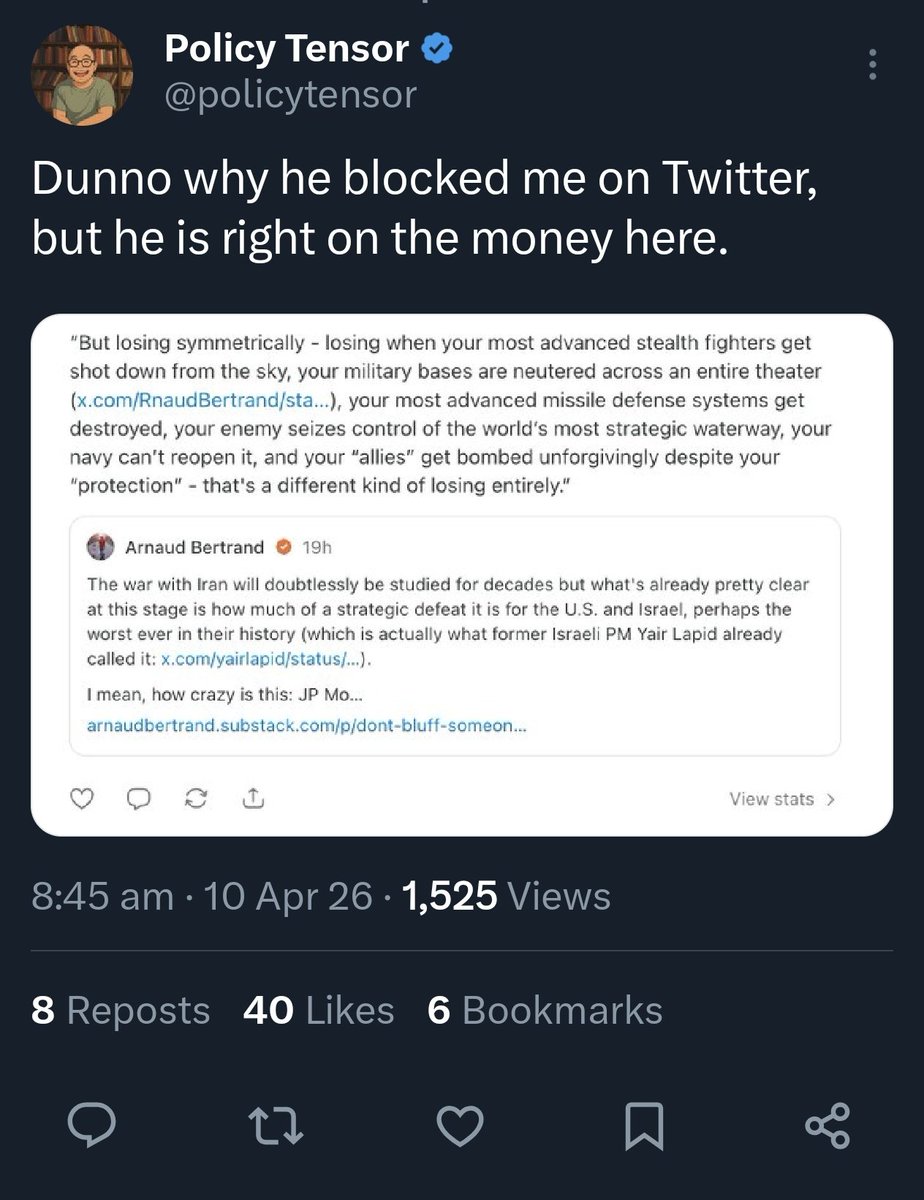
WHY did I win my wager against @ProfessorPape?
I have great respect for him and my respect for him has grown recently. But what did he get wrong?
He believed, correctly, that US security principals faced a strong incentive to do whatever it takes to prevail. He expected them to get sucked into higher and higher levels of escalation to get their way, in a process he calls The Escalation Trap.
I told you from the start that, while this was a good model of an important dynamic at play, it suffered from a grave problem: there was nothing is the model that could ever account for deescalation—it could only explain higher and higher commitments.
So his model was theoretically incomplete in a very important way, and it was not pretty to watch him impose his theoretical priors on a dynamic reality that refused to obey the model.
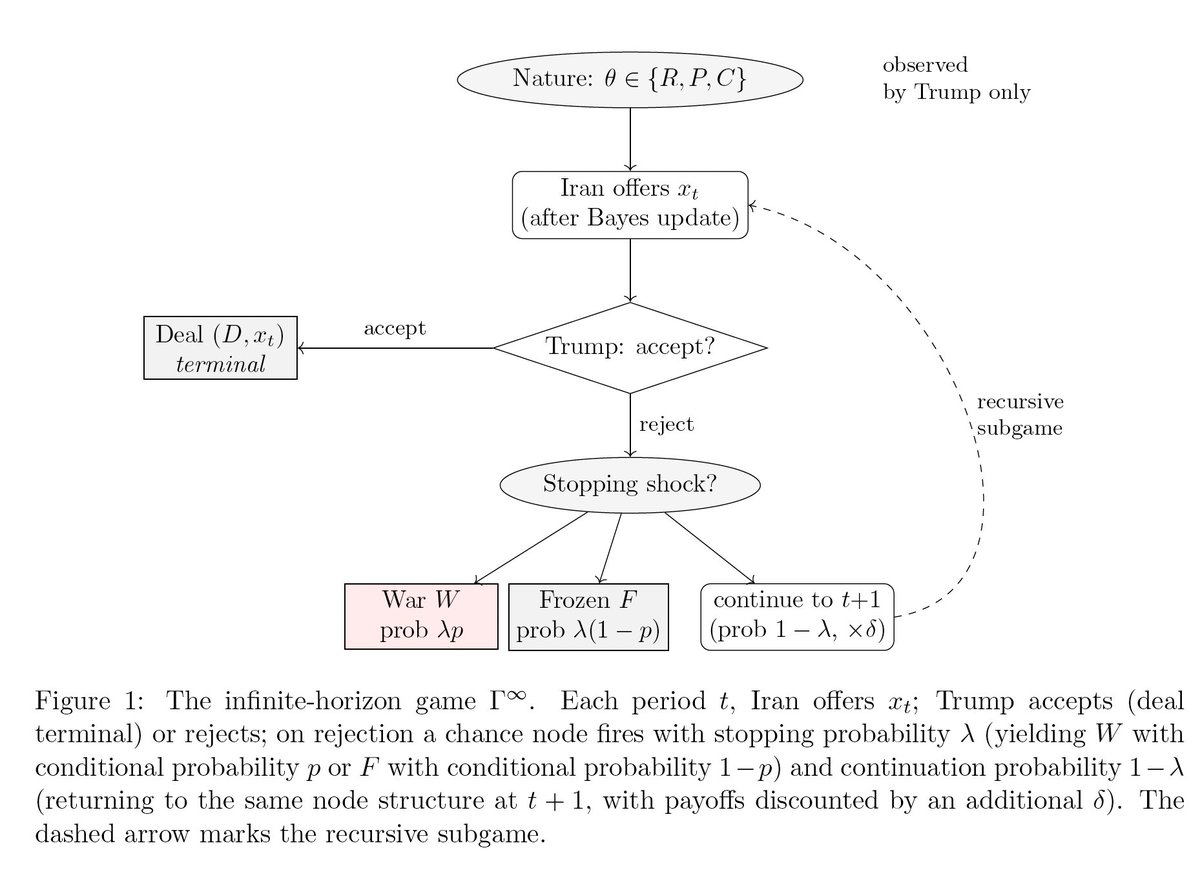
I tried to think harder about the incentive structures for the two sides. I did eventually formally model the interaction as a bargaining game under asymmetric information. But the underlying logic was already clear intuitively beforehand.
The fundamental theoretical issue is that, with complete information, you get a deal immediately or not at all. There is no possibility of a costly process of armed bargaining. The thing that generates such a process is private information. It is bc one side is not certain about the other’s true preferences that you need costly signaling.
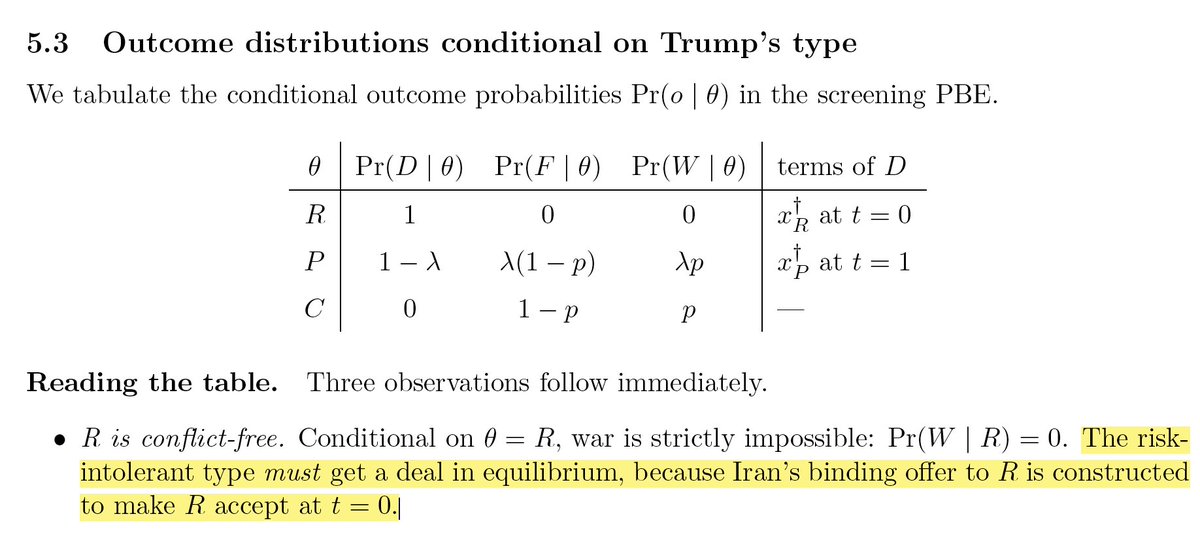
I intuitively knew and later showed formally how, under plausible assumptions about the distribution of Trump’s type, a deal was a certainty in any separating equilibrium.
But all this may be too technical for people with little training in game theory. The basic point is easy enough to grasp: never, ever forget the gap between your model of reality and the messy reality out their. It is not the job of reality to conform to your model. It is your job as an analyst to revise your model if you discover that you’re missing a key piece of the puzzle.
Pape got trapped by his own model. And he is hardly alone. Pape was the only one who got even within shouting distance of me throughout this whole affair.

20
15
109
8,736
Mind Management retweeted

Jun 14
The work is done alone.
So is the mental toughness.
You can either quit or move forward.
Life is in about how hard you work when they're watching life is about how hard you work when they're not.
You never know how hard you work cuz they never see you.
11
77
5,264
Mind Management retweeted

Jun 14
All of these thought crimes pale in comparison to your policy of murder.
Jun 13

To be clear:
To disagree with the Iran war is NOT antisemitism
To say those who support it are doing so for Israel IS antisemitism
People can disagree about what is in America’s interests. When you say that those you disagree with are putting loyalty to Israel above loyalty to America you’re in the fever swamps
4
86
4,043


Mind Management retweeted

Jun 12
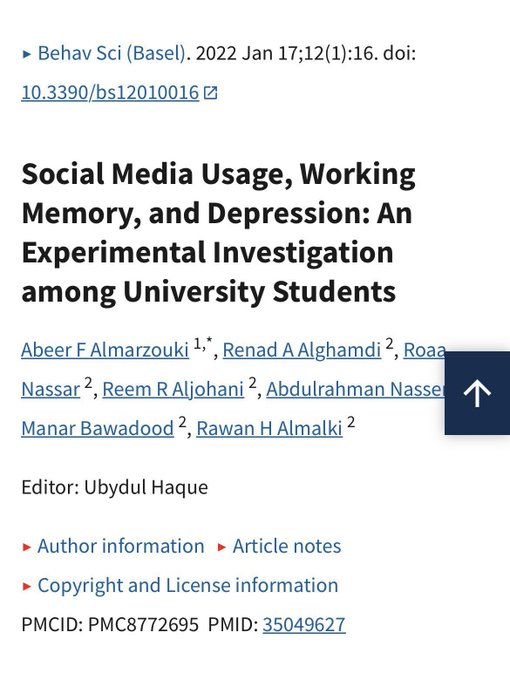
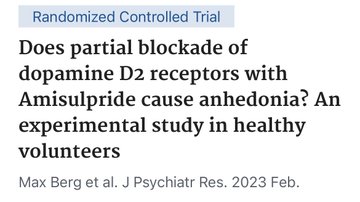
I am once again reminding you that getting artificial dopamine hits inside non-stop all day is frying your chimp brain more than you dare to imagine.
They can literally cook your entire life.
Heck, in general, if you are depressed, unmotivated, lazy, and even don’t enjoy life much immediately cut out all artificial dopamine hits and go outside.
You might laugh at this initially but give it 3 weeks and you will never look at social media the same.
It’s basic science.
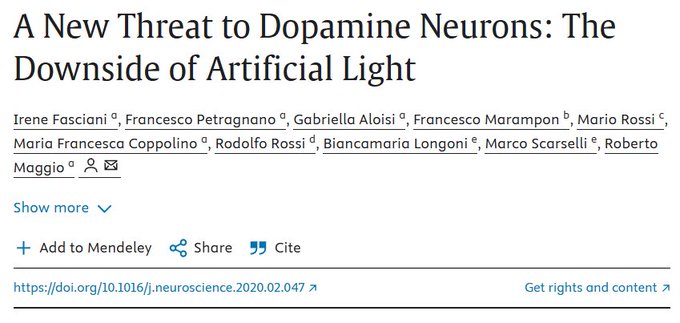
D2 receptors, for example, are susceptible to downregulation from overstimulation, artificial blue light is shown to lead to a 30% reduction of tyrosine hydroxylase-positive neurons in the substantia nigra in many animal models etc.
So you can not live an overstimulating life indoors and wonder why you don’t derive pleasure from anything natural or why you're not driven to create something.

My son just told me he was going to Door Dash an açaí bowl from Playa Bowls.
Told him there is no chance in hell…
Now that you have a car and license you can drive your lazy ass there (10 mins away) and pick it up.
What’s wrong with these kids today?
They want to door dash everything.
Blows my mind 🤯
30
435
5,353
593,764
Mind Management retweeted

Jun 11
Jews are disgusting people.
Let’s see whose post lasts longer.

Irish are disgusting people
347
3,751
52,808
1,091,073
Mind Management retweeted

Jun 11
Peace Derangement Syndrome (PDS)
Primarily associated with chickenhawks who have never experienced a shot fired in anger & who would never, under any circumstances, go to war themselves.
Jun 11

If all these governments have agreed on this deal, it’s amazing how all these governments signed up so fast while we were announcing we’d be bombing asap. Since it’s done can we see it?
And what is in this deal?! Can we see it?
446
2,735
17,289
425,704
Mind Management retweeted

Mehdi Hasan is on a generational run!
After Patrick Bet David, he now dismantles Jeremy Hunt on live television.
“The two biggest hits to growth in the UK over the last 10-15 years were both brought about by Conservative governments" "Austerity and Brexit"
12
191
1,984
81,034
Mind Management retweeted
Jun 10
Life is wonderful here, mama. You must come visit!


Gwyneth Paltrow stars in new campaign for Israel luxury housing development ‘51PARK’ in Herzliya.

24
1,073
12,621
385,566
Mind Management retweeted

Jun 9
This is biblical.
A woman in her eighties. Ten years into Alzheimer's. Hadn't spoken a full sentence in five years.
Takes one, 5 gram dose of psilocybin.
She slept 19 hours and woke up and spoke for hours about her life, recognized family and held real conversations. She regained bladder control after five years, walked on her own. and dressed herself. Gains held for weeks.

1,277
8,727
75,205
3,604,511
Mind Management retweeted
Jun 8
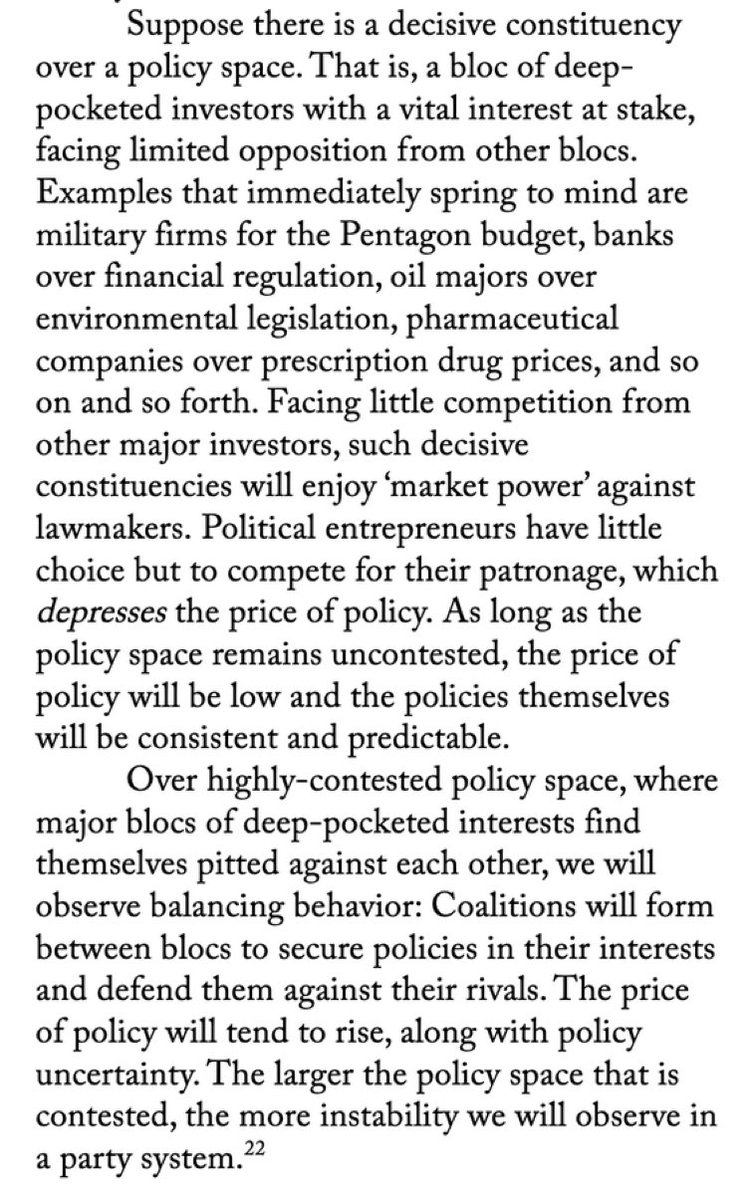
I feel that Chinese success is being totally misread as the triumph of industrial policy. Here’s an alternative theory.
Chinese success is due to the general competence of Chinese institutions, of state capacity, of social trust. There is no possibility of capture by anything like the lobby, no space conducive to the hypertrophy of rent-seeking we find in the US (see attached).
The Chinese have a dramatically more effective political order; esp compared to the US. This stable and effective political order is in part due to and in part generative of social trust. Together they provide China with the greatest state capacity in the world.
The political order, the social trust and the state capacity is upstream of and makes possible the highly effective industrial policy that Western elites fetishize. Plenty of states have tried and are trying industrial policy. Almost all of them in vain.
It’s not industrial policy, but the Chinese political order that you need to pay attention to if you want to pull a China.
Jun 7

I think part of it, at least vis a vis US/China competition, is that US and western chattering classes find it hard to believe that the market-driven outcome of frontier AI could possibly be right. They basically believe, in their hearts, that the Chinese system, with its “industrial strategy,” has eclipsed capitalism. So they harbor the same inferiority complex toward the Chinese system that many Americans once harbored toward the EU’s system. Their heuristic is that the industrial strategists of China have grasped the whole picture of the technological competition in a way that US industrialists, with their “profit maximizing incentives,” could not possibly have matched. And so any outcome in the economy that is not the result of “strategy” is therefore prima facie worse than what the “strategists” have concocted. They also believe the Chinese strategists possess awesome powers of foresight and the ability to evade all tendencies of financial and economic gravity, due of course to “strategy,” really it’s almost a kind of orientalism.
Meanwhile the U.S. industrialists are making new advances in math and science, and the fastest-growing businesses in history, by spending hundreds of billions of dollars on high-margin chips whose legacy is in rendering video games, cramming them underneath tents if need be, and investing generational capital into new energy generation technologies as they do it, and perhaps even colonizing space as an instrumentally convergent result. But none of that is “strategy,” you see.
67
209
952
73,046
Mind Management retweeted

Wow! I am blown away.
"The U.S. rollout of the iPhone, the first modern smartphone, provides a natural experiment: from June 2007 through February 2011, the device was sold only on AT&T, allowing us to identify its effect from variation in AT&T’s mobile broadband coverage....Overall, the diffusion of the iPhone explains 33–52% of the decline in the general fertility rate among women aged 15–44."
Staggering. The next question is WHY?
My guess is permanent access to social media and dating apps (mainly women) and greater access to pornography (men.) Plus maybe messaging apps leading to less in person socialisation? But this is important.
@philippilk
Jun 8

New study: Did the introduction of the iPhone causally reduce fertility?
Yes, by more than 1/3.
New study: nber.org/papers/w35310?utm_c…
14
30
192
36,747
Mind Management retweeted

Jun 7
There is a nation that blackmails the world w/ nuclear weapons threat. There is a nation that corrupts the US through foreign influence in campaigns & press. There is a nation that sponsors & engages in systemic terrorism of civilian populations for political gain.
It's Israel.
94
694
2,850
27,952
Mind Management retweeted
Jun 5
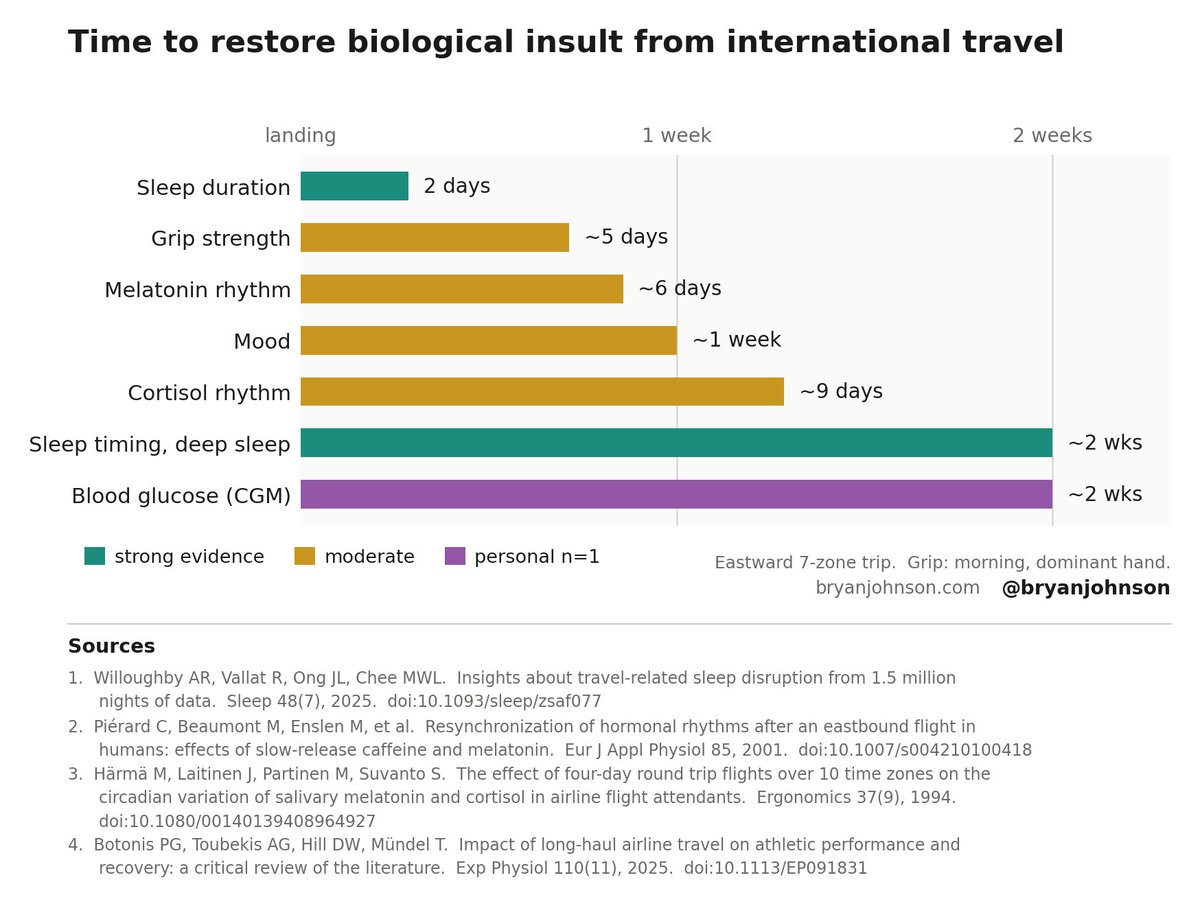
Here's a snapshot of the biological insult from international travel. It takes your body over two weeks to fully recover.
It's a big price tag.
One international trip per quarter is a reasonable balance.
Time to recover:
> sleep duration: 2 days
> grip strength: 5 days
> mood: 1 wk
> cortisol: 9 days
> sleep quality: 2 wks
> blood glucose: 2 wks
293
294
4,051
619,247

Mind Management retweeted

Jun 4
It is truly EYE-OPENING to talk to Iranians and get their point of view:
.
IRANIANS: You murdered Qasem Soleimani.
U.S./ ISRAEL: We don’t believe in international law.
IRANIANS: You bombed our peace talks in Qatar.
U.S./ ISRAEL: We don’t believe in international law.
IRANIANS: You murdered our govt members and their spouses and children.
U.S./ ISRAEL: We don’t believe in international law.
IRANIANS: You stole our ships and everything in them.
U.S./ ISRAEL: We don’t believe in international law.
IRANIANS: You made an unprovoked attack which killed more than 100 school kids.
U.S./ ISRAEL: We don’t believe in international law.
IRANIANS: We’re going to charge shipping fees so we can rebuild what you destroyed.
U.S./ ISRAEL: YOU CAN’T DO THAT! INTERNATIONAL LAW!!!!
38
1,446
3,939
76,382