
Economic and Financial History. Prev. Finance @UVAMcIntire. Market structure, tech, exchanges, & slavery. Quaternionist. Loves Pelicans
Joined October 2011
- Tweets 32,275
- Following 1,764
- Followers 3,748
- Likes 113,922
2,666 Photos and videos




Pinned Tweet

10 Nov 2025
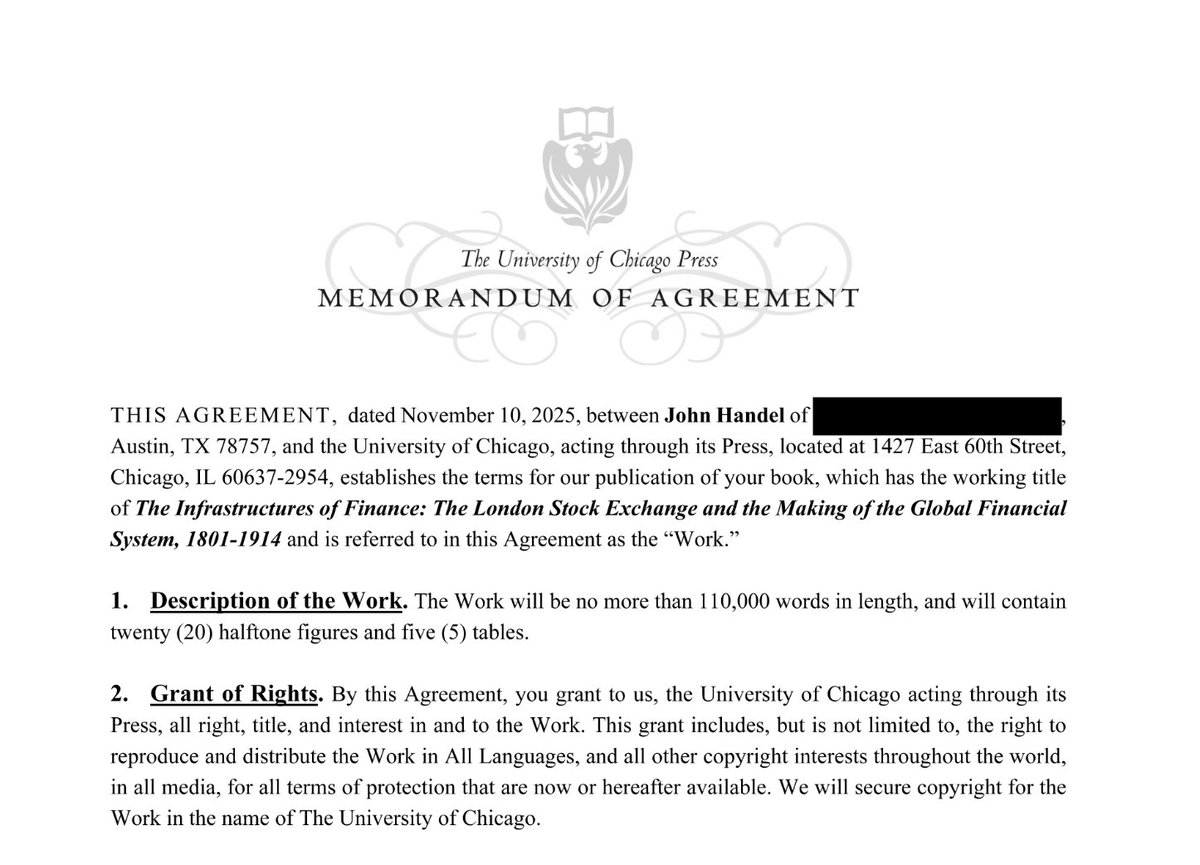
More financial infrastructure coming soon from @UChicagoPress
13
9
84
9,400
100%. DOGE successfully achieved exactly what it wanted to achieve

He doesn’t regret it because the entire point of DOGE was to hijack critical infrastructure and deliberately destroy the state’s capacity to deliver public goods and they succeeded at this so the fact that liberals still think this is a dunk is driving me up a fucking wall.
1
6
507
John Handel retweeted

He doesn’t regret it because the entire point of DOGE was to hijack critical infrastructure and deliberately destroy the state’s capacity to deliver public goods and they succeeded at this so the fact that liberals still think this is a dunk is driving me up a fucking wall.
Jun 15

#BREAKING: Deposing Attorney: Do you regret that people lost income to support their lives?
DOGE Bro: “No. I think it was more important to reduce the federal deficit from $2 trillion to close to zero.”
Deposing Attorney: Did you reduce the federal deficit?
DOGE Bro: “No, we didn’t.”
Deposing Attorney: So you weren’t able to reduce the federal deficit and you still don’t regret that people lost some of their livelihood based on your actions?
DOGE Bro: “No.” 🤦♀️
2
15
133
4,621
John Handel retweeted

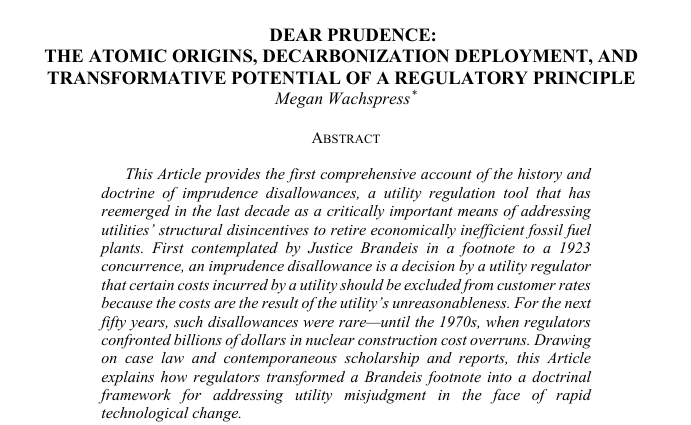
This great article explains how public discipline of utilities should include forcing shareholders to bear the costs of imprudent investments, along with capping returns on equity
It also offers a useful history on nuclear plant construction going off the rails in the 1970s
1
6
19
899
John Handel retweeted

my book 'What Can We Afford,' set to pub early '27, is now available on the Simon & Schuster website ( Amazon etc) for preorder
what $ tradeoffs are real? and which are BS or overstated?
this is the uncensored 40k mile roadtrip from Wall St to MT to West Texas of what I found:
20
51
244
100,230
John Handel retweeted

Jun 15
Interesting but the analysis points (especially given the citation timing) not just to the rise of a methodology but also to the opportunistic search by judges for historical results they like, taking advantage of the prestige of the scholar to divert from this opportunism.
Jun 15

Gordon Wood, who died last week at 92, became a go-to source for Supreme Court justices for his 1969 book “Creation of the American Republic.” His rise in SCOTUS advocacy was tied to rise of originalism—though Wood himself was not strictly an originalist.
wapo.st/4vLCqcx
1
10
42
9,083
John Handel retweeted

Jun 14
I gotta tell you folks. The Bill Simmons podcasts with Zach Lowe are awful. Zach is so terrified of getting on the wrong side of his sources that he won't "go with" Simmons bits and it's sort of defeats the purpose of Simmons Sunday podcasts.
94
31
2,075
286,432

"can you guarantee a knicks championship in your first term?" "inshallah"
promises made, promises kept

57
7,463
79,318
1,533,709
Jun 14
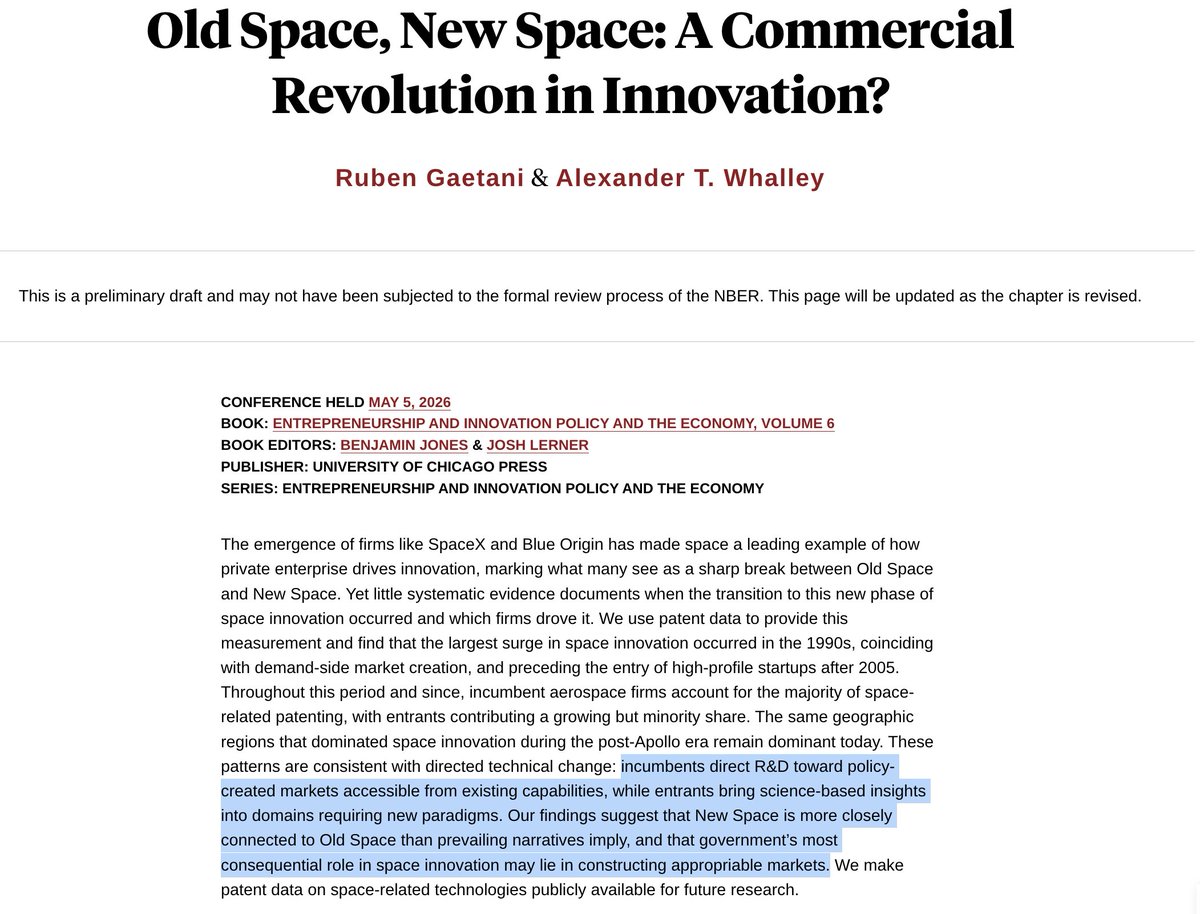
Turns out, it was government incentives that helped create a market for space R&D and spurred innovation, not the simple genius of Elon
Jun 13

.@BernieSanders , it is a time to celebrate. @elonmusk has created enormous value for society by building @SpaceX, driving down the cost of rocket launches and creating a global satellite communication network that has brought high speed, low-cost internet and communication access to hundreds of millions and eventually billions of people along with critical advantages for our military and our nation’s defense.
SpaceX and its technologies will cause an acceleration in the growth of wages and wealth creation globally, including in some of the poorest communities in the U.S. and around the world.
Access to low-cost, high speed communications everywhere will allow children around the world to be educated, families to build businesses, and life-saving medical knowledge and care to be available everywhere.
SpaceX will materially bring down the cost of compute, advancing AI and humanity.
Meanwhile, 4,000 SpaceX employees yesterday became millionaires, including hourly wage employees who you claim you are trying to help.
The Elon Musks of the world drive growth, global GDP, and provide access to goods and services at lower cost that would otherwise not exist.
Elon’s nominal trillionaire status is due to his ownership of SpaceX, Tesla, Neuralink, the Boring Company and his other initiatives that have brought new technologies that improve our everyday lives.
Elon is not sitting on a trillion dollar pile of cash, jewelry and gold. He is using his controlling stakes in his companies to advance mankind. Elon’s companies don’t pay dividends. They reinvest all of their capital to accelerate innovation and value creation.
Elon is working 24/7 for all of us. He deserves respect and appreciation, not smears.
Bernie, your socialism would never allow a SpaceX to be built. Socialism has only proven to impoverish mankind and lead to death and destruction.
We need to create the conditions for more SpaceXs to be built, not attack the great entrepreneurs who are helping to advance our country.
1
1
565
John Handel retweeted

Jun 12
What a great story. There is so much latent demand out there for very specific products/services. This demand hasn’t been met because the market is usually relatively small and the overhead cost of providing it through traditional firms is too high to meet it.
AI changes this, @aidenjohnsonn_ is a perfect example of how: small team providing useful products to a market that would have otherwise been underserved.
My prediction is that we’ll see a ton of this going forward. Markets/people who were underserved/ignored because overhead costs were too high will have their demand met. Small teams/firms, but also teams within larger organizations targeting unmet demand with bespoke products. This is what a welfare improvement looks like.
Jun 12

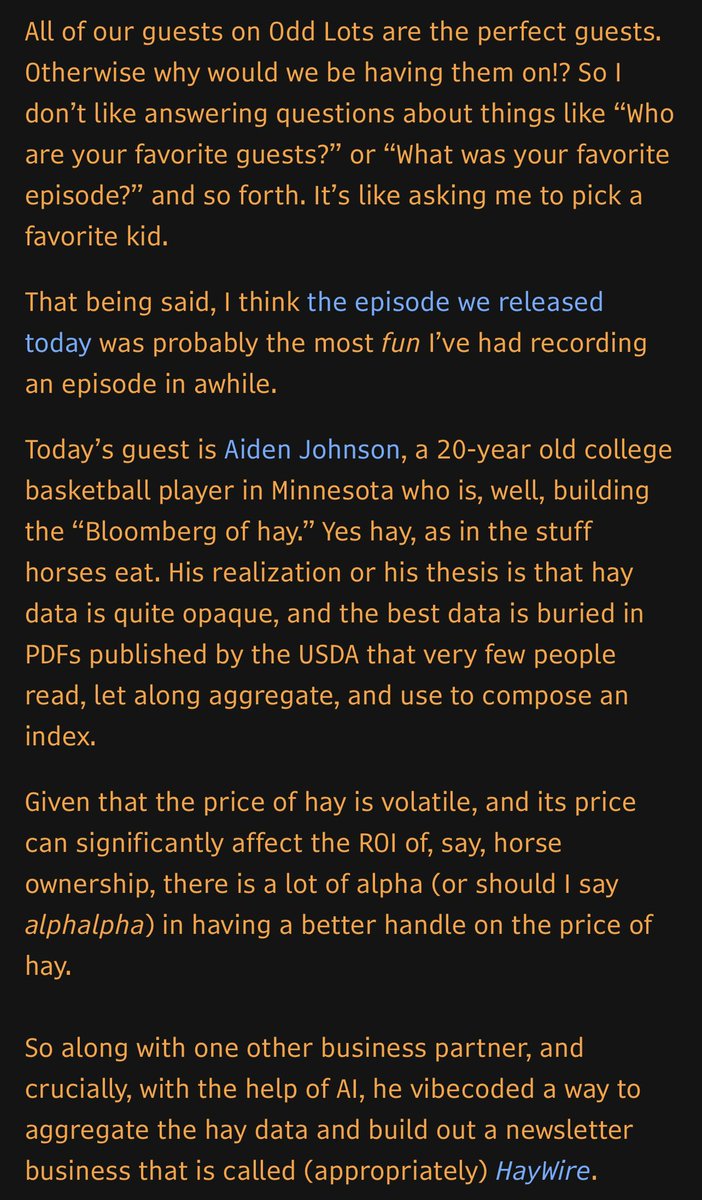
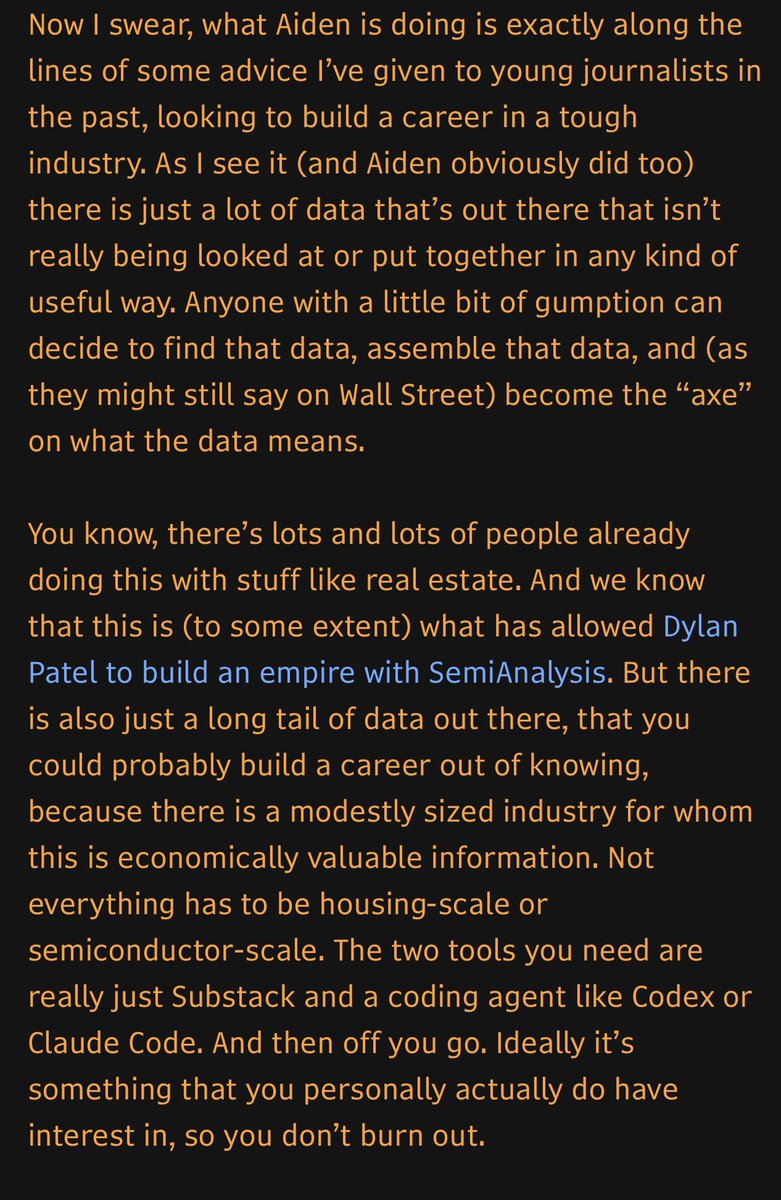
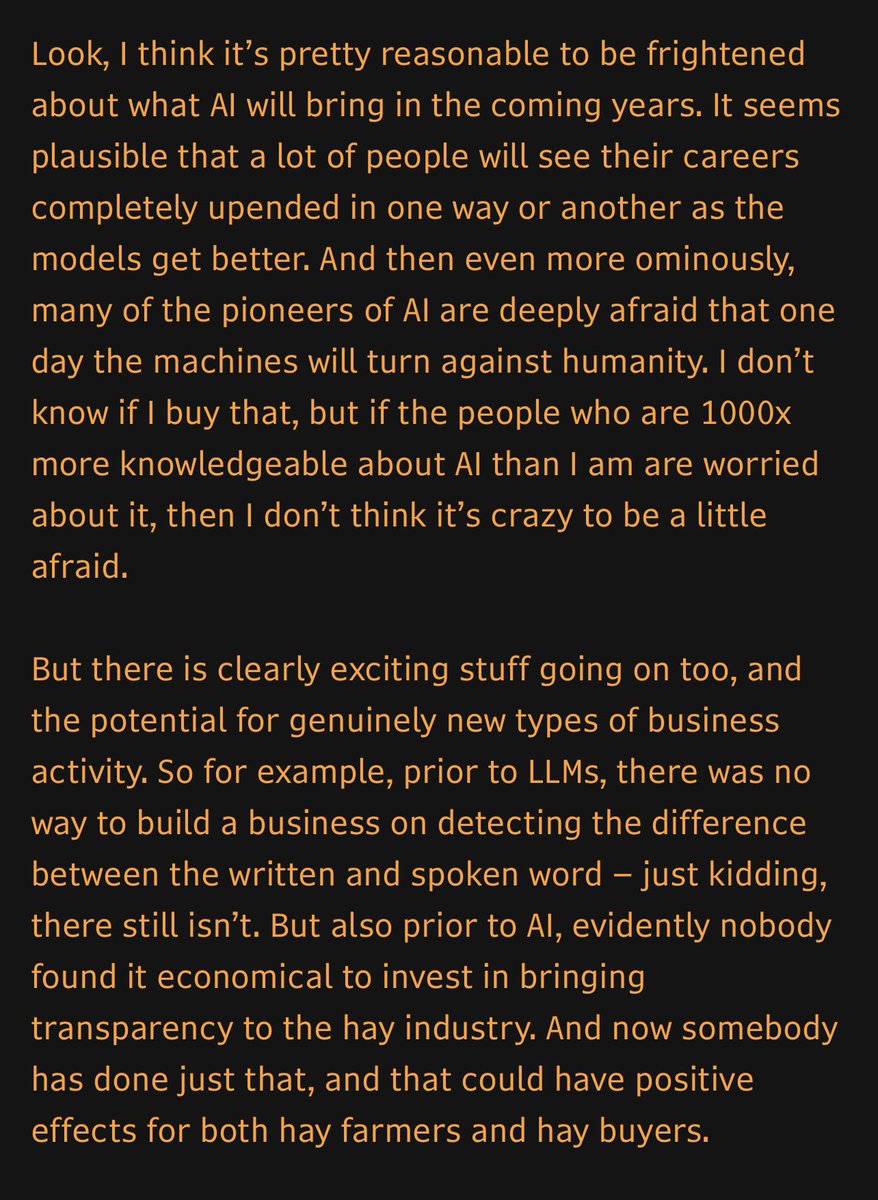
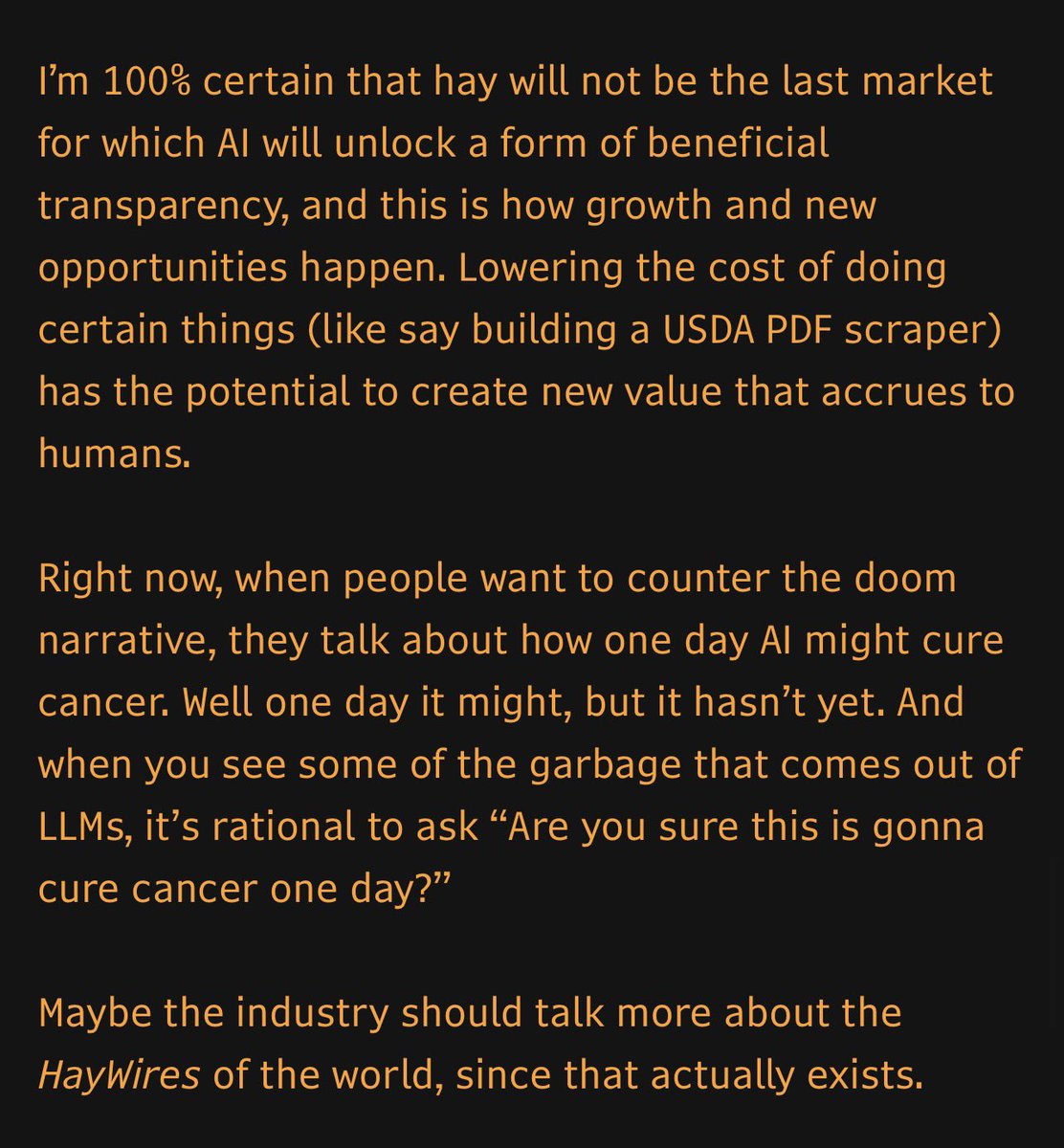
AN ACTUAL GOOD THING TO COME FROM AI
In today’s newsletter, I wrote about our new chat with @aidenjohnsonn_ and how stories like his are far more white-pilling than the typical “one day this might cure cancer” form of AI boosterism.
10
28
190
41,023
Jun 12
Very few people really think about the technical infrastructures of complex systems until they fail
Jun 12

Why did this happen? It turns out that the box’s firmware had hardcoded the assumption that the struct field holding the number of orders on the orderbook level could be represented using 16 bits. Because surely, there couldn’t be more than 65,535 orders at a single level?
1
2
515
Jun 12
Anyways, if you want to know why our financial system works likes this, I have a book for you... x.com/_John_Handel/status/19…

8
358
John Handel retweeted

Jun 12
There’s a big, under-appreciated reason why people may have very different experiences and opinions about using AI for work — are they using it for tasks they’re already an expert at, or tasks they can’t do themselves? The former leads to a *growth cycle* and the latter leads to a *dependence spiral*.
When I use AI to do something I’m an expert at, like coding, I treat it as a tool. I can build quickly, maintaining an understanding of the code, knowing that if necessary, I can fix the code myself. It feels empowering. It frees up my time to think about the complex, judgment-oriented parts of software engineering that I can’t or won’t delegate to AI. That means my own skills improve rapidly, and I get to climb the ladder of complexity and develop higher-level skills, much more so than when I write the code myself. I feel in control. I can lock in and achieve a flow state — when AI is working, I’m reviewing, building understanding, and planning the next steps. I never get the feeling that the tool is about to replace me. This is the growth cycle.
(Of course, the growth cycle is not automatic. I still need to exercise agency to use AI responsibly. But it’s the same challenge with any productivity-enhancing technology, and those who’ve navigated such transitions before are well-equipped to navigate it with AI as well.)
On the other hand, if I use it for tasks I don’t understand and haven’t learned to perform myself, I have no choice but to treat it as a superintelligence. If something breaks, the best I can do is ask AI to fix it and hope for the best. I generally can’t evaluate the quality of the output myself. The only way to find out if it's any good is if and when the work is ultimately reviewed by an actual expert. The experience is confusing, unsettling and disempowering. And forget about flow state. By over-relying on AI, I risk losing whatever skill I had at the task in the first place, even if it boosts productivity in the short term. This is the dependence spiral.
It’s no wonder that entry-level workers and students preparing to enter the workforce find themselves in a bind. To compete with the AI-enabled productivity of more seasoned workers, they must adopt AI themselves, but doing so risks the dependence spiral. I have some thoughts on solutions that I will share in later posts, but I think having a clear diagnosis of the problem is a useful first step.
35
52
235
31,142
Jun 11
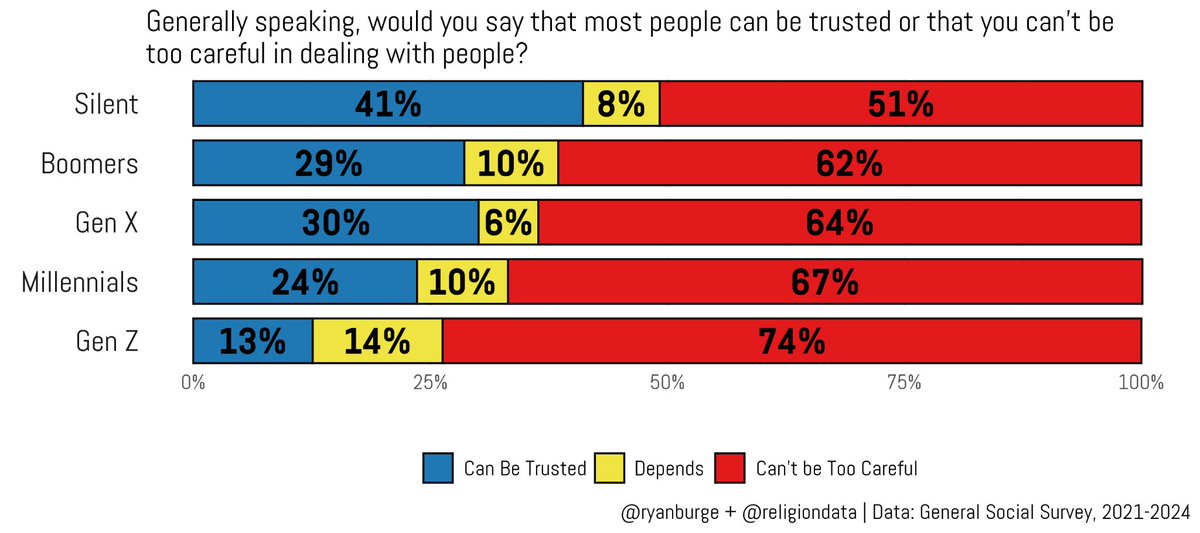
Modernity was in no small part about learning to live within and trust societies of strangers. Here in post-modernity we are finding out how fragile that achievement really was
Jun 11

Generation Z has the lowest levels of interpersonal trust of any generation we've ever polled.
And although the data is time limited, the velocity of their decline in trust already far exceeds any previous generation.
1
8
507
John Handel retweeted

Jun 10
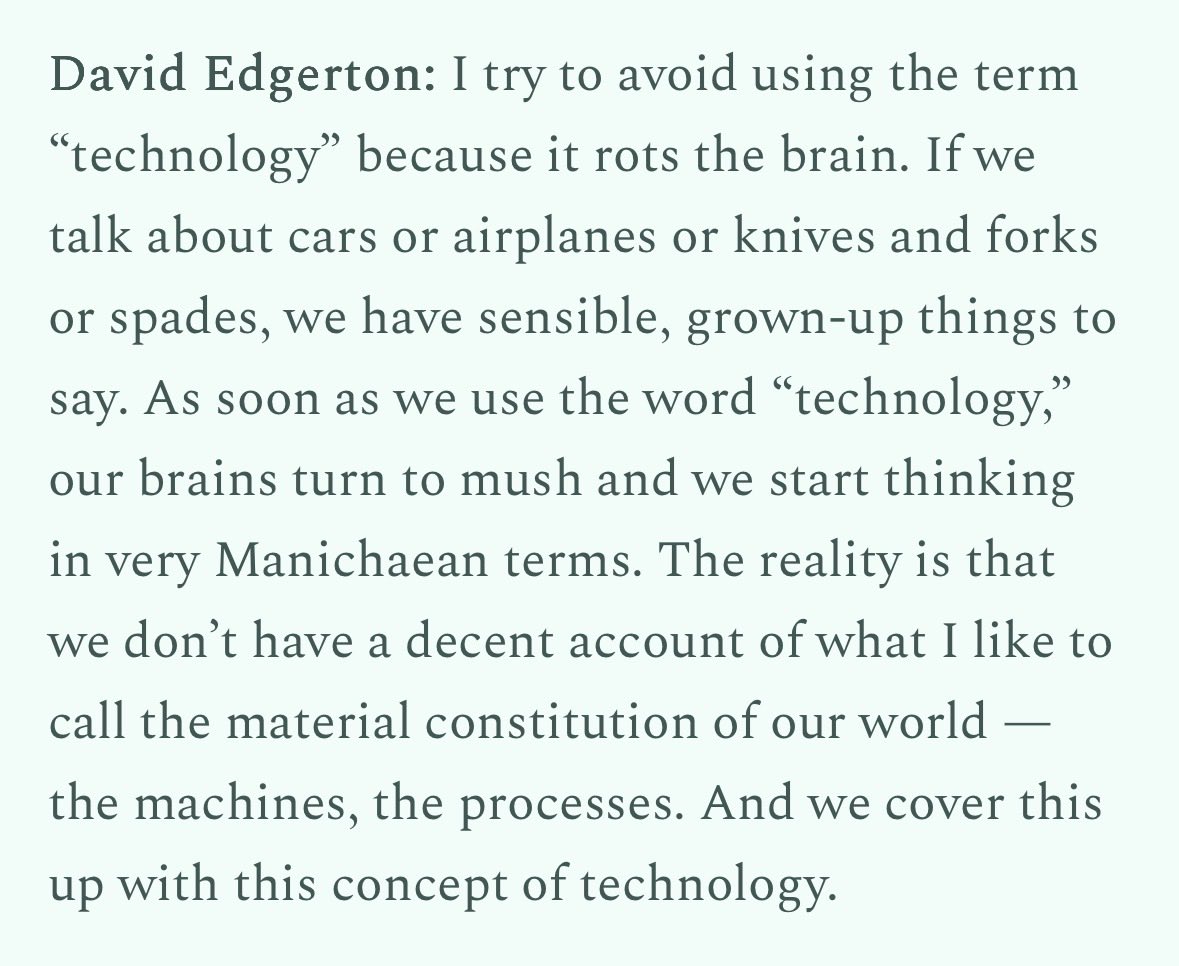
David has taught me much about how lousy the word “technology” is and why we should avoid it, which I try to do whenever I can.
“AI” is so, so much worse, as many have noted.
Jun 10

Had a very interesting conversation with @PhilipfvBell on how to think historically about AI and 'technology' more generally. @KingsCHoSTM @kingshistory genfutures.substack.com/p/da…
1
22
106
10,675

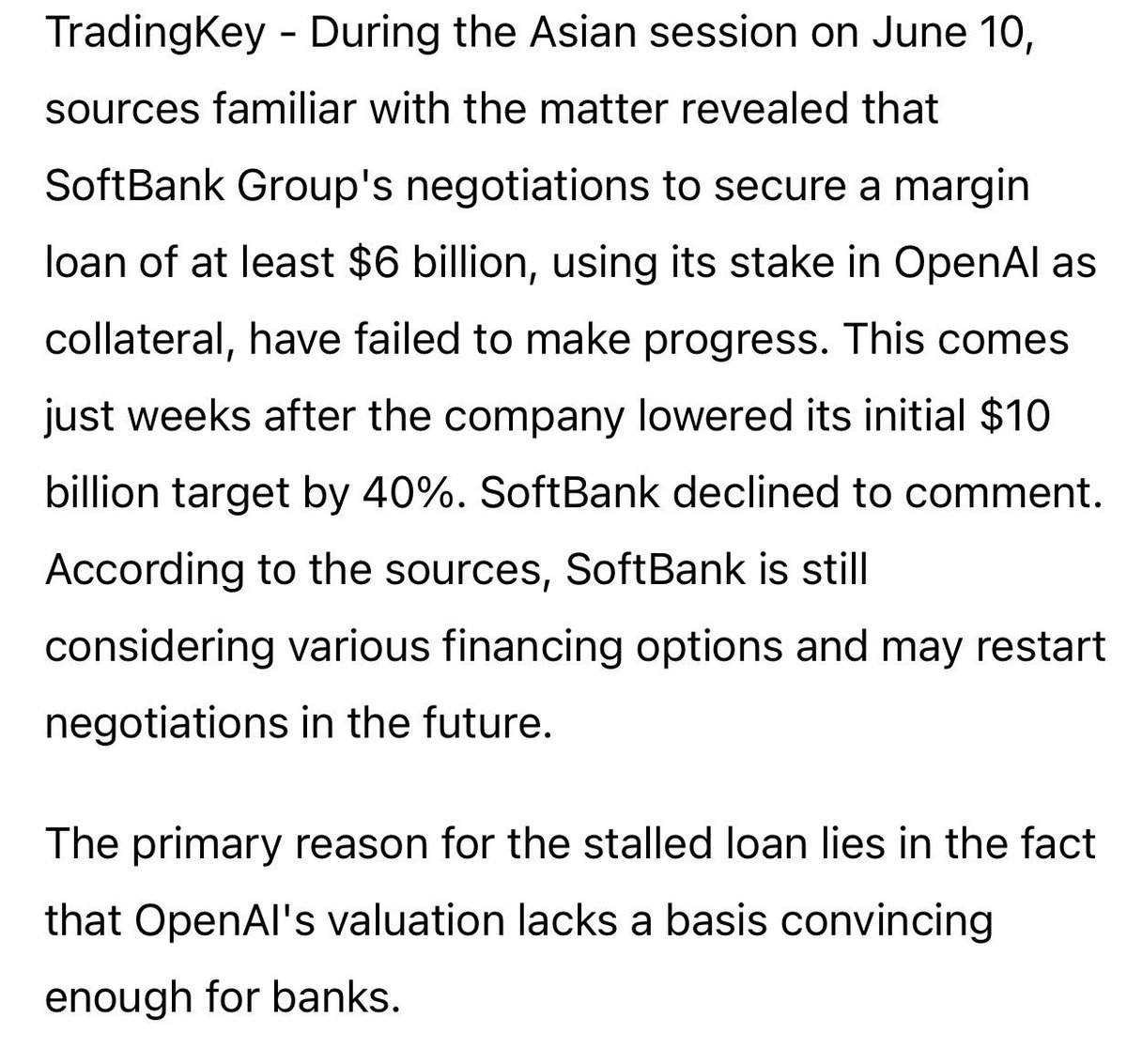
Very important point: SoftBank was pledging *all* of its OpenAI stock (worth $60bn on paper) to get a $6 billion margin loan. Banks turned it down due to concerns about the value of OpenAI stock. Banks clearly do not think OpenAI is worth $852 billion.
tradingkey.com/analysis/stoc…
Jun 10

SoftBank's effort to secure $6 billion OpenAI margin loan falters
49
651
3,264
413,986

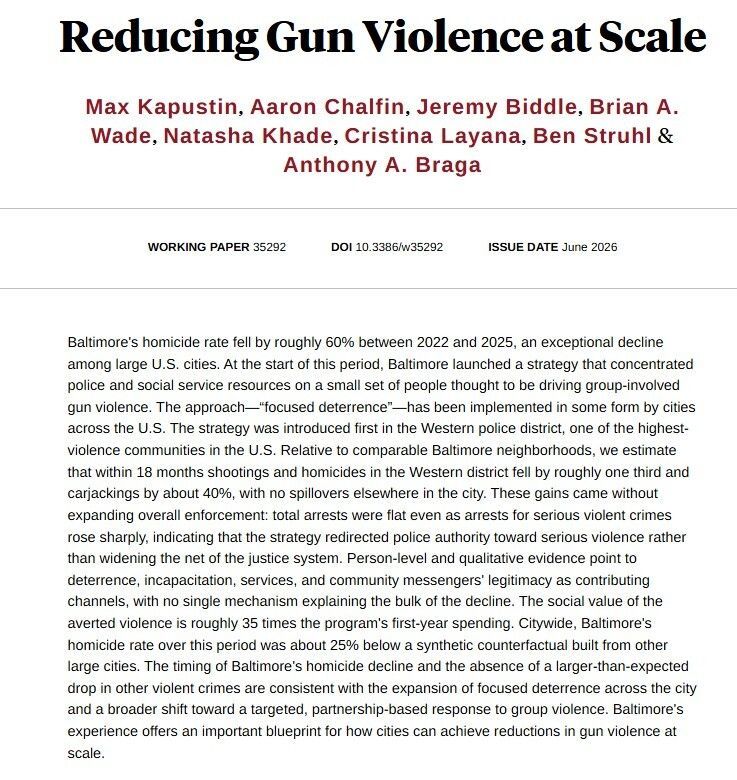
A strategy targeting those driving gun violence in Baltimore's hardest-hit district cut shootings and homicides by a third in 18 months, with no rise in overall arrests, from Max Kapustin, @aaronchalfin, Jeremy Biddle, Brian A. Wade, Natasha Khade, Cristina Layana, Ben Struhl, and Anthony A. Braga nber.org/papers/w35292
17
34
11,486
John Handel retweeted

Jun 8
IPOs being advertised in grocery apps
1929 on steroids

I’m a little stressed about the SpaceX IPO - Erewhon is now advertising it in the members app

33
194
2,234
237,000
Jun 9
It is always remarkable to me how historians spend so much blood, sweat, and tears, defending very recent disciplinary & institutional configurations, when our entire job is to understand that in fact these very things have never been stable and have constantly changed

A very good book -- there is undoubtedly a future for intellectual work, but perhaps not in the form we have grown used to. Congratulations @cwellmon!

2
6
88
9,128