Research Fellow at @Giga_institute. PhD in World Political Economy @epm_ufabc and visiting researcher at @KingsIntDev (2021-22).
Joined July 2017
- Tweets 290
- Following 347
- Followers 138
- Likes 5,773
25 Photos and videos
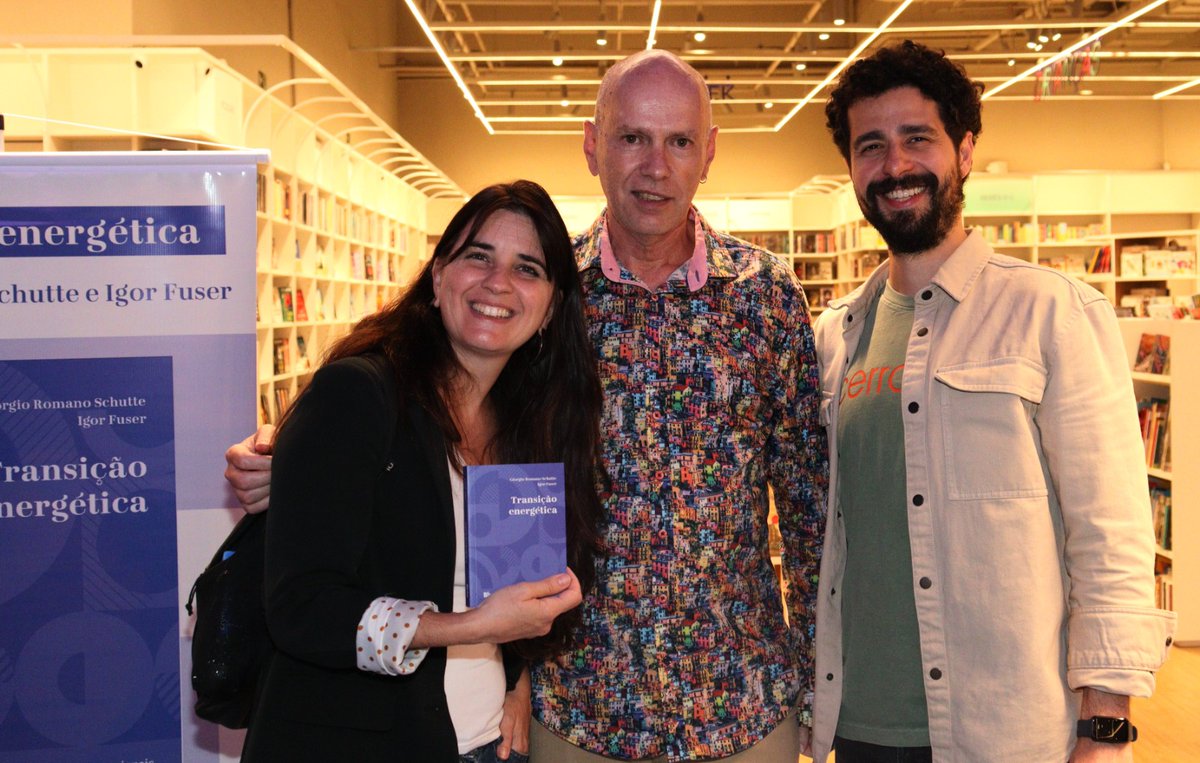

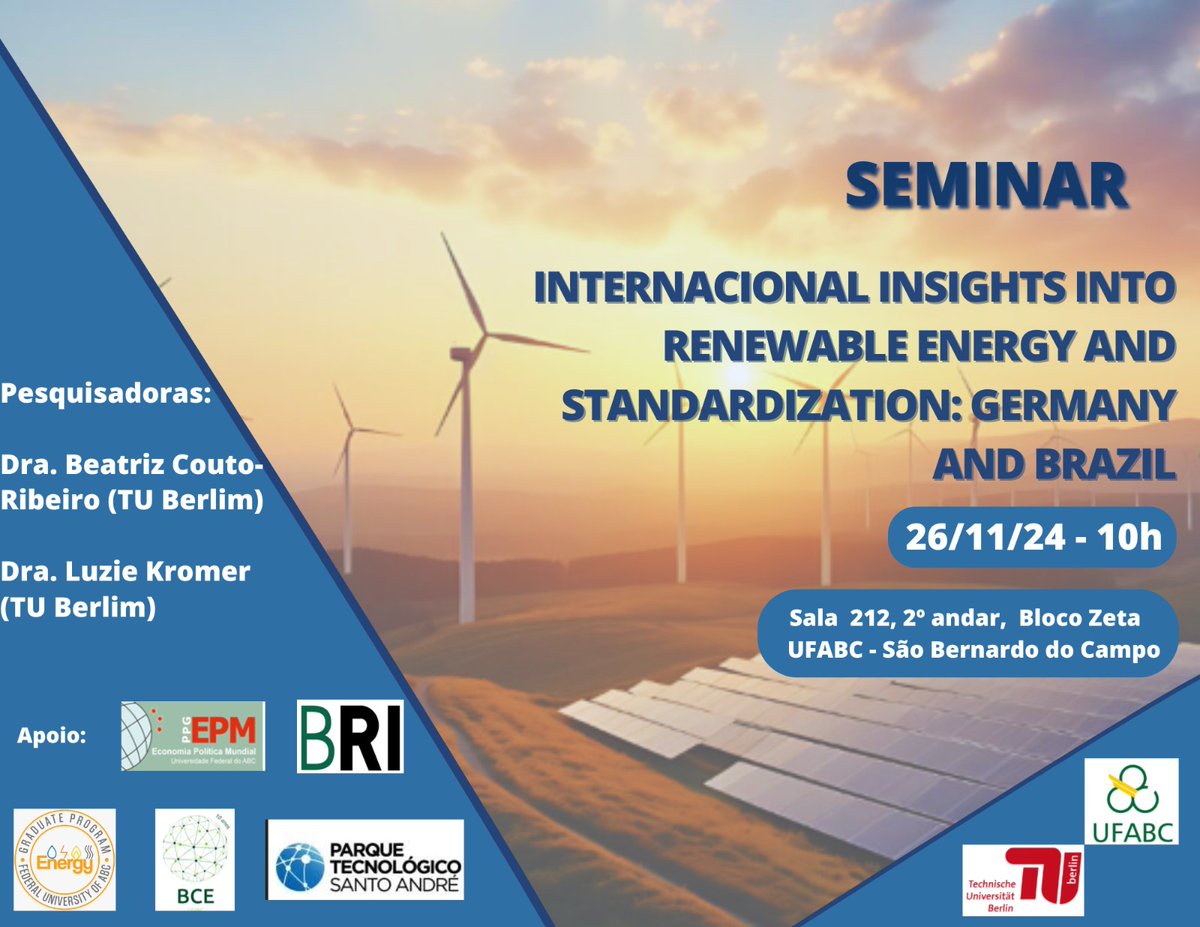
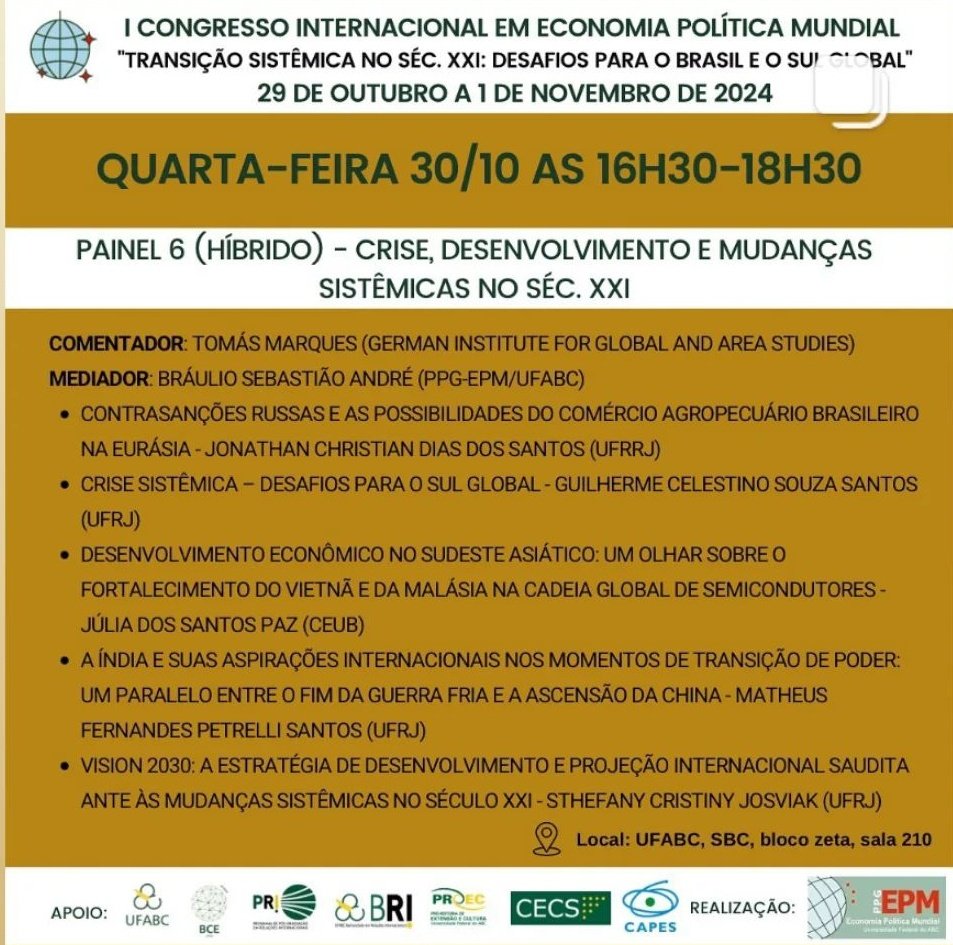
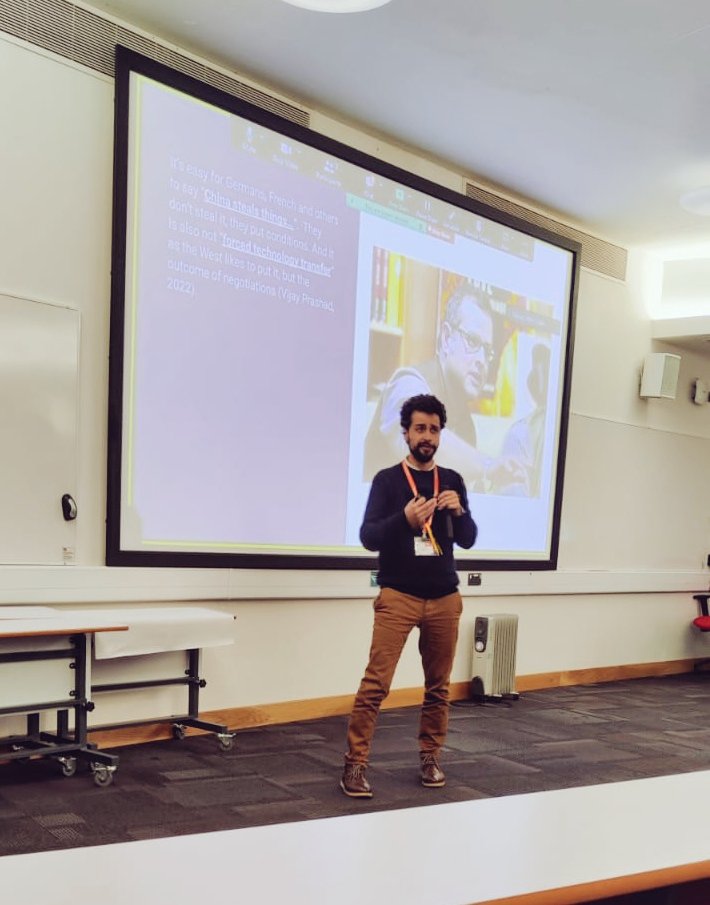
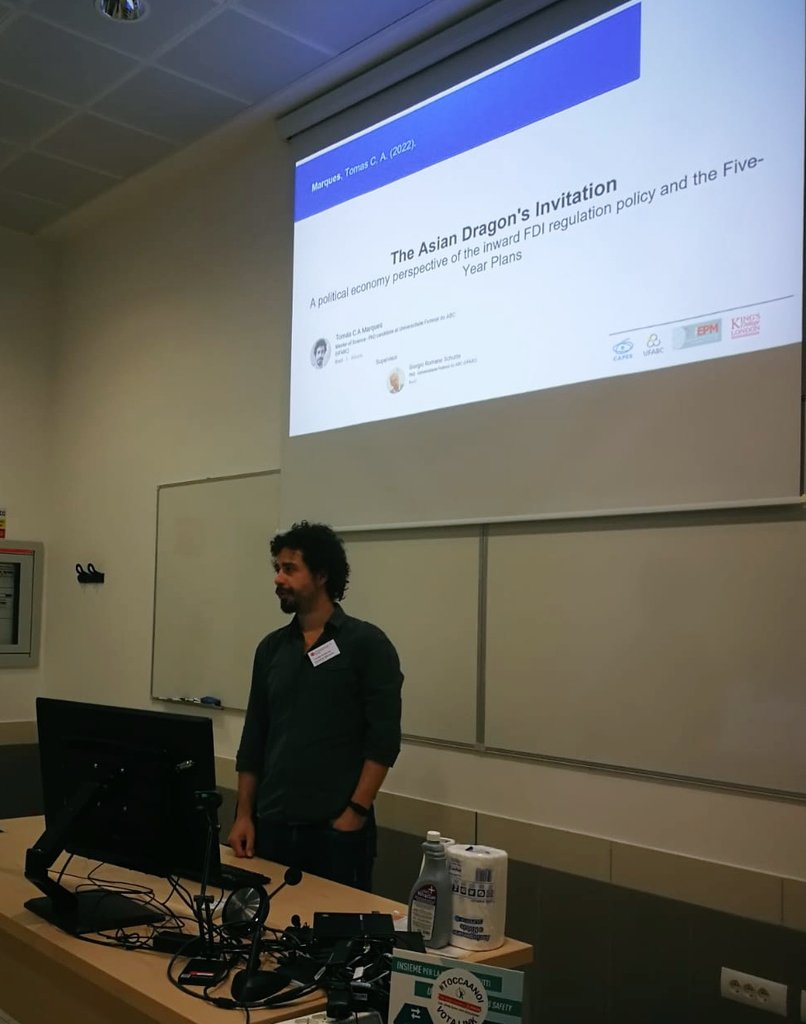
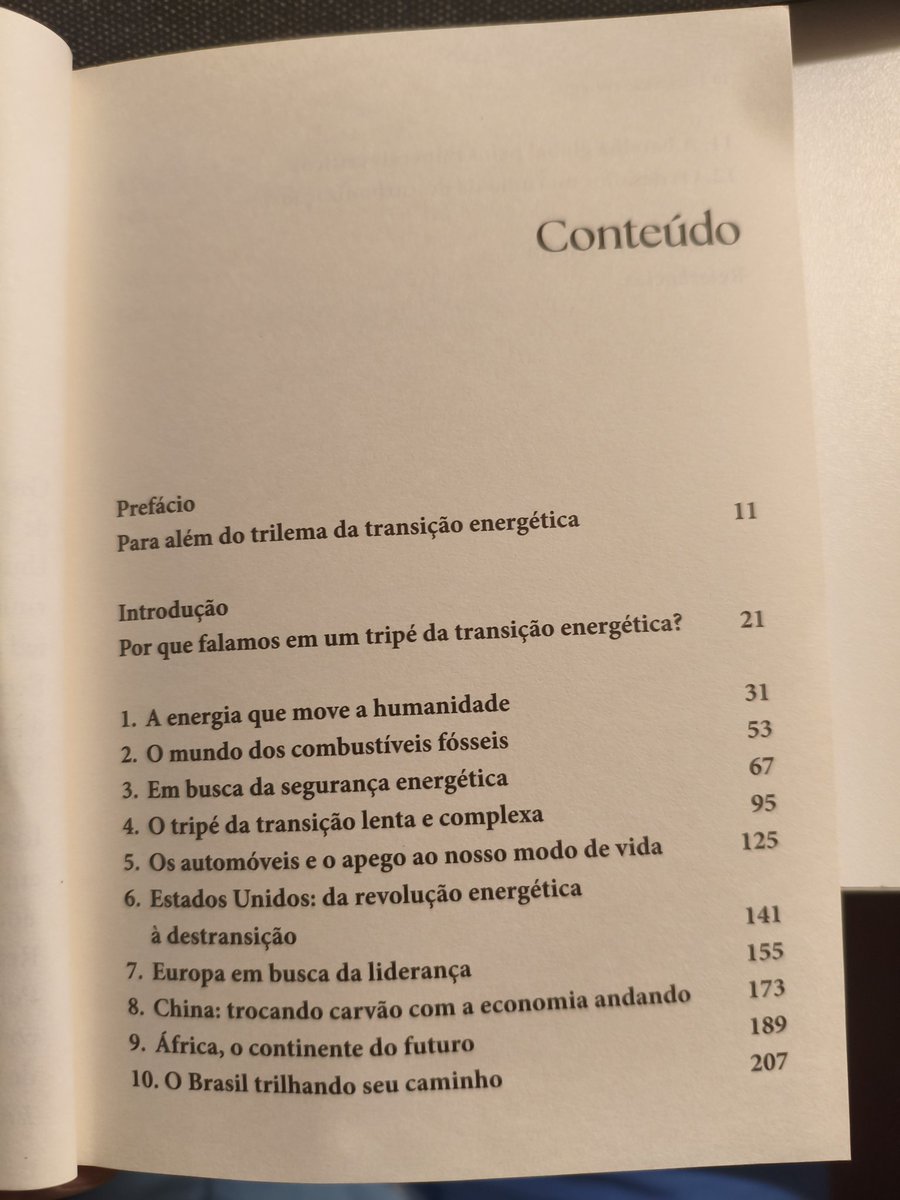
Lançamento do Livro de Giorgio Romano com Igor Fuser do @epm_ufabc. Os autores exploram a transições energéticas em sua perspectiva da geopolítica mundial, com os casos dos EUA, China, África, UE e Brasil. Leitura recomendada para entender as transformações ordem mundial.
40
Tomás Marques retweeted

Apr 9
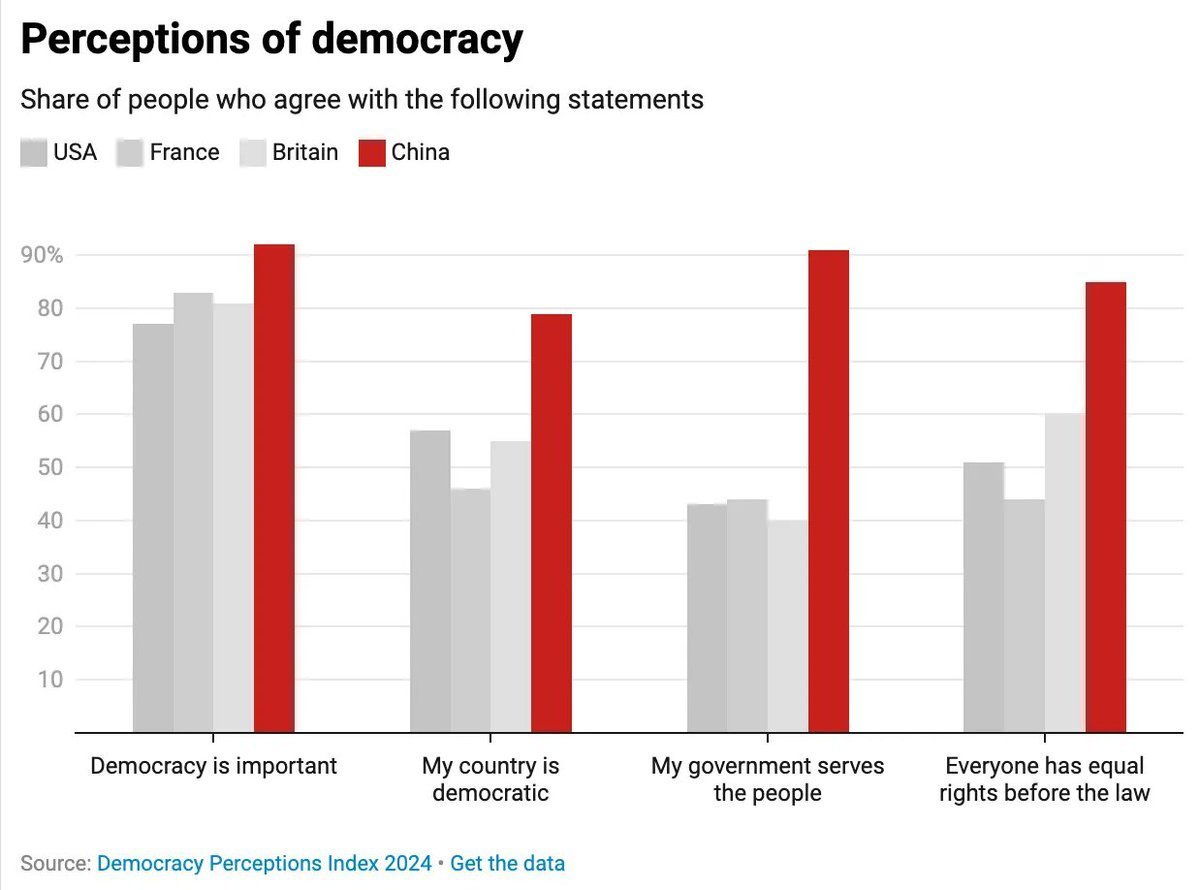
Findings from an alternative democracy study, carried out by the Alliance of Democracies Foundation (a Danish-based NGO), stand in stark contrast to The Economist's Democracy Index.
The study finds that perceptions of democracy in China — a country labelled undemocratic by The Economist — are higher than in many Western countries.
This should make you think twice about how reliably The Economist measures democracy.
Apr 8

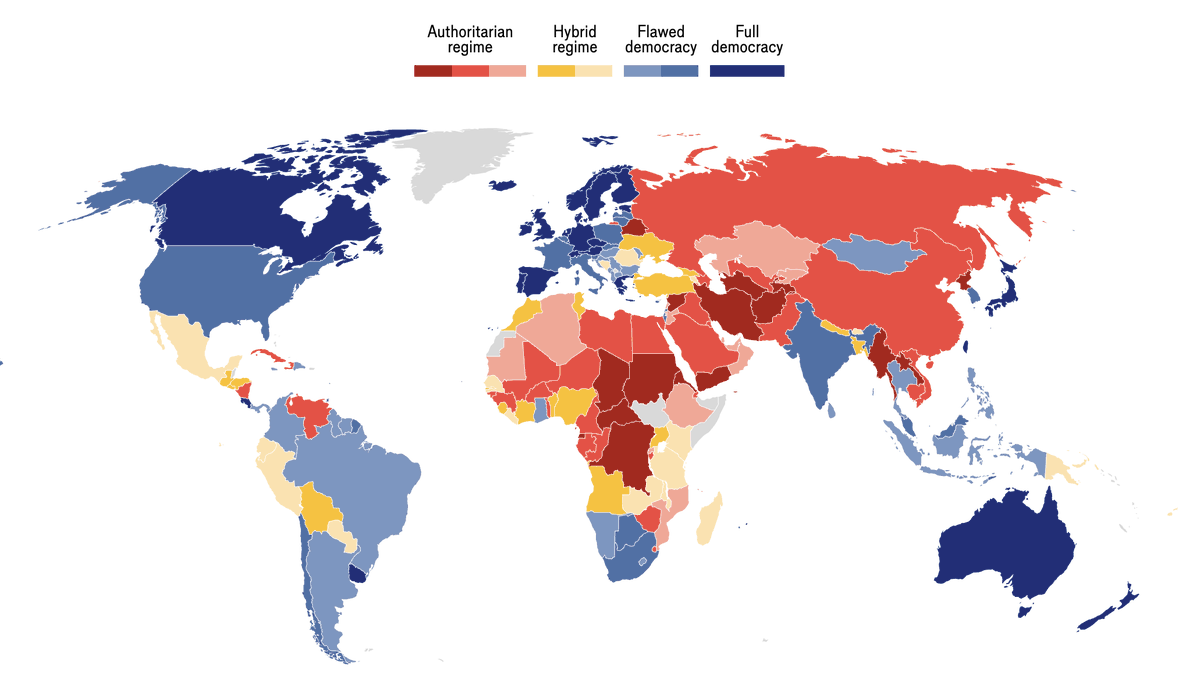
The Economist's democracy index should be renamed to the "how close can you get to the Western liberal model" index.
It's absurd that some people still buy into this nonsense.
A state legitimacy index would be far more interesting. The results would be quite different.
54
269
1,083
53,402
Yesterday, the USTR criticised the Brazilian payment system, known as PIX. @filipeamendonca and I wrote a policy paper that delves deeper into Trump's threats, exploring Brazil's asymmetric interdependence and its limited autonomy. In @GIGA_Institute giga-hamburg.de/en/publicati…
4
7
552

Feb 25
I’m excited to share our collaborative article “Reimagining Global Governance: ...” published in published in Global Studies Quarterly, January 2026,. doi.org/10.1093/isagsq/ksag0…
Special thanks to all co-authors Dr. Julia Gurol-Haller, @arielmhernandez and Miriam Prys
121
Tomás Marques retweeted

Jan 8
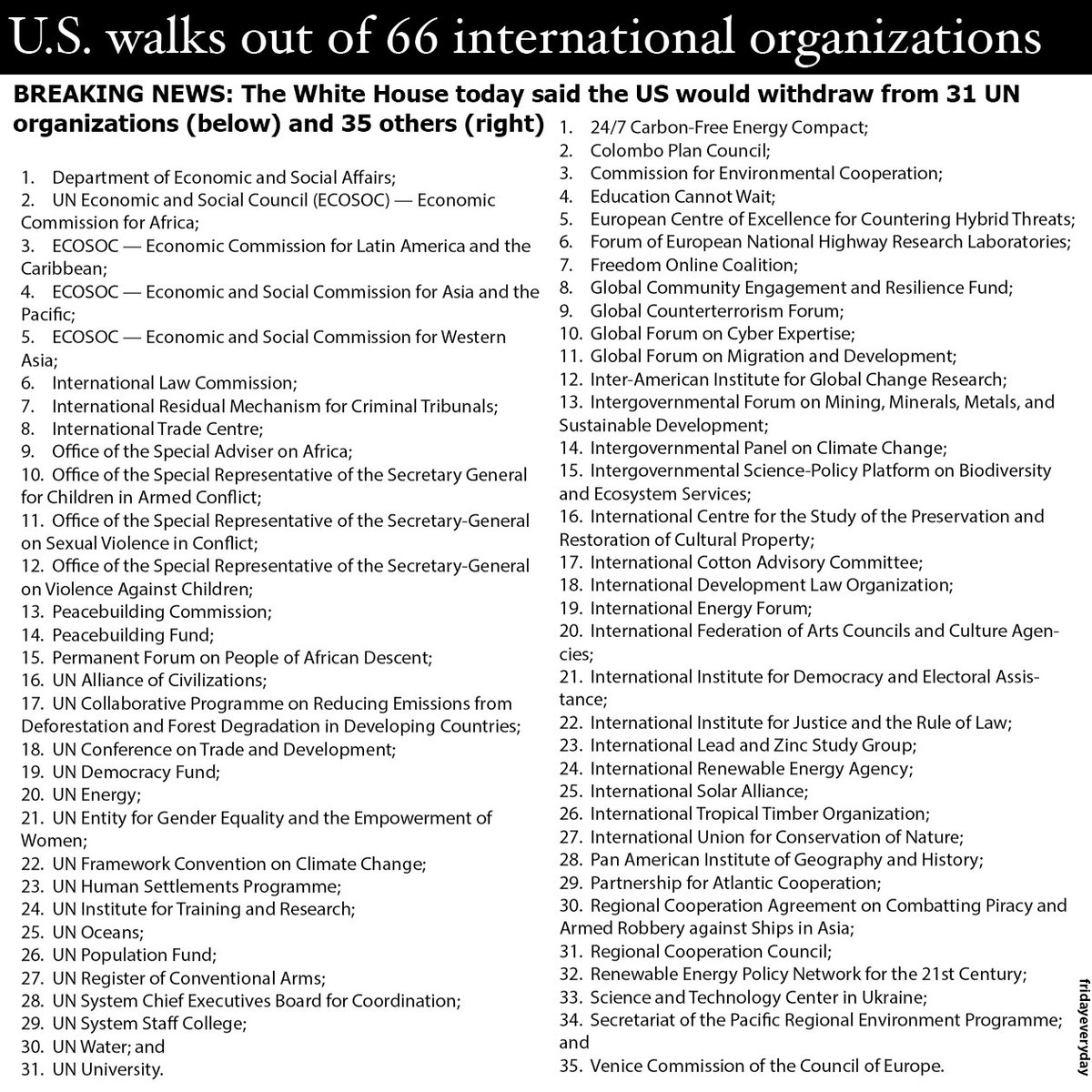
BREAKING NEWS: The U.S. will withdraw from 66 organizations, isolating the country from the wider world, the White House announced today.
899
5,957
10,707
624,666
Tomás Marques retweeted

30 Dec 2025
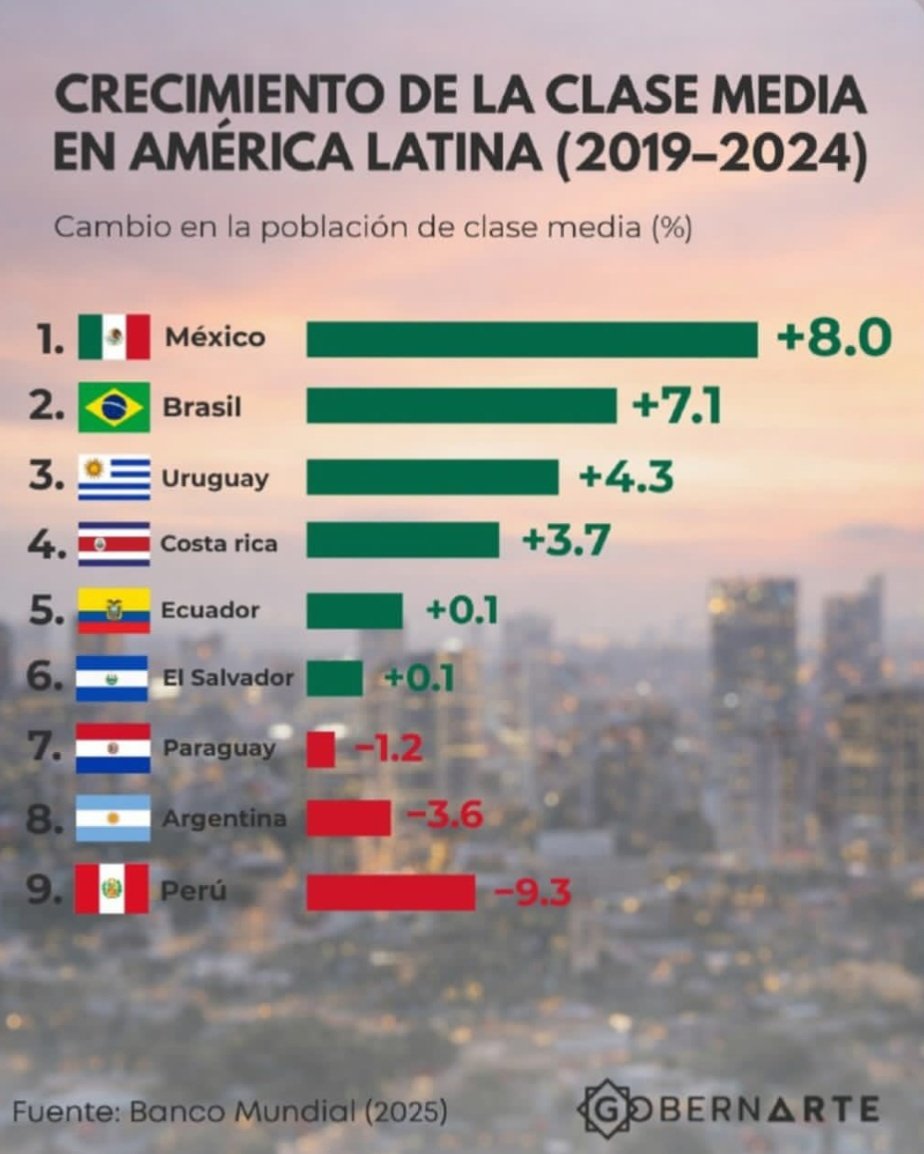
Peru’s middle class is shrinking despite years of consistent economic growth.
Their free-market model is designed to enrich a few ensure that none of it ever trickles down. Now their biggest problem is urban poverty causing a massive wave of violent crime this past year.
86
456
1,121
66,863
Tomás Marques retweeted

27 Dec 2025
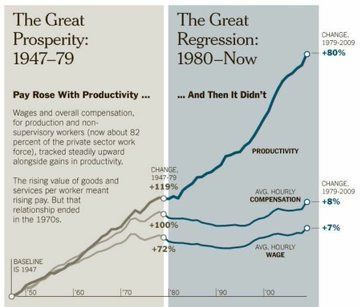
From 1947 to 1979, wages and productivity rose in tandem, driving broad-based prosperity. After 1980, productivity kept climbing while wages and compensation stalled. This disconnect defines the Great Regression, a period in which workers produce more but receive far less in return.
214
1,631
3,623
365,047
Tomás Marques retweeted

26 Dec 2025
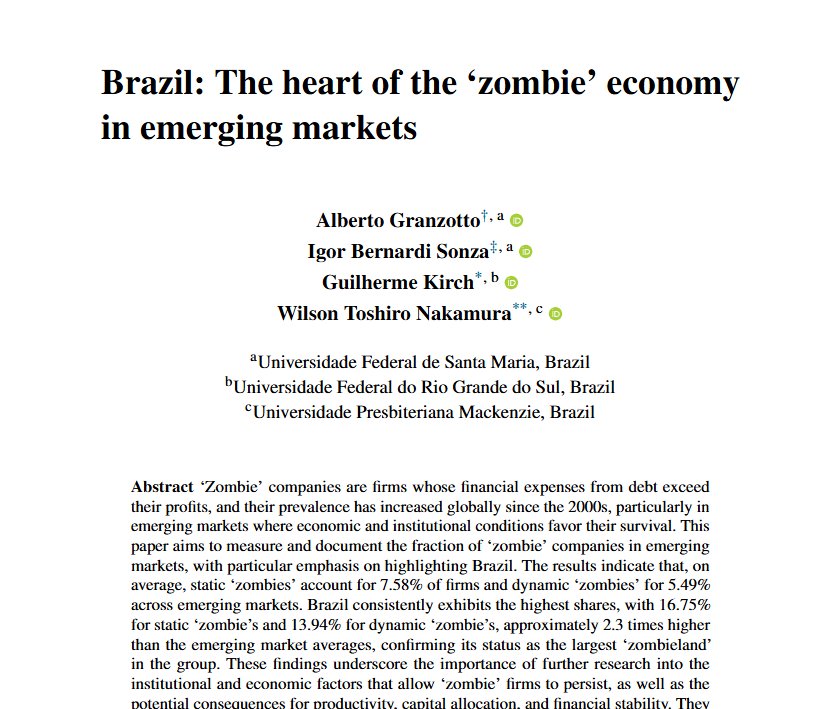
When we look at the Brazilian economy and wonder why growth has been so low for so long, an uncomfortable part of the answer lies in the private sect itself. Brazil is a notorious breeding ground for zombie companies. These are firms that cannot generate enough profit even to pay the interest on their own debt, but remain in existence because the financial system allows for the constant rollover of this liability. They do not innovate, they do not grow, they do not increase productivity.
According to an article by Granzotto et al. (2025) in the Brazilian Review of Finance, which compares companies in various emerging markets, on average 7.6% of firms are "static zombies" (firms with EBITDA/Financial Expenses < 1) and 5.5% are "dynamic zombies" (EBITDA/Financial Expenses >/= 1) in these markets.
In the Brazilian case, 16.75% of companies are classified as static zombies and 13.94% as dynamic zombies! In other words, more than double the average for emerging markets. The authors themselves bluntly state that Brazil is the "heart of the zombie economy" among emerging markets, about 2.3 times above the international standard.
To clarify what this means: we are talking about companies that cannot generate enough profit to cover their financial costs, meaning that investors will have to wait longer to recover their principal, and that workers will be employed in firms without the capacity to invest in new technologies and processes that could improve their human capital and productivity.
The article shows that this mass of zombie companies distorts capital allocation, reduces aggregate productivity, and weakens investment dynamics. Credit, labor, and resources are trapped in financially fragile firms, while more productive companies face a hostile financing environment. And this, of course, has a cost in terms of potential economic growth.
As long as the Brazilian government does not address the problem of reforming the business environment and its capital markets, these types of inefficiencies will continue to persist and condemn workers and investors to remain trapped in firms that should be defunct.
SOURCE: periodicos.fgv.br/rbfin/arti…
#Economía #econtwitter #Economics #Finance #Brazil
110
797
4,887
234,024
Tomás Marques retweeted

26 Dec 2025
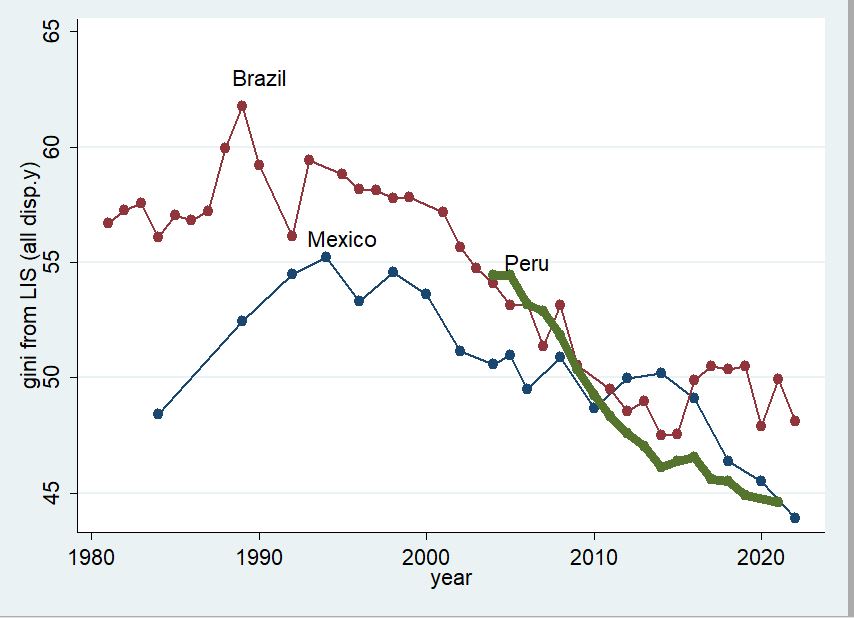
Remarkable (and consistent across time and countries) decrease in inequality in Latin America
(after-tax income per capita); @lisdata
Brazil from 62 in 1991 to 48 now (-14 Gini points)
Mexico from 55 in 1992 to 44 now (-11 Gini points)
Peru from 55 in 2005 to 44 now (-11 Gini points).
44
225
667
178,746
Tomás Marques retweeted

12 Dec 2025
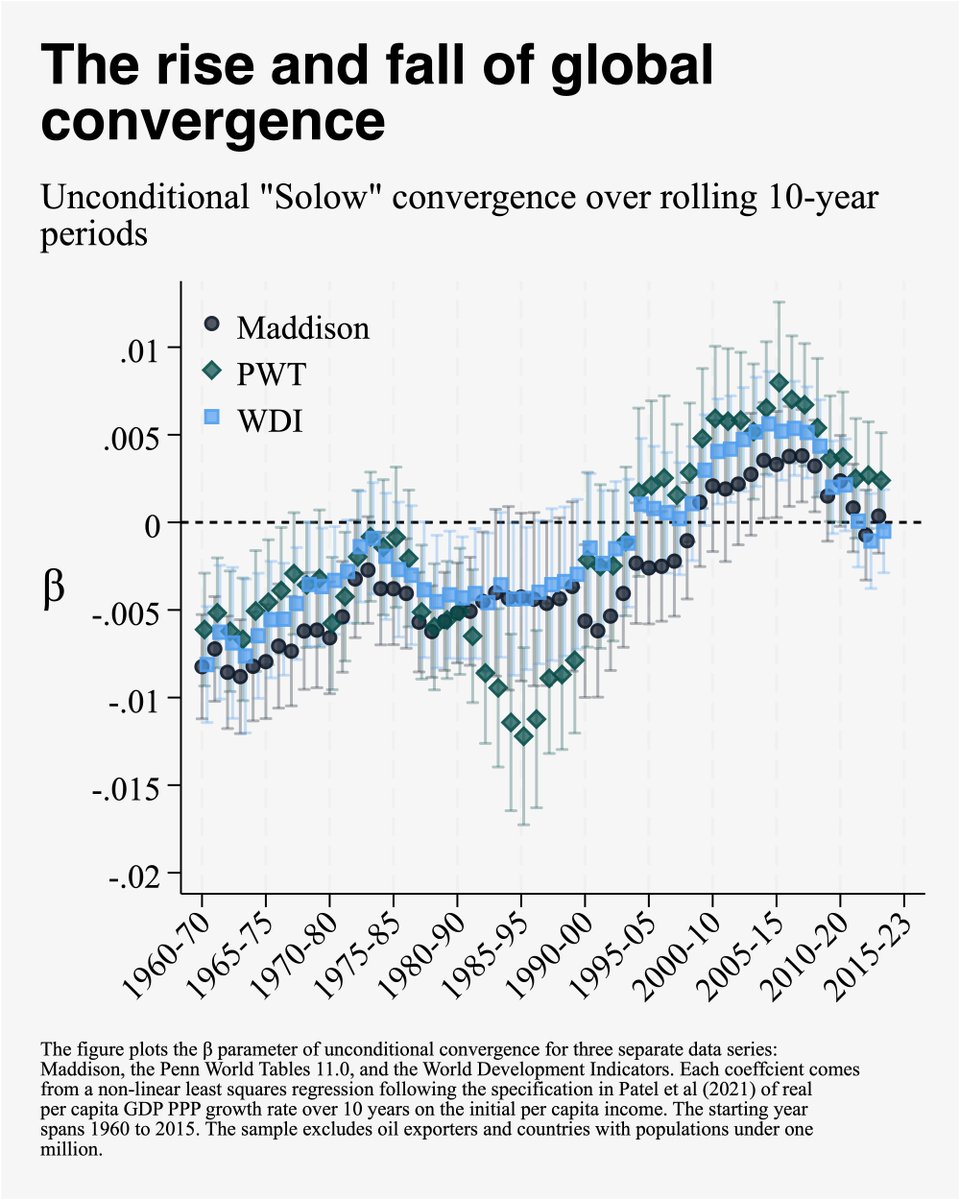
New from @dev_a_patel @arvindsubraman & me:
"We were wrong about convergence."
A few years back, we wrote a paper pointing out that Solow convergence had finally arrived. The developing world was catching up. Alas, it seems all good things come to an end.
1/
6
127
389
125,107
12 Dec 2025
After discussing different questions with the editor, the article was published with some of my quotes. Unfortunately, the most important one didn't make the cut. To understand dependency, we need to look beyond trade and consider FDI and ownership in GVC
tinyurl.com/2v8a5ak5
42
1 Dec 2025
For those like @FT who skipped geography classes, it is important to remember that America is a continent rather than a country. However, the EU will not decouple from the US because it lacks the political and military autonomy to do so.
30 Nov 2025

This is amusing title. Europe has already a plan for decoupling - “strategic autonomy”.
But it will not work because Europeans will never make the sacrifices required for the strategic autonomy to be implemented.
In reality, Europe wants to have the geopolitical cake and eat it.
1
55
1 Dec 2025
The world needs a plan for decoupling from the US (sorry @FT, America is a continent, not a country). However, this will never happen due to political and military forces, rather than economic reasons.
30 Nov 2025

Europe needs a plan for decoupling from America on.ft.com/4pyu0lI | opinion
35
Tomás Marques retweeted

27 Nov 2025
⛏️ Where are the world's rare earth minerals?
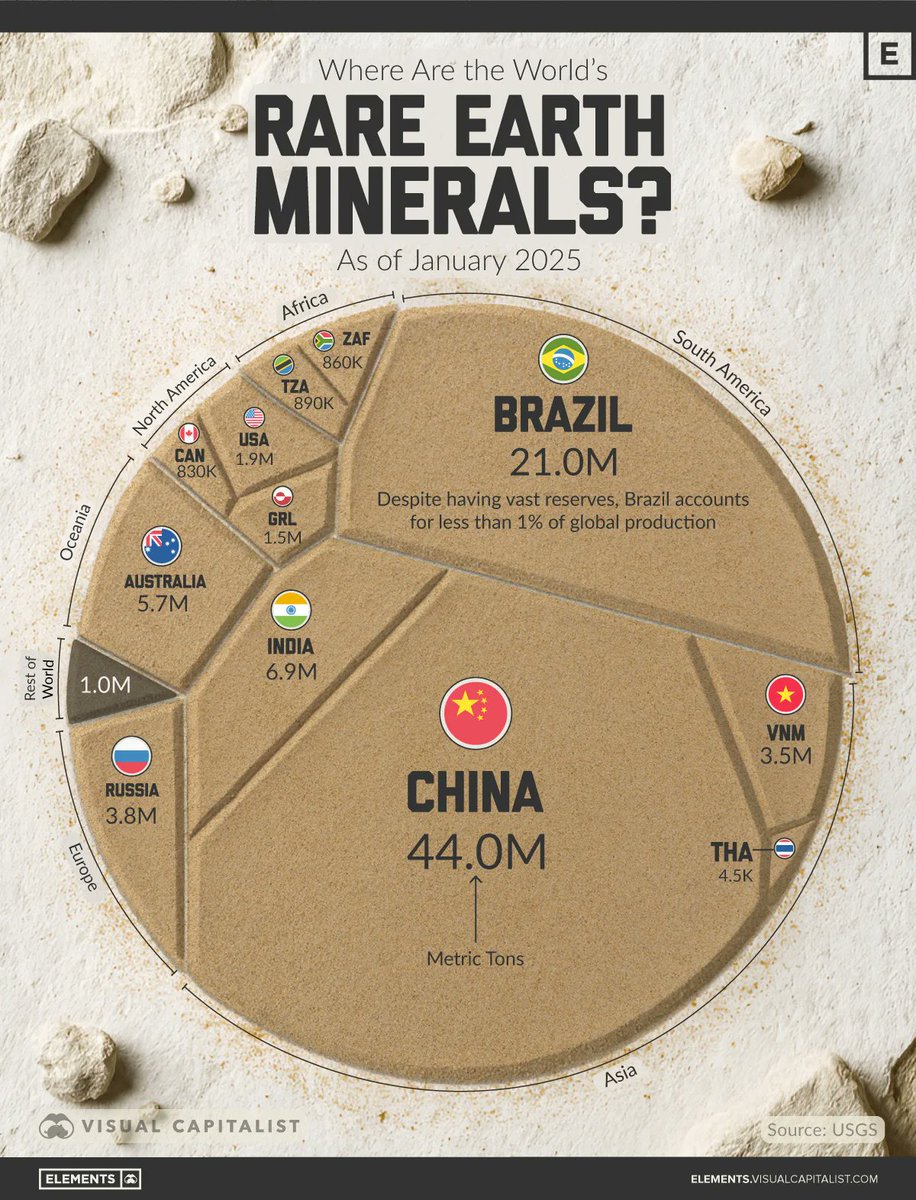
ALT 🔎 Elements 🔗 https://www.visualcapitalist.com/visualizing-the-worlds-rare-earth-reserves/
13
146
1,089
24,410
22 Nov 2025
It is a misunderstanding to view the world economy superficially. It is essential to dive into the ownership of the supply chain and the capital flows to understand who benefits most from it. At the end of the day, China remains a capital exporter (in the form of profits)
21 Nov 2025
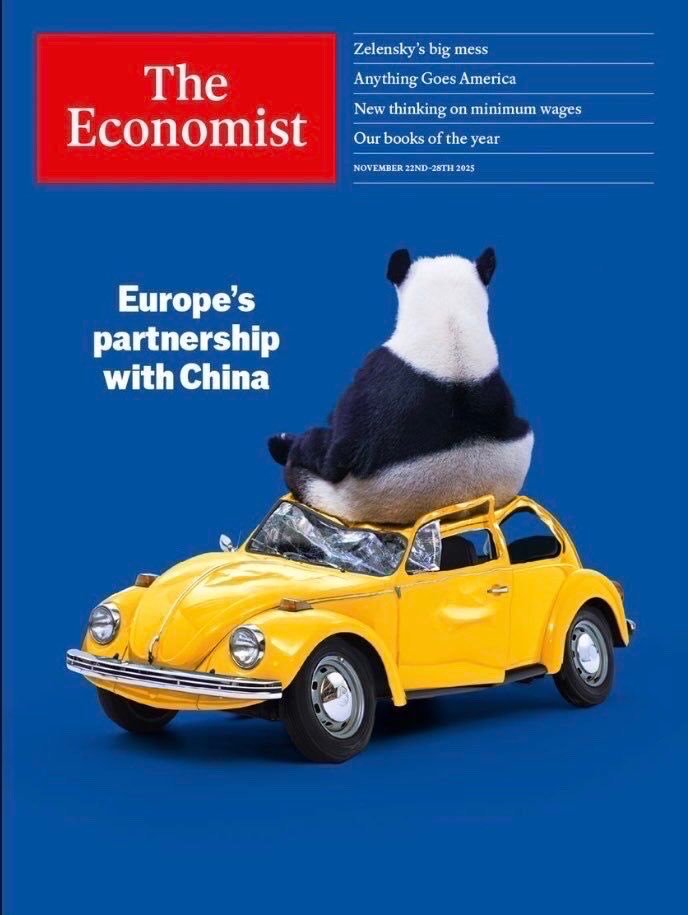
The Economist continues to act as a cheerleader for Western imperialism.
In familiar fashion, its recent issue portrays China’s growing dominance in international trade as alarming — this time for Europe.
China’s rise does create real challenges for Europe — for example, Germany is right to think strategically about protecting its industrial base — but the problem is that the narrative is almost always framed in a one-sided way.
The Economist never considered it a problem when China was subordinated within supply chains dominated by American and European firms. Why? Because Western economic hegemony is treated as the status quo and as “global common sense” by the magazine.
We need to challenge these double standards that so often appear in Western media. We should not accept a discourse that treats China’s rise as alarming while presenting Western dominance as the natural order of things.
1
57
Tomás Marques retweeted
21 Nov 2025
The Economist continues to act as a cheerleader for Western imperialism.
In familiar fashion, its recent issue portrays China’s growing dominance in international trade as alarming — this time for Europe.
China’s rise does create real challenges for Europe — for example, Germany is right to think strategically about protecting its industrial base — but the problem is that the narrative is almost always framed in a one-sided way.
The Economist never considered it a problem when China was subordinated within supply chains dominated by American and European firms. Why? Because Western economic hegemony is treated as the status quo and as “global common sense” by the magazine.
We need to challenge these double standards that so often appear in Western media. We should not accept a discourse that treats China’s rise as alarming while presenting Western dominance as the natural order of things.
102
183
772
111,585
19 Nov 2025
This is the idea that I've been advocating for over the past year in my work. China is neither a threat nor an enemy. We should learn from their experience. This is what the French Renault company is doing. That's what China did back then with Western MNCs.
19 Nov 2025

This is probably one of the most interesting and revealing industrial stories of the year.
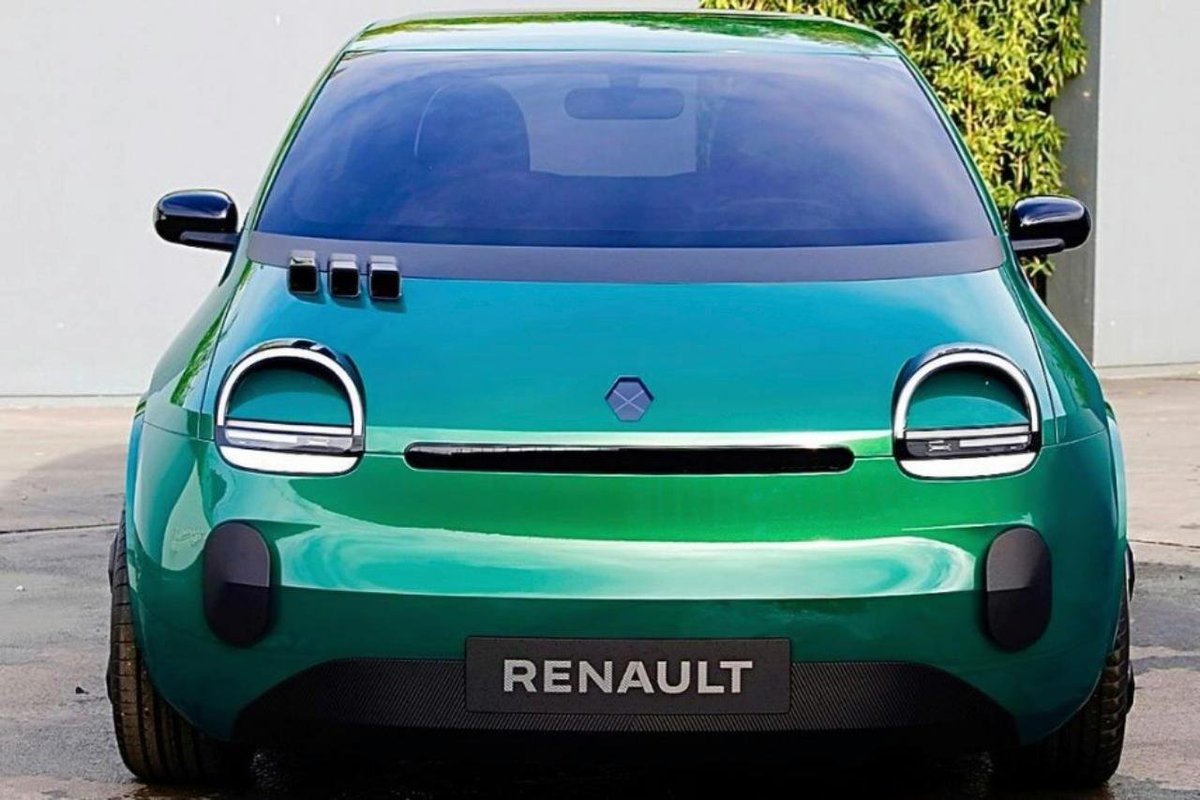
This car 👇, the 2026 version of France's Renault Twingo, is the first Western car engineered in China and made in Europe - a complete reversal of what used to be.
The challenge that Renault wanted to tackle is how to compete with Chinese EVs, which are best-in-class in affordability and speed-to-market.
Specifically, they wanted to develop an EV car from scratch in less than 2 years (when it normally takes 4 years to develop a new car for European auto makers) and be able to sell the car profitably for less than €20,000 while building it in Europe. Which is all insanely ambitious if you know about the European auto industry...
To do so, Renault opened a Shanghai R&D center (which they called "ACDC" in reference to both the band and the electrical current) where 160 engineers - 150 Chinese and 10 French (usinenouvelle.com/article/c-…) - essentially tried to make Chinese development method work for Renault, in the heart of China's EV ecosystem to understand what was possible.
As the lead engineer on the project, Jérémie Coiffier, put it (frandroid.com/marques/renaul…): "We humbly came to learn to go fast. And learning to go fast isn't simply learning to do the same thing faster. It's doing things differently. It's a transformation."
And it worked: they had a first prototype in an insanely fast 4 weeks (journalauto.com/constructeur…)!!! The entire development process took just 21 months.
The end product is priced under €20,000 - after subsidies, around €15,000 - making it one of Europe's cheapest EVs and competitive against Chinese EVs.
46% of the car is made of Chinese parts (techniques-ingenieur.fr/actu…), including an LFP battery from CATL (the first Renault to use cheaper lithium-iron-phosphate chemistry instead of traditional lithium-ion), and an 82 hp motor from Shanghai Edrive with permanent magnets (unique among Renault EVs).
Interestingly, the CATL batteries will be made in Europe too, specifically in Hungary (electrive.com/2024/07/02/ren…).
This is one rare story that gives me hope for Europe. Let's be real about Europe's choices here. It could either 1) keep raising tariff walls to protect an uncompetitive EV industry, 2) exit the EV race entirely or 3) swallow its pride and learn to improve. Renault chose the latter, which is the right thing to do.
Especially hard to do in the current climate where everyone is told to "decouple" and "de-risk," which is pretty much suicidal in the EV industry: on the contrary you very much need to "couple" and "risk" in order to learn, adapt and compete... Those French engineers saying "we humbly came to learn" probably did more for European industrial competitiveness than all the Think Tank papers in Brussels combined.
2
3
927
Tomás Marques retweeted

10 Nov 2025
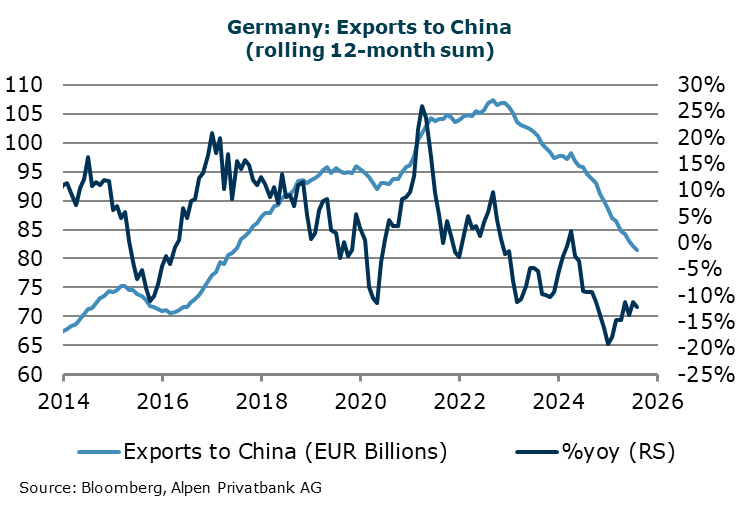
Germany's exports to China have declined strongly.
via @NicMicMacro
7
54
136
22,236
9 Nov 2025
Unfortunately, I don't think this scenario will change within the next year. Multinational corporations are powerful players in the world economy, so it's unlikely that the Brazilian government will be able to introduce the kind of regulation seen in other developed countries.
8 Nov 2025

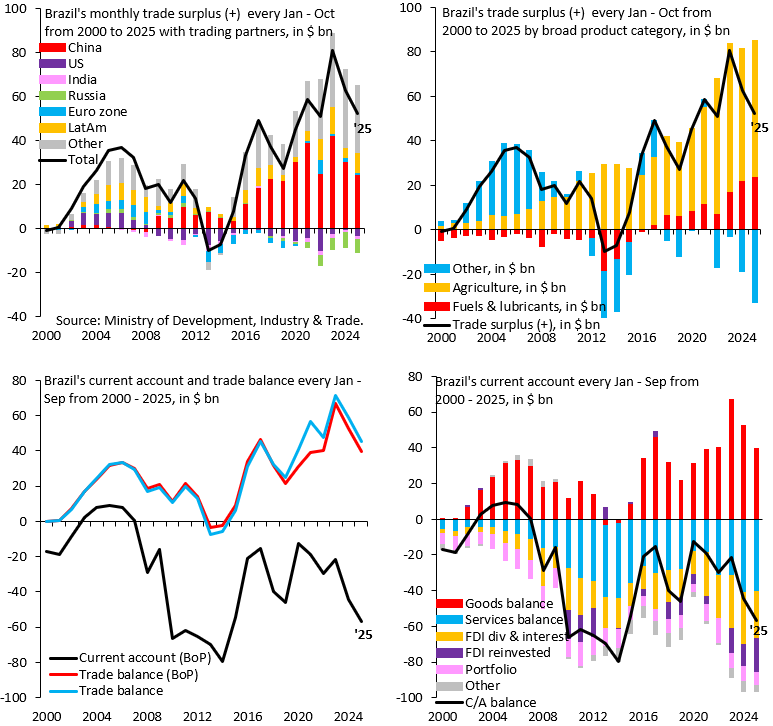
Brazil's transformation into a large trade surplus country is unique in EM. But the current account deficit remains wide, as lots of the farms that export crops are foreign owned, so the profits from the trade surplus go abroad. That will change over time.
robinjbrooks.substack.com/p/…
2
2
15
15,772