
CEO @mollyroseorg / tech accountability / good trouble / ‘launcher of PDF missiles’ (Playbook)
Joined January 2018
- Tweets 4,033
- Following 816
- Followers 1,844
- Likes 6,292
337 Photos and videos

Pinned Tweet

3 Jun 2024
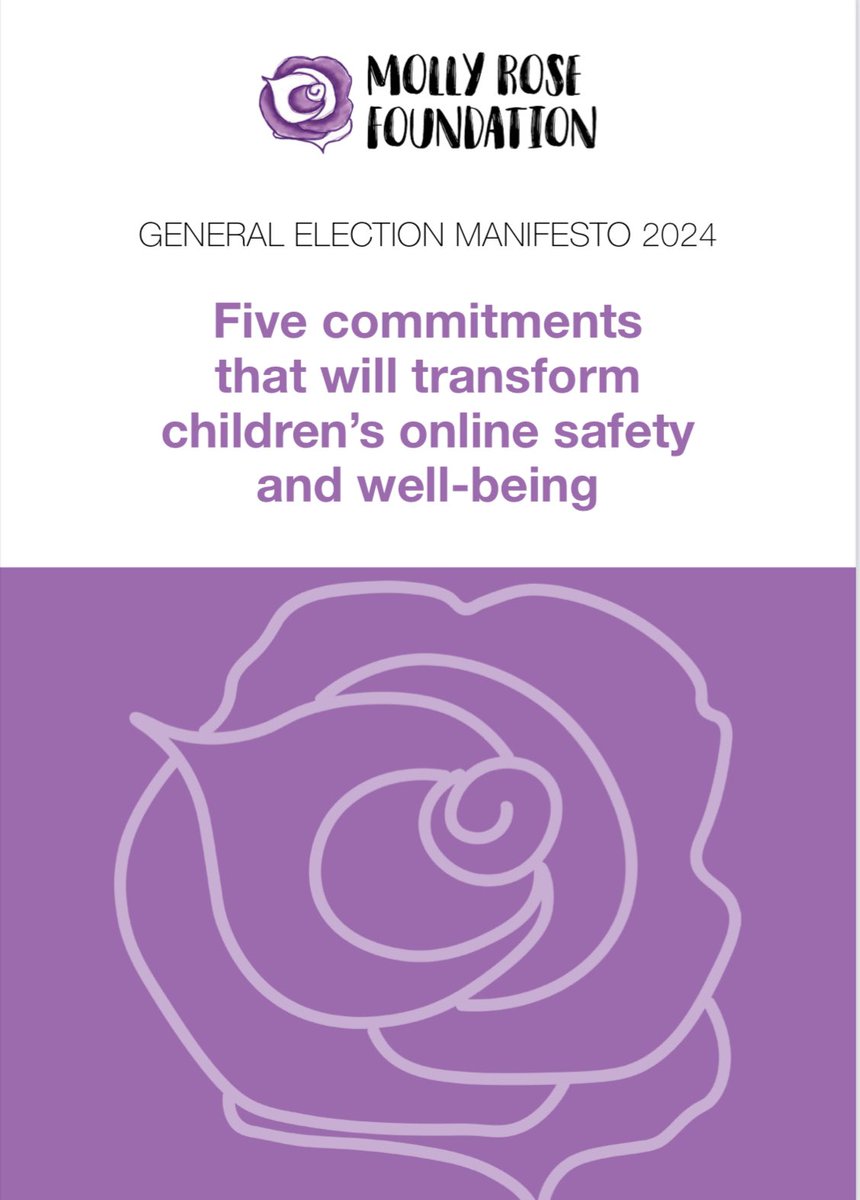
Today, @mollyroseorg urges the next Govt to commit to five transformative policies that can reset the relationship between tech firms and child safety. It’s time for a new #OnlineSafetyAct & a bold new tech accountability framework. Read here:
mollyrosefoundation.org/mrf-…
5
15
31
8,031
Andy Burrows retweeted
The father of Molly Russell has accused Sir @Keir_Starmer of “political opportunism” in rushing out plans to ban children from social media sites before Thursday’s Makerfield by-election @mollyroseorg @AndyBurnhamGM @_andyburrows @NSPCC @NSPCCChris @NSPCC_Press @5RightsFound @PoliceInspForum @DannyShawNews @DamianCollins @leicesterliz @ShabanaMahmood @LabourSJ telegraph.co.uk/politics/202…
4
5
917
A PM who seems to have done more planning for a leadership challenge than how to protect children from social media harm

After all the turmoil this weekend, intriguing to know from Starmer allies that PM has prepared bank account and a company, ready to fight a leadership contest -
will his determination to fight still be there this time next week?
1
130
Andy Burrows retweeted

Jun 13
bbc.co.uk/news/articles/cwyk…
Very strong words ahead of expected social media ban from @mollyroseorg -
Ian Russell tells us govt is rushing in a blanket ban, rather than more sophisticated controls, under political pressure, in a 'deplorable way'
28
55
106
46,979
Andy Burrows retweeted

Apr 13
Most Australian children have evaded the government’s ban on social media for under-16s, a new survey has found @_andyburrows @mollyroseorg @leicesterliz @DamianCollins @NSPCCChris @NSPCC @PoliceInspForum @BertinGabby @5RightsFound telegraph.co.uk/news/2026/04…
8
7
18
4,752
Andy Burrows retweeted
Jan 18
.@Keir_Starmer must not ban under-16s from social media before Australia has shown whether its scheme works, @Nigel_Farage has said @leicesterliz @wesstreeting @mollyroseorg @NSPCC @PoliceInspForum @_andyburrows telegraph.co.uk/politics/202…
1
3
344
Andy Burrows retweeted
Jan 17
Banning social media for under 16s will not work and could put children at greater risk of harm, the father of Molly Russell has said @leicesterliz @Keir_Starmer @KemiBadenoch @mollyroseorg @_andyburrows @NSPCC @5RightsFound @PoliceInspForum @DamianCollins @DannyShawNews @wesstreeting telegraph.co.uk/news/2026/01…
12
20
18,106
Andy Burrows retweeted
Jan 17
To ban or not to ban? me and @bbcpaddy are joined by @mollyrosefoundation 's Ian Russell as politicians seem to be warming up to the idea of banning social media for under 16s... his arguments are not what you might expect bbc.co.uk/sounds/play/p0mvlr…
4
5
14
21,809
Andy Burrows retweeted
Jan 17
An Australian-style social media ban on under-16s may not be a panacea for protecting children from harm online, campaigners have warned @Keir_Starmer @leicesterliz @_andyburrows @mollyroseorg @5RightsFound @DamianCollins @PoliceInspForum @DannyShawNews @peterkyle @InternetMatters @NSPCC @PeterWanless telegraph.co.uk/politics/202…
1
1
227
6 Dec 2025
Tech accountability, 2025 edition

3
637
25 Nov 2025
This is a superb explainer ahead of tomorrow - the clearest explanation I’ve seen of why the UK’s productivity gap is a chokehold on our finances
25 Nov 2025

📽️What on earth is "fiscal drag"?
Why will it form the centrepiece of @RachelReevesMP's efforts to raise money this week?
Why are Budgets getting ever more complex?
And could this one backfire like @George_Osborne's omnishambles?
All this and more in my 11m(!) primer👇
1
285
Andy Burrows retweeted

8 Nov 2025
“It's so disheartening that politicians seem unable to learn the lessons from a decade of social media." - Our CEO @_andyburrows
8 Nov 2025

'A predator in your home': Mothers say chatbots encouraged their sons to kill themselves bbc.in/47Gw18c
3
4
643
7 Nov 2025
UPDATE: @Ofcom now digging themselves further in knots, saying they acted on ‘new evidence’ that, if they were monitoring the forum properly, they’d have known was being bragged about on the forum all along.
This is now raising serious questions about their competency.
7 Nov 2025

On @SkyNews our CEO @_andyburrows says Ofcom must now use all the tools at their disposal to crack down on a pro-suicide forum.
It comes after families said they were appalled and dismayed at Ofcom's handling of its investigation.
2
1
6
691
Andy Burrows retweeted
7 Nov 2025
On @SkyNews our CEO @_andyburrows says Ofcom must now use all the tools at their disposal to crack down on a pro-suicide forum.
It comes after families said they were appalled and dismayed at Ofcom's handling of its investigation.
4
5
4
3,585
6 Nov 2025
Internal data shows that Meta expected to generate 10% of its overall revenue from scam ads. This company is out of control and is a threat to economic growth reuters.com/investigations/m…
2
161
21 Oct 2025
Over 800 people joined our @mollyroseorg campaign to push for a public inquiry yesterday. Join them here: mollyrosefoundation.beaconfo…
21 Oct 2025

Online forums promoting suicide are still running despite being responsible for more than 130 deaths, survivors and bereaved families have told @Keir_Starmer @_andyburrows @mollyroseorg @PeterWanless @leicesterliz @PoliceInspForum @DannyShawNews telegraph.co.uk/news/2025/10…
2
312
14 Oct 2025
Is this being done before or after the two-thirds of existing Teen Accounts features that fundamentally don’t work get fixed, Andy? Asking for tens of millions of parents.
14 Oct 2025

As @instagram's Adam @mosseri said, "we've revamped all of our all of guidelines about what teens can and cannot see on Instagram in a way that is guided by the PG-13 rating that was pioneered by the movie industry."
2
5
9
3,083
4 Oct 2025
In the context of this, remember that:
- Ofcom delayed the adoption of measures to detect known terror content
- Peter Kyle signed off on small but high harm sites not being regulated to the standard for which Parliament allowed, despite the clear calls by antisemitism groups
4 Oct 2025

NEW: Bloomberg Saturday read
— Counter-terrorism police and the security services are confronting what they fear is an increased long-term terror threat in Britain inspired by the conflict in Gaza, as well as rising antisemitism and greater operational difficulties in stopping lone terrorists radicalised online.
— “We are powerfully alive to the risk that events in the Middle East directly trigger terrorist action in the UK,” MI5 chief Ken McCallum said last year. Britain has mercifully avoided major terror incidents in recent years. The security services had feared that might not last.
— Security officials are concerned by what they see as the unquantifiable potentially radicalising effect on thousands of people in Britain, especially young people, of watching high-resolution videos of people being killed in Gaza every day. That poses both an immediate threat and the danger of what McCallum has called “slower-burn radicalisation.”
— Anti-terror police have disrupted alleged plots targeting Jewish people since Oct 7. Two men are due to face trial later this month charged with allegedly planning a gun attack on Jews in north-west England. Police are still investigating an alleged plot against the Israeli embassy this year. Last year a Moroccan asylum seeker was jailed for killing a man in a Gaza-inspired terrorist attack.
— A shift in the nature of terrorism from organised cells and larger terror groups toward lone actors means new challenges for anti-terror police. Some successful recent terrorist incidents have been carried out by people who were not on the security services’ radar, acting alone, who often quite suddenly became radicalised to the point of violence by material they had found online.
— Investigators are dealing with a messier picture, finding terrorists with limited grasp of their stated cause, often with mental-health problems and personal issues as well as extremist ideological motivations.
— For all those complexities they see one certainty: that the online world is central to both the threat and countering it, hence the UK’s ongoing efforts to circumvent encryption for terror suspects, sparking a fight with Apple and the US.
— “Sadly, we’ve long known about, and struggled to combat, the power of what people see online in radicalising minds, especially young minds. We will probably be living with the online reverberations of Hamas’s attack and the Israeli response for many years to come,” former Cabinet Secretary Simon Case told Bloomberg.
— As well as lone attackers, officials are also concerned by efforts by Al-Qaeda and particularly Islamic State Khorasan Province to use the conflict in Gaza to export their ideologies to Britain once again.
— The UK might have expected to see more Gaza-related violence if it wasn’t for Al-Qaeda and Islamic State traditionally focusing their motivations on other conflicts, namely in Afghanistan, Iraq and Syria, one source said. Those groups are now trying to change that to use Gaza to encourage attacks in Britain.
bloomberg.com/news/articles/…
2
441
25 Sep 2025
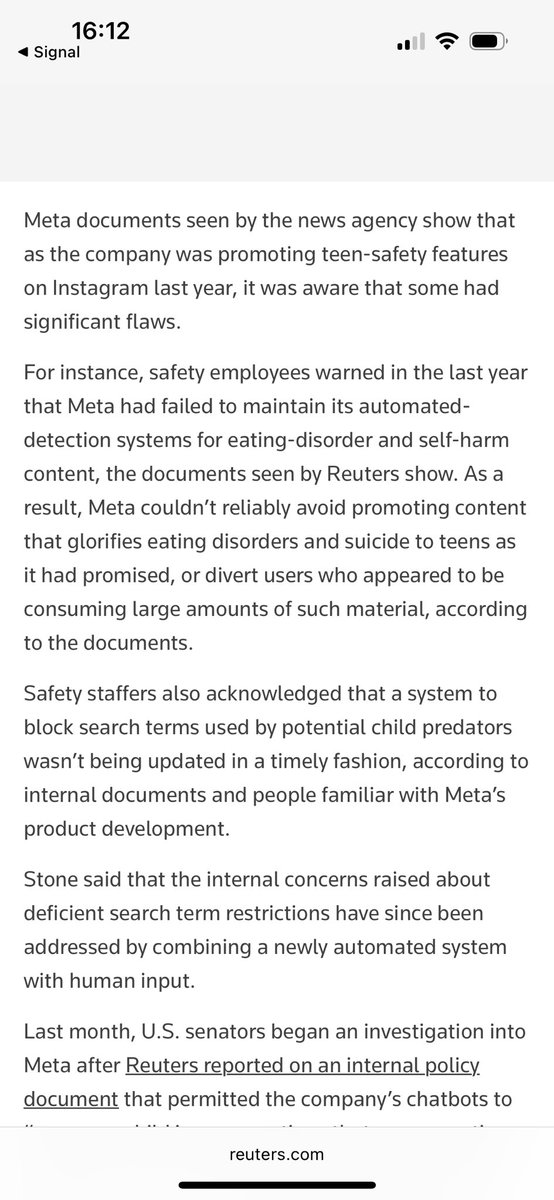
Appalling revelations from @jeffhorwitz that Meta pushed out Teen Accounts promising protection from harmful content such as self-harm, despite internal warnings that its automated detection systems weren’t capable of delivering this @mollyroseorg @Ofcom
1
2
6
436
Andy Burrows retweeted

25 Sep 2025
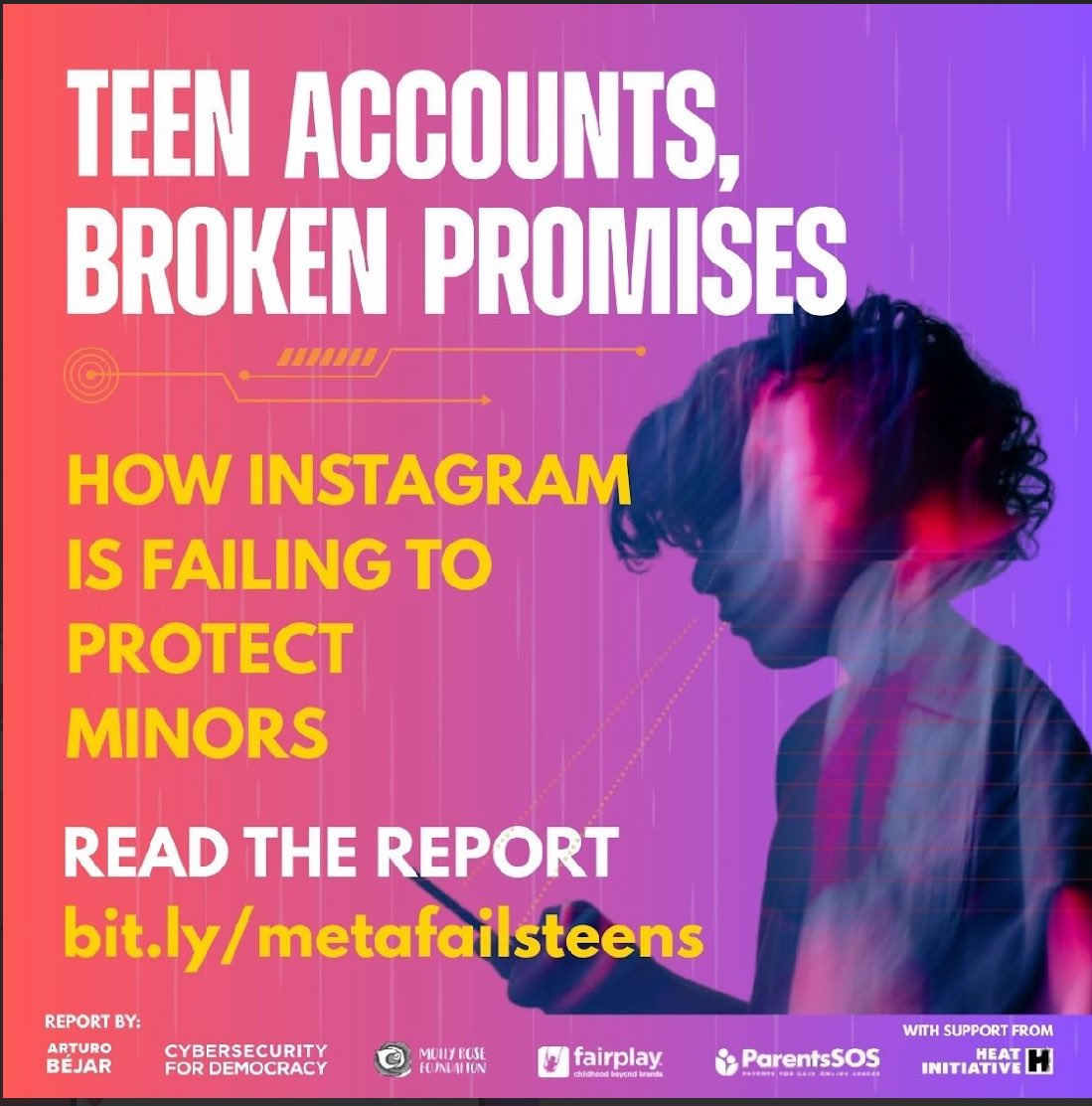
Hey @andymstone, thanks so much for sharing our report with your followers! In case you haven't read it yet, we provide full results of the testing done by one of your ex-employees & the academic research center @cyber4democracy.
Look forward to you similarly showing your work, including BEEF surveys, that support your claim that the safety tools have significantly reduced harm bit.ly/metafailsteens
25 Sep 2025
This is an opinion, it is not a fact. It is a highly subjective, misleading assessment that repeatedly misrepresents our efforts and misstates how our safety tools work and how many millions of parents and teens are using them today.
4
5
501