Takes photos of cells and builds stuff with lipids. Tries to play the piano sometimes. Currently postdoc @CRGenomica. Graduate from @TPucadyil Lab.
Joined September 2016
- Tweets 192
- Following 1,097
- Followers 459
- Likes 3,149
8 Photos and videos

Mighty pleased with this one. My first paper from my postdoc at the Malhotra lab @CRGenomica. We challenge how 'bulky' cargo are organised in the ER lumen and propose a new model for their export. Big thanks to the good people at @JCellBiol for their handling of the paper!

In contrast to prevailing dogma, @afororange et al. report that procollagen 1 assembles into a liquid condensate within cells, resolving the long-standing problem of how cells accommodate and export high concentrations of these bulky molecules from the ER. hubs.la/Q04l3yPd0
2
13
1,489
Soumya Bhattacharyya retweeted

8 Aug 2024
Excited to see out in @Nature my postdoc work! “Membrane prewetting by #condensates promotes tight junction belt formation” How do #tightjunctions form a belt in #epithelia sealing our body cavities? @Honigmann_Lab @mpicbg @BIOTEC_TUD w/ #Jülicher @mpi_pks
doi.org/10.1038/s41586-024-0…
16
89
495
38,608
Soumya Bhattacharyya retweeted

3 Jul 2024
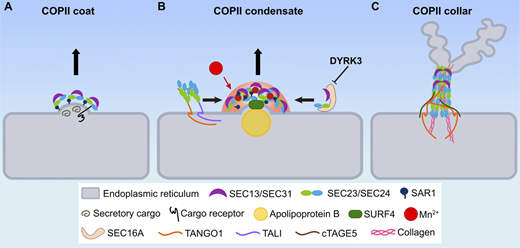
Great Viewpoint from Vivek Malhotra @JCellBiol!
COPII proteins, essential for cargo export from the ER, form not only coated small vesicles but also collars at tubule necks and phase-separate into liquid-like condensates, adapting to physiological demand.
rupress.org/jcb/article/223/…
10
34
3,197
Soumya Bhattacharyya retweeted

22 May 2024
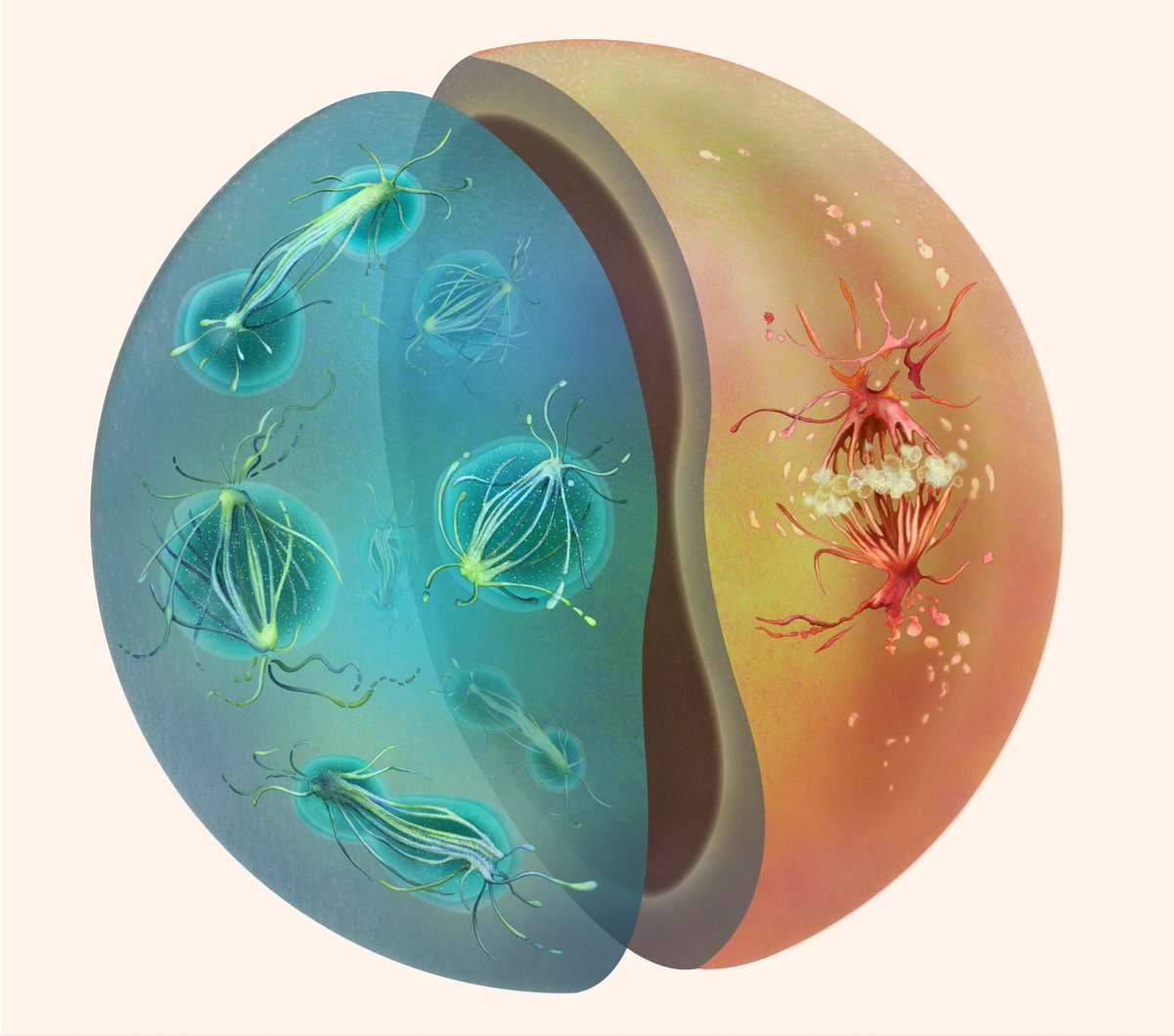
1/n My postdoc work on the evolution of mitosis in Ichthyosporea @Dey_Gautam @dudin_o @SchwabYannick groups is out @Nature shorturl.at/KPRQw Art by @nirupa_rao contrast fungal-like closed with animal-like open mitosis. Why do cells carry out mitosis in different ways?
28
64
243
49,510
Soumya Bhattacharyya retweeted

24 May 2024
#FluorescenceFriday #cellbiology #bioart Three examples of mitochondrial remodeling by lysosomes/late endosomes actively transported along microtubules, as seen by grazing incidence structured illumination microscopy at 1-2 frames/sec. doi.org/10.1016/j.cell.2018.…
3
54
213
23,084
Soumya Bhattacharyya retweeted

19 May 2024
Happy to share this mini-review that @TPucadyil and I wrote for Biochemical Society Transactions.
portlandpress.com/biochemsoc…
3
4
31
3,633

9 May 2024
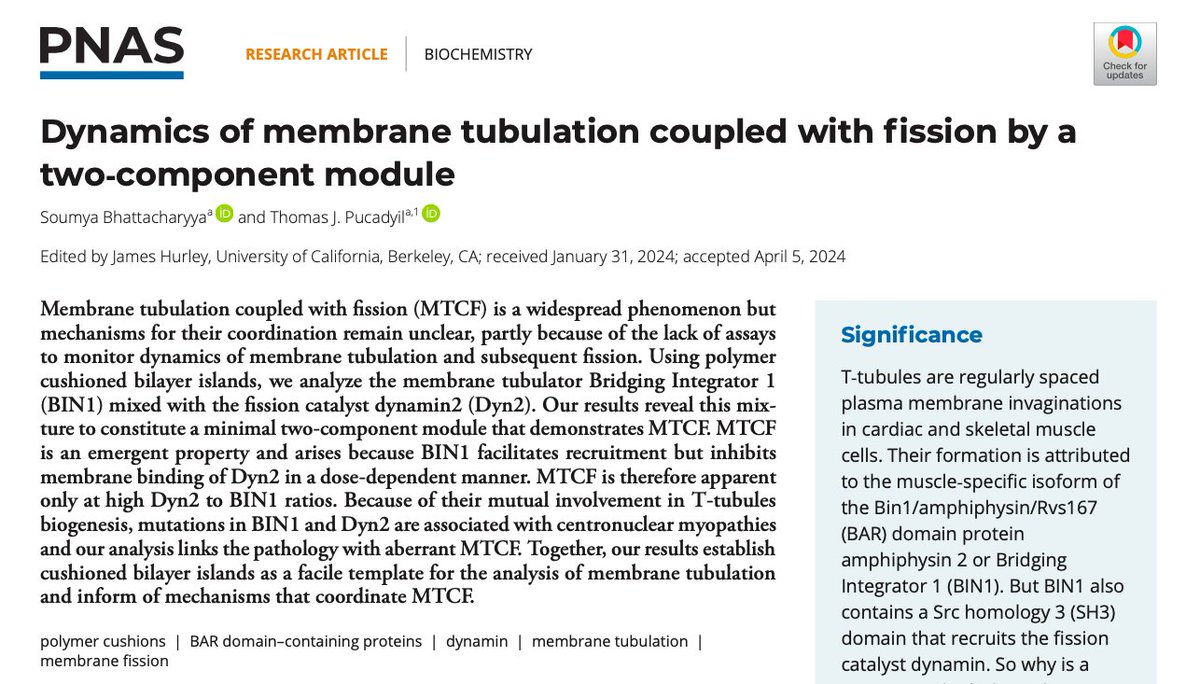
Online now @PNASNews! It was fantastic to work with @TPucadyil on this. I learnt so much from him in putting this together and had a fabulous time completing my PhD in his lab @IISERPune.
pnas.org/doi/10.1073/pnas.24…
17
16
155
8,882
Soumya Bhattacharyya retweeted

2 May 2024
🙌🏿 Congratulations to Vivek Malhotra on his election to the American Academy of Arts and Sciences @americanacad
Dr Malhotra, group leader of the Intracellular Compartmentation lab at #CRG, joins a distinguished collection of leaders and professionals across many fields.
24 Apr 2024

Announcing our new members! The Academy is honoring excellence in an array of disciplines and professions, and inviting these new members to join our work to advance the common good. The first members were elected in 1781. Learn who was elected in 2024: amacad.org/news
4
33
10,579
Soumya Bhattacharyya retweeted

13 Mar 2024
Our paper 'Analyzing the use of metaphors in news editorials for political framing' got accepted at the @naacl mains! Congratulations to all the co-authors @roxanneelbaff @miladalsh and Henning Wachsmuth. @AIHannover @trr_318 @webis_de #NLP #NLProc. See you in Mexico!
2
4
25
2,065
Soumya Bhattacharyya retweeted
26 Dec 2023
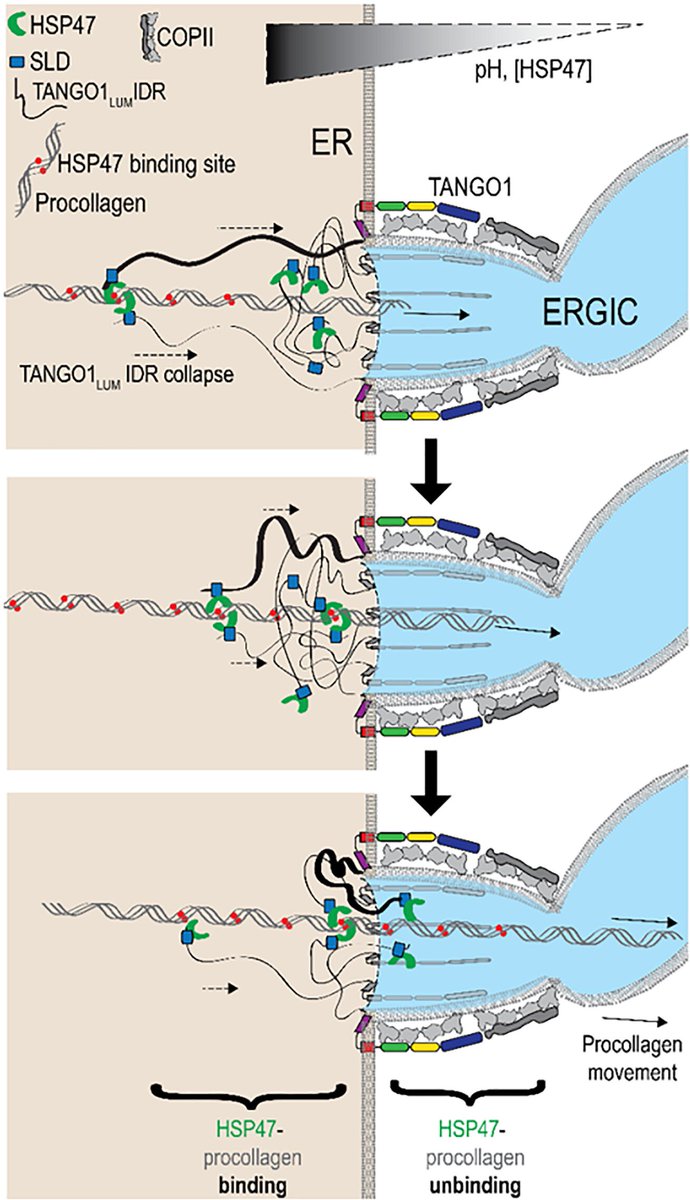
Our biophysical model in @PNASNews! ER export of collagen driven by a mechanochemical ratchet formed by expansion-contraction of intrinsically disordered regions (IDRs) of TANGO1, and gradients of pH/HSP47. IDR “breathing” produces work with each breath.
pnas.org/doi/10.1073/pnas.23…
6
35
109
22,790
Soumya Bhattacharyya retweeted

15 Nov 2023
How can lysosomes, when ruptured, maintain stability allowing for repair? Glad to share @Nature nature.com/articles/s41586-0… the function of stress granules (SG) as molecular plugs that stabilise damaged membranes @TheCrick @maxgabgut #condensates #lysosomes #TB👇Thread
23
134
522
107,462
Soumya Bhattacharyya retweeted
24 Sep 2023
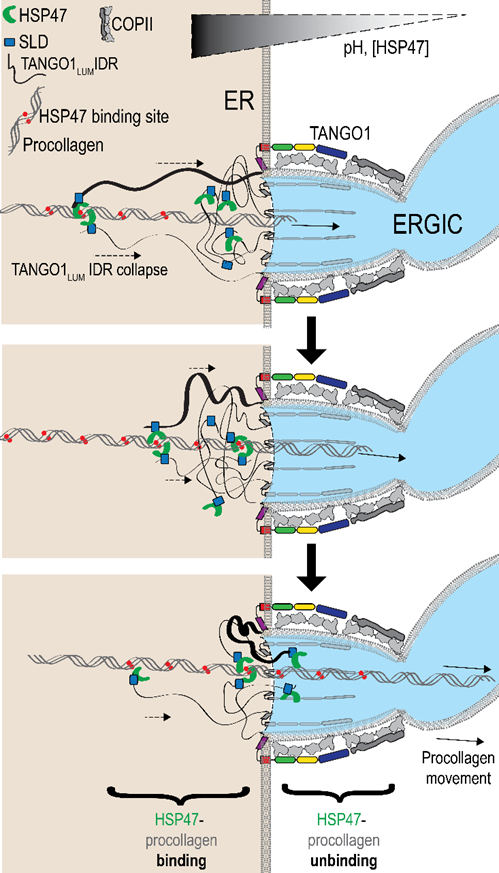
Collagen transport through inter-compartmental tunnels! Our theoretical model, led by the Pincet group @LP_ENS_, for how molecular gradients between organelles drive cargo transport through a tunnel - even without a cargo receptor.
biorxiv.org/content/10.1101/…
12
57
10,703
Soumya Bhattacharyya retweeted

13 Jul 2023
Happy to share with you, our piece on how the molecular membrane fission machine - dynamin is regulated by 'gears' in its membrane binding PH-domain. @TPucadyil and I curated this brief review for Current Opinion in Cell Biology. Now online: authors.elsevier.com/c/1hPJK…
9
50
4,091
Soumya Bhattacharyya retweeted

28 Jun 2023
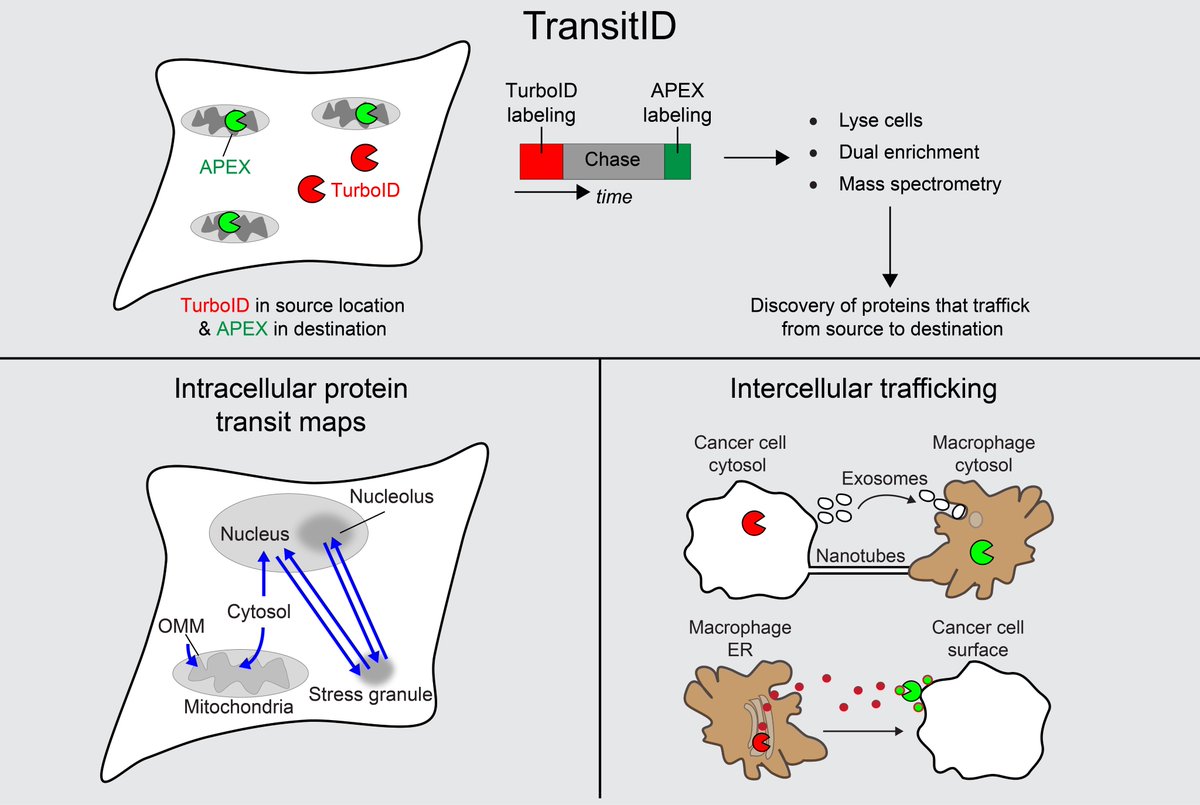
TransitID is out today in Cell! This is a proximity labeling method for unbiased discovery of endogenous proteins that traffick from a defined “source” location to a defined “destination” location. TransitID uses sequential labeling by TurboID in the source, followed by a chase period (minutes to hours) and then 1-minute APEX tagging in the destination compartment. Proteins tagged by both enzymes are enriched with streptavidin and anti-fluorescein antibody, and identified by mass spec.
We explore 4 intracellular and intercellular applications of TransitID:
- discovery of locally translated mitochondrial proteins (translated at OMM, then imported into mito matrix)
- mapping proteins whose cytoplasm-to-nucleus shuttling is dampened by stress
- discovery of proteins that transit between nucleolus & stress granules during stress & stress recovery
- analysis of proteins that traffic intercellularly bw tumor cells & macrophages
Work of amazingly talented co-first authors @WeiQinChemBio and @CheahJoleen, and collaborators Steve Carr @namude & Paul Taylor
authors.elsevier.com/a/1hKLc…
27
557
2,000
283,872
Soumya Bhattacharyya retweeted

27 Jun 2023
New on BioRxiv: Adhesion energy controls lipid-binding mediated endocytosis. A group effort lead by @RaluucaG with contributions from our friends @taraskalab @DimovaLab @cmatthaeus2 and Thomas Weikl @MpiciPotsdam @FUBiochemistry @FU_Berlin biorxiv.org/content/10.1101/…
5
21
62
16,678
Soumya Bhattacharyya retweeted

30 May 2023
1/2 Our stressed-out PhD scholars deserve a long-overdue increase in their stipends. The revision was due in 2022 after an already delayed raise in 2019. How can they meet their daily needs & undertake research amid rising inflation?
@IndiaDST
indiatoday.in/education-toda…
264
1,746
3,056
322,911

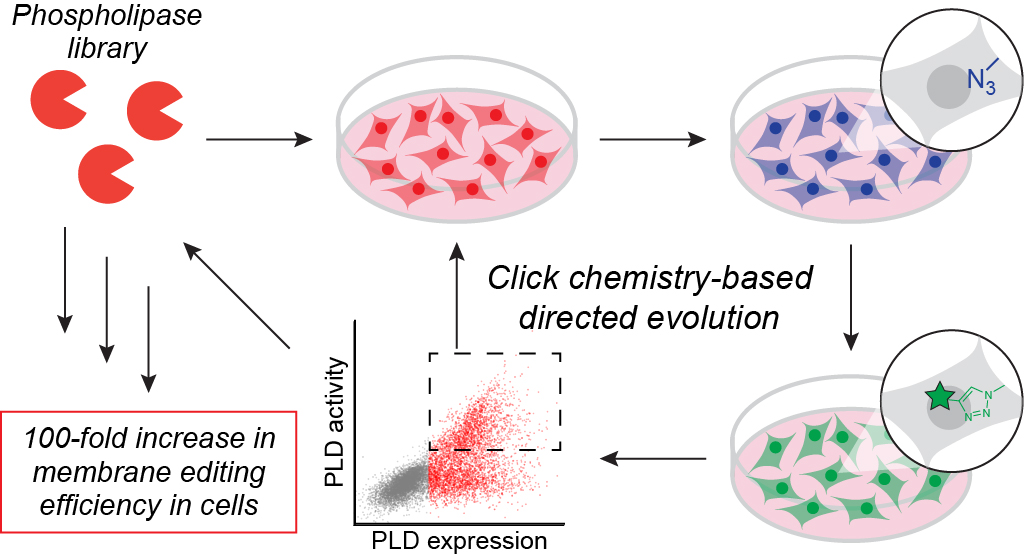
Our work about superPLD is now published! In this paper, we describe how we can harness mammalian cell-based directed evolution to engineer a membrane editor (phospholipase D; PLD) with superior performance in mammalian cells. 1/n nature.com/articles/s41557-0…
8
49
215
85,680
Soumya Bhattacharyya retweeted

27 Apr 2023
A tour the force of #geneediting and #STED. We have followed up on some of these findings and have 2 papers that will drop soon! looking at endogenous proteins at high resolution in their own unperturbed cellular environment is helping to reveal important trafficking mechanisms!
27 Apr 2023
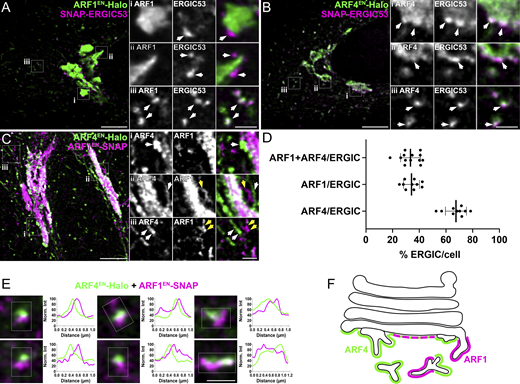
.@freethepipette, @fran_bottanelli and colleagues combine gene editing and STED super-resolution #microscopy to reveal the nanoscale localization of ARF #GTPases in living cells bit.ly/3HhBHcp
3
15
96
14,945
Soumya Bhattacharyya retweeted

5 Apr 2023
From the ER to outside the cell in 5 minutes - interested in visualizing membrane trafficking in live animals? Check out new paper @Dev_Cell authors.elsevier.com/a/1gsqZ… Congrats to @CarolinaCamelo6, @RaphaelSchleut2, @theajacobs_, @domfoerster twitterless colleagues @WWU_Muenster
9
36
145
21,642