
ceo/founder grebban.com e-com, tech, design. love to build companies. angel investor. vibe coder since '97.
Joined April 2007
- Tweets 42,717
- Following 3,027
- Followers 7,902
- Likes 29,782
1,620 Photos and videos













Anton Johansson retweeted

Jun 12
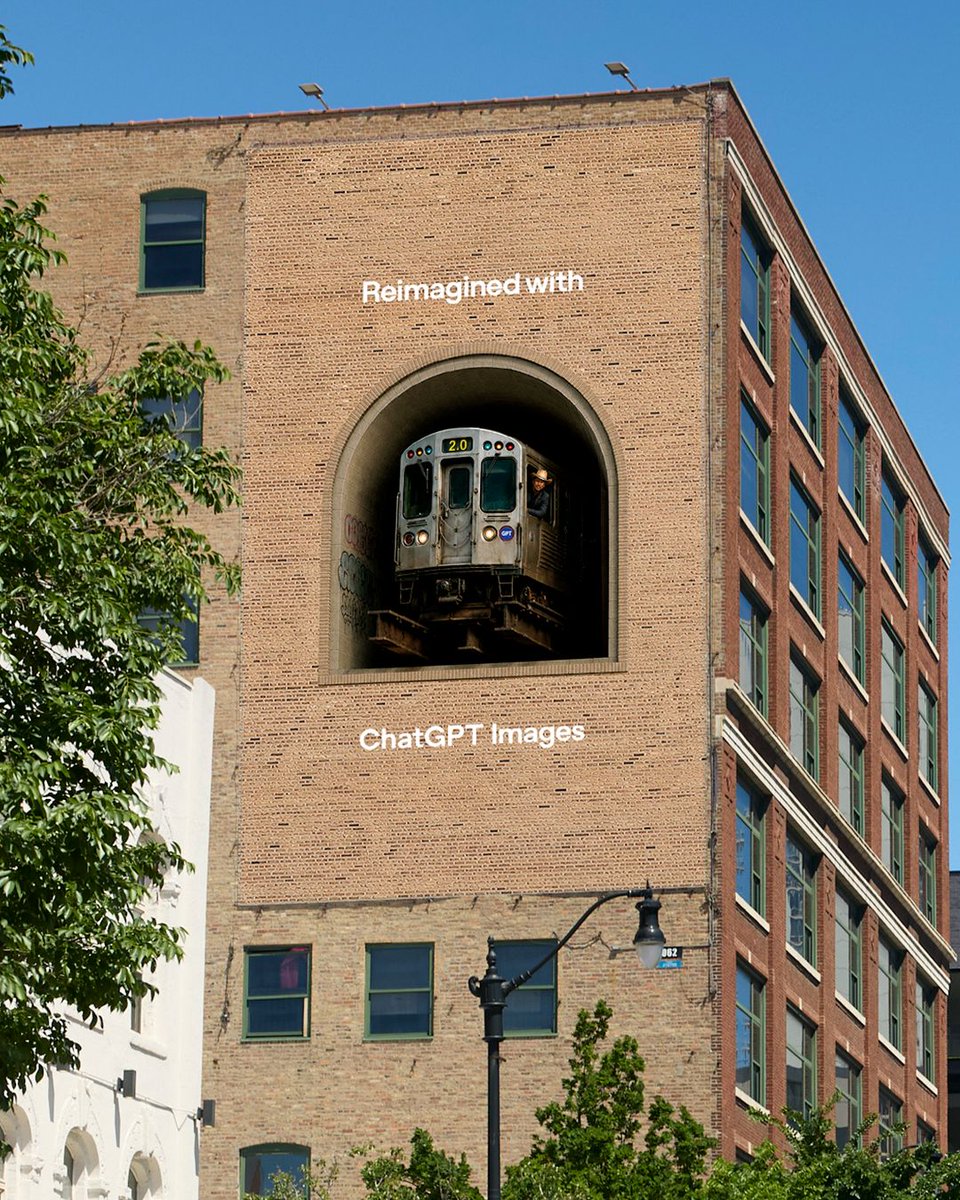
wow sick new billboards from openai



96
257
5,148
2,829,873

Jun 14
Odds of Anthropic relocating its hq to London?
Jun 13

Three months ago, @DeptofWar kicked @AnthropicAI out of our building—forever.
Every passing day proves why that was the right move. 🇺🇸
Community note
This official statement is not accurate or truthful. The DOW didn’t kick out Anthropic “forever.” They invited Anthropic back when they launched the Mythos model — They even continued to use Mythos in high-stakes military ops.
cnbc.com/2026/05/01/pen…
1
357
Jun 13
Interesting times
Jun 13

The US government, citing national security authorities, has issued an export control directive to suspend all access to Fable 5 and Mythos 5 by any foreign national, whether inside or outside the United States, including foreign national Anthropic employees.
The net effect of this order is that we must abruptly disable Fable 5 and Mythos 5 for all our customers to ensure compliance.
Access to all other Claude models is not affected.
We apologize for this disruption to our customers. We believe this is a misunderstanding and are working to restore access as soon as possible.
Read our full statement: anthropic.com/news/fable-myt…
246
Anton Johansson retweeted

Jun 10
if I'm Dario, the reasoning for an IPO is to get flush with liquidity and then pay for the most insane lobbying effort the US has ever seen
i'm calling it now, come back to this in 6 months
Jun 10

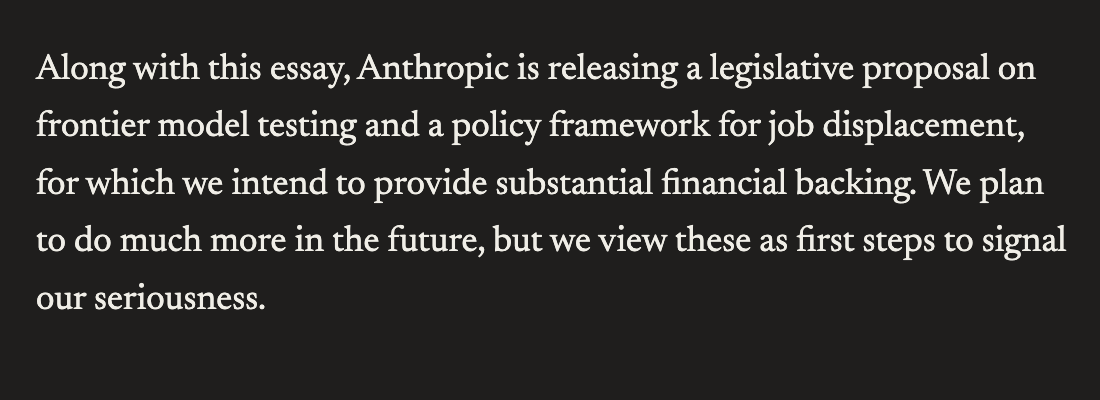
Today I'm publishing a new essay, Policy on the AI Exponential. AI is progressing extremely fast—much faster than the policy process was built to handle. The essay lays out where I think the technology is now, and the action needed to close the gap: darioamodei.com/post/policy-…
48
62
1,212
61,517
Jun 9
Gold advice by @dickc on @bhalligan’s podcast
”Make sure everybody understands what you understand. Your job is to make sure everybody understands what the priorities are, and what it means for them and their team, how they fit into those priorities and more importantly, what it means for them personally and professionally if we achieve those things”
open.spotify.com/episode/2Kc…
1
79
Anton Johansson retweeted

May 28
Great startups do not optimize for minimum headcount. They optimize for maximum importance and impact.
1
2
246

Spotify's Chief Architect just showed how they ship 4,5K deployments /day with Claude at Anthropic stage
27-minutes. free. By #1 music app dev
"More than 99% of our engineers use AI coding tools. Adoption took off after Opus 4.5"
Worth more than any $500 vibe-coding course.

Creator of Claude Code just dropped a 6-min workshop on new Claude feature during live session in London.
Boris Cherny: “A lot of my code these days is written by "routines". I’m not doing the prompting - I create the routines that do the prompting.”
6 minutes. Free. From a live session.
Watch this now. This will change the way you vibe-code forever.
174
528
6,861
2,554,676
Anton Johansson retweeted

May 18
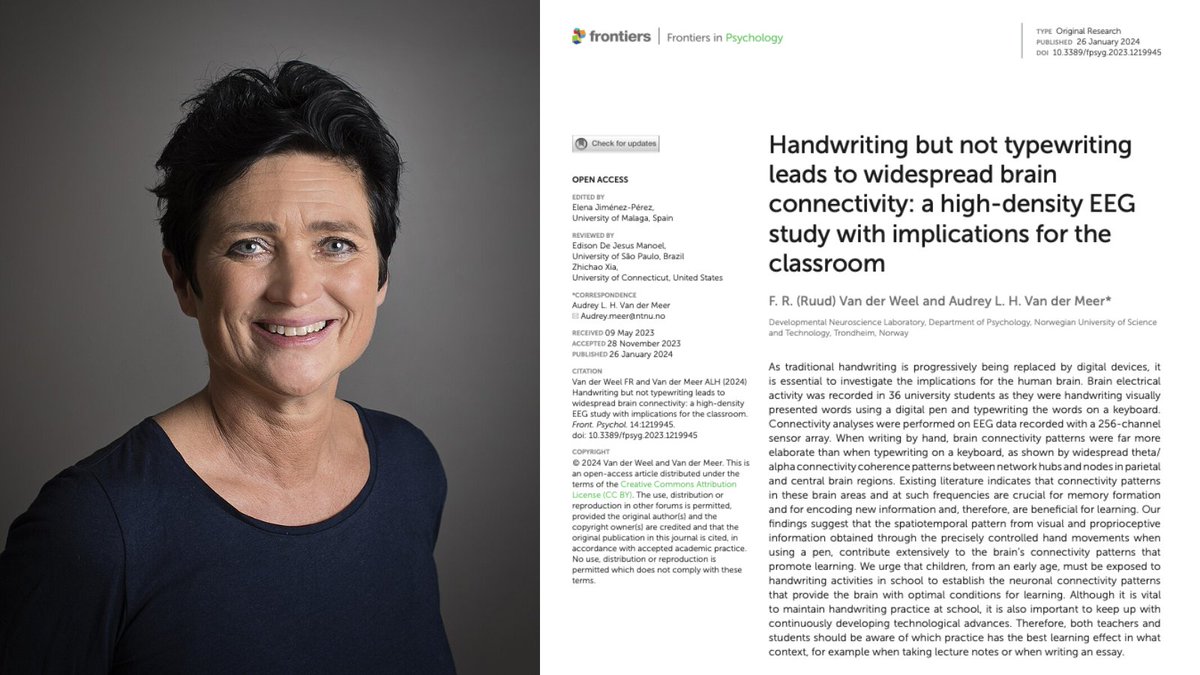
A Norwegian neuroscientist spent 20 years proving that the act of writing by hand changes the human brain in ways typing physically cannot, and almost nobody outside her field has read the paper.
Her name is Audrey van der Meer.
She runs a brain research lab in Trondheim, and the paper that closed the argument was published in 2024 in a journal called Frontiers in Psychology. The finding is brutal enough that it should have changed every classroom on Earth.
The experiment was simple. She recruited 36 university students and put each one in a cap with 256 sensors pressed against their scalp to record brain activity. Words flashed on a screen one at a time.
Sometimes the students wrote the word by hand on a touchscreen using a digital pen, and sometimes they typed the same word on a keyboard. Every neural response was recorded for the full five seconds the word stayed on screen.
Then her team looked at the part of the data most researchers had ignored for years, which is how different parts of the brain were communicating with each other during the task.
When the students wrote by hand, the brain lit up everywhere at once.
The regions responsible for memory, sensory integration, and the encoding of new information were all firing together in a coordinated pattern that spread across the entire cortex. The whole network was awake and connected.
When the same students typed the same word, that pattern collapsed almost completely.
Most of the brain went quiet, and the connections between regions that had been alive seconds earlier were nowhere to be found on the EEG.
Same word, same brain, same person, and two completely different neurological events.
The reason turned out to be something nobody had really paid attention to before her work. Writing by hand is not one motion but a sequence of thousands of tiny micro-movements coordinated with your eyes in real time, where each letter is a different shape that requires the brain to solve a slightly different spatial problem.
Your fingers, wrist, vision, and the parts of your brain that track position in space are all working together to produce one letter, then the next, then the next.
Typing throws all of that away. Every key on a keyboard requires the exact same finger motion regardless of which letter you are pressing, which means the brain has almost nothing to integrate and almost no problem to solve.
Van der Meer said it plainly in her interviews.
Pressing the same key with the same finger over and over does not stimulate the brain in any meaningful way, and she pointed out something that should scare every parent who handed their kid an iPad.
Children who learn to read and write on tablets often cannot tell letters like b and d apart, because they have never physically felt with their bodies what it takes to actually produce those letters on a page.
A decade before her, two researchers at Princeton ran the same fight using a completely different method and ended up at the same answer. Pam Mueller and Daniel Oppenheimer tested 327 students across three experiments, where half took notes on laptops with the internet disabled and half took notes by hand, before testing everyone on what they actually understood from the lectures they had watched.
The handwriting group won by a wide margin on every question that required real understanding rather than surface recall.
The reason was hiding in the transcripts of what the two groups had actually written down.
The laptop students typed almost word for word, capturing more total content but processing almost none of it as they went, while the handwriting students physically could not write fast enough to transcribe a lecture in real time, which forced them to listen carefully, decide what actually mattered, and put it in their own words on the page.
That single act of choosing what to keep was the learning itself, and the keyboard had quietly skipped the choosing and skipped the learning along with it.
Two studies. Two countries. Same answer.
Handwriting makes the brain work. Typing lets it coast.
Every note you have ever typed instead of written went into your brain through a thinner pipe. Every meeting, every book highlight, every idea you captured on your phone instead of on paper was processed at half depth.
You did not forget those things because your memory is bad. You forgot them because typing never woke the part of the brain that would have made them stick.
The fix is the thing your grandmother already knew.
Pick up a pen. Write the thing down. The slower road is the faster one.
2,472
44,656
120,848
10,366,240
Anton Johansson retweeted

May 10
BS.
Attention was born in Montréal
PyTorch in NYC.
AlphaGo in London
AlphaFold in London
ESMFold in NYC
Llama 1 in Paris.
Llama 2 in Paris NYC SV
DeepSeek in Hangzhou
Plus:
DINO in Paris
JEPA in Montréal Paris NYC
SV is 3 mos ahead on topics SV is singularly obsessed with.
181
498
7,782
739,074
May 7
yes yes yes

EXACTLY THIS!
I no longer buy products that require me to talk to a sales person to get pricing information.
1
230
Anton Johansson retweeted

May 3
Whether it’s existing consulting firms, new ones that emerge, FDEs from agent vendors, or new internal agent engineering roles, the amount of work that is going to be created to implement agents in enterprises will exceed anything we imagine today.
The complexity of implementing agents in any existing organizations is very real. When I talk to large enterprises, as you move from a chat paradigm to agents that participate in meaningful workflows, there are a number of things they need to do.
First, you have to get agents to be able to talk to your data securely across your systems. In many cases, enterprises have decades of legacy infrastructure that contain the valuable context for AI agents. That’s going to take a ton of work to go modernize and move to systems that work well with agents.
Then, you need to ensure that you’ve implemented agents with the right access controls and entitlements, the right scopes to be safely used, and have ways of monitoring, logging, and securing the work that they do.
Next, you need to actually document the processes in the organization in a way that agents can utilize for doing the work. You also need to figure out what the new workflow looks like when agents and people are working together on a process, and who steps in where. Just replicating the old workflow will mute the gains. Oh and you likely need to create evals for your top new end-state processes.
Finally, you have to keep up with a rapidly changing set of best practices and architectural shifts happening in the agent space. While it’s fun for people to change their personal productivity tools on a dime, it’s 100X harder to do this in a business process. The speed of change is a blessing and a curse right now for anyone trying to keep a stable system design.
All of this means that individuals and companies that develop expertise on the above set of components (and more) are going to be needed to help organizations actually implement agents at scale. This is also the rationale for vertical AI agents right now that can go in deep on a business domain and help bring automation to it.
This is a huge opportunity right now whether you’re doing this internally or as an external business provider.
162
268
1,975
563,973
May 3
scary
May 2

GitHub's former CEO gave his AI eyes.
What happened next is equal parts hilarious and haunting
291
May 1
this is more substantial and important than how many parental leave days dads take or not
May 1

This is wonderful.
More exhausted and more satisfied is basically perfect.
Dads, lean in!
297

Apr 22
Yet another Grebban x Shopify success story! So much fun working with Barebells Shopify on this project!
Apr 22

One of the fastest growing brands in the US is now powered by @Shopify.
@BarebellsUSA isn't playing the same game, they are changing the playbook.
That kind of reframe paves the way for innovation. Welcome to Shopify, Barebells.
1
3
517
Apr 16
i think openai should be much more afraid of claude cowork than of claude code. can't understand why they didn't go for the mainstream play.
1
1
211

Anton Johansson retweeted

Apr 1
The most AI proof job in the world is entrepreneurship
Use it to make products and services. Build more companies. On Shopify or otherwise.
254
434
4,542
252,142
Mar 28
the problem with chatgpt is that the latest models feels less smart.
5
5
527
