
No body.
Joined April 2015
- Tweets 3,023
- Following 496
- Followers 117
- Likes 8,253
376 Photos and videos








3.141592653589793 🖖 retweeted

Im almost embarrassed to say how many times I listened to this. It actually gave me goosebumps. 😂
👉𝐋𝐨𝐫𝐝 𝐨𝐟 𝐭𝐡𝐞 𝐑𝐢𝐧𝐠𝐬 𝐃𝐢𝐬𝐜𝐨: 𝐎𝐧𝐞 𝐅𝐮𝐧𝐤 𝐭𝐨 𝐑𝐮𝐥𝐞 𝐭𝐡𝐞𝐦 𝐀𝐥𝐥
42
100
1,236
448,505
3.141592653589793 🖖 retweeted

May 31
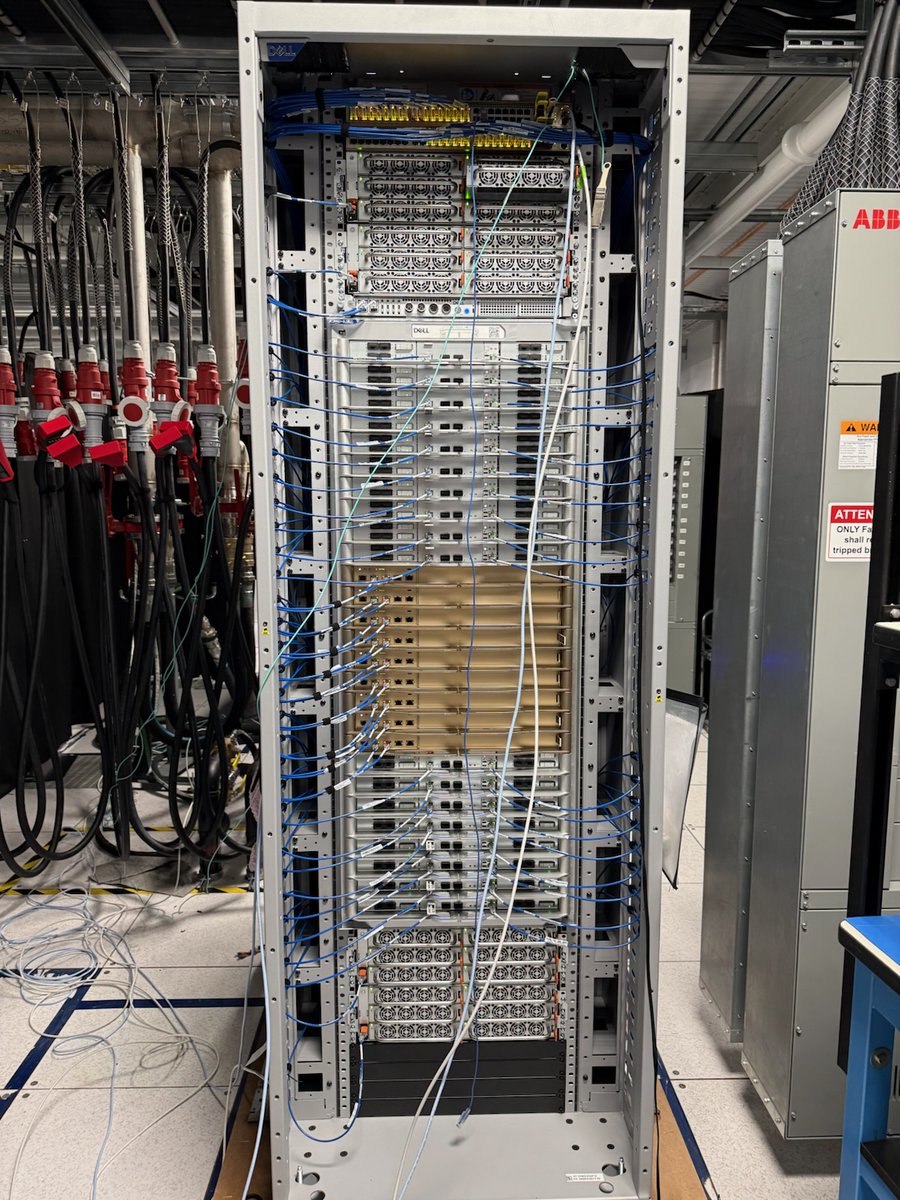
The world’s first @nvidia Vera Rubin NVL72 server rack is here.
We’re thrilled to deliver the first working, liquid-cooled @Dell PowerEdge XE9812 for @CoreWeave.
Built for the next era of AI infrastructure. 🚀🤝
306
798
6,669
715,833
3.141592653589793 🖖 retweeted
May 30
Demand continues to accelerate with record results across all areas of our business:
Revenue: $43.8B ⬆️88% YoY
ISG Revenue: $29.0B ⬆️181% YoY
AI Servers Revenue: $16.1B ⬆️757% YoY
Traditional Servers & Networking: $8.5B ⬆️92% YoY
Storage Revenue: $4.3B ⬆️8% YoY
ISG Op Inc: $3.1B ⬆️206% YoY
AI Orders: $24.4B
AI Backlog: $51.3B
CSG Revenue: $14.6B ⬆️17% YoY
CSG Op Inc: $1.2B ⬆️79% YoY
Diluted EPS: $5.24 ⬆️282% YoY
Non-GAAP Diluted EPS: $4.86 ⬆️214% YoY
Q1 Cash Flow from Ops: $4.1B
During the quarter, we returned $2.1 billion to shareholders through share repurchases and dividends.
For FY'27, we now expect total company revenues to grow to $167B and EPS to grow by 74%.
Last week at Dell Technologies World, we explained more about the massive AI buildout: dell.com/en-us/blog/dell-tec…
Grateful to our customers, partners, and the @Dell team who make this all happen. Onward! 🙏🚀
#PlayNiceButWin
May 28

Q1FY27: Record revenue, EPS and Q1 cash flow – Q1 underscored the strength and agility of our operating model and the pace of innovation we continue to bring to market across the full stack of compute, storage and software.
Catch the #earnings call replay & see the Q1 report 📝 del.ly/6019B8Zxj9
115
164
1,705
256,427
3.141592653589793 🖖 retweeted

May 25
I’ve been reading the Vedas a lot recently, and what’s stood out is how it doubles as an encyclopedia as well as a religious text. Astronomy, medicine, mathematics, metallurgy, linguistics, are all woven through hymns and rituals as one body of knowledge. Simply calling it “religious” forces it into a Western category that didn’t have the apparatus to recognize what it actually was. It’s closer to a tradition of formalized epistemology in which metaphysics, observation, and language form one continuous inquiry, which as a result led Indian civilization to develop along a fundamentally different path because of it.
You can see the effect most clearly in the sciences. Around 600 BCE, the Vedic record describes a surgical procedure that matches modern rhinoplasty and is still foundational to reconstructive surgery today. Centuries before Western Europe stopped treating eclipses as supernatural, Indian scholars had calculated the circumference of the earth within 0.2% and explained eclipses as shadows. Centuries before Plato and Aristotle rejected atomism, the Vedic tradition already held that matter is composed of indivisible particles combining into binary and triatomic compounds, transformable by heat. The first formal rules for zero and negative arithmetic appear in the Vedas, along with infinite-series derivations of π, sine, and cosine centuries before Newton and Leibniz.
The interesting question is how did they get so much right, so early? My best guess is language.
The Vedic tradition is unique compared to other oral traditions as it demanded letter-perfect oral transmission across generations. Around 500 BCE, scholars composed a generative grammar of Sanskrit called Panini so rigorous it anticipates Backus-Naur form, the notation that defines programming languages today, by 2,500 years. Sanskrit is recursive, rule-based, and built to minimize ambiguity. It reads more like mathematics than English.
When you think in a language built like that, the precision of the language becomes the precision of your reasoning. The West didn’t formalize this until much later. Kant argued our categories of understanding shape what we can know, Wittgenstein wrote that the limits of language are the limits of one’s world, and Kripke showed that naming doesn’t just describe things, it constitutes what they mean and how we can reason about them. All three touch the same insight which is that thought is downstream of language.
The Vedic tradition operated on that insight thousands of years earlier. To the point that they built a whole language first and used it to think clearly about everything else after. I find that all really fascinating.
140
885
4,603
282,577
3.141592653589793 🖖 retweeted

May 20
it’s in gemini, just create it in ai studio. oh, that’s for your personal google one account. for workspace you need gemini business. no, not gemini advanced, that’s ai pro now. unless you need ai ultra. oh agents? you do that in spark actually. no, not gemini api managed agents, that’s different. for coding use jules. unless you mean the agentic ide, that’s antigravity. no, that’s the old antigravity, download the new one. actually gemini cli is being deprecated, use antigravity cli. no the flash model is smarter than the pro model. unless you need pro. if it’s video, use flow. no, flow uses veo. no, nano banana is images. actually that’s in gemini now. unless you’re in search, then it’s ai mode. no, research is notebooklm. anyway it’s all very simple.
512
2,066
19,064
1,647,813

**Strategic play:** OpenAI is turning compute scarcity into a revenue moat. By offering 1–3 year commitments with spend-based discounts and guaranteed access across models/clouds, they lock in big enterprise spend upfront, get predictable demand signals for their infra buildout, and make it harder for customers to switch when capacity tightens. It's enterprise-grade reliability as a competitive edge.
1
1
19
3.141592653589793 🖖 retweeted

May 16
Lol, so Jensen is still angry about the Dwarkesh podcast.
172
227
4,400
997,308

Time to relocate

Did you know Korea sells “one-a-day” banana packs?
Instead of every banana ripening at once, each one is at a different stage.
One is ready today.
The next one is ready tomorrow.
The last one is still spiritually in college, “experimenting.”
Simple. Genius. Solves the entire banana problem.
What do you think?
Would you prefer your bananas this way?

4
3.141592653589793 🖖 retweeted

Apr 30
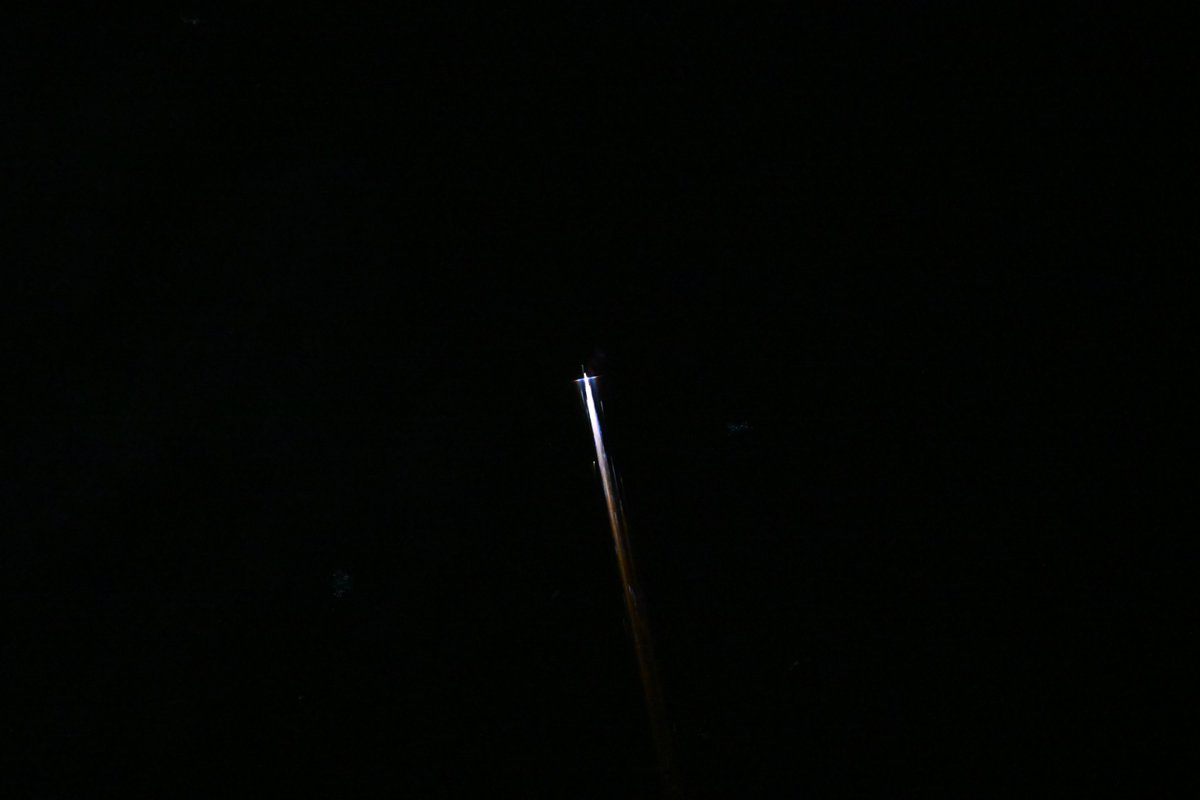
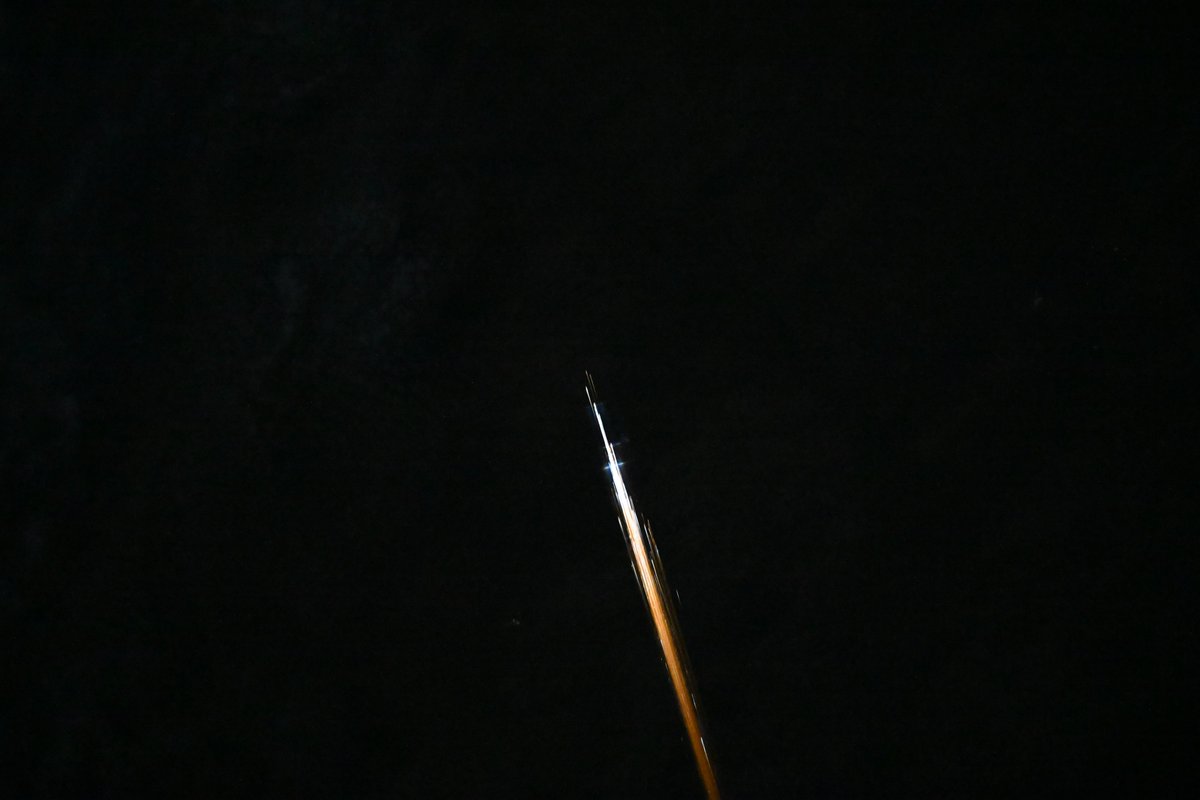
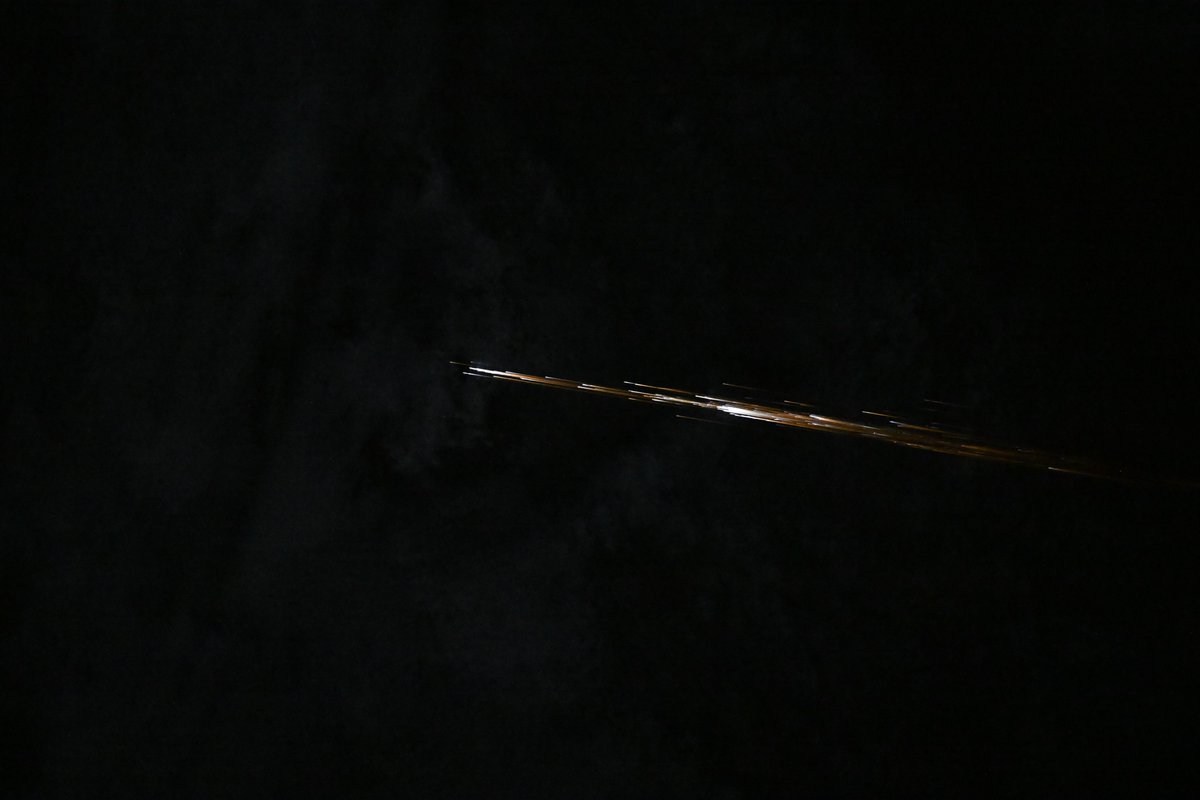
On April 27th at about 10:40 PM GMT, I was in the @Space_Station Cupola and saw something really neat. I was scanning the sky to try to catch a glimpse of the approaching Progress MS-34 vehicle bringing new supplies. Just as we were passing over West Africa, I saw a bright object directly below us, streaking through the upper atmosphere. I saw its tail grow and then split apart into a shower of smaller pieces. I think it must have been some piece of orbital debris or a satellite breaking up as it entered the atmosphere. It was quite a light show!
61
413
3,729
344,546
3.141592653589793 🖖 retweeted

Feb 4
you can outsource your thinking
but you cannot outsource your understanding
283
4,192
18,519
2,872,104
3.141592653589793 🖖 retweeted

Apr 30
Haha yeah I call it cozy coding :)
Usage: “This valentines, cozy code with someone you love”
88
47
2,328
134,024
3.141592653589793 🖖 retweeted

Apr 23
This is the beginning of something really big

Imagine every pixel on your screen, streamed live directly from a model. No HTML, no layout engine, no code. Just exactly what you want to see.
@eddiejiao_obj, @drewocarr and I built a prototype to see how this could actually work, and set out to make it real. We're calling it Flipbook. (1/5)
63
179
3,856
554,266

3.141592653589793 🖖 retweeted

Apr 4
🚨 do you understand what scientists just did to deafness..
researchers injected a modified harmless virus directly into the cochlea the spiral cavity in your inner ear.. carrying a working copy of a gene called OTOF.. the gene that transmits sound signals from your ear to your brain.. without it, your ear hears everything.. your brain receives nothing..
10 completely deaf patients.. single injection.. within weeks all 10 could hear.. 10 out of 10..
here's what nobody wants to say..
cochlear implants cost between $30,000 and $100,000 per patient.. hearing aids sell for up to $7,000.. the global hearing industry is worth over $9 billion a year.. every year.. recurring.. because deafness has never been cured.. just managed..
one injection ends all of that..
and in 2018 goldman sachs analysts literally wrote this in a report about gene therapy..
"curing patients is not a sustainable business model"
that's a goldman sachs equity research note.. sent to investors.. warning them that companies developing one-time cures were a risky bet because cured patients stop buying products..
the science to fix single broken genes has existed in research labs for years.. the same platform used here already cured a form of blindness in 2017.. cured spinal muscular atrophy in babies in 2019..
there are over 10,000 known single-gene disorders.. millions of people labelled "incurable"..
the platform exists.. the proof is 10 out of 10..
the question was never whether they could fix it..
it's whether fixing it was good for business.
Apr 4

BREAKING: An experimental gene therapy ear injection has cured deafness for 10 out of 10 patients in clinical trial.
Community note
The trial only treated patients with a rare genetic form of deafness caused by OTOF gene mutations (DFNB9), not all types of deafness, and improved hearing from profound (106 dB average) to moderate loss (52 dB average), not full restoration for all. nature.com/articles/s4159… sciencedaily.com/releases/2026/…
310
6,296
25,000
1,831,297
3.141592653589793 🖖 retweeted

Apr 3
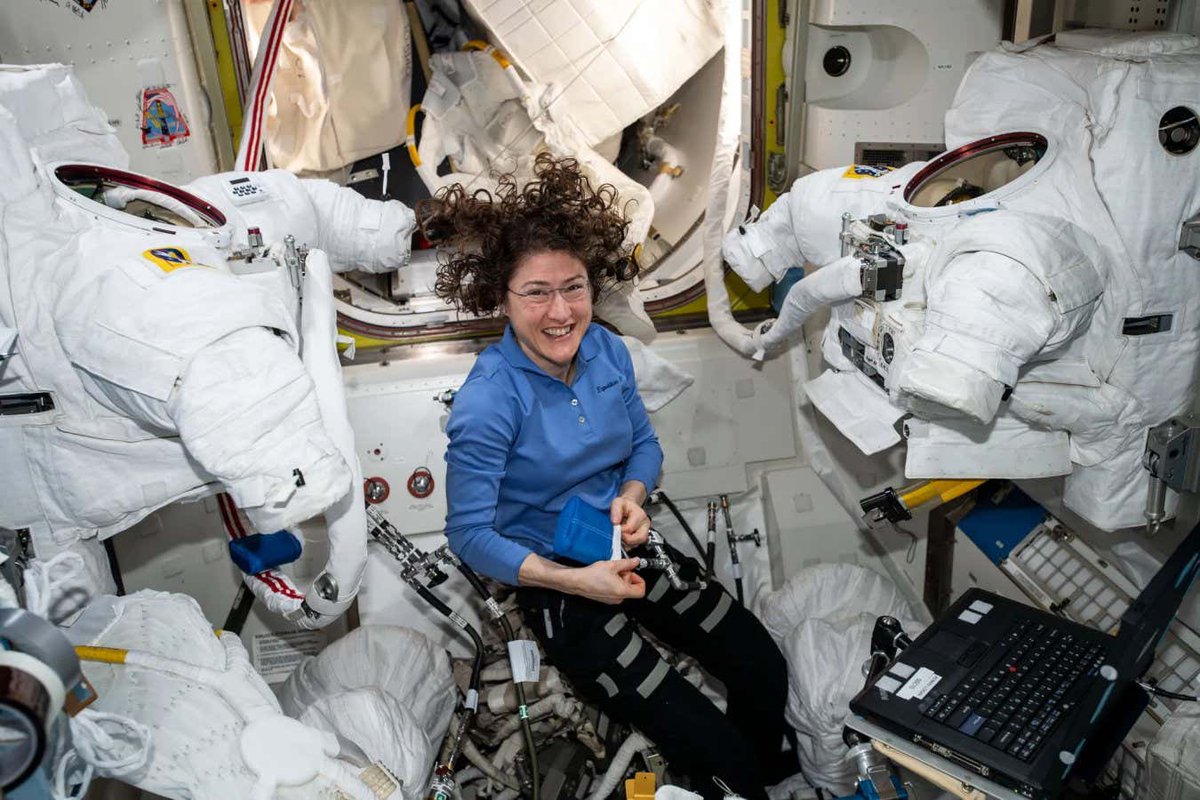
Christina Koch was a firefighter at the South Pole at -111°F before she ever applied to be an astronaut. That was maybe the fourth most interesting line on her resume. She grew up in North Carolina, got three degrees from NC State, and her first real job was building deep-space instruments at NASA.
Then she left for Antarctica. Spent three and a half years bouncing between the Arctic and Antarctic as a research scientist, including a full winter at the South Pole base. That means going months without sunlight or fresh food, with a crew of about 50 people and no way out until flights resume. While she was down there, she also joined the glacier search-and-rescue team.
After coming back, she went to Johns Hopkins and built instruments for two NASA missions (one of them is still orbiting Jupiter right now). She figured out how to start a tiny vacuum pump that NASA designed for a future Mars rover. Johns Hopkins nominated it for their Invention of the Year in 2009. Then she went back to the field. More time in Antarctica and a stretch up in Greenland. A government research station in northern Alaska, near the top of the world. Then she ran another one in American Samoa, near the equator.
In 2013, NASA selected her from 6,300 applicants. Eight people got in. Her first space mission was supposed to be a normal rotation on the International Space Station, but NASA extended it. She ended up staying 328 straight days and orbiting Earth 5,248 times, covering about 139 million miles (roughly 291 round trips to the Moon). Up there, she ran over 210 experiments, including tests of cancer drugs in zero gravity and 3D printers that can build structures close to human tissue. Six spacewalks, 42 hours floating outside the station. She learned Russian for the training. She flies supersonic jets.
Right now, Koch is on Artemis II, heading for a flyby behind the far side of the Moon. The crew launched on April 1 and is on track to travel about 252,000 miles from Earth, which would break the all-time human distance record of 248,655 miles set by Apollo 13 in 1970. That record has stood for 56 years, and it was set during a disaster that nearly killed the crew. Fred Haise, one of the Apollo 13 astronauts, is 92 now. He told Koch: "I heard you're going to break our record."
Nobody had left Earth's neighborhood since December 1972. Koch and her three crewmates are the first in 53 years, and they are coming home at about 25,000 mph. That is faster than any crewed spacecraft has ever come back through the atmosphere.

BREAKING🚨: Artemis II astronaut Christina Koch officially becomes the farthest any woman has ever traveled from Earth.
330
6,301
38,869
2,028,142
3.141592653589793 🖖 retweeted
Mar 18
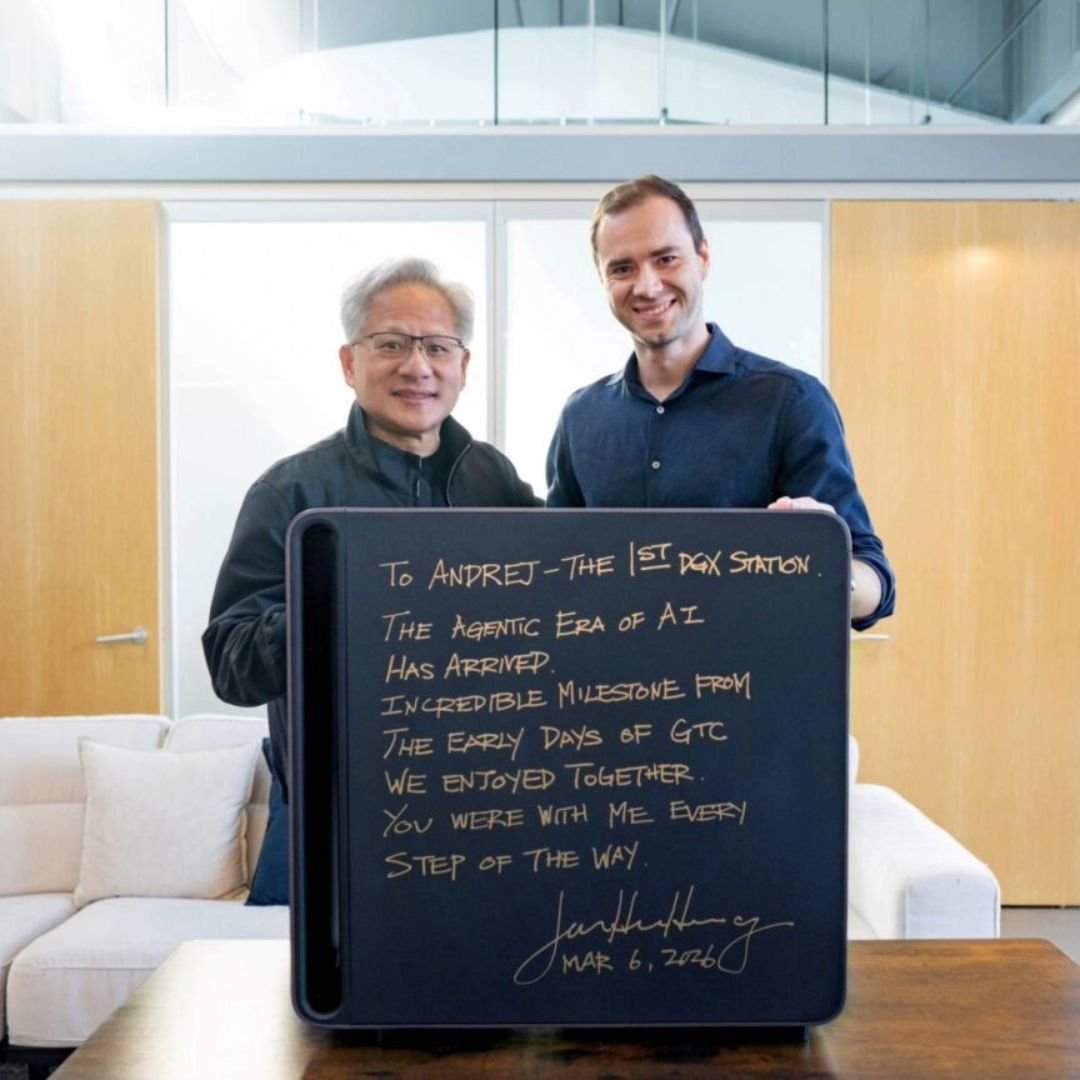
@karpathy received the first Dell Pro Max with GB300
42
54
1,002
23,699
3.141592653589793 🖖 retweeted
Mar 18
Thank you Jensen and NVIDIA! She’s a real beauty! I was told I’d be getting a secret gift, with a hint that it requires 20 amps. (So I knew it had to be good). She’ll make for a beautiful, spacious home for my Dobby the House Elf claw, among lots of other tinkering, thank you!!
Mar 18

🙌 Andrej Karpathy’s lab has received the first DGX Station GB300 -- a Dell Pro Max with GB300.
💚 We can't wait to see what you’ll create @karpathy!
🔗 blogs.nvidia.com/blog/gtc-20…
@DellTech
527
821
19,130
1,108,263
3.141592653589793 🖖 retweeted

Mar 14
This is a really interesting thread.
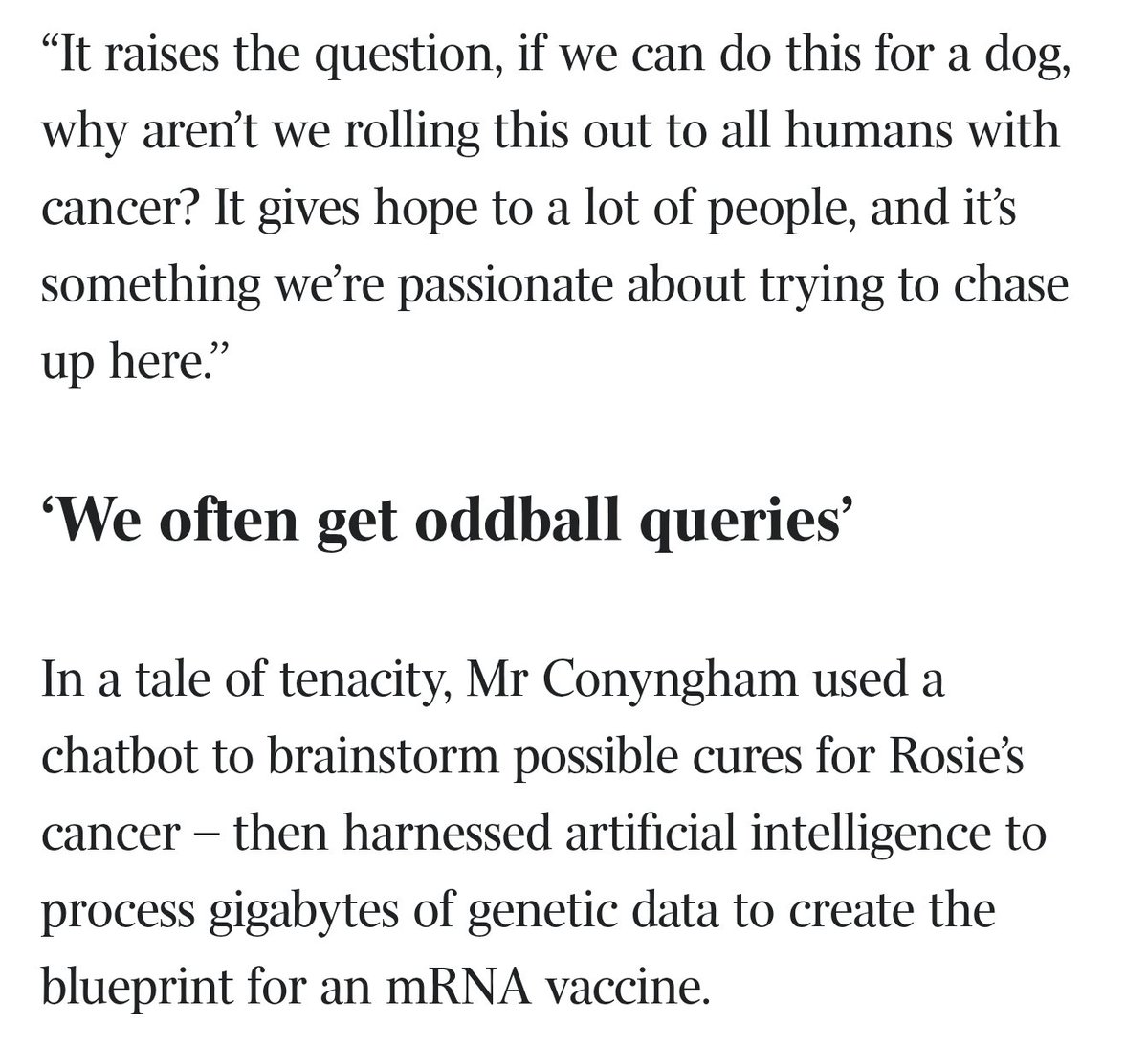
If we literally already have a cure for (some kinds of) cancer, but can't *prove* it's "safe and effective", should terminally ill patients have an option to use it anyway?
Mar 14

I literally have an ongoing cancer experiment where 100% of the untreated and control animals have had to be euthanized while 100% of the treatment animals are seemingly unaffected.
But we're still extremely far away from "proving that it works."
Science is hard.
101
48
1,173
110,373

3.141592653589793 🖖 retweeted

Mar 11
The creators of Barbie and Hot Wheels were husband and wife.


131
3,373
48,611
3,487,215