
Consumer Culture Researcher. Tweets politics, academia, TV, F1, books, random thoughts. ‘Liberal snowflake’. Podcast @consumptiontale (she/her)
Joined January 2008
- Tweets 24,213
- Following 851
- Followers 1,587
- Likes 64,152
1,202 Photos and videos








Pinned Tweet

2 Jan 2016
We all need a Lady Grantham in our lives - "You're a woman with a brain and reasonable ability. Stop whining and find something to do".
3
38

Dr Anuja Pradhan retweeted

Jun 15
INCREDIBLE ARABIC COMMENTARY ON LEWIS HAMILTON'S FINAL LAP TO THE WIN.
THIS IS POETRY. READ THE SUBTITLES!!
[video & translation by @landorablee]
259
3,593
20,571
712,236
Dr Anuja Pradhan retweeted

LEWIS HAMILTON’S FIRST VICTORY FOR FERRARI!! 🔥
1,406
33,175
121,727
1,691,037


Dr Anuja Pradhan retweeted

Jun 10
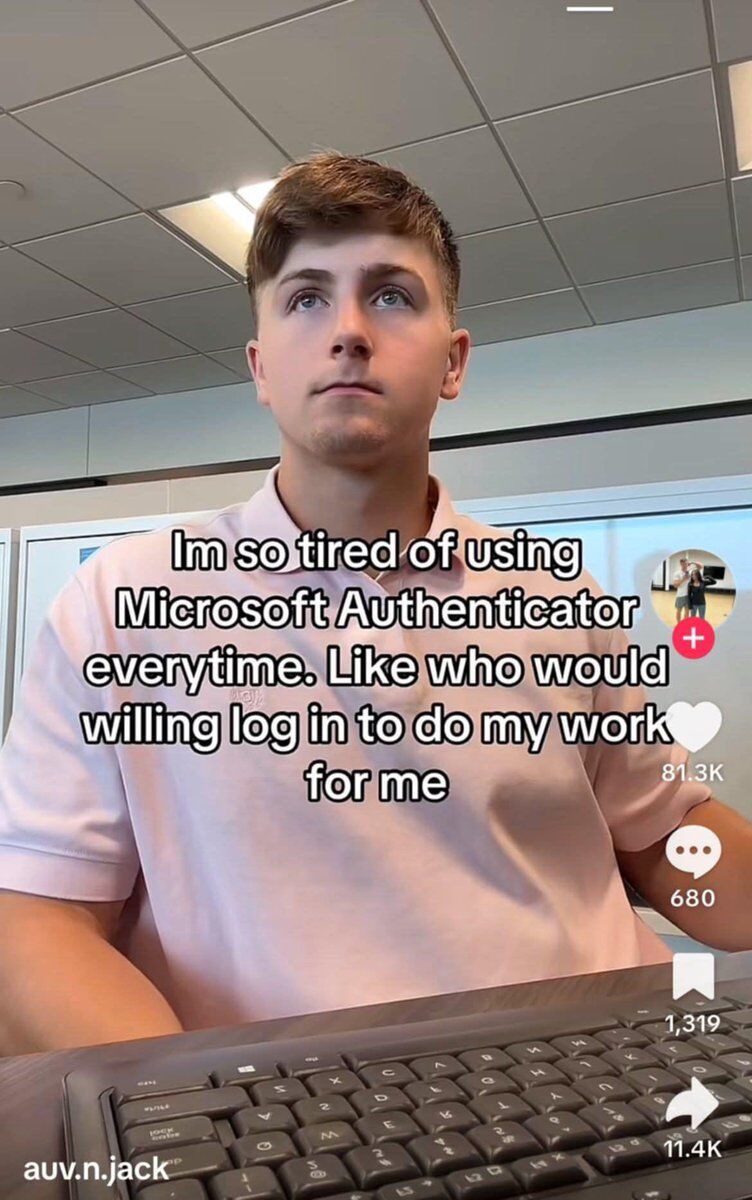
do i weird you out or have i weirded you in
66
11,908
58,914
1,092,487
Dr Anuja Pradhan retweeted

Jun 9
The feminine urge to look completely unbothered while going through a psychological collapse
70
17,094
64,102
935,950

GREAT WORK LADIES

Jun 8

The United Nations has reported an unprecedented decline in global fertility rates.
251
22,935
117,138
1,578,733
Dr Anuja Pradhan retweeted

Jun 6
george constanza summer (sandwiches, petty grievances, avoiding responsibility, pretzels, naps, lying)
34
1,795
11,228
281,891
Dr Anuja Pradhan retweeted

Jun 3
“We are told, with varying degrees of sociological certainty, that the Congress remains a “family firm” and that Rahul Gandhi lacks the “gravitas” and “curriculum vitae” required to unseat a formidable electoral machine.
This assessment, while satisfying to the purist, is not merely harsh: it is analytically flawed. It reduces the existential struggle for the soul of the Republic to a critique of the personal failings of a single individual, unwittingly validating the very playbook designed by Narendra Modi and Amit Shah.”
Five rejoinders: What Ramachandra Guha gets wrong about Rahul Gandhi scroll.in/article/1093272/fo… via @scroll_in
33
204
530
33,740
Dr Anuja Pradhan retweeted

1 Jun 2025
happy pride and prejudice or whatever you gay people say
108
20,017
109,355
2,000,921
Dr Anuja Pradhan retweeted

May 27
I hope the next trend is having critical thinking skills
28
7,449
23,924
340,348
Dr Anuja Pradhan retweeted

May 25
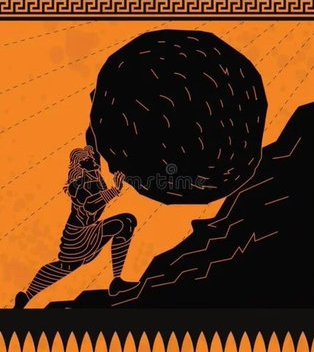
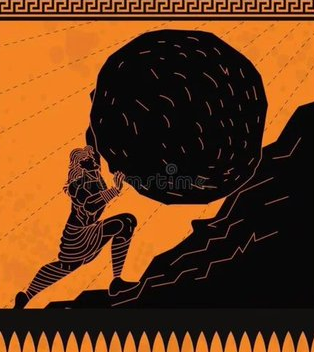
how it started how it's going
119
3,075
23,582
841,495
Dr Anuja Pradhan retweeted

May 25
no one could have foreseen that the butlerian jihad will be catholic

Pope Leo XIV on AI:
“Artificial intelligence needs to be disarmed. The word [disarmed] is strong I know, but deliberately chosen because this moment needs words capable of attracting attention, awakening consciences, and indicating paths forward for humanity.”

260
6,022
64,109
2,036,926
Dr Anuja Pradhan retweeted

May 20
Microdosing hell by being aware and literate
120
33,683
167,006
2,025,914
Dr Anuja Pradhan retweeted

May 19
Laptop students typed almost word for word, capturing more total content but processing almost none of it as they went, while the handwriting students physically could not write fast enough to transcribe a lecture in real time, forcing them to decide what actually matters…
May 18

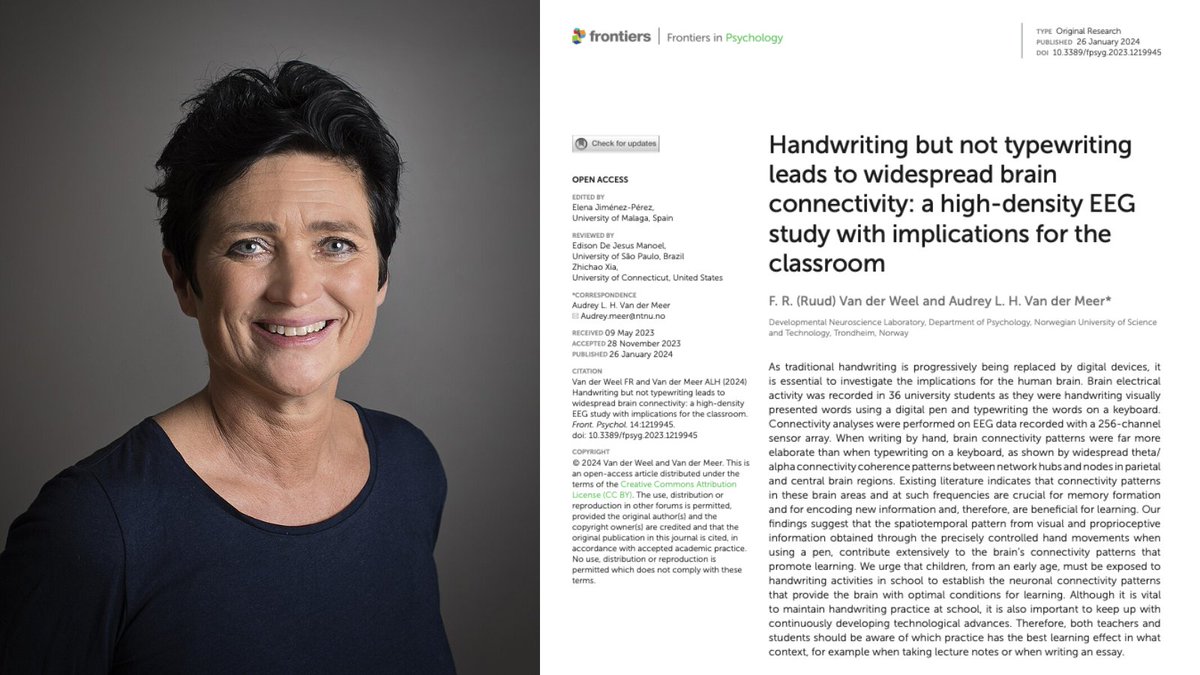
A Norwegian neuroscientist spent 20 years proving that the act of writing by hand changes the human brain in ways typing physically cannot, and almost nobody outside her field has read the paper.
Her name is Audrey van der Meer.
She runs a brain research lab in Trondheim, and the paper that closed the argument was published in 2024 in a journal called Frontiers in Psychology. The finding is brutal enough that it should have changed every classroom on Earth.
The experiment was simple. She recruited 36 university students and put each one in a cap with 256 sensors pressed against their scalp to record brain activity. Words flashed on a screen one at a time.
Sometimes the students wrote the word by hand on a touchscreen using a digital pen, and sometimes they typed the same word on a keyboard. Every neural response was recorded for the full five seconds the word stayed on screen.
Then her team looked at the part of the data most researchers had ignored for years, which is how different parts of the brain were communicating with each other during the task.
When the students wrote by hand, the brain lit up everywhere at once.
The regions responsible for memory, sensory integration, and the encoding of new information were all firing together in a coordinated pattern that spread across the entire cortex. The whole network was awake and connected.
When the same students typed the same word, that pattern collapsed almost completely.
Most of the brain went quiet, and the connections between regions that had been alive seconds earlier were nowhere to be found on the EEG.
Same word, same brain, same person, and two completely different neurological events.
The reason turned out to be something nobody had really paid attention to before her work. Writing by hand is not one motion but a sequence of thousands of tiny micro-movements coordinated with your eyes in real time, where each letter is a different shape that requires the brain to solve a slightly different spatial problem.
Your fingers, wrist, vision, and the parts of your brain that track position in space are all working together to produce one letter, then the next, then the next.
Typing throws all of that away. Every key on a keyboard requires the exact same finger motion regardless of which letter you are pressing, which means the brain has almost nothing to integrate and almost no problem to solve.
Van der Meer said it plainly in her interviews.
Pressing the same key with the same finger over and over does not stimulate the brain in any meaningful way, and she pointed out something that should scare every parent who handed their kid an iPad.
Children who learn to read and write on tablets often cannot tell letters like b and d apart, because they have never physically felt with their bodies what it takes to actually produce those letters on a page.
A decade before her, two researchers at Princeton ran the same fight using a completely different method and ended up at the same answer. Pam Mueller and Daniel Oppenheimer tested 327 students across three experiments, where half took notes on laptops with the internet disabled and half took notes by hand, before testing everyone on what they actually understood from the lectures they had watched.
The handwriting group won by a wide margin on every question that required real understanding rather than surface recall.
The reason was hiding in the transcripts of what the two groups had actually written down.
The laptop students typed almost word for word, capturing more total content but processing almost none of it as they went, while the handwriting students physically could not write fast enough to transcribe a lecture in real time, which forced them to listen carefully, decide what actually mattered, and put it in their own words on the page.
That single act of choosing what to keep was the learning itself, and the keyboard had quietly skipped the choosing and skipped the learning along with it.
Two studies. Two countries. Same answer.
Handwriting makes the brain work. Typing lets it coast.
Every note you have ever typed instead of written went into your brain through a thinner pipe. Every meeting, every book highlight, every idea you captured on your phone instead of on paper was processed at half depth.
You did not forget those things because your memory is bad. You forgot them because typing never woke the part of the brain that would have made them stick.
The fix is the thing your grandmother already knew.
Pick up a pen. Write the thing down. The slower road is the faster one.
125
2,974
39,302
1,646,791
May 20
I wrote about Lewis Hamilton's thirst trap curse for @CSJcelebstudies Read it here before the curse strikes you doi.org/10.1080/19392397.202…
17

Dr Anuja Pradhan retweeted

it's gonna be a post-structuralist summer
13
390
1,846
58,051