
CTO & co-Founder @QORIS_AI • building the secure harness for enterprise AI agents // Claude Certified Architect • 1x Acquired
Joined December 2024
- Tweets 1,158
- Following 411
- Followers 737
- Likes 29,919
140 Photos and videos





Arthur Katcher retweeted

Jun 13
JUST IN: Andrej Karpathy, a top AI scientist at Anthropic, is reportedly barred from accessing the company’s most advanced AI model because he is not a U.S. citizen.


809
1,769
23,081
2,141,075

Jun 13
I just got the biggest news of my life. Literally, it’s life changing, and nothing will ever be the same for me. Thanks, God.
2
45
Arthur Katcher retweeted

Jun 12
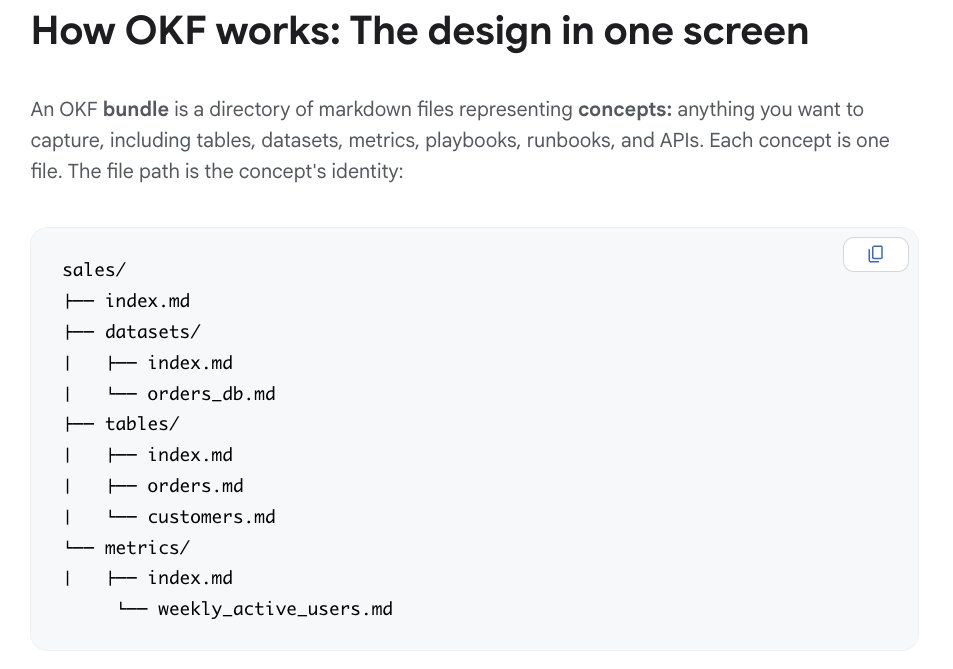
This is really big news. Google introduced the Open Knowledge Format (OKF) - a standardized way to store information in a directory of markdown files. Makes it really easy to make a digital brain that agents can use.
These files can serve as a living wiki. You can give agents the ability to query them or edit them. They can interlink.
Seems to me this could replace Notion or Obsidian. I can think of so many uses for this.
Google's blog post: cloud.google.com/blog/produc…
An easier to understand explanation is the SPEC.md file:
github.com/GoogleCloudPlatfo…
I gave those two links to Antigravity and asked how we could use it for any of the projects we're working on. It came up with so many ideas. I would imagine Claude Fable 5 would whip up some pretty amazing things based on this system.
Currently creating an OKF library of our pepper garden. It's going to be a fun weekend.
166
810
6,644
960,579
Arthur Katcher retweeted

Jun 13
The US government, citing national security authorities, has issued an export control directive to suspend all access to Fable 5 and Mythos 5 by any foreign national, whether inside or outside the United States, including foreign national Anthropic employees.
The net effect of this order is that we must abruptly disable Fable 5 and Mythos 5 for all our customers to ensure compliance.
Access to all other Claude models is not affected.
We apologize for this disruption to our customers. We believe this is a misunderstanding and are working to restore access as soon as possible.
Read our full statement: anthropic.com/news/fable-myt…
12,437
25,719
87,650
88,737,410
Jun 11
Let's go!!!
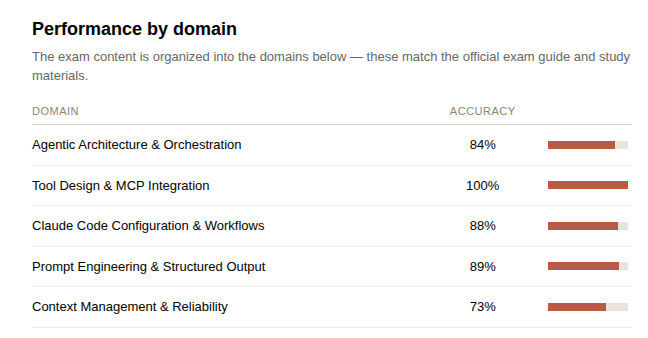
just passed the Claude Certified Architect - Foundations exam with a score 889/1000
spent ~10 days preparing for the thing. Went through all the mock exams and catalogues of questions - the number of resources on the web is just incredible.
What is important to know:
- don't bother taking the official prep exam. The questions there are deviating too much from the actual format and might confuse you more.
- take as much mock exams as you can. Find them on the web and reddit.
- the model of the exam questions: There is a production scenario X. Module Y in that scenario does not work. Pick the right fix.
- questions are not about the theory, they are about how you can actually navigate production ai deployments. The best teacher - your DIY experience in deploying and building.
- Don't overstudy, be in the flow and just vibe pass it when you're 80-90% confident in your readiness.
- Learn CI/CD pipelines, that's the part that got to me the most.
The exam is thorough but very much passable. All the luck to the others who are going through the preparation, my DMs're always open for any questions

3
1
93
Jun 10
Loops is the new way to manage agents, manual prompting is the olden days now.

2
111

Arthur Katcher retweeted

Jun 5
i'm obsessed with AI DIY projects.
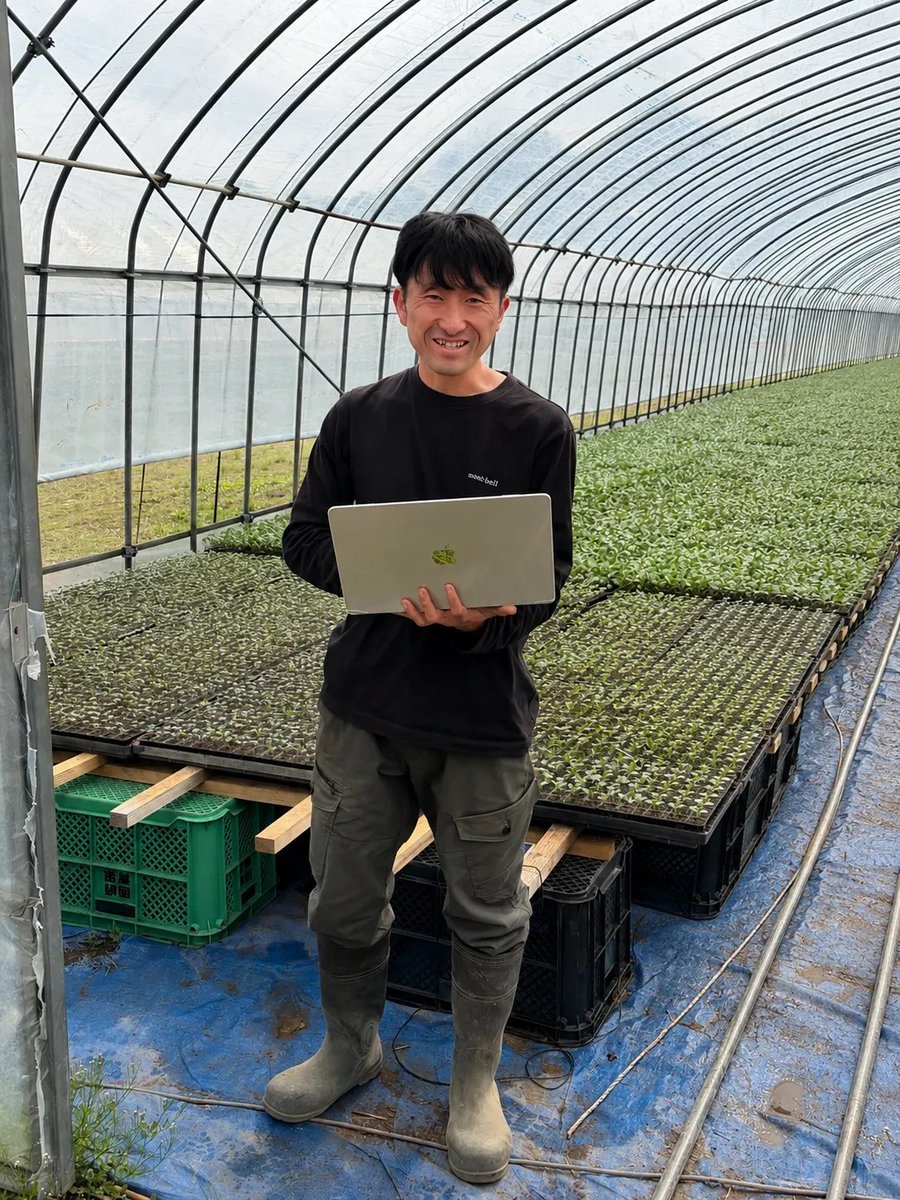
my favorite one right now is this broccoli farmer in hokkaido, japan using Codex to run his 100-hectare farm
this guy never studied agriculture, never inherited land, started out as a civil servant.
but he wanted his farm to run better, and instead of paying an engineering firm he couldn't afford, he just built the tools himself.
here's what he's built on his own:
> remote control of his greenhouse vents from a chat app, wired up with an esp32 board, a motor driver, and cloudflare workers
> a bot that checks each greenhouse's temperature and opens the vents when it gets too hot
> satellite crop-health data laid over a map of his own fields
> an airtable base linking his plots, tasks, materials, and sensors
> wiring diagrams of his electrical panels, generated from a photo
stuff like this used to be locked behind machinery and engineers only the big agribusinesses could pay for.
but this legend just breezed past all of it with a laptop and Codex lol
158
474
5,009
822,461

We're still writing code like it's 2013: no latent space, no intelligence. When there is intelligence we gate the agents like workers at a Foxconn factory.
The future of software is just-in-time and is 10x less code because of the markdown.
And the agents will be free.

83
61
775
147,687
Arthur Katcher retweeted

Jun 2
We’ve added a CLI for Claude Platform to make every API endpoint runnable from your terminal.
Call the Messages API, stand up Claude Managed Agents, pipe results straight into your shell.
The ant CLI is well understood by coding agents (Claude Code) using the claude-api skill.
229
554
7,029
1,196,836
Arthur Katcher retweeted

Jun 1
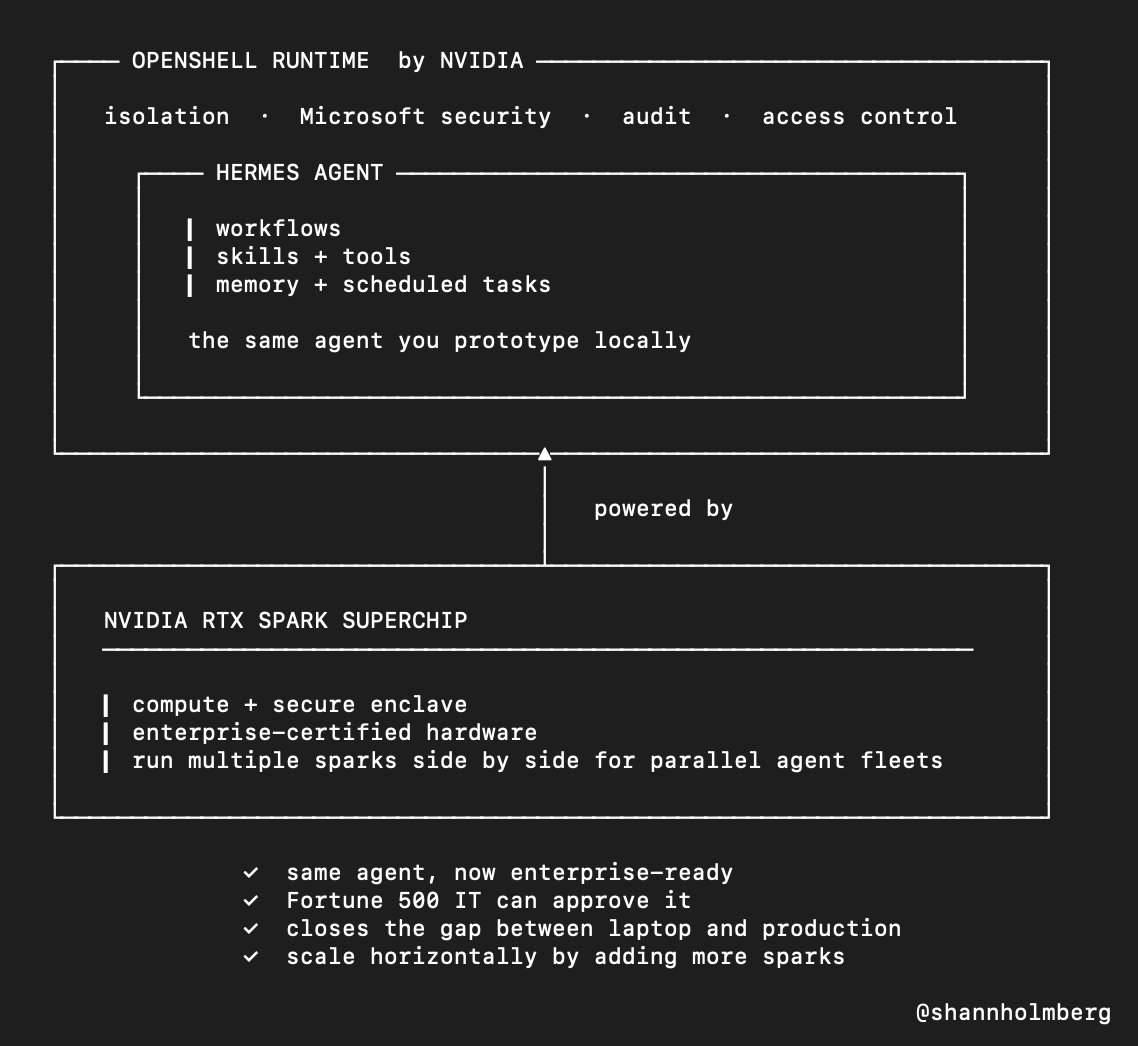
is Hermes Agent ready for enterprises?
NVIDIA built OpenShell, a runtime that wraps AI agents in the security IT teams need before they let anything touch sensitive systems. it plugs directly into Microsoft's enterprise security stack. Hermes Agent now runs inside it.
what this changes for marketers building with agents:
> the marketing agents you've been prototyping can now go to Fortune 500 clients
> the security review that used to kill the deal is handled at the runtime layer
> the same Hermes setup that runs on your laptop can run inside any enterprise IT environment
> you do not have to rebuild your workflow for each client's compliance requirements
I deploy vertical marketing agents for growth teams and the biggest blocker on enterprise work has always been "your AI stack is amazing but our IT won't let us touch it."
that's the wall coming down.
for AI marketing infra builders, this opens enterprise marketing budgets. for in-house teams at enterprises, it's the green light to deploy Hermes agents.
Jun 1

We have been working closely with @nvidia to ensure Hermes Agent works smoothly on their new @NVIDIARTXSpark superchip and integrates with the new OpenShell runtime, which connects Hermes to @Microsoft's security primitives.
Watch our feature in the big announcement at Computex:
32
50
525
57,618
Arthur Katcher retweeted

Jun 1
how to build anything rn:
- get a hetzner, do, or hostinger vps
- host hermes on it
- add gbrain or implement your own memory vault using qmd sql
- set up hermes with codex auth -> gpt-5.5 / no reasoning / fast mode
- install orca on your macbook and phone with tailscale to have a nice ide to work on both
- before starting any work, ask hermes to conduct deep research on the subject and save it to gbrain as source material for the project
- use the `/grill-me` skill or a similar prompt to uncover as many unknowns as possible. save results to memory too
- define/write clear evals for every project to determine whether a run was successful
- have hermes iterate over the project until all evals pass, saving all learnings to the vault along the way
- whenever it gets stuck, use memory a new research or `/grill-me` session to unblock it
rinse and repeat until the work is done. pay attention to the process. develop a feeling for how long tasks should take and do not be afraid to stop a model mid session to ask for status and why it's taking so long.
72
182
3,251
176,972
Arthur Katcher retweeted

Jun 1
Introducing Surface Laptop Ultra.
Built for world makers. Designed for what's next.
The most powerful Surface laptop ever. Coming Fall 2026.
Sign up to learn more: msft.it/6019vw79T
568
1,340
11,673
11,500,209
Arthur Katcher retweeted

Jun 1
This is effectively the #1 problem for AI agents in the enterprise.
As we go from agentic coding (where a large amount of context is in the code base, and users are technical enough to get the rest to the agent easily) to a world of knowledge work agents, the context problem becomes much more acute.
We see this every day with customers at Box. For existing digital knowledge, it’s often fragmented across legacy systems or environments that don’t play nice with agents, and have access controls that don’t map to the real work that needs to be done, which become a huge hurdle for getting agents the context they need. This has to all get moved to modern, secure cloud environments.
But also, companies often haven’t captured and digitized some of the critical context that agents need to work with. Decisions, processes, and workflows often live in people’s heads and tribal knowledge that need to get turned into unstructured data for agents.
This is actually one of the biggest points of leverage for applied AI companies, because they can work to specialize in getting agents exactly the information and domain expertise they need. But it’s also one of the reasons why FDEs and new system integrator plays will also work so well right now.
The companies that figure this out will be able to get the most out of AI going forward.
May 30

Imagine replacing 90% of your employees with a team of geniuses who have no idea how your company operates.
Total chaos. Nothing works.
That’s what AI feels like today.
The missing piece is extracting all the domain knowledge from people’s heads and providing that as structured context to the models.
124
101
760
185,776
Arthur Katcher retweeted

May 30
After 40 forward deployed engineering (FDE) engagements, we learned the hardest part of building AI agents and tools is Context Extraction.
FDE sounds like an engineering role. It's actually 3 jobs in one:
• Consulting - where in the business to build
• Product - what to build
• Engineering - how to build
Coding is the easy part now thanks to Claude Code, @cursor_ai, and other coding agents.
The hard part is everything before the code.
Extracting context from clients who have it scattered across people and tools. And creating context when it doesn't exist at all.
Then using that context to figure out what to build, and work with AI on architecture and development plans.
FDEs turn the chaos and unknowns within every company into shipped AI applications.
That's why every major AI company is building an FDE arm. OpenAI and Anthropic recently raised $5.5B for theirs. Cursor and others have several open FDE job listings.
But their returns won't come from service revenue. They'll come from tokens and subscriptions. Service revenue doesn't matter to VCs, only tech revenue does because it's more scalable.
Here's how FDEs make coding agent companies trillion dollar companies:
Cursor and Claude Code are currently focused primarily on the professional engineer market.
But the total addressable market (TAM) for coding agents is infinite because almost every job benefits from code. It just used to be too expensive.
FDEs are the bridge from the technical market to the non-technical market, which is far larger.
Every coding agent and LLM company will eventually automate and productize their FDE teams though.
So we decided to replace ourselves before someone else does:
• Voice agents run discovery interviews to find problems, map workflows, and extract expertise to train agents on
• Cloud agents build prototypes, make demo videos, and collect feedback
• Consultant sub-agent prioritizes AI use cases by business impact vs engineering effort
The next most valuable problem for coding agent and LLM companies to solve is figuring out where to build, what to build, and how to build.
Context is the solution. So if you can figure out how to extract and create context, you can make a ton of money.
Coding agents can take it from there.
195
83
1,026
128,253
May 29
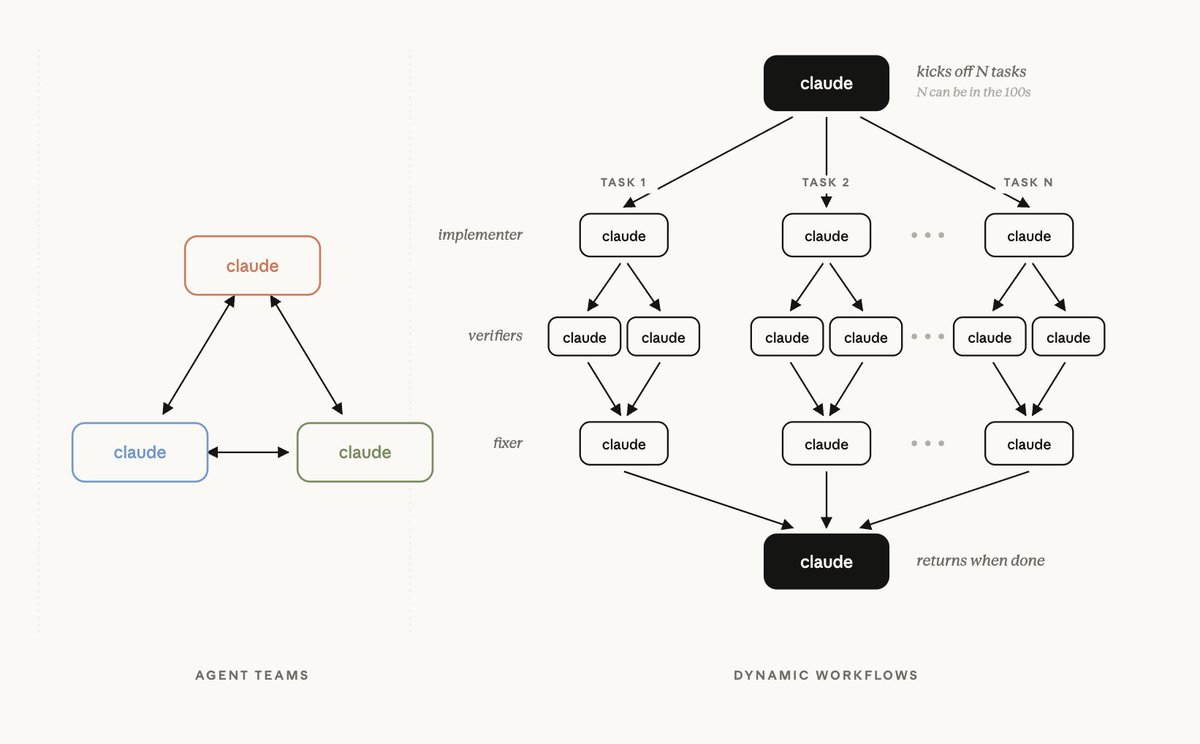
Anthropic just dropped Dynamic Workflows, and it is their most important release of the year.
Here’s why it will change everything:
Before this drop, typical workflow looked like this:
> input
> subagents launched
> you wait
> subagents returned
> result is ok, but not great and took so much time
In this workflow you are the project manager. But Dynamic Workflows flip the entire model.
Instead you define a massive goal, and now Claude becomes the PM itself.
So now the workflow looks like this:
> input huge goal
> Claude develops the master plan
> hundreds of sub-agents launched in parallel
> sub-agents cross-check and challenge each other’s work
> you return to one final, validated result
This is revolutionary. Think of it like manufacturing:
You aren't standing at a workbench handing a craftsman a wrench anymore. You are uploading a blueprint to a fully automated Gigafactory.
You hit "Start," walk away, and the factory spins up a thousand assembly lines, runs its own quality control, and parks a finished fleet on the lot by morning.
This fundamentally alters the math on projects that were previously deemed "too heavy" for AI
Someone already ported a sprawling, 750,000-line codebase to a completely different language. It ran continuously, autonomously, and finished in under two weeks with a 99.8% test pass rate.
But take into account - this will burn through your tokens like oh my god
So you better only authorize a Dynamic Workflow if the mission meets three strict criteria:
1. It is a Goliath: The scope is physically impossible to contain in a standard chat window.
2. It is highly fragmented: The work can be cleanly shattered into hundreds of independent tracks.
3 It has binary success metrics: The definition of "done" is mathematical (e.g., "0 errors," "100% test coverage").
The Catch: Operating a Gigafactory isn't cheap. This will absolutely incinerate your token limits.
Do not spin up an autonomous workforce to draft an email.
We just crossed the threshold from interacting with chatbots to commanding digital workforces.
Adjust your strategy accordingly.

Excited to share our most powerful new Claude Code feature: dynamic workflows!
Mention "workflow" in a prompt and Claude will dynamically create an orchestration plan that it strictly follows, allowing you to confidently trust that every stage happens in the right order even across 100s of agents.
2
122
May 27
Agents can't search X as well as web.
So I made a small open-source Skill that lets Claude Code and Codex search X through Hermes.
You just need a Premium X subscription, and it handles the boring part:
- check if Hermes is installed
- check xAI/Grok auth
- teach the agent how to search X properly
Now your agents have full access to the X feed in any harness.
Also distributed as a plugin. Repo:
github.com/arthurkatcher/x-s…
2
2
186