Thinker. Writer. Jew. Runner. Lover (not a fighter) Seeker of Wisdom and Inspiration. ״If I claim to be a wise man, it surely means that I don’t know”
Joined July 2009
- Tweets 3,164
- Following 1,318
- Followers 361
- Likes 1,612
50 Photos and videos








Mar 31
well put
Mar 30

The argument is: the people widely identified by Jewish people as antisemitic are NOT antisemitic.
Instead, Jews either
A) don’t understand antisemitism as well as the people accused of it
or
B) are collectively acting in bad faith to smear innocent people.
Antiracism 2026.
69
Avi Heller retweeted

I say this as gently as I know how, because it seems to me unforgivably obvious.
You cannot simultaneously build a strong international law system while also hating the West. International law is a Western idea born of a particular Western historical, cultural and political experience.
And because God loves irony, no one exemplifies this fact more than the evil regime whose travails since yesterday have sparked so much legalistic hand-wringing.
Both Khamenei himself and his teacher and predecessor Khomeini consistently and explicitly rejected international law as a tool of "global arrogance" (estekbar-e jahani) — i.e., of powerful secularist, individualistic democracies. Khamenei was even more explicit, routinely declaring legal frameworks like UN conventions as "colonial" traps.
These declarations weren’t marginal to their ideology. They were fundamental planks of the regime’s political theology.
I’ll say this, again, as gently as I can: The fact that international law and international institutions have transformed in practice into a system that more often than not runs defense for the most virulent and explicit enemies of said law might have something to do with their decline as an organizing framework of international affairs.
For example, when UN agencies and international institutions target Israel more than Iran, or more than China, Iran and Russia put together, or more than all the dictatorships and wars in the world combined — they’re doing more harm to the law than to Israel.
Similarly, it matters that so many of international law’s loudest spokespeople had nothing to say about Khamenei’s crimes just six weeks ago, but swung into action only when Khamenei’s long reign of terror was finally brought to an end.
That’s not law. It’s the opposite of law.
International law can be saved, but only if its scholars and practitioners grow up and shed the instinctive anti-Westernism and racist paternalism of the present-day academy. When international law is no longer seen by its own practitioners primarily as an instrument for containing, weakening and delegitimizing the West, but becomes genuinely about actual law, it will once again have a claim on us.
If you fail to see in Khamenei the bitter foe of international law that he was, if in the midst of your legitimate critique of a war you can’t summon at least a little joy that this avowed enemy of your purported moral system is dead and gone, then you haven’t actually been fighting for international law.

What we are seeing is the disintegration of the last remnants of the international rules-based order and the precarious dawn of a new era of might-is-right in international affairs. You might start the clock with Russia's invasion of Ukraine, or even earlier with the US war in Iraq, but the fact remains that the UN has lately proven itself both incompetent and irrelevant. Make no mistake, this is a troubling state of affairs- the world would be a more perilous place in the absence of international law. But to carry on as though this is not the case, to rail against the violation of international law which this war undoubtedly is and not to mention the fact that these same international laws and norms did not prevent the slaughter of 30,000 innocent Iranians just 6 weeks earlier, nor stop the regime from terrorising its people and others in the region for decades... at best you a misdiagnosing the problem. At worst you are complicit in it.
136
1,320
5,331
611,997
Avi Heller retweeted

30 Dec 2025
330
1,358
5,304
137,517
25 Aug 2025
This seems like the most honorable thing they could do under the circumstances. I would hope there will also be some financial support for families and the wounded.
25 Aug 2025

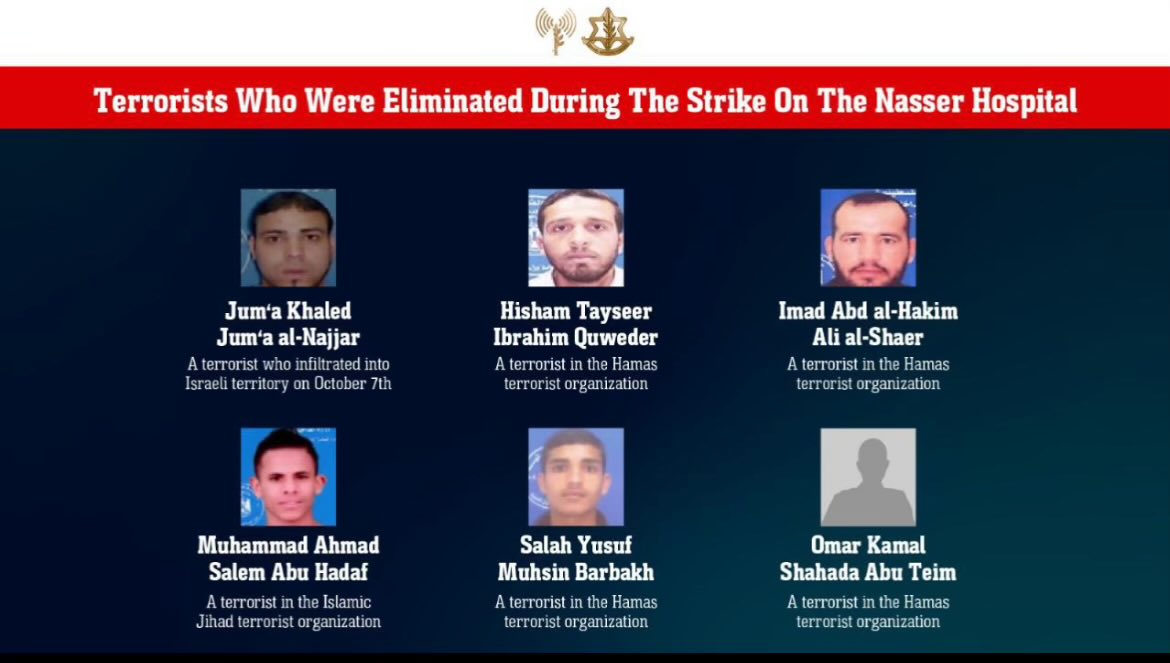
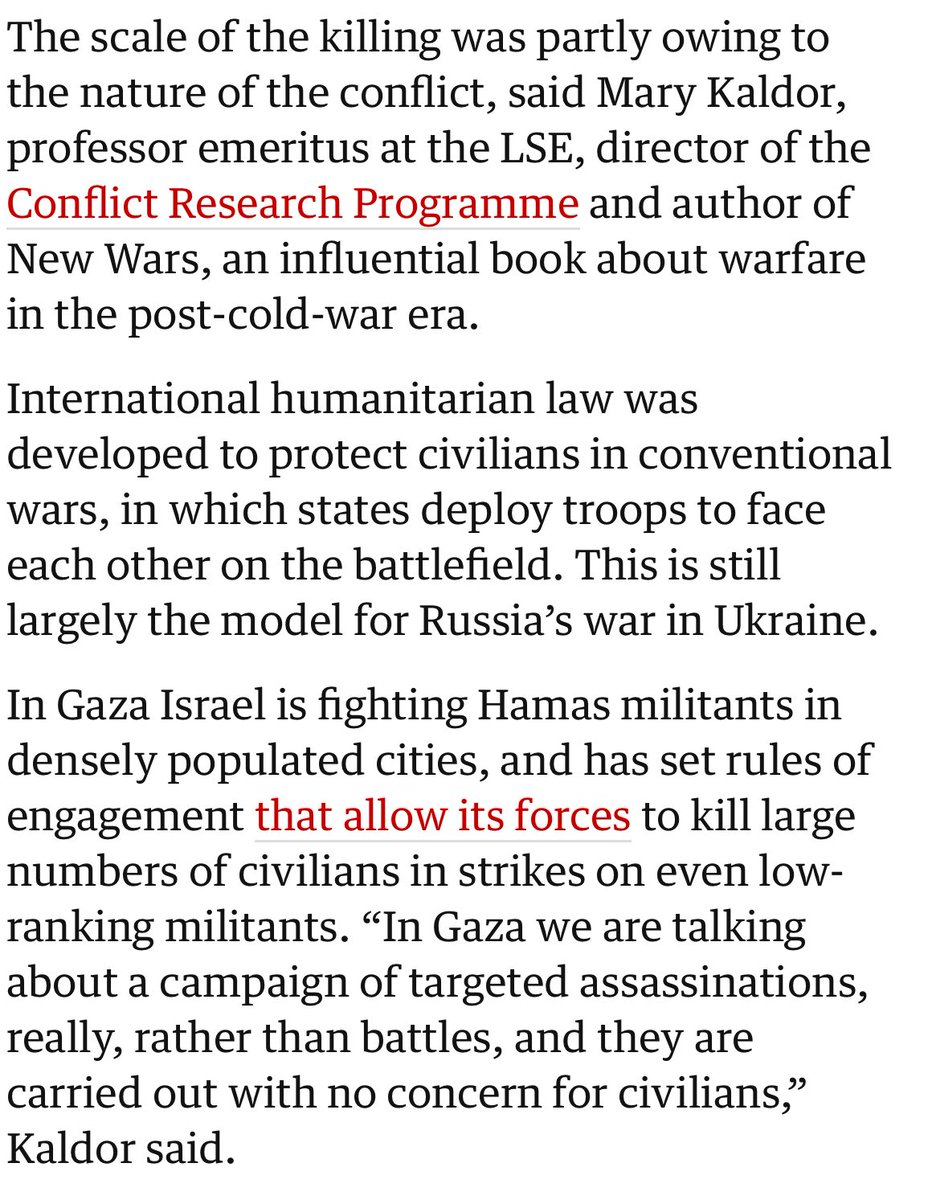
In a statement earlier by the Spokesman for the Israel Defense Force, Brig. Gen. Effie Defrin, the IDF claims responsibility for a series of strikes earlier today on the Nasser Hospital in Khan Yunis, which resulted in the death of roughly two dozen civilians, including a number of journalists and rescue workers who were killed in an apparent “double tap” on the hospital by the Israeli Air Force.
Attached is the full transcript of the statement:
“Earlier today, IDF troops carried out a strike in the area of Nasser Hospital in Khan Younis. We are aware of reports that harm was caused to civilians, including journalists. I would like to be clear from the start - the IDF does not intentionally target civilians. The IDF makes every effort to mitigate harm to civilians, while ensuring the safety of our troops. Any incident that raises concern in this regard is addressed by the relevant mechanisms in the IDF.”
“We are operating in an extremely complex reality. Hamas terrorists deliberately use civilian infrastructure, including hospitals, as shields. They have even operated from the Nasser hospital itself. Hamas began this war, created impossible fighting conditions — and is preventing its end by still holding
50 hostages.”
“Having said that, as a professional military, committed to international law, we are obligated to investigate our operations thoroughly and professionally. The Chief of the General Staff has instructed that an inquiry be conducted immediately — to understand the circumstances of what happened and how it happened. Reporting from an active warzone carries immense risk, especially in a war with a terrorist organization such as Hamas, who cynically hides behind the civilian population. As always, we will present our findings as transparently as possible. We regret any harm to uninvolved individuals and are committed to continue fighting Hamas, while taking all the necessary precautions.”
107
Avi Heller retweeted

6 Aug 2025
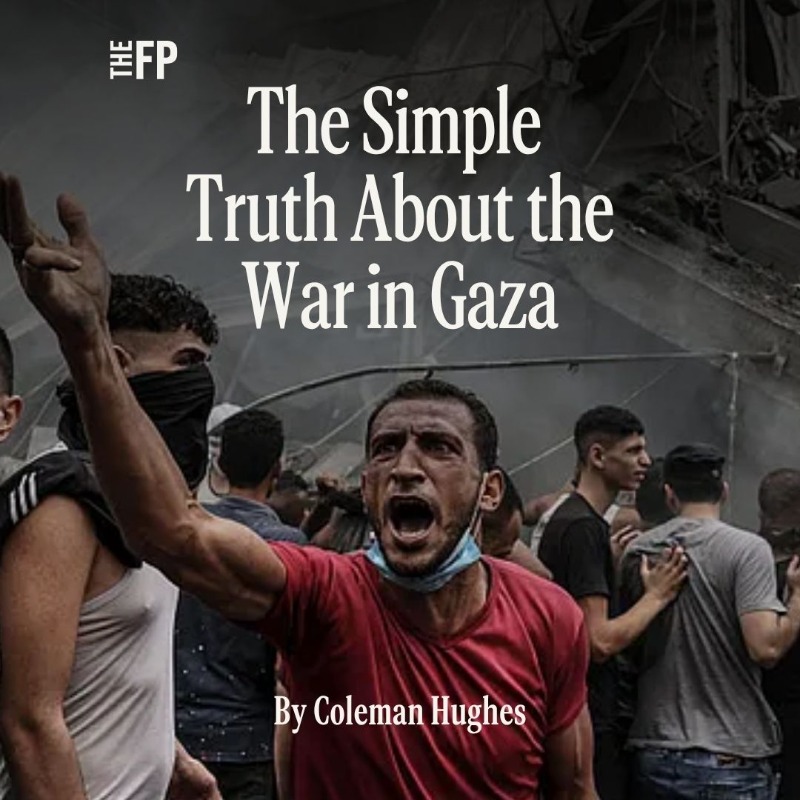
“The pipeline that’s feeding you information about the humanitarian disaster in Gaza is fundamentally broken, biased, untrustworthy, and weaponized against Israel.”
—@Coldxman
59
212
993
165,872
Avi Heller retweeted

14 Aug 2025
One of the most striking features of contemporary antizionism is not just the vehemence of its claims, but the remarkable silence surrounding its own history. For a movement so concerned with historical narratives, it remains intent on suppressing and whitewashing the genealogies of its own rhetoric—genealogies that run directly through Nazi propaganda, Soviet political warfare, and Islamist rejectionism. This is not a coincidence. It is a deliberate strategy, and understanding it is key to understanding what antizionism really is.
Concrete examples abound, though rarely acknowledged. The Grand Mufti of Jerusalem, Haj Amin al-Husseini, met with Hitler, collaborated with the SS, and broadcast pro-Nazi, antisemitic radio propaganda to the Arab world. His ideological heirs include the Muslim Brotherhood, whose fusion of political Islam and antisemitism laid the groundwork for groups like Hamas—whose founding charter cites The Protocols of the Elders of Zion. After World War II, prominent Nazi propagandist Johann von Leers fled to Cairo, converted to Islam, and helped establish a center dedicated to antizionist agitation, blending Nazi conspiracies with Islamist thought. The Protocols and similar texts circulated widely among Islamist and pan-Arabist groups, forming a foundation for postwar antizionist ideology.
Meanwhile, Soviet “Zionology” systematically recast Jews and Zionists as global conspirators. As Izabella Tabarovsky has shown, this project did not emerge from critique but from the recycling of Russian pogromist literature, now repackaged as “anti-imperialist” analysis. The slogans that have since become staples of contemporary discourse—“Zionism is racism,” “Zionist apartheid,” “Zionist imperialism”—were forged in this ideological crucible, drawing directly on antisemitic themes cloaked in the language of progressivism. This convergence reached a global audience at the 2001 Durban Conference, where antisemitic tropes were paraded as human rights discourse and have since deeply shaped the rhetoric of NGOs, academic institutions, and international organizations.
Antizionist discourse remains remarkably intent on avoiding any serious reckoning with these origins. And we should ask ourselves why that is. If antizionism were truly a Jewish position, aimed at improving the condition of the Jewish people or speaking from authentic Jewish values, why would it require ignoring—or even whitewashing—its own antisemitic history? In what sense is that a Jewish value? On what basis, then, does it claim to speak in the name of Jewish ethics? And even if one reduced Jewish values to a universal opposition to all forms of discrimination, suppressing knowledge of antizionism’s antisemitic origins would hardly be consistent with that principle.
If we are serious about history and genealogy, then let us speak honestly about antizionism—and what it has really been about. And let’s not confuse it with Jewish anti-Zionism before the Holocaust, which was an internal debate about the future of the Jewish people—not an assault on the very roots of our peoplehood. The suppression of this history is no accident. It is a necessary condition for antizionism’s continued claim to moral authority—and it is precisely that claim which must be brought into the light.
@_ZachFoster
42
177
712
34,007
Avi Heller retweeted

14 Aug 2025
🔴 Want to know what really happens at Gaza aid sites from someone who spent weeks securing them?
I’ve returned from a third tour in Gaza, and here’s my experience of what really goes on at SDS that is missing from the conversation👇
356
2,963
10,163
1,235,407
Avi Heller retweeted
6 May 2025
How lazy journalism, bad data, and skewed statistics fueled accusations of war crimes against Israel. thefp.com/p/the-gaza-famine-…
129
276
887
228,696
Avi Heller retweeted

7 Nov 2024
In 2020 I was one of 7 dems that won a district that Trump won, so I held a series of listening sessions with people who voted for Trump and voted for me to understand their actions. I reread the transcripts yesterday and much of it felt like it could have been said today. THREAD

522
5,286
49,389
5,840,981
6 Nov 2024
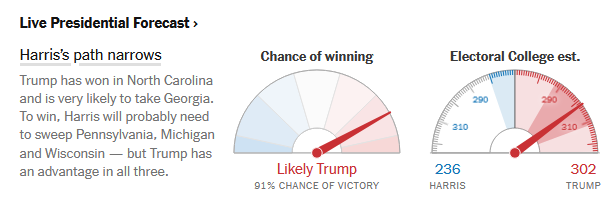
I just want to applaud Kamala Harris for running the best campaign she could. Her ambition put her in a risky position with the possibility of greatness. Her dramatic failure is the cost of taking big risks. I never liked her much but Irespec t her hustle.
204
6 Nov 2024
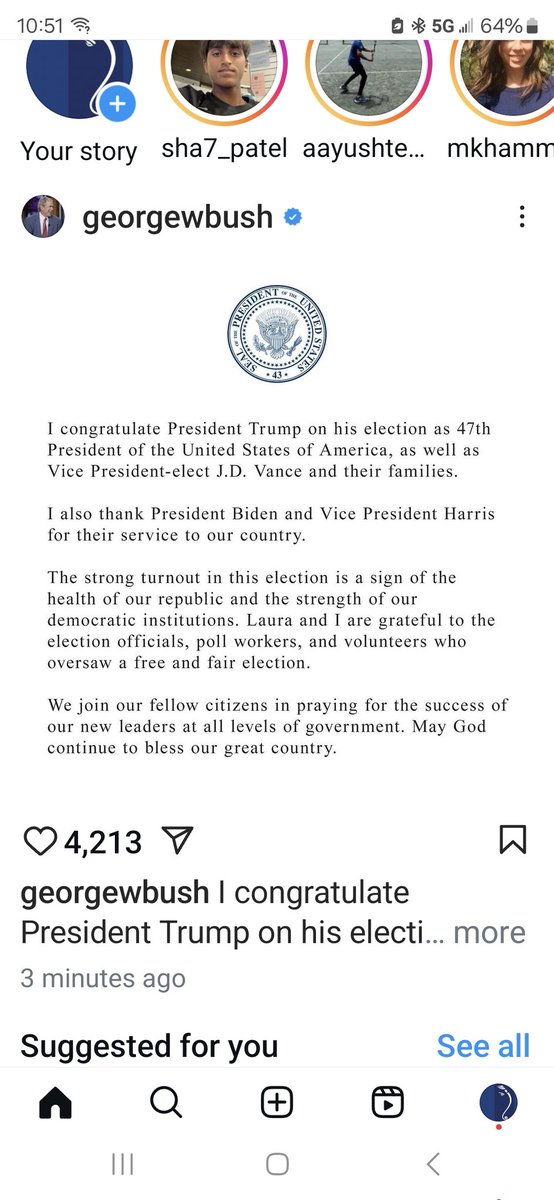
This is a perfect letter
6 Nov 2024

195
6 Nov 2024
very thoughtful
6 Nov 2024

It may be too early for an election retrospective. It's still election night, and technically things haven't been called. It's a good time to speak candidly, though:
There is not a single moment this election that I felt heard or represented by Kamala Harris. Not one.
But—people, and especially leftists, will say—you're a centrist! she ran to the center, did she not? spoke of unity, focused on fundamentals, stayed disciplined? And I confess: she did. But let's consider the nature of that "running to the center": well-oiled, precisely tuned gears of the Machine, turning and calculating that to win the vote, they needed to present as Normal.
Not that they were ever wrong. Not that any of their priorities were mistaken, that they had ever seriously overstepped, that they needed any serious re-examination. Just that they needed to slow-walk things, to be calm, to rely on running against Trump and repeating platitudes to waltz into the presidency.
"What will you do differently from Joe Biden?" A bold answer from Kamala: I'm not him, and I'm not Trump. Great. "What are we to make of your positions during the 2020 primary?" Well, it's not 2019 anymore, is it? "Did you ever, even once, go too far?" A laugh and a charming slice-of-life quip.
The Democrats tried to run an election on vibes alone. Kamala is brat. Kamala is normal. Kamala is all things to all people. Kamala is with the good guys and against the bad guys, with the good things and against the bad things, and shouldn't that be enough?
Look, I've been adamantly against Trump from the day he entered the national scene. I have never wavered on that. But I spend my time and my energy writing, shouting, begging someone to listen that people do not trust the Machine, and they do not trust it for good reason. Young, educated professionals are far to the left of the average American, and they are the ones in control of every institution. Institutions systematically represent their views, treating them as natural and everyone else as aberrant.
I'm on the fringes of that group, right-wing by young, educated professional standards, dead center by the standards of the country. And it's frustrating, alienating on a deep level, to go to law school and watch prison abolitionists and Hamas supporters and people who want to tear gifted education down treated as sane and normal and Respectable while knowing that if I don't voice perspectives sympathetic to the majority of the country, nobody will voice them at all.
Kamala Harris never represented me. The Democrats never signaled to me that they heard and understood my voice and voices like mine, only that they wanted to pull the right levers and press the right buttons and twist the right knobs to convince that mystical creature, the Centrist, that they were on their side.
I don't know what will happen under what looks to be four more years of Trump. I don't think it will be as dire as the worst predictions, and hope it won't be, but I remain now as ever wholly convinced that he is temperamentally unfit to be President and the country is a more volatile and uncertain place with him in charge.
But what I hope is this: the Democrats don't take this moment to lament to themselves how everyone fell victim to misinformation and imagined grievances, that they were fine and good and the people were the problem, that their problem is they were simply not pure-Left enough. Now is the time for recognition that they fundamentally, wholly failed to understand and reach the frustrated center. They have four years to get serious about doing so.
1
137
6 Nov 2024
This is fantastic. ⬇️
6 Nov 2024

For my British and European friends who are "shocked" and "surprised", here are 10 reasons you didn't see this coming.
Read this short post and then read the replies from our American friends who will confirm what I'm saying.
1. Americans love their country and want it to be the best in the world. America is a nation of people who conquered a continent. They love strength. They love winning. Any leader who appeals to that has an automatic advantage.
2. Unlike Europeans, Americans have not accepted managed decline. They don't have Net Zero here, they believe in producing their own energy and making it as cheap as possible because they know that their prosperity depends on it.
3. Prices for most basic goods in the US have increased rapidly and are sky high. What the official statistics say about inflation and the reality of people's lives are not the same.
4. Unlike you, Americans do not believe in socialism. They believe in meritocracy. They don't care about the super rich being super rich because they know that they live in a country where being super rich is available to anyone with the talent and drive to make it. They don't resent success, they celebrate it.
5. Americans are the most pro-immigration people in the world. Read that again. Seriously, read it again. Americans love an immigrant success story. They want more talented immigrants to come to America. But they refuse to accept people coming illegally. They believe in having a border.
6. Americans are sensitive about racial issues and their country's imperfect history. They believe that those who are disadvantaged by the circumstances of their birth should be given the opportunity to succeed. What they reject, however, is the idea that in order to address the errors of the past new errors must be made. DEI is racist. They know it and they reject it precisely because they are not racist.
7. Americans are the most philosemitic nation on earth. October 7 and the pro-Hamas left's reaction shocked them to their very core because, among other things, they remember what 9/11 was like and they know jihad when they see it.
8. Americans are extremely practical people. They care about what works, not what sounds good. In Europe, we produce great writers and intellectuals. In America they produce (and attract) great engineers, businessmen and investors. Because of this, they care less about Trump's rhetoric than you do and more about his policies than you do.
9. Americans are deeply optimistic people. They hate negativity. The woke view of American history as a series of evils for which they must eternally apologise is utterly abhorrent to them. They believe in moving forward together, not endlessly obsessing about the past.
10. America is a country whose founding story is one of resistance to government overreach. They loathe unnecessary restrictions, regulations and control. They understand that freedom comes with the price of self-reliance and they pay it gladly.
81
Avi Heller retweeted

28 Oct 2024
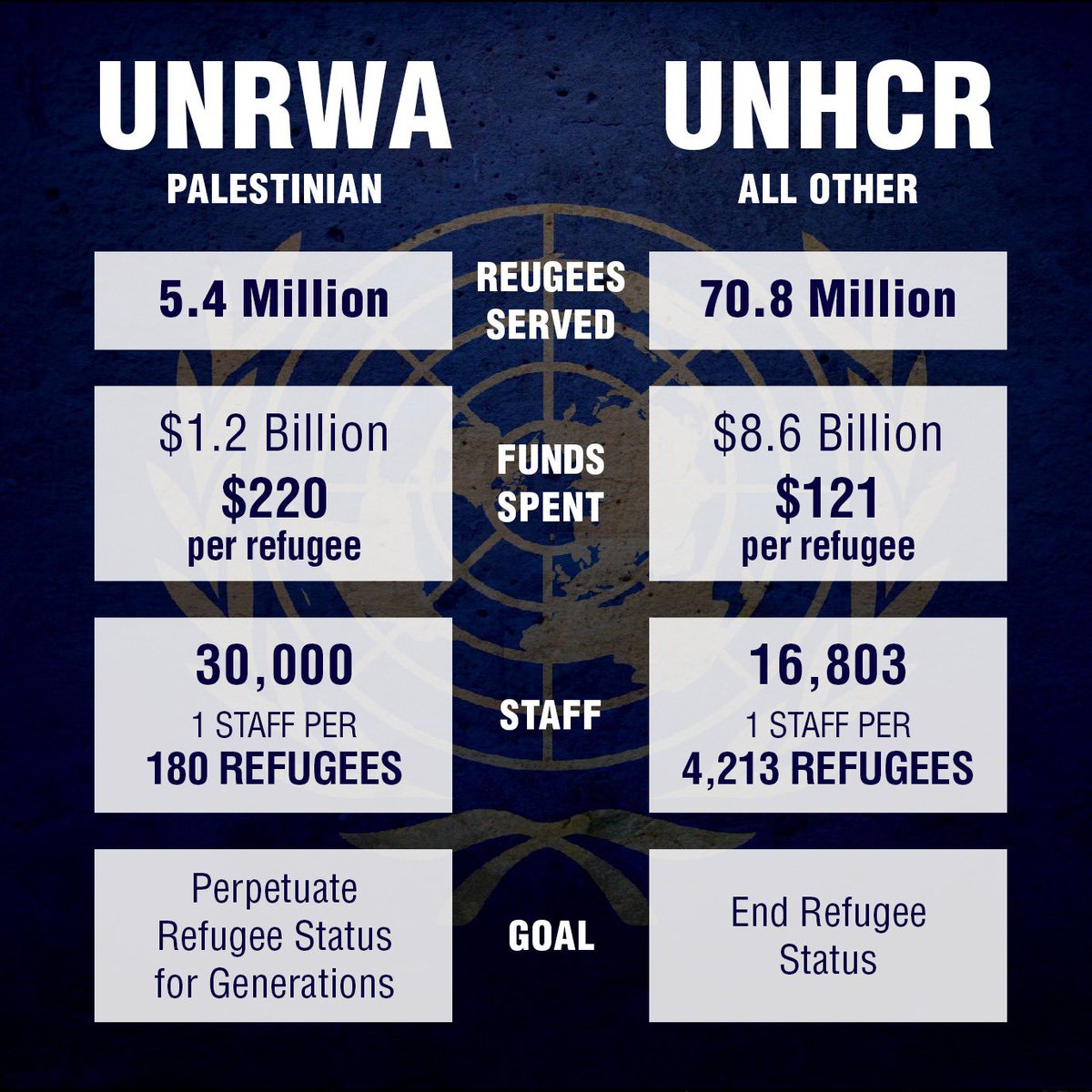
UNRWA knowingly employed terrorists who took part in the October 7 Massacre. There must be consequences. It cannot be treated as a normal UN agency.
242
843
4,546
62,497
29 Oct 2024
I and many many other Jews do and have supported a palestinian state for decades; Israeljust needs a partner who will work to create a non terrorist state.
29 Oct 2024

The fact that I want an official Palestinian 🇵🇸 state for my people doesn’t mean I need to lie and claim that Israel 🇮🇱 is a genocidal apartheid state.
Self-determination and lies should not be tied together.
✌️
124

Avi Heller retweeted

29 Oct 2024
You end your tweet with the sentence, “there is no alternative to UNRWA,” and my question is—why not?
If the issue is providing humanitarian assistance, there are other UN agencies for this very purpose, such as the World Food Programme, World Health Organization, UNICEF and others. Could it be that the humanitarian issue is just an excuse? Is the real objective something else: the notion of Palestinian “forever-refugees”?
According to the U.N., 711,000 Palestinians were displaced in 1948—some fled, and some were forcefully expelled. At the same time, as Israel was established, 800,000 Jews were driven from the Arab world, leaving it nearly empty of its Jewish communities. But this was not an isolated instance of forced displacement in the last two centuries.
From 1821 to 1922, 5 million Muslims were expelled from Europe, mostly to Turkey. In the 1990s, Yugoslavia broke apart, leading to the death of 100,000 people and the displacement of 3 million. Between 1919 and 1949, during the Visla operation between Poland and Ukraine, 150,000 people lost their lives, and 1.5 million were displaced. After World War II, the Potsdam Convention resulted in the displacement of 12-17 million Germans. When India and Pakistan were established, 15 million people were forced to leave their homes. And more recently, 2.2 million Christians were expelled from Iraq, while 1.1 million Kurds were displaced by the Ottomans.
Most of these populations, facing nearly nonexistent chances to return, adapted, rebuilt, and moved forward. And while the U.N. has a single agency, the UNHCR, to help refugees worldwide integrate and move forward, another agency, UNRWA, exists only for Palestinians—created, it seems, to preserve a perpetual state of refugee status, rather than end it.
Mr. Secretary General, don’t you believe the Palestinian people deserve better? My own family consists of UNRWA refugees, who fled Jaffa for Lebanon in 1948. Yet today, my relatives in Canada have Canadian citizenship and represent their country proudly in sports championships, while my family in Lebanon is denied basic rights. My family members in Israel have become doctors, engineers, teachers, and diplomats, while my cousin in a Gulf country, a third-generation refugee, can only dream of citizenship.
Imagine a future where Palestinians are not bound by the label of “refugee” but are recognized as equal citizens with the freedom to pursue their aspirations. By moving beyond UNRWA, we open the door to true independence—where Palestinians can create, build, and thrive as part of a broader global community. This isn’t about denying history; it’s about giving Palestinians the chance to shape a new story, one defined by dignity, progress, and empowerment, not dependency. Let’s aspire to a future where support does not lock them into refugee camps but invests in real opportunities, integration, and hope.
Mr. Secretary General—you have a choice: continue to shackle Palestinians to the past by sustaining UNRWA, or liberate them from the identity of “forever-refugees” by ending UNRWA. The future of countless lives rests on this choice. Which path will you choose?
29 Oct 2024

If implemented, the laws adopted today by the Knesset of Israel would likely prevent @UNRWA from continuing its essential work in the Occupied Palestinian Territory, with devastating consequences for Palestine refugees.
I call on Israel to act consistently with its obligations under the Charter of the @UN & international law. National legislation cannot alter those obligations.
I am bringing this matter to the attention of the UN General Assembly, and will keep the Assembly closely informed as the situation develops.
There is no alternative to UNRWA.
67
425
1,606
208,509