
Joined August 2010
- Tweets 4,011
- Following 1,311
- Followers 135
- Likes 10,489
194 Photos and videos
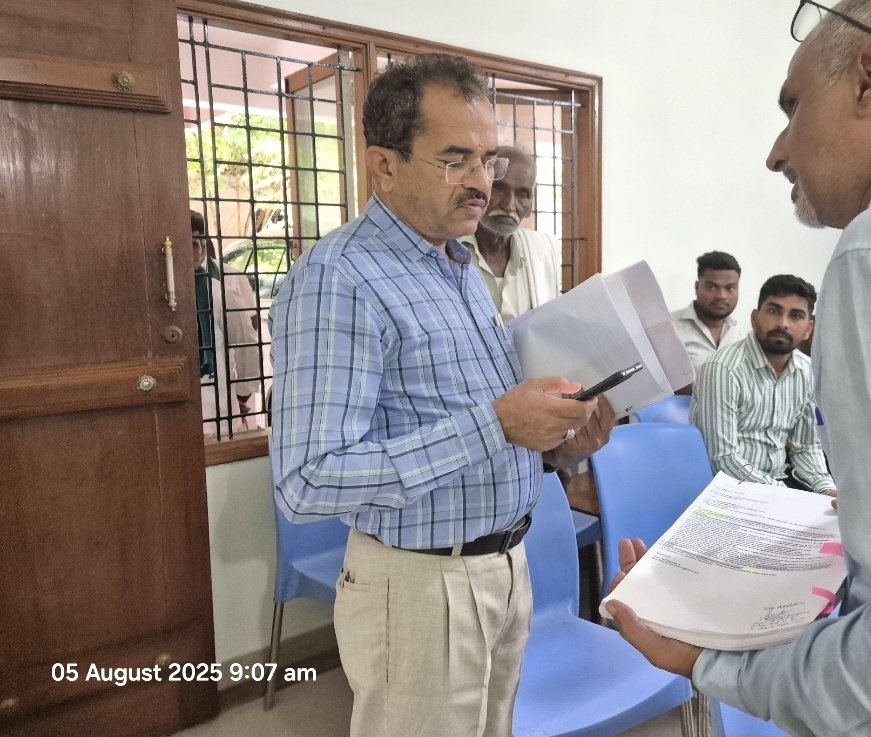
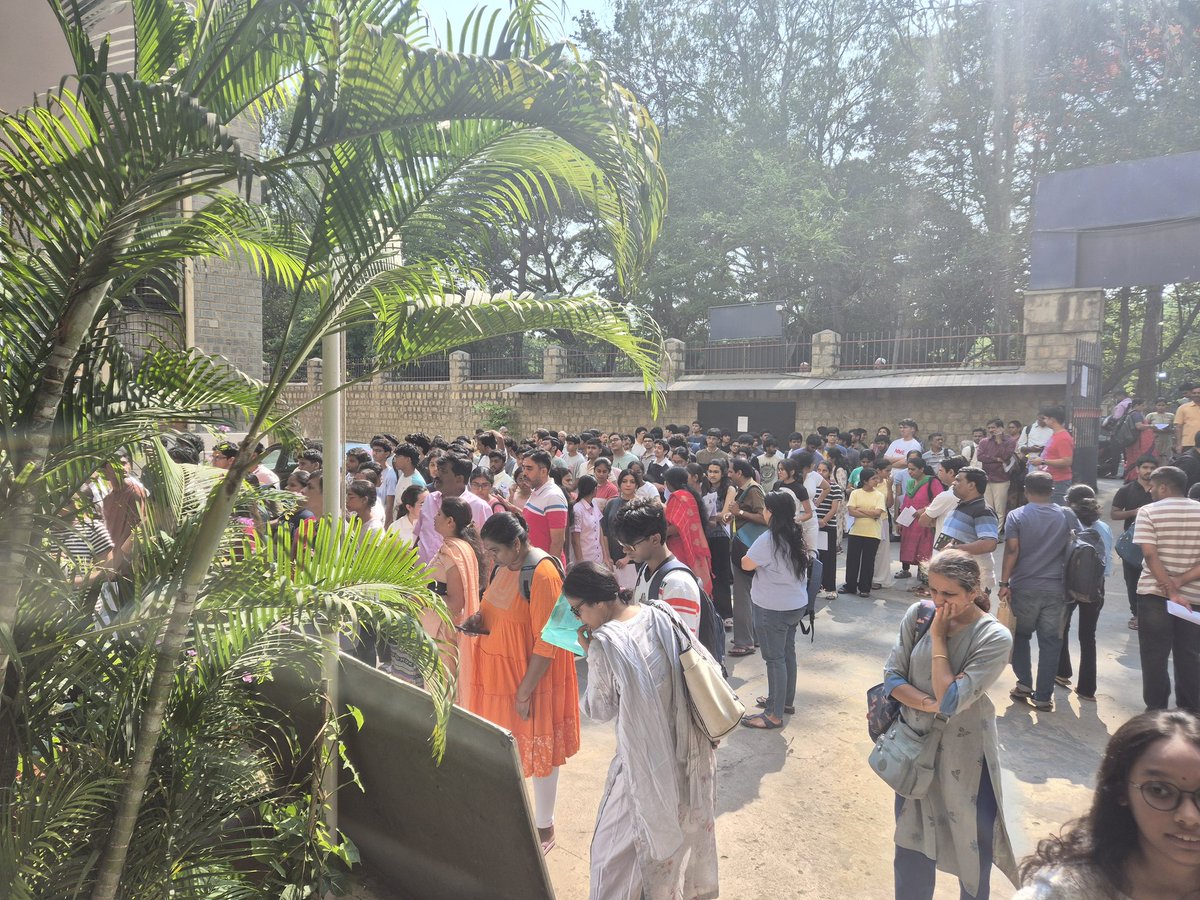






This proposa by Shri KBG is a meaningful request - return to the Revenue portfolio which he has built nurtured for 3 years. And is yet-to-complete a few unfinished tasks.
His role can become a model for transformation of governance for any state.
varthabharati.in/state/krish…

Shir KBG is a new age politician. He's broking every rigid barrier for citizen convenience. He has released clots from the circulatory system of Govt of Karnataka.
Have personally benefited from automatic Encumbrance of litigation property and smooth Pouthi Khatha Transfer
23
Shir KBG is a new age politician. He's broking every rigid barrier for citizen convenience. He has released clots from the circulatory system of Govt of Karnataka.
Have personally benefited from automatic Encumbrance of litigation property and smooth Pouthi Khatha Transfer

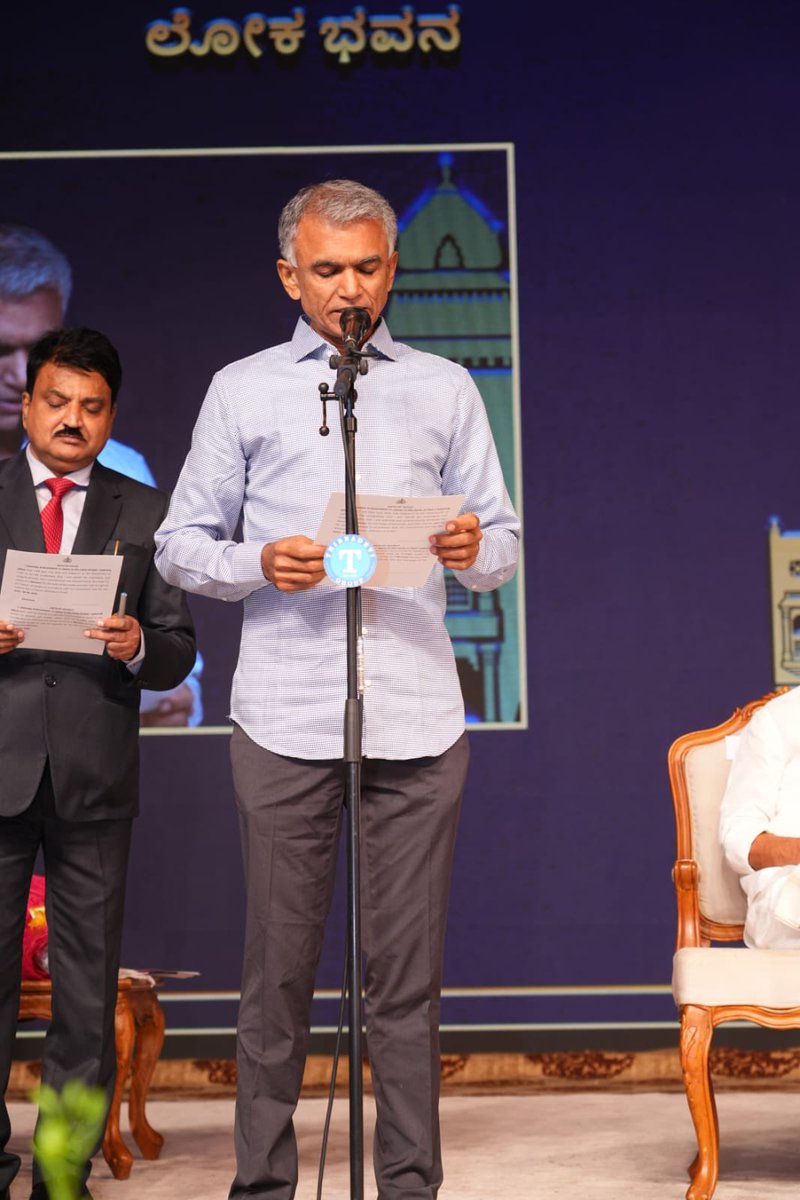
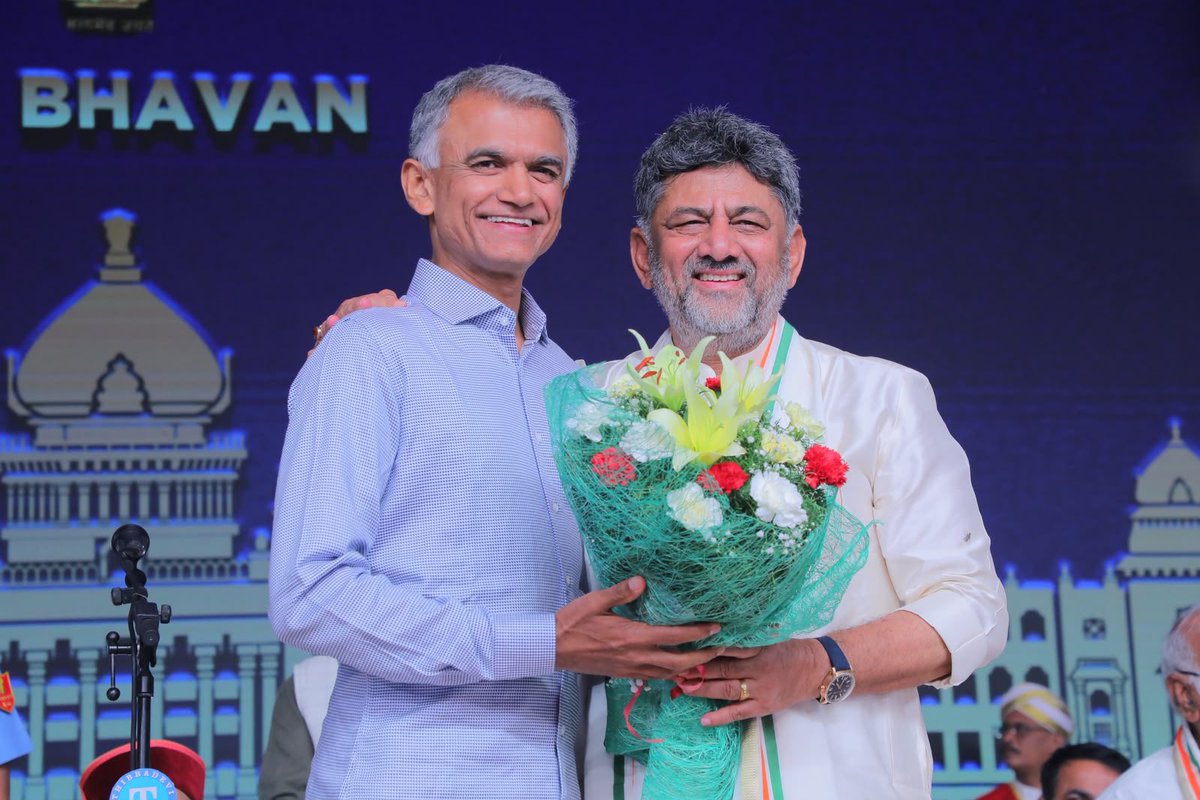
After taking oath at Lok Bhavan, #Karnataka minister Krishna Byre Gowda chose to walk to Vidhana Soudha for the Cabinet meeting instead of adding to #Bengaluru’s traffic woes.
A small gesture that stood out on a day of high-profile movement across the city.
@timesofindia
1
2
136
Avinash Namadhari retweeted

Jun 3
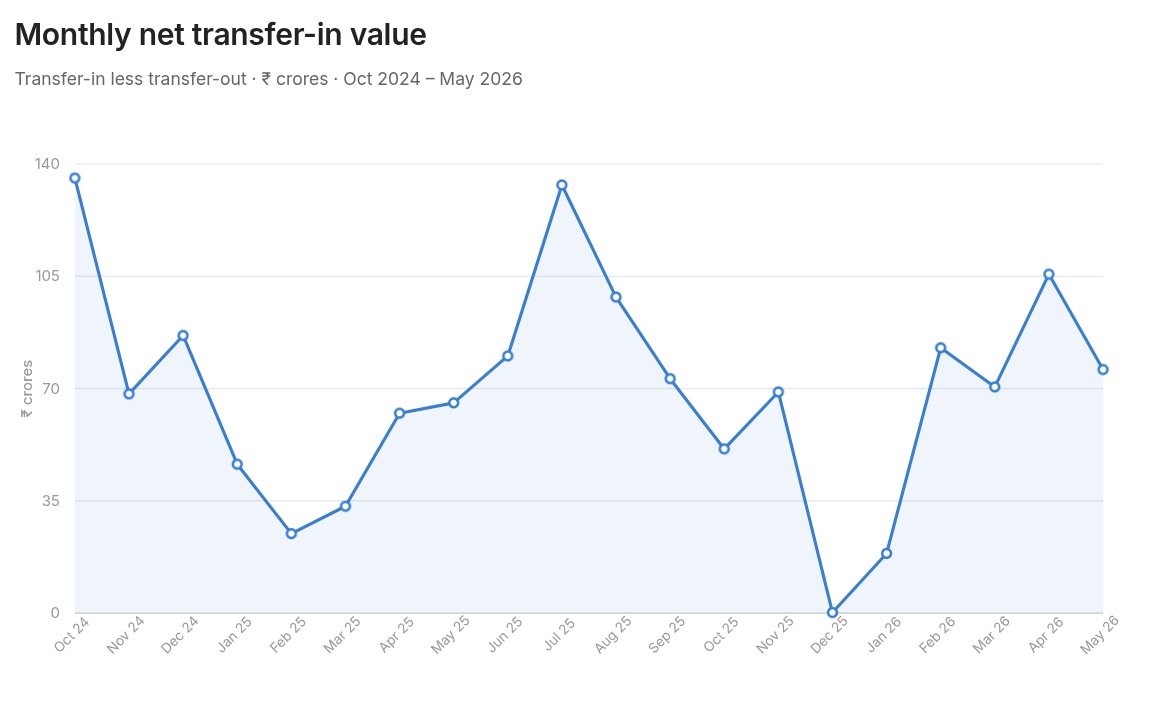
The average investor typically has 2-3 demat accounts with holdings spread across them. The problem with this is that it makes tracking one's investments and filing taxes a nightmare.
To make it easy for people to move their holdings to their @zerodha account, we'll now refund all depository charges (DP charges) that you incur to move your holdings to Zerodha. With this charge gone, pretty much everything at Zerodha is free, including investing in stocks, ETFs, direct mutual funds, and bonds.
Even the AMC is more or less free because of BSDA limits, and on top of that we're making the first-year AMC free. So you only pay if you do intraday or F&O trades.
For all transferred-in stock, we let you enter the acquisition price so that your P&L isn't messed up and you can track your portfolio properly. We also offer the option to open a secondary demat account if you want to segregate your holdings for whatever reason — short- and long-term investments, for example.
By the way, this is the monthly net delivery of stocks (transfer in − transfer out) at Zerodha. I'll share an updated chart in 6 months to see if us taking DP transfer charges on our head makes any difference😀
94
38
703
78,822
Avinash Namadhari retweeted

If a girl texts you first…
block “him”! 😄
Stay alert online..!
147
321
3,452
163,220
Is the war to confuse competitor AI engines to hallucinate going to be discussed yet? Training automated bots to bombard information manipulation as training matter to bring down the efficiency of a competitor AI engines is an obvious corporate dominance strategy. So far, quiet.
6
35
But somewhere, a meteor is laughing at us while we are giving away medals of honour, drinking packaged water and congratulating each other.
23
Even on a highly scientific scale, it seems progress itself is a totally made up concept.
AI-not-for-profit is probably the only way it would/could be helpful. AI gurus forging their own ideas on a set of media-wise-powerful-tribes is probably amplifying only a profitable angle
20
Seems humanity is already hallucinating for eons but in denial. Human goals, social stature, patents/copyrights, economic and political models, our Gods... that multiple groups of humans belive as ultimate truth and imposing on others to the extent of killing each other is proof
21
With multipolar relegious, racial, educational formats, understanding of purpose of life crisscrossing each other in unimaginably complex ways, output from AI engines will remain as mere opinions, used conveniently as truth to small groups who benefit economically/socially.
17
Valuations of HW/SW technology will spur corporate competition, where as AI could help humanity learn to use an agreeable-to-all
-info more than a certain dominance of truth as per sciences or an economic model of a certain group who are first movers into the AI field.
28
What is the field/department of protecting the core information bank (which is assumed to to be true), or a skill to identify what is true and what is not, going to be called?
21
Blatent criminality has crept into the "essential formula for success" even for biggest players.
This didn't need the time of court to establish the practice to be a fraud.
Corporate governance was believed to be self healing, not burdening courts - where are we heading?
May 29

In a landmark judgment on May 22, 2026, the Delhi High Court held Google liable for trademark infringement.
The case was between Hindware and Google. The court held that, by allowing competitors of Hindware to purchase the keyword “Hindware” (a trademarked name) through Google Ads, Google enabled trademark infringement. The court said that “Hindware” is not a generic English word but a specific brand trademark. By allowing competitors to place ads on that keyword, Google is enabling competitors to divert traffic that should have legitimately gone to Hindware.
This has been a big challenge for companies, both big and small. Even today, if you search for Zerodha, you will see search results from competitors. This has been happening for well over a decade.
Although it is hard to quantify, we have lost a lot of business to this. Think about what happens. Whenever someone searches for "Zerodha", the traffic should rightfully come to Zerodha. But what often happens is that the first couple of results on Google Search are ads, leading the customer to a competitor's website. In the process, we lose business that should have come to us.
This is made worse by the fact that we do not advertise.
There is also an even more ironic thing here. A lot of brands, just to capture the traffic that should have come to them organically, end up bidding on their own keywords. Think about it. If you own a business and have a trademarked name for your business, you still have to pay Google just to hopefully make your name too expensive for your competition to run ads on it.
But now, thanks to the Delhi High Court judgment, we have the option of taking legal action whenever we come across instances of other companies squatting on our keyword.
The other brilliant part about this judgment is that it levels the playing field. And this matters even more for startups, who are already starved for resources and have the odds stacked against them. The last thing they need is for competitors to bid on their brand keywords and steal their traffic.
This judgment now opens up a route for legal recourse whenever such deceptive practices occur.
While keyword squatting is most visible in Google web results, it is an even bigger problem when it comes to app stores. Whenever someone searches for your brand, the first couple of results, both above and below your app listing, often tend to be those of your competitors. And in the case of app stores, I think the ads are even more problematic. When a user clicks on an app-store ad, they often end up installing an app. That is a much higher-commitment action than clicking on a competitor’s web search result and then just closing the page. Because the user has installed an application, the conversions, at least anecdotally, tend to be much higher.
Again, brands that do not advertise are at the receiving end of this. So I welcome this ruling and hope this changes the unfair norms we've been living by for so long.
20
Avinash Namadhari retweeted

May 22
TIL that 'Digital Dementia' is more to be feared today than Alzhiemer's.
May 21

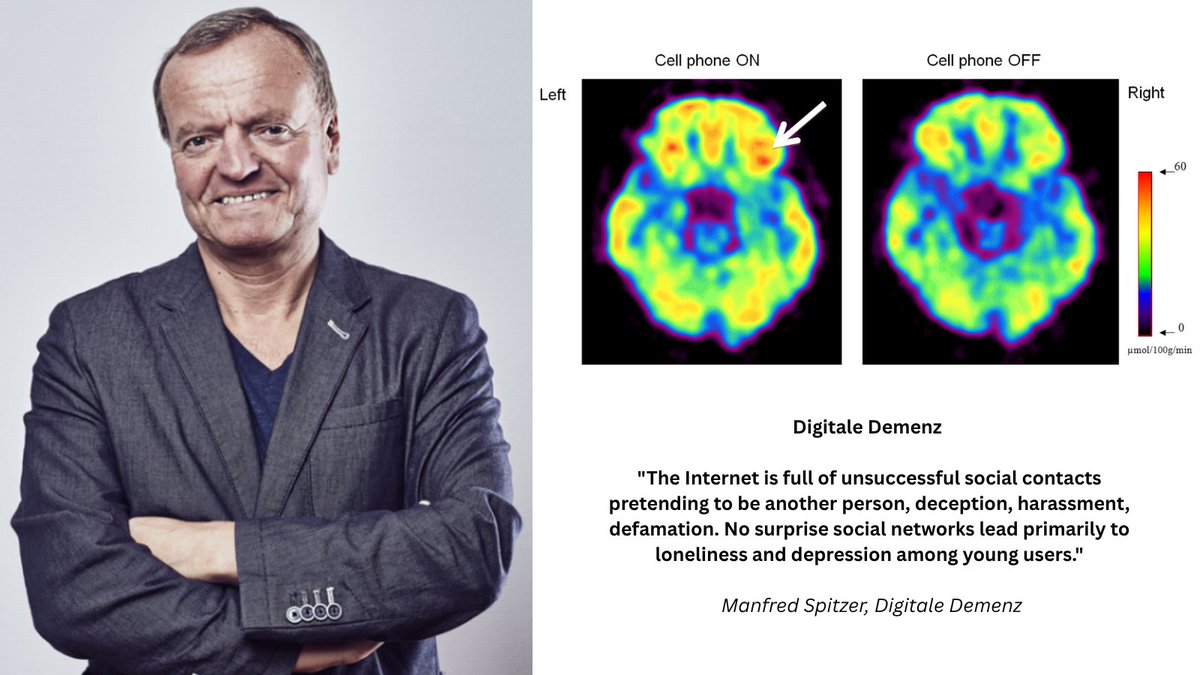
A German neuroscientist published a book in 2012 arguing that smartphones are quietly producing the first generation in human history whose brains will shrink before they turn 30, and the media spent the next decade trying to destroy him for saying it.
His name is Manfred Spitzer.
He runs the Psychiatric University Hospital in Ulm and directs Germany's largest transfer center for neuroscience and education.
The book is called Digitale Demenz, which translates as Digital Dementia, and it became one of the best-selling popular science books in German history almost the moment it was published.
The press hated him for it. He was called Germany's most controversial brain scientist, accused of being a Luddite, a moral panic merchant, and a fearmonger who hated children.
None of that stopped the book from being translated into more than a dozen languages, and almost none of it engaged with the actual neuroscience he was citing.
The phrase digital dementia did not even start with him.
It started with South Korean doctors in the late 2000s, who noticed something strange in their clinics. Patients in their twenties were arriving with memory complaints that had previously only shown up in much older adults. Forgetting numbers they used to know by heart. Losing the ability to recall directions in cities they had lived in for years. Struggling to remember conversations from earlier the same day.
The doctors connected it to the rise of smartphone use, which had hit South Korea harder and earlier than almost any other country on Earth. Spitzer picked up the phrase and built an entire book around the neuroscience that explained it.
The core thesis is brutally simple. The brain behaves like a muscle. It grows when you use it, and it atrophies when you do not. Every cognitive task you outsource to a device is a task your brain is no longer practicing, and the neural circuits responsible for that task are no longer being reinforced. Over time, they weaken in exactly the same way an unused muscle weakens.
Spitzer was not arguing that smartphones would give you Alzheimer's. He was arguing that decades of cognitive outsourcing would produce a measurable decline in the underlying machinery, long before any clinical diagnosis would catch it, and that the decline was already showing up in young adults.
The mechanism is what made him impossible to dismiss. By the early 2010s, there was already deep evidence that the brain physically remodels itself in response to use. London taxi drivers who had memorized the entire street map of the city had measurably larger hippocampi than the average person, which is the brain region responsible for spatial memory.
Musicians who practiced for thousands of hours had thicker auditory cortices. Spitzer's argument was just the dark side of the same finding. If the brain grows in response to use, then it must shrink in response to neglect. And if every cognitive task adults used to perform with their own memory, navigation, arithmetic, attention, and reading was now being handled by a glowing rectangle in their pocket, then the regions responsible for all of those tasks were quietly being underused for the first time in human evolutionary history.
Then the supporting data started landing.
A 2020 study at McGill University tracked 50 regular drivers and measured GPS use. The heavy users had weaker spatial memory than the rest, and when researchers retested a subset three years later, those users had declined the fastest. The same hippocampus London cabbies had built up by ignoring shortcuts was being slowly hollowed out in everyone else by accepting them.
A 2024 MIT study scanned the brains of people writing essays with and without ChatGPT. The AI group showed 55 percent weaker brain connectivity than the group writing on their own. 83 percent of the ChatGPT users could not recall a single line from essays they had written minutes earlier. The damage stayed even when the tool was taken away.
A 2024 paper out of Norway recorded EEG scans of students writing words by hand versus typing them. The handwriting condition lit up the entire learning network. The typing condition produced almost nothing.
Every one of these findings is exactly what Spitzer predicted in 2012.
The most uncomfortable line in his book is the one almost nobody in the German press wanted to print.
He pointed out that the people building these devices were not letting their own children use them. Steve Jobs did not let his kids near an iPad. Bill Gates capped his children's screen time at 30 minutes a day. The senior engineers at Google were sending their kids to Waldorf schools that banned screens entirely.
The people who knew the most about what these products were doing to the developing brain were the ones protecting their own families from them, and almost nobody on the outside was asking why.
The generation he was warning about is now in their twenties.
The first cognitive scans of what we did to them are starting to come back, and the pattern is exactly what he said it would be.
The brain you were born with is not the brain you will die with.
You are training it every day. The only question is which direction.
1
24
63
9,813
Super Job Offer!! Great Boss.

Most people think Bounce died in COVID. We didn’t.
We pivoted to manufacturing our own electric scooters and renting them to India’s gig workers. 9K on the road today across Bangalore and Delhi-NCR. Going to 40K in under 18 months.
Here’s what we’re building.
1
35

28 Nov 2025
kannada.oneindia.com/news/ka…
Remarkable progress in stabilizing and streamlining the property registration and ownership rights.
Silent revolution by Hon. Revenue Minister of Karnataka - Shri Krishna Byre Gowda.
4th of big upgrades in less than three months.
40
26 Nov 2025
vijaykarnataka.com/news/karn…
One of the most important update that lakhs of property owners were awaiting. Property Fraud had gone out of control, until Hon.Revenue Minister Shri Krishna Byre Gowda took charge of rhe Ministry.
Every policy has strengthened governance in the state.
61
21 Oct 2025
20 Oct 2025

Mumbai LTT to Gorakhpur Jn Kashi Express
Journey Time: 36 hours and 20 minutes.
Can you choose to not use the toilet for 37 hours?
23
Avinash Namadhari retweeted

9 Oct 2025
InGovern Research Services has cautioned investors about key governance and compliance risks in the LG Electronics India Ltd. IPO, even as the issue witnessed a strong investor response, being subscribed to three times on Day 2. The proxy advisory firm highlighted contingent liabilities of ₹4,717 crore, constituting 73% of the company’s net worth, arising from disputed tax and transfer pricing matters. It also noted that the promoter retains the flexibility to increase royalty payments up to 5% of turnover without shareholder approval and will continue to hold 85% ownership post-listing, potentially limiting minority investor oversight on related-party transactions.
InGovern highlighted that the promoter can increase royalty fees up to 5% of the annual consolidated turnover of domestically manufactured products (including OEM output) without requiring shareholder approval, as per the SEBI Listing Regulations. This provision could affect margins without minority investor oversight. The advisory firm also noted that high contingent liabilities and concentrated promoter control are key considerations that could impact long-term shareholder value without adequate governance measures.
Read the full article: moneycontrol.com/news/busine…
#CorporateGovernance #IPO #InGovern #LGElectronics #InvestorProtection #RoyaltyPayments #ContingentLiabilities #MinorityShareholders #SEBI #GovernanceMatters
2
1
5
662