Wife, Parent, Mom of an XXYY Boy, Person with MS, IBMer. I'm just me.
Joined April 2009
- Tweets 2,446
- Following 827
- Followers 212
- Likes 11,672
46 Photos and videos



Violaine Batthish retweeted

May 25
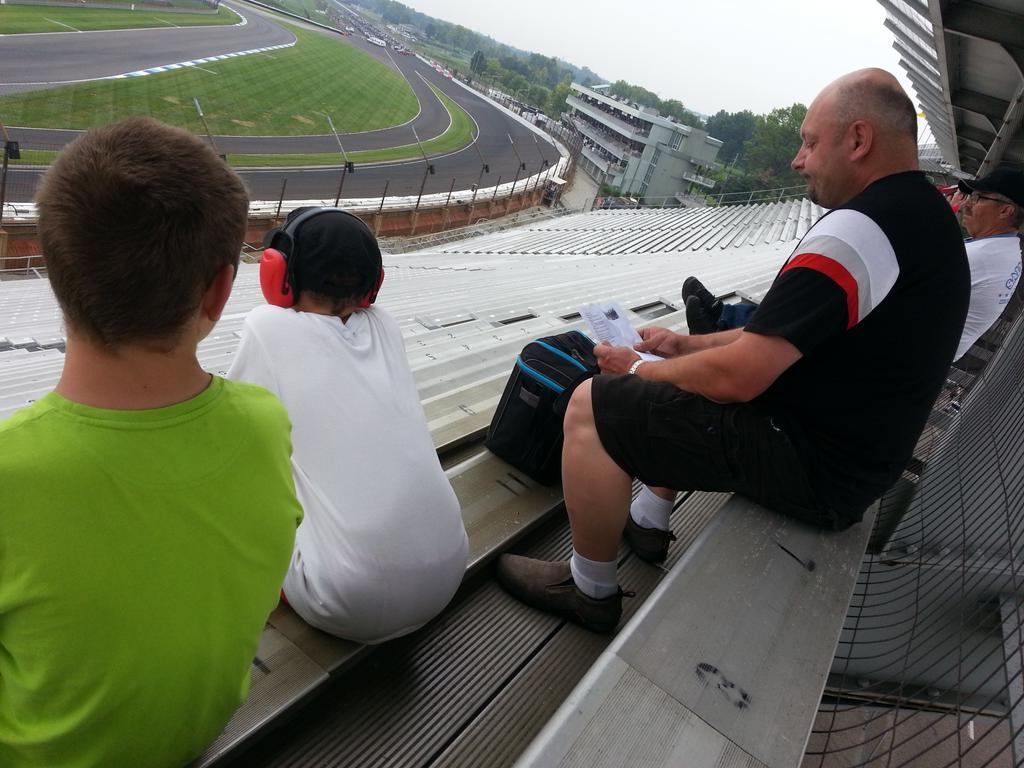
If the roof is closed tonight we riot
178
1,106
16,537
912,493
Violaine Batthish retweeted

May 18
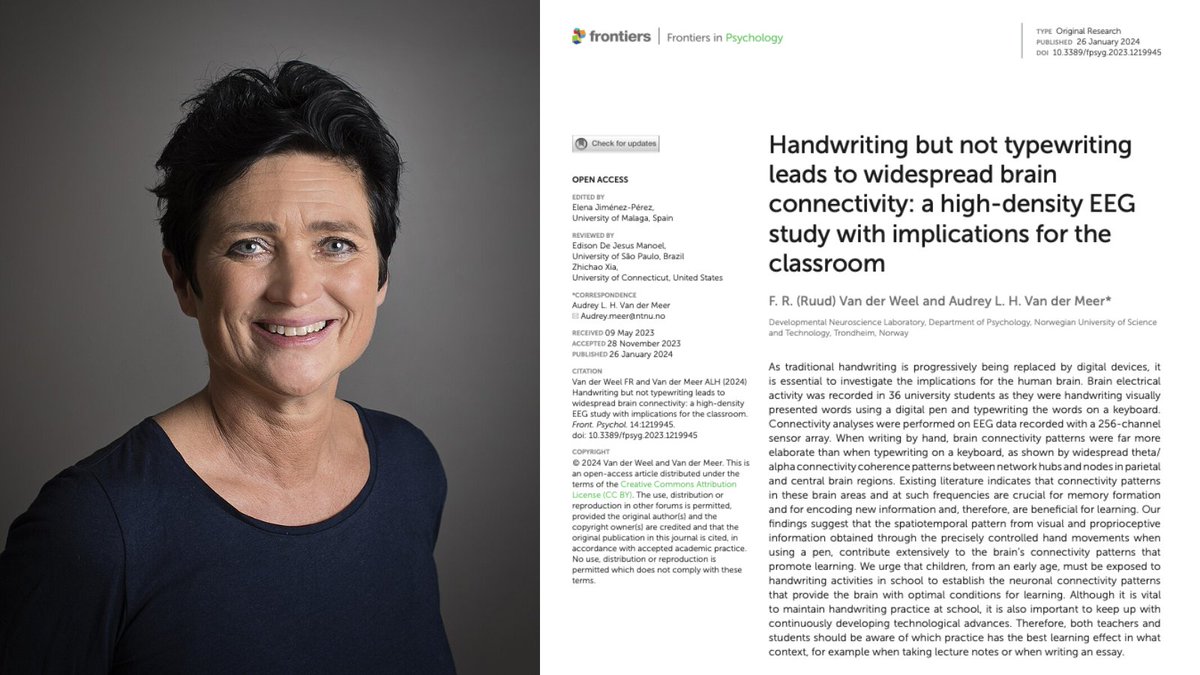
A Norwegian neuroscientist spent 20 years proving that the act of writing by hand changes the human brain in ways typing physically cannot, and almost nobody outside her field has read the paper.
Her name is Audrey van der Meer.
She runs a brain research lab in Trondheim, and the paper that closed the argument was published in 2024 in a journal called Frontiers in Psychology. The finding is brutal enough that it should have changed every classroom on Earth.
The experiment was simple. She recruited 36 university students and put each one in a cap with 256 sensors pressed against their scalp to record brain activity. Words flashed on a screen one at a time.
Sometimes the students wrote the word by hand on a touchscreen using a digital pen, and sometimes they typed the same word on a keyboard. Every neural response was recorded for the full five seconds the word stayed on screen.
Then her team looked at the part of the data most researchers had ignored for years, which is how different parts of the brain were communicating with each other during the task.
When the students wrote by hand, the brain lit up everywhere at once.
The regions responsible for memory, sensory integration, and the encoding of new information were all firing together in a coordinated pattern that spread across the entire cortex. The whole network was awake and connected.
When the same students typed the same word, that pattern collapsed almost completely.
Most of the brain went quiet, and the connections between regions that had been alive seconds earlier were nowhere to be found on the EEG.
Same word, same brain, same person, and two completely different neurological events.
The reason turned out to be something nobody had really paid attention to before her work. Writing by hand is not one motion but a sequence of thousands of tiny micro-movements coordinated with your eyes in real time, where each letter is a different shape that requires the brain to solve a slightly different spatial problem.
Your fingers, wrist, vision, and the parts of your brain that track position in space are all working together to produce one letter, then the next, then the next.
Typing throws all of that away. Every key on a keyboard requires the exact same finger motion regardless of which letter you are pressing, which means the brain has almost nothing to integrate and almost no problem to solve.
Van der Meer said it plainly in her interviews.
Pressing the same key with the same finger over and over does not stimulate the brain in any meaningful way, and she pointed out something that should scare every parent who handed their kid an iPad.
Children who learn to read and write on tablets often cannot tell letters like b and d apart, because they have never physically felt with their bodies what it takes to actually produce those letters on a page.
A decade before her, two researchers at Princeton ran the same fight using a completely different method and ended up at the same answer. Pam Mueller and Daniel Oppenheimer tested 327 students across three experiments, where half took notes on laptops with the internet disabled and half took notes by hand, before testing everyone on what they actually understood from the lectures they had watched.
The handwriting group won by a wide margin on every question that required real understanding rather than surface recall.
The reason was hiding in the transcripts of what the two groups had actually written down.
The laptop students typed almost word for word, capturing more total content but processing almost none of it as they went, while the handwriting students physically could not write fast enough to transcribe a lecture in real time, which forced them to listen carefully, decide what actually mattered, and put it in their own words on the page.
That single act of choosing what to keep was the learning itself, and the keyboard had quietly skipped the choosing and skipped the learning along with it.
Two studies. Two countries. Same answer.
Handwriting makes the brain work. Typing lets it coast.
Every note you have ever typed instead of written went into your brain through a thinner pipe. Every meeting, every book highlight, every idea you captured on your phone instead of on paper was processed at half depth.
You did not forget those things because your memory is bad. You forgot them because typing never woke the part of the brain that would have made them stick.
The fix is the thing your grandmother already knew.
Pick up a pen. Write the thing down. The slower road is the faster one.
2,473
44,647
120,849
10,371,405
Violaine Batthish retweeted

Apr 19
A parasite that has been eating people for 3,500 years is about to be wiped off the planet. It infected 3.5 million people in 1986. Last year, it infected 10. And I have not seen it make a single front page.
It is called Guinea worm. You drink contaminated water from a pond in a poor village. A year later, a worm up to three feet long starts coming out of your leg through a burning blister. There is no pill that stops it and no surgery that works. You wrap the worm around a stick and pull it out slowly, over days or weeks, inch by inch. If you rush, the worm breaks inside you and causes a fresh infection.
Guinea worm is ancient. Preserved worms have been pulled out of Egyptian mummies from around 1000 BCE. The Ebers Papyrus, an Egyptian medical scroll from 1550 BCE, describes pulling the worm out with a stick. For three and a half thousand years, that was the best humans could do.
Then in 1986, public health workers decided to kill the parasite off. They had no vaccine and no drug. What they had was cheap cloth water filters and a small army of volunteers willing to walk from village to village for decades.
The plan was simple. Give everyone who drinks from a pond a cloth filter to strain out the tiny water fleas that spread the parasite. Then send volunteers walking house to house, year after year, teaching people how to use the filters and keeping anyone with an emerging worm out of the water.
It worked. From 3.5 million cases a year to 10. Four were in Chad, four in Ethiopia, two in South Sudan. The other four countries where the worm used to be common, Angola, Cameroon, the Central African Republic, and Mali, had zero human cases for the second year in a row. The World Health Organization has already certified 200 countries as Guinea worm free. Six are left.
The last hurdle is dogs. Cameroon had 445 infected animals last year and Chad had 147, so a lot of the remaining work is on animals, not humans. Strays get leashed, and crews treat ponds to kill any remaining worms. The campaign keeps watching until the number hits zero.
When Guinea worm hits zero, it becomes the second human disease ever erased from the planet. The first was smallpox. It will also be the first parasite humans have ever wiped out, and the first disease ever ended without a single dose of medicine. Volunteers walked village to village with cloth filters for 40 years. Now a plague from the age of the pharaohs is about to be gone.
Apr 17

Give me the kind of good news from around the world that nobody ever talks about... but should.
730
20,539
128,618
7,913,735
Violaine Batthish retweeted

Jan 16
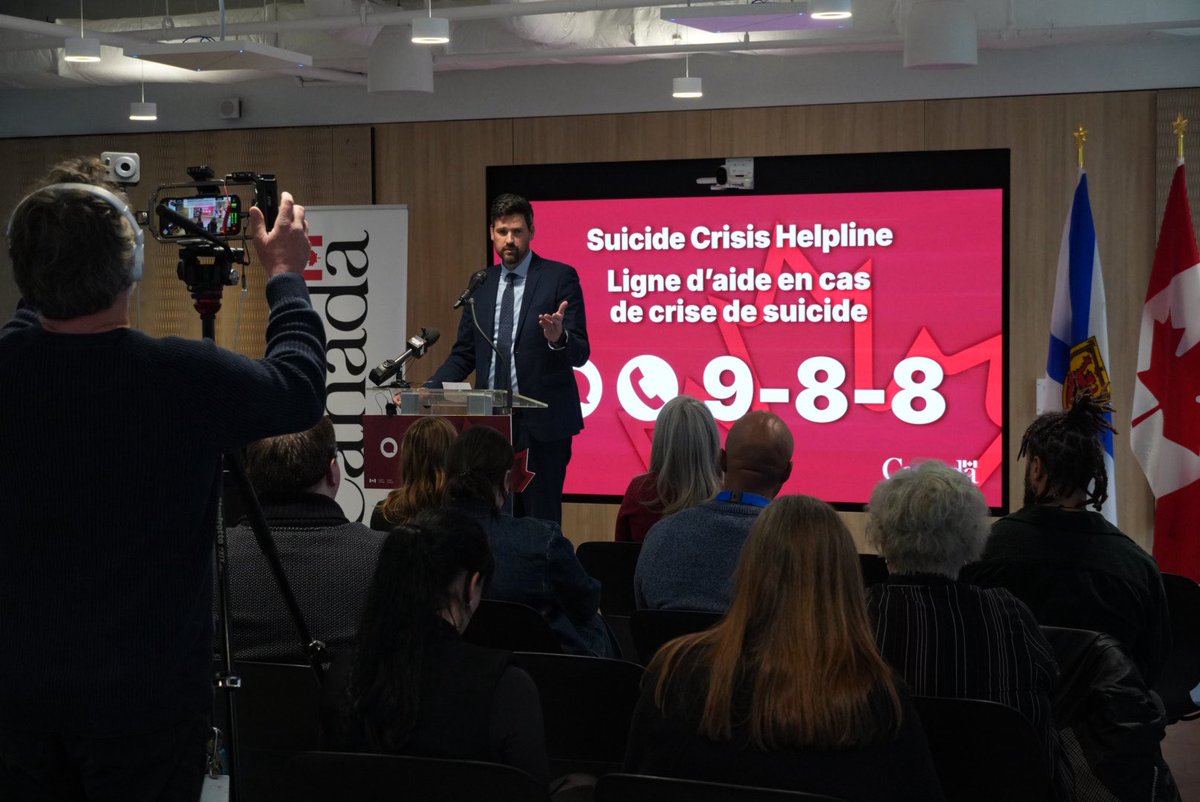
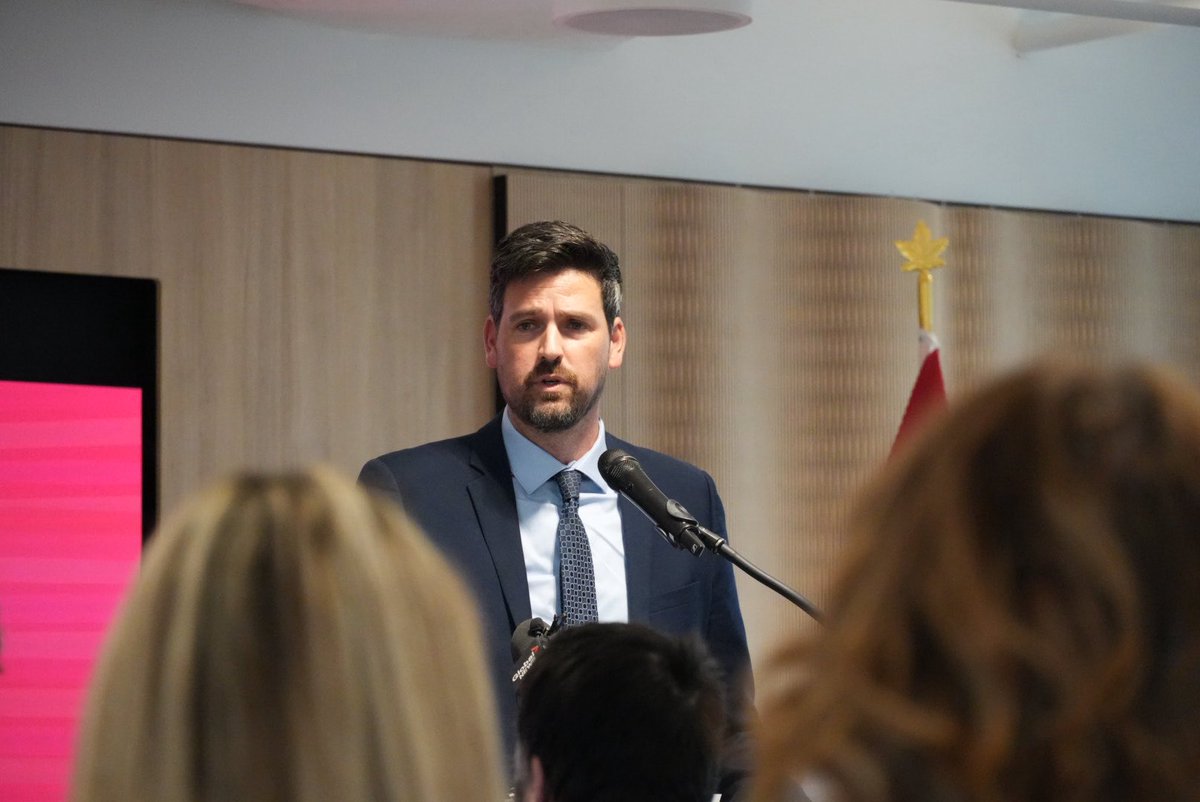
We are extending the operations of 9-8-8, Canada’s Suicide Crisis Helpline.
People facing suicidal thoughts too often suffer in silence. 9-8-8 is a lifesaving service that makes sure there is someone to talk to in your darkest moments.
186
183
620
17,108

Violaine Batthish retweeted

28 Sep 2025
TOP OF THE EAST!

464
6,592
24,385
4,287,382
Violaine Batthish retweeted

29 May 2025
They are ants solving a geometric problem and it is great in color.
447
4,269
55,731
7,427,432



Violaine Batthish retweeted

Today, on Inuit Day, we celebrate Inuit culture, contributions, & resilience, amplifying Inuit voices across the world. NICHI honours those working with us to represent Indigenous housing providers across urban, rural, and northern communities. #InuitDay #IndigenousHousing #NICHI
7
10
710

Violaine Batthish retweeted

17 Oct 2024
Google adds Indigenous language spoken in Canada to its translation service for first time theglobeandmail.com/business…
3
10
5,020


Violaine Batthish retweeted

1 Oct 2024
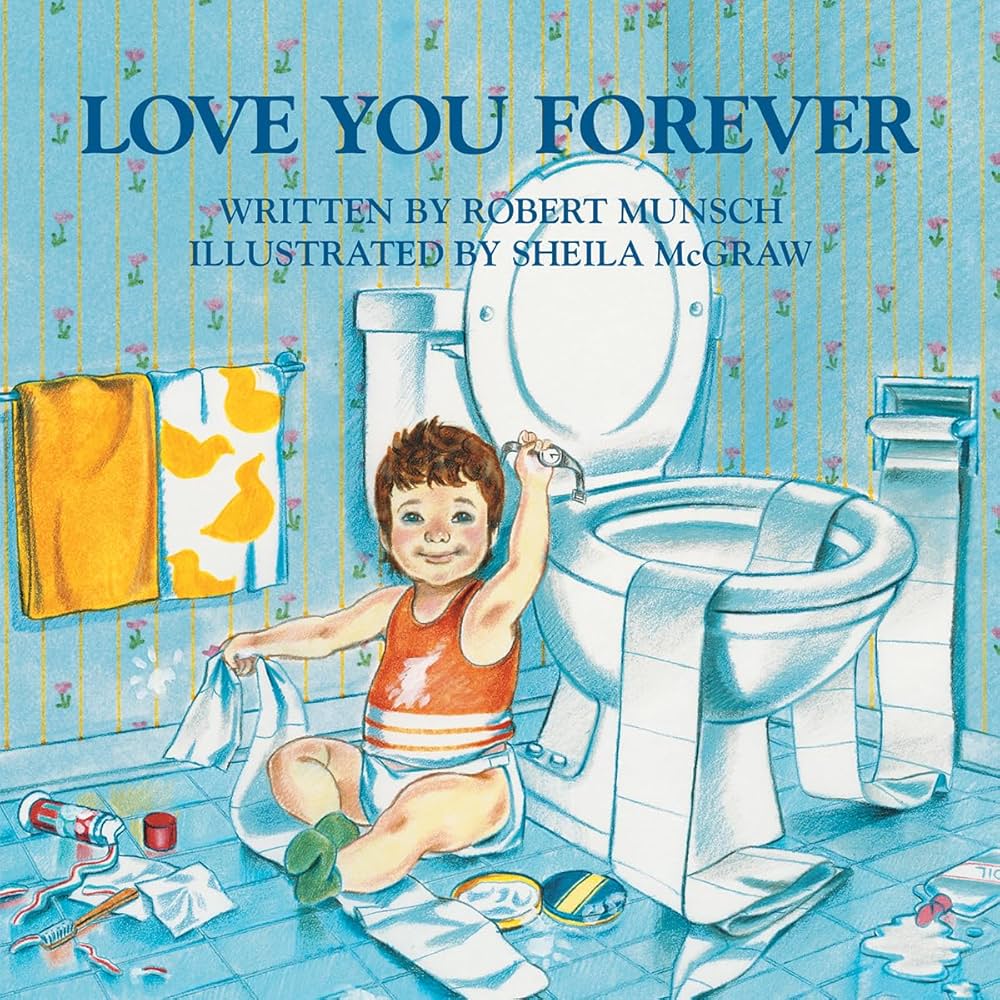
On this day in 1986, Canadian author Robert Munsch released his book Love You Forever.
One of the most successful children's books ever written, it is beloved by generations of Canadians and others worldwide.
Let's learn more about it (and try not to cry)!
🧵1/10
327
1,713
13,398
1,315,891
Violaine Batthish retweeted

29 Sep 2024
Using intellectual disability as a pejorative isn't just wrong—it's a painful reminder of the discrimination people with disabilities face daily. 🧵
2
88
200
11,054


20 Sep 2024
RT @PeelPolice: Peel Police Warn of Blackmail, Extortion Scam Demanding Bitcoin
Read More:
peelpolice.ca/Modules/News/i…
#PRPNR t.co/R…
24
Violaine Batthish retweeted

19 Sep 2024
Hi, ER Doc here.
Just a friendly reminder if your nose is bleeding, DO NOT TILT YOUR HEAD BACK. This just makes the blood drip down the back of your throat and you will then swallow and/or choke on it. Pinch the soft part of your nose and TILT YOUR HEAD FORWARD. Please tell all your friends about this.
261
3,311
11,461
880,510
Violaine Batthish retweeted

5 Sep 2024
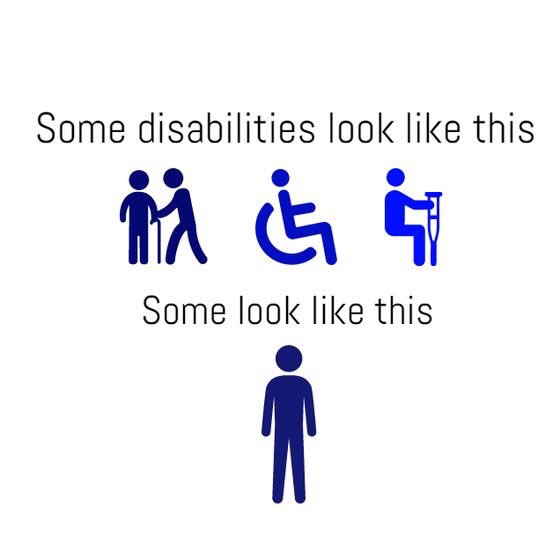
Not all disabilities are visible.
14
31
3,724