ACS Surgeon @UMichSurgery. Med Ed researcher w/ focus on learning analytics, patient outcomes, and policy. Director @CSTAR_UM, Co-Founder @SIMPLCollab
Joined April 2009
- Tweets 696
- Following 306
- Followers 1,270
- Likes 1,210
50 Photos and videos



Pinned Tweet

2 Feb 2022
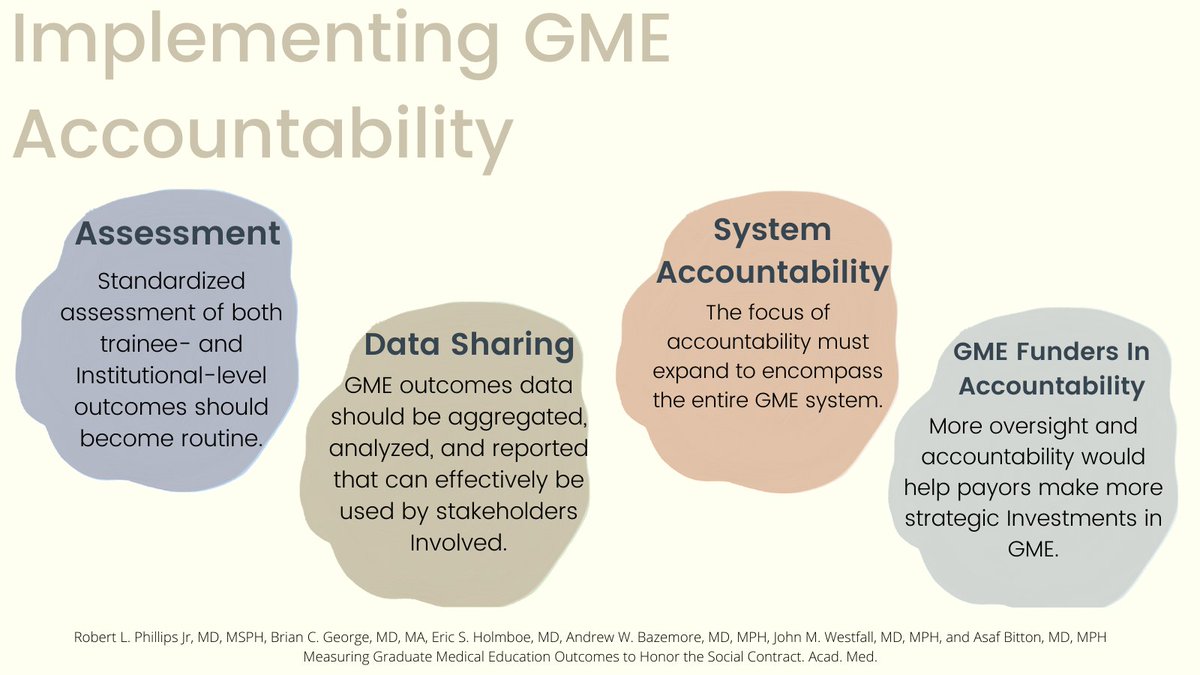
“The focus of accountability must expand to encompass the entire GME system”
My favorite sentence in this @AcadMedJournal paper.
31 Jan 2022

Authors discuss how the public investment in the graduate #MedEd system must honor the social contract and how the government can accomplish this: ow.ly/igTM50HFx4m. #VisualAbstract @FMresearchplcy @TheCPVHC
4
20
Brian George retweeted

24 Apr 2024
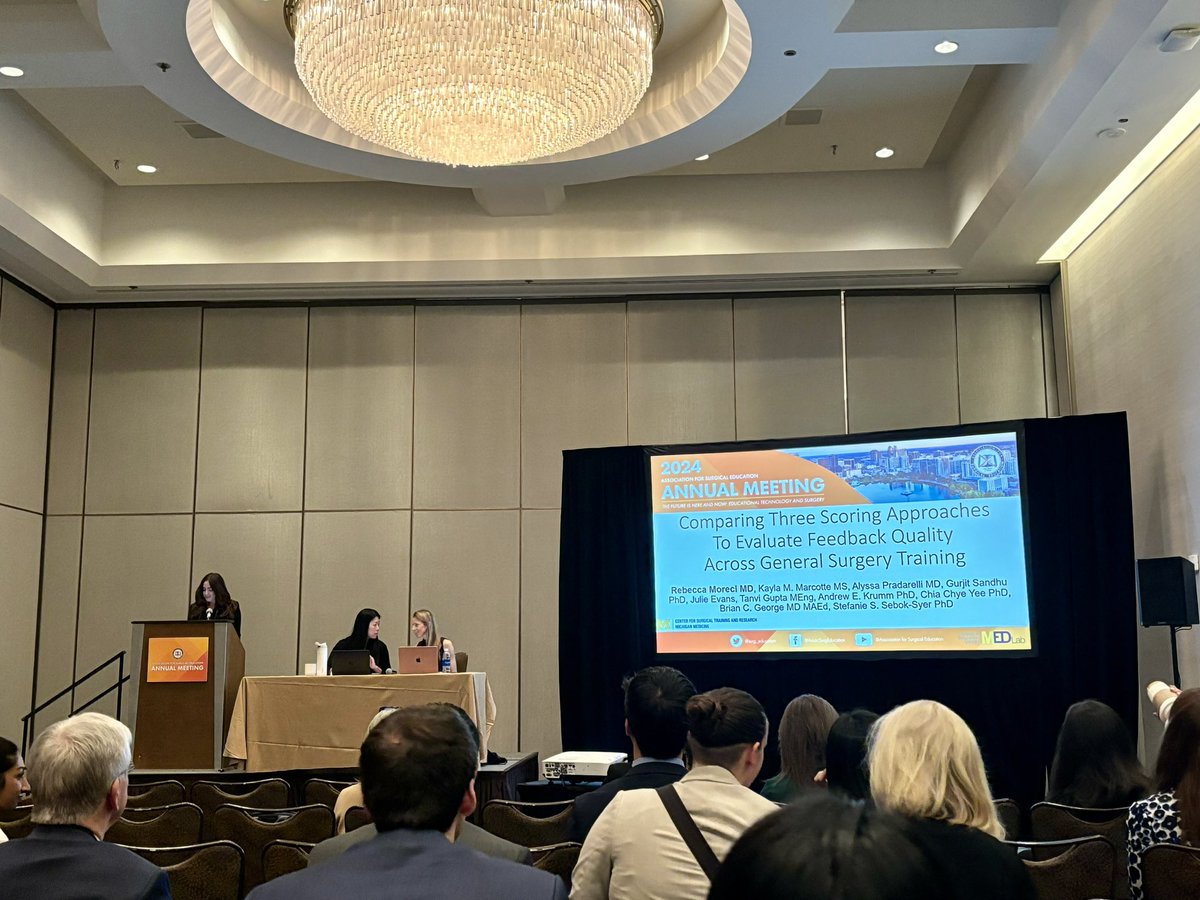
Proud 🤓 to share our work on automating assessment of feedback quality from @CSTAR_UM @UMichSurgery @bcgeorge @GSandhuSurgEd @a_mazurek9 @StefSebok
And super grateful for the support from my crew @SurgEdFellows who consistently show up for each other 🤗
2
6
32
1,408
11 Mar 2024
AI is already being used to advance medical education, yet the governance of the data needed to train AI remains highly variable.
My opinion on data? MedEd data should be available for research, education, and improvement only—with clear ethical guardrails and governance.
21 Feb 2024

What is your data being used for? Who benefits from its use? The implications of the secondary use of clinical and educational data in the development of AI models is something that we should be considering carefully. Our latest in @AcadMedJournal: journals.lww.com/academicmed…
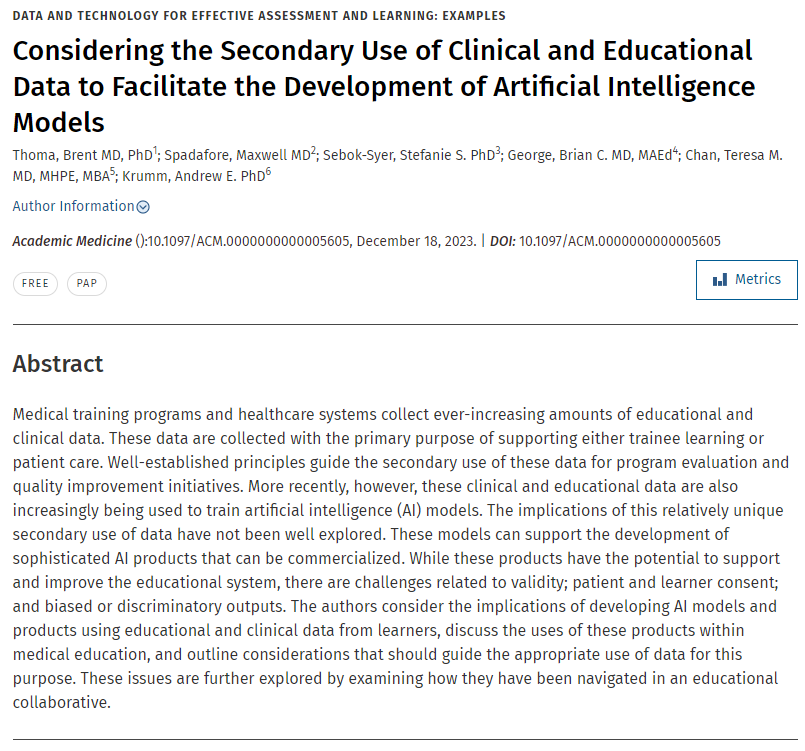
ALT Picture of the title/authors/abstract of the article 'Considering the Secondary Use of Clinical and Educational Data to Facilitate the Development of Artificial Intelligence Models' linked to from the tweet.
1
1
6
1,221
Brian George retweeted

19 Dec 2023
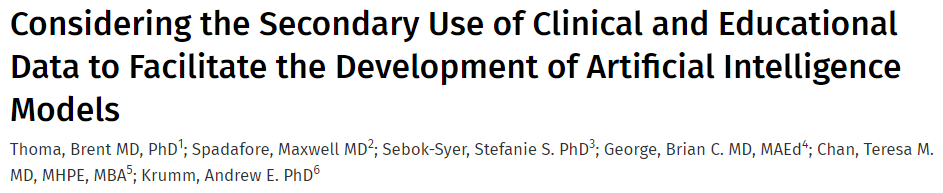
In our latest we work through issues related to the secondary use of clinical and educational data to develop AI models. Shoutout to @bcgeorge @aekrumm & the SIMPL team for leading the way in this and so many other areas! @AcadMedJournal journals.lww.com/academicmed…
1
6
14
2,028
24 May 2023
Thank you @DukeSurgery, @DukeTrauma, and @R2_Mitu for hosting me this week—and laying down the gauntlet for excellence across every domain. Lots of inspiration about how we can up our game @UMichACS!
1
24
1,256
Brian George retweeted

28 Apr 2023
📢1 week until #ROECSG23 chaired by @RachelJimenezMD! Come for #RadOnc #MedEd, stay for the @bcgeorge @SIMPLCollab keynote. FREE registration open until Tues 5/2. Program & registration info at roecsg.org/symposium2023/
@ASTRO_org @RadOncPDs @ARRO_org @ACROresident @caroresidents
7
17
2,056
Brian George retweeted

14 Apr 2023
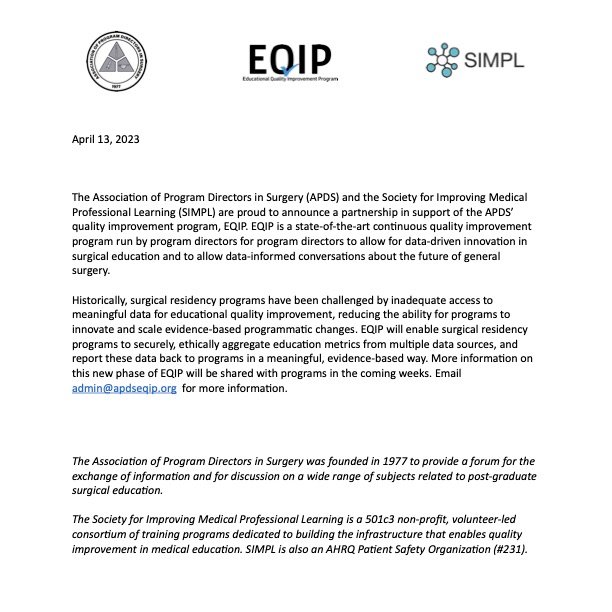
The SIMPL Collaborative and the Association of Program Directors in Surgery are proud to announce a partnership in support of the APDS’s Educational Quality Improvement Program (EQIP). Looking forward to great collaborative work! #SEW2023
@APDSurgery @APDS_EQIP
10
16
1,626
15 Apr 2023
Thank you @CSTAR_UM family for making #SEW2023 a time for learning, connection, and community.
#TheTeamTheTeamTheTeam
9
25
2,480
15 Apr 2023
“If you want to go fast, go alone. If you want to go far, go together.”
SUPER excited by this collaborative partnership between the @APDSurgery and @SIMPLCollab to build data and analytic infrastructure for educational quality improvement.
#BetterTogether
14 Apr 2023

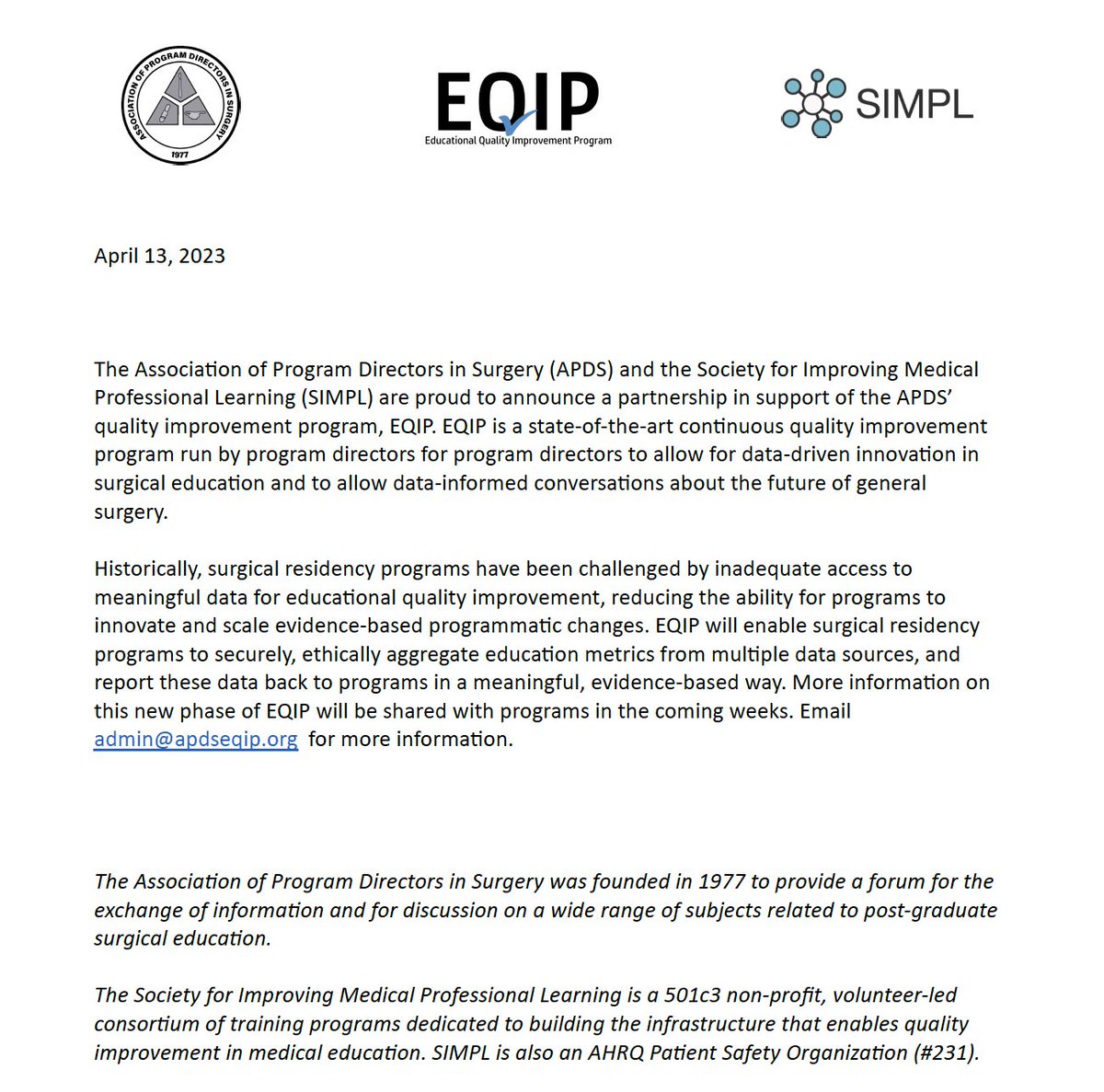
The Association of Program Directors in Surgery (APDS) and the Society for Improving Medical Professional Learning (SIMPL) are proud to announce a partnership in support of the APDS’s Educational Quality Improvement Program (EQIP). #SEW2023 @SIMPLCollab @APDS_EQIP
2
20
3,020
14 Apr 2023
Our greatest impact is by teaching and mentoring others who then go on to teach and mentor others.
I’m grateful to be able to catch up with the first 4 @CSTAR_UM surgical education research fellows, who are now teaching and mentoring others.
#PayItForward
1
4
46
4,728
Brian George retweeted

27 Mar 2023
Data-driven surgical trainee performance predictions for quantifying competence and aligning procedural experiences with learning curves (lap chole is a PGY2 or 3 case!)👇
ja.ma/3ZkncdO in @JAMASurgery
Amazing work by @aekrumm, Kayla Marcotte, and @bcgeorge @SIMPLCollab
1
12
965
27 Mar 2023
"It's amazing what you can accomplish when you don't care who gets the credit."
-Harry Truman, as quoted by @KylaTerhune while leading an incredible session @AmCollSurgeons Residents as Teachers and Leaders course in Chicago this weekend. #Wisdom
2
6
31
4,500
Brian George retweeted

11 Mar 2023
No program left behind: Everyone should be analyzing and visualizing educational data
Read more at
icenetblog.royalcollege.ca/2…
@StefSebok
7
7
1,218
Brian George retweeted

9 Mar 2023
“the benefits of sharing data across a collaborative MedEd network” is that we can answer critical questions and advance the science of #MedEd. Not dissimilar to entering data into a clinical registry in support of clinical research, practice advancement, & QI. Join @SIMPLCollab!
9 Mar 2023

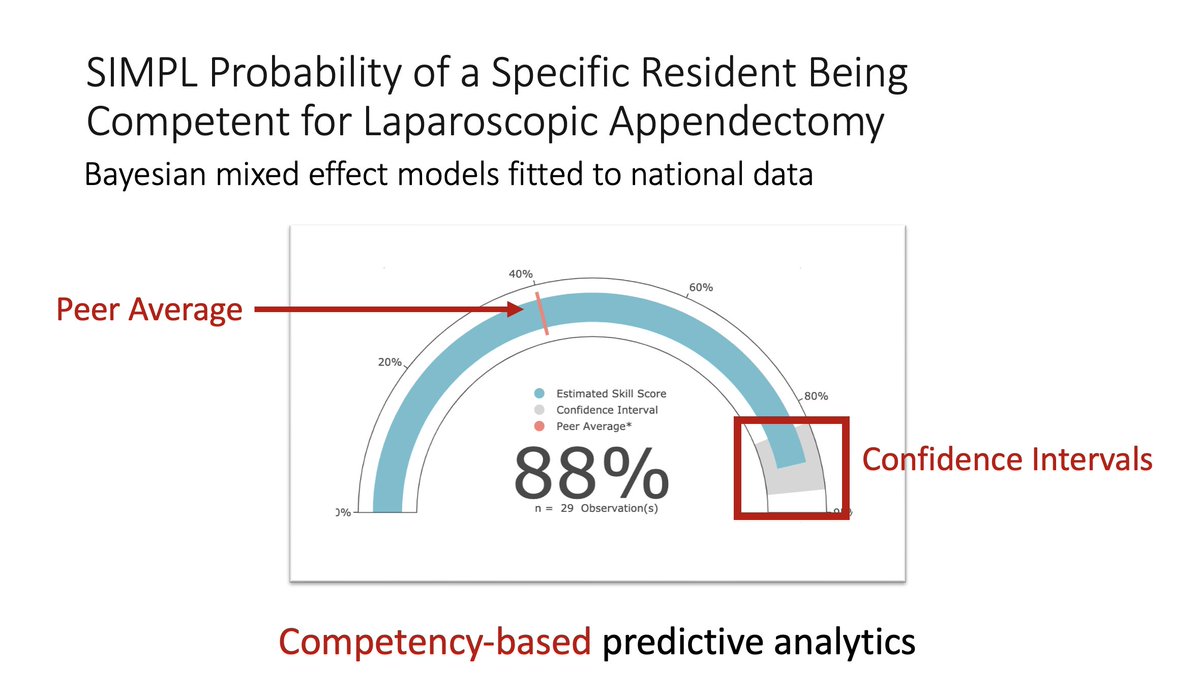
This paper demonstrates, for the first time, how to use workplace assessment ratings to quantify competence.
Based on data from 63,000 cases, it also demonstrates the benefits of sharing data across a collaborative MedEd network.
@SIMPLCollab, at the frontier of #CBME.
1
3
11
1,389
9 Mar 2023
This paper demonstrates, for the first time, how to use workplace assessment ratings to quantify competence.
Based on data from 63,000 cases, it also demonstrates the benefits of sharing data across a collaborative MedEd network.
@SIMPLCollab, at the frontier of #CBME.
8 Mar 2023

Assessment ratings may be able to inform metrics that reflect the likelihood of a general surgery trainee performing a given procedure to a specific standard. ja.ma/3ZSNWTM @aekrumm @kmarcotte11 @bcgeorge
3
12
44
9,990

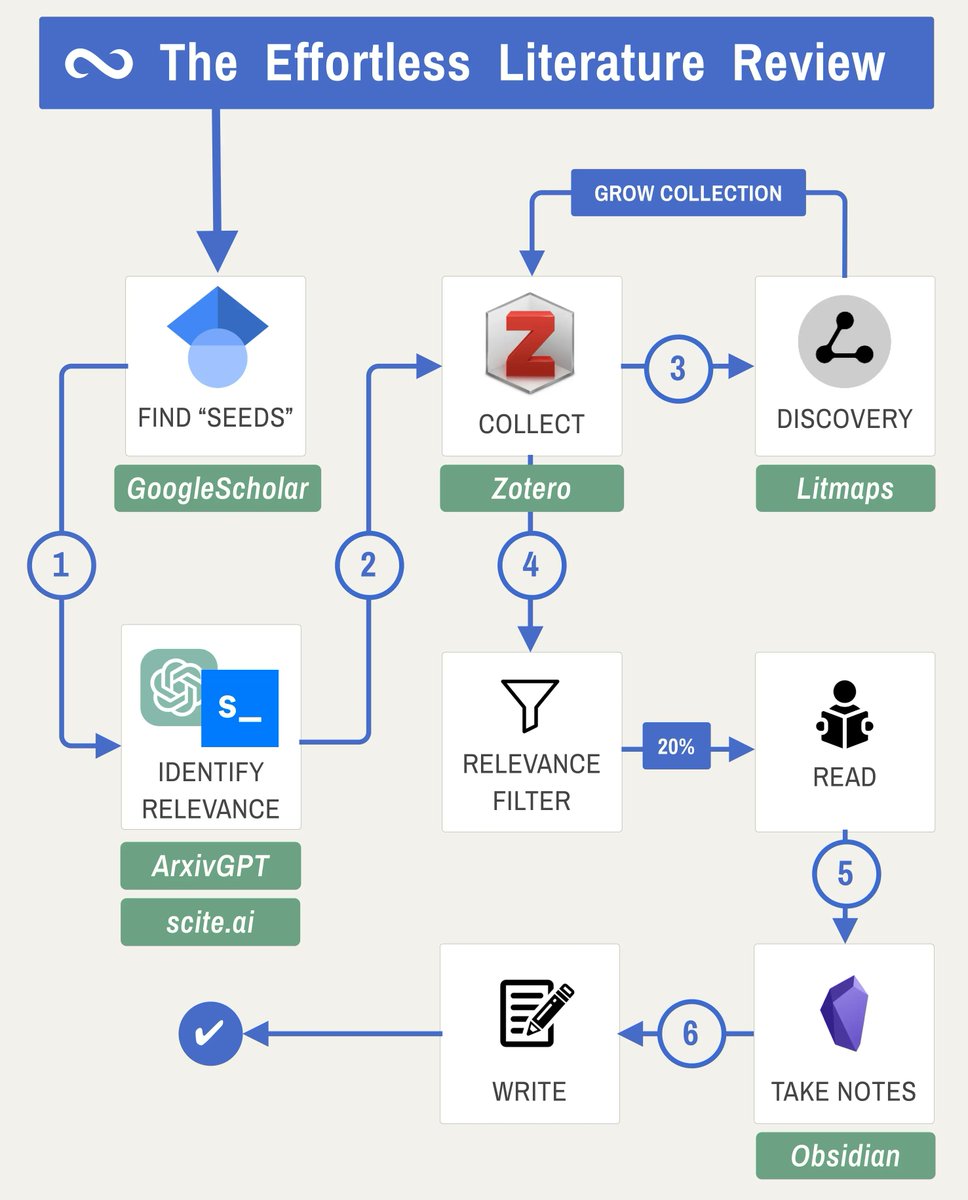

AAMC Core EPAs Pilot: Lessons Learned and Implications for CBME from @jmamd
icenetblog.royalcollege.ca/2…
2
2
1,127
Brian George retweeted
23 Feb 2023
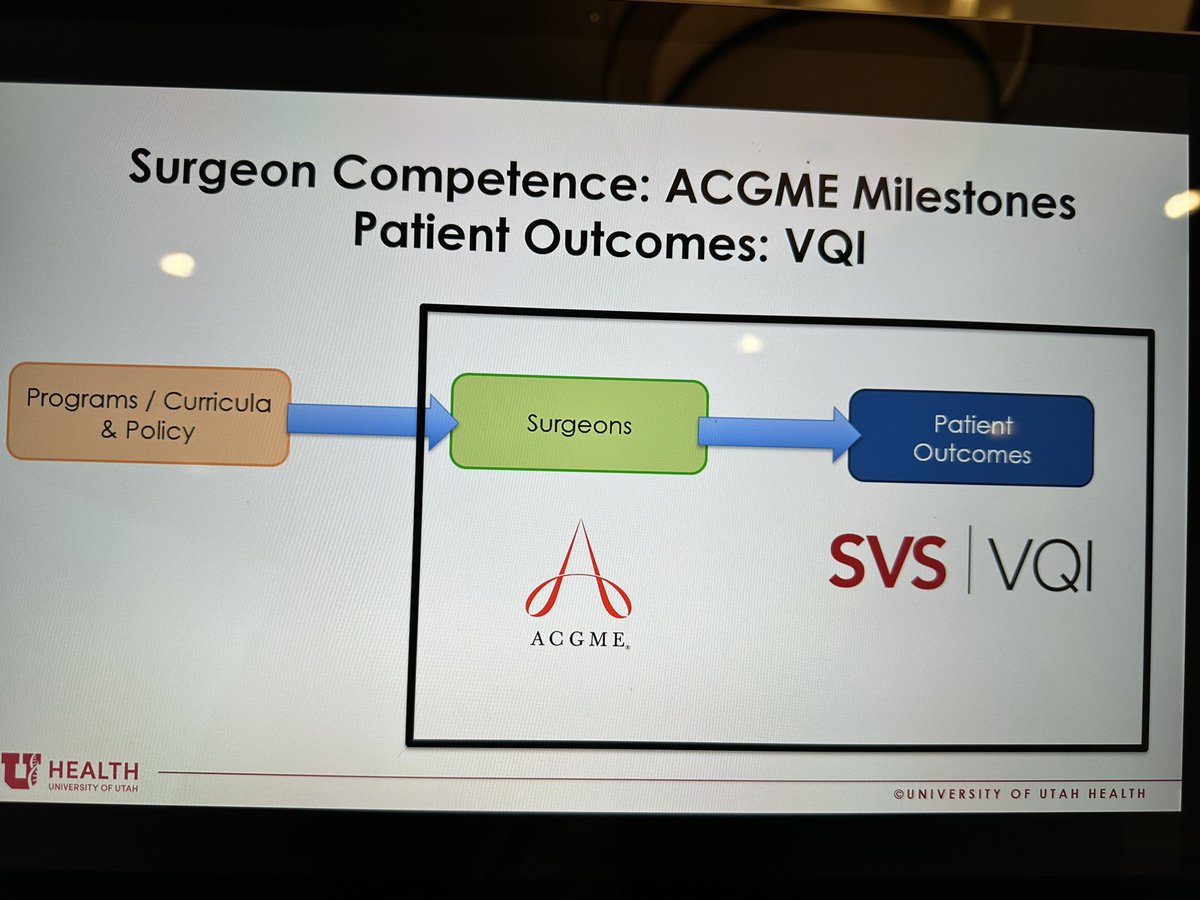
Excited to share our work investigating association between #VascSurg Milestones & patient outcomes in #VQI! The strengths of @VascularSVS #VQI registry are critical to be able to do this work. @stanhamstra @BenjaminSBrooke @leith_erica @YoonSooPark2 @CaitlinWHicks @TL_Forbes
23 Feb 2023

Dr. Brigitte Smith sharing her exciting #MedEd work examining relationship between Milestones and early career clinical performance of vascular surgeons using a registry. Stay tuned for more! #ACGME2023
7
23
2,751
Brian George retweeted

23 Feb 2023
Observation at #ACGME2023. The multiple, rigorous studies presented today highlight in stark relief that across multiple specialties we have “fixed time, variable outcomes.” Is this what we really want for our patients and communities? #MedEd @acgme
2
5
949
Brian George retweeted
23 Feb 2023
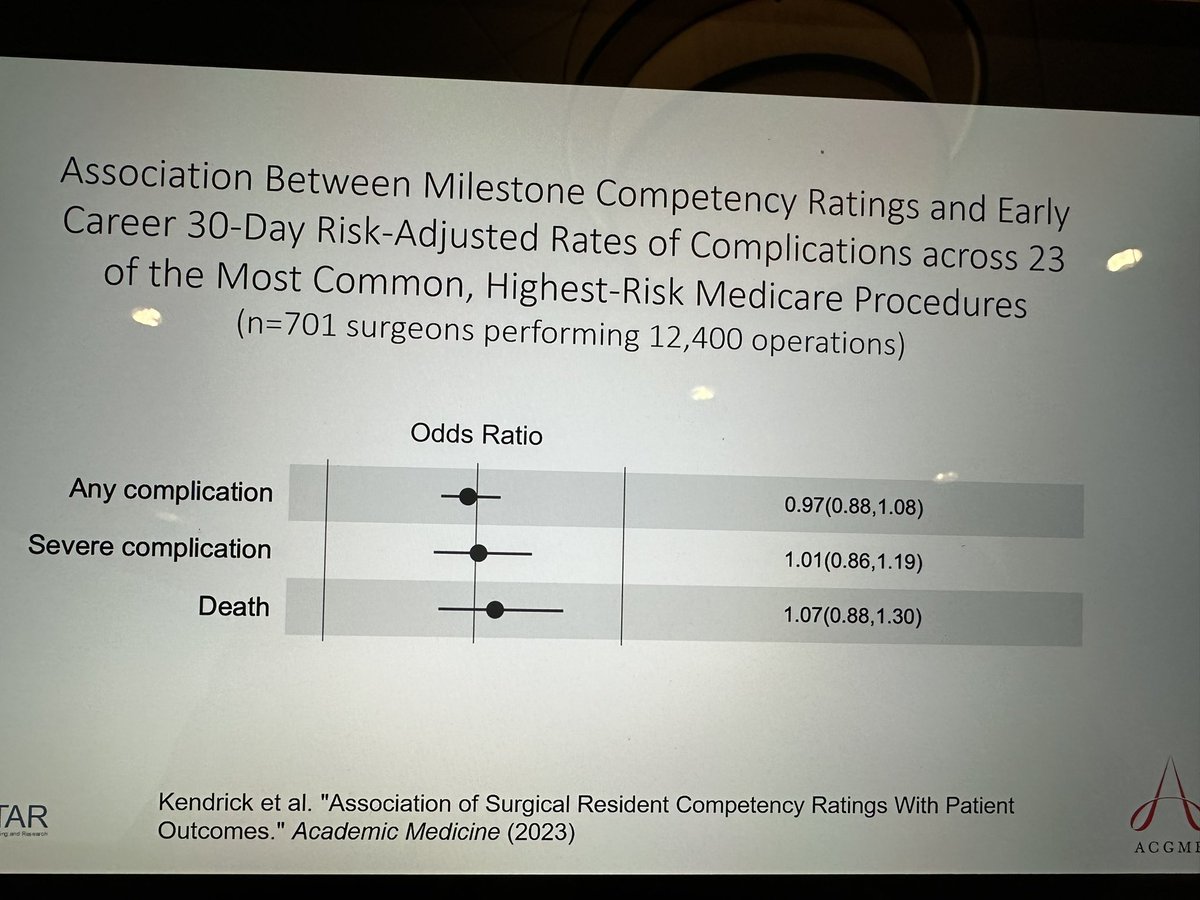
Studying what doesn’t work is every bit as important as studying what does. @bcgeorge team’s work found no association between Milestones ratings and complication rates among a cohort of early GenSurg graduates using CMS claims data. Many lessons in this study.
1
6
19
3,222
Brian George retweeted

7 Feb 2023
If we do our jobs well, this SHOULD be the case! I was sad to see the % of resident-autonomous cases is decreasing. This is a huge part of training @PAACS_ @KijabeHospital. We must train differently when the trainee may be the only surgeon in the hospital for their first job!
7 Feb 2023

An analysis of more than 22,000 surgeries performed by residents at #VeteransAffairs facilities found no differences in rates of complications or deaths when an attending #surgeon was scrubbed in vs. not scrubbed in to supervise ow.ly/PcqQ50MMeMx
1
8
902