Director, La Trobe Asia @latrobeasia / Professor of International Relations @latrobe
Joined March 2013
- Tweets 10,286
- Following 1,407
- Followers 4,327
- Likes 17,971
996 Photos and videos








Jun 8
Looking forward to it!
Jun 4

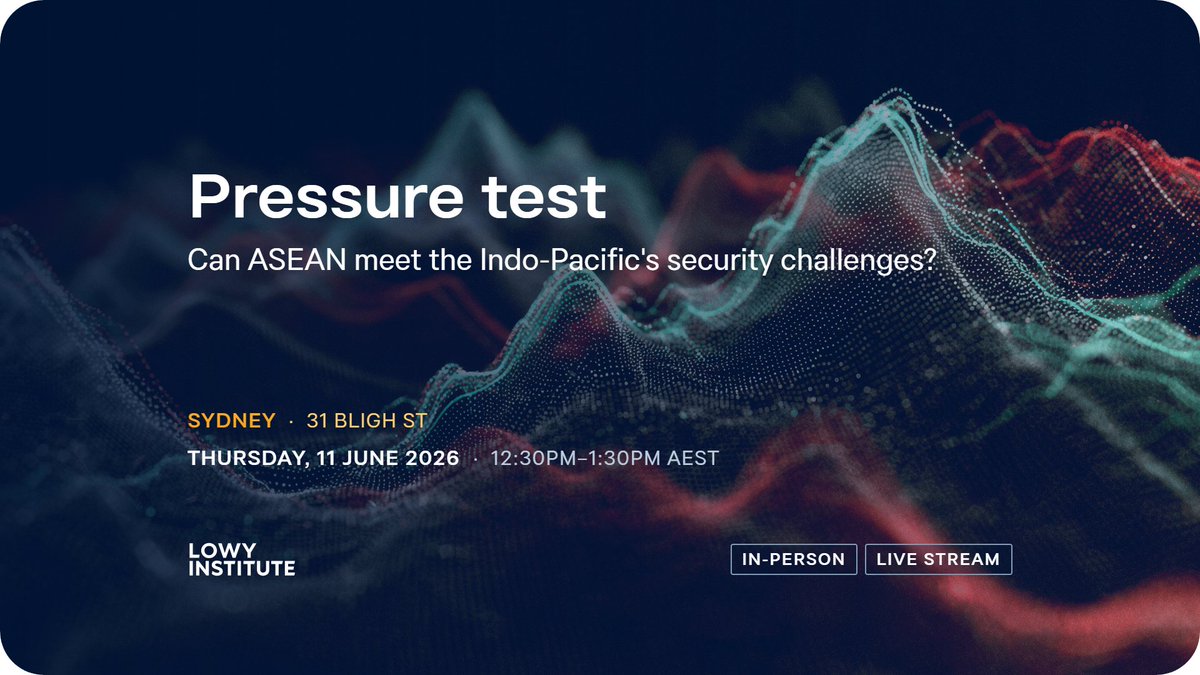
You can still register for our event next Thursday @LowyInstitute on ASEAN and Indo-Pacific security ft. @DonMcLainGill95 @becstrating & Murni Abdul Hamid: events.lowyinstitute.org/Pre…
4
306
Bec Strating retweeted

Jun 4
You can still register for our event next Thursday @LowyInstitute on ASEAN and Indo-Pacific security ft. @DonMcLainGill95 @becstrating & Murni Abdul Hamid: events.lowyinstitute.org/Pre…
1
2
7
805
Bec Strating retweeted

May 30
How ironic... Communist #Vietnam appears a defender of Rules Based Order. The #US - the leader of the free world - dismisses the RBO as utopian fantasy. The reversal has happened.
#SLD26

Following his speech at #IISS_SLD26, United States @SecWar Pete Hegseth fielded a broad range of questions from the audience in an animated question-and-answer session @DeptofWar | Here are a few highlights, you can watch the full session here: go.iiss.org/SLD26
3
11
27
4,151
Bec Strating retweeted
May 26
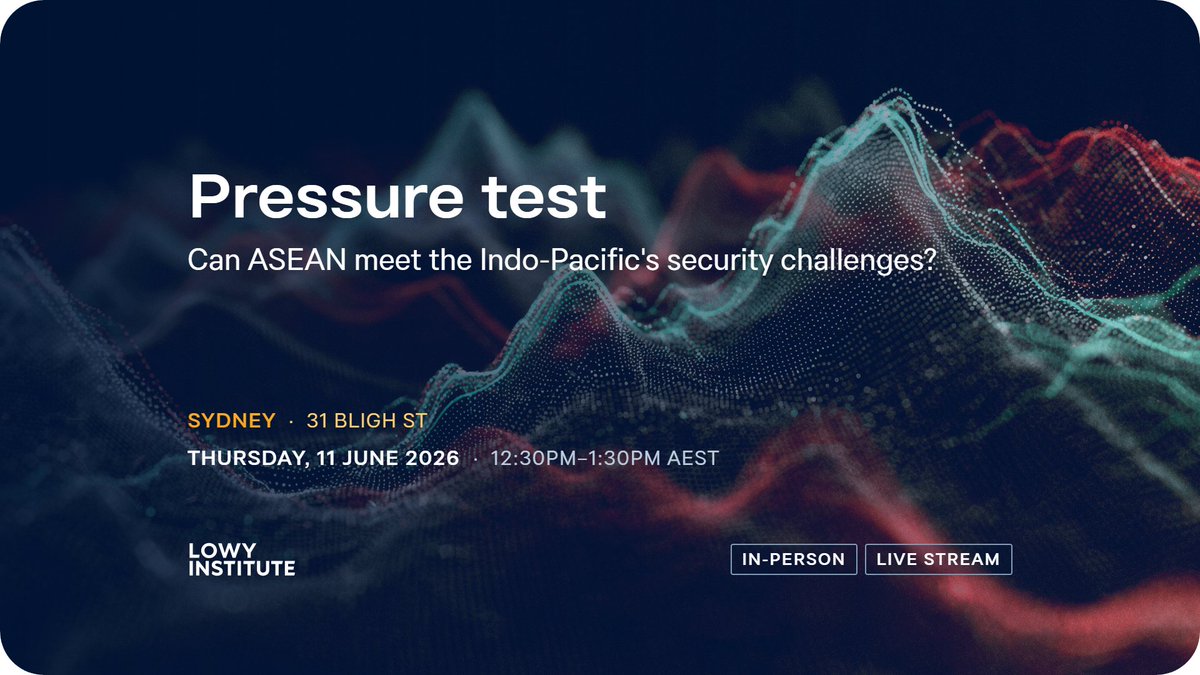
The @LowyInstitute will host 3 outstanding speakers in Sydney on 11 June to discuss traditional & non-traditional security threats in Asia & gaps in regional response mechanisms ft. @becstrating @DonMcLainGill95 & Murni Abdul Hamid. RSVP at the link below: events.lowyinstitute.org/Pre…
3
7
548
Bec Strating retweeted

May 19
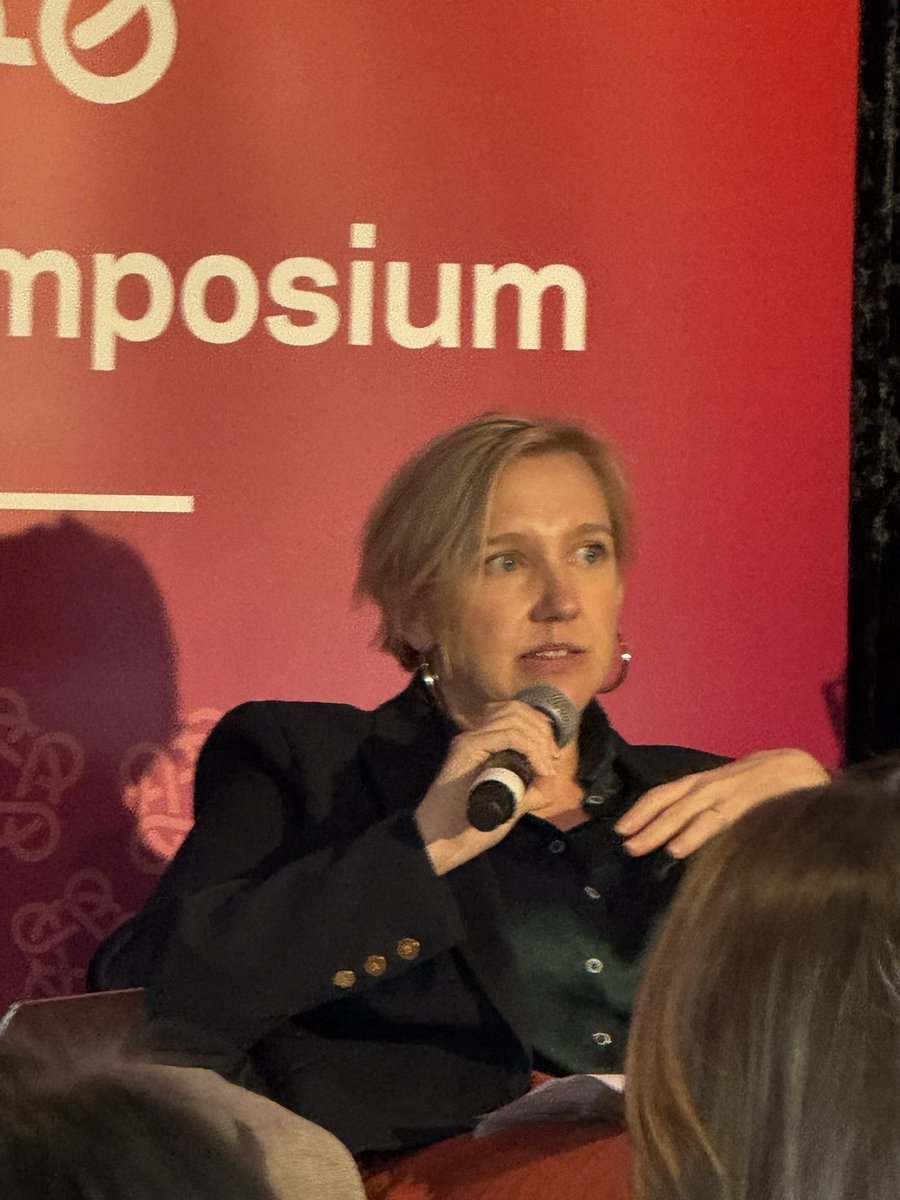
Maritime security: @becstrating says maritime order is a subset of the international order, observing changes here help us think of the order writ large. @asianewzealand Asia Symposium.
2
6
270
Bec Strating retweeted

Both countries claim overlapping parts of the Gulf of Thailand with potentially lucrative oil and gas reserves. There is a peaceful path to resolve the dispute. @becstrating @madeandi @latrobe @UOW theconversation.com/thailand…
2
1
637
Apr 20
Very happy to be leading the new La Trobe Centre for Global Security, building on fantastic interdisciplinary expertise in Humanities and Social Sciences and across @latrobe to address multidimensional challenges
Apr 20

Threats to global security are overlapping like never before. Climate change, health, food security, cybersecurity, economics—they're all interconnected, and cannot be meaningfully understood in isolation.
Enter the La Trobe Centre for Global Security. brnw.ch/21x1Ktu
2
5
36
3,924
Bec Strating retweeted

Apr 17
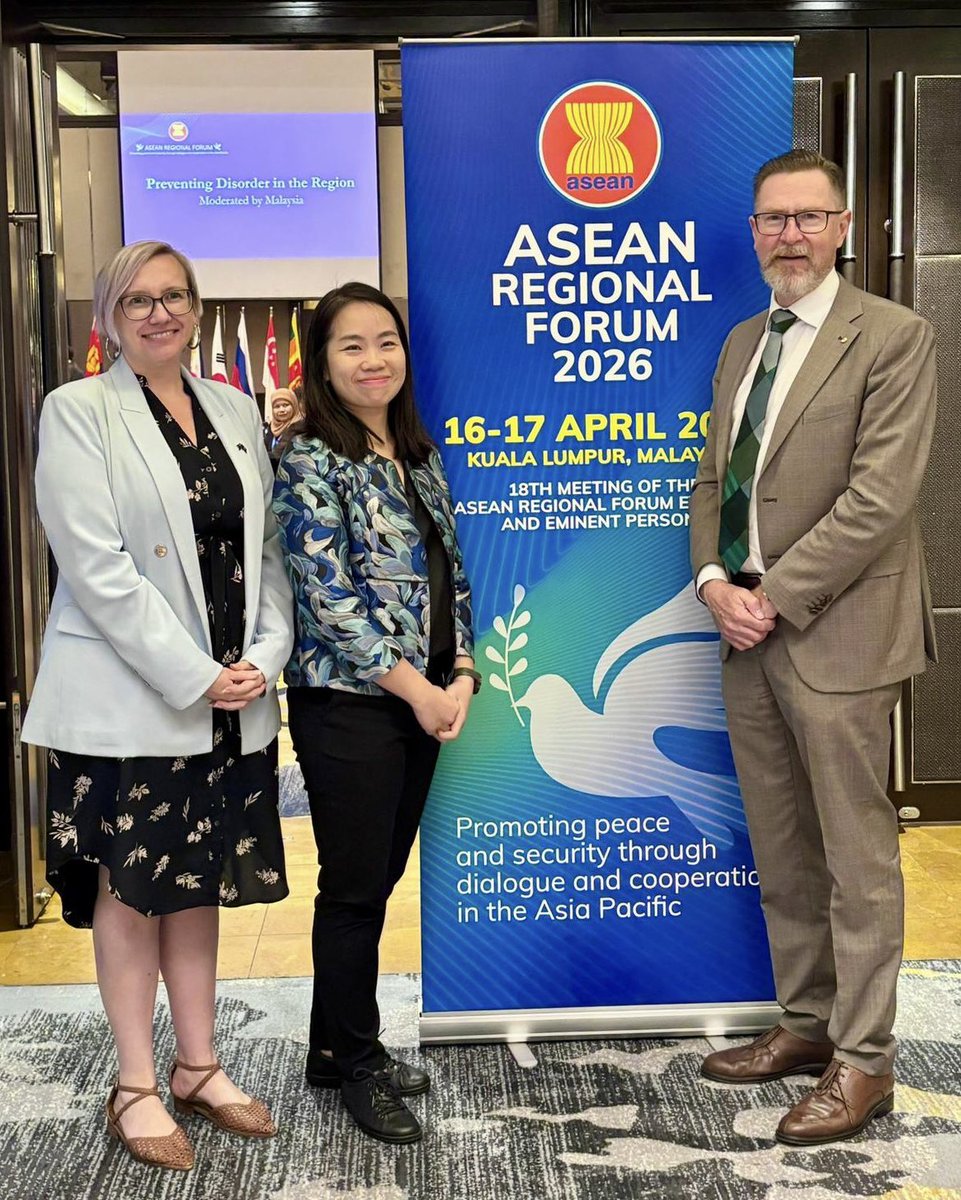
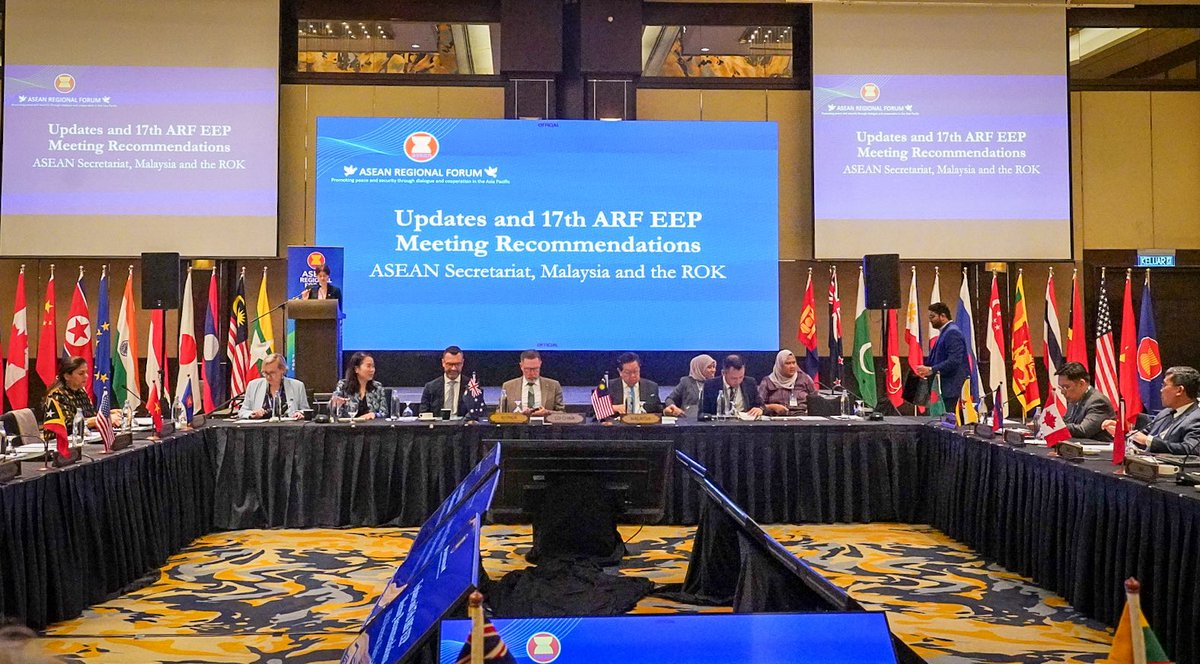
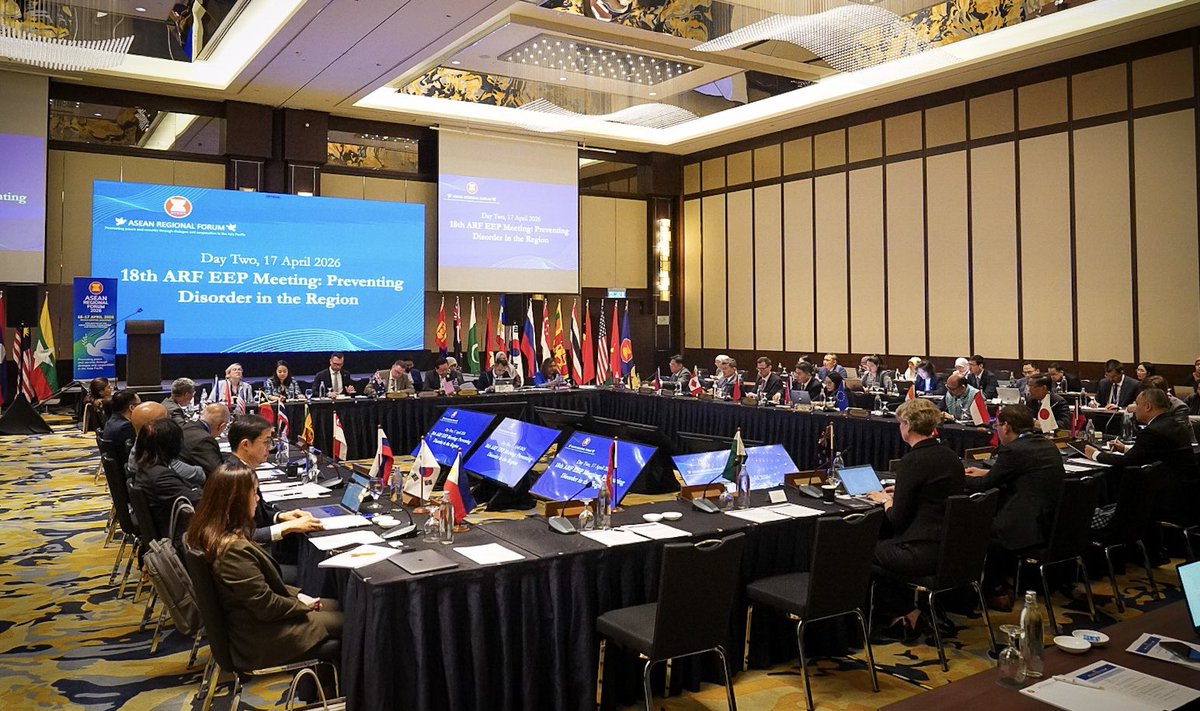
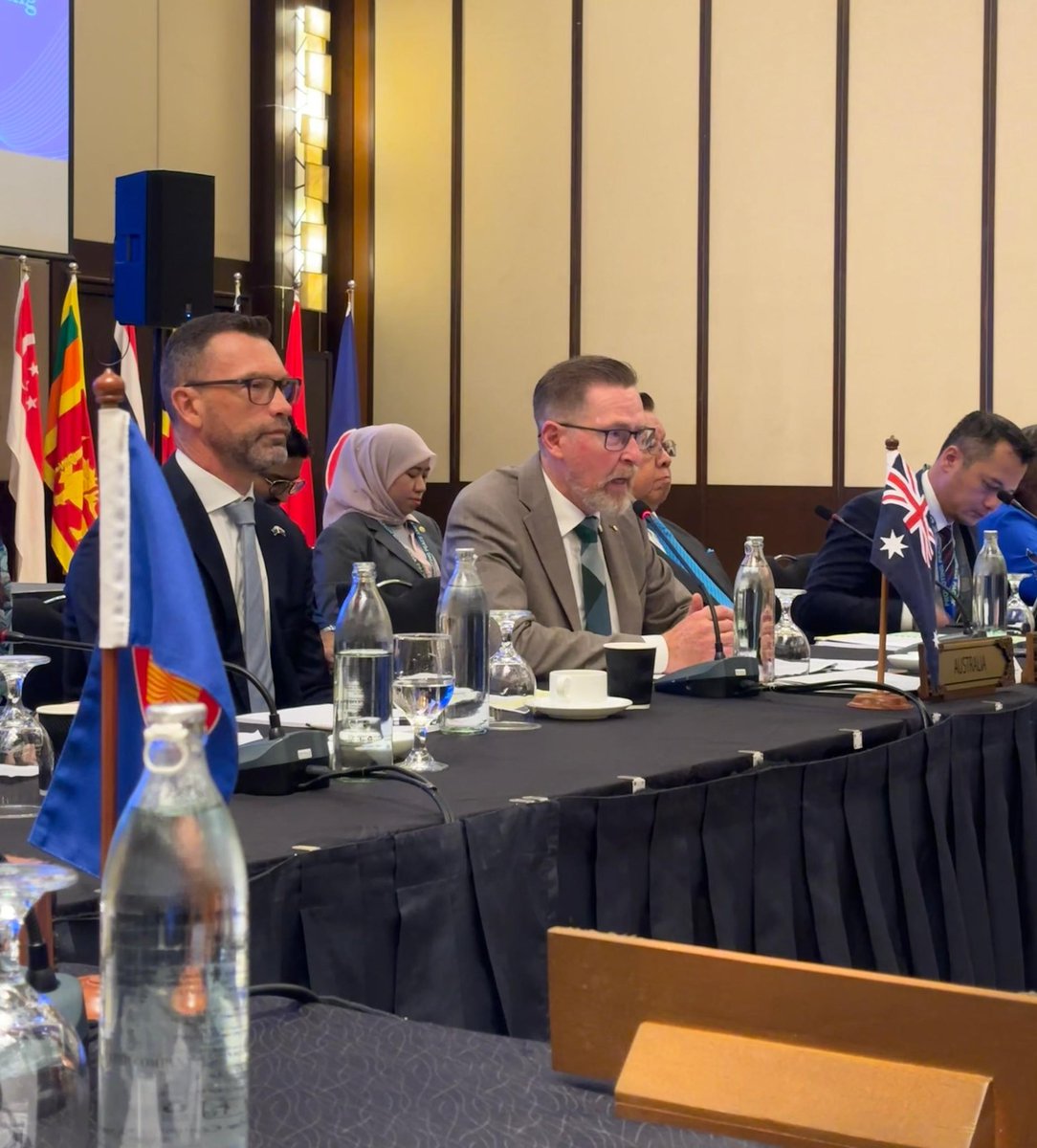
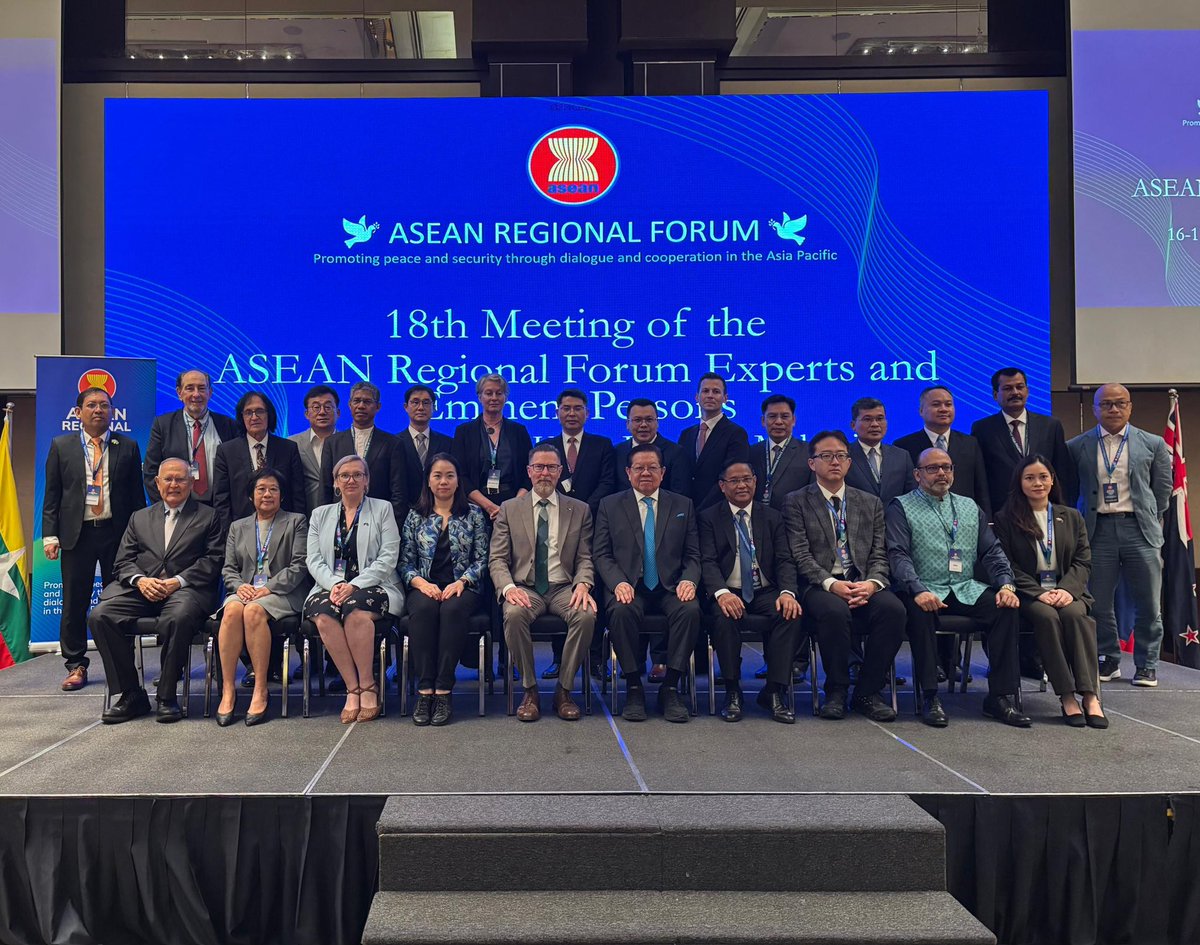
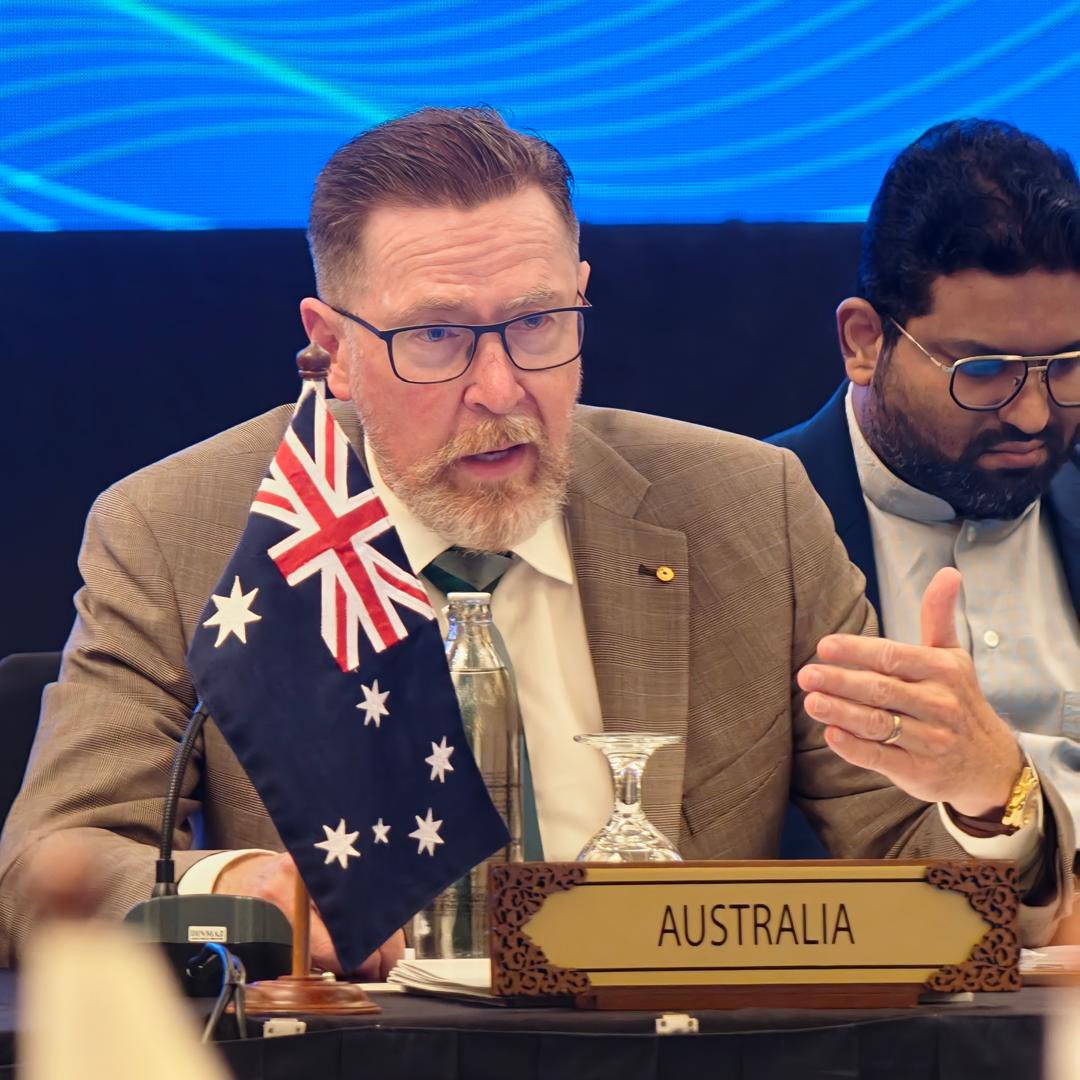
Productive discussions on conflict prevention at the 18th ASEAN Regional Forum Experts and Eminent Persons Meeting, co-chaired with Malaysia. The ARF is critical to strengthening dialogue in support of regional peace, stability and upholding international law. #ARF #ASEAN
1
9
16
1,595

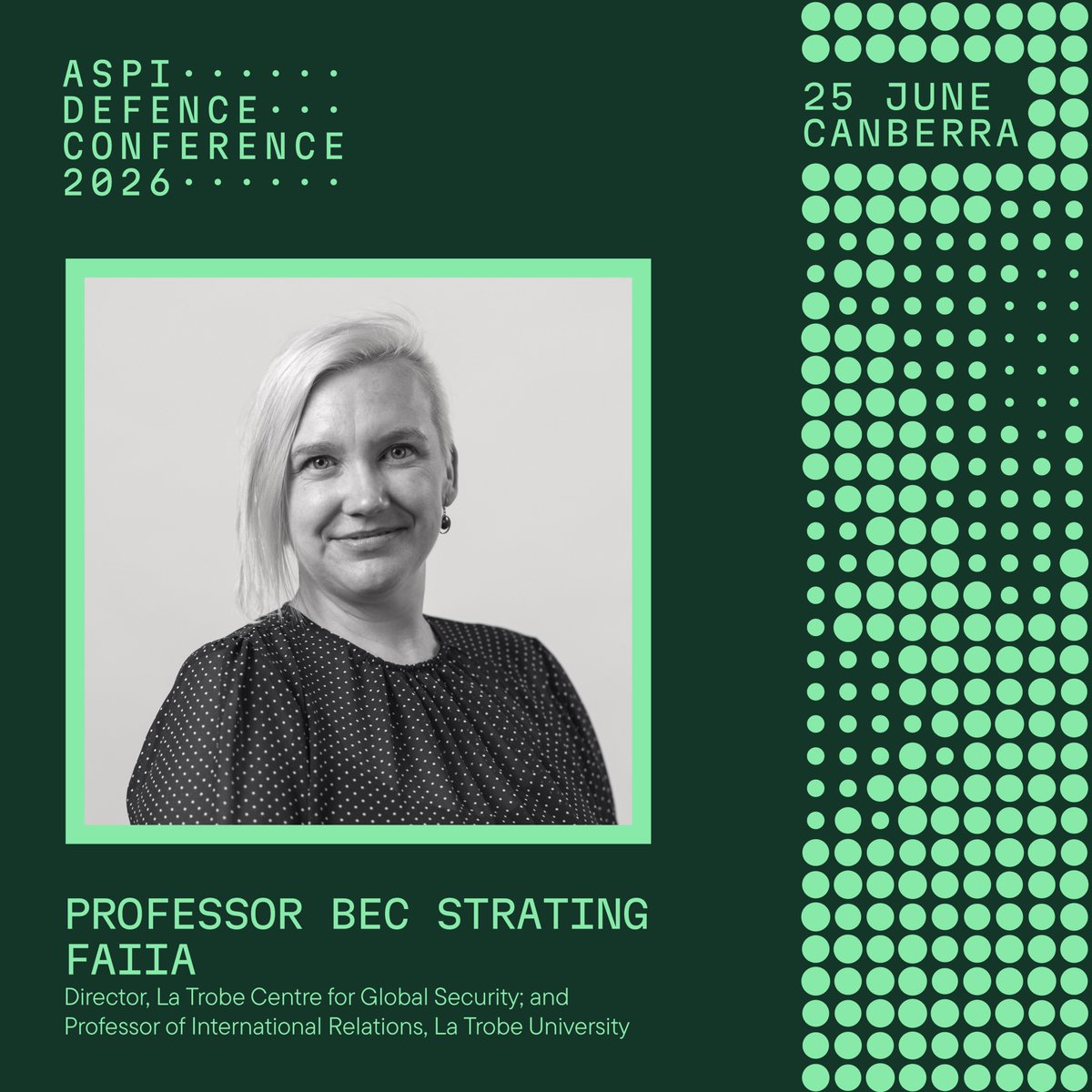
SPEAKER ANNOUNCEMENT 📢
We're delighted to announce that @becstrating, Director of @latrobeasia & Professor of International Relations at @latrobe, will join the speaker lineup for the 2026 ASPI Defence Conference.
🎟️ Early bird tickets are now on sale: bit.ly/4b4EHbo
4
13
1,037
Bec Strating retweeted

Apr 17
🇦🇺 and 🇲🇾 are co-Chairs for the #ARF Experts & Eminent Persons meeting for 2026. Welcome to @Rory_Medcalf, @le2huong and @becstrating who joined @ISIS_MY’s @Professor_Faiz to facilitate a conversation about conflict prevention in the Indo-Pacific and around the world.
#ASEAN
2
7
599
Bec Strating retweeted

This isn't even the half of it. Now do the hard policy tradeoffs and fiscal constraints that will ensue, especially for Asian economies.
Just take Indonesia, where Prabowo has had a lot riding on the fuel subsidy, a free nutritious meals program, and so on. And let's imagine a world of budget constraints where leaders like him may have to start curtailing signature programs that, in turn, undermine welfare gains, or else blow through fiscal constraints and run fresh budget deficits. In Indonesia's case, for example, that isn't even permitted since there is statutory requirement to hold the deficit to 3% of GDP.
We've got reports this morning of three Korean airlines in emergency management. And so much more around the region ...
Meanwhile, there seems to be a parallel debate in Washington, where there is so much self-satisfied talk in Washington about "back footing China" by "picking of its allies like Iran." But isn't it fantastical to think that a double whammy of a year of (1) American trade policy and tariffs that have undermined many of the prevailing developmental assumptions in Asia and (2) American Middle East policy that both wrecks Asian energy security and forces these kinds of fiscal and programmatic choices will have zero effect on U.S. posture in the region?
Whose debate are we having here in DC?
I used to write a column for India's financial newspaper @bsindia called "DC Diary." Am thinking of starting a new column called "DC Delusions," in which other people's realities are extrapolated away while Washington projects its strategic debating about "competing with China" onto everyone and everything.
Bottom line: think there are some tough choices ahead for Asian governments.
Mar 30

It’s only week five this is the global picture as of today.
🇧🇩 Bangladesh - Fuel rationing active. Universities closed. Military deployed in oil depots.
🇱🇰 Sri Lanka - Fuel rationing active. 15 litre per week cap for private motorists. Four day school week. Scaled back public sector operations.
🇸🇮 Slovenia - 50 litre per day cap on fuel for private drivers. 200 litres for businesses and farmers. Indefinite.
🇵🇭 Philippines - National energy emergency declared. Four day working week in place.
🇵🇰 Pakistan - Four day work weeks and school closures still in effect.
🇲🇲 Myanmar - Alternating driving days imposed.
🇹🇭 Thailand - Diesel price cap imposed. Government officials told to work from home and limit travel. Fuel exports banned except to Cambodia and Laos.
🇻🇳 Vietnam - Tapping fuel price stabilisation fund. Officials encouraged to work from home and limit travel.
🇰🇪 Kenya - Rationing by major fuel suppliers ongoing. Rural areas already running out.
🇪🇬 Egypt - Fuel and electricity rationing active. Malls, restaurants and retailers shutting at 9pm. Illuminated billboards switched off. Government buildings closing at 6pm.
🇮🇳 India - Government phasing out LPG cylinders for households with access to piped gas to prioritise supply.
🇨🇳 China - Export ban on diesel, gasoline and aviation fuel until at least end of March.
🇰🇷 South Korea - Fuel price cap imposed. First in 30 years. Voluntary fuel conservation measures in place.
🇯🇵 Japan - Refiners requesting government release of stockpiled oil. 95% of crude imported from Gulf states.
🇪🇸 Spain - €5 billion emergency package. Tax reductions on electricity and gas. Subsidies for transport operators and farmers.
🇩🇪 Germany - BASF raising prices on goods by up to 30%.
What could be coming
🇬🇧 UK - Ministers could activate contingency powers to introduce fuel rationing at petrol stations. 80% of UK goods travel by road. IEA has advised considering carpooling and working from home to save fuel.
🇪🇺 EU - Emergency measures under discussion. Storage across many member states below 30%.
Shell's CEO warned Europe could face fuel rationing starting in April if the Strait stays closed.
G7 finance ministers, energy ministers and central bank governors met in Paris today and issued a joint statement saying they stand ready to take "all necessary measures" to preserve stability in energy markets.
None of these restrictions have been easing. In several countries they are only getting worse.
8
58
172
38,661
Mar 31
Call for papers!
@DrSarahLothian @FathomsOne and I have launched a new Research Topic with Frontiers in Ocean Sustainability:
'Exploring the Relationship between the Ocean Economy, Innovation, and Security'
Pls find info here:
lnkd.in/gTxg3a5s
2
6
345
Bec Strating retweeted

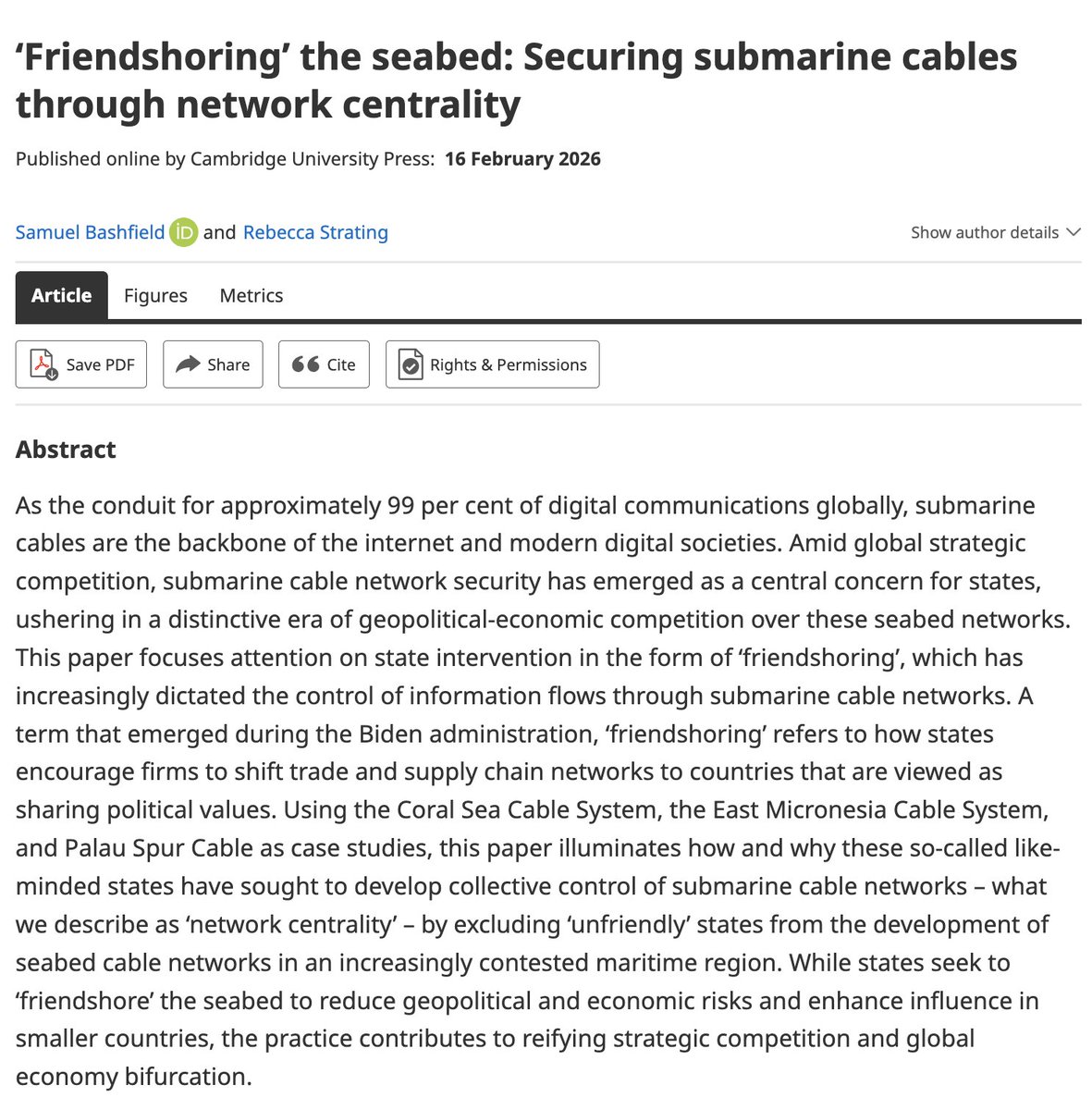
🌊 NEW: "‘Friendshoring’ the seabed: Securing submarine cables through network centrality" from @SamuelBashfield & @becstrating.
📚👉 Read here: cambridge.org/core/journals/…
1
13
22
1,671
Bec Strating retweeted

3 Nov 2025
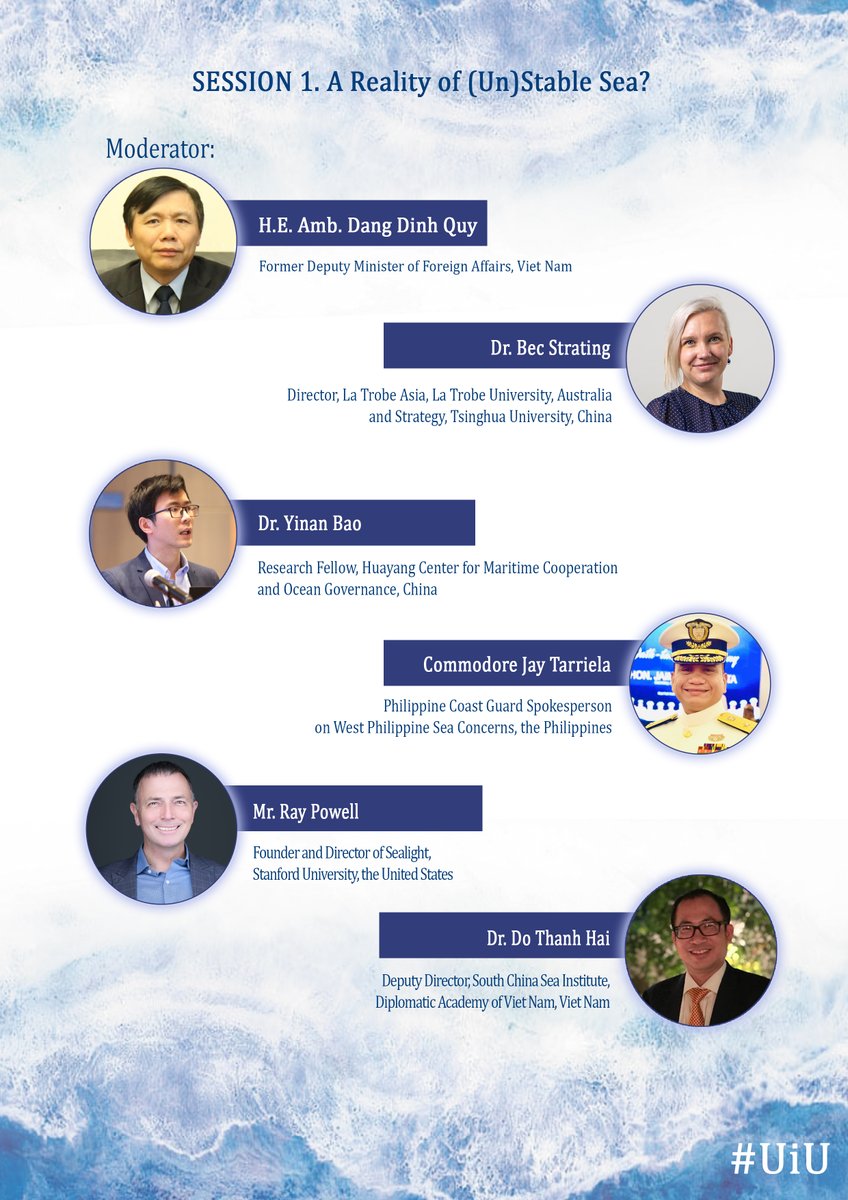
[#SCSC17 #UiU] SESSION 1: “A Reality of (Un)Stable Sea”, moderated by H.E. Amb. Dang Dinh Quy, Former Vietnamese Foreign Deputy Minister, starts NOW. Our speakers: Dr. @becstrating @latrobeasia, Dr. Yinan Bao, Commodore @jaytaryela, Mr. @GordianKnotRay & Dr. @HaiDo80 (#DAV)
54
7
17
3,157
Bec Strating retweeted

14 Nov 2025
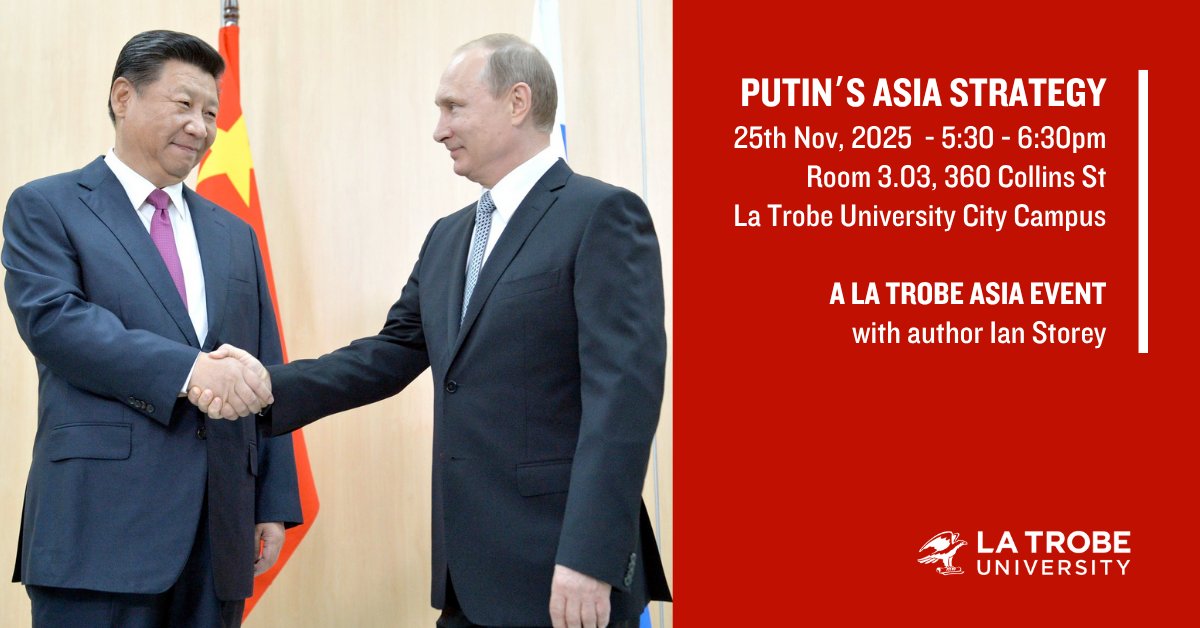
Come to the Melbourne launch of "Putin’s Russia and Southeast Asia" by @IanJStorey in conversation with @becstrating. NOV 25, 5:30PM (@latrobe City Campus) REGISTER: events.humanitix.com/putin-s…
4
1
558
7 Aug 2025
A worthy finalist for sure - good luck Jen!
6 Aug 2025

Honoured to be selected as a finalist in the ADM Women in Defence Awards, alongside an incredible group of women from @DefenceAust, industry, & academia.
Most women and men I know in Defence are driven by a sense of purpose, of one to contribute to something greater than yourself. Leaving Defence can make it hard to find that same meaning elsewhere, but I’ve been fortunate to continue advocating for how Australia thinks about its national interests and evolving threats.
It’s a privilege to contribute through media and academia to help inform public debate on the challenges we face in what may well be historic times.
@NSC_ANU @UNSWCanberra
2
4
684
Bec Strating retweeted

6 Aug 2025
Honoured to be selected as a finalist in the ADM Women in Defence Awards, alongside an incredible group of women from @DefenceAust, industry, & academia.
Most women and men I know in Defence are driven by a sense of purpose, of one to contribute to something greater than yourself. Leaving Defence can make it hard to find that same meaning elsewhere, but I’ve been fortunate to continue advocating for how Australia thinks about its national interests and evolving threats.
It’s a privilege to contribute through media and academia to help inform public debate on the challenges we face in what may well be historic times.
@NSC_ANU @UNSWCanberra
1
3
18
1,712
5 Aug 2025
📣 JOB alert 📣 The School of Humanities and Social Sciences at @latrobe is hiring for a fixed-term, full-time 3 year Research Fellow in Global Security position, focused on maritime security. Please email asia@latrobe.edu.au with any inquiries
careers.pageuppeople.com/mob…
7
19
1,516
Bec Strating retweeted

29 Jul 2025
National Security News | July 2025
🌏 Publication on conflict prevention by @Rory_Medcalf @le2huong @becstrating
🔎 Launch of review of the definition of a ‘terrorist act’
👤 Upcoming program on the future of intelligence
💡 Expert opinions
...& more.⤵️
mailchi.mp/anu/nsc-national-…
5
7
1,130
Bec Strating retweeted

2 Aug 2025
We discussed future of "resist China" messaging, Taiwan's inability to hedge, DPP's anti-nuclear stance, @ElbridgeColby's demand for Australia & Japan to aid Taiwan, @le2huong, @Rory_Medcalf & @becstrating's report & reassurance, and the end of @VOANews pacificpolarity.substack.com…
3
6
950