
667 Photos and videos













Bensage retweeted

The eve app is coming soon and you’ll be able to get your tickets from there
For now you can get your tickets on the web-app get your builders summit ticket there 😉
joineve.app
3
3
14
251
Bensage retweeted

Thrilled to announce that Drake’s final security audit has been completed.
Drake’s day 1 codebase for Monad mainnet has completed a full audit led by @sherlockdefi
This represents a significant step forward in Drake’s commitment to keeping users safe. Sherlock’s thorough, real-world-tested audits provide Drake with the peace of mind to build fast knowing the foundation is solid.

34
13
124
7,469

shMon'd around and tinkered this as a complete overhaul to @0xFastLane current website and dApp UX.
bensage.design/spotlight/fas…
2
44
Bensage retweeted

May 15
42
251
233
2,338
Bensage retweeted

May 19
We’re dropping Gemini Omni: our first step towards a model that can create anything from anything - starting with video.
It combines Gemini’s intelligence with our generative media systems - representing a leap forward in world understanding, multimodality, and editing 🧵
418
1,268
8,497
1,500,081
Bensage retweeted

BLOCKNADS holders were eligible for the Bob presale.
Congrats to everyone who participated 🤝

27
3
82
2,390
Bensage retweeted

Apr 7
There's a physicist at Stanford named Safi Bahcall who modeled this exact principle and the math is wild.
He calls it "phase transitions in human networks." When you're stationary, your probability of a lucky event is limited to your existing surface area: the people you already know, the places you already go, the ideas you've already been exposed to. Your opportunity window is fixed.
When you move, your collision rate with new nodes in a network increases nonlinearly. Double your movement (new conversations, new cities, new projects) and your probability of a serendipitous encounter doesn't double. It roughly quadruples. Because each new node connects you to their entire network, not just to them.
Richard Wiseman ran a 10-year study at the University of Hertfordshire tracking self-described "lucky" and "unlucky" people. The single biggest differentiator wasn't IQ, education, or family money. Lucky people scored significantly higher on one trait: openness to experience. They talked to strangers more, varied their routines more, and said yes to invitations at nearly twice the rate.
The "unlucky" group followed the same routes, ate at the same restaurants, and talked to the same 5 people. Their networks were closed loops. No new inputs, no new collisions.
Luck isn't random. Luck is surface area. And surface area is a function of movement.
The lobster emoji is doing more work than most people realize. Lobsters grow by shedding their shell when it gets too tight. The growth requires a period of total vulnerability. No protection, no armor, soft body exposed to the ocean.
That's the cost of movement nobody posts about. You have to be uncomfortable first. The new shell only hardens after you've already moved.

505
13,919
67,179
4,561,641
Bensage retweeted

Apr 2
The diamond engagement ring was invented by an ad agency in 1947. Before that, only 1 in 10 American brides got one. The company behind it, De Beers, was worth $9.2 billion three years ago. Today that number is $2.3 billion, and its owner is trying to find a buyer.
In 1940, diamonds were a luxury for the rich. Nobody proposed with one unless they had serious money. De Beers had a warehouse full of diamonds and no customers, so they hired NW Ayer, an ad firm out of Philadelphia. A copywriter named Frances Gerety came up with four words: “A Diamond is Forever.” NW Ayer paid Hollywood studios to write diamond proposals into movie scripts. They planted stories in gossip columns about which rock some actress just got. They invented the “two months’ salary” rule, the idea that a man should spend two months of income on a ring. None of that existed before. It was all marketing.
By the 1990s, 8 out of 10 American brides wore diamond engagement rings. Then De Beers did it again in Japan, going from 5% to 60% in 14 years. Advertising Age called it the greatest advertising slogan of the 20th century. They were right.
The whole business ran on one trick: make diamonds seem rare. De Beers controlled most of the world’s supply but only released a small amount each year. That artificial shortage kept prices sky-high. And the “forever” in the slogan had a second job: if nobody resells their diamond, supply stays tight and prices stay up.
Lab-grown diamonds blew that apart.
You can now grow a diamond in a lab that is the same thing, atom for atom, as one pulled out of the ground. Costs 80–85% less. In 2019, only 6% of engagement rings in America had a lab-grown stone. By 2025, that number was 61%. That’s from The Knot’s annual survey of 10,000 newlywed couples. People are buying bigger rings (1.9 carats on average, compared to 1.6 for mined) and keeping the savings.
De Beers saw this coming. In 2018, they launched their own lab-grown jewelry brand called Lightbox, priced at $800 per carat. The idea was to make lab-grown look like cheap costume jewelry so people would still pay a premium for “real” diamonds. Prices tanked 90% anyway. By 2025, American grocery stores were selling lab-grown diamond rings for $200. De Beers shut Lightbox down last May.
Since 2023, De Beers has lost nearly $7 billion in value. It lost over $500 million in 2025 alone and has about $2 billion in diamonds sitting in storage that nobody is buying. Its parent company, Anglo American, is now in what they’re calling “advanced discussions” to sell off the whole thing. A 137-year-old company, dumped.
The greatest ad campaign ever made convinced a planet that a common carbon crystal was worth two months of your salary. The product that’s killing it just proved you can grow the same crystal in a factory for pocket change.

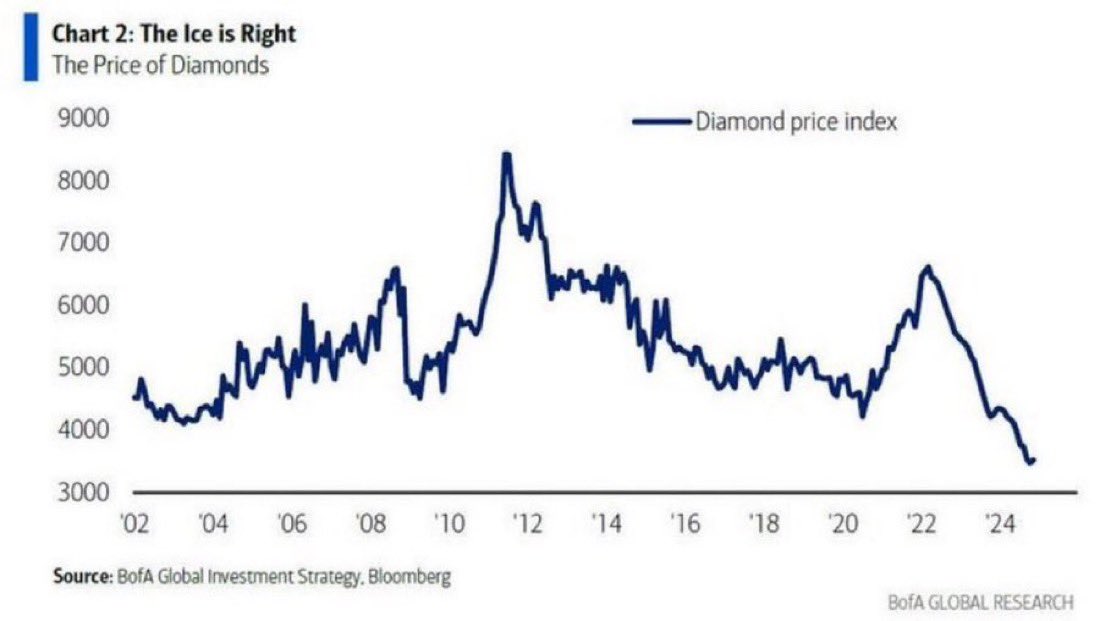
BREAKING 🚨: Diamonds
Diamonds may be a girl's best friend but they're your portfolio's worst nightmare. Prices have fallen to their lowest level this century!
191
1,814
10,942
2,184,974
Bensage retweeted
Mar 22
You’re watching a game that took 2,000 people eight years to build. Some of them are still dealing with what it cost them.
Red Dead Redemption 2 started production in 2010, right after the first game came out. Rockstar merged every studio it owned across five countries into one team. By the end, roughly 2,000 people had touched the project, and the budget landed somewhere between $370 million and $540 million, making it one of the most expensive entertainment products ever created.
The numbers inside the game are hard to process. 300,000 individual animations (every hand movement, every horse gallop, every raindrop reaction). 500,000 lines of voiced dialogue spread across 1,200 actors. Recording those performances took 2,200 days in a motion capture studio, where actors wear sensor suits so their movements translate directly into the game. The main story script was about 2,000 pages. Dan Houser, Rockstar’s co-founder, said if you stacked every script in the game, including random people walking around town, the pile would be eight feet tall. Even background characters you’d never talk to had 80-page scripts each, about the length of a short film screenplay for a character with zero plot importance. The composer wrote 60 hours of original music. Most players hear about a third of it.
The level of detail borders on insane. Horse testicles shrink when the weather gets cold. Your character gains weight if he eats too much, loses stamina if he doesn’t eat enough. Guns degrade without cleaning. Rockstar’s studio co-head Rob Nelson explained the logic: every tiny detail you don’t consciously notice makes you forget you’re inside a game. Stack enough of those moments and you get something no other studio has matched.
That immersion had a price. In October 2018, Dan Houser told New York Magazine the team had been working “100-hour weeks” multiple times that year. He later clarified that was four senior writers over three weeks. But when Kotaku’s Jason Schreier interviewed 77 current and former Rockstar employees, the picture was wider. Nobody hit 100 hours, but many averaged 55 to 60 per week for months at a time. That’s six 10-hour days, often with weekend shifts too. Most were salaried with no overtime pay, their only extra compensation tied to year-end bonuses that depended on how well the game sold.
Multiple developers described depression and anxiety during and after production. One told Kotaku they’d been “pushed further into depression and anxiety than I had ever been.” Others reported breakdowns and heavy drinking. Kotaku noted some of the worst stories couldn’t be published because the people involved would’ve been identifiable.
The game made $725 million in three days, the second-biggest entertainment launch in history. It has now sold over 82 million copies, won more than 175 Game of the Year awards, and is the fourth best-selling video game ever made. Every frame of that clip was paid for, one way or another.

293
3,126
35,684
3,909,098

I just launched /office-hours skill with gstack.
Working on a new idea? GStack will help you think about it the way we do at YC.
(It's only a 10% strength version of what a real YC partner can do for you, but I assure you that is quite powerful as it is.)

190
435
3,701
945,529

Noticed a pattern by my mid 20s that whenever I’d get a cabin or go camping or get an airbnb in the middle of nowhere for mushroom hunting, first night out there I’d sleep 9-10 hours when my usual was 5-7 hours at home. I suspected maybe it was lack of EMFs but didn’t know why exactly, just a consistent pattern. Incredibly good sleep whenever I’m away from civilization and first night my body resets
Mar 12

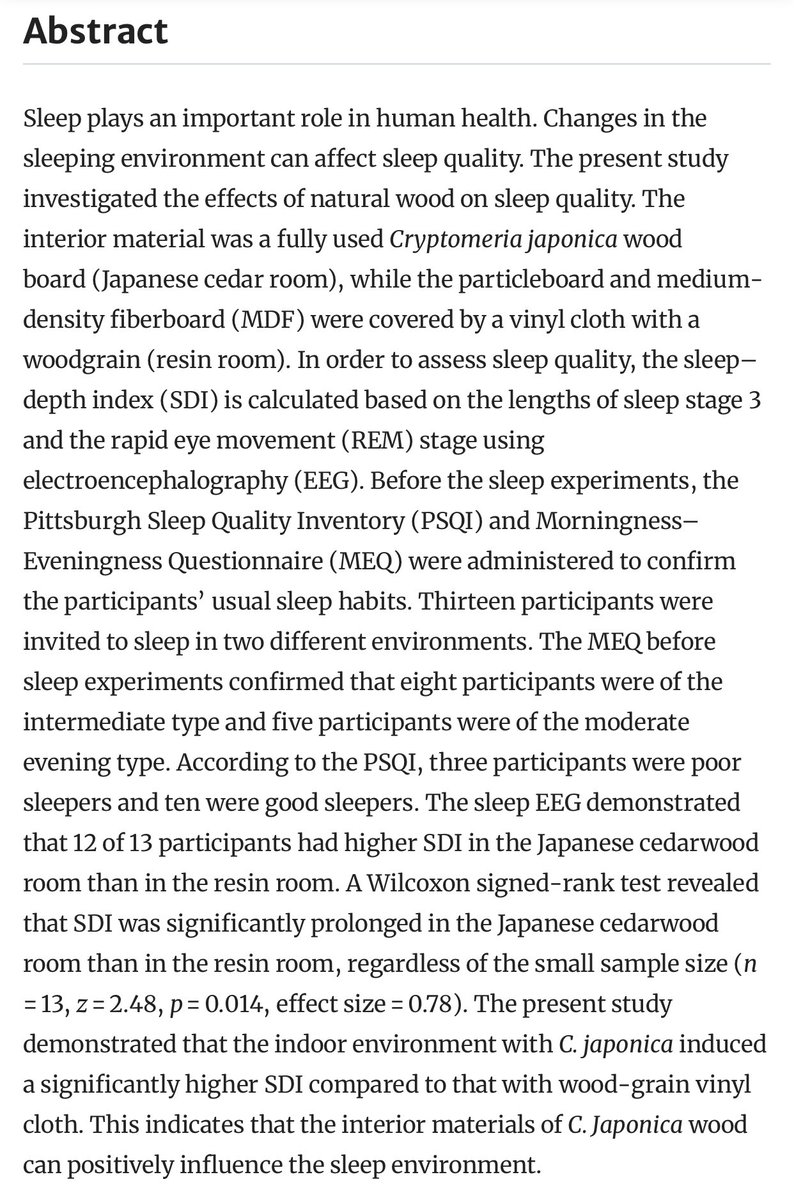
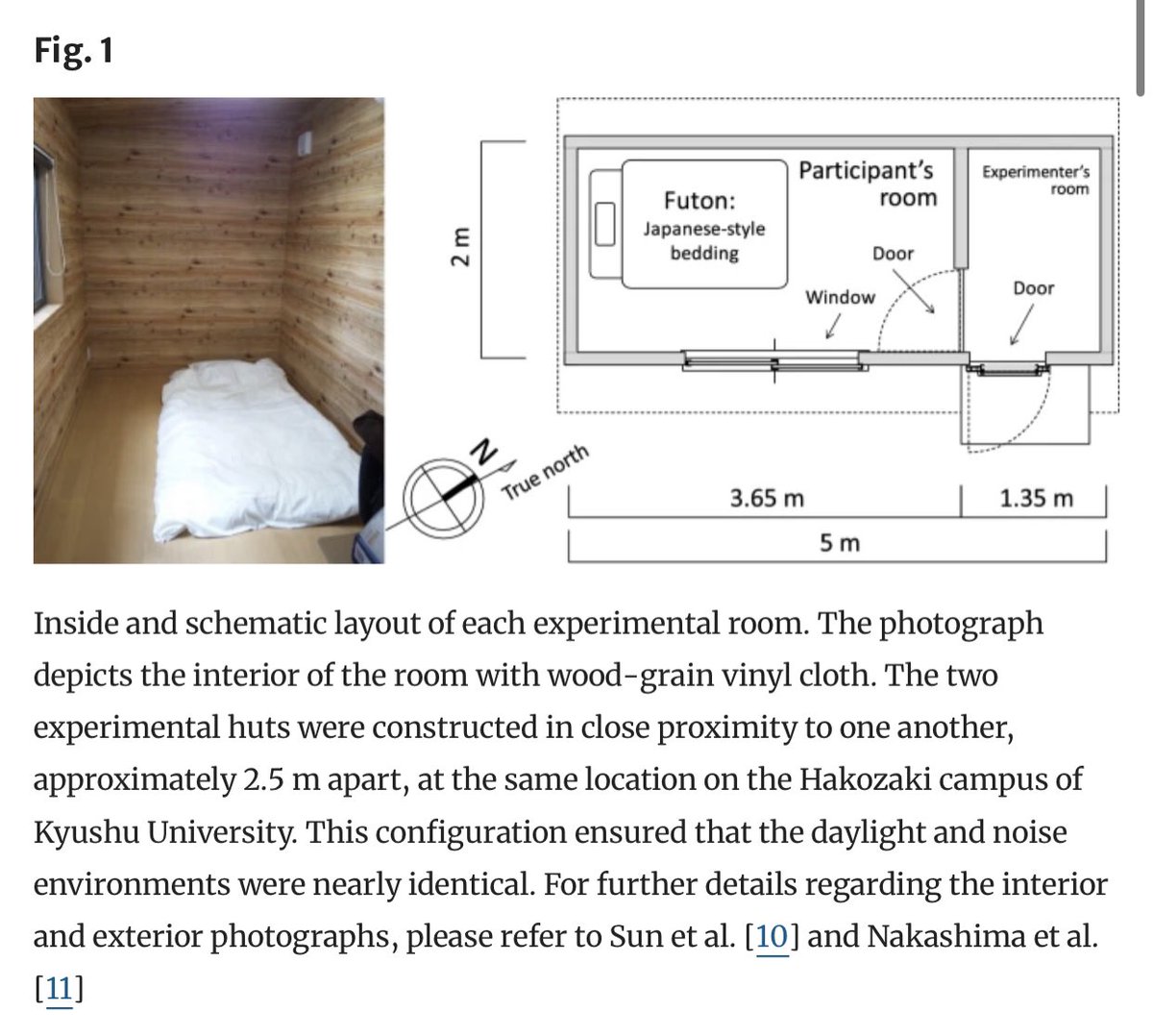
In a 2024 experiment humans sleeping in cedarwood paneled rooms had a far deeper and better sleep than in identical but vinyl clad room. The human body works best when surrounded by natural materials.

21
100
2,141
158,467
Bensage retweeted

Some of our best hires were totally unqualified on paper.
They always had the same qualities: entrepreneurial, high agency, smart, mission aligned, and they got shit done.
If you’re hiring, especially in early stages, seek out & bet on these people. Don’t over-index on resumes.
959
1,698
18,206
1,367,686
Bensage retweeted

Jan 26
90
286
1,748
873,262

Bensage retweeted

Feb 19
In 2013, Hayao Miyazaki foresaw the decline of Studio Ghibli—years before AI began imitating his work.
In 2013, Hayao Miyazaki spoke candidly about the future of Studio Ghibli, acknowledging that one day it might all come apart. His concern wasn’t money or fame, but legacy—because he knew Ghibli’s essence wasn’t just animation, but something profoundly human.
Years later, his words carry even greater weight, as AI models replicate the look of his work without his touch, his storytelling, or the soul that defined it.
34
232
1,886
126,369

Bensage retweeted

Feb 15
Currently working on adding more pools, expect an update soon!
Sentryield coded.

2
1
9
503
And we're live for the Moltiverse Hackathon @monad_dev.
Feb 15

We just shipped Sentryield for the Moltiverse Hackathon. Built an AI-powered yield agent that automatically hunts the best opportunities across Monad DeFi while you do nothing. Deposit USDC → Agent works 24/7 → Optimized yield → Withdraw anytime. Live on Monad mainnet right now. Here’s everything we built @monad_dev
1
5
112