
New AI, IT and security services - I post about Applied AI models, agents, context, security and governance
Joined August 2007
- Tweets 9,055
- Following 5,576
- Followers 2,248
- Likes 71,899
101 Photos and videos
Bruce MacVarish retweeted

Jun 13
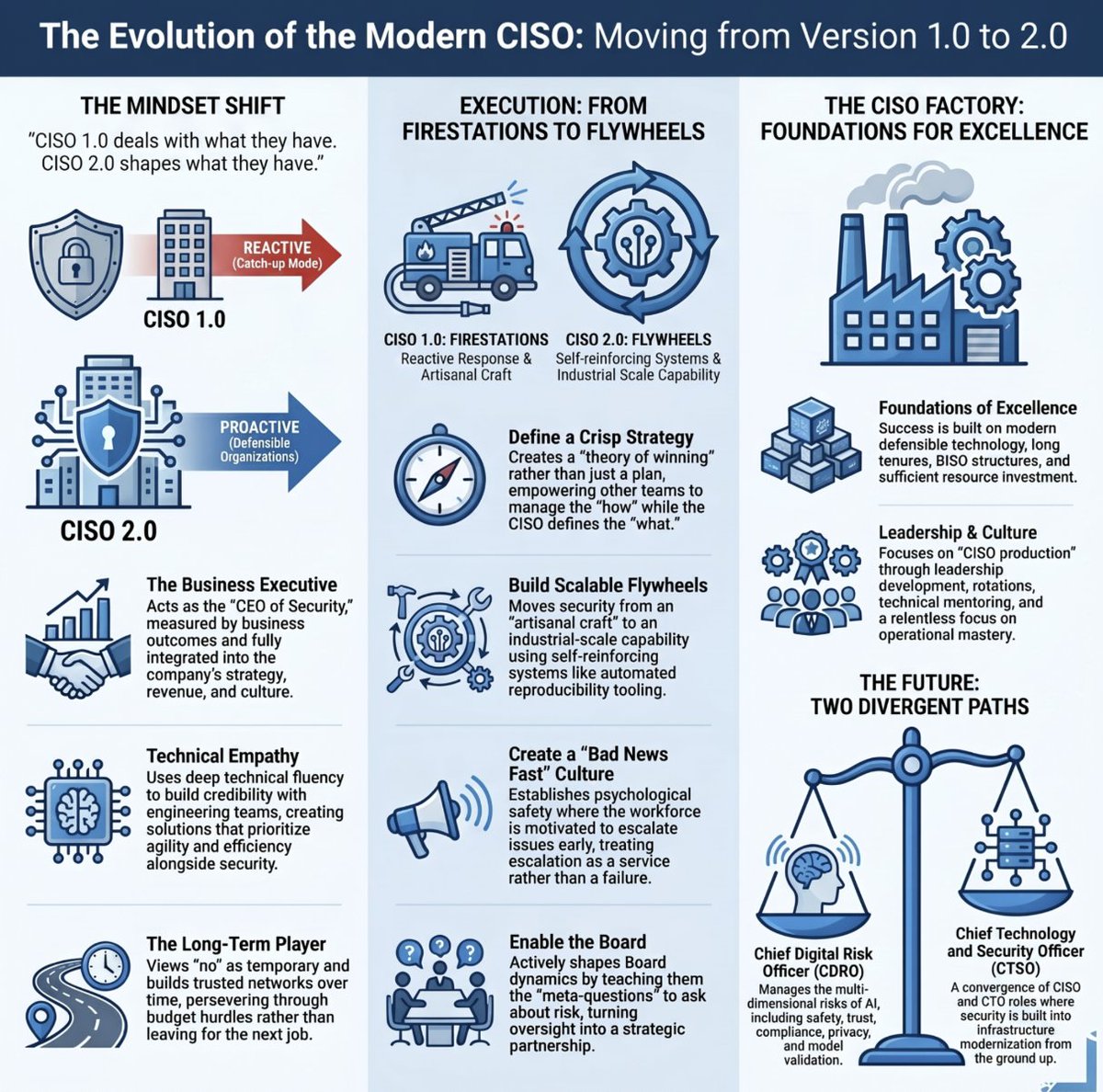
CISO 2.0
The Chief Information Security Officer role is fundamentally shifting from dealing with what they have to actively shaping business strategy.
What does this mean and how are leading security teams navigating this change?
philvenables.com/post/ciso-v…
2
32
99
5,315
Bruce MacVarish retweeted

Jun 13
The US government, citing national security authorities, has issued an export control directive to suspend all access to Fable 5 and Mythos 5 by any foreign national, whether inside or outside the United States, including foreign national Anthropic employees.
The net effect of this order is that we must abruptly disable Fable 5 and Mythos 5 for all our customers to ensure compliance.
Access to all other Claude models is not affected.
We apologize for this disruption to our customers. We believe this is a misunderstanding and are working to restore access as soon as possible.
Read our full statement: anthropic.com/news/fable-myt…
12,435
25,719
87,647
88,729,439

AI service firms are commanding 30x multiples right now. Yes, thirty.
That's why a16z, Sequoia, and YC are chasing services, not SaaS.
Most agencies will see this and reach for the wrong move. They'll keep selling hours, bolt on AI, and cut headcount to pad the margin.
But that's playing the small game.
Here's why:
00:00 Why Services Beat SaaS
01:13 The $1 Software vs $6 Services Opportunity
02:52 Why Managed Growth Loops Matter
04:49 Agents, Loops, and Human Judgment
06:43 How Single Brain Powers AI Service Businesses
07:22 The Services-as-Software Manifesto
08:41 The New AI-Native Org Chart
10:13 Building Outcome-Based Offers
11:13 Final Thoughts

79
127
1,355
411,061
Bruce MacVarish retweeted

Jun 9
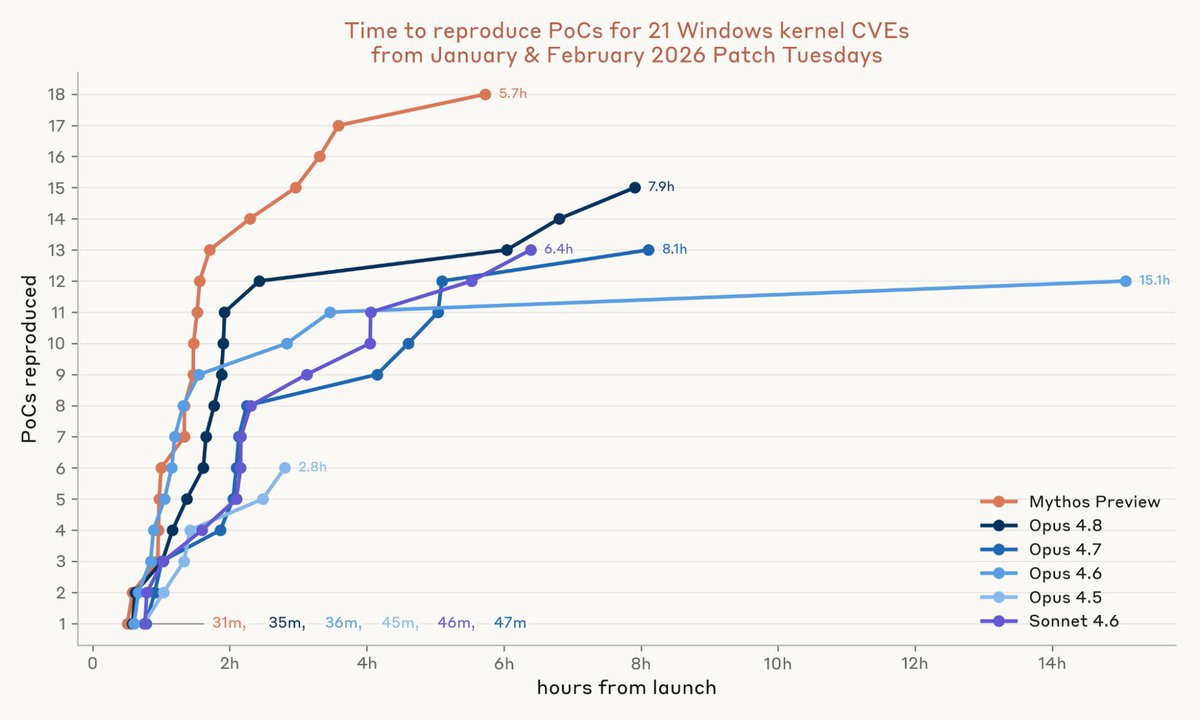
New post on Red today: Our team @AnthropicAI found that Mythos Preview is meaningfully better at developing N-days. It took us a couple thousand $ and a few hours to convert patches into exploits.
We publish research like this because we think it's important the world knows what models are/will be capable of.
In a year, Mythos will probably look trivial. We want to help the world to start preparing.
I'm excited to share a lot more blue team / defensive work. I feel like people are aware of the issue now, and the team's task is now to "solve it all" -- we have some exciting / interesting / creative defensive research lined up.
27
63
661
81,684
Bruce MacVarish retweeted

Power in AI is not only a merit system. It is a network system.
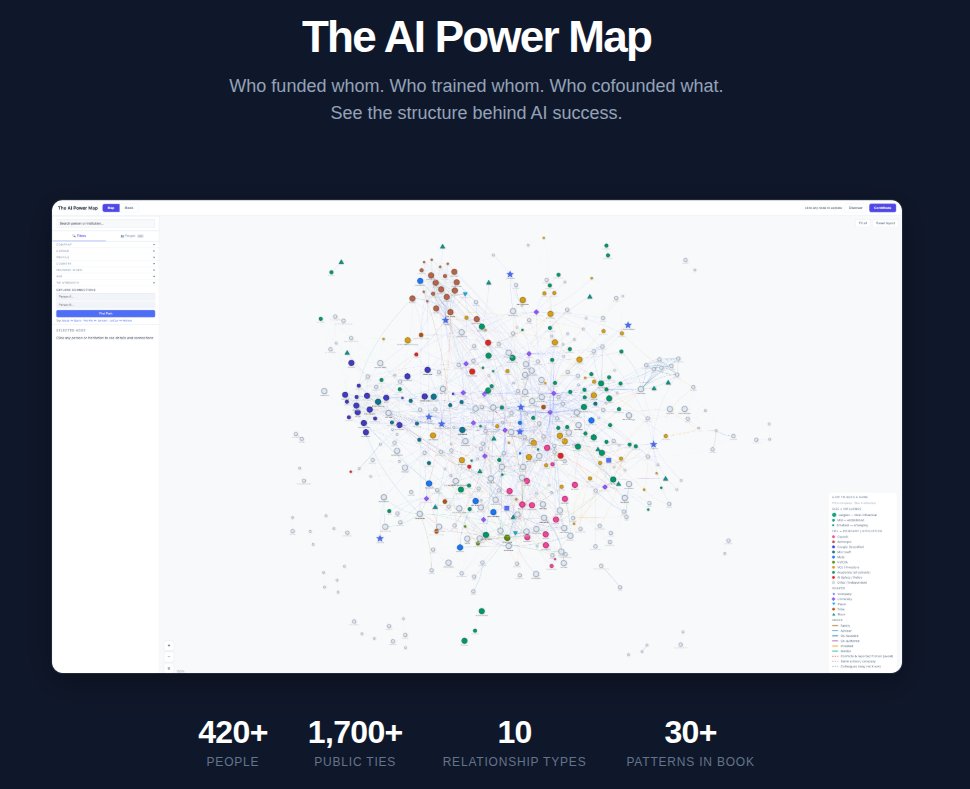
This is the core argument of The AI Power Map: a free 70,000-word companion book with an interactive graph of 420 people and 1,709 documented edges tracing how influence, trust, talent, and capital move across the AI industry.
The graph is the method. 8 methods of analysis were applied across the dataset, including betweenness centrality, community detection, motif analysis, and cofounder cluster identification.
The result is a map of recurring structural patterns: talent pipelines, diaspora arcs, acqui-hire chains, and the trust bridges that survive org chart changes.
Key findings from the network:
Stanford (77 nodes) and Google (#1 exporter) are the two dominant talent factories. School lineage, not company affiliation, is the stronger cohesion signal:
Sutskever, Gomez, and Karpathy share a Hinton-Toronto lineage across 5 different employers, visible in the graph edges, not inferred.
Network position is the strongest visible predictor of tier. T1 individuals average significantly more documented connections than lower-tier members.
8 canonical power transfer motifs repeat across the network: the walkout-to-lab pattern (OpenAI → Anthropic), the acqui-hire-as-talent-capture pattern (Google → DNNresearch), the reputation-round pattern (SSI: $32B, no product, no revenue).
Sam Altman holds the highest betweenness centrality in the dataset (0.145), connecting more disconnected subgraphs than anyone else. One node. 38 direct ties. YC, OpenAI, and Microsoft capital bridged through a single person.
The November 2023 board crisis resolved not through formal governance but through social capital: a staff letter, a private conversation, and external leverage. The network held the institution together, not the org chart.
The Transformer Eight paper is a single source node that produced a generation of careers and at least 3 frontier labs. One co-authored paper, eight trajectories, and an entire subgraph of the modern AI industry.
This is applied network science on one of the most consequential domains of our time. The interactive map lets you explore paths between nodes, filter by community, tie strength, and institution, and trace influence across the full connected graph.
By Yumi Kimura
map.behaviorgraph.com/?view=…
#NetworkScience #GraphAnalytics #GenAI #SocialNetworkAnalysis #AIIndustry
--
🤝 Put your graph tech brand in front of the people who matter
Your graph technology deserves to be seen by buyers, analysts, and builders who are actively shaping the space.
The Year of the Graph is the independent hub that this community trusts.
Slots for the upcoming Summer 2026 Issue are filling fast. Reach out and book yours now 👇
yearofthegraph.xyz/contact/
2
9
419

Huge milestone here. Firecrawl is making something agents want.
Jun 4

We've now fetched 8,000,000,000 pages at Firecrawl 🔥
A few other milestones in 2 short years:
- 1.25M developers
- 150K companies using us
- 125K GitHub stars (top 100 repo)
- 2.5M weekly downloads on npm PyPI.
Thanks for building with us & we're just getting started!
32
22
627
92,325

Every single AI startup with $10B valuation and $100M revenue run rate:
Crusoe - $10B
Mercor - $10B
ElevenLabs - $11B
Baseten - $11B*
Harvey - $11B
Lovable - $12B*
OpenEvidence - $12B
Mistral - $14B
Nscale - $14.6B
Fireworks - $15B*
Sierra - $15.8B
Moonshot - $20B
Perplexity - $22.6B
Cognition - $26B
Scale - $29B**
DeepSeek - $52-59B*
Cursor - $60B*
Waymo - $126B**
xAI - $250B**
OpenAI - $852B
Anthropic - $965B
21 total companies.
*rumored / unannounced
**not fully independent
131
132
1,908
330,095

Jun 4
Enterprises that treat the Anthropic findings as a leading indicator and move from reactive patching to proactive AI-native resilience and framework modernization will be materially better positioned by 2030.
Those that continue optimizing 2010s-era playbooks will face compounding disadvantage.
Jun 3

How well do the security community's techniques hold up against AI-enabled cyberattacks?
We examined 832 malicious accounts and mapped their activity onto a longstanding database of tactics and techniques used by threat actors.
Here's what we learned:anthropic.com/news/AI-enable…
1
21
Bruce MacVarish retweeted

Jun 3
162
954
4,569
984,814
Jun 3
Morgan Stanley opening its wealth platform to AI agents marks the quiet migration of capital allocation from human gatekeepers to autonomous systems.
Trust, once built on relationships, now routes through verifiable execution and AI agents
cnbc.com/2026/06/03/ai-agent…
1
19
Bruce MacVarish retweeted

Applications are still open.
The Agentic AI Foundation Ambassador Program is for developers building with Goose, MCP, or AGENTS.md who want to turn real work into the tutorials, demos, and examples that shape how others adopt and build with agent systems.
Deadline: June 12 - bit.ly/4x0Uykk
20
140
9,004
Jun 3
"Only three things in the firm still need a human:
... picking the thesis, building relationships with founders working in that thesis, and supporting them after the check.
Everything else, including sourcing, diligence, term sheets, and CRM, is being handed to agents."
Jun 2

The Three Humans Left in a VC Firm
Fred Wilson, co-founder, Union Square Ventures, interviewed by Michael Mignano (USV)
[I post one executive summary daily of an interview I enjoyed and learnt from. I loved this interview that @mignano did with @fredwilson, who I've learnt a tremendous amount from on the board of Coinbase. Tons of great nuggets for founders and investors.]
Summary: After 40 years in venture, Wilson has rebuilt USV around a single conviction. Only three things in the firm still need a human: picking the thesis, building relationships with founders working in that thesis, and supporting them after the check. Everything else, including sourcing, diligence, term sheets, and CRM, is being handed to agents. The interview is a working sketch of what a venture firm looks like when the back half of its job becomes software, and a clear read on what stays human-only and why.
1. The Three Humans Left. A year ago Wilson wrote a memo to his partners saying that if he were starting USV from scratch today, only three jobs would stay with humans: high-level thesis development, building relationships with founders inside that thesis, and supporting them after the check. Everything else gets handed to agents. USV is now executing on that memo, not theorizing about it. For founders raising, this is the new operating profile of the firm sitting across the table.
2. Agents Love Data Rooms. "I hate data rooms. Agents love data rooms." USV no longer asks a junior associate to scrub the data room before a term sheet. An agent reads the room and answers questions in conversation: cap table, vesting, founder ownership, anything in the corpus. The effect on partner time is direct, with less work on the parts of the job no one enjoys and more time with founders.
3. Term Sheets Without Lawyers. USV's term sheets are now written by an agent, with no outside counsel stamp at the term-sheet stage. The firm seeded the agent with standard term sheets by sector and by stage, then partners shape each document in conversation with the agent. Wilson does not yet trust an agent to write long-form definitive docs. The implication for founders: term sheets land faster, with less round-trip friction, and the cost structure of the next-generation venture firm starts to drop.
4. The Kill Zone Test. Wilson ran a sample contract through a legal-AI startup and through raw Claude Code, side by side, and Claude's markup was better. "All of legal AI is in the kill zone." The test is portable to almost any AI vendor pitch. If a wrapper company cannot outperform the raw model on the thing it sells, the wrapper is paying for the privilege of being disrupted. Operators should run the same test before signing a multi-year contract.
5. No Wrappers Allowed. To survive the kill zone you cannot wrap a model. You have to rebuild the business model from scratch around the new economics. Cursor is the example Wilson reaches for: it has been hugely successful, but more developers are dropping back to raw Claude Code, and nothing stops Anthropic from shipping an IDE. A defensible AI company redesigns the workflow itself, so the foundation lab would have to abandon its current pricing model to copy.
6. Energy Is the AI Trade. About a third of USV's deployment now goes to energy, because no matter which model wins, the winner needs power. The firm has backed a decentralized model-training network and a company that turns each grid-scale solar and wind plant into a mini data center selling inference tokens. The trade is indexed to AI without forcing USV to pick the model. Builders hunting for a less crowded adjacent market should read the same memo, because the picks and shovels of AI run through electricity.
7. Sellers, Not Coders. The skill USV now overweights in founders is selling: recruiting, fundraising, convincing customers, inspiring teams. Forty years has taught Wilson that the founder who can tell the story and bring it to life wins more often than the founder who can write the code. The corollary is uncomfortable for technical founders. "Actually being able to write code is probably not a big deal anymore," though enough technical vision to see three moves ahead still matters. If you are a CEO who cannot recruit, that is now your constraint.
8. The 80–90% Open Source Window. Open-source models, especially the ones shipping out of Asia, are running at 80 to 90 percent of the quality of the closed frontier models. Right now the closed labs are subsidizing usage, so price does not force the comparison. When the labs have to charge a real margin, open source becomes a serious value alternative and the playing field levels. Wilson is not betting the firm on this outcome, but he is hedging into the quadrant where open source wins.
9. Founders Still Want Humans. Founders do not want to raise money from an agent. They want to know the human they are getting in business with, and that is why Wilson does not see VC automating itself out of a job in the short term. The firm can automate the back half of the workflow. The front half, sitting across from a founder at 11 p.m. when they have had a horrible day, stays human.
10. Don't Pass on Price. The biggest regrets of Wilson's career are deals he passed on because the price was too high. The market-clearing valuation will almost always feel uncomfortable a year later, and the right answer is to find a way in, even if that means buying secondary instead of leading the round. Saying no on price is a defensive move masquerading as discipline. Founders raising can use the line in negotiation, because a firm that walks on price is telling you it has not adjusted to the current market.
11. Offense Over Defense. Wilson lost $25 million in six months in 2001 and learned that getting it wrong is a byproduct of the job, not a verdict on the investor. He spent his first 15 years scared of losing money and only got good at venture once he stopped playing defense. The advice is harder to apply for someone breaking in, because the first checks really do matter, but the directive holds at every level. For operators, the analog is the founder who refuses to ship until the product is perfect, because you cannot win a game you are not playing.
12. The Relationship Is the Moat. After 40 years and an AI rebuild of the firm, Wilson's one-line summary of the venture business is the same as it was on day one. The relationship between the investor and the founder is the secret sauce. Everything else, including the work USV used to staff up to do, gets compressed by technology. Find great founders, build real relationships with them, and help them build great companies. If your venture pitch to LPs does not lead with that, you are pitching the wrong business.
1
20
Bruce MacVarish retweeted

Jun 2
This is really good, @AnthropicAI posted a document on how to apply the principles behind Zero Trust to AI Agents:
claude.com/blog/zero-trust-f…
4
39
139
13,958
Bruce MacVarish retweeted

Jun 1
10
47
297
91,955
Bruce MacVarish retweeted

Jun 2
Microsoft launches MXC, an OS-level sandbox for AI agents, with OpenAI and Nvidia already on board
venturebeat.com/ai/microsoft…
1
6
11
1,437
Bruce MacVarish retweeted

Jun 2
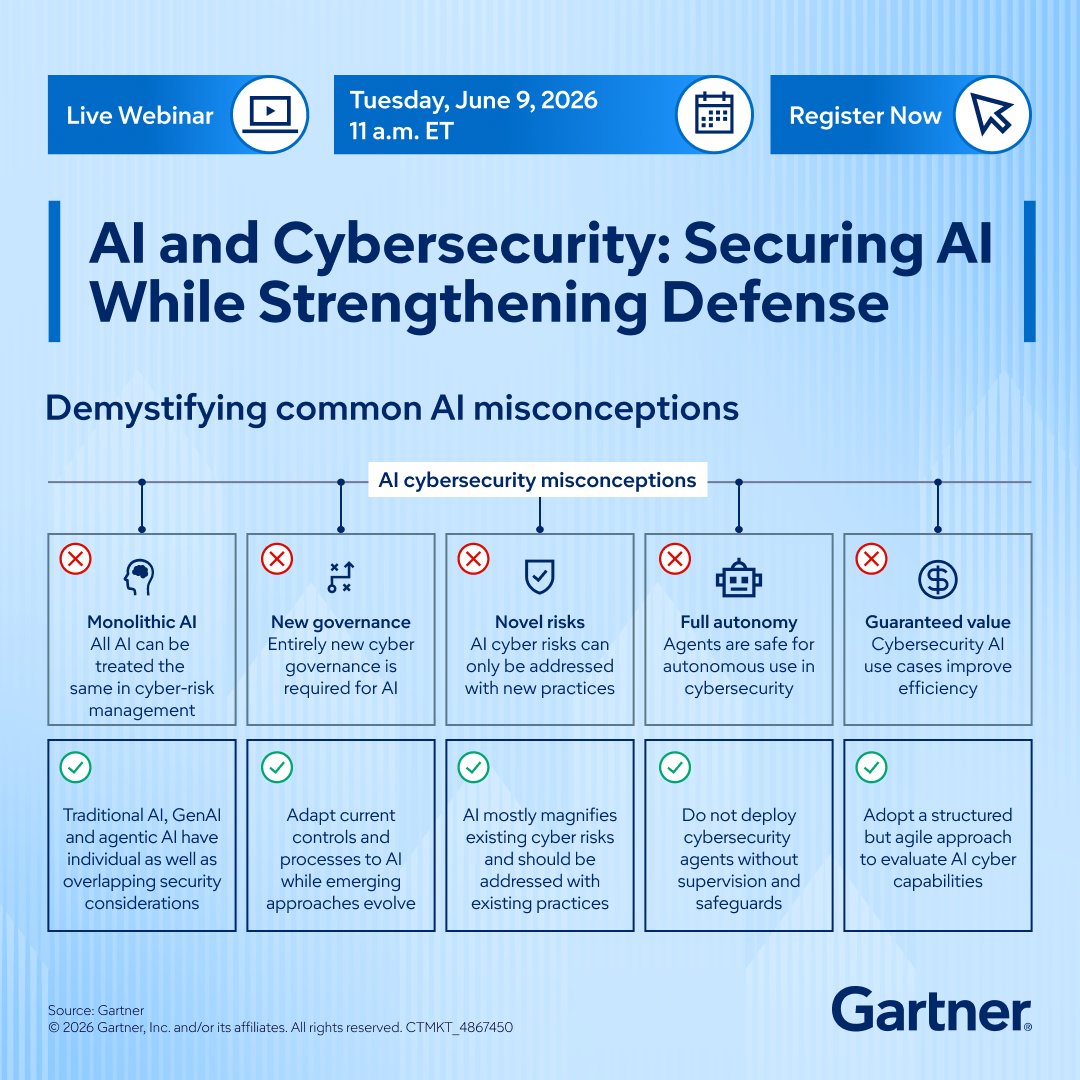
🌊 Every new wave of AI innovation brings fresh threats alongside powerful tools that can transform your defense strategy.
This webinar uncovers how security teams are leveraging AI responsibly, staying vigilant against adversaries, and charting a path toward secure, scalable adoption: gtnr.it/3PKWo84
9
31
6,057
Bruce MacVarish retweeted
Context Graph Architecture in 2026: Linked Data Orchestration and the Thin Red Line
Context graphs need knowledge architecture. But what does it take to build one? The answer has been hiding in plain sight for years.
Why context graph knowledge architecture need an inference layer, not just an entity layer, to deliver on their promise for enterprise architecture
How ArchiMate 3.2 as an RDF ontology provides the knowledge architecture substrate: federation, derivation rules, and the relationship no architect ever draws
Why hydration remains the practical barrier, and what’s changed since the problem was first named in 2012
How to manage the RDF reasoning cost as an engineering choice between forward and backward chaining
When Foundation Capital declared context graphs AI’s next trillion-dollar opportunity, the hype engine ran with it and the industry rushed to build. But Enterprise Architecture practitioners recognized the problem immediately: they’d been solving it for 40 years.
The real challenge isn’t inventing a new category. The challenge is connecting what EA has always done – mapping organizations’ technology, capabilities, and decisions – with the knowledge architecture layer that turns those fragmented traces into governed, machine-queryable intelligence.
As Forrester’s Charles Betz notes, the center of gravity in enterprise architecture is shifting from documentation to decision velocity. The pain was never that architects couldn’t find issues. Issues arrive daily from linters, scanners, peer reviews. The pain was delay and unpredictability. Designs disappearing into queues. Governance becoming friction.
So what’s the infrastructure that can make decision velocity possible at architectural scale?
In “Beyond the Decision Trace“, we argued that three approaches – the BI semantic layer, context graph/EA, and knowledge graph/ontology – are tackling the same problem from different angles and not talking to each other. The connecting thread is context graph knowledge architecture: formal representation of concepts, relationships, constraints, and inference rules, in machine-queryable form.
We pointed out a concrete piece of that infrastructure – Alberto Mendoza’s work on ArchiMate 3.2 as an RDF ontology. Now is the time to ask what it would take to put it to work. Not as an academic exercise. As engineering.
The answer leads somewhere unexpected: back to 2012, and a problem that keeps coming back under different names.
By George Anadiotis
linkeddataorchestration.com/…
--
🤝 Put your graph tech brand in front of the people who matter
Your graph technology deserves to be seen by buyers, analysts, and builders who are actively shaping the space.
The Year of the Graph is the independent hub that this community trusts.
Slots for the upcoming Summer 2026 Issue are filling fast. Reach out and book yours now 👇
yearofthegraph.xyz/contact/

5
20
1,036
Jun 1
In the Intelligence Economy, learning velocity is the ultimate competitive advantage.
10
Jun 1
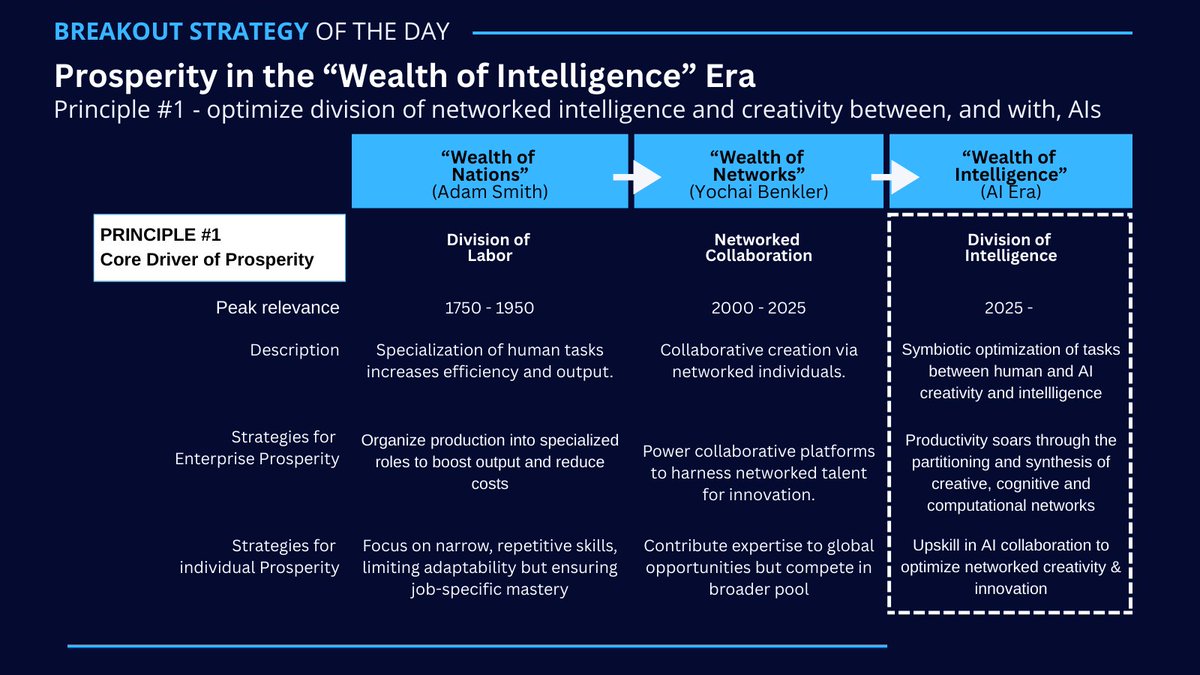
In the Intelligence Economy successful companies compete on:
- Division strategy: What do humans do vs. what does AI do?
- Alignment quality: Do humans and AI pursue compatible goals?
- Coordination effectiveness: Do you orchestrate at scale?
- Adaptation speed: How quickly do you improve as AI improves?
- Network effects: Do you orchestrate ecosystems?
1
1
24
May 31
AI agent security: New governance framework shows progress, but critical gaps remain cybersecuritydive.com/spons/… via @CyberSecDive
16