
BubblSpace: Create bubbl for your Open AI Agents. Build , customise , collaborate., innovate using Open AI agents called bubbl
Joined January 2022
- Tweets 134
- Following 34
- Followers 19
- Likes 227
Photos and videos
Pinned Tweet

16 Aug 2023
Bubblspace: Create bubbl for your 🦾Open AI Agents.
Build , customise , collaborate, innovate using Open AI agents 🤖called bubbl
📧 contact@bubblspace.com
🚀 Alpha 2 launch 23 Aug 2023
#ArtificialInteligence #ai #ChatGPT #python #programming #datascience #bubblspace #bubbl
2
2
214
BubblSpace retweeted

May 13
This is one of the most crucial lessons in First Break AI.
It teaches you how to navigate @huggingface like a pro.
Not just:
download model → run notebook → move on
In this lesson, we go deeper.
We look at how open model repos are structured, how to read model files, how config.json connects to the actual model class, and how to trace from a Hugging Face model page into the Transformers code that runs the model.
We use Qwen3-0.6B as the learning model.
We also look at why Markdown matters so much in AI workflows: model cards, GitHub issues, README files, Discord, Cursor, Claude Code, planning docs, and AI-assisted work.
Then comes the biggest win: datasets.
Working with datasets is a core AI engineering skill.
I show 3 ways to analyze datasets on Hugging Face:
Croissant endpoint
Data Studio / browser viewer
load_dataset with Python, pandas, and plots
We inspect dataset structure, categories, response lengths, distribution, short examples, long examples, and how to think about dataset quality before using it for training or fine-tuning.
And this sets up the next part:
running Qwen3 directly in C, without treating Transformers as magic.
Lesson 01: Hugging Face Beyond Upload
Watch:
youtu.be/MjZio-A9oUY
Free cohort:
cohort.bubblnet.com/lessons/…
5
10
277
BubblSpace retweeted
May 6
Cost/Perf tradeoffs & Evals are the most requested topics for this cohort.
I was not expecting these to make top 3. Real life signals are always different from my assumptions.
Apr 24

First Break AI
Your first break in AI — a guided journey from first commit to capstone
Free, open cohort to upskill in training, inference, and AI product building.
cohort.bubblnet.com/
Easy to follow Roadmap & AI Podcast guided journey are up.
Weekly office hours (Friday)
Join Discord Server: discord.gg/UfwdKvfku
1
5
6
73
BubblSpace retweeted
Apr 9
Exactly right. And the scary part — most founders have no idea because their site looks fine in Search Console.
I ran Google Analytics on my own site. Barely any activity.
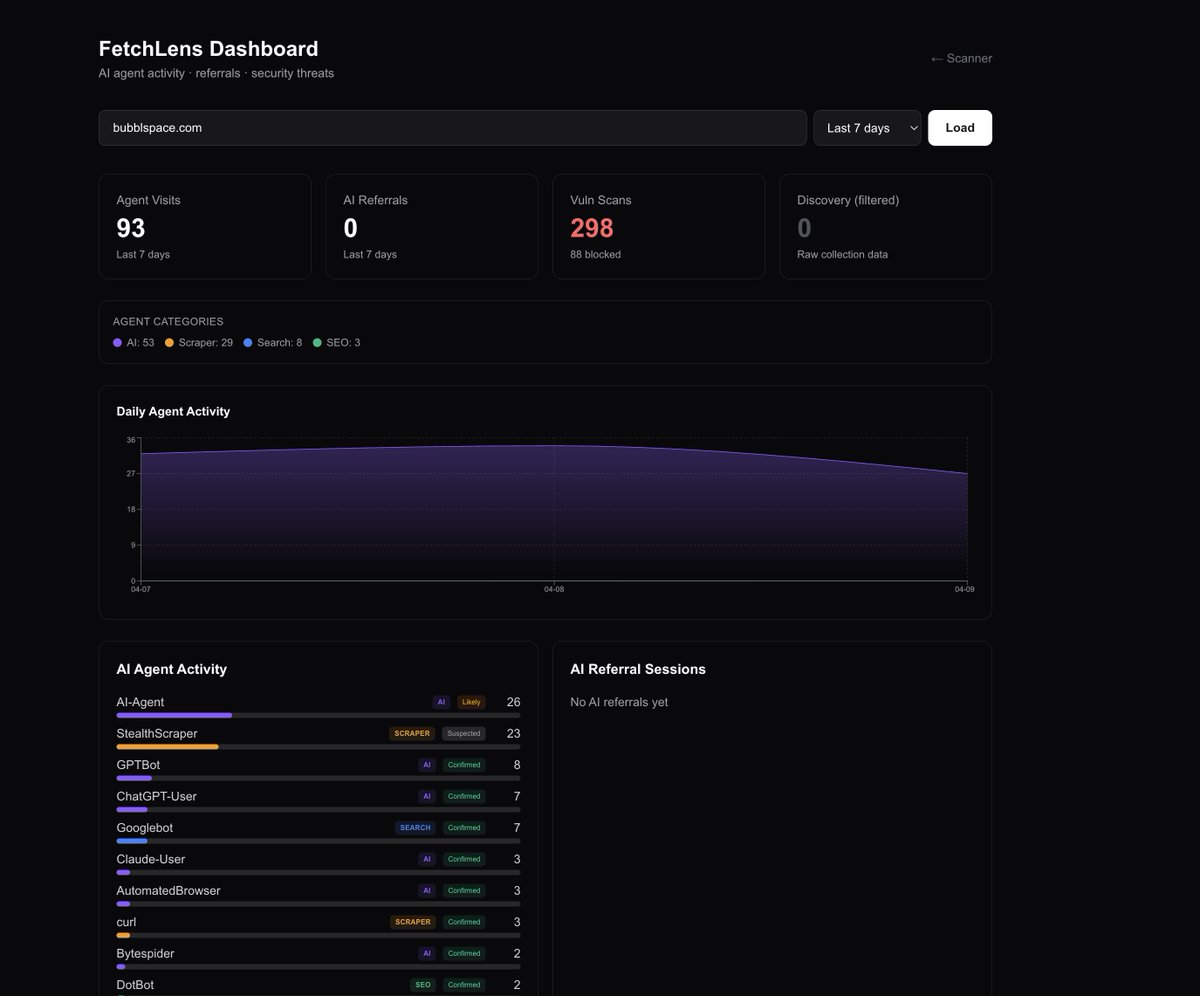
Then I built FetchLens and pointed it at the same site. 93 AI agent visits and 298 vulnerability scan probes in 7 days. GPTBot, ChatGPT-User, ClaudeBot, StealthScrapers — all hitting my pages. Google Analytics showed none of it.
AI bots are hungry for your content. They're either scraping it or failing to read it. Either way, you can't see it with traditional analytics.
The web isn't just for humans anymore.
fetchlens.ai
4
6
45
BubblSpace retweeted
Apr 9
I scanned Hacker News for AI readiness.
fetchlens.ai/
Score: 59/100. Grade: D.
26 out of 26 AI agents — GPTBot, ClaudeBot, PerplexityBot, all of them — have full, unrestricted access to news.ycombinator.com.
No robots.txt restrictions. No blocking. Wide open.
Here's the signal-by-signal breakdown:
Bot Access Policy — 20/20 Every major AI crawler is allowed in. OpenAI, Anthropic, Google, Perplexity, Common Crawl. HN blocks nobody.
Render Mode — 10/10 Server-rendered HTML. This is the one thing HN gets right that 40% of modern web apps get wrong. Most React/Vue sites serve AI crawlers an empty div. HN serves real, parseable content.
Citation Readiness — 7/10 Well-structured content that AI systems can cite. Backed by Princeton/IIT Delhi GEO research (KDD '24) measuring what actually drives AI citations.
Content Freshness — 0/5 Zero freshness signals. No lastmod in sitemap, no dateModified in structured data. AI systems favor recently updated content and HN gives them nothing to work with — ironic for a site that updates every minute.
AI Trust Signals — 0/5 No author attribution, no organization markup, no publication dates in structured data. AI systems use these to assess source credibility.
The thing nobody else checks: can AI actually READ your site?
Every "AI audit" tool checks your robots.txt. That's table stakes. The question that matters is whether your pages are server-rendered or client-rendered. 40% of React and Vue sites serve AI crawlers a blank page — literally <div id="root"></div> with zero content. Your analytics will never show you this. The bot visits, gets nothing, leaves.
HN passes this test because it's old-school server-rendered HTML. Most modern sites don't.
I built FetchLens to check 12 signals across 5 parallel requests in under 3 seconds. Free scan, no signup.
fetchlens.ai/
3
4
10
231
BubblSpace retweeted
Feb 19
One of the biggest hidden pains of building products with AI coding agents is regression testing.
A new feature written by an agent can quietly break existing functionality and wipe out days of effort. I’ve run into this multiple times.
The problem isn’t feature velocity. It’s stability.
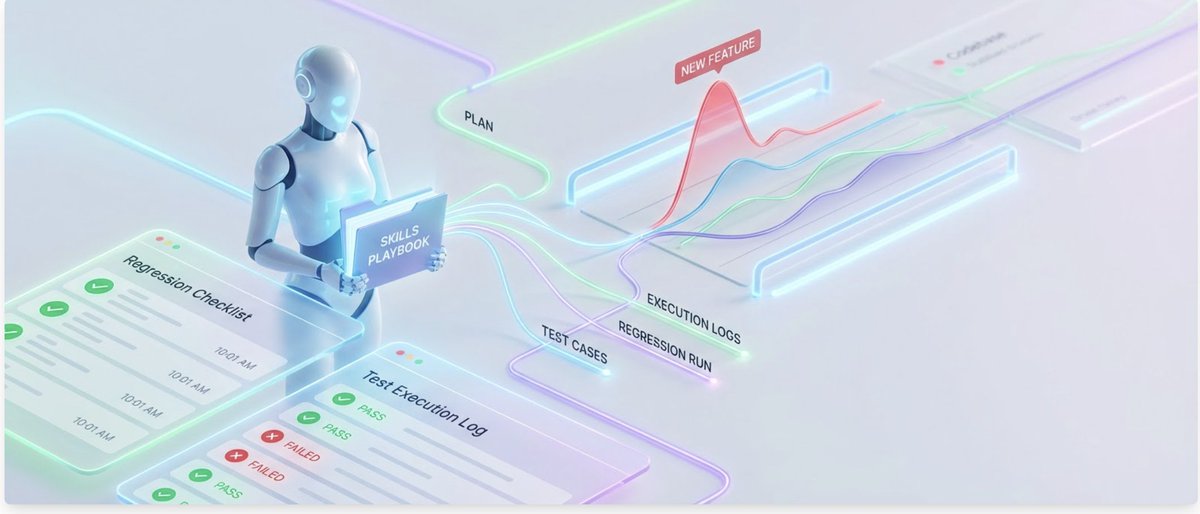
My solution: use structured Skills for testing and documentation.
First, a quick primer.
Test cases are foundational to the Software Development Life Cycle (SDLC). Well-written test cases can often replace complex feature or requirement documents.
Once code is written, you typically perform:
1. Unit testing — validates the functionality of a single module or feature
2. Integration testing — ensures different modules work correctly together.
3.Regression testing — confirms that new changes haven’t broken existing functionality.
In many early-stage products, most of this testing is manual. Let’s assume a simple CI/CD pipeline and manual test execution for this discussion.
Here’s how I use Skills:
For large features, I create a detailed, phase-wise plan. After each phase, structured test cases are generated and stored alongside the plan. Test execution logs are maintained in the same file.
But the real leverage comes later.
In one example, I was building a dashboard for AI Personas so users could track what their agents were doing while they focused on other work. All test cases and execution logs were captured during development.
On subsequent iterations, coding agents extract the full test history and automatically generate a regression checklist. Because execution logs already exist, the agent can focus on real historical breakpoints instead of hallucinating edge cases.
You can go further:
Add an impact analysis step inside the Skill to prioritize affected requirements.
Log every PR and commit automatically.
Maintain structured change history for easier rollback.
5
5
13
252
BubblSpace retweeted
Jan 14
The community's response towards Cowork gives us a strong positive signal towards what we have been building
timecapsule.bubblspace.com/
Our product works in your browser & solves a different problem.
The Problem:
How do you manage a knowledge base, user or team expertise, documents, and context across AI sessions?
Users need a platform that allows them to build and deploy workflows with ease. The platform should enable workflow management based on functions, topics, teams, or open search.
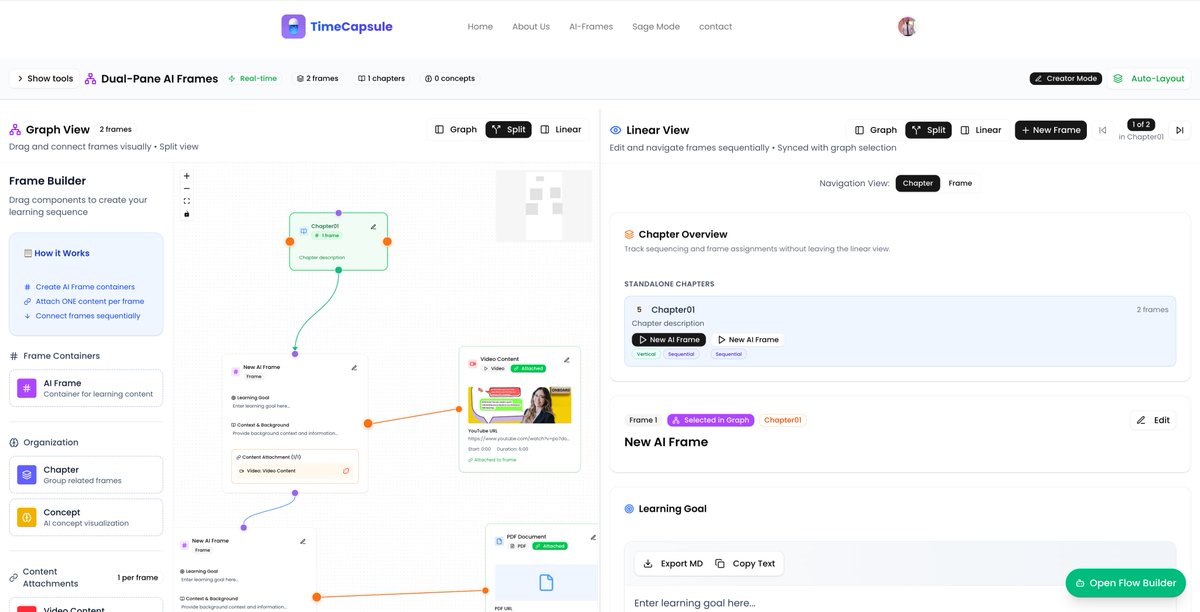
The Solution: TimeCapsule
TimeCapsule has two simple parts:
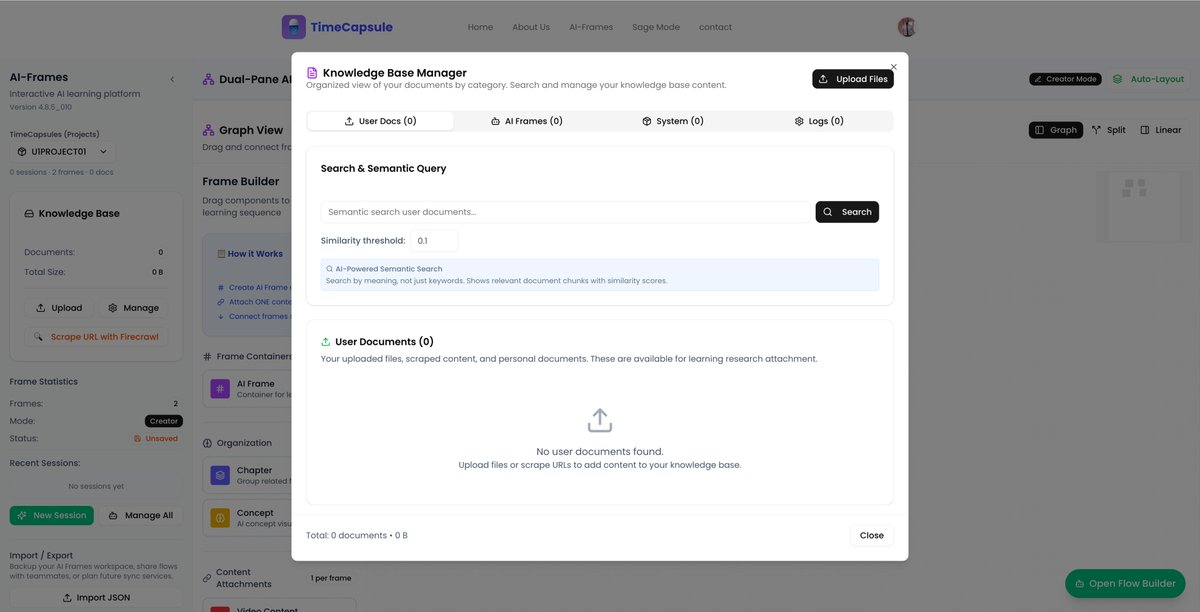
AI-Frames- Helps build knowledge bases and workflows.
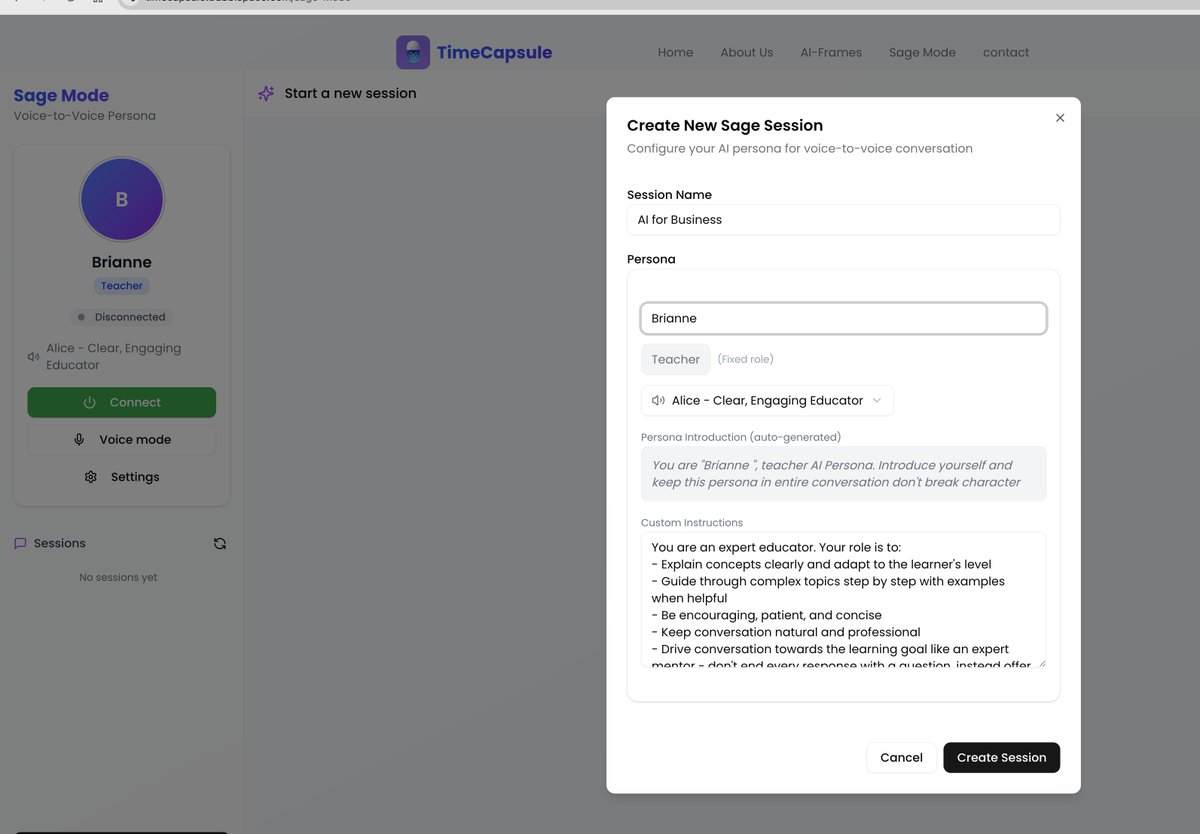
Sage Mode- Real-time voice-to-voice AI persona.
1. AI-Frames: Upload documents to create a knowledge base directly in your browser. Use the Flow Builder to perform deep research and build workflows or AI Frames. These workflows can be explored in graph or linear mode (chapters and AI Frames).
2. Sage Mode: Start a real-time voice-to-voice session with an AI persona. TimeCapsule automatically detects the relevant AI Frames, searches through your knowledge base documents, and responds in real time.
3. Collaboration: Share TimeCapsule with your team. Sage sessions automatically pick up new knowledge (TimeCapsules) as workflows evolve.
@bubblspace @AIEdXLearn

Introducing Cowork: Claude Code for the rest of your work.
Cowork lets you complete non-technical tasks much like how developers use Claude Code.
1
5
8
884
BubblSpace retweeted
13 Nov 2025
Use your favourite AI coding agent to create AI frames.
What if you could connect everything—your PDFs, videos, notes, code, and research—into one seamless flow that actually makes sense?
AI-Frames: Open Source Knowledge-to-Action Platform:timecapsule.bubblspace.com
✨ Annotate • Learn • Research • Build • Automate
One prompt → AI builds your entire learning path with:
• Citations from your Knowledge Base
• Mastery checks & quizzes
• Step-by-step progression
• Vision or text modes
From scattered notes to structured knowledge. Instantly.
Watch how it works 👇
Video shows how to build with Cursor & Codex
@bubblspace @AIEdXLearn
youtu.be/gvyLzZNCe6k?si=xfiW…
1
6
10
185
BubblSpace retweeted

13 Nov 2025
🤗
13 Nov 2025
Use your favourite AI coding agent to create AI frames.
What if you could connect everything—your PDFs, videos, notes, code, and research—into one seamless flow that actually makes sense?
AI-Frames: Open Source Knowledge-to-Action Platform:timecapsule.bubblspace.com/
✨ Annotate • Learn • Research • Build • Automate
One prompt → AI builds your entire learning path with:
• Citations from your Knowledge Base
• Mastery checks & quizzes
• Step-by-step progression
• Vision or text modes
From scattered notes to structured knowledge. Instantly.
Watch how it works 👇
Video shows how to build with Cursor & Codex
@bubblspace @AIEdXLearn
2
5
121
BubblSpace retweeted
13 Nov 2025
Use your favourite AI coding agent to create AI frames.
What if you could connect everything—your PDFs, videos, notes, code, and research—into one seamless flow that actually makes sense?
AI-Frames: Open Source Knowledge-to-Action Platform:timecapsule.bubblspace.com/
✨ Annotate • Learn • Research • Build • Automate
One prompt → AI builds your entire learning path with:
• Citations from your Knowledge Base
• Mastery checks & quizzes
• Step-by-step progression
• Vision or text modes
From scattered notes to structured knowledge. Instantly.
Watch how it works 👇
Video shows how to build with Cursor & Codex
@bubblspace @AIEdXLearn
2
6
8
1,074
BubblSpace retweeted

4 Oct 2025
Solid move — turning theory into systems that actually run. 💻
2
3
43
BubblSpace retweeted

4 Oct 2025
Love seeing pros invest in leveling up — massive congrats on this milestone! 👏
1
3
39
BubblSpace retweeted

4 Oct 2025
Love how you unpacked the real mechanics behind scaling AI — clarity like this drives stronger teams and smarter systems.
2
5
57
BubblSpace retweeted
4 Oct 2025
🎛️Zachary is a brilliant instructor — laser-focused on helping us learn how AI pros truly work at scale.This course genuinely bridges the gap between academic theory and real-world distributed training.
🎛️What I’ll Apply Next
🔹 Build Expert Parallelism (MoE) from scratch using a small local GPU cluster — and later scale it up with cloud GPUs for training compact models.
🔹 Recreate parts of the OLMo-2 pre-training pipeline at a much smaller scale, at least up to a few checkpoints, to study the training dynamics hands-on.
#ScratchToScale #Maven #DistributedTraining #DeepLearning #AI #LLMs #ZacharyMueller #MachineLearning #ScalingAI
3
6
60
BubblSpace retweeted
4 Oct 2025
🎛️Another major highlight was the keynote and spotlight sessions — featuring exceptional speakers from top AI labs and startups. These are people who’ve actually built the tools, frameworks, and innovations we use today — from model design and scaling pipelines to production-grade training infrastructure.
Listening to them share their journeys and hard-earned lessons was both inspiring and grounding.
1
3
5
60
BubblSpace retweeted
4 Oct 2025
🎛️Way Points- My Journey:
1. We started with the fundamentals of distributed training (operations such as all-reduce and broadcast). The custom nbdistributed package made it incredibly easy to get hands-on with multi-GPU training in notebooks right from week one.I know notebooks get a lot of hate — however, I feel they are an incredible learning tool. Later sessions focused on scaling scripts and deep dives into small training workflows written from scratch.
2. Then we moved on to DDP and Data Loading.
3. Covered FSDP/ZeRO and advanced parallelism (Pipeline / Tensor Parallelism). Tensor parallelism was one topic I found difficult to follow — I’m looking for additional material to bridge that gap.
4. Expert Parallelism – MoEs 😁: Another super challenging topic, but the course material on this was excellent. I’ll be going through the recordings and practicing using the code shared by Zach.
5. 2D/3D/Sequence Parallelism sessions were awesome — these were more like introduction sessions that opened new directions to explore.
My focus for this month is on DDP FSDP/ZeRO PP/TP. Once that’s solid, I’ll shift to Expert Parallelism (EP).
1
2
6
53
BubblSpace retweeted
4 Oct 2025
🎯 Milestone Unlocked
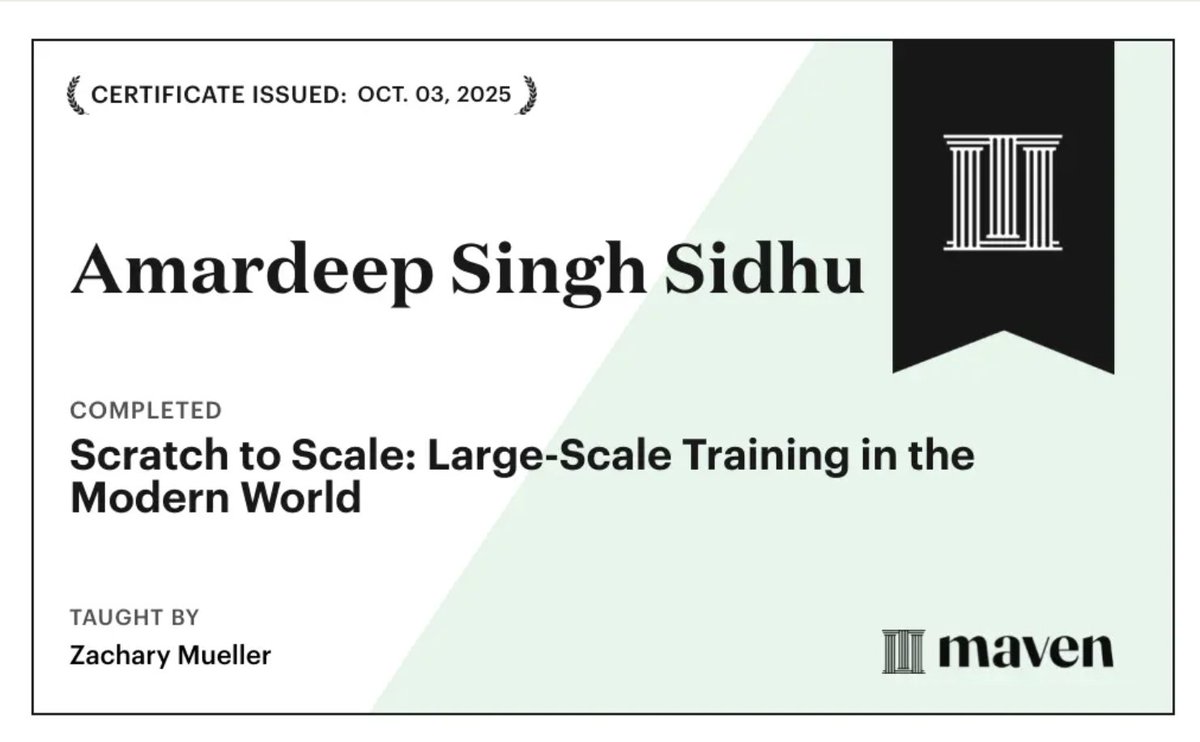
I’m excited to share that I’ve completed the “Scratch to Scale: Large-Scale Training in the Modern World” course by @TheZachMueller on maven !
Scratch to Scale has been one of the most practical and insightful courses I’ve taken — it goes far beyond theory.
👉 Special thanks to @TensorSlay for pointing me toward this epic course!
5
8
10
756
BubblSpace retweeted
21 Aug 2025
🔥1 month of effort and first signs of success!
Final Product: TimeCapsule-SLM
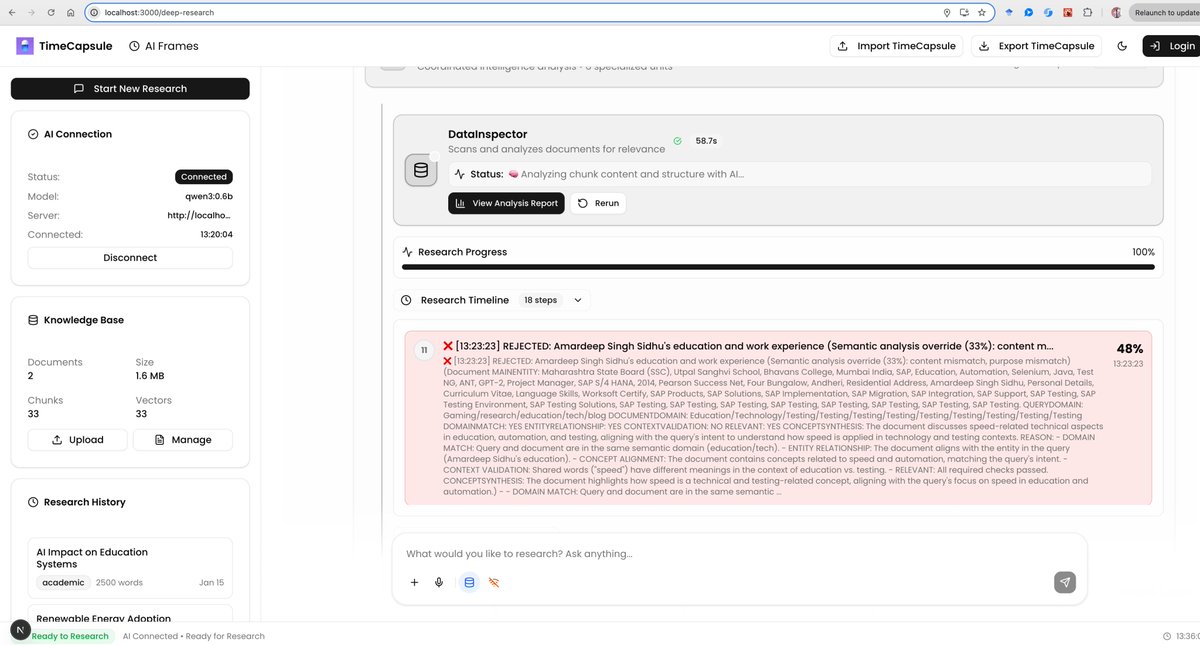
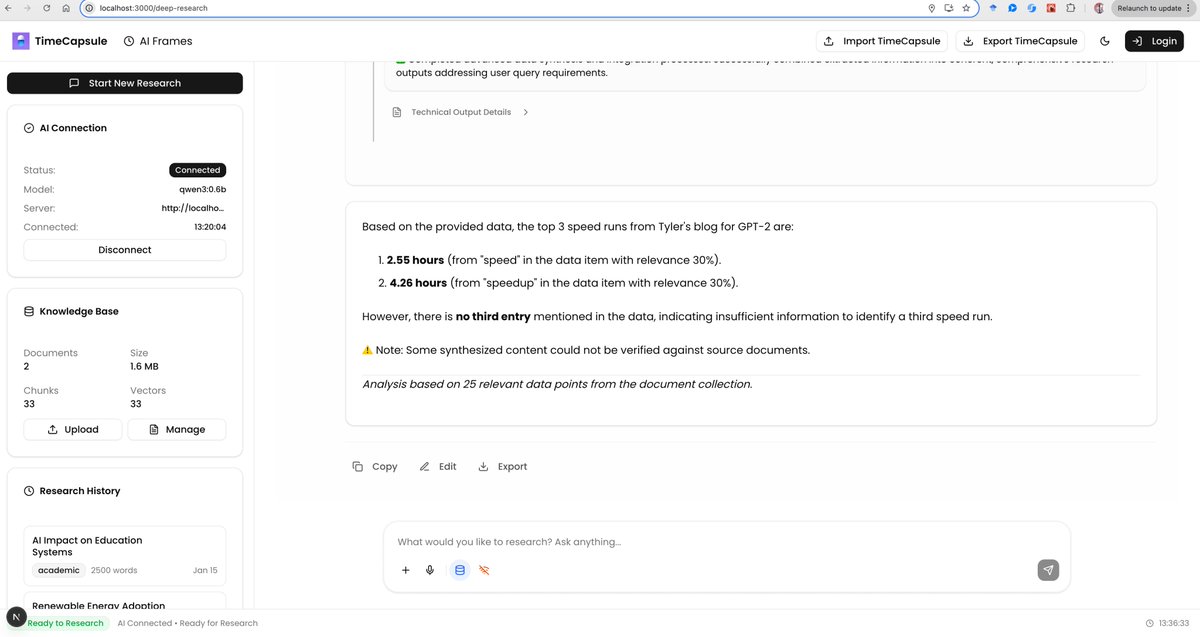
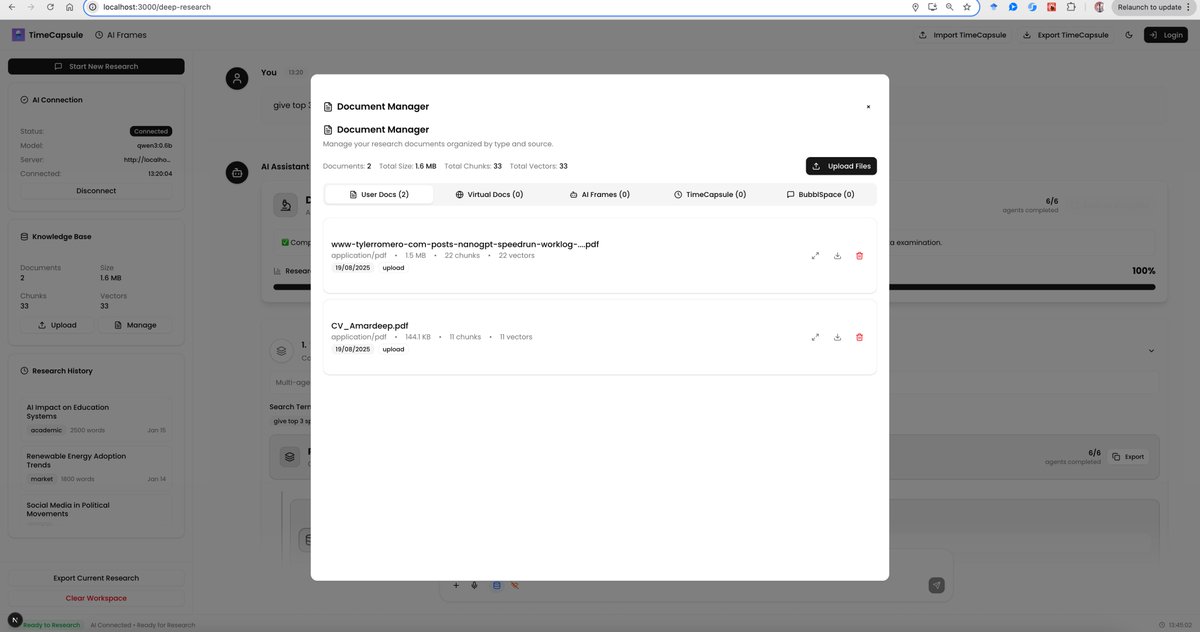
An Open Source Deepresearch that works in browser with Qwen 3 0.6b(ollama) that has semantic understanding , provide insights & generate novel ideas . Privacy first local Deep Research.
👽 timecapsule.bubblspace.com/
🧑💻 github.com/thefirehacker/Tim…
🔐The Problem :
AI products fail to understand context of query. Hallucinate difficult to tarck if infromation is correct and where did it source from . Just source attribution is also not useful.
🪄Magic:
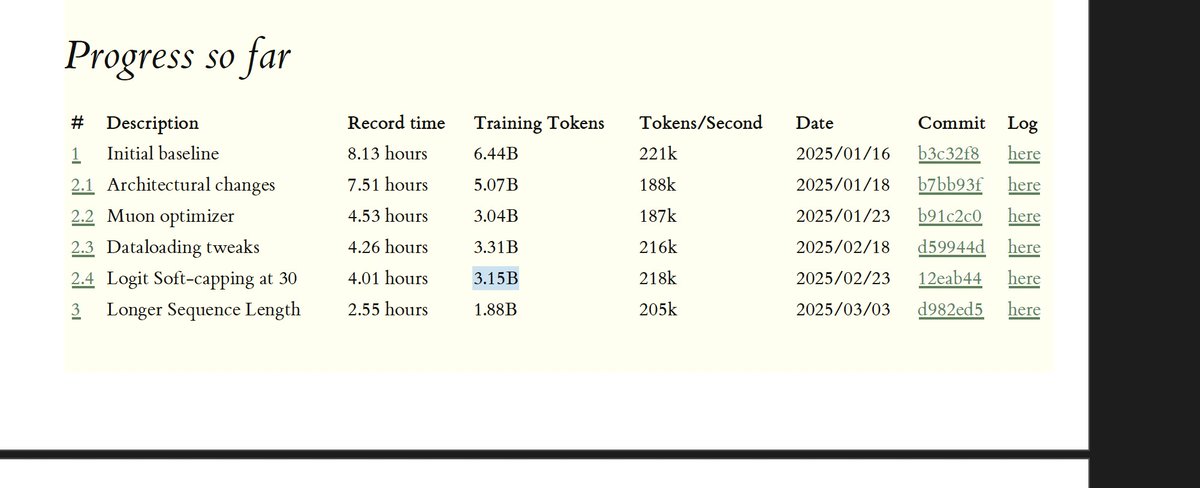
TimeCapsule-SLM is able to reject my CV which has the word "automation" in it and reasons that word "speed" has different meaning and looks for data that is more alinged with query! It can create Regex patterns and do flat file type search along with semantic search on chunks/docs.
📔You can traceback results to exact chunks/docsuments giving relaibilty and grounding of Data with your local knowledgebase.
Took 5-9 minutes to get result. System has deep understanding of Knowledgebase. Next Steps allow sytem to use these insights to build things for you ( Lesson plan , short form content , deliver sales presentation, enterprise learning, come up with novel ideas)
This also works well with gemma3n 2B ( some issues will test ,fix and push changes soon) . Also system keeps missing little data from source will patch up the issue soon.
Data Source: Tyler's blog on GPT-2 speedrun
tylerromero.com/posts/nanogp…
3
10
17
1,687

BubblSpace retweeted
3 Jul 2025
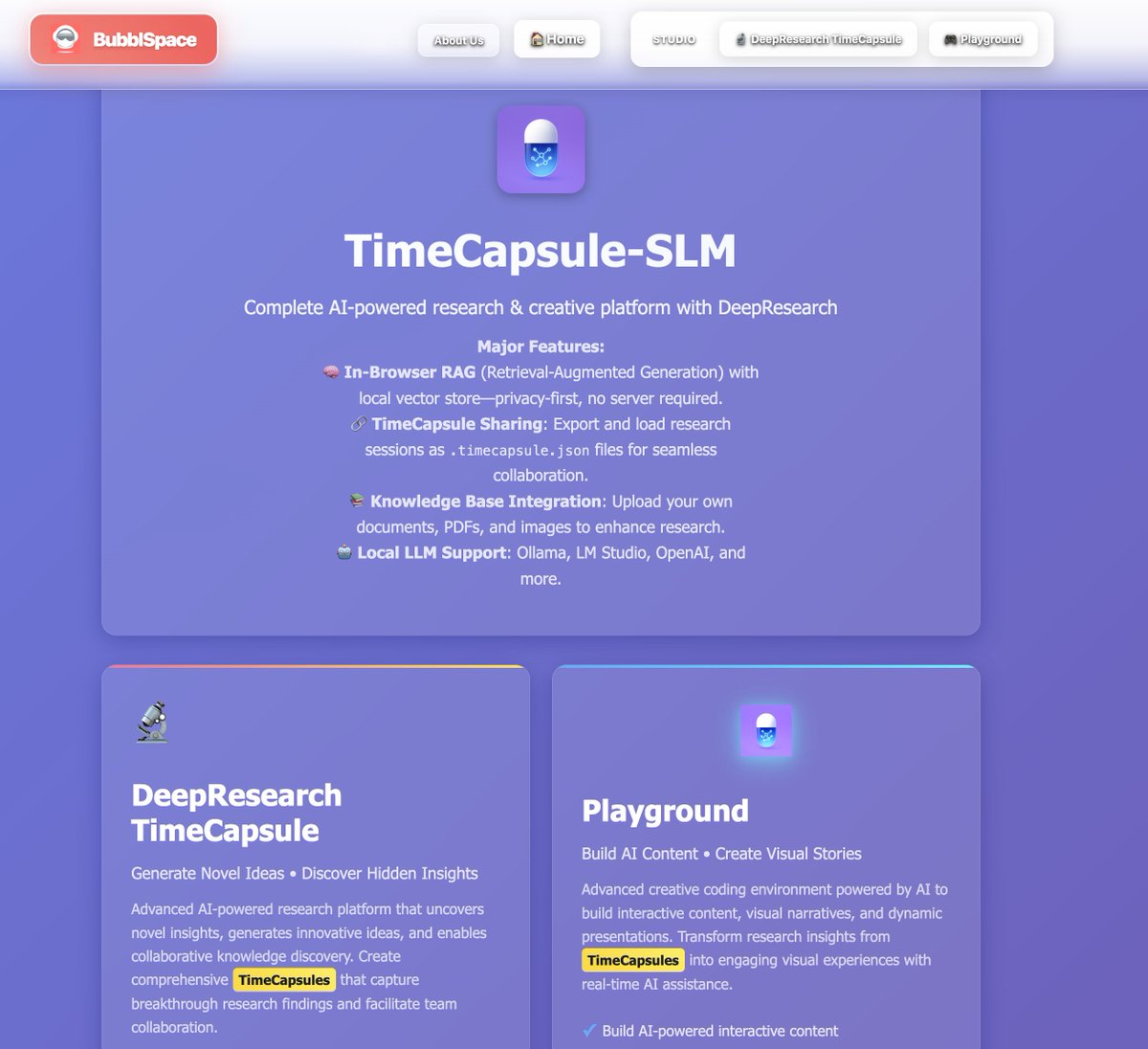
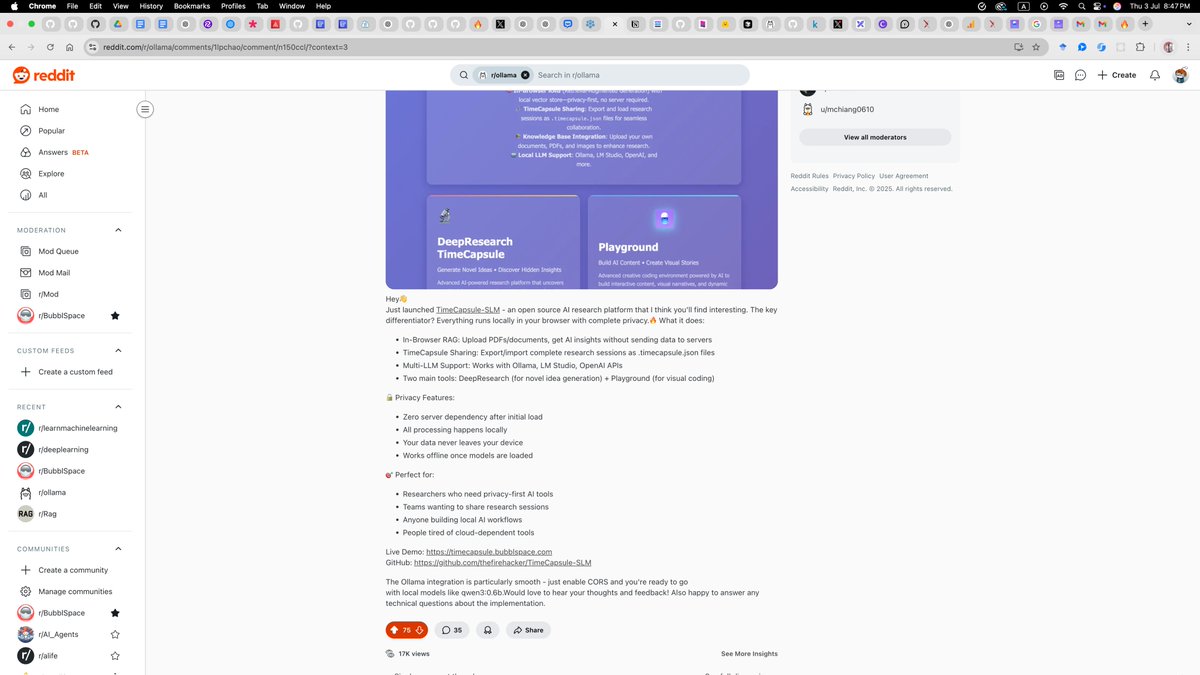
We are totally trending 🚀on @ollama r/ollama & github.
Deepresearch RAG all in browser
timecapsule.bubblspace.com
reddit.com/r/ollama/comments…
2
9
19
727