
Centre for Inquiry Canada: Your community for science, skepticism, and humanistic inquiry. (Follow and/or retweet does not imply agreement.)
Joined January 2010
- Tweets 10,072
- Following 4,034
- Followers 3,196
- Likes 2,879
880 Photos and videos









3 Nov 2025
"Learn #mindfulness. In a study of a 5-week mindfulness training program for 13- to 18-year-olds, #researchers found that #teens who learned mindfulness experienced significantly less #mental #distress than teens who did not."
#MentalHealthMonday
2 Nov 2025

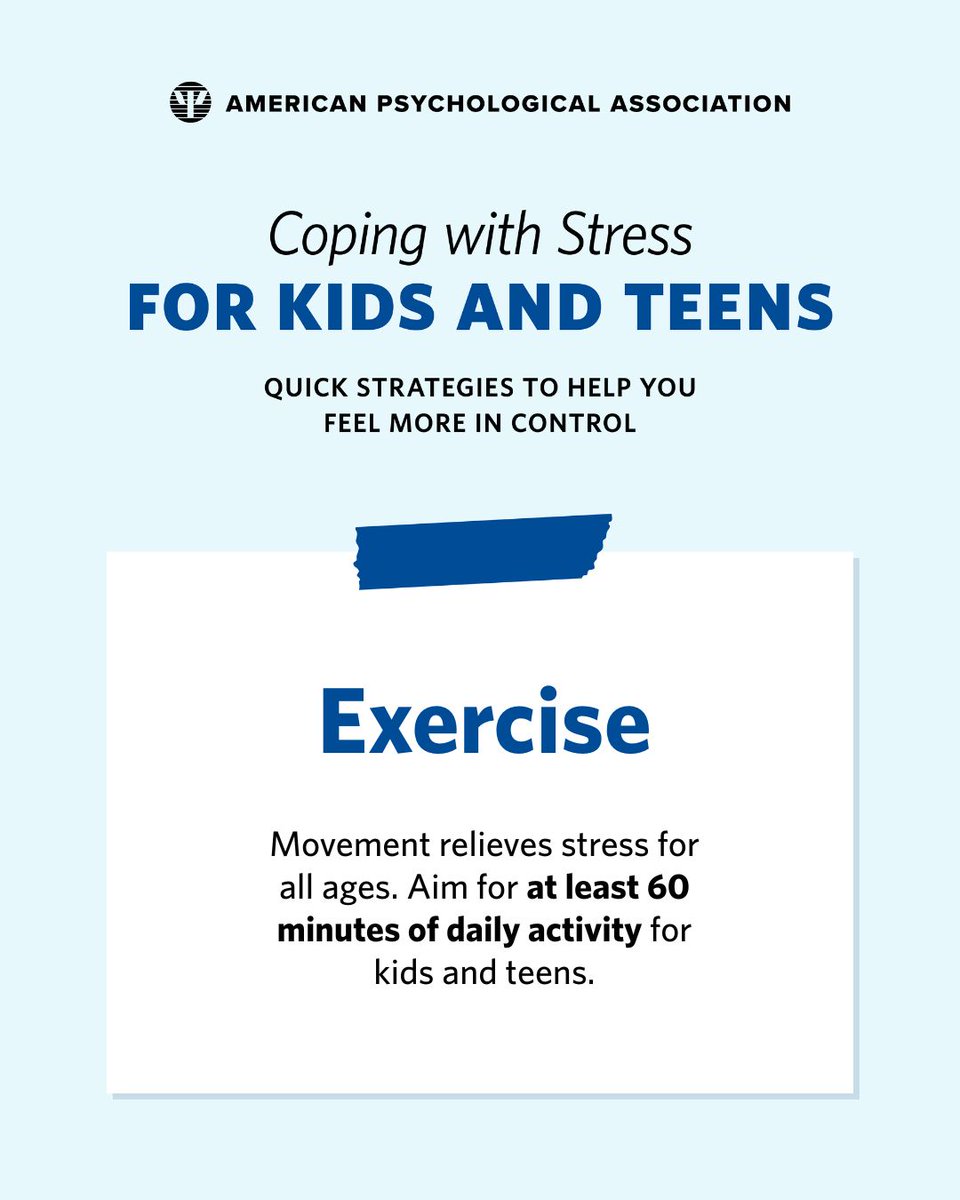
Chronic #stress can take a toll on young minds and bodies.
Psychology research shows that simple habits—like regular physical activity—can help kids and teens manage stress and feel stronger.
Learn more: at.apa.org/223e3c
1
141
20 Oct 2025
"Countering #AI #agency #decay [is about] cultivating a balanced and intentional #relationship with it. A helpful framework...is the "Four A's" of responsible AI integration: #Awareness, #Appreciation, #Acceptance, & #Accountability."
#ArtificialIntelligence #MentalHealthMonday
20 Oct 2025

Over-reliance on AI may impair critical thinking skills. Here are 4 keys to maintaining the indispensable value of human judgment and autonomy in the age of artificial intelligence. psychologytoday.com/us/blog/…
1
92
14 Oct 2025
"Envision your ideal future self. What are the qualities you want to embody? What do you wish to feel? What do you hope to accomplish? Let this guide you in deciding how to utilize the new time and energy you will enjoy once you’ve released them."
#LettingGo #MentalHealthMonday
13 Oct 2025
Letting go means releasing aspects of our lives—such as a relationship, job, living situation, thought pattern, or habit—that aren’t working for us. Here's why it can be so hard, and how to do it anyway. psychologytoday.com/us/blog/…
85
6 Oct 2025
"[Cognitive#] decline occurs in part due to lack of physical# fitness#; specifically, heart# health#. Putting this simply, the brain# needs blood#, and without it, brain cells die. The job of the heart is to provide that blood."
#PhysicalFitness #MentalHealthMonday
6 Oct 2025
A lot of people worry about losing their memory and cognitive abilities as they get older. But a small investment of time and energy now could have a major payoff in terms of health and well-being over the long run, explains @swhitbo psychologytoday.com/us/blog/…
1
109
15 Sep 2025
"[J]udgment after #midnight can lead to #impulsive actions and unregulated, #unsafe #behaviors. The appeal of dangerous ideas could lead to the use of #addictive #drugs, #drinking heavily, craving and eating unhealthy foods, or perpetrating ... #violence."
#MentalHealthMonday
15 Sep 2025
The "mind after midnight" theory suggests that being awake after midnight could lead to emotional dysregulation, poorer decision-making, and greater impulsivity. Are you at risk? psychologytoday.com/us/blog/…
80
15 Sep 2025
"[C]hildren who grow up with a #father figure who is #disengaged, #disinterested, or #uninvolved are more likely to struggle with low #self-#worth, experience behavioral issues, and may be more likely to have challenges in forming #secure #attachments...."
#MentalHealthMonday
15 Sep 2025
It should no longer even be a question, but yes, fathers matter. Research shows just how much the presence of a dad influences a child's development of identity, self-worth, and self-esteem. psychologytoday.com/us/blog/…
100
9 Sep 2025
"While the feeling of #confusion stopped soon after the #rejection, it stayed continuously high after #ghosting.... [T]he lack of closure & the uncertainty about the reasons for the end of the relationship may lead to higher stress in the ghosting condition."
#MentalHealthMonday
8 Sep 2025
Being rejected, as almost all of us know, can be a painful, demoralizing experience. But is the uncertainty and abandonment of ghosting even worse? New research suggests an answer, writes @ocklenBLOG psychologytoday.com/us/blog/…
88
1 Sep 2025
"Are we #catastrophizing? Are we assuming #failure is inevitable? ... [W]hen we interrupt these #negative #thought #patterns and replace them with more constructive interpretations, we can shift the trajectory of our #emotional response."
#Optimism #MentalHealthMonday
1 Sep 2025
Optimism isn't just an inherent trait—it's a skill that can be developed and strengthened over time. Here's how. psychologytoday.com/us/blog/…
84
19 Aug 2025
"Given that the future is not in our gift, both #hope and #fear are superfluous. More than redundant, they are counterproductive, in that we would do better to concentrate on the things that are actually within our control."
#MentalHealthMonday
19 Aug 2025
"So long as we focus on the things that are within our control, we will be calm and happy. But if we start concerning ourselves with things that are beyond our grasp, we will become anxious and angry and miserable," writes @NeelBurton psychologytoday.com/us/blog/…
76
18 Aug 2025
"The cure hinges on #authenticity—daring to say, “I miss us,” or “I need to feel close.” ... Start today: Ask your partner one real question, listen without fixing, and watch the fog lift."
#Relationships #Connection #MentalHealthMonday
18 Aug 2025
Disconnection begins the moment we stop being present. It might start with a busy life—new jobs, kids, or endless to-do lists. Here's how to get back that emotional intimacy again. psychologytoday.com/us/blog/…
70
11 Aug 2025
"By practicing random acts of #kindness, #volunteering or giving back to your #community, Toxavidi says you can boost your #mood and your sense of #purpose and belonging."
#MentalHealthMonday
8 Aug 2025

Explore 16 expert-approved strategies to enhance your mental health and maintain a positive outlook throughout the year. From practicing mindfulness to spending time outdoors, these simple tips can help you cultivate lasting happiness.
bit.ly/4lHk08O
65
11 Aug 2025
"After #trauma, the #brainstem can remain '#hyperactivated,' which can lead to people 'feeling too much.' This is common in people with classic #PTSD ... resulting in #aggression, #emotional #overwhelm, and being easily #startled."
#MentalHealthMonday
11 Aug 2025
After trauma, sensory systems struggle to accurately assess safety, leaving survivors feeling on edge, overwhelmed, or detached from their bodies. This is why—and what it means for healing, by @LaniusRuth psychologytoday.com/us/blog/…
54
5 Aug 2025
"[D]oses may be increased over time, repeated #treatments are common, and some #patients seek a #hallucinogenic trip rather than treatment for a #psychiatric #diagnosis. There may also be #abuse and #addiction risks...."
#Ketamine #MentalHealthMonday
4 Aug 2025
More clinics are offering ketamine off-label for a wide range of mental health conditions. Here's what everyone needs to know to ensure that treatment is both safe and effective, and to be aware of potential side effects. psychologytoday.com/us/blog/…
83
28 Jul 2025
"Maybe the point isn’t to measure #grief, but to make room for all of it—the shattering and the subtle, the devastating and the delicate. Just like #love, all grief isn’t equal. But that doesn’t mean it isn’t all real."
#Loss #Grieving #MentalHealthMonday
28 Jul 2025
Grief isn't a competition—all anguish and hurt are real. Still, sometimes it feels like certain types of grief, or certain responses to loss, are viewed as less valid. Here's how to respond to that. psychologytoday.com/us/blog/…
51
22 Jul 2025
"Most people have low #self-#esteem. Reminding them of their #qualities can not only #uplift them but also remind them of their #value. It makes them #feel truly seen."
#KindnessMatters #MentalHealthMonday
21 Jul 2025
We know that some people drain us, and others uplift us, because emotions can be contagious. But science shows just how strong the effect is, and how easily we can bring it to our own connections, writes @emmaseppala psychologytoday.com/us/blog/…
69
15 Jul 2025
"Blanchflower had written a paper in 2020 looking across almost 150 advanced and developing countries and found the same U shape in #happiness applied everywhere. However, he now says he missed the collapse in #youth #wellbeing...."
#Happiness #MentalHealthMonday
11 Jul 2025
Recent research has shown a shift in the lifetime happiness curve. What once was considered to follow a U-shape (carefree youth, tougher middle age, and more comfortable later life) now seems to steadily rise with age instead.
bit.ly/4cugzOj
67
15 Jul 2025
"This #ability to #mentally “step back” from the moment helps you #connect to #deeper #values and #purpose, and fosters what’s known as #eudaimonic well-being—the kind of #happiness rooted in #growth, #meaning, and personal #fulfillment."
#MentalHealthMonday
14 Jul 2025
We often hear phrases like “stay in the moment” or “live for today,” but thinking about the future can actually improve your life right now. Here's how. psychologytoday.com/us/blog/…
67
30 Jun 2025
"[My] husband and I told our kids that if they wanted to pursue a #relationship with their grandparent, we would help facilitate that in a #safe way. ... We’ve allowed supervised visits [and] encouraged the kids to write letters or call if they ever want to."
#MentalHealthMonday
30 Jun 2025
When someone makes the decision to go no-contact with a family member, they may worry about the effects on their children. Here are some healthy ways to handle what is often a complicated and painful situation. psychologytoday.com/us/blog/…
73
16 Jun 2025
"It’s important to clarify, however, that ... [#children] raised in loving, stable #families with two #mothers, a single #parent by choice, or other diverse families are not inherently at the same #risk."
#Fathers #MentalHealthMonday
16 Jun 2025
It should no longer even be a question, but yes, fathers matter. Research shows just how much the presence of a dad influences a child's development of identity, self-worth, and self-esteem, writes @Kaytee_Gillis psychologytoday.com/us/blog/…
69
16 Jun 2025
"Maybe your #friendlessness is a #boundary—a pause to recalibrate and #grow. Ask yourself: What is this season #teaching me? Friendlessness may be the space where your #self-#worth can flourish."
#Friendship #MentalHealthMonday
16 Jun 2025
In 1990, 3 percent of Americans said they had no friends; by 2021, it was 12 percent. But friendlessness isn't always painful, especially when people can reframe their social lives as these experts advise. psychologytoday.com/us/blog/…
69