
Pragmatic solutions to big problems. Nothing here is investment advice, viewpoints are personal only, YMMV...(bsky.app/profile/cleantechin…)
Joined February 2008
- Tweets 16,101
- Following 1,221
- Followers 8,518
- Likes 8,006
511 Photos and videos

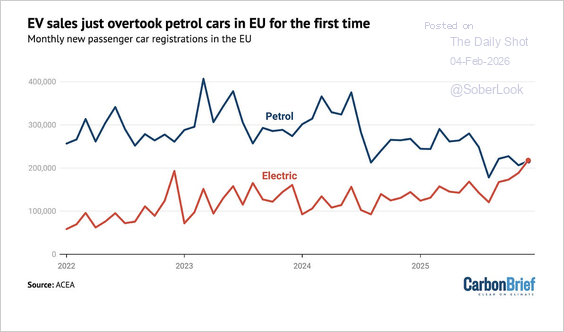









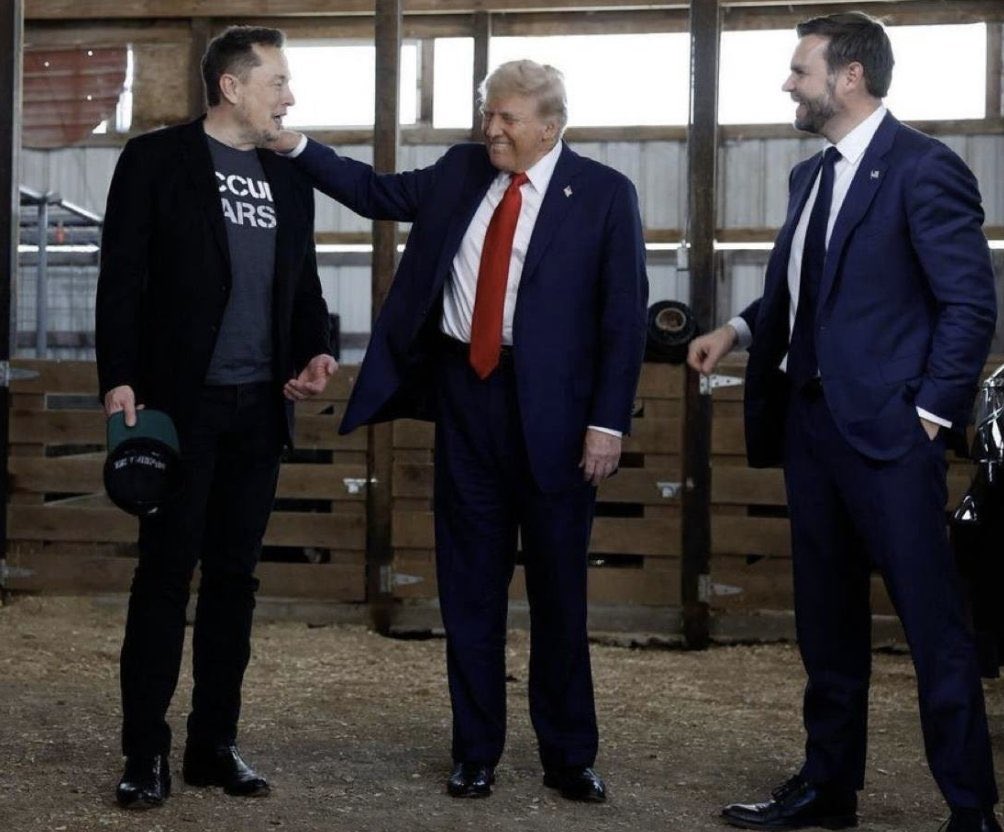

15h
Thank you, US Army!

On this day in 1775, the Continental Congress officially establishes the Continental Army historyofmassachusetts.org/c…
80
17h
💯

When the price of something rises, the ecologist sees greed. The economist sees a message.
That difference is the whole argument — and it's why the environmental movement keeps reaching for the one tool guaranteed to make scarcity worse.
A price is not just a number on a thing. It's the most sophisticated information machine our species ever stumbled on. When a resource gets scarce — a mine floods, a war cuts a supply line — its price rises, and that single number travels the world carrying one command that requires no one to understand its cause: economize, find alternatives, this has become dear. Hayek won a Nobel for the insight. The knowledge needed to manage scarcity doesn't sit in any planner's head; it's scattered across millions of minds, and the price is the only thing that gathers it.
So a rising price isn't the problem. It's the solution arriving — the system noticing scarcity before the wall, and turning the whole ingenuity of the market toward avoiding it. It's why kerosene replaced whale oil before the last whale died, and why Ehrlich lost his bet to Simon on five metals that got cheaper, not scarcer.
There is one place the market genuinely fails: the externality — pollution, carbon — a cost dumped on third parties that never enters the price. That's real. But the fix isn't to abolish the price; it's to complete it. Tax the carbon so the signal tells the truth, then let the same machine economize, substitute, and innovate exactly as it does for any scarce input.
What you must not do is delete the message. Cap a price and you don't end the scarcity — you hide it, and the shortage arrives anyway, with queues and empty shelves. The 1970s gas lines happened in a country swimming in oil. Venezuela capped the price of food and got no food.
The deepest irony: whoever truly wants to conserve should be the price system's fiercest defender. It conserves automatically, in proportion to real scarcity, for a future no committee can see — and it can't be lobbied, doesn't stand for re-election, and corrects its own mistakes the moment they cost something.
The ecologist and I want the same world: one that doesn't squander its inheritance. We disagree only on the instrument. He reaches for the visible hand of control, which destroys the information it needs to work. I reach for the invisible one — the best friend the future ever had, if only we'd let it tell the truth and then listen.
110
𝚁𝚘𝚋 𝙳𝚊𝚢 retweeted

“The Aurora Borealis? At this time of year, at this time of day, in this part of the country, localized entirely within your kitchen?!"
“Yes”
“Can I see it?”
“No.”
20h

HEGSETH: It's been strength from President Trump that has compelled Iran to this deal
BRENNAN: Right. But we're not even at the memorandum yet
34
158
1,076
102,282
𝚁𝚘𝚋 𝙳𝚊𝚢 retweeted

Jun 13
If you'd watched, you'd have seen the Paraguay player get a yellow card for diving. So, really, you should watch. Technology is solving soccer's problems in real time.

6
8
189
18,383
Jun 13
And one in your ear to translate for you.
Jun 13

Parasites may be the pharmacies of the future, living in your gut and mainlining medication to your bloodstream.
sciencenews.org/article/engi…
224
Jun 12
What a crock of absolute shit.

Burgum on wind turbines: We have a report from Hegseth that it’s a national security threat. You could launch an attack on the US in with a bunch of drones coming through a wind tower field, it would undetectable until it was came through because the radar interference
162
𝚁𝚘𝚋 𝙳𝚊𝚢 retweeted

PREDATOR was released 39 years ago today. Among the most popular science fiction/action movies of the 1980s, and one of Arnold Schwarzenegger’s biggest movies, the behind the scenes tale ain’t got time to bleed…
1/55

25
352
1,655
169,891


𝚁𝚘𝚋 𝙳𝚊𝚢 retweeted

Jun 11
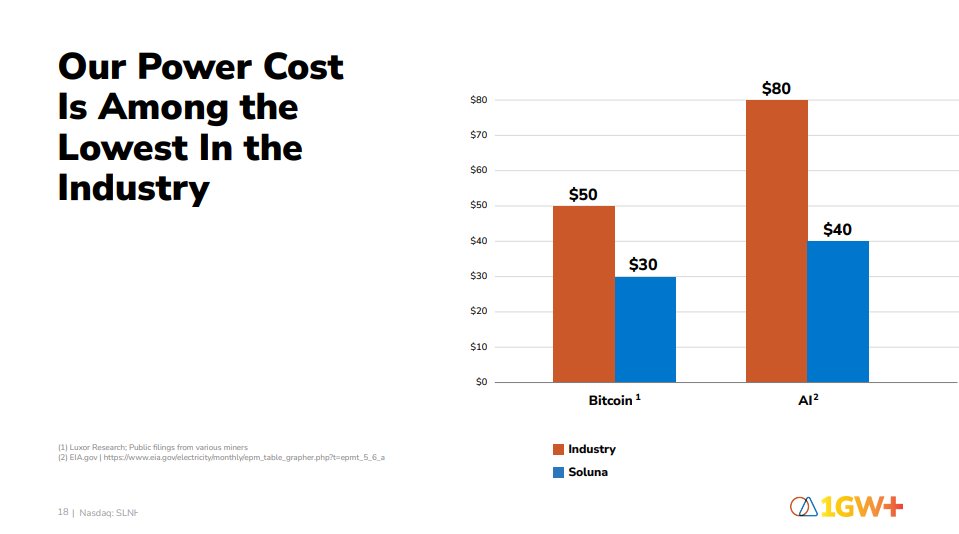
Kati 2 update.
Definitive JV signed with Metrobloks. Initial design complete. RFP launched for Phase 1 — 100 MW CIT.
Formal commercial negotiations underway with at least one potential tenant.
350 MW of AI and HPC capacity. Moving.
#RenewableComputing $SLNH

8
31
197
24,755
Jun 10
They were big grown men with tears in their eyes…
Fox: President Trump told me that Iran called him tonight. He told me that the Iranians asked them to stop bombing, and the president said to me, the bombing will stop shortly.
3
161
𝚁𝚘𝚋 𝙳𝚊𝚢 retweeted

Jun 10
This new op-ed from economists like Piketty, Stiglitz, and Hickel call for essentially de-growth. A few notable incorrect statements here 🧵
theguardian.com/commentisfre…
11
57
159
46,764
Jun 10
I stand corrected -- 8 reds!
Jun 10

Never seen a soccer game where one team got five red cards... Quite a "friendly" down in Brazil tonight!
232
Jun 10
Never seen a soccer game where one team got five red cards... Quite a "friendly" down in Brazil tonight!
400
𝚁𝚘𝚋 𝙳𝚊𝚢 retweeted

"The windfall to US producers from higher oil prices has helped offset an ongoing surge in imports of capital goods tied to the buildout of data centers in the US. Imports of computers, computer accessories, telecommunications equipment and semiconductors all continued to rise." bloomberg.com/news/articles/…
2
3
11
3,058
𝚁𝚘𝚋 𝙳𝚊𝚢 retweeted

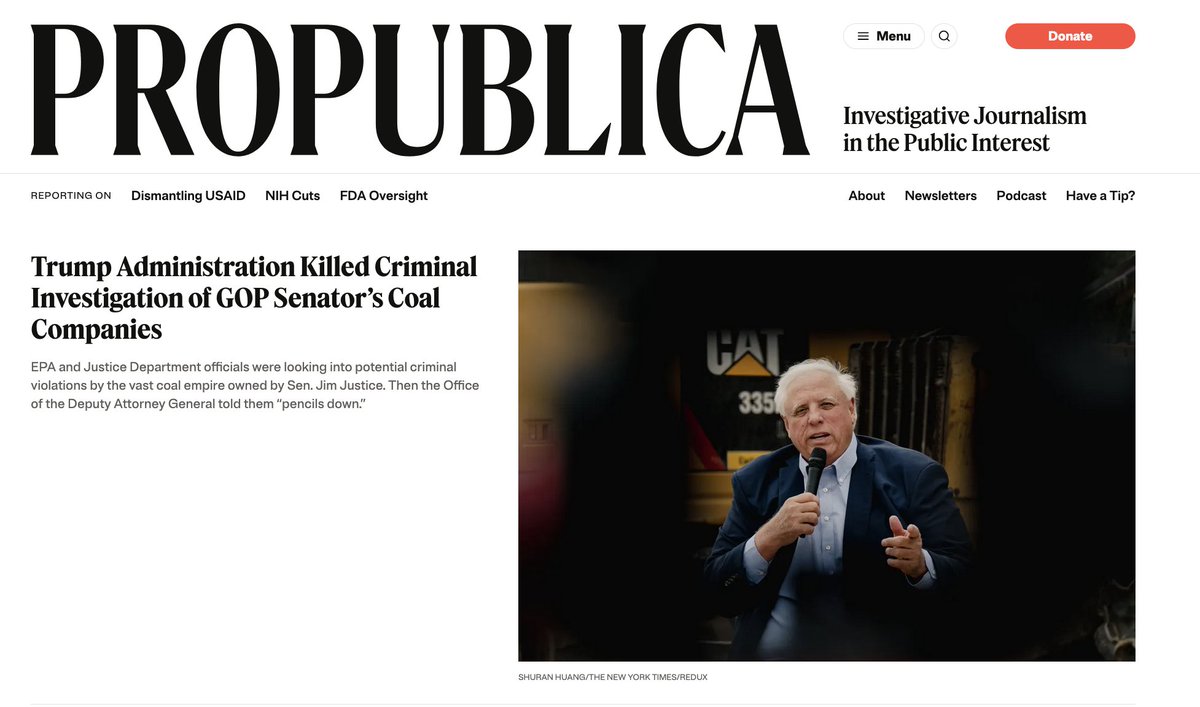
Monkey wrench wind and solar but do one favor after another for an uncompetitive, uneconomic coal industry that continues to sicken and kill Americans with its massive pollution.
The massive corruption and politicization of DOJ is a national disgrace.
propublica.org/article/trump…

Senator Jim Justice is a GOP Senator, a coal baron, and a friend of President Trump.
Earlier this year, his coal company found out it was under criminal investigation for environmental crimes.
But then Todd Blanche's office got involved & told investigators: pencils down.
3
7
675
Jun 7
Strong disagree. Yes, energy transition alone will not suffice. But that’s because we need additional innovation in other sectors (food, waste, etc) as well. NOT that we need to sacrifice growth.
As an economist I’m surprised to see Piketty not favor efficiency-driven growth.
Jun 4

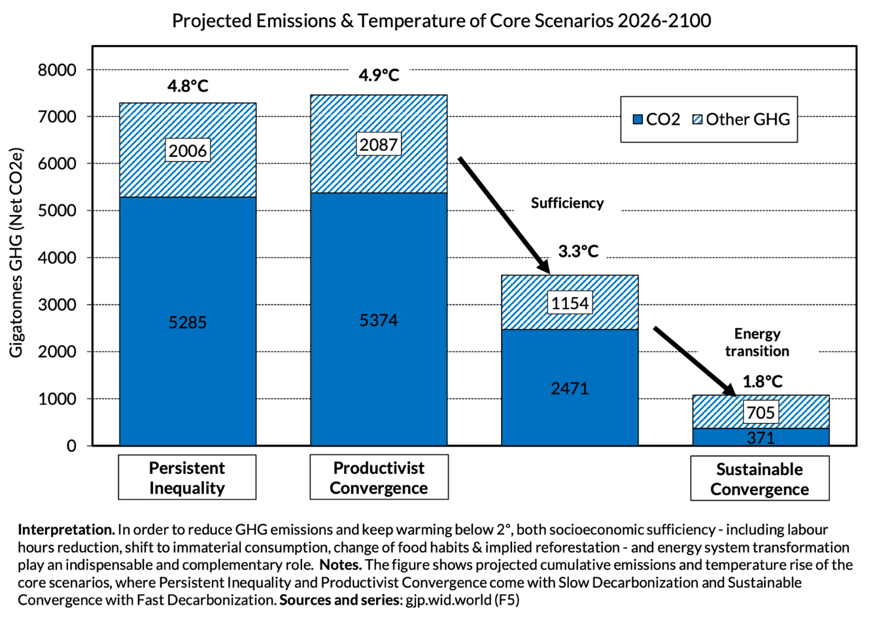
The key finding of the report is that energy transition alone will not suffice.
We need to combine it with "sufficiency" to stay within 2 degrees. This includes labour hour reductions, growth caps in rich countries, less material consumption, and changes in food habits.
Community note
This report uses a ~4.8°C baseline. In May 2026, the U.N. climate panel officially retired this scenario (RCP8.5) as "implausible." Updated projection: ~3.5°C. Sources: NYT & Washington Post, May 2026.
nytimes.com/2026/05/26/cli…
washingtonpost.com/climate-enviro…
lemonde.fr/en/environment…
1
1
3
638
Jun 7
If you want to make an argument in favor of labor hour restrictions etc that’s fine, but it’s a separate set of issues.
1
203
Jun 7
Furthermore, we actually already have most of the innovation needed to achieve not only net zero emissions but withdrawals.
My personal wish is that economists would focus on how to accelerate adoption of these solutions rather than be degrowth.
29
𝚁𝚘𝚋 𝙳𝚊𝚢 retweeted

Jun 6
This is coming from a famous economist, so it's probably worth clarifying that there's no economics in this report showing that their degrowth pathway is either an ideal or likely decarbonization path. It's an opinion they work backwards from.
Jun 4
The key finding of the report is that energy transition alone will not suffice.
We need to combine it with "sufficiency" to stay within 2 degrees. This includes labour hour reductions, growth caps in rich countries, less material consumption, and changes in food habits.
Community note
This report uses a ~4.8°C baseline. In May 2026, the U.N. climate panel officially retired this scenario (RCP8.5) as "implausible." Updated projection: ~3.5°C. Sources: NYT & Washington Post, May 2026.
nytimes.com/2026/05/26/cli…
washingtonpost.com/climate-enviro…
lemonde.fr/en/environment…
26
114
823
174,668