Professional troublemaker | Pacific Northwest partisan | Founder Managing Partner @founderscoop
Joined May 2008
- Tweets 6,706
- Following 593
- Followers 8,489
- Likes 4,298
76 Photos and videos



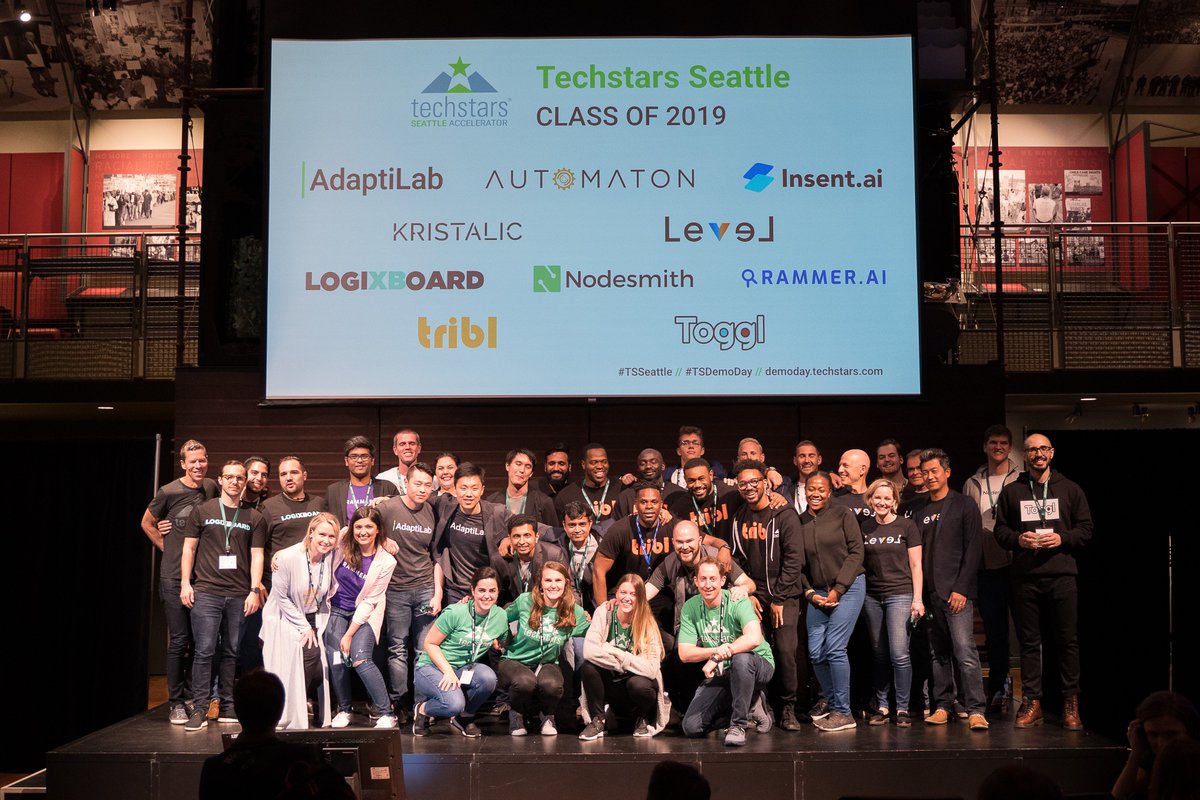




Love this story -- lessons here for every major city, but especially for western cities currently held captive by SFR politics (Seattle, SF, LA) nytimes.com/2026/06/15/opini…
76

SF startups don’t win just because of talent and capital density.
Startups are sacrifice. They require obsession and a high tolerance for pain. The people most willing to make that trade self-select into SF, the same way serious actors move to Hollywood. That makes the place self-fulfilling.
Great companies can be built anywhere. I’m an investor in many in Seattle. But after splitting time between Seattle and SF for several months, I think every serious founder has to ask early on: what am I willing to sacrifice to make this work?
Founders who move to SF have already asked and answered that question. That is the true advantage.
18
5
117
10,374

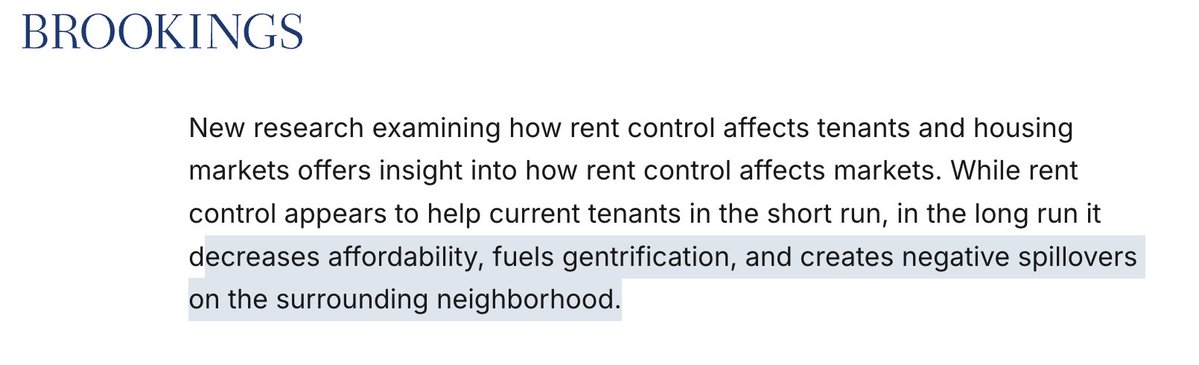
Rent control subsidizes demand
We need to dramatically increase supply
Anyone who tells you otherwise just wants your rent to go up
brookings.edu/articles/what-…
Jun 14

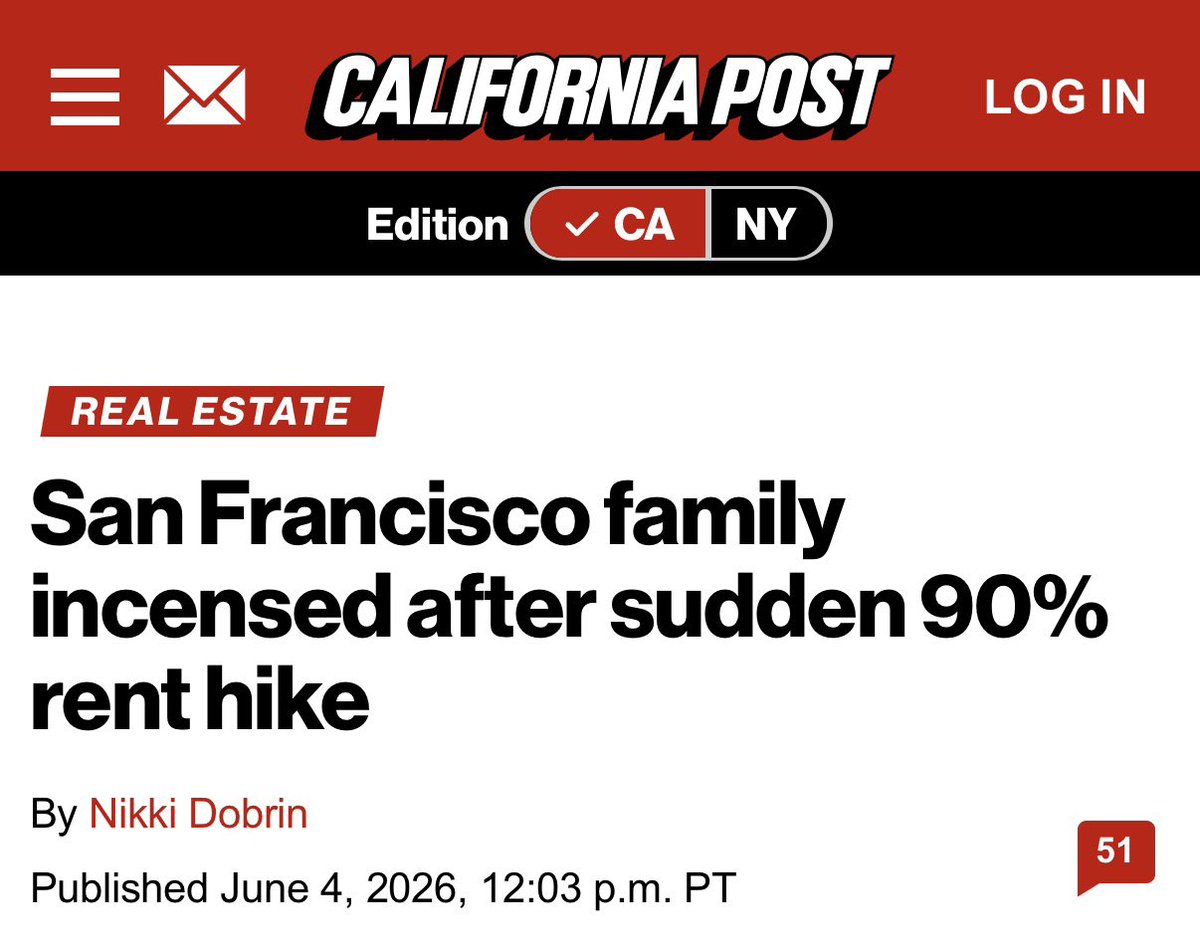
Rent control in San Francisco is not going anywhere. If anything, cases like this will eventually cause it to expand dramatically in San Francisco
24
19
236
24,010
Chris DeVore retweeted

May 25
They did, it was called America
May 25

Why don’t the immigrants start their own countries?
859
20,038
190,688
3,946,388

BEHIND THE CURTAIN: TRUMP'S UNPRECEDENTED PROFIT AND PROTECTION
🗳️ Imagine America put these questions to a public referendum:
1. Presidents and their family members, unlike other U.S. citizens, shall be granted lifetime immunity from federal audits and criminal investigations of their past tax returns.
2. Presidents and their family members can maintain active ownership of global business empires, profiting when government decisions directly benefit those specific businesses.
3. Presidents, while in office, can maintain massive personal crypto and stock portfolios that buy and sell hundreds of millions of dollars in industries directly regulated by their own administration.
How would you vote?
It's hard to imagine more than single-digit support for any of these. Yet Trump is doing all three and paving the way for future presidents to do the same. axios.com/2026/05/22/trump-p…
23
148
246
37,853
Chris DeVore retweeted

May 21
AI agent debugging is a COMPLETE mess right now.
You fix one issue…
and another workflow randomly breaks.
You change a prompt.
Tool calls start behaving differently.
You improve latency.
Accuracy drops somewhere else.
Most teams are basically duct taping evals, traces, prompts, scripts, and observability together hoping nothing explodes.
That’s why the new direction from Comet Opik feels important.
Comet Opik just dropped two features that feel like a HUGE leap for agent workflows:
• Test Suites
• Ollie
1] Test Suites
That “fix one thing, break another” problem?
This is the answer.
Every real failure you hit becomes a permanent test case with plain-English rules.
So when you tweak that prompt and tool calls start misbehaving, you catch it BEFORE it ships.
No giant eval dataset to build upfront.
And no more arguing whether 0.84 is better than 0.81.
You just get pass/fail on the scenarios that actually matter for your agent.
2] Ollie
And this is the CRAZY part.
A coding agent with full access to:
• your traces
• project history
• agent behavior inside Opik
That latency vs accuracy tradeoff you're constantly fighting?
Ollie sees both.
It diagnoses from your real traces, writes the fix in your code, AND generates a regression test so the same tradeoff doesn't bite you twice.
So instead of:
spot issue → switch tools → debug manually → write fix → create test separately → pray
…the entire loop closes inside one platform.
Find the problem.
Write the fix.
Generate the regression test.
All connected.
This is the first time I’ve seen an agent stack that actually feels built for iteration instead of chaos.
The teams with the fastest feedback loops are going to dominate this space.
Try Opik here:
comet.com/signup?utm_source=…
#AIAgents #AgenticAI #GenerativeAI #RAG #EnterpriseAI
14
16
71
846
Chris DeVore retweeted

May 21
That means making rents lower, apartments cheaper, trains cheaper and faster to build, better bike infrastructure, ubiquitous AVs, lower utility costs.
Dems don’t do this, they instead saddle costs onto every one of these.
(And no, Republicans don’t either, they stumble ass-backwards into some of it by being influenced by business interests)
1
1
12
347
Chris DeVore retweeted

May 8
199
584
4,664
3,694,584
Chris DeVore retweeted

May 20
Honestly, Trump’s party purge makes it so much easier to vote in November. In the past I felt like it was my civic duty to review every candidate regardless of party. Now I can safely assume that any GOP candidate is Trumpy as hell and just vote straight against that.
83
133
1,940
326,013
Chris DeVore retweeted

May 18
Would have to think that the U.S. is the first country to provide taxpayer-funded reparations to folks who tried to overthrow the govt
axios.com/2026/05/18/trump-i…
2
3
19
2,173
Chris DeVore retweeted

May 12
Very important lesson for Blue Cities here: Every change Lurie has made has been opposed by screaming, bullying activists -- ignoring them has been the path to policy success and extremely high popularity. @skaushik100
sfchronicle.com/election/art…
43
381
2,867
165,750
Chris DeVore retweeted
May 12
YIMBYism just works, period. Build market-rate housing supply. It works.
May 12

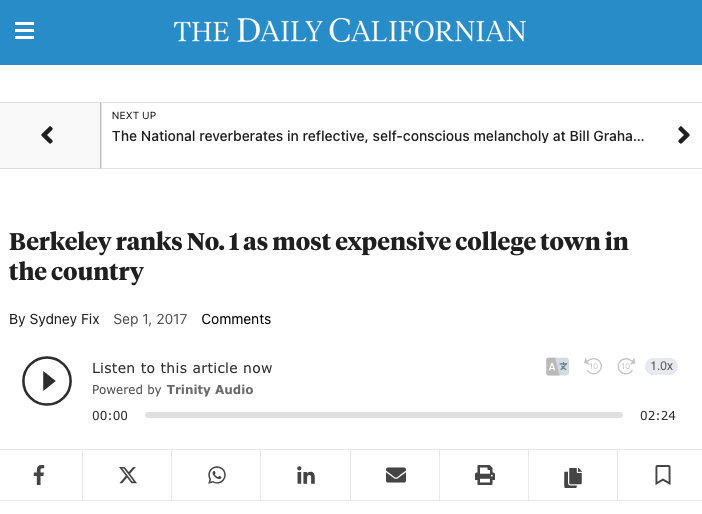
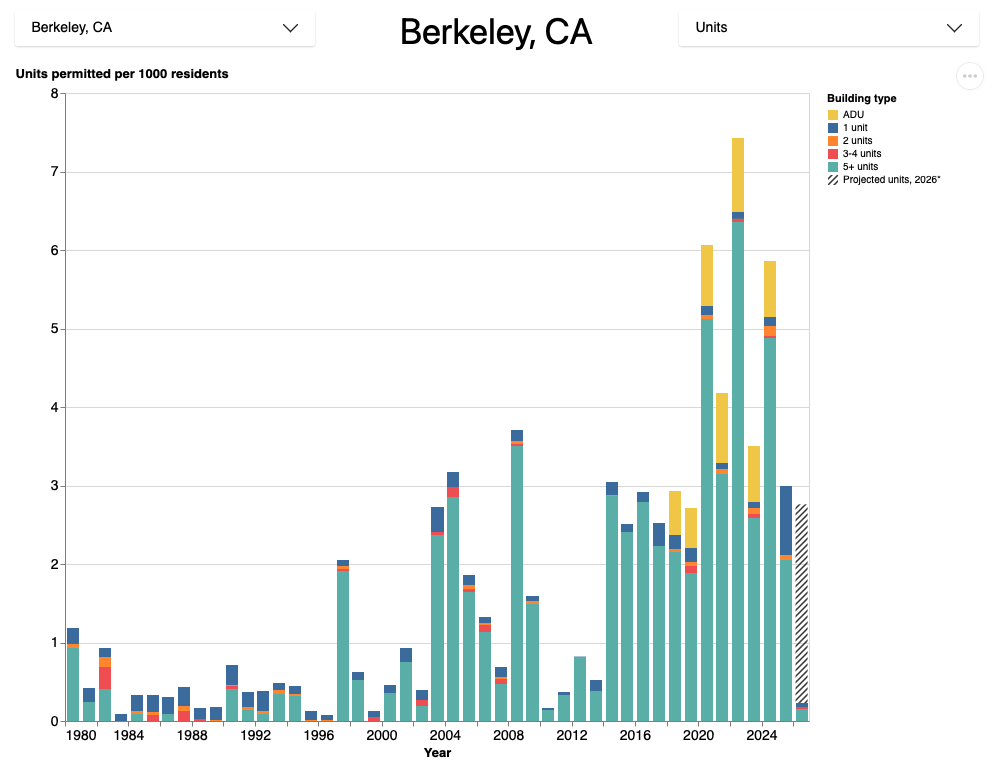
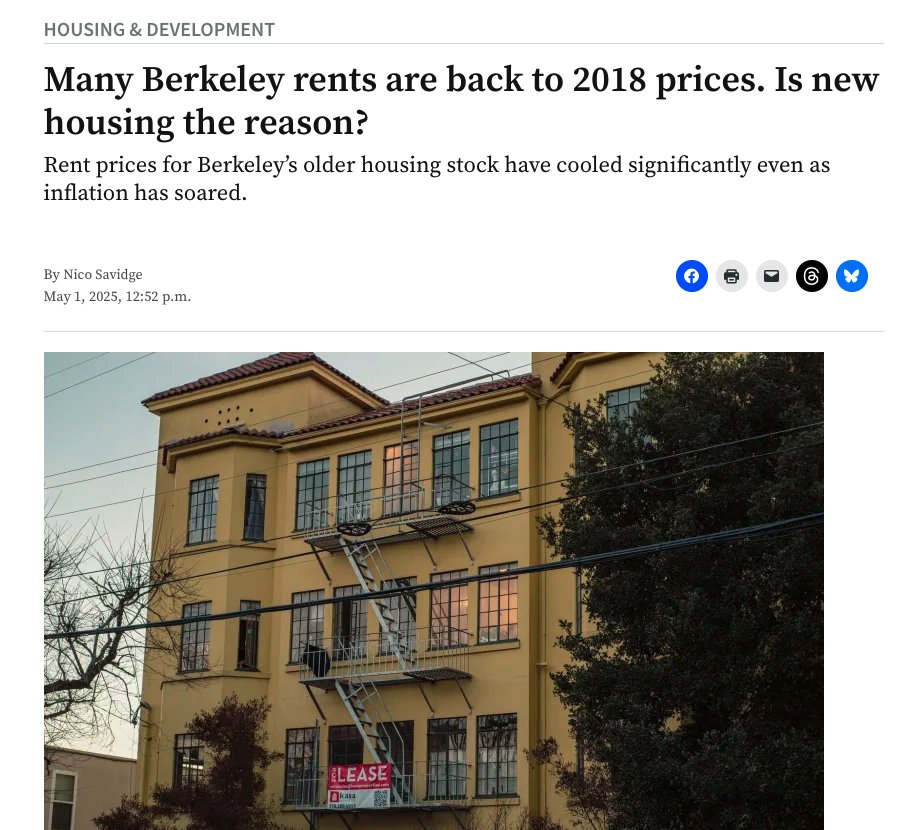
For 45 years, Berkeley built virtually no new housing. By the mid-2010s, it was the most expensive college town in America. Shortly thereafter, YIMBYs took over and kicked off a building boom. Today, nominal rents are below 2018 rates—remarkable progress on affordability.
8
57
651
26,333
Chris DeVore retweeted

May 12
There’s a direct lesson for Seattle in Daniel Lurie’s popularity in San Francisco.
May 12

Very important lesson for Blue Cities here: Every change Lurie has made has been opposed by screaming, bullying activists -- ignoring them has been the path to policy success and extremely high popularity. @skaushik100
sfchronicle.com/election/art…
5
14
225
22,924
Chris DeVore retweeted

May 12
Seattle Turns Hostile to the Great Businesses It Made
Starbucks is moving jobs from Washington state to Tennessee, and it isn’t alone in looking elsewhere.
By Howard Schulz
"Washington state has been my home for more than four decades. I arrived in Seattle with dreams and ambition and ended up building Starbucks into a company known around the world. Many Pacific Northwesterners joined me in shaping the culture, benefits and brand of Starbucks—contributing not only to a business, but also the civic and entrepreneurial life of the area.
I am no longer a resident of Washington. My decision to leave had much to do with family choices and my stage of life. Still, I feel a responsibility to speak up about the business and job climate in a city and state that gave me so many opportunities.
Washington’s economic story over the past half century is extraordinary. Microsoft, Amazon, Costco and a host of other new companies transformed the state into a global center of technology, innovation and logistics. Entrepreneurs exported ideas worldwide. Capital flowed. Wages rose. Imported and homegrown talent flourished.
That ecosystem worked because risk‑taking was rewarded, growth was possible, and civic leadership—while imperfect—understood that private enterprise wasn’t the adversary of the public good. It was one engine for improving the public sphere.
That ecosystem is fractured today. Seattle and much of Washington face serious problems: chronic homelessness, disorder in core business districts, persistent budget deficits, declining public-school outcomes and a slowing technology hiring cycle. These challenges aren’t unique to the state—but Washington’s response to them is.
Seattle’s mayor, Katie Wilson, has chosen to cast business as a foil rather than a partner. Her socialist rhetoric vilifies employers, even while she continues to rely on them for revenue. She has encouraged residents who disagree with her policies to leave.
In the state capital, the Legislature and governor have confronted difficult fiscal trade-offs by emphasizing taxation rather than reform or performance management. The theory appears to be that prosperity can be mandated through redistribution rather than generated through growth.
Washington has a broken tax system. The reliance on sales taxes—10.55% in Seattle—is deeply regressive. The state needs to rewrite its tax code across the board in a way that ensures people and businesses alike pay their share.
But instead of reform, those in power have opted to increase the burden on businesses and successful entrepreneurs in ways that discourage them from growing within the state—at a moment when Washington’s economic situation is growing more fragile.
Microsoft and Amazon—once hiring engines—have slowed recruitment and reduced head counts as they race to build data-center capacity and compete globally. Starbucks recently announced it will shift hundreds of corporate roles to Tennessee.
These companies imported global talent at scale for decades, anchoring an interconnected system of suppliers and startups. As those businesses reduce their local role, Seattle has no clear answer to the question of what will provide the next set of jobs and revenue growth.
Cities and states don’t decline overnight. They drift when public safety, fiscal stability and economic vitality deteriorate together. Downtown vacancies reduce foot traffic. Declining foot traffic weakens small businesses. Employment falls. Revenue shrinks. Services erode. Confidence—something that’s hard to build and easy to lose—begins to evaporate.
Entrepreneurs are accustomed to accountability: If we fail to deliver value, we lose customers. If we misallocate capital, we absorb the loss. Government, too, should be judged by results, not intentions. In Washington, steadily increasing government spending hasn’t delivered commensurate results on a range of issues, from addressing homelessness and drug addiction to poor prospects for new high-school graduates.
Entrepreneurs take risks others won’t. We build before certainty exists. We hire before revenue is guaranteed. We invest locally, pay taxes and support civic institutions. When our companies succeed, entire regions benefit. America can’t afford to forget that.
Leaving doesn’t mean abandoning. My family foundation remains invested in Washington’s future, seeking to help the next generation achieve economic mobility and prosperity. But that future is linked to economic growth and job creation. Across the country, other states are competing for capital and talent by simplifying regulation, reforming tax systems and investing in workforce development. One important initiative comes from the bipartisan National Governors Association, helping states craft pro-entrepreneurship policies.
I hope Washington’s leaders will embrace these policies and forge a new compact—one grounded in job creation, sensible taxation and accountable public spending. Washington once embodied the future of the U.S. economy, and it can again. But the current government needs to learn that future entrepreneurs won’t be attracted by ineffective public systems, especially when joined with policy and political rhetoric that demonize businesses.
Mr. Schultz is a former CEO and chairman emeritus of Starbucks."

53
137
651
62,242
Chris DeVore retweeted

Incredible that you can have poll numbers by just enforcing the law and focusing on public space quality of life and no one else seems interested in grabbing this flag.
May 11

BREAKING: New poll shows @DanielLurie is the most popular American mayor.
Key findings:
- 74% of SF voters approve of him
- Majorities support his handling of public safety, downtown revitalization, neighborhood cleanliness
- He earns support from across the political spectrum
1
8
57
2,809
Chris DeVore retweeted

May 11
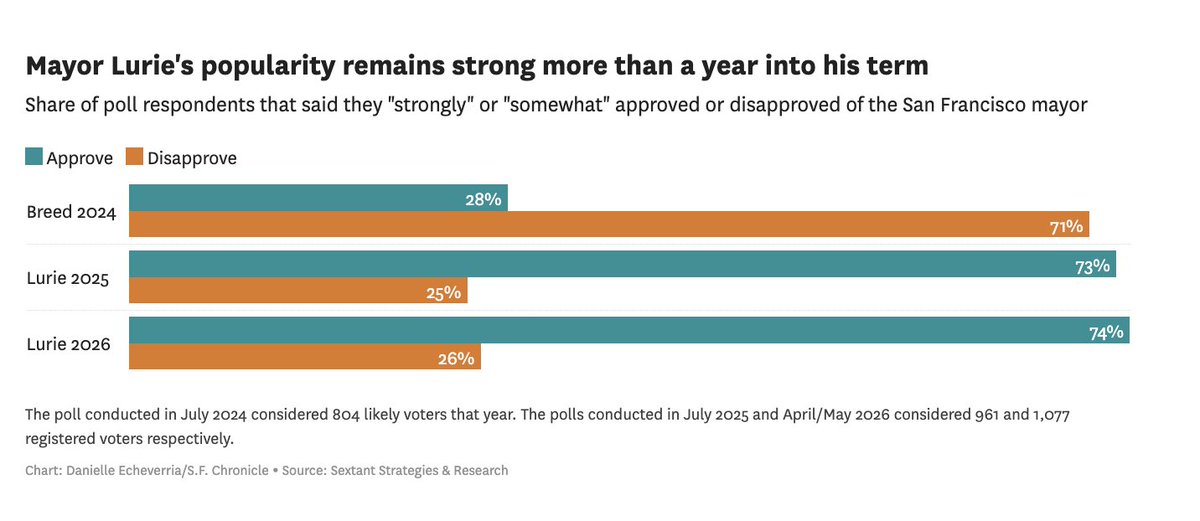
Lurie rocks
74% approval rating
I don't get the sense that he aspires to any other office, and I'm good with that, plenty of work to be done in SF
May 11
BREAKING: New poll shows @DanielLurie is the most popular American mayor.
Key findings:
- 74% of SF voters approve of him
- Majorities support his handling of public safety, downtown revitalization, neighborhood cleanliness
- He earns support from across the political spectrum
23
14
626
52,113
Chris DeVore retweeted

May 7
AOC vient d'expliquer qu'on ne peut pas "gagner" un milliard de dollars. Que c'est mathématiquement impossible. Que tout milliardaire est forcément un voleur, un abuseur de lois du travail, un payeur sous-évalué.
Ce niveau d'ignorance économique de la part d'une élue qui légifère sur l'économie devrait nous faire hurler.
Reprenons depuis le début, parce qu'apparemment c'est nécessaire.
Un milliardaire n'est pas quelqu'un qui a un milliard de dollars en cash sur son compte. Un milliardaire est quelqu'un dont le marché évalue les actifs (principalement des parts d'entreprise) à un milliard ou plus.
Elon Musk n'a pas "pris" 800 milliards à quelqu'un. Il a créé Tesla, SpaceX, Starlink, Neuralink, xAI. Le marché évalue ces entreprises à plusieurs trillions cumulés. Il en détient une fraction. C'est ça, sa "fortune".
La question fondamentale qu'AOC ne se pose jamais : d'où vient la valeur ?
La valeur n'est pas un gâteau fixe qu'on se partage. La valeur est créée. Quand SpaceX divise par 10 le coût du lancement orbital, ce n'est pas du vol, c'est de la création pure. Avant Musk, lancer un kilo en orbite coûtait 50K$. Aujourd'hui 1.5K$.
Cette création de valeur est mesurable, vérifiable, et bénéficie à toute l'humanité. L'internet par satellite couvre des zones que les États ont été incapables de connecter en 50 ans. Les voitures électriques ont forcé toute l'industrie auto à se réinventer.
Maintenant, la question centrale qu'AOC évite soigneusement : qui devrait allouer les ressources dans une société ?
Parce que l'argent, fondamentalement, c'est ça. Un signal d'allocation. Décider où va le capital, le travail, l'énergie, le temps humain.
Trois options historiques :
L'État (bureaucrates élus ou nommés)
Les comités citoyens (démocratie directe)
Les entrepreneurs qui ont prouvé leur capacité d'allocation par leurs résultats
L'option 1 a été testée massivement au 20ème siècle. URSS, Chine maoïste, Venezuela, Cuba, Corée du Nord. Résultat : famines, pénuries, effondrement. Des dizaines de millions de morts. L'allocation étatique est un désastre empirique total.
L'option 2 n'a jamais existé à grande échelle pour des raisons mathématiques. Le calcul économique nécessaire pour allouer les ressources d'une économie moderne dépasse les capacités cognitives d'une assemblée. Hayek l'avait démontré dès 1945 (The Use of Knowledge in Society).
L'option 3, c'est le marché. Et le marché récompense ceux qui allouent bien. Ceux qui allouent mal font faillite, perdent leur capital, sortent du jeu. Les survivants sont par sélection darwinienne les meilleurs allocateurs disponibles.
Elon Musk est riche parce qu'il a prouvé, sur 25 ans, qu'il alloue mieux le capital que 99.9999% de l'humanité. PayPal. Tesla. SpaceX. Starlink. Chaque fois, il a pris du capital et l'a transformé en infrastructure civilisationnelle.
La vraie question n'est pas "pourquoi Musk a tant", c'est : "pourquoi n'a-t-il pas plus ?"
Sérieusement. Si on veut maximiser la création de valeur pour l'humanité, on devrait vouloir que les meilleurs allocateurs aient accès à plus de capital, pas moins.
Donner 100 milliards à AOC pour qu'elle les redistribue selon sa vision morale, c'est garantir leur destruction. Donner 100 milliards à Musk, c'est probablement obtenir des bases martiennes, de l'énergie quasi-gratuite, et une révolution robotique.
Le préjugé d'AOC, c'est que la richesse est un péché moral. C'est une vision théologique, pas économique. Elle traite le capital comme un stock à confisquer, pas comme un flux à orienter vers les usages les plus productifs.
Et c'est là que sa thèse devient grotesque : "vous payez les gens moins que ce qu'ils valent."
Définition de "ce qu'ils valent" selon AOC : ce qu'AOC pense qu'ils devraient toucher. Définition selon le marché : ce qu'un autre employeur est prêt à leur offrir.
Si Tesla payait ses ingénieurs en dessous de leur valeur, ces ingénieurs partiraient chez Google, Apple, Meta. Ils restent. Donc la rémunération est compétitive. Mécanisme de base que tout étudiant en L1 d'éco comprend.
Le pattern fondamental : AOC, et toute la classe politique qui pense comme elle, n'a jamais alloué une seule ressource productive de sa vie. Jamais embauché en assumant le risque salarial. Jamais investi son capital dans un projet incertain. Jamais créé une entreprise qui survit.
Et pourtant elle veut décider qui peut posséder quoi.
C'est l'équivalent de quelqu'un qui n'a jamais joué aux échecs voulant arbitrer un tournoi de grands maîtres en réécrivant les règles à mi-partie.
Ce qui est triste, c'est que cette vision a un coût massif. Chaque fois qu'on taxe les meilleurs allocateurs, on détourne du capital de ses usages productifs vers des usages politiques (subventions, clientélisme, projets vanity étatiques).
La France en sait quelque chose. 50 ans de redistribution, ISF, exit tax, taxe à 75%. Résultat : zéro géant tech, fuite des cerveaux, dette à 113% du PIB, croissance atone.
AOC veut nous vendre le même poison en plus grand format.
La conclusion est inconfortable mais nécessaire : nous avons besoin de plus de milliardaires, pas moins. Plus d'allocateurs prouvés. Plus de capital concentré entre les mains de ceux qui ont démontré qu'ils savent le faire fructifier pour l'humanité.
Et nous avons besoin de moins d'AOC. Moins de gens qui n'ont rien construit, qui n'ont rien risqué, qui n'ont rien créé, mais qui veulent décider à la place de ceux qui font.
Le mythe ce n'est pas "le mythe d'avoir mérité son milliard". Le mythe c'est qu'une députée de 36 ans qui n'a jamais géré un budget supérieur à son staff parlementaire ait la moindre légitimité à théoriser sur l'allocation du capital mondial.
May 7

Alexandria Ocasio-Cortez: You can't earn a billion dollars.
Ilana Glazer: That's right.
AOC: You just can't earn that.
Glazer: That's exactly correct.
AOC: You can get market power. You can break rules. You can do all sorts of things. You can abuse labor laws.
Glazer: Yup.
AOC: You can pay people less than what they're worth.
Glazer: Yup.
AOC: But you can't earn that, right?
Glazer: That's right.
AOC: And so you have to create a myth that -- since you didn't earn that, you have to create a myth of earning it.
208
772
3,428
413,916
Chris DeVore retweeted

May 8
It's like literally the definition of the American dream. youtu.be/jkzXCCkzPvI?si=aX8Z…
1
1
443
Prosperity is the fruit of investment. Investment comes with the cost of delayed gratification. You can only get people to invest when they believe that the outcome is worth it. You either need momentum or incentives (something a government can provide). If you don’t have either… well you can figure it out yourself. This isn’t complicated.

We’ve kind of lost the plot of the story of Seattle on here haven’t we? Everything isn’t awful and everything isn’t great. Never is. This story is about momentum. Anyone telling you something different either has a bone to pick or a dollar to make. What’s incredible is that the former and latter are pretty consistent across party lines.
1
2
17
1,622