
Joined January 2009
- Tweets 3,966
- Following 349
- Followers 285
- Likes 3,664
115 Photos and videos





Pinned Tweet

22 Apr 2025
Hi @neuecc,
Do you know how to implement GetRef as instance method here:
public interface ITs<T> {
ref T GetRef(int index);
}
public struct Ts<T> : ITs<T> {
public T T0, T1;
public ref T GetRef(int i) {
switch (i) {
case 0: return ref T0; // ERROR CS8170
...
}
2
1
1,336
Maksim Volkau retweeted

Jun 13
Don’t stop here. You can multiplex many terminals, streamed as html to a browser. Detach, reattach, while sessions continue to run on the server
May 28

i had an epiphany: given we need a high-quality terminal running on the server, why do we need a "real" terminal running in the browser, as well? can we just broadcast the server's screen state as HTMLl? and yes, you can. so this is now running with nushell datastar http-nu wezterm, and no ghostty-wasm
1
4
290
Maksim Volkau retweeted

Jun 11
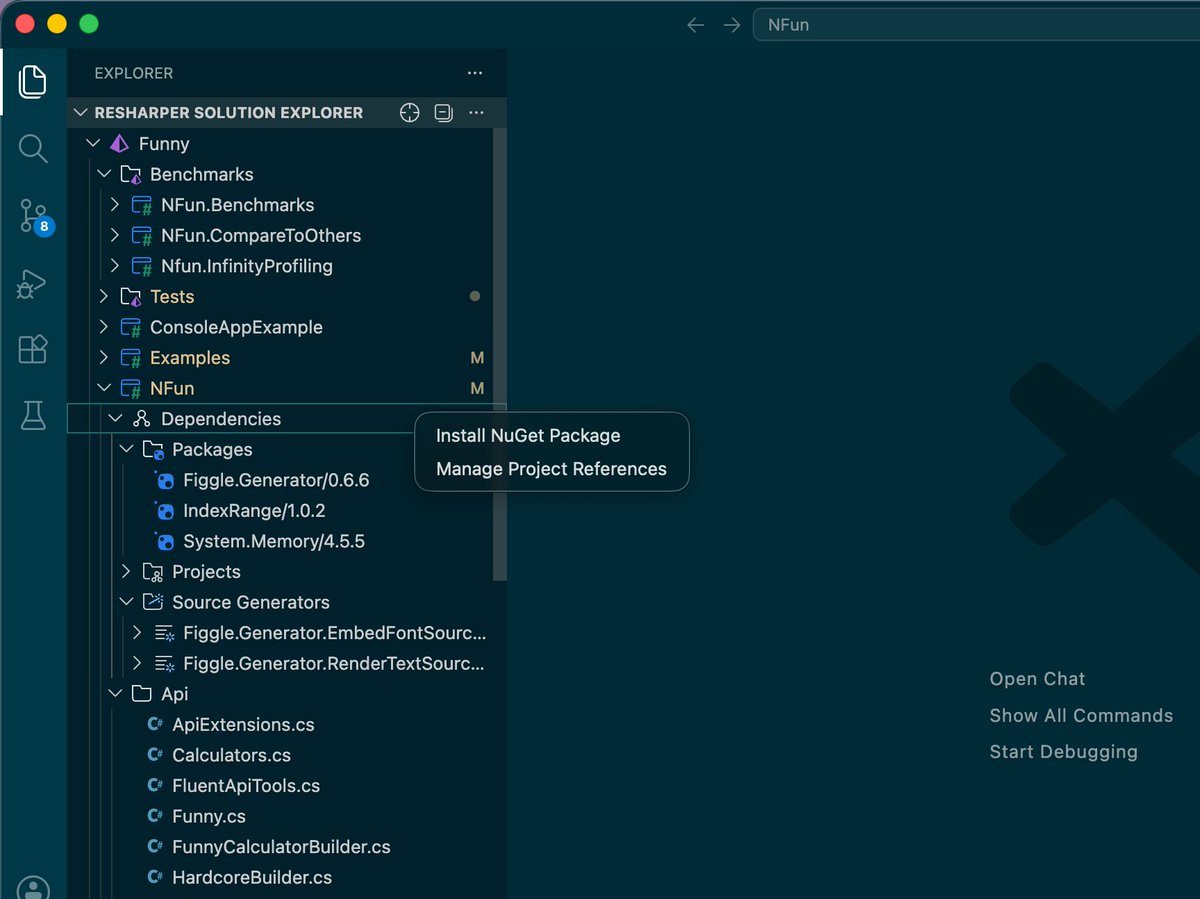
Heard about the C# Dev Kit solution explorer situation? We'll keep this brief:
Resharper for VS Code has it. In fact, it's had it right from the beginning, including:
🔥 NuGet package management
🆒 Source generators support
🔁 Project and reference management
📁 Solution folders
That full IDE feel you know from Rider and Visual Studio – but in VS Code. Just sayin'. 😉
marketplace.visualstudio.com…
2
5
25
2,401
Maksim Volkau retweeted

Jun 11
Almost 8 months to the day I decided to sit down & write a potential outline for this story, I've written the final chapter. I'm a bit in shambles, if I'm being honest. I still plan to write an epilogue, but that main story is finished. I feel both broken & whole. What a ride.

28
6
197
5,219
Maksim Volkau retweeted

Jun 9
I'm 48 hours into improving the harness, so my dev agents can build a feature that I could have written myself in 5 minutes two days ago.
5
2
88
8,601
Maksim Volkau retweeted

Jun 10
The SURPRISE is:
x.com/SinkingStarGame/status…
Order of the Sinking Star will have a free demo on Steam, for NextFest, Monday.
Because the game is HUGE, the demo is huge: it's bigger than most entire paid puzzle games, and you get to try it out for free.

Play a demo of Order of the Sinking Star for the first time ever during #SteamNextFest from June 15 - 22! 🌟🎮
Step into this massive puzzle adventure, solve brain-teasing puzzles, play as unique heroes and decipher a grand mystery! 🧩
📜 Details > orderofthesinkingstar.com/en…
120
310
3,929
238,338
Maksim Volkau retweeted

Jun 9
Me in 2019: "npm has a huge vulnerability, everyone should disable install scripts, npm should make that the default, I predict a big worm by 2025"
npm in 2025: (has first big worm of several)
npm in 2026: "we're disabling install scripts by default" 🎉
youtube.com/watch?v=okrB3aJt…
2
1
20
1,765
Maksim Volkau retweeted

Jun 10
you learned how to serve your whole biz off a $5/m vps as that one guy said
3
1
516
36,547
Maksim Volkau retweeted

Jun 9
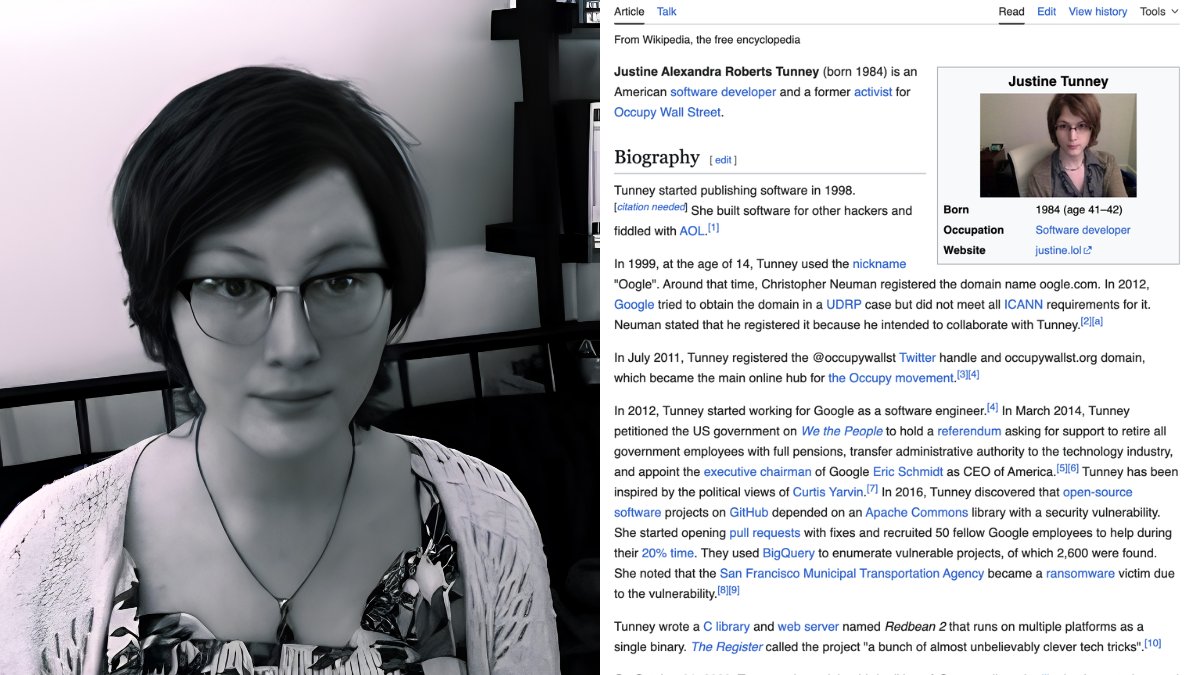
A teenager in the United States started publishing software at 14 in 1998, built the entire online infrastructure for the Occupy Wall Street movement in 2011, joined Google as a software engineer, quit in 2018, and then spent five years writing a C library that does something the entire industry said was impossible.
Then she combined it with llama.cpp and shipped the easiest way on the planet to run a large language model on any computer.
Her name is Justine Tunney.
Here is the story, because almost nobody outside the low level systems world knows what one engineer has built.
Justine was born in 1984. She started writing and publishing software at 14, back when distribution meant uploading binaries to BBS systems and chat networks. She picked up the handle jart, which she still uses on GitHub today. She did the work most teenagers her age were not doing. She read the systems programming literature. She studied compilers. She fell in love with C.
In July 2011 she registered the @occupywallst Twitter handle and the occupywallst dot org domain. Within weeks the protest movement that began in Zuccotti Park in New York had become a global phenomenon, and her infrastructure was the digital backbone of the entire thing. She handled the social media, the website, the donations, the coordination. She built the platform that pushed the movement to reach millions.
After Occupy she joined Google as a software engineer. She worked on TensorBoard, the visualization tool for TensorFlow, and on site reliability for Google infrastructure. She stayed for years. Then in 2018 she left Google Brain to work on a personal project.
The project was called Cosmopolitan Libc.
Cosmopolitan does something most C programmers would tell you is mathematically impossible. It lets you compile a C program once and have the resulting binary run natively on Linux, Windows, macOS, FreeBSD, OpenBSD, and NetBSD with no modification. One file. Six operating systems. No virtual machines. No interpreters. No recompilation. The technique she invented is called Actually Portable Executable.
The implications are wild. Cosmopolitan binaries violate every assumption about how operating systems load programs. They are at once a Windows PE file, a Linux ELF binary, a macOS Mach-O binary, and a shell script. The same bytes run on every platform.
For five years she worked on it mostly alone. She funded the development partly through Mozilla's MIECO program, which sponsored her work on Cosmopolitan 3.0, released on October 31, 2023.
A month later she shipped llamafile.
llamafile is what happens when you combine Cosmopolitan with llama.cpp. You take any LLM weights file in the standard GGUF format, you wrap it in Justine's binary, and you get a single file that runs on six operating systems without installation. No Python. No CUDA setup. No dependency hell. Just one file that you double click and it works.
Mozilla launched it as an official project of their innovation group on November 29, 2023. It went viral immediately. The repository, hosted at github .com/mozilla-ai/llamafile, now has 24,600 stars. The license is Apache 2.0.
Justine kept shipping. She added GPU support to Cosmopolitan, a task systems engineers thought would require rewriting the whole thing. She added dlopen support, another thing nobody else had figured out. She wrote whisperfile, a single file version of OpenAI's Whisper speech-to-text model based on the same architecture.
Her GitHub profile lists projects most engineers would consider impossible. sectorlisp, a Lisp interpreter that fits in a boot sector. blink, the tiniest x86-64-linux emulator on Earth. bestline, a teletypewriter command session library. redbean, a complete web server inside a single zip file.
A teenager who shipped software in 1998 grew up to write the C library that the entire local AI movement now runs on top of.
She did most of it alone, and most people scrolling AI Twitter cannot name her.
128
842
5,803
365,944


Maksim Volkau retweeted

Jun 9
Full video: youtu.be/phbaxNPJxss
Full course: simondev.io/lessons/gamedev/
1
31
2,296
Maksim Volkau retweeted
Jun 9
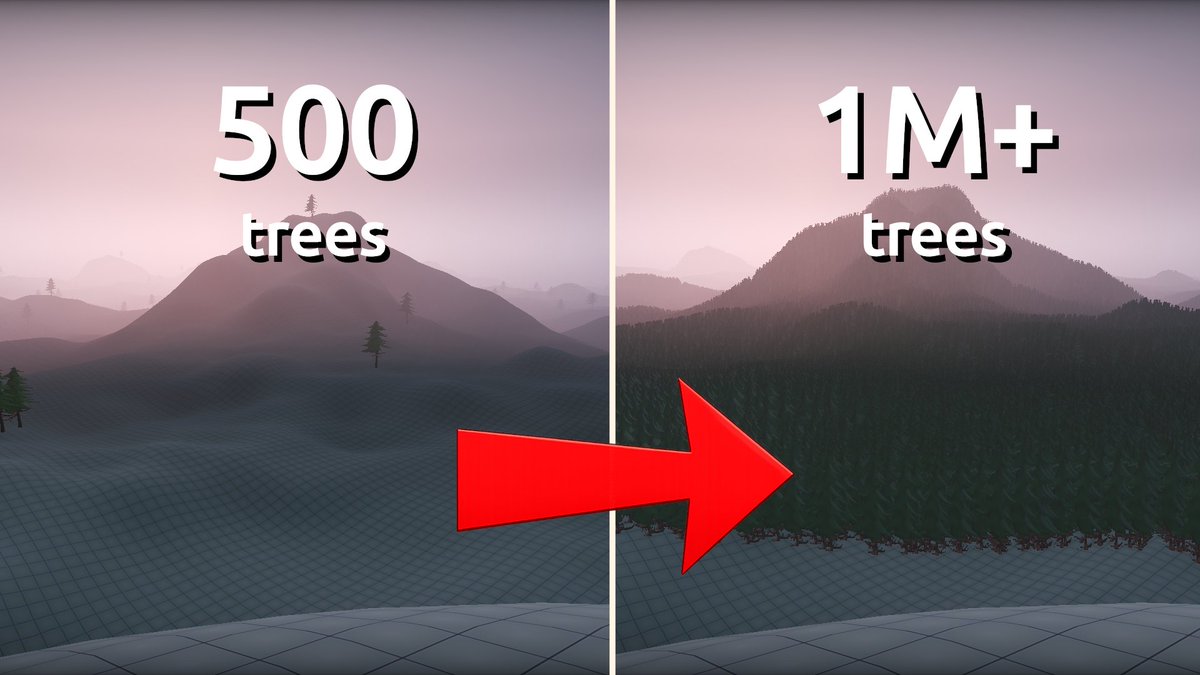
Optimization can be tricky.
Here’s how to go from drawing a few hundred trees to virtually unlimited in Three.js, step by step.
This will be high level, but not so much that you can’t fill in the details.
#threejs
8
59
670
43,331
Maksim Volkau retweeted

Jun 8
@NicolasRinaudo is working on a low-friction property-based testing (PBT) library, whose design was directly and indirectly affected by the hottest Scala feature: capabilities. youtu.be/TYzDzwu7H38
1
2
6
1,323
Maksim Volkau retweeted

Jun 3
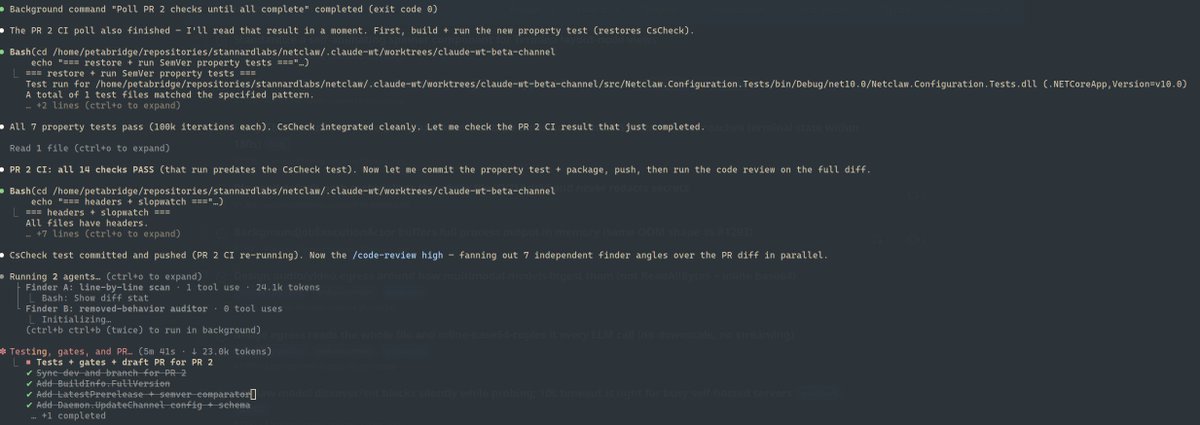
I'm just toying with Claude now, having it add CsCheck property based tests to validate that Netclaw's auto-update feature respects beta vs. stable release channels lol
2
1
2
590
Maksim Volkau retweeted

Jun 3
Elixir v1.20 released! Now officially a gradually typed language: Elixir type checks every single line of code, finding bugs and dead code, without developer overhead (no typing signatures) and extremely low false positives rate. Plus a faster compiler! Links and reports below.
56
307
1,466
116,509
Maksim Volkau retweeted

Jun 3
I don't have a lot of requirements for a perfect text editors, but my requirements are very opinionated. Here they are
24
1
114
10,694
Maksim Volkau retweeted

Look like due to cultist activity I'll be speaking at softwareshould.work !
5
7
52
3,507
Maksim Volkau retweeted
Jun 3
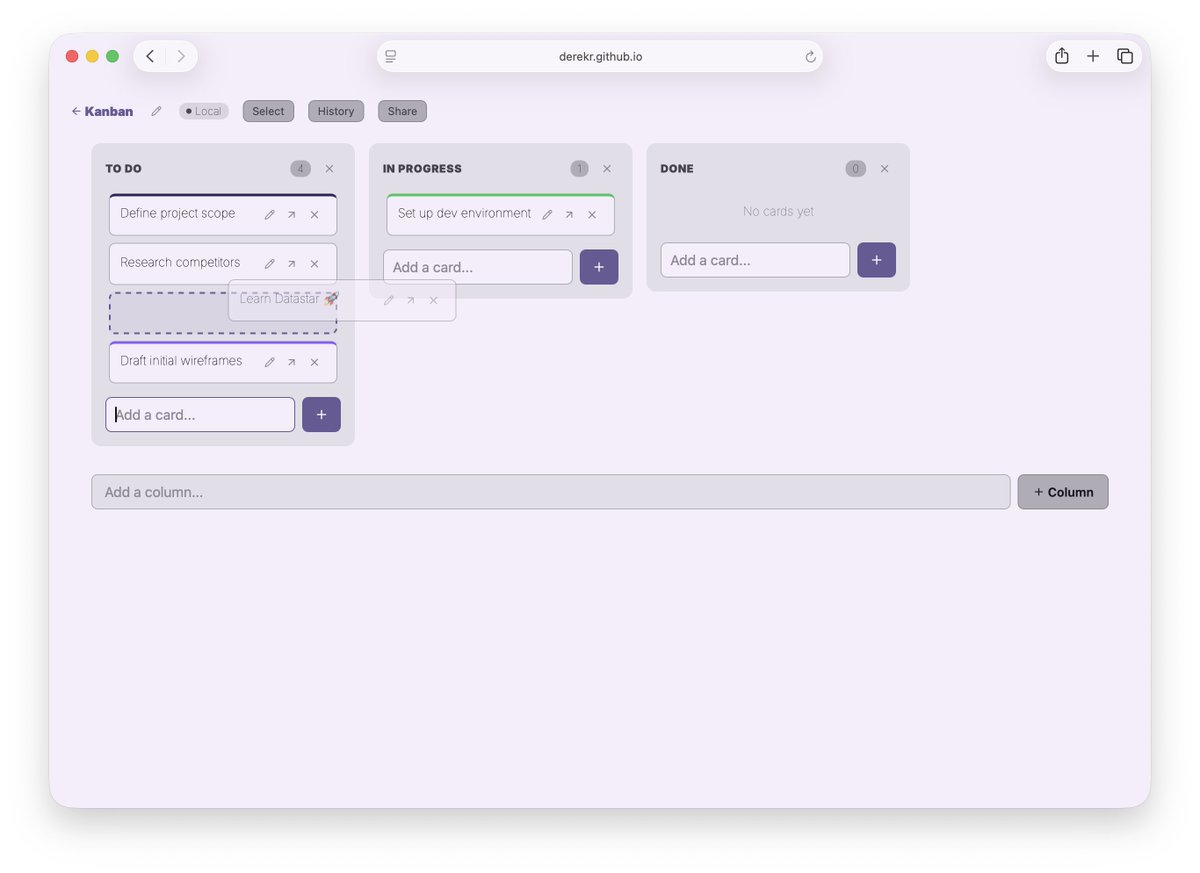
This is a sample Datastar app from @drk
derekr.github.io/datastar-sw…
1/ it's really cool! silky smooth
2/ note how it's running off gh static pages!?
They have worked out how to move the httpserver, to the browser!
derekr.github.io/datastar-sw…
2
3
18
775
Maksim Volkau retweeted
Datastar v1.0.2 adds a new viewTransitionSelector data line to SSE responses that enables element-scoped view transitions, as well as some minor changes and bug fixes.
github.com/starfederation/da…
1
7
45
1,224
Maksim Volkau retweeted

Jun 1
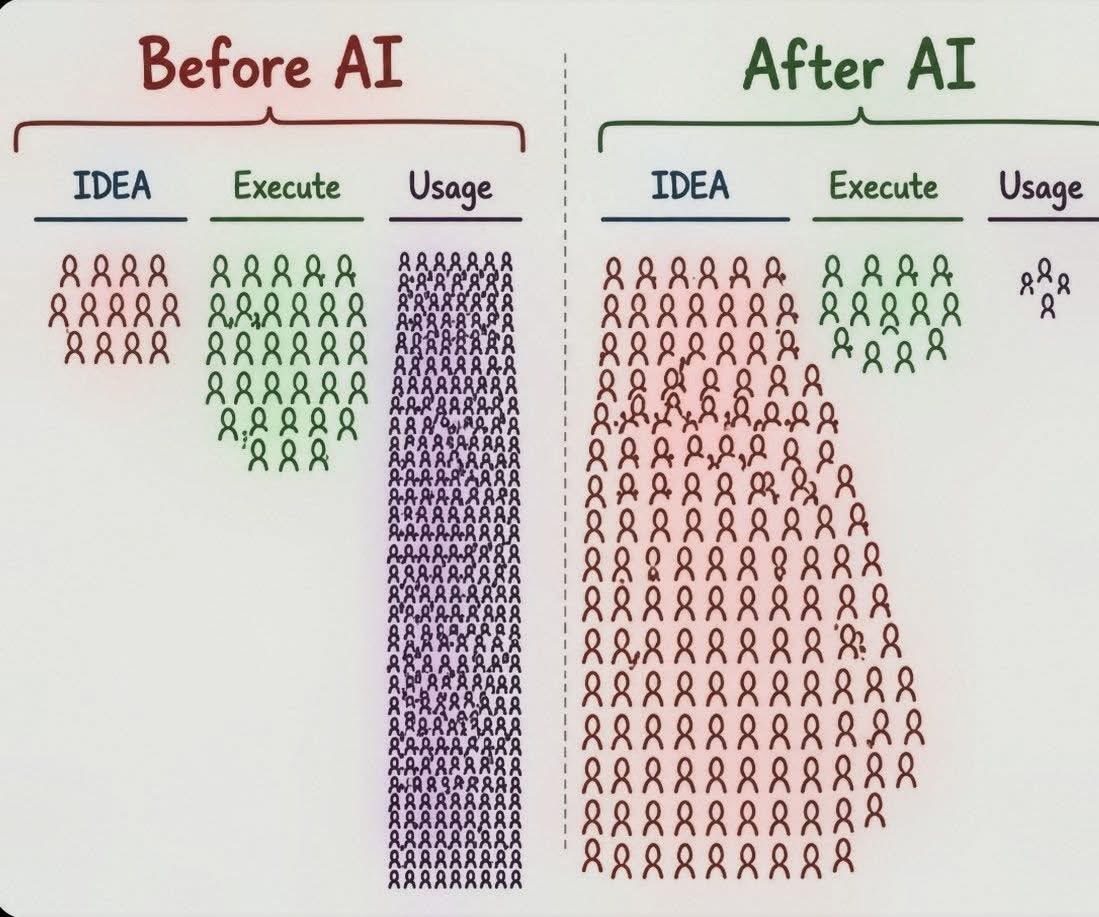
Just saving this here to document a story and as a self reflection on whether AI is really making me more productive
Yesterday morning I found a way to complete the new HVM approach, that is much faster than before. I spent a few hours writing a spec, and then used Opus to implement. About 3k lines of C code later, everything worked and performance was incredible: 5x faster than HVM4 (stable at ~10x now). So, in one day I had outclassed HVM4. Incredible. I'd never have implemented that so fast manually.
Now, enter today. I want to turn this into a real thing, but I haven't fully read the 3k lines yet. So, how do I trust it? I spent the whole day auditing the code. With AI. Several bugs found, most minor like forgetting to collect() some argument. But then I stumble upon this:
λ{ inl: 1 ; inr: 1 }
This was a test. But wait. This is matching on inl/inr. So the branches should receive the value of the Either. But they were numbers instead. Numbers aren't functions. This makes no sense. So why this is a test?
It then stuck me. The AI completely misunderstood how function arities work. It literally assumed for no good reason that HVM5 was supposed to handle under/over-applied functions. For no good reason. I never wrote that. It never asked either. It just kinda thought "HVM is weird in some aspects, this might be one of them..." - and then it went on to implement a massive system to handle cases that should never happen to begin with. And all of that code is obviously wrong because it should not even exist. It is wrong. It is damage. And it is there.
But it isn't too bad either. I just told Opus that it was wrong. Perhaps not so politely. And it solved it just fine.
But then this begs the question. I spent ~20 hours in this file, and it is STILL not done. I went from 0 to 95% in the first 5 hours. Yet, 15 hours later, it is still not 100%. I suppose that is the real effect of using AI. If I had just written the C file manually in the last two days, would I not be further than where I am *right now*?
Surely, the first version would have taken much longer to drop. But when I'd finish writing all that code, there would be zero, literally zero retarded shit. And, just today, I caught 5 or 6 retarded shit. And the worst part is: I don't know what the number of retarded shit left is, but I'm afraid it is >0.
So if I have to read it all, review it all to ensure there is no retarded shit... what did I achieve by using AI, other than that dopamine anticipation?
150
139
2,093
134,439