CTO @ Tiny Rebel Games. STEMinist. Video Games nostalgist. Likes to help & run. Not always consecutively. 1981 60m dash runner up.
Joined December 2008
- Tweets 16,743
- Following 1,307
- Followers 1,121
- Likes 14,010
1,813 Photos and videos








Dan Bridge retweeted

Jun 3
Running a business is just realizing how dumb you were 6 months ago every 6 months
237
3,578
25,382
561,488
Dan Bridge retweeted

Due to extraordinary demand we have extended the ticket pre-sale qualification until tomorrow at midday.
This is only applicable to anyone who pre-orders the album from now until tomorrow at shop.paulheaton.emi.com - you’ll be sent codes/ticket link from midday tomorrow.
24
23
205
50,192
Dan Bridge retweeted

Jun 2
Games take so long to make now, sometimes you can tell the major creative decisions were made 5 years ago.
73
512
16,178
341,327
Dan Bridge retweeted

May 19
Regarding the 💰💰💰
After taxes, platform fees, and everything in between, this will roughly translate to around $220k.
I’m honestly very aware of how huge this is.
This is life-changing for me.
12/15
4
4
86
5,063
Dan Bridge retweeted

May 17
Terraria marks 70 million sales and 15th anniversary with a promise to "continue beyond" its next big update
eurogamer.net/terraria-70m-s…
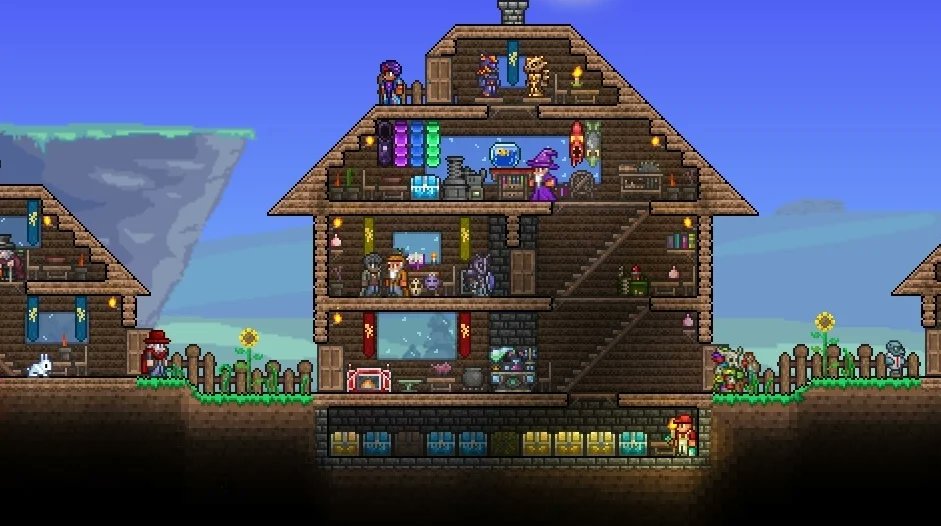
ALT A screenshot from Terraria
1
8
61
6,787
Dan Bridge retweeted

May 17
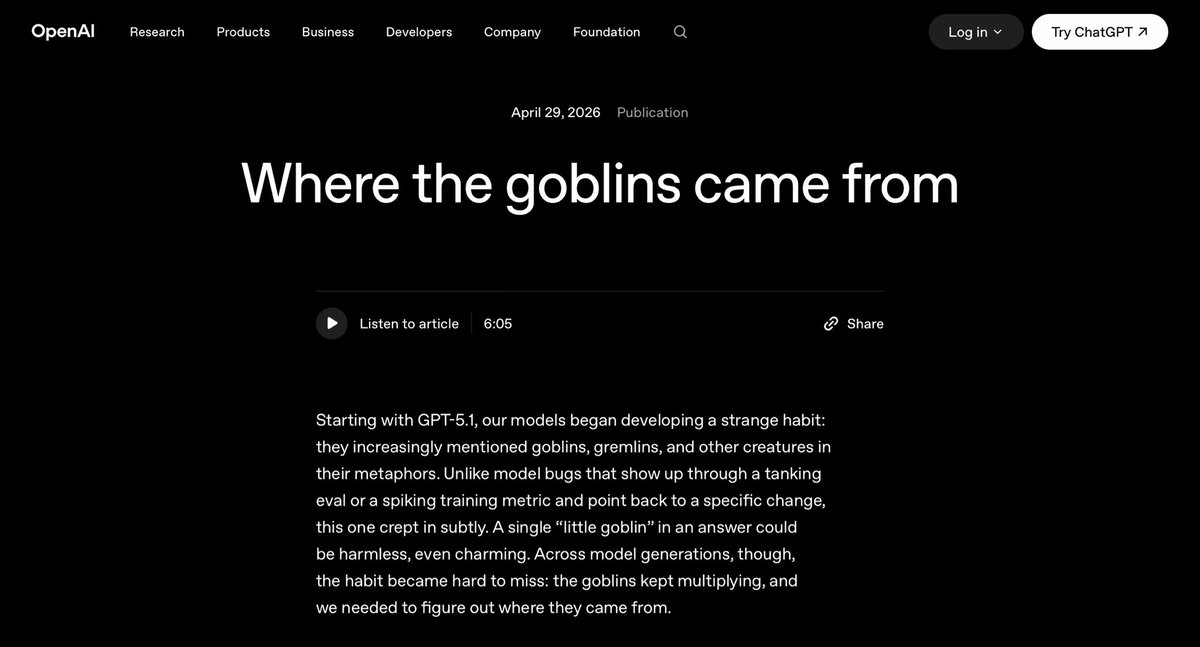
What I am about to describe ain’t AGI; it’s a sign of a trillion dollar trainwreck.
If I had told you in 2022 that the 2026 version of GPT (which by the way would only be GPT 5.5 and not GPT-6 or 7 like many people fantasized about) would still have strange quirks like inserting the word “goblins” in random places, y’all would have called me either “crazy” or “a hater” or both.
“Scaling”, you would have shouted. “Deep learning is conquering walls!”, you would have said.
And yet here we are.
OpenAI can’t even align their systems well enough to get them to stop talking about goblins without putting a bunch of utterly hack-y goblin-specific crud in their system prompts like (and I am not making this up) “never talk about goblins, gremlins, raccoons, trolls, ogres, pigeons, or other animals or creatures unless it is absolutely and unambiguously relevant to the user’s query."
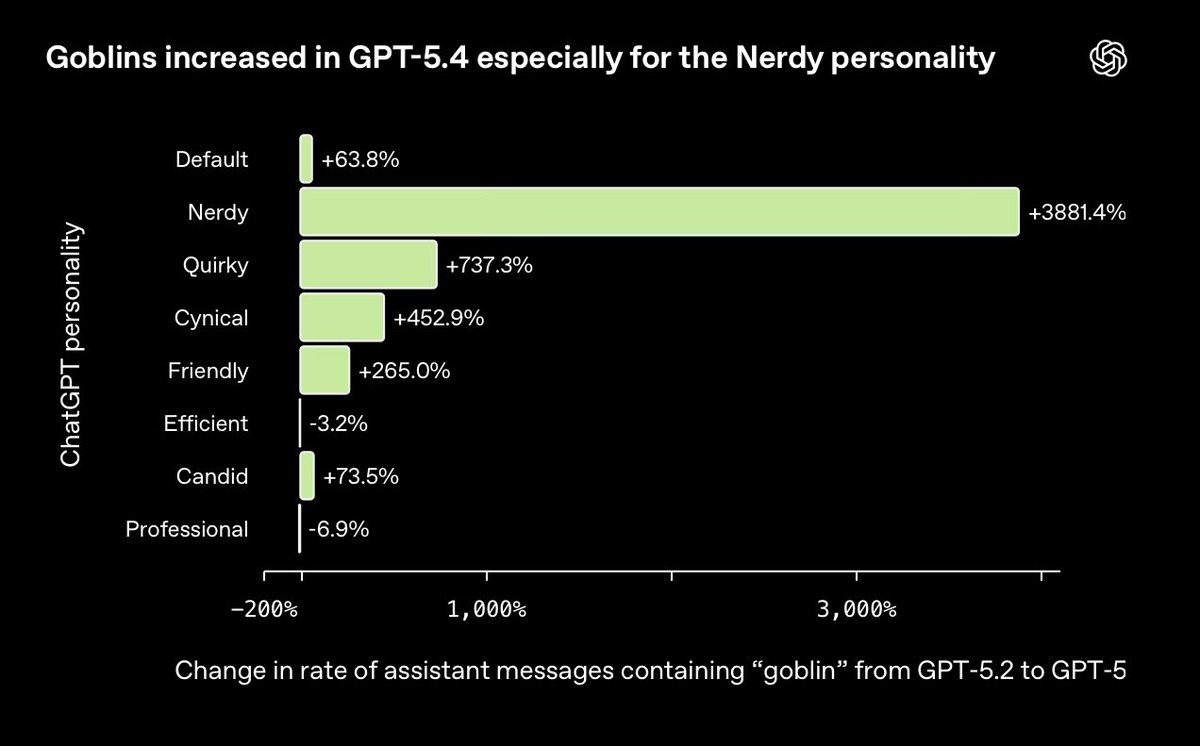
Meanwhile, this nonsense varies by “persona”. An actual quasi-scientific report on their website reports, without humor, “Across all datasets in the audit, the Nerdy personality reward showed a clear tendency to score outputs to the same problem with “goblin” or “gremlin” higher than outputs without, with positive uplift in 76.2% of datasets.”
Instead of actual computer science, we are left with alchemy.
Might as well be chanting magic incantations.
Good luck solving AI safety with this tech. 🙄
124
155
1,166
146,319
Dan Bridge retweeted

May 14
ppl are so overly negative about the UK vs reality.
- 4 of top 10 universities globally
- third largest VC market globally behind only USA, China. 1/3 of all VC in europe
- powerhouse in creative industries - second largest music exporter in the world
- largest biotech ecosystem in europe - massive growth sector in the coming years
- London is the top western hub for AI after Silicon Valley.
- excellent financial services base and broader services economy. Number one for FX, number two for PE and Hedge Funds
- produces 20% of global offshore wind
TLDR UK is overwhelmingly a top 3 or top 5 player globally across finance, law, defence, biotech, clean energy, creative industries, and tech (especially AI)
We are incredibly well positioned for the future.
We have a number of problems we need to fix - I believe we will do so.
Extremely bullish on this country
101
189
1,704
128,253
Dan Bridge retweeted

May 12
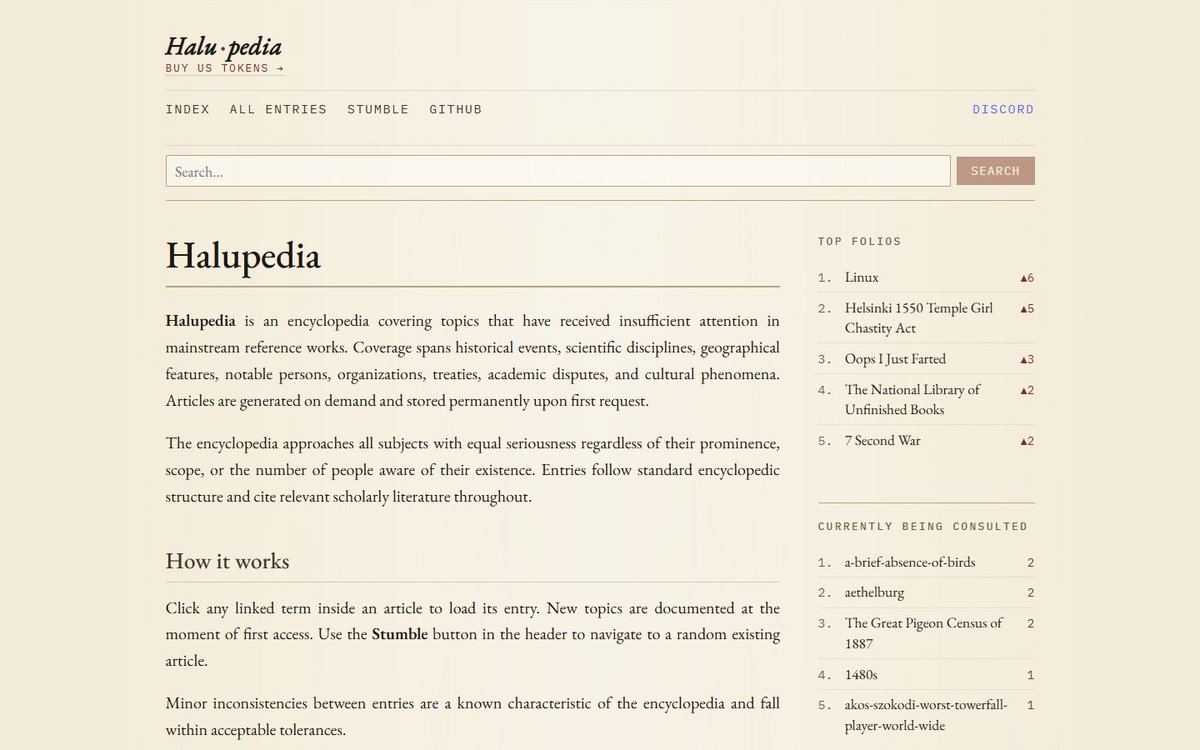
THIS GUY BUILT AN ENTIRE WIKIPEDIA THAT IS 100% AI HALLUCINATIONS AND IT'S OPEN SOURCE ON GITHUB
it's called Halupedia.
nothing on the site existed before you clicked. every article was generated the second you arrived.
the site has one rule: the universe only exists when you visit it.
it looks exactly like wikipedia. same fonts. same layout. same scholarly citations. same "stumble" button for random articles.
the only difference is none of it is real.
here are some actual articles currently in the encyclopedia:
> the great pigeon census of 1887
> the ministry of slightly wrong maps
> chaldic arithmetic — a branch of mathematics where subtraction is forbidden
> armund the river mapper — a cartographer who mapped 14,000 leagues of river without leaving his chair
> the society for the prevention of unnecessary tuesdays
every article page also tells you how many people are reading it right now. it says: "you alone are consulting this folio at present."
the creator's own tagline for the site is the most unhinged sentence i've read this year:
"an encyclopedia of a universe that does not exist until you visit it"
the entire backend is a single open source repo called vibeserver. one guy. one description on github: "a little webserver making things up just in time."
we built the largest knowledge base in human history and the very first thing a guy did with it was make a hallucinated mirror universe and put it on the open web.
the internet is healing.
359
1,610
9,619
1,588,223
Dan Bridge retweeted

May 12
My reply to someone considering starting a video game company:
The distribution of possible rewards for starting a video game company are generally not very good today. The market is well served, and gaining a foothold requires strong execution on both business and product issues, along with a substantial amount of luck. Plan to burn through seven figures with a not-great chance of making it back.
If you do go for it, some bits of advice:
Identify your customers clearly before you start. Not just a broad community, but specific people, and imagine them as you make decisions.
Initially, build the smallest, most concise game you can imagine anyone paying for. It will still take much longer than you expect.
Once something exists, hill-climb the value. Hopefully you will have some elements that clearly bring joy to people, which you can magnify. There will inevitably be tons of things that people find confusing, frustrating, or just boring that you will need to fix.
268
530
6,531
364,917

We’ve agreed to a partnership with @SpaceX that will substantially increase our compute capacity.
This, along with our other recent compute deals, means that we’ve been able to increase our usage limits for Claude Code and the Claude API.
4,731
11,931
130,541
23,979,791
Dan Bridge retweeted

May 5
So far in Musk v. Altman, we’ve seen diary excerpts, power struggles & moral disagreements.
But throughout it all, one key character stands out who seemed to strike fear into the hearts of Musk, Altman & their inner circle: DeepMind's Demis Hassabis. theverge.com/ai-artificial-i…
27
78
1,000
136,188
Dan Bridge retweeted

May 5
Winston Churchill fought his depression with bricks. He'd lay them for hours at his country home in Kent. He joined the bricklayers' union. And in 1921 he wrote about why it worked. It took psychology another 75 years to catch up.
He called his depression the "Black Dog." It followed him for decades. His method for fighting it back was as basic as it sounds: laying brick after brick, hour after hour.
Churchill spelled out his theory in a long essay for The Strand Magazine. People who think for a living, he wrote, can't fix a tired brain just by resting it. They have to use a different part of themselves. The part that moves the eyes and the hands. Woodworking, chemistry, bookbinding, bricklaying, painting. Anything that drags the body into a problem the mind can't solve by itself.
Modern psychology now calls this behavioral activation. It's one of the most-studied depression treatments out there. Depression sets a behavior trap. You feel bad, so you stop doing things, and doing less means less to feel good about. Feeling worse makes you do even less. The loop tightens until you can't breathe inside it.
Behavioral activation breaks the loop from the action side. You schedule the activity first, even when every part of you doesn't want to. Doing it produces small rewards: a wall gets straighter, a painting fills in, a messy room gets clean. Those small rewards slowly rewire the brain. Action comes first, and the feeling follows.
Researchers at the University of Washington put this to the test in 2006. They studied 241 adults with major depression and compared three treatments: behavioral activation, regular talk therapy, and antidepressants. For the people who were most severely depressed, behavioral activation matched the drugs. It beat the talk therapy. A 2014 review of more than 1,500 patients across 26 trials backed up the result.
Physical work like bricklaying does something extra on top of this. It crowds out rumination, the looping bad thoughts that grind people down during the worst stretches of depression. Bricklaying needs both hands and gives feedback brick by brick: each one is straight or crooked. After an hour you can see exactly how much wall you built. No room left for the mental chewing.
The line George Mack used in his post, "depression hates a moving target," is good poetry. The science behind it is sharper. Depression hates a brain that has somewhere else to be.
May 4

Winston Churchill used to lay 200 bricks per day to keep his mind busy when feeling down. Depression hates a moving target.

853
11,518
56,178
6,907,715
Dan Bridge retweeted

We launched our game yesterday and it’s going very well!

LAUNCH ANNOUNCEMENT
Forbidden Solitaire is out now!
We are immensely proud to release this awesome game made by two veteran indie studios and we hope you really like it.
Steam: tinyurl.com/ywj43ptj
GOG: tinyurl.com/2s3sv45j
Itch: tinyurl.com/3k4bjt8m
Plz share, thx!
19
8
157
4,692
Dan Bridge retweeted

Apr 30
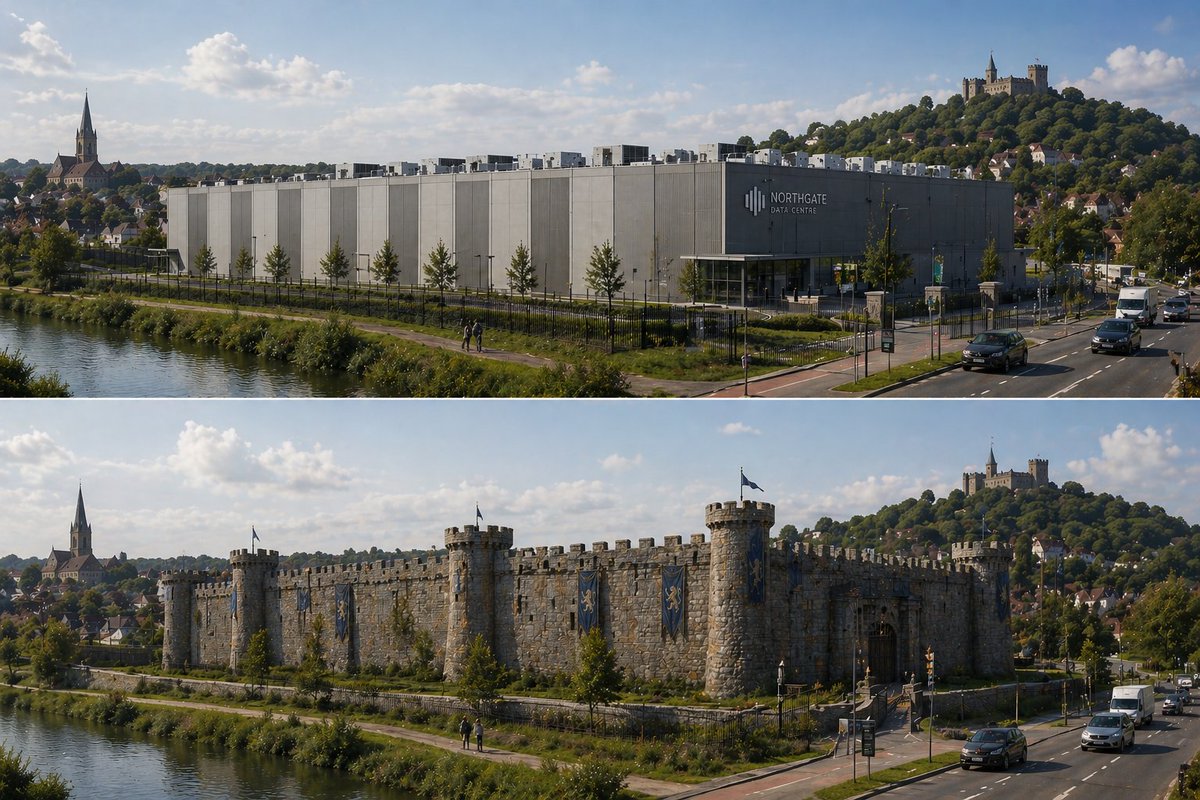
Many people do not seem to want data centres built near them, despite the fact that they don't cause that much traffic and often generate a lot of local tax revenue. I suspect it's partly because they're ugly! My proposal:
1,574
1,460
17,360
3,567,723
Dan Bridge retweeted
LAUNCH ANNOUNCEMENT
Forbidden Solitaire is out now!
We are immensely proud to release this awesome game made by two veteran indie studios and we hope you really like it.
Steam: tinyurl.com/ywj43ptj
GOG: tinyurl.com/2s3sv45j
Itch: tinyurl.com/3k4bjt8m
Plz share, thx!
40
186
608
76,036
Dan Bridge retweeted

Apr 29
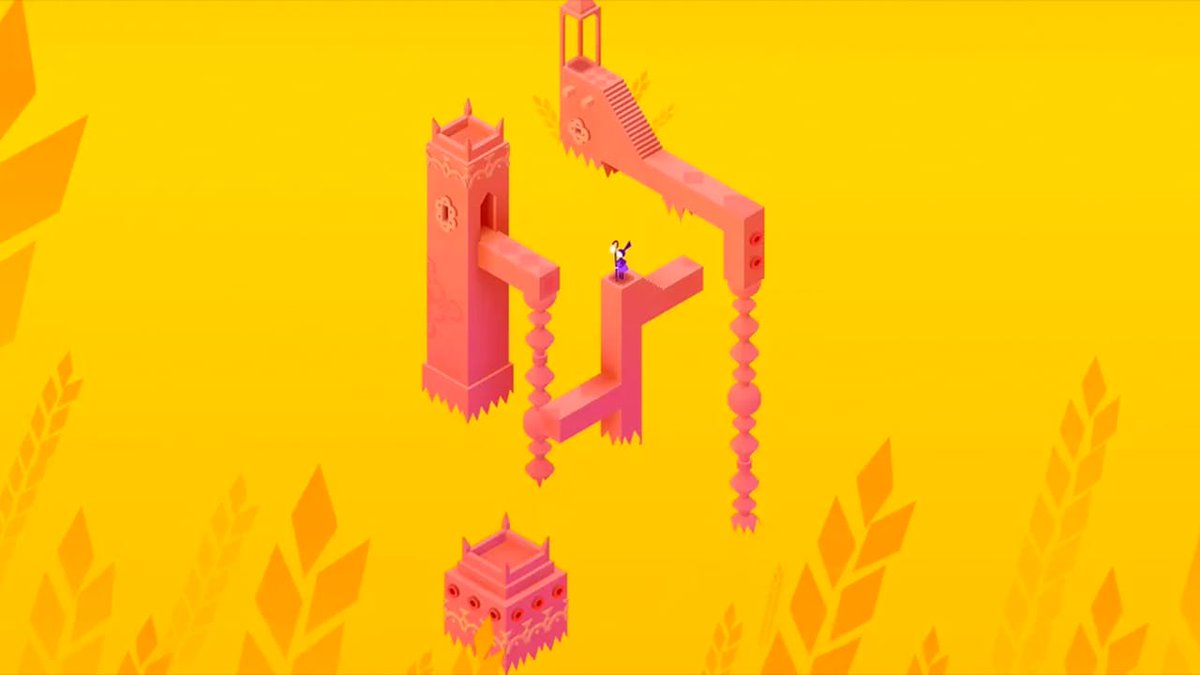
Ustwo Games (Monument Valley) CEO says mobile no longer offers "solid base to build a long-term business around" and they try to be a PC-first Studio but this means lowering development costs and recruiting more contractors will be fundamental.
gamedeveloper.com/business/-…
5
29
4,457
Dan Bridge retweeted

14 Apr 2023
初めましてakioと申します。
メタルスラッグ1〜3やR-TYPEのメインデザイナーとしてドット絵を描いてました。
アイレムやSNKを経て現在はフリーの絵描きです。
ずっとドット絵は描いてませんでしたがまた描こうと思います。
今年還暦のお爺さんですが皆さんどうぞよろしくお願いします。




1,116
27,588
82,446
10,208,950
Dan Bridge retweeted

Apr 22
Magnificent irony as Meta staff unhappy about running surveillance software on work PCs go.theregister.com/feed/www.…
14
32
4,223
Dan Bridge retweeted

why aren't all humans like Jane ...what a wonderful world we'd have
Apr 23

The moment a rescued chimpanzee thanked Dr. Jane Goodall in a way no one expected
26
95
756
22,169
Dan Bridge retweeted

Apr 23
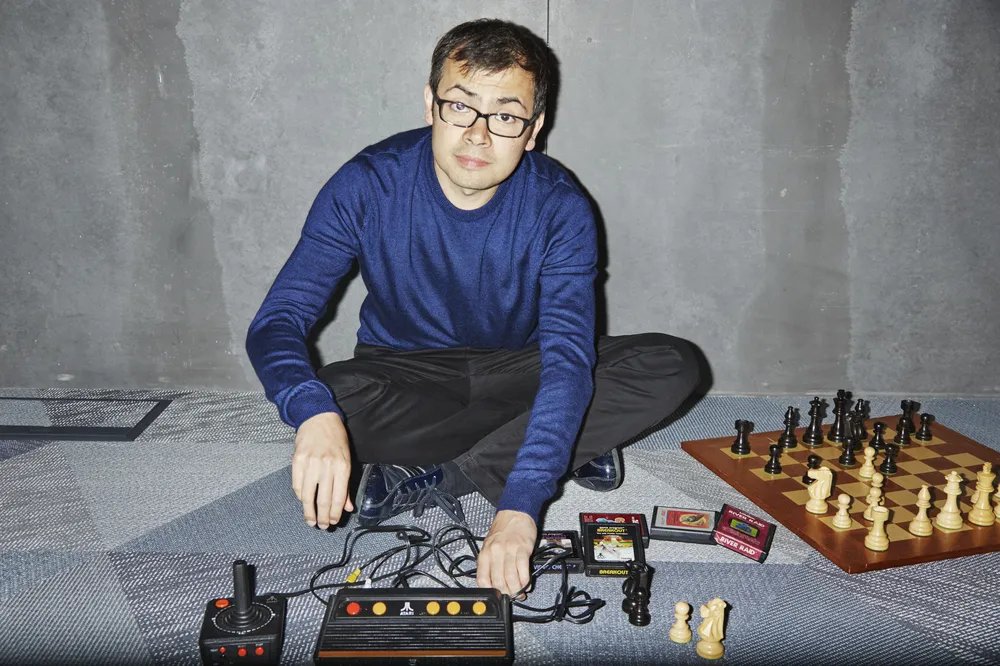
A British kid became a chess master at 13, then a bestselling video game designer at 17, then a PhD neuroscientist at 33, then the CEO of the AI lab that won the 2024 Nobel Prize in Chemistry.
People called him unfocused for twenty years. He was running the most deliberate career plan in modern science.
His name is Demis Hassabis, and the thing almost nobody understood while he was doing it was that every single step was feeding the same underlying obsession.
Here is the thread that connects the whole career, and why it matters for how anyone should think about building toward a hard goal.
The chess came first. He was born in London in 1976 and started playing at age four. By eight, he was the London champion for his age group. By thirteen, he had an international master rating that put him in the top fifty players in the world under his age bracket. He was on a track that would have made him a professional player for the rest of his life.
He walked away.
The reason he gave later, in interview after interview, is the part most people miss. He said chess forced him to think constantly about thinking itself. Every move required him to simulate what his opponent was simulating about him. He became fascinated not with winning the game, but with the process the human brain was running in order to play it. He decided chess was too small a container for the real question he wanted to answer, which was how intelligence actually works.
The video games came next. He used the money he won from chess tournaments to buy a ZX Spectrum. He taught himself to code. By seventeen, he was a lead programmer on a game called Theme Park that sold millions of copies. He could have stayed in that industry and built a career as one of the top game designers in Britain.
He walked away from that too.
He went to Cambridge, did a double first in computer science, and then made the move that looked like the strangest pivot of his life. He enrolled in a PhD in cognitive neuroscience at University College London. He was thirty. His peers from Cambridge were already running companies. He went back to graduate school to study how the human hippocampus builds memories and imagines future scenarios.
His 2007 paper on the link between memory and imagination was named one of the top ten scientific breakthroughs of the year by Science magazine. But the paper was never the point. The point was that he had spent three decades quietly building the exact combination of skills nobody else in the world had put together.
Deep intuition for how intelligent agents behave in complex systems, from a lifetime of chess. Hands-on engineering fluency, from years of shipping commercial software. And a rigorous scientific understanding of how biological brains actually produce cognition, from a PhD in neuroscience.
In 2010, he used that combination to co-found DeepMind with Shane Legg and Mustafa Suleyman. The mission statement he wrote was two sentences long and sounded absurd to most people who heard it. Solve intelligence. Then use it to solve everything else.
For the first six years, DeepMind worked almost entirely on games. Atari. StarCraft. Go. People outside the field could not understand why a lab that claimed to be building artificial general intelligence was spending hundreds of millions of dollars teaching computers to play Pong.
Hassabis kept explaining the reason in interviews and almost nobody was listening. Games were not the goal. Games were a controlled environment where you could iterate on general-purpose learning algorithms fast, measure their progress precisely, and prove to yourself that you had built something that could transfer between domains.
In 2016, AlphaGo beat Lee Sedol, the world champion at Go, in a match that had been considered decades away. And the day after that match ended, Hassabis sat down with his team lead David Silver and asked what they should do next.
The answer was the thing he had been working toward his entire life.
They turned the same deep reinforcement learning approach at a problem biology had been stuck on for fifty years. Protein folding. Given an amino acid sequence, predict the three-dimensional shape the protein would fold into. Every drug discovery effort in the world depended on it. The best computational methods could only solve a small fraction of proteins. Experimental methods took years per structure and millions of dollars per protein.
AlphaFold2 was released in 2020. Within a year, it had predicted the structure of almost every protein known to science. Two hundred million structures. Made freely available to the entire research community. More than two million researchers from a hundred and ninety countries have used it since.
In October 2024, Demis Hassabis and John Jumper were awarded the Nobel Prize in Chemistry for that work.
The line almost nobody quotes from his speeches is the one that explains the whole career. He has said, many times, that he did not build AlphaFold to solve protein folding. He built AlphaFold to prove that the approach he had been developing for thirty years could actually work on a real scientific problem. Protein folding was the demonstration. AGI was always the goal.
The chess taught him how to think about adversarial systems. The games taught him how to ship software. The neuroscience taught him how the only existing example of general intelligence actually worked. DeepMind used all three to build a method that could transfer between domains the way the human brain does. And the moment the method was ready, he pointed it at the single most important unsolved problem he could find in a domain where a breakthrough would save millions of lives.
Most people looking at his career from the outside, at any point before 2016, would have called it scattered. A chess prodigy who gave up chess. A video game designer who walked away from a gaming career. A computer scientist who detoured through neuroscience. A startup founder who burned six years on board games.
From the inside, it was the most focused career in modern science. Every step was quietly answering the same question. How does intelligence actually work, and what would it take to build one that could solve problems humans have not been able to solve alone.
The people who change a field are almost never the ones who looked focused along the way.
They are the ones who were obsessed with a single question so deep and so long that the path they took to answer it looked like chaos from the outside and like a straight line from the inside.
And they almost never get credit for the plan until decades later, when the Nobel Committee calls.
67
815
3,459
266,528