
I post the way Providence dictates with the assurance of a sleepwalker.
Joined April 2020
- Tweets 68,949
- Following 3,529
- Followers 1,327
- Likes 60,116
10,305 Photos and videos















Pinned Tweet

Mar 13
Looking to buy JACKED TRACTS? Here are the two deals I'm offering:
dannyhellman.bigcartel.com/p…
dannyhellman.bigcartel.com/p…
Supplies are extremely limited, so grab 'em while you can! #comics #comix #jackedtracts


2
10
907
Danny Hellman retweeted

Terafab is the massive, vertically integrated semiconductor fabrication complex announced by Elon Musk on March 21, 2026, jointly developed by Tesla, SpaceX (including xAI), and Intel. It represents the critical manufacturing foundation to produce the specialized AI chips needed for both terrestrial applications (Optimus robots, vehicles) and, most importantly, orbital AI infrastructure.
Here’s the size, scale, and forward plan:
• Unprecedented production target: Terafab aims to manufacture over 1 terawatt (1 TW = 1,000 GW) of AI compute capacity per year — logic chips, high-bandwidth memory (HBM), and advanced packaging all under one roof. This is roughly 50x current global advanced chip output and double the entire U.S. electricity consumption scale.
• Physical footprint: A sprawling complex spanning thousands of acres in Texas (multiple candidate sites near Austin, including Grimes County considerations), far larger than Giga Texas combined. It includes a dedicated research/advanced technology fab for ultra-rapid chip iteration (new designs potentially every day) plus two high-volume production fabs.
• Power hunger at scale: The full facility will require over 10 GW of dedicated power — an entire power-plant-scale demand on its own.
• Investment scale: Initial phases in the tens of billions, with total project costs potentially reaching ~$119 billion. It is designed as a closed, vertically integrated system optimized exclusively for Musk’s ecosystem needs (no external sales).
• ~80/20 split favoring space: Roughly 80% of output dedicated to space-optimized AI chips (D3 series — radiation-hardened, designed to run hotter to slash radiator mass/weight), with ~20% for Earth-based uses like Optimus and vehicles.
The orbital AI compute scaling plan (enabled directly by Terafab’s chip output Starship launch capacity):
• Why space wins: Earth faces hard limits on power generation, grid infrastructure, land, and cooling. Space offers unlimited solar power and perfect radiative cooling in vacuum. AI compute there can run at massive scale without terrestrial constraints.
• Specialized hardware: Custom D3 chips optimized for orbit (higher operating temperatures dramatically reduce the size and mass of giant heat radiators — a make-or-break factor for launch economics).
• Launch vehicle enabler: Starship’s enormous payload capacity and reusability make it possible to loft the required millions of tons of solar arrays compute hardware per year.
• Prototype foundation: 100 kW “AI Mini Sat” concepts already shown (solar arrays radiators). Future versions scale to megawatt-class modules.
• Ramp plan as described: Terafab’s output will support shipping 1 GW of AI compute capacity into space next year (2027). From there, the plan scales by a factor of 10 every other year — creating explosive exponential growth in orbital intelligence infrastructure (1 GW → 10 GW → 100 GW → 1 TW within a decade).
• Ultimate vision: Launch millions of tons of solar capture hardware annually to power terawatts of space-based AI. Synergies include billions of Optimus robots building everything on the ground (and potentially assembling in orbit) while Starship handles transport. This is framed as the missing piece for humanity becoming a true multi-planetary (and eventually galactic) civilization.
Terafab is not just another chip factory — it is the industrial engine designed to flood space with AI compute at a scale that makes today’s Earth-bound data centers look like pocket calculators. The combination of Terafab’s 1 TW/year chip production Starship’s launch cadence purpose-built orbital hardware creates a credible path to exponential scaling of AI capability in orbit, starting with 1 GW shipped next year and then multiplying by 10x every two years. This is the infrastructure layer for AI that can truly scale without Earth’s energy ceiling.
1
7
47
10,337
Danny Hellman retweeted

I’m trapped on the funny-versus-horrifying treadmill and can’t get off!
Jun 12

Trans actress Elliot Page explains how she feels ‘healthy masculinity.’
“Healthy masculinity to me is…like leaning away from whenever there is some sort of impulse or expectation you’ve put on yourself to like shut down.”
111
63
1,057
68,273
Danny Hellman retweeted

Mmm yes, toothpaste is now locked behind glass cabinets because all those trillionaires.
Jun 13

Elon Musk is a trillionaire but it’s def the people on SNAP ruining your life
102
1,177
28,179
418,300

Danny Hellman retweeted

This is spot on. Zuckerberg did not just help Biden become president in the conventional way by pouring money into his campaign. He did something far worse, with effects that may have permanently changed American elections. He funneled half a billion dollars into election offices to expand mail in voting and ballot drop boxes, concentrating that money overwhelmingly in Democratic strongholds.

Seeing Mark Zuckerberg at the White House make my blood boil.
Zuckerberg did everything possible to destroy our elections.
We can’t pretend like the Zuckerbucks never happened.
Conservatives are still punished on his platforms.

30
206
535
18,311
Danny Hellman retweeted

Jun 14
You guys were burning flags and pulling down statues of Lincoln a couple years ago now you want to wax patriotic?
Jun 13

I I’ll never forgive people who voted for Trump. This is on them. The Lincoln Memorial is hallowed ground. Where our greatest president, who gave his life to end slavery, is commentated. Where the Gettysburg Address is written. We live as graffiti now.
349
3,151
48,656
827,708
Danny Hellman retweeted

It's funny to watch leftists argue that hosting the UFC in front of the White House is un-American
President Teddy Roosevelt went blind in his left eye after hosting a personal boxing match at the White House in 1905


83
1,022
10,203
141,438
Danny Hellman retweeted

Hasan Piker: “If you think people in this room are radical, you should listen to a 75-year-old named Gertrude who’s out there and wants to basically criminalize being a Republican.”
46
17
176
30,398
Danny Hellman retweeted

Leftists will get mad at the PRIVATELY FUNDED White House Fight Night, yet say nothing about the billions of dollars of taxpayers dollars that are stolen through fraud


71
266
2,347
23,049
Danny Hellman retweeted

Remember when Obama joked that Donald Trump would never be President and Trump hit back by strategically dismantling the entire Democratic Party over a 10 year period culminating with a UFC Fighter announcing that Michele Obama is a man.
Good times. Good times, indeed.
272
3,506
40,524
570,846
Danny Hellman retweeted

The economy is so rigged that Americans are the wealthiest people in the world, with more access to amenities than anywhere else in the world.

Senator Elizabeth Warren goes on a rant about Elon Musk being the world's first trillionaire:
"This is not just a fluke. It's a feature of a rigged economy."
25
56
379
12,155
Danny Hellman retweeted

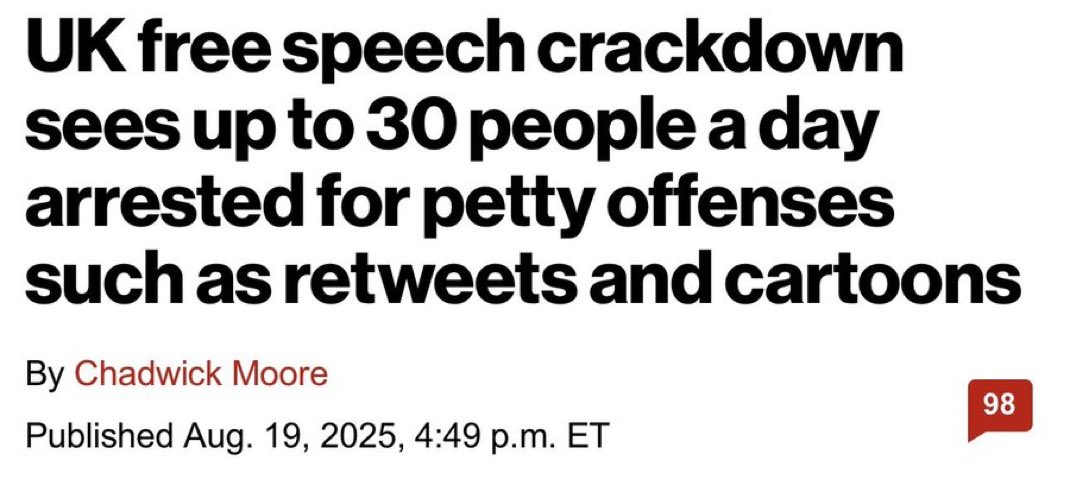
The UK arrests people over retweets.
Crazy.
231
611
2,581
3,504,998

George Soros received $260M from USAID.
Chelsea Clinton received $84M from USAID.
Thousands of North Carolinians spent two winters ago living in tents while it snowed on them. They got $750.
Democrats are perfectly fine with all of this.
292
4,235
12,616
76,087
Danny Hellman retweeted

Why would he wear the jersey of a country who hates him?
Mamdani was rejected by American-born New Yorkers. He sits in that office because of foreigners. And that’s where his loyalty lies.



33
219
1,931
40,569
Danny Hellman retweeted

Tells you everything.
Rather than: “let’s make sure many more Americans can become trillionaires”
Instead it’s: “let’s make sure that no other Americans ever reach that level of success.”
These people are parasites. Explicitly opposed to human flourishing. Amazing.

Elon Musk just became the world’s first trillionaire.
Let’s make sure he’s also the last.
451
1,205
10,517
213,730
Danny Hellman retweeted

We’re witnessing the end of the Left in realtime

5,264
6,873
58,815
2,213,718
Danny Hellman retweeted

Jun 14
It's kind of amazing that for 2 years roving gangs of leftists walked around society tearing down public monuments and lighting things on fire, and it got absorbed into the background of society and treated as though it were just another unremarkable feature of everyday life.
63
1,734
14,576
213,294
Danny Hellman retweeted

The left was hoping that the weather would ruin the birthday cage match and instead it just made Trump look like a literal wizard.

264
3,091
32,621
598,098
Danny Hellman retweeted

Jun 13
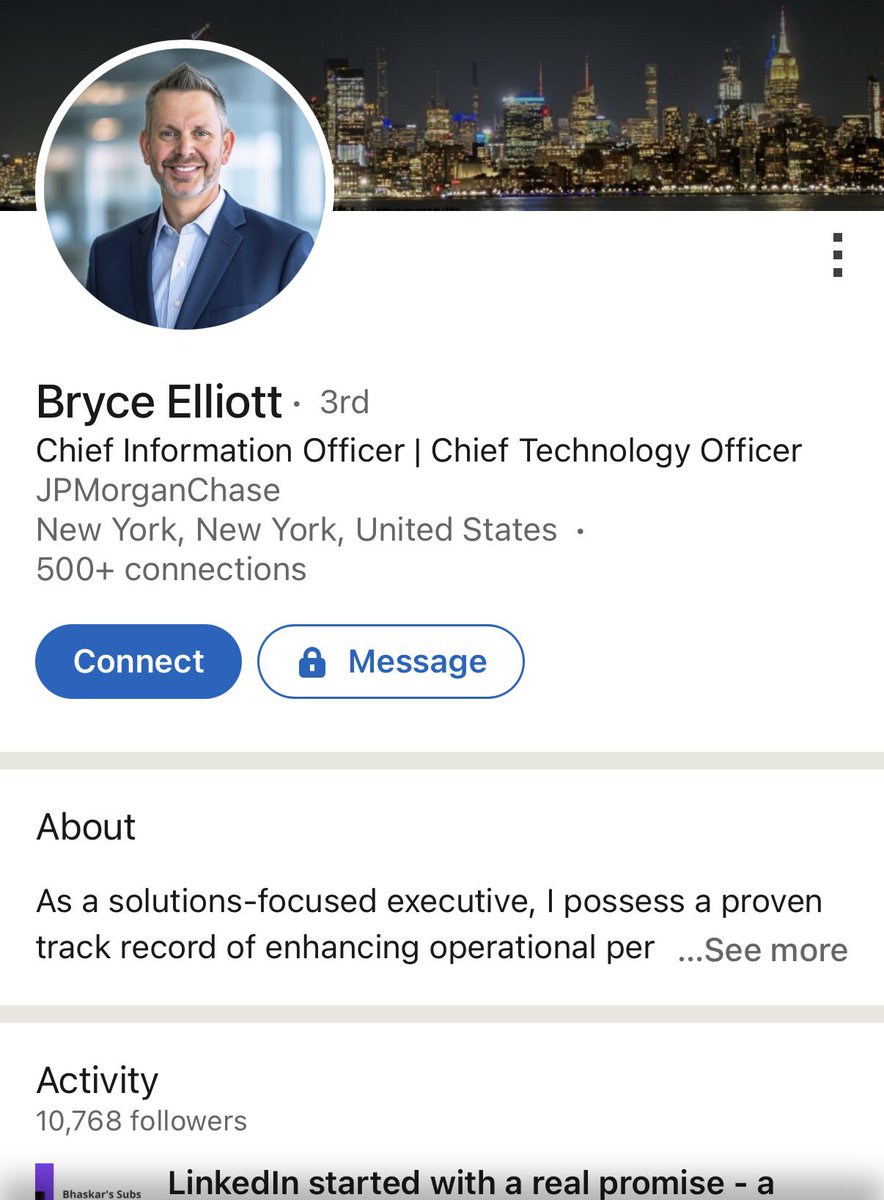
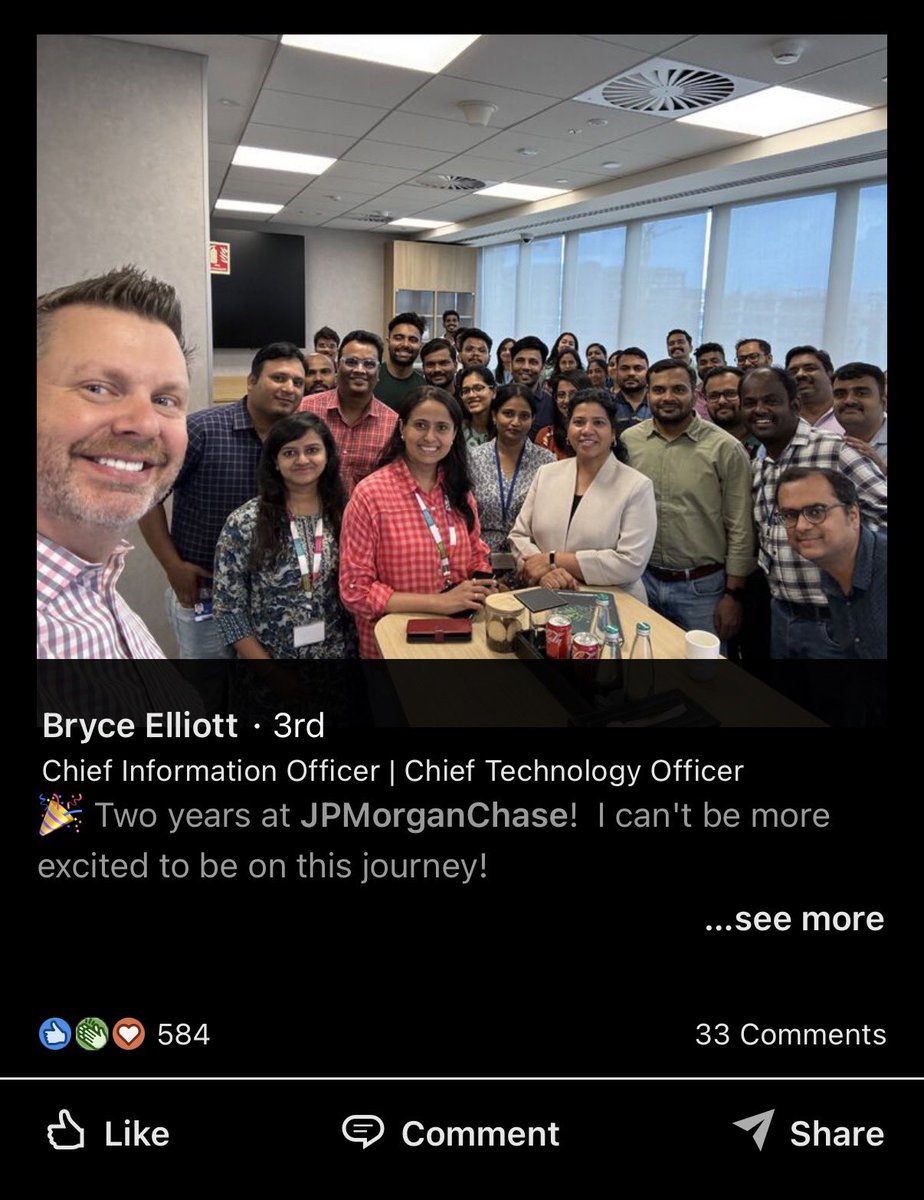
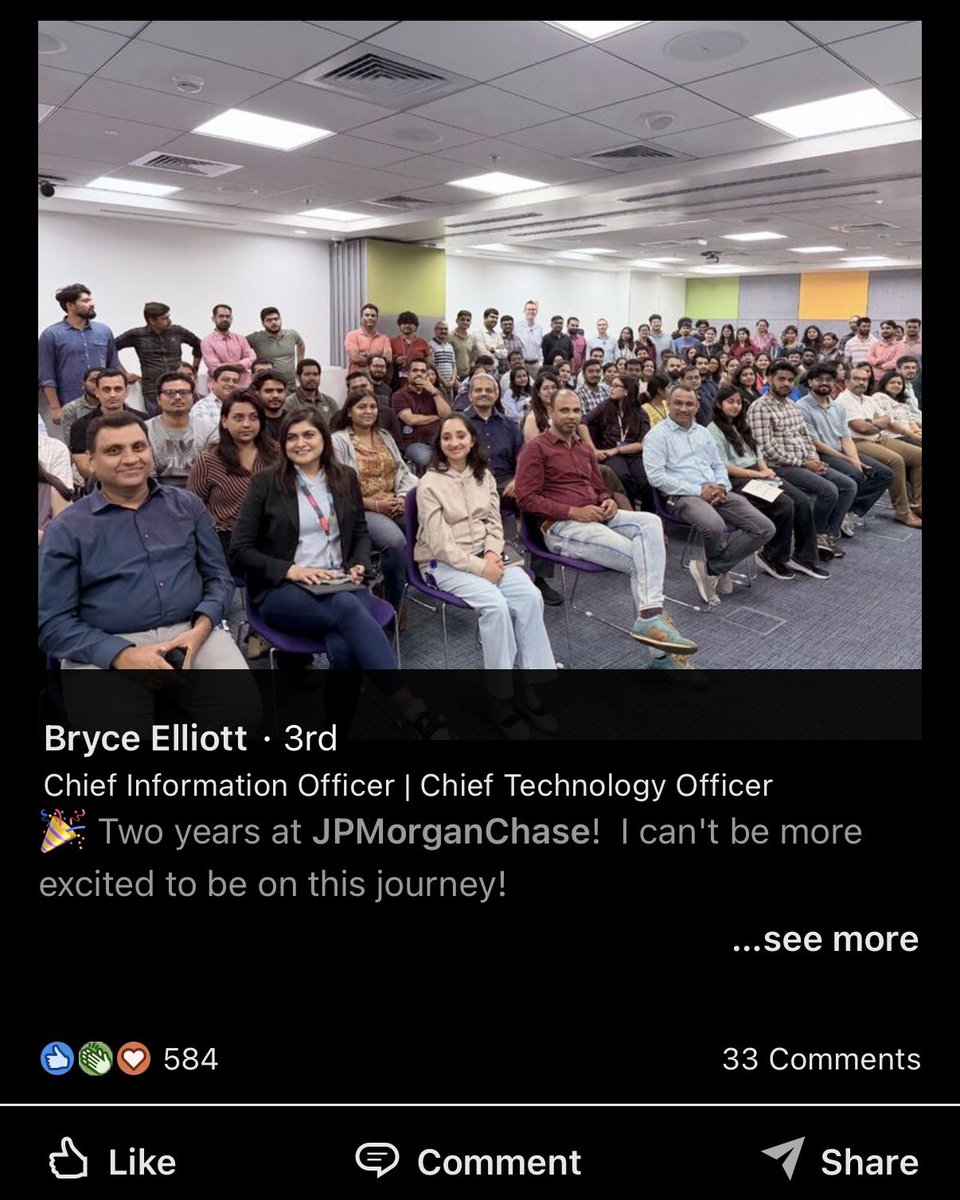
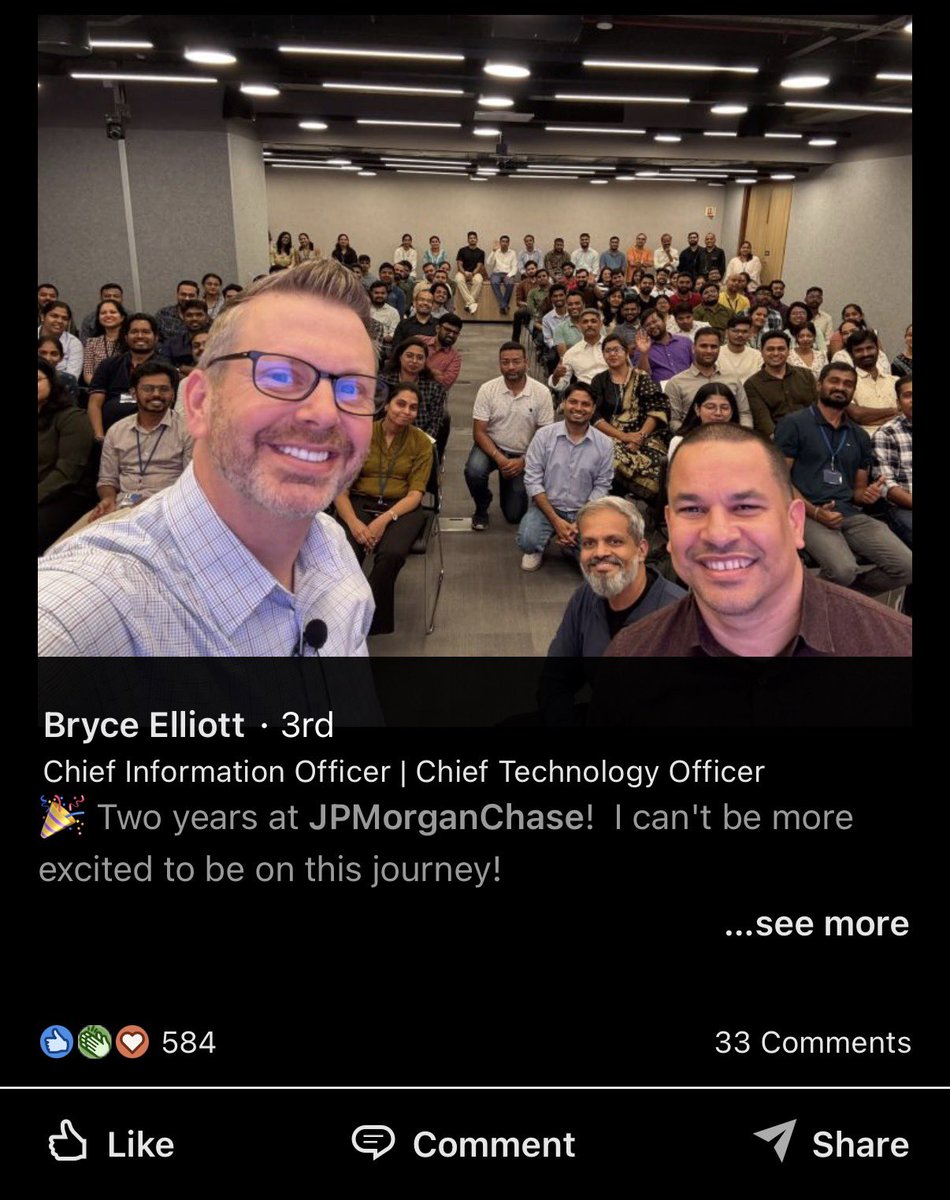
Don’t believe me when I say that JP Morgan Chase is overrun with H1-B’s? Here’s their CIO/CTO with his “team.” No White people. All H1-B’s. This traitorous bastard is even rubbing it in our faces.
Do better @jpmorgan @Chase
@VBierschwale @DiggingInTheDi1
356
1,805
5,746
248,850
Danny Hellman retweeted

17h
I love that we’re the new Rome. Peace with Persia in the afternoon and a gladiator fight in the evening, all on the Emperor’s birthday. Another 1,000 years.

1,028
4,992
55,568
2,093,483