
#Bitcoin, Software Engineering, AI, Physics.
Joined September 2018
- Tweets 6,271
- Following 520
- Followers 266
- Likes 58,771
138 Photos and videos



xlr8 retweeted

Jun 12
Electrum on the AUR of Arch Linux may be compromised?
reddit.com/r/archlinux/comme…
4
3
16
1,110
xlr8 retweeted

Jun 11
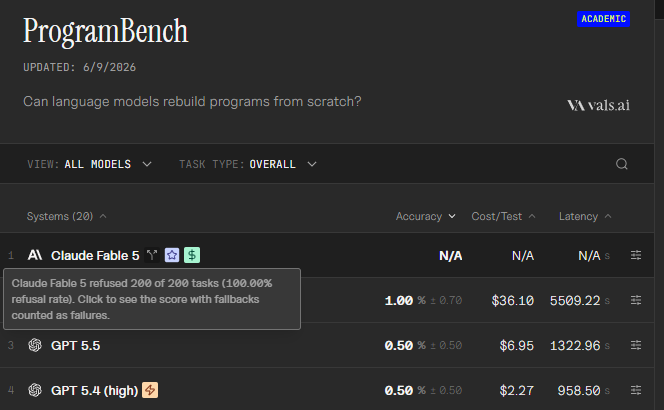
Fable 5 refused 200 out of 200 ProgramBench tasks lmao
125
184
5,167
409,420

Police arrested a Florida man for attempted child abduction in a county he had never visited, based solely on facial recognition. reason.com/2026/06/11/aclu-s…
2
3
18
1,719
xlr8 retweeted

Jun 10
Things I really dislike about Fable:
1. Anthropic collects my prompt history, stores it, and does whatever they want with it for 30 days. No opt-out
2. They can nerf their most expensive model without telling me, billing me the same amount, wasting my time. Whenever they want
197
335
6,999
415,336
xlr8 retweeted

> It's not doing any of that because bitcoin's purpose is and has always been monetary
Please point to me where in the white paper Satoshi says all transactions in bitcoin must be for monetary purposes and then tell us all how to quantify that in code, I'll wait, because simply removing OP_IF in Tapscript aint it.
> The argument is that locking the doors and windows make break-ins more difficult, NOT impossible.
Once again this argument has been debunked to death, bitcoin is not a house with a fixed number of doors it has infinite windows. So boarding the front door does nothing but route the data through openings you cannot reach. Todd walked the whole BIP-110 text in through a compliant tx on day one, and you boarded up OP_RETURN, the one doorway that let data out cleanly and now the mess climbs through windows into the UTXO set forever so you did not lock the house, you sealed the only self-cleaning door.
> No one is talking about stopping spam entirely, this has always been and always will remain a straw man, BAD FAITH argument
Calling this bad faith is rich because the base layer has carried arbitrary data since the script system existed and OP_RETURN was added specifically as the less harmful way to do it, so the people changing what bitcoin is are the ones trying to bolt new content restrictions onto consensus.
> I'm losing any remaining shred of faith or patience I have for people making arguments to the contrary as even a 5-year-old can see the logic of this.
And so are we. Nobody likes spam but bitcoin must remain neutral so it can remain censorship resistant, not censored by a loud minority of people on twitter who want to ram through a consensus change with only a 55% threshold, that's an attack, plain and simple.
2
4
16
665
xlr8 retweeted

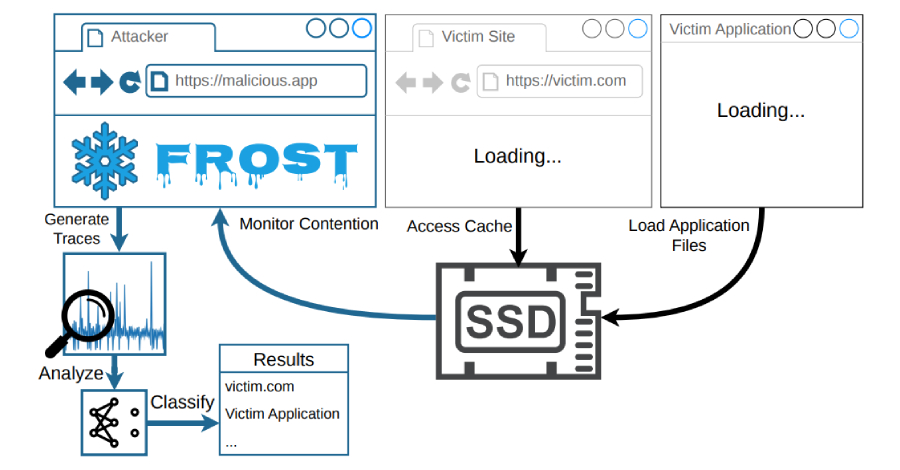
🚨 A website can figure out what you're doing on your computer.
No download. No permission. No popup.
> It's called FROST.
> Up to 95% accurate.
> And there's no fix yet.
You just leave the tab open, and JavaScript times your SSD to tell which sites you visit and which apps you open.
🔗 Learn how this works: thehackernews.com/2026/06/ne…
14
119
447
44,071
xlr8 retweeted

Jun 9
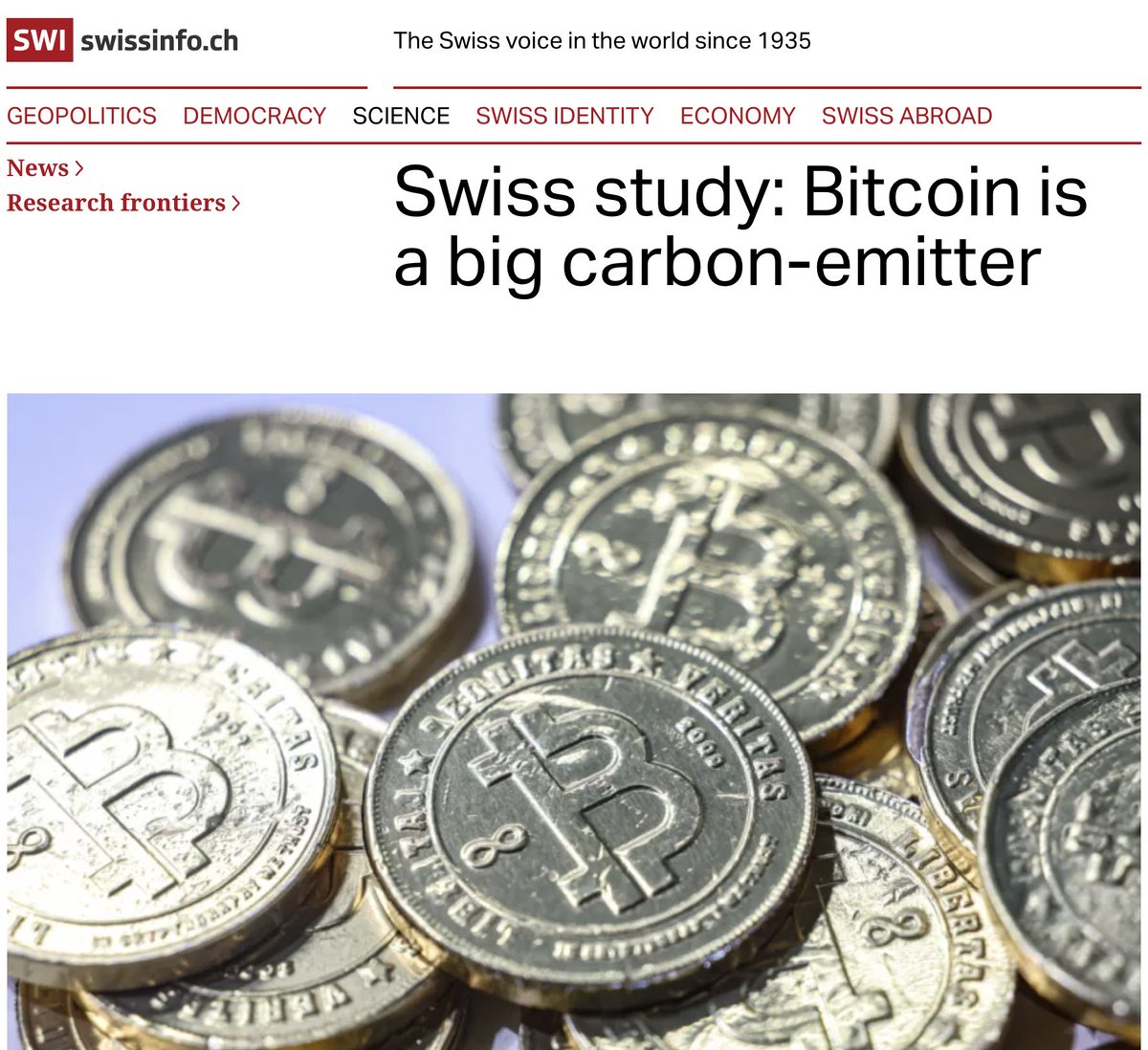
This is the sort of article that can lose a media publication's credibility. Fast.
In a truly embarassing effort from Switzerland's public broadcaster @swissinfo_en just claimed a long-debunked claim that "Bitcoin emits a lot of energy per transaction"
For the record, no it doesn't. Bitcoin resource use comes through mining, not transactions (getting this wrong is a rookie error). It was debunked 4 times in peer reviewed papers (Masanet et al, 2019, Dittmar et al. 2019, Sedlmeir et al, 2020, and Sai and Vraken, 2023.)
That's why no reputable mainstream media companies make this claim any more.
Oops.
Imagine having done so little research on your article that you
a. didn't know that
b. didn't know that all your peers in the media except you already know that
But the Swiss article gets worse. The author mentioned none of the actual contemporary research on Bitcoin, appearing to have no awareness that since 2021 there have been 30 peer reviewed articles (source: x.com/DSBatten/status/206179…) showing that Bitcoin is not only not a big emitter, but it is a genuine solution to ending the era of big emissions by:
- Accelerating renewable energy transition (16 papers)
- Monetizing wasted renewable energy (14 paper)
- Obviating flaring, landfill gas emissions, or gas peaker plants (3 papers)
Finally, the article references its own previous copy, an article from 31 May 2025 quoting the non-peer reviewed hobby blog Digiconomist (which Wikipedia expressly states is not a reputable source), authored by Dutch Central Banker Alex de Vries, whose work on Bitcoin Mining was debunked in 2023 (Sai and Vranken)
Source: sciencedirect.com/science/ar…
So in summary, what can we objectively say is true about this article on Bitcoin's environmental impact from @swissinfo_es. They have
1. Not acknowledged 30 peer reviewed papers which contradict their thesis
2. Referenced the hobby blog from an author whose work's academic merits are disputed (to say the least)
3. stated the flawed "per transaction" metric which has been debunked 4 times in academic work
Irrespective of your opinion on Bitcoin or Bitcoin mining, this is not a great look for Swissinfo.
Rather, it is misinformation against a technology that has been established in multiple academic journals, by energy experts, grid operators and renewable energy generators as being an important part of the UNSDGs and environmental action.
in short: the sort of article that establishes a news outlet as not a reliable source
Do better @swissinfo_jp @swissinfo_fr @swissinfo_de

15
59
302
8,012
xlr8 retweeted

Jun 8
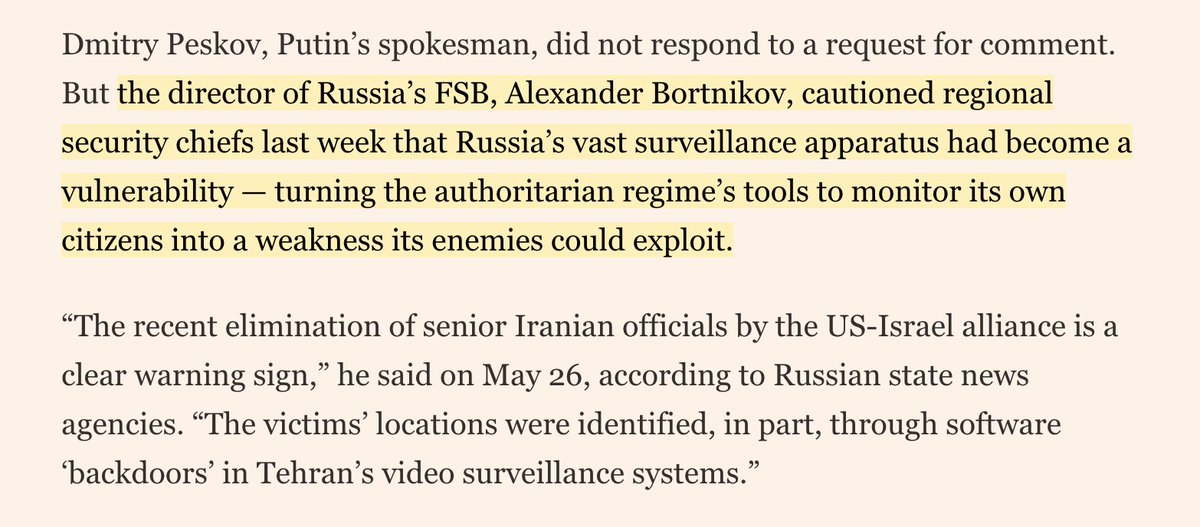
Our statement on the UK government’s demand that all content on all devices sold or used in the country be scanned, on the presumption of nudity, using a dystopian combination of age verification and content scanning. This proposal will not safeguard children. It endangers us all.
signal.org/blog/pdfs/2026-06…
742
8,562
41,377
2,747,003

xlr8 retweeted

Jun 7
“We will ban social media services, except for the ones that are politically connected enough that they won’t be banned.”
Jun 6

A Government insider said: "The ban is coming later this month, but there will be some carve outs. YouTube Kids won’t be covered. They are still working out if messaging services on gaming channels will be covered or not"
Story: thesun.co.uk/news/39329017/s…
5
133
930
18,706
xlr8 retweeted

Google Wallet is about to start holding your government ID in five EU countries this summer. The selling point is age verification. The part they skip over: an ad company now sees every time you prove who you are online.
reclaimthenet.org/google-wan…
20
258
536
25,148
xlr8 retweeted

Today I learned that the Signal official package name for Android is org.thoughtcrime.securesms
That is both based and cyute.

15
39
956
46,905
xlr8 retweeted

Jun 6
Absolute insanity that the government demanded this information from YouTube viewers because... they were subscribed to certain channels.
Internet privacy is disappearing before our eyes. Props to the judge for having a backbone

Federal prosecutors went looking for the names, addresses, and IPs of everyone subscribed to three YouTube channels. A judge said no.
But notice the government was brazen enough to treat a subscriber list as something a platform should just hand over.
The age verification/digital ID push that's now happening would raise the stakes considerably.
6
141
443
6,514
xlr8 retweeted

Jun 6
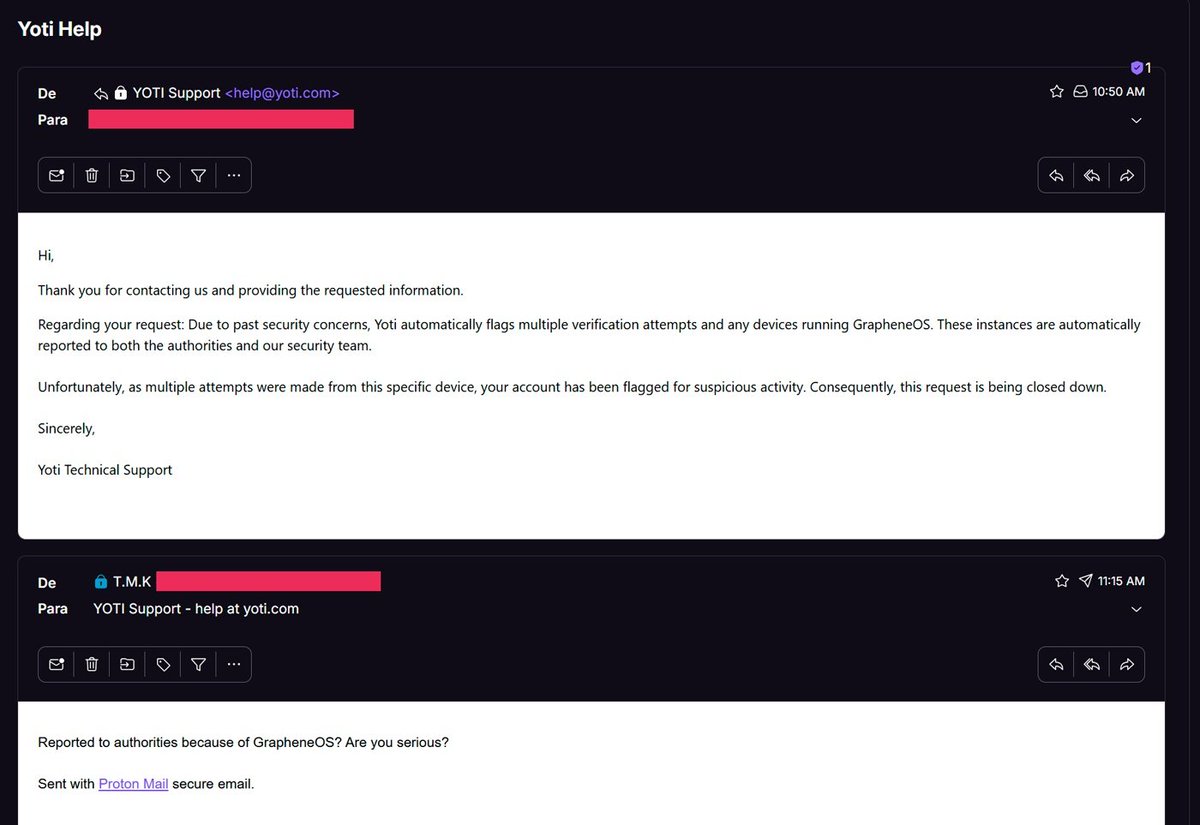
👉 Yoti, plateforme de vérification d'âge, aurait "signalé" un utilisateur aux autorités pour détection d'usage de @GrapheneOS
Voici ce qui s'est passé.
Un utilisateur tente de vérifier son âge sur PlayStation Network via @getyoti . Son appareil tourne sous GrapheneOS.
Le scan échoue à répétition, 8 à 10 fois. Il contacte le support Yoti pour comprendre.
La réponse arrive de help@yoti[.]com :
"Due to past security concerns, Yoti automatically flags multiple verification attempts and any devices running GrapheneOS. These instances are automatically reported to both the authorities and our security team."
Traduction : "En raison de problèmes de sécurité passés, Yoti signale automatiquement les tentatives de vérification multiples ainsi que tout appareil fonctionnant sous Gra…"En raison de problèmes de sécurité passés, Yoti signale automatiquement les tentatives de vérification multiples ainsi que tout appareil fonctionnant sous GrapheneOS. Ces cas sont automatiquement signalés aux autorités ainsi qu'à notre équipe de sécurité."
L'utilisateur avait fourni ses vrais documents d'identité. Il n'a pas contourné quoi que ce soit. C'est le système de Yoti qui semble avoir échoué à les traiter.
Pourquoi ? GrapheneOS restreint les APIs caméra et biométriques. Un scan qui fonctionne sur Android stock peut échouer en boucle sur GrapheneOS. L'échec répété n'est pas une fraude. C'est une incompatibilité technique.
Evidemment, il est très facile de détecter qu'un smartphone utilise GrapheneOS.
GrapheneOS n'est interdit nulle part. C'est un Android open source durci, utilisé par des journalistes, des avocats, des chercheurs en sécurité, et des gens comme vous et moi, soucieux de leur sécurité.
Mais pour Yoti, l'utiliser suffirait à vous classer comme suspect. En vertu de quoi ?
Soit Yoti signale effectivement quelqu'un, quelque part, pour avoir utilisé un OS légal. Soit c'est une formule boilerplate conçue pour faire peur.
Dans les deux cas, c'est un problème.
Si c'est réel : aucun texte n'impose à un prestataire de vérification d'âge de signaler aux forces de l'ordre un utilisateur détecté sous GrapheneOS. C'est une politique unilatérale sans base légale identifiable.
Si c'est un bluff : menacer un utilisateur d'une procédure légale fictive est une pratique commerciale déloyale dans la plupart des juridictions.
En revanche, ce que ça révèle, c'est que petit à petit, utiliser des OS alternatifs va entraîner des restrictions, des suspicions, pour mieux permettre de déployer leurs systèmes de régulations.
Et demain, ce ne sera pas seulement GrapheneOS.
À chaque étape, on nous dira que c’est pour la sécurité, pour les enfants, pour la lutte contre la fraude, pour la conformité. Mais à la fin, le résultat sera le même : l’utilisateur qui cherche à se protéger devra se justifier, tandis que l’utilisateur entièrement traçable sera considéré comme normal.
C’est cette inversion qu’il faut refuser.
La vie privée ne doit pas devenir une circonstance aggravante. La sécurité numérique ne doit pas devenir un marqueur de suspicion. Et les infrastructures de vérification d’âge ne doivent pas devenir des postes-frontières privés où des entreprises privées décident, dans l’opacité, quels appareils sont acceptables et quels utilisateurs méritent d’être signalés.
Si Yoti confirme cette pratique, il faudra demander sur quelle base juridique repose ce signalement, quelles autorités sont destinataires, quelles données sont transmises, combien d’utilisateurs sont concernés, combien de temps ces informations sont conservées, et quels recours sont offerts aux personnes faussement signalées.
Et si Yoti ne la confirme pas, il faudra expliquer pourquoi son support a pu écrire une telle chose à un utilisateur.


"GrapheneOS user reported to authorities for using GrapheneOS" discuss.grapheneos.org/d/361…

62
592
1,912
147,280

"Privacy is power - and they don't want you to have any"


11
130
512
13,393
xlr8 retweeted

Jun 5
An unfortunate example of why I've long said not to expect Bitcoin to implement strong cryptographic privacy at the base layer.
Doing so greatly increases risk of undetectable monetary supply inflation. Few folks value privacy more than supply integrity.
x.com/zooko/status/206264492…

26
32
321
43,645
xlr8 retweeted

Jun 5
“We (Monero) have had our own inflation bugs… it's a natural downside to building out privacy as the default in these systems.”
This.
Bitcoin's $1.3 trillion market cap is the equivalent of the life savings of 150 million median Americans.
So far, all the available on-chain privacy technologies that provide good k-anonymity sets, other than coinjoin, have had serious inflation exploits that could have destroyed the entire value of the privacy protected coins they were used on. It's good that these options exist for those who want to use them. But Bitcoin's #1 goal needs to be maintaining value. Privacy is important. But it is our #2 priority. Not #1.
Besides, Bitcoin in practice has very good payment privacy the way people actually use it: Lightning. For many threat models we got the rough equivalent of Zcash style on-chain privacy without the inflation risk, and with nearly instant transactions. The main work to be done there is to get more people on ecash and self-hosted lightning, and get more Lightning wallets integrated with coinjoin.

No Monero folks should be looking to dunk on Zcash because of Zooko's post. He did the right thing and was honest about exploitation being undetectable.
We (Monero) have had our own inflation bugs that have thankfully also been resolved, it's a natural downside to building out privacy as the default in these systems.
The important things are:
1. Fixing them quickly
2. Working with stakeholders quickly
3. Being honest and transparent about them so the ecosystem as a whole can learn and improve
32
37
289
42,693
xlr8 retweeted

Jun 4
❌ Ark vs. Lightning
✅ Ark Lightning

Lot of confusion about how Ark and Lightning should interact to scale #bitcoin
Luckily, @niftynei invited me to @btcplusplus Economics edition where I proposed Lightning powered by Ark (youtu.be/hqKQ4Rky3tY) instead of connecting Arks via Lightning. Feedback wellcome & enjoy!
1
5
29
2,104
xlr8 retweeted

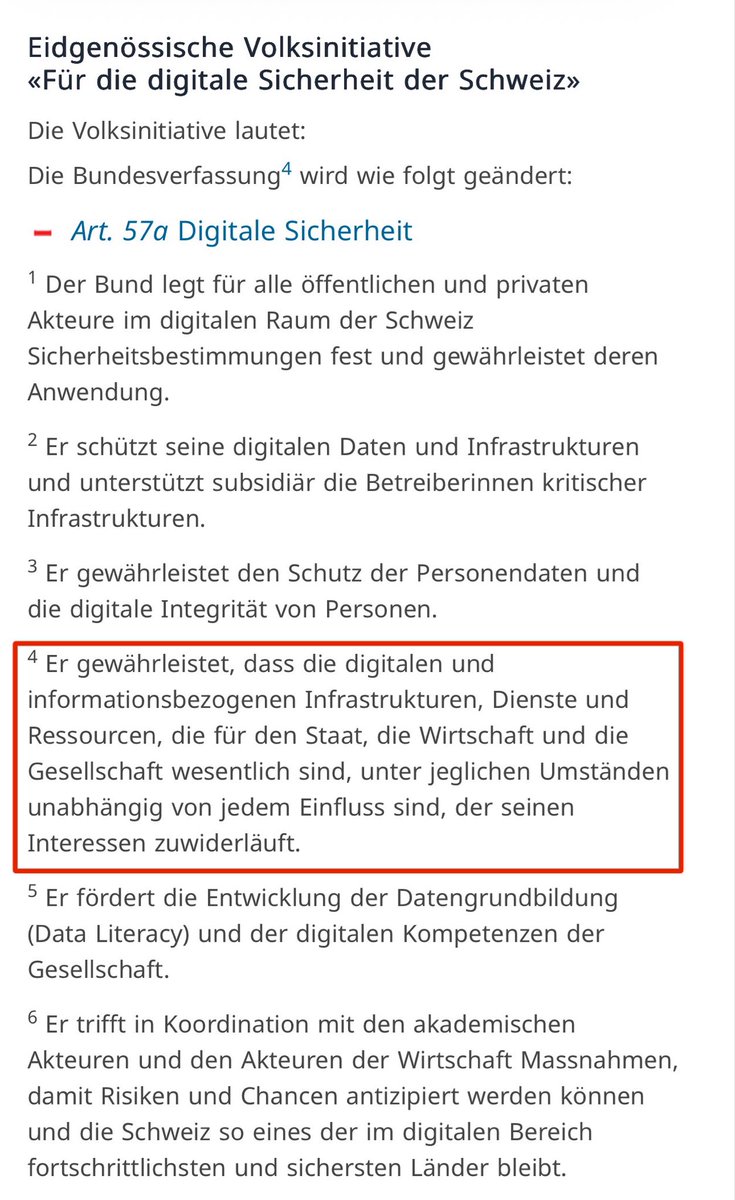
Der 4. Absatz zeugt einmal mehr von Grössenwahnsinn, Unverständnis über technische Realitäten und dem Wunsch nach totaler staatlicher Kontrolle über den Informationsraum. Damit hätte der Bund die Verfassungsgrundlage um beispielsweise X zu sperren.
Jun 2

Weshalb kein direkter Link zur Initiative?
swissdigitalpact.ch/de/index…
Warum fehlt der eigentliche Initiativtext komplett? Ein relativ inhaltsleerer Bericht, der nur andeutet, aber nicht zeigt, worum es konkret geht. 🔻
Art. 57a: Für die digitale Sicherheit der Schweiz
1 Der Bund legt für alle öffentlichen und privaten Akteure im digitalen Raum der Schweiz Sicherheitsbestimmungen fest und gewährleistet deren Anwendung.
2 Er schützt seine digitalen Daten und Infrastrukturen und unterstützt subsidiär die BetreiberInnen kritischer Infrastrukturen.
3 Er gewährleistet den Schutz der Personendaten und die digitale Integrität von Personen.
4 Er gewährleistet, dass die digitalen und informationsbezogenen Infrastrukturen, Dienste und Ressourcen, die für den Staat, die Wirtschaft und die Gesellschaft wesentlich sind, unter jeglichen Umständen unabhängig von jedem Einfluss sind, der seinen Interessen zuwiderläuft.
5 Er fördert die Entwicklung der Datengrundbildung (Data Literacy) und der digitalen Kompetenzen der Gesellschaft.
6 Er trifft in Koordination mit den akademischen Akteuren und den Akteuren der Wirtschaft Massnahmen, damit Risiken und Chancen antizipiert werden können und die Schweiz so eines der im digitalen Bereich fortschrittlichsten und sichersten Länder bleibt.
2
12
34
865
xlr8 retweeted

May 31
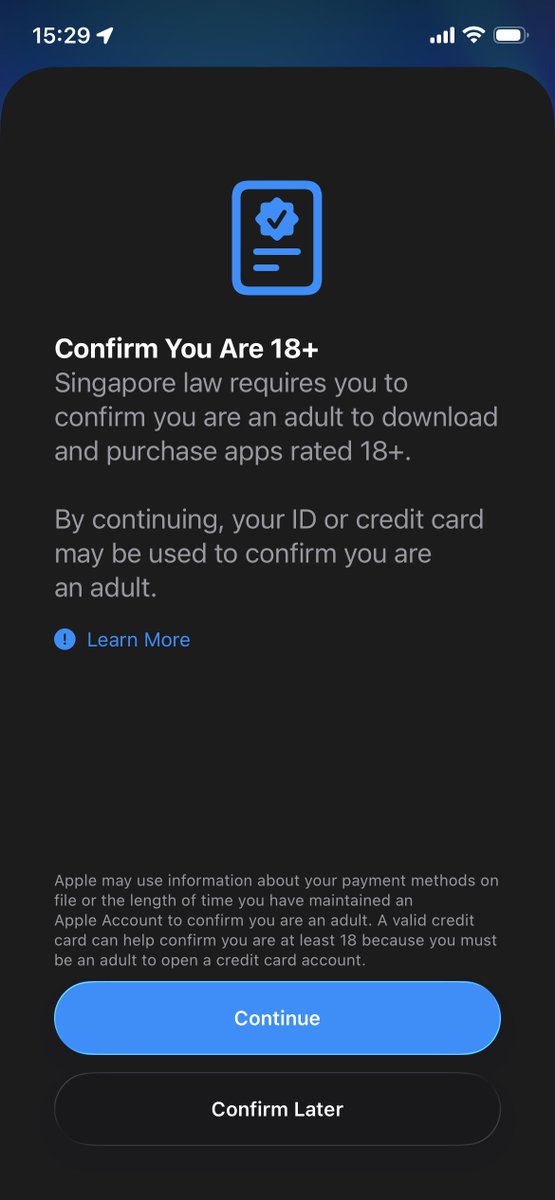
Ha llegado el día: mi teléfono Apple, de más de 1.000 €, ha dejado de ser mío y de obedecer mis intereses. Un teléfono inteligente que se ha revelado en contra de su dueño y se ha convertido en un pisapapeles por voluntad propia. Espero que más gente se oponga a esta vigilancia masiva. No habrá más oportunidades.
185
503
2,653
272,278