
#Blockchain #Bitcoin since 2013. @CoinsiliumGroup @ForzaBitcoin @Yellow @Otomato_xyz @Predictive_Labs @Propex_app @GGS_io @GreengageCo @joinindorse @ssv_network
Joined July 2013
- Tweets 4,323
- Following 4,061
- Followers 7,675
- Likes 27,250
213 Photos and videos






Pinned Tweet

May 17
May 17

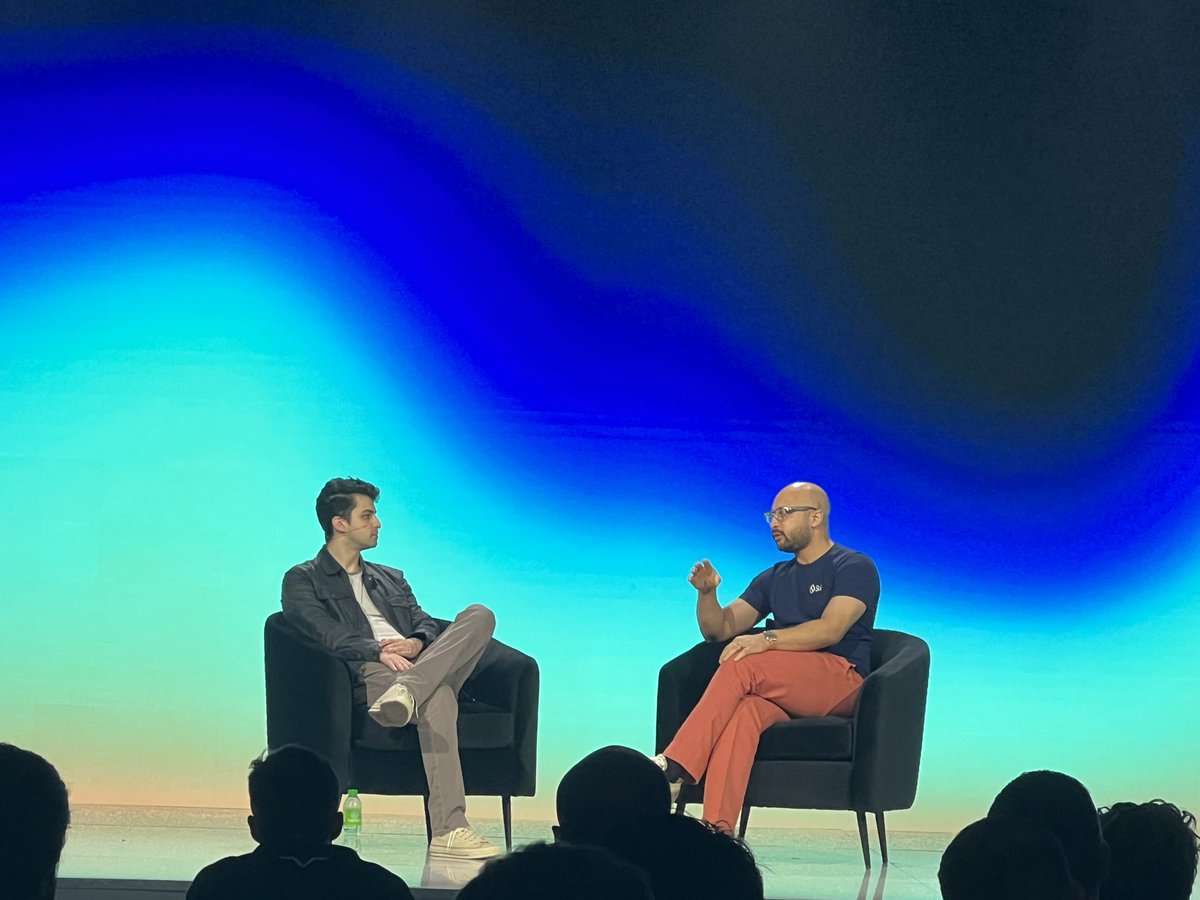
Great start to the morning tuning into @eddybitcoin and @KevinWSHPodt. Appreciate the nod to Yellow! 🤝
2
10
421

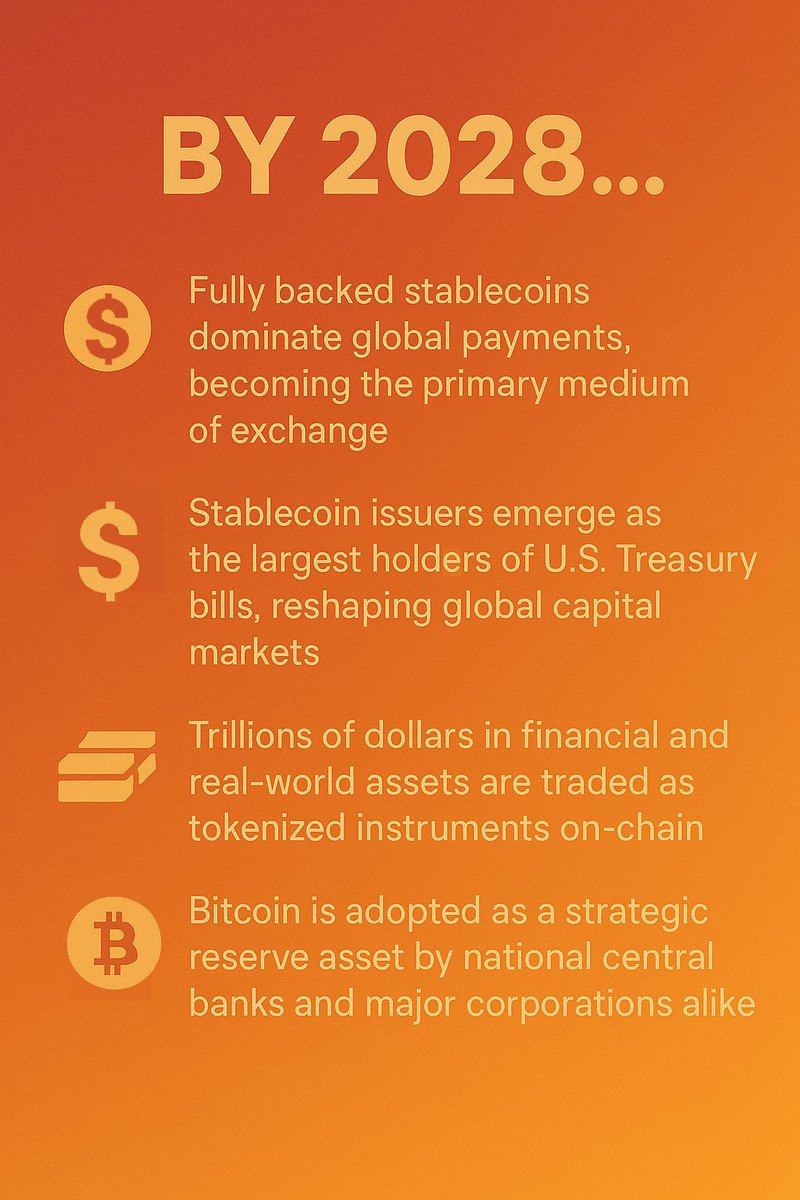
500 teams are already building in the Yellow ecosystem. The App Store is where agent applications get distribution — and where the settlement layer is already wired in underneath them.
Build the app; the escrow, clearing, and dispute rails come with the platform.

35
27
353
51,161
Eddy Travia retweeted

Jun 11
The Diamond Hands Sprint is officially closed. 🏁
A massive thank you to all the operators who plugged into the terminal and participated. Together, we successfully reached over than 10,000,000 in total trading volume.
We will announce the final Top 20 leaderboard shortly.
Outstanding execution by everyone. ⚡️
Follow @YellowProHQ

13
8
40
1,108
Eddy Travia retweeted

Jun 11
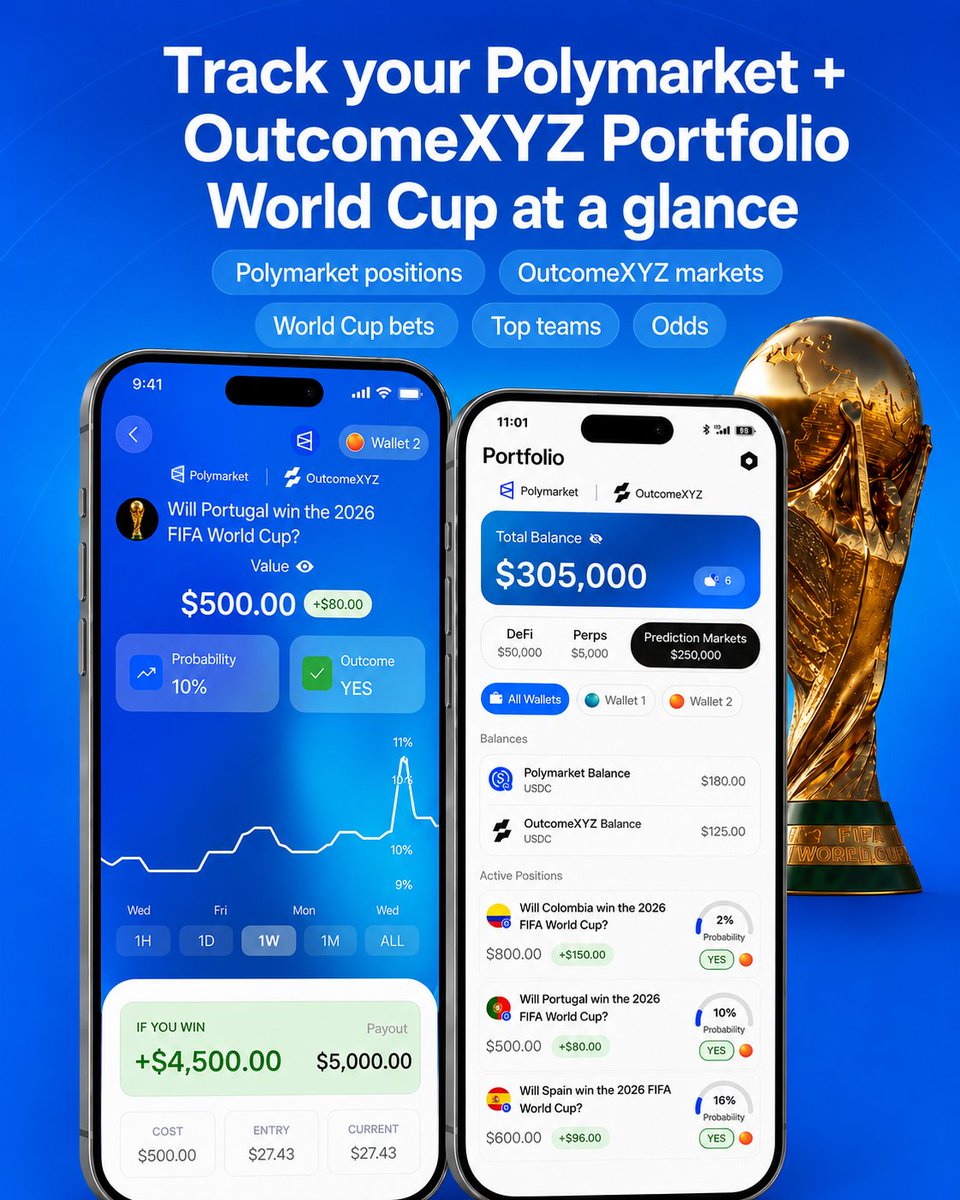
FIFA world cup is starting today ⚽
If you have positions on @Polymarket and @Outcomexyz stop refreshing.
Otomato alerts you when your market resolves, your order fills, or odds move significantly.
Set it for free. Watch the game.
5
3
19
951
Perpetual trading on Yellow Pro is live. Non-custodial, precision execution, full capital sovereignty.
Trade on your terms 👇
Jun 9

The Yellow Pro Perpetual DEX is officially live. ⚡️
Open, manage, and close perpetual positions with precision. We integrated advanced margin execution with the exact same non-custodial standard you expect. Maintain total sovereignty over your capital while accessing the main arena.
Start trading:
🔗 yellow.pro/perps
37
18
347
40,265
Jun 9
Looking forward to speaking at #WikiEXPOHK2026 🇭🇰 !
Jun 9

🎤 Speaker at #WikiEXPOHK2026
@eddybitcoin has been a pioneer investor in blockchain technology companies since 2013. He is Co-founder and CEO at @CoinsiliumGroup , a company quoted on the Aquis Stock Exchange in London (AQUIS: COIN) and cross-traded on OTC Markets in New York (OTCQB: CINGF), with a long-established presence in the digital asset sector. Eddy co-founded the world’s first incubator of blockchain startups in 2013, and, in May 2014, was named among the ‘Top 3 Most Influential Investors’ in this sector. In 2015, Coinsilium Group became the first blockchain company to IPO. Eddy has led investments and/or advised more than 50 blockchain companies around the world. Eddy has delivered two TEDxTalks and his current interests are: internet financial markets, Bitcoin, agentic AI and prediction markets.
🌐 Join us: lu.ma/WikiEXPO
#WikiGlobal #WikiFX #WikiBit #WikiGold #Coinsilium

4
13
386
Eddy Travia retweeted

Jun 9
🎤 Speaker at #WikiEXPOHK2026
@eddybitcoin has been a pioneer investor in blockchain technology companies since 2013. He is Co-founder and CEO at @CoinsiliumGroup , a company quoted on the Aquis Stock Exchange in London (AQUIS: COIN) and cross-traded on OTC Markets in New York (OTCQB: CINGF), with a long-established presence in the digital asset sector. Eddy co-founded the world’s first incubator of blockchain startups in 2013, and, in May 2014, was named among the ‘Top 3 Most Influential Investors’ in this sector. In 2015, Coinsilium Group became the first blockchain company to IPO. Eddy has led investments and/or advised more than 50 blockchain companies around the world. Eddy has delivered two TEDxTalks and his current interests are: internet financial markets, Bitcoin, agentic AI and prediction markets.
🌐 Join us: lu.ma/WikiEXPO
#WikiGlobal #WikiFX #WikiBit #WikiGold #Coinsilium
3
7
553
Eddy Travia retweeted

Jun 8
Latest #PredictAlpha report out NOW!! 👀⬇️with @KevinWSHPod 🤝 #WhenShiftHappens #PredictionMarkets #AgenticEconomy @otomato_xyz @Predictive_Labs 🇬🇧 $COIN.AQ 🇺🇸 $CINGF
Jun 8

Gm Folks
We are back!
This is another edition of the Predict Alpha Report, our bi-monthly collaboration with Coinsilium tracking the rise of prediction markets, event-driven finance, and the growing role of AI agents within it. Each edition focuses on the signals that matter, from capital flows and fundraising activity to regulatory shifts and product innovation. As information is increasingly priced in real time by both humans and machines, the Predict Alpha Report will track where these signals lead.
But first, let’s get this part out of the way:
Always DYOR:
This bulletin is for informational purposes only and contains summaries of news articles originally published by third-party media outlets. Please refer to the full disclaimer at the end of the post.
Now, let’s get started.
Here are the highlights:
💸 Capital Signals
👉 From $5 Billion Monthly To Weekly
👉Strategy Bets in Limbo
👉Robinhood, Coinbase, Record Revenue
👉The ‘Agent Economy’
👉Coinsilium-backed Otomato Expands into Prediction Markets
📈 Industry Pulse
👉Polymarket Closes First Institutional Block Trade
👉Robinhood Beta Launches MCP
👉Under Review
👉No Human Needed
👉 Kalshi’s ‘Bloomberg Terminal’
👉Gibraltar’s PredictStreet Becomes FIFA’s First Official Prediction Market Partner
💸 Capital Signals
💰 From $5 Billion Monthly To Weekly
Data tracking through late May confirmed that collective weekly volume on prediction venues like @Polymarket and @Kalshi regularly surpasses $5 billion, sometimes exceeding $6 billion, driven largely by event-driven derivatives like sports, crypto price moves, and political futures. Furthermore, combined monthly trading volume on both platforms surged from under $5 billion in September 2025 to roughly $24 billion by April 2026. That puts activity on the two platforms above the average monthly handle of the entire U.S. legal sports betting industry.
💰 Strategy Bets in Limbo
A prediction market tied to Michael Saylor’s company, @Strategy, has become a real-world stress test for how prediction platforms handle ambiguity. The company disclosed on June 1 that it had sold 32 Bitcoin between May 26 and May 31, sparking a dispute over a Polymarket contract that asked whether Strategy would sell any Bitcoin by May 31. While the sale itself appears to have occurred before the deadline, traders only learned about it after the market had technically closed, leaving roughly $14 million in bets in limbo.
The disagreement comes down to a simple question: should prediction markets be resolved based on when an event actually happened, or when the public became aware of it? The final decision will be made through Polymarket’s dispute-resolution process.
💰Robinhood, Coinbase, Record Revenue
Prediction markets are quickly becoming a meaningful revenue driver for major consumer trading platforms. In the first quarter, @RobinhoodApp generated $147 million from event contracts, up 320% year-over-year, with users trading a record 8.8 billion contracts.
Meanwhile, @coinbase said its prediction markets business reached a $100 million annualised revenue run rate just two months after launch. The growth comes at a notable time for both companies, as traditional crypto trading activity has slowed and investors are looking for the next source of expansion.
Robinhood’s prediction market revenue actually surpassed its crypto revenue during the quarter, while Coinbase is increasingly positioning itself as an “everything exchange” spanning crypto, derivatives, commodities, and prediction markets. As more retail traders engage with real-world event contracts, the competition to own this emerging category is only likely to intensify.
💰The ‘Agent Economy’
Research from industry analysts shows that roughly 40% of venture capital flowing into crypto companies is now going to projects building at the intersection of blockchain and artificial intelligence. At the same time, AI companies attracted an estimated $242 billion in funding across the broader technology sector in early 2026, accounting for the vast majority of global venture investment. The result is a growing concentration of capital around teams building autonomous AI systems that can interact with blockchains, manage digital assets, and execute transactions without constant human input.
The shift reflects a move away from the previous wave of AI-powered assistants and toward what many investors describe as an “agent economy.” More than 20,000 autonomous AI agents are now active across blockchain networks, while AI-focused crypto assets have grown into a market worth over $20 billion. Projects ranging from decentralised computing networks to on-chain financial agents are attracting both developer talent and institutional capital. As funding and adoption continue to converge around this theme, the AI-crypto intersection is becoming one of the primary infrastructure bets of the current cycle.
And rounding up this section:
💰 Coinsilium-backed Otomato Expands into Prediction Markets
@Otomato_xyz, the DeFi intelligence platform backed by both @CoinsiliumGroup and technology company @Improbableio, has expanded its capabilities to include tracking activity on prediction market platform Polymarket. The addition reflects Otomato’s continued evolution into a portfolio-aware intelligence layer designed to help users monitor risks, opportunities, and important market developments across the digital asset ecosystem through personalised alerts delivered via mobile and Telegram applications.
Supported by Coinsilium since its initial investment in 2024 and by Improbable following its US$2 million strategic investment, Otomato is focused on solving the growing problem of information overload in decentralised finance. Rather than requiring users to constantly monitor dashboards and social media feeds, the platform automatically tracks on-chain positions and delivers personalised alerts on the events that matter most across DeFi, prediction markets, and the wider digital asset ecosystem.
📌 FYI: Coinsilium’s shares are traded on the Aquis Stock Exchange Growth Market in London, under the ticker symbol "COIN", and on the OTCQB Venture Market in the United States under the ticker symbol "CINGF".
But it’s not just capital flowing into the space.
Keep reading for the latest signals in regulation, adoption, and structure.
📈 Industry Pulse
⚡️Polymarket Closes First Institutional Block Trade
Polymarket recently completed its first institutional block trade, a privately negotiated six-figure transaction between digital asset brokerage
@FalconXGlobal and trading technology firm Anera Labs. The trade was tied to the Ornn Compute Price Index, which tracks rental prices for Nvidia’s H100 AI chips, effectively allowing participants to hedge exposure to the rapidly growing market for AI computing power.
The transaction is notable as it's coming just weeks after rival prediction platform Kalshi completed its own block trade. The move points to a broader race to build institutional-grade infrastructure around event contracts. And as firms look for new ways to manage risks tied to AI, commodities, and other emerging markets, prediction platforms may become tools for hedging and price discovery rather than just betting on future outcomes.
⚡️Robinhood Beta Launches MCP
Robinhood is taking a significant step toward agent-driven finance with the beta launch of AI trading agents that can analyse portfolios and execute stock trades on behalf of users. Through support for the Model Context Protocol (MCP), customers can connect autonomous AI agents to dedicated brokerage accounts, allowing them to review analyst research, identify portfolio risks, and place trades using pre-approved funds. The company also introduced a virtual AI-enabled credit card that lets agents make payments within limits set by the user.
Rather than simply suggesting trades, these agents can now carry out actions directly, albeit within tightly controlled boundaries. Robinhood says support for crypto, futures, event contracts, and prediction markets is coming next, potentially extending agent-based decision-making across a much wider range of financial products. If adoption grows, the question may no longer be whether investors use AI to inform decisions, but how much of the execution process they are willing to hand over to software.
⚡️Under Review
The regulatory future of prediction markets in the United States may soon become much clearer. A proposal that would give the Commodity Futures Trading Commission explicit authority over platforms such as Kalshi and Polymarket is currently under review by the White House’s Office of Management and Budget. The move follows earlier comments from CFTC Chairman Michael Selig that the agency intends to create formal rules for the sector after abandoning a previous proposal that would have restricted sports and political event contracts.
The debate goes beyond prediction markets themselves and centres on who gets to regulate them. The CFTC argues that a single federal framework should govern the industry, while several states have attempted to impose their own restrictions or outright bans. With trading volumes surging and major financial firms entering the space, the outcome of this regulatory battle could shape how prediction markets develop across the U.S. for years to come.
⚡️No Human Needed
Developers recently released an open-source tool called liquidiction-mcp, a Model Context Protocol (MCP) server that gives AI agents direct access to prediction market data from @HyperliquidX’s HIP-4 ecosystem. Through a standardised interface, agents can pull live odds, order book data, historical price charts, trade activity, and open positions without relying on manual inputs or custom integrations.
While the project itself is relatively small, it reflects a much larger trend taking shape across financial markets. MCP is rapidly emerging as the common language that allows AI agents to interact with external systems, and prediction markets are becoming one of the latest data sources being plugged into that ecosystem. As more tools expose real-time market information directly to autonomous software, AI agents could move beyond simply analysing markets and begin actively adjusting positions, managing risk, and executing trading strategies on their own.
⚡️Kalshi’s ‘Bloomberg Terminal’
Kalshi is pushing further into institutional finance with the rollout of a professional trading terminal designed for hedge funds, quantitative traders, and other large market participants. The platform, which has moved from testing into live deployment with a select group of firms, offers tools for monitoring prediction market contracts, managing multiple positions simultaneously, and accessing low-latency market data. Several reports have compared the product to a Bloomberg Terminal, the software platform that has long been the standard operating system for professional traders on Wall Street.
And with the FIFA World Cup starting this coming week,
⚡️Gibraltar’s PredictStreet Becomes FIFA’s First Official Prediction Market Partner
PredictStreet, a Gibraltar-regulated prediction market platform, has been appointed FIFA’s first-ever official prediction market partner for the FIFA World Cup 2026, marking the creation of a new commercial category within global sport. The platform will allow fans to forecast match outcomes, tournament statistics, player performances, and other key events using FIFA’s official historical data, transforming spectators into active participants through prediction-based engagement.
Gibraltar is positioning itself as a leading jurisdiction for regulated prediction markets, with @Predictstreet operating under a dedicated licensing framework. Built on blockchain infrastructure and designed to aggregate collective intelligence through market pricing, the platform aims to offer a transparent and compliant alternative to traditional betting models. The FIFA partnership is expected to provide PredictStreet with a global launch platform ahead of the 2026 World Cup, while broader partnerships, including with sports broadcaster DAZN, are intended to expand prediction-based fan engagement beyond football.
And that’s it!
Long read, but if you enjoyed this, set a reminder in your calendar for the next edition of the Predict Alpha Report.
Thanks to Coinsilium, we’ll be dropping these updates every other Monday, i.e, twice a month.
Till then,
Thank you for being a part of the When Shift Happens family.
Full Disclaimer
All rights to the original content belong to the respective publishers. We do not claim ownership of any third-party material and provide proper attribution, including source links, for transparency and reference. While we strive for accuracy in our summaries, we make no warranties or guarantees regarding the completeness or accuracy of the information provided.
Any mention of cryptocurrency, financial products, public company stocks, or other investment instruments in this newsletter or the referenced articles is not intended as financial advice or a recommendation to invest. The information is not tailored to any individual’s circumstances and should not be relied upon for investment decisions. Readers are encouraged to consult the original articles and seek independent financial, legal, or professional advice before making any investment.
The author(s) of this report may hold, directly or indirectly, positions in the securities or digital assets (including shares or tokens) of the company(ies) or project(s) mentioned herein. Any such holdings are disclosed for transparency and should not be construed as a recommendation to buy, sell, or hold any financial instrument.
1
5
12
475
Eddy Travia retweeted

Jun 7
Tether Overtakes Ethereum for the First Time in Eight Years, Reshaping Crypto’s Ranking Order
yellow.com/news/tether-flips…
21
21
133
10,211

this is big, onchain prediction markets are coming to solana
this is particularly cool as prediction markets are heavily gated atm which limited a lot of use cases and potential
the breakout startups of the coming run will make good use of this
let the markets be free
Jun 4

Introducing: Jupiter Forecast for MMs, Solana’s first fully native prediction market.
For users, Forecast is built into @jup_predict, but provides an additional liquidity model that can deliver better prices and better execution.
Instead of trading against a single pool of liquidity, users will be able to buy from multiple competing market makers. Any Prop AMM can start quoting into markets they are interested in, and users will automatically be able to buy from whichever market maker offers the best price.
To be clear - we’ll continue working very closely with Polymarket and supporting their markets. Forecast simply offers an additional type of market liquidity that users can take advantage of.
But this isn’t just better for users, it’s better for Solana as a whole. With Forecast, markets will each have their own native tokens. Integration for partners becomes seamless and composability increases across the entire ecosystem.
PropAMMs changed spot trading on @solana. Now, we’re going to see if they can have the same impact on Prediction Markets.
We’ll be starting with 15 minute crypto markets and expanding from there - if you’re a market maker who wants to get involved, reach out!
58
14
378
45,020
Eddy Travia retweeted
Jun 4
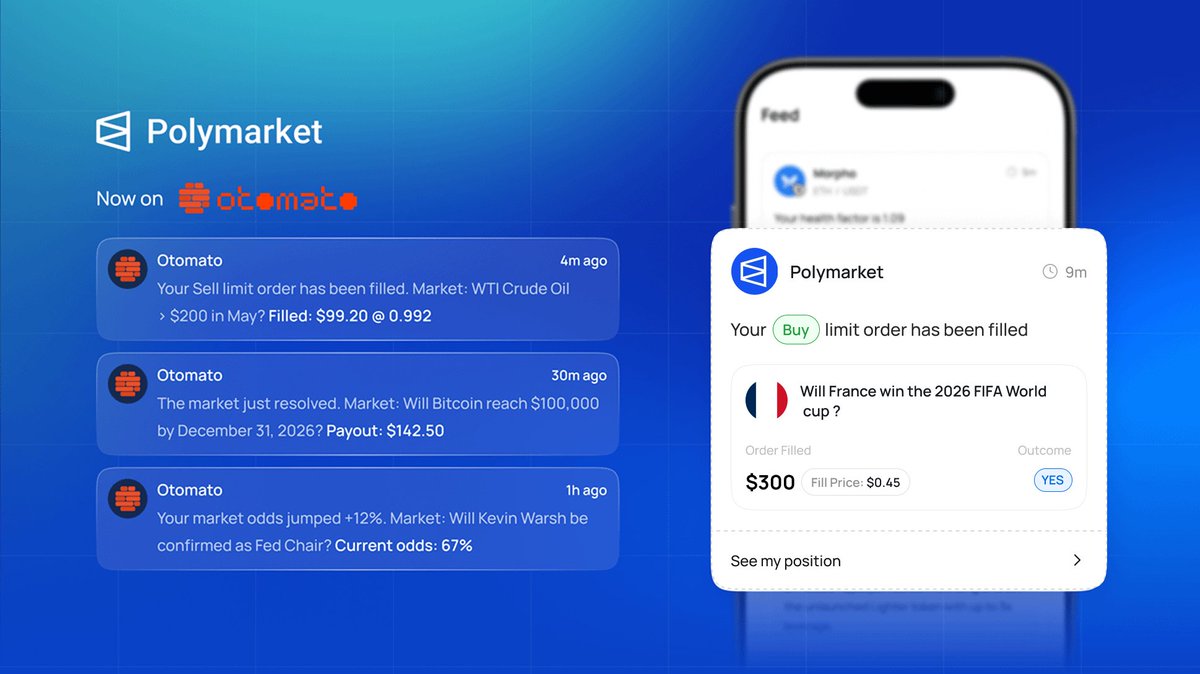
NEW: @Polymarket is now on @otomato_xyz
Imagine getting alerted the second your market resolves, knowing your exact P&L.
- Getting pinged when odds move 10 points on your position.
- Seeing breaking news that impacts your bet before the price reacts.
- Knowing when your limit order fills.
That's Otomato
15
12
54
3,466
Eddy Travia retweeted

20,000 autonomous AI agents are live on-chain in 2026.
That's up 300% from Q4 2025.
They've already moved $4.1 billion in cross-chain volume in 90 days.
This isn't a narrative anymore.
But here's what the numbers don't show —
Speed without judgment is still just automated risk.
The agents running today are extraordinary at execution.
They still don't know what they don't know.
That gap closing is the most important market structure story of the next 12 months.
7
2
12
257
Eddy Travia retweeted
May 29
Only one day live on yellow.pro and the Diamond Hands Sprint has already clocked 189,620 in total trading volume. 🤯
Have you secured your spot among the top 20 eligible operators yet? The volume tracking is updating in real-time, and trust the process-it is definitely not too late to get your spot setup running.
Jump into the leaderboard and track your metrics:
🔗 yellow.pro/competitions/edit…
May 28
⚡The Diamond Hands Sprint is NOW LIVE.⚡
The volume tracking for the Spring Trading Cup under the Diamond Hands Sprint is officially live. The $10,000 USDT Allocation Pool is fully deployed for pure spot execution.
System Parameters & Tracking:
1️⃣ Execution: Trade on supported spot pairs (YELLOW/USDT, WBTC/USDT, and ETH/USDT).
2️⃣ Structure: The final distribution framework is designated for the top 20 volume-generating operators.
3️⃣ Settlement: Your cumulative spot volume strictly determines your exact pro-rata allocation share.
Network snapshots are now active. Maintain 100% control of your liquidity with zero custodial risk.
Begin operations and verify your parameters using the official resources below:
📖 Diamond Hands Guidelines: bit.ly/diamondhandsguide
💬 Community Telegram Hub: t.me/yellpro
🌐 Access the Diamond Hands: yellow.pro/competitions/edit…
14
3
31
1,278
Eddy Travia retweeted

May 29
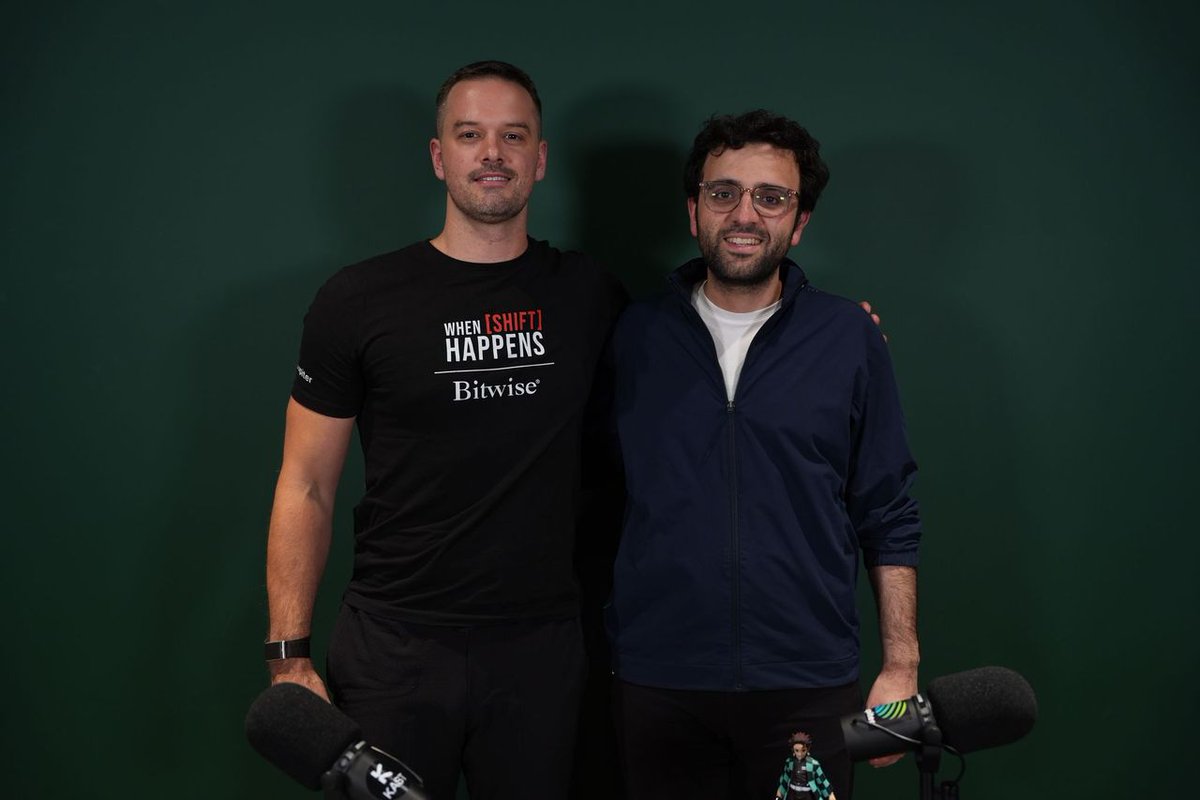
EMERGENCY EPISODE: This Monday, I'm releasing a conversation with @mansourtarek_ - co-founder and CEO at @Kalshi that just launched the first regulated Perps in the USA!
Tarek grew up in Lebanon with a single mom who operated on a "nine out of ten is a loss" standard, found refuge in the certainty of mathematics, got into MIT from Beirut, went to work at Citadel, and then spent six years building a prediction market that regulators kept blocking - before it finally became one of the most talked-about financial products in America.
We talk about:
- What Kalshi's first regulated perpetuals in the US are and why the offshore market proves Americans already want them
- Why Kalshi outperforms every institution at forecasting jobs, GDP, inflation, and interest rates
- Why Tarek publicly disagrees with Brian Armstrong that insider trading is acceptable in prediction markets
- How Kalshi blocks politicians, athletes, and coaches from trading on markets they can influence before they even try
- Why 70-80% of Kalshi users log in daily just to read forecasts - and what that says about where financial media is going
- How Tarek thinks about the difference between leverage that's healthy and leverage that turns a market into a casino
- Why being a first-time founder is actually a superpower for the category of company nobody thinks can work
- How differently he feels now that he is worth mroe than $2 Billion at just 30 year old
And much more...
Podcast out this week!
24
9
124
18,622
Eddy Travia retweeted
May 28
2
4
11
1,746
Eddy Travia retweeted
May 26
Coinsilium Backed @otomato_xyz Unveils UK Technology Venture Builder Improbable as its new Strategic Investor 🇬🇧 $COIN.AQ 🇺🇸 $CINGF
aquis.eu/stock-exchange/anno…
“We are therefore delighted to see Otomato attract investment from a globally recognised technology venture builder such as @Improbableio and congratulate the team on this important achievement. We believe this further validates both the quality of the Otomato project and Coinsilium’s long-standing strategy of identifying and supporting promising ventures operating within some of the most innovative and fast-evolving areas of the digital asset sector.”

4
11
31
4,628
Eddy Travia retweeted
May 26
Today we're excited to announce a $2M raise led by @improbableio.
We're building the most precise and complete portfolio assistant for onchain users.
Paste your wallet address. We know every position you hold and alert you on every event linked to it.
3,000 users so far.
🧵
87
77
311
27,992
Eddy Travia retweeted
May 25
Gm Folks
We are back!
This is another edition of the Predict Alpha Report, our bi-monthly collaboration with @CoinsiliumGroup tracking the rise of prediction markets, event-driven finance, and the growing role of AI agents within it. Each edition focuses on the signals that matter, from capital flows and fundraising activity to regulatory shifts and product innovation. As information is increasingly priced in real time by both humans and machines, the Predict Alpha Report will track where these signals lead.
But first, let’s get this part out of the way:
Always DYOR:
This bulletin is for informational purposes only and contains summaries of news articles originally published by third-party media outlets. Please refer to the full disclaimer at the end of the post.
Now, let’s get started.
Here are the highlights:
💸 Capital Signals
👉Pretty Impressive, Kalshi
👉A Partnership, A Raise
👉Welcome HIP-4
👉Robinhood Expands…
👉Coinsilium CEO on "When Shift Happens" Podcast
📈 Industry Pulse
👉NHL, CFTC V Insider Trading
👉India Blocks Polymarket, Kalshi
👉In Japan by 2030?
👉Bio Prediction?
💸 Capital Signals
💰 Pretty Impressive, Kalshi
Kalshi has just extended its already massive Series F round with an additional $200 million raise led by Baillie Gifford and Layer Global, keeping the company’s valuation at $22 billion. The fresh capital comes just weeks after Kalshi announced a separate $1 billion raise, backed by firms such as Coatue, Sequoia, Andreessen Horowitz, Paradigm, Morgan Stanley, and ARK Invest. Altogether, the company has now raised roughly $2.77 billion since launching in 2018.
Kalshi’s growth is pretty impressive. Monthly trading volume reportedly crossed $14 billion in April, nearly triple what it was last October, while annualised revenue has climbed above $1.5 billion. Also, Baillie Gifford (traditionally known for backing long-duration growth companies like Tesla and Shopify) participating in the round is an excellent signal.
💰 A Partnership, A Raise
Polymarket is in advanced talks to raise another $400 million at a $15 billion valuation. The raise is coming shortly after Intercontinental Exchange (ICE), the parent company of the New York Stock Exchange, reportedly invested $600 million as part of a broader push into event-driven trading markets. Just a year ago, Polymarket was valued closer to $1 billion, but that valuation has been quickly repriced.
At the same time,
Polymarket is expanding beyond politics and sports into private markets through a new partnership with Nasdaq Private Market. Users can now trade contracts tied to the valuations, IPO timelines, and secondary market activity of companies like OpenAI, SpaceX, Stripe, Anthropic, and Databricks. This means that retail traders are getting access to a layer of market speculation and price discovery that was historically limited to venture firms, private equity funds, and accredited investors.
💰Welcome HIP-4
Hyperliquid has officially entered the prediction market race with the launch of HIP-4, a new upgrade that adds fully collateralised outcome contracts directly into the platform’s existing trading infrastructure. The design is interesting because Hyperliquid is integrating prediction markets into a unified trading system where traders can manage spot positions, perps, and event-based contracts from the same account. The contracts settle between 0 and 1 depending on whether an outcome happens, and unlike leveraged futures, they are fully collateralised upfront, meaning there is no liquidation risk. The first live market is tied to Bitcoin’s daily price outcome, but the infrastructure already supports more complex event markets.
💰Robinhood Expands…
Robinhood is moving deeper into prediction markets by expanding access to event-based contracts tied to politics, economics, and sports, while deliberately avoiding markets that could raise insider trading, manipulation, or reputational concerns. Instead of building its own independent system, Robinhood is partnering with regulated US platforms like Kalshi and ForecastEx to keep the products within existing compliance frameworks.
Recently, CEO Vlad Tenev described prediction markets as the company’s fastest-growing segment. For a platform that originally built its brand around making stock and options trading accessible to retail users, prediction markets are increasingly being positioned as the next layer of alternative financial exposure.
And rounding up this section:
💰 Coinsilium CEO Eddy Travia Outlines Vision for AI Agent Integration and Prediction Market Infrastructure on "When Shift Happens" Podcast
Coinsilium Group CEO @eddybitcoin appeared on the When Shift Happens podcast to discuss the structural convergence of AI agents, prediction markets, and stablecoins into a unified, machine-driven internet economy. Eddy contextualised Coinsilium's recent US$150,000 investment in @Predictive_Labs, framing data aggregation and intelligence systems as high-leverage infrastructure opportunities that avoid the regulatory complexities faced by direct trading venues like Polymarket or Kalshi. In his view, prediction markets, blockchain infrastructure, and autonomous AI systems are converging into a new “agentic economy” where machines may eventually interpret signals, allocate capital, and coordinate economic activity in real time.
📌 FYI: Coinsilium’s shares are traded on the Aquis Stock Exchange Growth Market in London, under the ticker symbol "COIN", and on the OTCQB Venture Market in the United States under the ticker symbol "CINGF".
But it’s not just capital flowing into the space.
Keep reading for the latest signals in regulation, adoption, and structure.
📈 Industry Pulse
⚡️NHL, CFTC V Insider Trading
The NHL and the Commodity Futures Trading Commission (CFTC) have signed a formal agreement to coordinate on fraud, insider trading, and market manipulation tied to hockey-related prediction markets. The move follows a similar agreement signed with Major League Baseball earlier this year.
Under the arrangement, the NHL will share data and integrity-related information with the CFTC to help monitor suspicious trading activity across platforms like Kalshi and Polymarket. The league was already ahead of most major US sports organisations in this area, becoming the first professional American sports league to formally partner with prediction market operators back in late 2025. Now, the relationship is becoming more institutionalised as regulators and sports leagues work together to prevent manipulation and insider-driven trading.
⚡️India Blocks Polymarket, Kalshi
India has officially moved against prediction markets, ordering internet providers to block access to Polymarket and reportedly preparing similar restrictions for Kalshi. The decision follows the rollout of India’s new online gaming regulations, which now classify prediction markets as “money games” under the country’s betting laws. In practical terms, Indian regulators are drawing a hard line: if users are staking money on future outcomes, the activity is being treated as gambling regardless of whether the platform is crypto-native like Polymarket or federally regulated in the US like Kalshi.
What makes the move especially significant is the scale of the market involved. India is one of the world’s largest retail trading and crypto markets, and both platforms have continued onboarding Indian users even after regulators issued warnings in April. Authorities have now escalated from public advisories to ISP-level enforcement while also pressuring VPN providers that help users bypass restrictions.
⚡️In Japan by 2030?
Polymarket is reportedly preparing a long-term push into Japan, appointing Mike Eidlin, formerly Jupiter’s head of Japan, to lead local expansion efforts as the company explores regulatory approval in the country by 2030. The move is notable because Japan is currently a restricted jurisdiction for Polymarket, with users blocked due to local gambling and financial regulations. Despite that, demand appears to be building organically. Polymarket’s Japanese social accounts have already attracted tens of thousands of followers, and the platform hosts a growing number of contracts tied to Japanese politics, macroeconomics, and Bank of Japan decisions.
The expansion effort also highlights how important Asia is becoming in the global prediction market race. Japan has one of the world’s most active retail trading cultures and a highly developed digital asset ecosystem, making it strategically valuable for firms like Polymarket and Kalshi looking beyond the US. At the same time, it is also one of the more legally complex markets to enter since Japanese gambling laws remain strict, and regulators across the region are increasingly scrutinising event-based trading platforms as volumes grow.
Lastly,
⚡️Bio Prediction?
Prediction markets are beginning to spill into one of the most sensitive corners of finance and science: clinical trials and drug development. A new platform called Endpoint Arena has launched a pilot marketplace where users can trade on whether biotech companies like Jazz Pharmaceuticals, Argenx, and Palisade Bio will successfully hit key clinical trial endpoints. At the same time, larger platforms like Kalshi and Polymarket have started listing more biotech-related event contracts tied to drug approvals and FDA timelines.
Supporters argue these markets could become valuable forecasting tools. Instead of trying to price an entire biotech company through its stock, prediction markets isolate specific outcomes like whether a trial succeeds or whether a drug gets approved. Endpoint Arena’s founder even argues that crowd-based forecasting could eventually help surface scientific signals earlier, improve resource allocation, and create incentives for deeper public engagement with clinical research.
On the other end, critics worry that once real money becomes attached to trial outcomes, prediction markets can begin influencing the underlying events themselves. Poor odds could discourage patient participation or impact funding. There is also the risk of insider trading in biotech, where access to non-public trial data can be enormously valuable. Regardless of the possibilities, for now, the sector remains small and highly experimental.
And that’s it!
Long read, but if you enjoyed this, set a reminder in your calendar for the next edition of the Predict Alpha Report.
Thanks to Coinsilium, we’ll be dropping these updates every other Monday, i.e, twice a month.
Till then,
Thank you for being a part of the When Shift Happens family.
Full Disclaimer
All rights to the original content belong to the respective publishers. We do not claim ownership of any third-party material and provide proper attribution, including source links, for transparency and reference. While we strive for accuracy in our summaries, we make no warranties or guarantees regarding the completeness or accuracy of the information provided.
Any mention of cryptocurrency, financial products, public company stocks, or other investment instruments in this newsletter or the referenced articles is not intended as financial advice or a recommendation to invest. The information is not tailored to any individual’s circumstances and should not be relied upon for investment decisions. Readers are encouraged to consult the original articles and seek independent financial, legal, or professional advice before making any investment.
The author(s) of this report may hold, directly or indirectly, positions in the securities or digital assets (including shares or tokens) of the company(ies) or project(s) mentioned herein. Any such holdings are disclosed for transparency and should not be construed as a recommendation to buy, sell, or hold any financial instrument.
8
5
32
4,245
Eddy Travia retweeted

May 23
A wide-ranging conversation on Bitcoin, Strategy, volatility, conviction, and why there is no second best. $BTC $MSTR $STRC
May 21
E172: @Saylor: Why Hard Work Won't Make You Rich
Michael Saylor is the chairman of @Strategy - the world's largest corporate holder of Bitcoin with over 840,000 BTC and $65 billion deployed. He bought his first Bitcoin in 2020 when the Fed cut rates to zero hasn't stopped since.
With WSH, I always want to go much deeper than the current narrative and that’s exactly what we did here. We gradually moved past the surface and into the things that really shaped Michael. We talked about his childhood, growing up in a military family, buying domain names in the 1990s and flipping them for tens of millions, losing $6 billion of his net worth in a single day during the dot-com bubble, his great Apple bet in 2012, why working hard won't make you rich, why you should mortgage your house but probably not sell your kidney to buy BTC, why "THERE IS NO SECOND BEST", and a lot more. The conversation lasted more than two hours, much longer than originally planned, and it was just amazing. I hope you enjoy it as much as I did.
Timestamps:
00:00 - Intro
03:05 - Explain what you do to an Uber driver
05:35 - Advice for Rick, the struggling Uber driver
07:07 - Who is Michael Saylor?
11:02 - Sponsors @Trezor & @Bitwise
11:48 - Kevin's Business Intelligence Company
13:14 - Michael's childhood and chip on the shoulder
17:56 - Has Michael conquered the world yet?
19:49 - Just because you can, doesn't mean you should
28:23 - Sponsors @KASTxyz & @sumsub
30:02 - Low time preference and scarcity
43:50 - Buying and flipping domain names for tens of millions
55:11 - Bitcoin is a lifeboat
1:01:31 - Should you mortage your house to buy Bitcoin?
1:09:50 - The great $60B in Bitcoin bet: risks
1:15:32 - Sponsors @JupiterExchange , @ethena
1:16:16 - Sell the kidney if you must but keep the Bitcoin
1:20:14 - What's the endgame for Strategy?
1:28:16 - Where does Bitcoin price end?
1:29:36 - Where would Bitcoin price be without Michael Saylor?
1:31:06 - What is STRC?
1:35:34 - Should my mom put her life savings in STRC?
1:37:12 - How do you always invent new ways to buy more Bitcoin?
1:49:19 - From God to Madman every 6 months: handling insane volatility
1:51:49 - How Michael lost $6 Billion of his net worth in one single day in 2000 and then watched MSTR go down another 99%
1:59:09 - Why Michael doesn't have children
1:59:44 - Why working hard is the worst advice you can get
2:07:37 - Why THERE IS NO SECOND BEST, there is only one crypto asset
2:15:03 - Thanking Michael from the whole crypto industry
426
726
4,089
354,564
Eddy Travia retweeted

May 25
"Eddy contextualised Coinsilium's recent US$150,000 investment in @Predictive_Labs , framing data aggregation and intelligence systems as high-leverage infrastructure opportunities that avoid the regulatory complexities faced by direct trading venues like Polymarket or Kalshi.
In his view, prediction markets, blockchain infrastructure, and autonomous AI systems are converging into a new “agentic economy” where machines may eventually interpret signals, allocate capital, and coordinate economic activity in real time."
May 25
Gm Folks
We are back!
This is another edition of the Predict Alpha Report, our bi-monthly collaboration with @CoinsiliumGroup tracking the rise of prediction markets, event-driven finance, and the growing role of AI agents within it. Each edition focuses on the signals that matter, from capital flows and fundraising activity to regulatory shifts and product innovation. As information is increasingly priced in real time by both humans and machines, the Predict Alpha Report will track where these signals lead.
But first, let’s get this part out of the way:
Always DYOR:
This bulletin is for informational purposes only and contains summaries of news articles originally published by third-party media outlets. Please refer to the full disclaimer at the end of the post.
Now, let’s get started.
Here are the highlights:
💸 Capital Signals
👉Pretty Impressive, Kalshi
👉A Partnership, A Raise
👉Welcome HIP-4
👉Robinhood Expands…
👉Coinsilium CEO on "When Shift Happens" Podcast
📈 Industry Pulse
👉NHL, CFTC V Insider Trading
👉India Blocks Polymarket, Kalshi
👉In Japan by 2030?
👉Bio Prediction?
💸 Capital Signals
💰 Pretty Impressive, Kalshi
Kalshi has just extended its already massive Series F round with an additional $200 million raise led by Baillie Gifford and Layer Global, keeping the company’s valuation at $22 billion. The fresh capital comes just weeks after Kalshi announced a separate $1 billion raise, backed by firms such as Coatue, Sequoia, Andreessen Horowitz, Paradigm, Morgan Stanley, and ARK Invest. Altogether, the company has now raised roughly $2.77 billion since launching in 2018.
Kalshi’s growth is pretty impressive. Monthly trading volume reportedly crossed $14 billion in April, nearly triple what it was last October, while annualised revenue has climbed above $1.5 billion. Also, Baillie Gifford (traditionally known for backing long-duration growth companies like Tesla and Shopify) participating in the round is an excellent signal.
💰 A Partnership, A Raise
Polymarket is in advanced talks to raise another $400 million at a $15 billion valuation. The raise is coming shortly after Intercontinental Exchange (ICE), the parent company of the New York Stock Exchange, reportedly invested $600 million as part of a broader push into event-driven trading markets. Just a year ago, Polymarket was valued closer to $1 billion, but that valuation has been quickly repriced.
At the same time,
Polymarket is expanding beyond politics and sports into private markets through a new partnership with Nasdaq Private Market. Users can now trade contracts tied to the valuations, IPO timelines, and secondary market activity of companies like OpenAI, SpaceX, Stripe, Anthropic, and Databricks. This means that retail traders are getting access to a layer of market speculation and price discovery that was historically limited to venture firms, private equity funds, and accredited investors.
💰Welcome HIP-4
Hyperliquid has officially entered the prediction market race with the launch of HIP-4, a new upgrade that adds fully collateralised outcome contracts directly into the platform’s existing trading infrastructure. The design is interesting because Hyperliquid is integrating prediction markets into a unified trading system where traders can manage spot positions, perps, and event-based contracts from the same account. The contracts settle between 0 and 1 depending on whether an outcome happens, and unlike leveraged futures, they are fully collateralised upfront, meaning there is no liquidation risk. The first live market is tied to Bitcoin’s daily price outcome, but the infrastructure already supports more complex event markets.
💰Robinhood Expands…
Robinhood is moving deeper into prediction markets by expanding access to event-based contracts tied to politics, economics, and sports, while deliberately avoiding markets that could raise insider trading, manipulation, or reputational concerns. Instead of building its own independent system, Robinhood is partnering with regulated US platforms like Kalshi and ForecastEx to keep the products within existing compliance frameworks.
Recently, CEO Vlad Tenev described prediction markets as the company’s fastest-growing segment. For a platform that originally built its brand around making stock and options trading accessible to retail users, prediction markets are increasingly being positioned as the next layer of alternative financial exposure.
And rounding up this section:
💰 Coinsilium CEO Eddy Travia Outlines Vision for AI Agent Integration and Prediction Market Infrastructure on "When Shift Happens" Podcast
Coinsilium Group CEO @eddybitcoin appeared on the When Shift Happens podcast to discuss the structural convergence of AI agents, prediction markets, and stablecoins into a unified, machine-driven internet economy. Eddy contextualised Coinsilium's recent US$150,000 investment in @Predictive_Labs, framing data aggregation and intelligence systems as high-leverage infrastructure opportunities that avoid the regulatory complexities faced by direct trading venues like Polymarket or Kalshi. In his view, prediction markets, blockchain infrastructure, and autonomous AI systems are converging into a new “agentic economy” where machines may eventually interpret signals, allocate capital, and coordinate economic activity in real time.
📌 FYI: Coinsilium’s shares are traded on the Aquis Stock Exchange Growth Market in London, under the ticker symbol "COIN", and on the OTCQB Venture Market in the United States under the ticker symbol "CINGF".
But it’s not just capital flowing into the space.
Keep reading for the latest signals in regulation, adoption, and structure.
📈 Industry Pulse
⚡️NHL, CFTC V Insider Trading
The NHL and the Commodity Futures Trading Commission (CFTC) have signed a formal agreement to coordinate on fraud, insider trading, and market manipulation tied to hockey-related prediction markets. The move follows a similar agreement signed with Major League Baseball earlier this year.
Under the arrangement, the NHL will share data and integrity-related information with the CFTC to help monitor suspicious trading activity across platforms like Kalshi and Polymarket. The league was already ahead of most major US sports organisations in this area, becoming the first professional American sports league to formally partner with prediction market operators back in late 2025. Now, the relationship is becoming more institutionalised as regulators and sports leagues work together to prevent manipulation and insider-driven trading.
⚡️India Blocks Polymarket, Kalshi
India has officially moved against prediction markets, ordering internet providers to block access to Polymarket and reportedly preparing similar restrictions for Kalshi. The decision follows the rollout of India’s new online gaming regulations, which now classify prediction markets as “money games” under the country’s betting laws. In practical terms, Indian regulators are drawing a hard line: if users are staking money on future outcomes, the activity is being treated as gambling regardless of whether the platform is crypto-native like Polymarket or federally regulated in the US like Kalshi.
What makes the move especially significant is the scale of the market involved. India is one of the world’s largest retail trading and crypto markets, and both platforms have continued onboarding Indian users even after regulators issued warnings in April. Authorities have now escalated from public advisories to ISP-level enforcement while also pressuring VPN providers that help users bypass restrictions.
⚡️In Japan by 2030?
Polymarket is reportedly preparing a long-term push into Japan, appointing Mike Eidlin, formerly Jupiter’s head of Japan, to lead local expansion efforts as the company explores regulatory approval in the country by 2030. The move is notable because Japan is currently a restricted jurisdiction for Polymarket, with users blocked due to local gambling and financial regulations. Despite that, demand appears to be building organically. Polymarket’s Japanese social accounts have already attracted tens of thousands of followers, and the platform hosts a growing number of contracts tied to Japanese politics, macroeconomics, and Bank of Japan decisions.
The expansion effort also highlights how important Asia is becoming in the global prediction market race. Japan has one of the world’s most active retail trading cultures and a highly developed digital asset ecosystem, making it strategically valuable for firms like Polymarket and Kalshi looking beyond the US. At the same time, it is also one of the more legally complex markets to enter since Japanese gambling laws remain strict, and regulators across the region are increasingly scrutinising event-based trading platforms as volumes grow.
Lastly,
⚡️Bio Prediction?
Prediction markets are beginning to spill into one of the most sensitive corners of finance and science: clinical trials and drug development. A new platform called Endpoint Arena has launched a pilot marketplace where users can trade on whether biotech companies like Jazz Pharmaceuticals, Argenx, and Palisade Bio will successfully hit key clinical trial endpoints. At the same time, larger platforms like Kalshi and Polymarket have started listing more biotech-related event contracts tied to drug approvals and FDA timelines.
Supporters argue these markets could become valuable forecasting tools. Instead of trying to price an entire biotech company through its stock, prediction markets isolate specific outcomes like whether a trial succeeds or whether a drug gets approved. Endpoint Arena’s founder even argues that crowd-based forecasting could eventually help surface scientific signals earlier, improve resource allocation, and create incentives for deeper public engagement with clinical research.
On the other end, critics worry that once real money becomes attached to trial outcomes, prediction markets can begin influencing the underlying events themselves. Poor odds could discourage patient participation or impact funding. There is also the risk of insider trading in biotech, where access to non-public trial data can be enormously valuable. Regardless of the possibilities, for now, the sector remains small and highly experimental.
And that’s it!
Long read, but if you enjoyed this, set a reminder in your calendar for the next edition of the Predict Alpha Report.
Thanks to Coinsilium, we’ll be dropping these updates every other Monday, i.e, twice a month.
Till then,
Thank you for being a part of the When Shift Happens family.
Full Disclaimer
All rights to the original content belong to the respective publishers. We do not claim ownership of any third-party material and provide proper attribution, including source links, for transparency and reference. While we strive for accuracy in our summaries, we make no warranties or guarantees regarding the completeness or accuracy of the information provided.
Any mention of cryptocurrency, financial products, public company stocks, or other investment instruments in this newsletter or the referenced articles is not intended as financial advice or a recommendation to invest. The information is not tailored to any individual’s circumstances and should not be relied upon for investment decisions. Readers are encouraged to consult the original articles and seek independent financial, legal, or professional advice before making any investment.
The author(s) of this report may hold, directly or indirectly, positions in the securities or digital assets (including shares or tokens) of the company(ies) or project(s) mentioned herein. Any such holdings are disclosed for transparency and should not be construed as a recommendation to buy, sell, or hold any financial instrument.
2
3
8
362
Eddy Travia retweeted
May 25
New #PredictAlpha Report out NOW 👀⬇️with @KevinWSHPod 🤝
May 25
Gm Folks
We are back!
This is another edition of the Predict Alpha Report, our bi-monthly collaboration with @CoinsiliumGroup tracking the rise of prediction markets, event-driven finance, and the growing role of AI agents within it. Each edition focuses on the signals that matter, from capital flows and fundraising activity to regulatory shifts and product innovation. As information is increasingly priced in real time by both humans and machines, the Predict Alpha Report will track where these signals lead.
But first, let’s get this part out of the way:
Always DYOR:
This bulletin is for informational purposes only and contains summaries of news articles originally published by third-party media outlets. Please refer to the full disclaimer at the end of the post.
Now, let’s get started.
Here are the highlights:
💸 Capital Signals
👉Pretty Impressive, Kalshi
👉A Partnership, A Raise
👉Welcome HIP-4
👉Robinhood Expands…
👉Coinsilium CEO on "When Shift Happens" Podcast
📈 Industry Pulse
👉NHL, CFTC V Insider Trading
👉India Blocks Polymarket, Kalshi
👉In Japan by 2030?
👉Bio Prediction?
💸 Capital Signals
💰 Pretty Impressive, Kalshi
Kalshi has just extended its already massive Series F round with an additional $200 million raise led by Baillie Gifford and Layer Global, keeping the company’s valuation at $22 billion. The fresh capital comes just weeks after Kalshi announced a separate $1 billion raise, backed by firms such as Coatue, Sequoia, Andreessen Horowitz, Paradigm, Morgan Stanley, and ARK Invest. Altogether, the company has now raised roughly $2.77 billion since launching in 2018.
Kalshi’s growth is pretty impressive. Monthly trading volume reportedly crossed $14 billion in April, nearly triple what it was last October, while annualised revenue has climbed above $1.5 billion. Also, Baillie Gifford (traditionally known for backing long-duration growth companies like Tesla and Shopify) participating in the round is an excellent signal.
💰 A Partnership, A Raise
Polymarket is in advanced talks to raise another $400 million at a $15 billion valuation. The raise is coming shortly after Intercontinental Exchange (ICE), the parent company of the New York Stock Exchange, reportedly invested $600 million as part of a broader push into event-driven trading markets. Just a year ago, Polymarket was valued closer to $1 billion, but that valuation has been quickly repriced.
At the same time,
Polymarket is expanding beyond politics and sports into private markets through a new partnership with Nasdaq Private Market. Users can now trade contracts tied to the valuations, IPO timelines, and secondary market activity of companies like OpenAI, SpaceX, Stripe, Anthropic, and Databricks. This means that retail traders are getting access to a layer of market speculation and price discovery that was historically limited to venture firms, private equity funds, and accredited investors.
💰Welcome HIP-4
Hyperliquid has officially entered the prediction market race with the launch of HIP-4, a new upgrade that adds fully collateralised outcome contracts directly into the platform’s existing trading infrastructure. The design is interesting because Hyperliquid is integrating prediction markets into a unified trading system where traders can manage spot positions, perps, and event-based contracts from the same account. The contracts settle between 0 and 1 depending on whether an outcome happens, and unlike leveraged futures, they are fully collateralised upfront, meaning there is no liquidation risk. The first live market is tied to Bitcoin’s daily price outcome, but the infrastructure already supports more complex event markets.
💰Robinhood Expands…
Robinhood is moving deeper into prediction markets by expanding access to event-based contracts tied to politics, economics, and sports, while deliberately avoiding markets that could raise insider trading, manipulation, or reputational concerns. Instead of building its own independent system, Robinhood is partnering with regulated US platforms like Kalshi and ForecastEx to keep the products within existing compliance frameworks.
Recently, CEO Vlad Tenev described prediction markets as the company’s fastest-growing segment. For a platform that originally built its brand around making stock and options trading accessible to retail users, prediction markets are increasingly being positioned as the next layer of alternative financial exposure.
And rounding up this section:
💰 Coinsilium CEO Eddy Travia Outlines Vision for AI Agent Integration and Prediction Market Infrastructure on "When Shift Happens" Podcast
Coinsilium Group CEO @eddybitcoin appeared on the When Shift Happens podcast to discuss the structural convergence of AI agents, prediction markets, and stablecoins into a unified, machine-driven internet economy. Eddy contextualised Coinsilium's recent US$150,000 investment in @Predictive_Labs, framing data aggregation and intelligence systems as high-leverage infrastructure opportunities that avoid the regulatory complexities faced by direct trading venues like Polymarket or Kalshi. In his view, prediction markets, blockchain infrastructure, and autonomous AI systems are converging into a new “agentic economy” where machines may eventually interpret signals, allocate capital, and coordinate economic activity in real time.
📌 FYI: Coinsilium’s shares are traded on the Aquis Stock Exchange Growth Market in London, under the ticker symbol "COIN", and on the OTCQB Venture Market in the United States under the ticker symbol "CINGF".
But it’s not just capital flowing into the space.
Keep reading for the latest signals in regulation, adoption, and structure.
📈 Industry Pulse
⚡️NHL, CFTC V Insider Trading
The NHL and the Commodity Futures Trading Commission (CFTC) have signed a formal agreement to coordinate on fraud, insider trading, and market manipulation tied to hockey-related prediction markets. The move follows a similar agreement signed with Major League Baseball earlier this year.
Under the arrangement, the NHL will share data and integrity-related information with the CFTC to help monitor suspicious trading activity across platforms like Kalshi and Polymarket. The league was already ahead of most major US sports organisations in this area, becoming the first professional American sports league to formally partner with prediction market operators back in late 2025. Now, the relationship is becoming more institutionalised as regulators and sports leagues work together to prevent manipulation and insider-driven trading.
⚡️India Blocks Polymarket, Kalshi
India has officially moved against prediction markets, ordering internet providers to block access to Polymarket and reportedly preparing similar restrictions for Kalshi. The decision follows the rollout of India’s new online gaming regulations, which now classify prediction markets as “money games” under the country’s betting laws. In practical terms, Indian regulators are drawing a hard line: if users are staking money on future outcomes, the activity is being treated as gambling regardless of whether the platform is crypto-native like Polymarket or federally regulated in the US like Kalshi.
What makes the move especially significant is the scale of the market involved. India is one of the world’s largest retail trading and crypto markets, and both platforms have continued onboarding Indian users even after regulators issued warnings in April. Authorities have now escalated from public advisories to ISP-level enforcement while also pressuring VPN providers that help users bypass restrictions.
⚡️In Japan by 2030?
Polymarket is reportedly preparing a long-term push into Japan, appointing Mike Eidlin, formerly Jupiter’s head of Japan, to lead local expansion efforts as the company explores regulatory approval in the country by 2030. The move is notable because Japan is currently a restricted jurisdiction for Polymarket, with users blocked due to local gambling and financial regulations. Despite that, demand appears to be building organically. Polymarket’s Japanese social accounts have already attracted tens of thousands of followers, and the platform hosts a growing number of contracts tied to Japanese politics, macroeconomics, and Bank of Japan decisions.
The expansion effort also highlights how important Asia is becoming in the global prediction market race. Japan has one of the world’s most active retail trading cultures and a highly developed digital asset ecosystem, making it strategically valuable for firms like Polymarket and Kalshi looking beyond the US. At the same time, it is also one of the more legally complex markets to enter since Japanese gambling laws remain strict, and regulators across the region are increasingly scrutinising event-based trading platforms as volumes grow.
Lastly,
⚡️Bio Prediction?
Prediction markets are beginning to spill into one of the most sensitive corners of finance and science: clinical trials and drug development. A new platform called Endpoint Arena has launched a pilot marketplace where users can trade on whether biotech companies like Jazz Pharmaceuticals, Argenx, and Palisade Bio will successfully hit key clinical trial endpoints. At the same time, larger platforms like Kalshi and Polymarket have started listing more biotech-related event contracts tied to drug approvals and FDA timelines.
Supporters argue these markets could become valuable forecasting tools. Instead of trying to price an entire biotech company through its stock, prediction markets isolate specific outcomes like whether a trial succeeds or whether a drug gets approved. Endpoint Arena’s founder even argues that crowd-based forecasting could eventually help surface scientific signals earlier, improve resource allocation, and create incentives for deeper public engagement with clinical research.
On the other end, critics worry that once real money becomes attached to trial outcomes, prediction markets can begin influencing the underlying events themselves. Poor odds could discourage patient participation or impact funding. There is also the risk of insider trading in biotech, where access to non-public trial data can be enormously valuable. Regardless of the possibilities, for now, the sector remains small and highly experimental.
And that’s it!
Long read, but if you enjoyed this, set a reminder in your calendar for the next edition of the Predict Alpha Report.
Thanks to Coinsilium, we’ll be dropping these updates every other Monday, i.e, twice a month.
Till then,
Thank you for being a part of the When Shift Happens family.
Full Disclaimer
All rights to the original content belong to the respective publishers. We do not claim ownership of any third-party material and provide proper attribution, including source links, for transparency and reference. While we strive for accuracy in our summaries, we make no warranties or guarantees regarding the completeness or accuracy of the information provided.
Any mention of cryptocurrency, financial products, public company stocks, or other investment instruments in this newsletter or the referenced articles is not intended as financial advice or a recommendation to invest. The information is not tailored to any individual’s circumstances and should not be relied upon for investment decisions. Readers are encouraged to consult the original articles and seek independent financial, legal, or professional advice before making any investment.
The author(s) of this report may hold, directly or indirectly, positions in the securities or digital assets (including shares or tokens) of the company(ies) or project(s) mentioned herein. Any such holdings are disclosed for transparency and should not be construed as a recommendation to buy, sell, or hold any financial instrument.
12
16
907